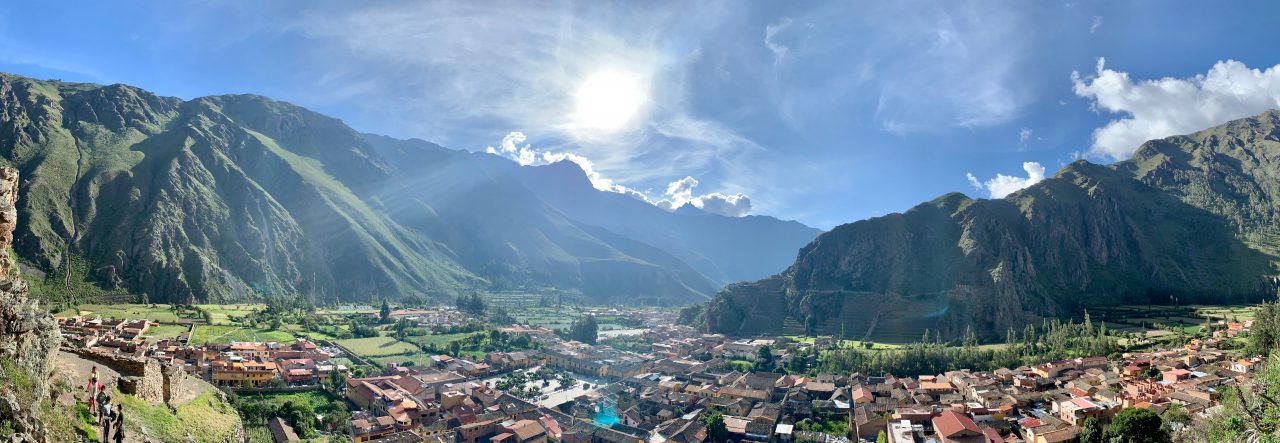
Vietnam Impressions: Food, glorious food – Tom (!)

So finally it is my time to write on the blog and of course that means that this post is about food!

I knew Vietnam was going to be a great foodie experience and I wasn’t let down. Even MoJo loved the variety of dishes, with many of our decisions on where to go for dinner starting with them demanding “we want street food” which I had no problems with!

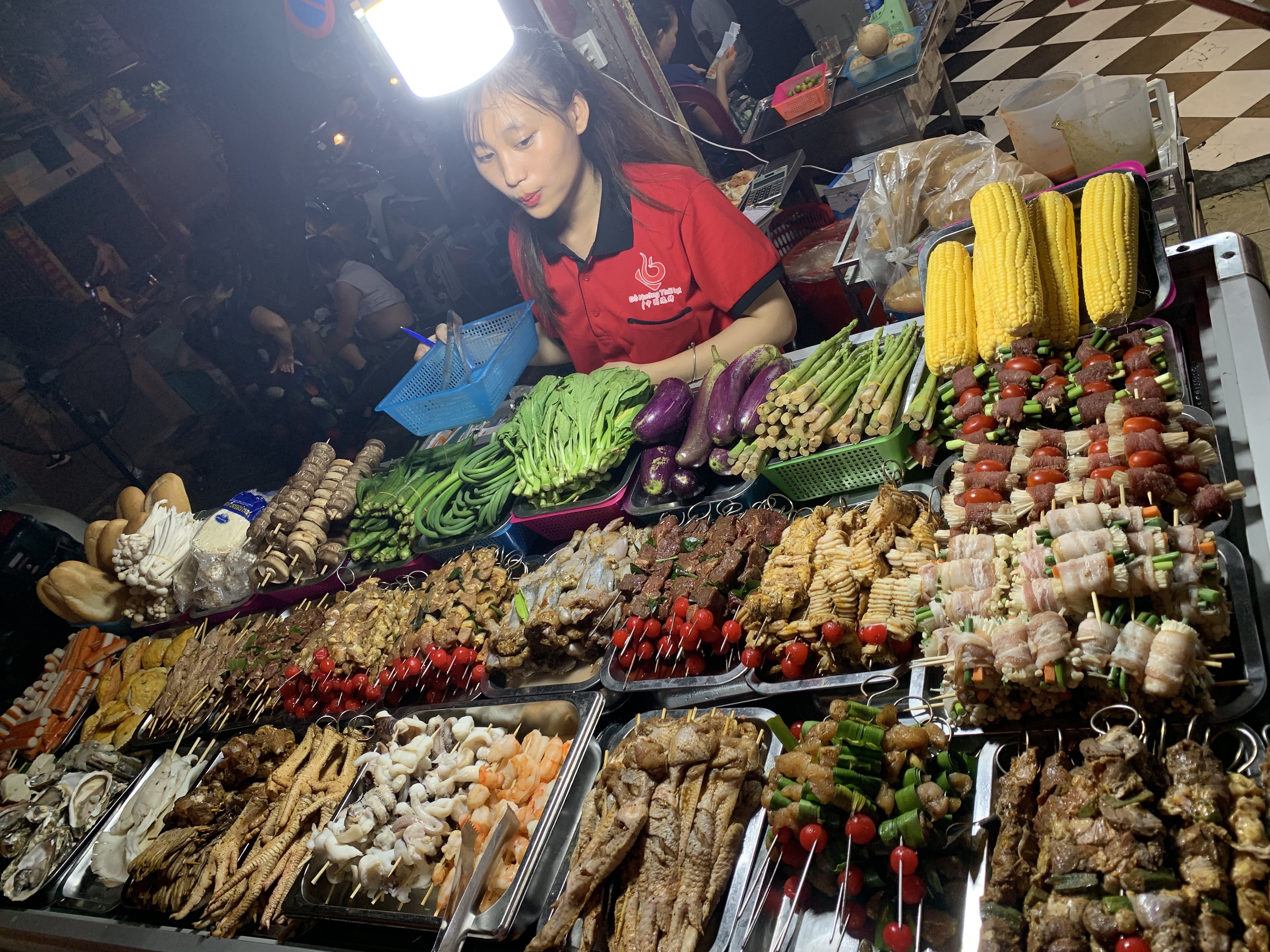
Street food is massive in Vietnam with nearly every corner or spare bit of pavement – that doesn’t have a scooter parked on or being driven on it – set up with small plastic chairs, a table of you are lucky and some sort of make shift kitchen usually consisting of a bucket charcoal fire.
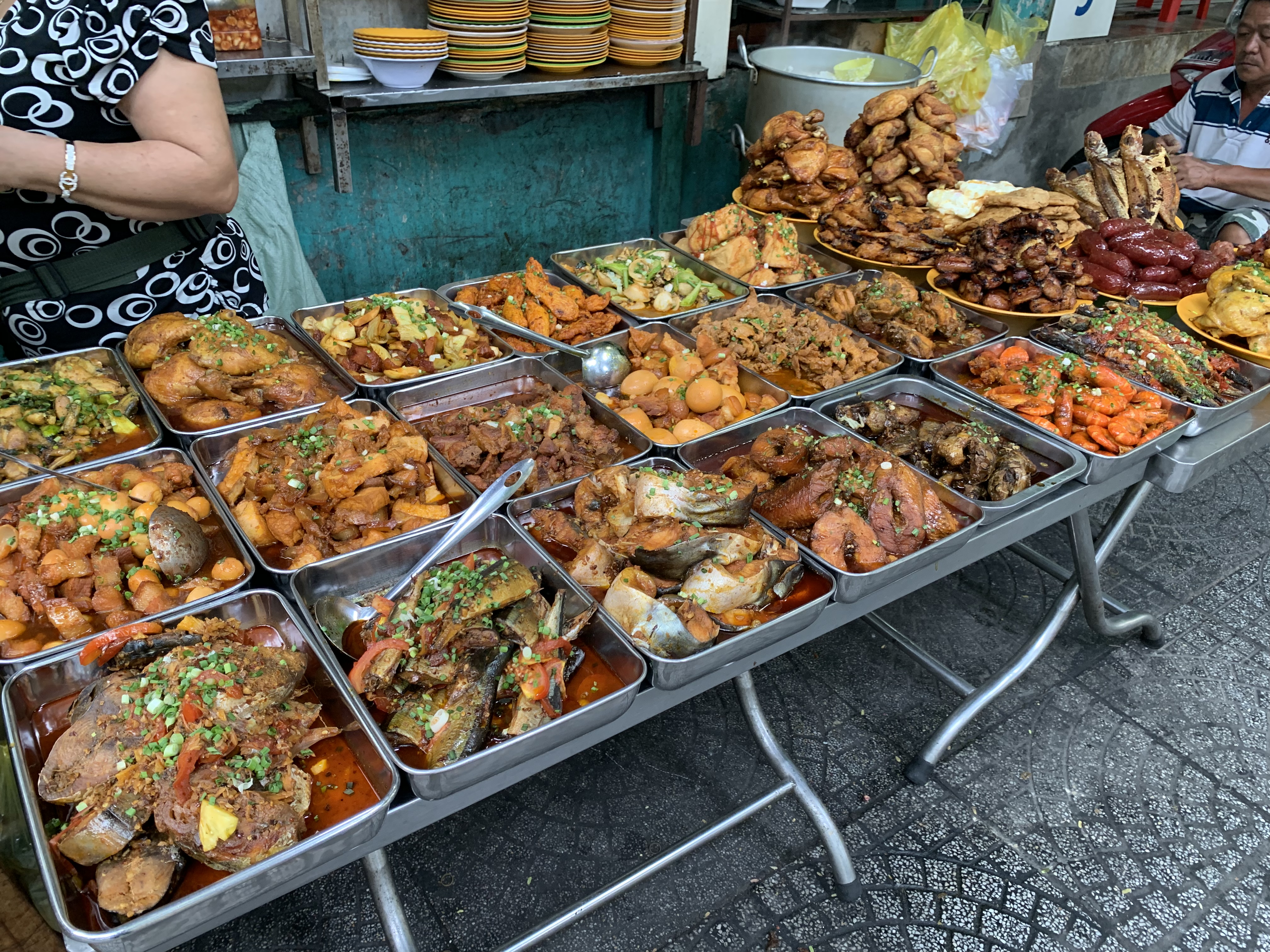
While the hygiene and uncertainties of where from and how long the food being used has been there, it is probably some of the tastiest food I have had. Memories of a street food dinner in Bangkok years ago came back – which I still remember as being in my top 10 dining experiences of all time.

It was great to discover and explore the regional dishes from the various cities and areas we went to during our 3 weeks there. It usually started with Laura reading up on what food was gluten free and fortunately, with Vietnam being the 2nd biggest exporter in rice, rice was the main staple rather than wheat-based dishes which suited us well.
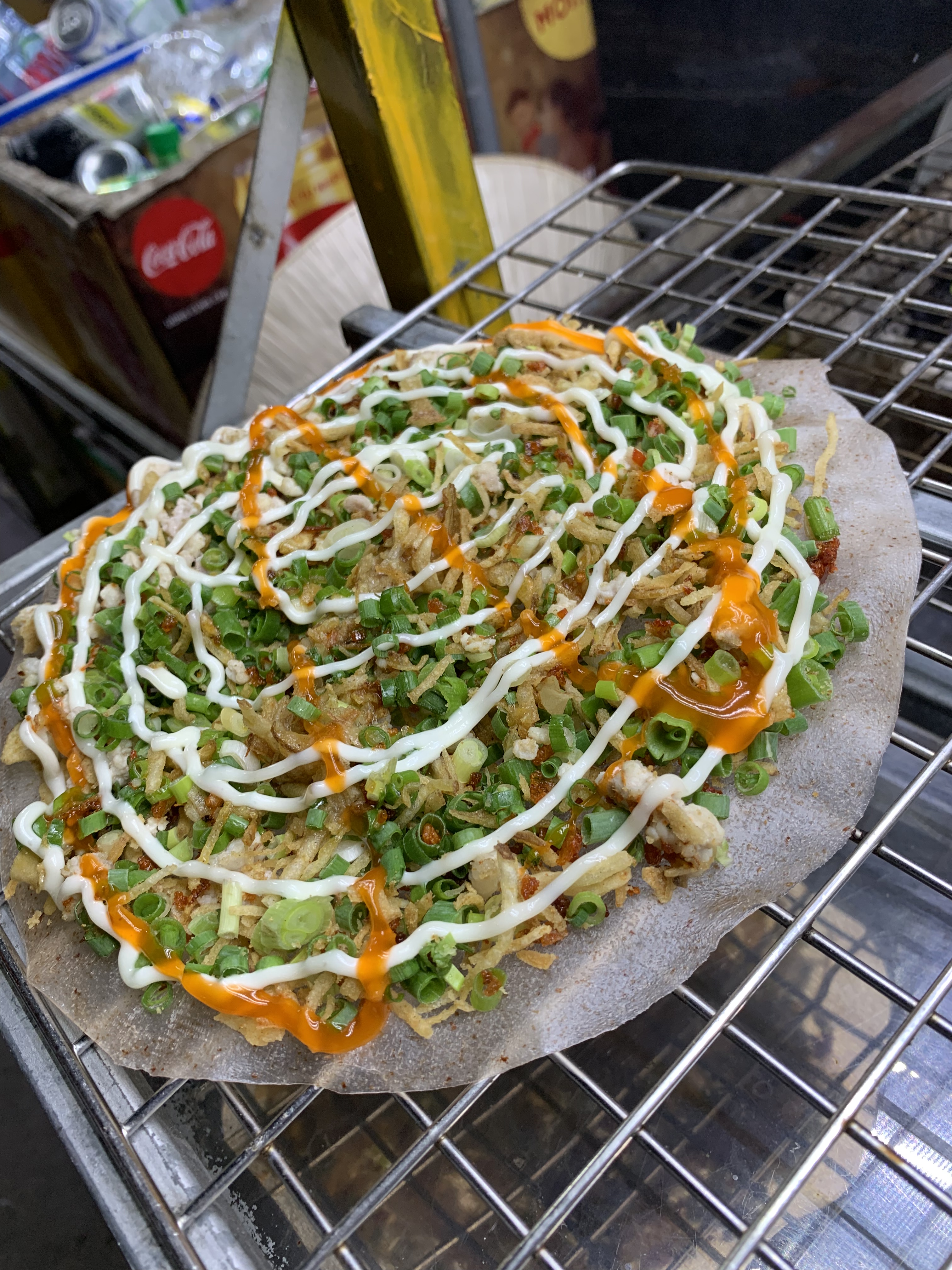
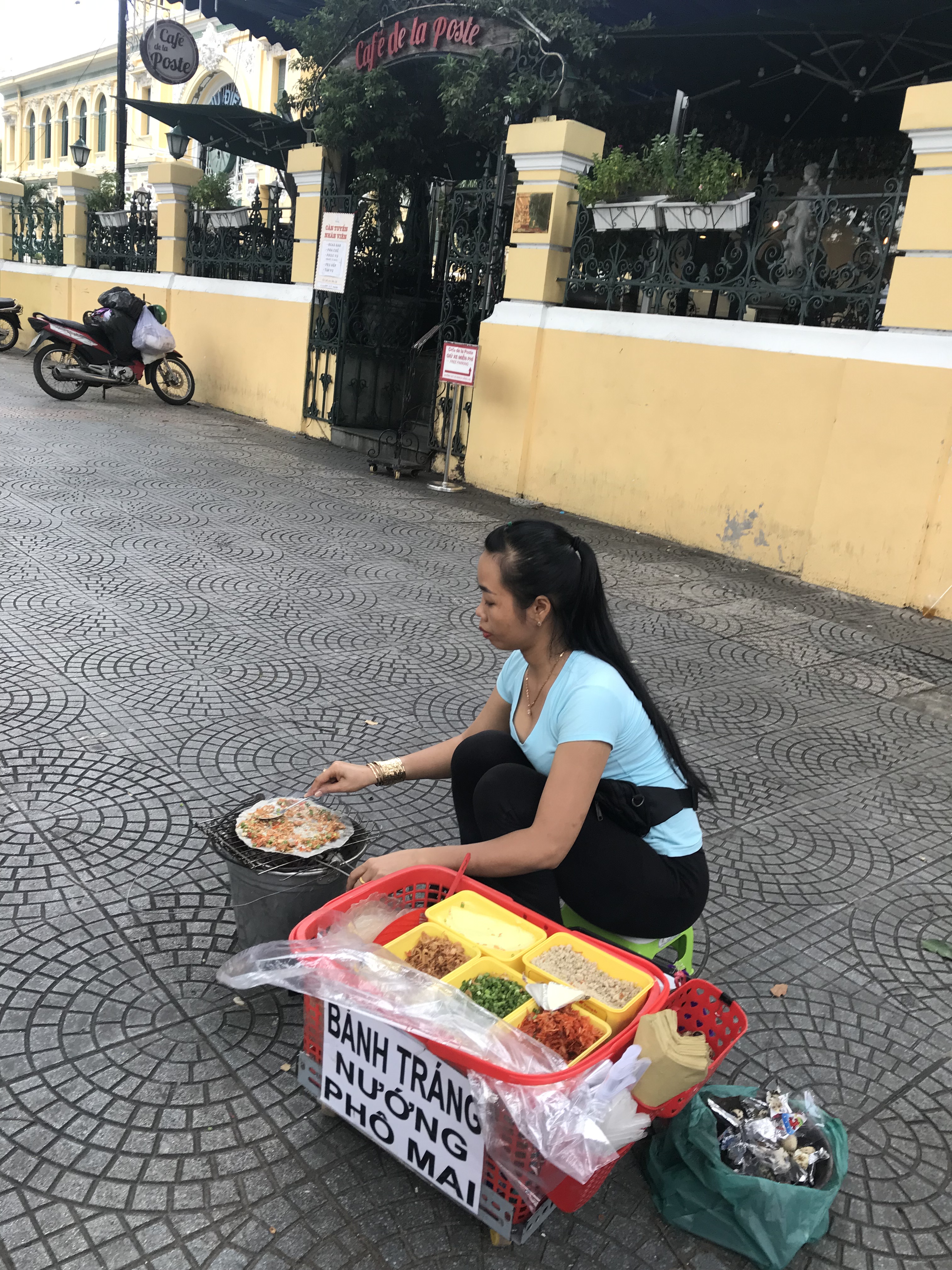
Banh Trang Nuong Pho Mai (rice pancake).

Rice paper

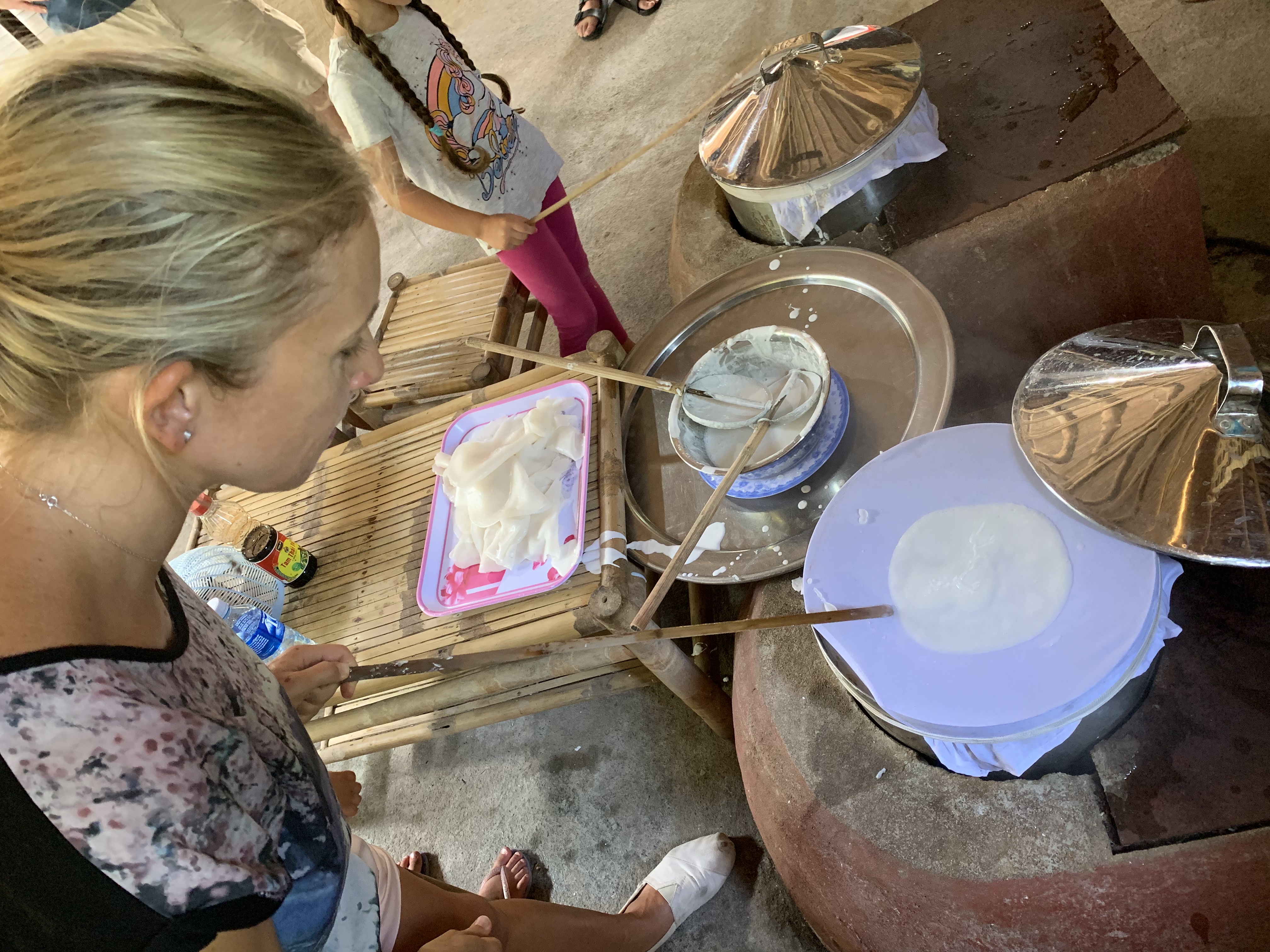
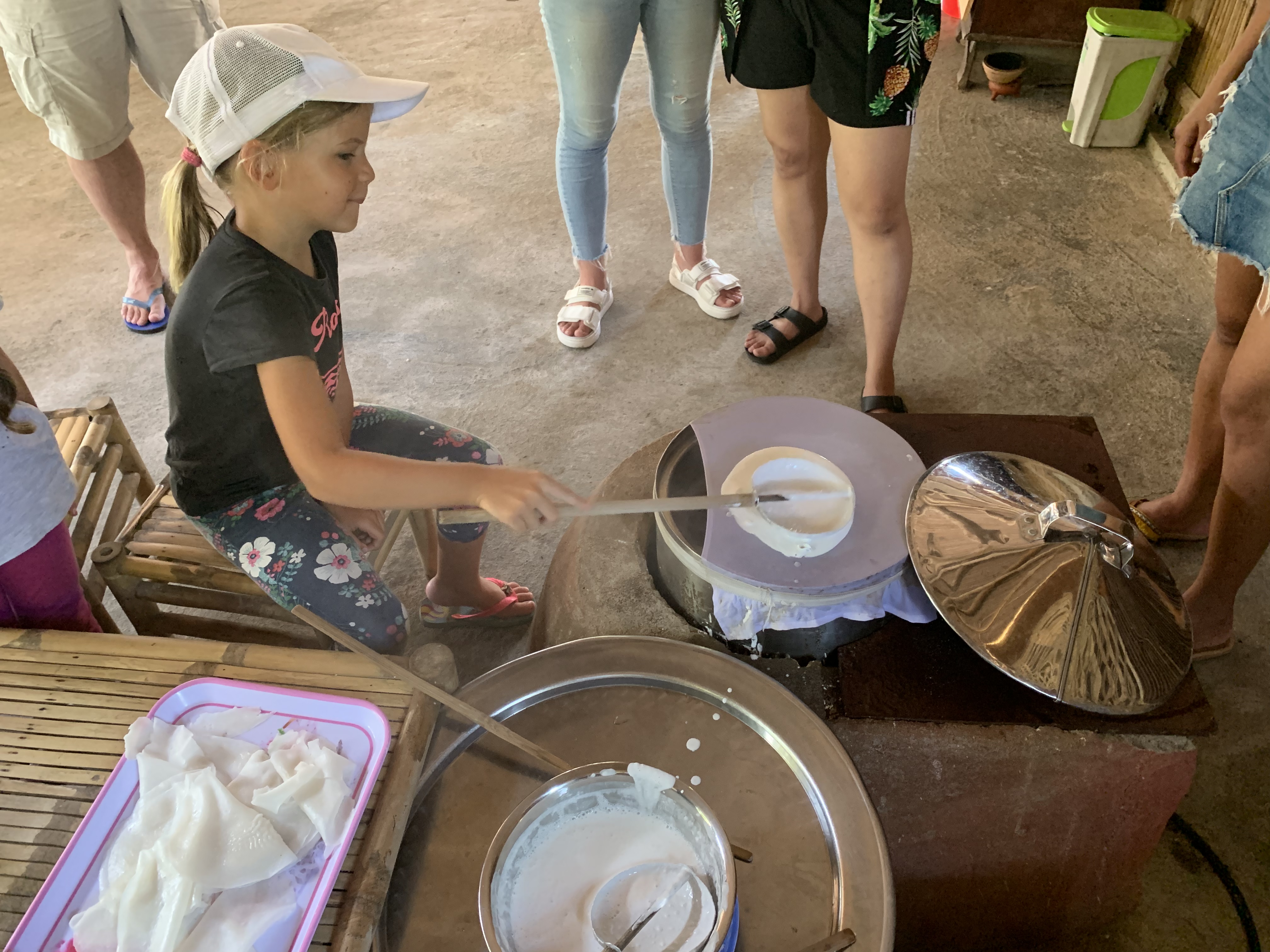
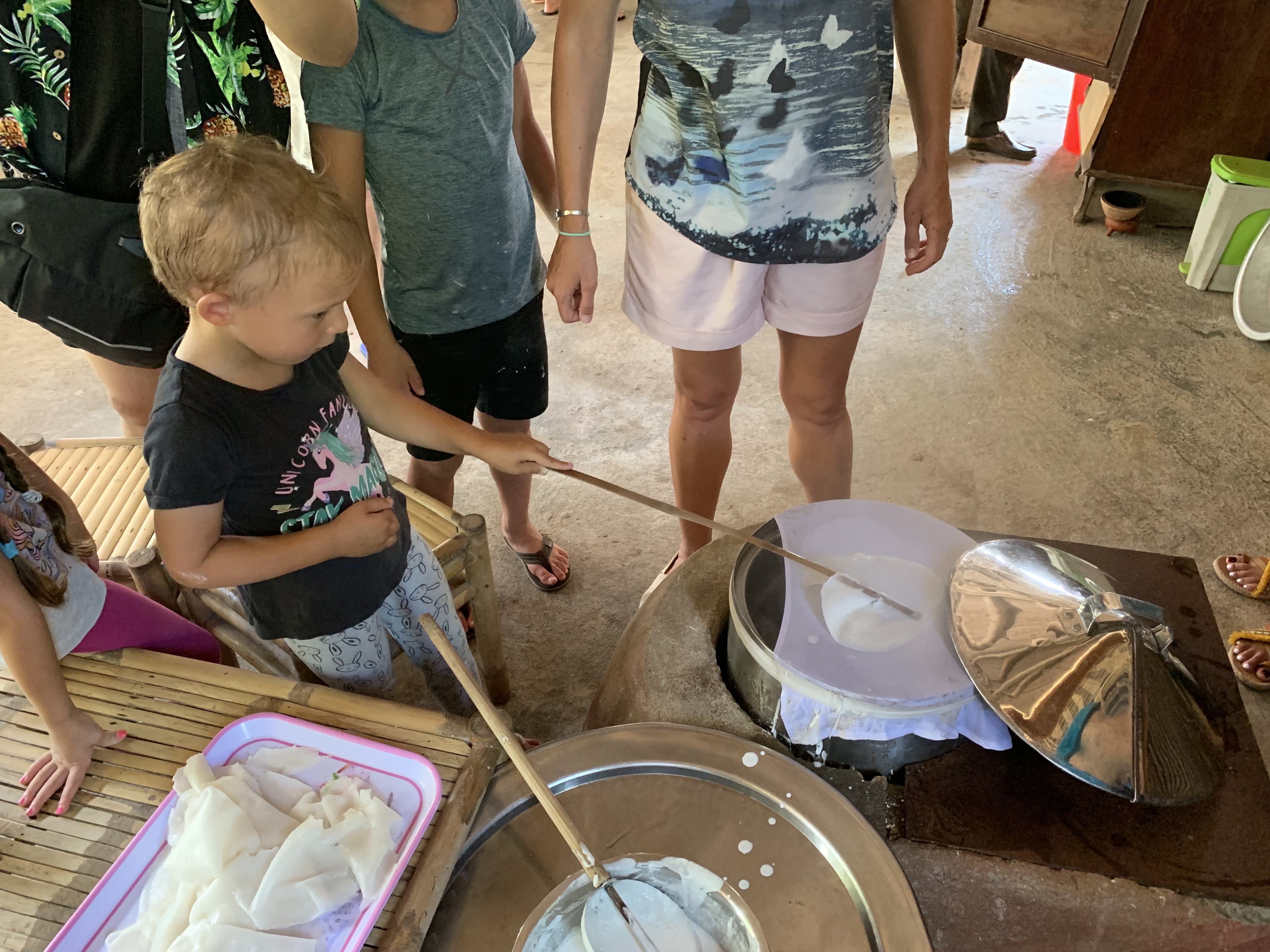
Rice paper is used a lot in Vietnamese cooking and you can find it in various forms on nearly every menu. During our cooking lesson in Hoi An we had a chance to make rice paper from scratch grinding the rice, making the rice batter and then steaming it over a fine muslin cloth before leaving it to dry. To be honest, we didn’t wait for it to dry and opted to use the ready-made ones. Rice paper is very versatile being used for spring rolls (fresh and fried) to (Vietnamese pizza) base and will be something I will definitely be using in the future a lot more.
Beef Ph

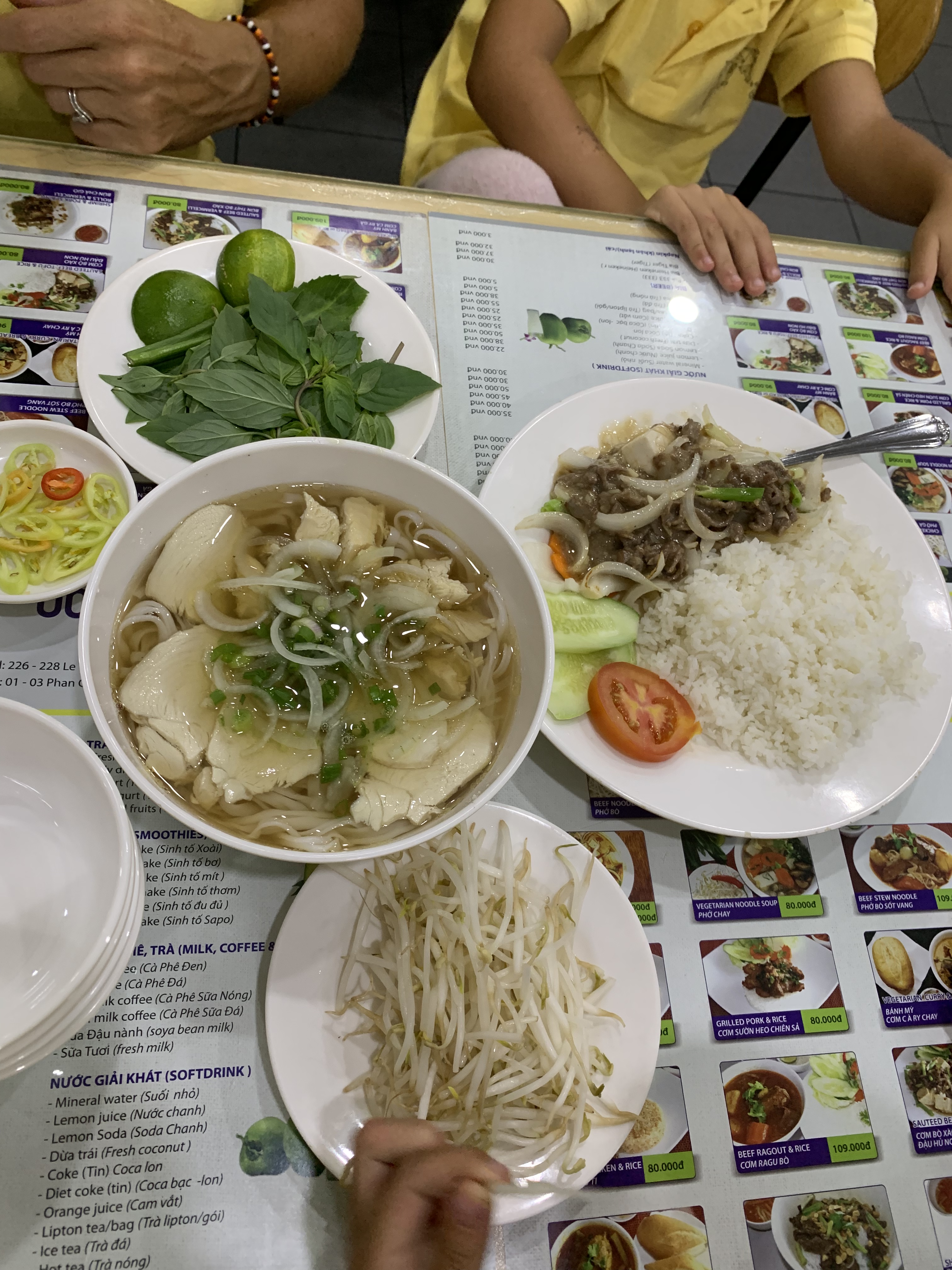
Phở (pronounced phu) is found all over Vietnam. This broth (usually beef based) soup is accompanied by rice noodles and then a separate plate of mixed lettuce, Thai and lemon basil and mint. This was our first meal when landing in Ho Chi Min City and was a dish we had on many occasions for breakfast, lunch or dinner over the 3 weeks we spent there. The best example was at Phở 10 in Hanoi with the beef flank and brisket being used.
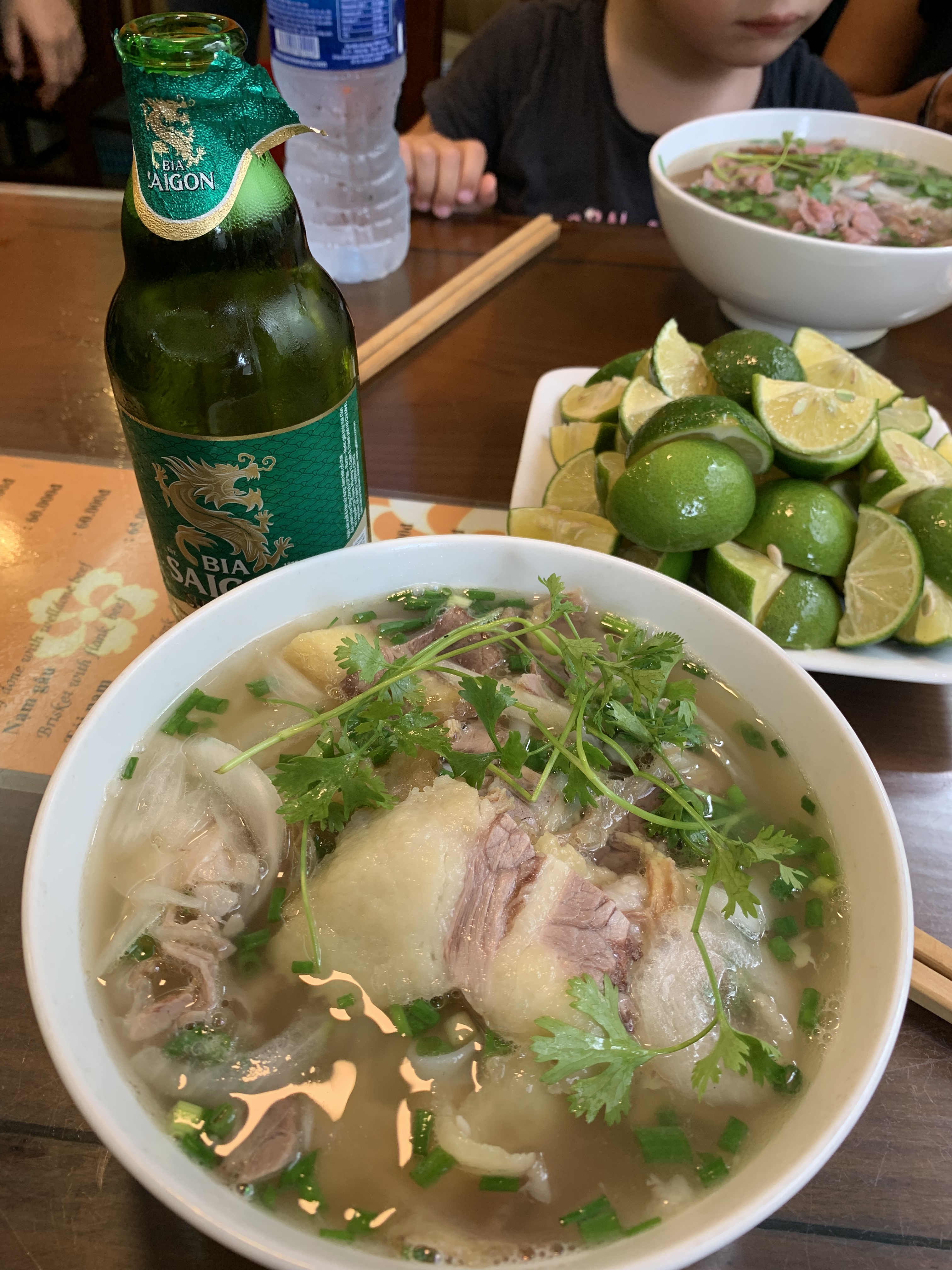
Steaming Beef Phở

Bun cha

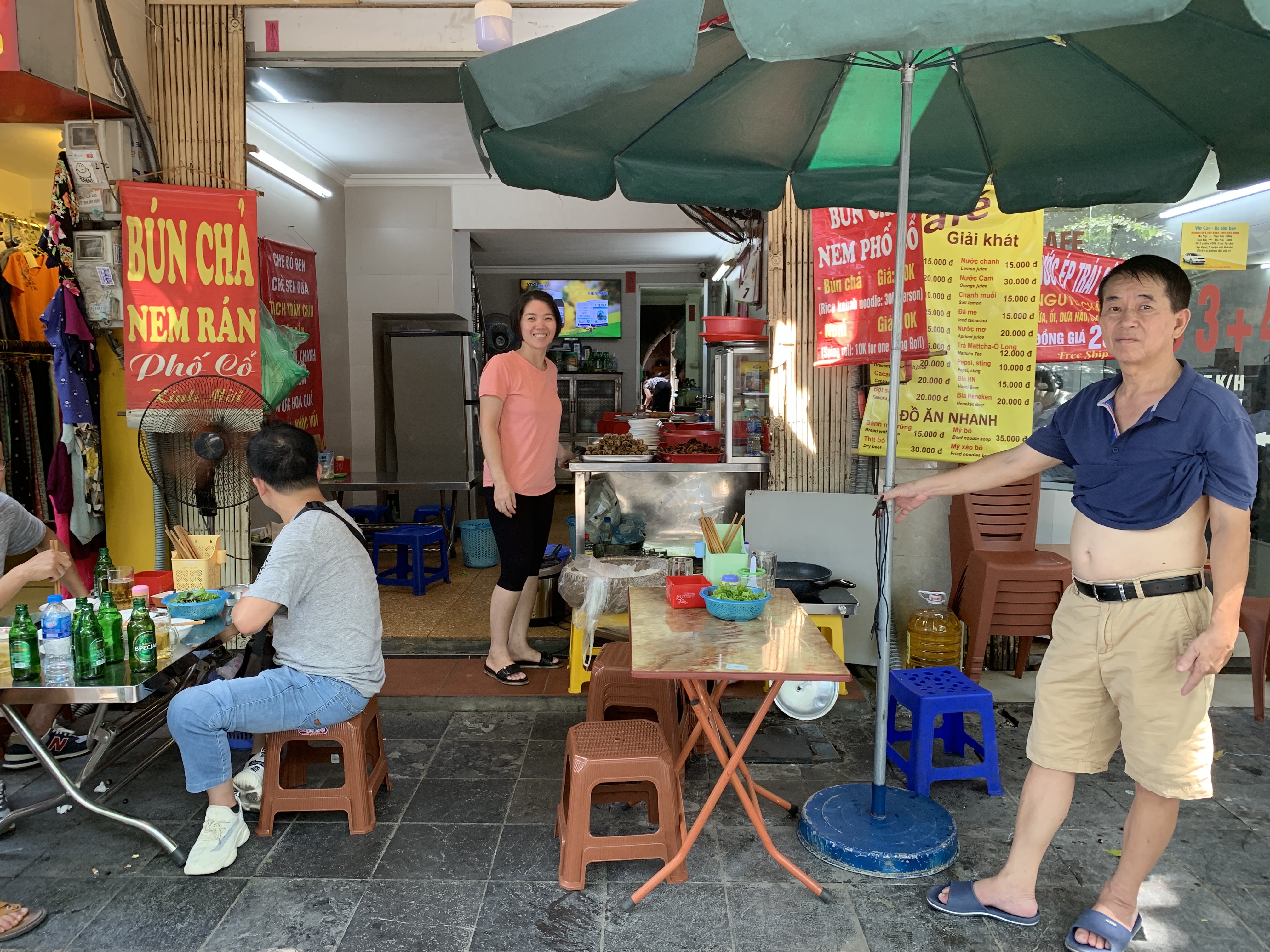
We had briefly read up on bun cha but when we sat down in the tiny street side area (I’m not sure you could call it a restaurant!) at 22 Phu Doan street near to our hotel we were not quite sure what we were going to eat. We were greeted by Huong, the owner/ manager/ head cook and maitre d’, who assured us that we would like what she was about to serve up to us. Like many places in Vietnam, eateries tend to only make a few dishes rather than offer a big assortment. I like this attitude of perfecting a dish or 2 and sticking with it, building up your name for what you do well. First came a bowl of cold rice noodles and the standard lettuce/ mint / basil plate. Then came the hot, sweet and slightly tangy pork broth with flattened minced pork patties and thick strips of sweet sticky streaky bacon with the skin. I’m not usually a fan of sweet savoury dishes but this worked so well and is a dish that I really wanted to learn more about. I asked Huong if I could come and find out more about the dish. Unfortunately she said it would take a week to learn and also cost more than our weekly budget for the tutition fees. I’ve promised myself I will be back at some point to master this great dish.
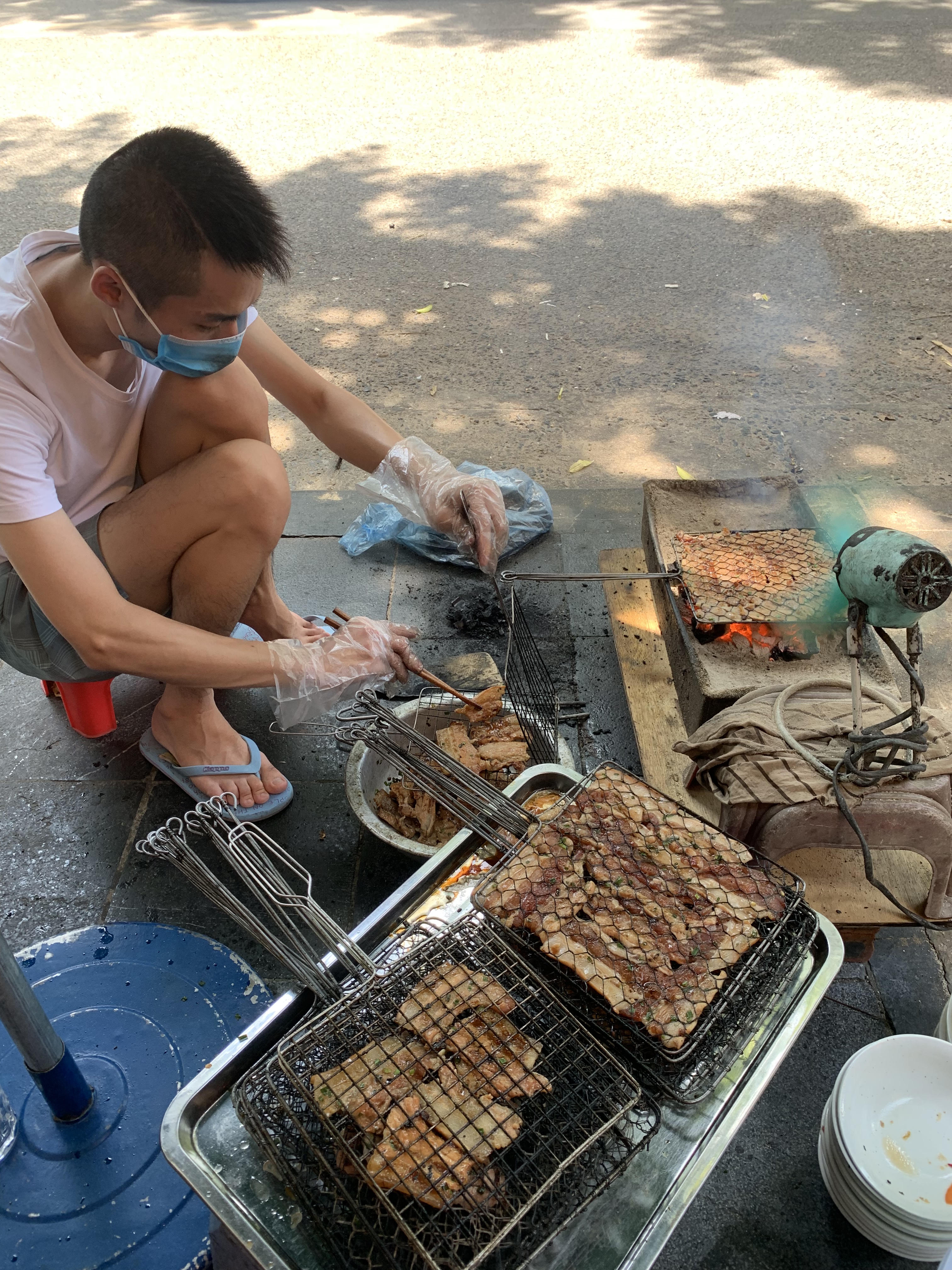
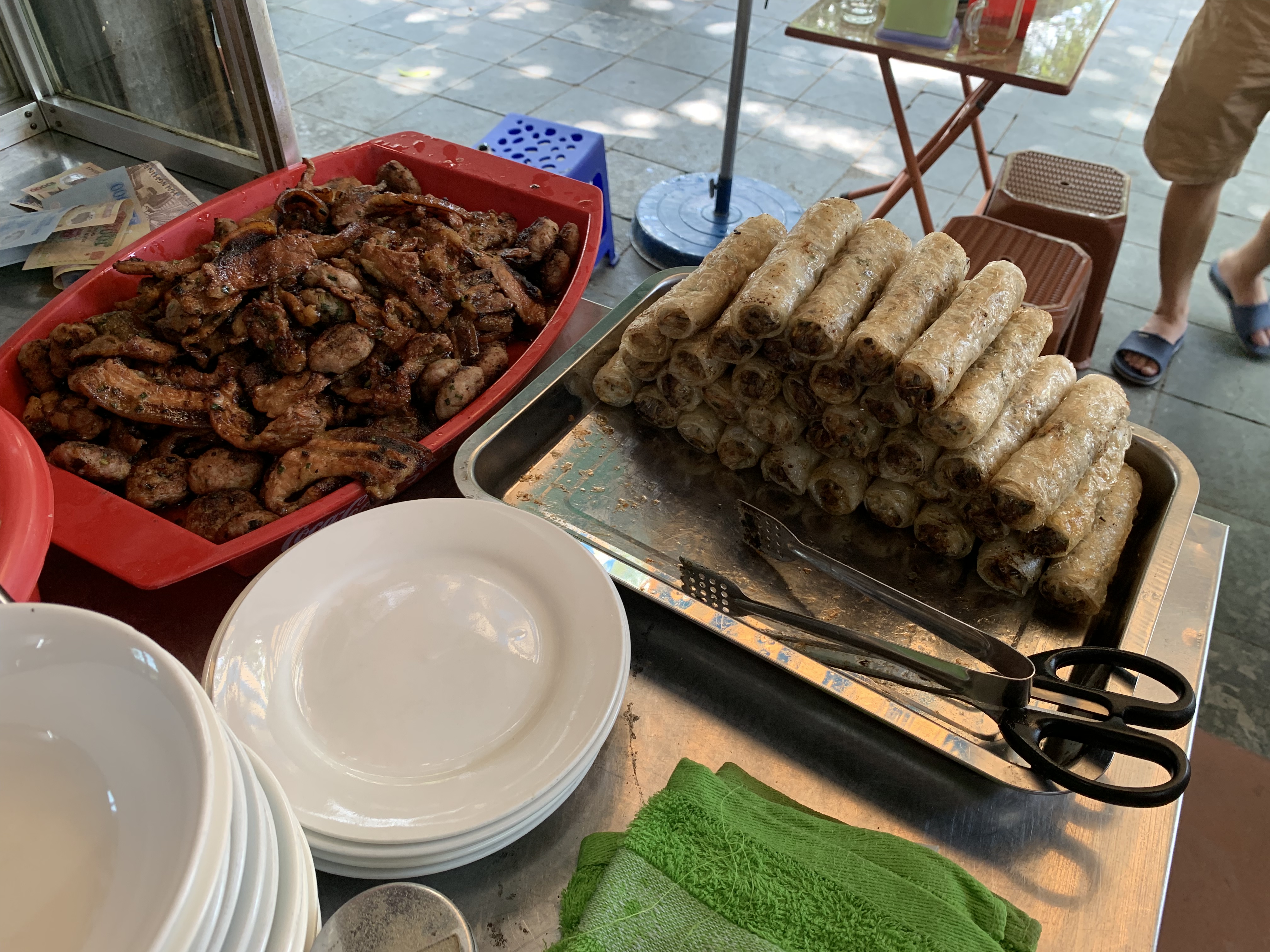
Preparing Bun Cha

Noodles

People that know me, will know of my huge love of noodles of all kinds! Vietnam is basically noodle heaven with noodles on nearly every menu you look at. The cau lau noodles in Hoi An were a regional speciality and can only be made in Hoi An due to soaking of the rice in the lye water that comes from the central well in the town. This gives them a particular taste and colour and are well worth seeking out.
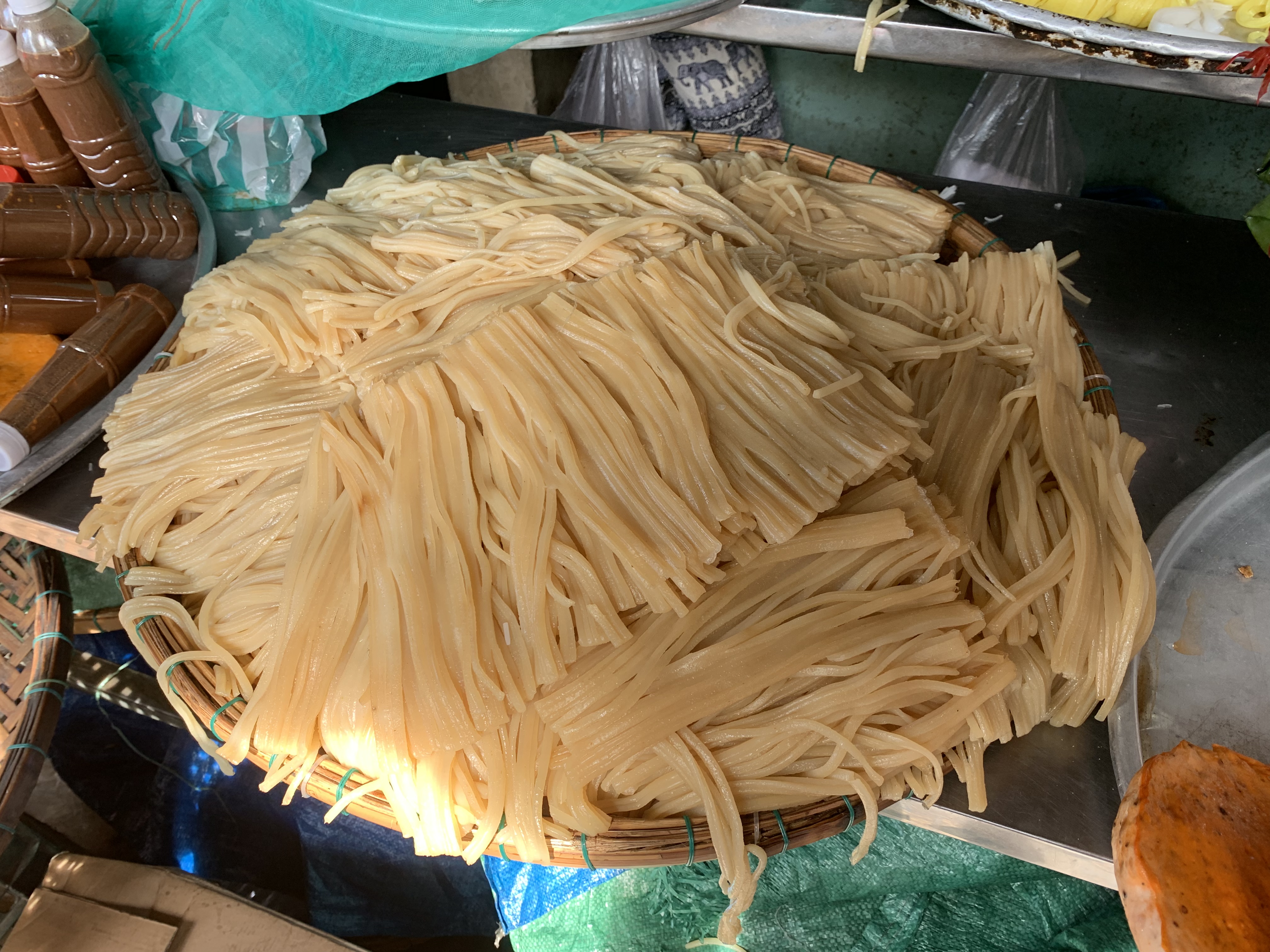
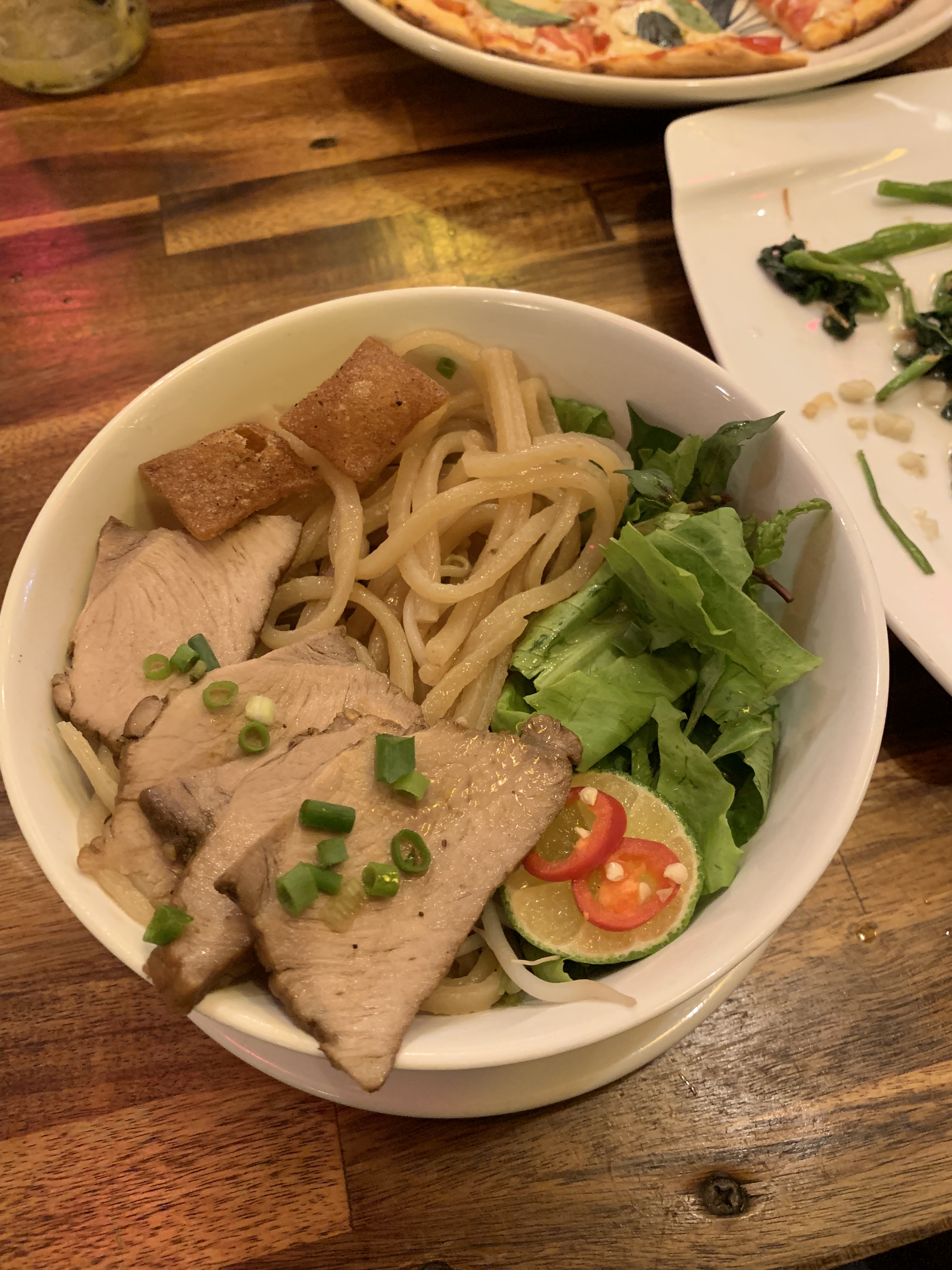
Cau Lau noodles, Hoi An.

Snake

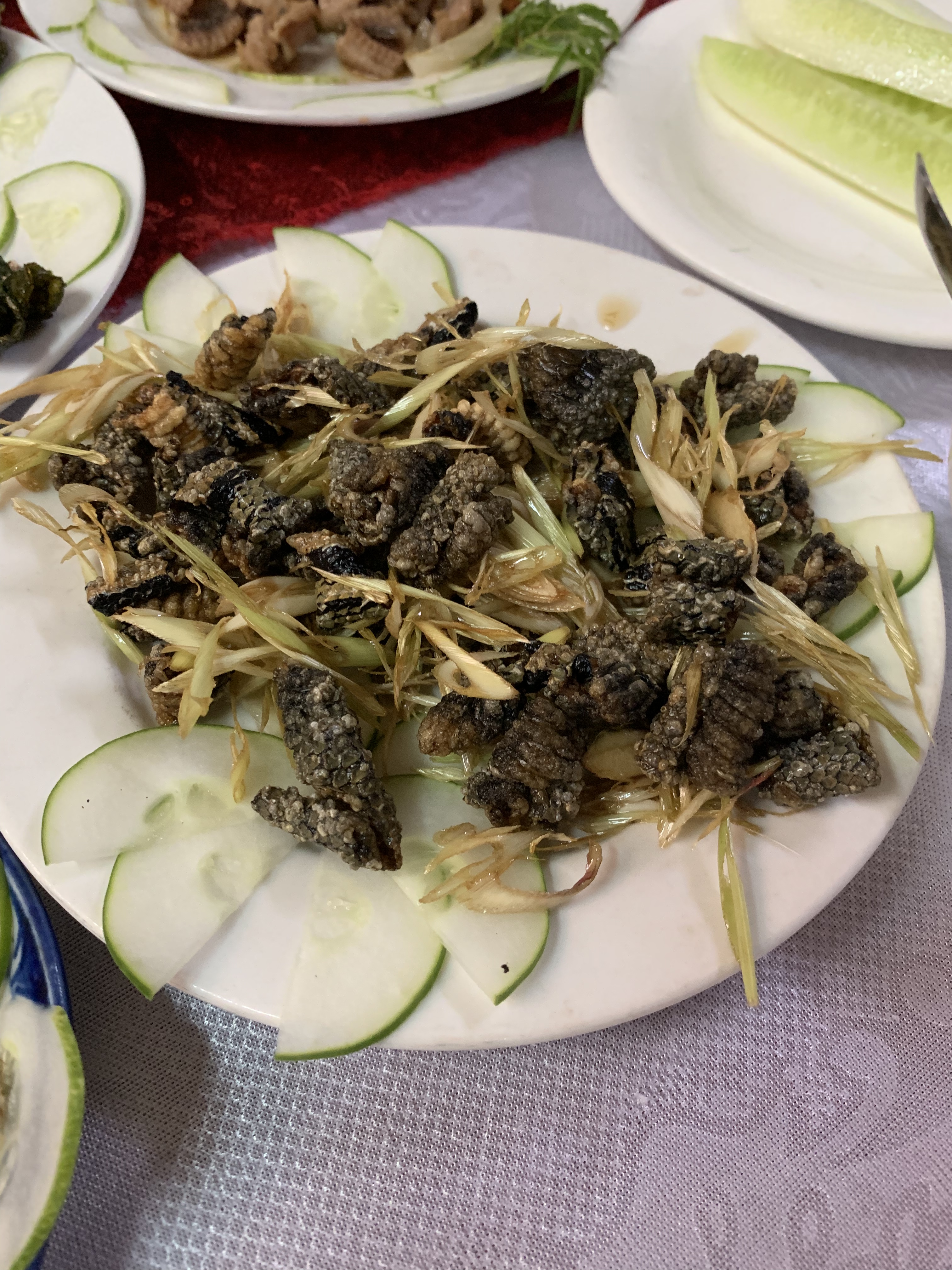
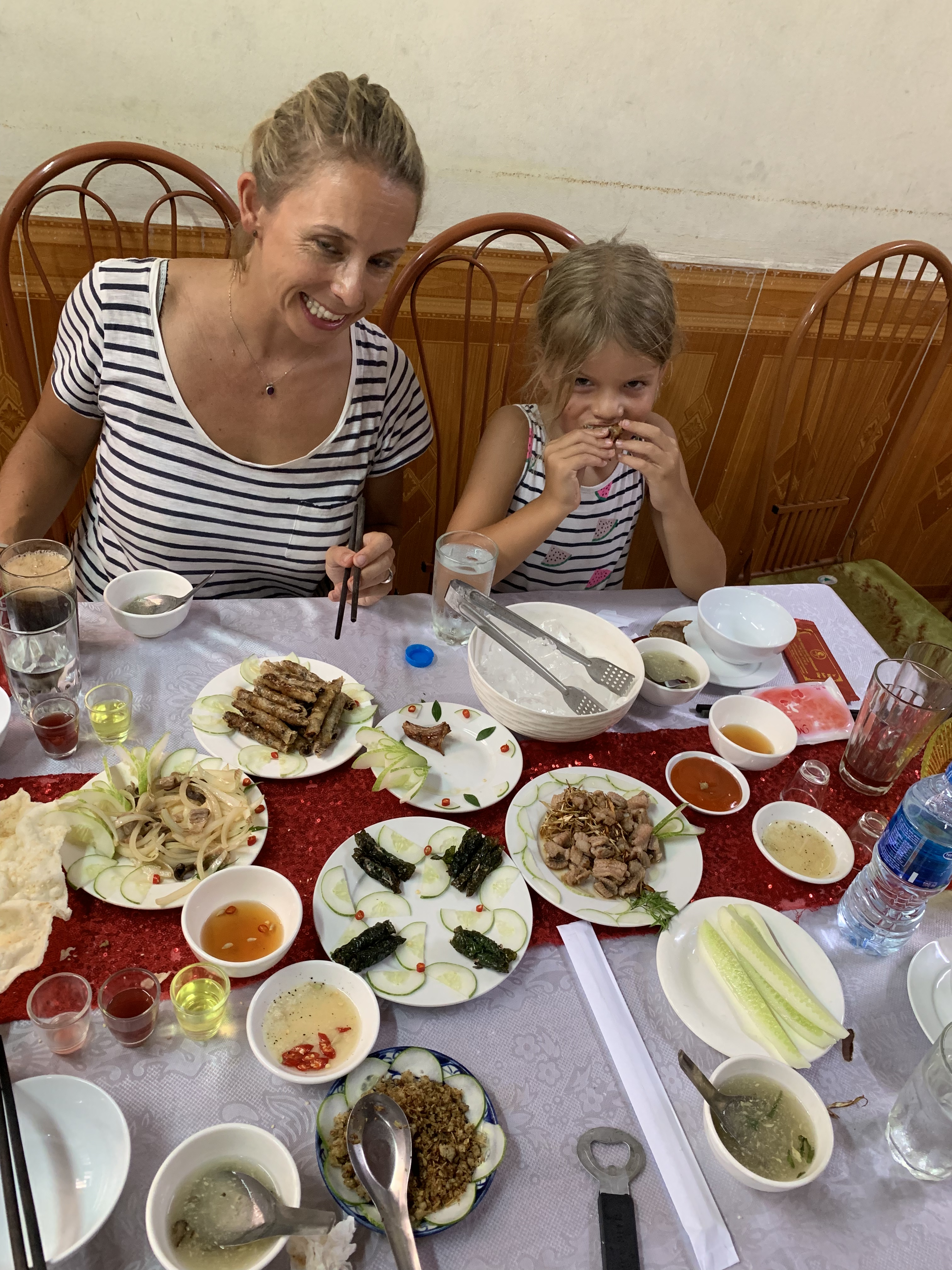
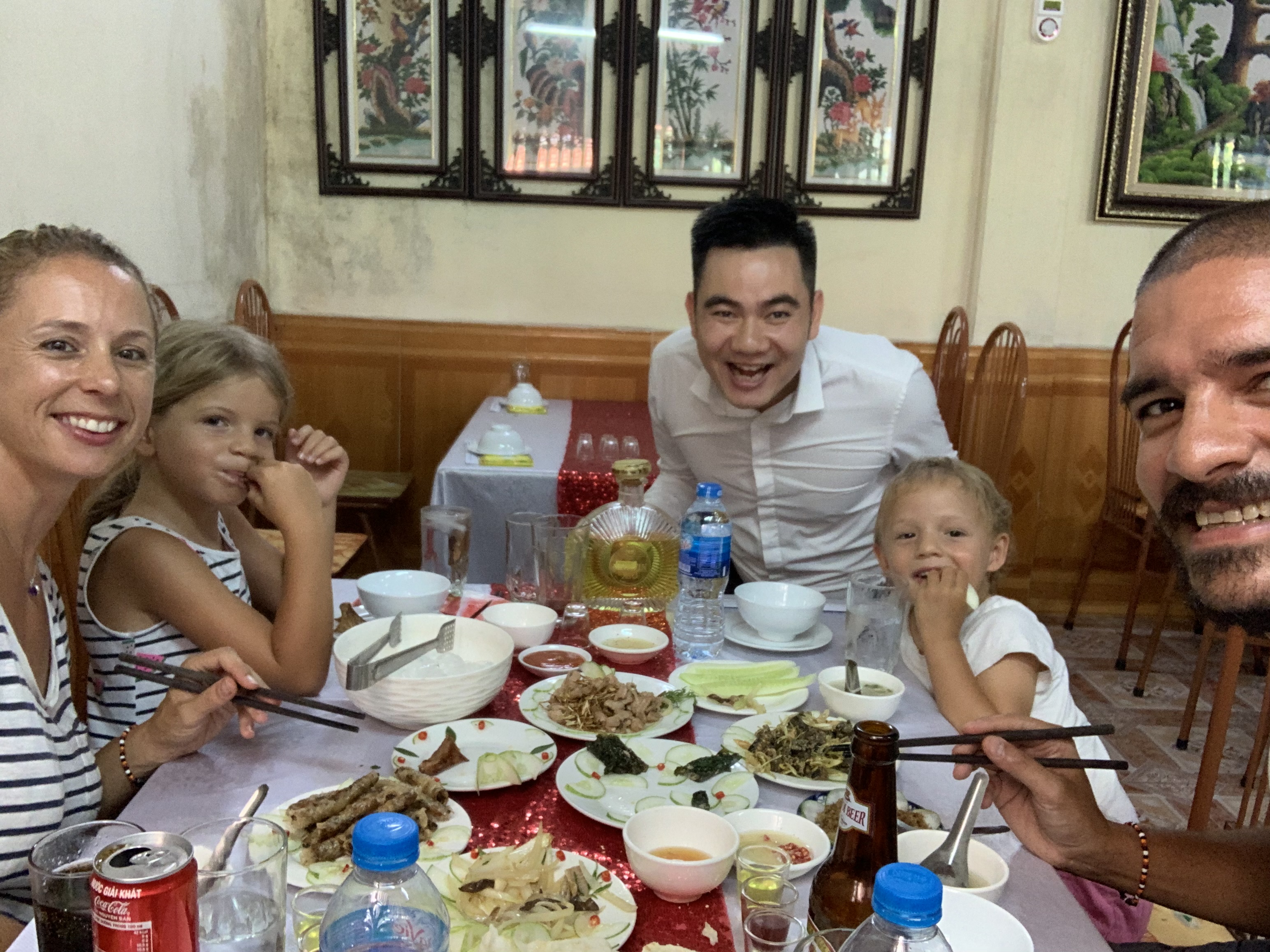
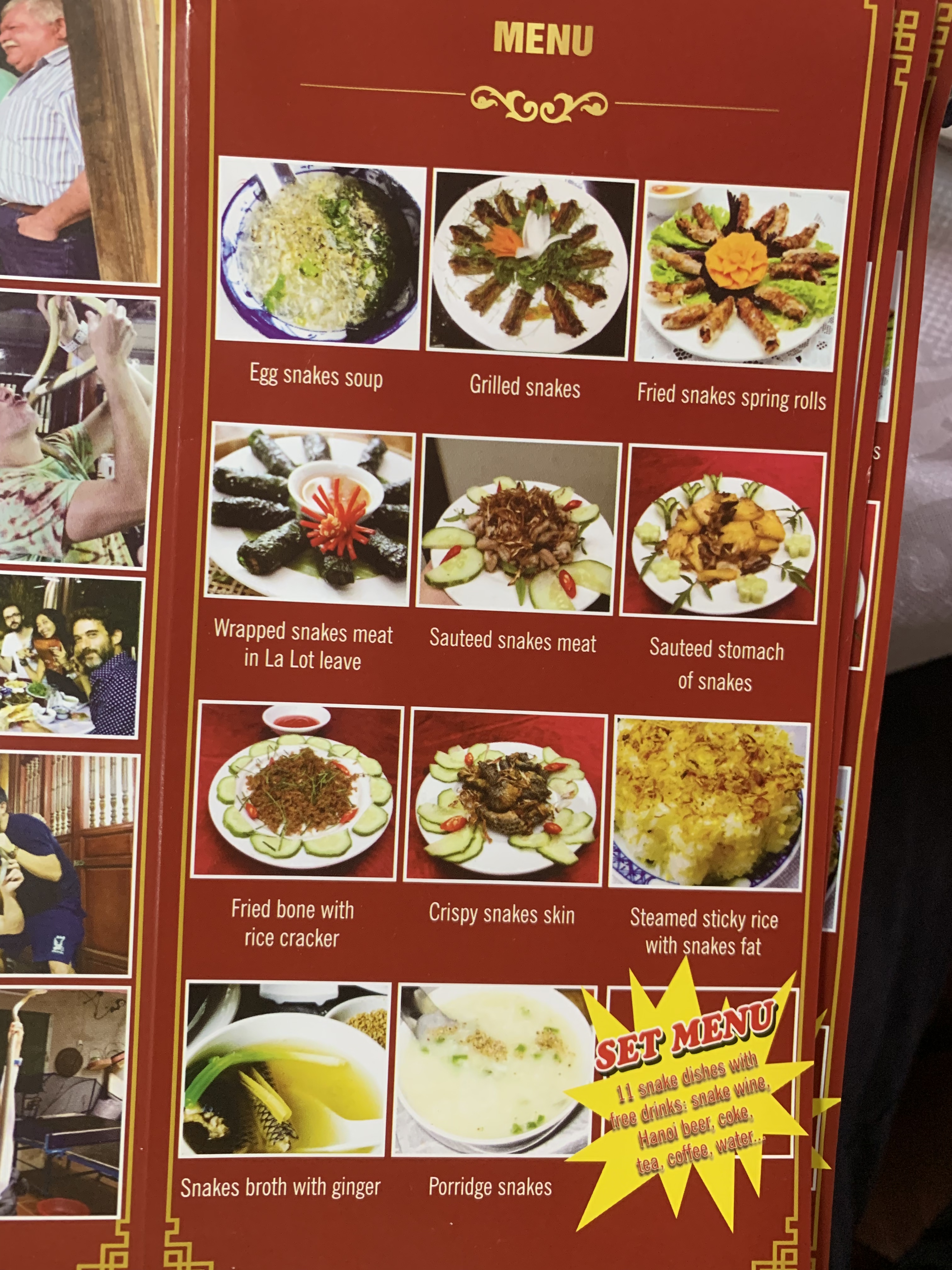
This was an experience to remember, not necessarily for the gourmet food that was eaten but more for the whole dining experience! We were greated by “Dragon” who is the owner and very proud of the best snake restaurant in town! The menu is limited to 3 types of snake with an option of bamboo, mountain or cobra snake and the only option is the full tasting menu! Of course a visit to the kitchen was needed to see the preparation of our chosen mountain snake. The meal started with the still beating heart in rice wine and 10 year old snake wine (snake infused rice wine). It took a bit of time to psych myself up but managed to send it down with a Saigon beer chaser! The rest of the meal consisted of 11 different dishes using the entire snake including saddle of snake (Mollys favourite), crispy snake skin (Joanna’s favourite) and liver and stomach which turned out to be my favourite. I’m not sure Laura had a favourite at all!
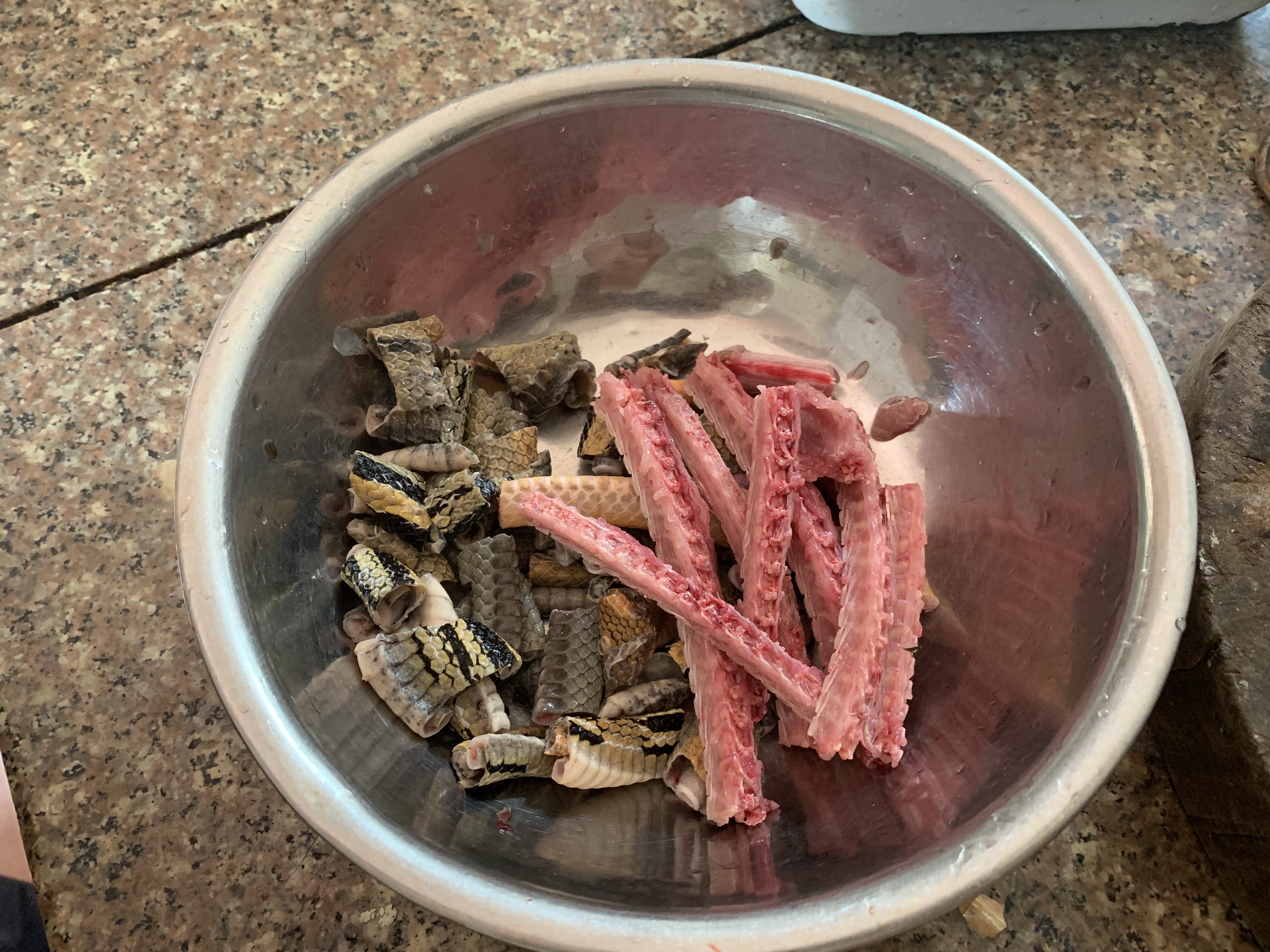
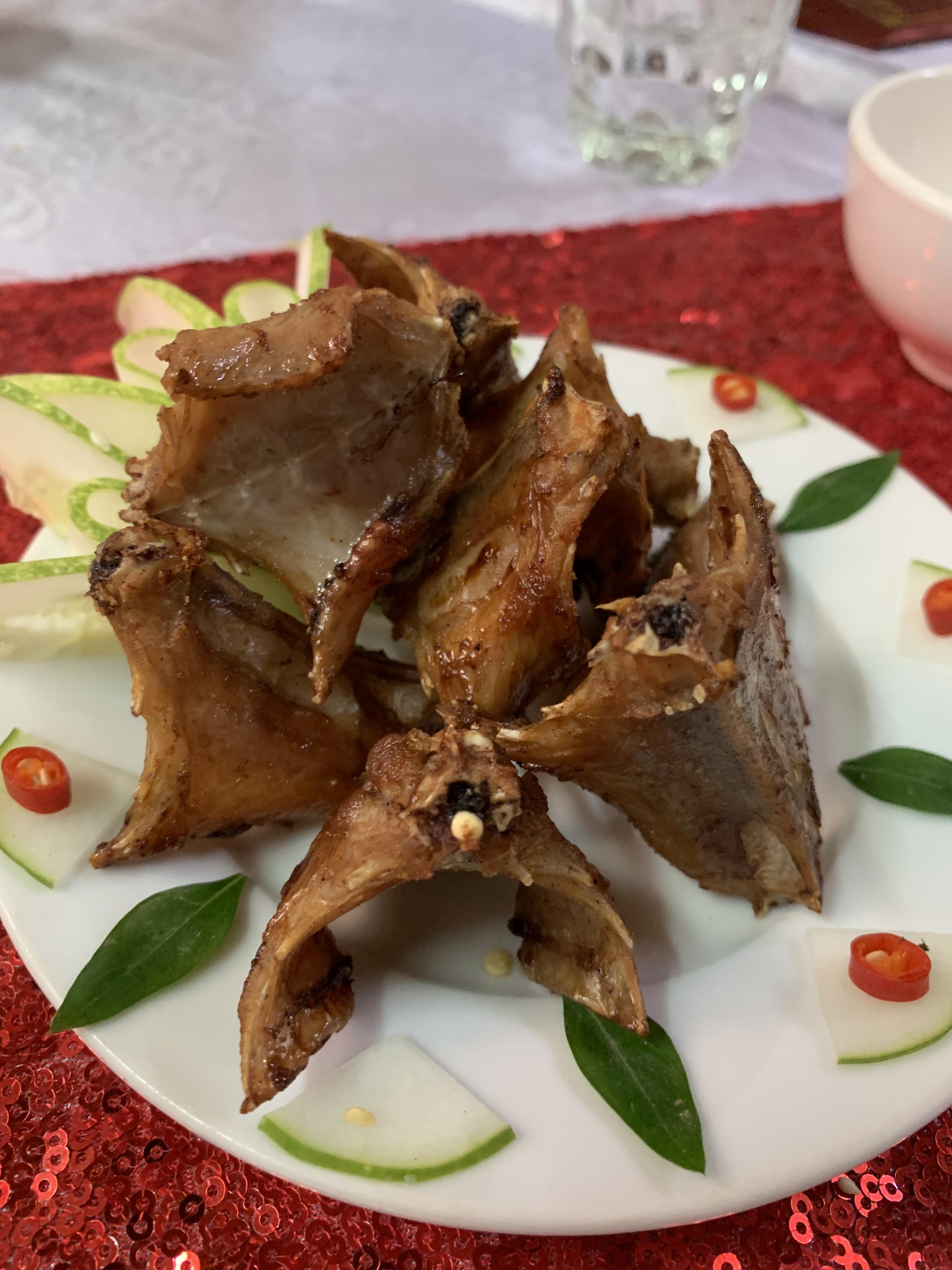
Serving every part of the snake, including the skin and vertebrae.

Price

Food, like most things in Vietnam is fairly cheap and as expected, the street food was the cheapest and best value for money. For under 1 USD you can get a fairly decent sized snack and 2 or 3 of those will easily fill you up for dinner. I had read that the tradition of street food is slowly dying out due to the next generation of street food families not wanting to take on the trade as it is now seen as a low class position and there is not much profit in it now. Let’s see what happens in the future but I for one love this style of cooking/ eating and think we need more of it around the world.

From the street food to the restaurants that we dined in there where lots of ideas for future meals for the kids, dinner parties on our return to the UK and even future business ventures. Vietnam has not let us down and is up there with some of the most interesting places in the world to experience some truly delicious food.
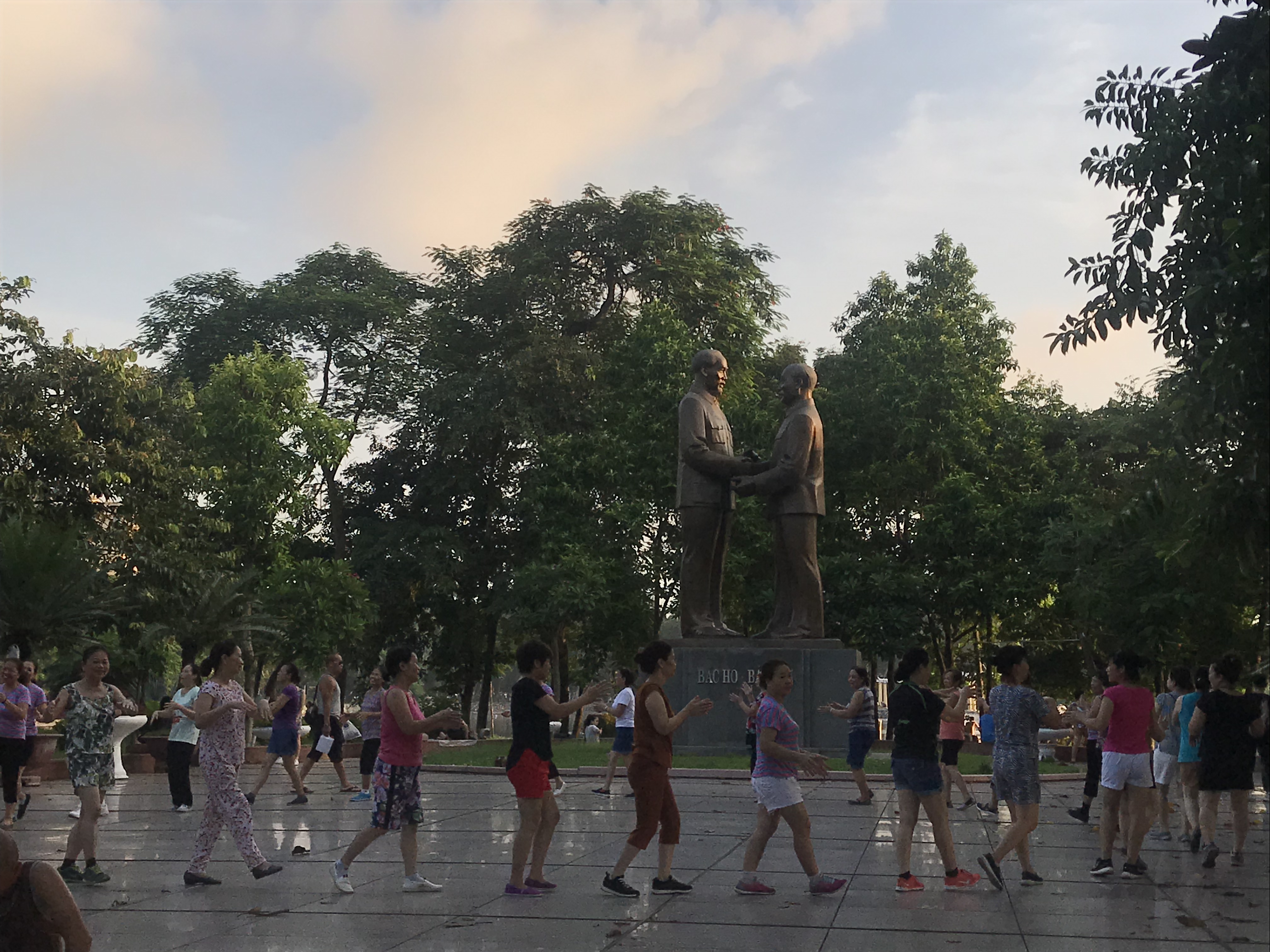
Oi, oi, its Hanoi

Back in a real city, that’s for sure.

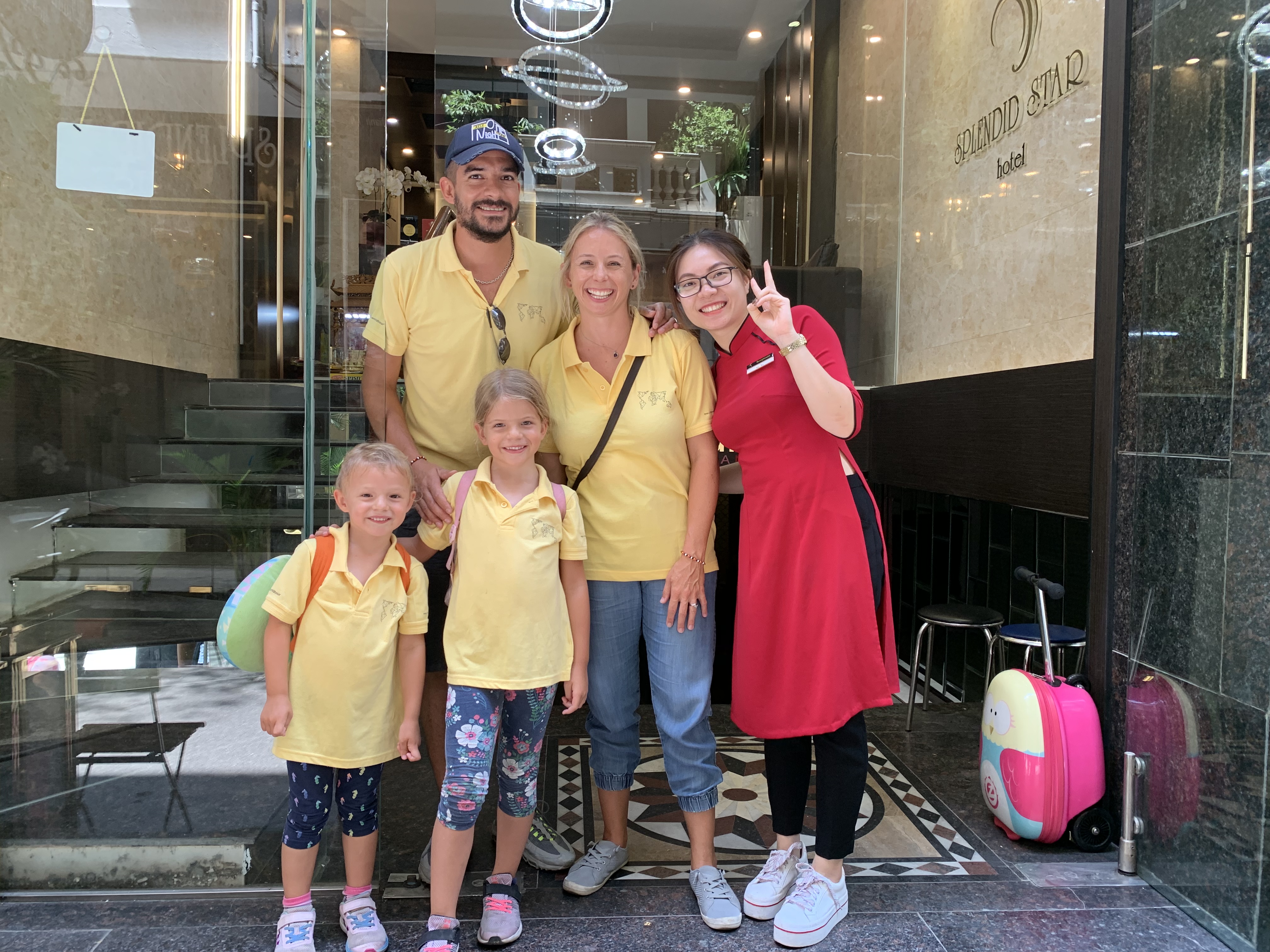
Once again we had struck gold with our accommodation, opting to stay at the Splendid Star Grand. Despite some renovation happening to the downstairs area due to recent flooding it was a friendly place with a good buffet breakfast. Located slap bang in the middle of the warren of alleyways that make up the old quarter, alleys which were so narrow in fact that we had to walk quite a way with our bags (this is becoming a frequent occurrence!).

Hotel Splendid Star Grand, Hanoi.

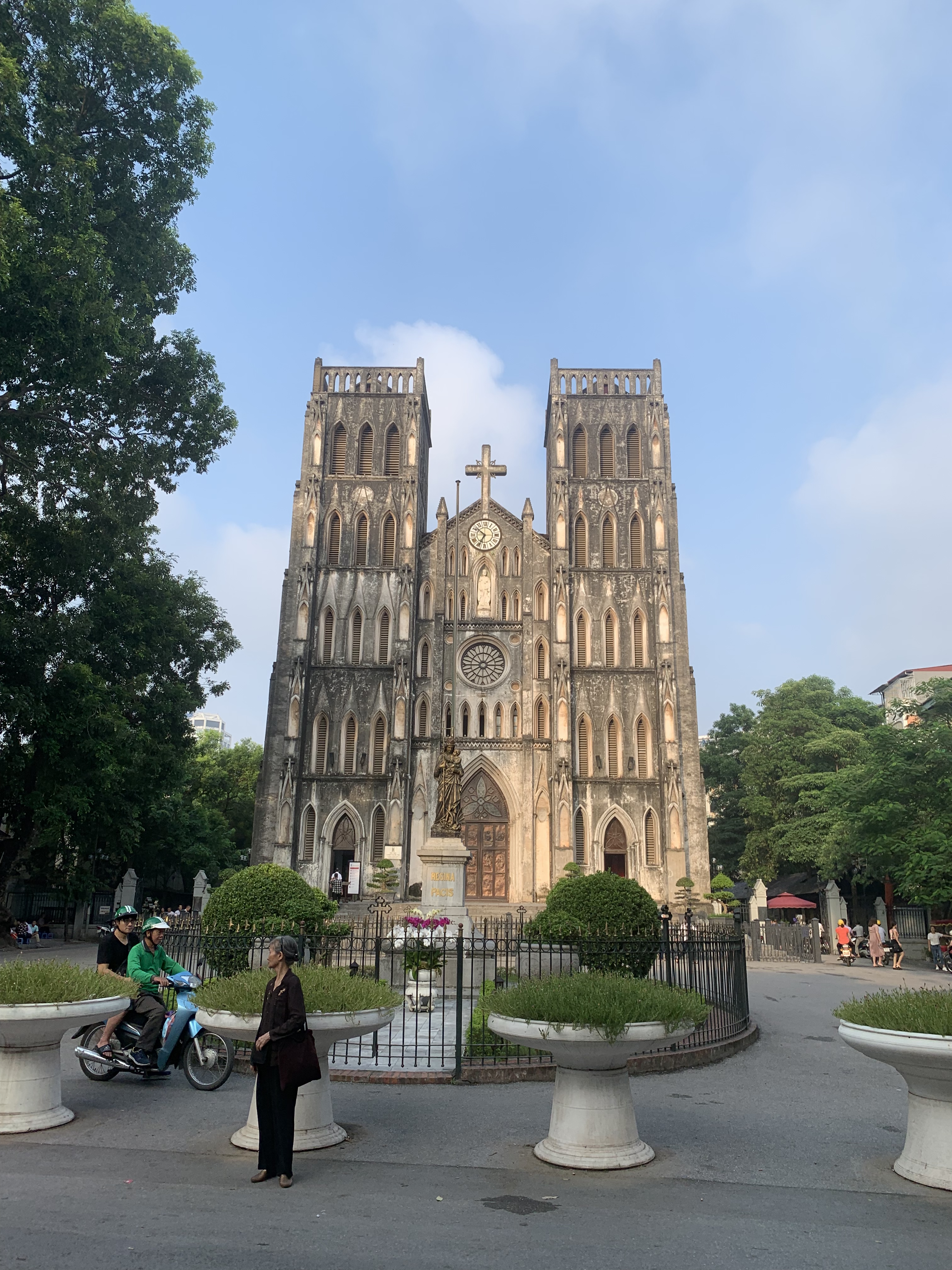
Bizarrely when we made it up to our 7th floor room we saw we had a cathedral view – not something you would expect in Asia! The exterior of St Joseph Cathedral (completed 1886) is a little grey, modelled (as so many are) on Notre Dame – its interior is brighter. We made it inside one Sunday morning and it was packed for mass.

St Joseph Cathedral, Hanoi.

What was interesting was the atmosphere in the square in front of it, it had a truly European feel – the french quarter wasn’t far away to be fair – but its rooftop bars and roadside cafes felt of a different pace and continent to most of the city.

St Joseph Cathedral square, Hanoi.

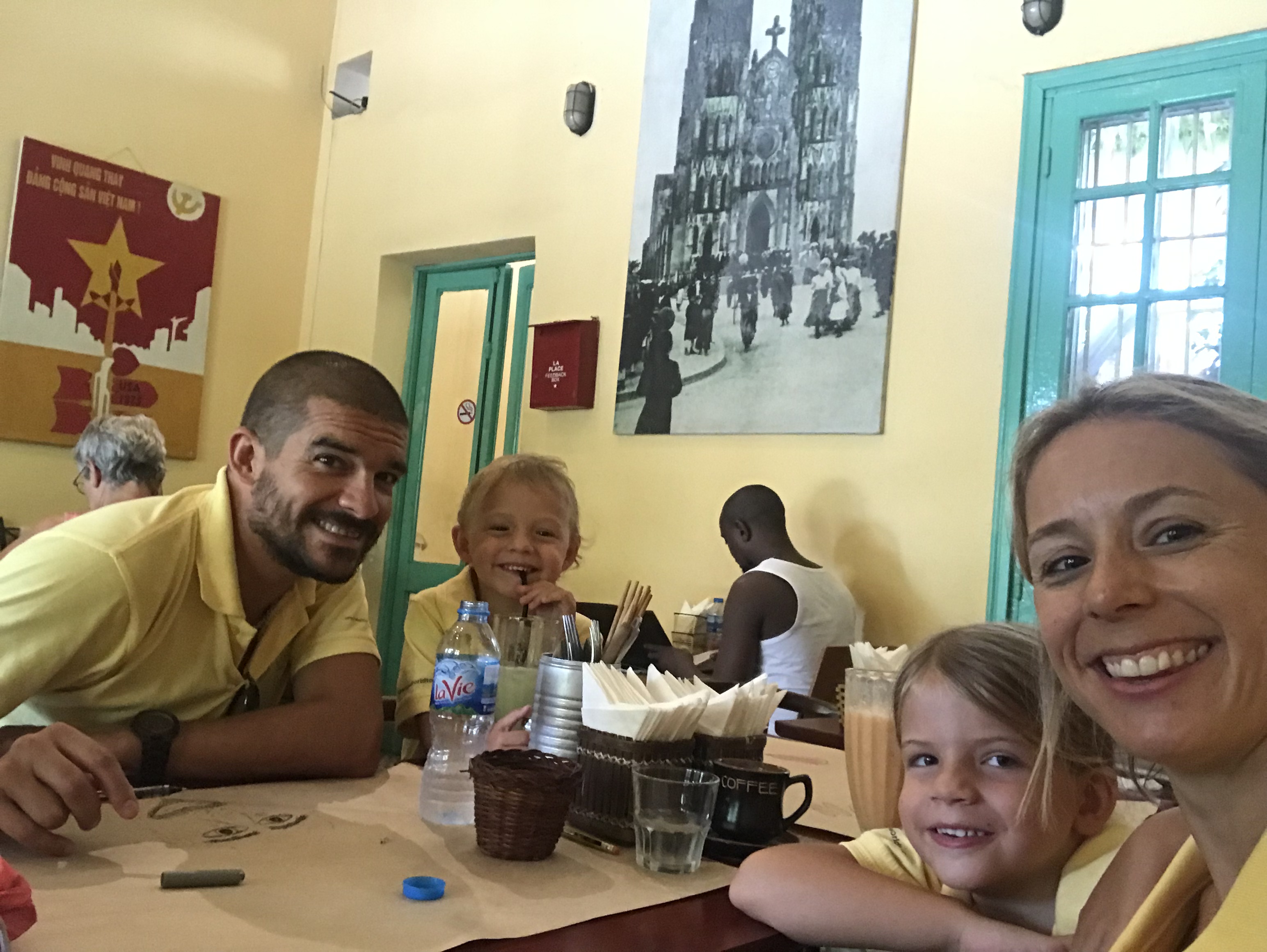
We made one our regular local haunt, La Place mainly because of the crayons available to draw on the paper tablecloths and the laidback atmosphere.

La Place cafe, Hanoi.

In order to sustain ourselves in the blistering heat we had to find quite a few spots of sanctuary across the city to get some much needed refreshment and write some diaries – a couple of favourites were the Hanoi Social Club which has regular music nights in this 3-storey converted house (built in 1924) and Xofa where it took us a long time to get a slot on a table with ac and a sofa but we made it.

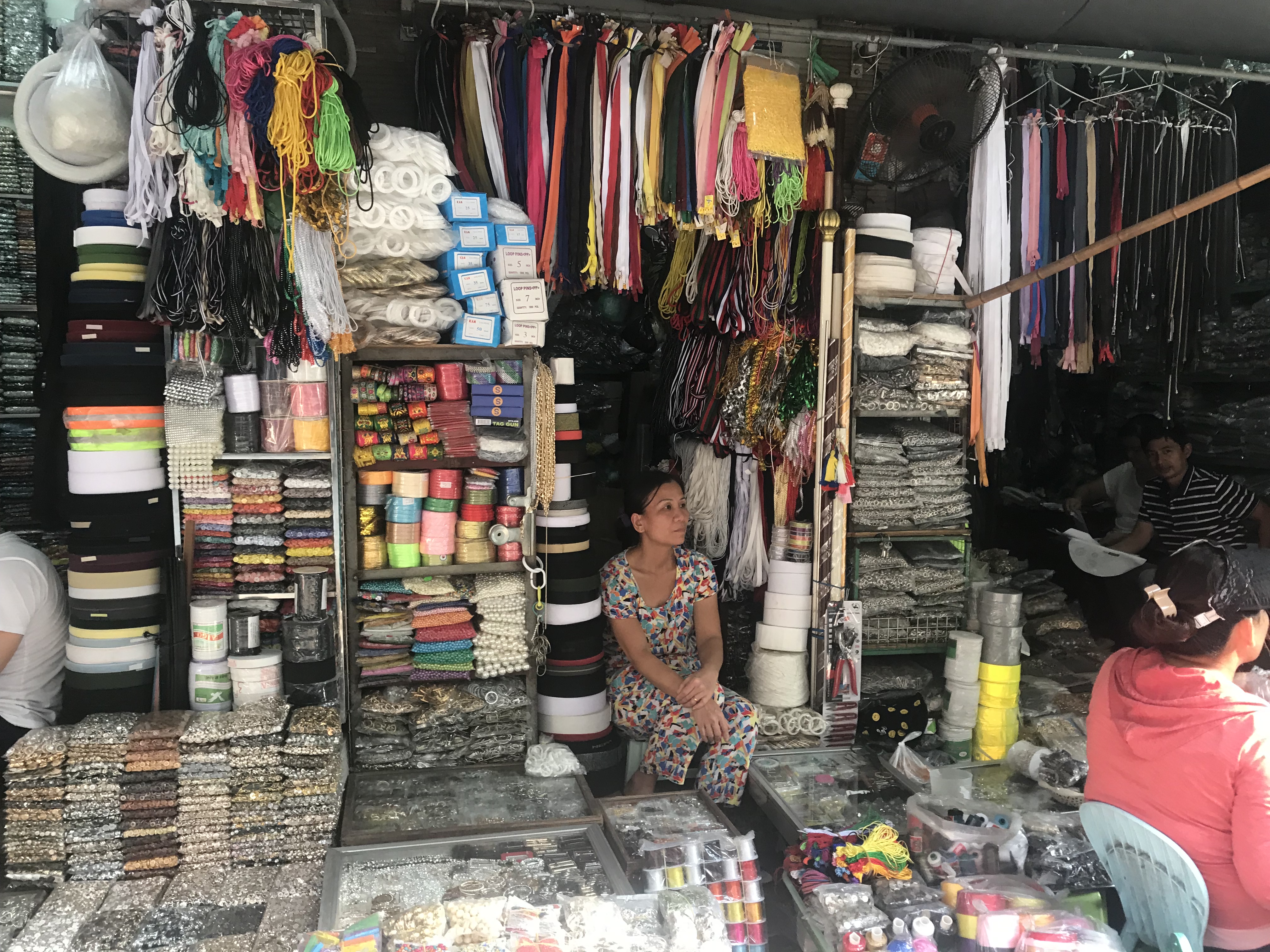
The square kilometre that makes up the old quarter is also called the 36 streets, referring to the 36 professional and artisan guilds which once operated there. Its what the street names refer to and still today goods are sold in blocks, you know where you are if you are surrounded by jewellery for sale, or stainless steel water pipes, musical instruments, gravestones, pots of paint etc etc.

Stall in the 36 streets, Hanoi.

Where we stayed had two identical sides to it – easily confused, especially on the way back after a sweaty run. Another interesting architectural trait are the ‘tube-houses’: evolved from narrow market stalls, taxes were rated on the size of the street frontages, so the building would contain successive rooms leading back into courtyards, sometimes up to 60m long.

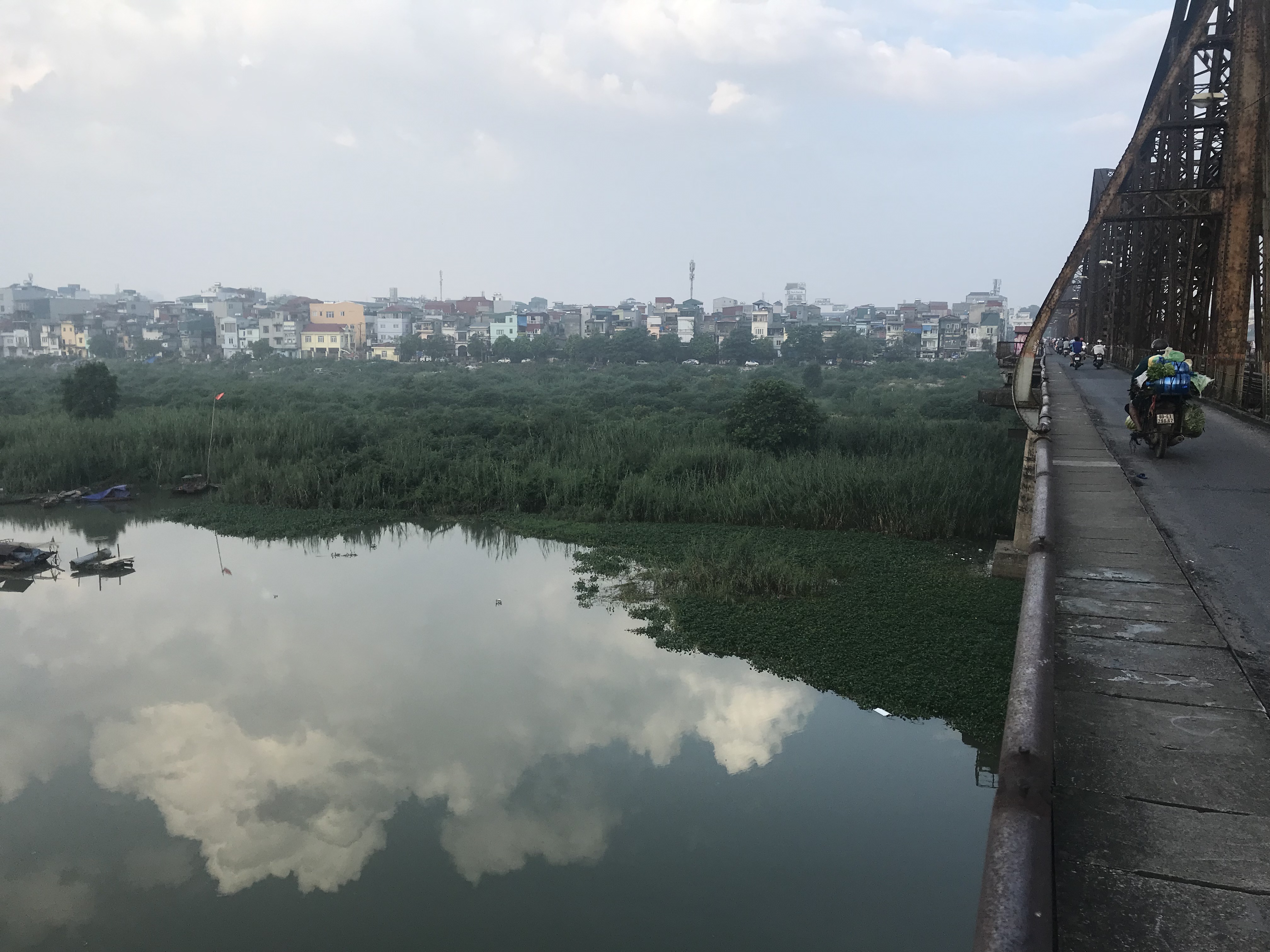
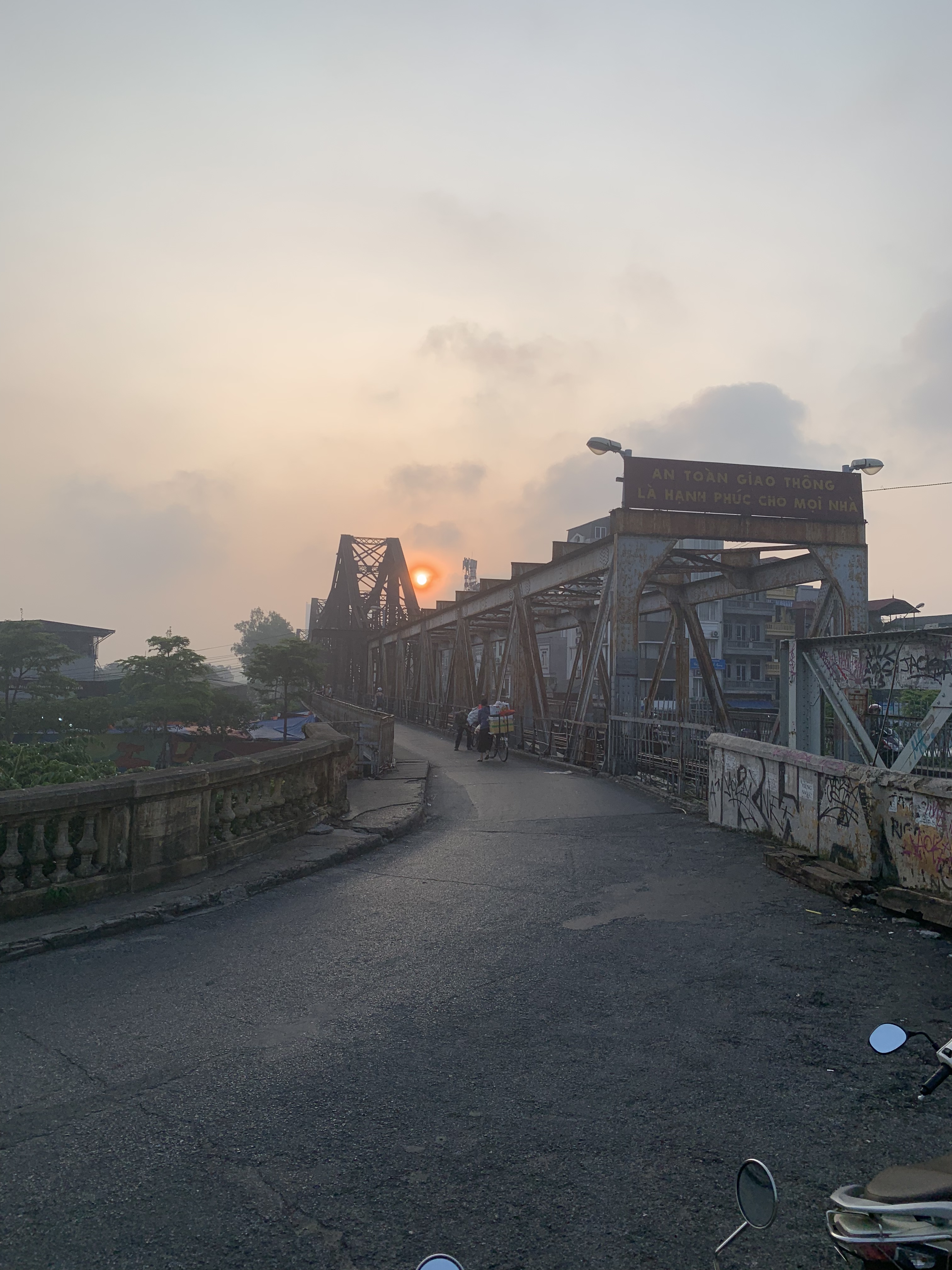
Long Bien bridge, Hanoi.

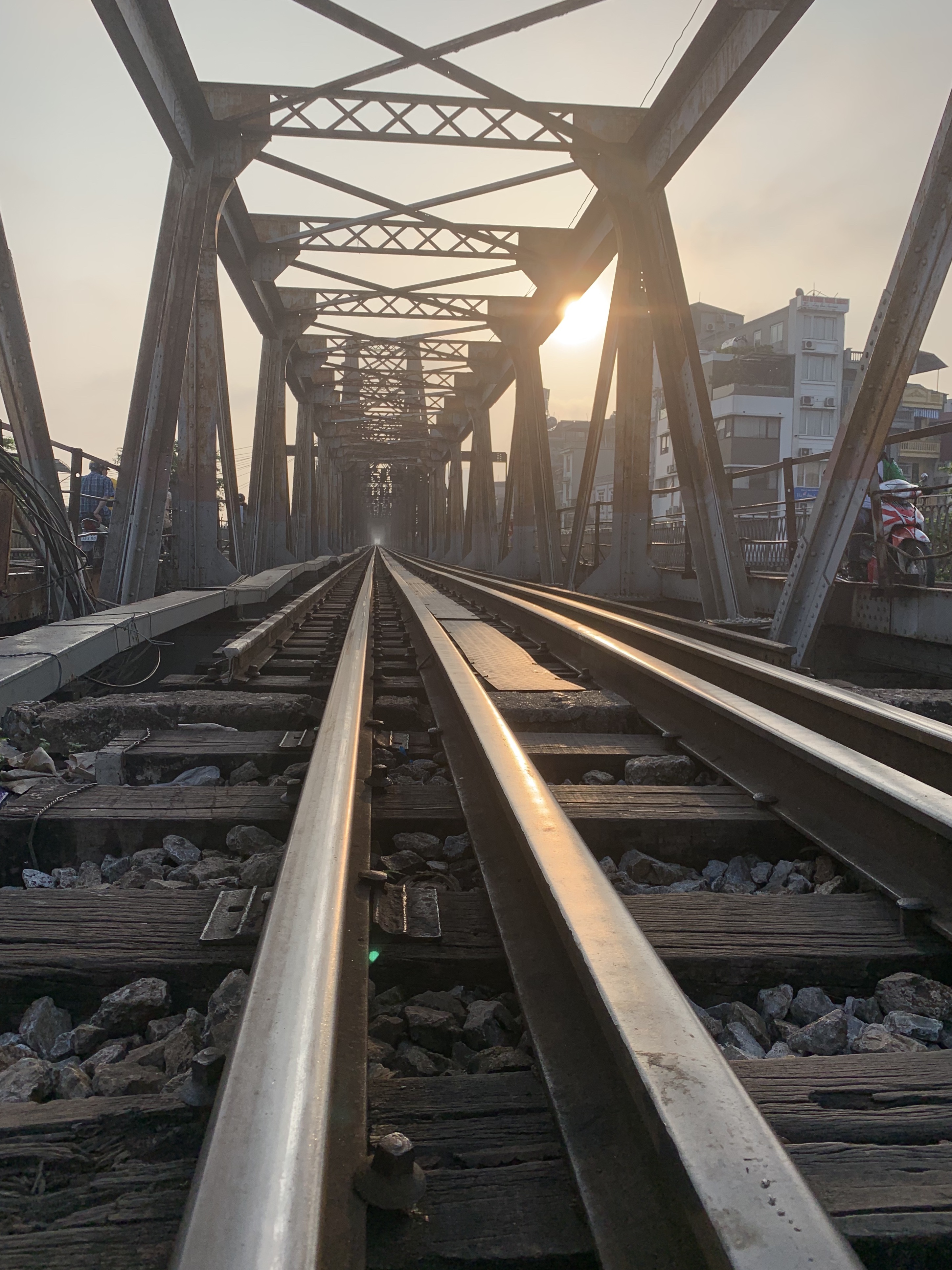
Hanoi can be translated as ‘bend in the river’ and its spiritual heart is certainly over water. Tom and I separately scaled the dizzying heights of Long Bien bridge during a sunrise city run, over a mile long and reserved for trains, motorbikes and pedestrians, with views both of the city’s bustling life and the calmness of the green fields surrounding the Red river.

A popular tourist activity is getting as close as possible to the train tracks – so much so a series of cafes have popped up there, although trains only pass by sporadically.

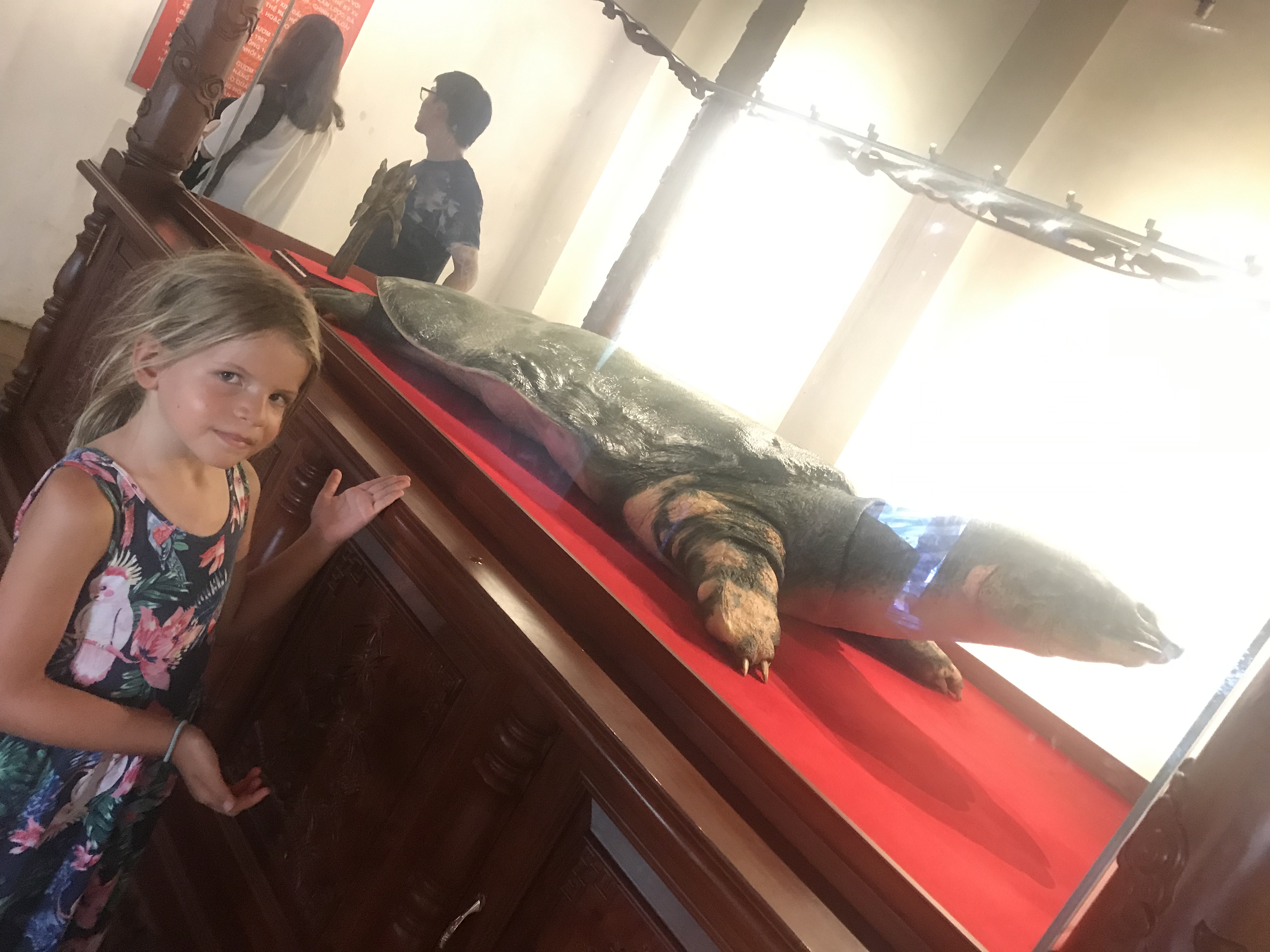
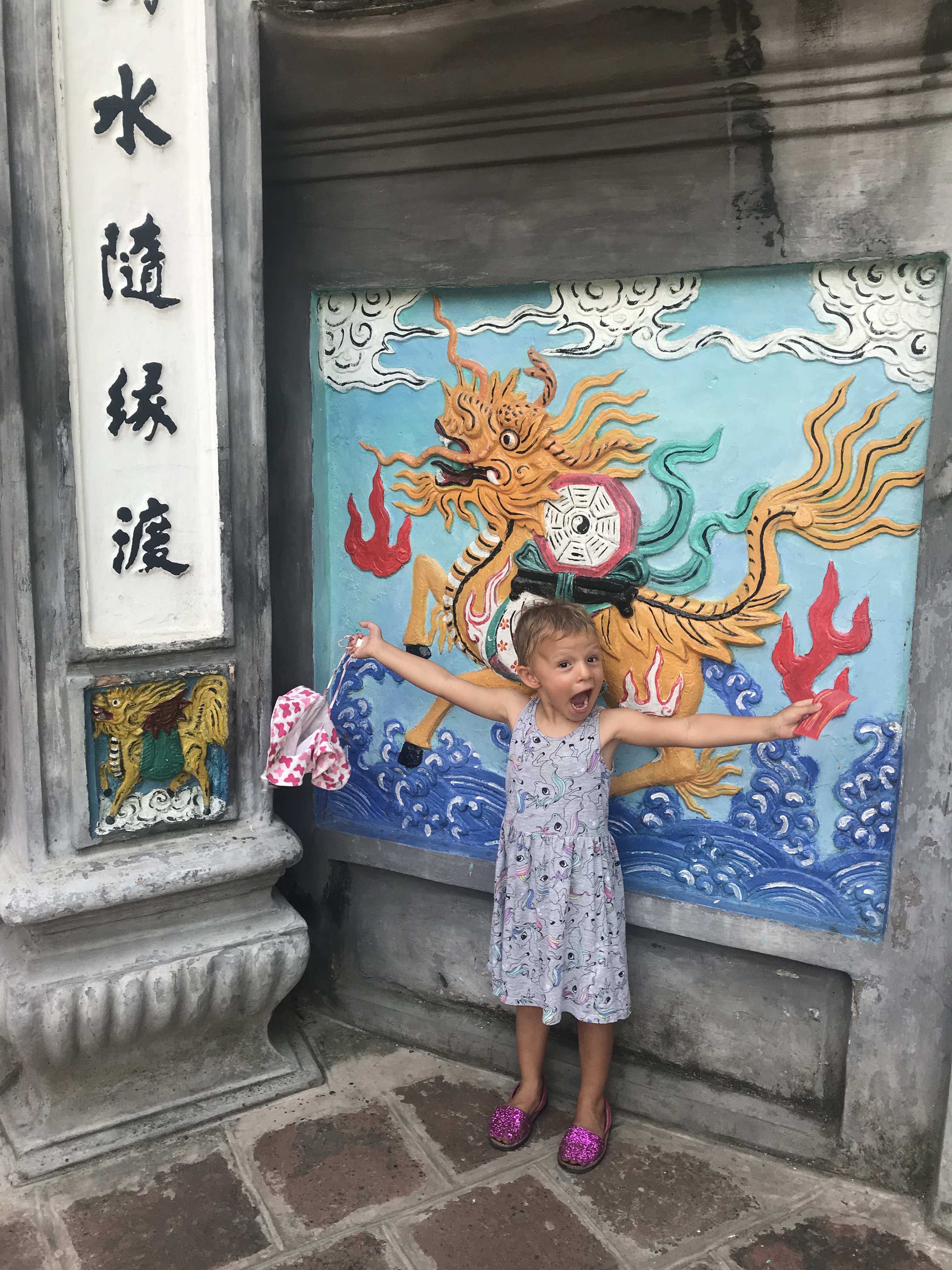
Hoan Kiem Lake is really the heart of the city, built upon a legend of the great Vietnamese hero Le Loi, who found a sword whilst fishing on the lake, which he used to win a battle against the Chinese. When he returned to the lake, a golden turtle surfaced and took the sword. Two giant turtles are preserved in a back room of the Ngoc Son Temple and worth a view.

Hoan Kiem Lake, Hanoi.

You find the temple by walking across the red Huc bridge. The ‘turtle tower’ on the other side of the lake isn’t terribly exciting, built in the 19th century.

The turtle was ‘this’ big
The dragon was THIS big

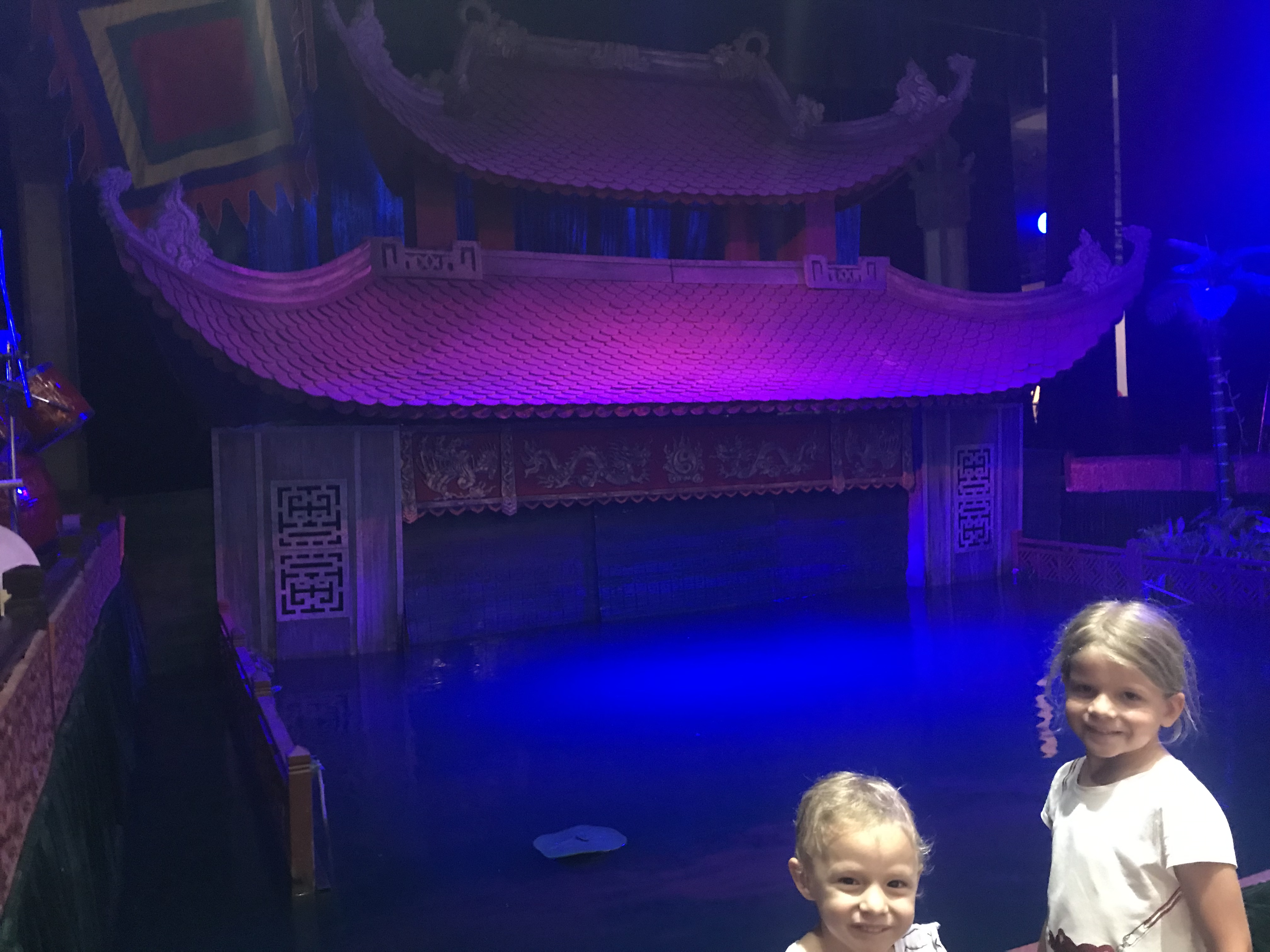
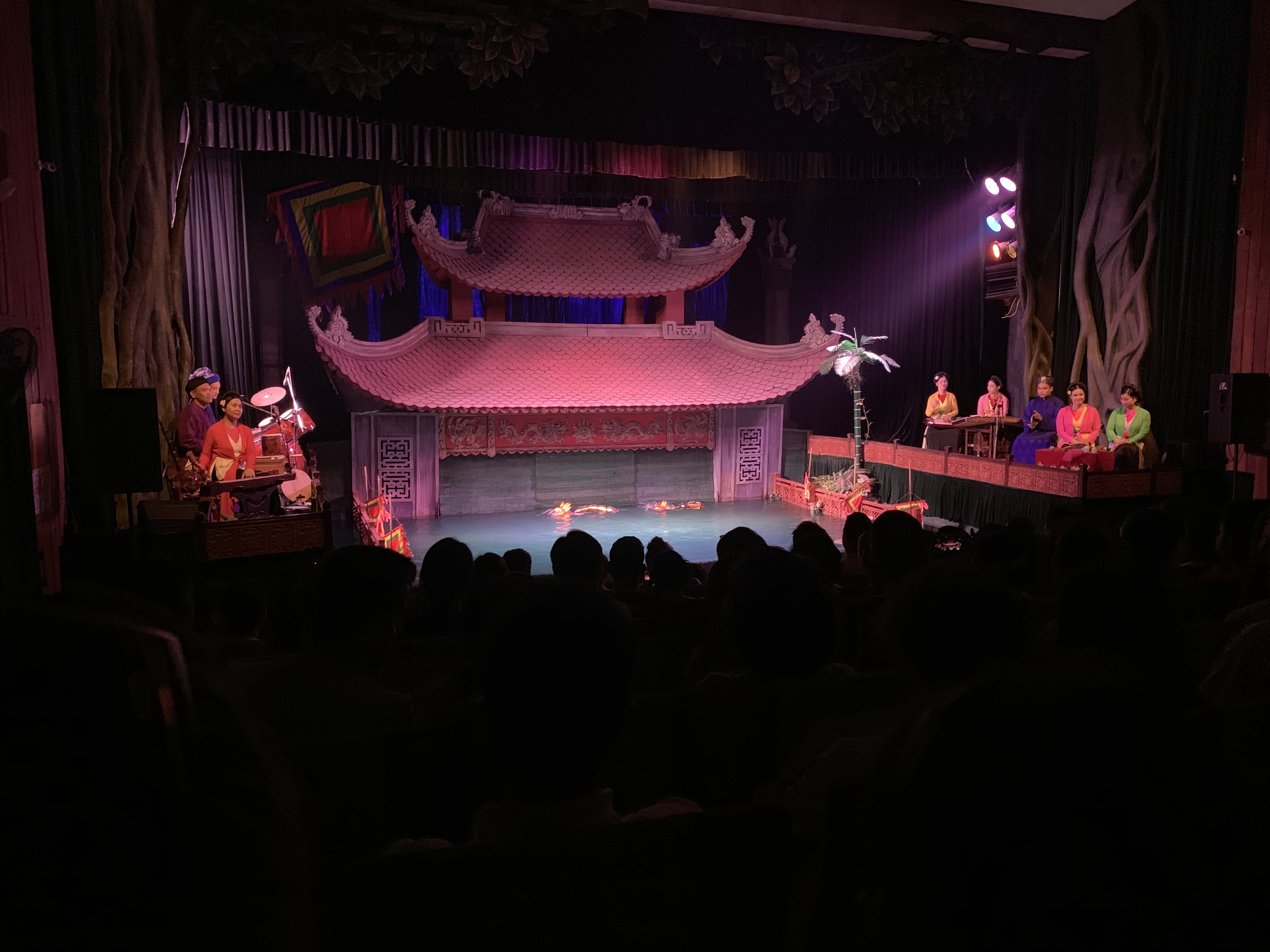
The legend and other local stories are reenacted brilliantly in a performance at the Water Puppet Theatre, something not to miss. Performances happen three or four times a day, and include a troupe of musicians and a series of 15 or so scenes, including a dragon boat race and ride on a buffalo.

Water Puppet Theatre, Hanoi.

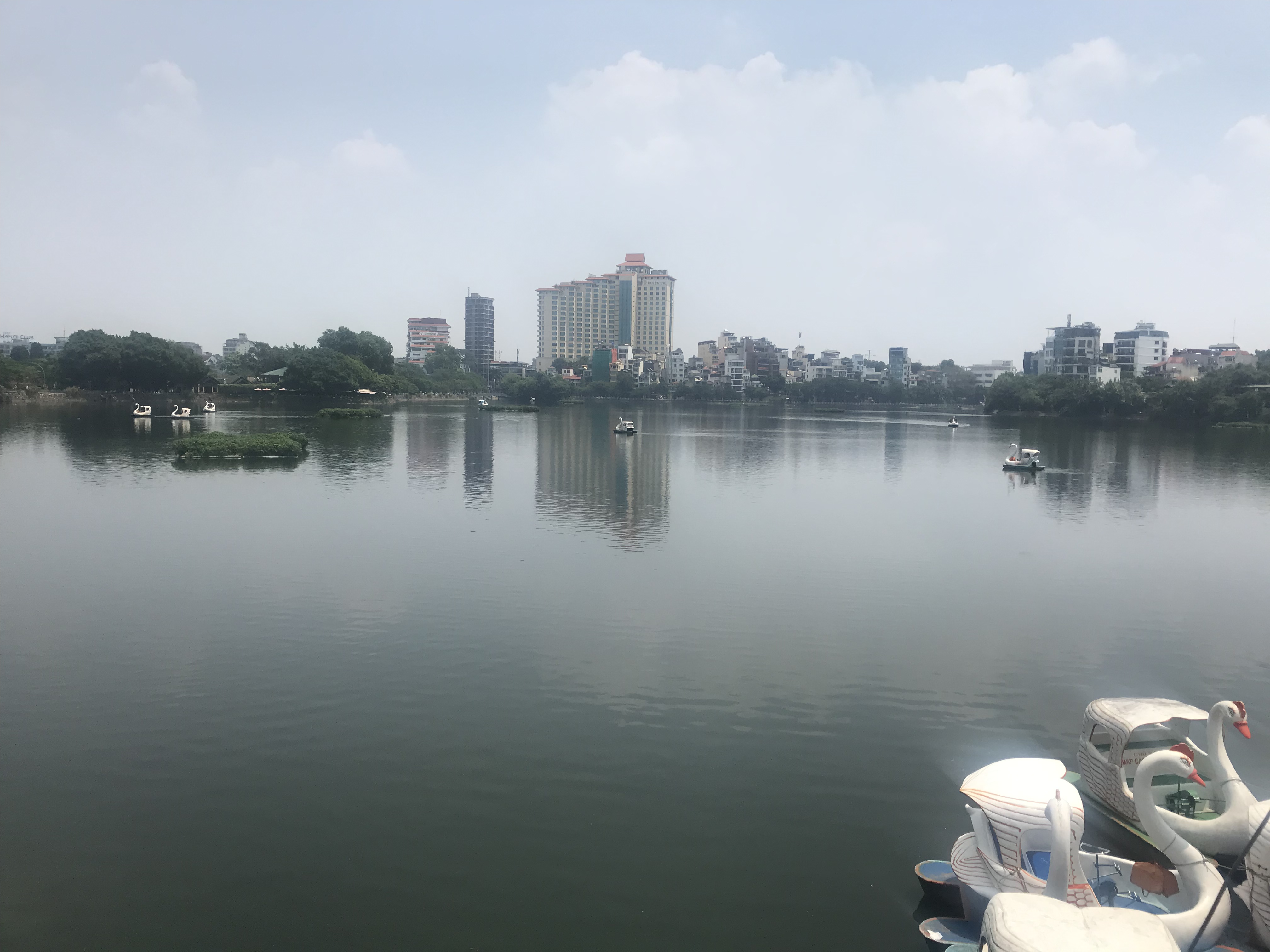
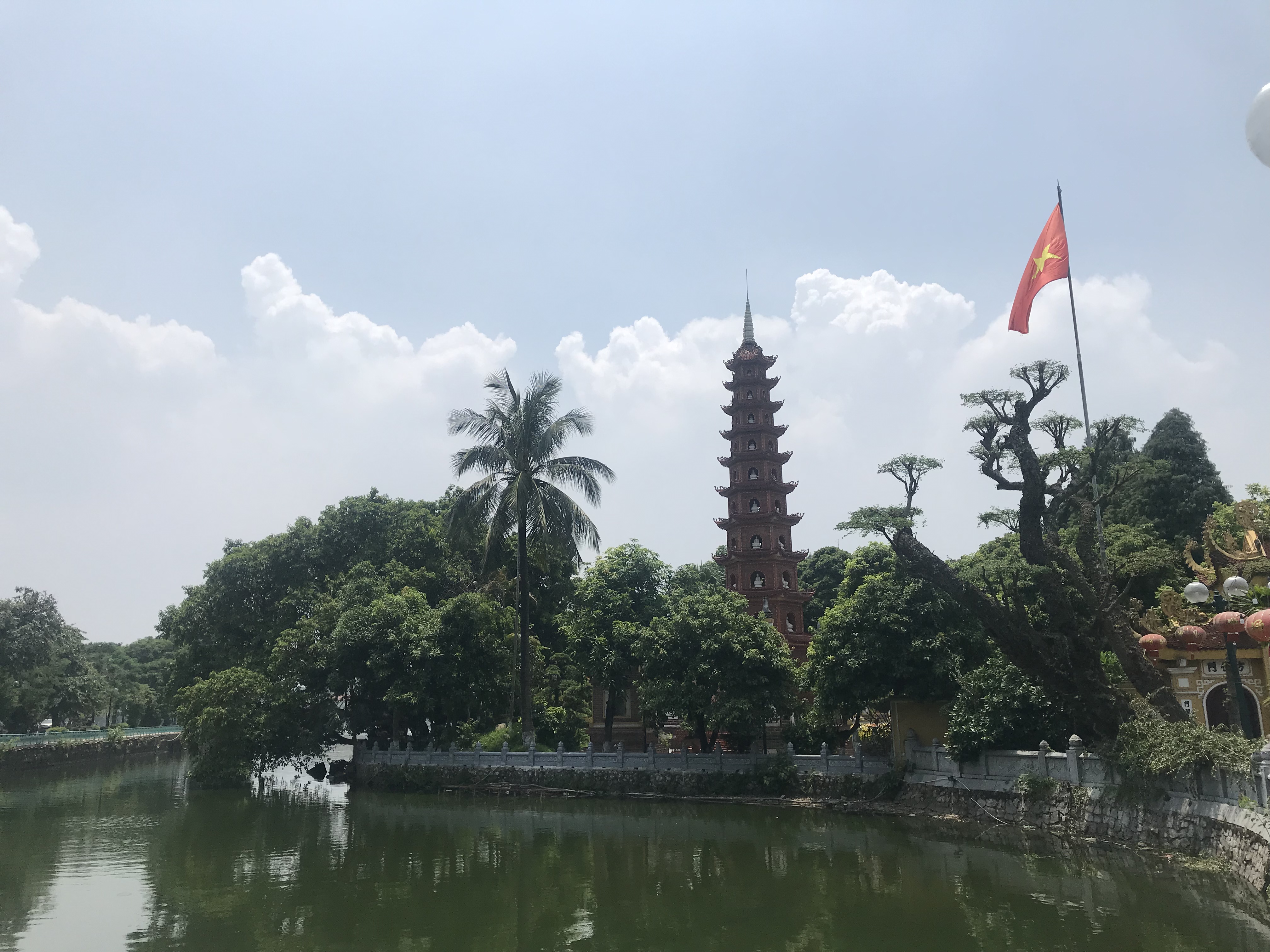
We did venture to West Lake (which has another legend regarding its formation, about a buffalo calf) in the heat, promised some rides on swans but the humidity was too much so we only paused for refreshments at Highlands Coffee and a welcome lunch at Paris Baguette (a Korean brand!) with a passing look at the Quan Thanh and Tay Ho temples.

West Lake, Hanoi.
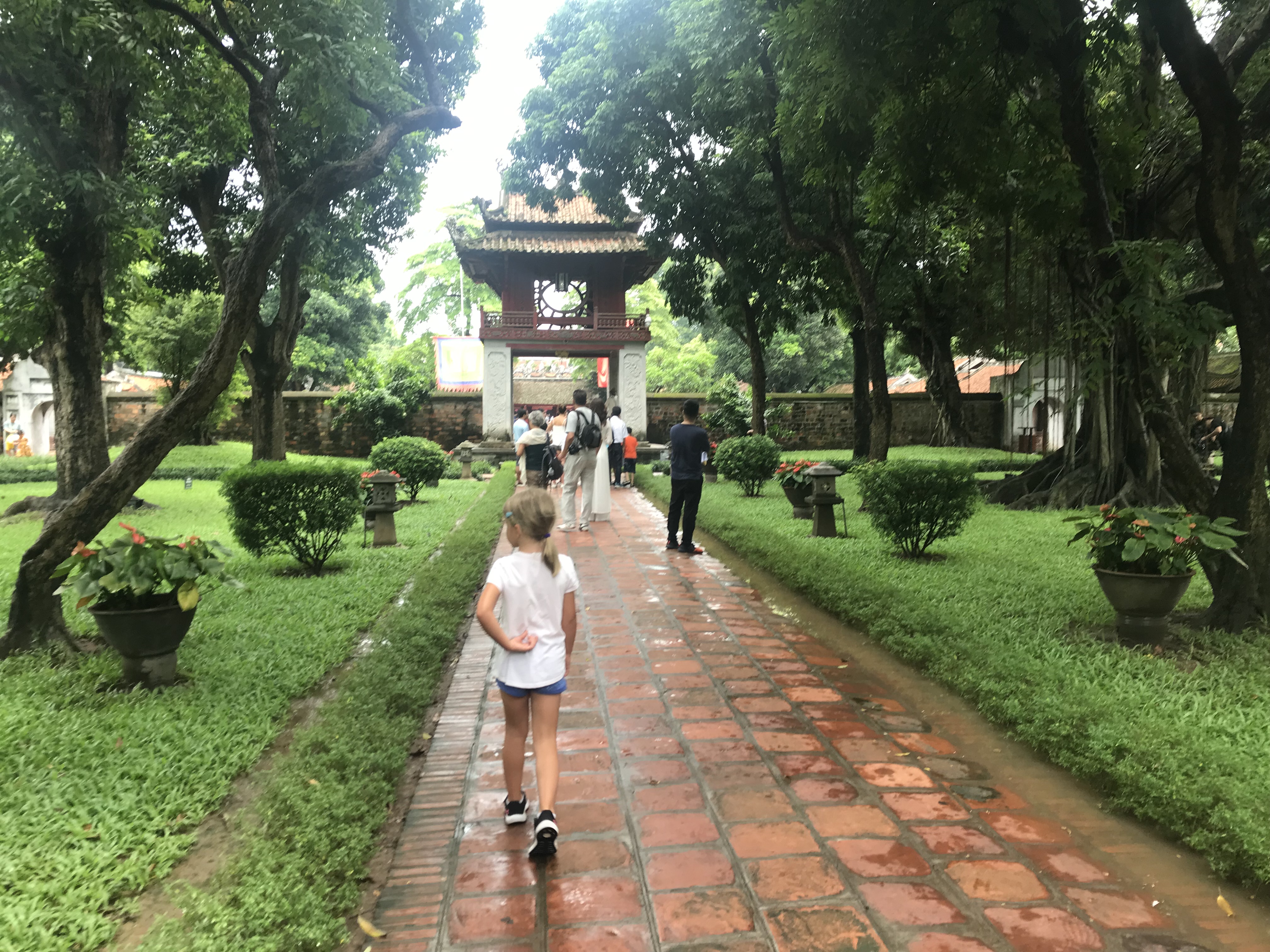
Temple of Literature, Hanoi.

A visit to the Ba Dinh district gives plenty of history lessons. We started out at the fascinating Temple of Literature, which felt like an oxbridge college with its symbolic series of courtyards and focus on scholarship. Dedicated in 1070, a series of ‘stele’ or stones record the results of a state examination for potential mandarins. Further on we were entertained by some traditional music and enjoyed finding a giant drum and bell as well as an octagonal pagoda.

Temple of Literature, Hanoi.

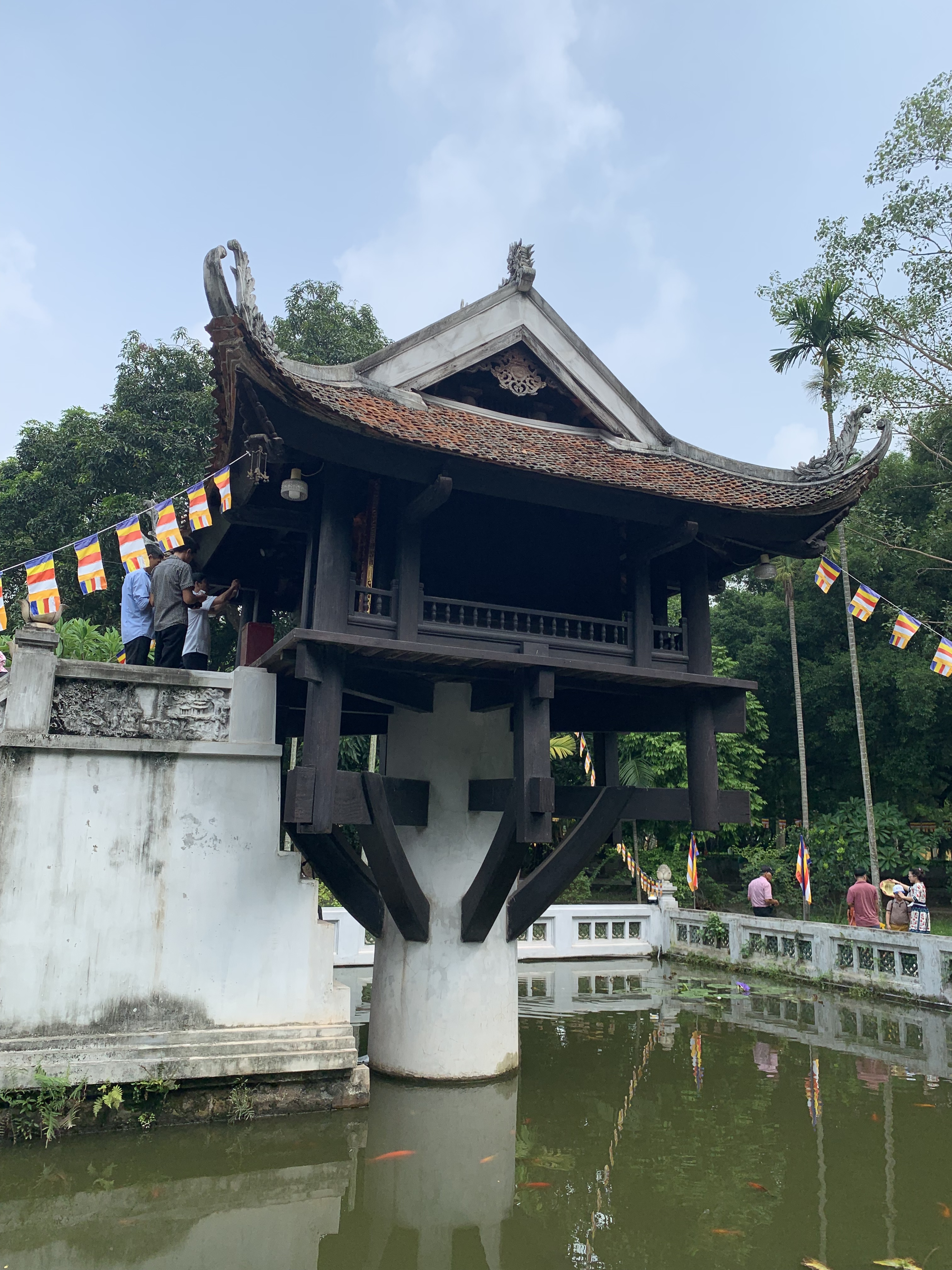
The imposing Hi Chi Minh Mausoleum was only viewable from the outside, and the walk around this area was pretty forbidding given the heat and military presence. That said we did enjoy finding the One Pillar Pagoda and its neighbouring Quan Am sanctuary.

One Pillar Pagoda, Ba Đình district, Hanoi.

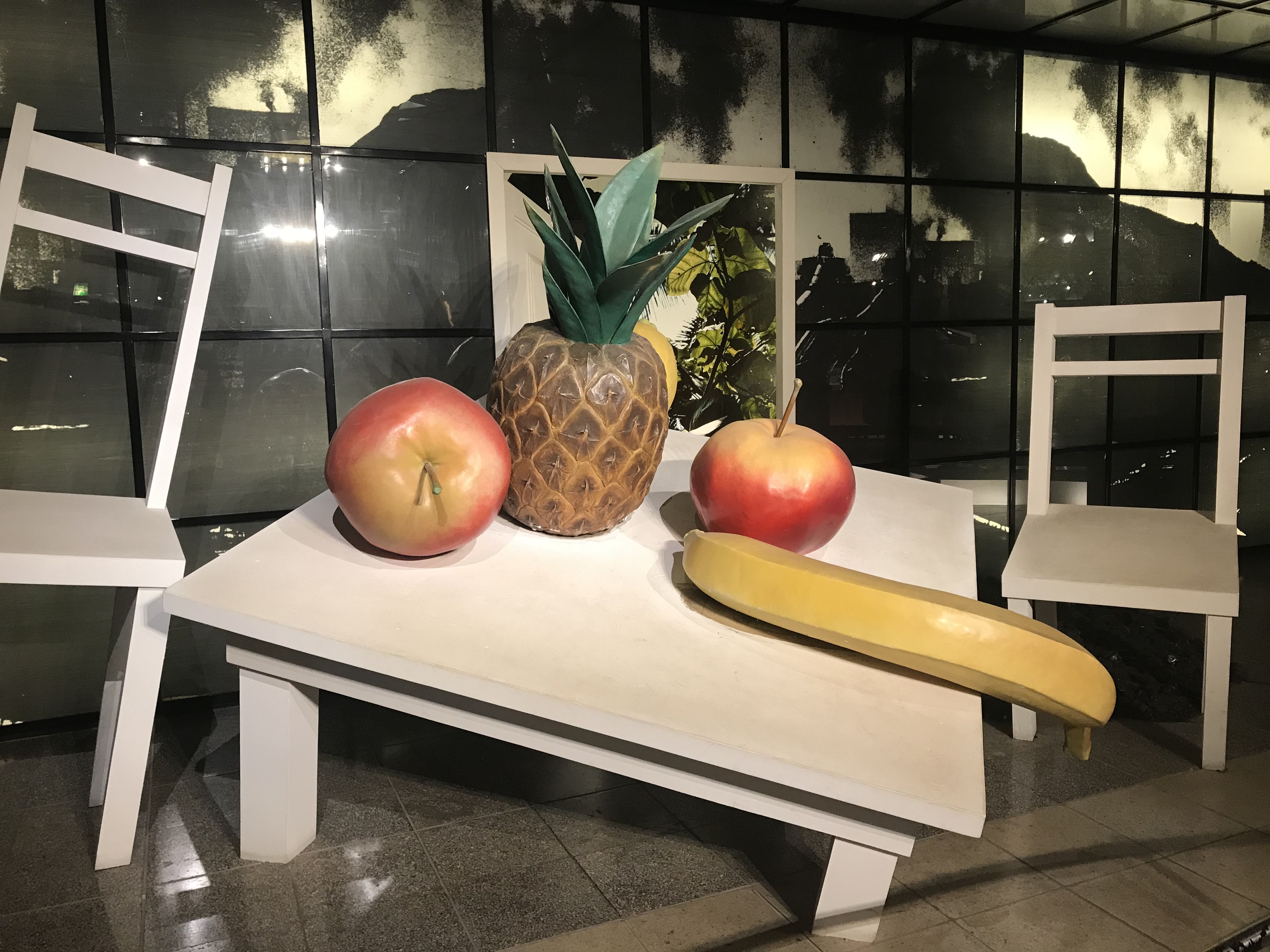
We went on to the Ho Chi Minh Museum – inaugurated in 1990 to celebrate 100 years since the great leader’s birth. Every city in Vietnam must have a museum dedicated to Ho Chi Minh, so we felt we should experience at least one and this was quite an entertaining experience!! The displays were initially blatant propaganda material – and grew increasingly surreal – the 19th century summed up by a hall of mirrors, the future generations by a giant table with a plate of artificial fruit.

Ho Chi Minh Museum, Hanoi.

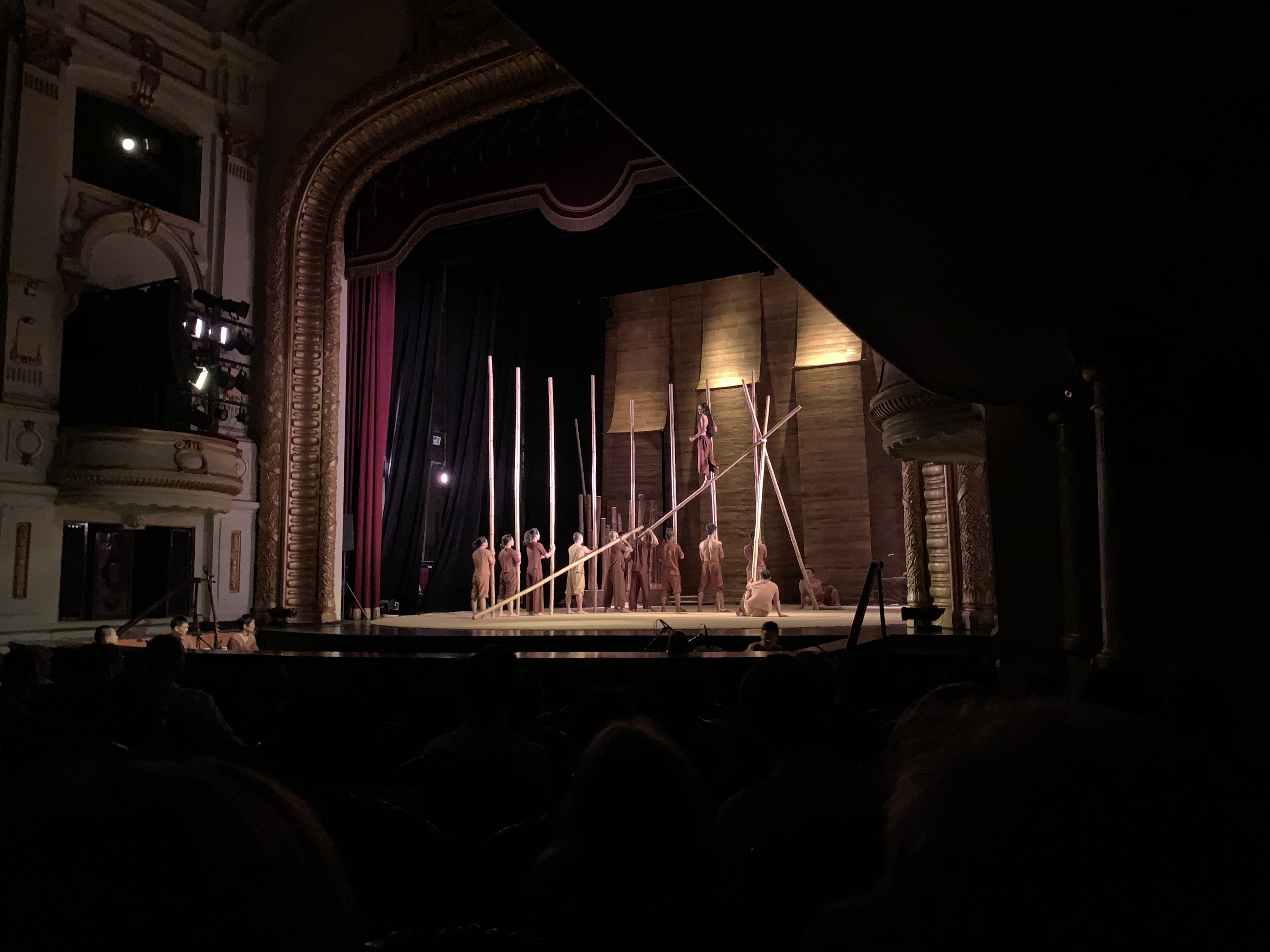
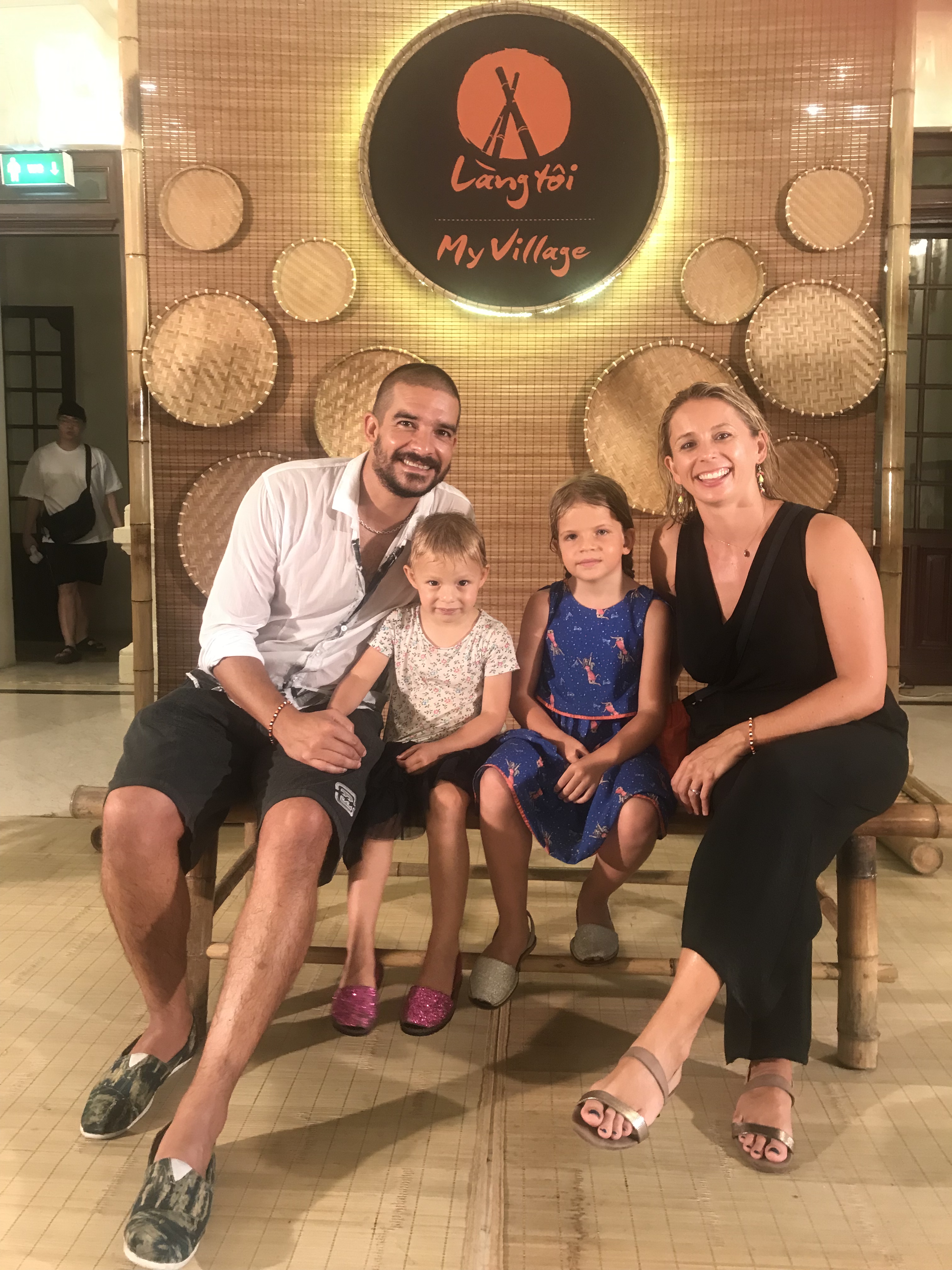
We spent a night at the grand Opera House, watching a performance called ‘My Village’ which was an jaw-dropping display of acrobatic dexterity, loosely giving an insight into Vietnamese daily village life.

My Village, Hanoi Opera House, Hanoi.

The jugglers using the ‘see no evil, hear no evil, speak no evil’ mantra were a highlight, as was a girl who could move like a crab for a worrying amount of time up and down bamboo poles. We got soaked in a downpour on route to the theatre so had to sit in damp clothes throughout the performance!

Food wise we were again in heaven. For our first lunch we took to the streets and sampled Bun Cha (pork burgers and strips of bacon served with rice noodles and a sweet soup) for the first time – an incredible taste sensation. We also enjoyed sampling street food around the night market area and never quite got Tom his Bia Hoi moment, but got close!

Hung Snake restaurant, Le Mat, near Hanoi.

One day food became the main focus: when we decided to take a grab out to Le Mat snake village, selecting the Hung Snake restaurant (3rd top restaurant in Hanoi on Trip Advisor!). We chose a bamboo snake which was killed in front of us and then prepared into 11 standalone dishes – including the beating heart, spinal cord and the crispy skin which Joanna enjoyed….

What a choice…

Vietnam and Cambodia are increasingly establishing restaurants which have a social mission, to help give street children a vocation. We went to KOTO, close to the Temple of Literature, staffed by street kids training in hospitality.

We loved Vietnam. The hustle and bustle (i.e. crazy traffic which seemed to work!) the trains, the planes, the food, the people. A place we hope to return to and one we highly recommend.

How long to Ha Long?

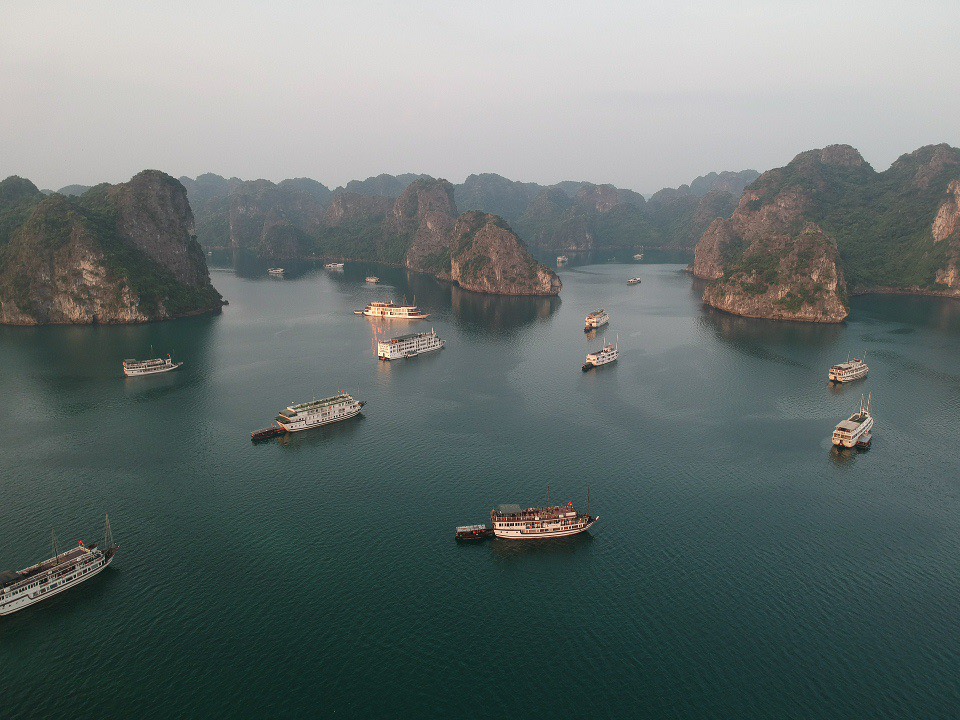
A fairy tale landscape of 1969 uninhabited islands of ancient limestone cliffs stretching away from the Vietnamese coastline, set within an emerald green bay. An overnight trip to famous Ha Long Bay should be on any tourist’s itinerary.

‘Ha Long’ translates as dragon descending and has been subject to much myth-making over the centuries. Local legend credits their creation to a celestial dragon and her children sent by the Jade Emperor to stop an invasion, spitting out pearls to form islands. They have been likened to Tuscan cathedrals or pieces on a chessboard. In reality there is certainly something beautifully spooky and compelling about the place.

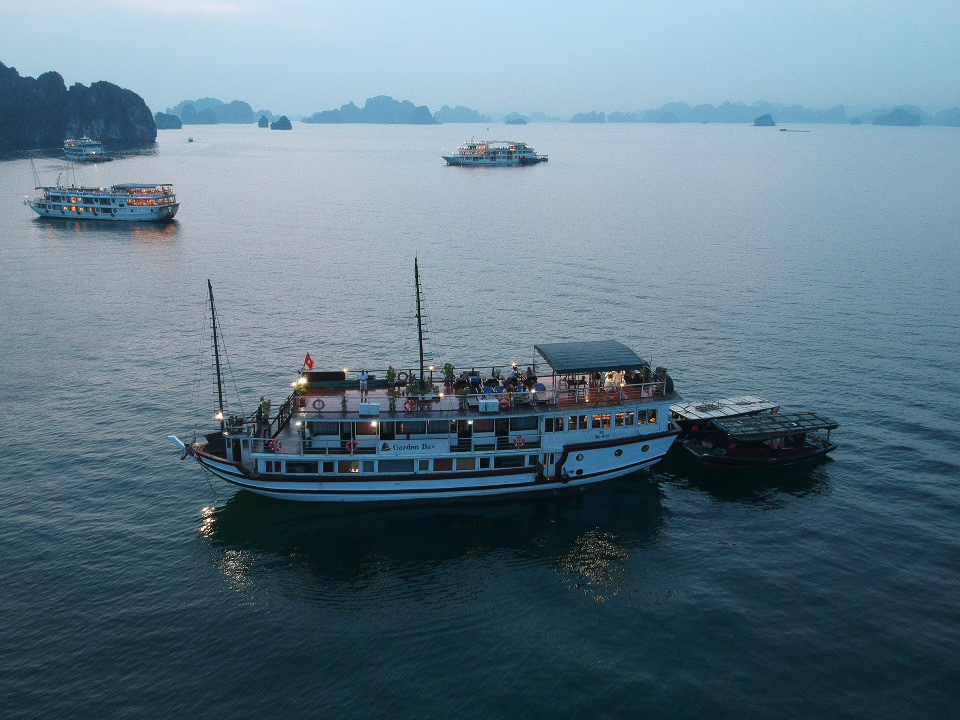
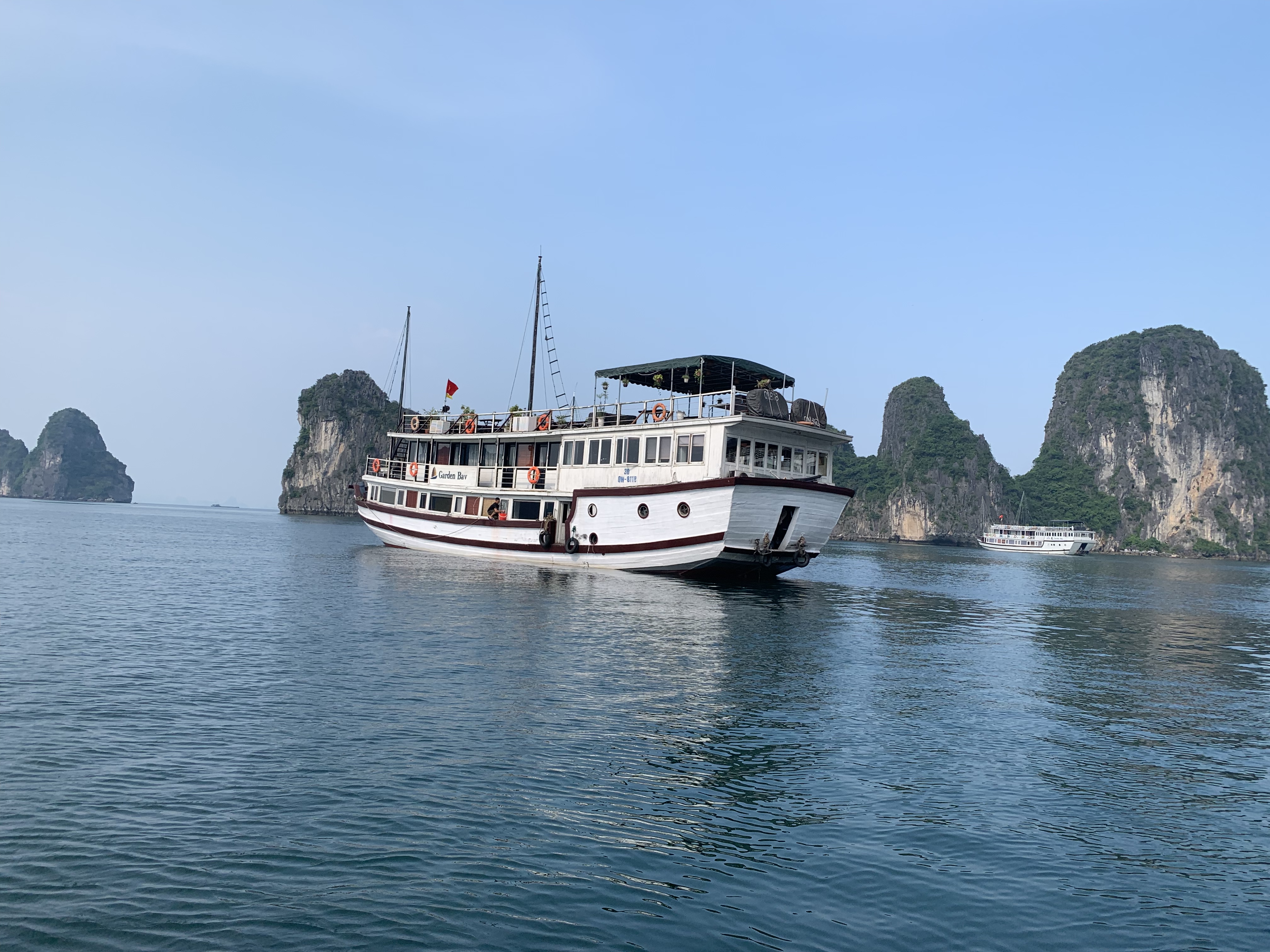
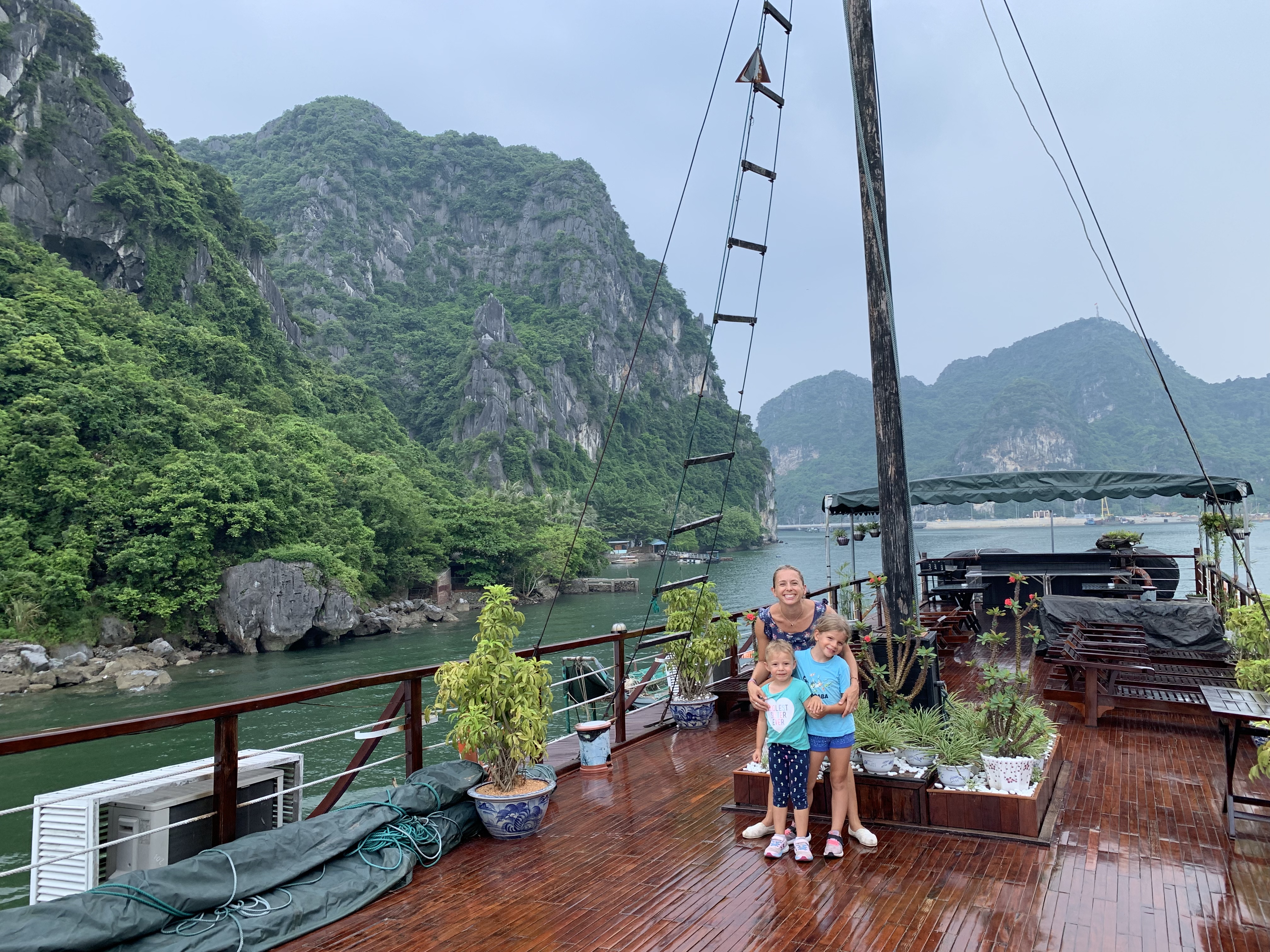
Tom had done a lot of research as there were many different types of boats available, all a little over our budget! We decided to go with Garden Bay Cruise and to just do a two-day and one-night tour, as we had heard that the two-night tours repeat the same activities on the second day.

Garden Bay Cruise, Ha Long Bay.

If we had realised how long the bus ride from the centre of Hanoi to the port where you reach the boats was, we may have changed our mind as the two days were quite long and time on the boat a little rushed.

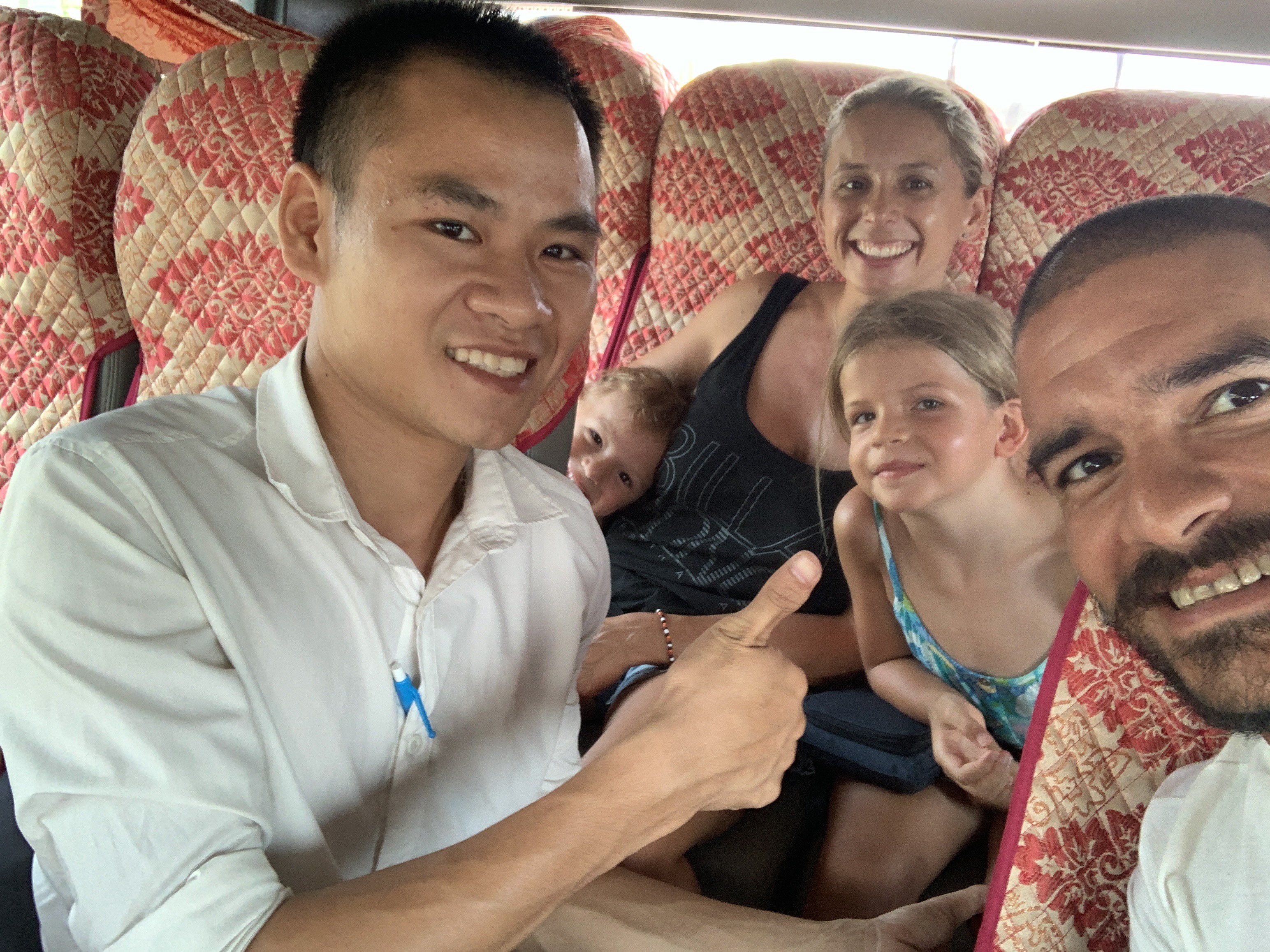
Our tour guide Lee showed his sense of humour and fun right from the moment he picked us up from our hotel – first stop Singapore! He joked, saying we could get to Singapore or China if we kayaked in the wrong direction!

Lee and family Egerton, on route to Ha Long Bay.

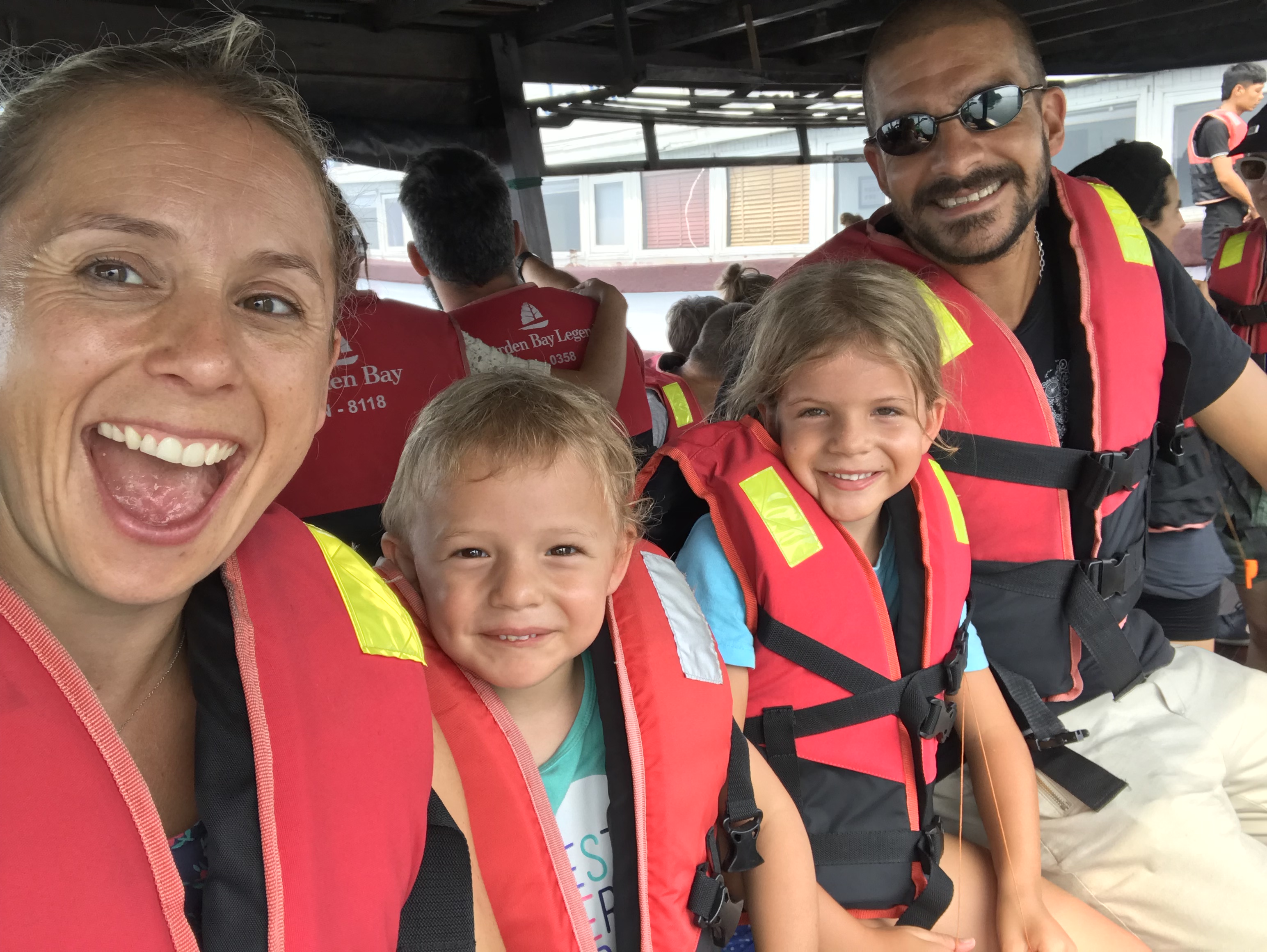
He managed to talk most of the way – trying to rally together all the bus passengers asking us to introduce ourselves, it was mainly a European bunch, Spanish and Italian 30 something couples, us and an Australian mother and 18-year old son. The journey took around four hours, with the obligatory stopover where you look at overpriced traditional souvenirs, crafted by locals. Eventually arriving in Ha Long City, heading straight to Tuan Chau Island wharf where we first boarded a tender to finally reach our wooden junk for a late lunch.

On a tender on our way to stay in Ha Long Bay.
Garden Bay Cruise, Ha Long Bay.

It was a lovely boat. Our cabin was upstairs with a balcony (we had paid a little extra for this) next to the restaurant. The facilities in our room were terrific, probably one of the best of our trip so far!

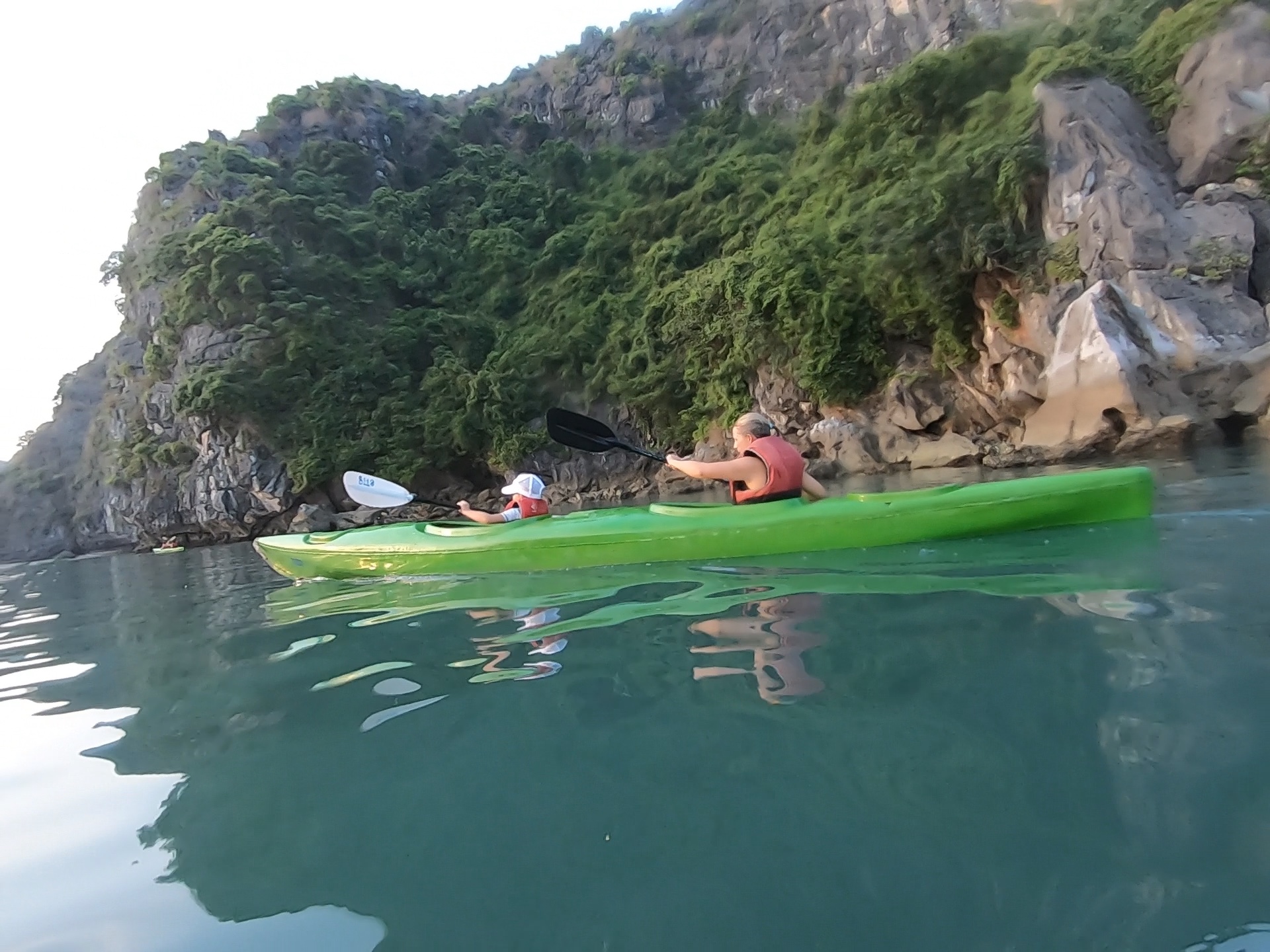
After lunch we went on a visit to Thein Canh Son Cave. It was a nice chance for MoJo to learn about stalactites and stalagmites, but it wasn’t that interesting a cave, as they go. Better was the short kayak trip that followed to a beach in Cap La area with a chance to swim in the water (which was very cloudy so no chance for a snorkel). As usual we diverted our route in the kayaks a little to collect some plastic rubbish along the way.

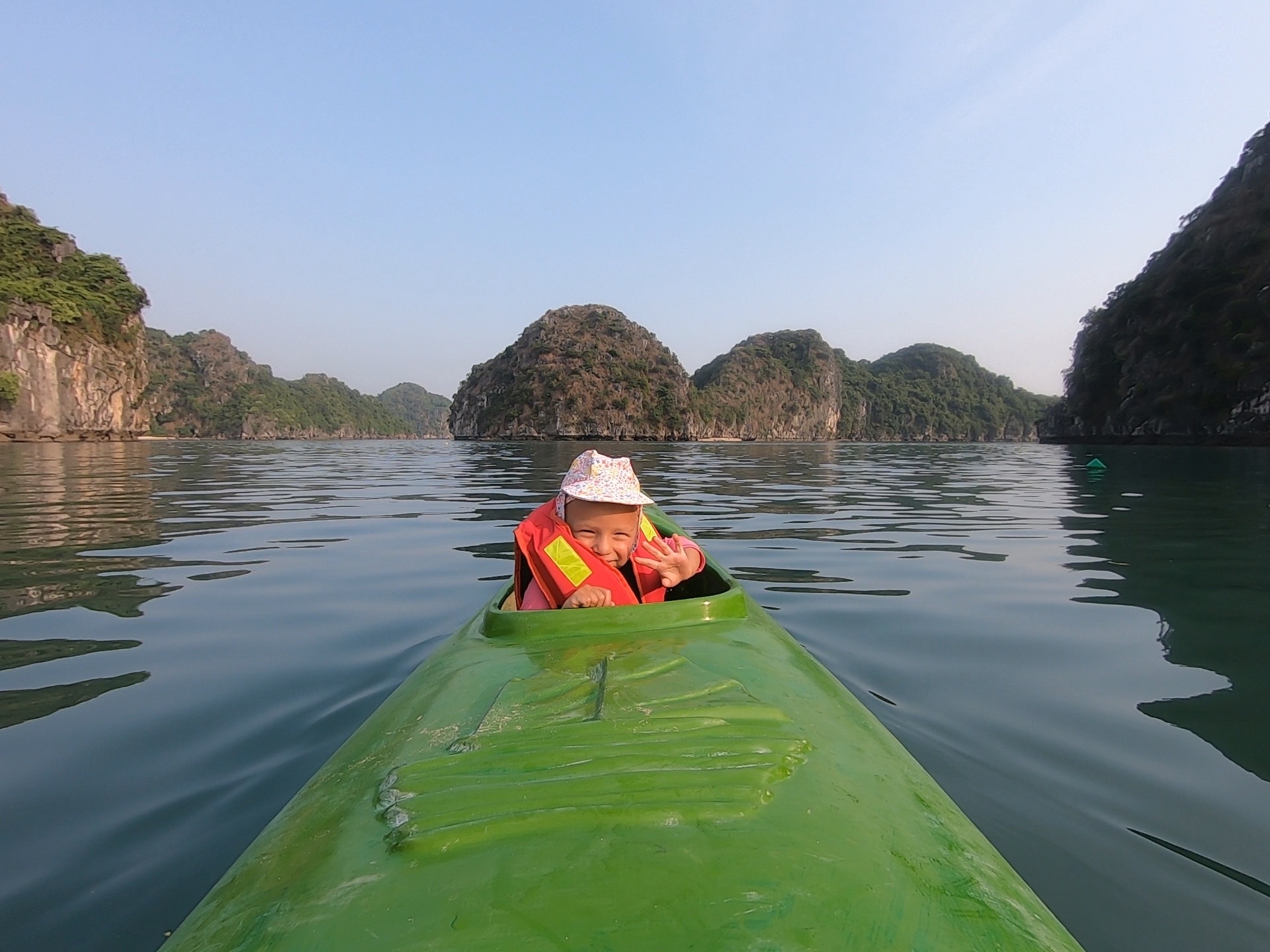
Enjoying a kayak through the still waters of Ha Long Bay.

After a beautiful sunset, drone flight and happy hour cocktails, activities continued into the evening with a cooking class and completely unsuccessful but enjoyable squid fishing session.

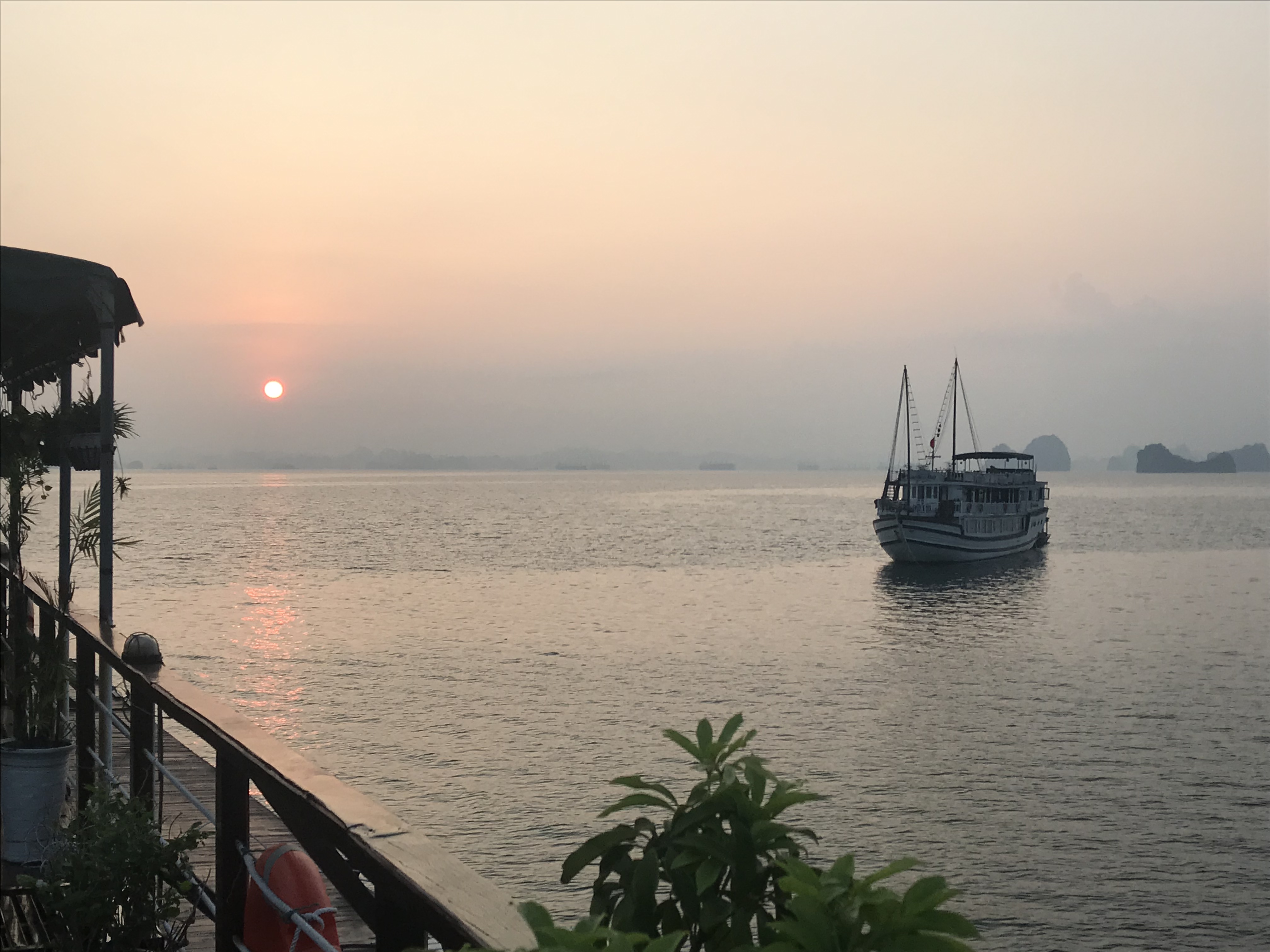
We woke up and almost missed sunrise it came so quick.

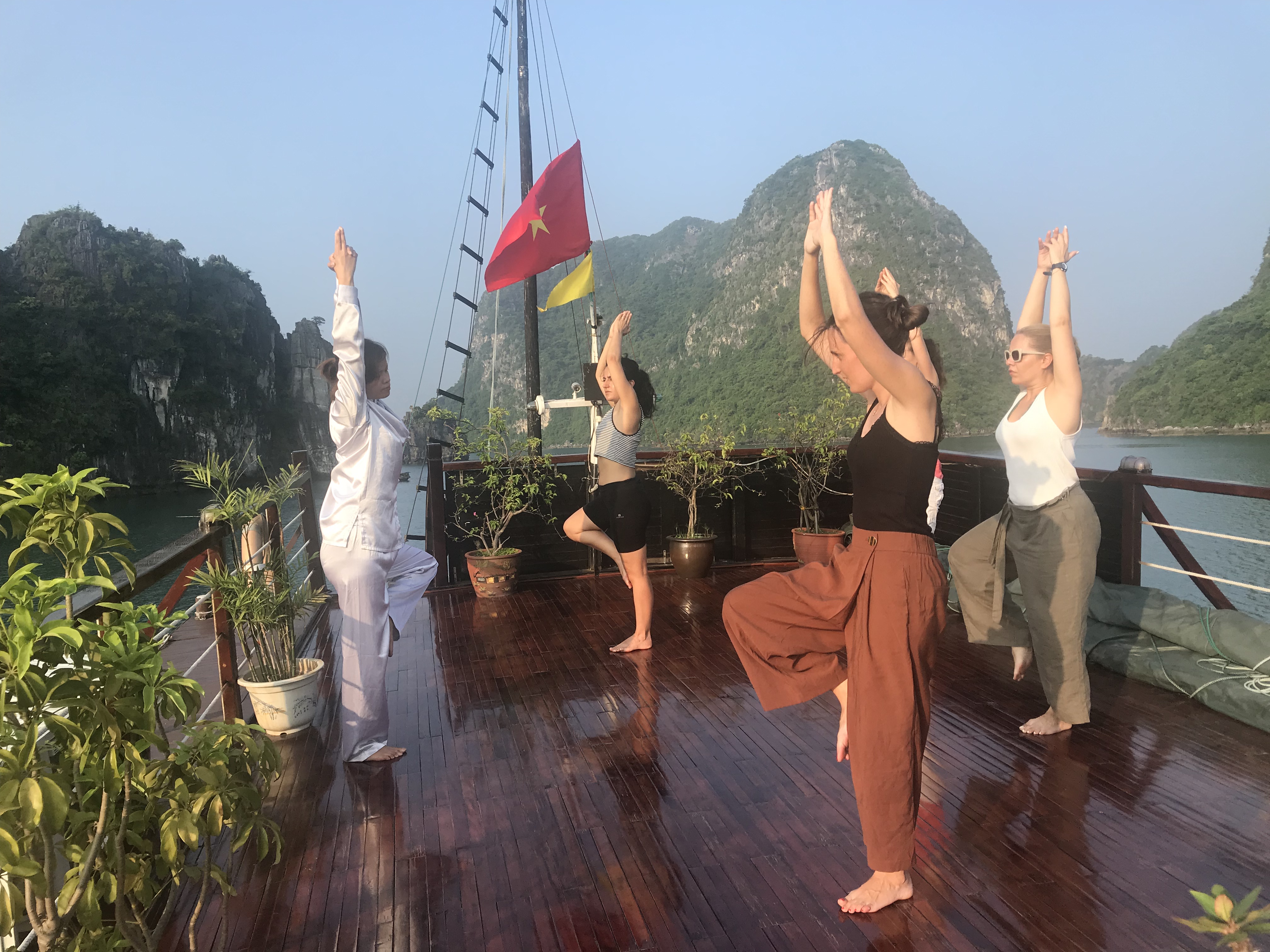
A Tai Chi taster session tempted me to the sun deck before breakfast.

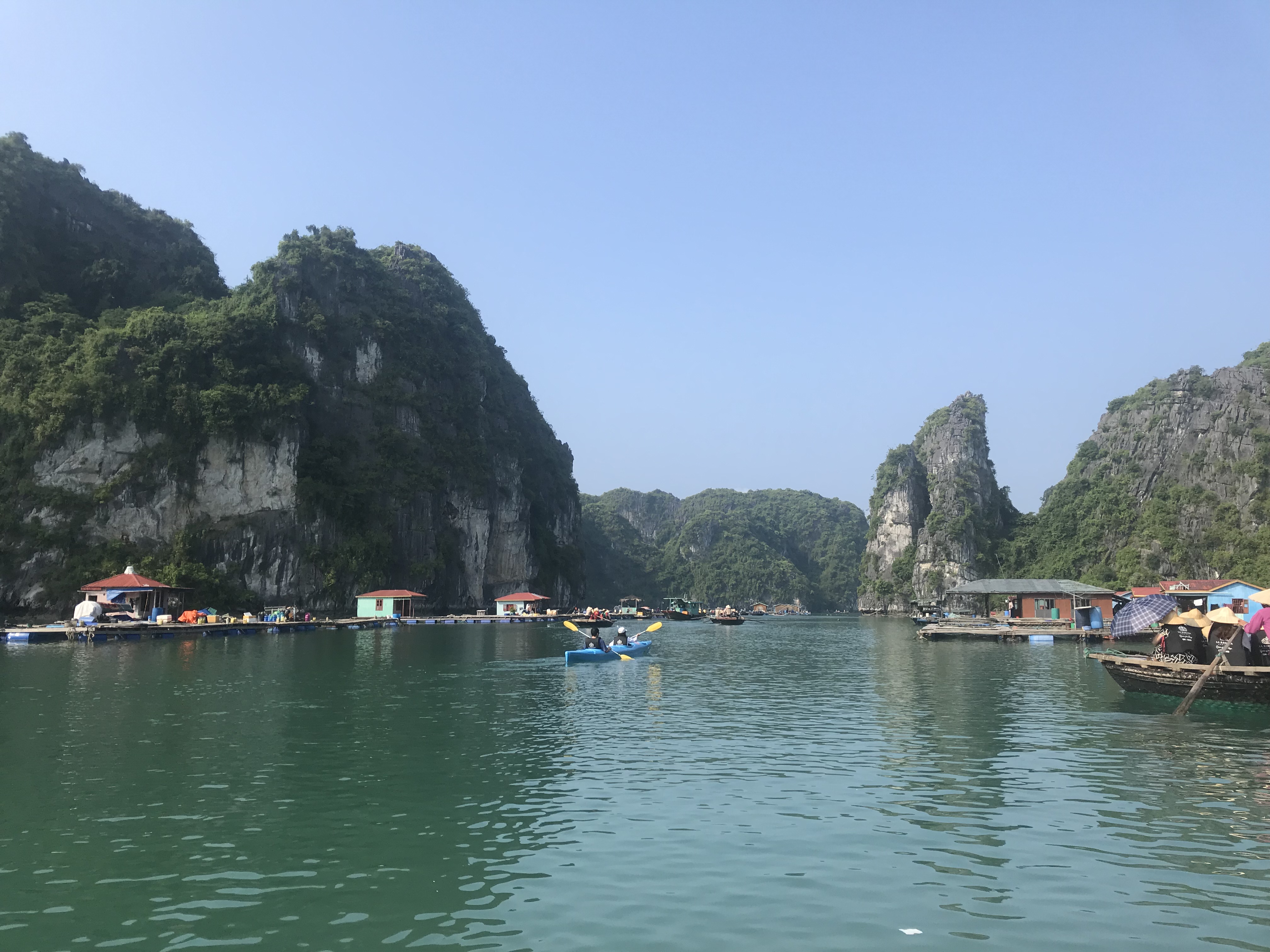
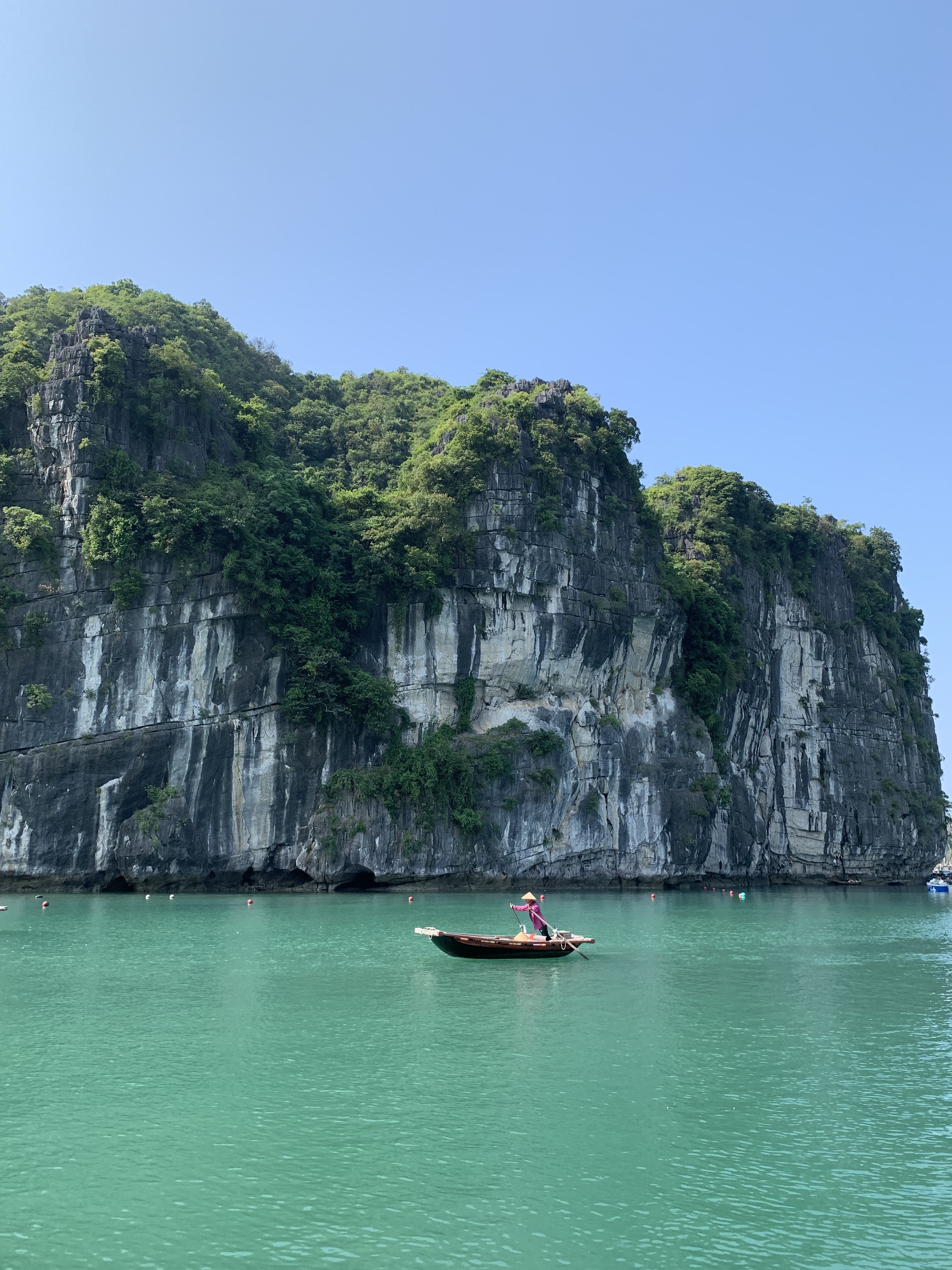
Then for those of us leaving that day, next was a bamboo boat tour of Vung Vieng floating village in the centre of Bai Tu Long Bay. Those staying a second night transferred to a day boat.

Vung Vieng floating village, Bai Tu Long Bay.

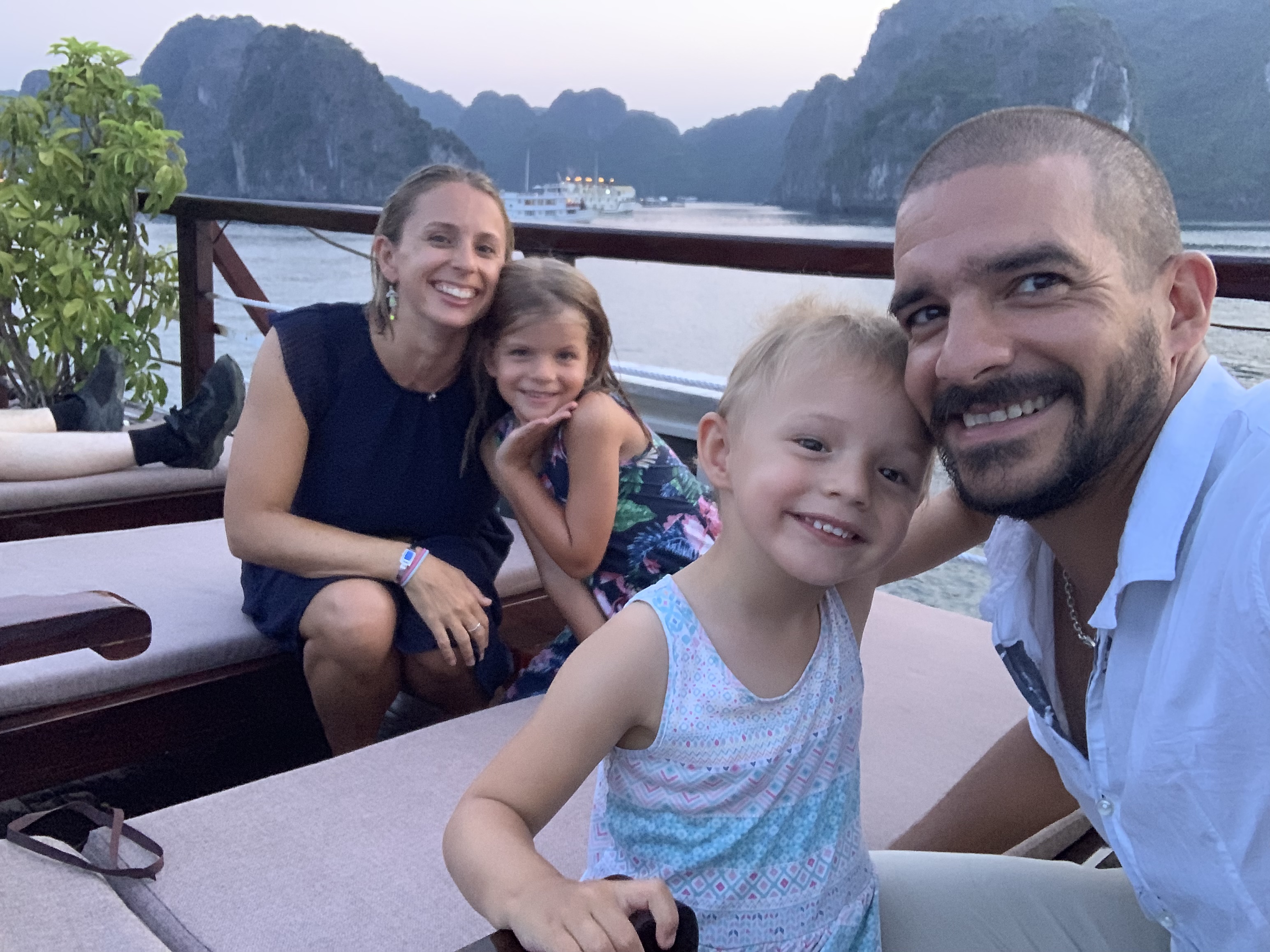
In retrospect more time could have been nice, but for the cost we had a fantastic experience – the first time the girls slept on a boat and they continue to talk about it! We had lunch on board after a final cruise through the islands. An expensive experience but definitely a highlight of our time in Vietnam.

Hoi An: lanterns, fashion and food

Hoi An, roughly translated as peaceful meeting place – was where we learnt about the ancient history and traditions of Vietnam, gaining insight to the country’s true character during our pleasant 5 days there.

Hoi An doesn’t feel like a city, it only take a few moments from the centre of town to be surrounded by rice paddies and the countryside.

To get there we arrived at neighbouring Da Nang train station, 30km away. Da Nang is definitely a city (Vietnam’s 4th largest) and maybe a place that deserves spending some time, we only caught a glimpse of it driving through, admiring the fire-breathing dragon bridge and numerous marble sculptures for sale along the side of the road. The marble mountains and Cham site My Son were recommended for day trips.

There was enough to keep us entertained within Hoi An itself. We stayed slightly out of the historic centre, in an area with plenty of homestays and hostels, just along the river.

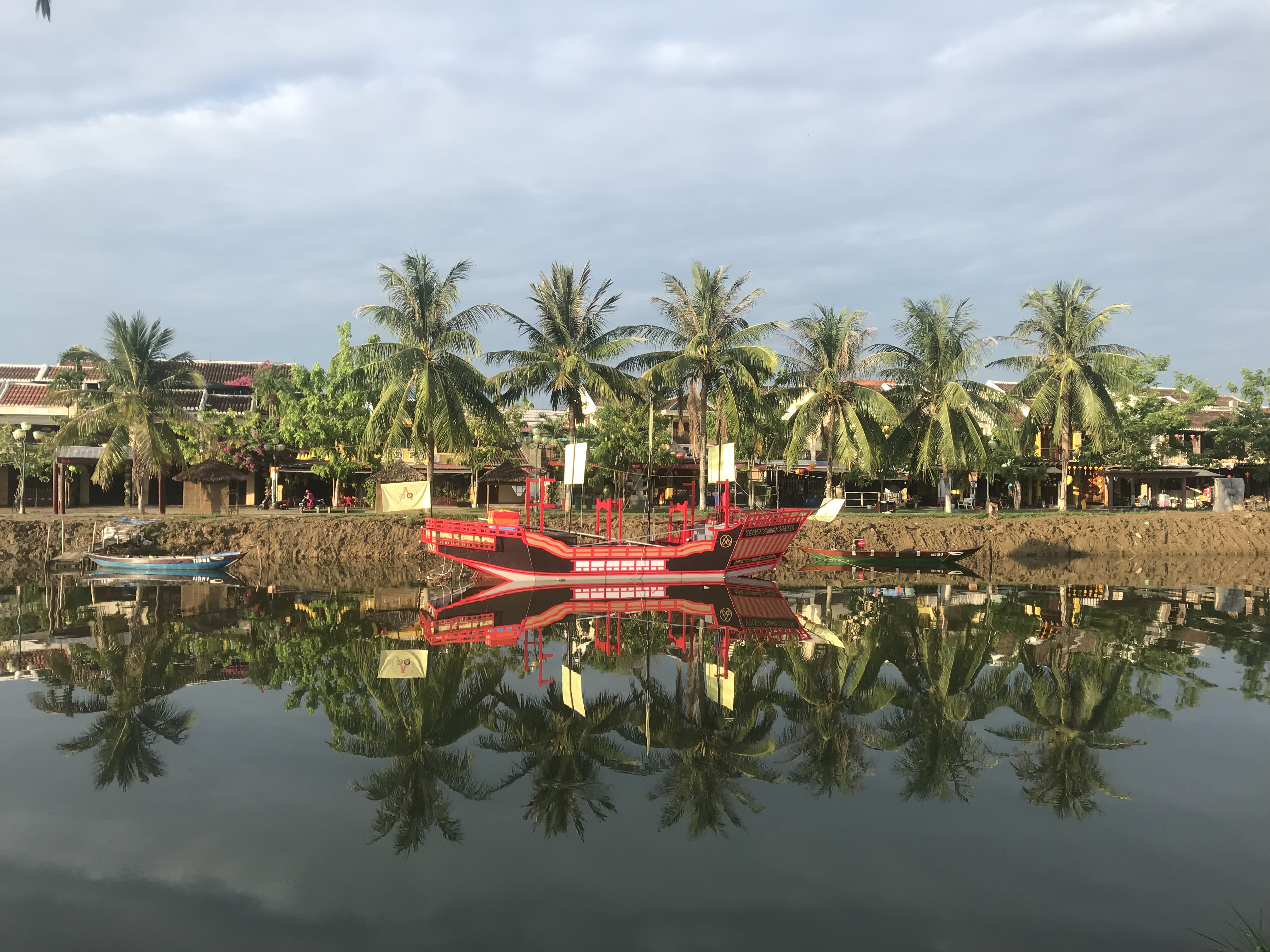
Reflections in Hoi An

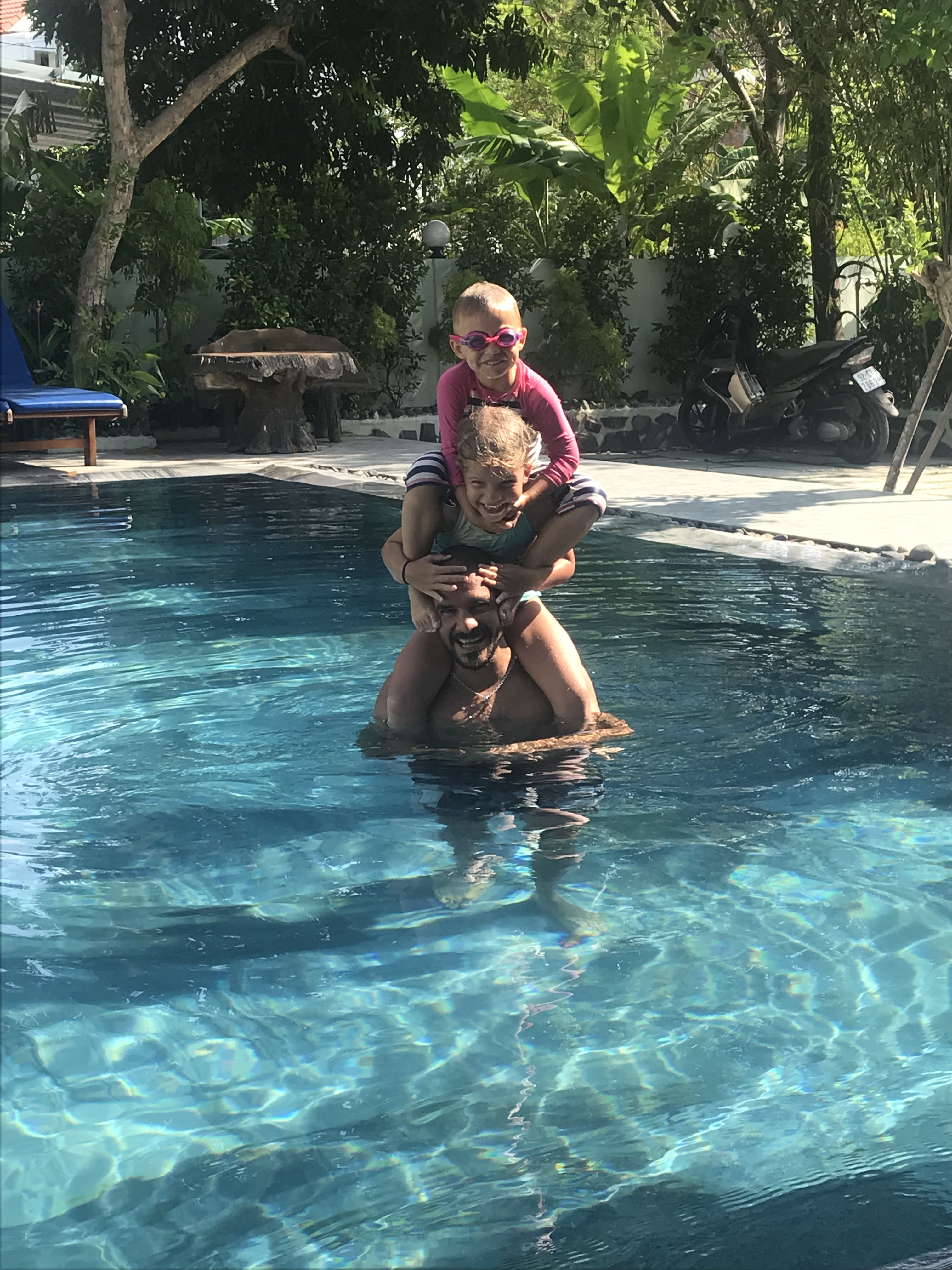
Ours had a small swimming pool which was a relief as we really found it hot walking around and it was great to be able to cool down after a busy day!

A Tom and MoJo pyramid.

There were a few nice places to eat close by, such as Tuan and Nhan’s Kitchen but the best dinner we had was at Ho Hien right on the riverfront with a delicious sharing taster menu. The girls were even able to watch from a distance an outdoor show on a neighbouring island.

Sharing platter at Ho Hien, Hoi An.

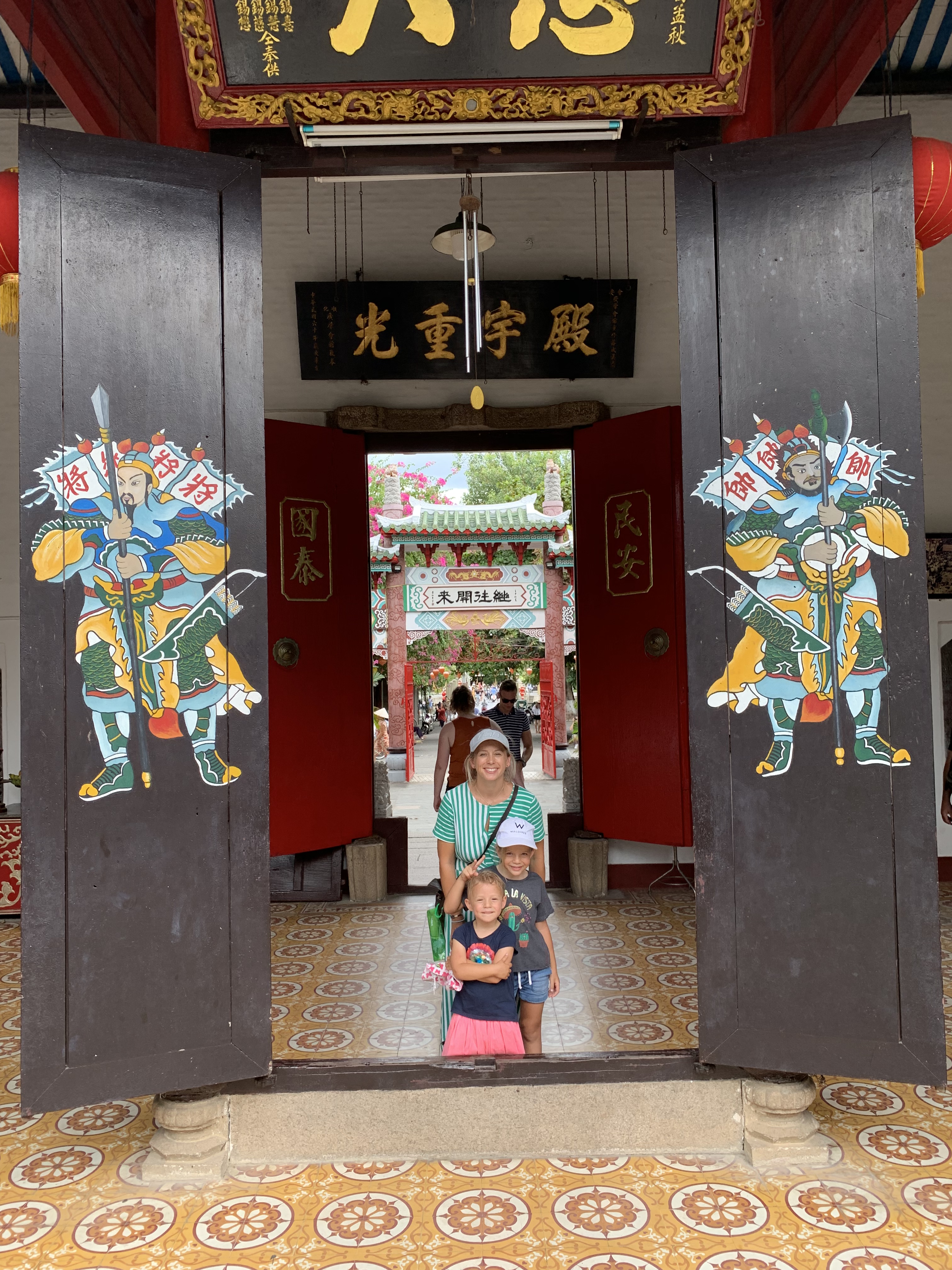
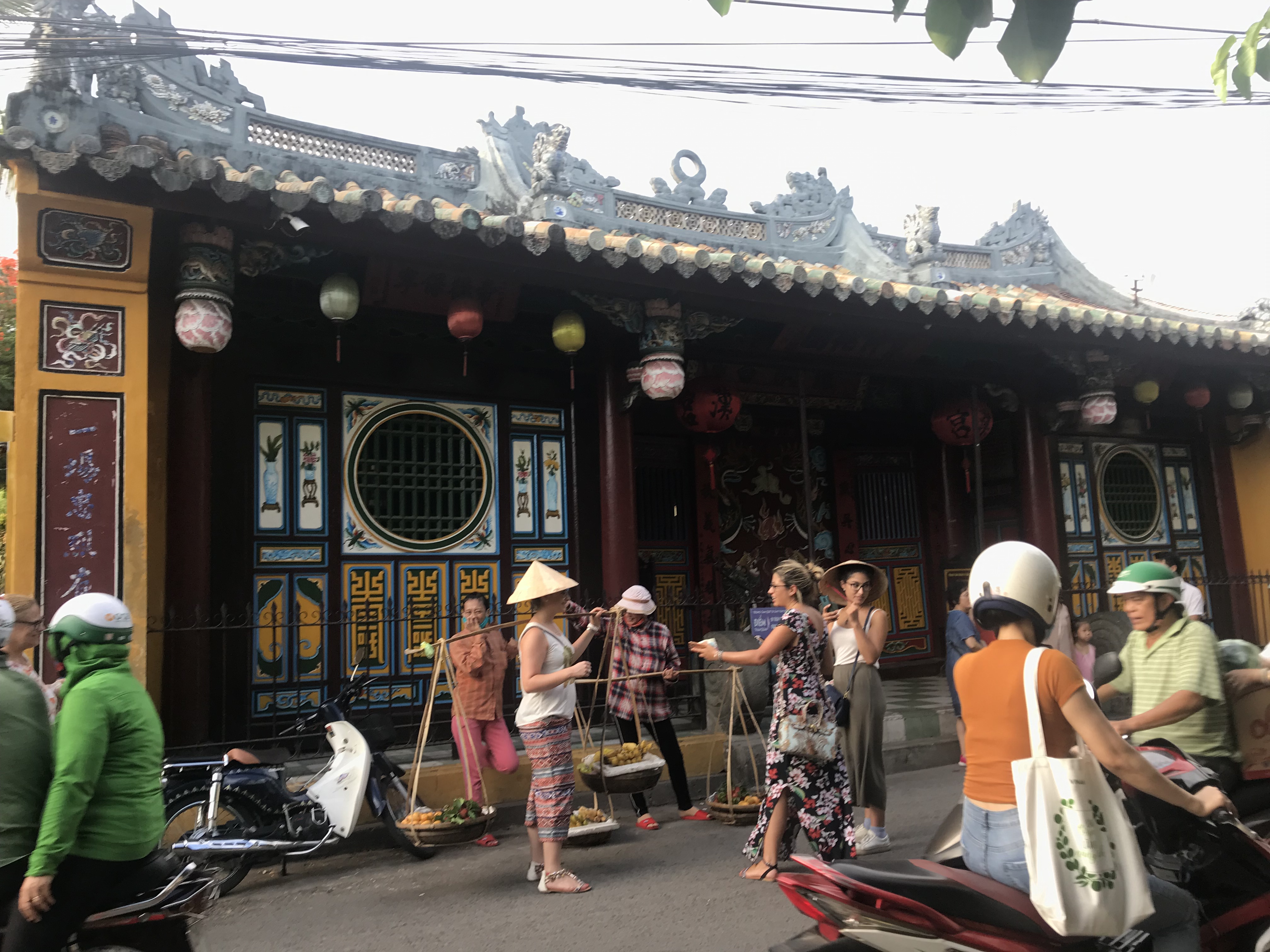
The historic centre is certainly a tourist hot spot, but we didn’t find it too crowded. You buy a ticket which grants you access to 5 sites which you can chose, all quite small. The area is doable in half a day, we popped back a couple of times as it was so hot to walk around for too long in one go. Highlights were walking across the Japanese Covered bridge, the museum of Trade Ceramics and the Cantonese assembly hall.

Cantonese Assembly Hall, Hoi An.

It was interesting to go into the small houses and learn about how people lived (although the whole centre feels like a museum rather than a real place to live today).

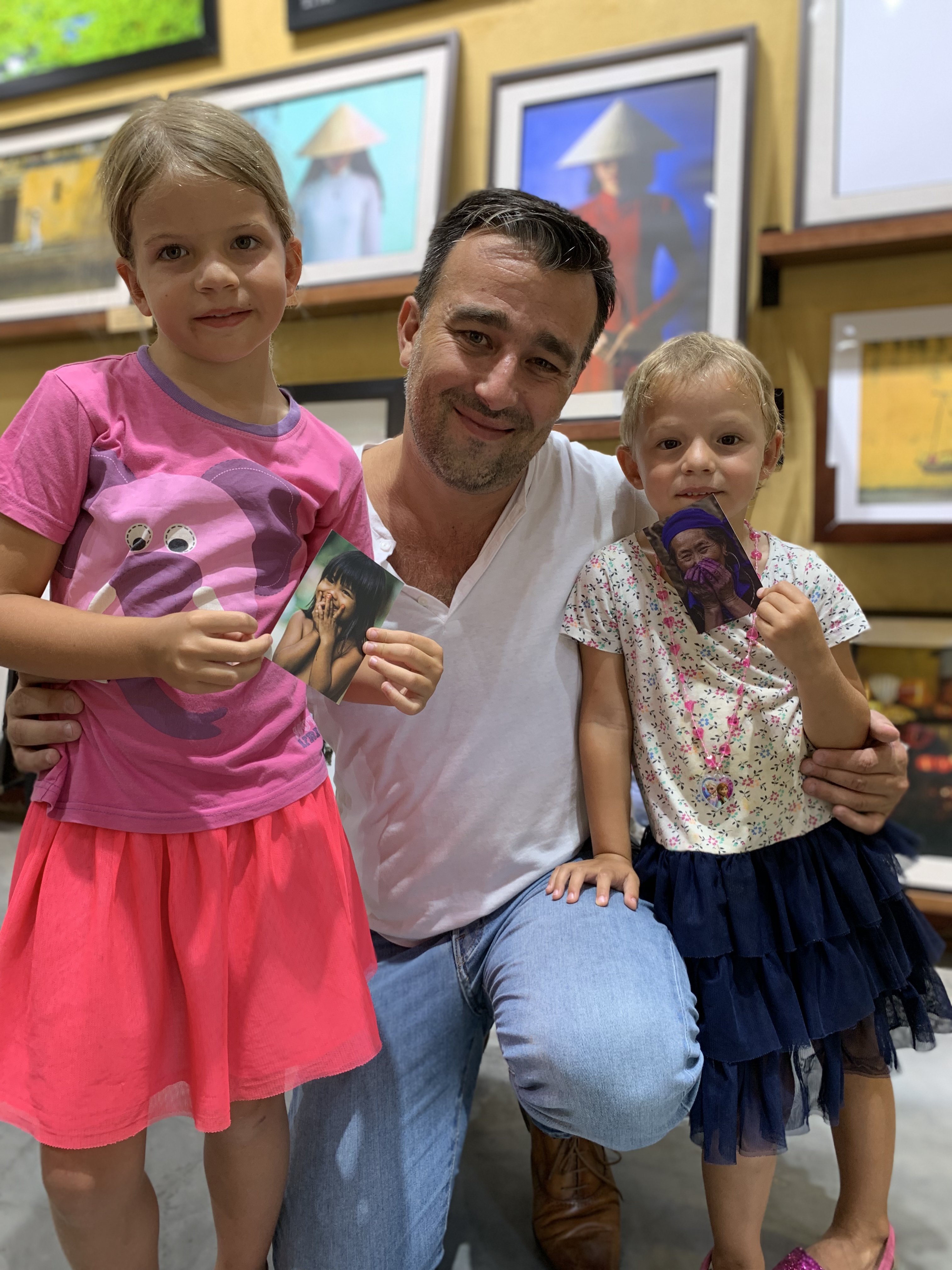
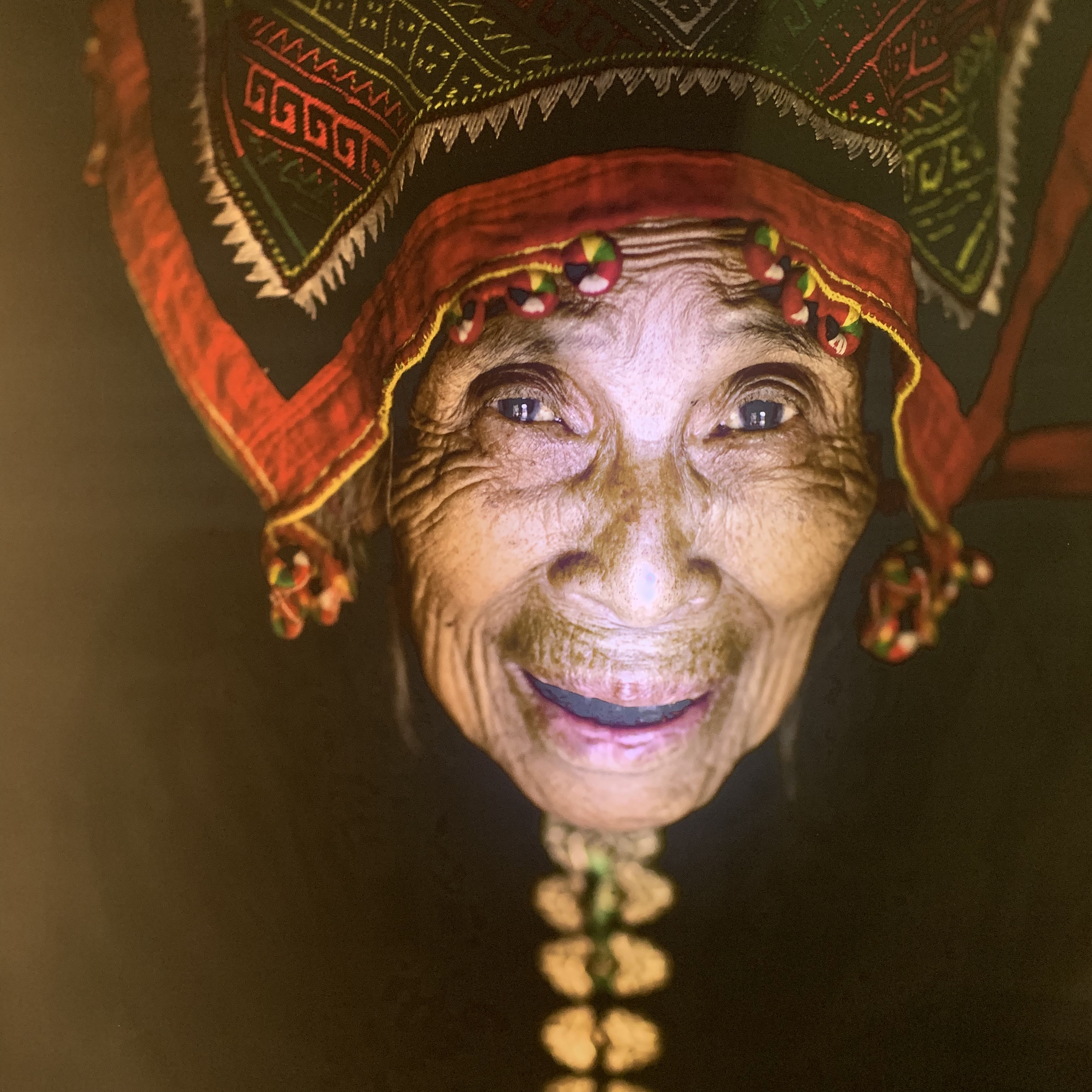
We had a great time meeting the photographer and photo-journalist Rehaan at Precious Heritage Museum. He had traveled extensively around remote areas of the country, working hard to document the indigenous tribes of Vietnam and taken award-winning, iconic photographs, displayed alongside examples of their ceremonial costumes. Hearing stories about the people he has met (women up to the age of 110!) living so removed from contemporary urban life was fascinating.

MoJo with Rehaan at Precious Heritage Museum, Hoi An.
Rehaan, photograph from the Precious Heritage collection series.

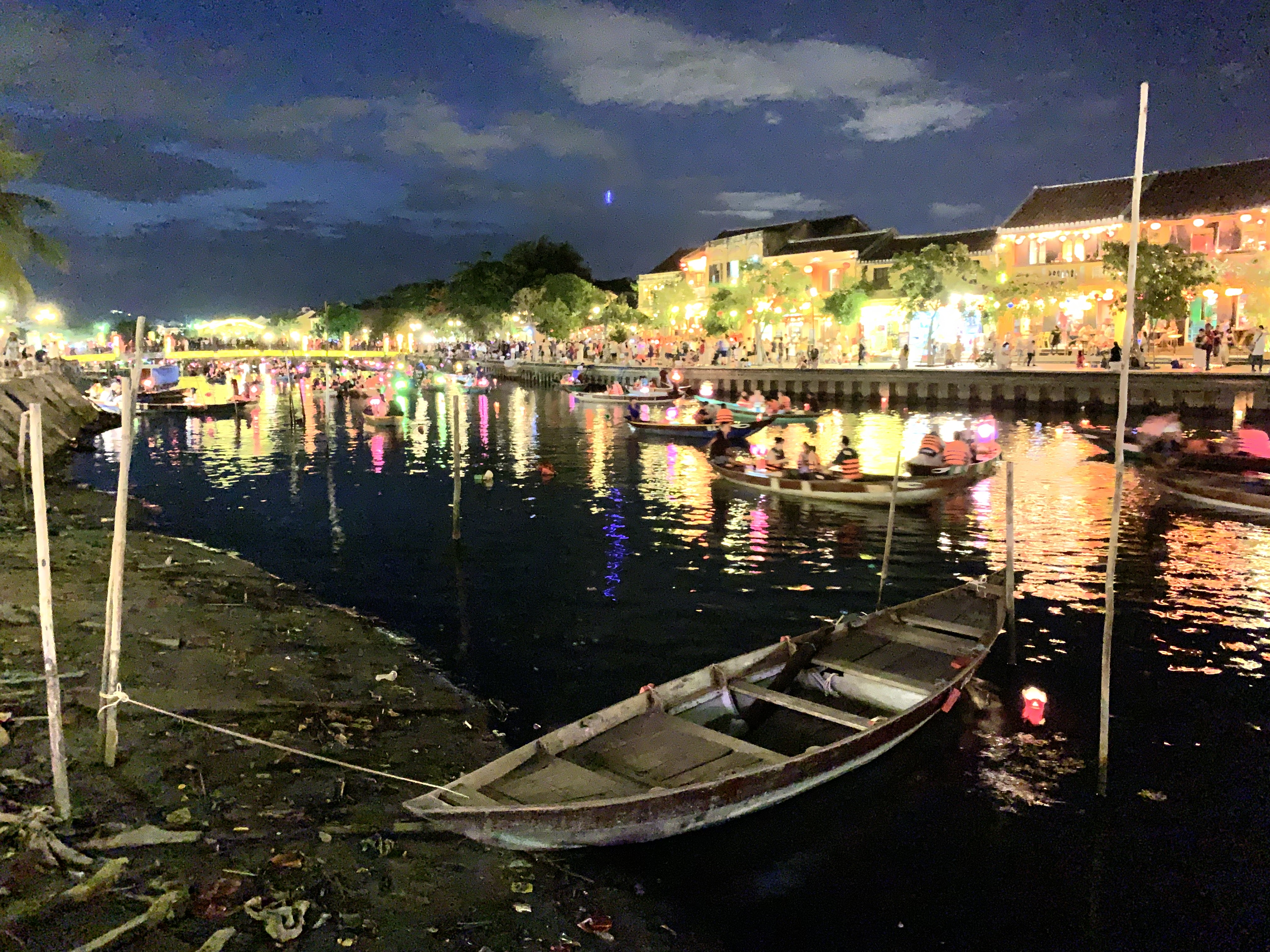
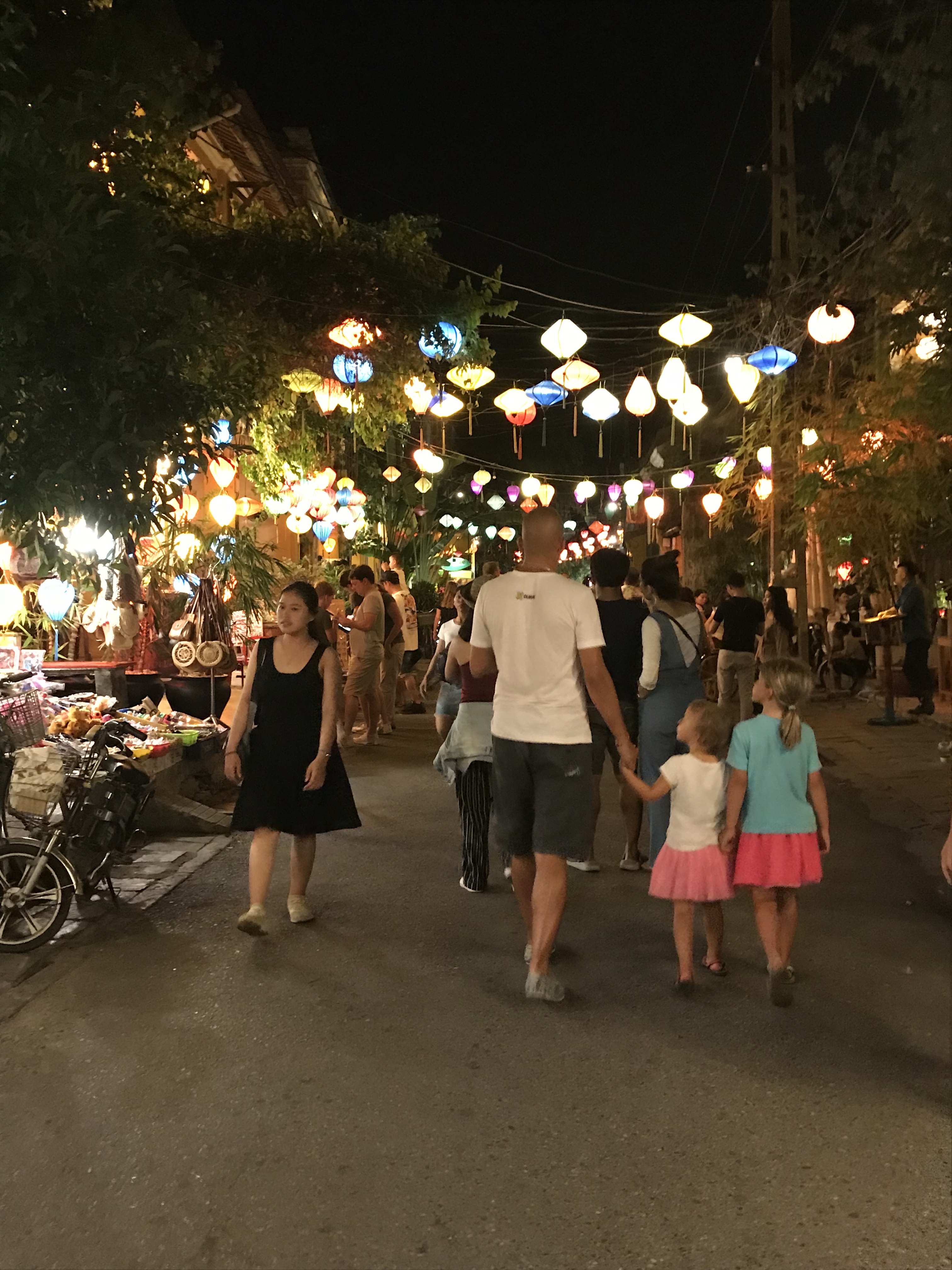
We had a very enjoyable evening walking through the Night Market (the best we went to in Vietnam), watching lanterns float down the river from the southern bank. We decided not to partake, trying to avoid creating unnecessary litter….but the site was still rather romantic and atmospheric.

Floating lanterns ceremony, Hoi An.

Sadly with it being so close to the beginning of our trip we didn’t make the most of the wonderfully cheap and well made clothing available in Hoi An – visiting only one tailor to sew up some holes that had appeared in our rucksacks!!

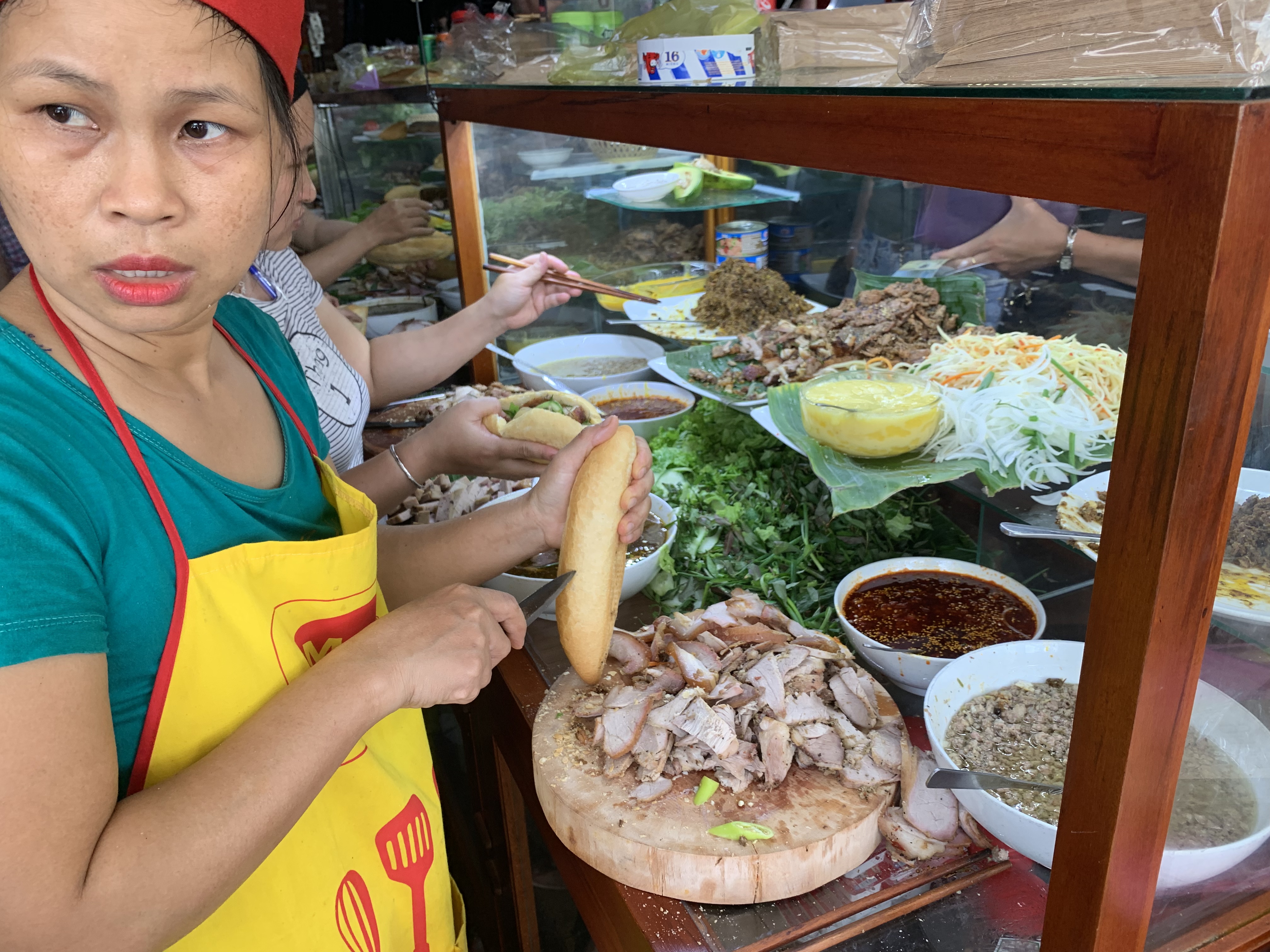
Food was a definite highlight. Tom made sure to sample the ultimate Banh Mi which Anthony Bourdain famously experienced.

Banh Mi, Hoi An.

The speciality ‘Cao Lau’ can, as legend has it, only be made by water from one particular local well. The rice-flour noodle soup with mint, star anise and pork was really delicious, but the girls favoured and devoured – banh bao or ‘white rose’ – steamed manioc-flour parcels filled with crab or shrimp and topped with crispy onions.

Banh Bao

We had a great meal centrally at Morning Glory but ate just as well from street food stalls. The struggle with spending evenings in the centre was getting a cab to take us home.

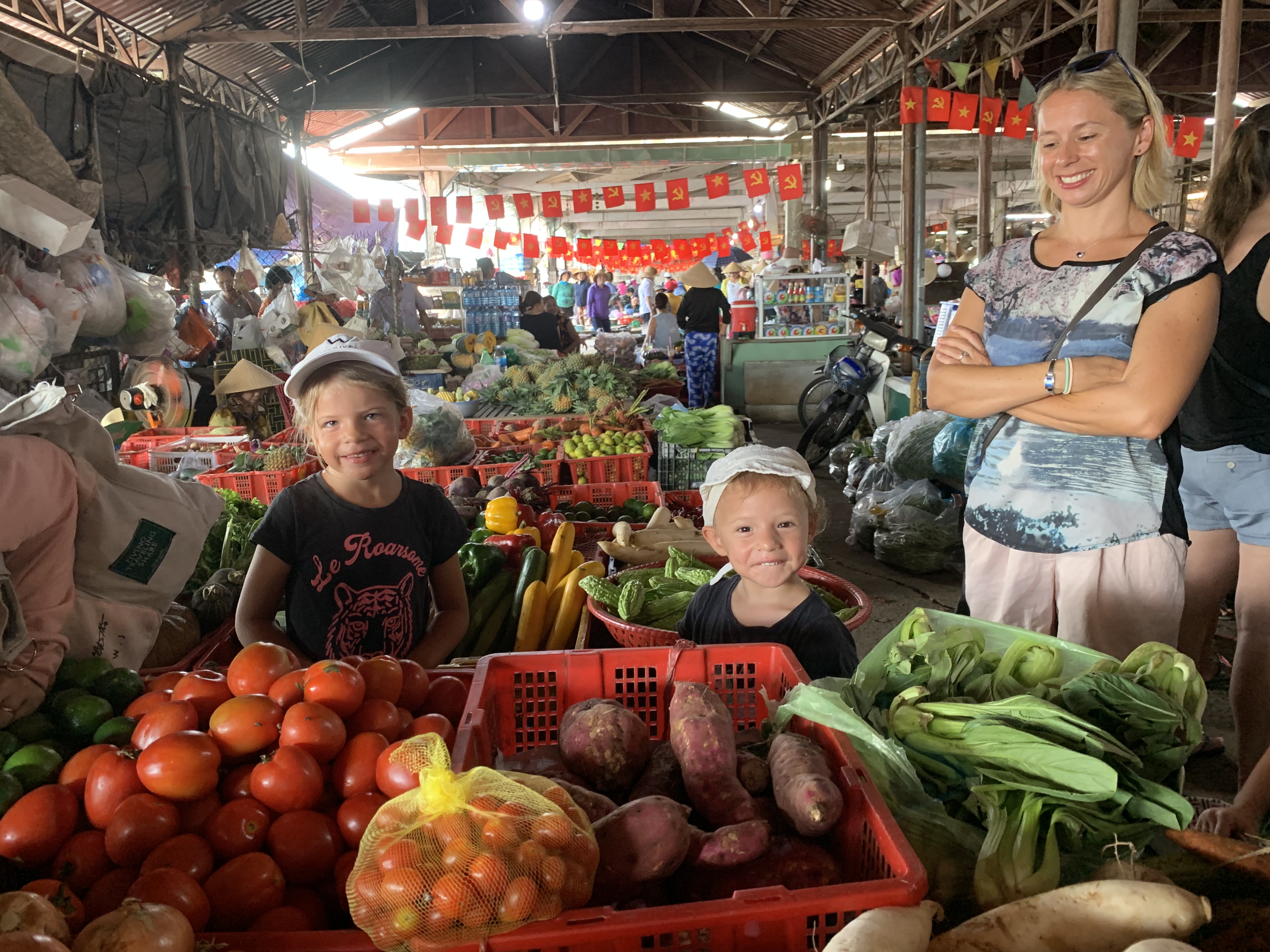
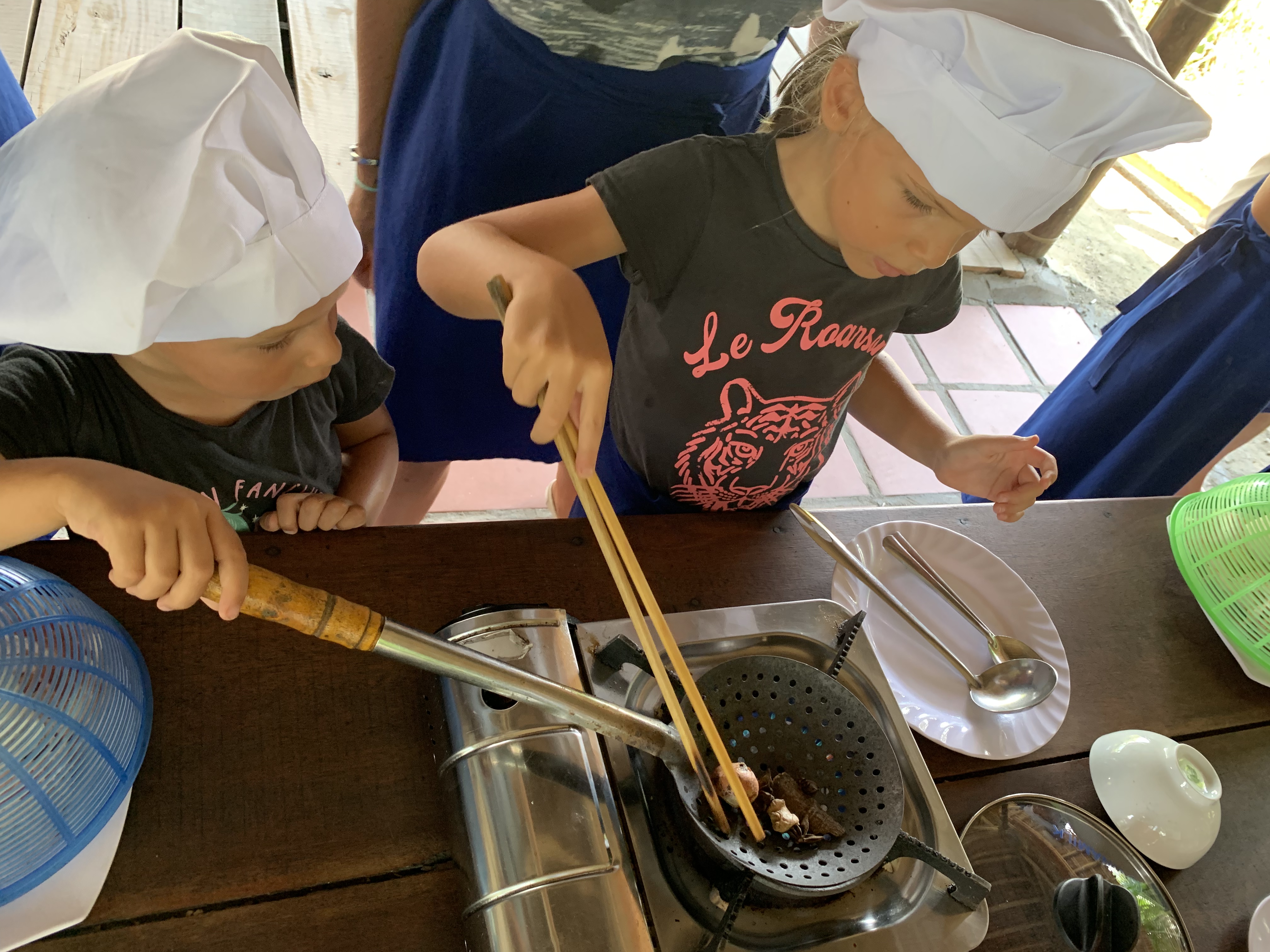
We decided to do a family cooking class, which included a trip to the market and boat trip and was a fantastic half day out.

We are now experts at making spring rolls, stir fry and pho beef soup.

At the market, cooking class, Hoi An
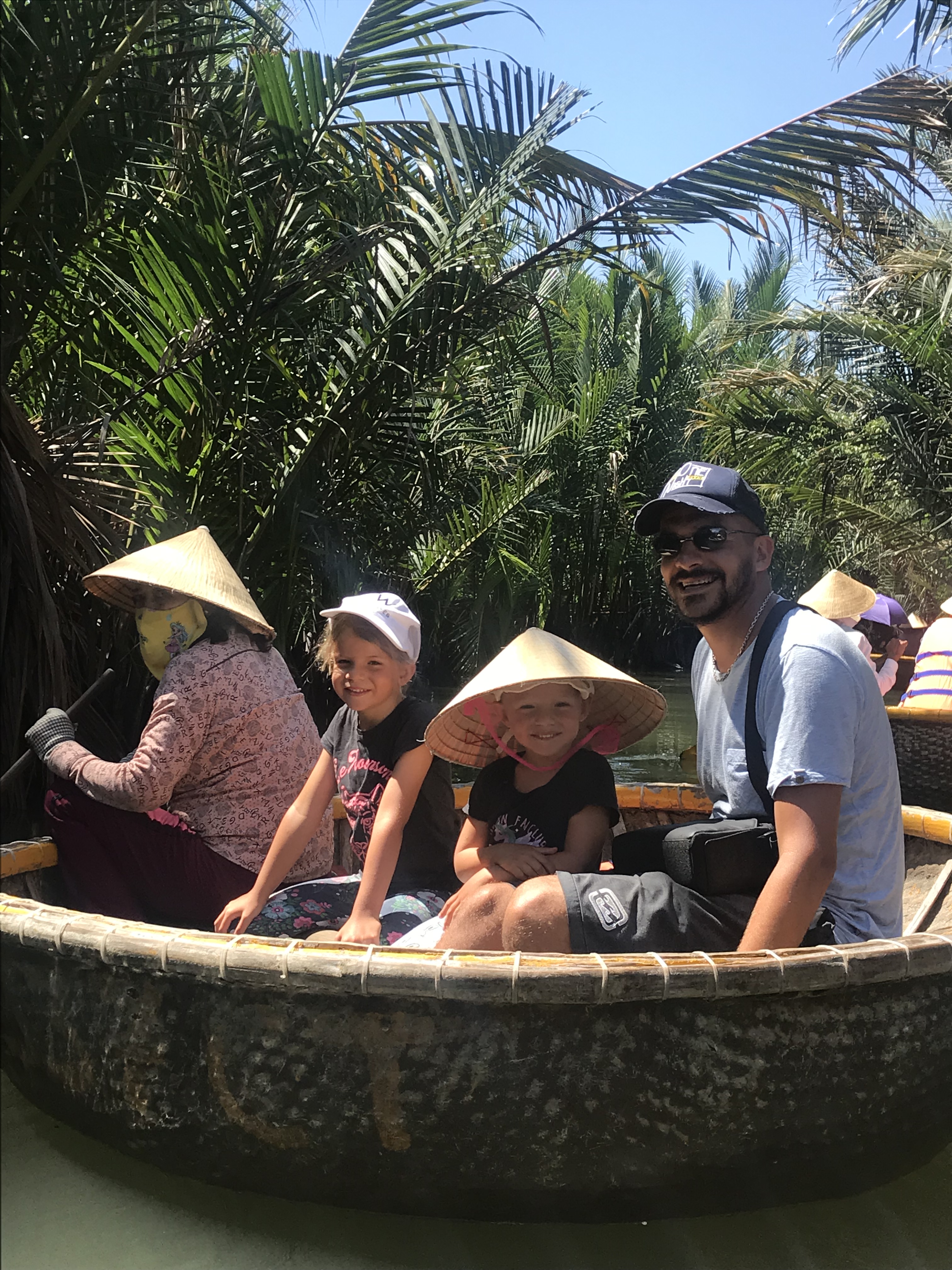
Having a ride in a circular bamboo boat, Hoi An
MoJo participating in Bay Mau Eco Cooking Tour, Hoi An.

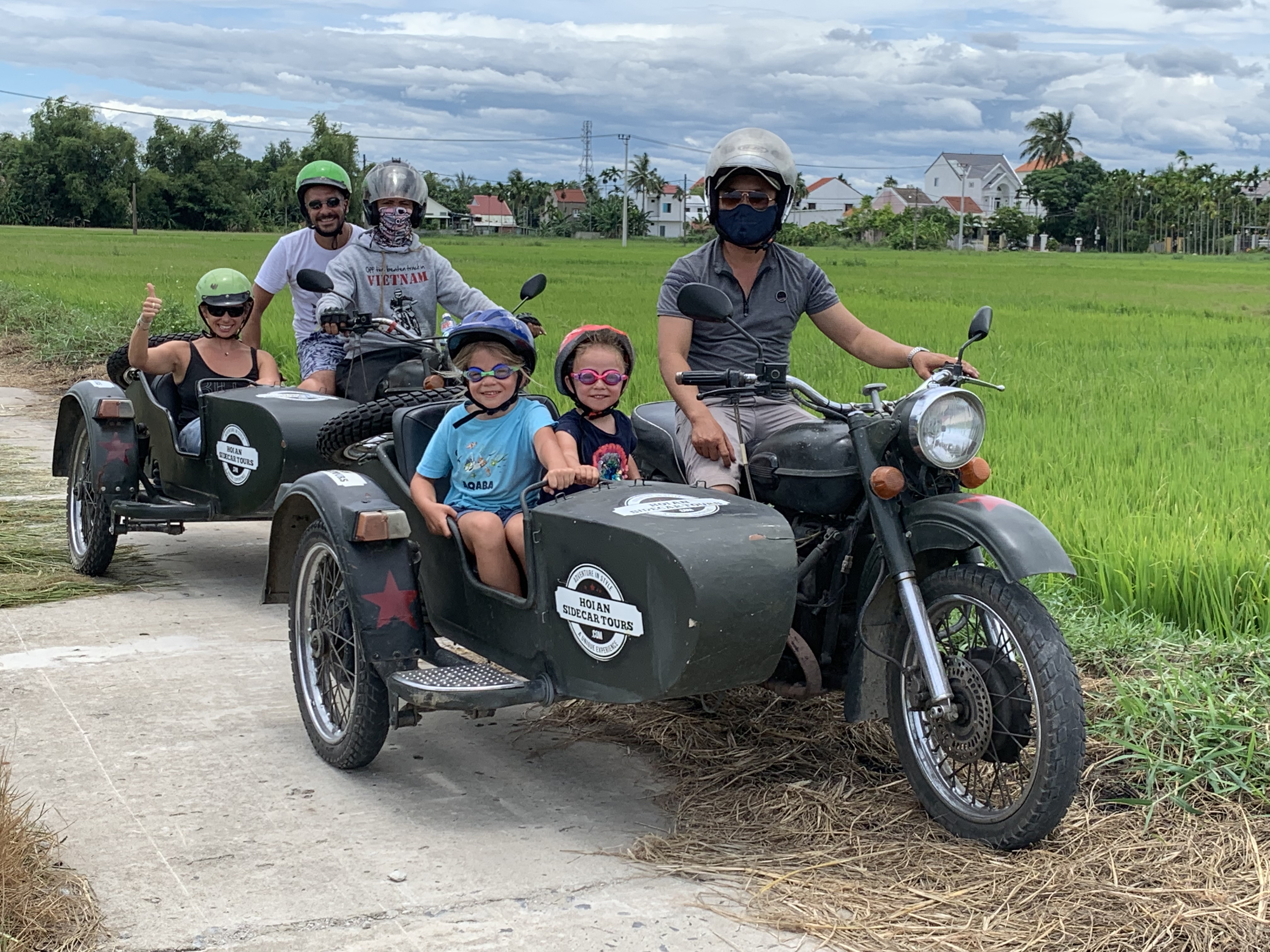
Everyone seemed to do everything on 2 wheels – and motorbikes more than bicycles – so we decided to join in the safest way we could with the girls – by taking a side car tour!

Sidecar ride, Hoi An.

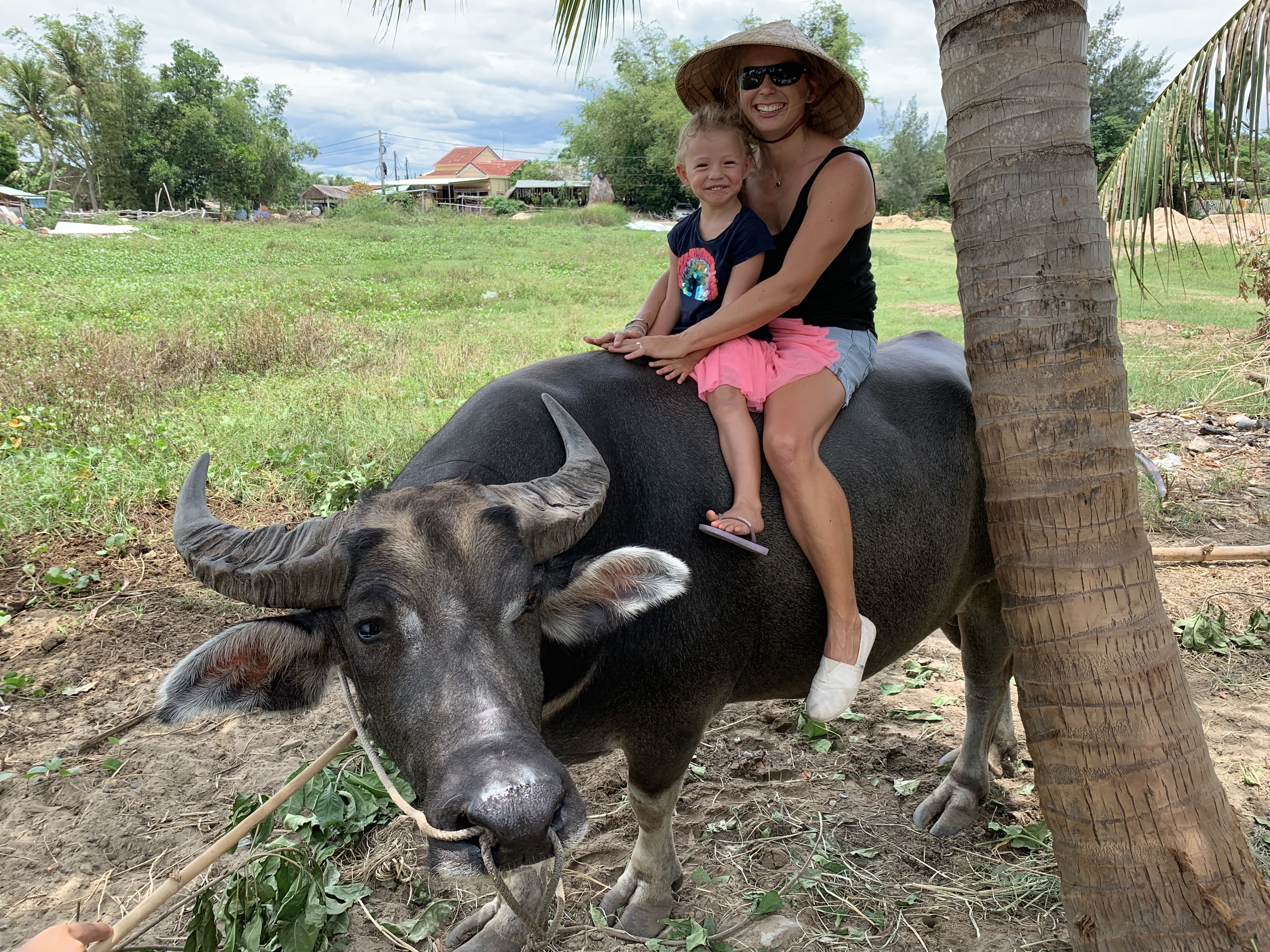
We opted for just a one-hour tour with Hoi An Sidecar tours, which was plenty – taking us through the rice paddies and nearby villages. We stopped off for a ride on a water buffalo which was surprisingly enjoyable, they are very docile creatures, it was interesting to learn more about them. We met a few more in Cambodia!

Water buffalo ride, Hoi An.

The tour neatly dropped us off at An Bang beach where we spent the rest of the day. We lunched at la plage which gave us access to sun loungers on the beach for the afternoon, where we made an epic fort sandcastle with incredible tunnelling systems – only for it to be forcibly knocked down soon after it had been completed by vendors looking to find a spot for their customers to sit! We ended the day at the great Soul Kitchen with dinner, drinks and a game of uno as the sun went down.

Soul Kitchen, An Bang, near Hoi An.

Our Haven: Bai Xep

I would love for us to take the credit for finding this little spot of paradise, but it was thanks to Katherine and Pieter de Kretser who stayed here in 2017 that we decided to come stay at Haven.

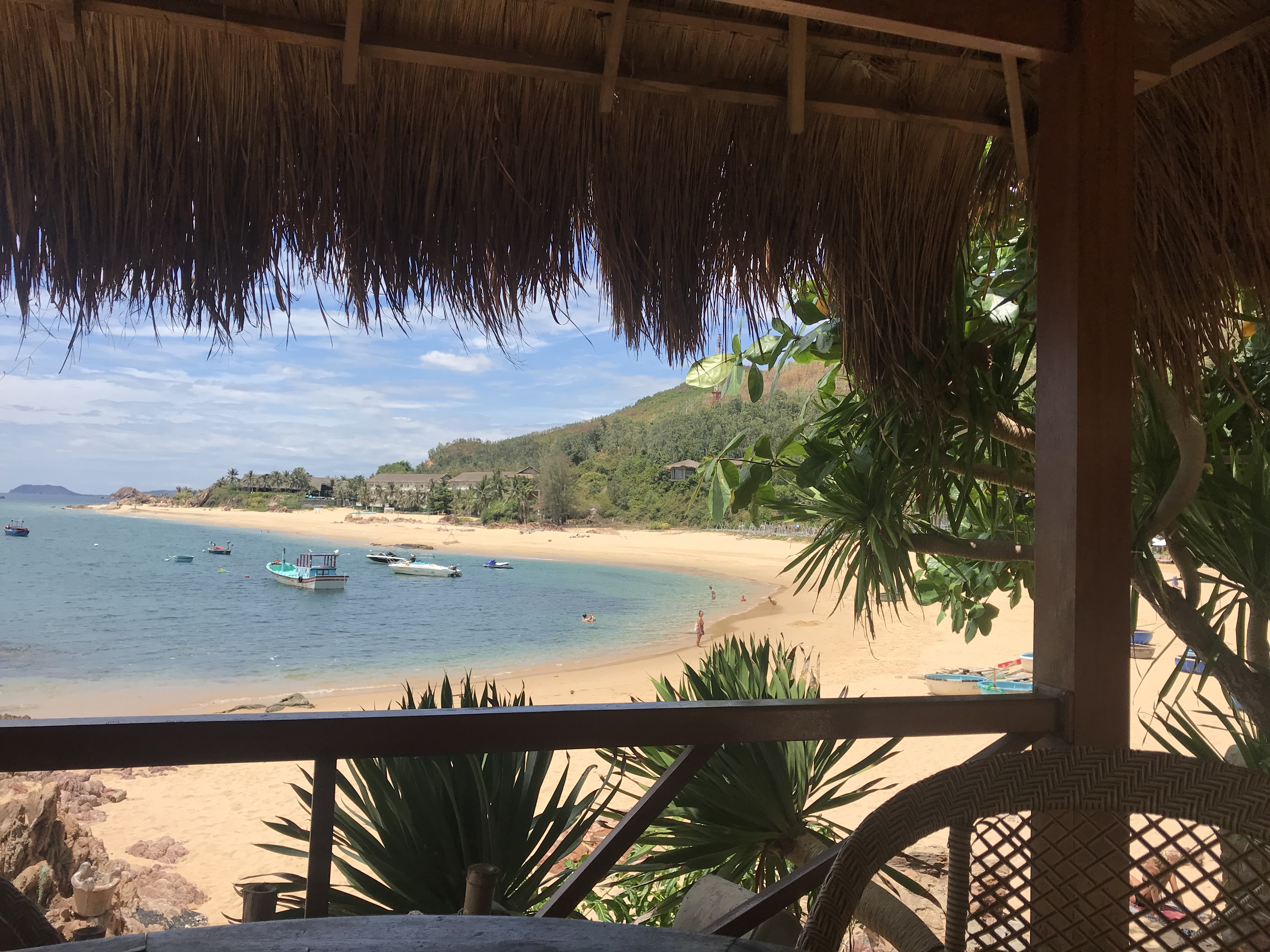
View from the terrace at Haven, Bai Xep.

Getting there from HCMC was a real adventure. For starters, it was pouring with rain when we left the hotel. Then we had a mini disaster when I left our bag with passports / credit cards / phone in the taxi – resolved very easily thanks to us using the really user-friendly Uber style app for south-east Asia, Grab. This meant that we were able to call our driver to come back before he even realised that we had left the bag on the back seat!! Phew.

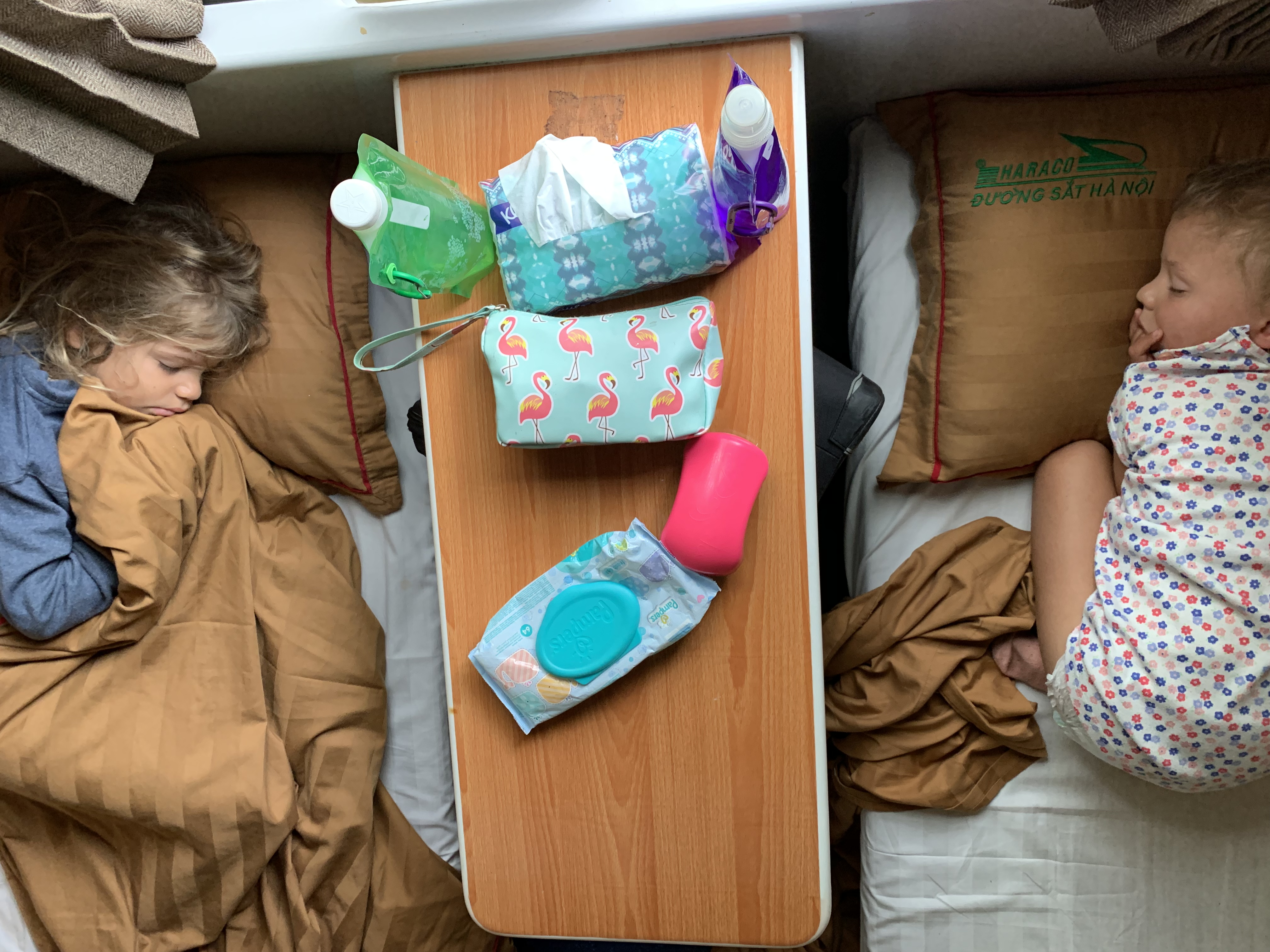
From then on everything was great, despite a bit of a risk: a night train ride. We booked a 4-bed cabin on a train leaving at 9.55pm, due to pull into Diêu Tri at 8.30am the following morning. Our cabin was as spacious as you could expect, with clean linen and even a vase of artificial flowers! One game of uno later we were in our bunks watching the scenery wizz by and sleep came quickly.

We even had to set an alarm!! We did arrive an hour or so late and stopped quite frequently during the night (which only seemed to wake me up!) and it was very cold on the top bunk taken by Tom and I, but in general it was a great experience.

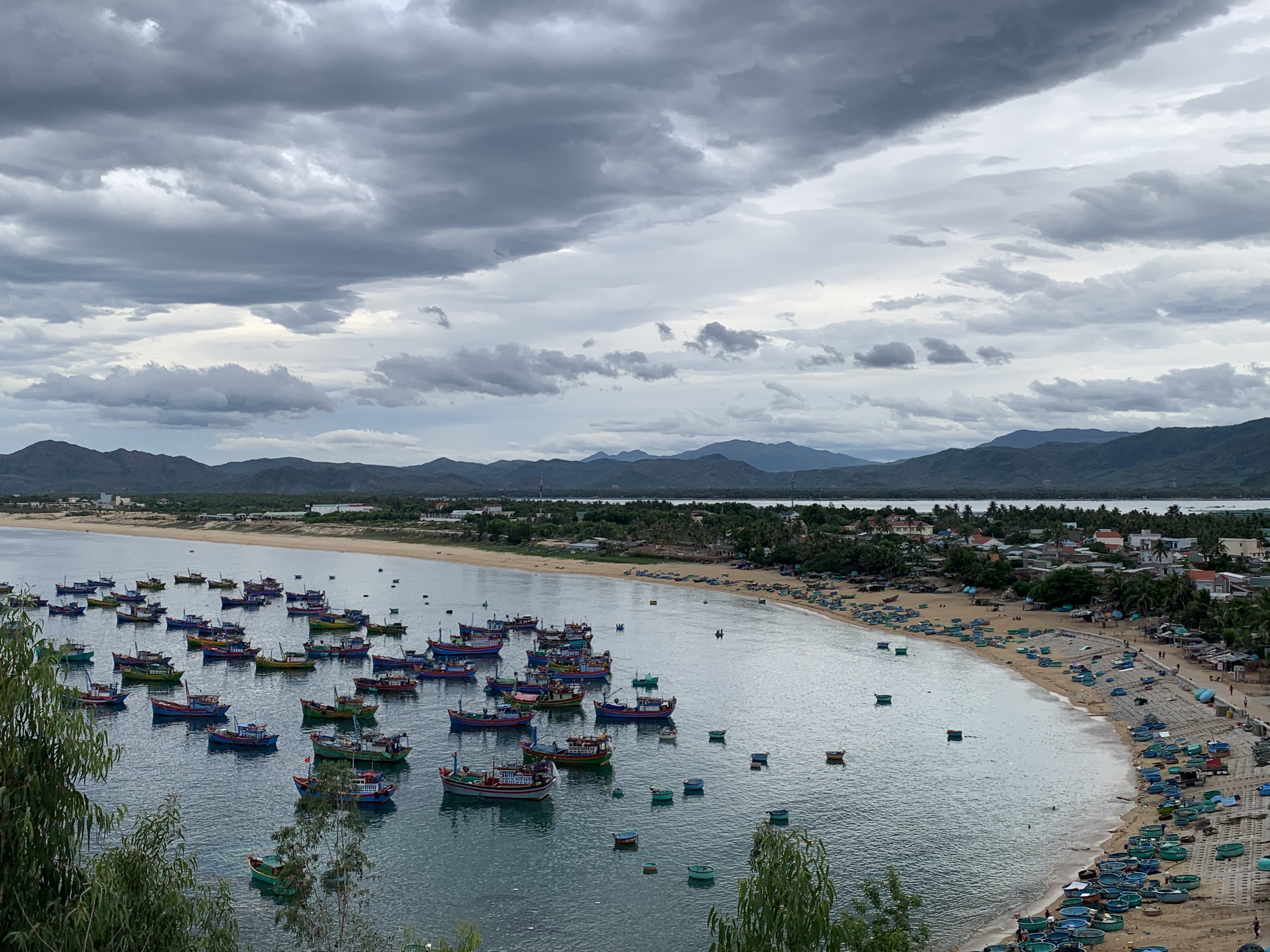
A taxi ride later north through Qui Nhon and we were dropped at the top of the village. After a tricky walk through the hustle and bustle of a seaside community in full action mode with all our suitcases, including having to navigate around a churning cement mixer, we were greeted by the beach view which was going to be ours for the next week.

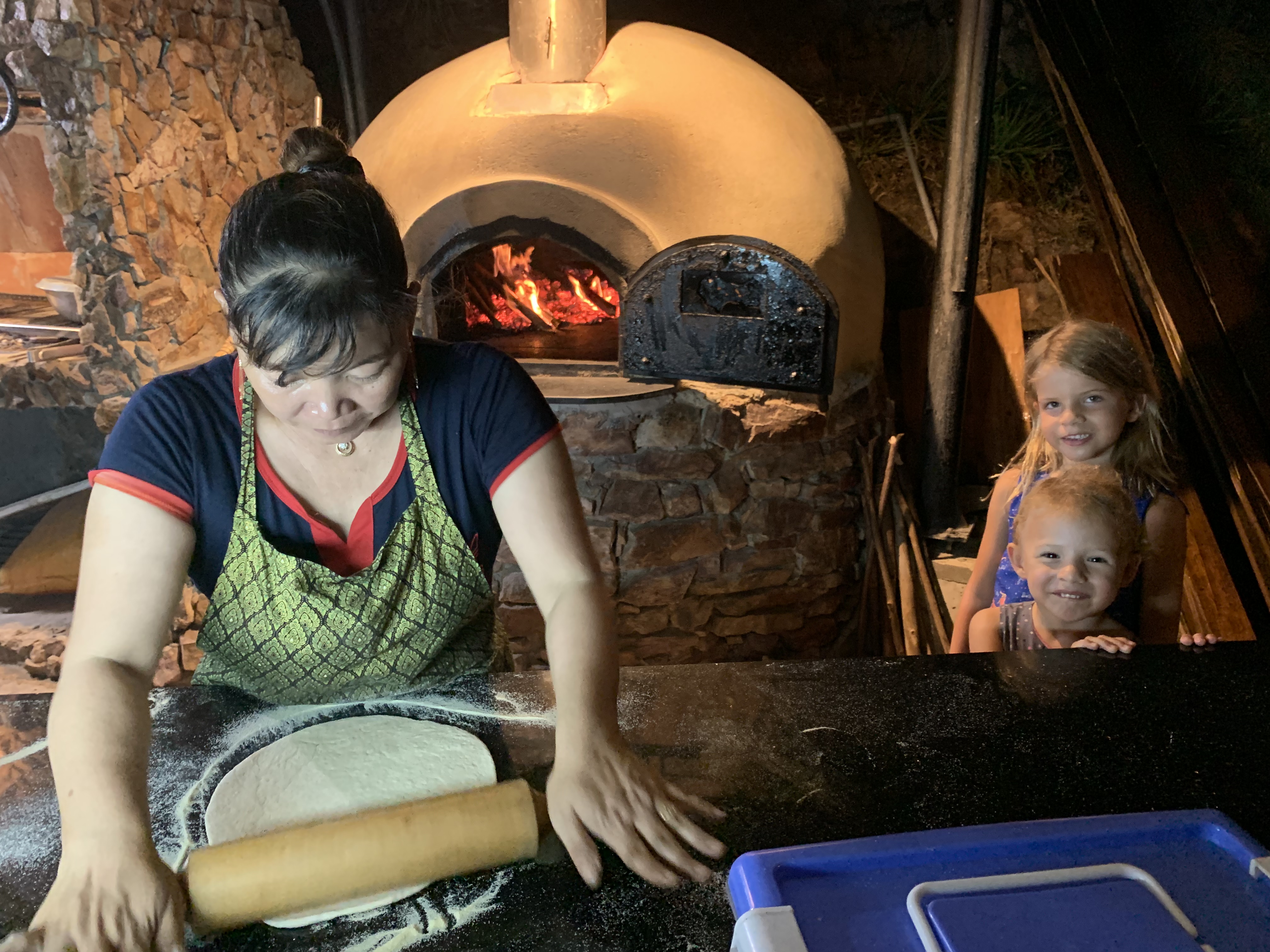
Haven is attached to the Big Tree Bistro, a beachside garden restaurant. We had the first floor room with a balcony – and could eat and drink to our hearts content just downstairs. MoJo were particularly keen on the wood fire pizza oven (even helping make their pizzas on our last night!), the food was a good mix of Vietnamese and western dishes.

The owners tell us they are about to undertake a refurb, needed but hope it doesn’t lose some of its easy going charm.

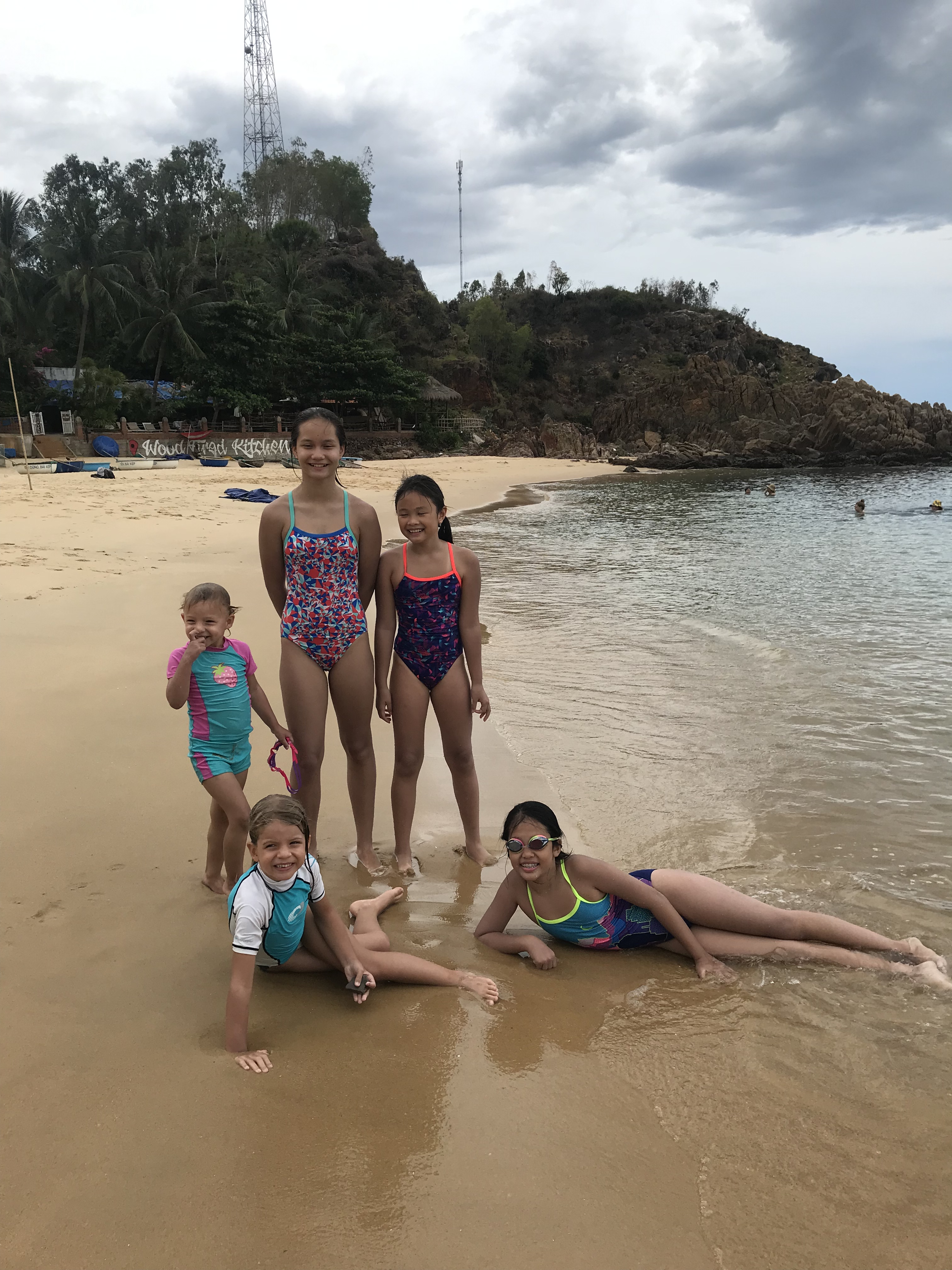
MoJo with three sisters they made friends with in Bai Xep.
MoJo with Bun and her mum at Haven, Bai Xep

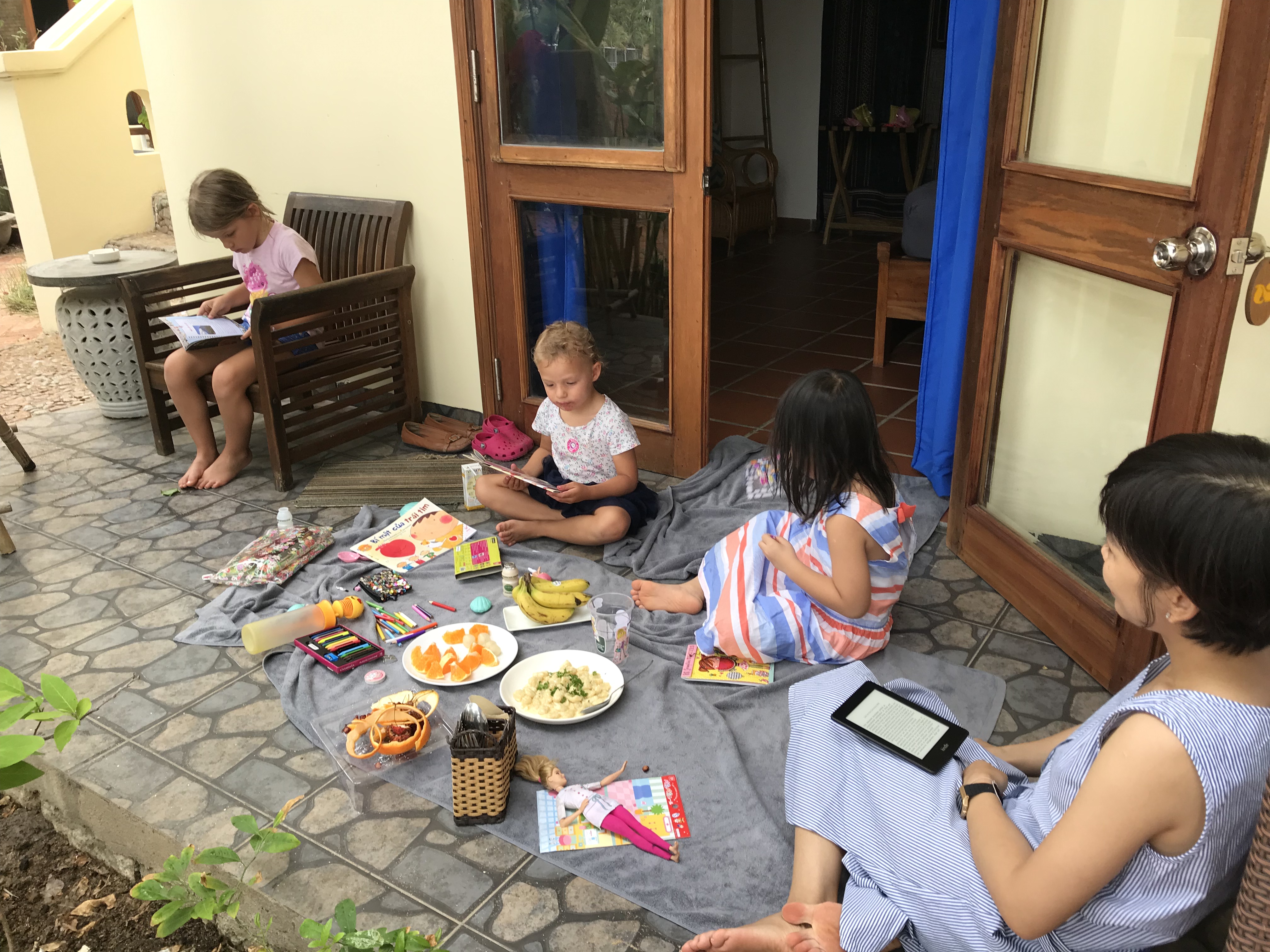
Molly and Joanna had fun making some new friends, playing on the beach and sketching and snacking outside.

We spent a couple of evenings next door at Life’s a Beach tempted by the sharing Vietnamese dinner one night and a quiz another (in which we proudly came 3rd!!).

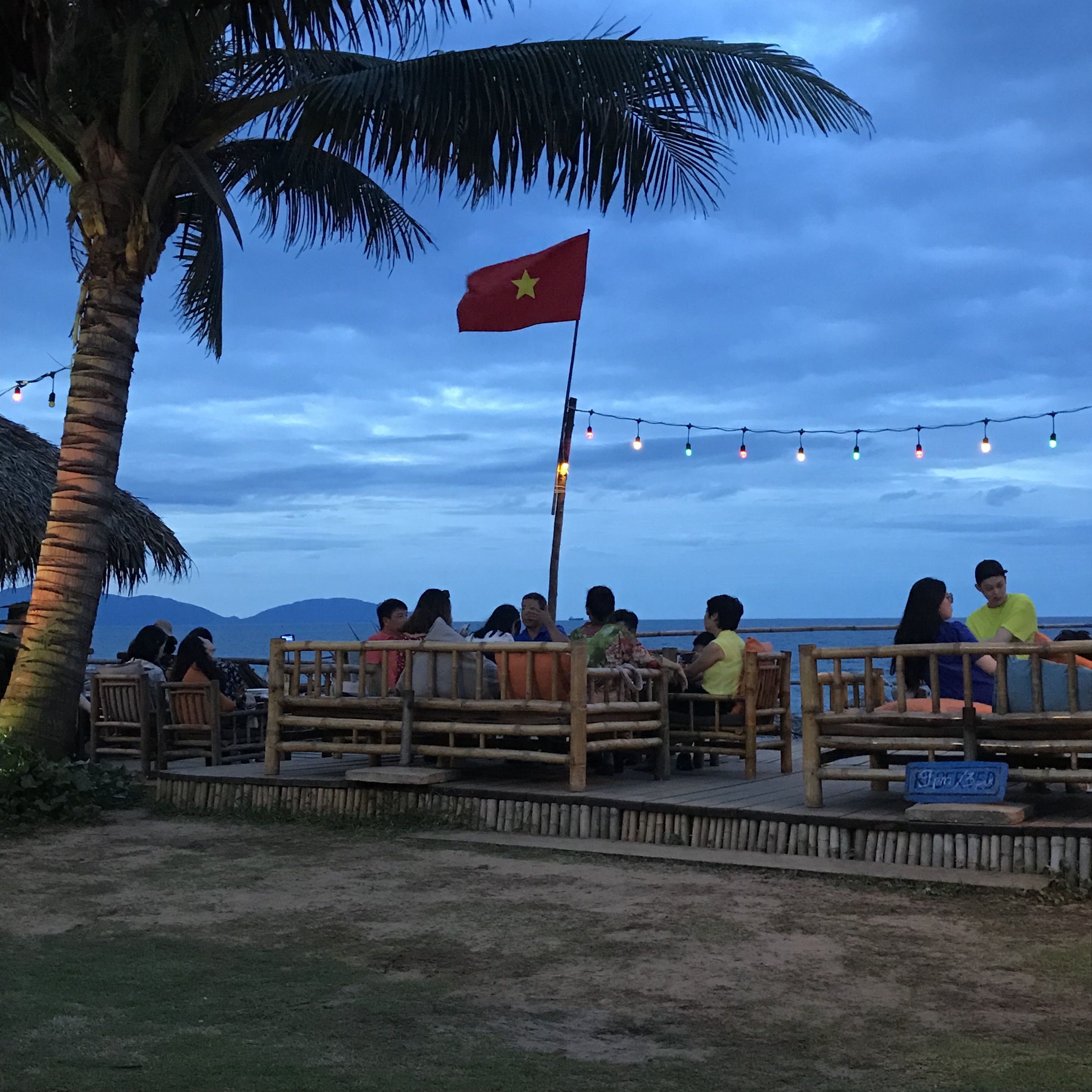
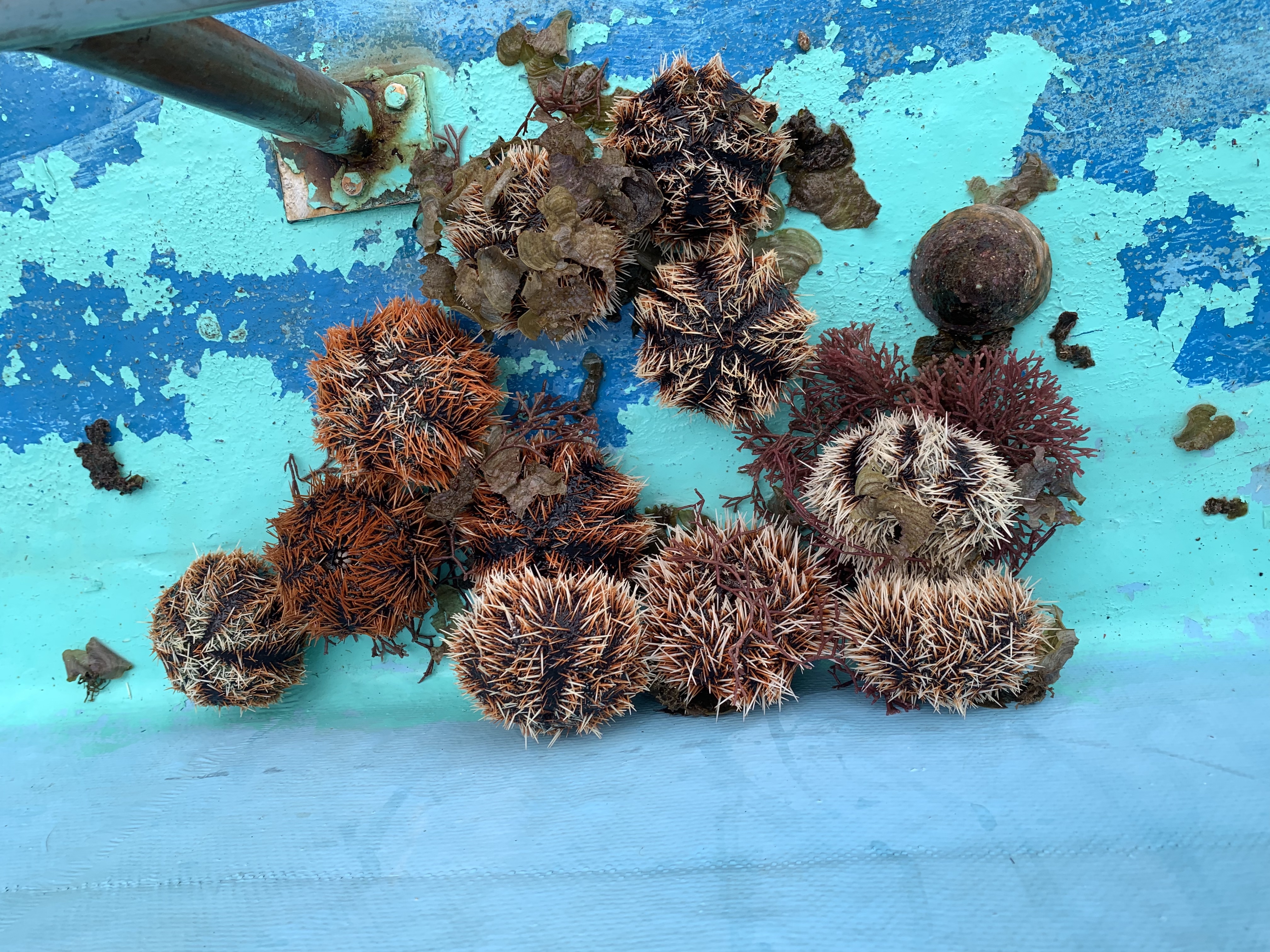
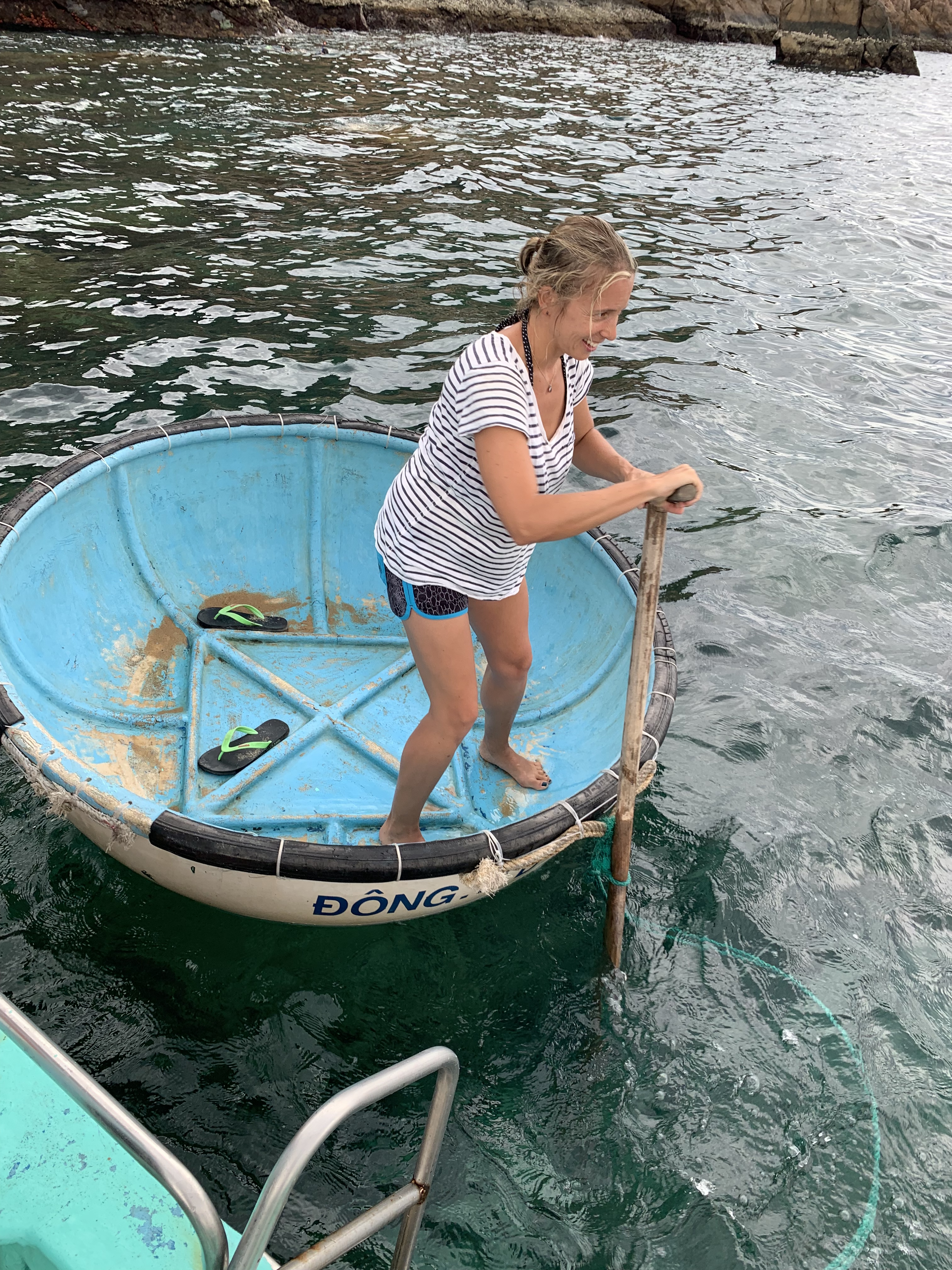
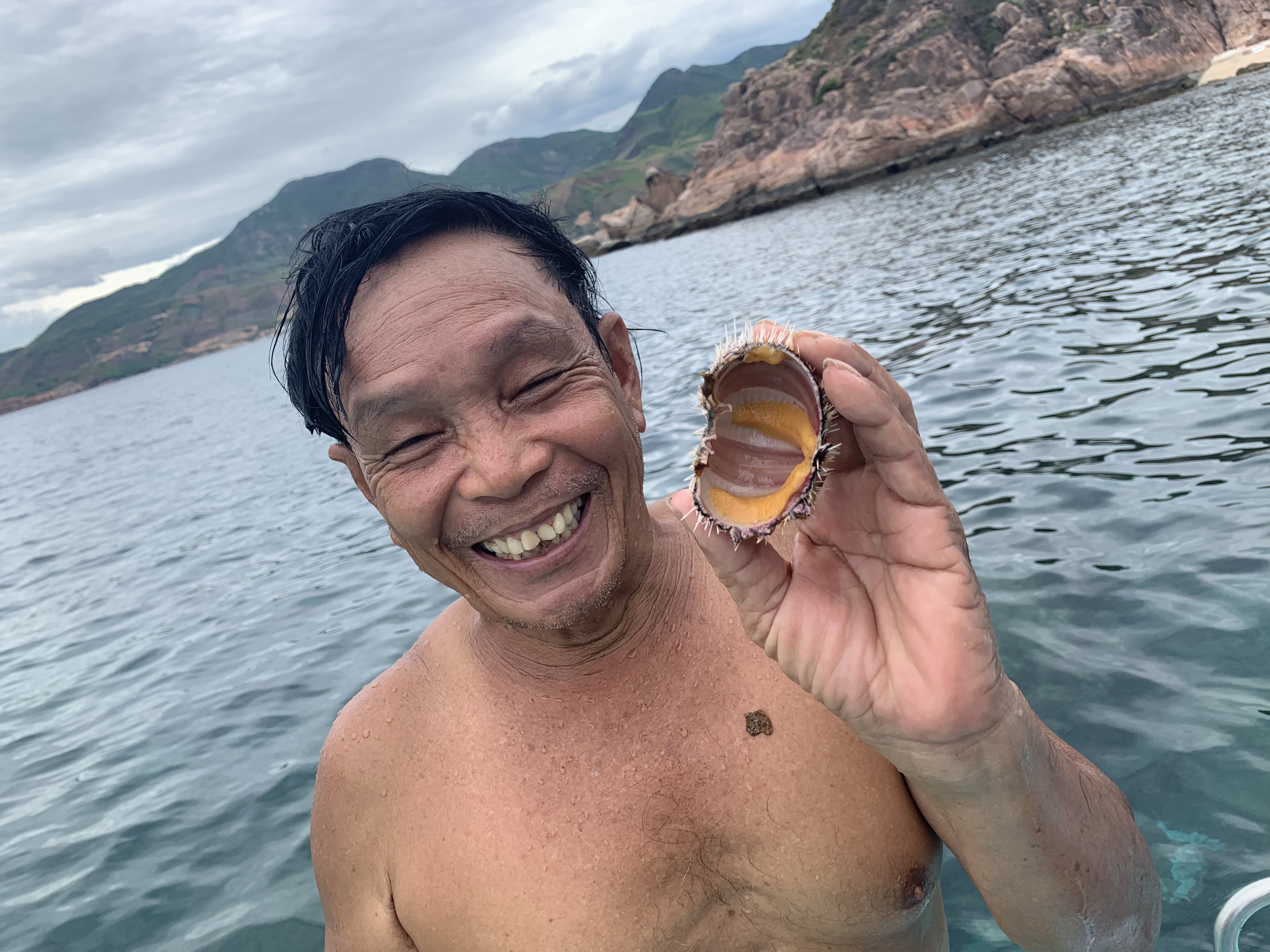
One afternoon we hired a boat and went on a snorkelling trip to the nearby islands, where a highlight was plucking and eating sea urchins and slightly feeble efforts at paddling a circular bamboo boat.

This is most definitely not a dragon boat!

Thanks to our great captain Hung who taught us a few things!

Captain Hung and a sea urchin

We made the most of having the beach in our doorstep, doing a beach clean up the first day and beach olympics / sports day another afternoon. Of course epic sandcastles were made (including a pizza oven!) and runs done on the coastal road overlooking other bays.

View from a run in Bai Xep bay

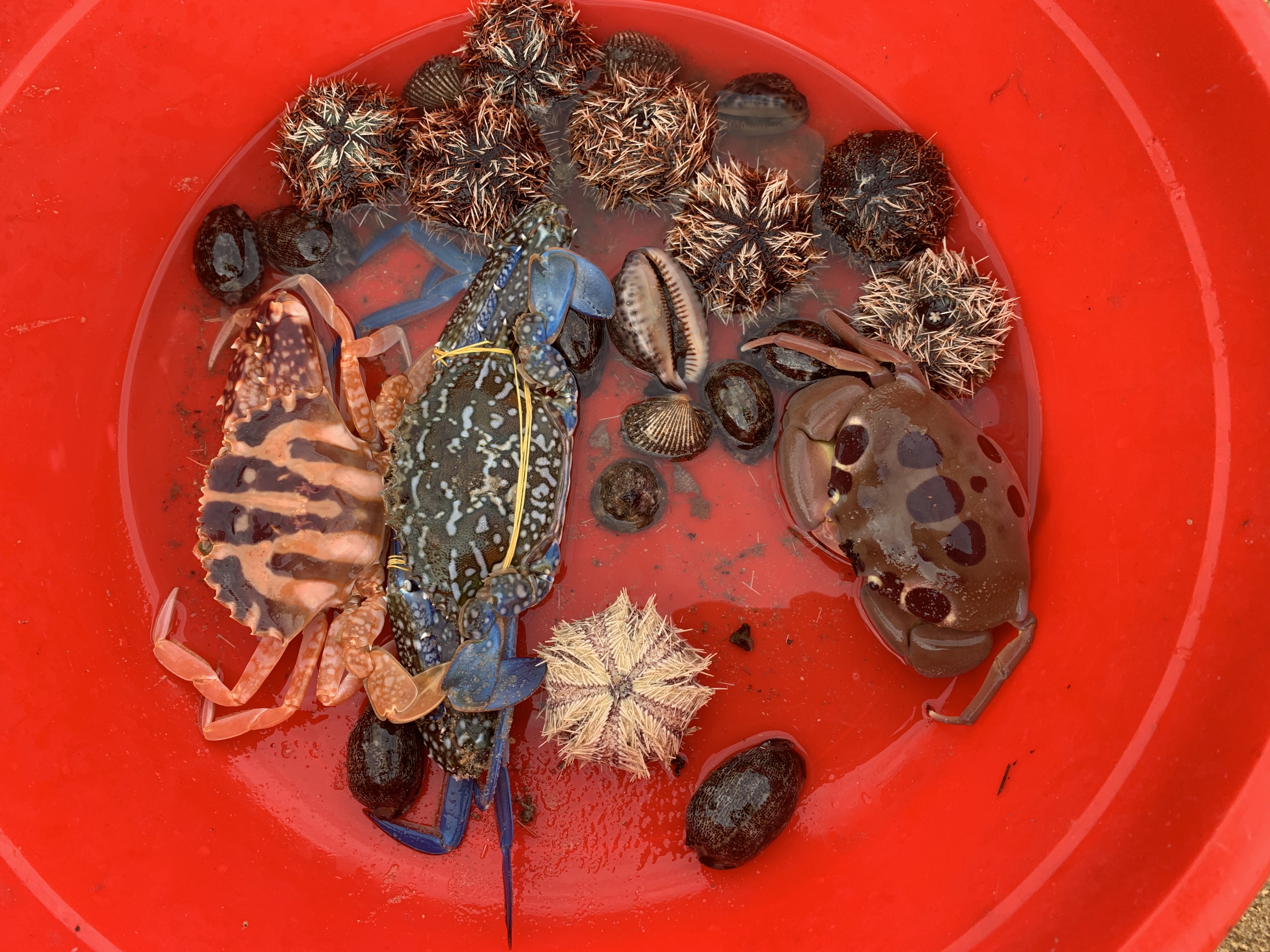
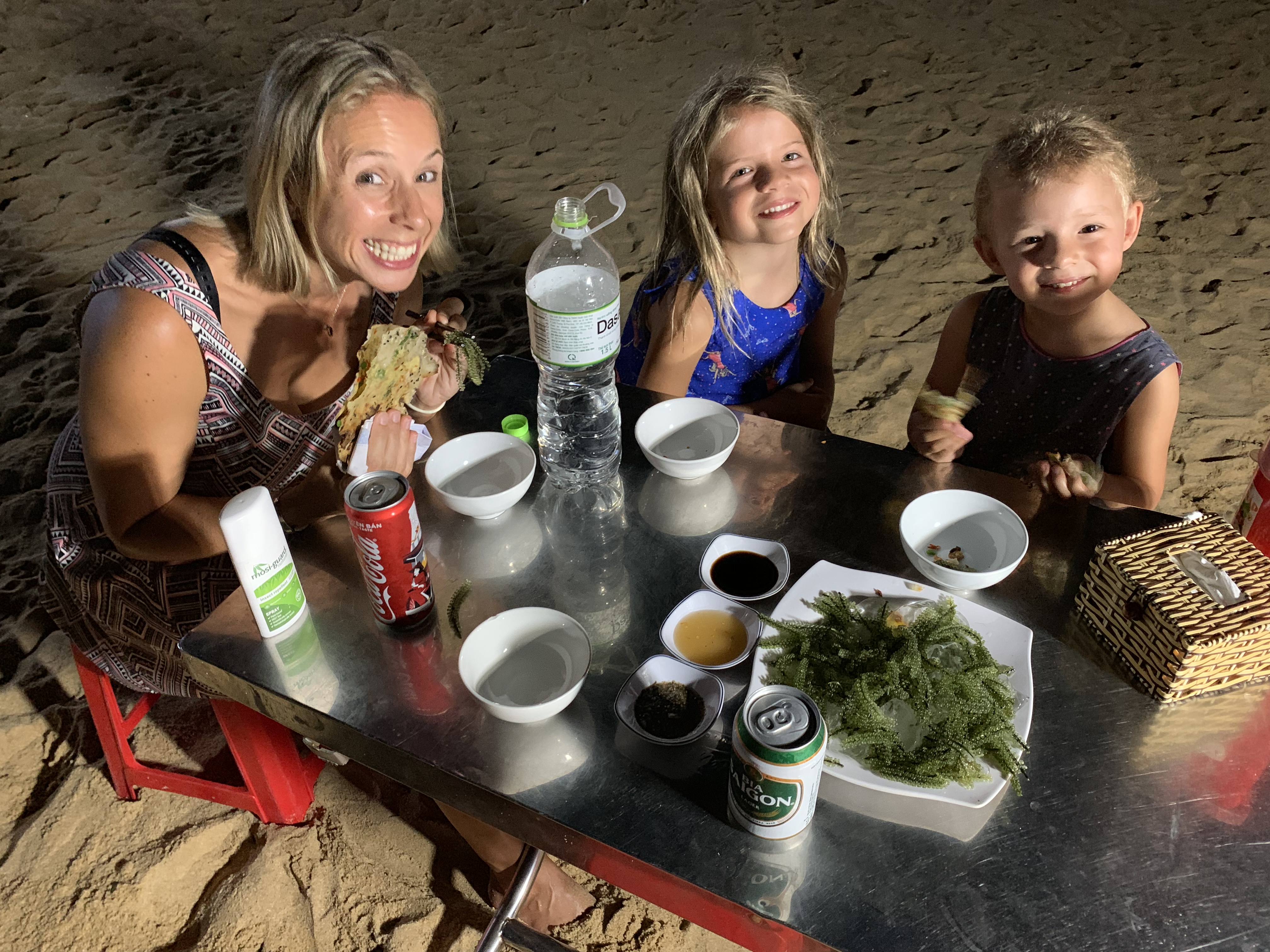
For our last night we decided to try out the beach food stalls, selecting various live crab and sea grape seaweed which was delicious at the time but did come back to haunt Tom and I later.

That’s lunch sorted
Seafood dinner on Bai Xep beach.

Ho Chi Minh City – or Saigon if you prefer

I’m not quite sure why, but for the majority of the countries we visited in Asia over the next 4 months (Vietnam, Cambodia, China, Korea and Japan) we landed in the country’s 2nd city and flew out of its capital. In between we visited beaches, mountains, monuments, islands and other towns and cities. Of course these countries have had turbulent histories and capitals have changed throughout the years, so every city has had its time in the sun. And like Sydney and Melbourne, New York and Chicago, Sao Paulo and Rio de Janeiro, cities which are not currently the capital are often the most alluring.

Within a few hours of arriving in Ho Chi Minh City (HCMC) we had been hit by all the key elements of Vietnamese life we would grow to love or at least get used to over the next 3 weeks.

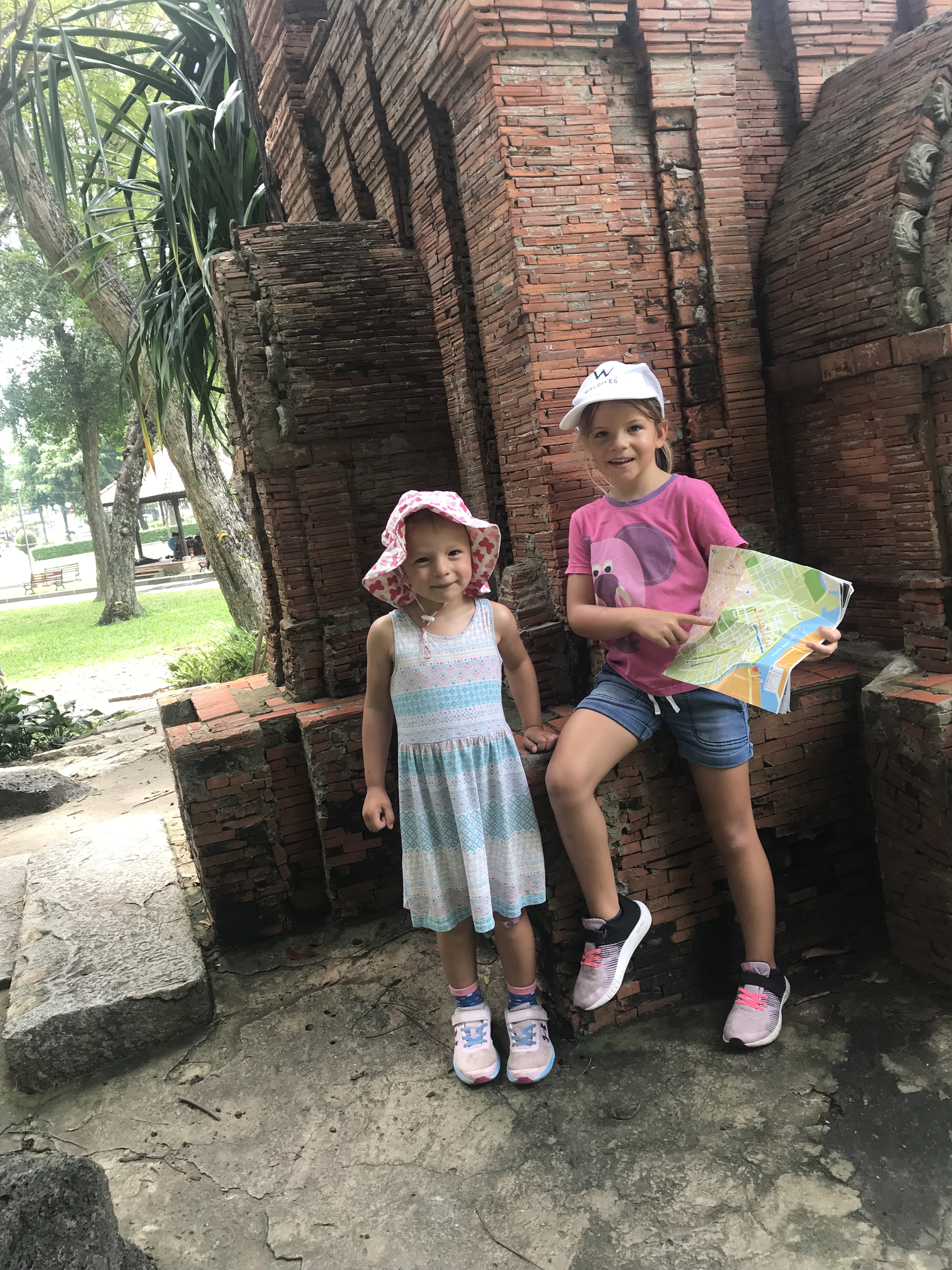
MoJo in Tao Dan Park, Ho Chi Minh City.

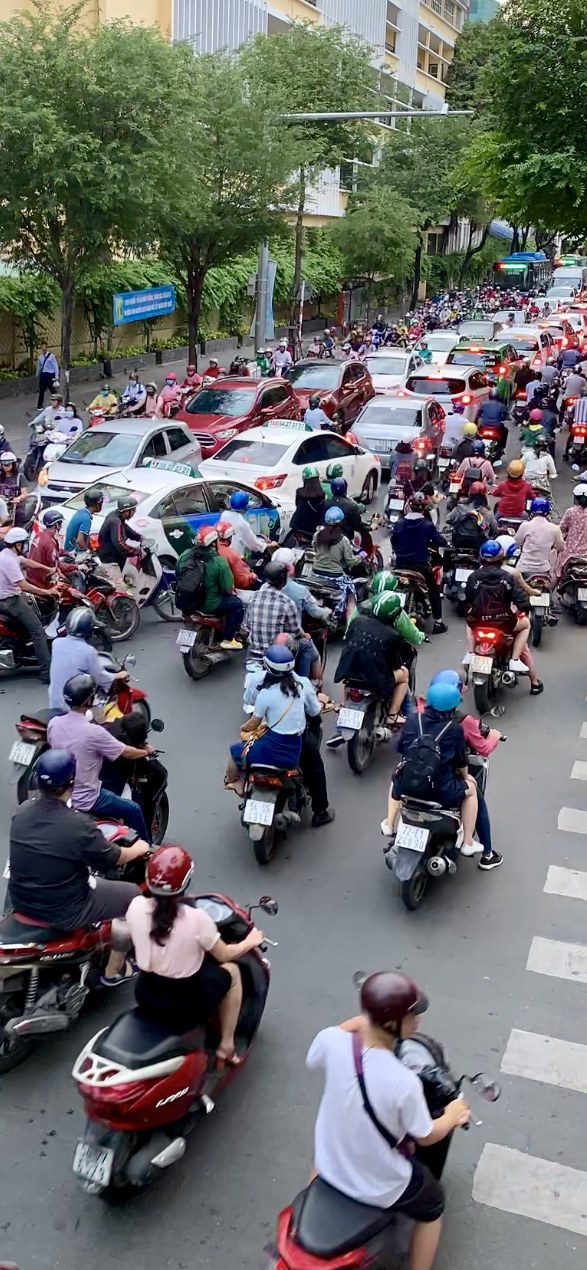
Immediately evident as we left the airport was the ratio of motorbikes/scooters/mopeds to cars, and the seemingly crazy way road junctions functioned, which were surprisingly efficient. Cross slowly but not too slowly and keep moving was the advice to pedestrians.

Second was the incredible food. The first place we sampled it was at Pho 2000, named after a much-photographed visit by Bill Clinton in the year 2000. ‘Pho’ (which I’m not sure we ever learnt to pronounce right) is a rice noodle soup that can be prepared with beef (the signature), chicken, tofu or vegetables. Normally a breakfast dish, we probably averaged one a day during our trip.
Lunch at Pho 2000, Ho Chi Minh City.

As well as sampling a lot of street food (the best gluten-free snack ever, Banh Trang Nuong Pho Mai, a rice pancake) and taking in all the smells and sights at Ben Thanh Market, we ate in some lovely restaurants, eating wonderful food on a low budget.

Banh Trang Nuong Pho Mai being cooked outside the post office, Ho Chi Minh City.

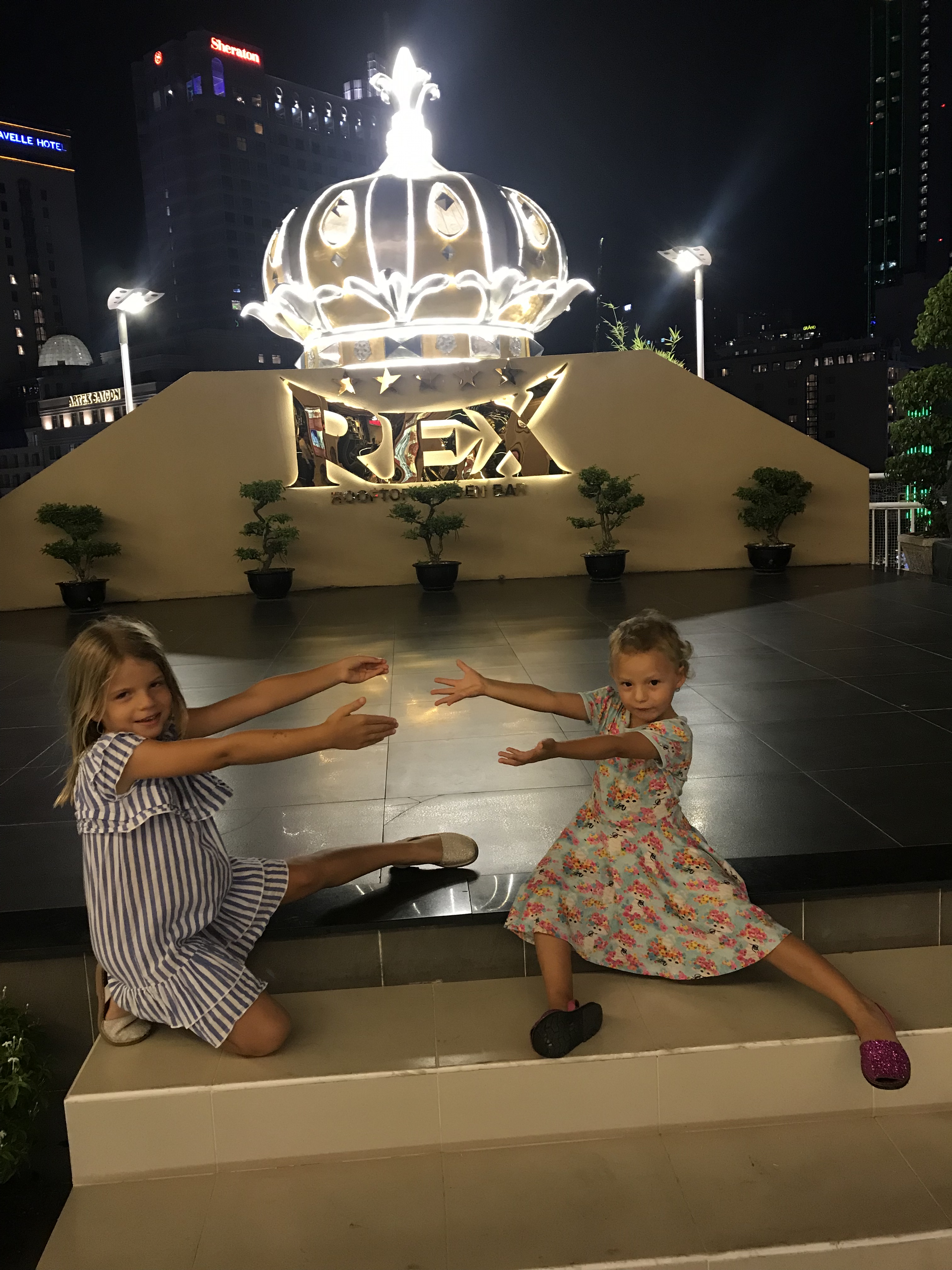
On our first night we went to Lemongrass. The architecture was French colonial, the food perfectly prepared Vietnamese staples. Located right off the central artery of the city, the pedestrian road ‘DL Nguyen Hue’, which we kept on finding ourselves gravitating to. Tempted by the lit up revolving crown, we went up to the Rex Rooftop Garden Bar for a nightcap / ice cream, the spot where international journalists reported from the war and US officers and GIs would have a tipple named ‘the five o’clock follies’.

Another evening we were caught in our first rainstorm, taking refuge close to where we were staying and indulging in some western food at The First Steakhouse.

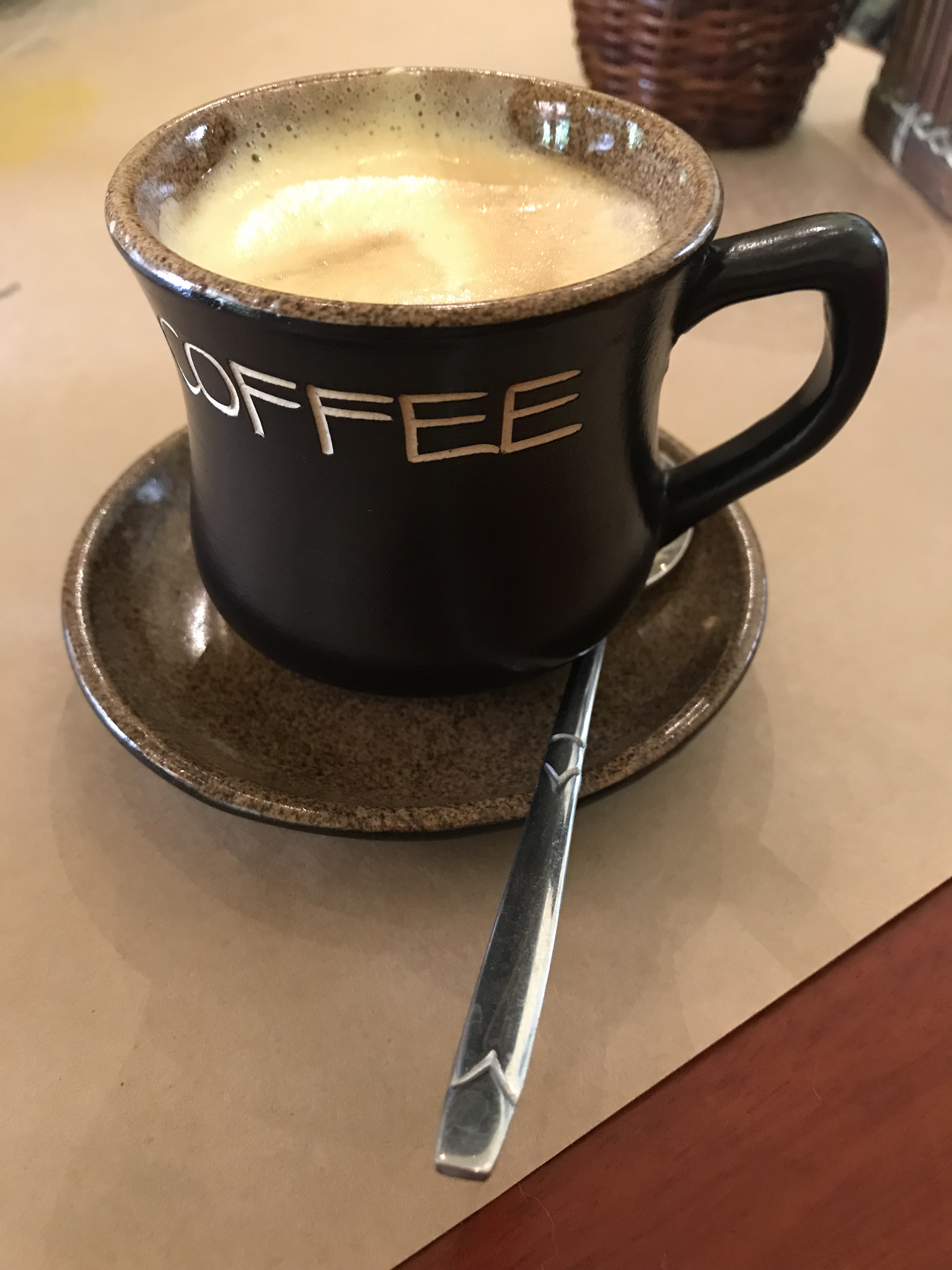
For me the coffee hit was intense. However you took it, and I tried them all – hot, cold, black, white, sweet, sour, with coconut or egg. All delicious.

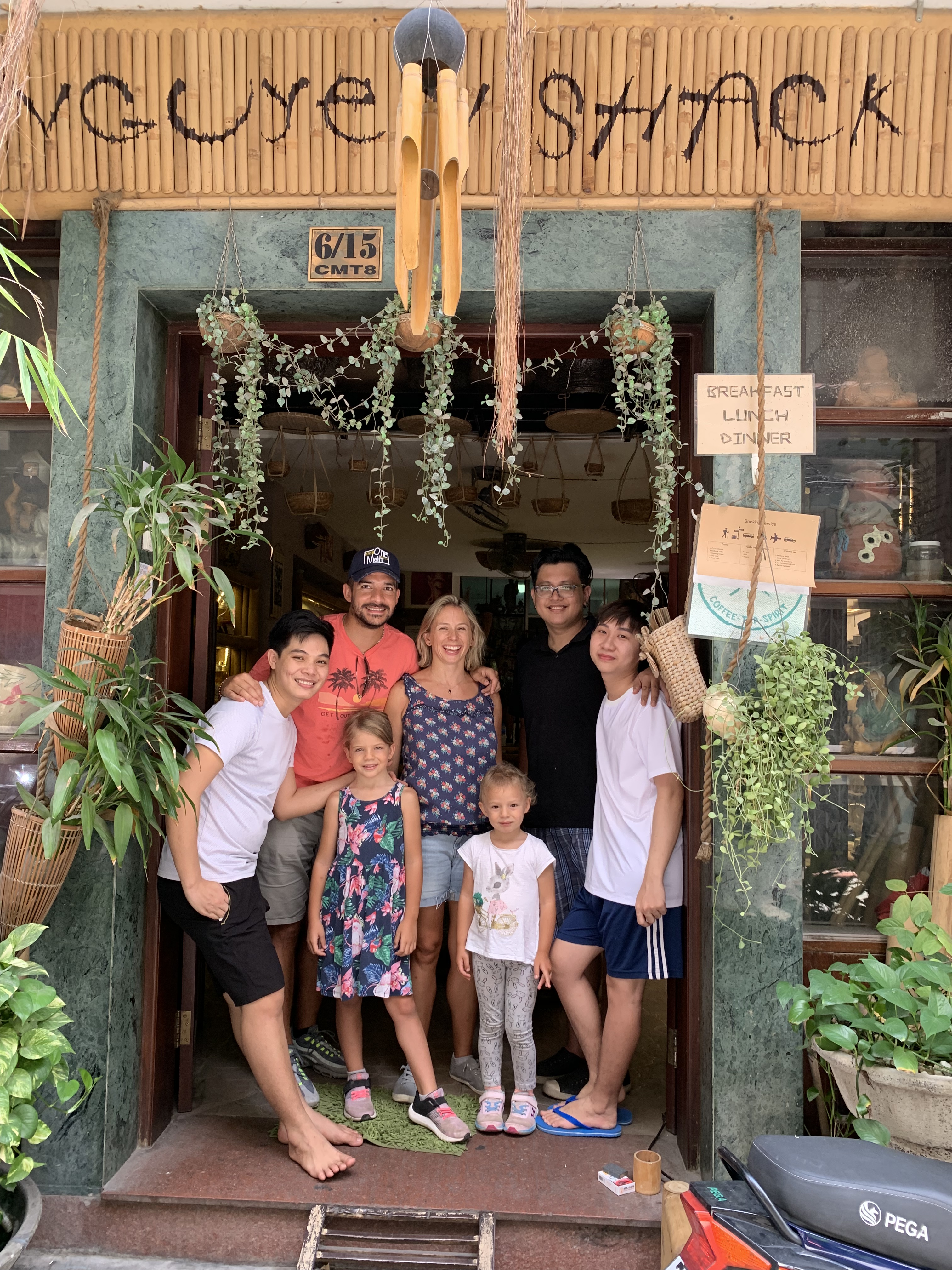
We had picked a great place to stay, the temptingly named Nguyen Shack, Tea, Coffee & Spirit Collection (we soon learnt that ‘Nguyen’ is the most common surname in Vietnam) chosen ultimately as our room had bunkbeds for the kids and was in a central cul-du-sac. It was the perfect base with great breakfasts, bamboo decoration and a vast array of herbal teas, natural medicinal fruits, spirits and coffees to sample. The same family run spaces in three other more remote parts of the country in the same style.

Family Egerton with the staff at Nguyen Shack, Tea, Coffee & Spirit Collection, Ho Chi Minh City.

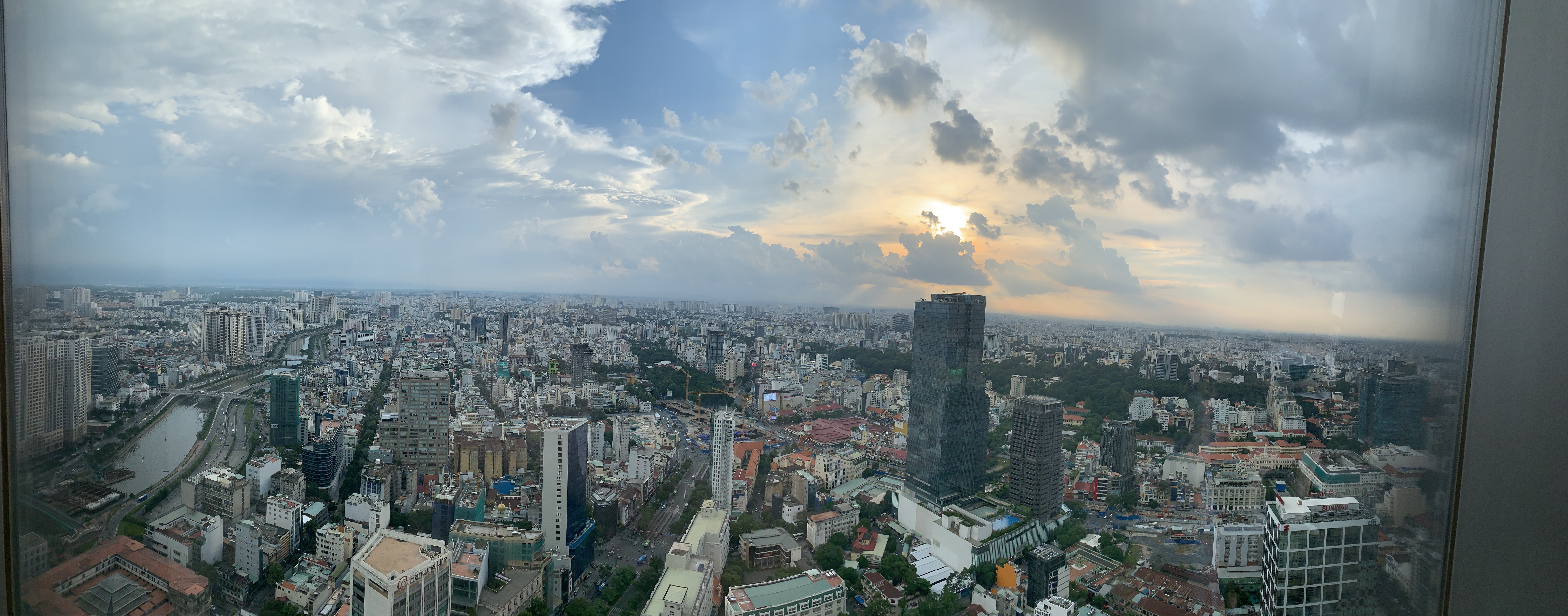
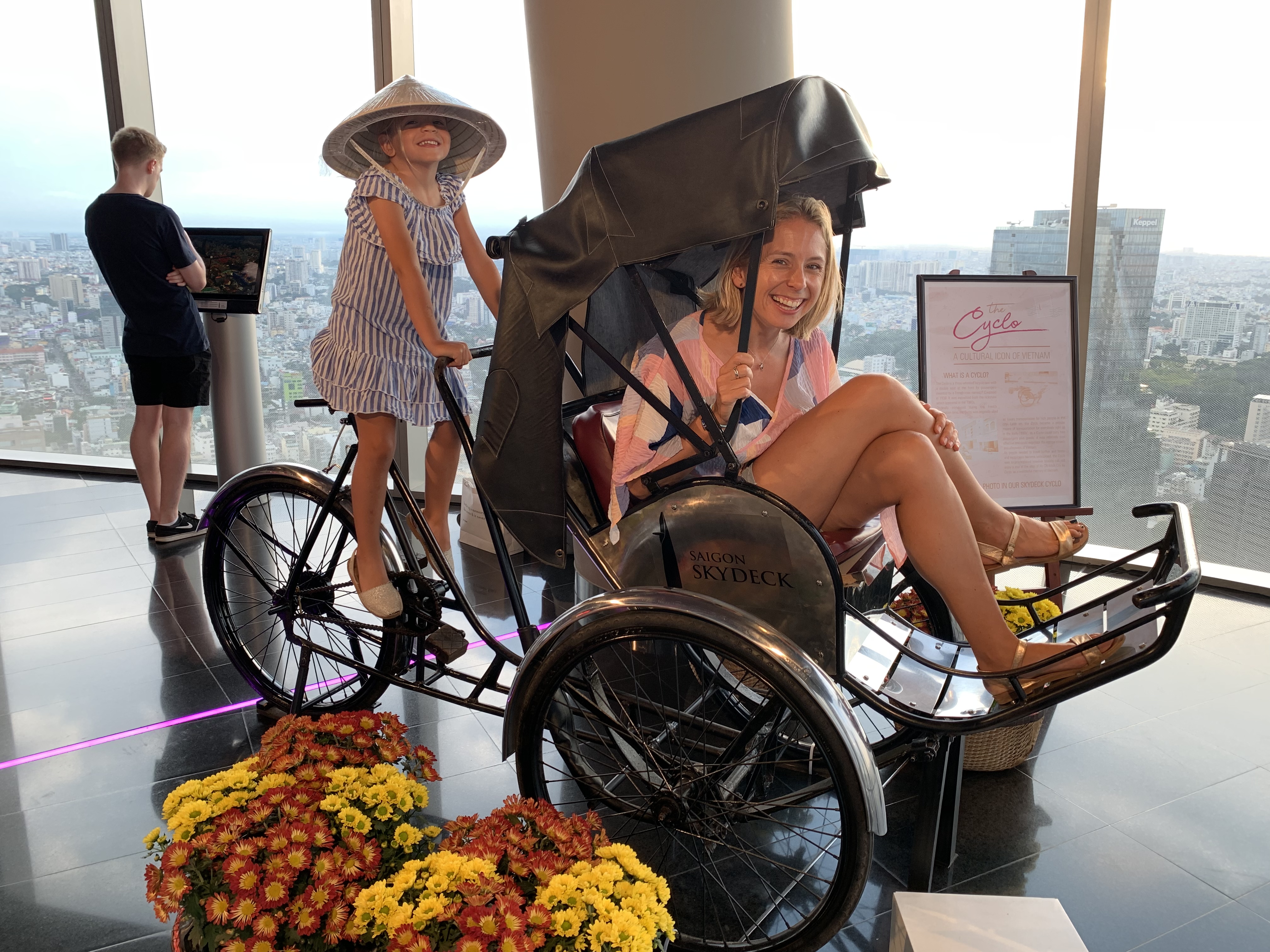
We always like to get high in a city as soon as possible after arriving (!) to get our bearings and suss out where we want to go. The best spot for that in HCMC is Saigon Skydeck in the Bitexco Financial tower, the tallest building in the city. One of us was of course disappointed that under 18s were not allowed into the World of Heineken experience, but the view was good and they had a cyclo you could sit in and hats and costumes to try on.

Saigon Skydeck, Bitexco Financial tower, Ho Chi Minh City.

We decided to skip the War Remnants Museum and got our cultural fix with a visit to the fascinating Reunification Palace. The tour began with a temporary exhibit giving background on the city’s infrastructure and history, located in the pavilion which is the only part remaining from the original 1868 French residence.

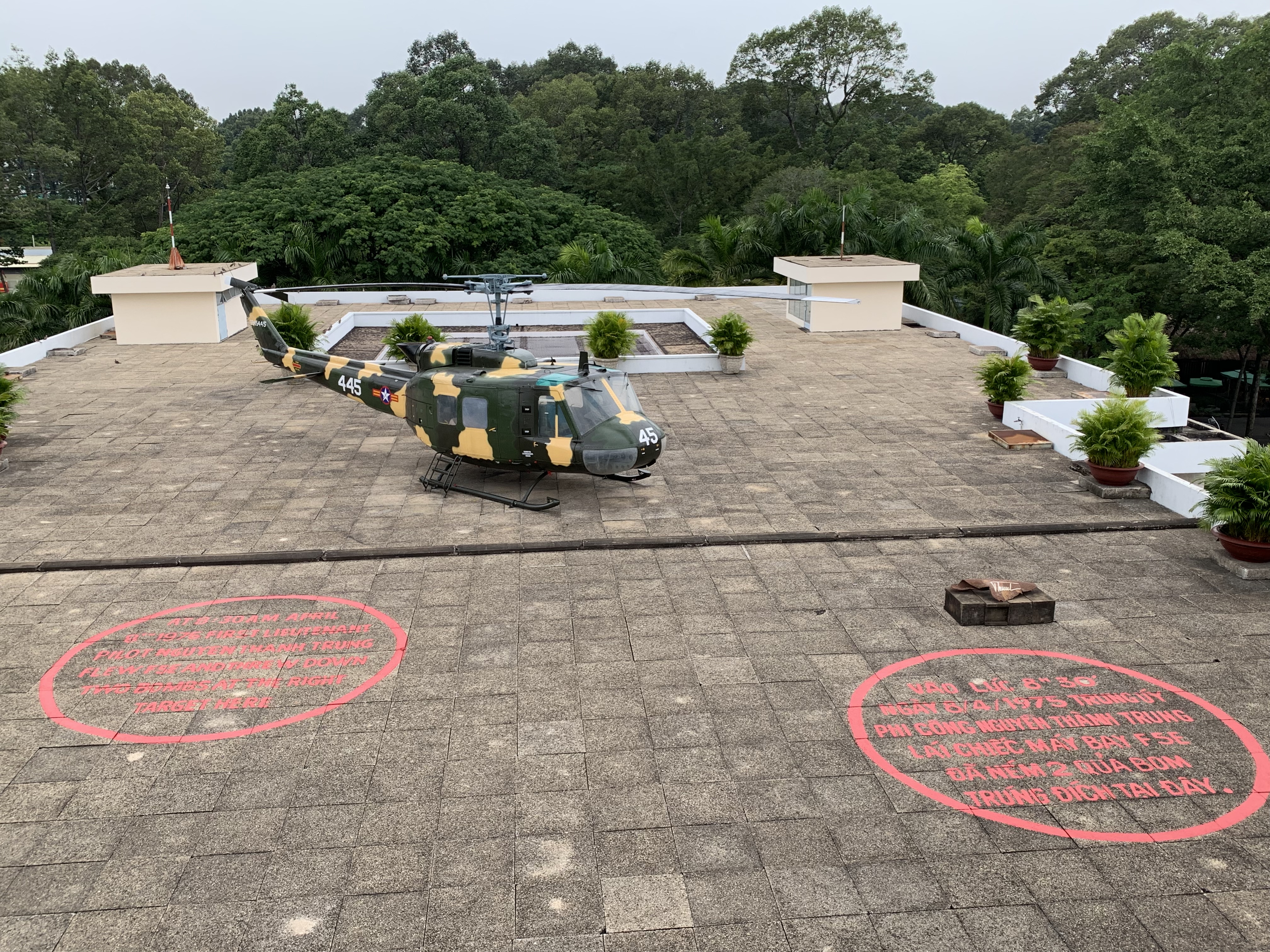
Especially fun were the communication bunkers and the rooftop dancefloor with a helipad. Tanks are on display in the gardens, which also have great kids play areas.
Rooftop of the Independence Palace, Ho Chi Minh City.

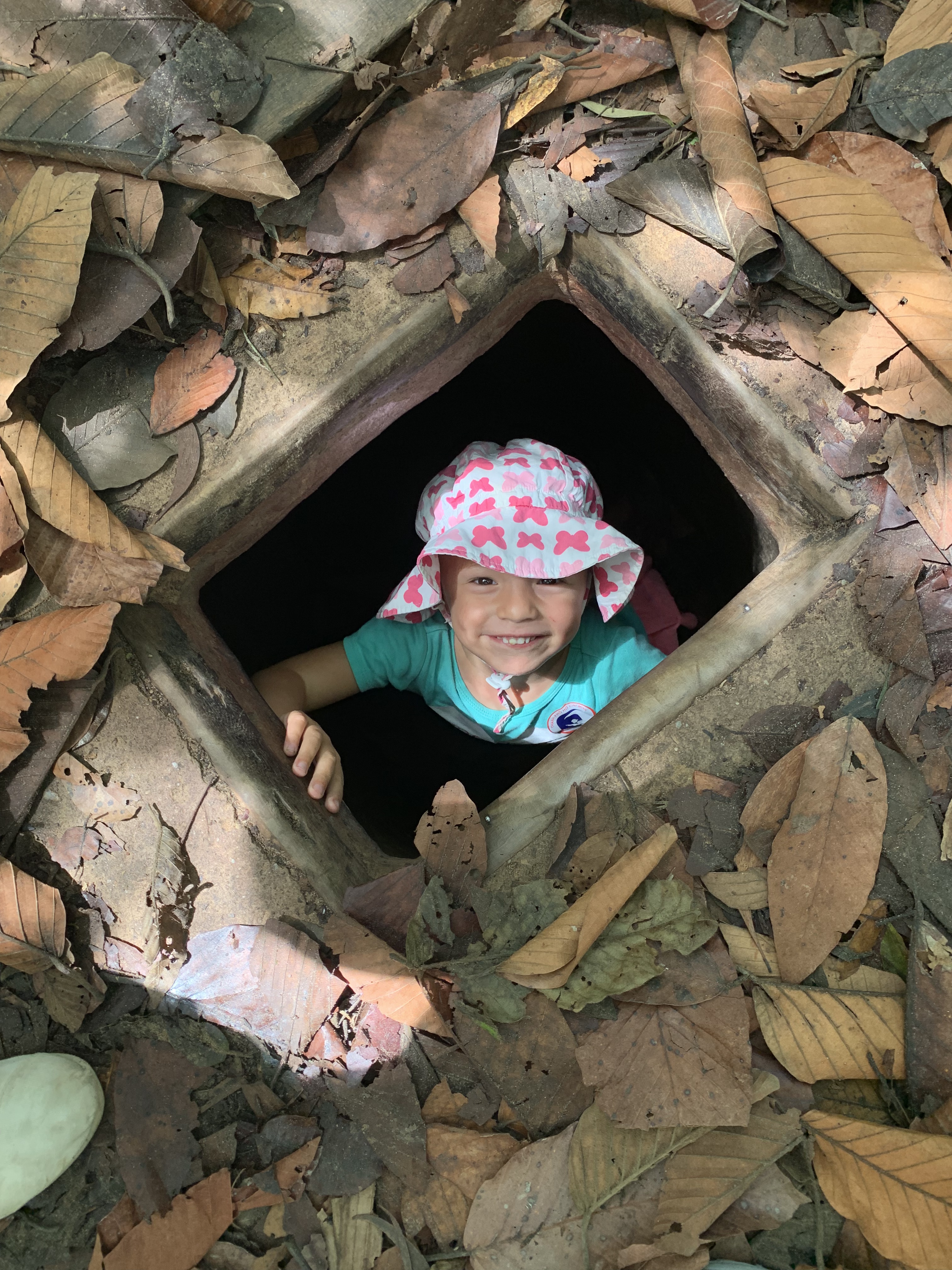
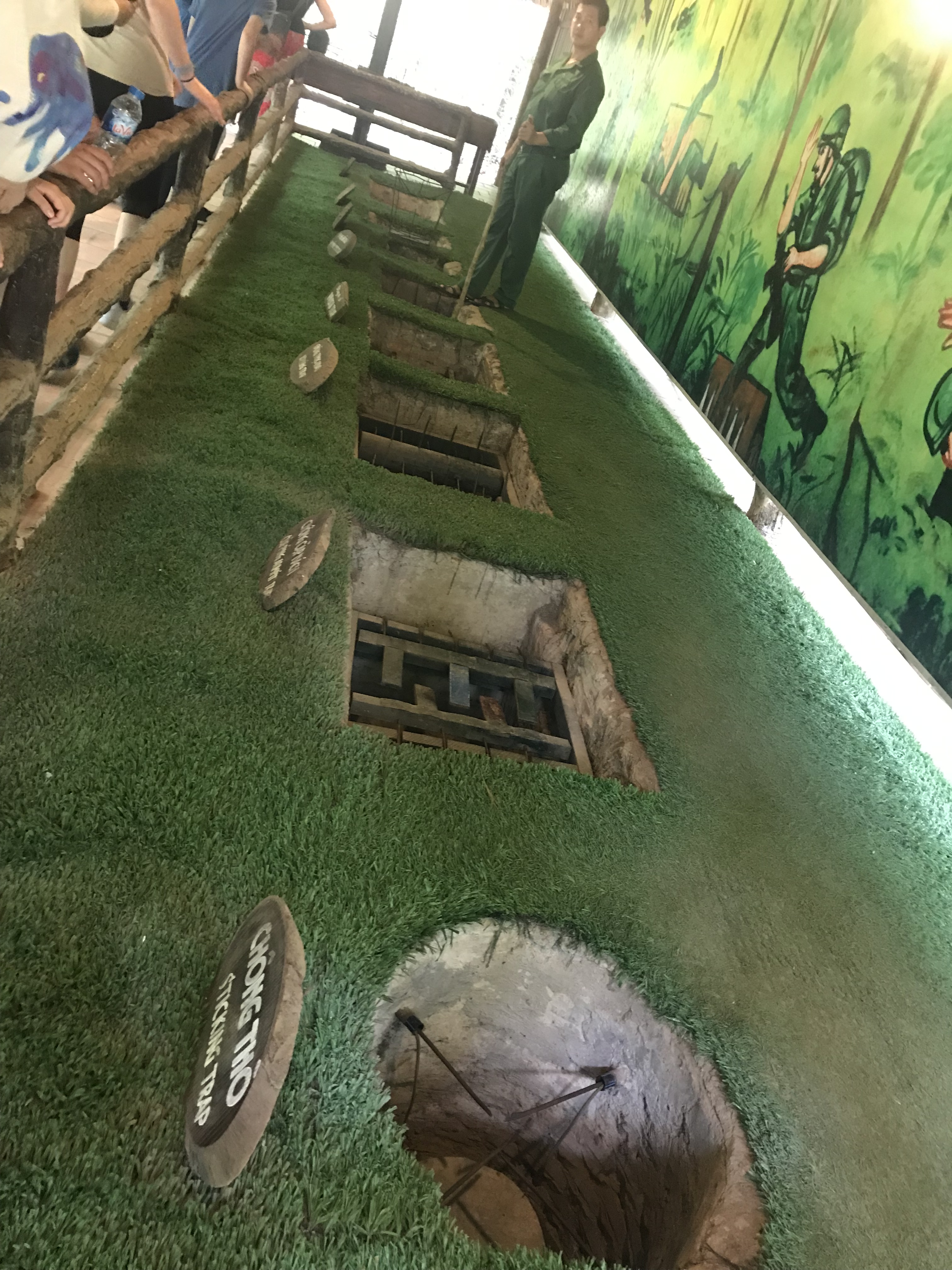
The tunnels were a highlight for MoJo, terrifyingly, they were the perfect size for them. The network of multi-storey tunnels, constructed between the 1940s and 1960s, ran for more than 250km and are the main reason the VietCong were able to gain control and defeat the South Vietnamese and US forces.

Our brilliant tour guide Dana gave us just the right amount of background information, explaining the different booby traps and ways the soldiers lived for months on end. Their sandals were made from rubber, and they would wear them backwards so their footprints would be facing the other direction to confuse the enemy!

Dana has her own company, Eco Straw which makes straws from plants. We are traveling with our own 4 bamboo straws (thanks Liv Brent!) and when we remember always hand them over when we order juices / iced coffees / cocktails to make sure we don’t use plastic straws. Nice to see different alternative materials used here.

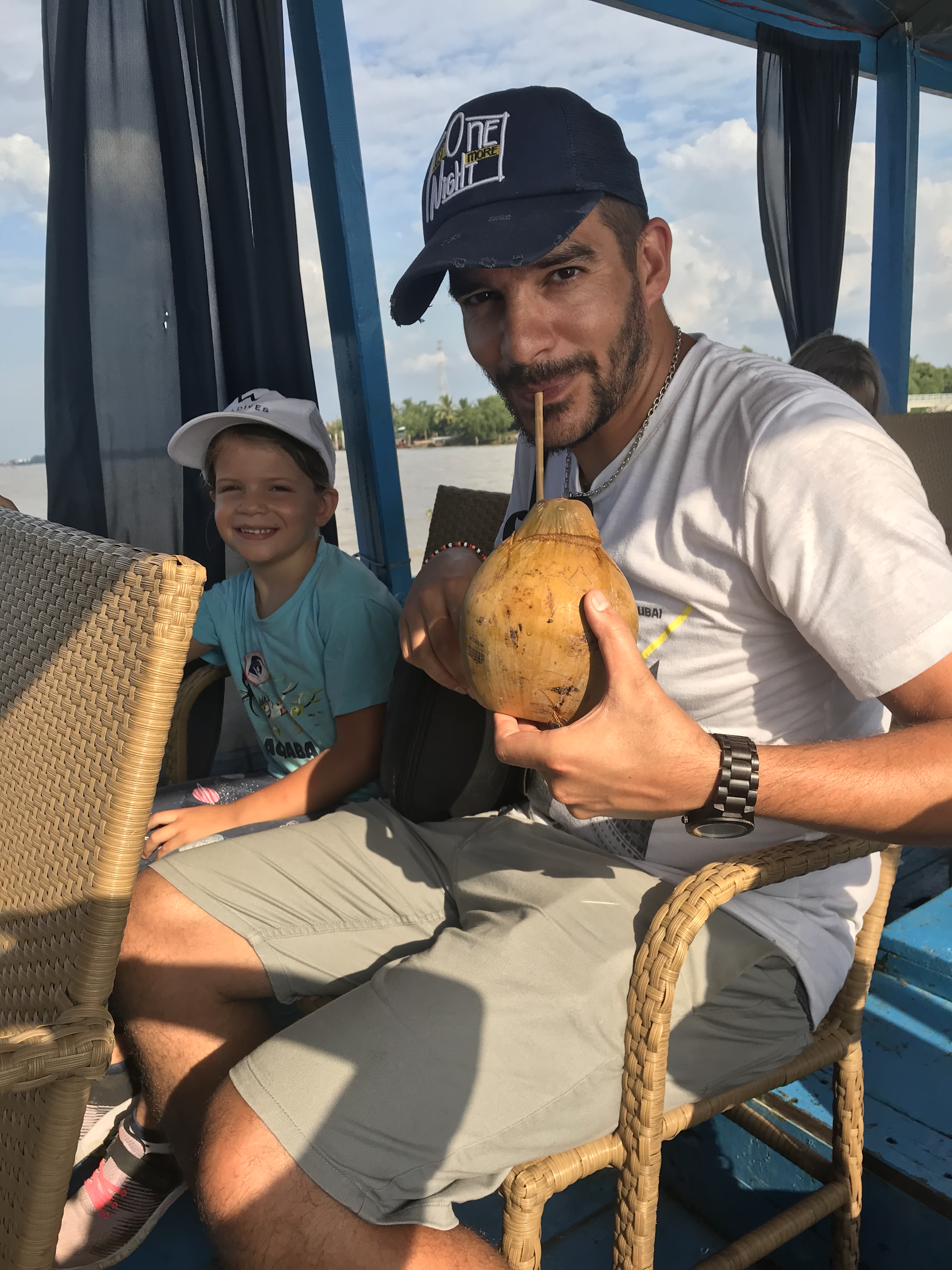
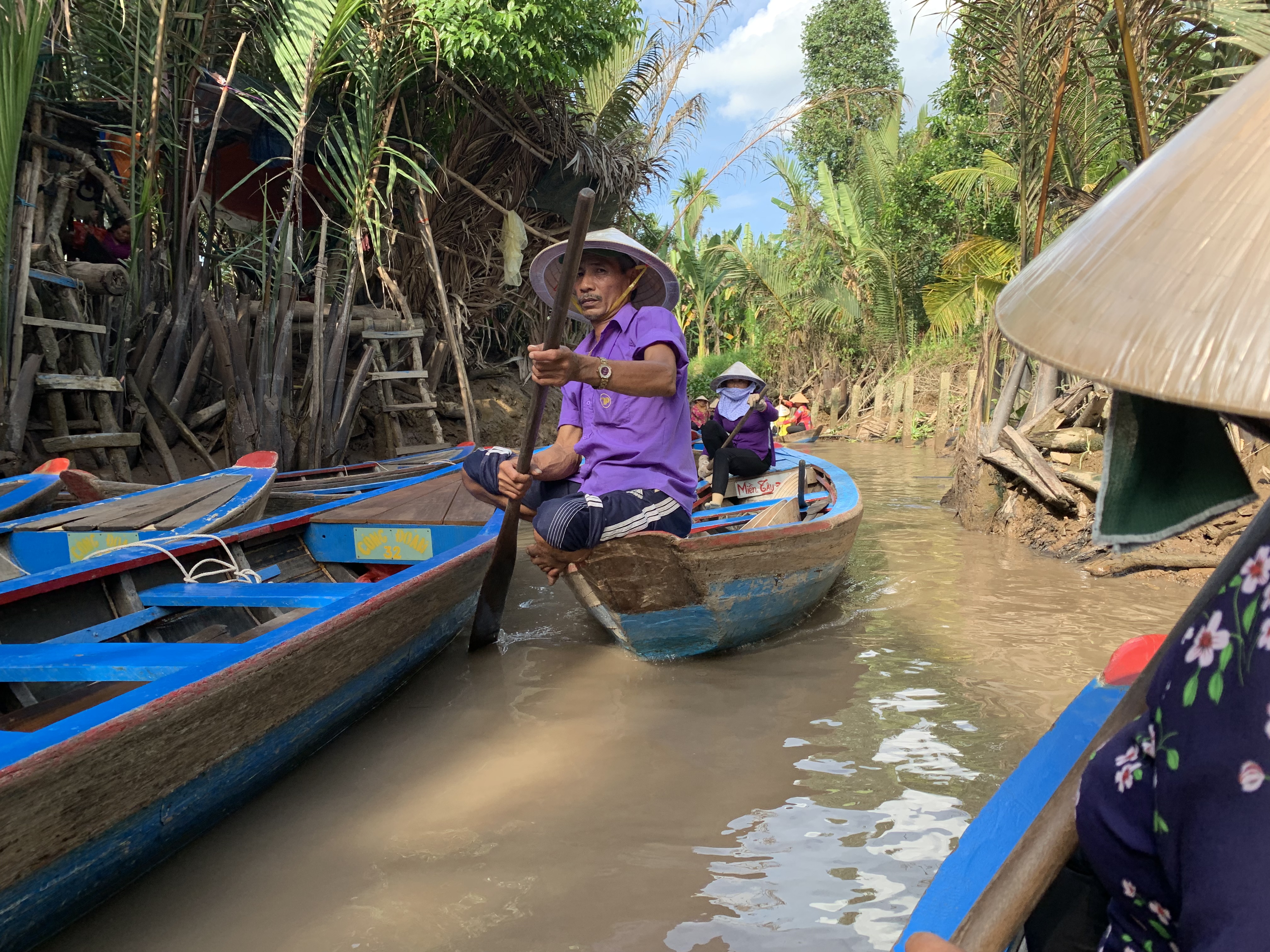
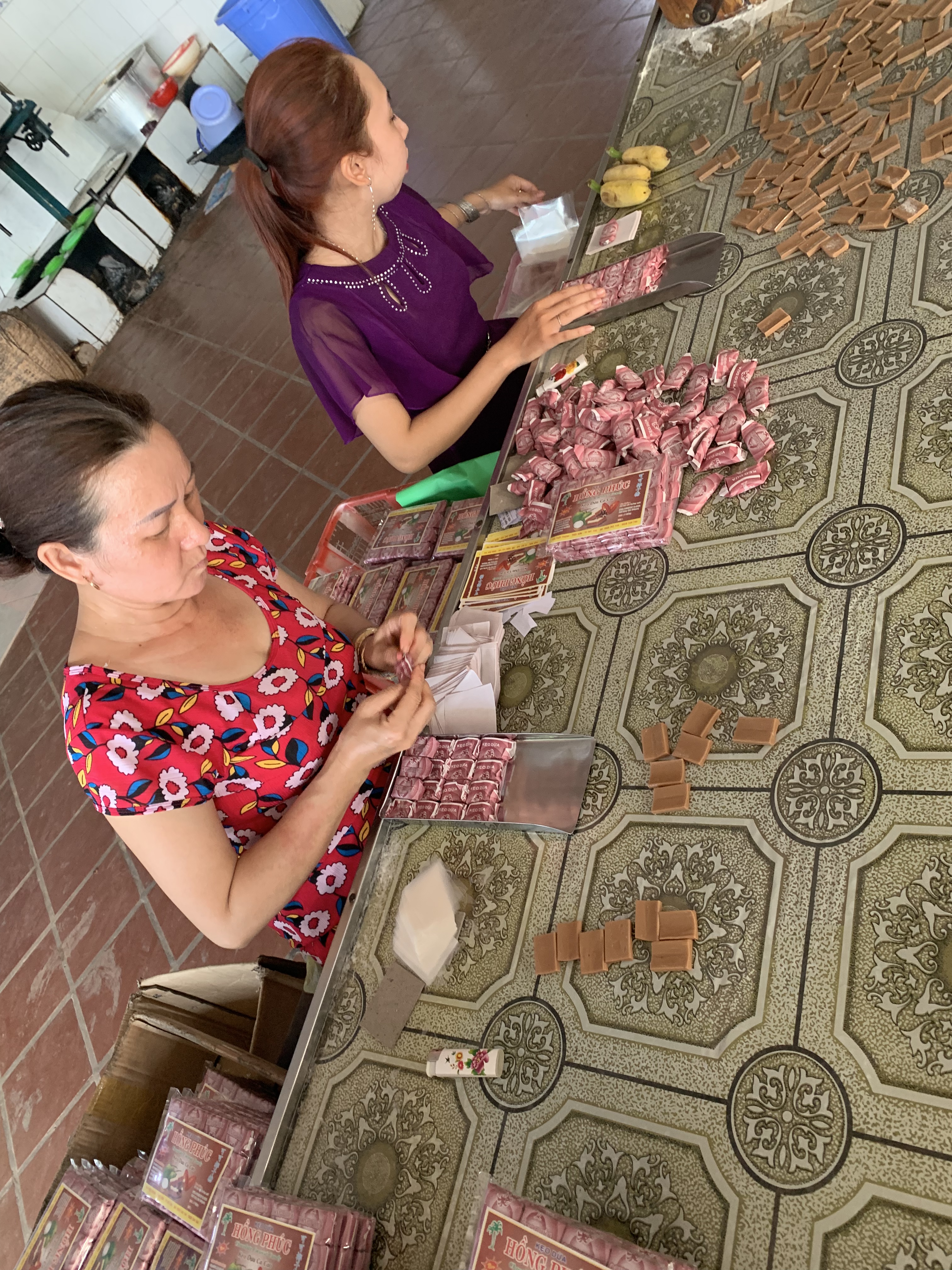
Highlights of the Mekong Delta afternoon were hand-rowing in a sampan along a canal (of course we had to have a go), learning about honey farming and sampling some honey & kumquat tea, and watching ladies make coconut candy.

Day exploring the Mekong Delta.
Making coconut candy, Mekong Delta.

Vietnam Impressions: Art and culture (Laura!)

For some reason, I had always wanted to visit Vietnam. As we planned our trip, it was number 1 on my list. I’m not sure why. I knew I would like the food having sampled some of the incredible restaurants around Dalston in London and JLT in Dubai. Lots of movies serve as brutal history lessons of the wars that ravaged the country in the 20th century.

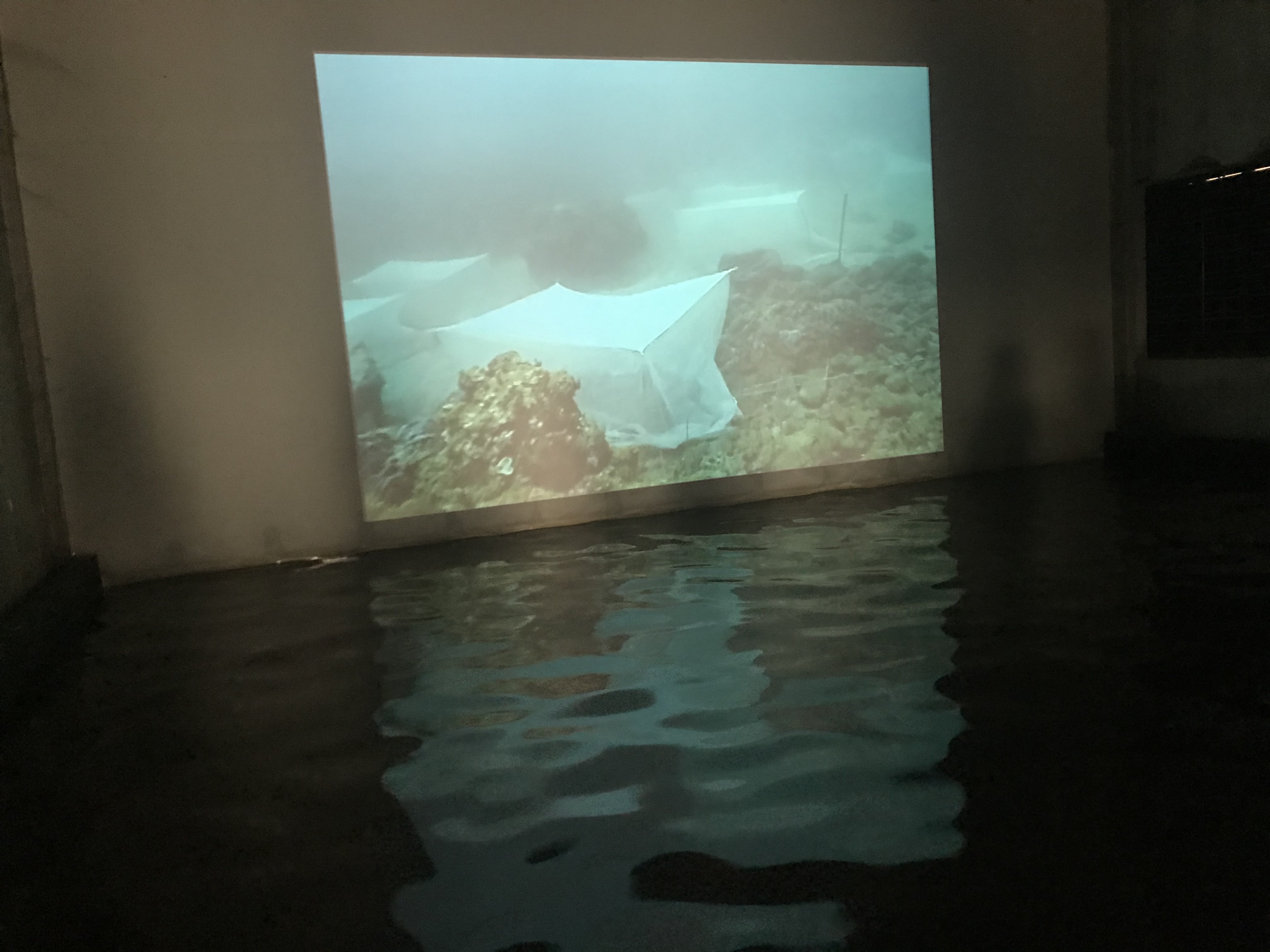
Some contemporary artworks gave some impression of the country we would find. A standout artwork at the Kochi-Muziris Biennale 2018/19 was a video installation by Jun Nguyen-Hatsushiba in which Vietnamese fishermen pedal a rickshaw across the sea floor, occasionally coming up for air. Screened in a flooded room, viewers had to remove their shoes and wade shin-deep in water.

Memorial Project Nha Trang, Vietnam: Towards the Complex – For the Courageous, the Curious, and the Cowards, Jun Nguyen-Hatsushiba, 2001.

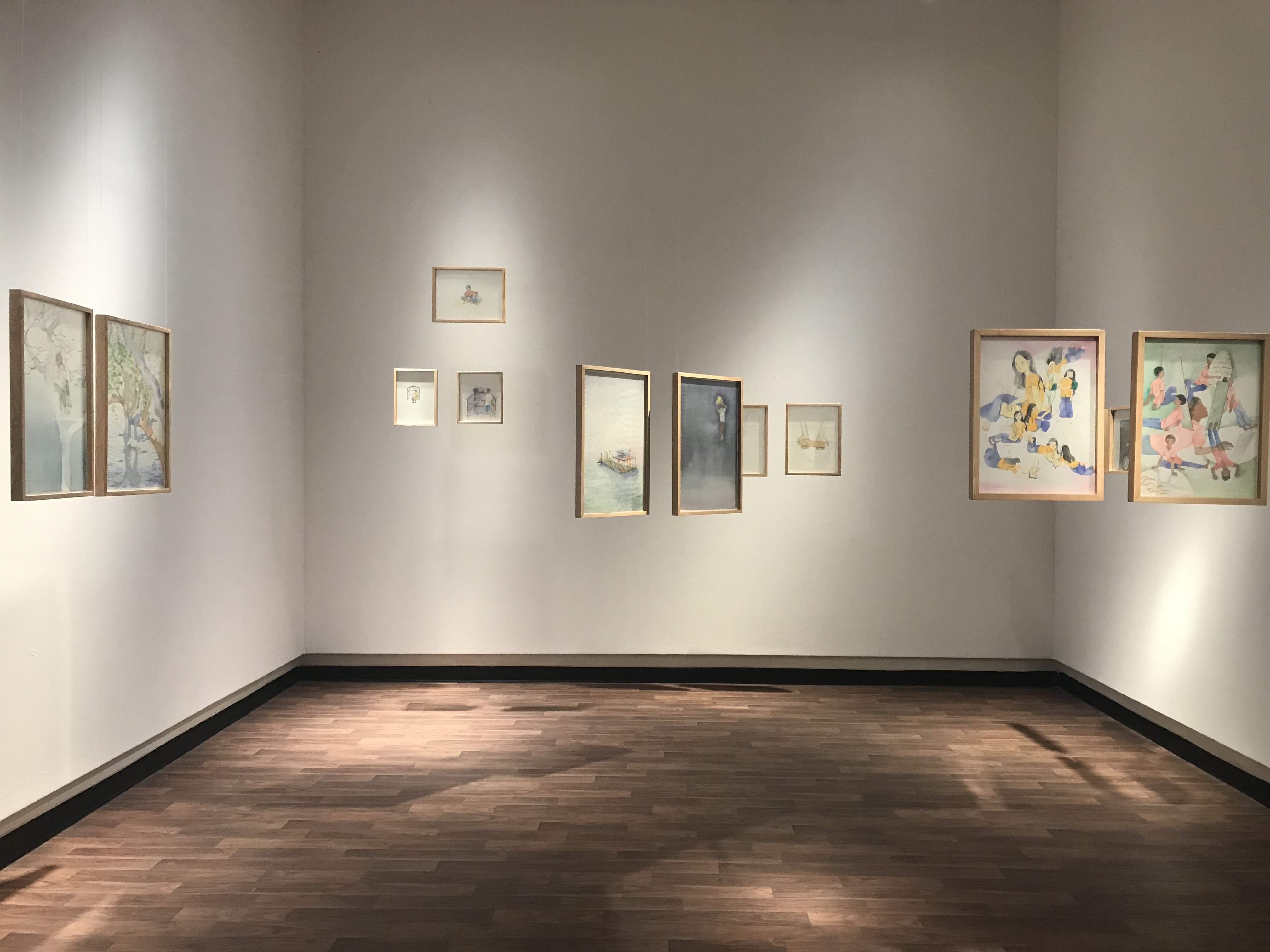
Zoe Butt’s curated exhibition which formed part of Sharjah Biennial 14 had a strong focus on artists from Indochina including several Vietnamese artists. One work that particularly resonated was Phan Thảo Nguyên’s Mute Grain, which took as its subject a famine which happened in the Red Delta region in 1945. Introduced first to the landscape and its people through a series of 24 small paintings on paper hung as if floating, the main part of the project was a moving three-channel video including interview footage of survivors of the famine and children.

Mute Grain, Phan Thảo Nguyên, 2019

Amazed to discover it was a country of nearly 97 million, with a geography hugging the coastline spanning over 2,000 km from north to south. For our trip, which we gave 3 weeks, we traveled south to north (most people we met were traveling the other way!) flying into Ho Chi Min City, taking a night train up to Dri Tri, then a day train to Da Trang and a flight to Hanoi.

Anandapura Farm

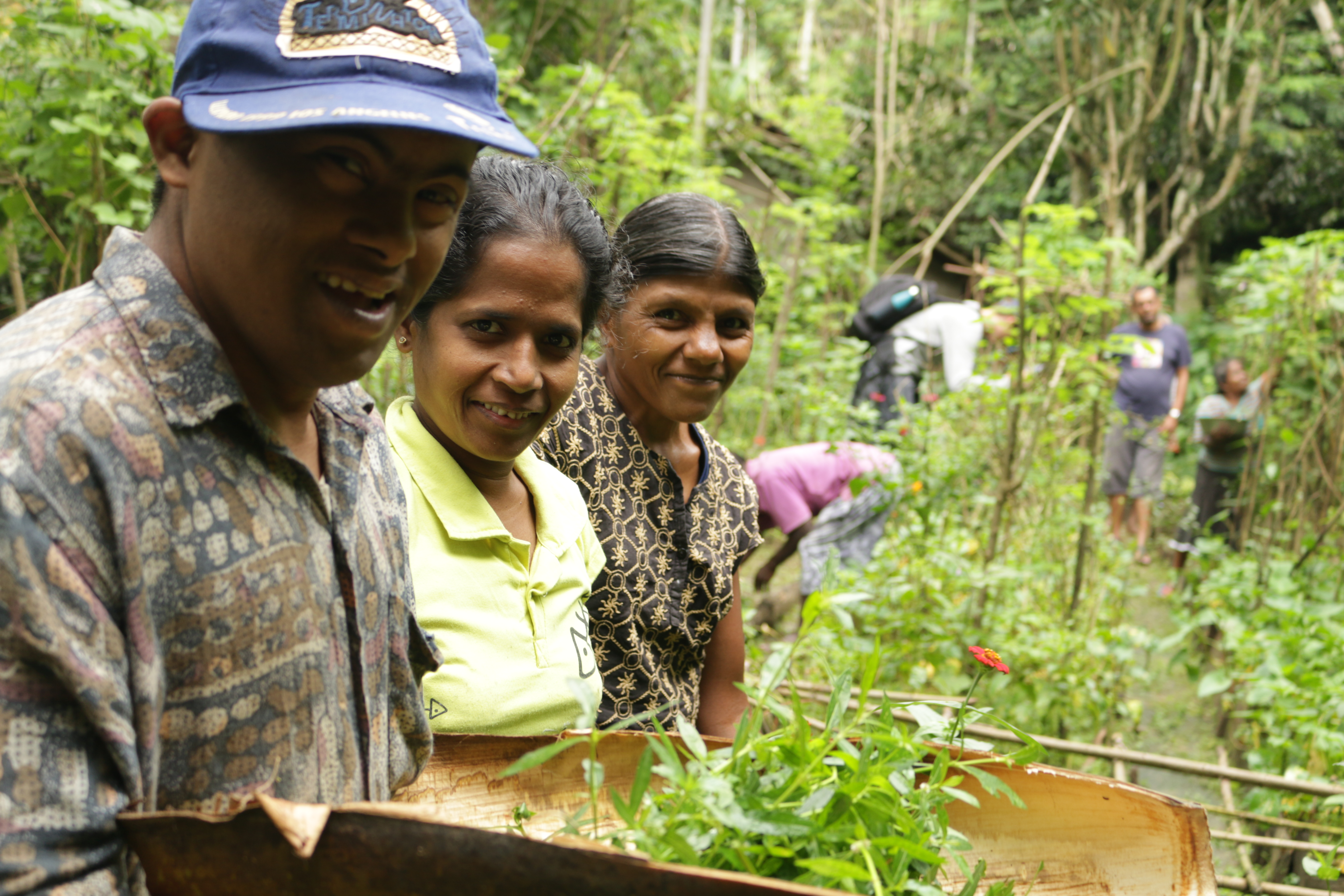
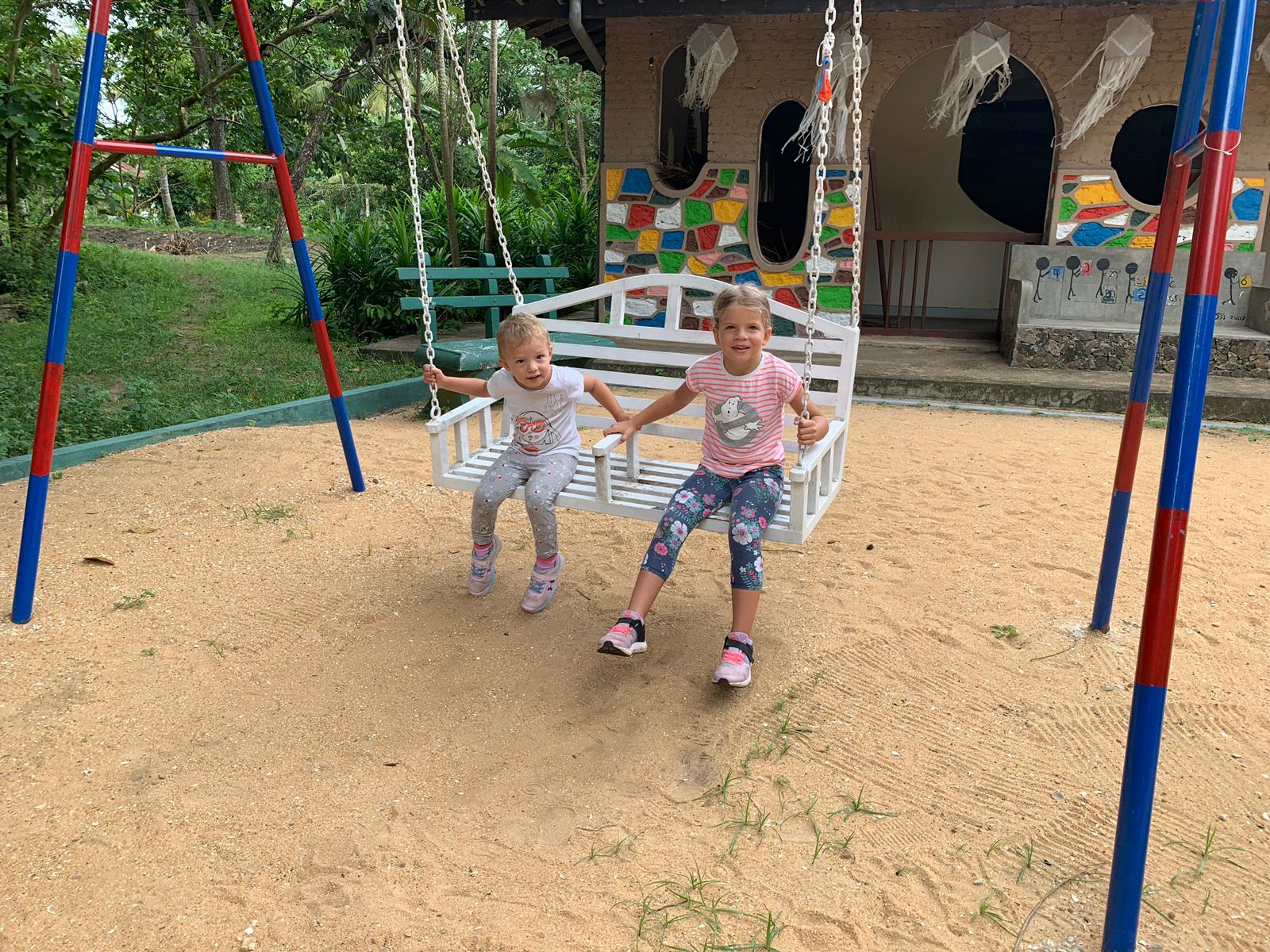
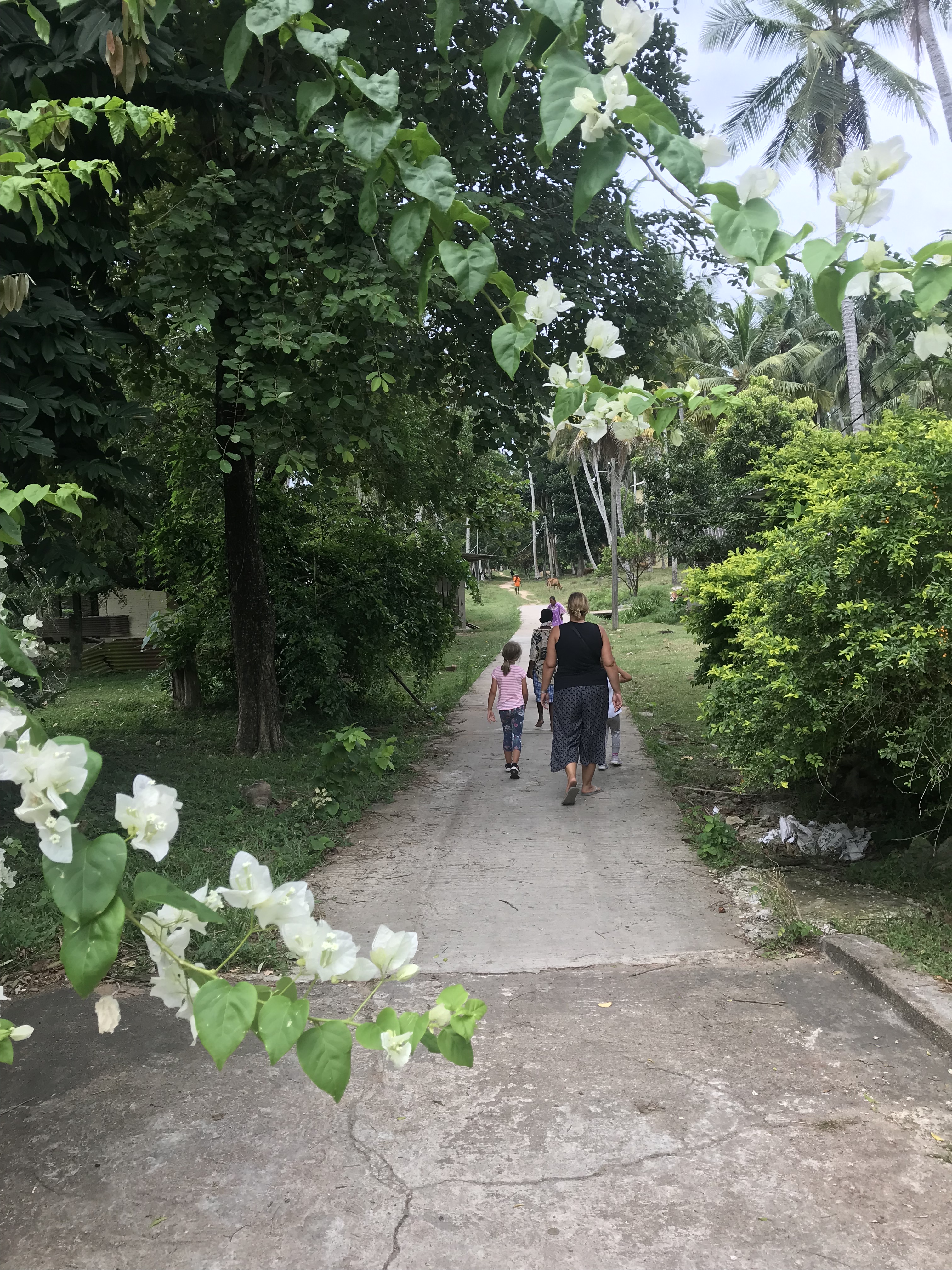
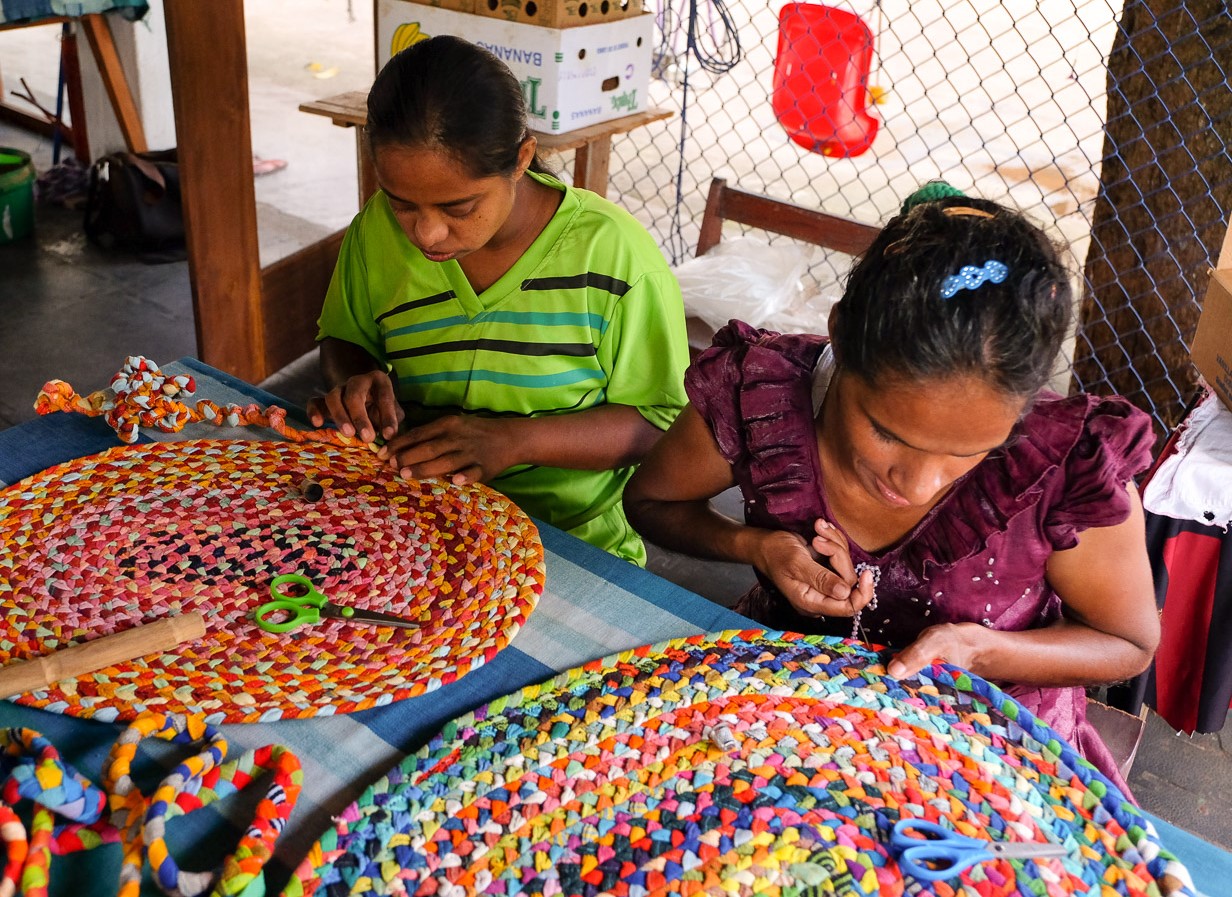
For the first time, we visited another venue of Prithipura Communities. Anandapura Farm is located in Kantana, near Negombo, Sri Lanka, so an hours drive north of Colombo. It is home to around 50 residents who help to farm the 12 acres of land which includes 200 coconut trees, cows and pigs.

It was interesting to understand the work opportunities open to the more-able residents, many of whom started out at the infants home, go on to attend Cotagala school, also run by the organisation.

We also observed a building at the back of the property being refurbished to house volunteers who can come on placements for 6 weeks or longer, ideally 6 months. It really is an incredible place to experience and give back, especially if you have particular expertise.

Prithipura Communities

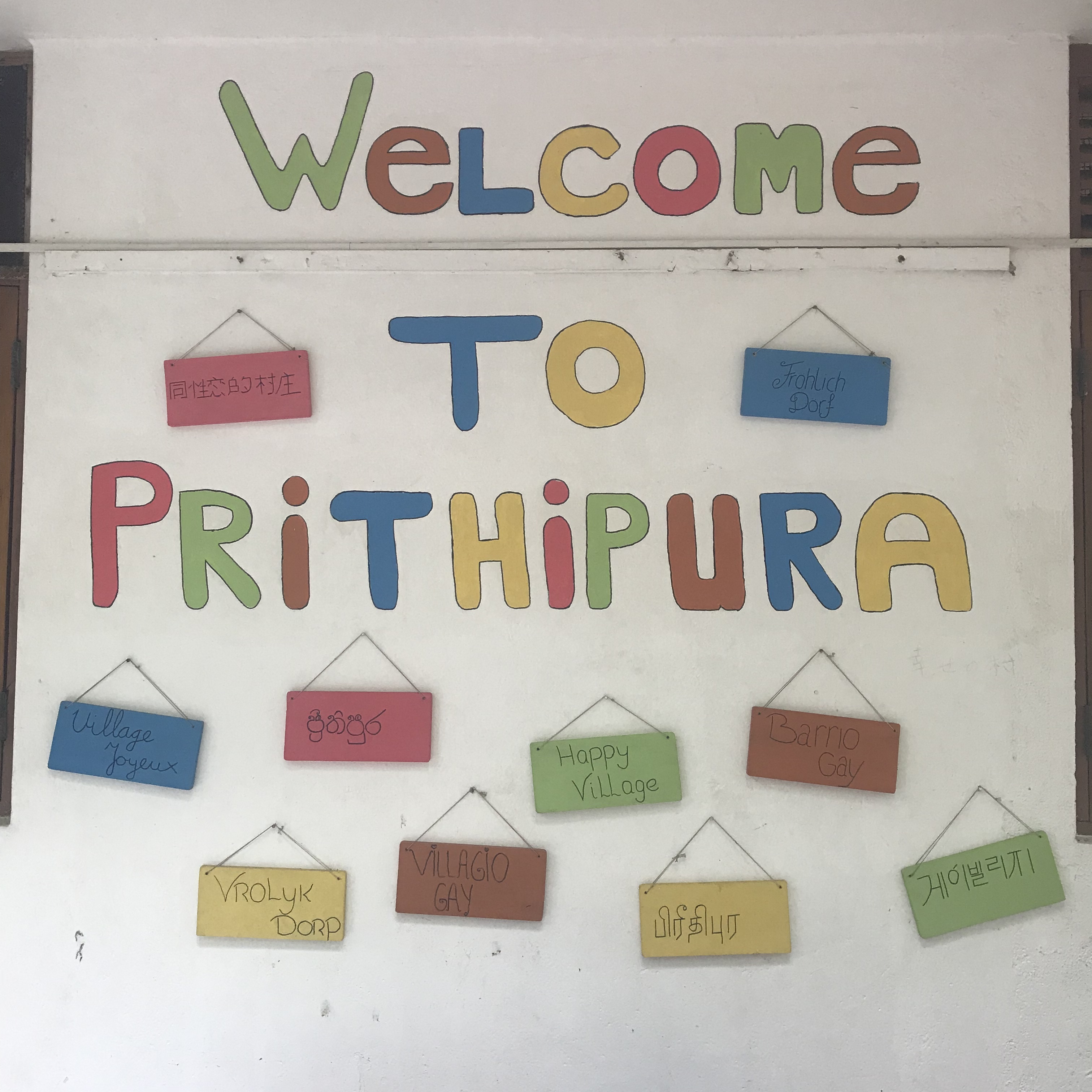
No visit to Sri Lanka would be complete without a visit to the residents at Prithipura. Tom’s sister Katherine first went to Sri Lanka in 2008 to volunteer at the infants home, where she met her husband-to-be Pieter. Pieter’s father Bryan De Kretser had founded the home in the 1960s as a safe place for children with disabilities to live. Since then the non-profit organisation has expanded to four locations across Sri Lanka, supporting around 250 people with disabilities. They provide care, education, rehabilitation and work opportunities to children and adults in need who have little or no family support.

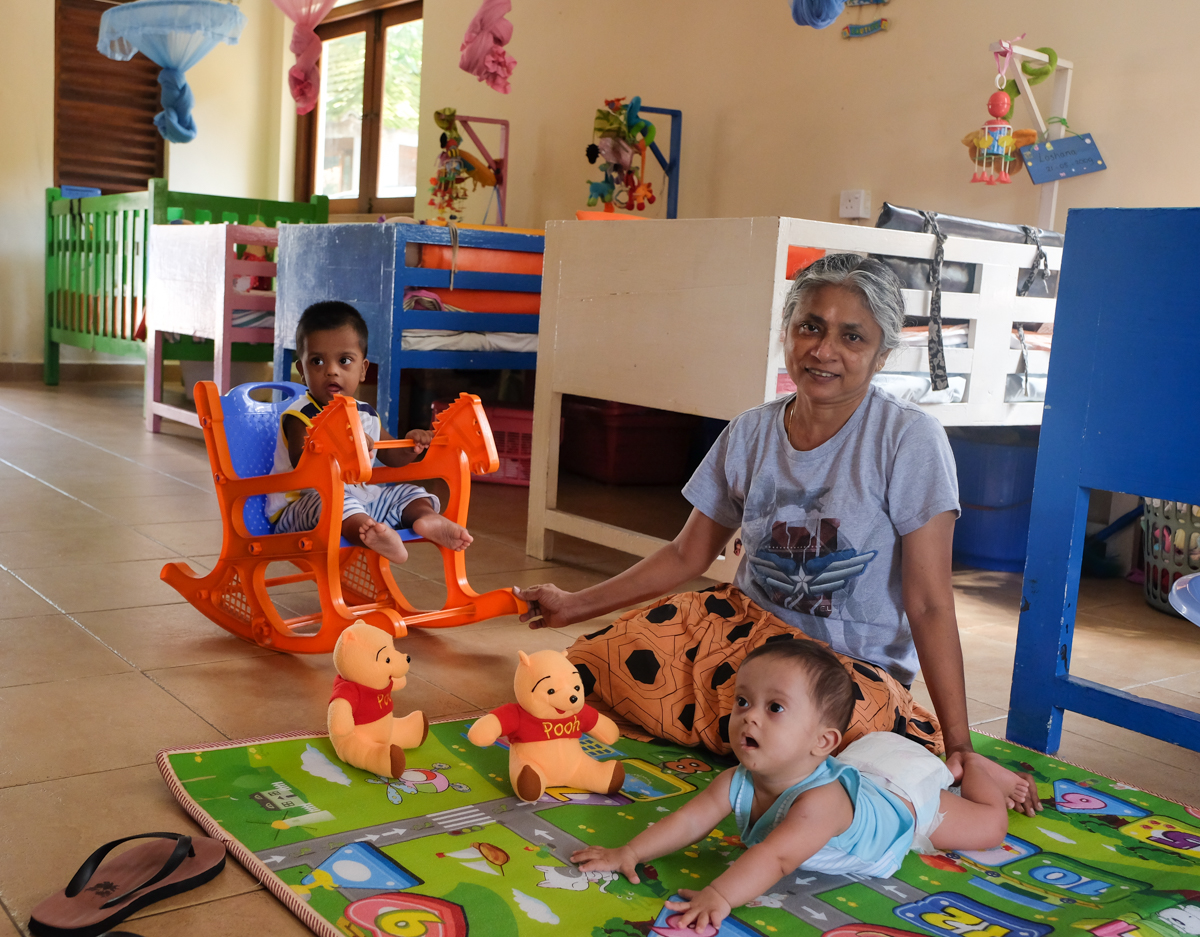
Staying in close by Wattala for 3 days (at the lovely Villa on the Edge) allowed us to come and spend time with the residents at the infants home more than we had before. It was lovely to reconnect with those we have met on previous visits and play with lots of new children that have joined the community. The staff are always so hospitable and friendly, working tirelessly to make it a happy place for everyone.

Family time in Colombo

We had a couple of hours to explore some parts of Colombo and Negombo we hadn’t had a chance to visit before. It was also good to spend some time there with Katherine, Pieter, Rehara and Deshani.

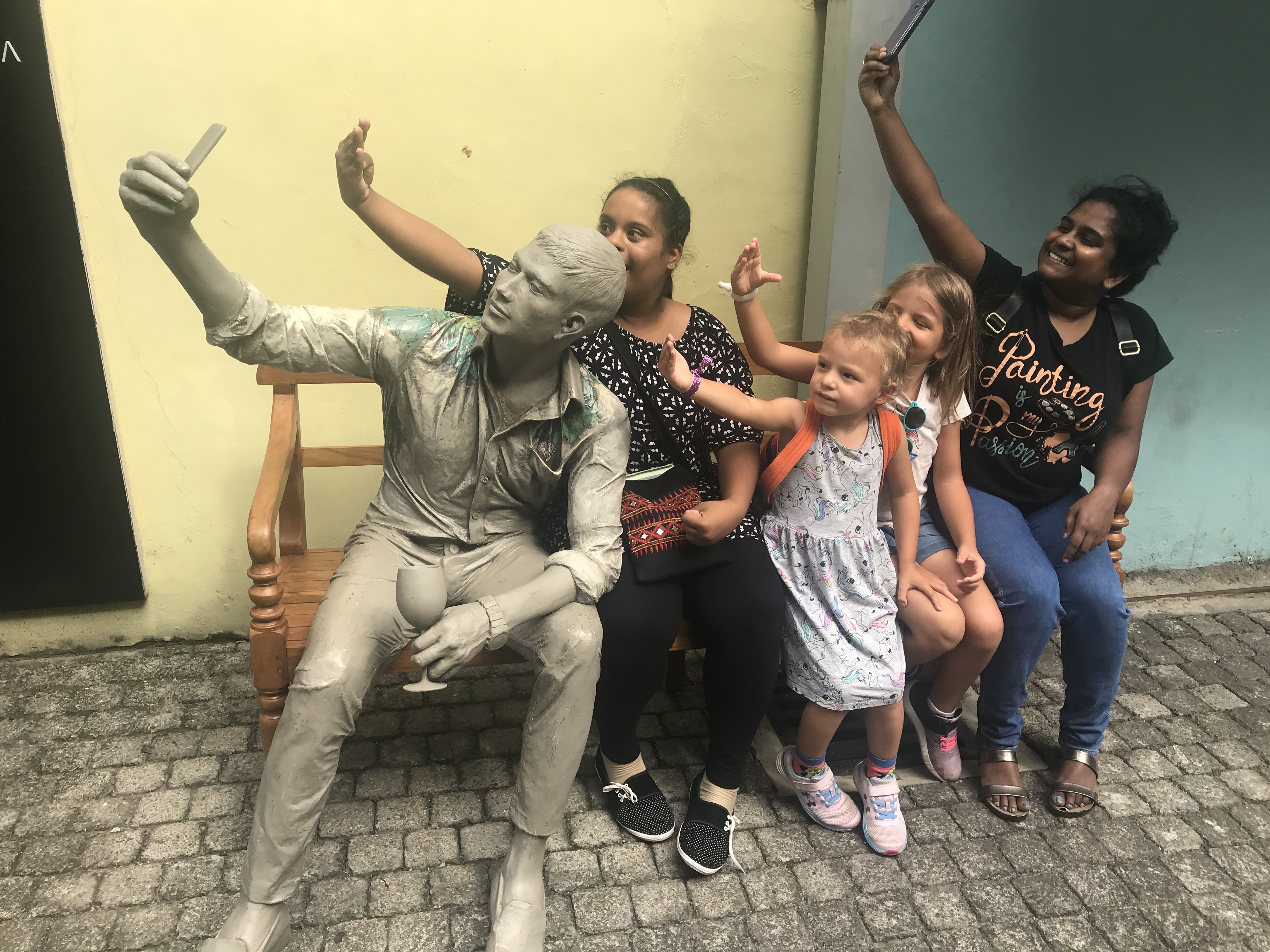
Enjoying Park Street Mews public art with Rehara and Deshani, 21 July 2019.

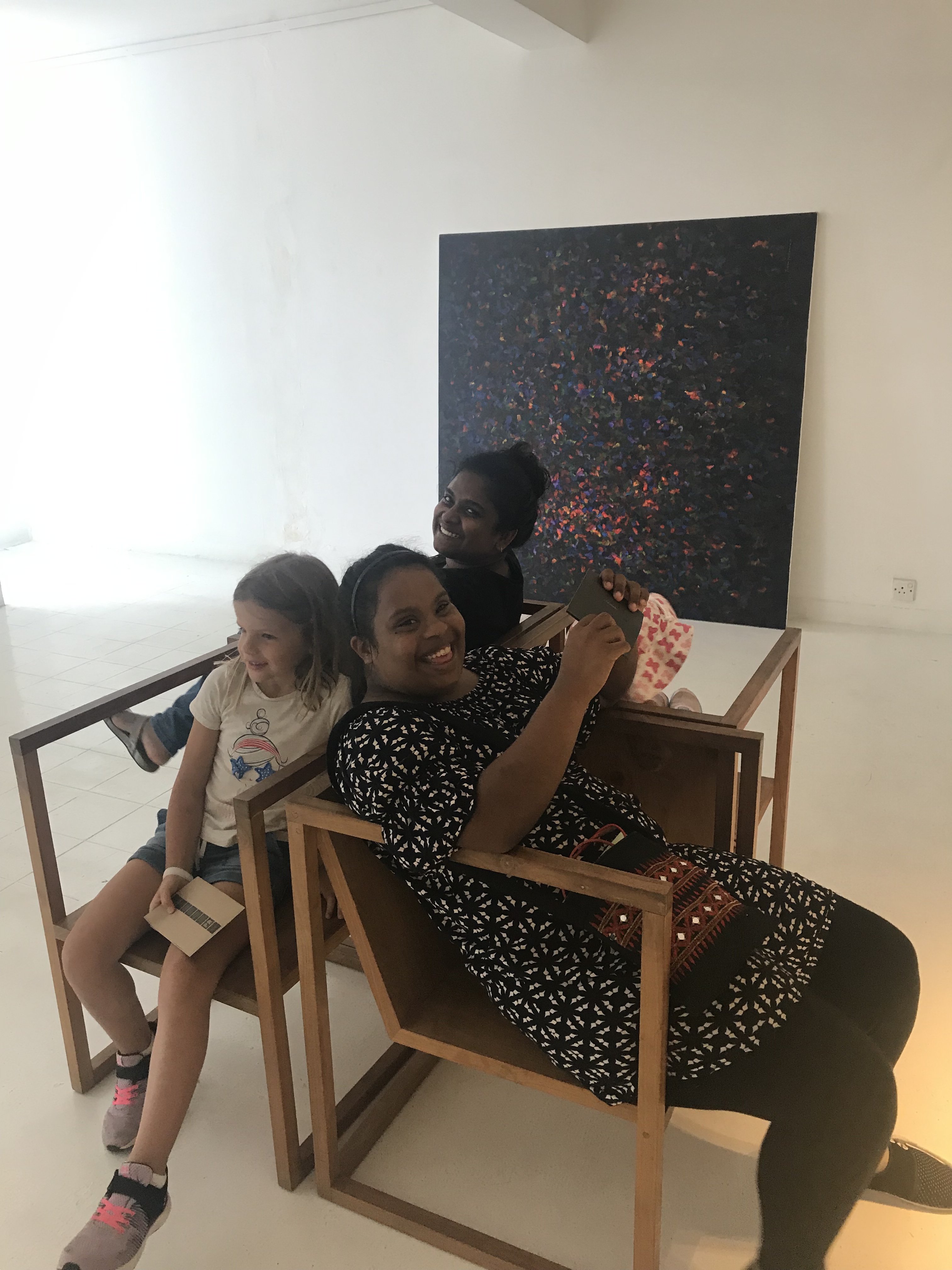
In Colombo we went to Saskia Fernando Gallery who have participated in Art Dubai before. We also explored Cinnamon Gardens and had lunch in the interesting Camden-esque area, Park Street Mews, choosing the Kuuraku Japanese Restaurant which served up delicious sushi, sashimi and noodles.

The girls had the most fun visiting the local supermarket Arpico, always something to do in a different country! We stocked up on cashew nuts to keep us going on our onwards journey, nit spray (thankfully Joanna nor Tom ever had enough hair to catch nits but both Molly and Laura had nits quite a few times on the trip, from Sri Lanka to Australia!) and supplies for Tom to cook some more meals for us all.

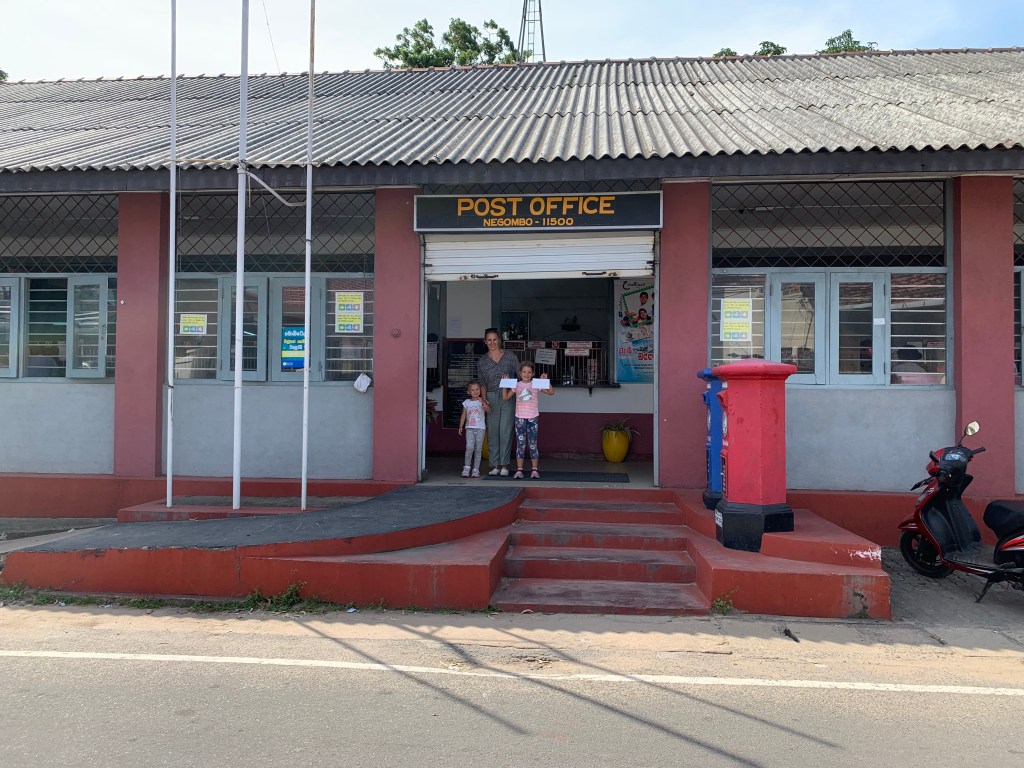
In Negombo we had an alfresco lunch on the beach at Dolce Vita restaurant before a trip to the post office and look around the harbour.

We sent a postcard to the grandparents in Harrow and Islington from every country we visited on our world tour, and were delighted to find them up on the wall and in a scrapbook on our return to the UK! Every one made it back, here we are posting the first.