Korea, Kimchi and more: having a blast in Busan

The first time we heard people talking about typhoons was in Shanghai. We were finishing up dinner at Canton Disco and the manager was asking where we were off to next, warning us a typhoon was imminent. True enough, the next morning we sat on the tarmac at Shanghai airport for nearly an hour as rain and wind lashed against the window before eventually taking off for Yichang. I think we had underestimated the power of south Asian storms when deciding to travel there in September/October: we were under almost constant threat of attack for the next six weeks!

After such a full-on experience in China, we were looking forward to some ‘down time’ in Korea. For our two weeks we had decided to only travel to three places, Busan, Jeju Island and Seoul. This gave us five days in each, allowing us to really get to know the local areas. Having always got on with any Koreans we have met elsewhere in the world, we were looking forward to experiencing South Korea.
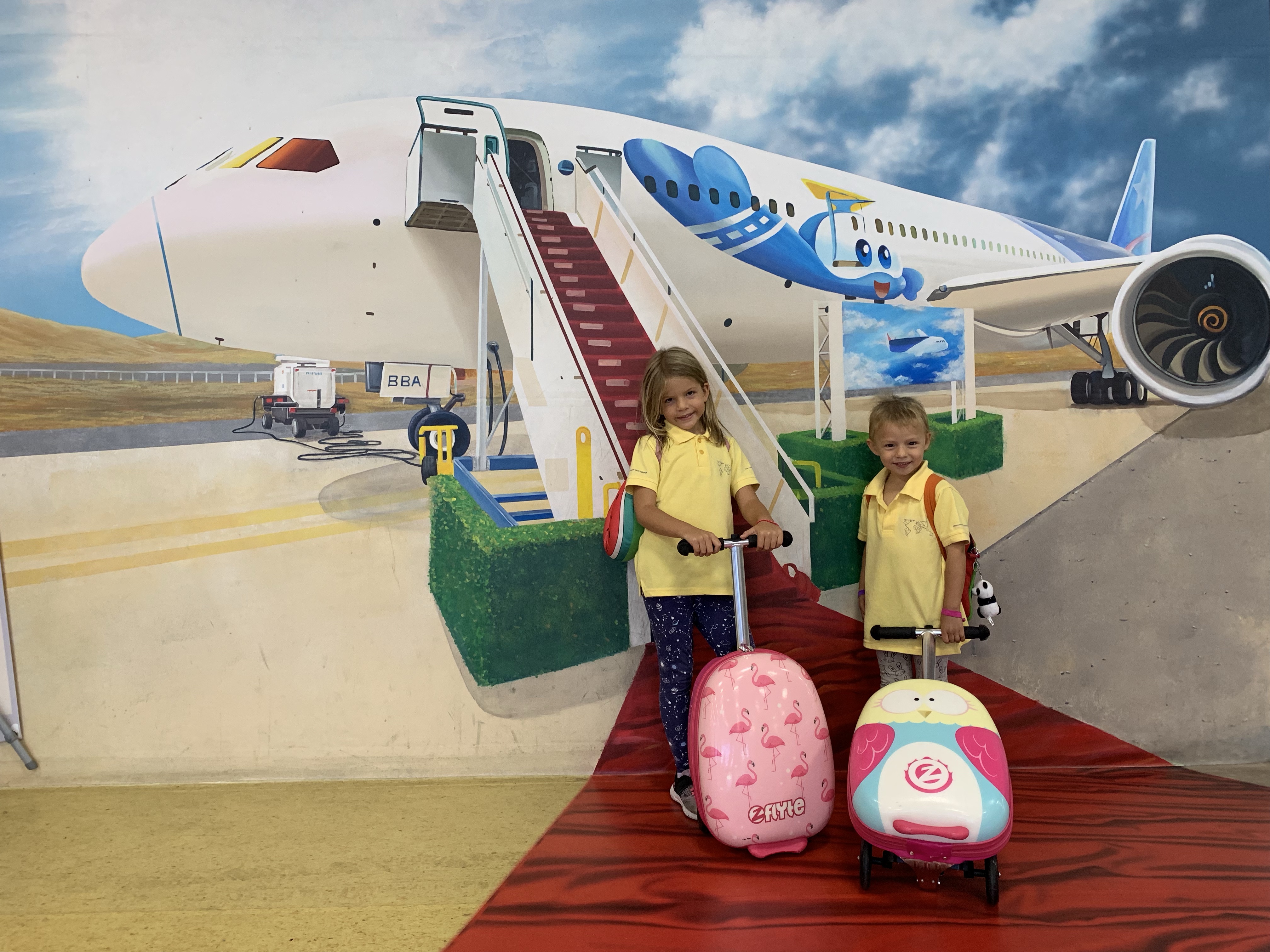
MoJo looking the part with their scooter trunkis, Busan airport.

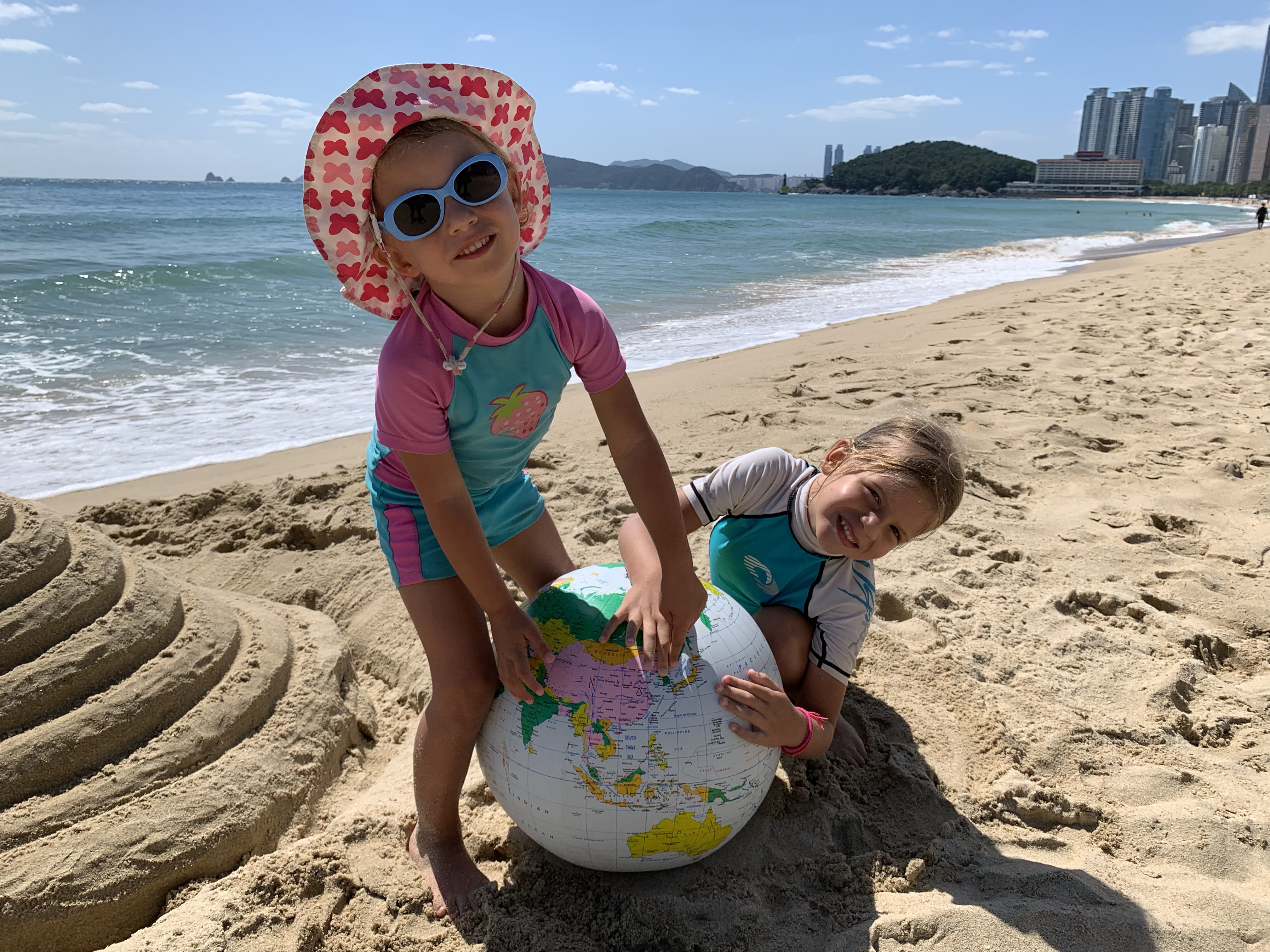
As we touched down in Busan, typhoons were a million miles from our minds. The city looked stunning from above, the scenery very dramatic, it helped that it was beautifully sunny. After smugly finding our way very easily on public transport from the airport to our cute Airbnb apartment ‘Frank’s Loft’ (via light rail and hundreds of stops on the metro – what a good idea to number the stations and have lovely volunteers to help you buy your tickets) we decided we deserved some beach time.
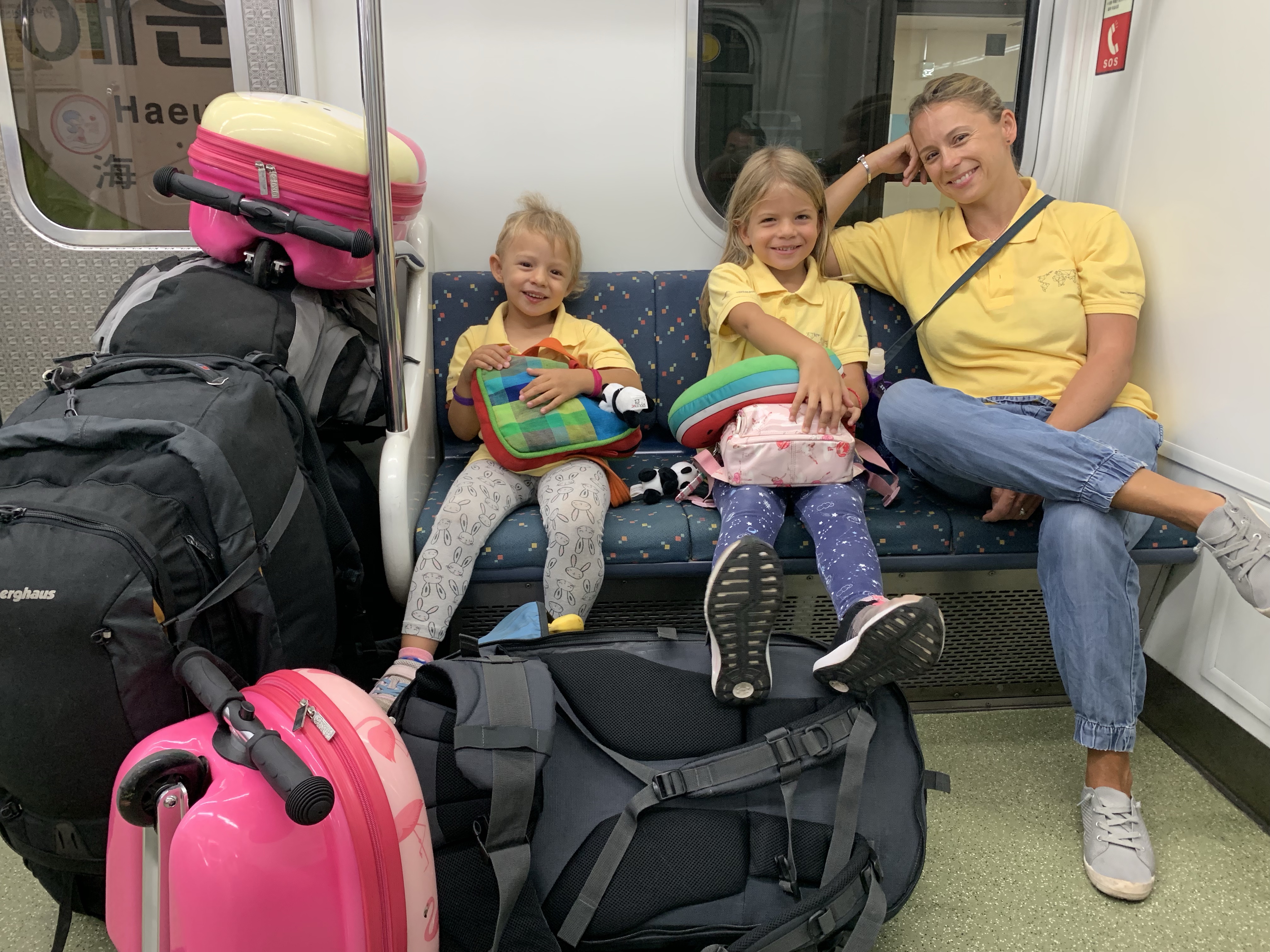
Enjoying the efficiency of Busan’s metro, 18 September 2019.

We couldn’t resist a late lunch at the Spanish club, enjoying paella and Cava! One fun stop along the beach was to the hot springs that you could dip your feet and legs into, my were they hot!
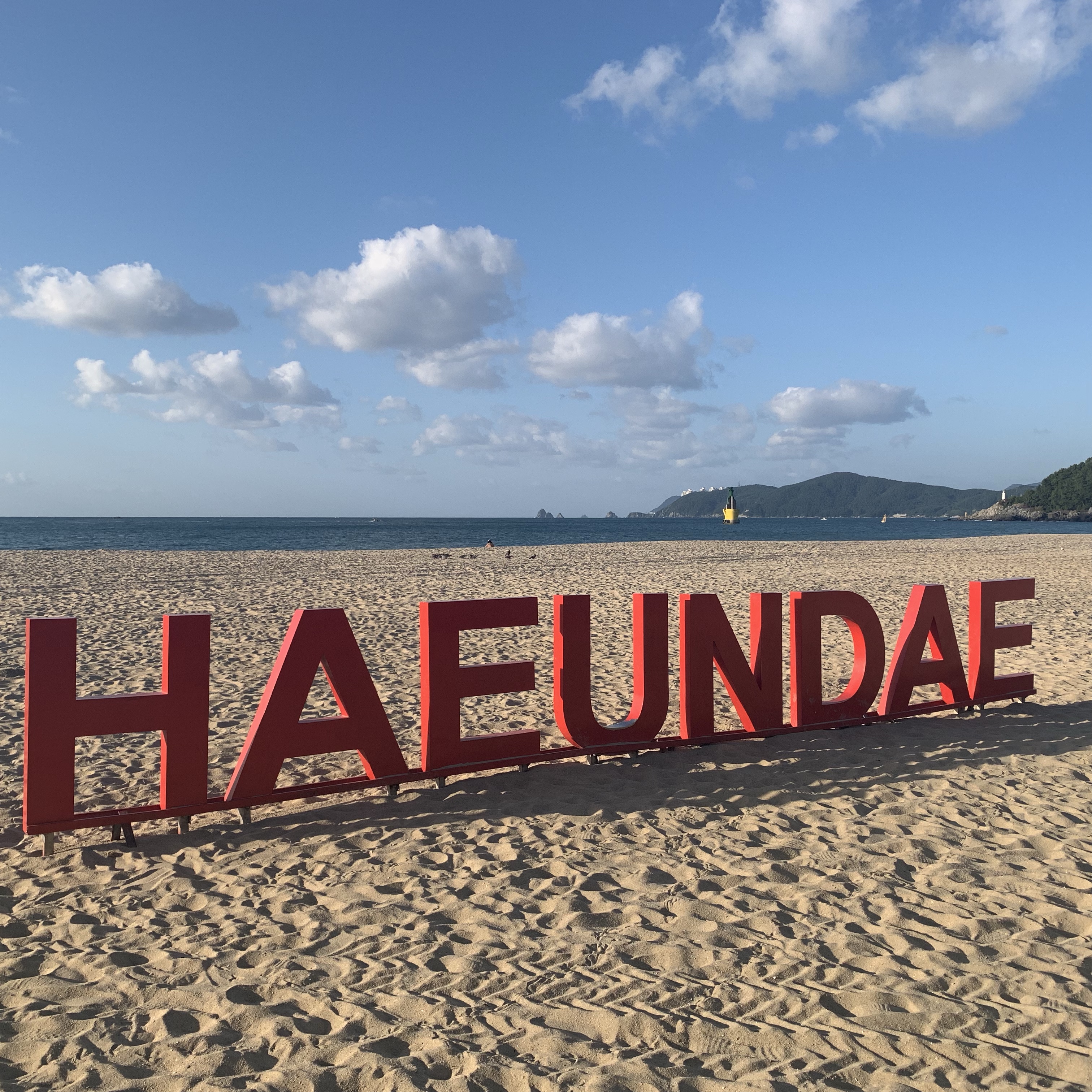
A deserted Haeundae Beach, Busan.

We were staying in Haeundae, arguably the country’s most famous beach. Having seen pictures where the sand is hardly visible due to the volume of visitors, we were pleasantly surprised to find it almost deserted, a sign that we were there in the off season…. We enjoyed walking around Dongbaek Park where we found a statue of a mermaid in the sea and one made of plastic bottles on the shore. There was a fun slide at the corner of the beach too.

Gamcheon Culture Village was a brilliant find for us. A mountainside slum originally home to refuges after the Korean War, it is accessible by a local bus up a windy road.
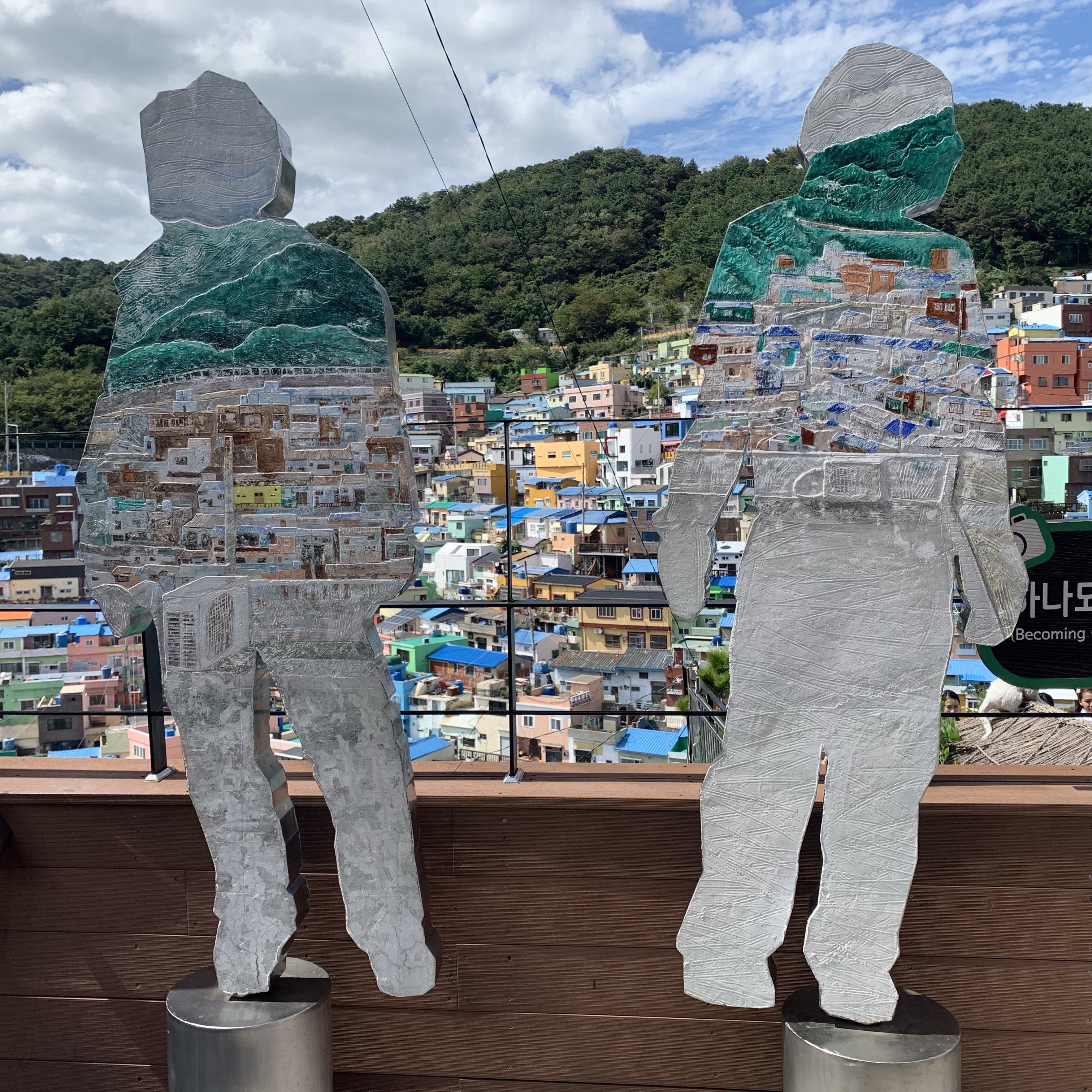
Art installation at Gamcheon Culture Village, Busan.

The area was given a makeover in 2009 when students decided to turn their creative juices to making colourful installations and quirky sculptures across the village. Architects were also commissioned to transform several of the rundown spaces.
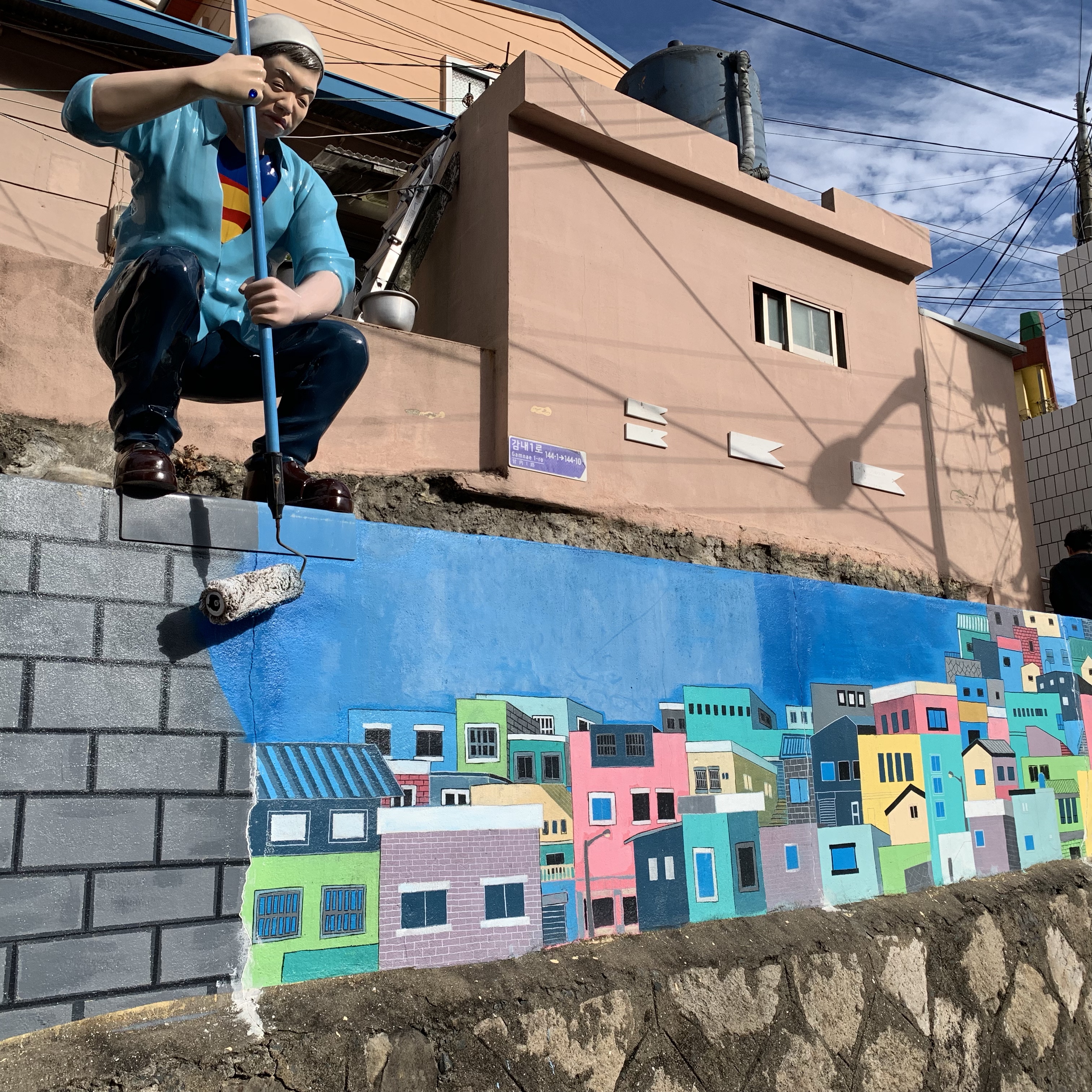
Gamcheon Culture Village, Busan.

You can buy a fun map which gives you a few routes for a scavenger hunt up and down the hillside spotting different things and collecting stamps.
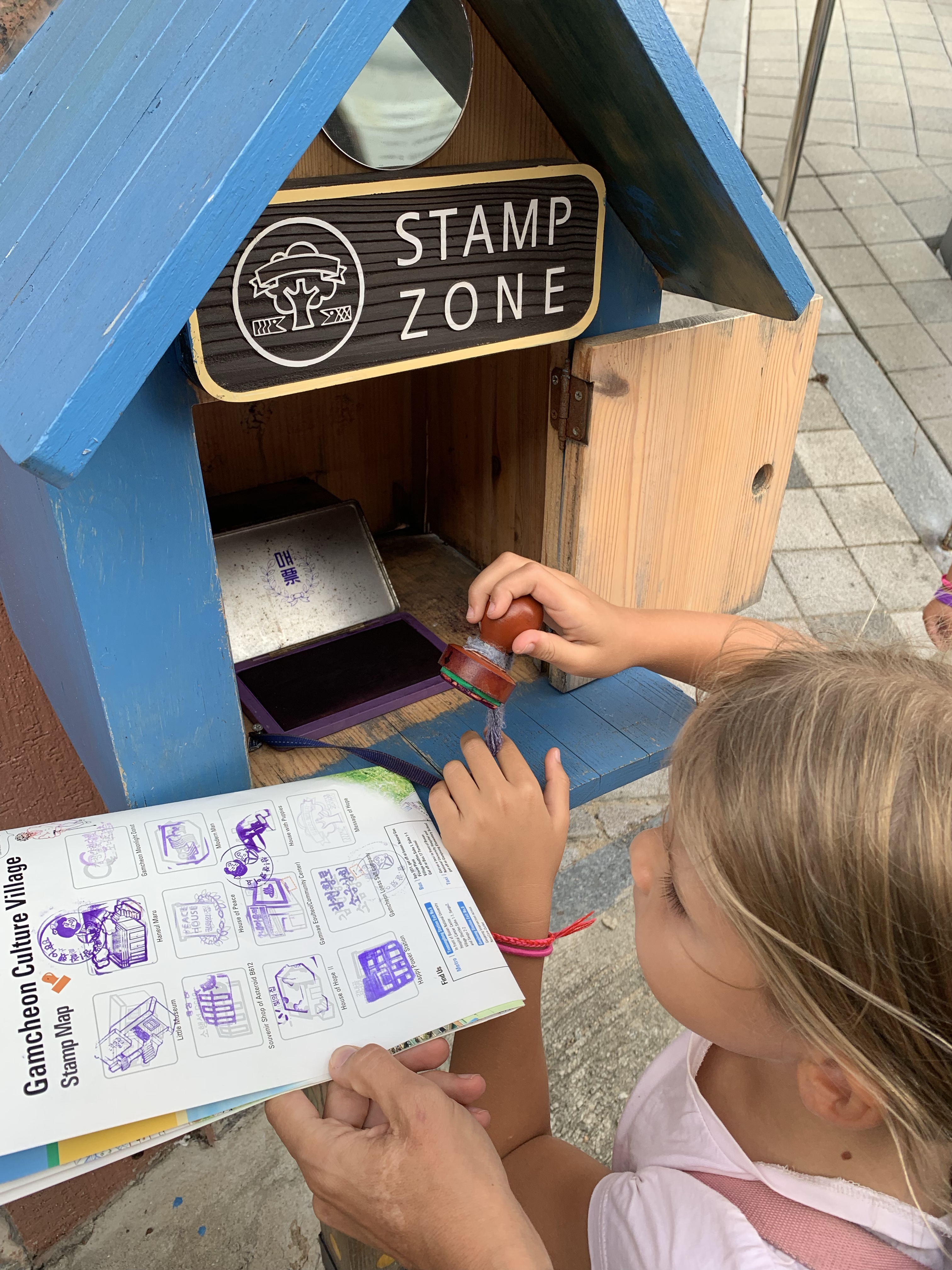
Filling up our stamp map, Gamcheon Culture Village, Busan.

Other cultural spots worth a look were the Busan Museum of Art with an outdoor sculpture park and botanic garden project, and Soul Art Space. Busan’s film festival is one of the most important in Asia, you can get a taste of the action by checking out ‘movie street’ by the coast.
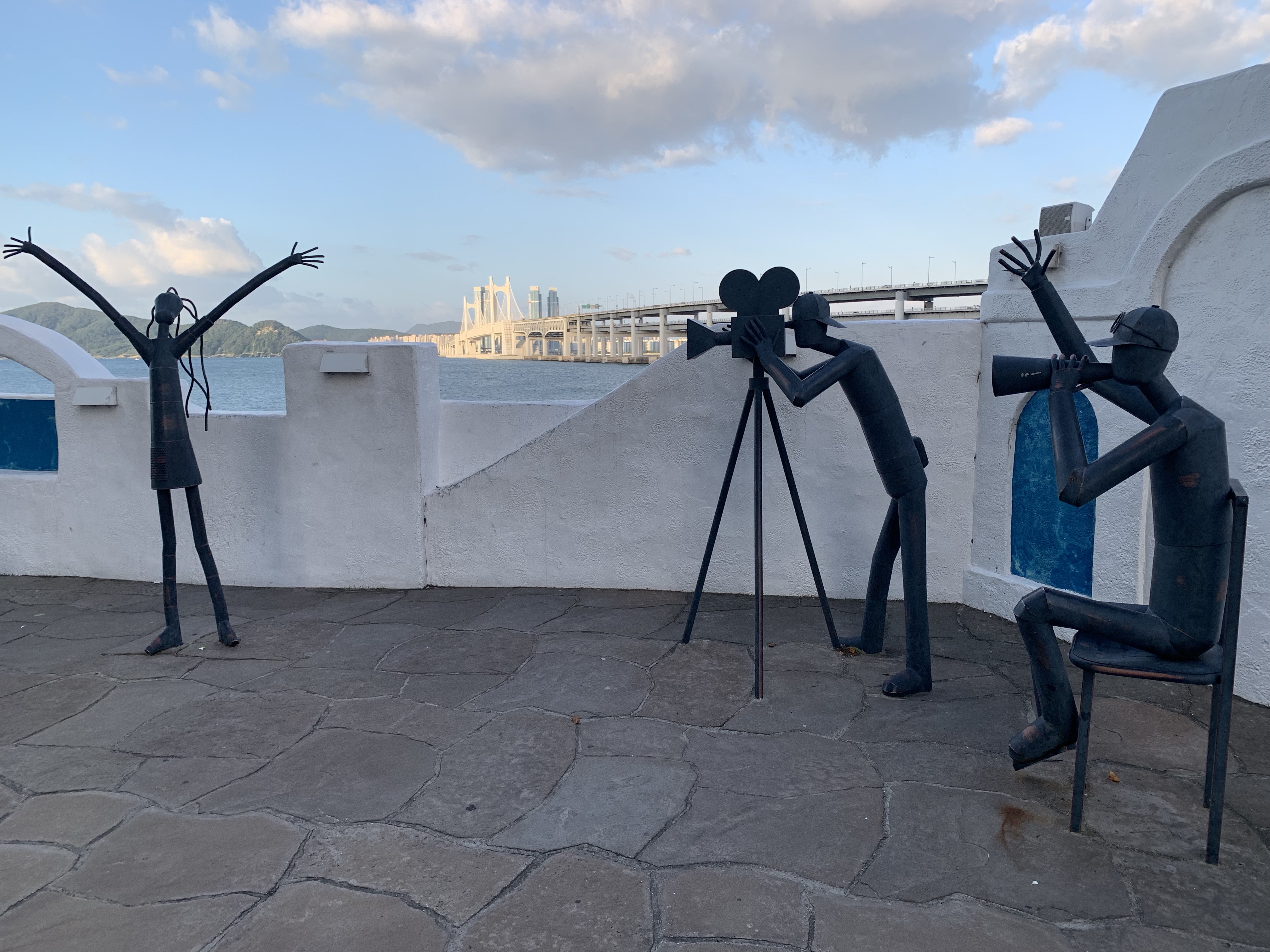
Haeundae cinema street, Busan.

There were also some nice examples of public art paintings on the former rail route now turned into a park with sleepers still visible marking the old tracks.
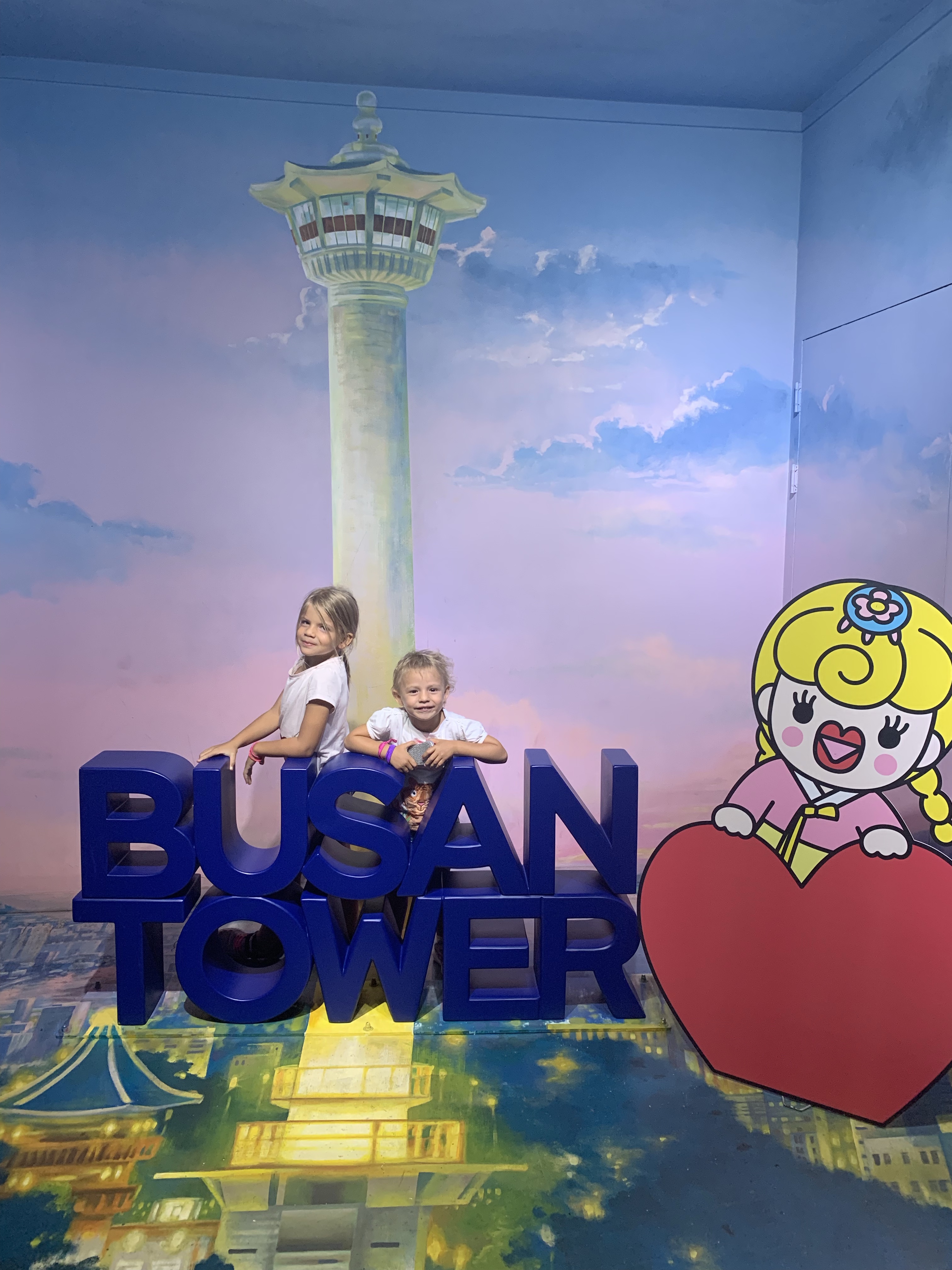
We picked a clear evening to go up Busan Tower at sunset, which from its summit in Yongdusan Park gives fantastic views of the undulating bays and mountains that make up the city as well as the many colourful containers at the port.
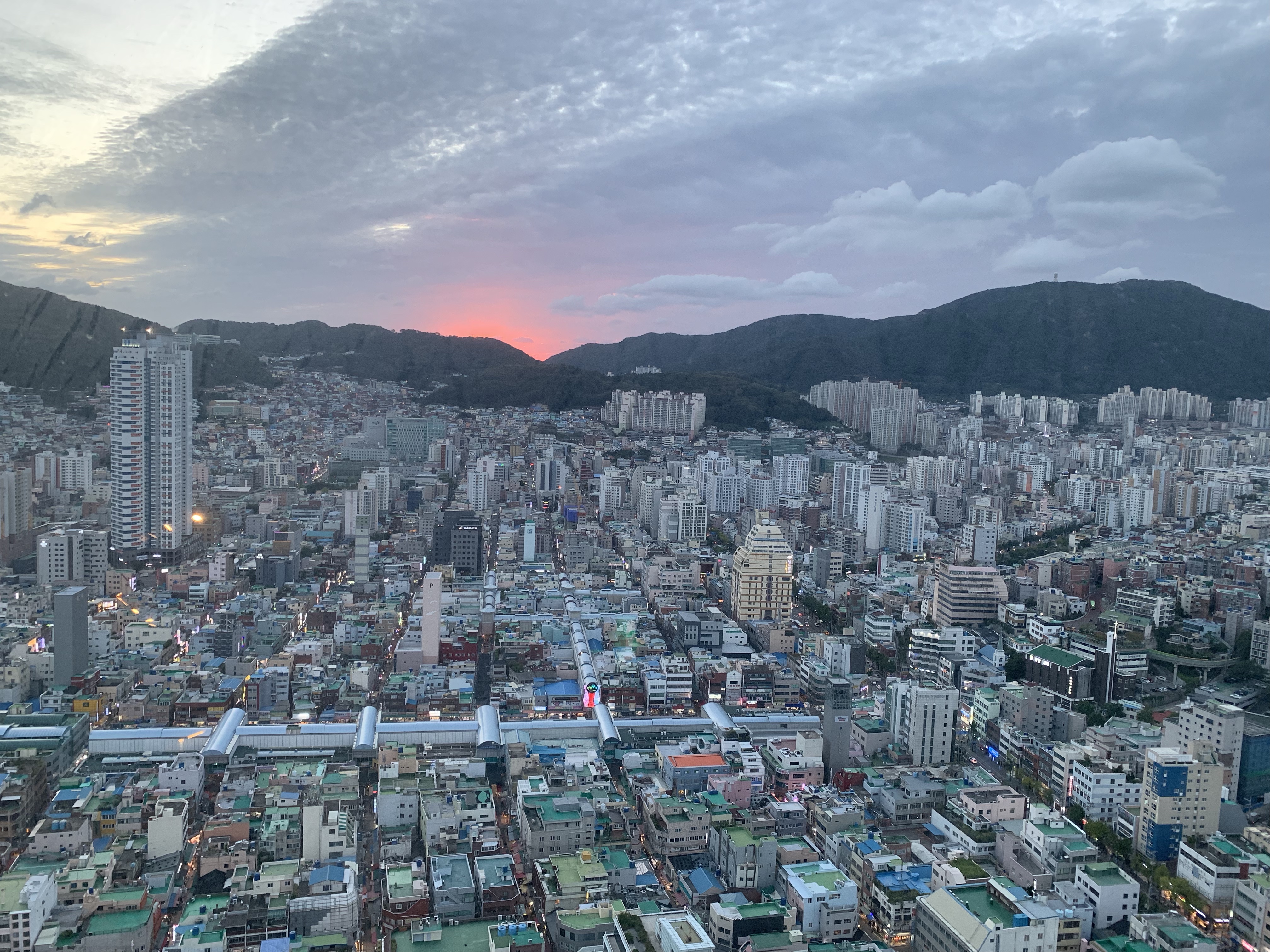
Sunset view from Busan Tower, Yongdusan Park, Jung-gu, Busan.

It was a fun journey up via escalators and a lift, with an interactive gallery downstairs with UV lights and 3D models. We also had a laugh in an Oli Oli type play area in the rain, which had VR rides on horses.

A highlight was dinner at the Jagalchi fish market. You start on the ground floor, looking at the tanks and picking what you want to eat.
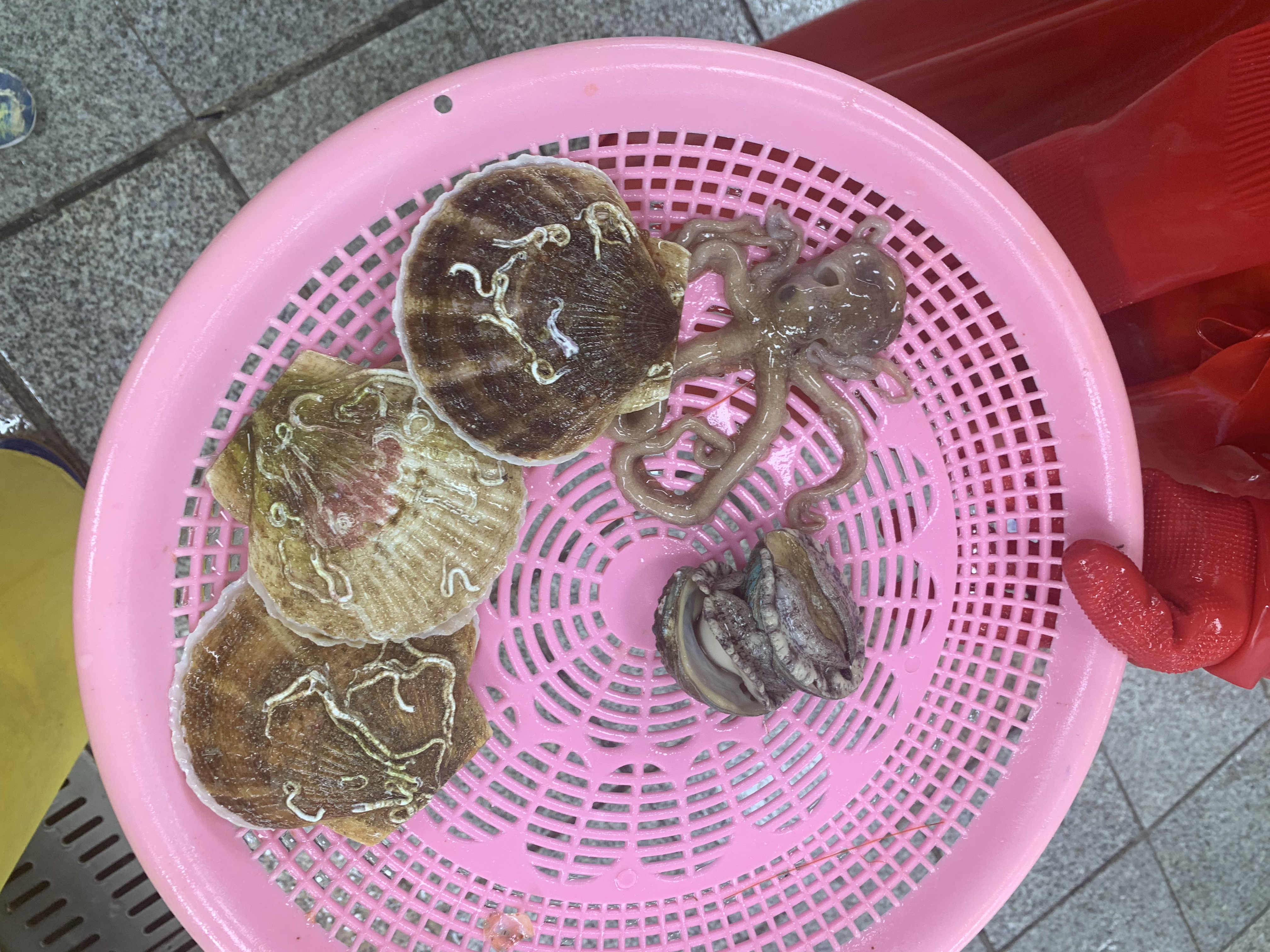
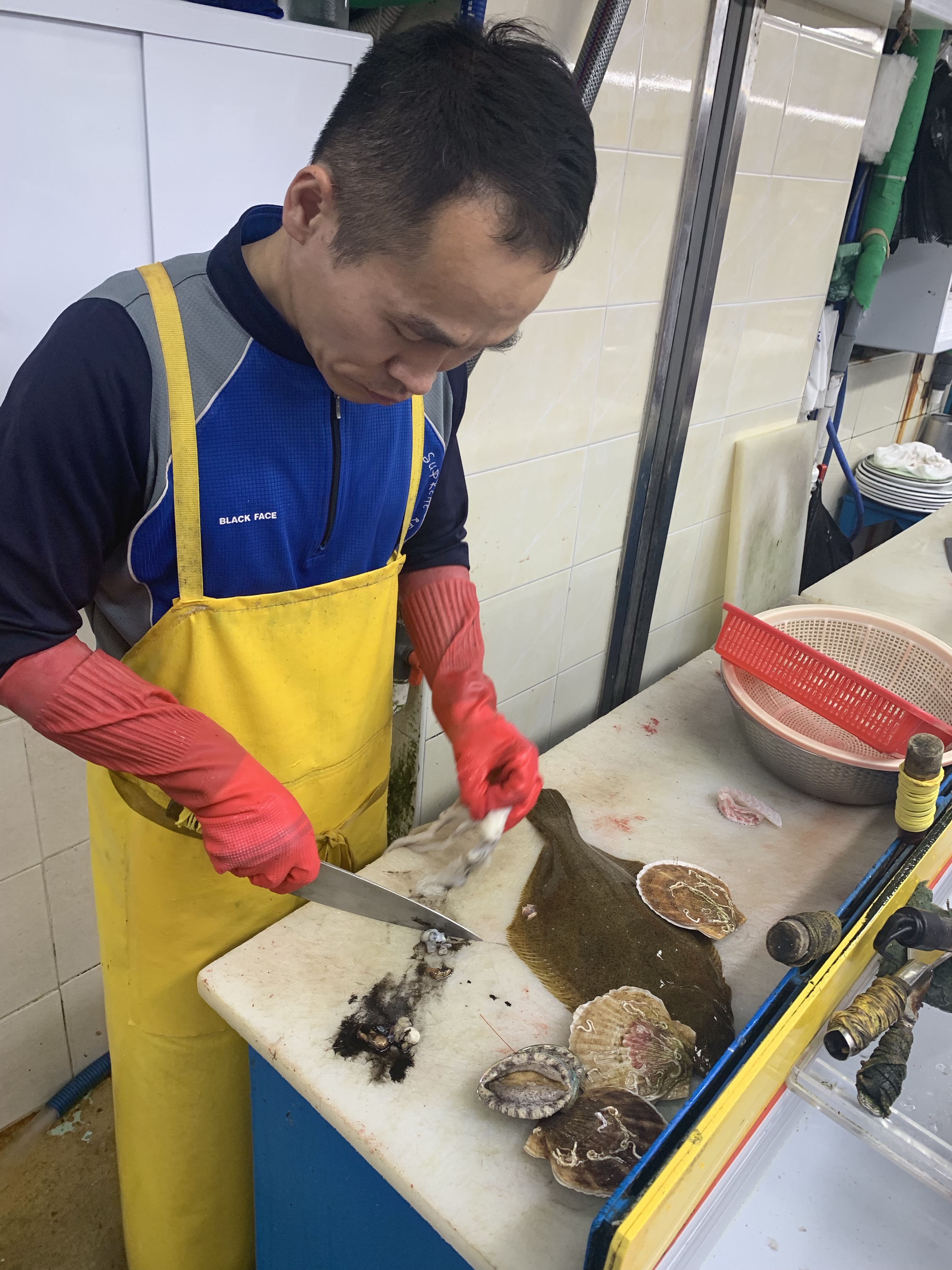
Our catch at the Jagalchi fish market, Jung-gu, Busan.
Preparing san-nakji, Jagalchi fish market, Jung-gu, Busan.

Once you have chosen you watch your selection being chopped up and then take the escalator up to a 2nd floor seating area (on the floor, no space for Tom’s legs!) and wait for it to be served. You don’t have to wait long if you have ordered raw baby octopus (san-nakji).
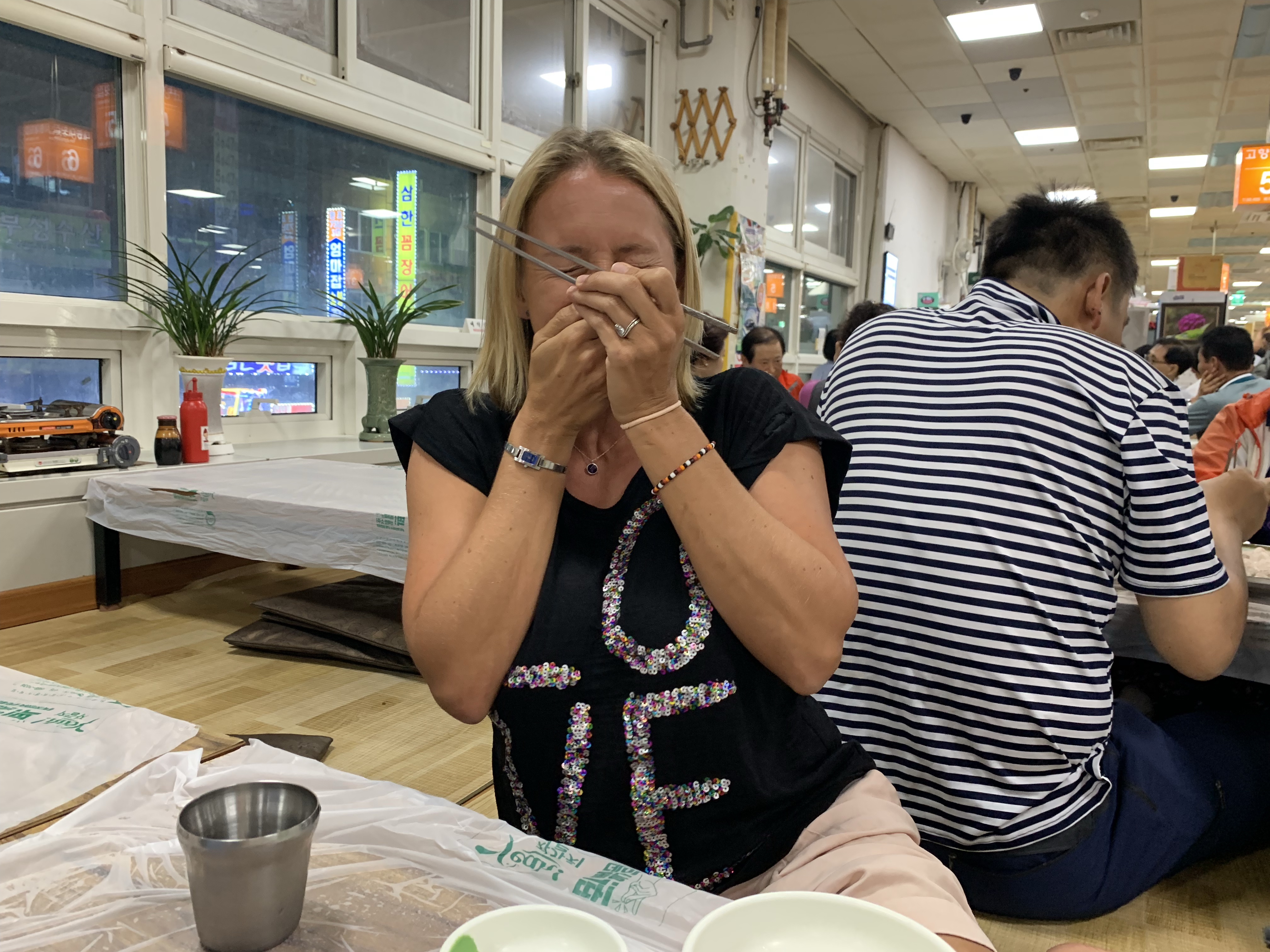
Suckers in the throat…down it goes!

I think Molly and I enjoyed this the most – it was only later I read of horror stories of the suckers getting stuck in your throat, and also of the questionable ethics…oops. It was rather delicious. We tried abalone for the first time which I grew to enjoy: the scallops and flounder fish were probably the tastiest dishes.

We had our first tastes of Korean cuisine in the backstreets of Haeundae, such as bibimbap (a mix of vegetables, meat, fish or egg with rice served in a stone hotpot) and Haejangguk (which translates as hangover soup – containing a mix of soybean paste, vegetables, meat bones and spices). I was definitely finding the cuisine more celiac friendly than China.
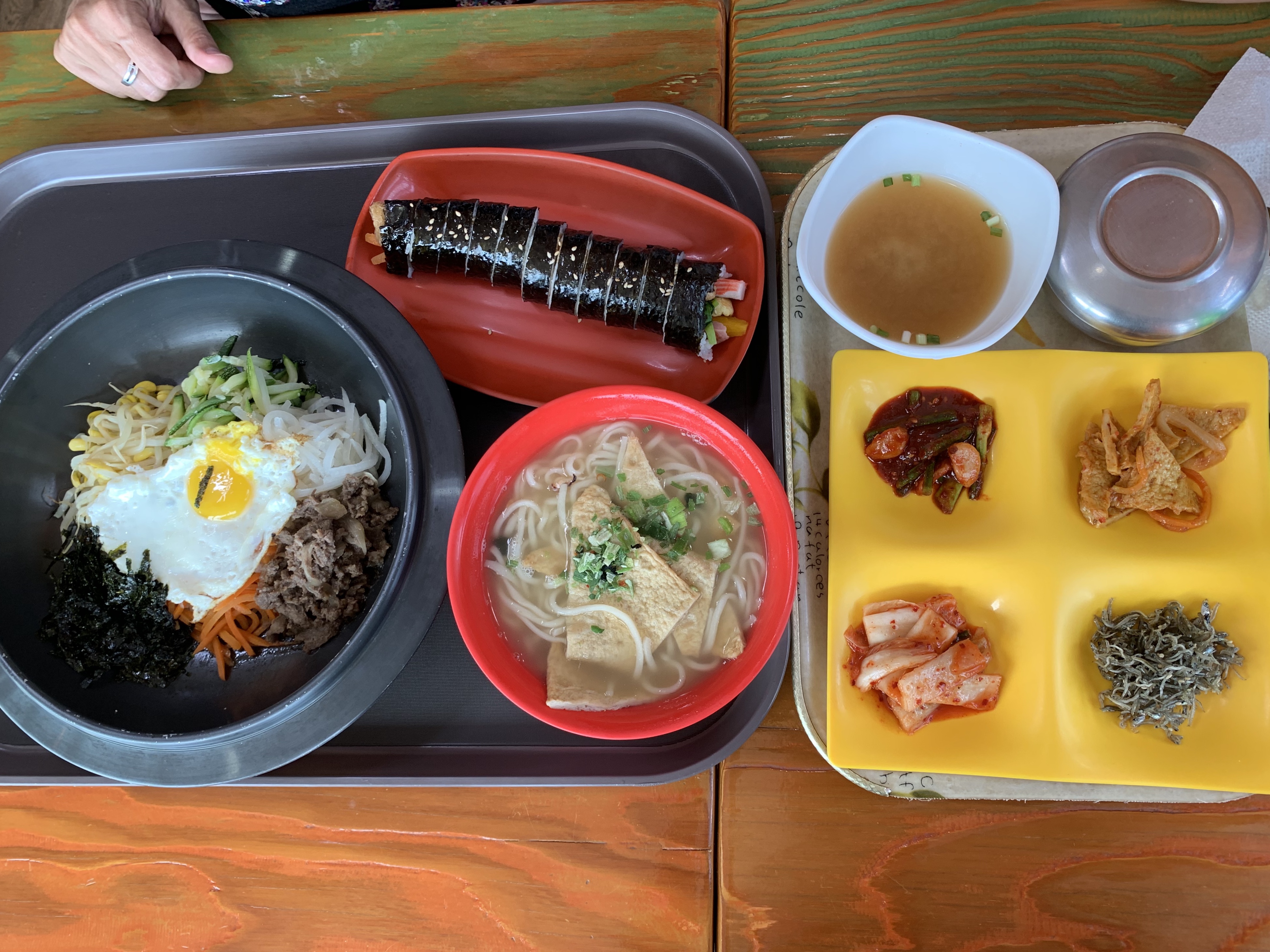
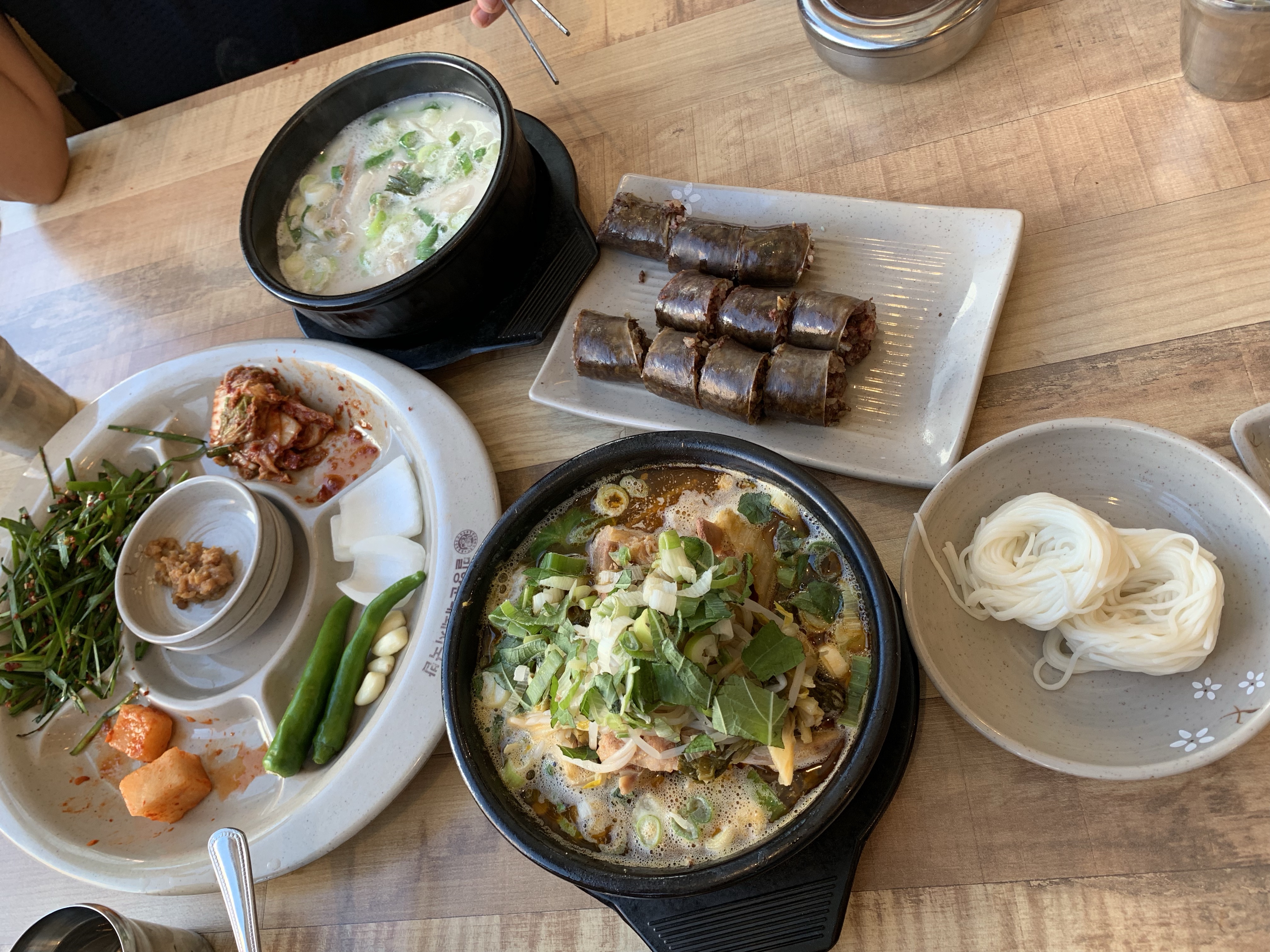
It was fortunate we had fitted a lot into our first few days in Busan, as for our last 48 hours we were house bound due to vicious Typhoon Tapah! The apartment was definitely shaking. We were fine, taking the opportunity to eat pesto pasta and watch Matilda till it passed. It did mean we missed out on seeing more of the countryside around Busan, but at least we were safe and had enjoyed our first few days in Korea.
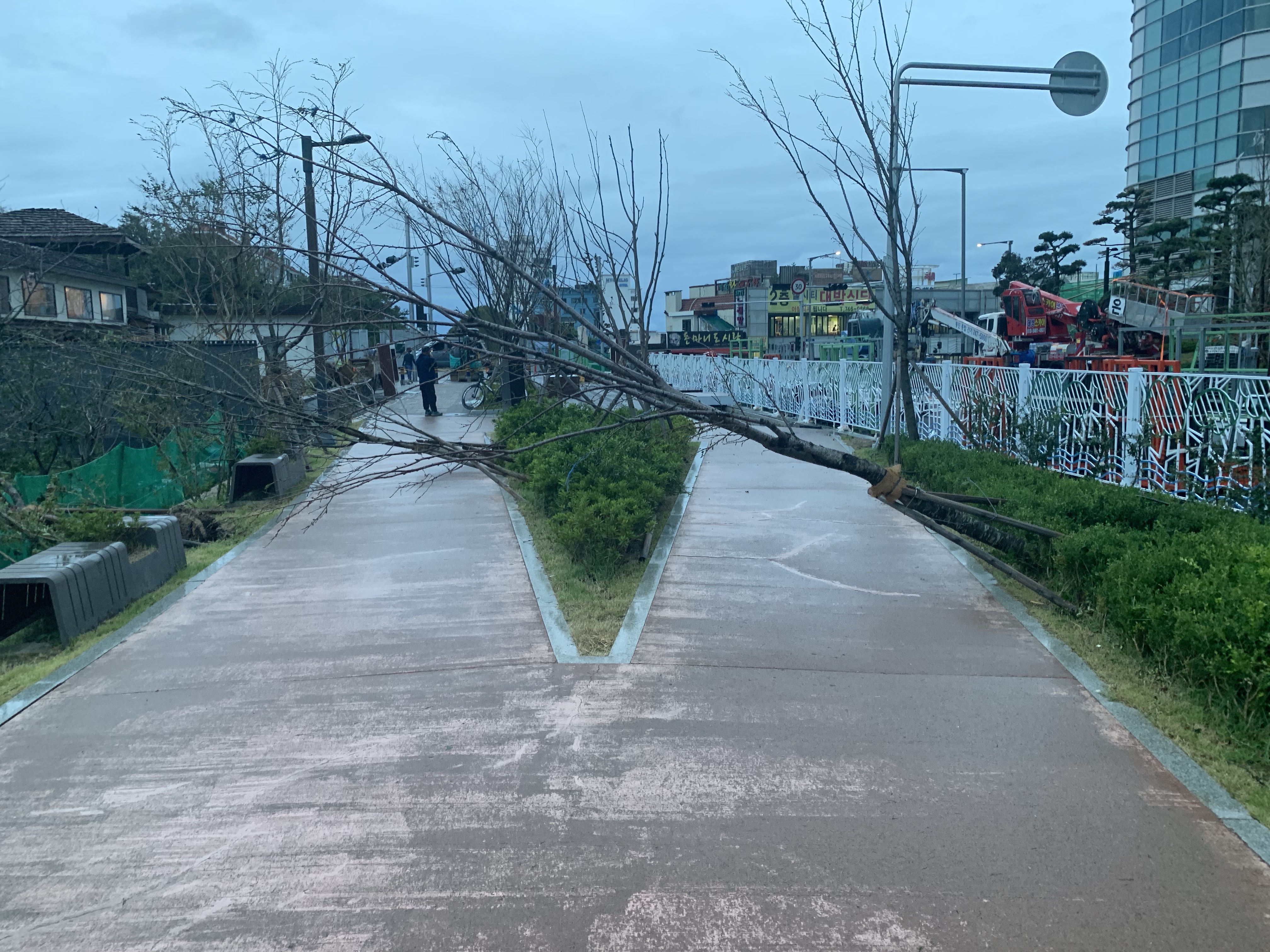
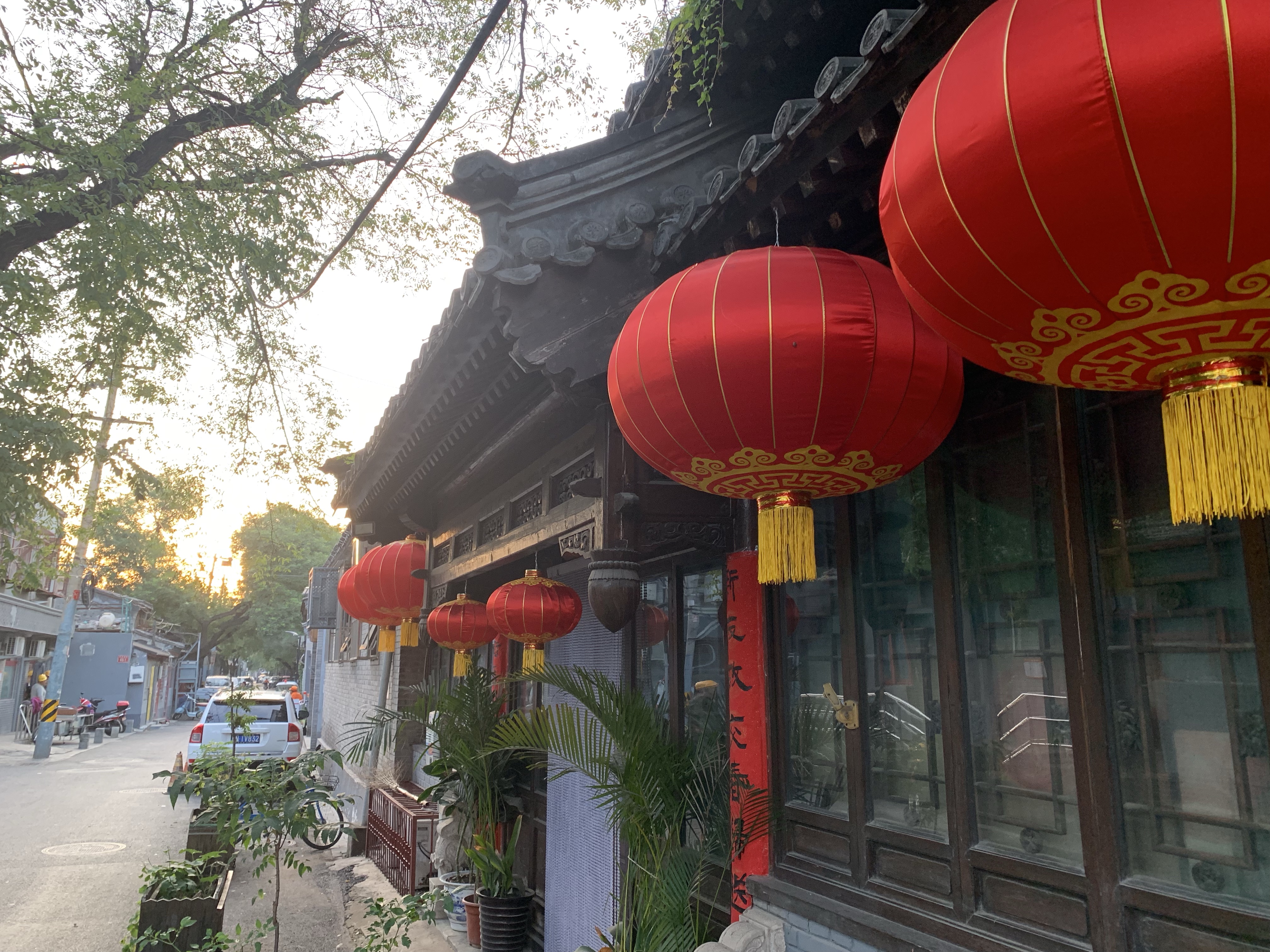
Aftermath of Typhoon Tapah, Busan, 23 September 2019.

Doing our thing in Beijing

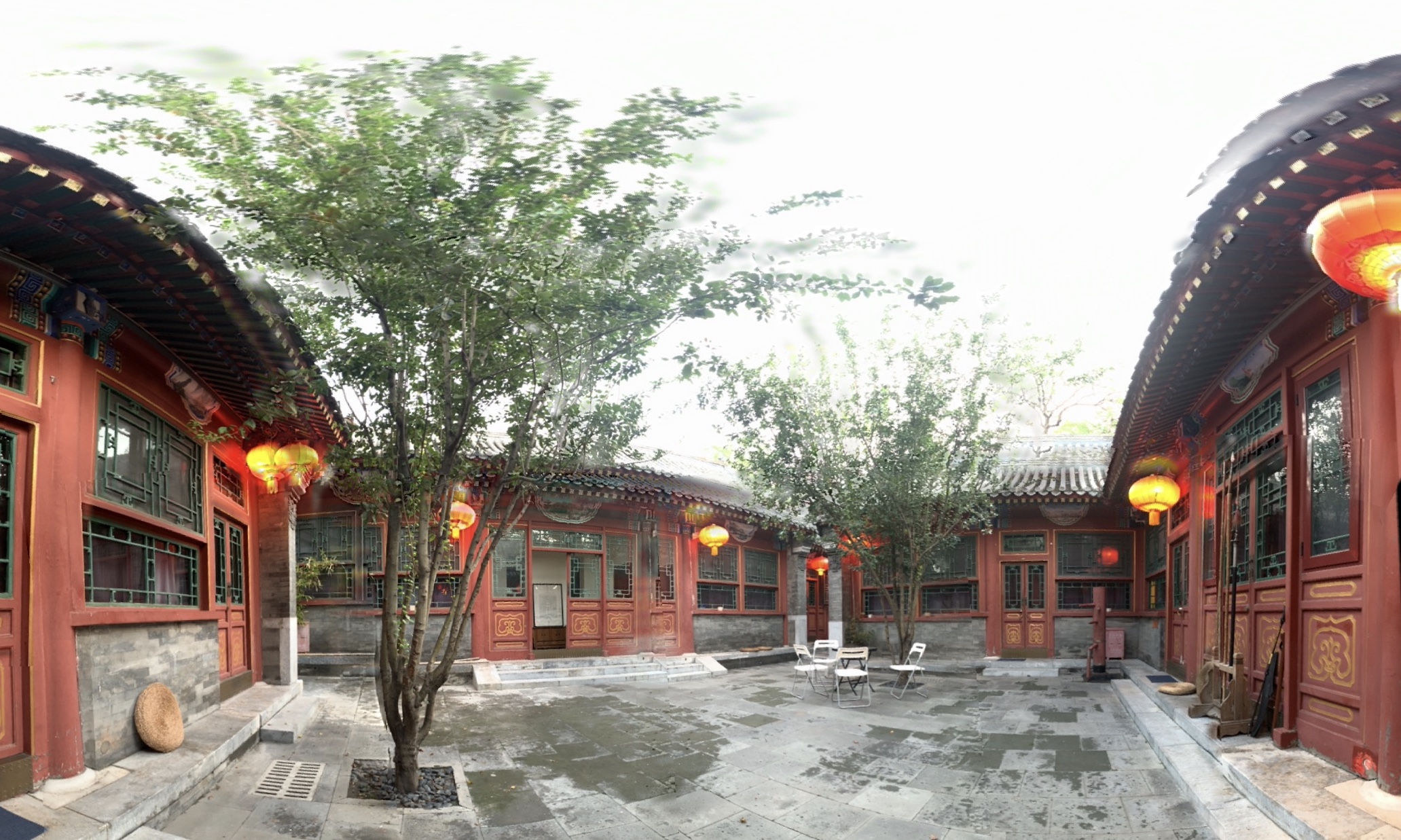
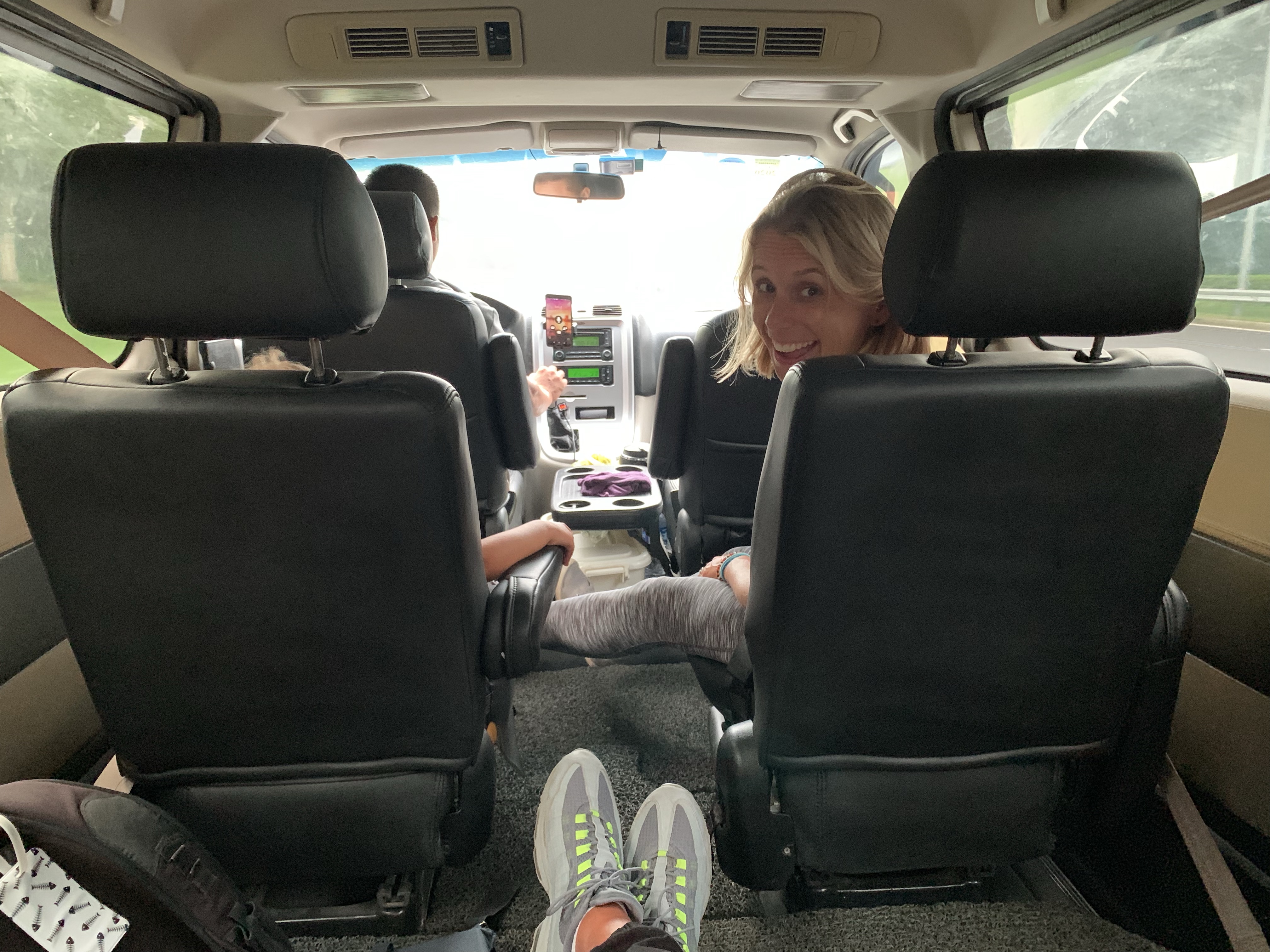
It’s been a running hilarity that we can never seem to get a car that close to anywhere we stay. In Beijing our driver went round the block countless times, eventually giving up. We were staying at the Fly by Knight Courtyard, located in a traditional hutong alleyway.

Fly by Knight Courtyard Hotel, Dongcheng District, Beijing.

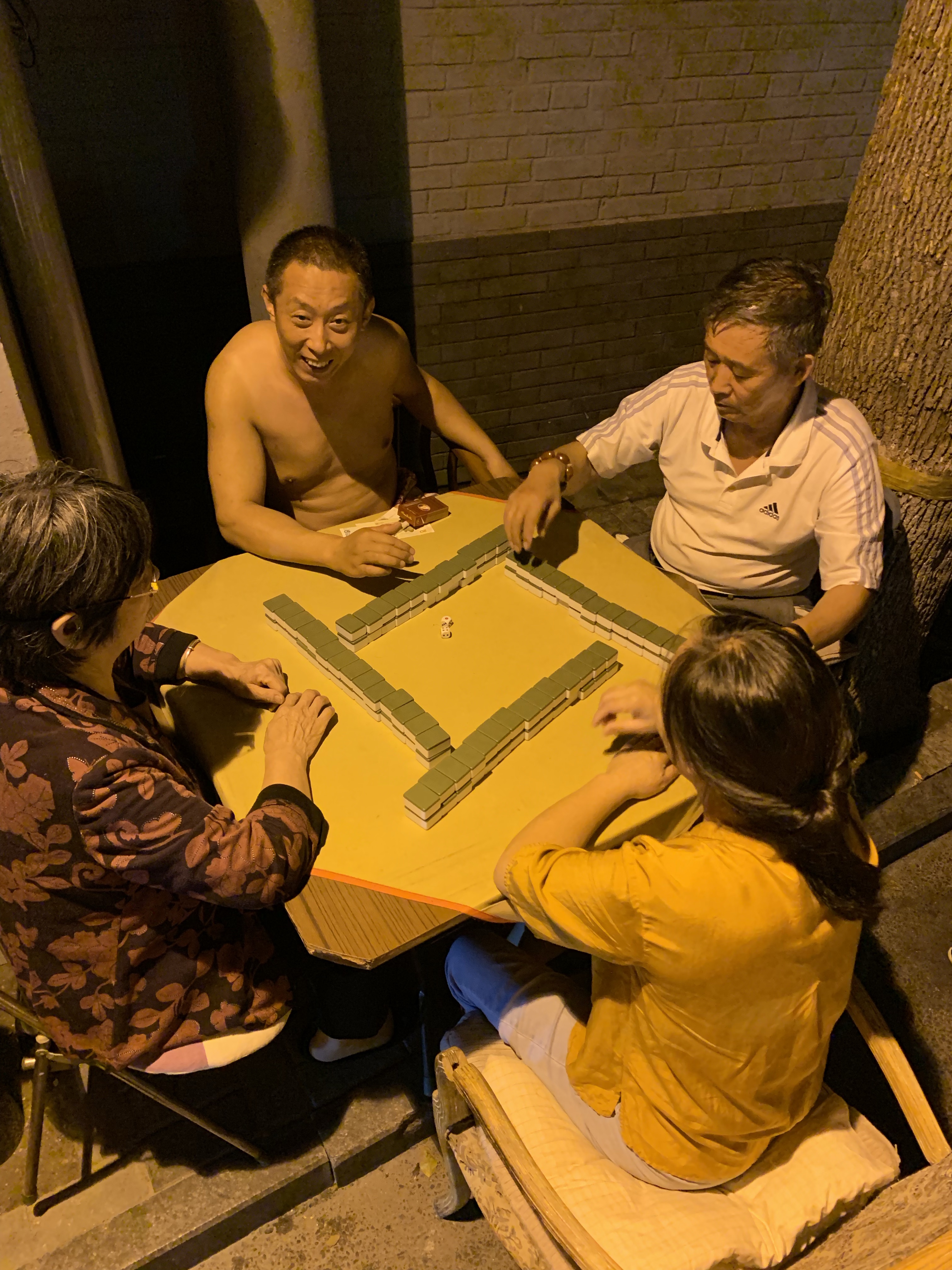
It was located in a rabbit warren of an area, we always had to double check which our entrance was. It was fun being diverted on the way home by older Chinese engaged in games like Mahjong on the street.

An evening game of Mahjong, Beijing.

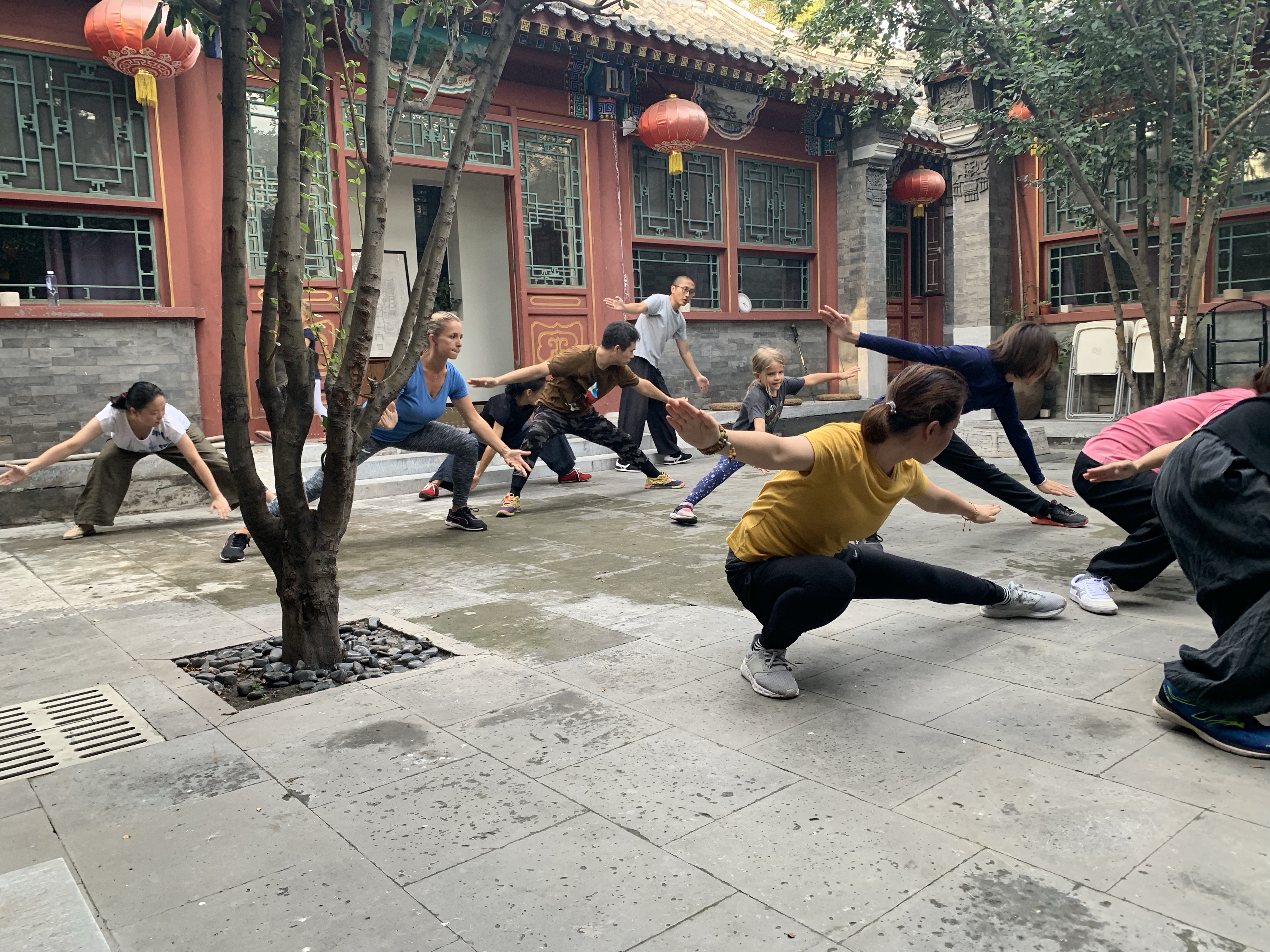
It was a wonderful place to stay with a delicious breakfast offered in the communal space with other friendly guests. A major highlight was joining their weekly Kung Fu class in the courtyard right outside our room, our legs ached the next day!

Kung-Fu class at the Fly by Knight Courtyard Hotel, Beijing.

One problem across the city was that many roads were closed because of rehearsals for the 70th national anniversary taking place in two weeks’ time. Metros were disrupted as well and to walk around Tian’anmen Square was impossible. Getting around proved quite hard and we did have to do too much walking.

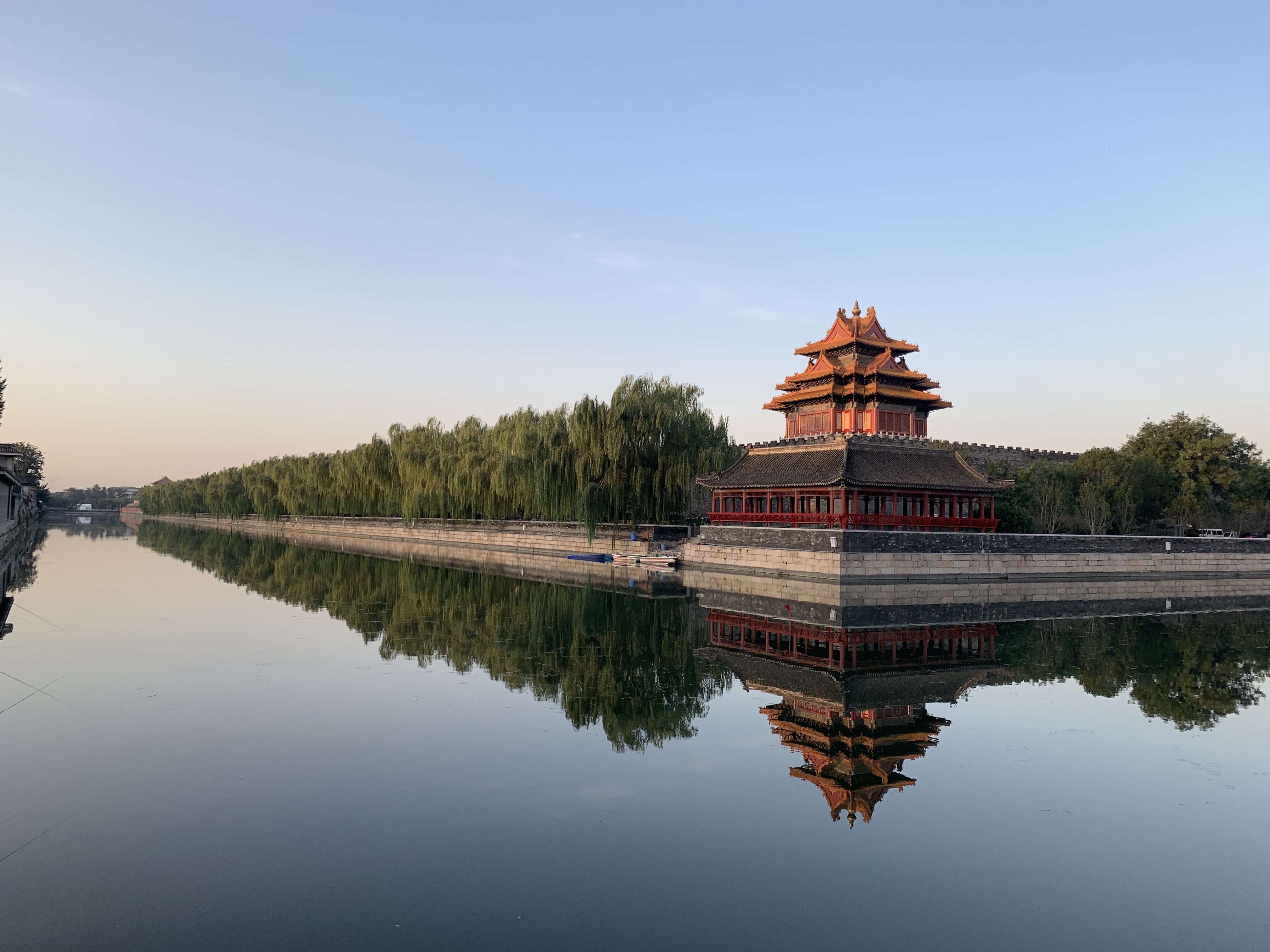
Moat of the Forbidden City, Beijing.

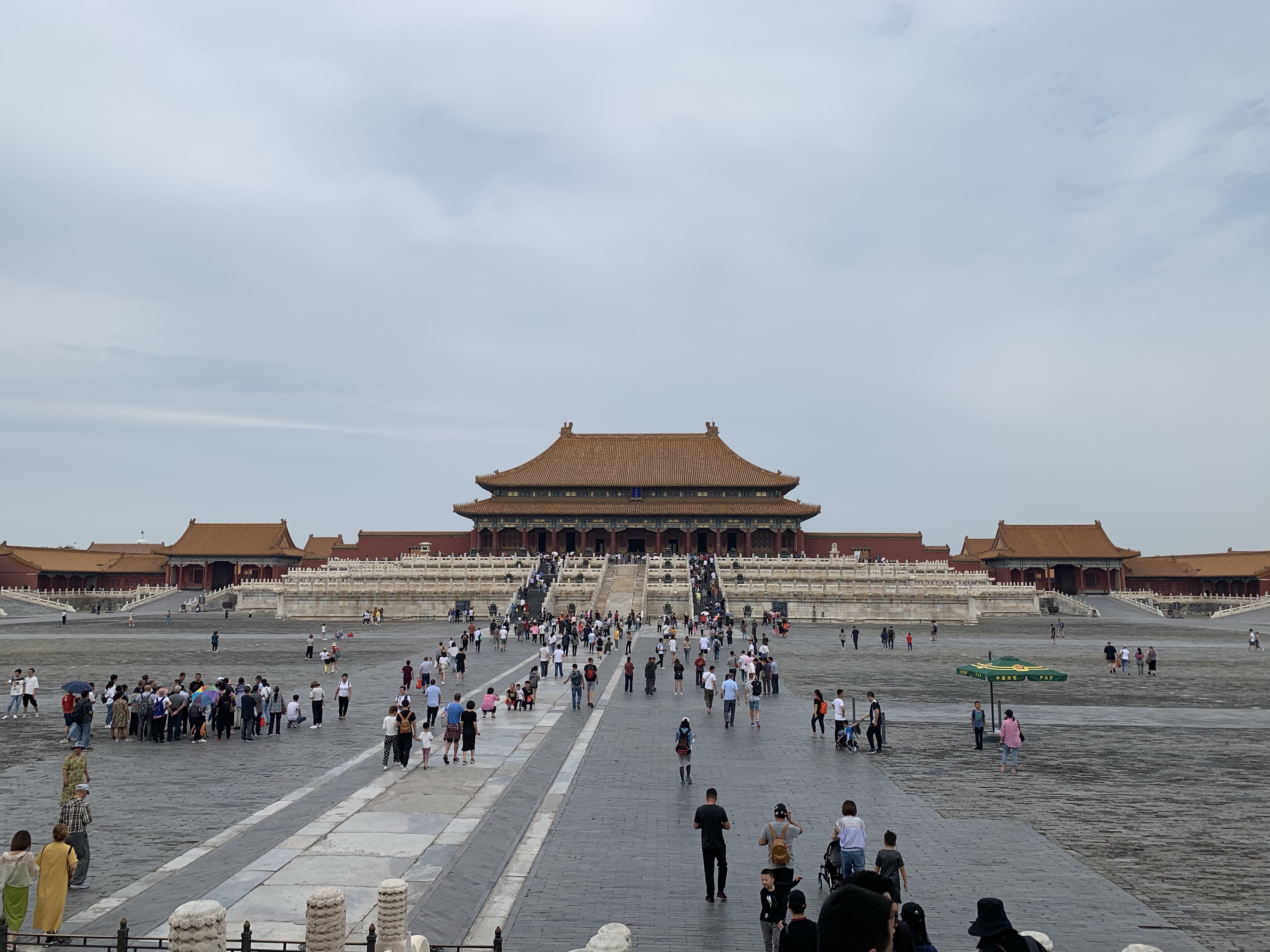
Our visit to the Forbidden City was not fun for any of us (despite being beautiful – Tom and I enjoyed runs around it’s moat). We did find the clock exhibition interesting, and learnt a little about sundials, drainage systems and that the number of beasts on a roof of a building is an indication of the importance of said building (9 is the maximum).

Inside the Forbidden City, Beijing.

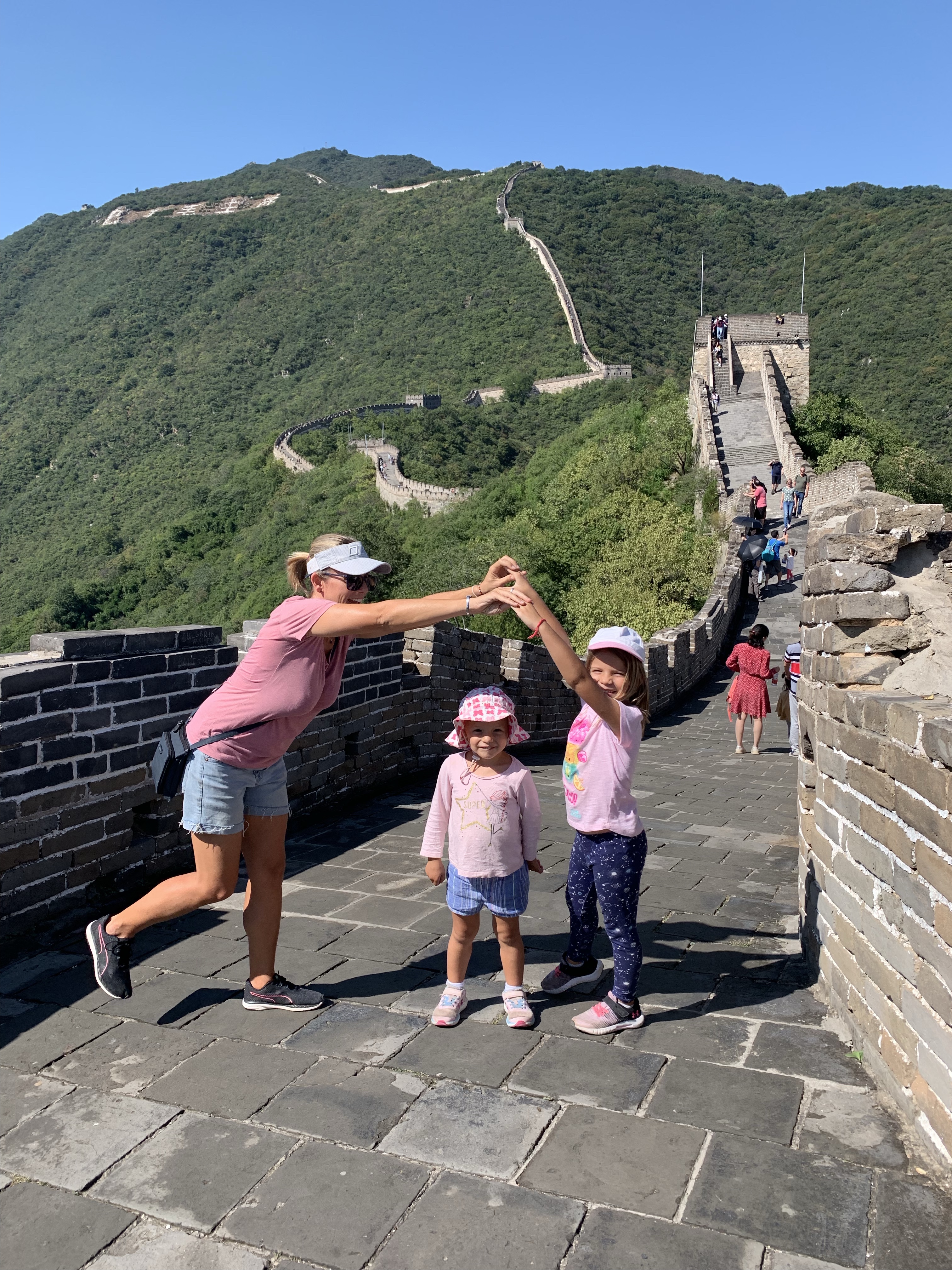
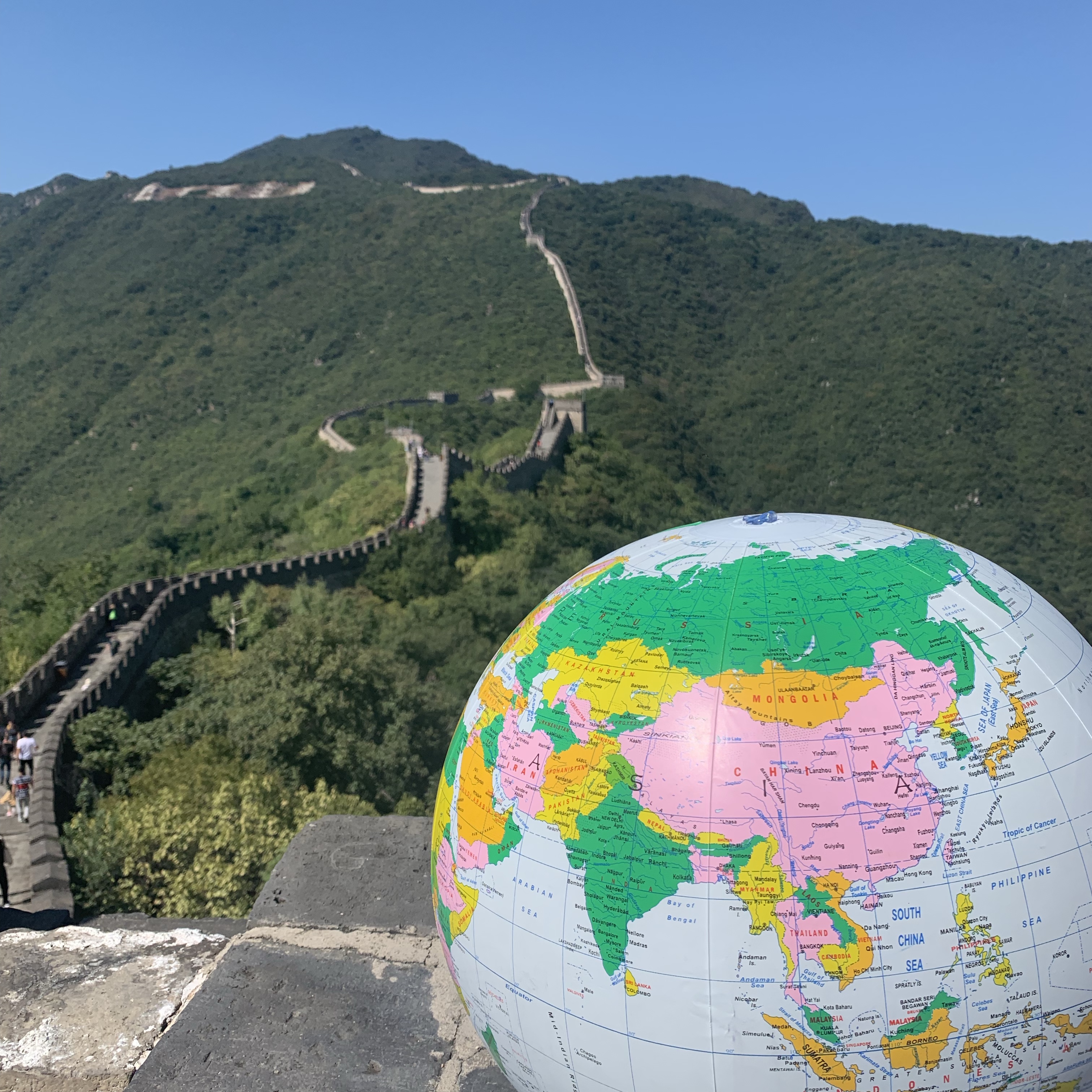
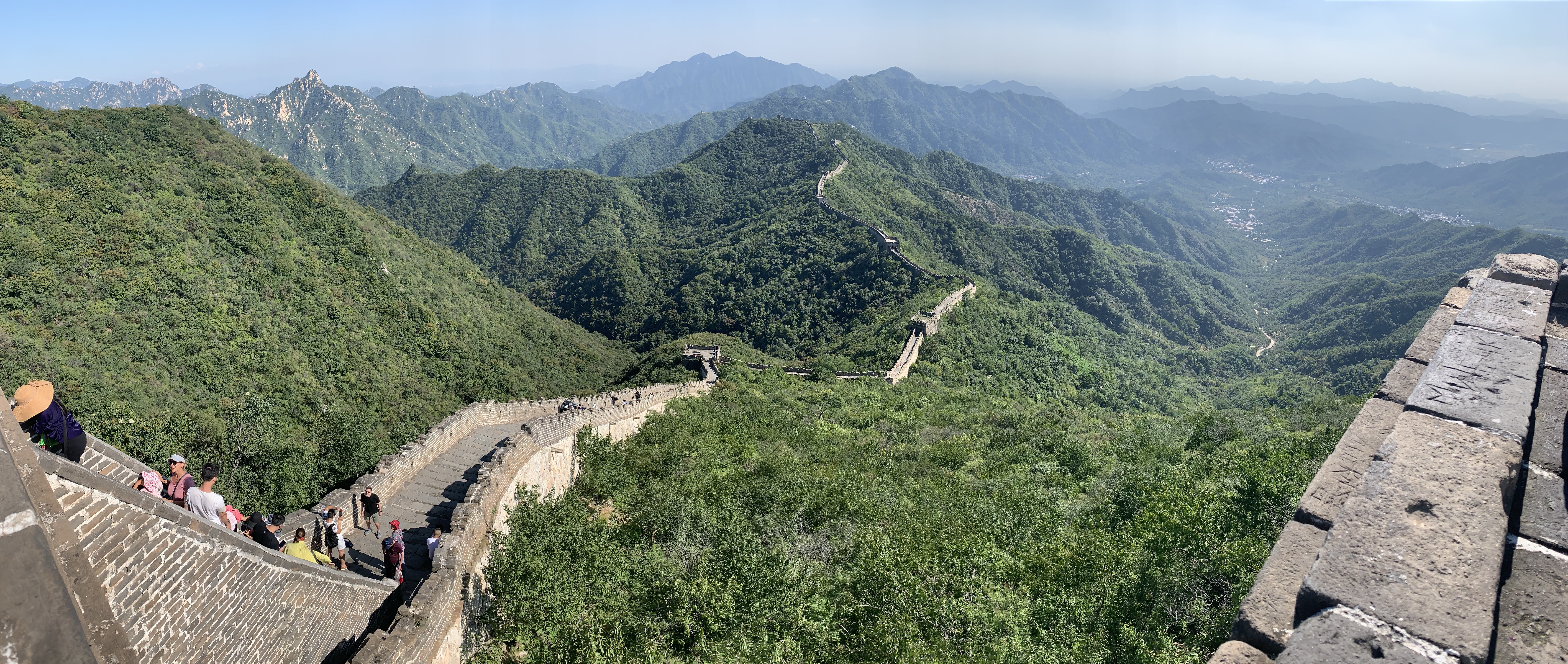
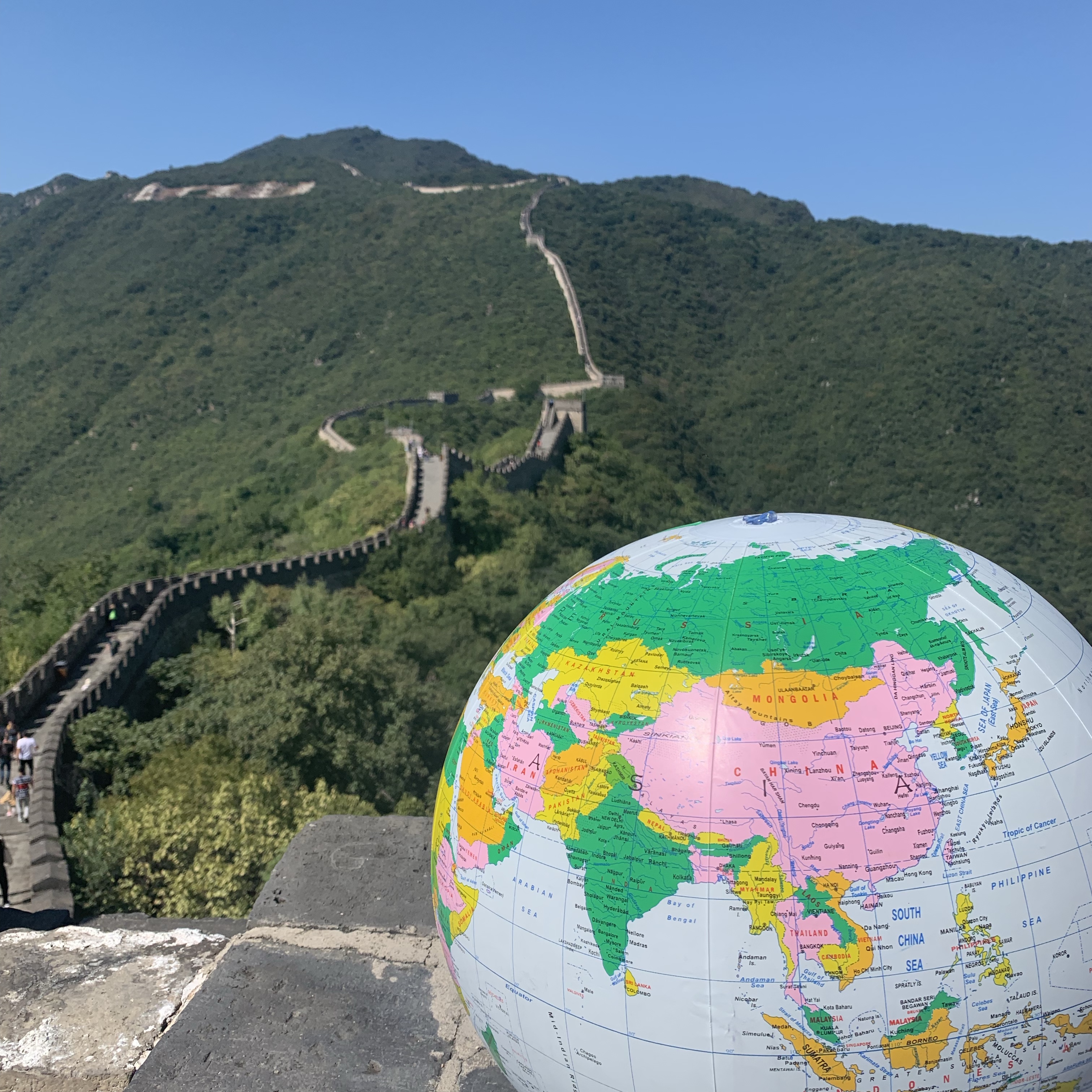
A much better experience was visiting the Great Wall itself. It really was breath-taking. Aided by a bright blue cloudless sky, the site of the stone wall undulating over the hills was a stunning sight.

We decided to book a tour that would take us to the Mutianyu section, which we had read was more child friendly and not too far from Beijing but still with good views. A 3-km stretch of wall, you reach it via a cable car or a chairlift and toboggan ride down – but the second option doesn’t get you up to the highest of the 26 watchtowers so we went up and down by cable car.

We did amazingly fast walking round it all, enjoying climbing the turrets and very steep stairs at one point – but were still told off by our tour guide for getting back to the bus twenty minutes late. Most of the other people on the tour hadn’t done the whole stretch as they didn’t think they would have had time.

Mutianyu section of the Great Wall of China, Huairou District, near Beijing, 15 September 2019.

Annoyingly we realised then that we had booked the wrong tour, as all we wanted to do was see the wall and our day tour included a visit to the Ming tombs, a jade factory and a teahouse which wasn’t really necessary.

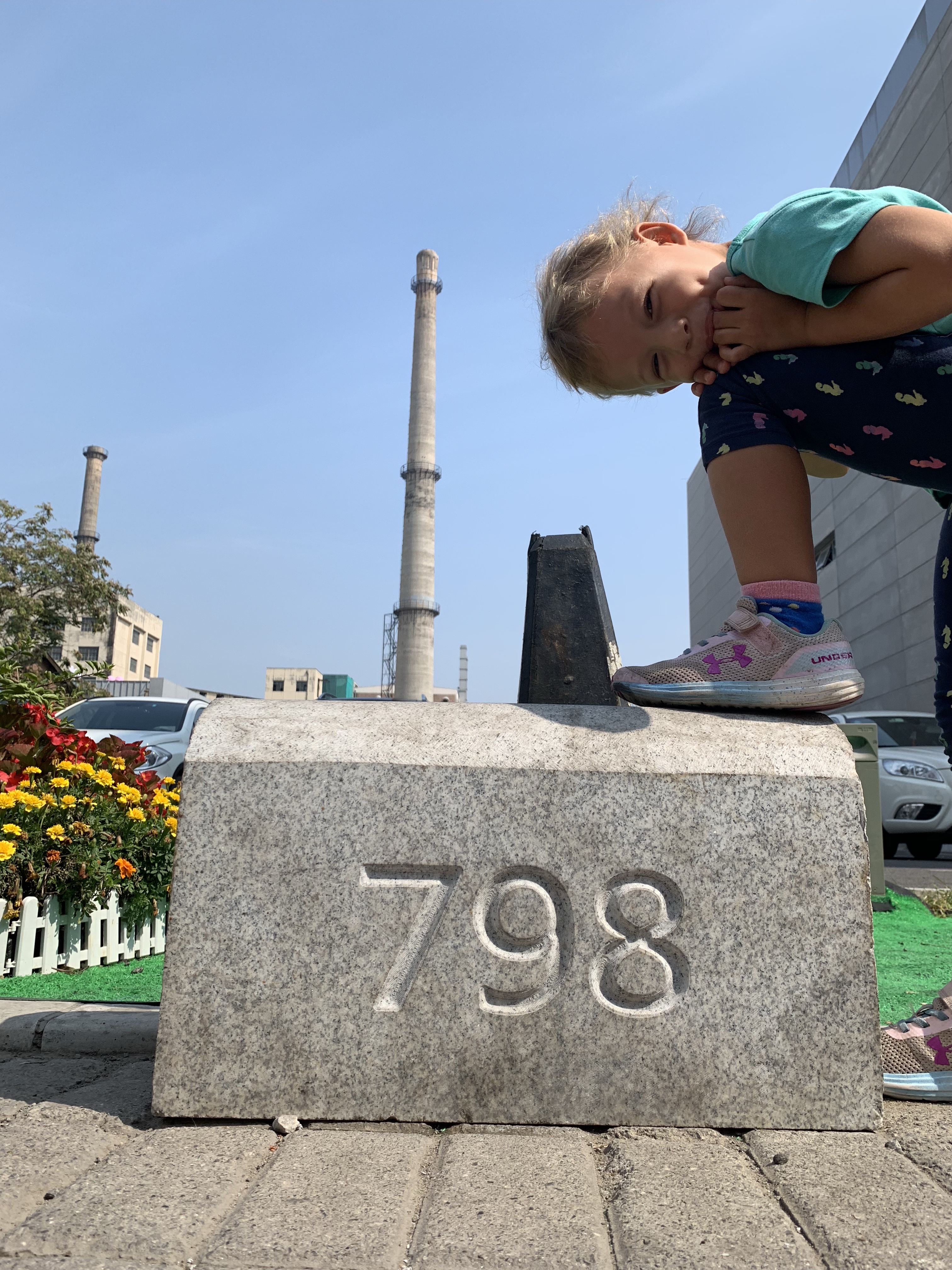
Arriving at 798 Art District, Chaoyang District, Beijing.

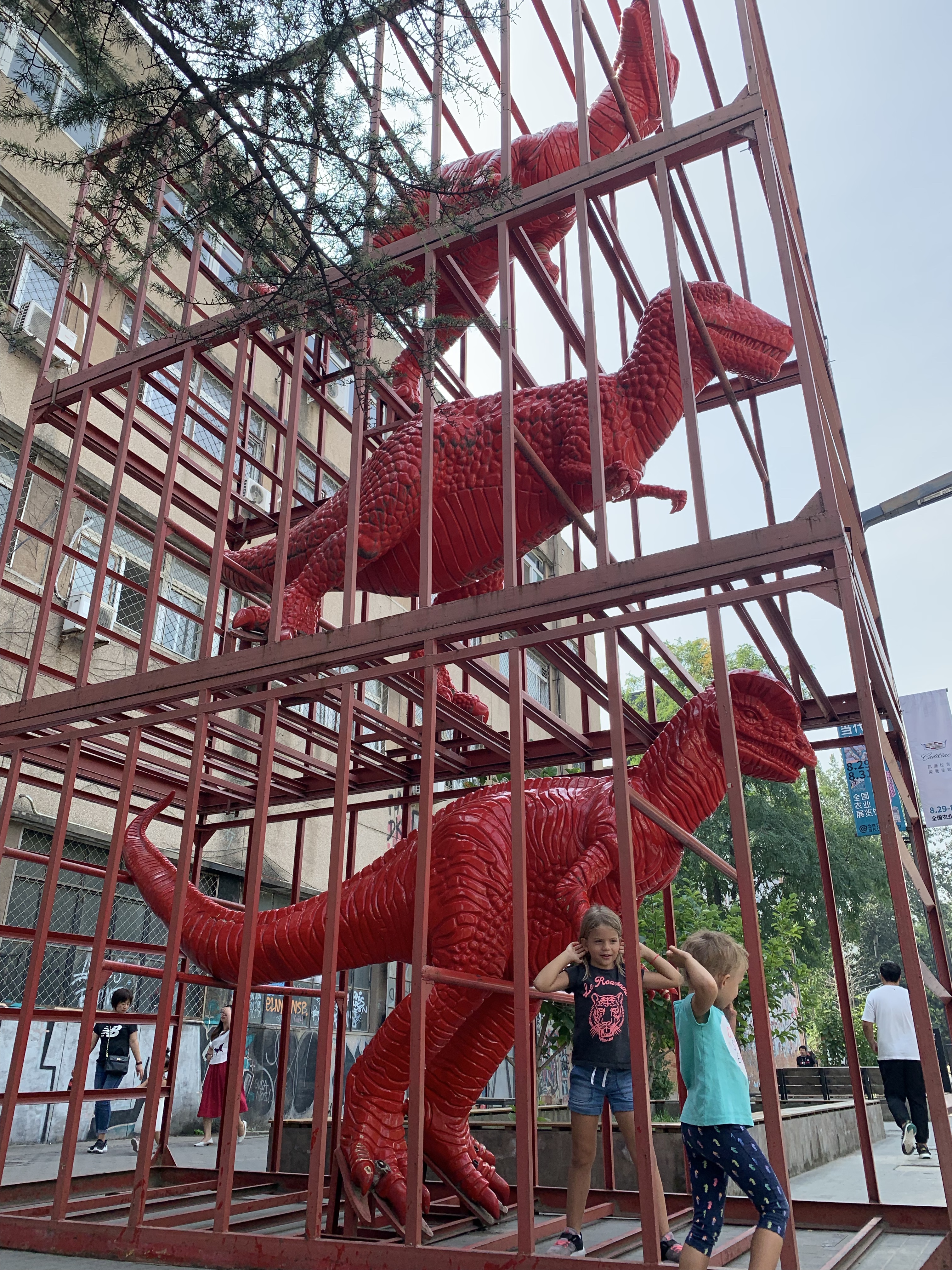
Thanks to Flounder Lee, an artist and professor I know from Dubai, we made a good stab at getting to grips with the Beijing contemporary art scene. We started off at 798 Art District, a Bauhaus-era industrial complex taken over by some of the leading galleries worldwide, interspersed with some quirky installations.

Public art outside Ullens Center for Contemporary Art (UCCA), 798 Art District, Beijing.

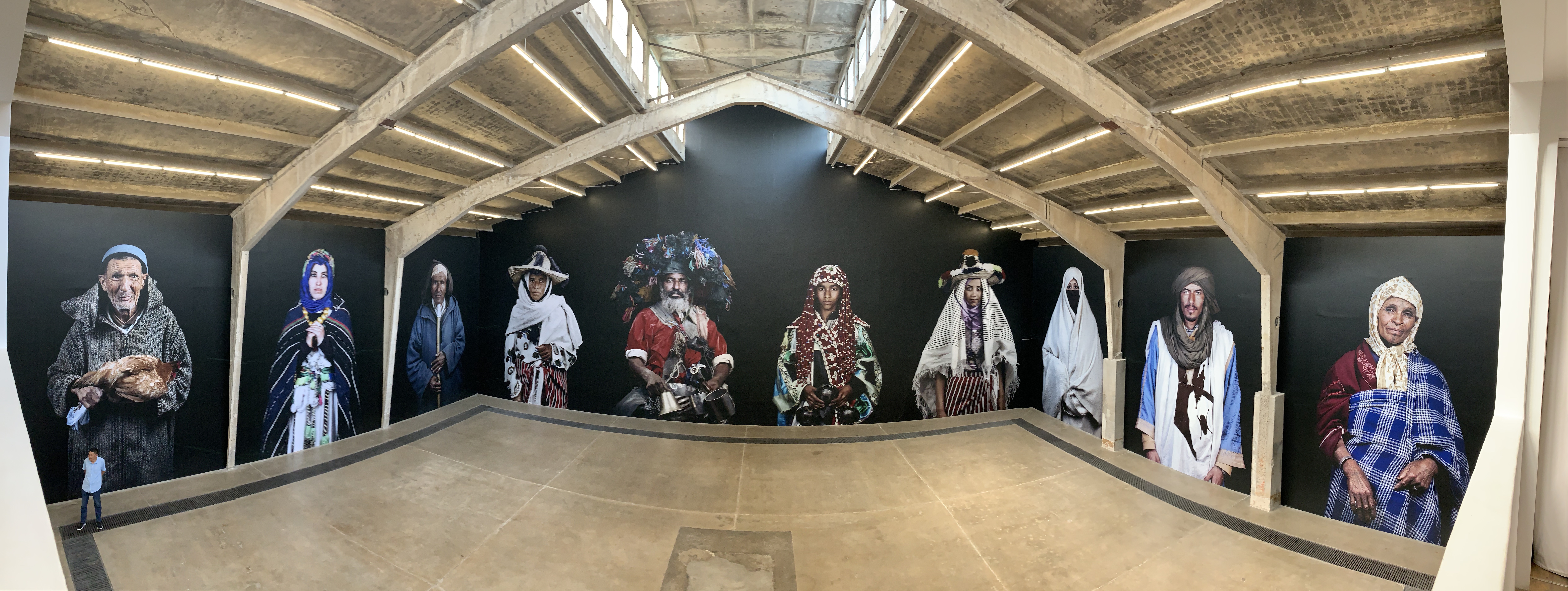
We started with an exhibition about AI at the Hyundai space and then went to Galleria Continua to see their exhibition of work by the late Leila Alaoui including a moving black and white video I hadn’t seen before and her iconic portraits printed on a massive scale.

Leila Alaoui, Galleria Continua, 798 Art District, Beijing.

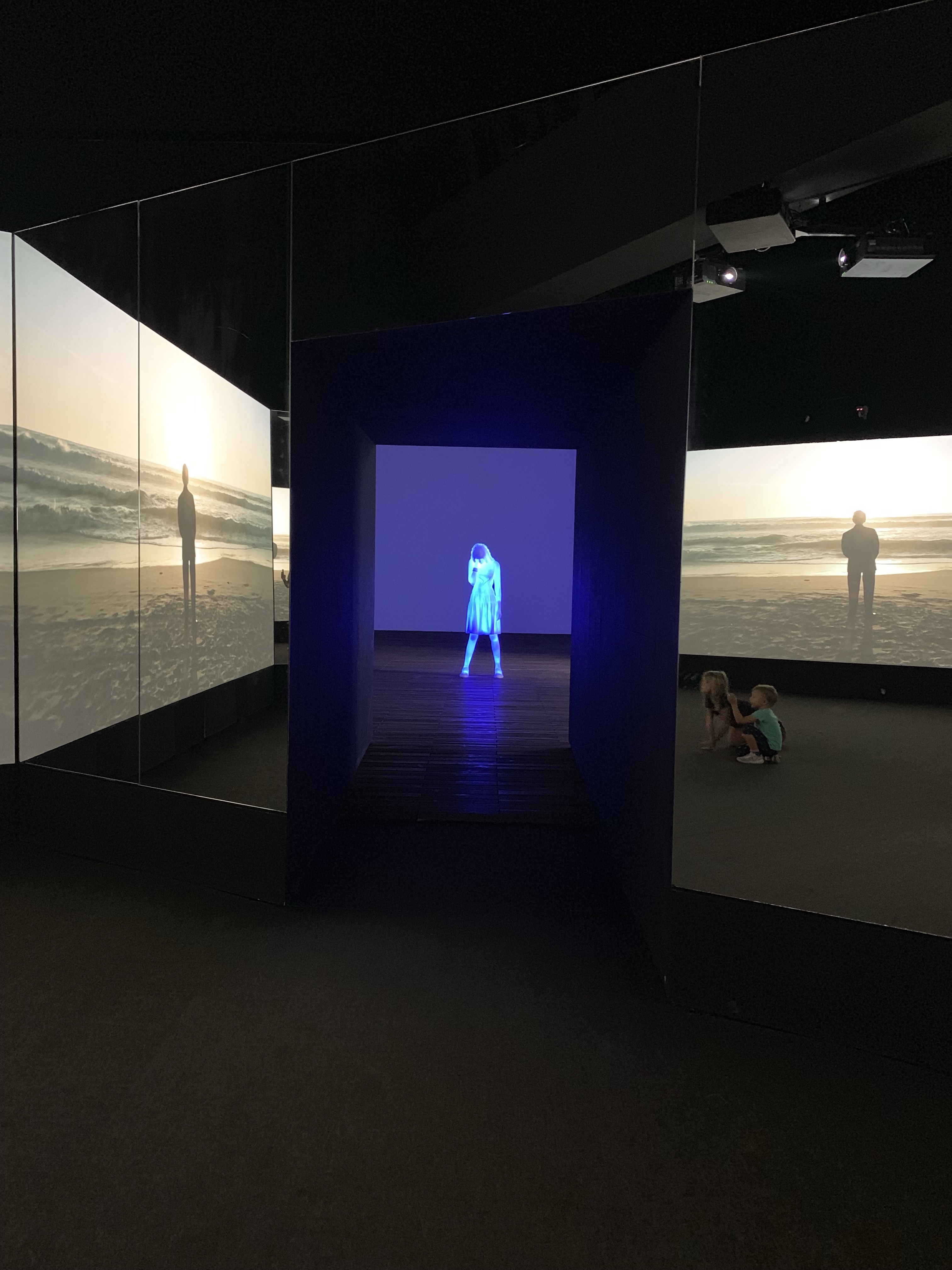
We spent time immersed in Doug Aiken’s exhibition at the Faurschou Foundation, familiar with his practice from Victoria Miro.

Doug Aiken, Faurschou Foundation, 798 Art District, Beijing.

We then went on to Caochangdi Art Village which is where Ai Wei Wei had his studio and other galleries have opened up. We enjoyed visiting White Space, Pekin Fine Arts and ShangART.

White Space, Caochangdi Art Village.

The funniest gallery experience we had was finding Arrow Gallery close to the Lama temple: it was literally a tiny shopfront with a screen inside showing an artist’s animation. We’d walked straight past it.

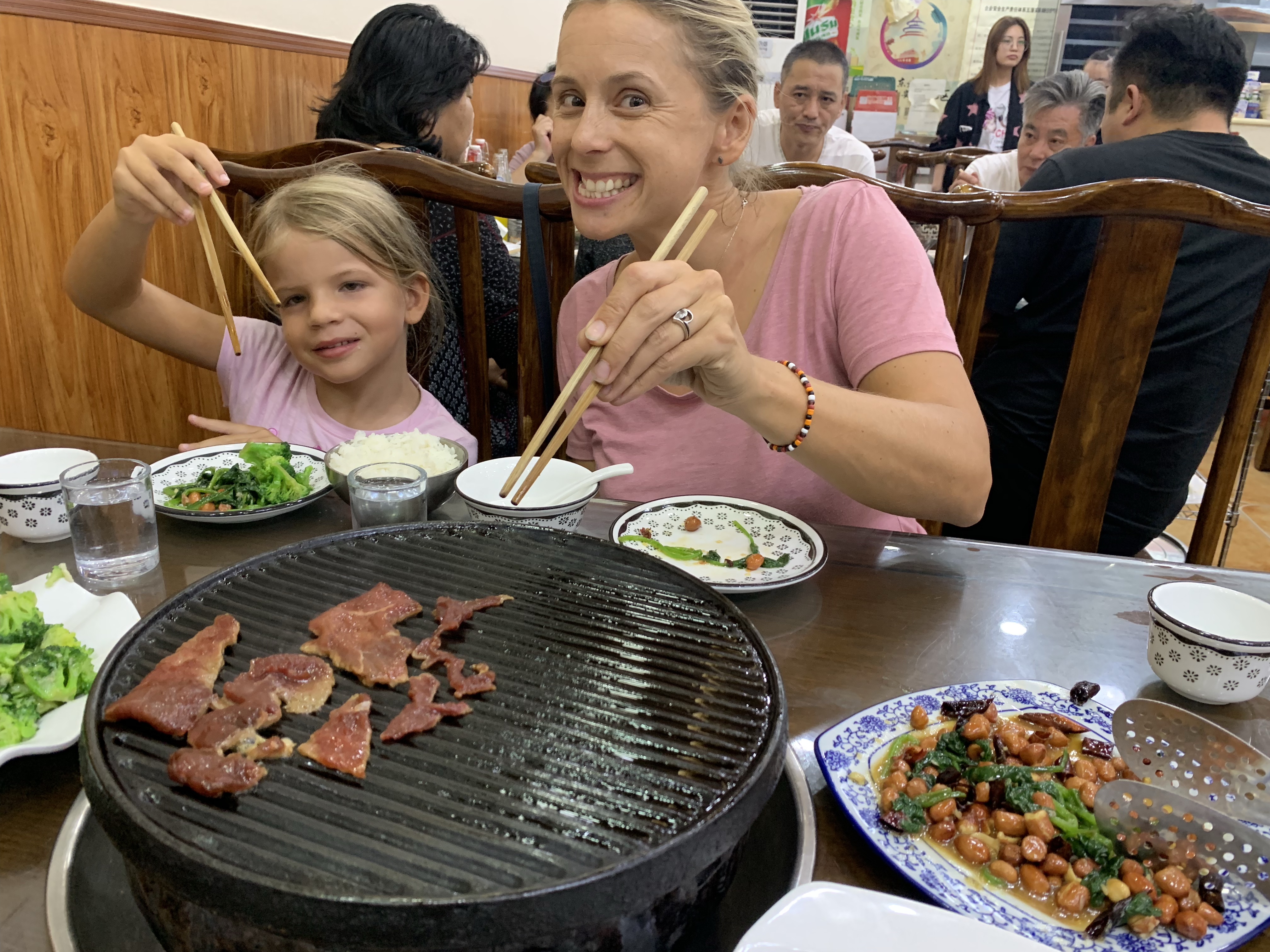
We ate pretty well in Beijing, finding some good local restaurants close to where we were staying and mastering our chopstick skills even further!

Mastering chopsticks and failing to avoid soy sauce.

For our first night we went on a hunt for Peking duck and it was delicious. Other notable meals we had were of food from the Yunnan province, where subtle flavours reign, at Lost Heaven (we had missed visiting the original in Shanghai) and Little Yunnan.

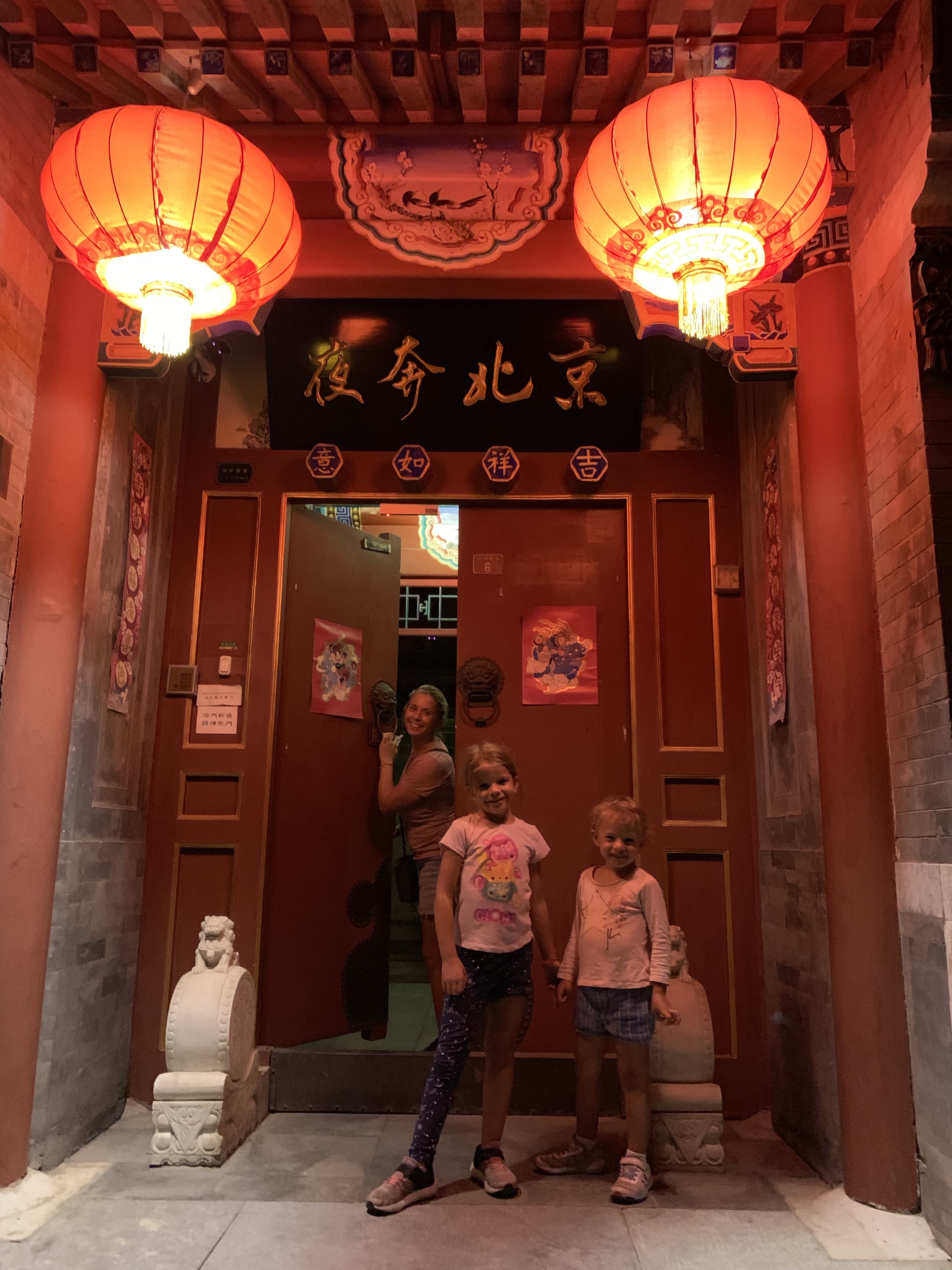
Entrance to Fly by Knight Courtyard Hotel, Beijing.

Our two weeks in China were pretty busy but gave us great insight into this enormous, fascinating country.

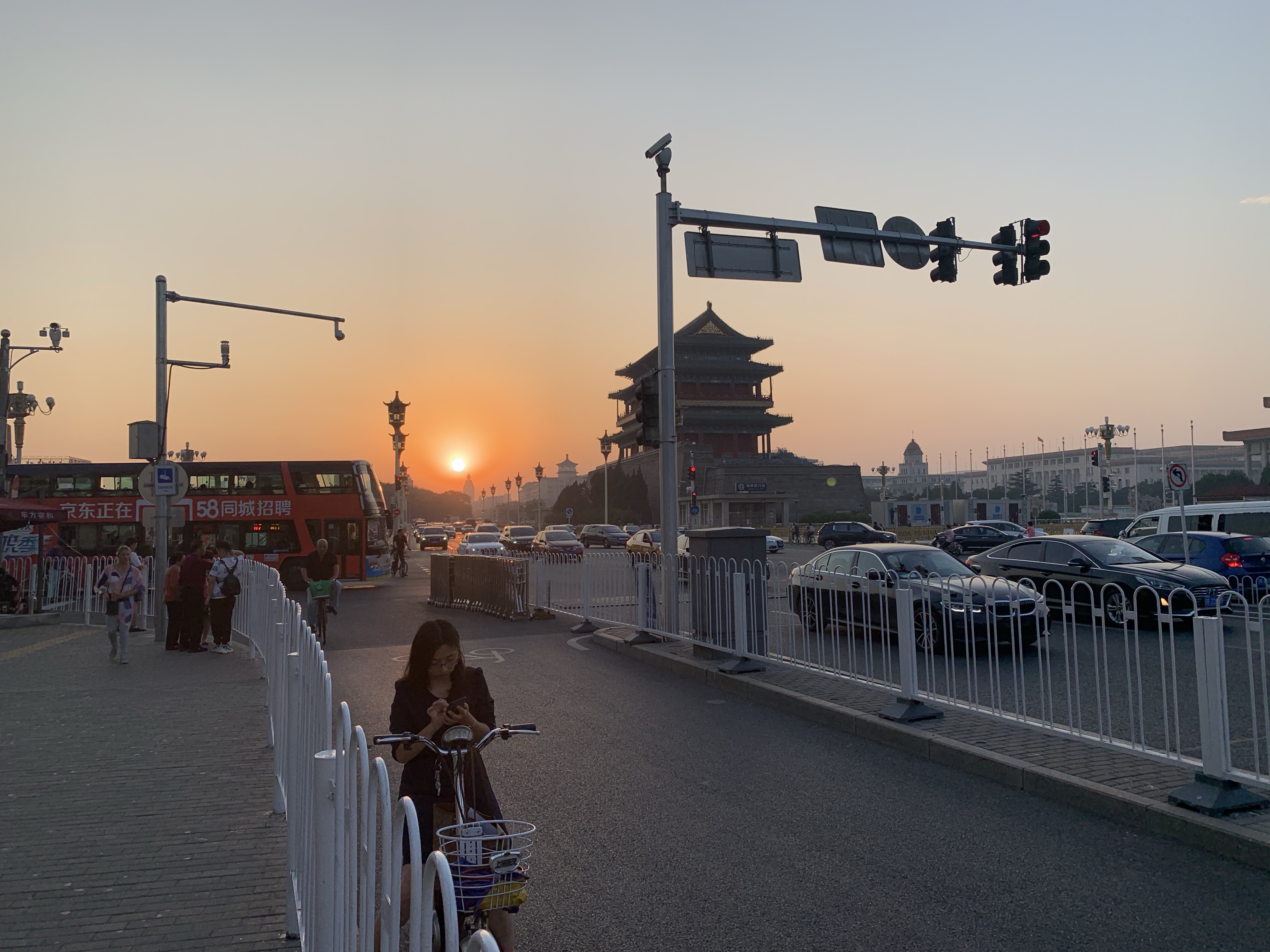
Sunset over the Forbidden City, Beijing.

If you can, go to Xi’an

Our non-English speaking drivers were all so brilliant at finding us and getting us from the train stations to our hotel in every city. The driver who met us in Xi’an was my favourite, he used his audio translate app frequently – as we drove under the imposing archway into the city centre he turned and showed his phone to us, it simply said ‘the wall’.

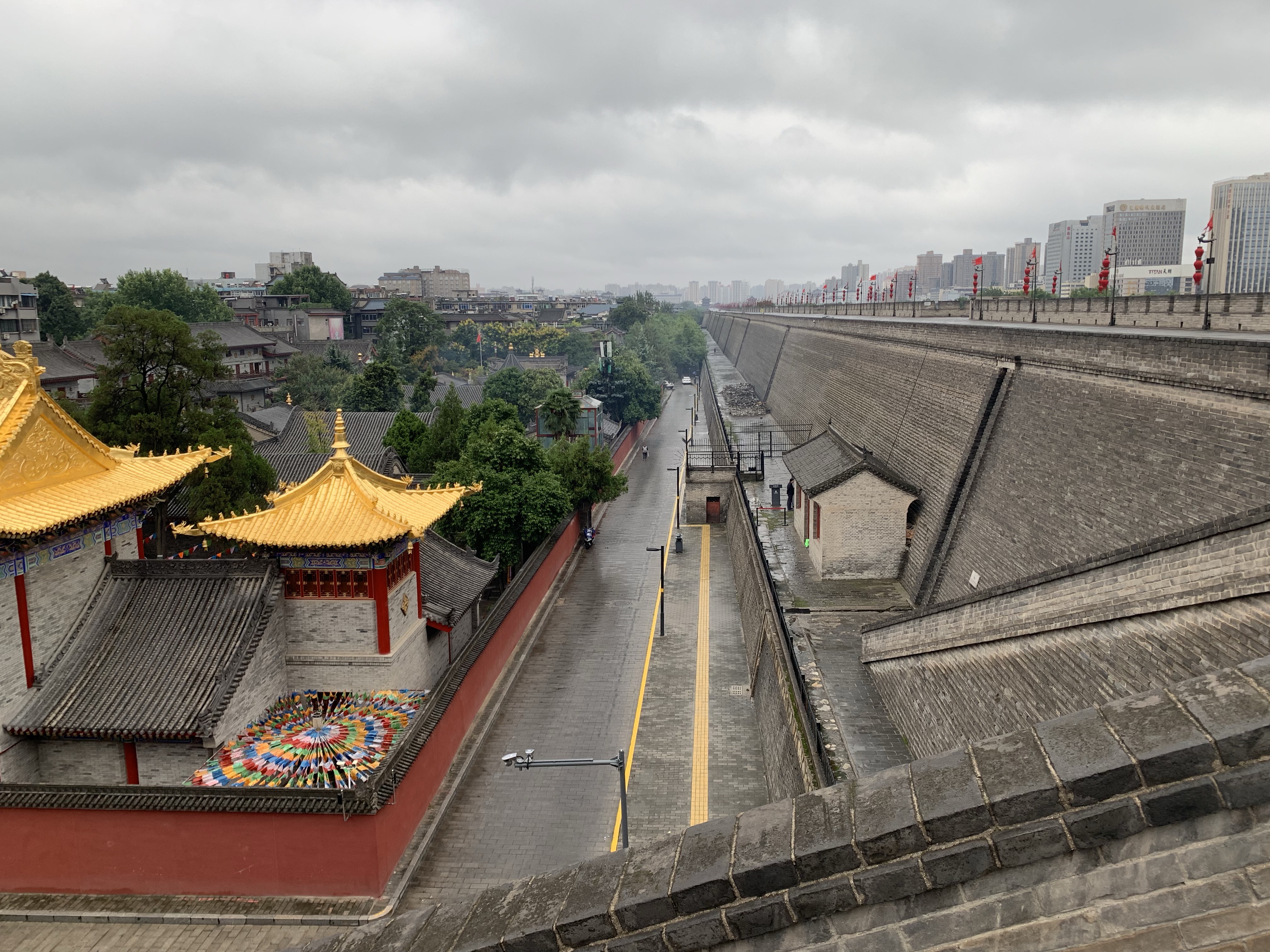
And indeed the wall is key to the city: one of the few in China remaining, the city walls are 12m high and form a rectangle with a perimeter of 14km (which we both ran – me in the pouring rain!).

Xi’an City Wall, Xi’an, Shaanxi province.

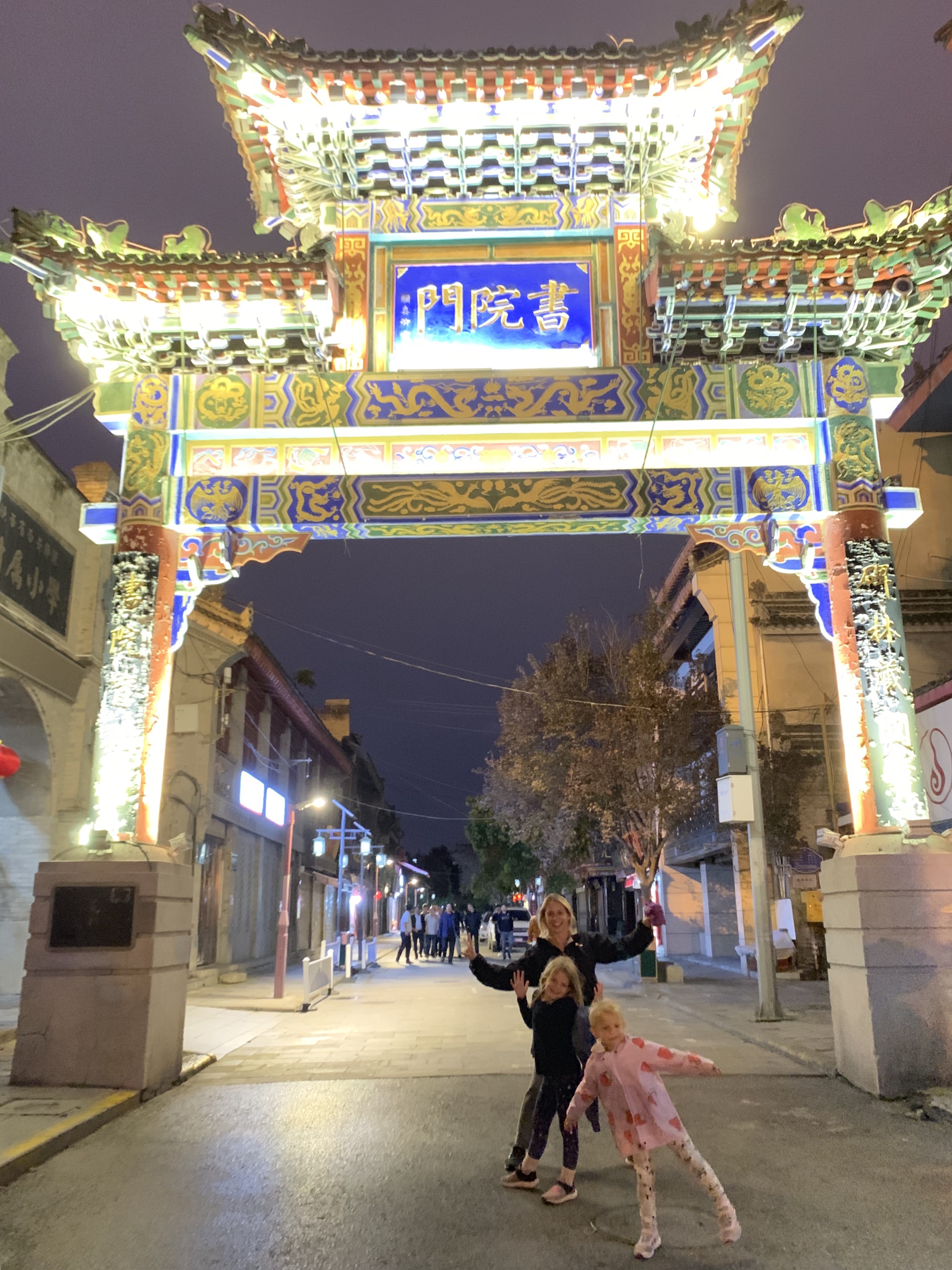
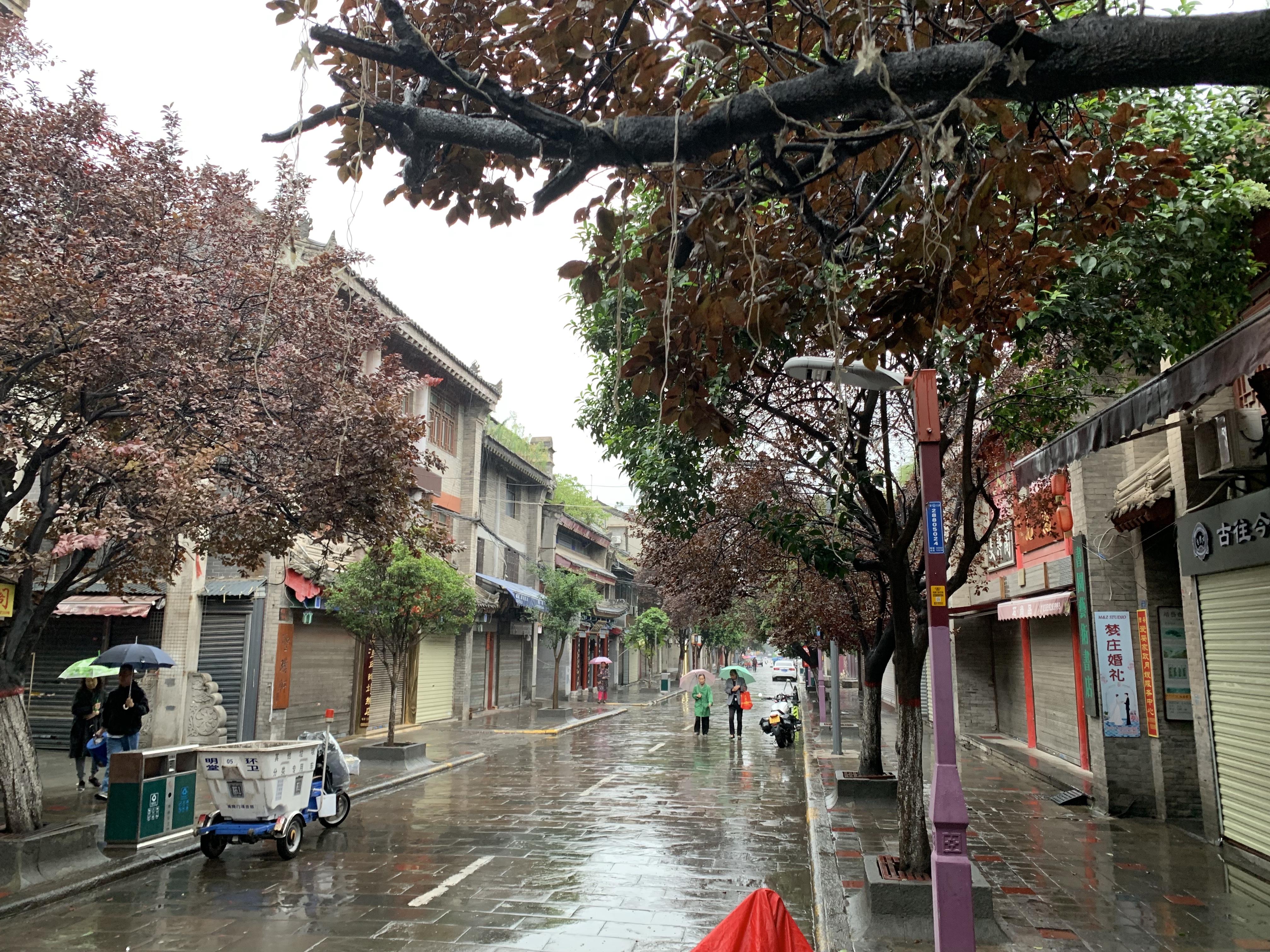
We had picked a great place to stay, the Xi’an See Tang hostel which was on a lively, mostly pedestrian street inside and close to the wall, with lots of calligraphy shops and artist studios.

Shuyuanmen Pedestrian Street, Xi’an.

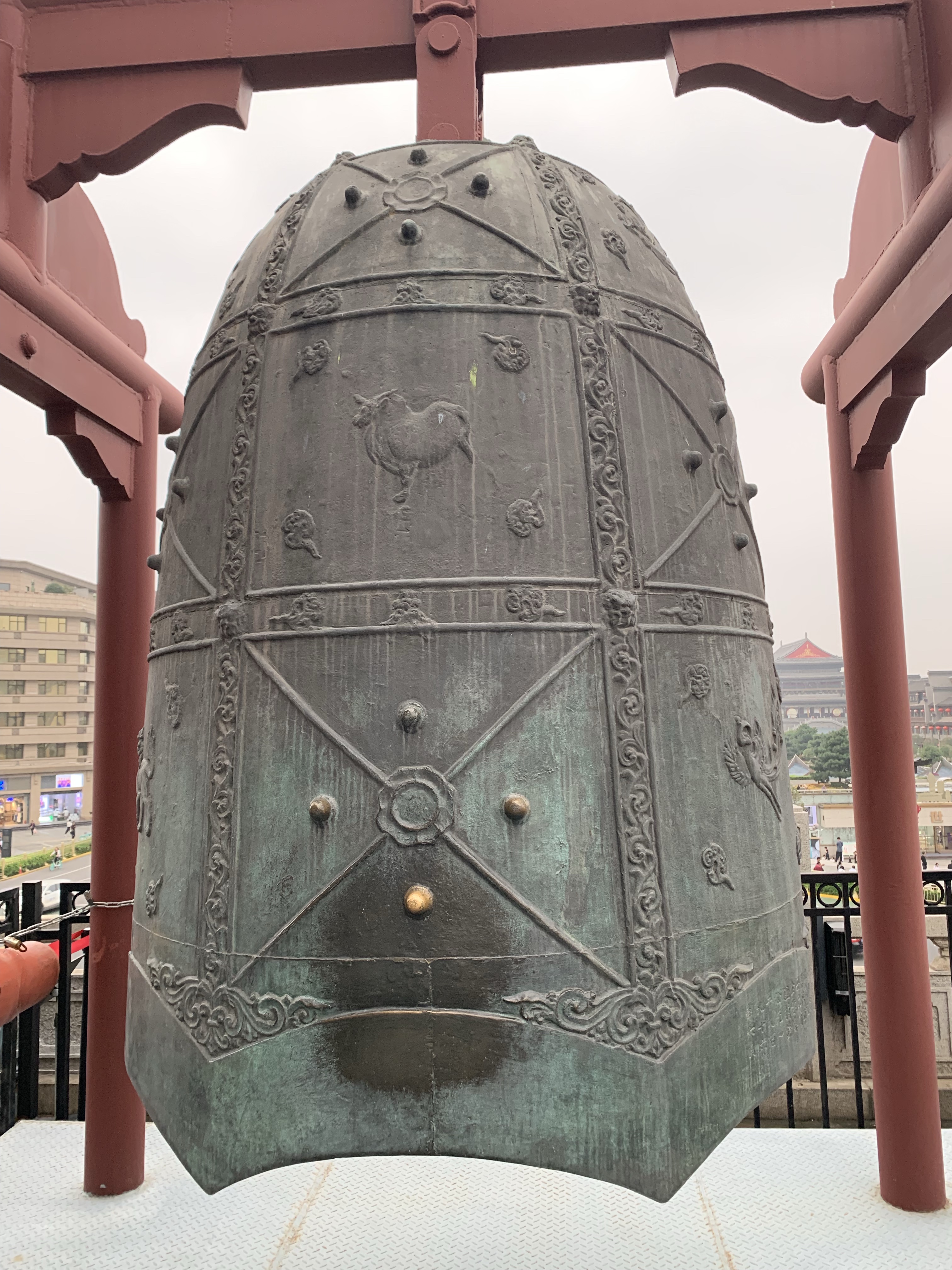
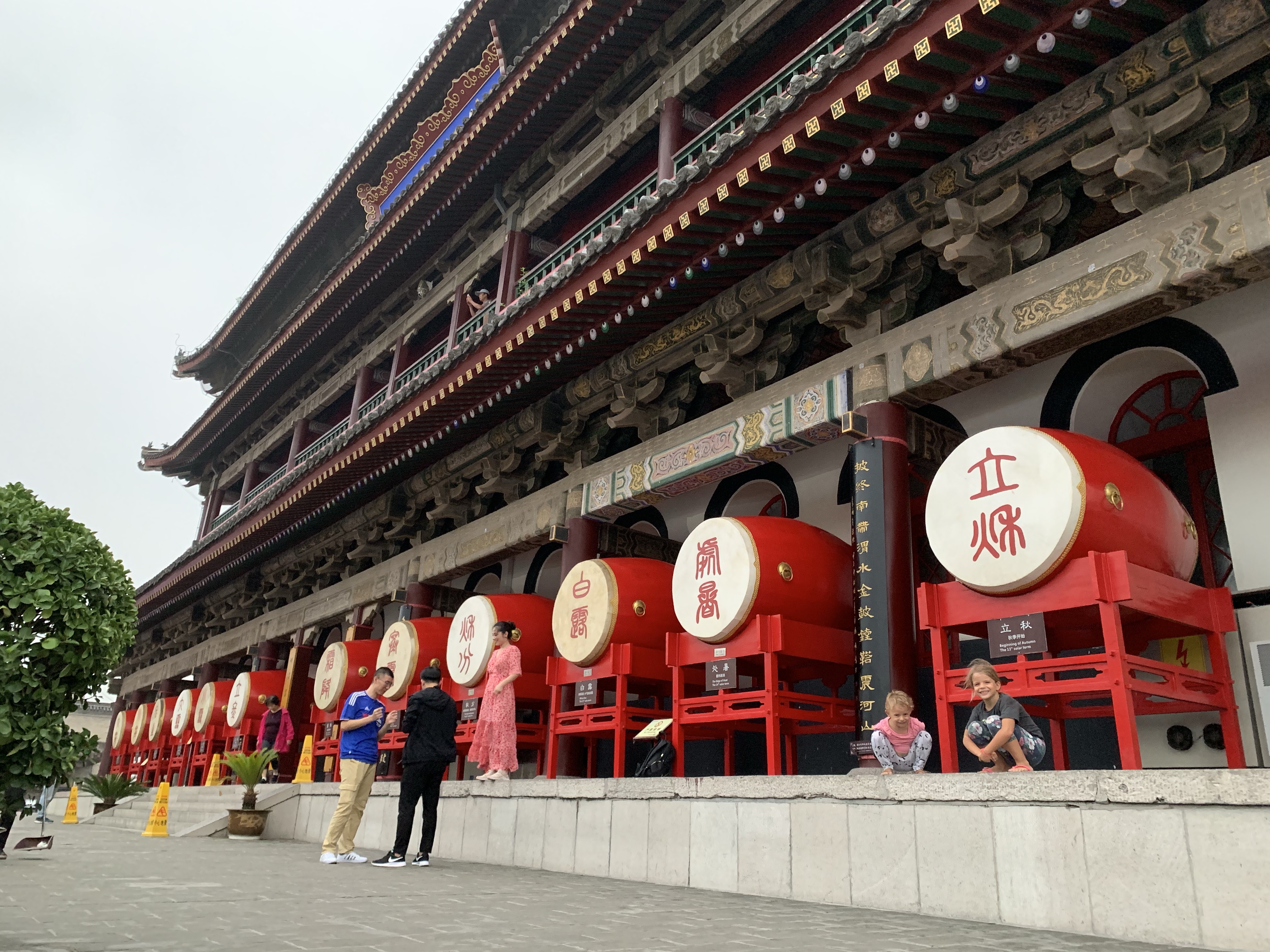
It wasn’t far to walk to the famous Bell and Drum Towers, which give you a good view of the city.

Bell Tower, Xi’an.
Drum Tower, Xi’an.

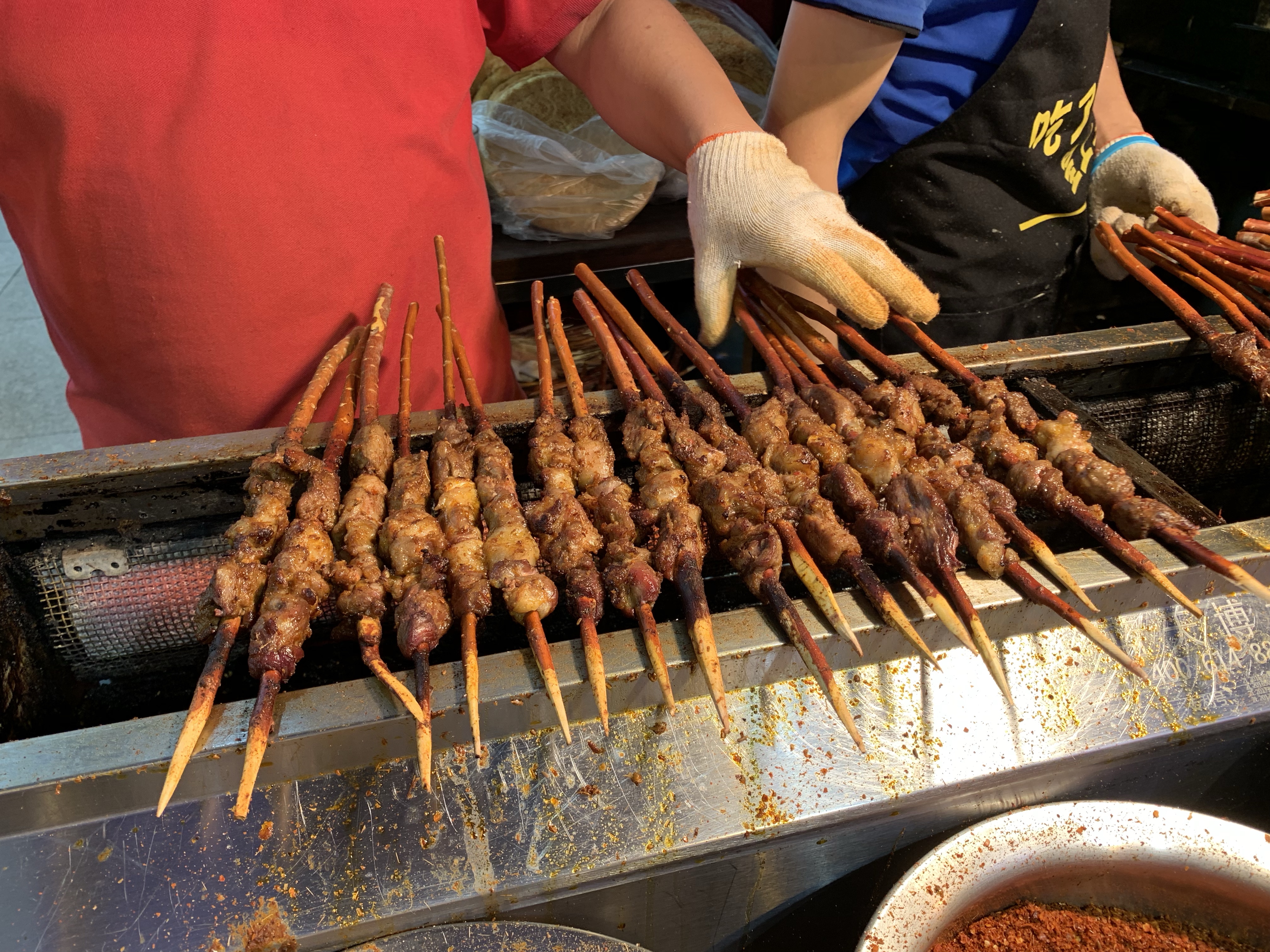
We really enjoyed the atmosphere and food in the Muslim Quarter in the evening, where hundreds of stalls and restaurants sell everything from lamb kebabs to squid and Durian pizza.
Kebabs at the Muslim Quarter, Xi’an.
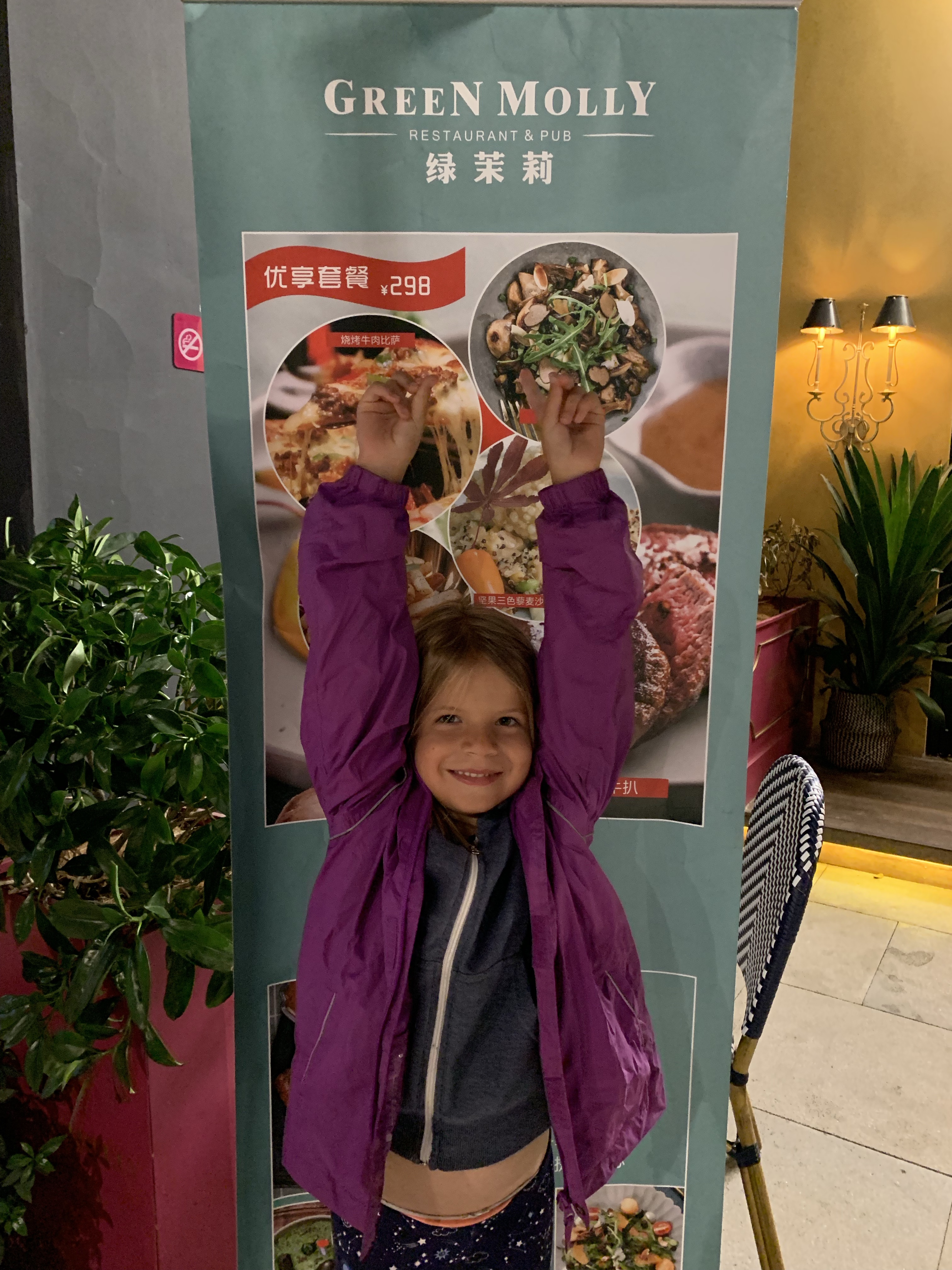
For our second night we headed outside the walls to the Big Goose Pagoda, sadly the nighty fountain show wasn’t running that evening as there was a musical performance, but we had a good time eating dinner in a place called Green Molly which seemed to serve Cuban food!

Green Molly, Xi’an.

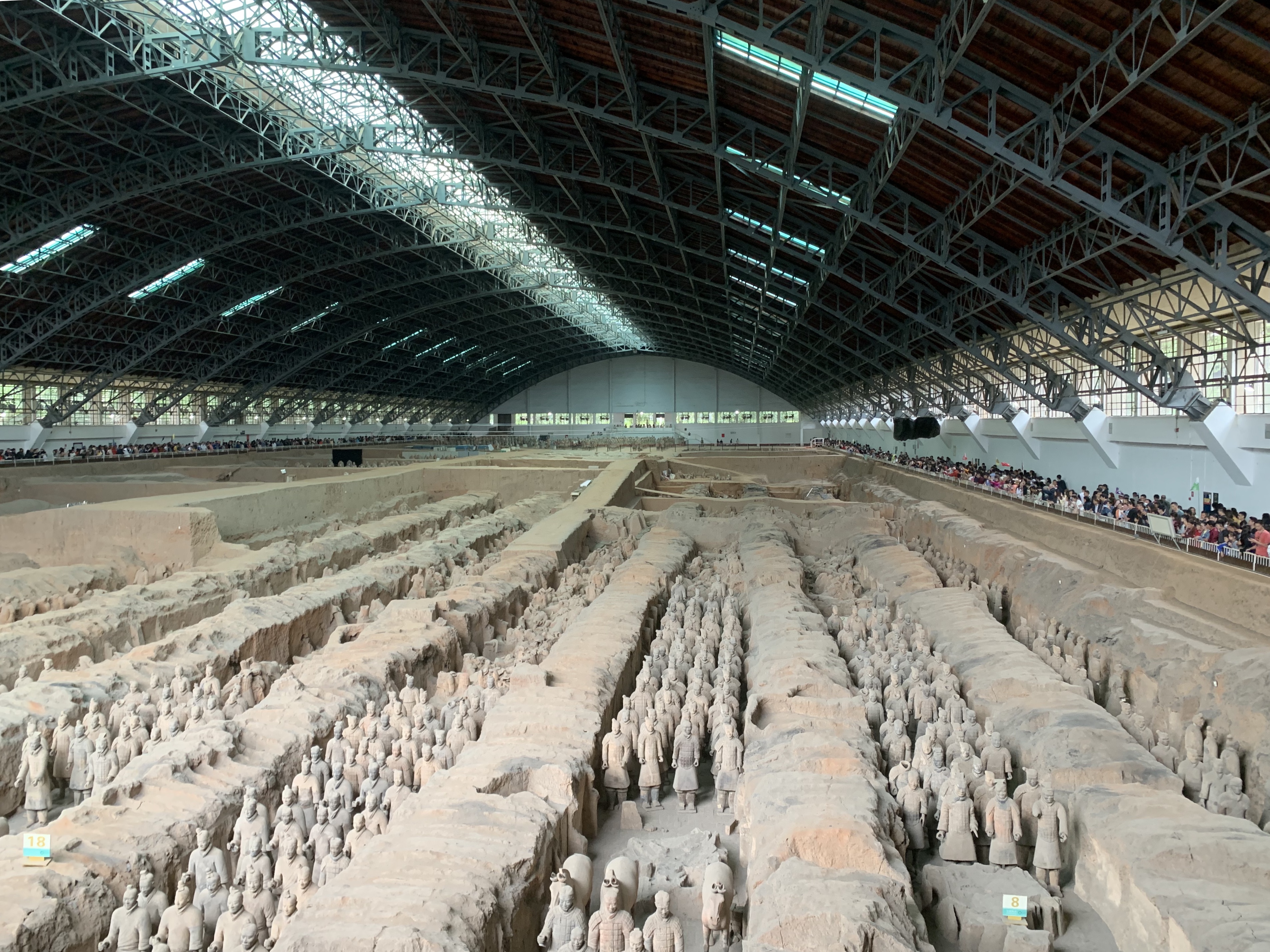
The main reason to come to Xi’an however is the city’s proximity to arguably the most important and certainly most intriuging archaeological finds ever, the Army of Terracotta Warriors.

Pit One, Mausoleum of the First Qin Emperor, Lintong District, Xi’an.

First discovered in 1974, the site is divided into three pits of different sizes, containing row after row of soldiers, horses and chariots that were part of a massive tomb for the first Emperor of China, Qin Shi Huang who died in 210 BC. That makes them over 2000 years old.

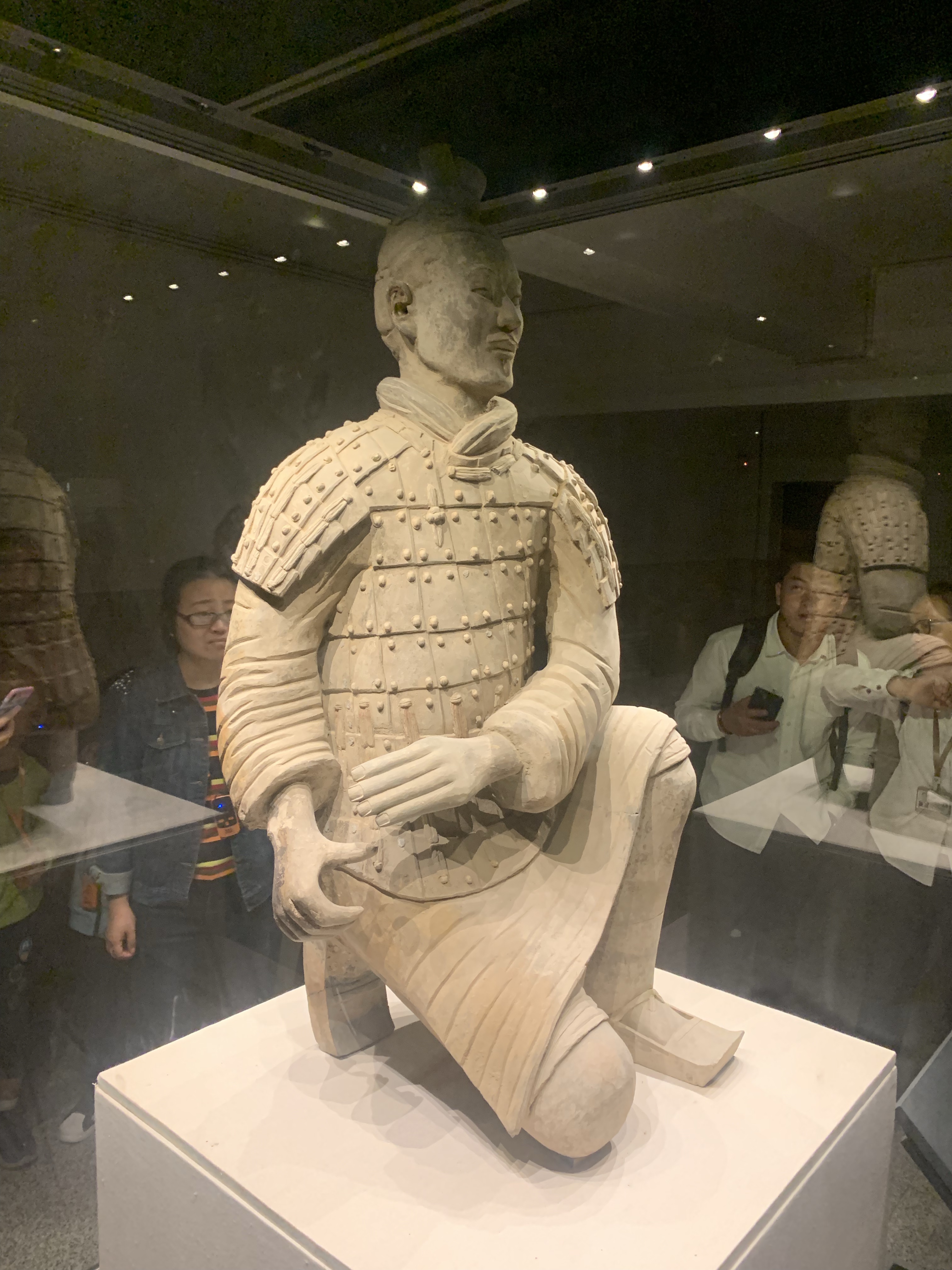
Warrior from the Terracotta Army, Xi’an.

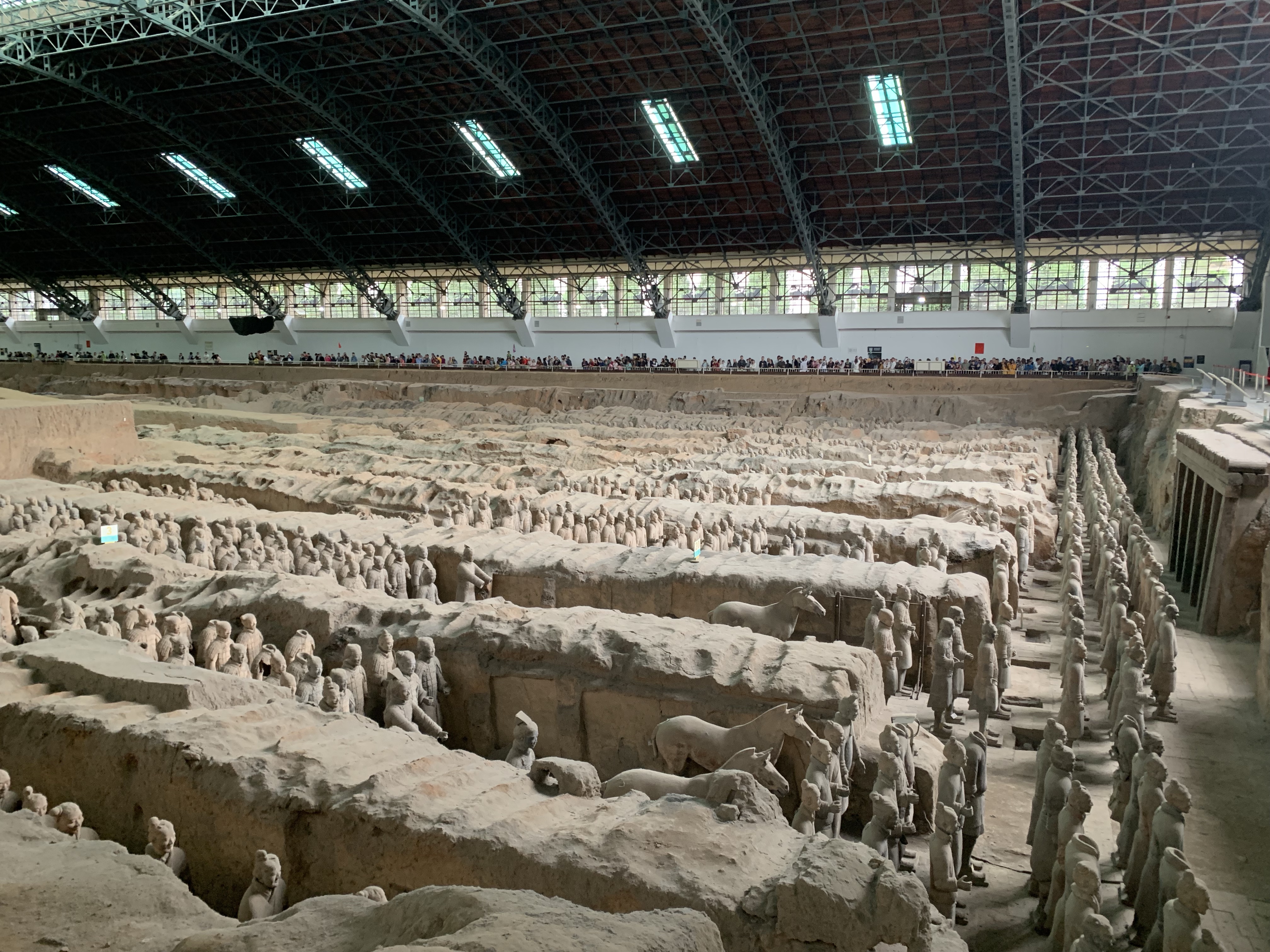
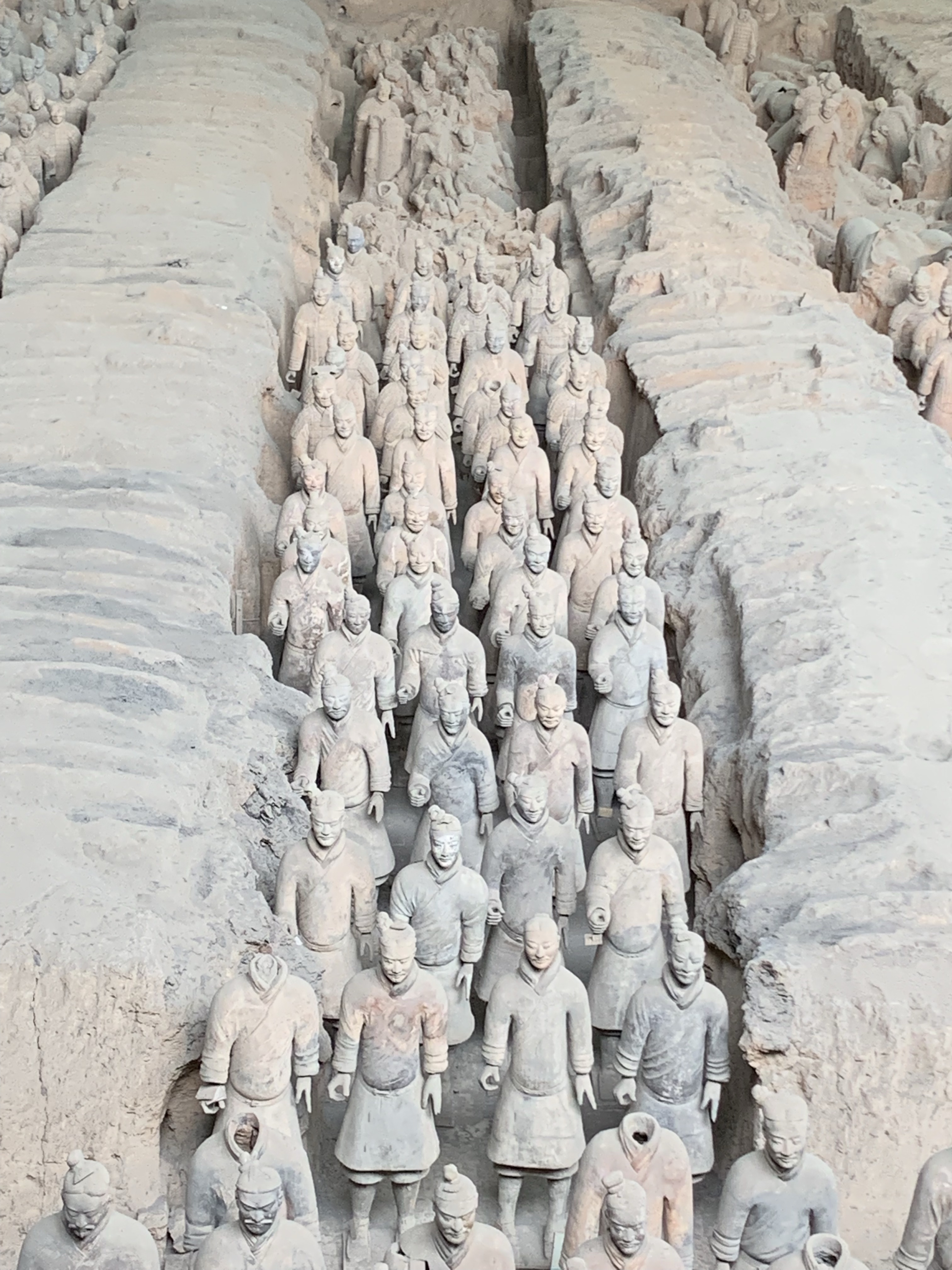
There are over 8,000 life-size sculptures, no two faces are the same. It really is a jaw-dropping experience to see this, and the girls really engaged well with it.

Pit One, Mausoleum of the First Qin Emperor, Lintong District, Xi’an.

It did take over two hours on two buses to get there, but it was an unmissable part of the trip.

Pit One, Mausoleum of the First Qin Emperor, Lintong District, Xi’an.

Must do Chengdu

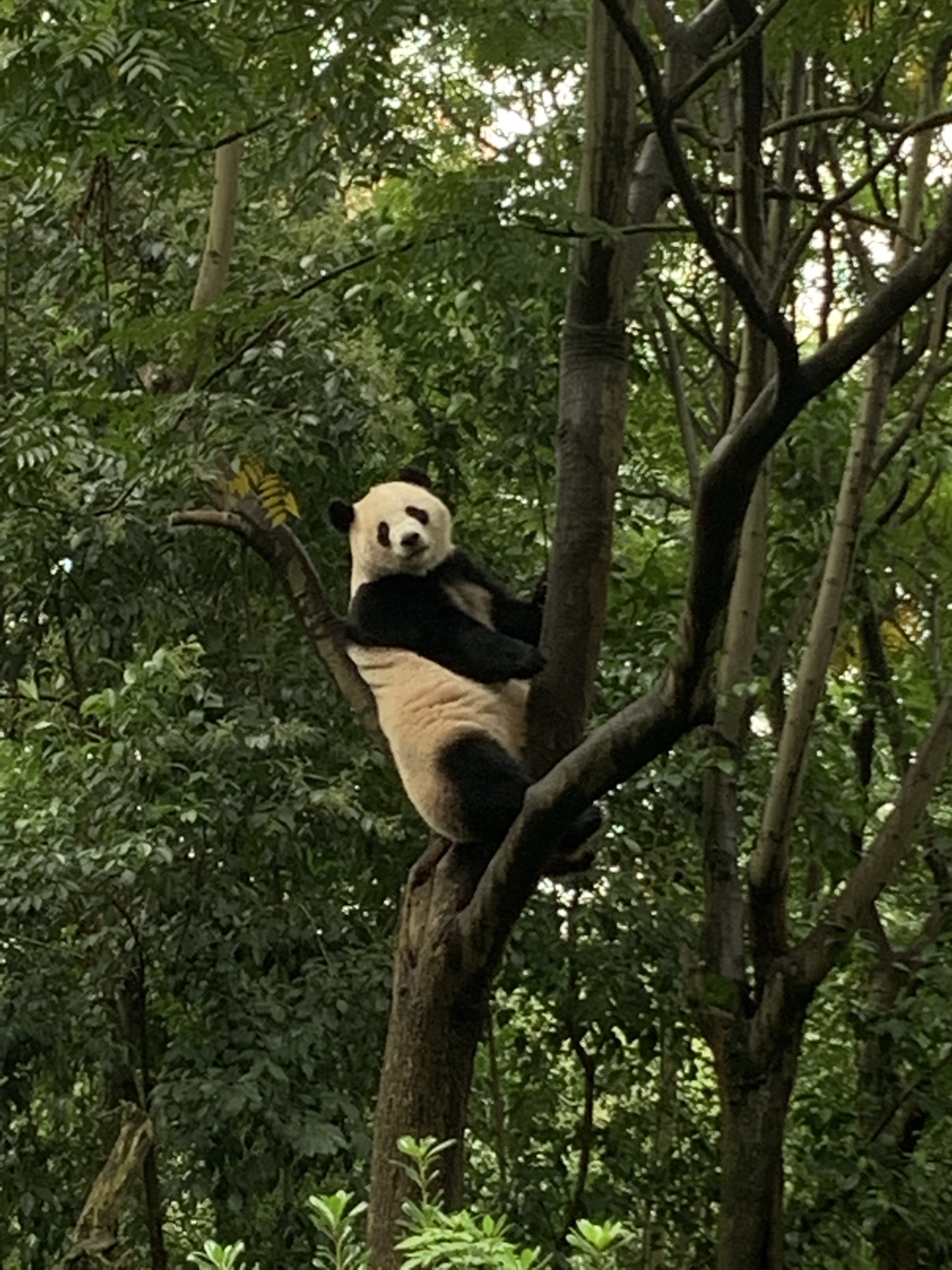
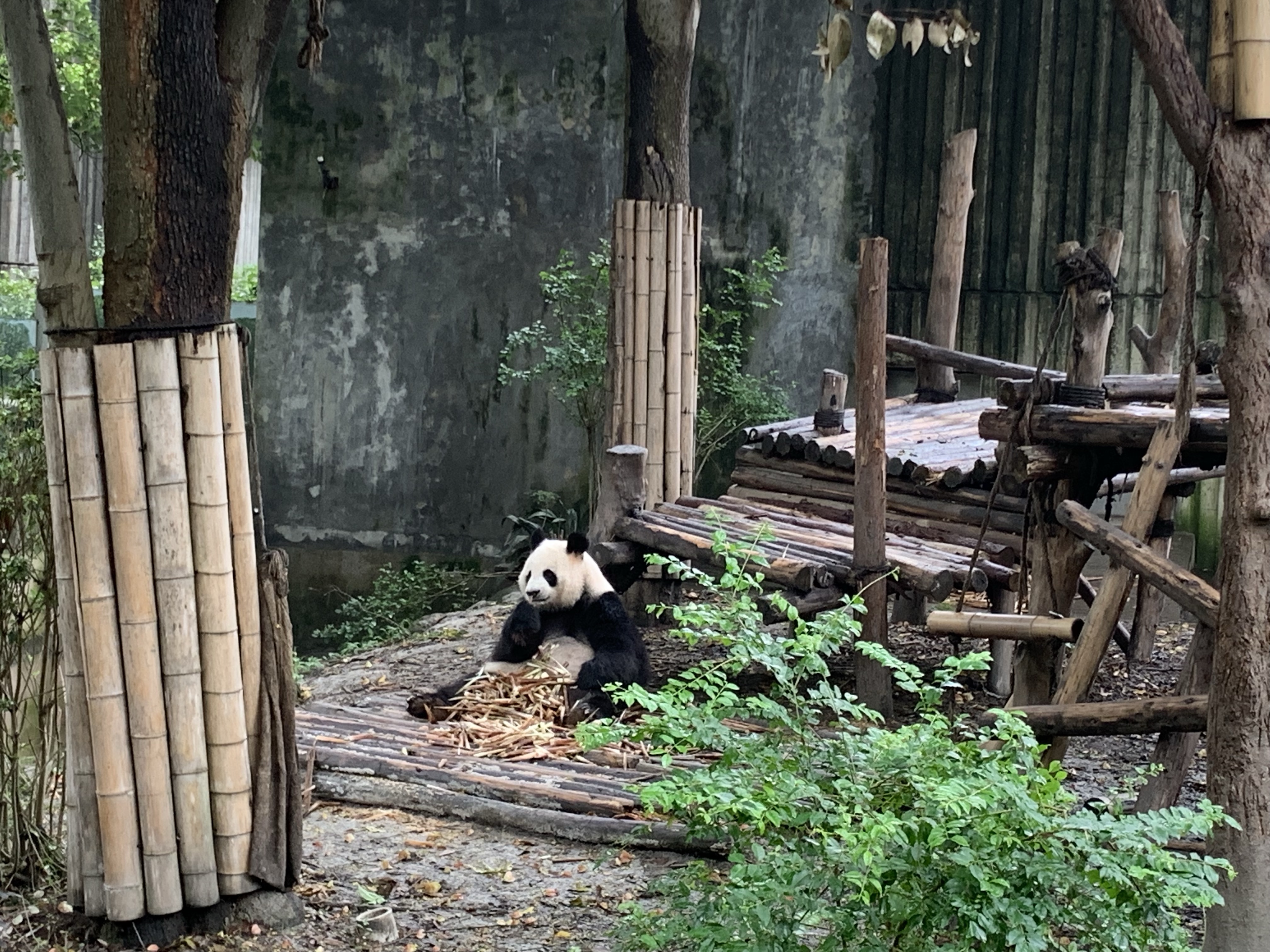
For months before when discussing our trip, for Joanna China was just one word: Pandas! So a trip to the Chengdu Panda Breeding research centre was a must. It really was special to see them sleeping in the most bizarre positions up trees, eating bamboo shoots and rolling around in their enclosures. A nice treat as well to view some babies. We had booked a visit there as part of a wider day tour of Chengdu through the agency who were organising our transport – on reflection that was unnecessary, we could have done it on our own. That said we learnt a lot from our very nice and knowledgeable guide and enjoyed our final stop at a traditional tea house.

Chengdu Panda Base, Chengdu, Sichuan, 11 September 2019.

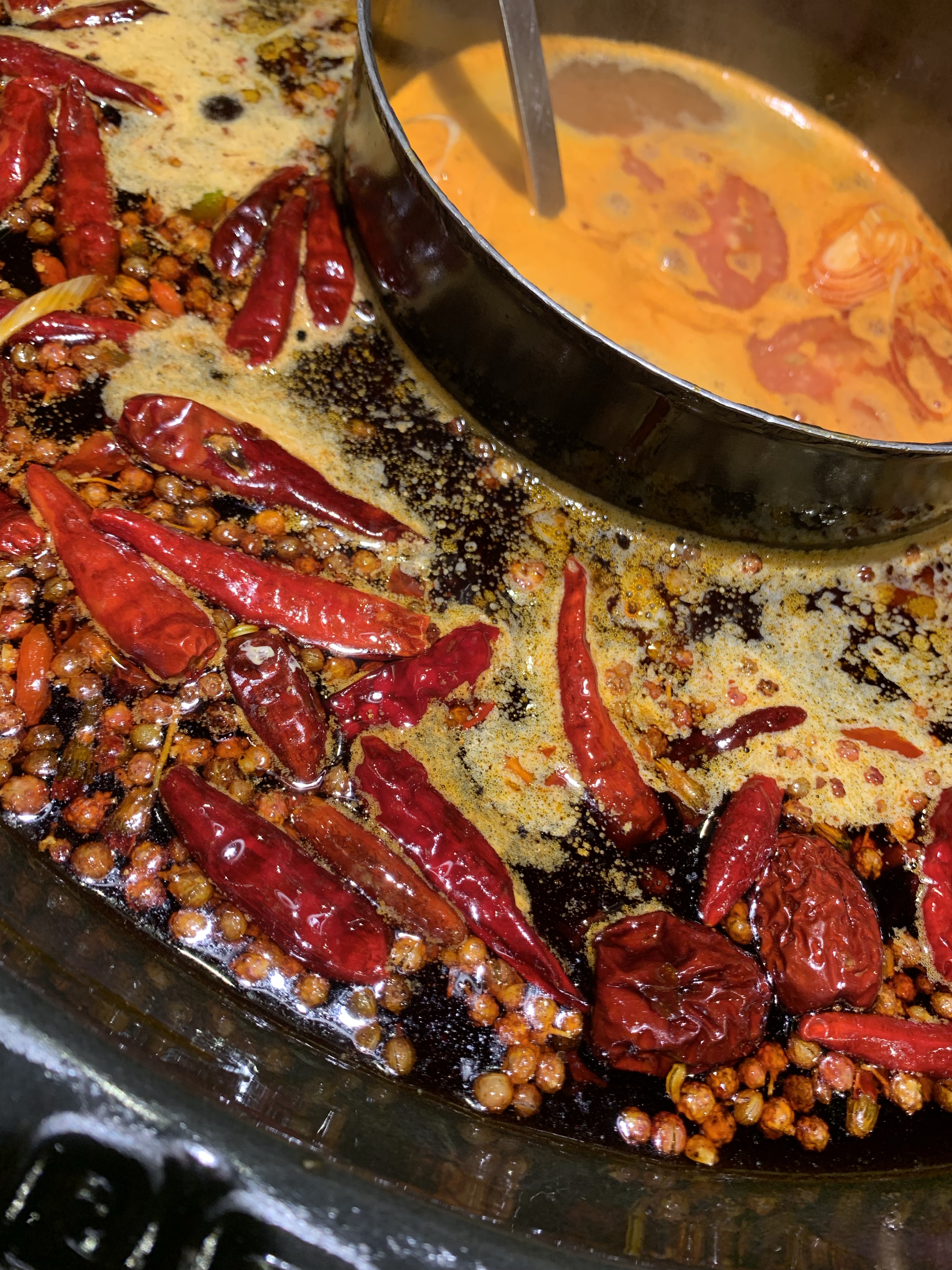
The other ‘must do’ in Chengdu which is in the Sichuan province was to try the food: there are 24 flavours in Sichuan cuisine, but I’m not sure you can distinguish between them after a mouthful of hotpot! The most intense foodie experience of them all but wonderfully rewarding, once you worked out how to lessen the fire by creating a nice mix on your plate of oil and salad. The girls had a soup to dip which was pepper free!

Sampling hotpot, Chengdu.
Hot, hot, hot on the outside, spice free bowl on the inside for MoJo.

We liked the city of Chengdu, both enjoying morning runs along the river embankment. We spent a few hours in the Chengdu Museum, which gave us a good background on Chinese history as well as interesting displays dedicated to puppetry.

Early morning mist over the Jin River, Chengdu. Right: Under the South Gate of Xi’an City Wall, Xi’an.

River cruisin’ Yangtze style

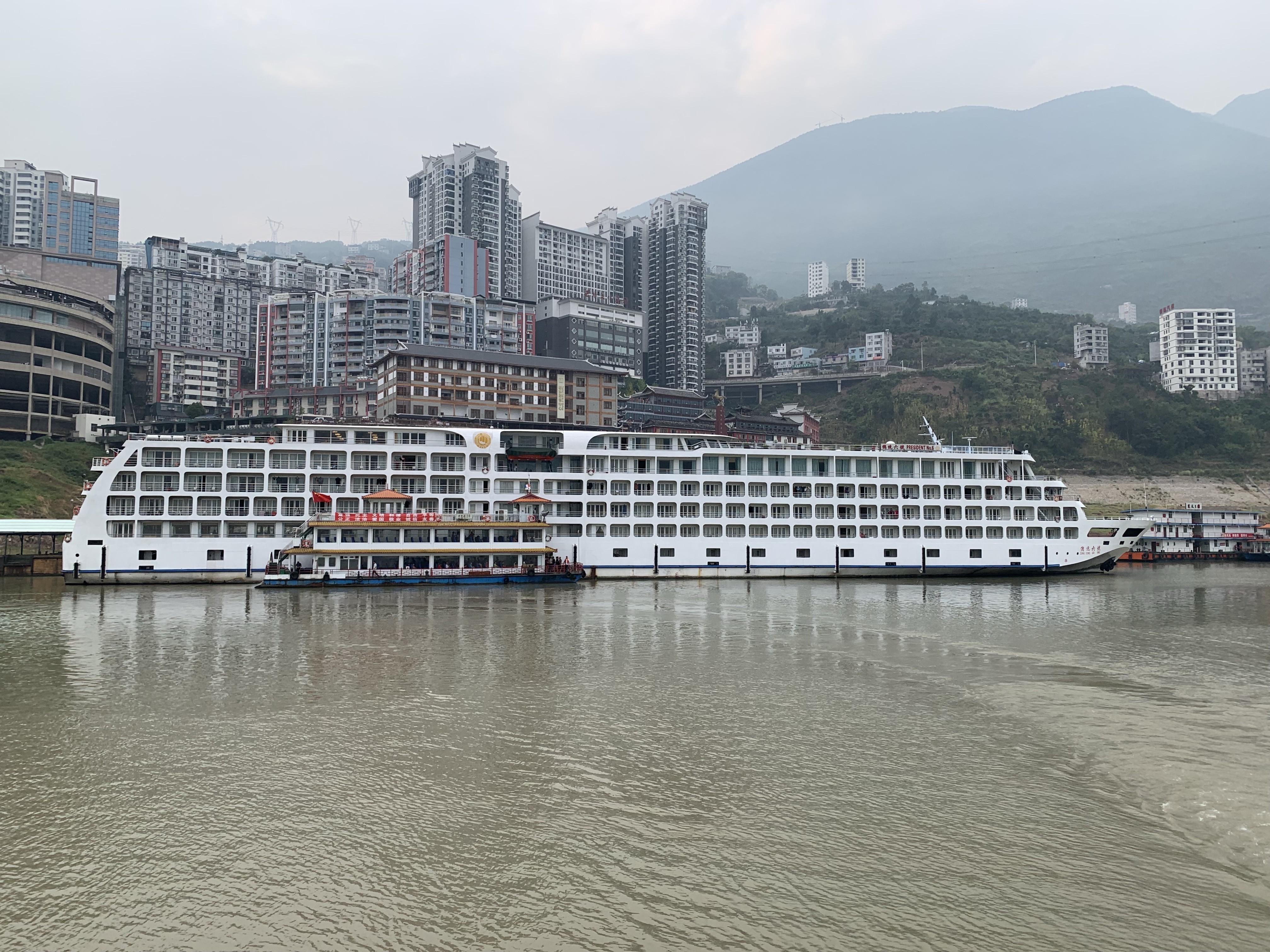
My grandparents often went on cruises during their later years, but I’m pretty sure none of their trips were anything like our first ‘cruise’ experience – on President 6 for four nights travelling upstream on the Yangtze river.

Our boat had around 400 passengers, which included 20 Germans on a tour (don’t get me started on their Chinese guide who was totally incompetent on the tanoy system, initially funny but not so much when he got hold of it for a ship-wide 5.45am wake-up call blasting into our room!), one American guy with a Chinese wife, us and the rest were domestic Chinese tourists. Mostly over 70 years old, some with grandchildren in tow. We were certainly going to stand out! It was a time for us to really get to know and understand the Chinese. Initially a little daunted when they kept on coming over to speak to us – always in Mandarin – expecting us to be able to respond – and taking our photo – but soon we got used to it and Joanna would brilliantly respond by taking a photo of them with her camera!

On board President 6, Yangtze River, Hubei province.

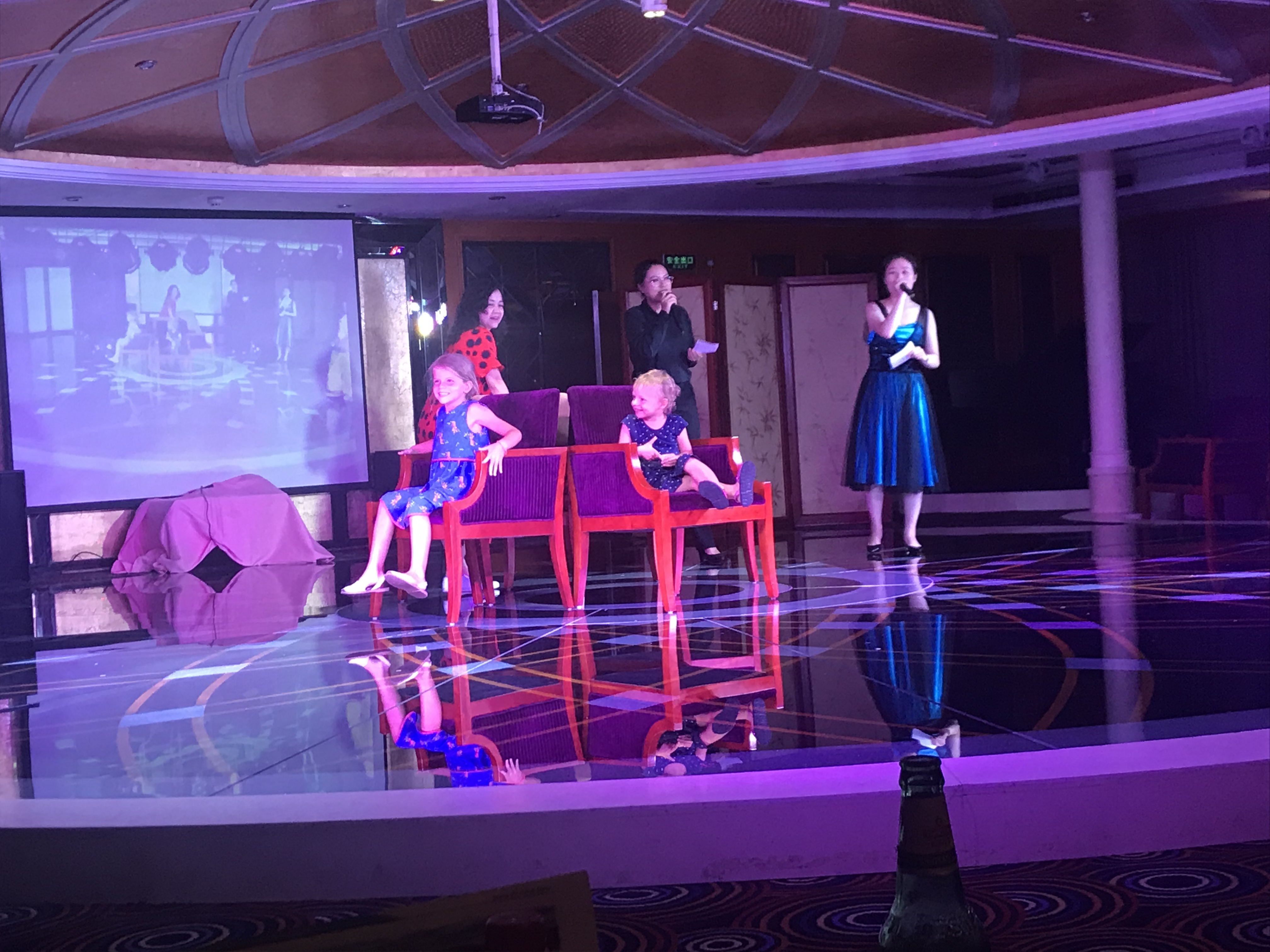
The girls were a major hit on the boat, especially after Molly won a game of Musical Chairs on stage during the opening night show, swiftly followed by me jumping up for the Macarena (cringe).

Musical chairs as part of the evening’s entertainment, President 6, 7 September 2019.

Soon preparations began for their performance in the talent show on our last night – deciding to do a dance and gymnastics set to ‘I’m Still Standing’ sung by Taron Egerton (aka Johnny) in Sing. (its Elton John originally).

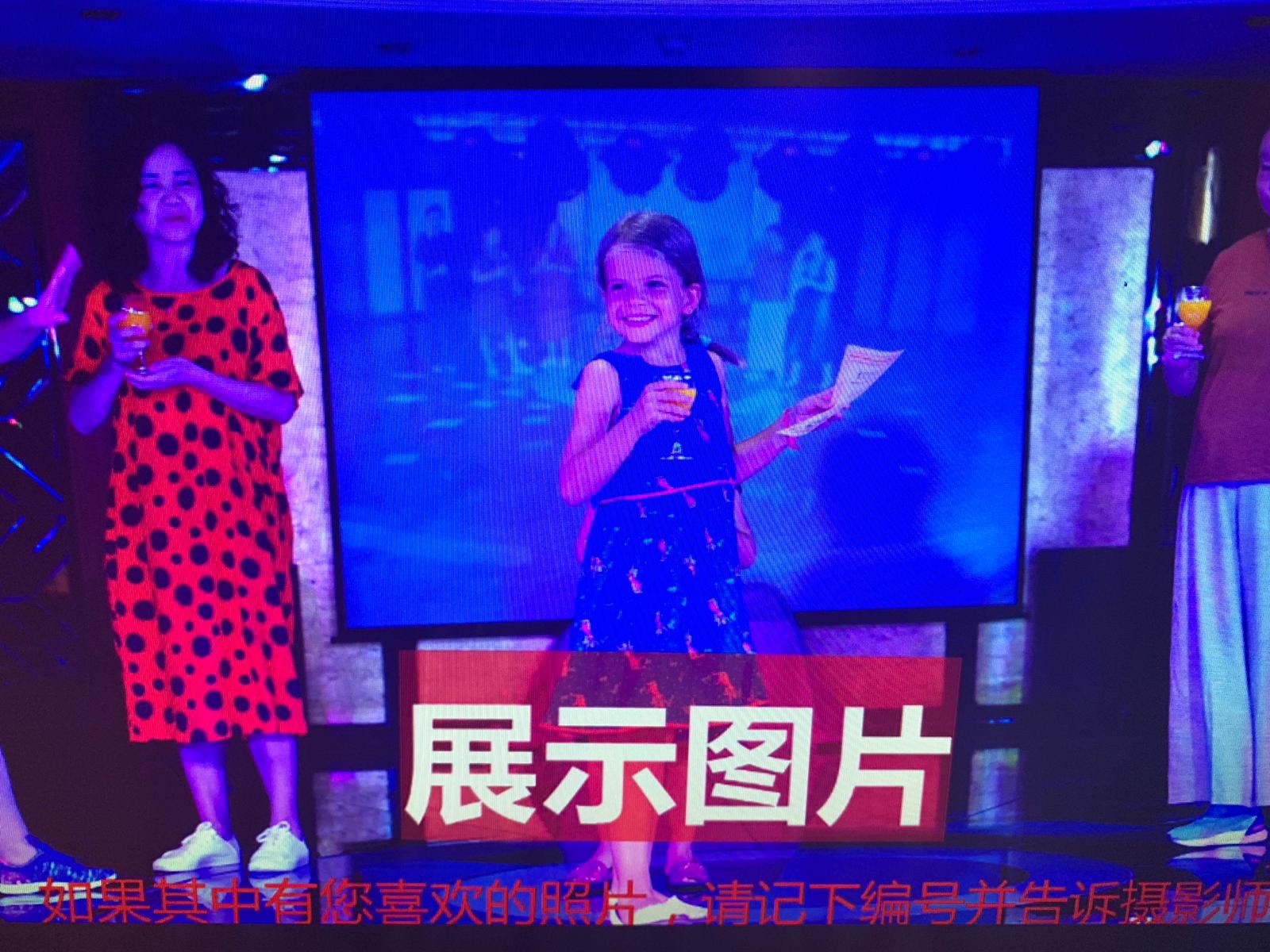
Molly winning first place in the musical chairs competition on board President 6 and being given an orange juice and certificate.

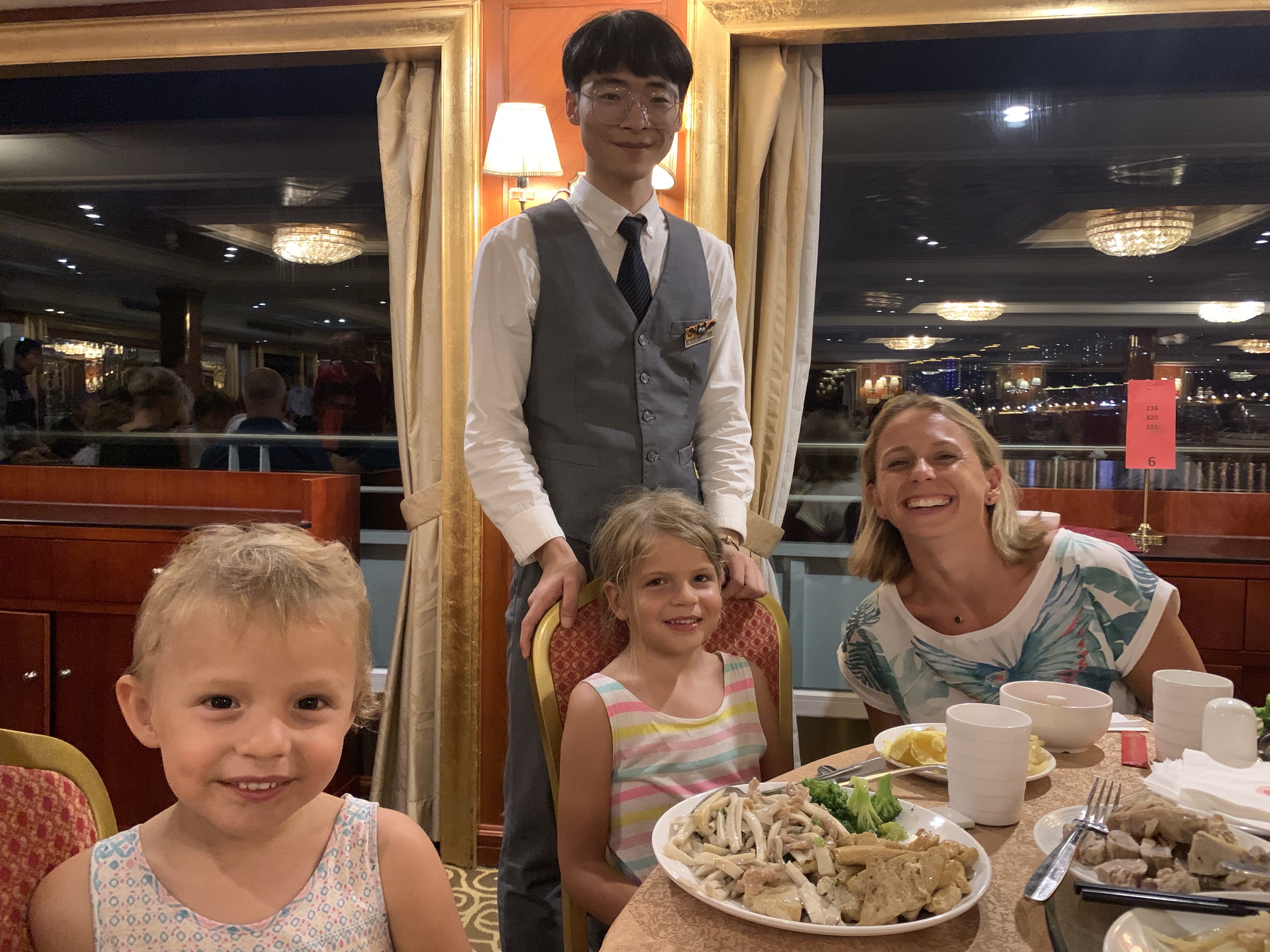
It was a welcome shift in pace to the Chinese karaoke numbers presented by our fellow passengers and was praised by Sid, our brilliant guest service assistant who was there to help us with anything we needed.

Sid with us in the dining room, dinner on board President 6.

Meals were served in a dining room with tables allocated, we shared with a family of elderly parents and two middle-aged daughters, they didn’t speak much English but we enjoyed our time with them, trying desperately to follow etiquette with our shared lazy susan and fascinated by their eating habits! By now we were all getting to be pros with our chopsticks.

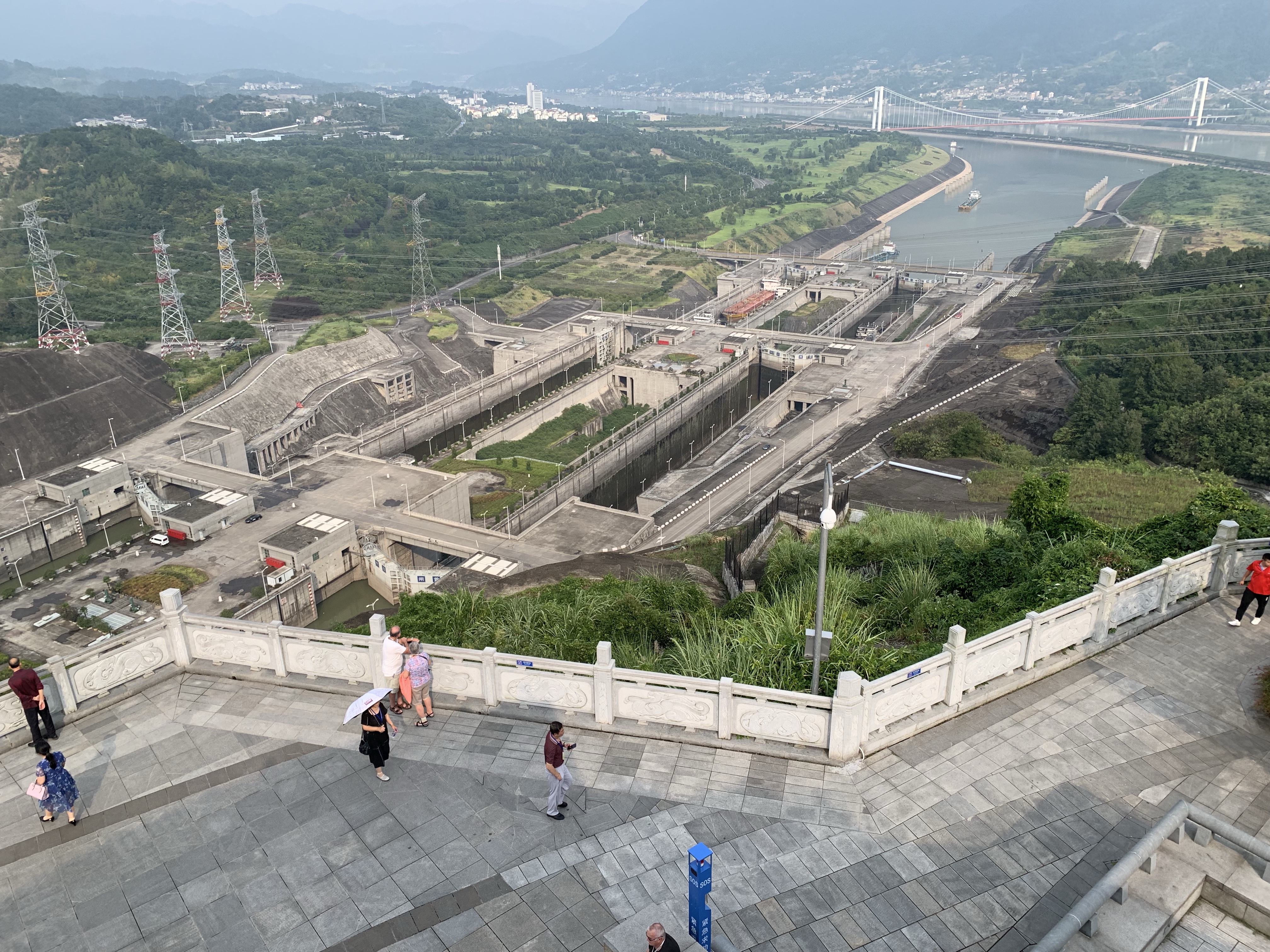
The boat didn’t move at all for the first 24 hours which was a little strange – mainly so we could do some excursions close by. We chose to go to see the Three Gorges Dam, the world’s largest artificial generator of electric power from a renewable source. A feat of modern engineering, the dam creates about 20% of China’s entire GDP. It was interesting to see the ship lifts and how it all works from various viewing platforms. Most fascinating was to appreciate what the effects the dam has had on the local population with water levels changing so much – millions of homes have been lost and families rehoused.

Three Gorges Dam, Sandouping, in Yiling District, Yichang.

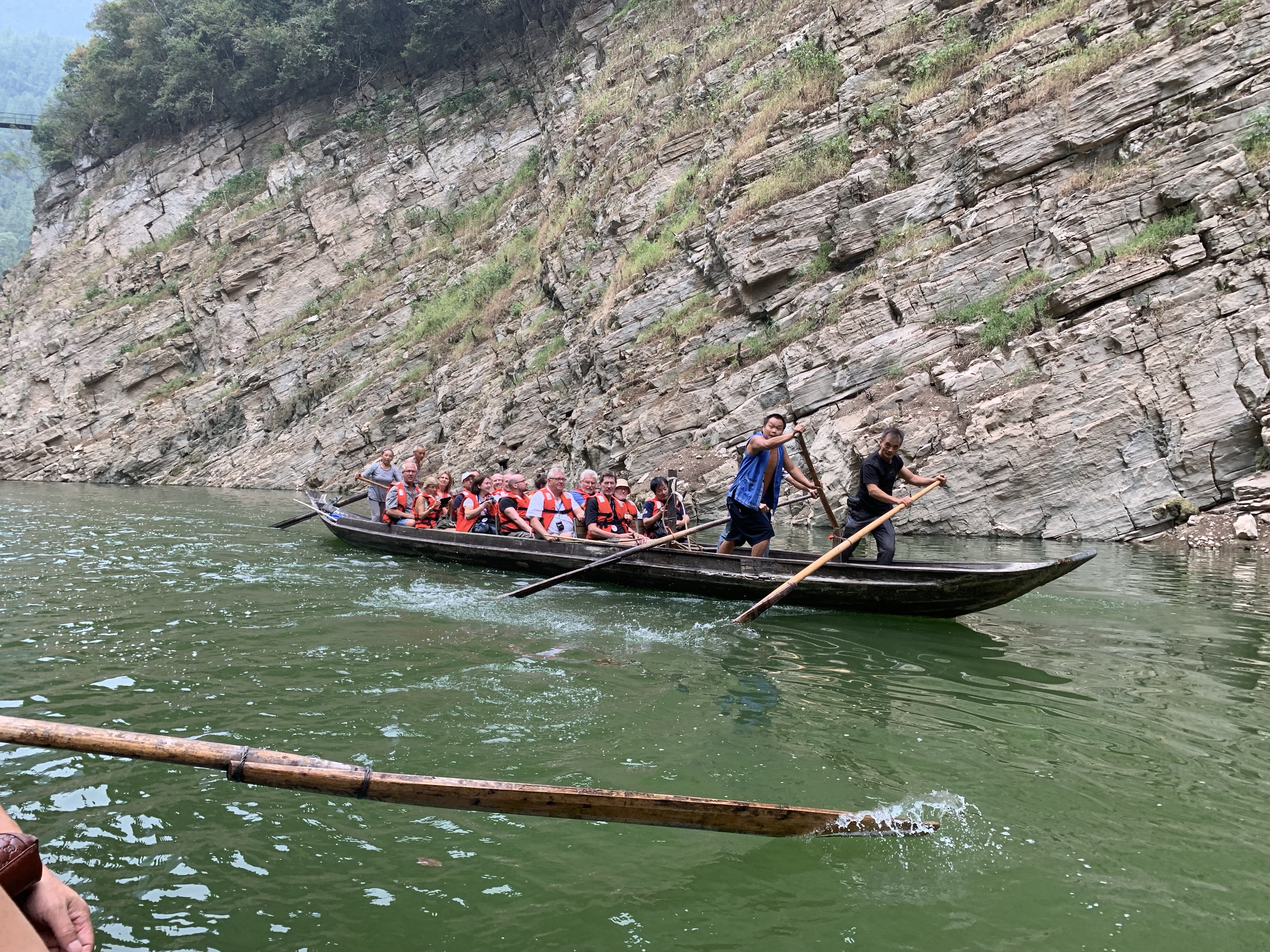
Another excursion we did from the boat was a trip along the Shennong Stream to see the little three gorges (nicknamed the parrot, dragon and elephant due to the shapes of the craggy outcrops!). We saw a coffin perched miles up high which has been there for over a thousand years. Part of the journey was in rowing boats, where six paddlers move about 12 passengers, with two of them jumping out and running along the hillside next to the river and pulling the boat with ropes.

Rowing through the Shennong Stream, tributary of the Yangtze River.

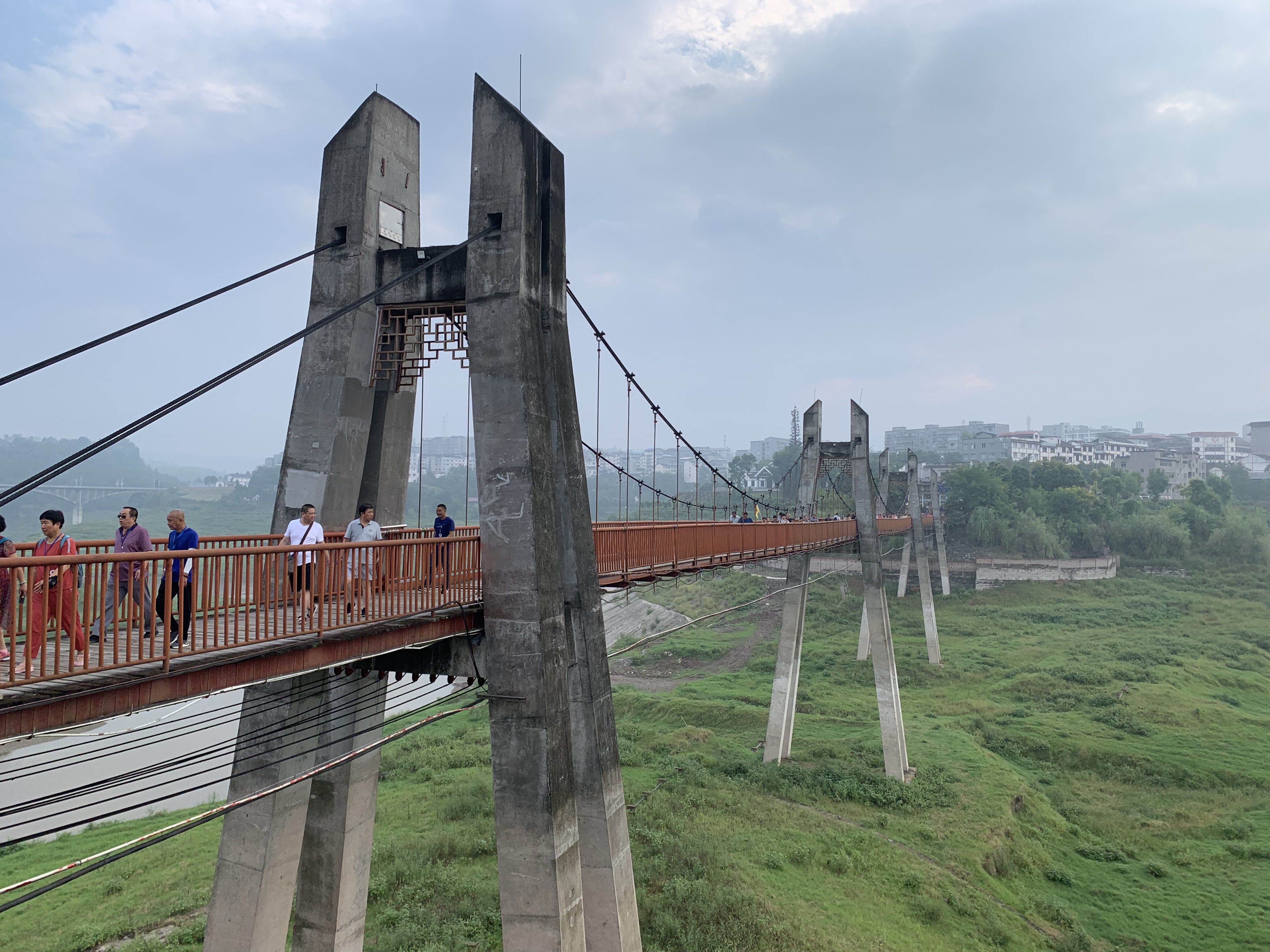
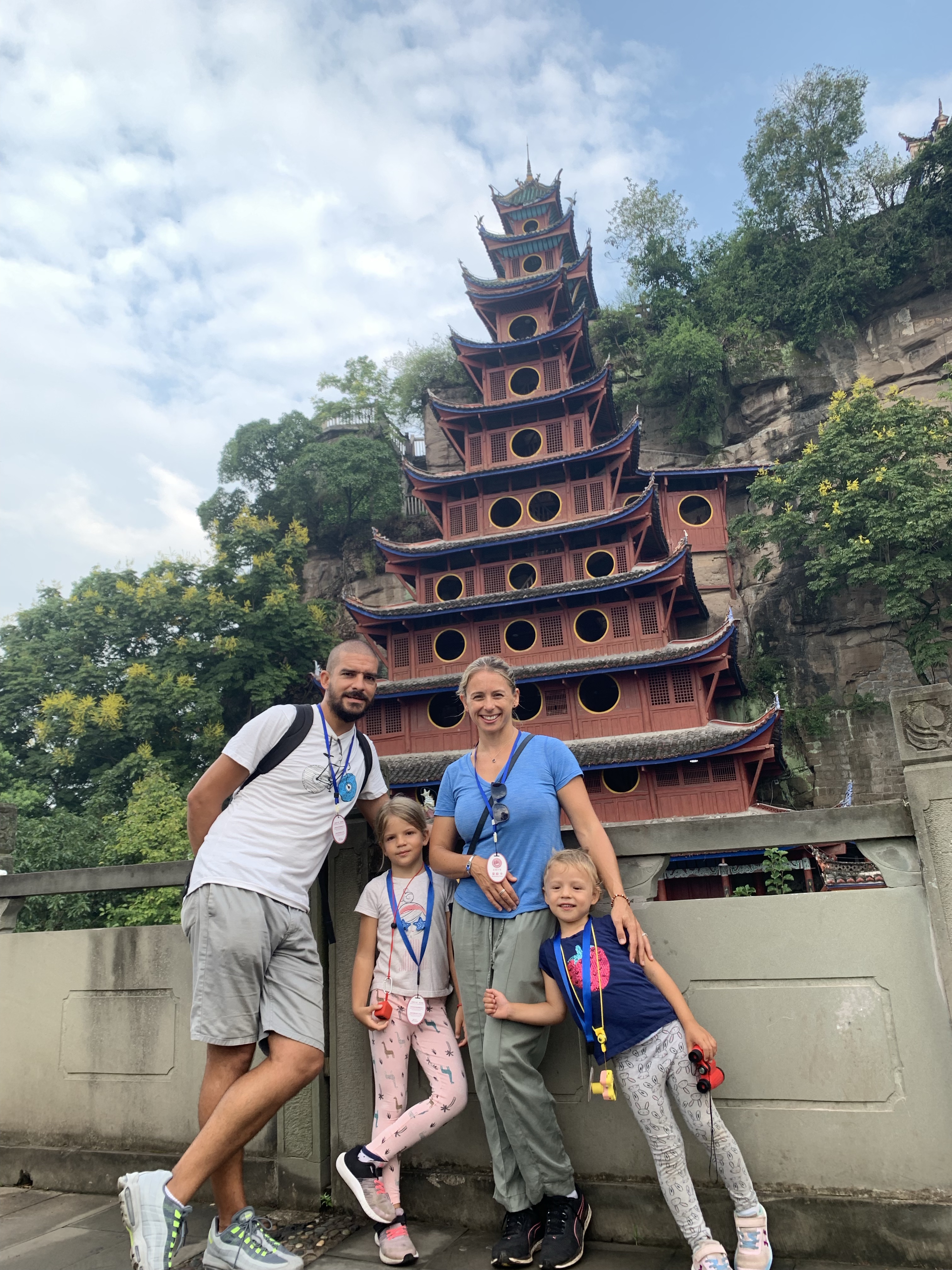
On the third morning we walked to the Shibao Pagoda, a dramatic sight on ten floors on a high plot of land, reached by a wobbly bridge known as the drunk bridge! To walk over the Aihe bridge inside the accompanying emperor’s palace with your partner in no more than 10 steps will apparently make all your wishes come true.

Drunk bridge, towards Shibao Pagoda, along the bank of the Yangtze River, Zhong County, Chongqing. Right: in front of the Shibao Pagoda.
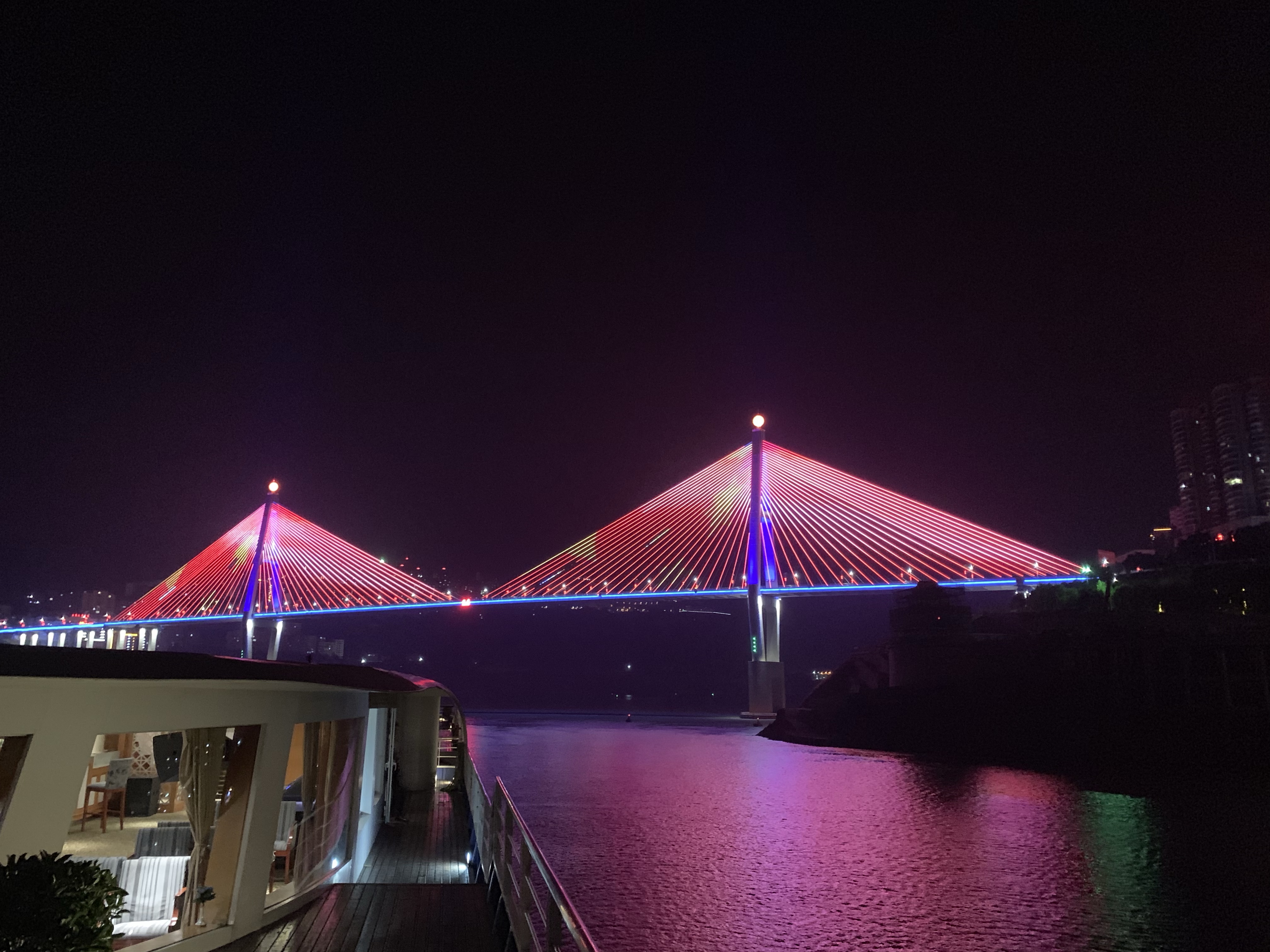
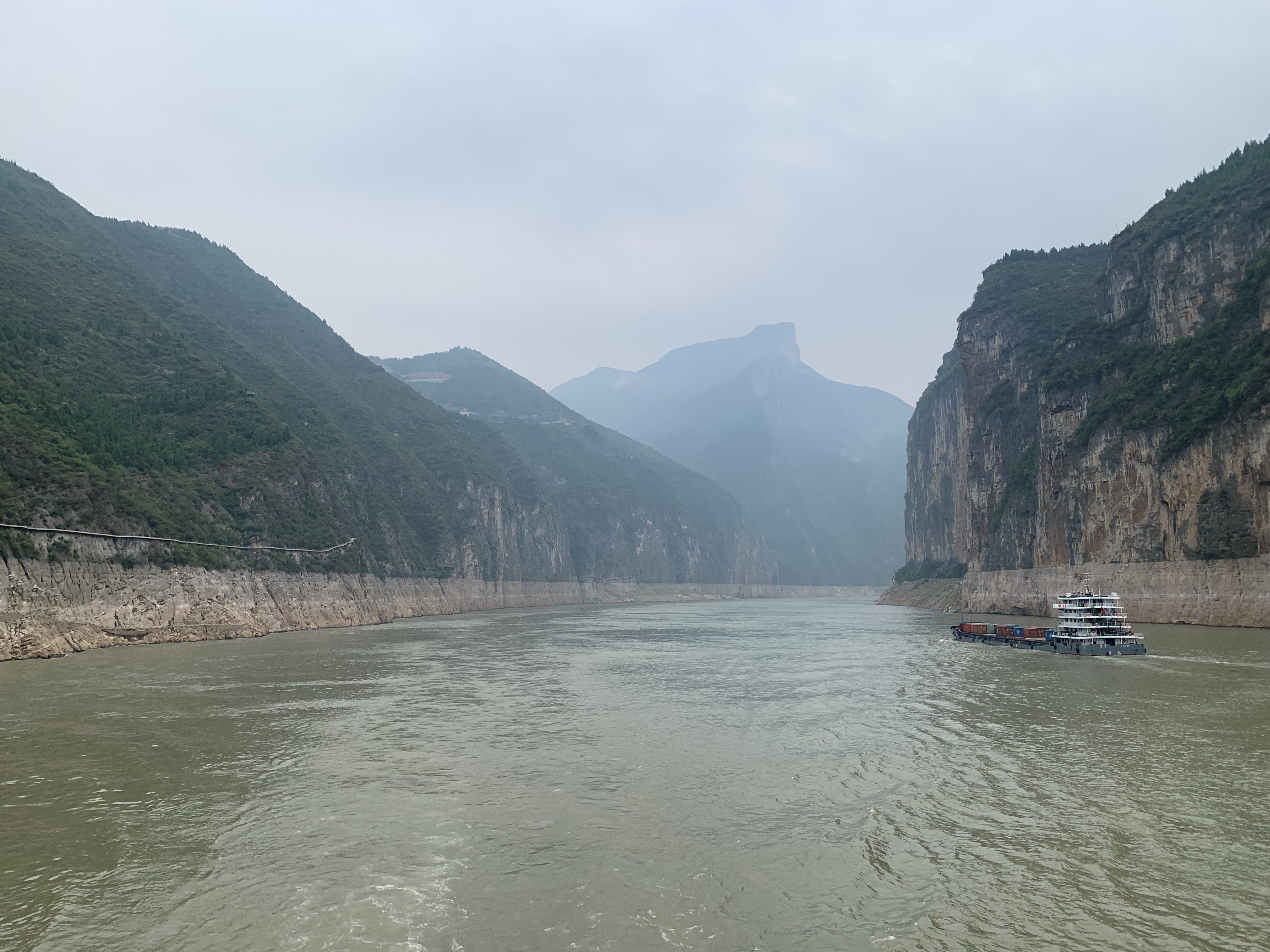
The Yangtze is the longest river in China and third-longest in the world, we only went around 200km out of its 6300km, where the scenery is it its most spectacular. Watching the Wu, Qutang and Xiling Gorges mistily appear alongside us by day and passing under countless lit up enormous bridges by nightfall: to travel down the Yangtze was truly a magical experience at times, and the cruise memorable for many reasons!
Yangtze River by night.
Yangtze River by day.

Kicking off in Shanghai, the Magic City

All the guidebooks say you don’t need that long in Shanghai, check out the Bund and grab a cocktail at a pricey hotel rooftop bar and you are done. We could probably have stayed for a week, despite not being able to enjoy a rooftop bar drink with the children in tow.

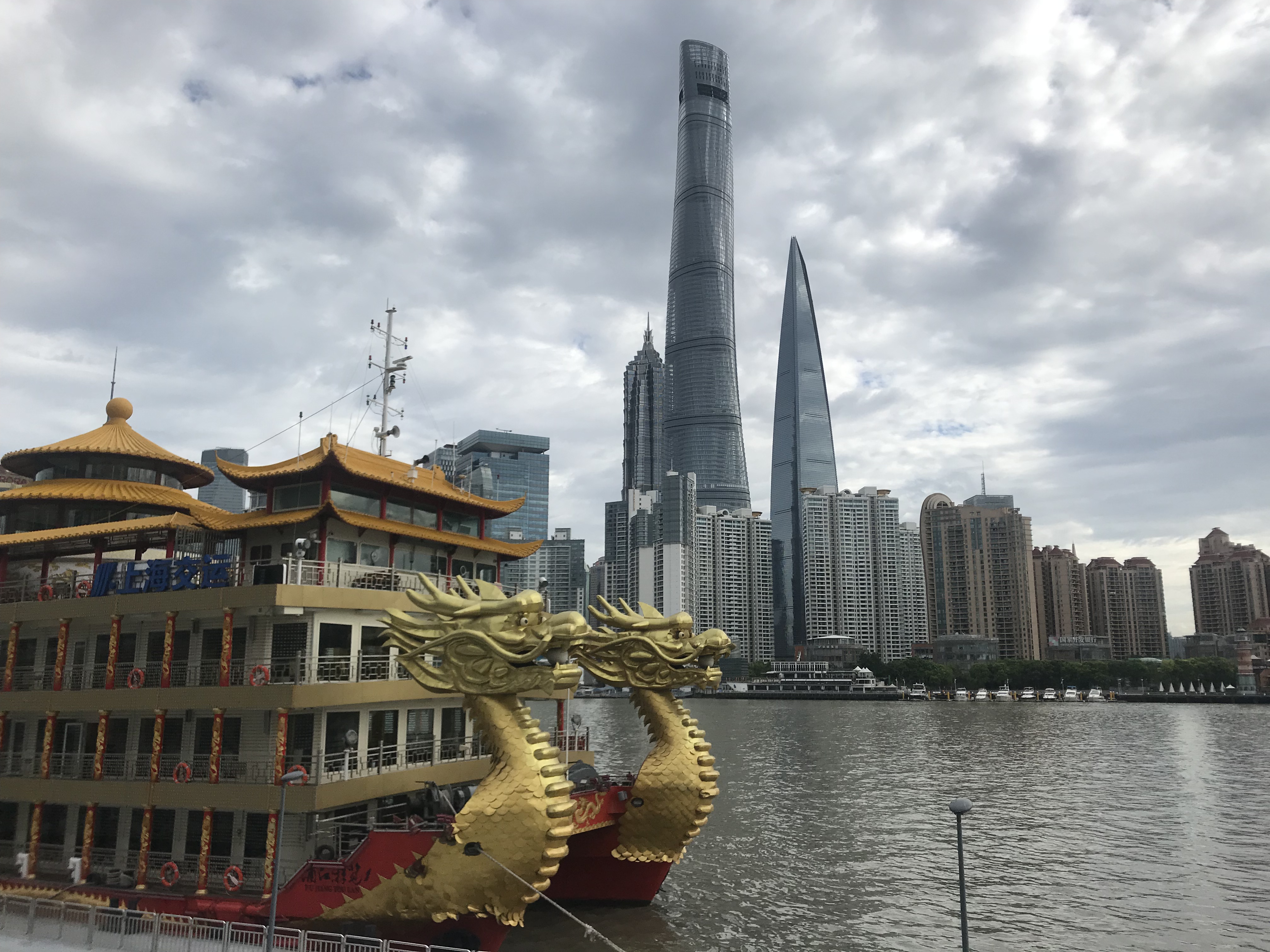
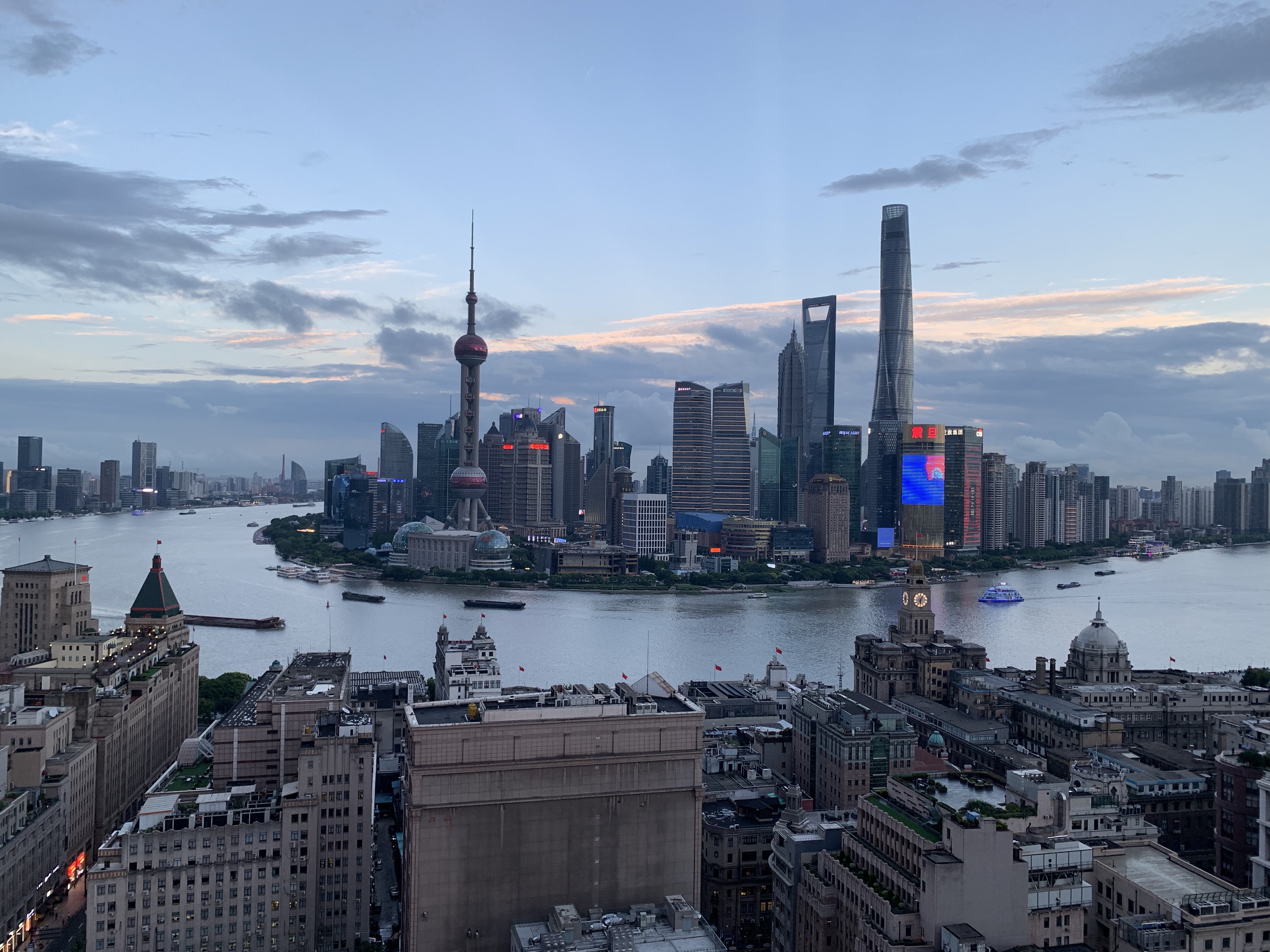
The Bund is the waterfront area along the Huangpu River, Shanghai.

We landed early in the morning after a too short night flight from Phnom Penh. Blearily trying to keep our eyes open during the drive from the airport across a still-dark city, it was fascinating to see the sheer volume of smart housing stretching as far as the eye could see.

Delighted we could check in at 7.30am (we stayed pretty centrally at the SSAW Boutique Hotel), we made a beeline for our room and napped for three hours.

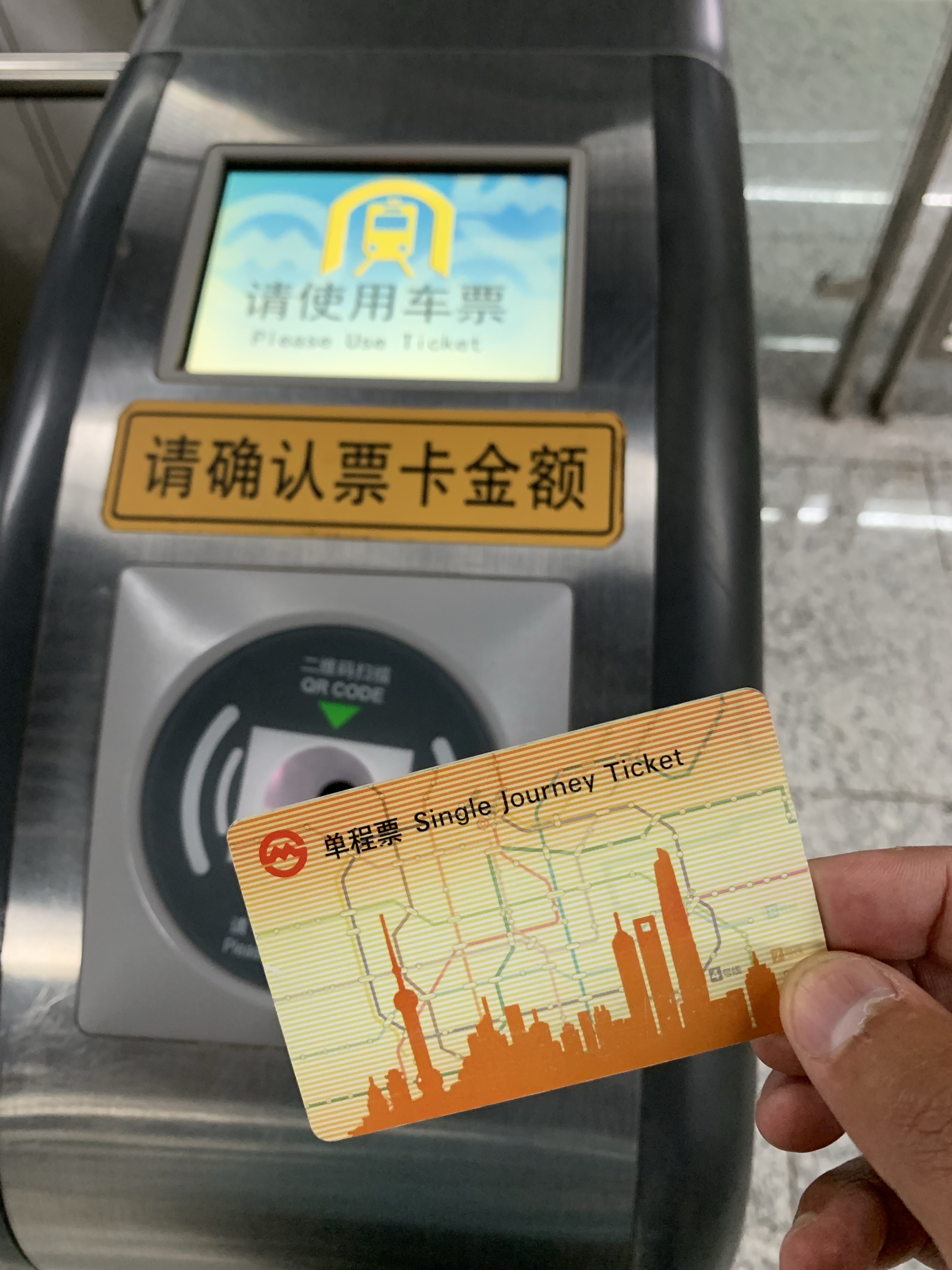
A friend / colleague from Dubai, Hisham Youssef has been living in Shanghai for five years, so I had got in touch to see if he was free to meet up while we were in town. An architect and professor, I knew he would be a brilliant person to set the city (or indeed country) in context for us, and indeed he was. Meeting us at our hotel at 11, we went straight to the metro (the worlds biggest by route length, with over 10 million daily users. Very complicated to buy a ticket!) and for a stroll and delicious traditional lunch in the French Concession neighbourhood.

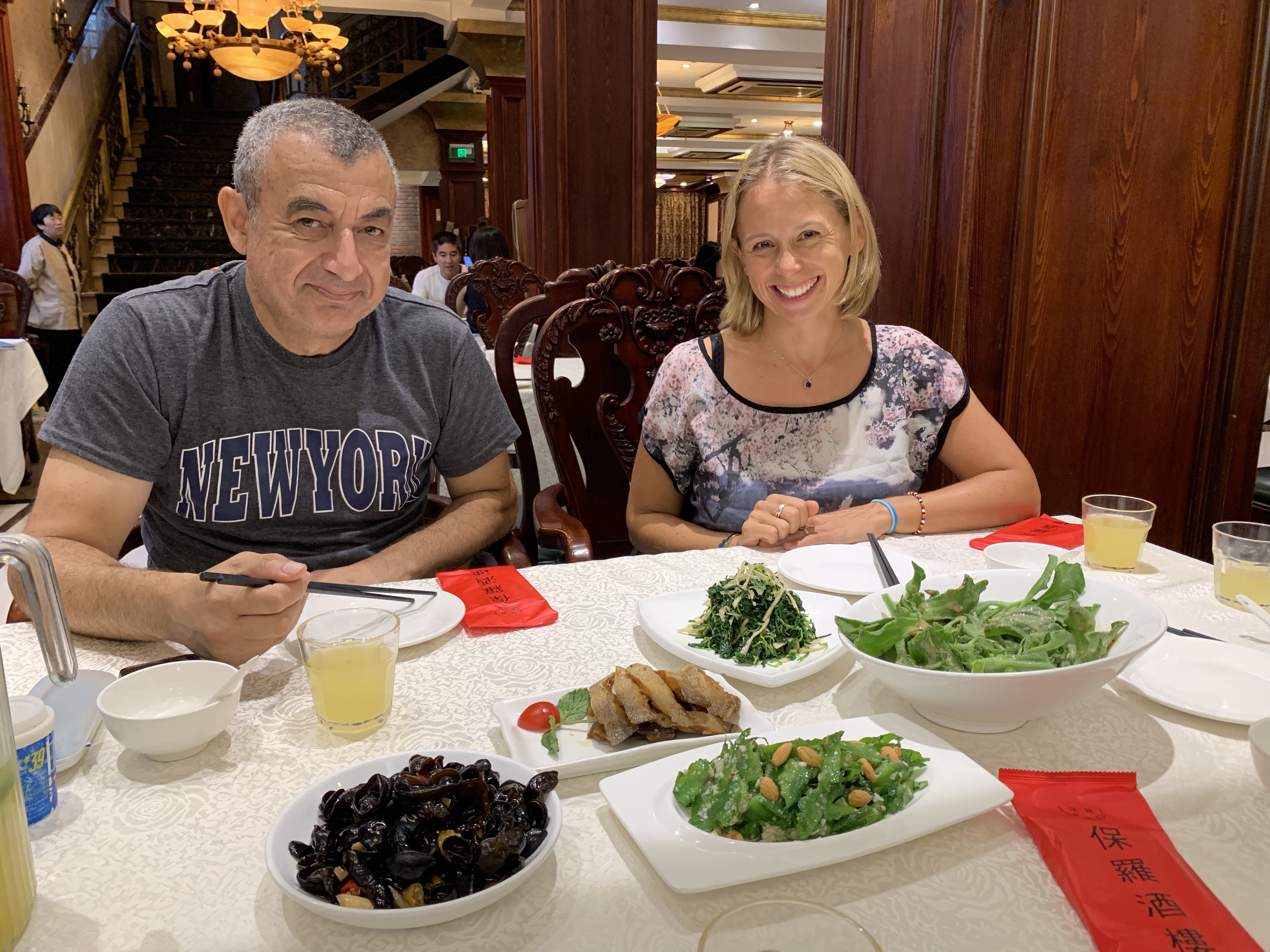
First Chinese lunch with Hisham Youssef, Shanghai.

Then it was time for a bit of an art fix and to learn about the new art districts in town. With limited time, we decided to visit West Bund and have a walk along the river. Originally a site of manufacturing, it began to be transformed for Shanghai Expo 2010 and is close to fulfilling its ambition to be Asia’s largest art zone.

The area already hosts a number of global events and is home to leading galleries. Many were hanging shows when we visited, but we enjoyed seeing the vast spaces of the Tanks as well as a group show ‘Desert Garden’ at Ota Fine Arts, Chen Wei at ShanghART and Stuart Middleton animations at Carlos/Ishikawa in Qiao Space.

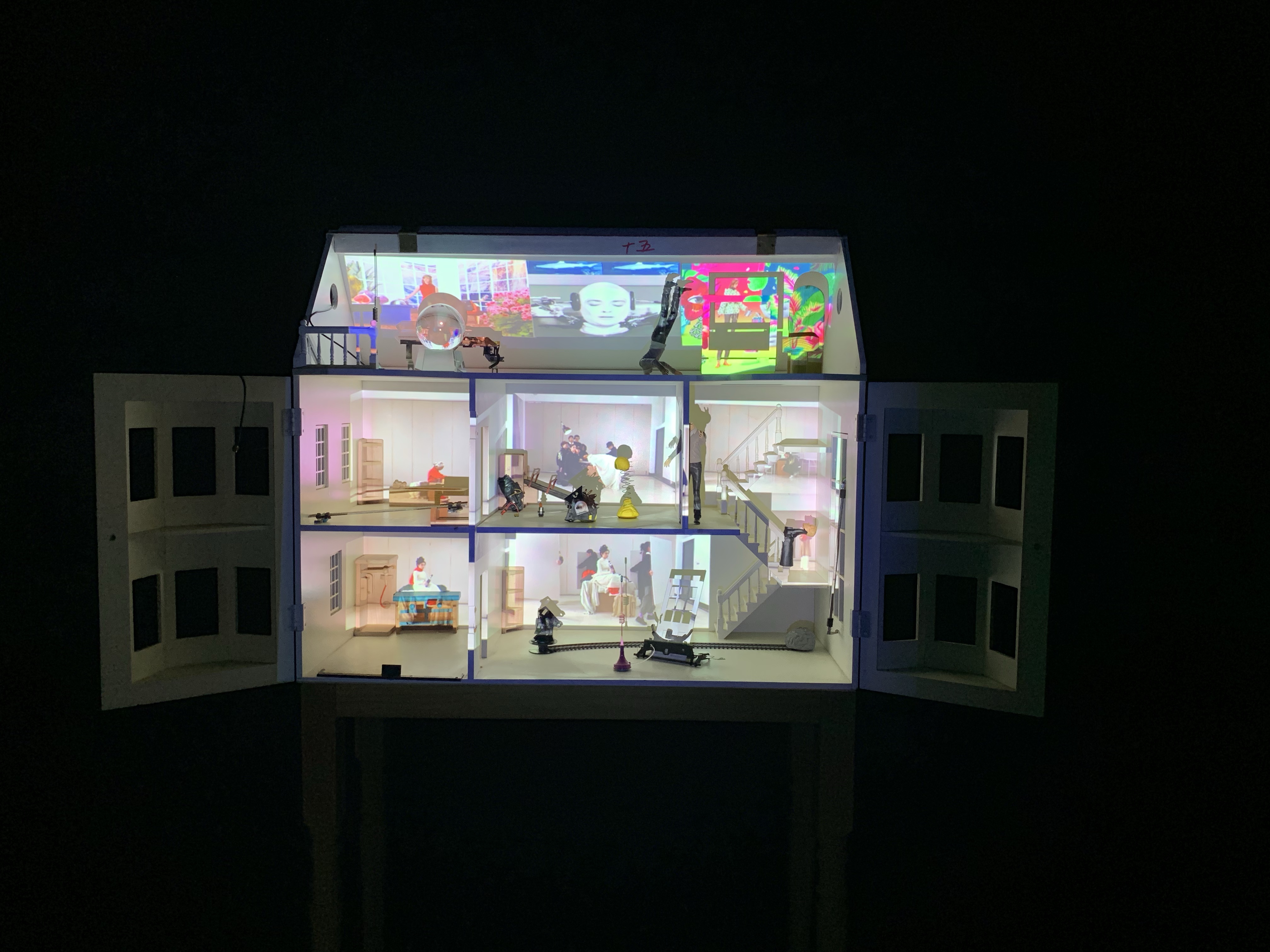
The children were mesmerised by the dolls houses and paintings in Xu Bacheng’s solo exhibition ‘Island of Immortality’ at Arario Gallery.

Island of Immortality, Xu Bacheng, Arario Gallery, Shanghai.

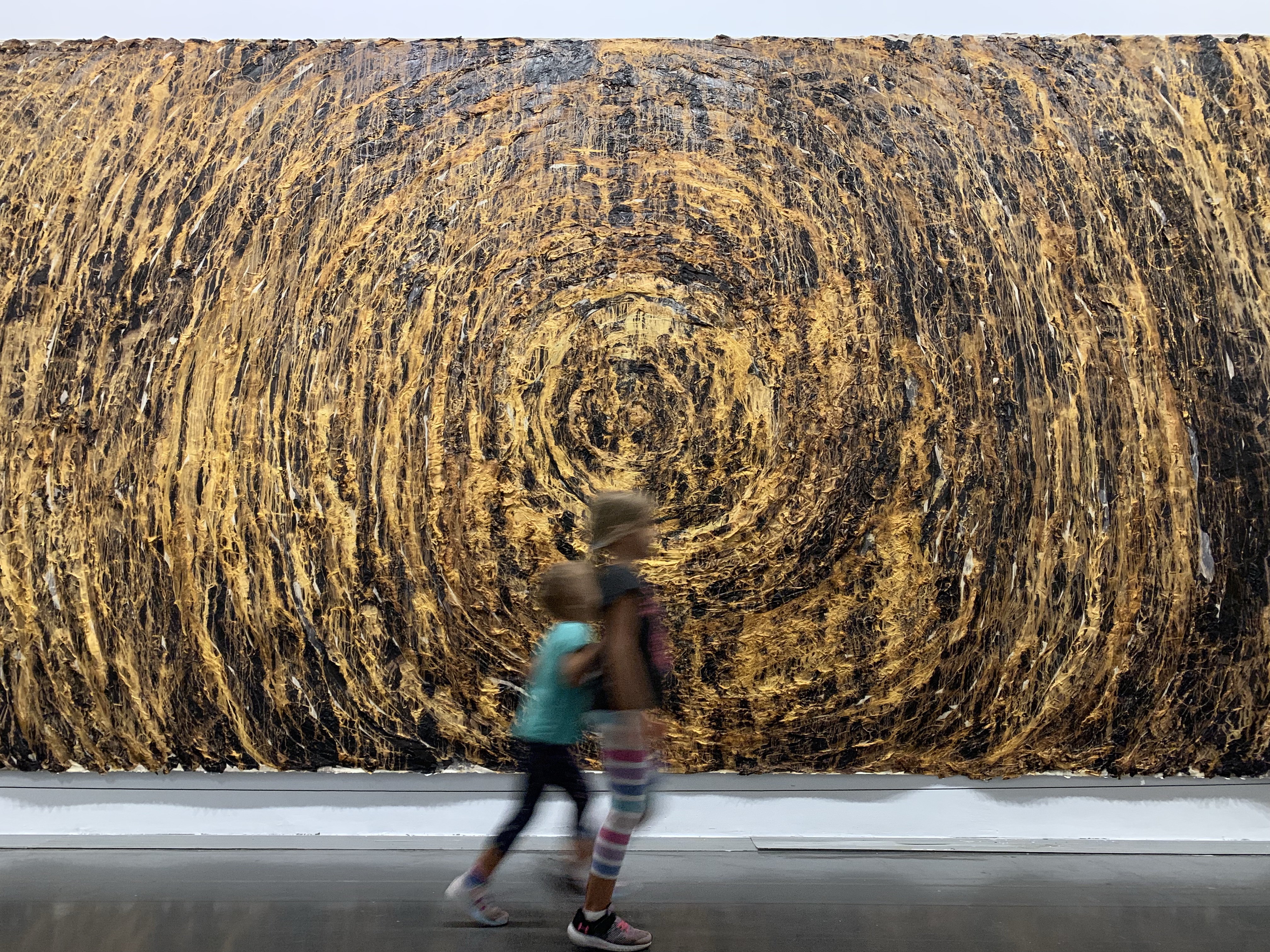
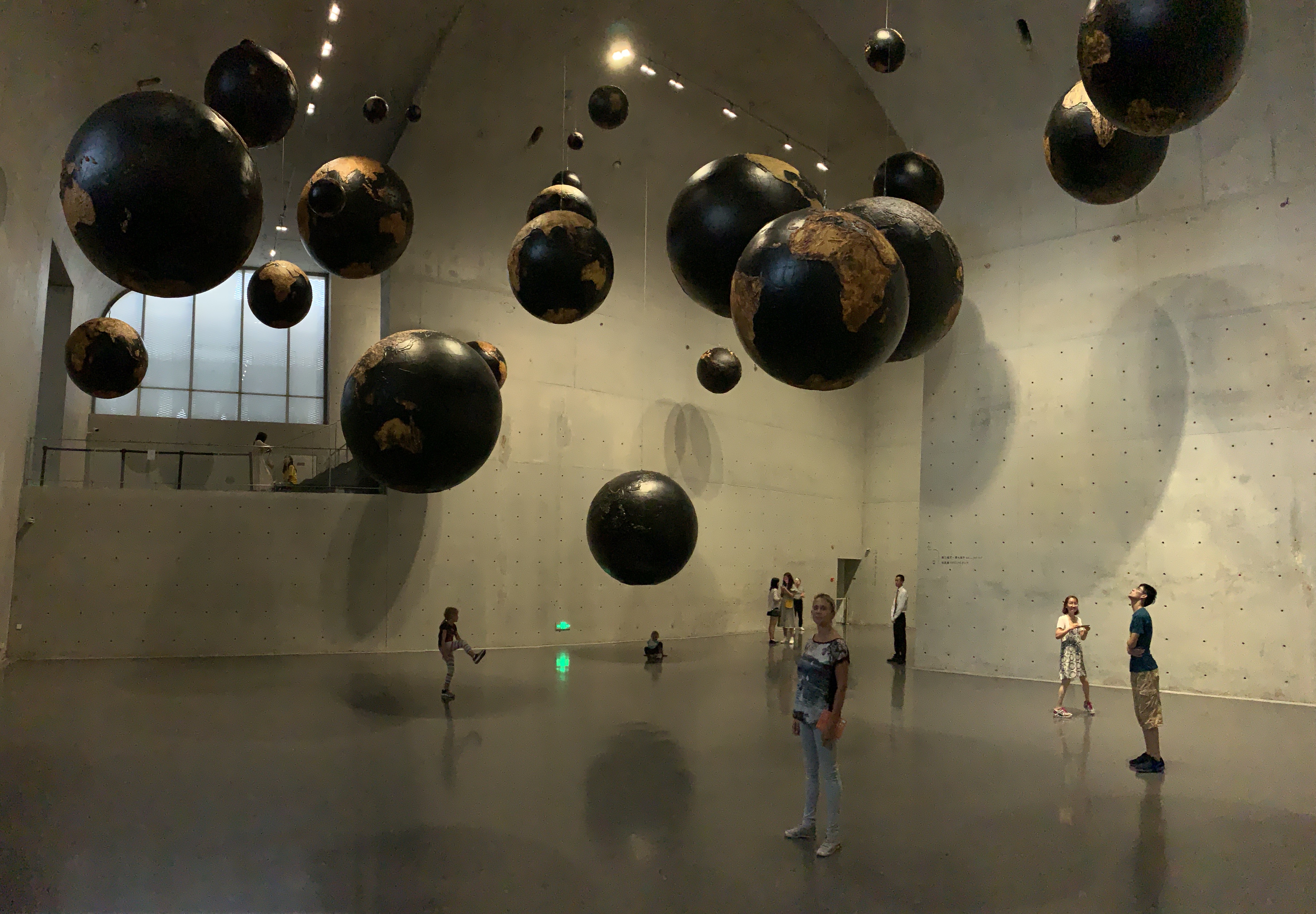
The highlight of the day was our final stop at the Long Museum to see the fantastic exhibition ‘Los Angeles’ by Mark Bradford.

Mark Bradford, Long Museum, Shanghai

The scale of his paintings, sculptures and public works matched the museums vast cavernous spaces, the final room a series of suspended black and gold globes of different sizes hung at different heights.

Mark Bradford, Long Museum, Shanghai.

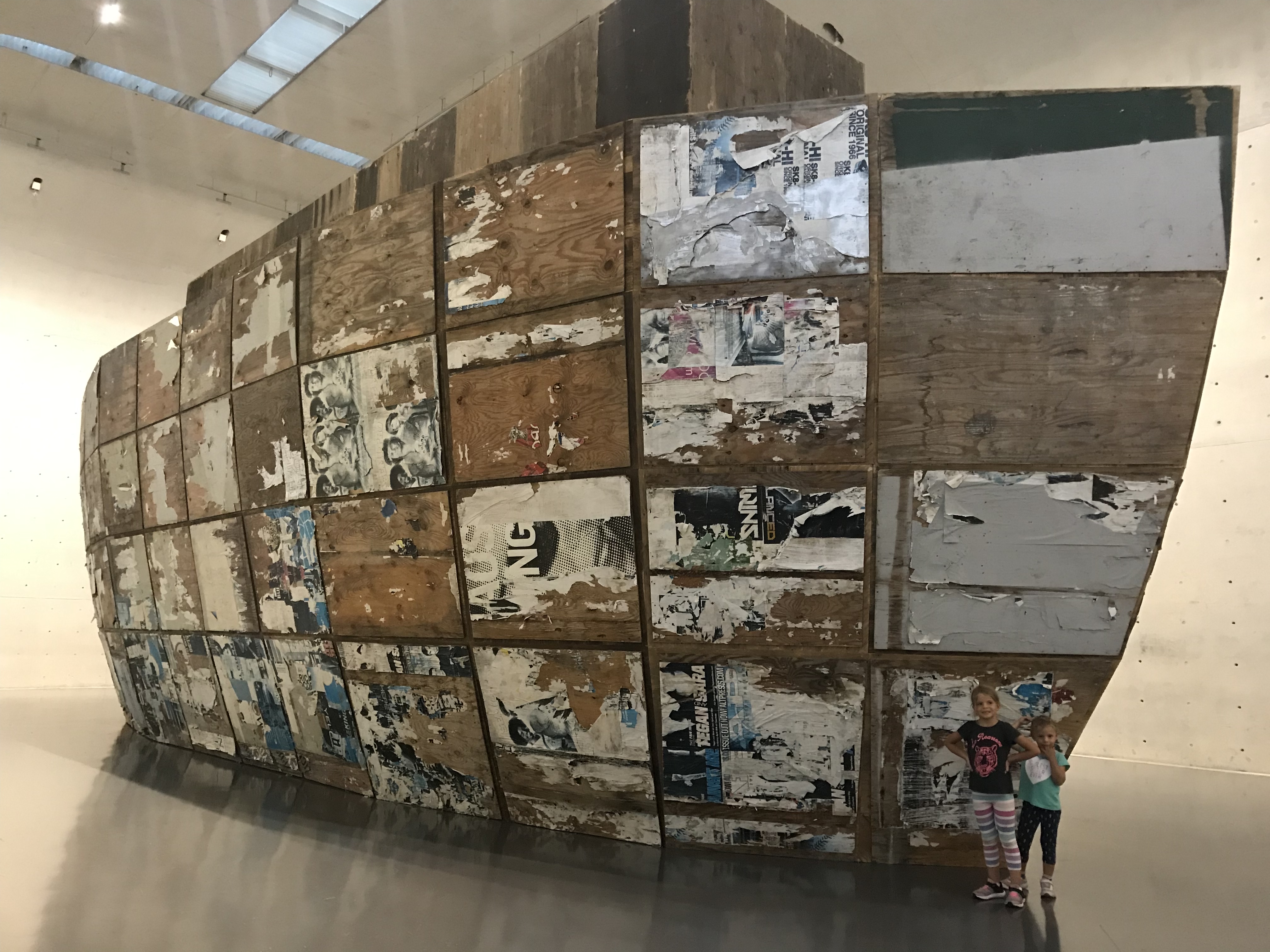
His subject matter of mapping and using texts from popular culture felt very relevant to us.

Mark Bradford, Mithra, 2008, on display at the Long Museum, Shanghai made by wooden panels salvaged in New Orleans following the devastation of Hurricane Katrina.

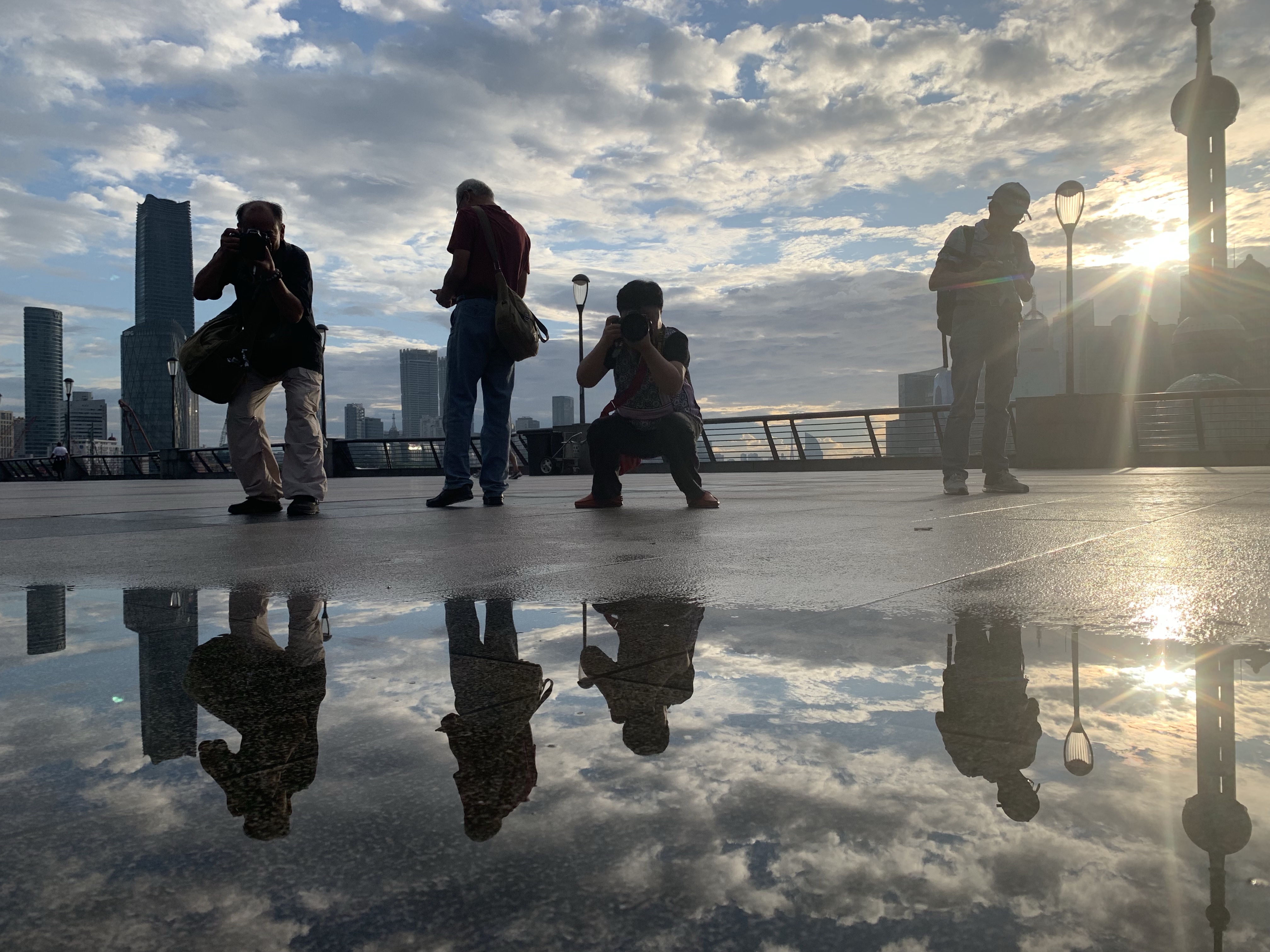
Our second day was kicked off by a double run for Tom and I – the best way for us to experience the Bund, at sunrise (Tom creating quite a spectacle taking photographs of kite flyers!).

Sunrise run along the Bund, Shanghai.

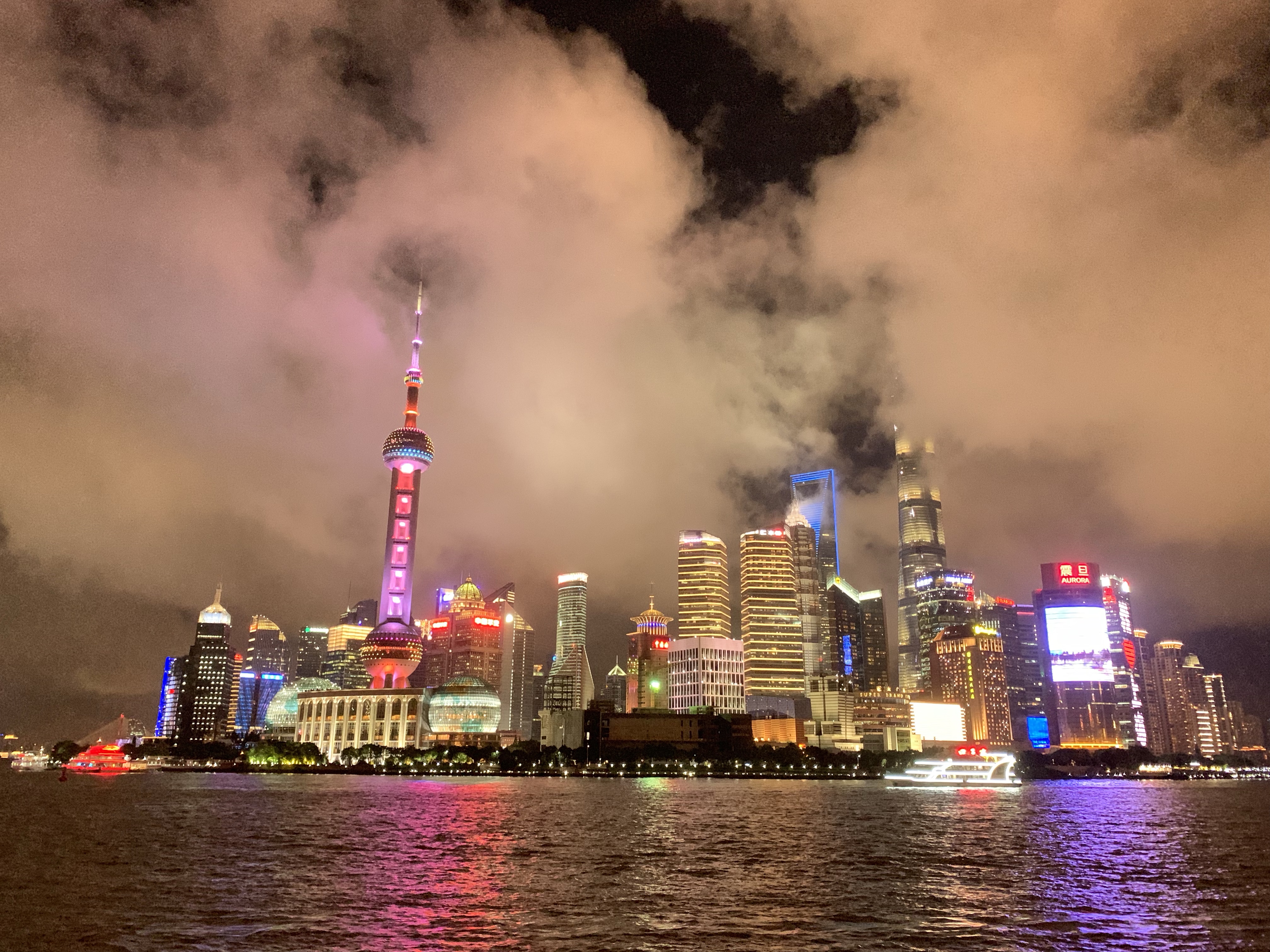
We did return after dinner to show the girls the lights – it was packed, and we ended up taking a lot of pictures for other people! A note to say that unfortunately Shanghai was a cloudy, drizzly city for most of the time we were there, so we decided not to fork out on going to the top of any towers, it didn’t seem worth it. There was something incredible about seeing so many towers crawling upwards above the clouds.

Night time view from the Bund, Shanghai.

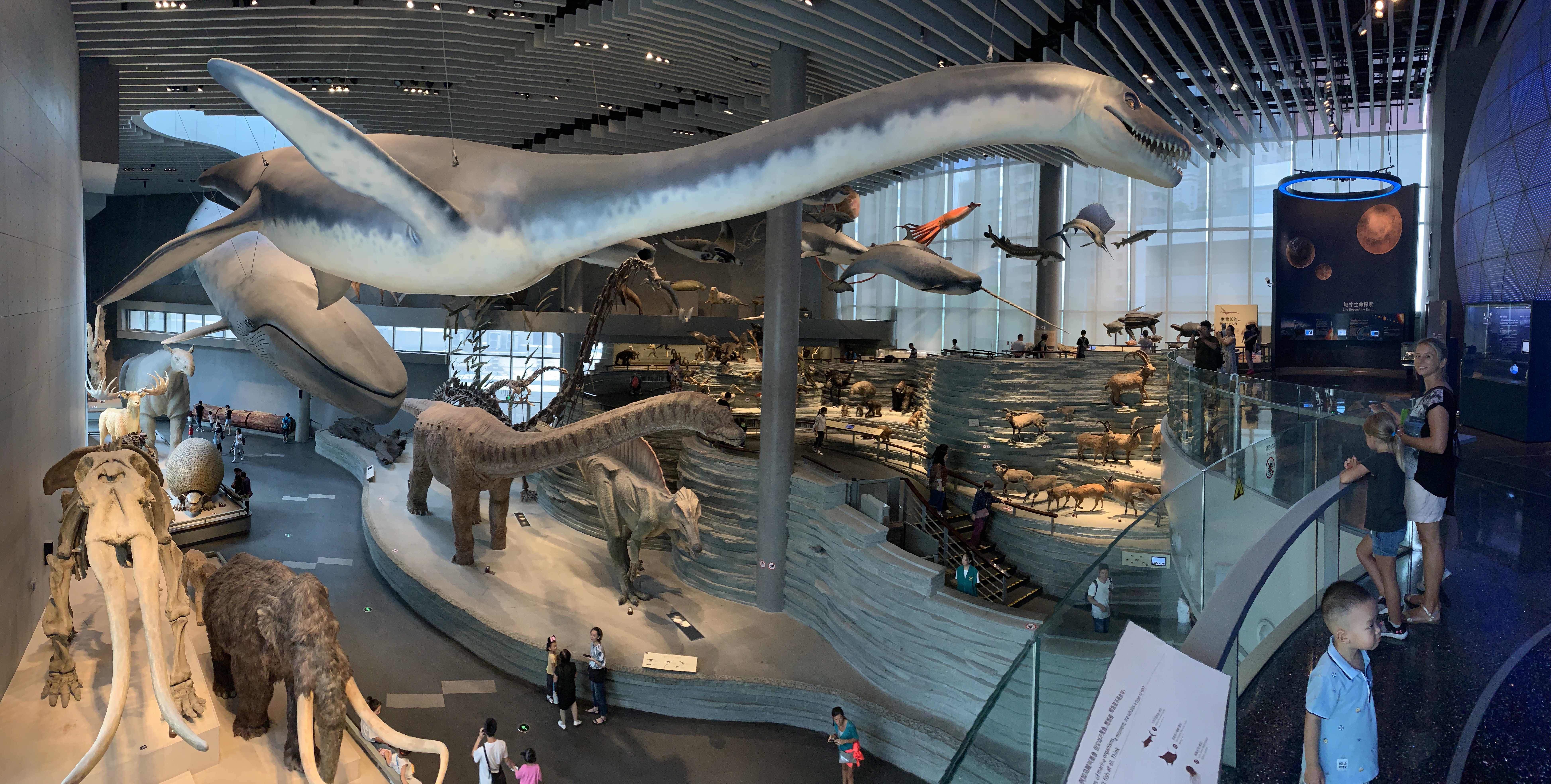
To fit in some home schooling, we decided to go to Shanghai’s Natural History Museum and spent quite a few enjoyable hours there. There is a lot to see, attention is immediately focussed on the many taxidermised animals and dinosaur models, with a variety of marine creatures hung dramatically from the ceiling as well as a large interactive African Savannah animation show on the lower floors.

Natural History Museum, Shanghai.

We enjoyed picking our favourites in a photography exhibition. The building is architecturally interesting, on five levels going increasingly underground, flanked by a 30m-high glass atrium, with a conical cell living wall, with waterfalls, rocks and plants embedded within it.

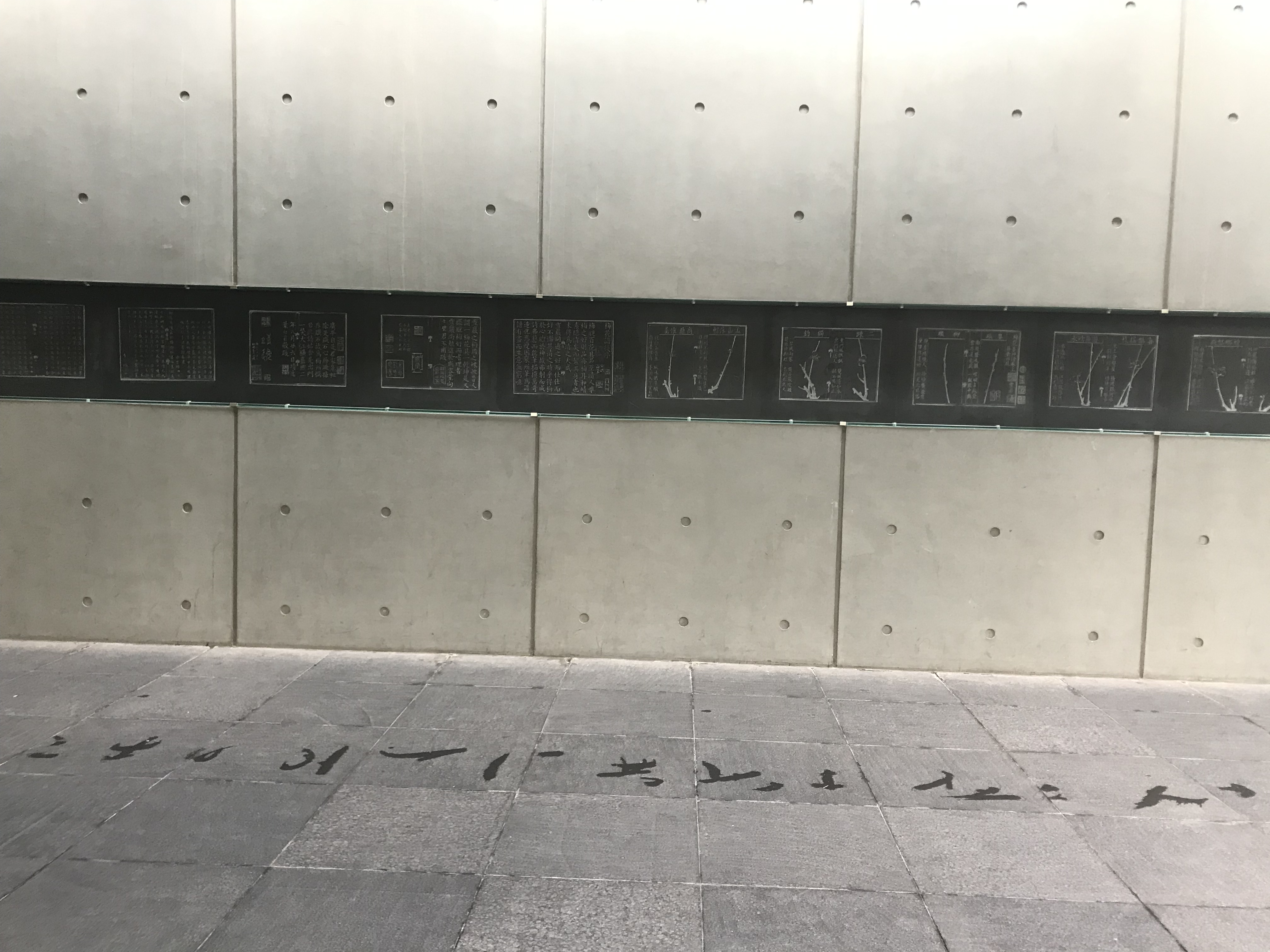
The museum is located alongside the Jing-an sculpture park, which includes nice examples of sculptures by Wim Delvoye and others, we felt we may have been privy to some spontaneous performance art as Chinese characters kept on appearing painted with water by a lady who could be a cleaner – who knows?

Street art in Jing-an sculpture park, Shanghai.

We treated ourselves to a dinner at Canton Disco in the new Edition hotel, the menu generous portions of Chinese stables, served up in a funky designed space blaring with 80s music classics. A fun time was had, although we did have to get up at 4am to catch a flight!

View from the rooftop of the Edition hotel, Shanghai.

Made in China

For some reason one Christmas years ago, I bought Tom a hard copy of the Lonely Planet guide to China, and he also bought one for me. It was a country that was fascinating for both of us, so we knew we needed to include it on our world tour.

‘Made in China’ is a phrase so familiar in the western world it is almost laughable – is anything ever made anywhere else?

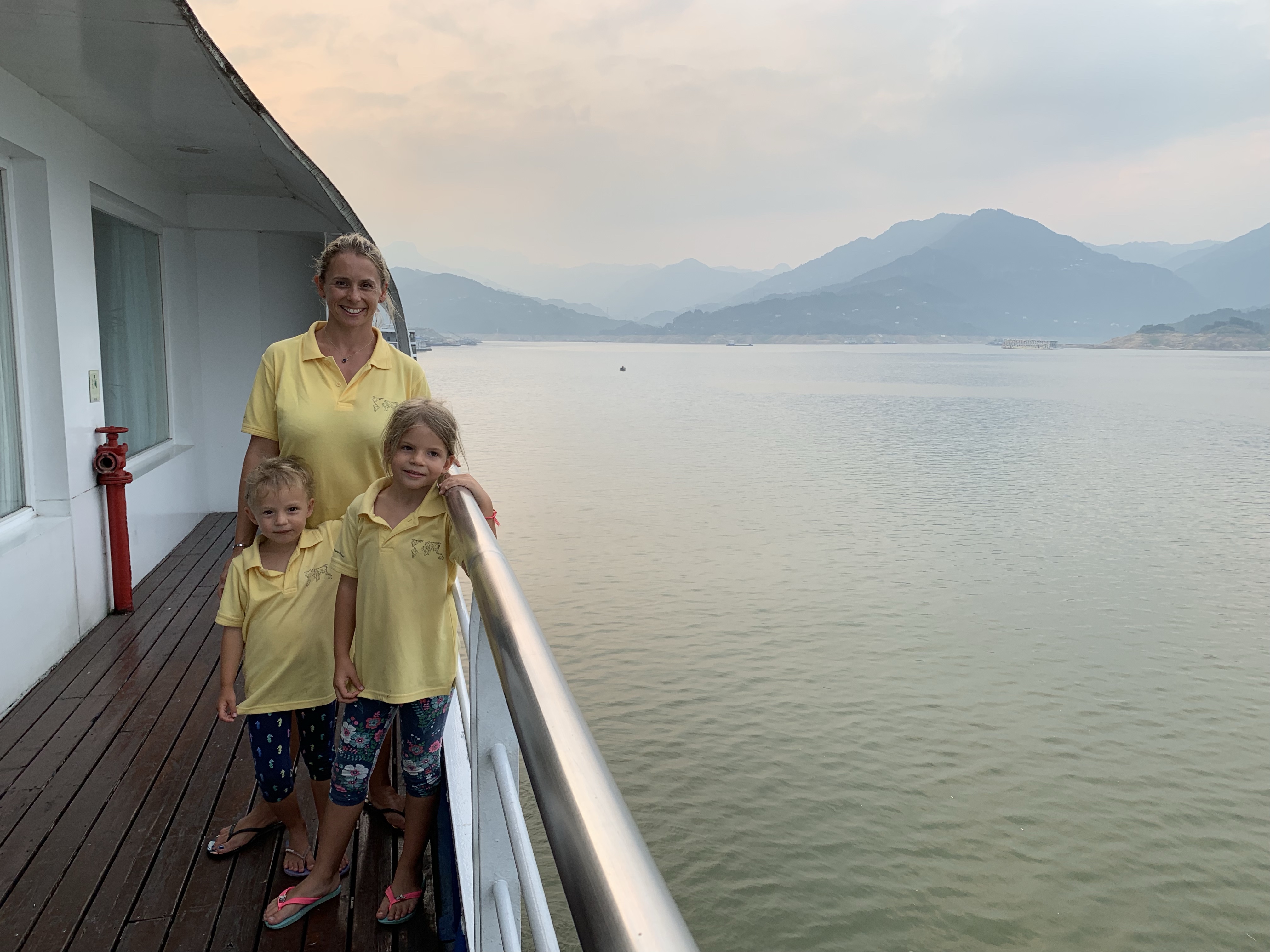
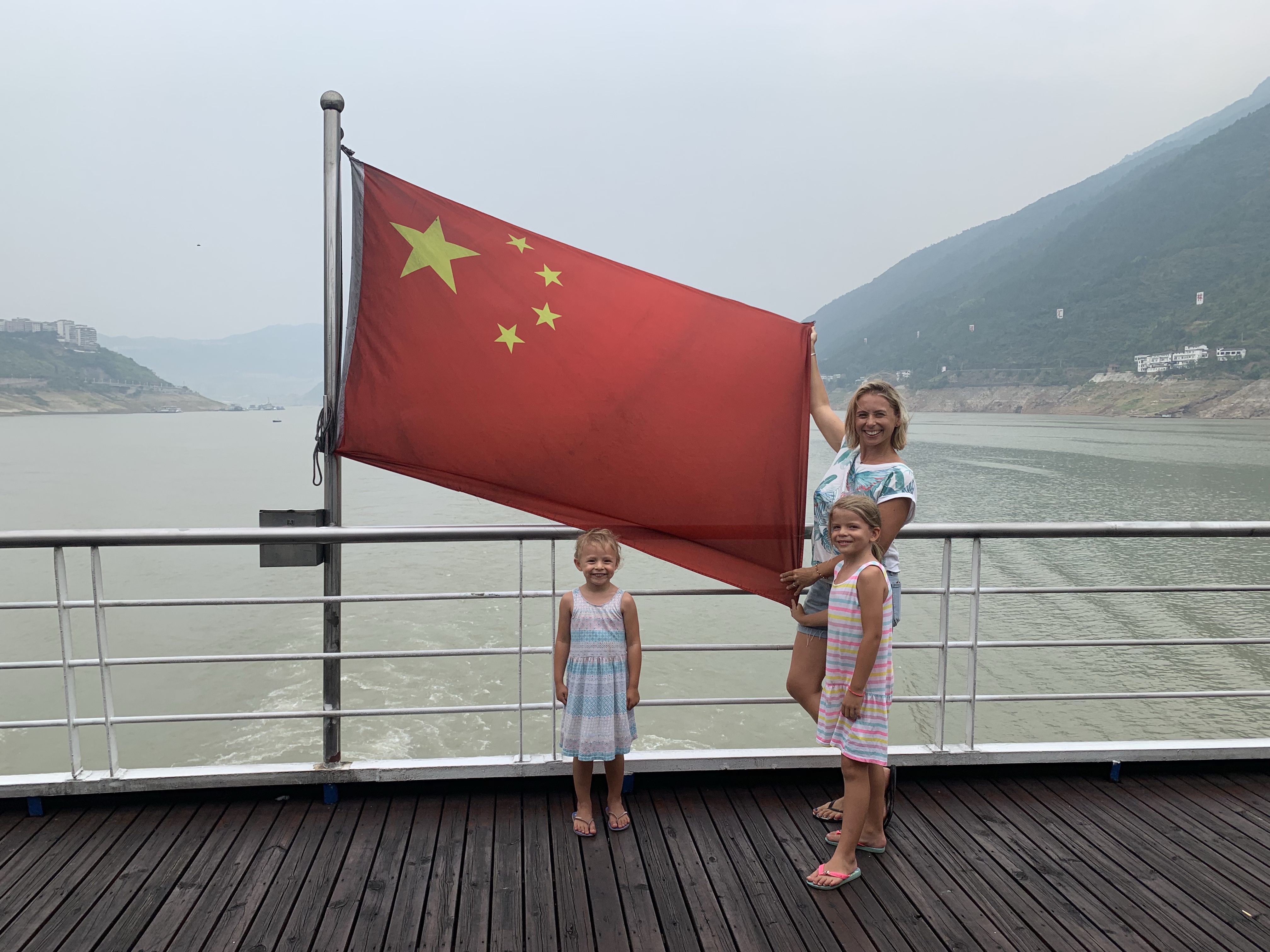
On board the President 6, cruising down the Yangtze River from Yichang to Chongqing, 6-9 September 2019.

China is all about superlatives, it’s a mad numbers game. The sheer size of the country and its population are hard to get your head around. We finished our Yangtze river cruise at Chongqing, a city we hadn’t heard of before. We then read in the guide book it has a population of 30.17 million (and counting). That’s half of the whole of the UK. 160 cities in China have a population count of over one million. Would two weeks be enough time to get to grips with this vast, mega landmass? To visit its cities but also its countryside and learn about both its ultra-modernity and see some of the most important mementoes from antiquity?

In the planning stages we decided that we needed to ensure we had pick-ups at airports and train stations during our time in China, hearing how little English there was.

A cap pick up organised by Riley Guo, China Discovery.

Thank goodness we did, as it was next to impossible to buy anything without having a Chinese sim with we chat installed (which you couldn’t just do, you had to be referred by someone Chinese). QR codes were used to pay for everything. One way of keeping track of exactly where each of its 1.4 billion population are at any one time. For us, it was a place where our brilliant Revolut card hardly worked, so we went back to basics using cash for nearly everything.

Our itinerary was as follows: Shanghai – 2 days, Yangtze River cruise – 4 days, Cheng-du – 2 days, Xi-an – 2 days, Beijing (including day trip to the Great Wall) – 4 days.

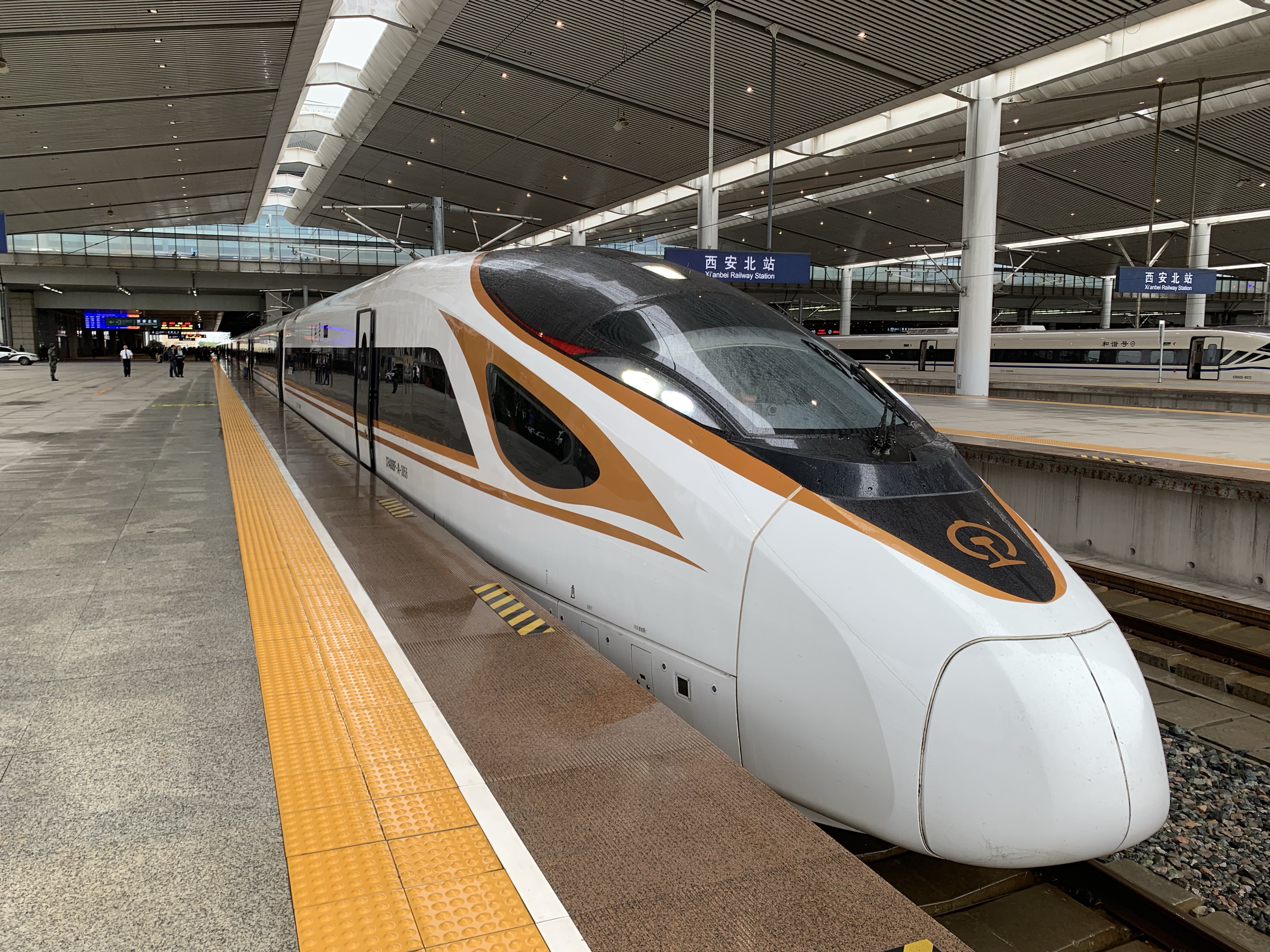
We flew to Yichang for the start of the Yangtze river cruise, but took fast trains between the other cities, which were very efficient and spacious, clocking a top speed of 307km/h.

Train G308, Xi-an to Bejing, 14 September 2019.

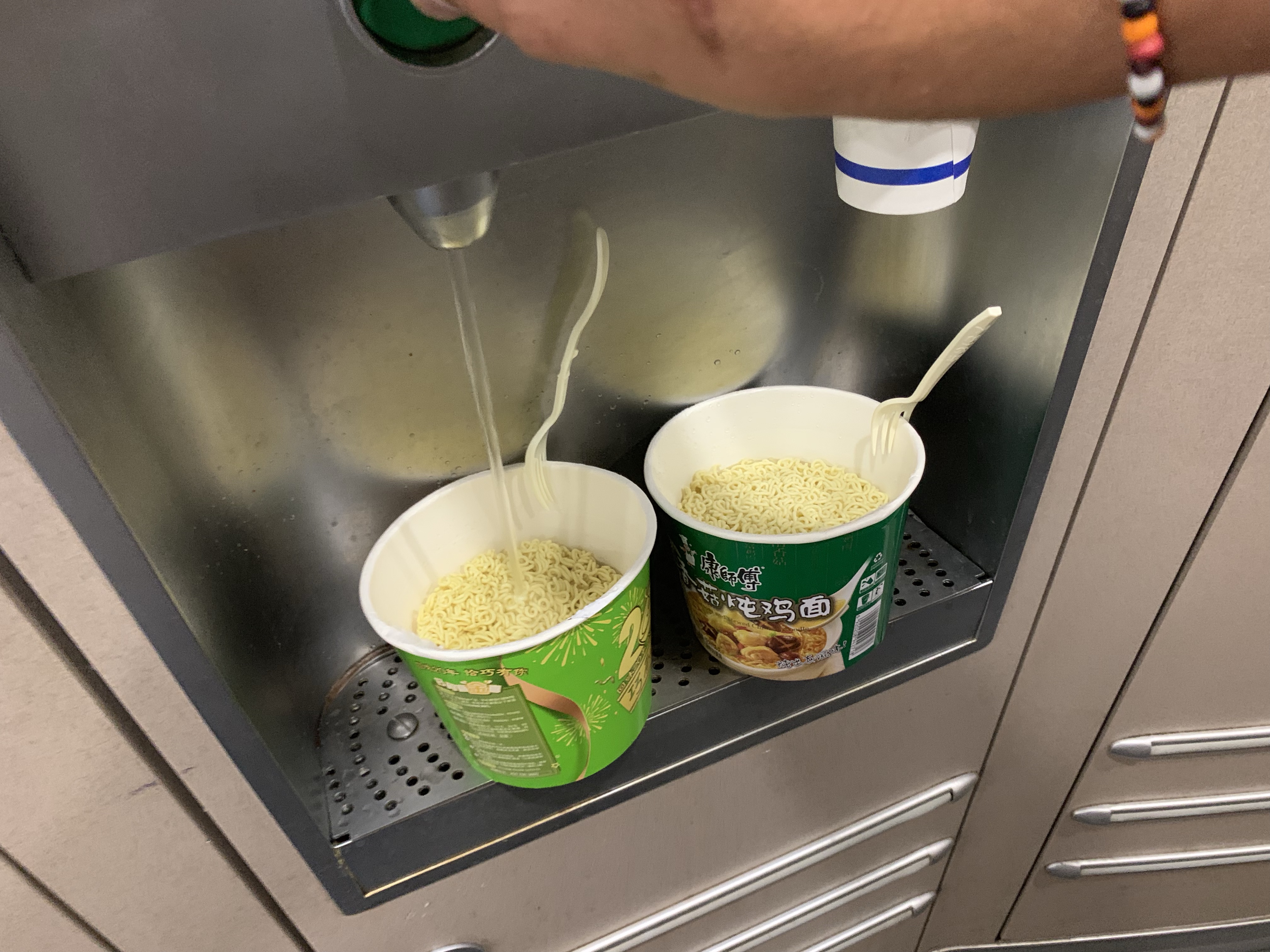
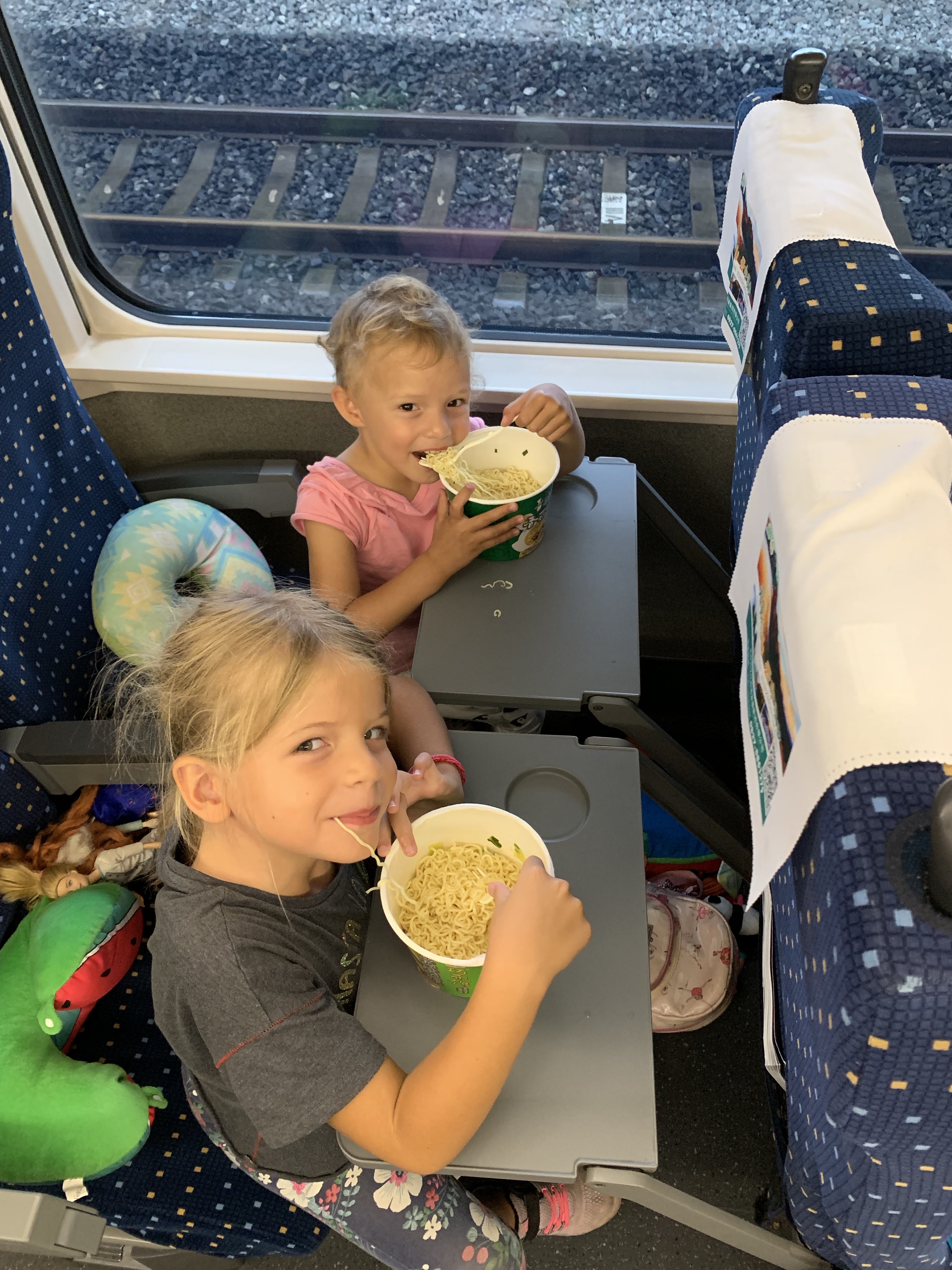
The trains were brand new with hot and cold water on tap – perfect for preparing cup noodles for lunch!

Lunch on the go.

A few days in Cambodia’s capital Phnom Penh

As you would expect from a capital city, Phnom Penh has a stately feel, with numerous wide-open spaces with monuments and memorials. It is not an overwhelming city but quite simple to navigate thanks to the grid structure of streets imposed by the French, with the riverfront and various markets at the heart of things. Evidence of a building boom was clear (especially on Koh Pich or Diamond Island next to the gaudy casino complex Naga World where Tom and I both ran – amused by the Dubai-style apartments cropping up including one called ‘Elite Town’) but didn’t take away from the charm and harmony of the city centre. We were staying in a colonial villa set it a vast garden with a swimming pool, very centrally located, called the Kabiki.

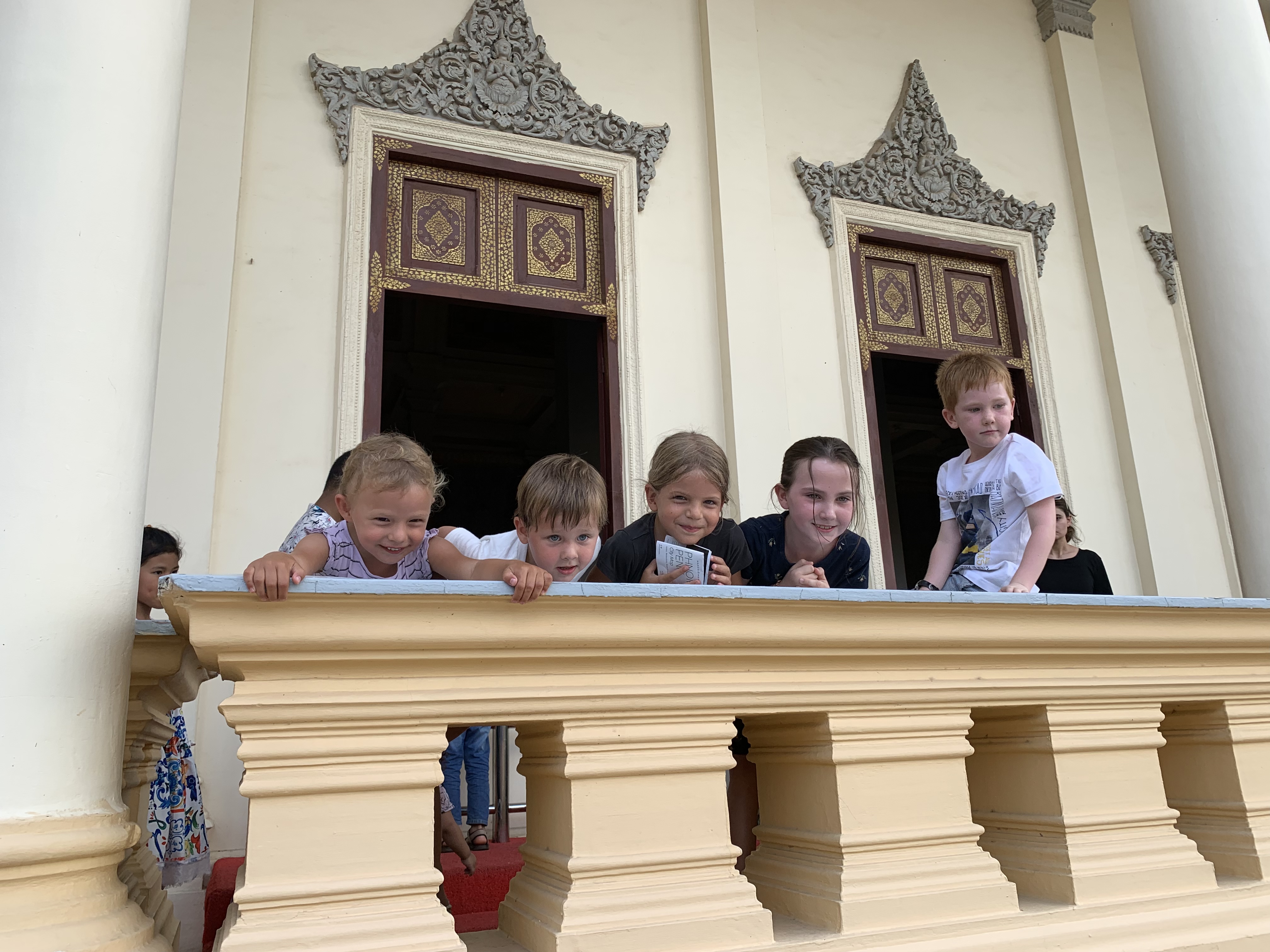
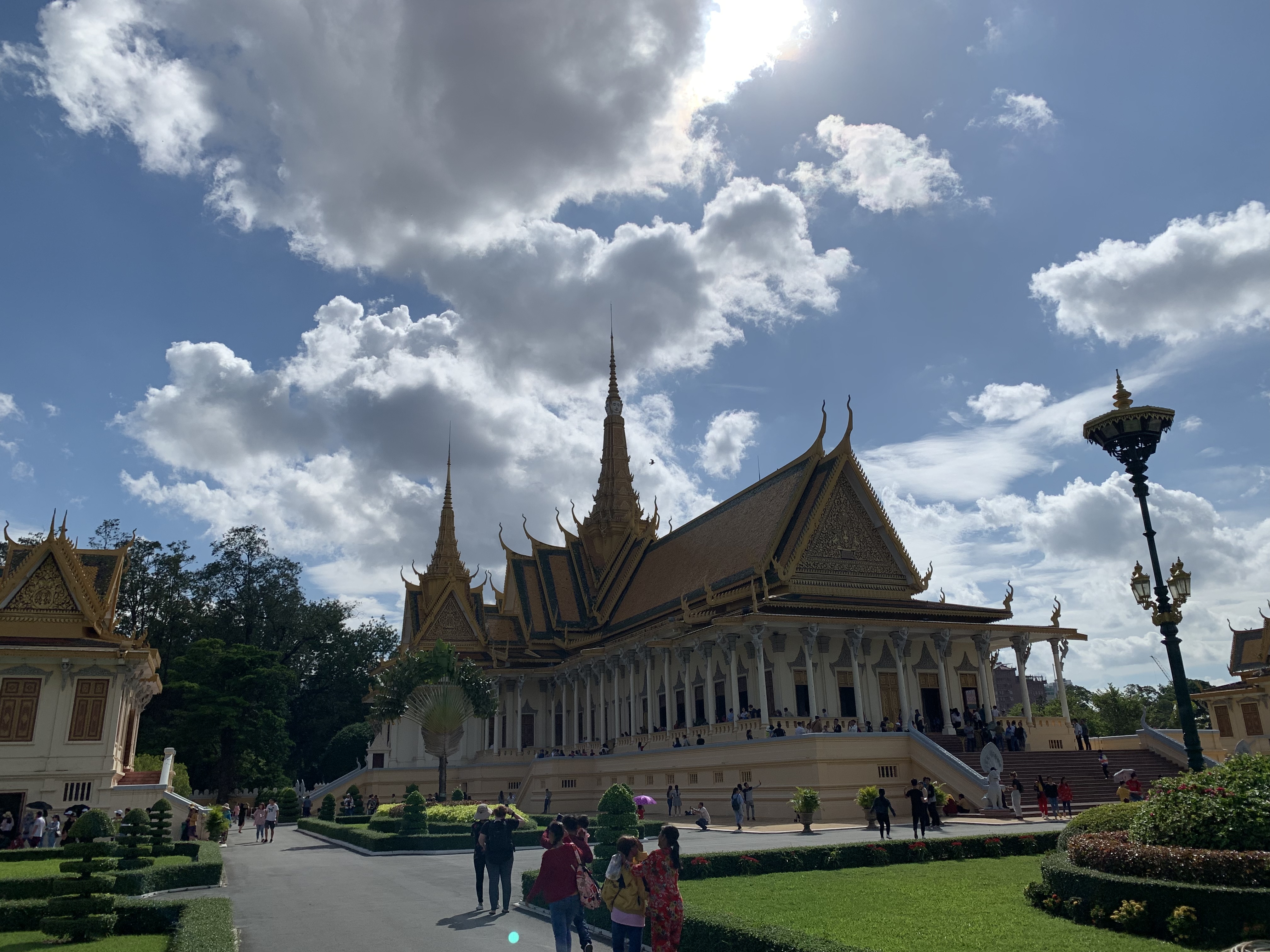
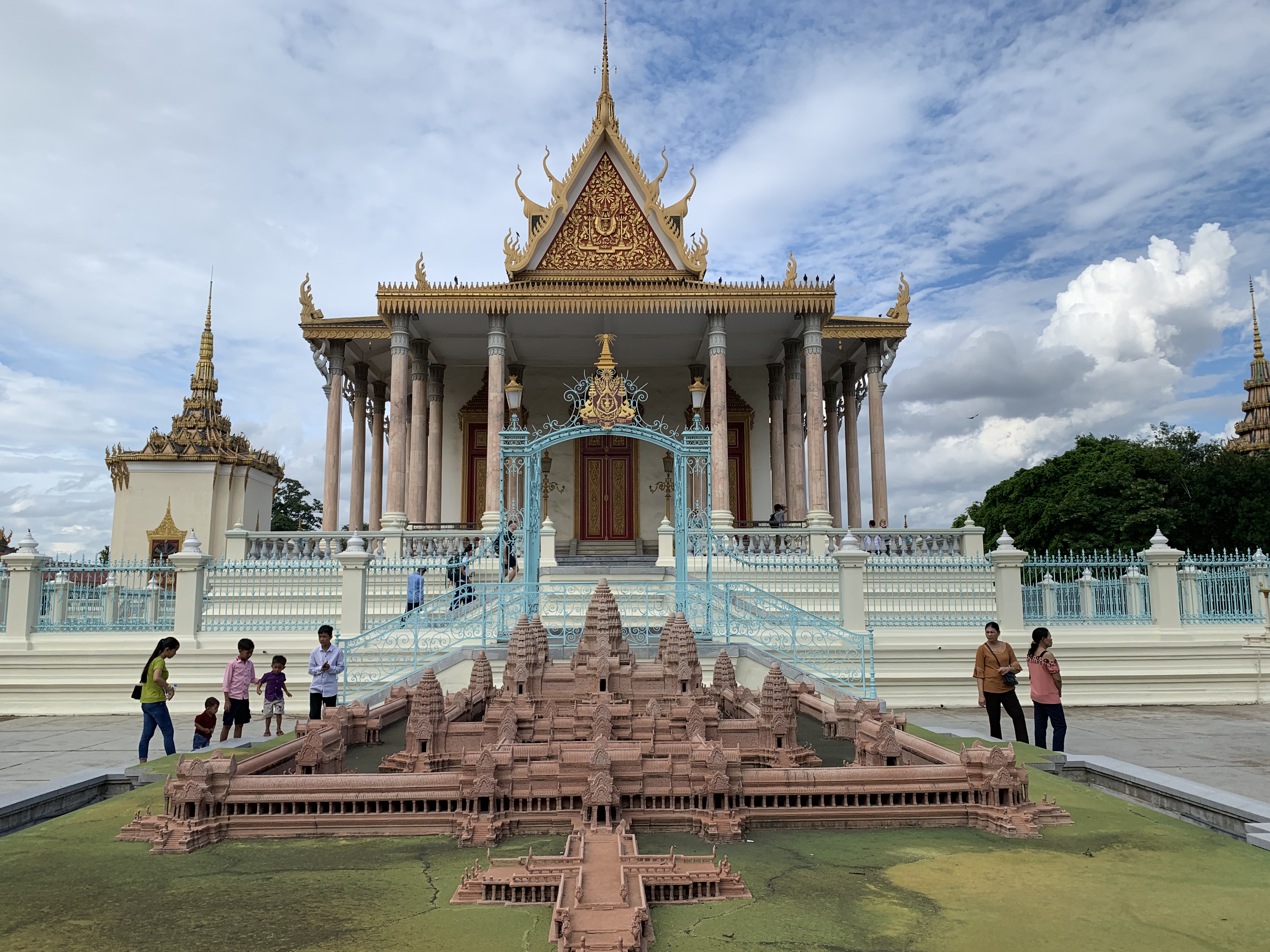
Funnily enough a family we had befriended on Koh Rong Samloem were also staying there (we hardly saw any other guests) and we had a group outing by chance to the Royal Palace and Silver Pagoda on our first afternoon. Exploring the group of buildings and landscaped gardens are an enjoyable way to spend a few hours, highlights being the Emerald Buddha in the silver pagoda (named after the 5329 silver floor tiles), a huge Buddha footprint, a scale model of Angkor Wat and a 642 meter long fresco mural, illustrating scenes from the Ramayana, a famous Hindu epic poem.

Making friends, Royal Palace, Phnom Penh.
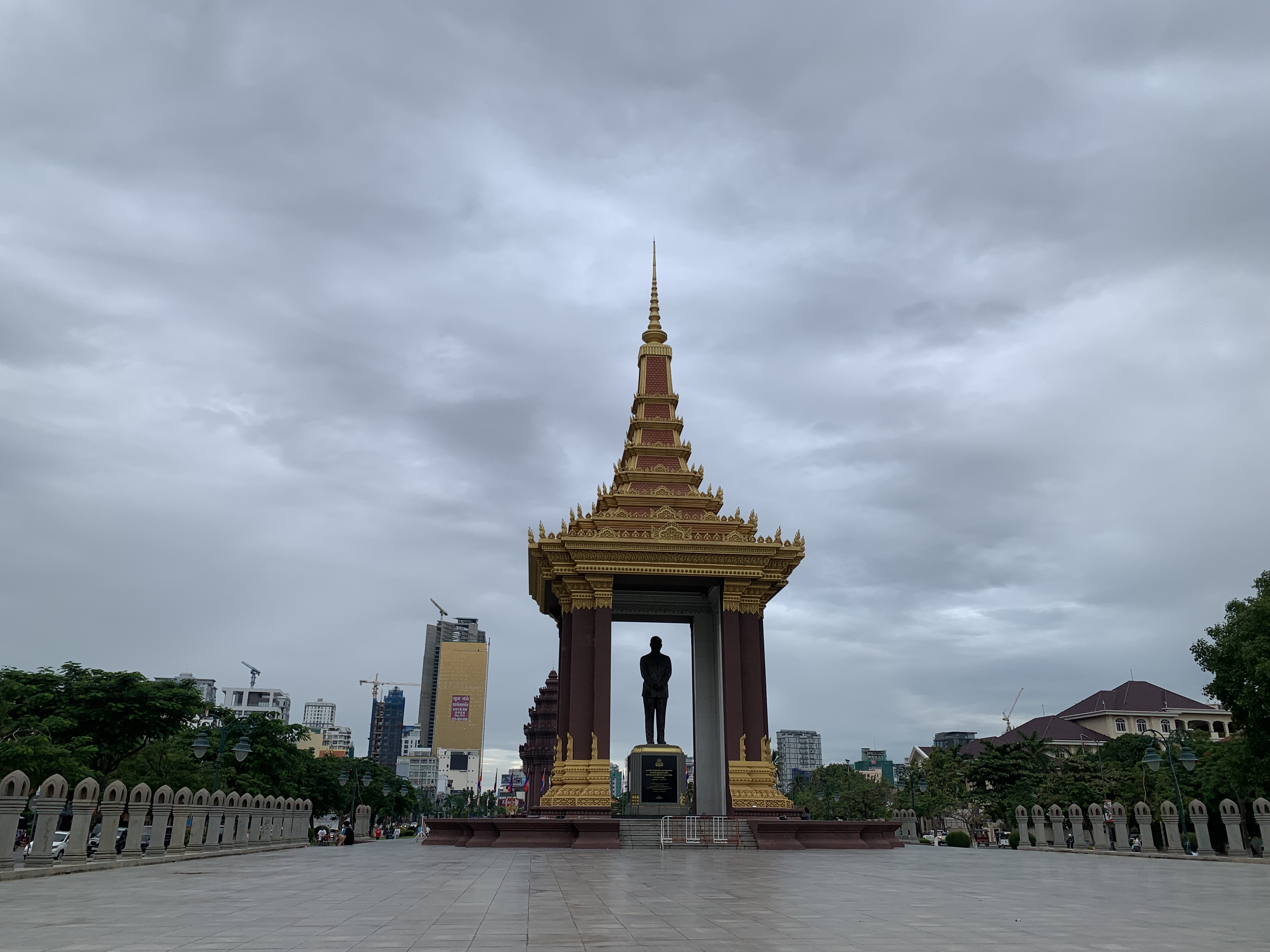
Temple of the Emerald Buddha, Royal Palace, Phnom Penh and left: A statue of King and Prime Minister Norodom Sihanouk (1922-2012), Sihanouk Boulevard, Phnom Penh.
Angkor Wat model, Royal Palace, Phnom Penh.

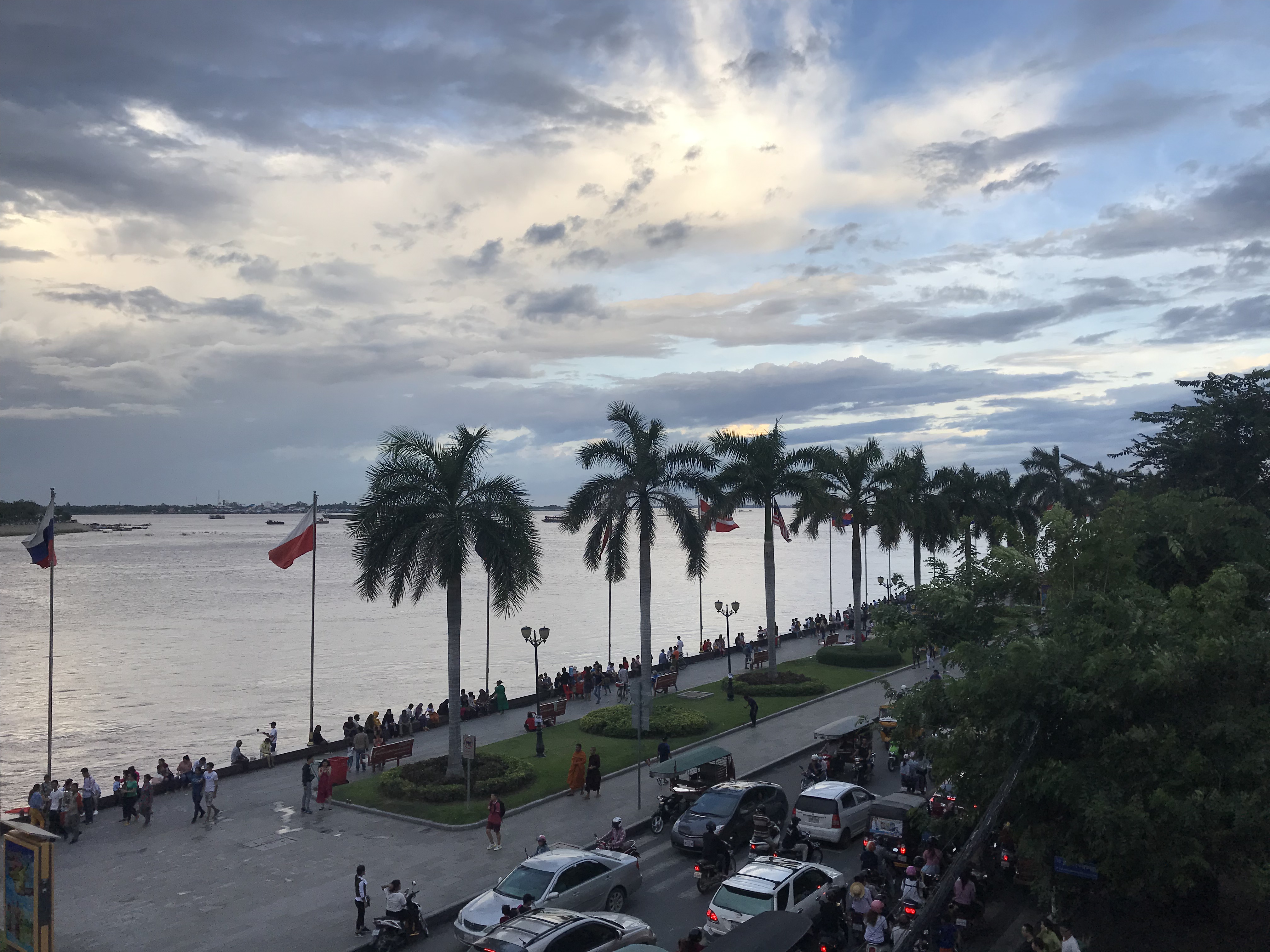
Later we walked along Sisowath Quay, which runs 4km along the river passing a temple apparently housing one of Buddha’s eyebrows (!) where Khmers were donating flowers bought from the neighbouring stalls. It ends at the lively night market where we had dinner one evening. On route we stopped to admire the view at River Crown for a drink and ice-cream, it faces the FCC (Foreign Correspondents Club of Cambodia) which is probably a better choice.

Mekong river at sunset, River Crown terrace, Phnom Penh.

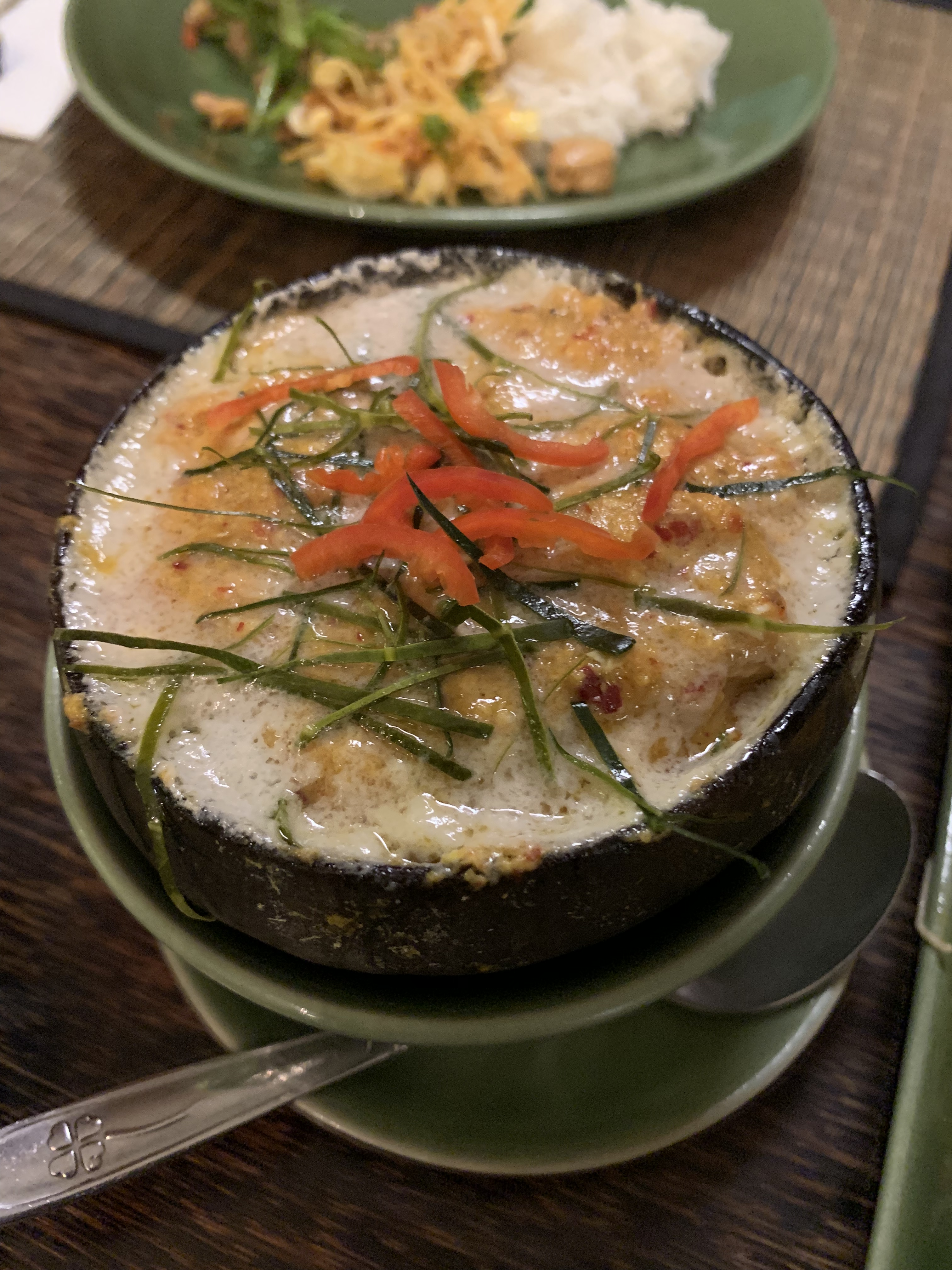
We had lunch one day at the bustling Psar Thmei (Central Market). Our other two days we enjoyed the menu at ARTillery, a café close to our hotel which had a lot of gluten free and healthy options including the first hummus we had had in a few weeks. For dinner we had a lovely meal at Sugar Palm, where Gordan Ramsay supposedly spent time learning how to cook fisk amok from Chef Kethana.

Amok curry, a Cambodian speciality, usually made with white fish. At Sugar Palm, Phnom Penh.

For our final dinner before going to the airport we went to the Tamarind on lively Street 240 a short walk from our hotel. The menu has a mix of Middle Eastern, Khmer and European food.

We enjoyed an hour or so at the National Museum, set in a red-brick symmetrical building that was overrun with bats after being abandoned in 1975. The four linked galleries around a leafy courtyard display an impressive range of sculptures and artefacts, laid out roughly chronologically, many taken from the Angkor temples. Later items of interest include the record-breaking longest shawl in the world on its loom and a piece of moon rock gifted to Cambodia from the USA.

There is a great playground in Wat Botum Park close to the Cambodian-Vietnamese Friendship Monument and another opposite Wat Phnom, the hill which the city was named after. At the top of the hill is a white stupa containing a vihara where Khmer pray and try to discover their fortunes and a shrine to Daun Penh (Grandmother Penh) who founded the sanctuary, according to myth. A giant lawn clock on the hillside is interesting to see but doesn’t quite tell the right time.

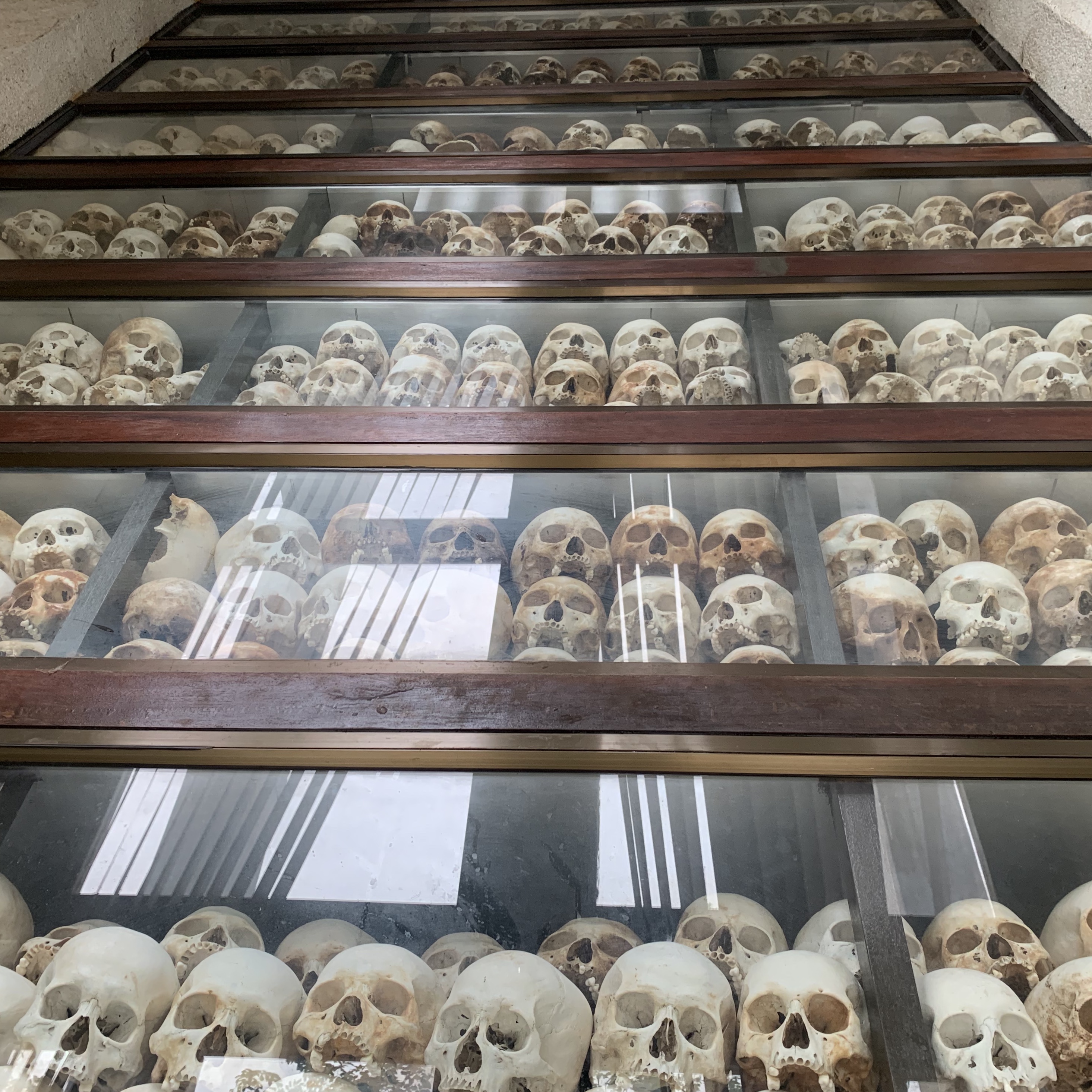
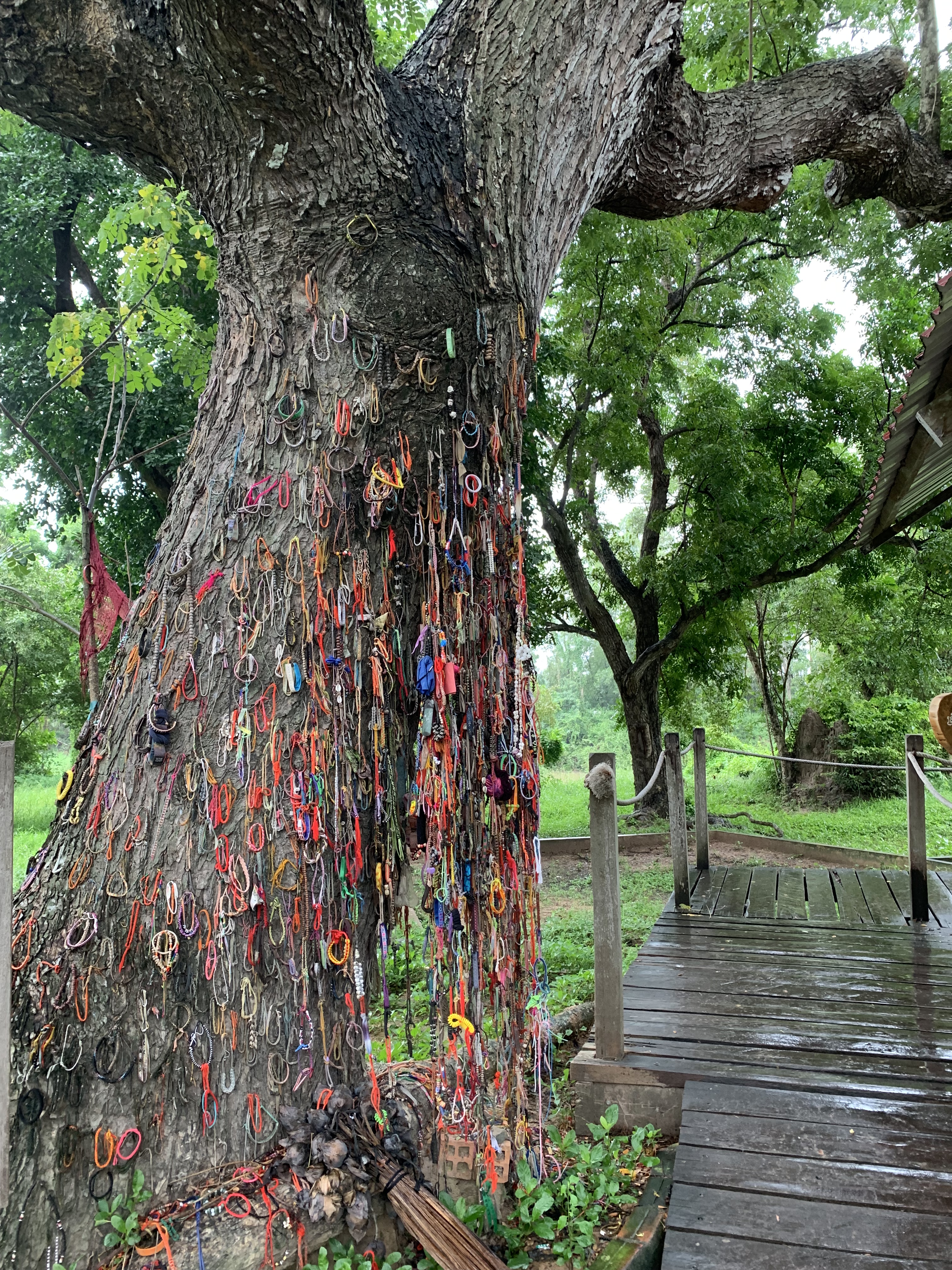
I have read the harrowing, unputdownable memoir ‘First They Killed My Father: A daughter of Cambodia Remembers’ by Loung Ung (also a Netflix film by Angelina Jolie) and a visit to the Killing Fields felt like something we needed to do, in order to grasp the true horrors of recent history. We decided to skip the more graphically devastating Toul Sleng Genocide Museum in the city itself. It started raining as we headed off by moto tuk-tuk, the journey 12km south-east out of the city. Choeung Ek was the site of mass murder under the Khmer Rouge regime. Numbers are sketchy but possibly upwards of 17,000 men, women and children lost their lives here in less than 3 years. The memorial contains the remains of 8985 bodies exhumed in 1980, skulls movingly displayed in the glass-fronted stupa in seventeen tiers arranged by age, gender and the method in which they were executed. A brilliant audio-guide takes you around the site including interviews with survivors and music inspired by the tragedy.

Display cabinets of human remains, Choeung Ek, near Phnom Penh.

It’s important to remember this harrowing moment in the history of Cambodia. To fully understand Phnom Penh you need to appreciate that it was forcibly evacuated and left to ruin by the Khmer Rouge less than a generation ago. Time in the capital was a fitting conclusion to a varied and memorable three-weeks in Cambodia.

A story of two islands

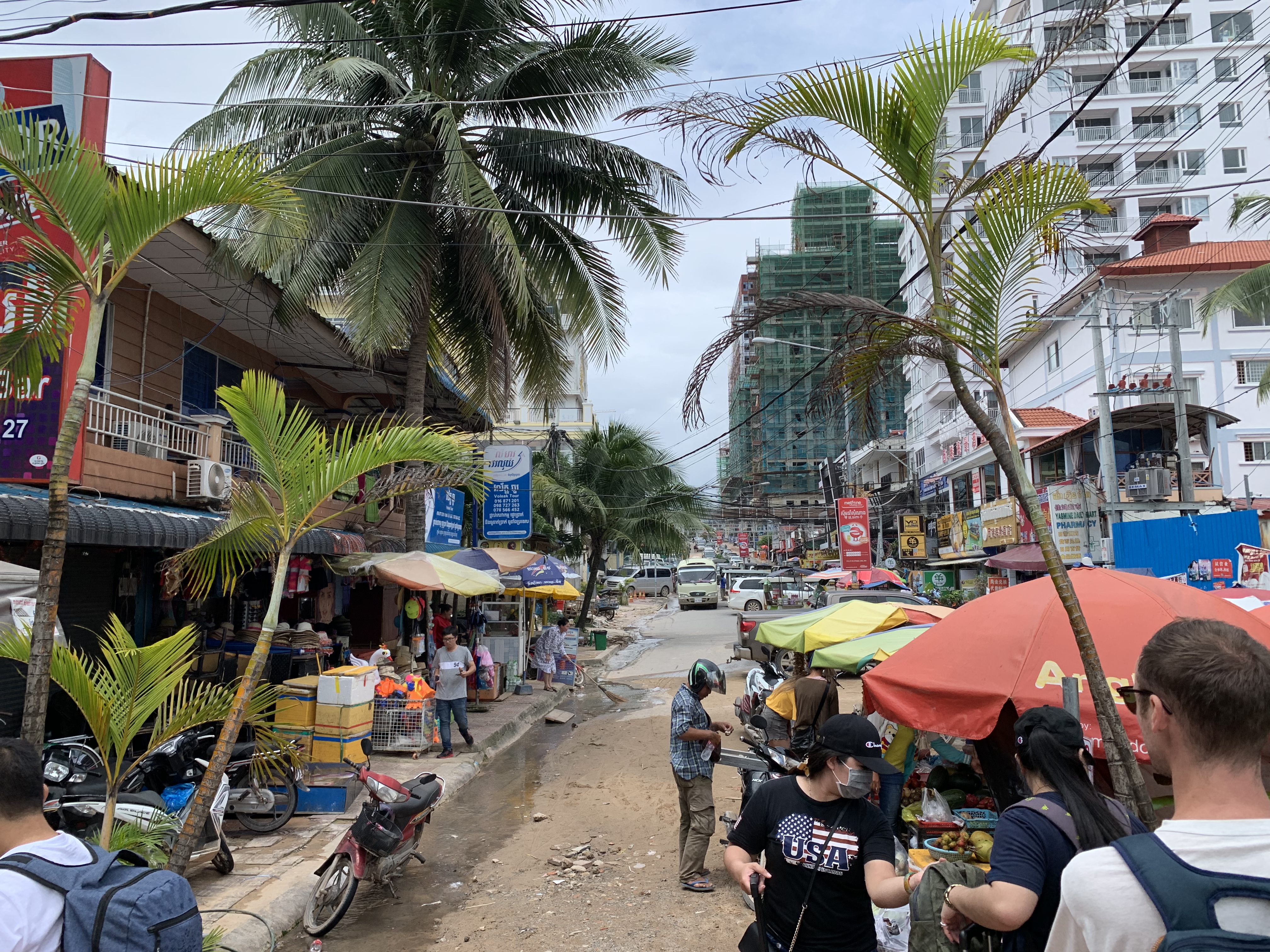
When they say make the journey an enjoyable part of your holiday, they can’t have been talking about Sihanoukville. Renamed as sh*tville by us and every English speaker we met, the gateway to the islands is best passed through as quickly as possible. Which isn’t easy. We didn’t think it could get any worse than our drive there from Kampot, the roads barely surfaced at all and traffic totally horrendous. We were stopped by police and our driver wanted us to switch to a tuk-tuk but we refused! The rate of Chinese resorts being built is incredible – every other building is a casino and all writing is in Khmer and Mandarin. We had left an extra 2 hours to reach our boat but only arrived at the pier five minutes before its supposed departure time (1pm)– to learn it was leaving an hour later, if it was the boat we were supposed to catch…..and it seemed impossible to buy a ticket!

The way back was even worse – after a very rocky crossing we were dropped off at a different pier so had to walk along pot-marked streets to reach a bus. Abandoned at Jasmine café with no clue when or where our pre-arranged bus pick up would be – as we were an hour late for that too….(we eventually arrived in Phnom Penh at 9pm after leaving 12 hours earlier).

Sihanoukville, we had to pass through it on 21 and 31 August 2019.

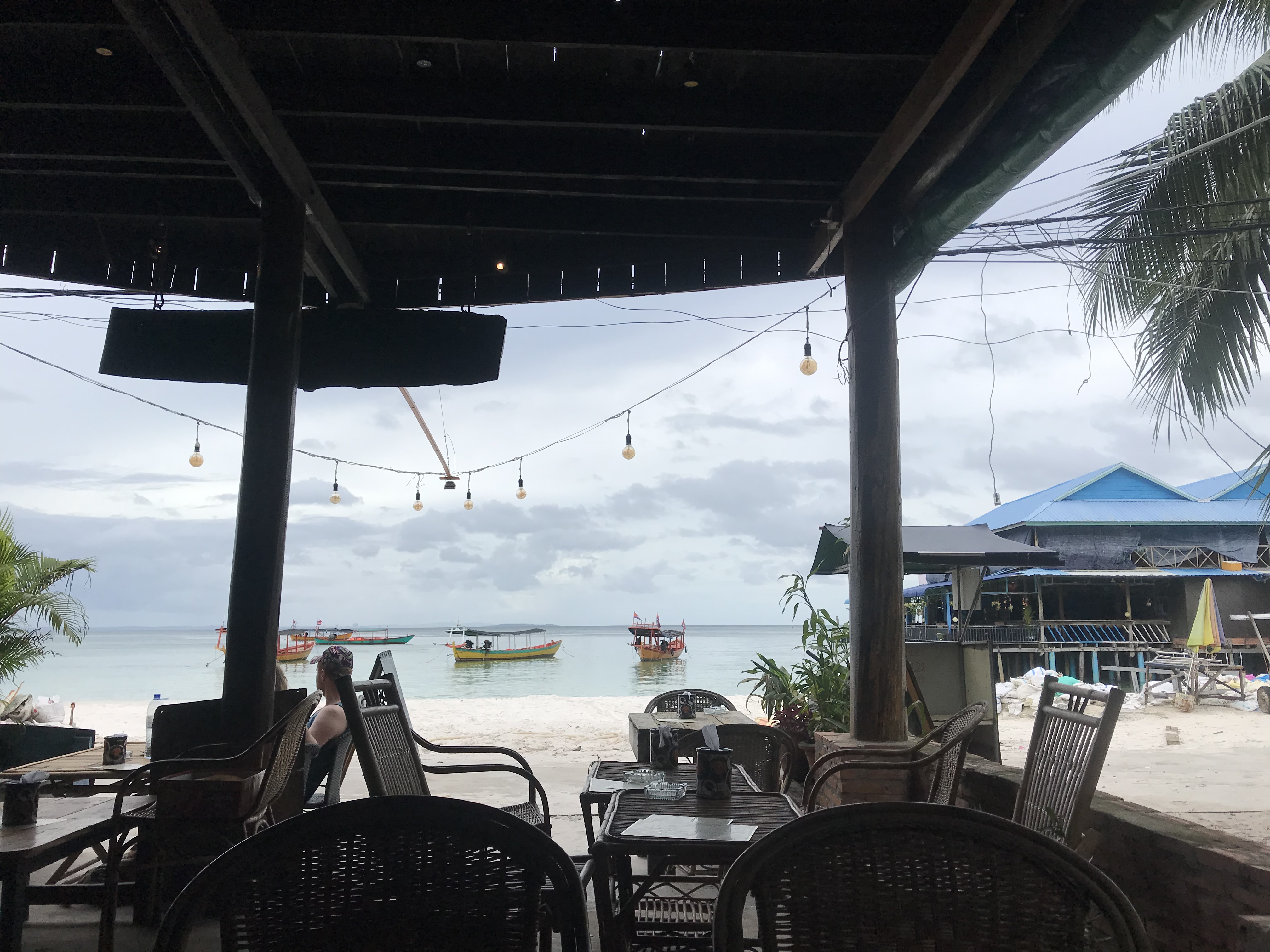
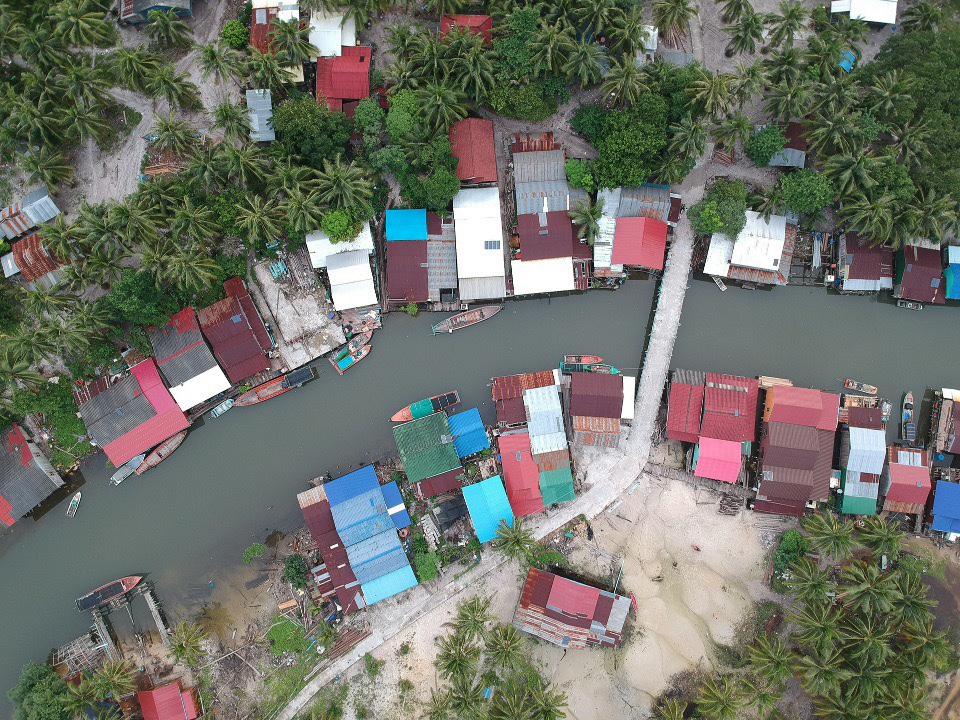
Our arrival at Koh Rong should have put us off but our three days there will I think remain forever memorable, in a positive way! Known as the party island, we were not staying in its main hub Koh Tui (which we only experienced on leaving, a typical backpacker joint, we munched on some nachos at Runaways) but instead on the quiet north-eastern shore, in a local village.

Runaways cafe, Koh Tui, Koh Rong.

Eventually around 2.40pm the old boat set off from Sh*tville. Luckily, we had filled up on pot noodles and street food while we waited. Arriving after 5pm at Palm Beach resort on Koh Rong after a rough crossing, we couldn’t find Johnny, our Air bnb host who we thought would meet us. Told at the resort by a western hippie waitress that the village of Prek Sway where our homestay was located was just a short 15 minute stroll across the beach at low tide but through the jungle now (she clearly had no idea about traveling with 2 kids)….we headed off. With all our bags. Not really knowing where we were going but knowing it would soon be dark….

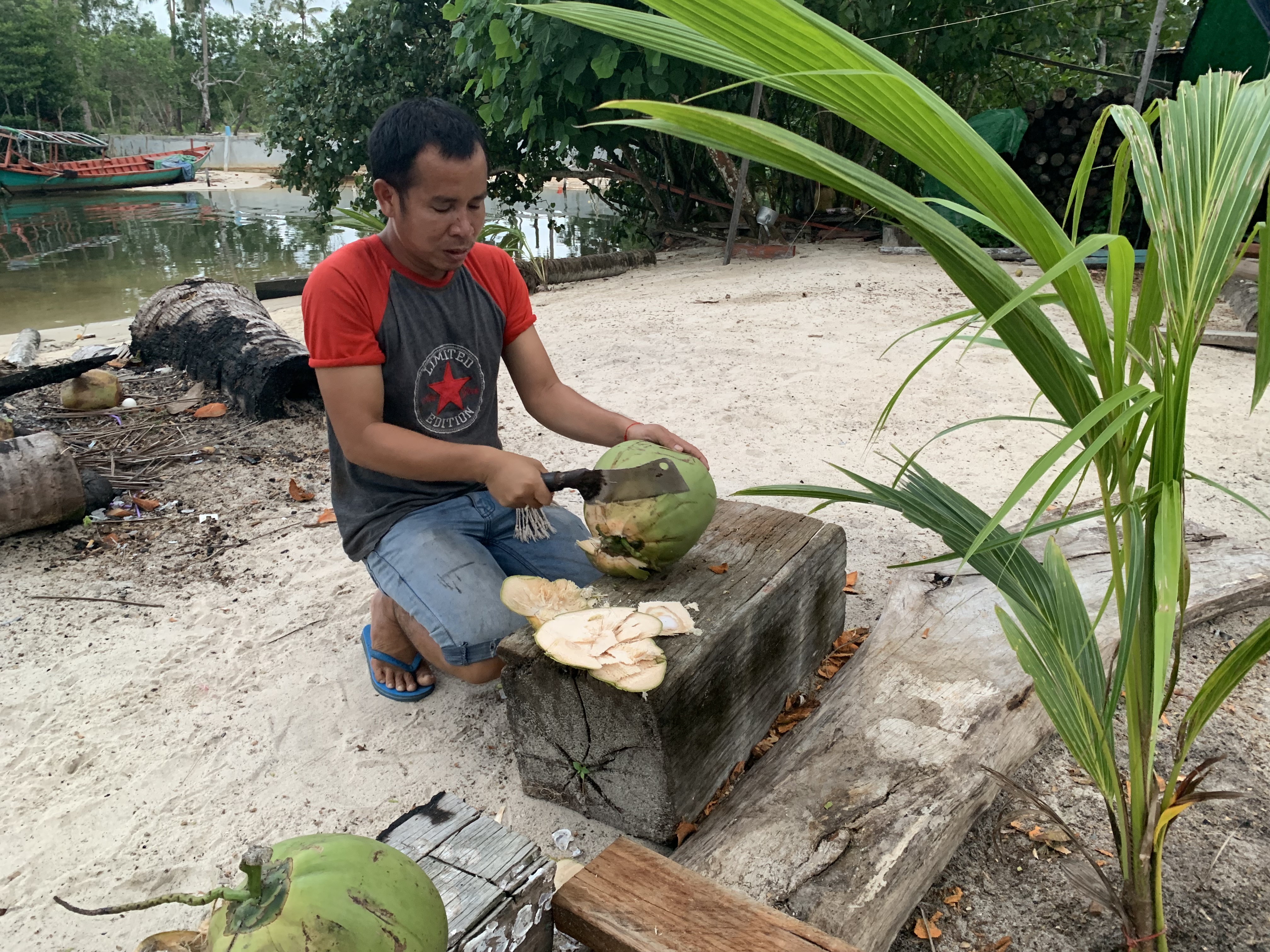
About 45 minutes later we eventually arrived at a path into the village where the girls could scoot (!), met Johnny by the bridge over the river, and went to our accommodation. Which was a newly built hut on the river bank, one bed with no AC or running water. Refreshed by a coconut plucked from the tree outside, we unpacked and had dinner prepared by our host family, a smiley elder couple who spoke no English. Every meal was a plate of rice or noodles with a small amount of vegetables and occasionally meat or fish.

Johney Nong, founder of Preksway Eco-Tourism, Koh Rong, preparing us a coconut.
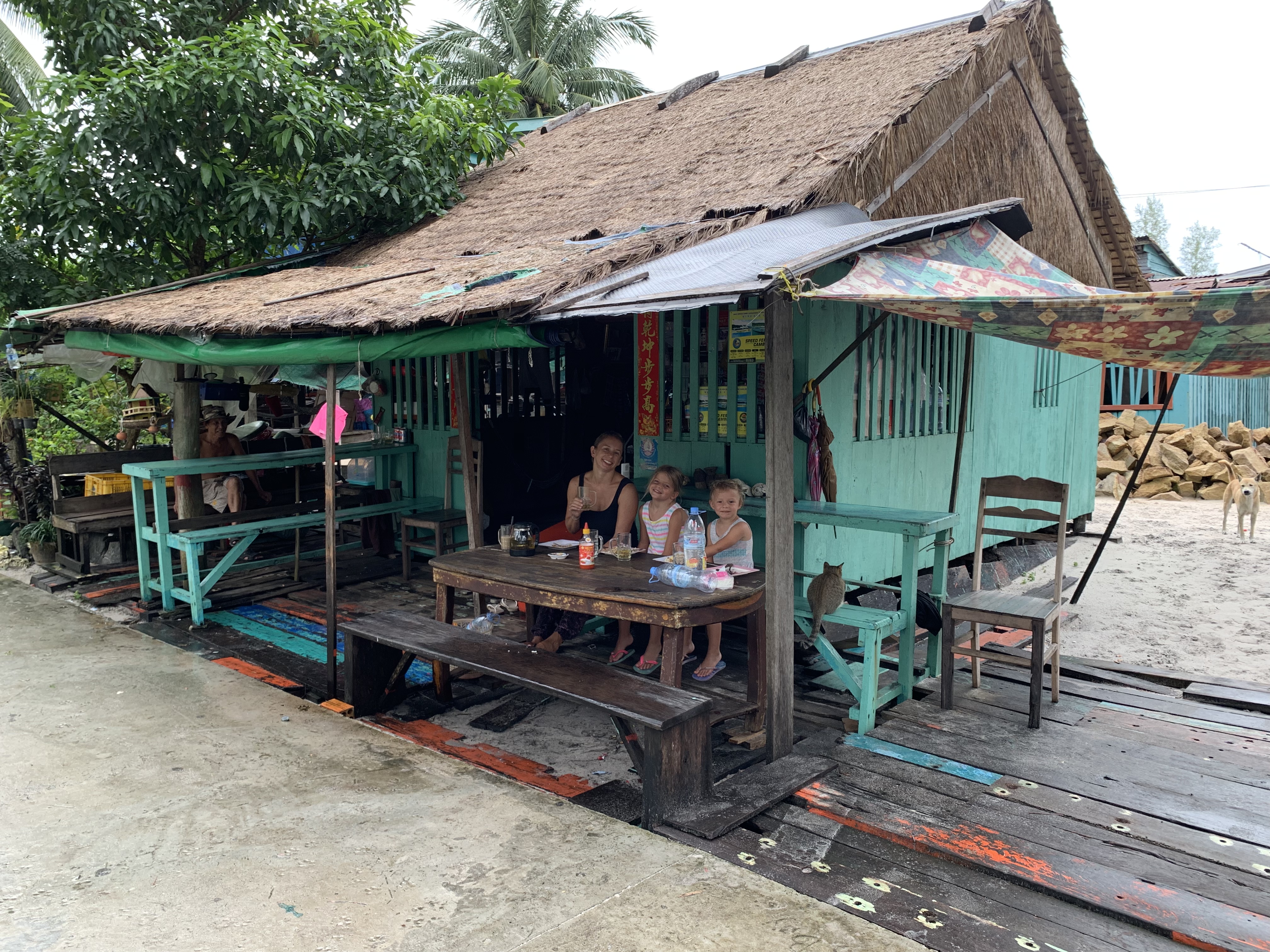
Johney Nong’s home, where his mother prepared us meals.

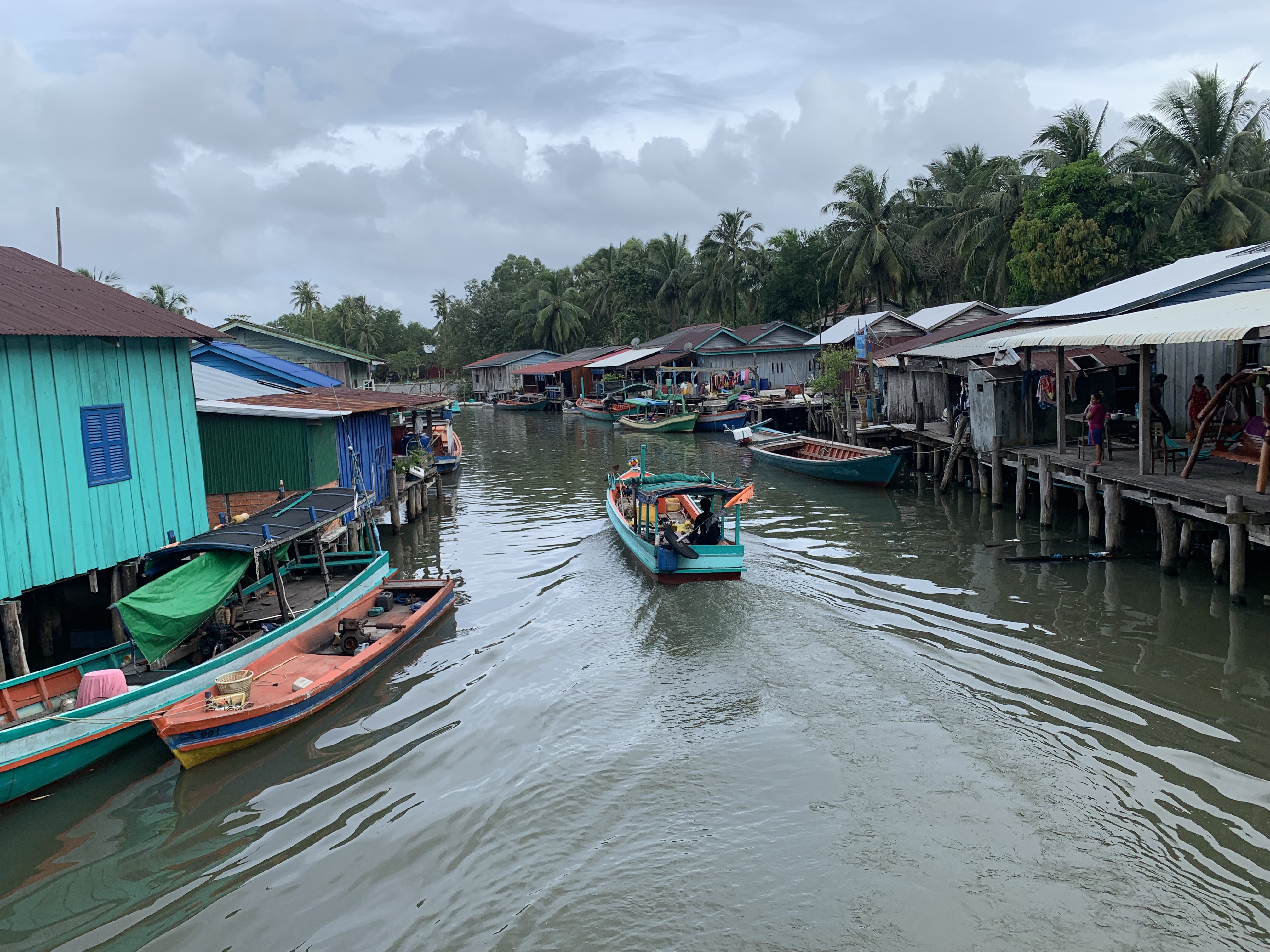
A generator in the village runs from nightfall to 10.30pm after which there is no power. Roughly 200 families live in the village, mostly fishermen.

Preksway village, Koh Rong.

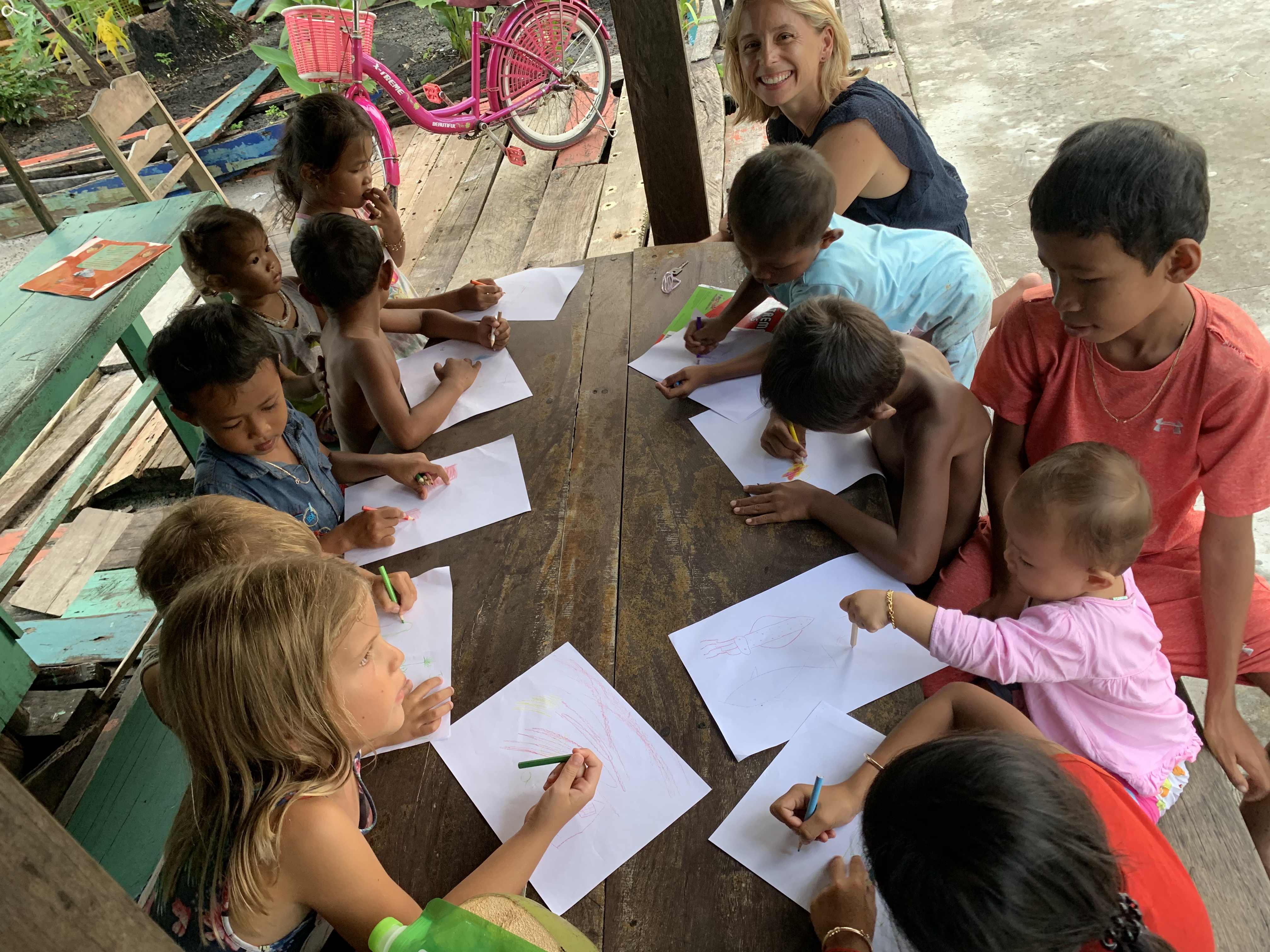
We visited the temple and school on the outskirts and made friends with most of the children, sharing our reading books, paper and crayons for colouring activities and playing hide and seek. None spoke English, it was wonderful to see MoJo interacting with them all and having rides on the backs of their bicycles.

Spontaneous drawing class, Preksway.

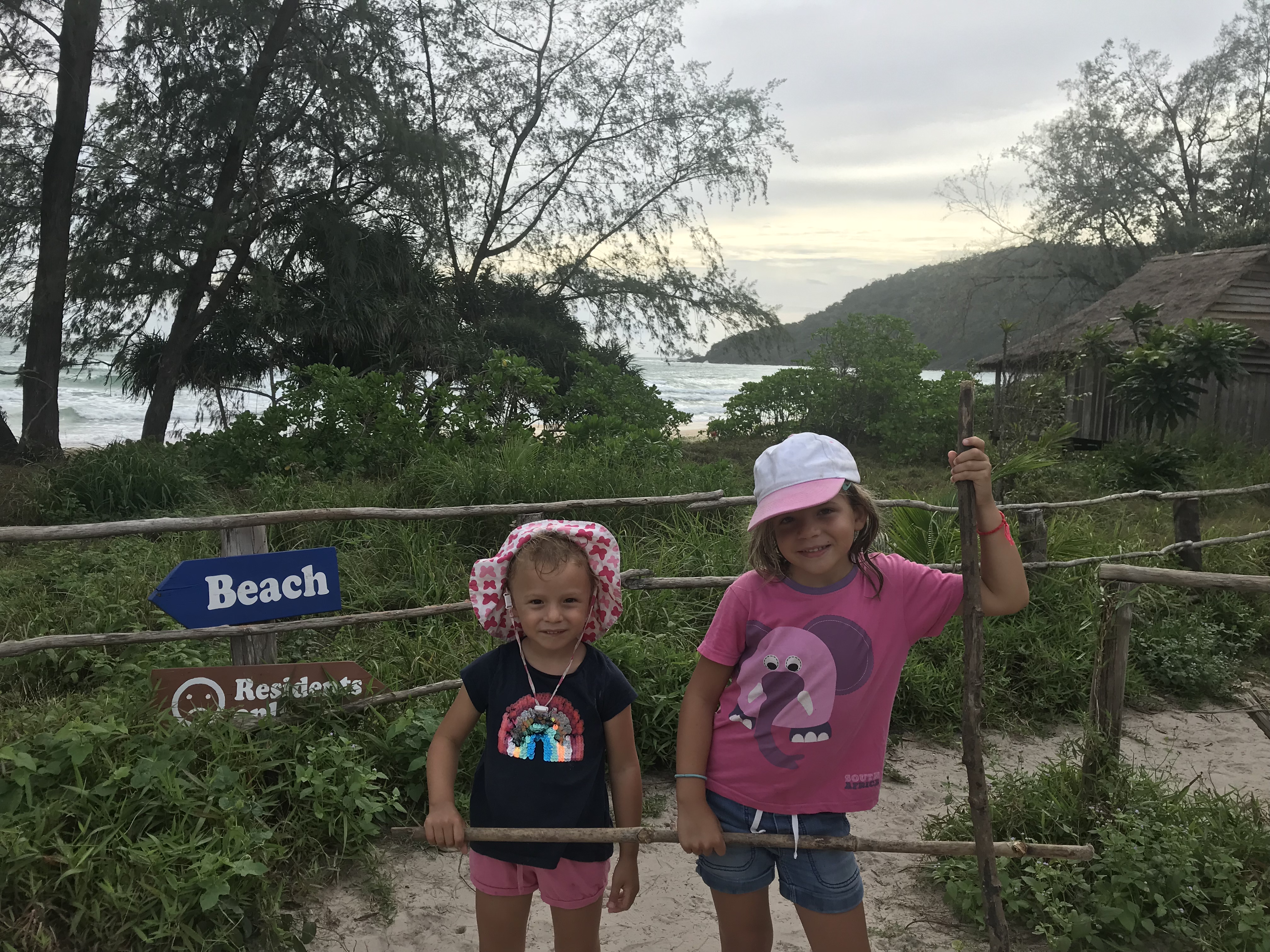
There were kayaks available, so the first day we kayaked back across Palm Beach for lunch. The second we went on a longer excursion to Lonely Beach on the northern coast, joined by Johnny and a Dutch couple. It was a 45-minute kayak through the mangroves and then a 45-minute walk through the jungle, full of bugs including leeches! Reaching the idyllic sandy beach was paradise – as was a swim in its wavy waters, before realising we had to leave by 4.30pm to make it back before sunset.

Arriving at Lonely Beach, Koh Rong.

So after 3 days in the village, we packed up and travelled to the neighbouring island Koh Rong Samloem for a more luxurious 7 nights, which overlapped with our wedding anniversary.  

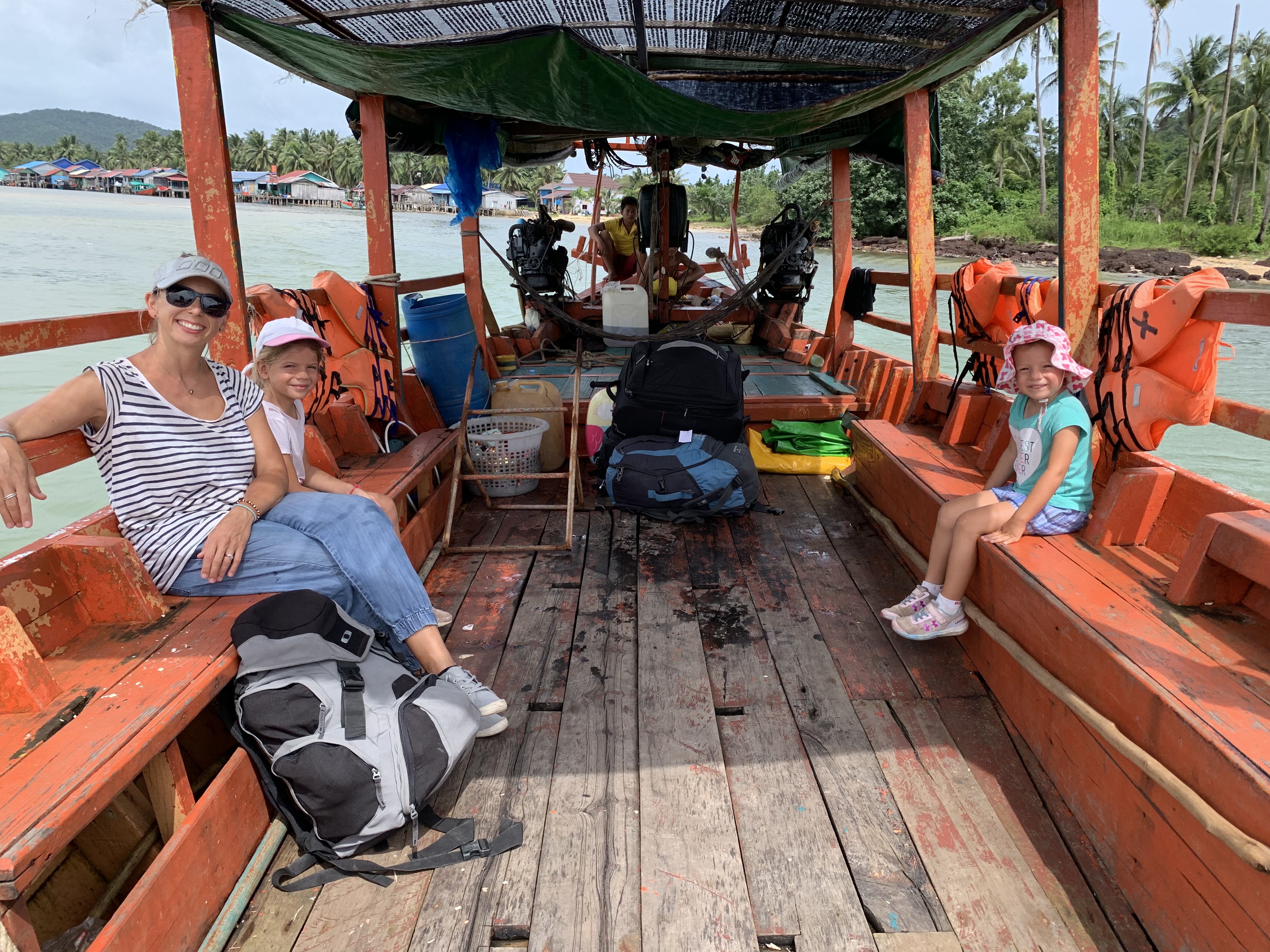
The journey involved 3 different boats (the first just for us, with only one engine working!) and took around 5 hours, including a rainstorm during the rockiest part of the crossing in between the islands.

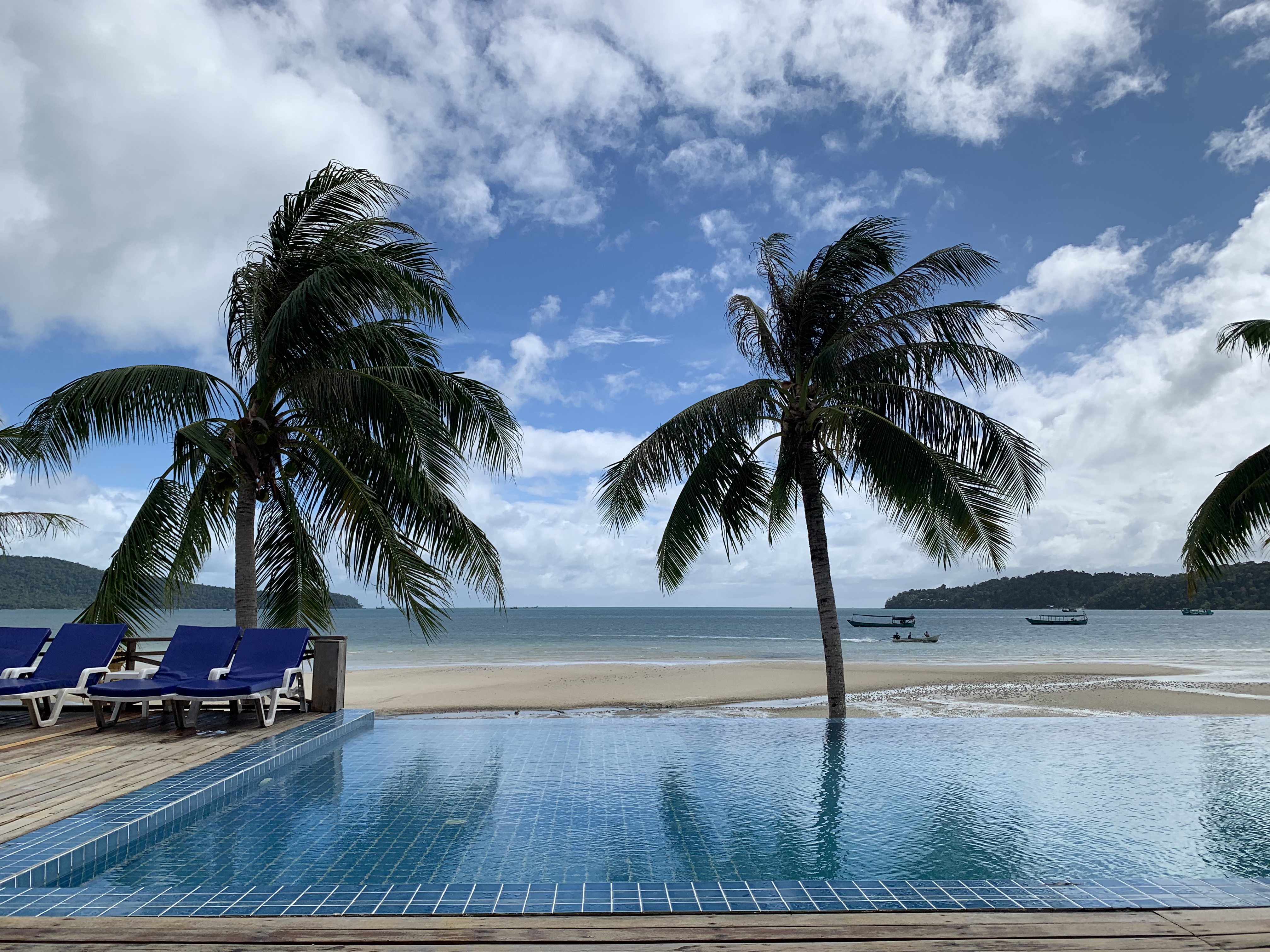
We were staying at the One Resort on Saracen Bay, a wide, shallow bay on the eastern coast.

It was the time we could really just relax, there wasn’t much to do, which was wonderful. For the girls we could get into a simple routine of some school work and diaries and playing restaurants (make believe and for real when we got hungry!).

The One, Saracen Bay Beach, Koh Rong Samloen.

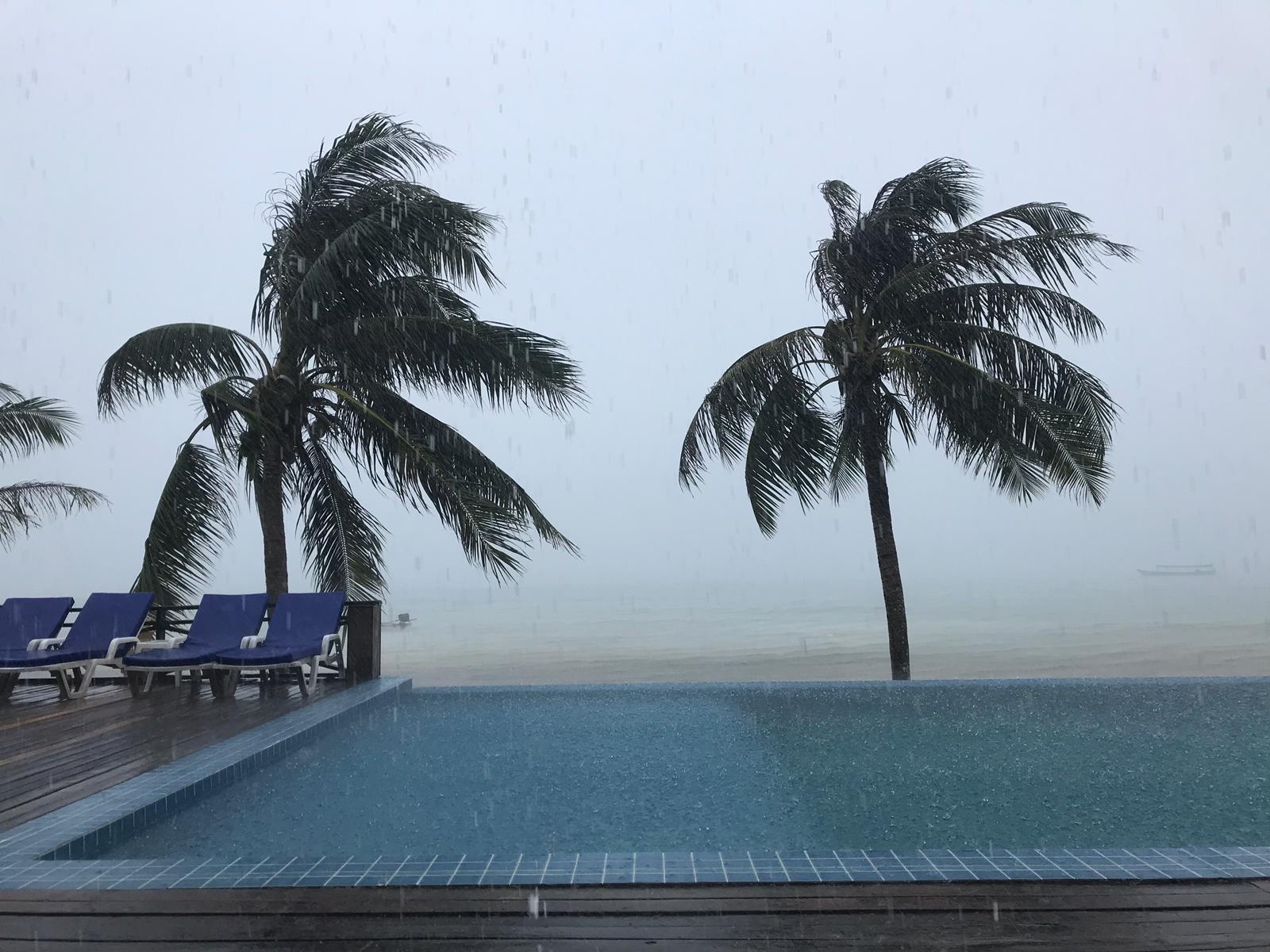
Some days it rained, pretty ferociously – but never for long.

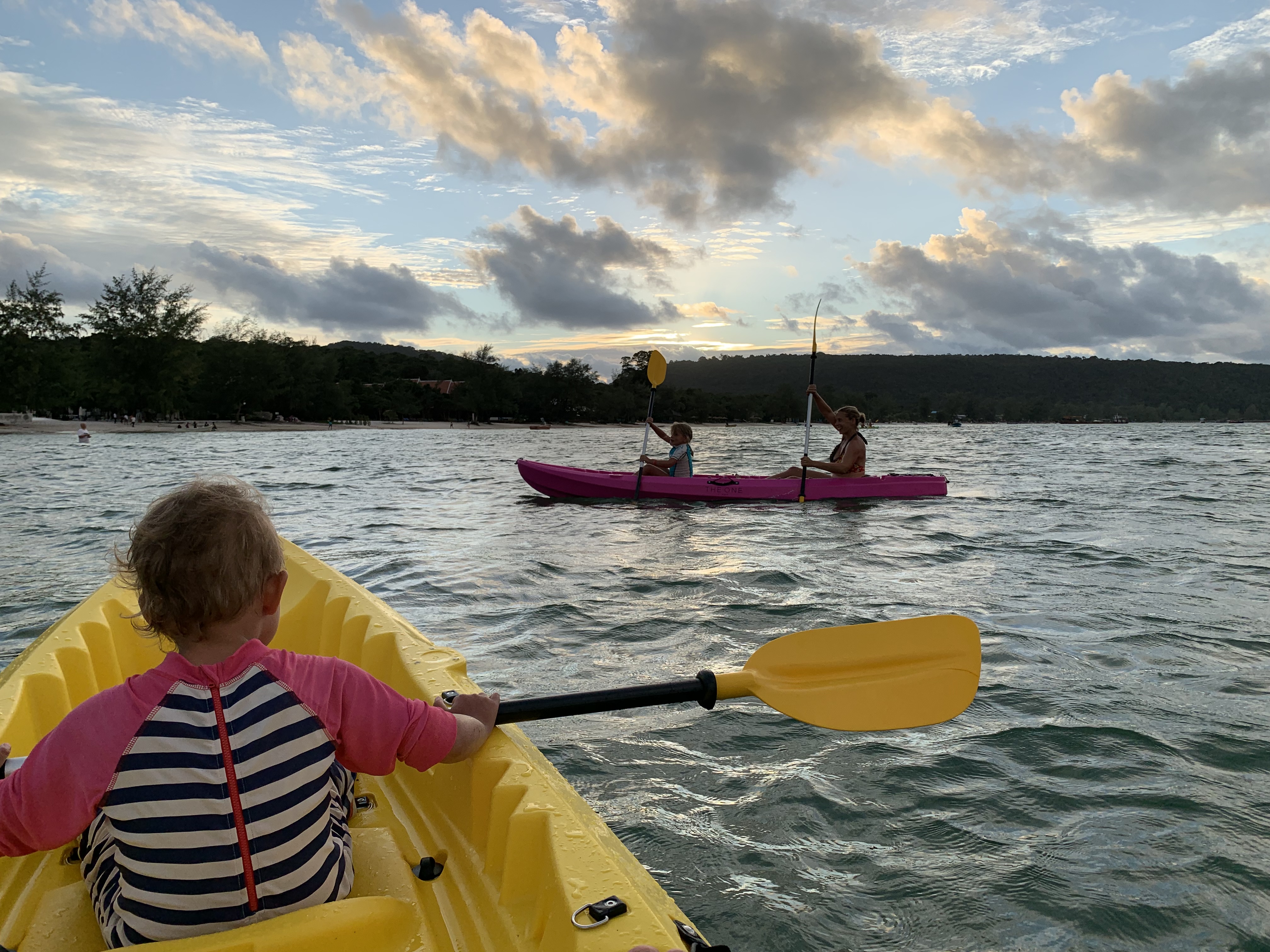
Tom and I did daily beach runs, timing ourselves and we took kayaks out a couple of times.

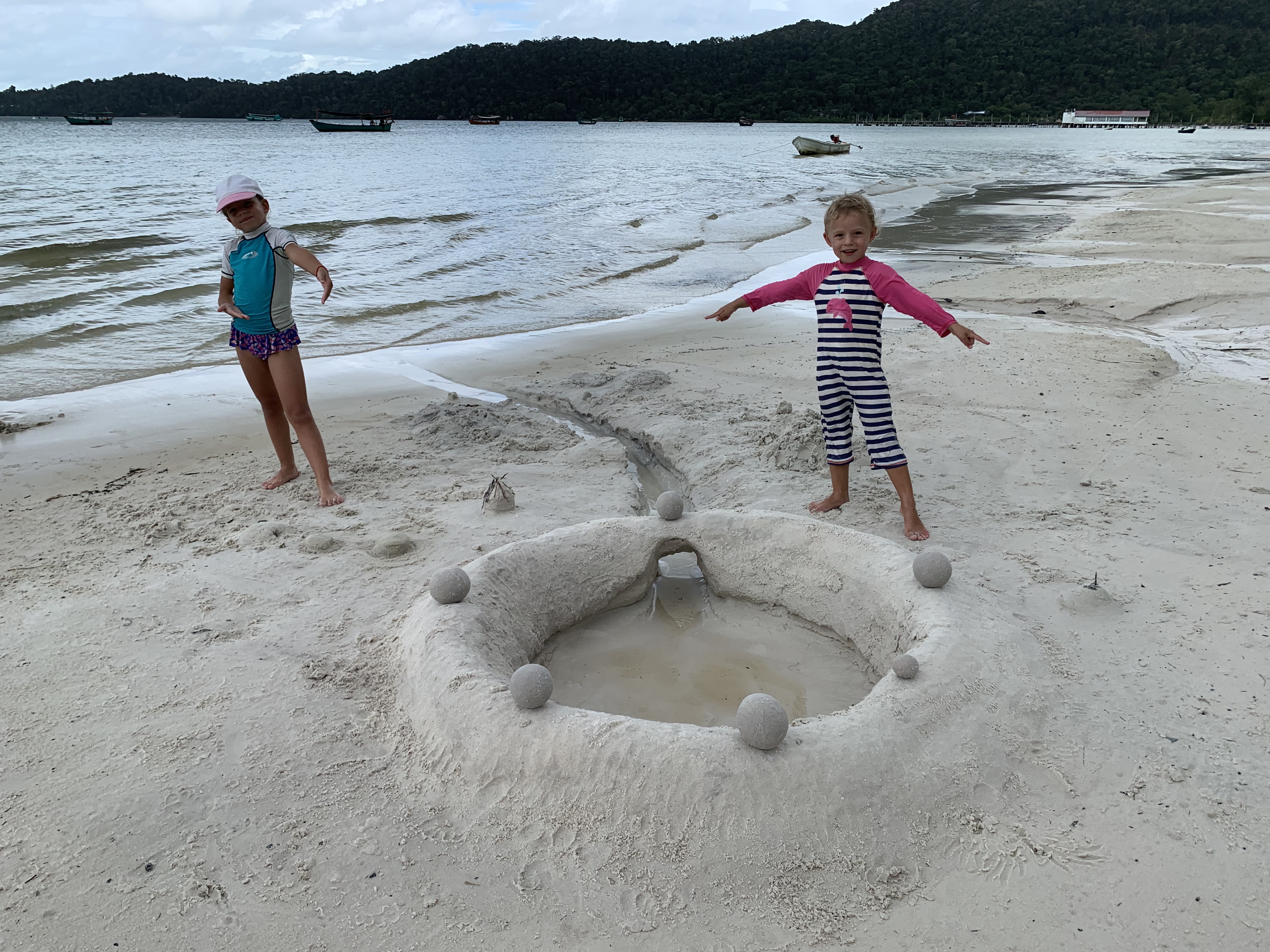
Epic sandcastles and sand balls were constructed, some surviving the thunder storms to live another day.

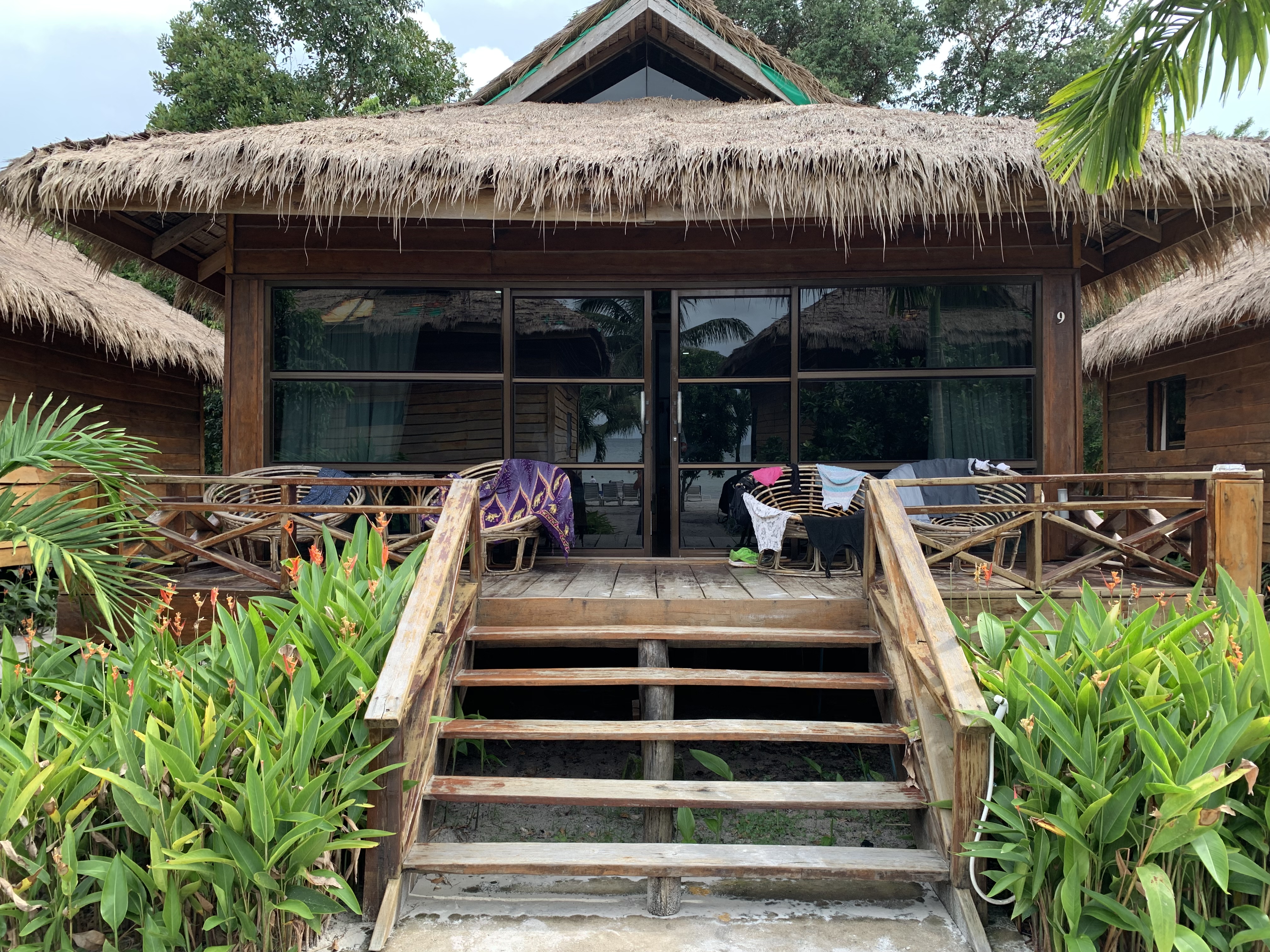
The only resort there with a nice, beachside pool, our two-bedroomed bungalow was large, cool and comfortable.

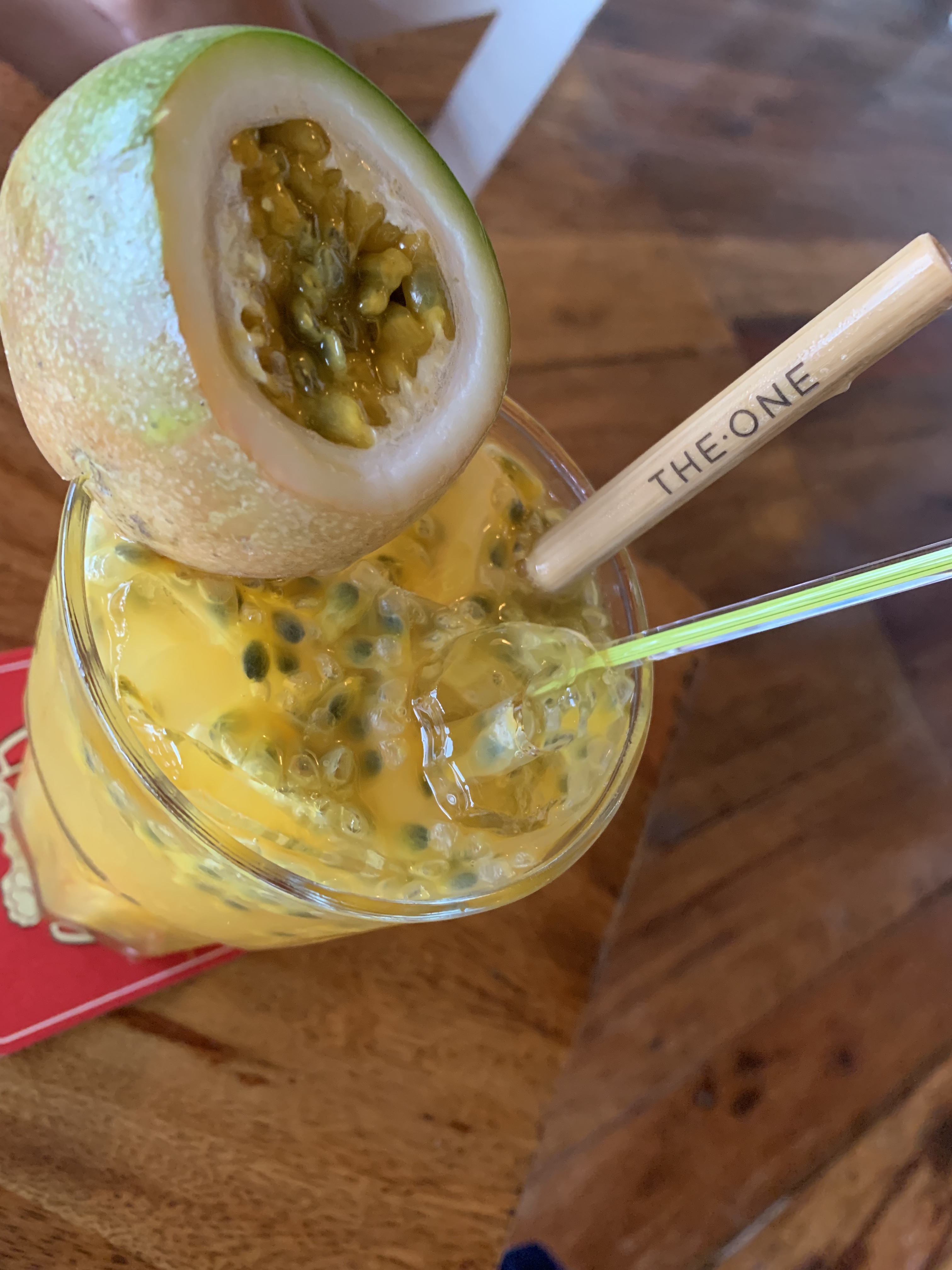
Better still was the kid’s area in the communal restaurant space and passion fruit mojitos during happy hour!

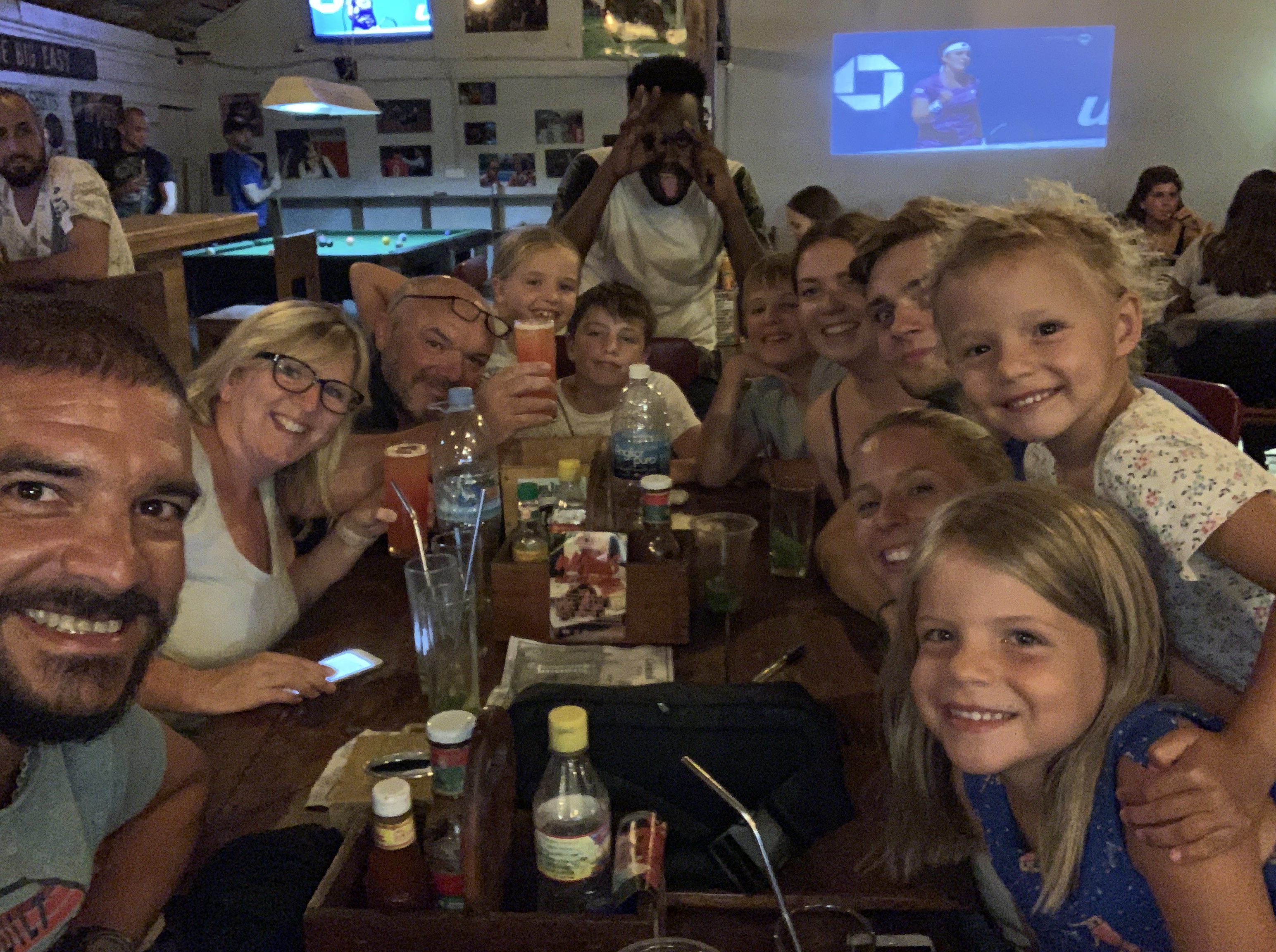
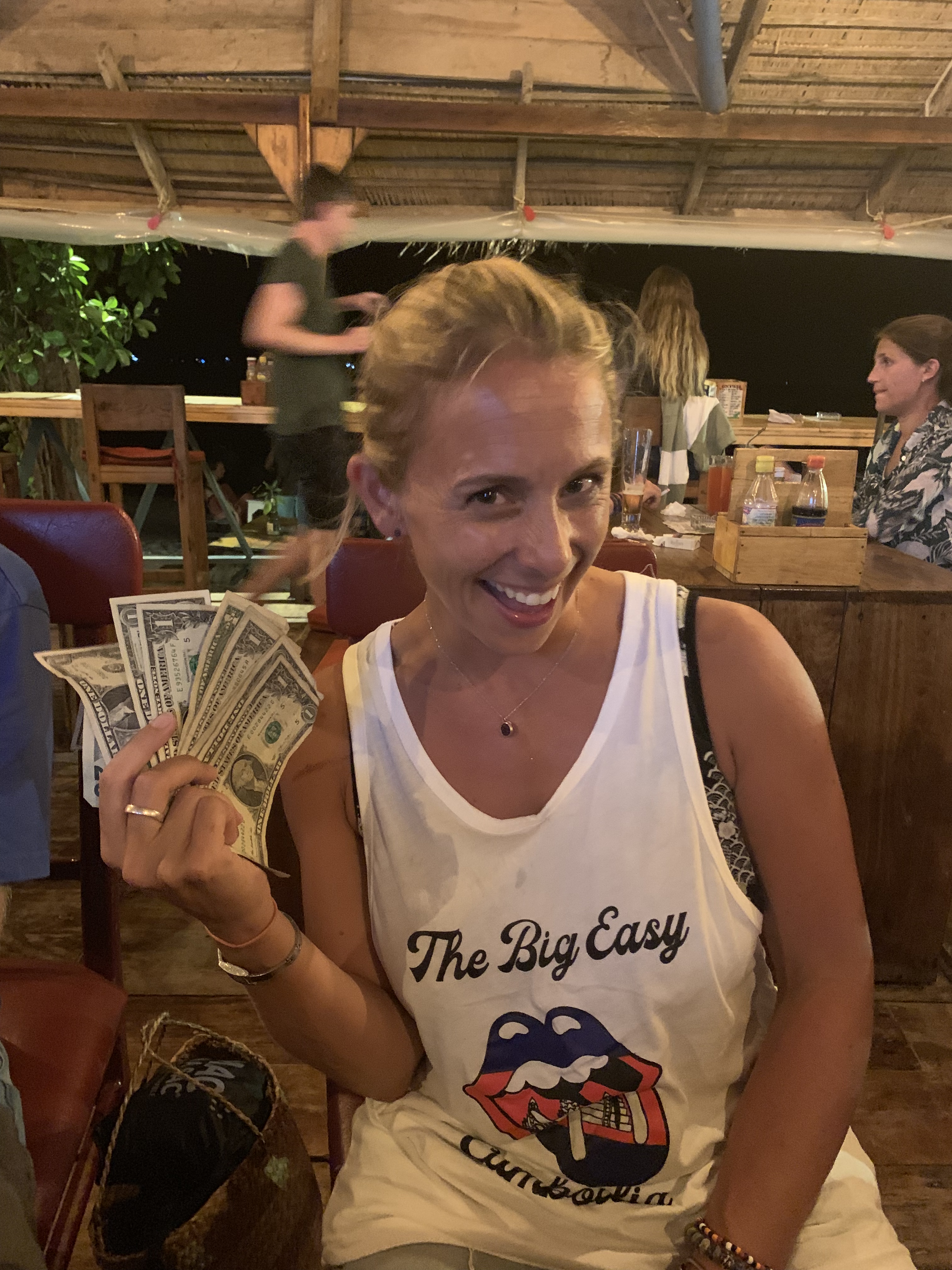
We soon made friends with fellow English guests, splashing about in the pool through rain and shine, playing beach Olympics, going on an after-dark phosphorescent plankton boat trip and most importantly winning the weekly quiz at the nearby Big Easy!

Brits on tour: winning quiz team at The Big Easy, Saracen Bay, Koh Rong Somloen.

A relaxed, happy place, it soon became our local. The best food we had was probably at Bamboo Jam next door to the Big Easy.

The one trip we did on foot was across to Lazy Beach, a 1.5 km hike through a muddy jungle path, rewarded by a beautiful beach with high waves and a guesthouse with delicious food and a table tennis table.

Lazy Beach, Koh Rong Samloen.

It was fitting we were in such a place the last week in August, it felt like we were on a normal family holiday. It was only beginning to sink in that when September began we weren’t going to be getting back into our routine like everyone else, but instead would be continuing our world tour, pretty exciting!

It’s looking hot in Kampot

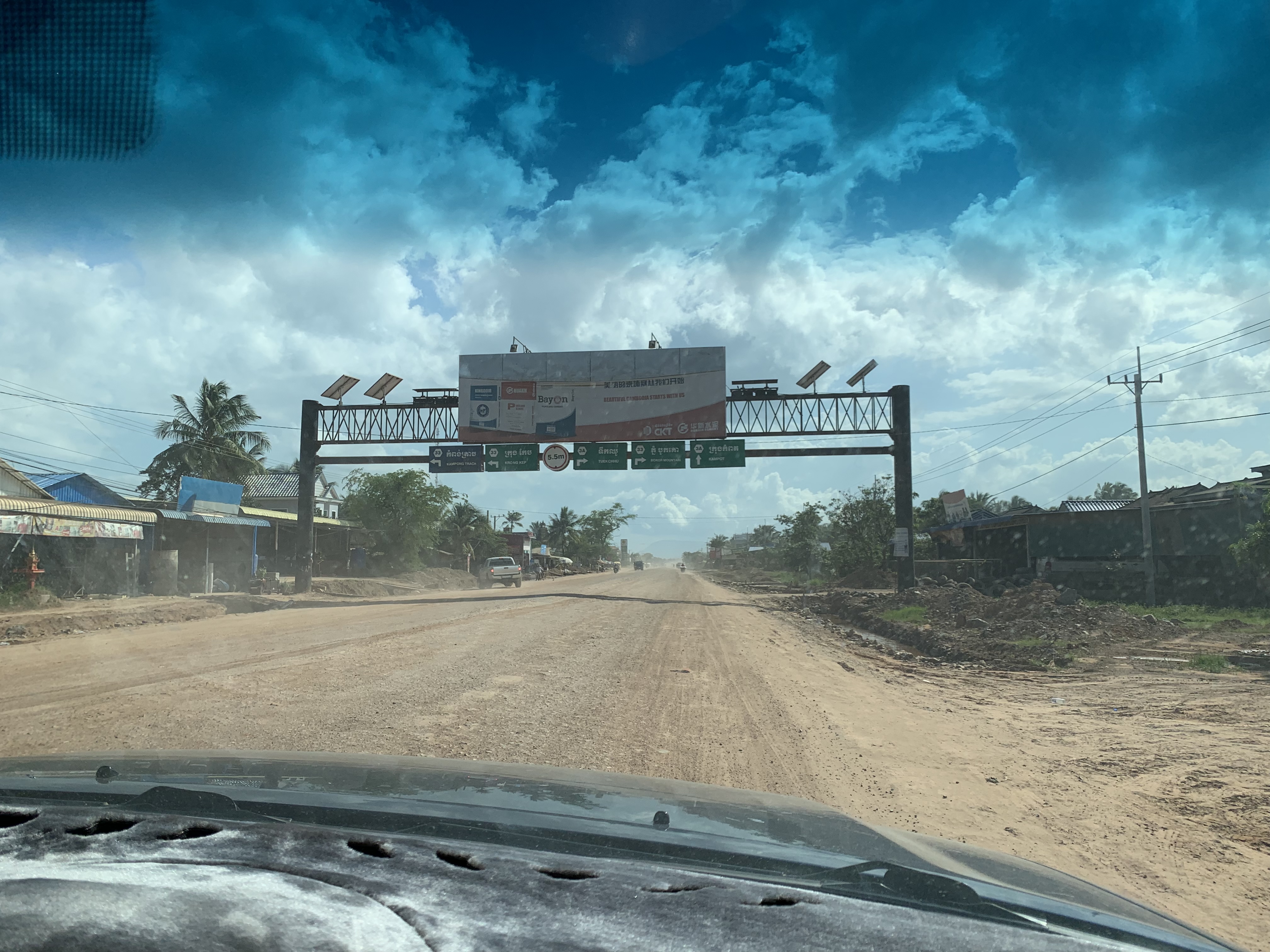
Kampot was the last segment of our Cambodia trip that we booked, filling in three days between Siem Reap and the islands. The geography of Cambodia is such that you have to circle around the large central lake (Tonle Sap) to reach the coast, so the drive (which we did in a private car during the day rather than risk the perils of an overnight coach) took us 9 hours. Road surfaces in Cambodia are not good, the final two hours were incredibly bumpy, the many potholes made worse because of recent flooding.

Kampot is a really pleasant place and worth the journey. Like parts of the UAE and Oman it has distinctive roundabout sculptures – the main one a large Durian fruit. Located on the north bank of the Teuk Chhou River, the river runs through its heart, the French quarter where the buildings around the old market run down to the river bank.

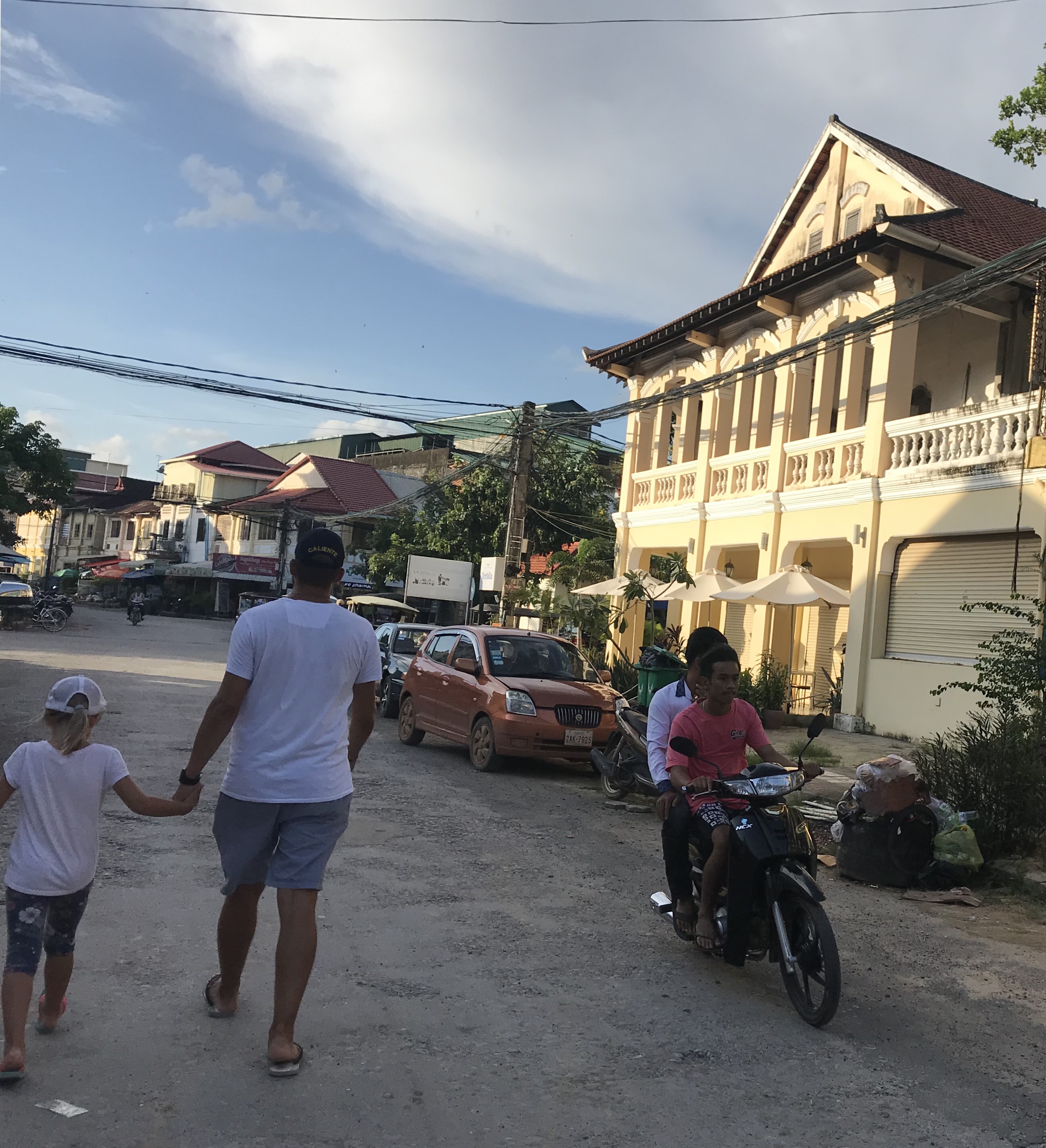
Walking through the French quarter, Kampot.

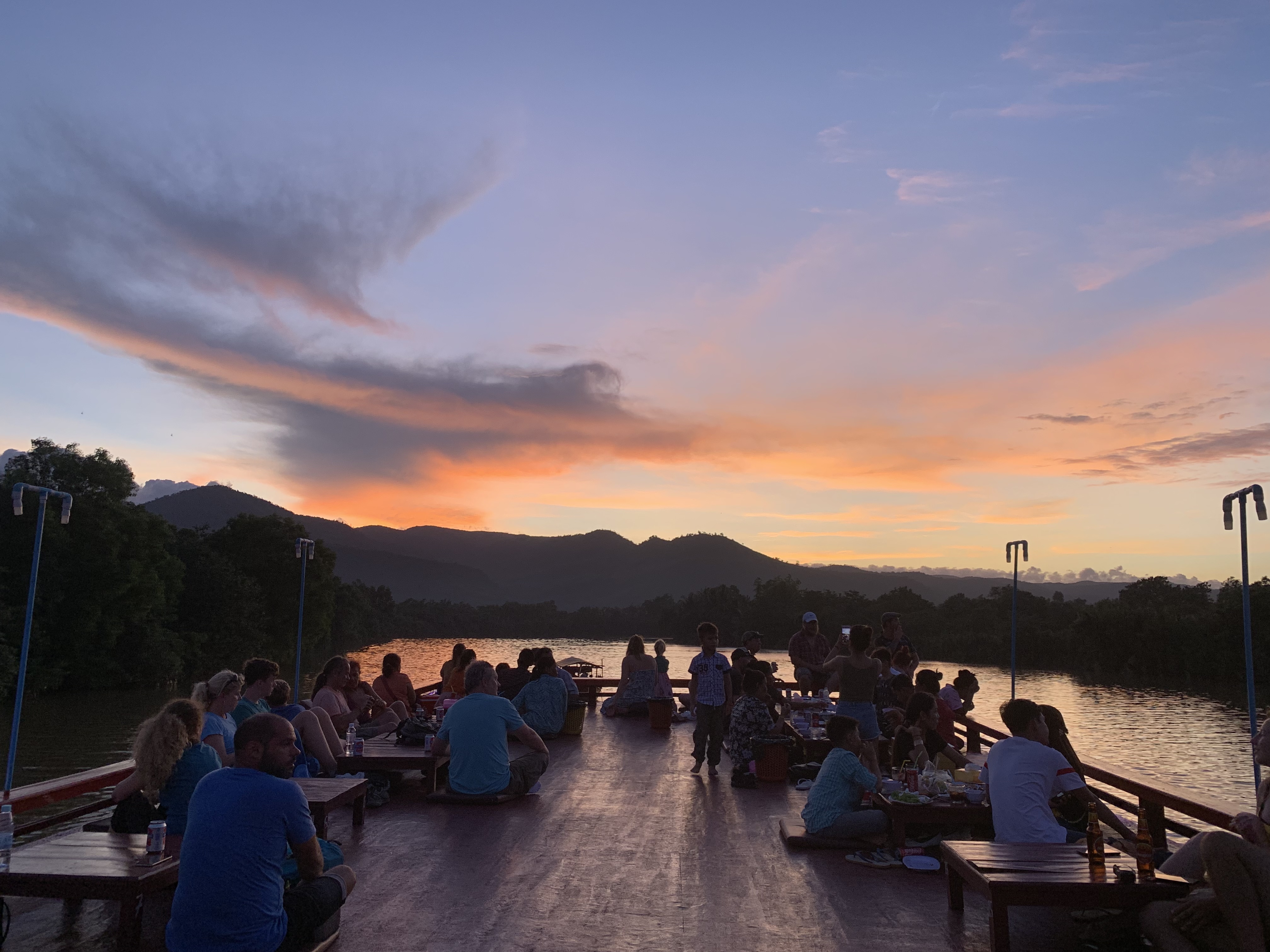
Upon arrival we picked a cruise boat to sail down the river for the sunset, which was beautiful. Sitting on the roof of the boat, you get scarily close to the 4 bridges you pass under, able to reach up and touch them while sitting down. Supposedly a trip to see the fireflies, we didn’t see any, but it didn’t matter.

a sunset cruise down the Teuk Chhou river, Kampot.

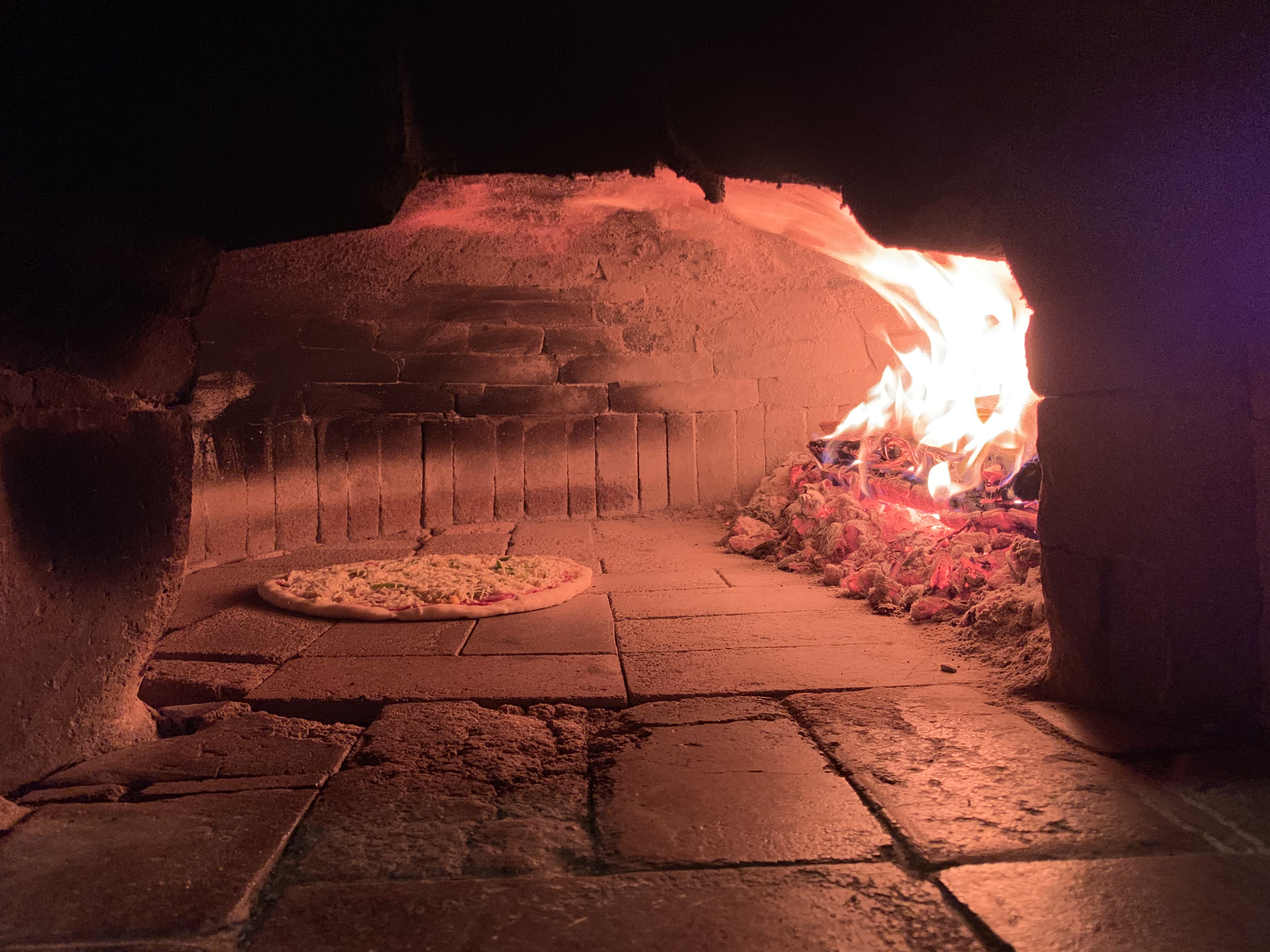
We stayed at the lovely Mea Culpa guesthouse, located close to the river and lotus pond. It doubles up as the best woodfire pizza restaurant in town and is a great place to stay. Run by Irish Ben who stopped off on a gap year 17 years ago, the name is a coded apology to his dad for never returning to Ireland to complete his PhD.

The pizza oven in Mea Culpa, Kampot.

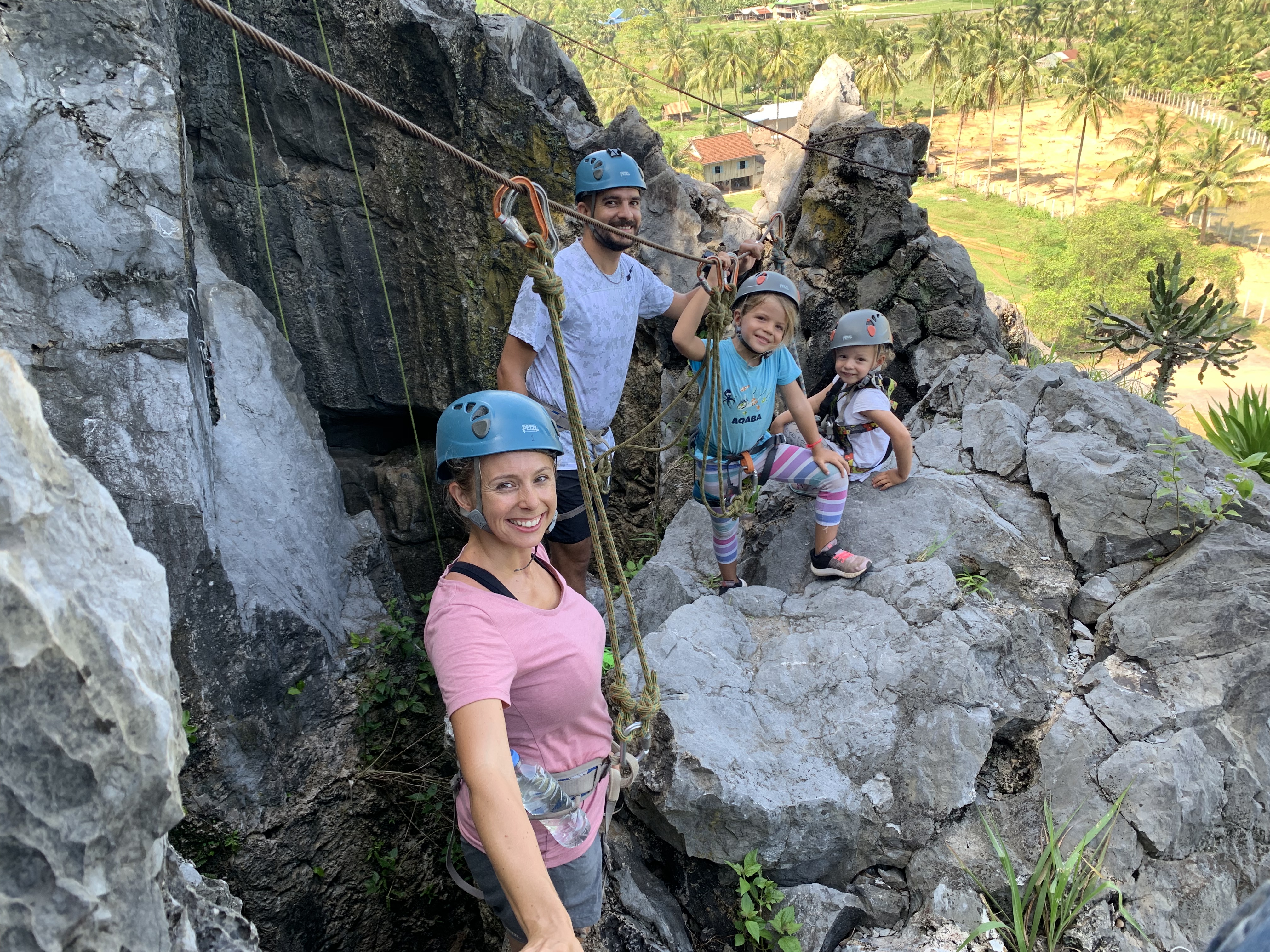
Located close to the Elephant mountain range, it was the perfect spot for MoJo to put all their practice climbing at Adventure HQ in Dubai into a real outdoor climb. Climbodia operate from the caves at Phnom Kbal Romeas. We chose to do the shorter two-hour option which was fantastic, including climbing, abseiling and traversing the often small tunnels in the cave complex. The three guides were brilliant at keeping the girls safe and at ease, we would highly recommend the experience.

At Phnom Kbal Romeas caves, near Kampot.

We returned to shower and lunch at a local café Epic Arts, which employs people with and without disabilities, supporting grassroots projects and serves up a mean gluten free raspberry and polenta cake.

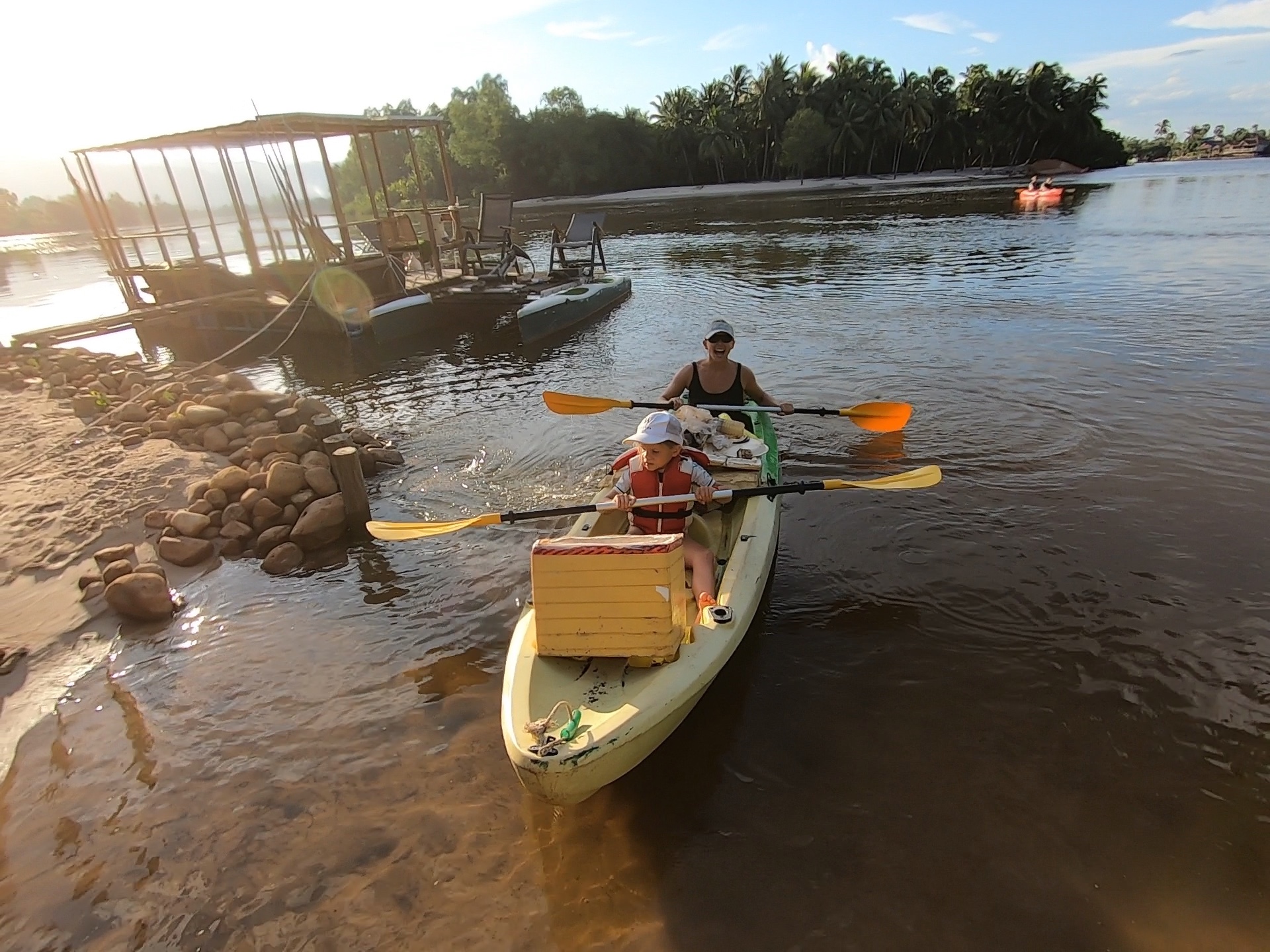
Afterwards we took a moto-tuk-tuk out to Champa Lodge, a Belgian-run guesthouse on the river, where we rented two kayaks to do the 45-minute Green Cathedral mangrove loop. As usual our trip turned into a rubbish collection, filling both kayaks with bits of plastic.

Renting kayaks at Champa Lodge, near Kampot.

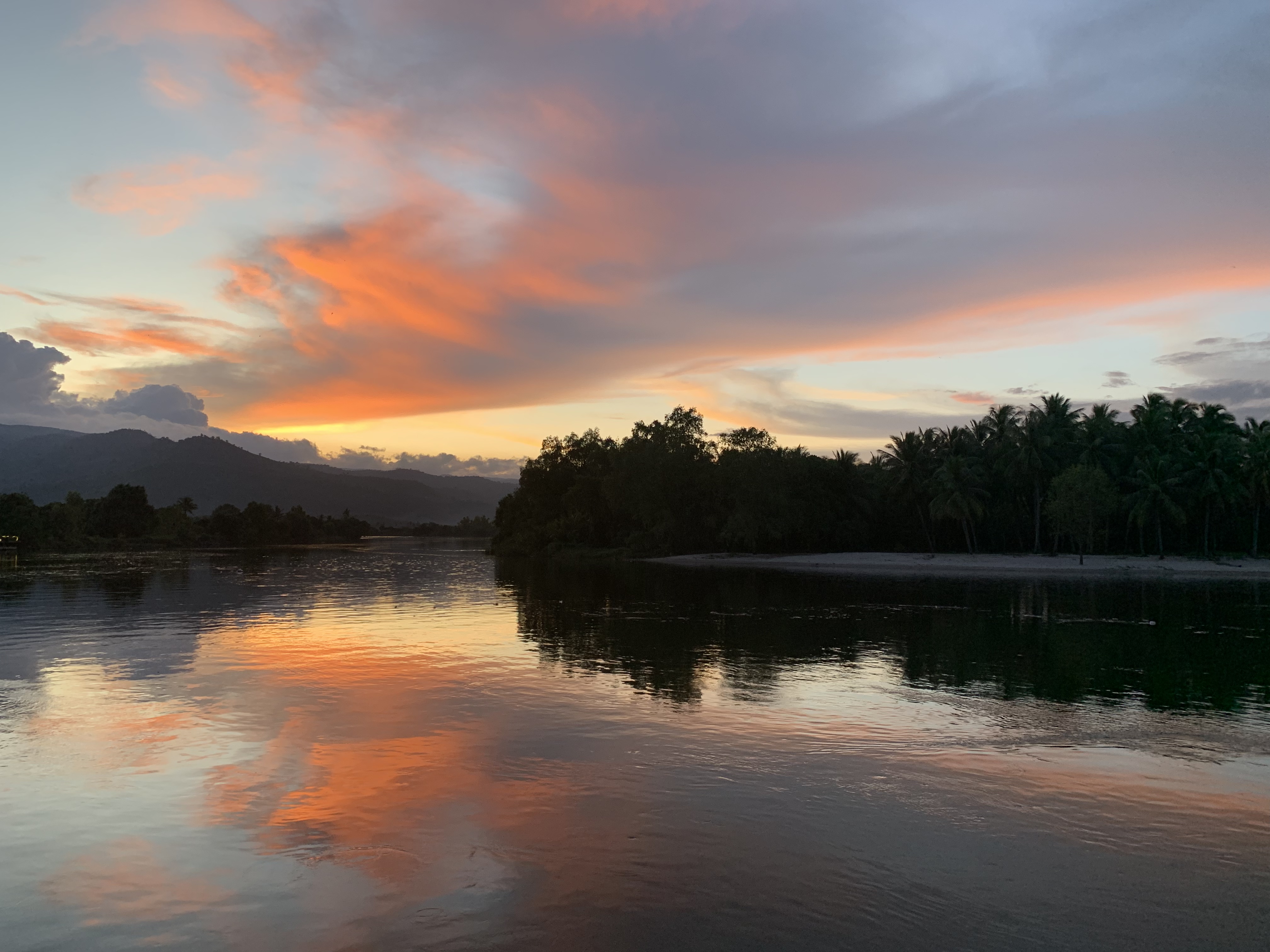
A sunset drink on our return on their terrace offered us an alternative, stunning sunset view.

Sunset at Champa Lodge, near Kampot.

We went to the funnily named Rikitikitavi for dinner (it’s from the Jungle Book) with a nice terrace and just next to the pub ‘Oh Neil’s’!

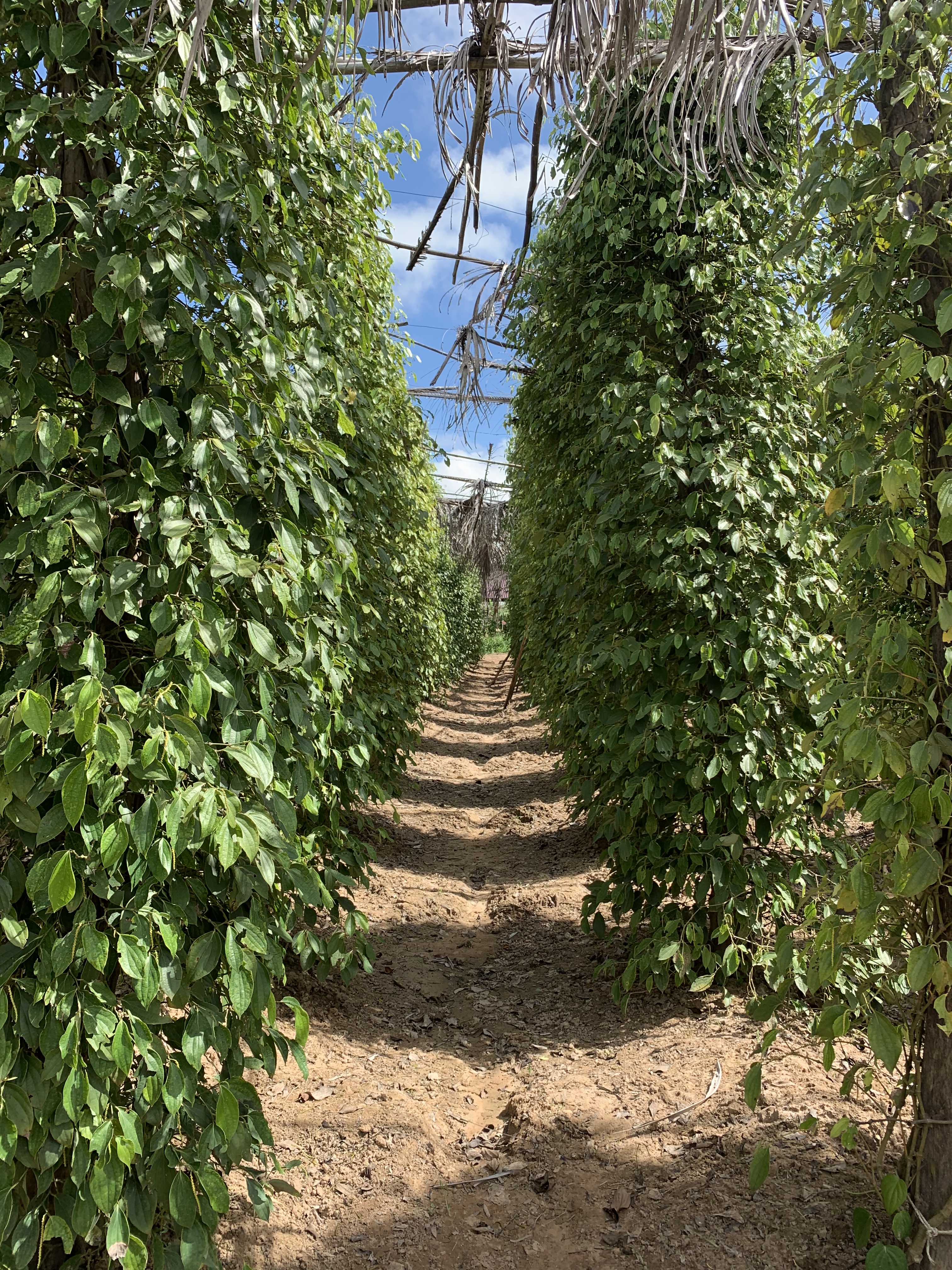
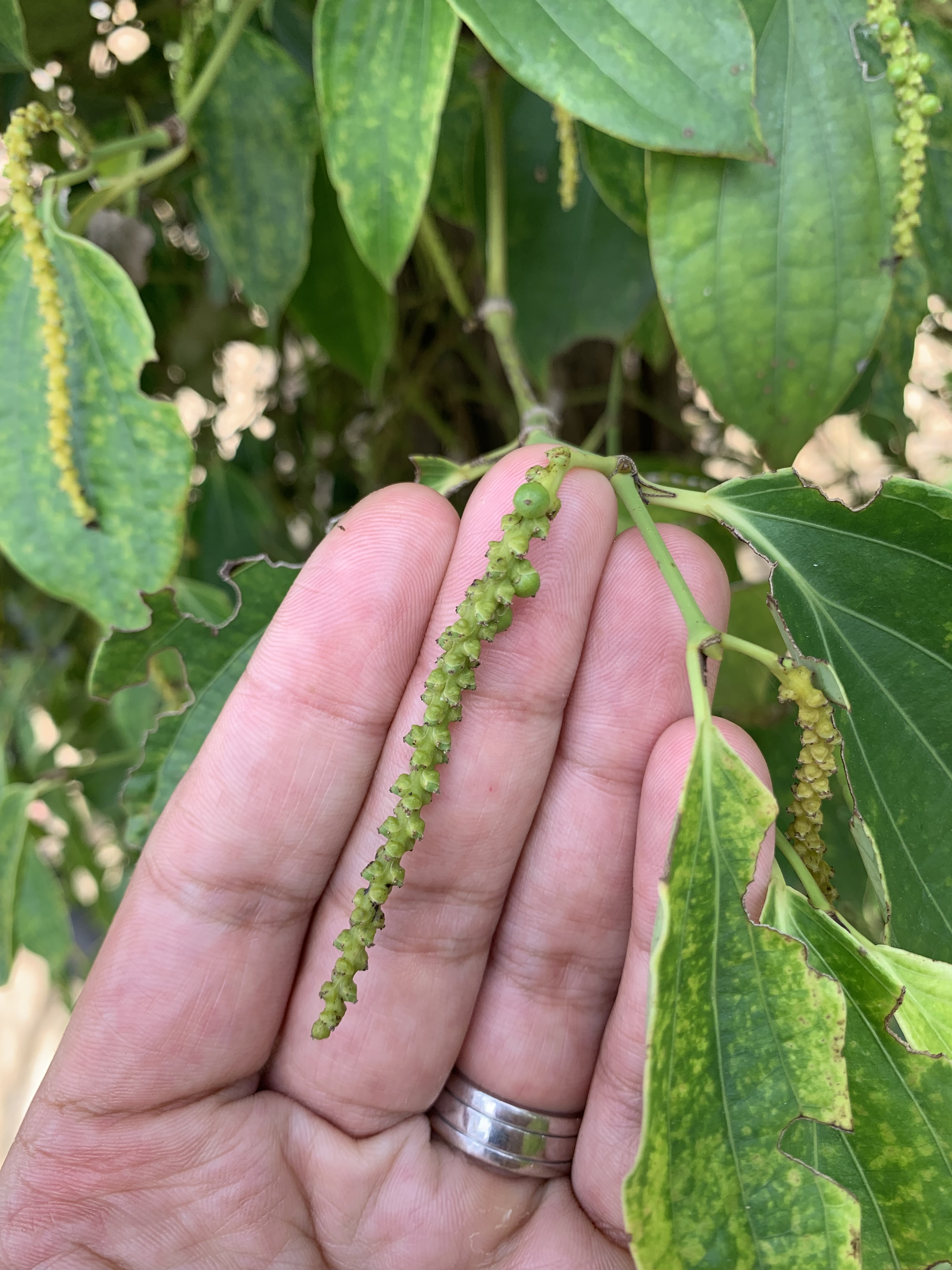
For our last day we took a car out to La Plantation for a late lunch and tour of their pepper plantation, as that is what Kampot is famous for (Kampot Pepper was renowned worldwide until the 1960s and is making a comeback). It was fascinating to learn about the farming techniques, especially for the fresh green peppercorns that can’t be dried and must be consumed soon after being picked. They are delicious on top of a beef luk-lak, a local speciality.

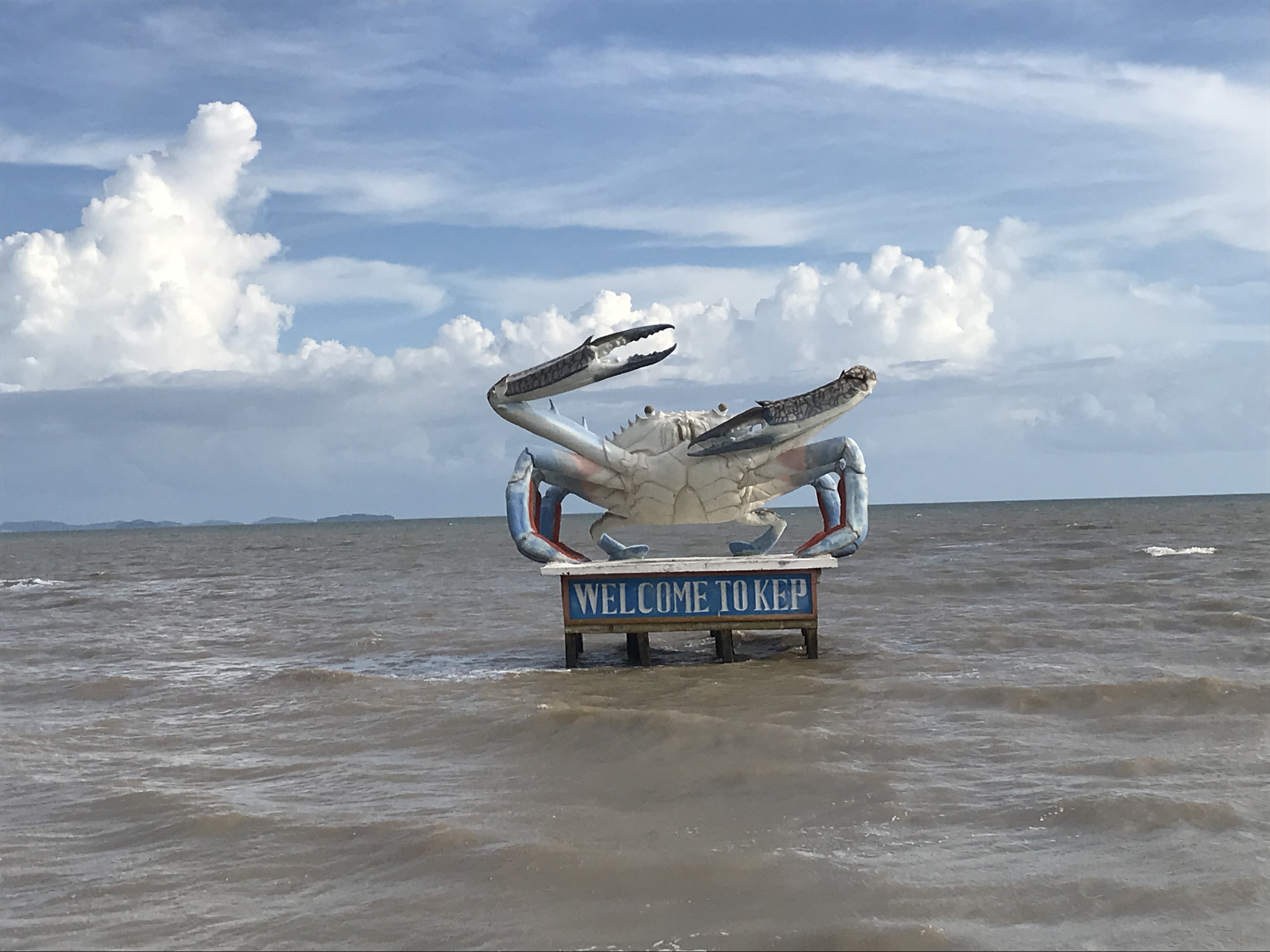
Less rewarding was the seaside resort of Kep, by far the best bit of it is a giant crab sculpture in the sea! Its beach is second-rate and the crab market was unfortunately too far a walk from where our driver dropped us off. The girls quite enjoyed playing with some local kids on a blowup slide on the beach.

Kep and finding pepper at La Plantation.

Our experiences in Cambodia often seemed to be like this: we would find a complete gem of a place that we never want to leave and then go to another place recommended in a guide book or by someone we meet and are disappointed. It is a country that is clearly still finding its way when it comes to tourism – but one that certainly warrants further exploration.