As we have travelled the world, Tom and I have often integrated a ratio system into the allocation of our time spent in various places. Indeed, it is something that comes into play throughout our lives when making decisions over how to fill and activate any free time we have together. This is a balance between art and food. The two mainstays of our lives, surely? It goes without saying that food, given its cardinal role in our survival always receives a larger chunk of the pie, as it were.
As MoJo get more vocal with age, we have come to realise that we have two more votes around the table as to how to apportion our leisure time. This has crept up on us since our major Life with MoJo adventure in 2019-20 where the little darlings were pretty compliant and didn’t get much of a say despite the occasional meltdown (equally likely to happen in a food outlet as a cultural venue I hasten to say). Now there are other considerations to throw into the mix–shopping for example. Not something that Tom nor I consider in more than a functional capacity. Time spent on skincare and getting ready. Chillaxing on the beach (ok that’s something we all enjoy and need). But it does make decisions that bit more complicated on where and what to do when we are away.
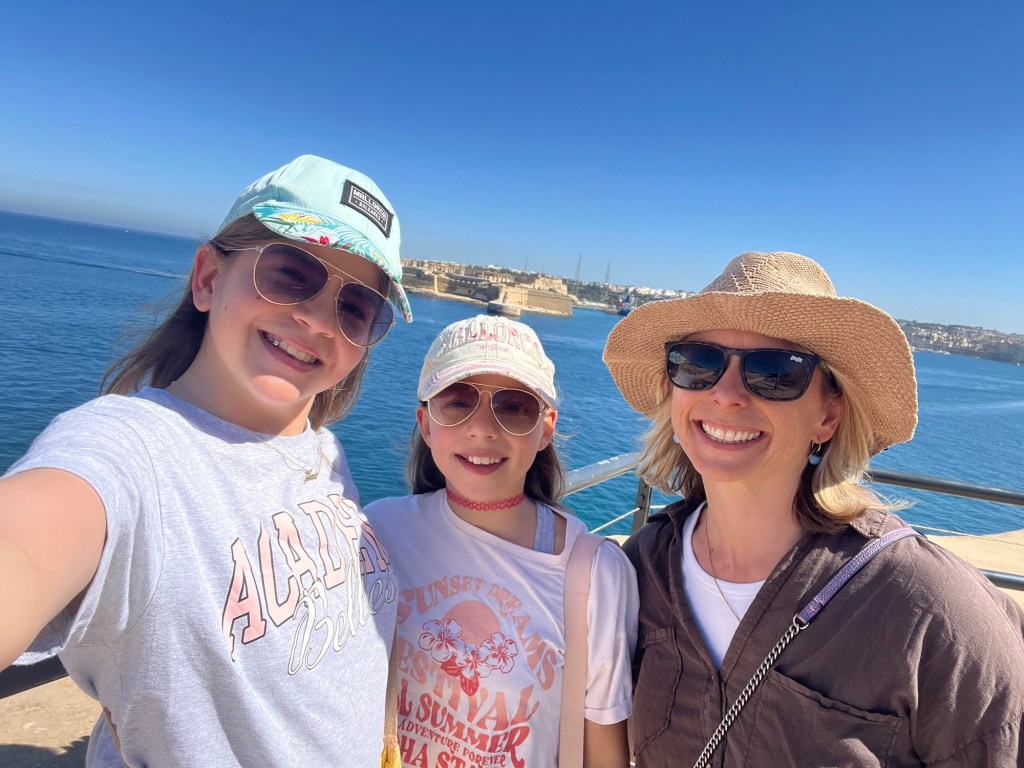
Whenever we arrive in a new destination, Tom and I jump into our unspoken roles: I take the lead on research, both in advance and on the ground, guidebook in hand (Kindle version usually), whilst Tom steps in with restaurant tips and superior orientation skills when it comes to wayfinding. Recently Molly or Joanna have, in small ways, taken some of these over. They like to take pictures, they love an audio guide, and to choose what type of cuisine they feel like for our next meal (when given some carefully curated options). Sometimes Joanna might (almost) match my stamina for art venues when Tom and Molly have waned and fancy sitting down, grabbing a drink and playing a game of cards, so we have divided up, and are all the happier for it.
We felt Malta was going to tick so many boxes for us all. We booked relatively last minute, finding tickets for £1 each due, for the first time, to using our AMEX points (which would have run out at the end of April) so that felt like a win. It is a place that has been on our radar, I had friends in my Venice days who had connections with it and dear Marcie sent over some very valuable advice on where to go and what to see which became our crib sheet for our time there. It’s Mediterranean location, mix of Italian and Middle Eastern food and cultural influences, history of occupation and resistance all appealed. For me, that the second edition of the Malta Biennale was on was a major draw too, curated by Rosa Martinez who’s Venice Biennale edition I knew well as it was when I was living in Venice.
Gatwick on the Tuesday after the Easter bank holiday weekend was very quiet, so our journey was straightforward – the only delay was the long queue to collect a hire car when we landed. We had decided we needed one, even though there are buses around the island (which only measures 27 x 14.5km) and we had heard traffic could be bad, our own transport felt essential. We had decided to stay in the north-east end of the main island, in a place called Mellieha, which seemed like it had some life to it, was close to sandy beaches and gave easy access to the northern island of Gozo and Coral Lagoon. This for us was not a city break, which if we had based ourselves in the capital Valletta it could have been.
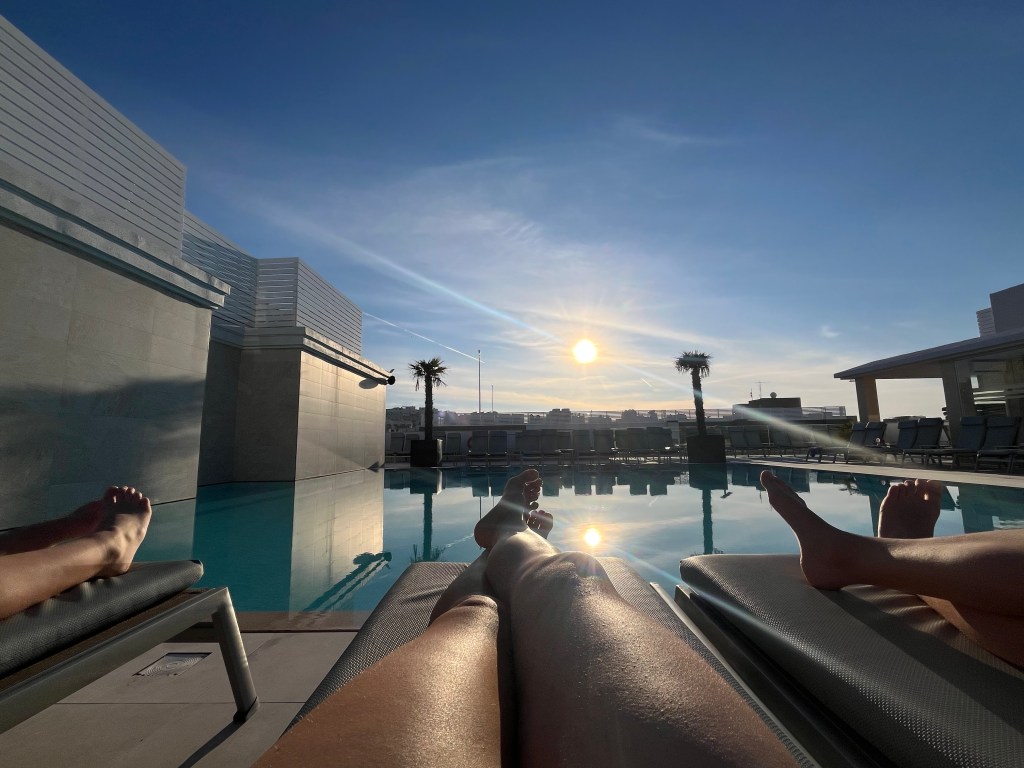
We stayed at the Maritim Antonine Hotel, sharing a room (Molly enjoyed creating a detailed report–let’s just say here that the sofa bed was too small, and the main bed enormous!) with a decent buffet breakfast and a few swimming pools, but it was too cold to enjoy the outside ones. There were quite a few restaurant options near our hotel, but unfortunately, they were all closed when we arrived after 10pm so went to bed a bit hungry. We did have some very pleasant evening meals close by. We decided against the Michelin starred Commando as the menu didn’t seem right for the kids, and instead opted for Ta’Randi, which was a great find, it has been there for decades and served great pizza (including gluten free options) as well as traditional Maltese dishes and seafood. Mithna further up the main (steep) street is situated in a converted 17th century windmill (many were built across the islands by the Knights of St John after they arrived in 1530, we visited another in Gozo) gave Tom some tasty rabbit, but the service was incredibly slow. It took us a couple of days to find another restaurant strip away from the traffic leading up to the front of the church, where we ate twice. First at the Imperial Terrace which served me some rather tasteless mussels, and Liska Restaurant on our last night where I had delicious red snapper: it’s main restaurant is in the traditional fishing village in the south of the island, Marsalokk, which we didn’t have time to visit, so this was a good alternative.
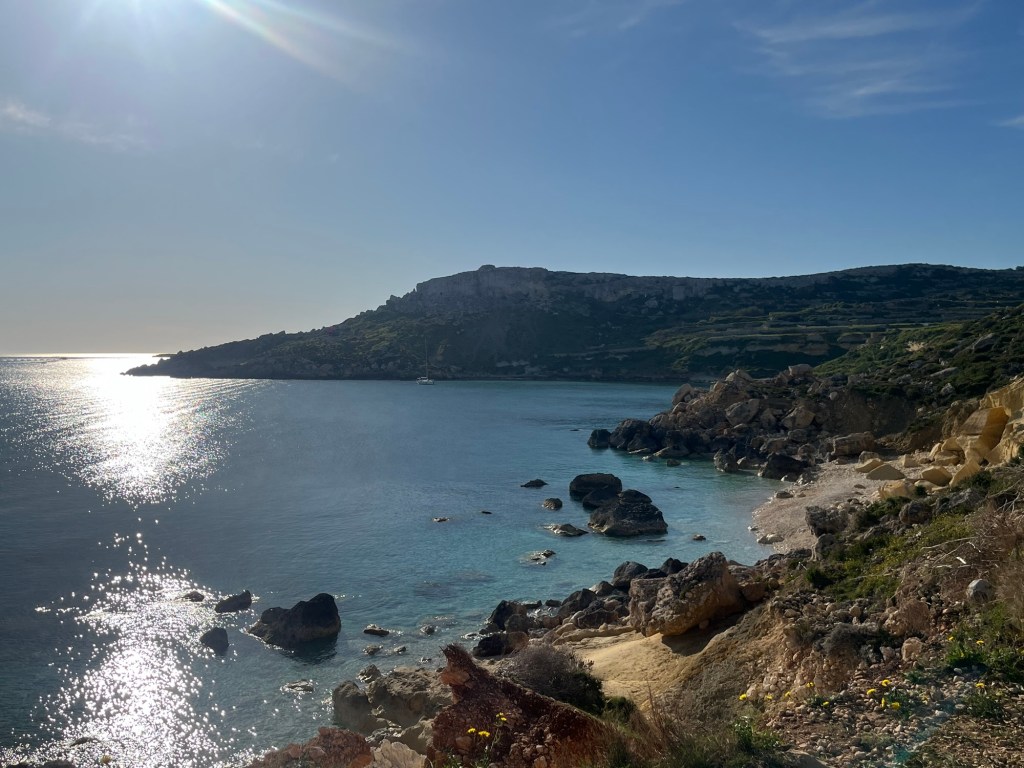
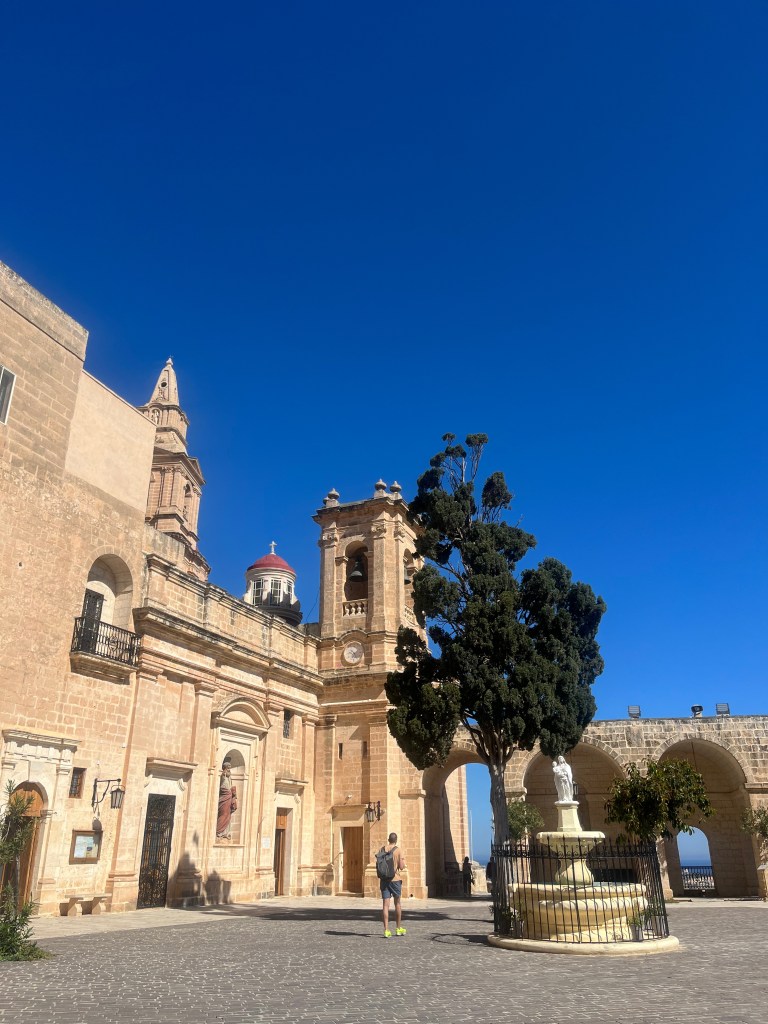
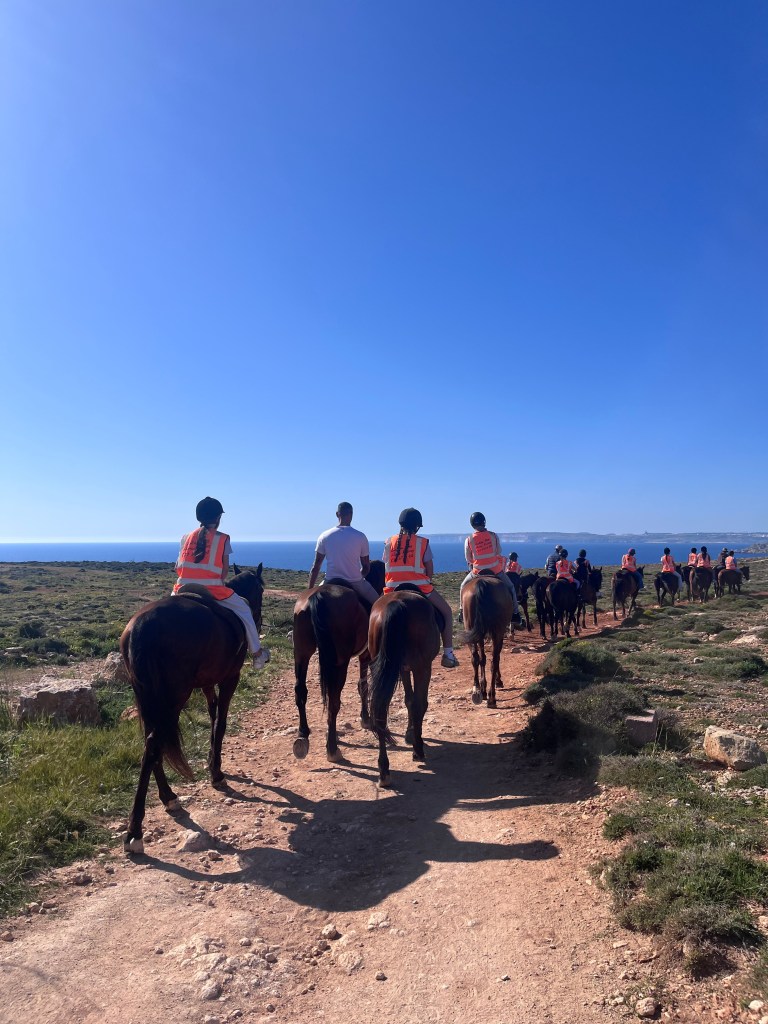
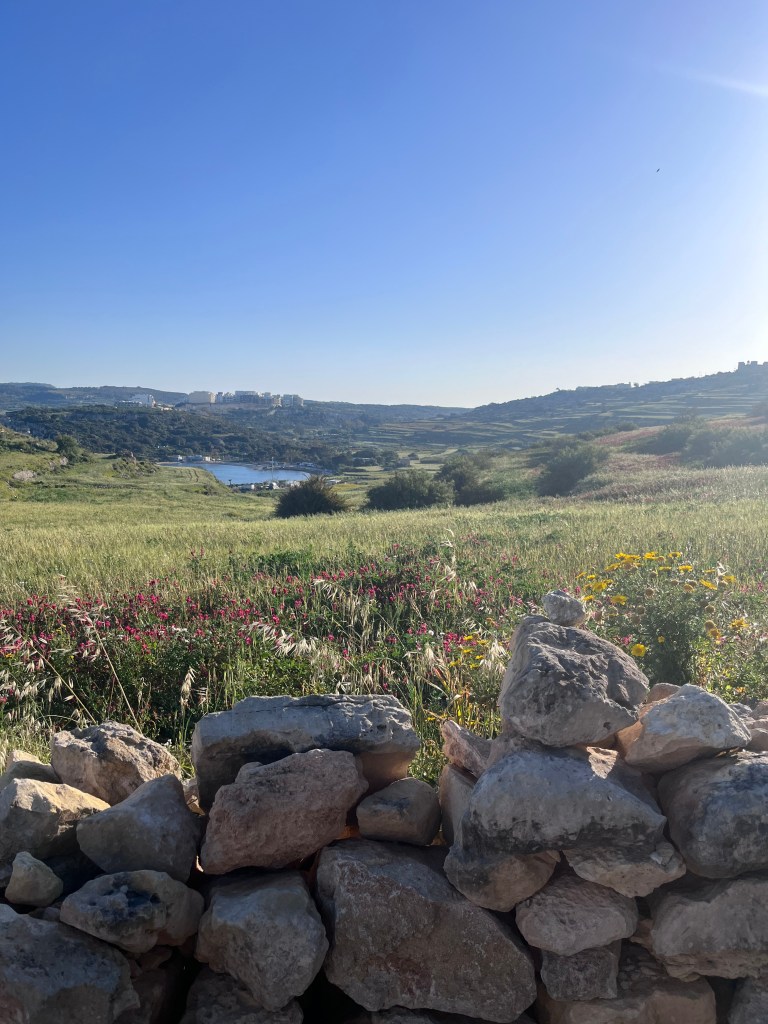
The scenery around Mellieha was incredibly dramatic, with a deep valley containing a shrine running through the middle of it down steep hills to the sea. The sanctuary of our lady of Mellieha contains many offerings, and had a beautiful square only made a little sinister by a man with a snake. Also creepy but fascinating to visit were the WW2 bunkers. Running half a km under the town they are the largest on the island, although rather scary with decrepit mannequins illustrating the dismal conditions civilians had to endure to survive the relentless bombing by the Axis powers given the strategic importance of Malta in the Mediterranean. Their bravery was awarded the George Cross by Britain at the end of the war. As I was London Marathon training, I headed off on several runs around the costal paths which were very scrambly in places and hilly but was rewarded with stunning views and secret coves. Tom also put his trainers on for a few runs but was suffering still from a lingering man flu. One of my runs took me across to Golden Bay, where we enjoyed a very pleasant few hours on the beach and lunch on the glorious terrace of Apple’s Eye Restaurant before Molly and Joanna went on a horse-riding trek.
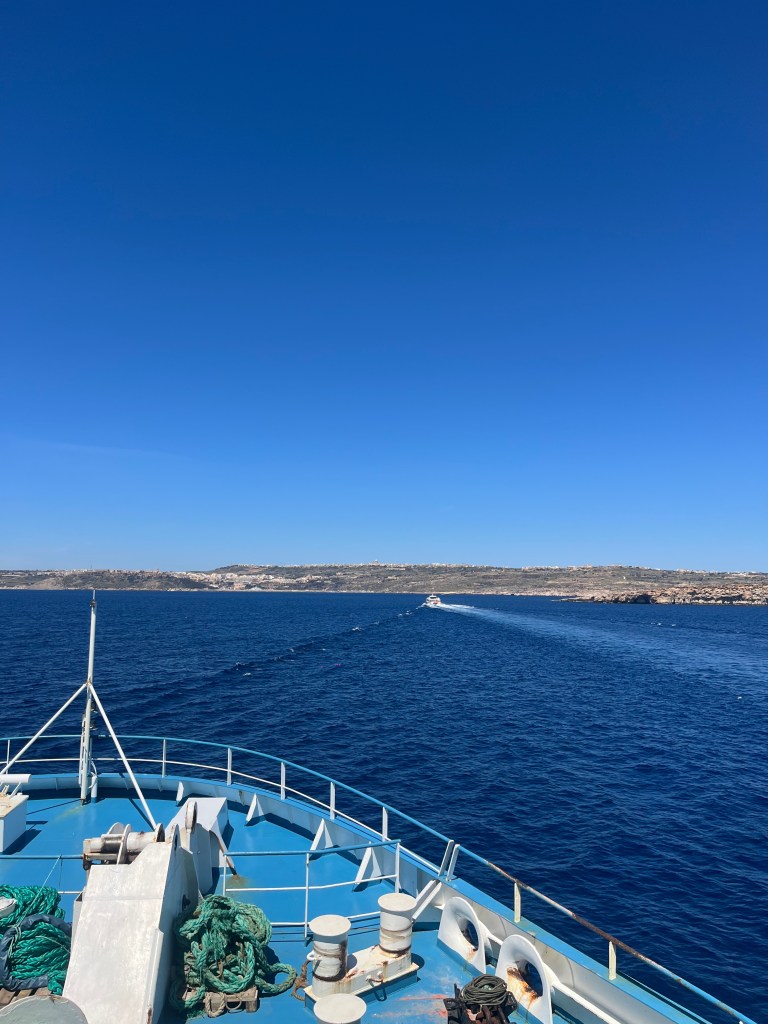
Our first morning hadn’t started too well as we realised Joanna had a stye under her eye (see above re skincare, no more mascara for our 11-year-old!) and the pharmacy literally next door to our hotel advised we waited to see a doctor who would be there in 10 minutes or so. All dealt with very efficiently – with a bit of a cost – turned out Joanna also had an ear infection, no swimming under water for her (given the temperature of the water, wise!). This meant that we set off a little late to Gozo, which we had decided to go to on our first day, taking the car ferry from Marfa Bay, not even a 15-minute drive from our hotel. There was a long queue to board the ferry, eventually we enjoyed being up on deck and admiring the crystal-clear blue waters and prime diving spots around the uninhabited island of Comino, somewhere to come back to.
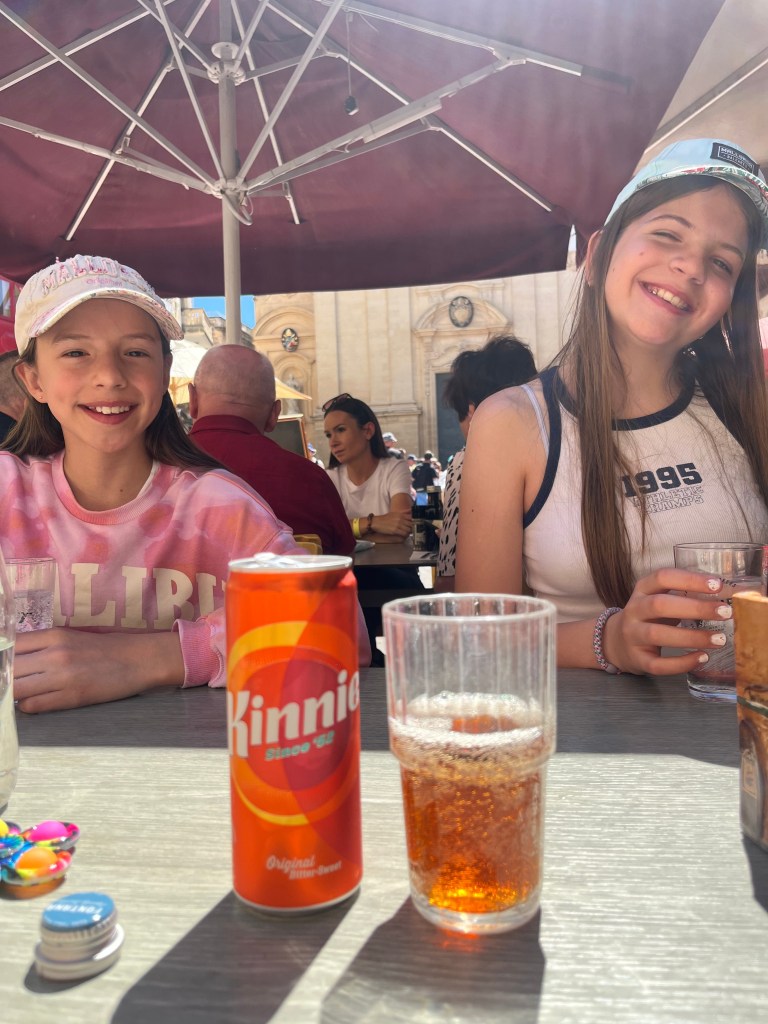
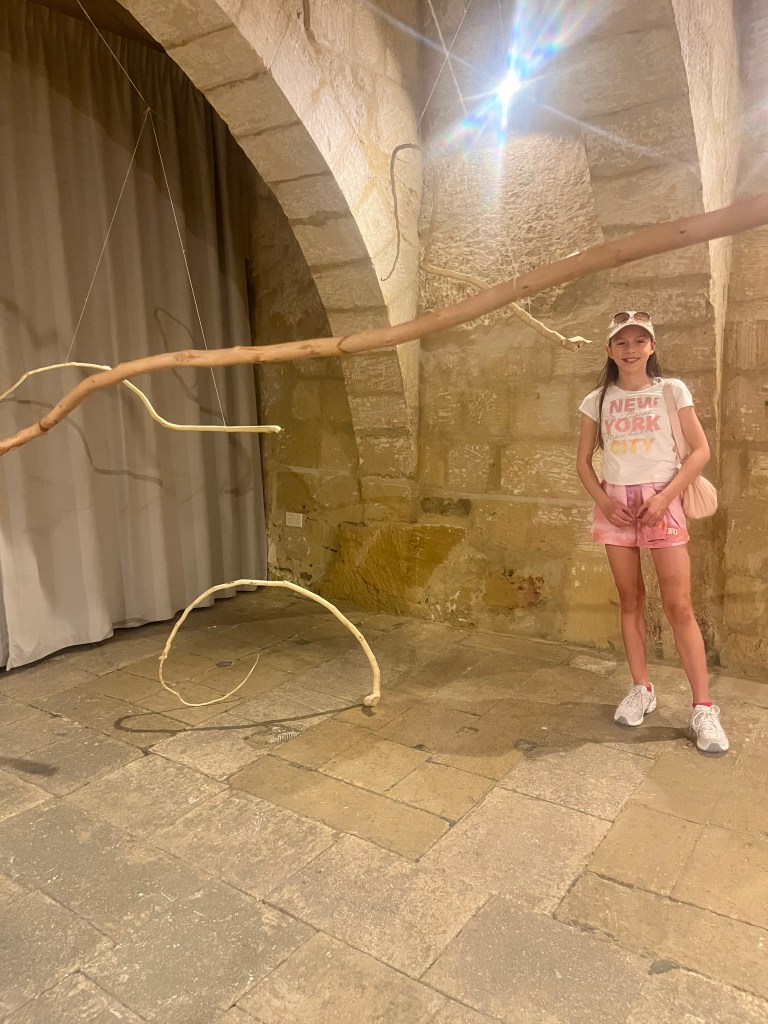
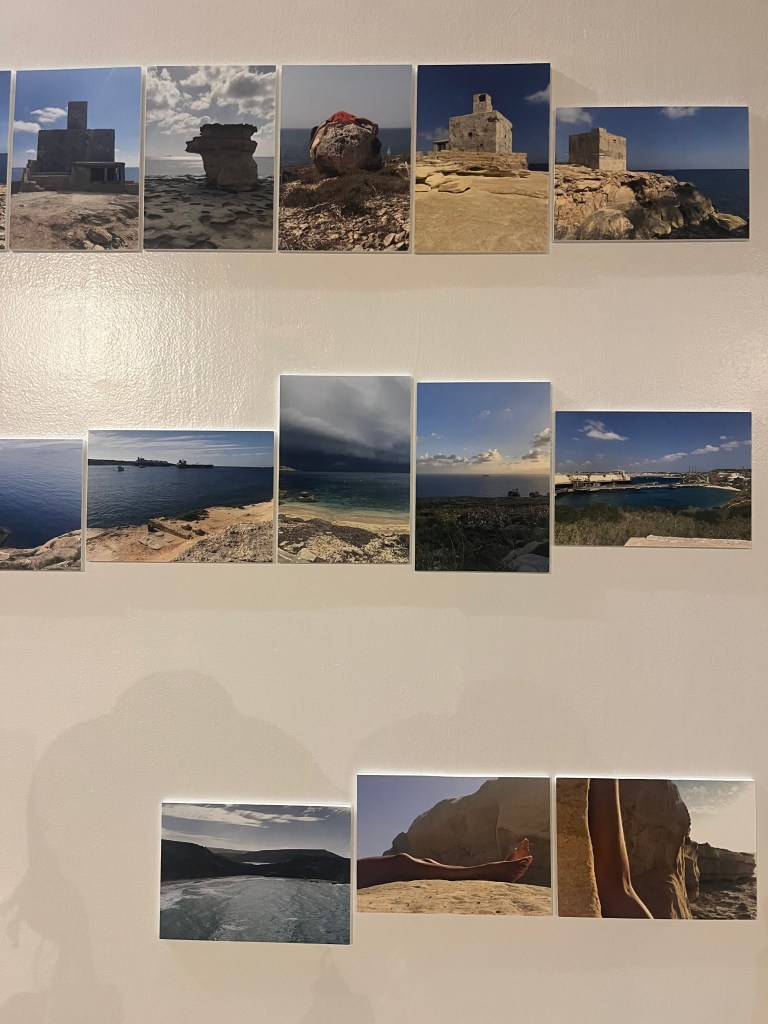
By the time we eventually got going exploring the island of Gozo, we were ready for lunch. I knew we needed to visit Rabat (or Victoria, its colonial name) the capital so we headed there and eventually found a parking space and lunch on a lovely pedestrian square bordering St George’s Basilica. It was here I first sampled a ‘Kinnie’ a local chinotto type bitter soda which I very much liked, especially as a mixer later into the evening, and Tom a Cisk lager. Gift Shopping round here suited the girls, especially nice was House of Gozo. Refreshed we made the walk up to the Cittadella for great views round its ramparts, and our first Malta Biennale site with just a few contemporary art interventions – most fun was the interactive piece BADDANCEWITHTHEBADWEEDS by Rocio Berenguer, and Nina Gerada’s photographic portraits shot around Malta accompanied by ceramics and a hand-drawn memory map. Georgina Sleap from the UK based in Cairo displayed twisted thin pieces of wood almost dancing through the ancient spaces.
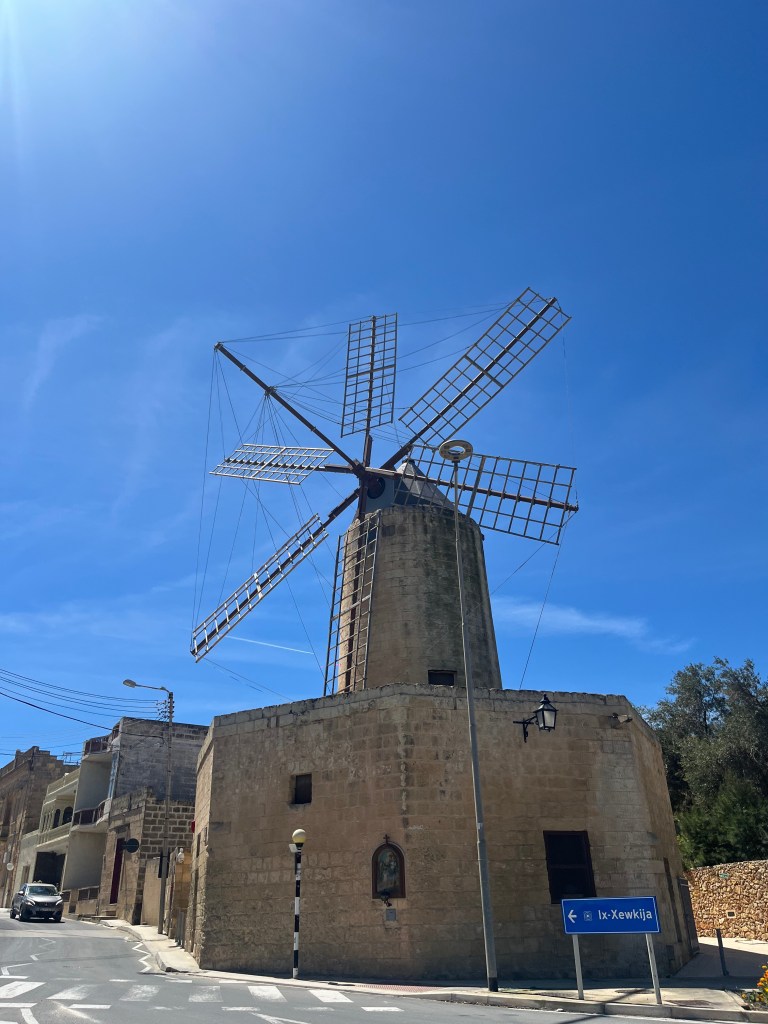
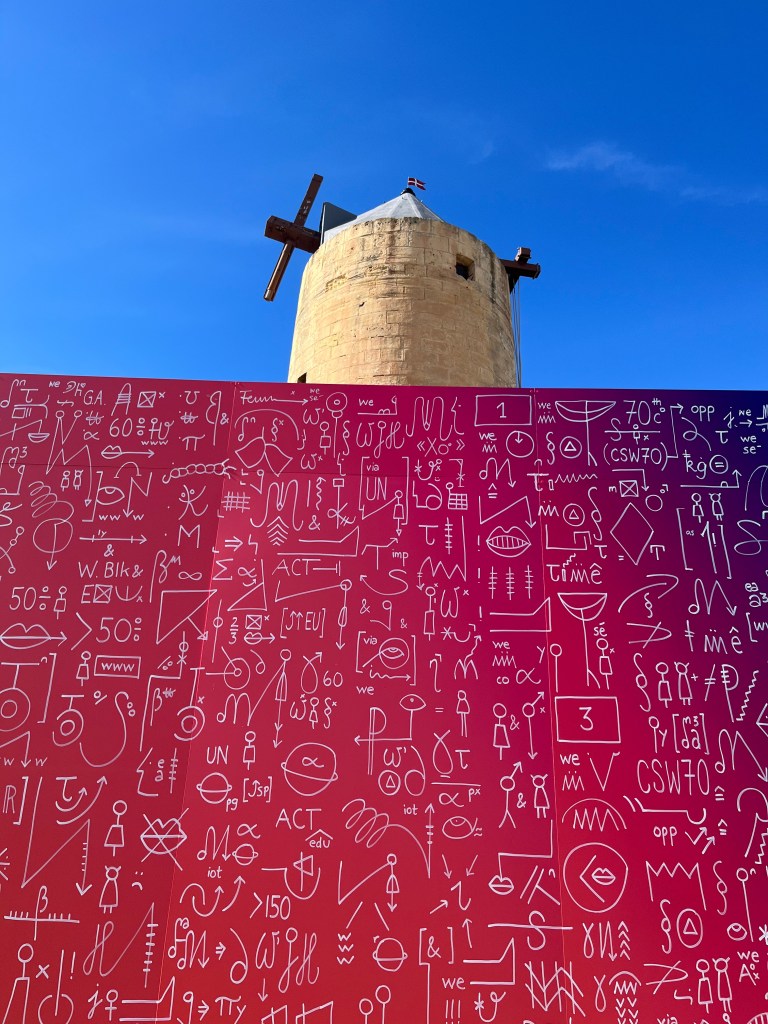
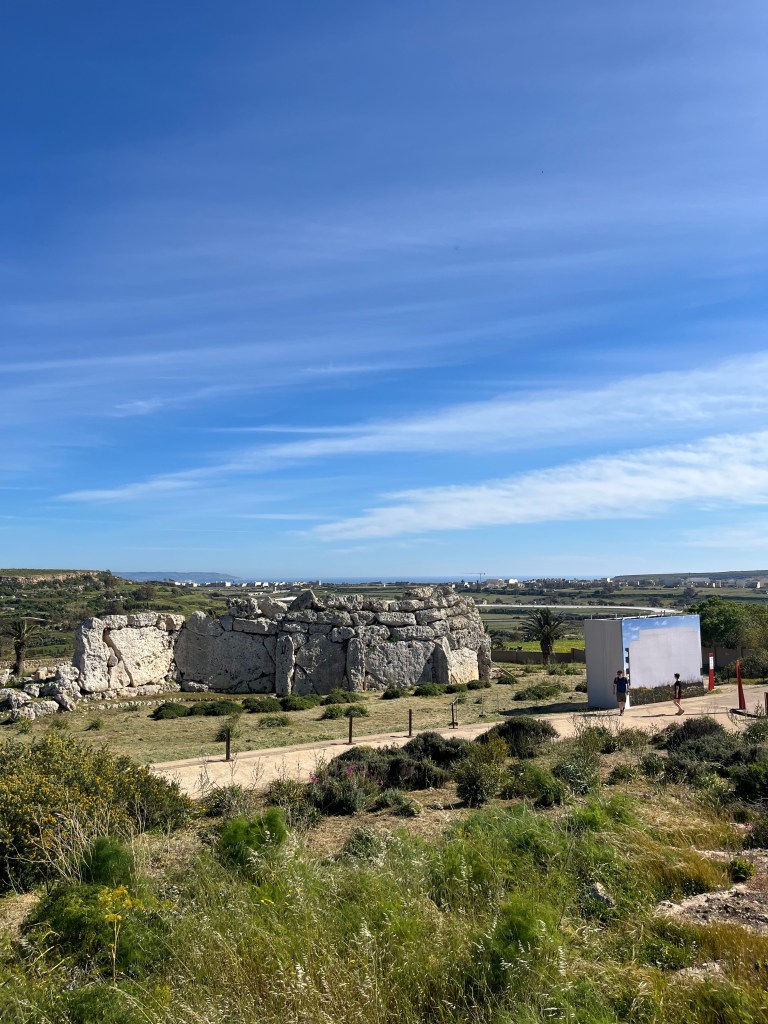
Next up on our itinerary was Xaghra, to dive even deeper into the islands long history. At the Ggantija Archaeological Park there are two well-preserved limestone neolithic temples, which dating from c3600 BC are among the world’s oldest monuments, predating the Great Pyramid in Egypt by over a thousand years. MoJo could not have been less interested…. Almost making their point was the (I thought) very clever artwork (it was awarded a prize by the biennale judges, so I was not alone) BLANK by Therese Debono: a photograph printed on a large scale of a peeling white painted side of a modern building, blocking visitors first view of the ancient temple. Her practice focuses on sites that have been altered, erased or rebuilt and oftentimes hold within them trauma, or at least layers of lived experience. We walked on to the Ta’Kola Windmill which you could climb inside and learn about the history of the mill as well as experience some biennale interventions, beginning on the exterior with Bettina Hutchek’s mural logging cases of violence against women in the digital space. Tania Berta Judith’s gold embroidered hanging was rather beautiful. Interesting too was the display of a grinding stone at the door to the mill, selected by the curator Rosa Martinez to illustrate the ways it connects to the biennale’s theme of CLEAN CLEAR CUT, representing simple, visible labour, skills passed down through generations using sustainable energy in contrast to today’s careless waste and consumerism. It wasn’t much, but it was more than enough for us.
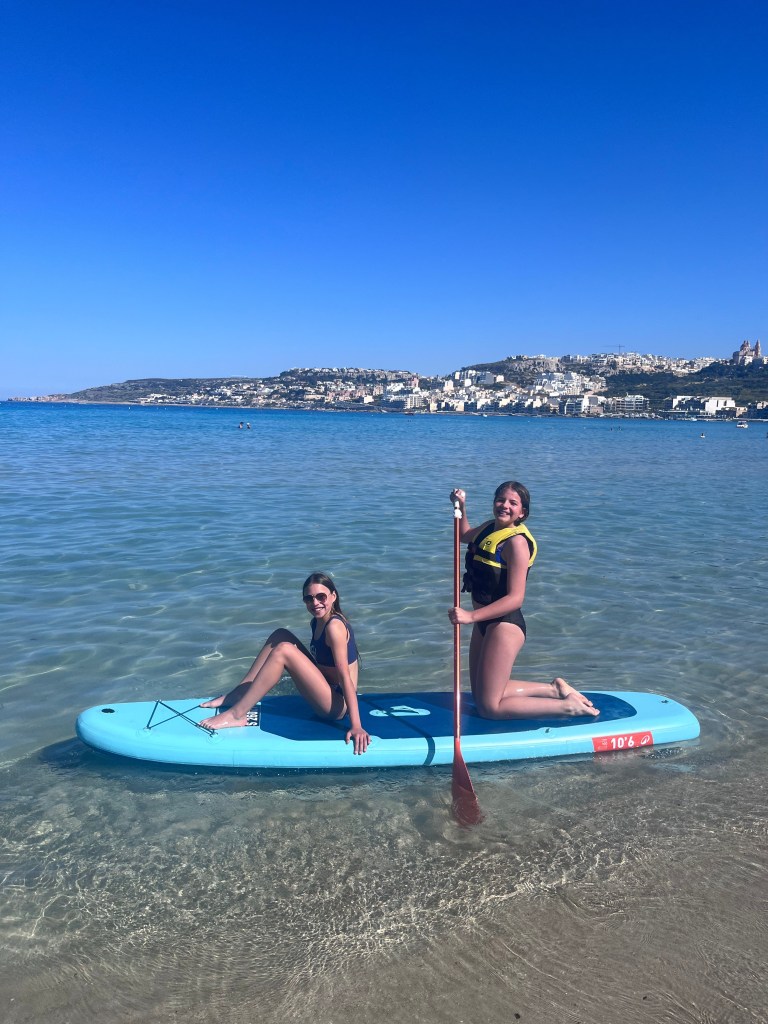
After all that we were definitely over our quota of art time, so headed for an ice cream on the red-tinged sands of Ramia beach, which was delightful. A paddle was all we were brave enough to do as it was getting late, and the ferry home was beckoning so we drove back to the port of Mgarr, admiring the beautiful village of Nadur which was on route.
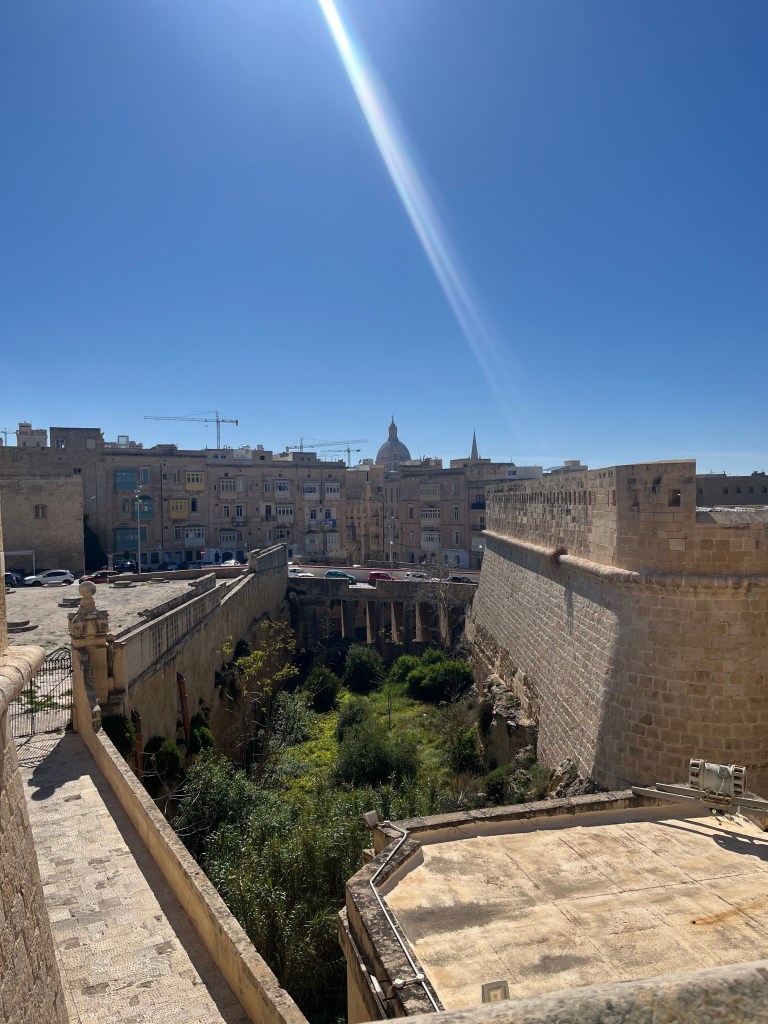
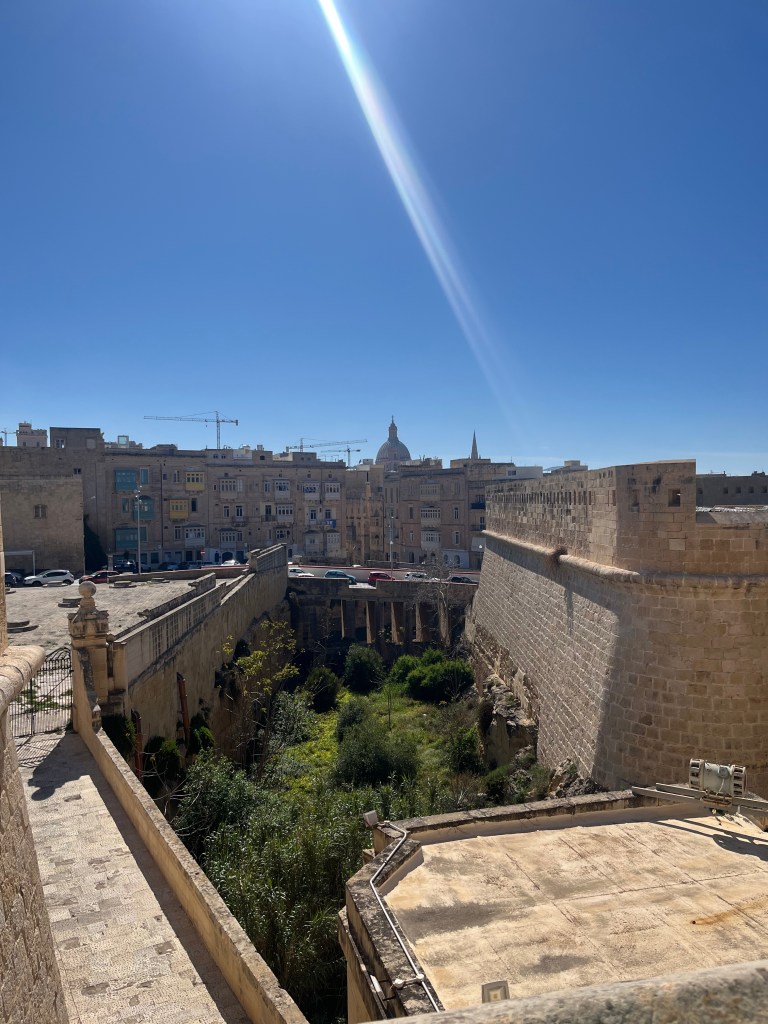
Day Two had to be a trip to Valletta, the tiny yet grand capital of Malta. It was quite a drive for us round the coast (about 45 minutes). Parking again was tricky, the city is squashed into a peninsula overlooking the Grand Harbour and the three cities on three sides, and its streets are medieval in scale. The best spot was a car park just slightly beyond the city walls by the bus station and Triton’s Fountain. It was a beautiful day and the atmosphere was buzzing, buskers were playing music, the architecture both ancient and contemporary was alluring – especially Renzo Piano’s imposing Parliament Building. I led us swiftly into MUZA, the National Community Museum to see the Maltese Pavilion for the biennale, a random mix of work, its title suggesting connections to Alice’s Adventures in Wonderland. There was also the Guerrilla Girls and paintings by Amanda Holiday from Sierra Leone. Next stop on the culture trail (and biennale map – signage was great getting between venues) was the National Museum of Archaeology, recommended by Marcie and indeed it had some special finds. Upstairs the elaborately decorated former dining room when the building was a palace of some sort, with a minstrels gallery, had conservators hard at work, and photographs by Daniel Cilia, part of a series called Calendars in Stone, c5,000BC, 1992-2025. In the next room was the rather explicit Birth of my daughter and umbilical self-portrait by the Argentinian artist Ana Alvarez-Errecalde, paired with gentler hollow ceramic vessels by Melita Couta from Cyprus, which she describes as ‘fossils in reverse’.
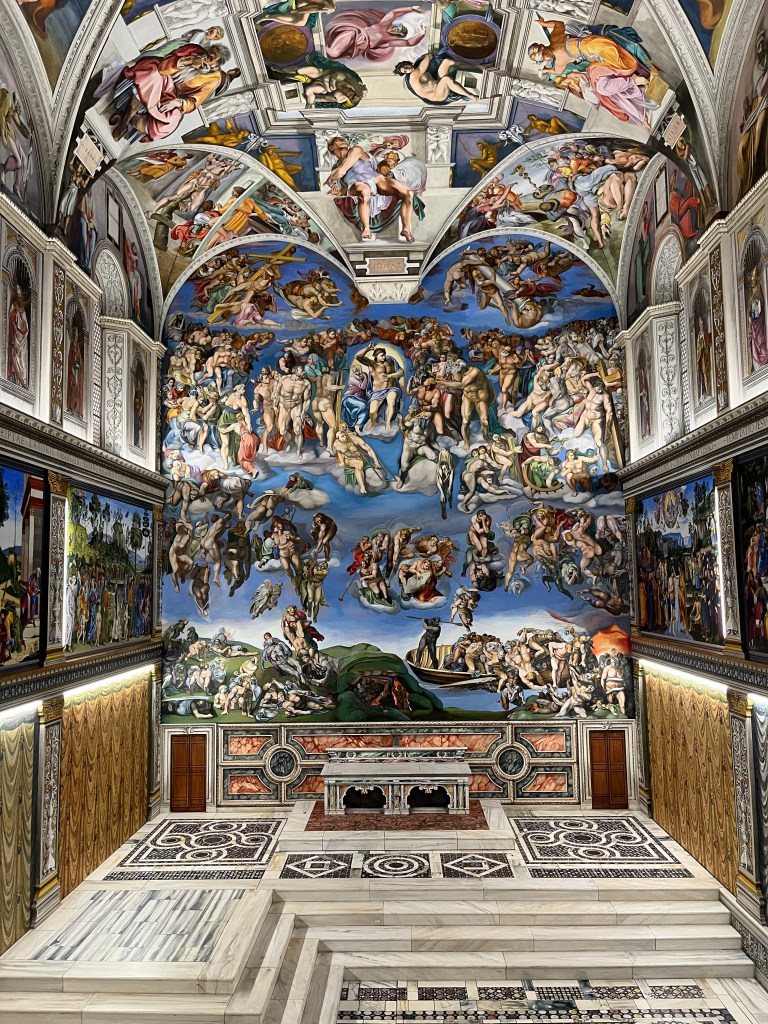
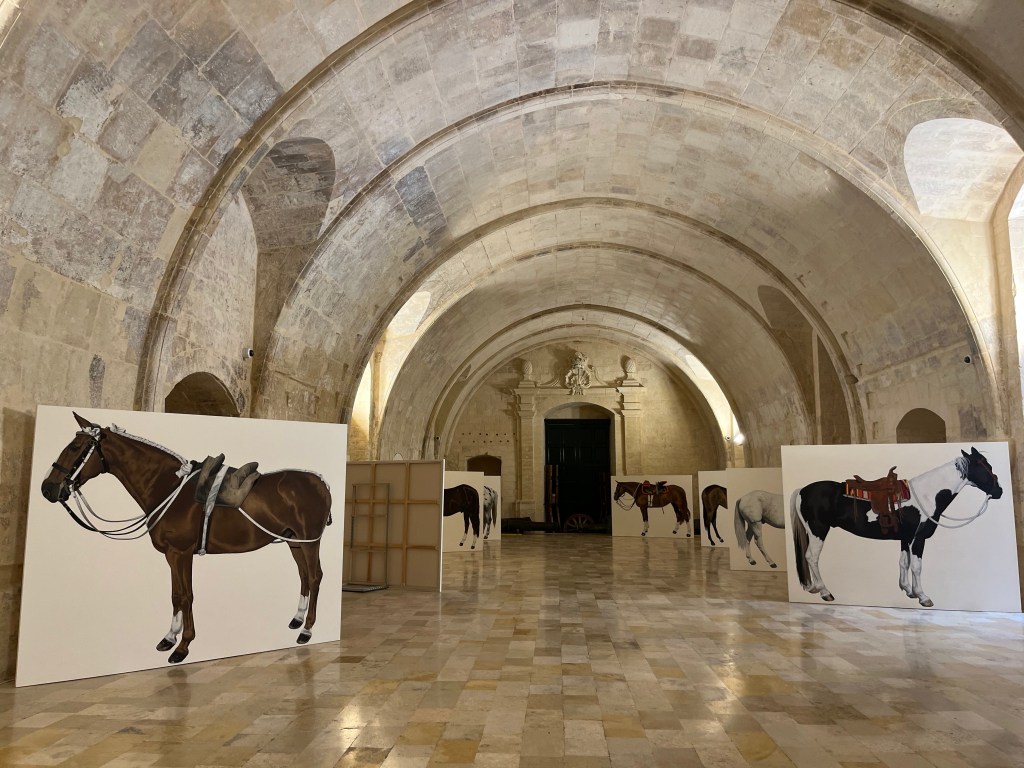
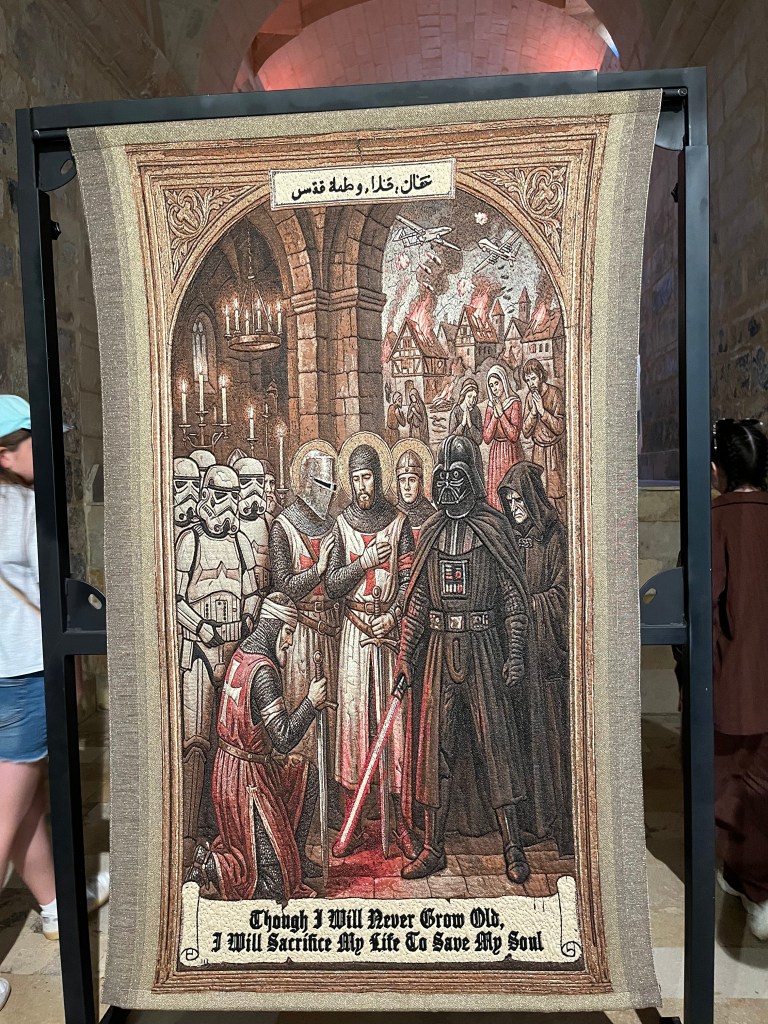
Probably the most impressive venue we visited in Valletta was the Grand Master’s Palace, with grand rooms laid out around a courtyard, a highlight the enormous Armory with rows and rows of different weapons. Emily Jacir’s harrowing films were scattered throughout the palace, and Halil Altindere’s interventions were a highlight, a hanging tapestry Star Wars: Knights of Malta vs Ottoman Drones and a 14 piece illuminated manuscript produced with the help of AI in traditional watercolour and gold in a leather binding titled ‘Star Wars: Royal Hunt juxtaposing Yoda and Stormtroopers with bearded, turbaned warriors on foot and horseback. Sachiko Abe’s Cut Papers were a welcome calm moment as we climbed a grand staircase. Lara Nickel’s 12 Horses – Homage to Jannis Kounellis a nice warm up before horse riding the next day and the enticing queue nearby was worth the short wait to experience Maurizio Cattelan’s remarkable scale model of the Sistine Chapel in all its technicolour splendour.
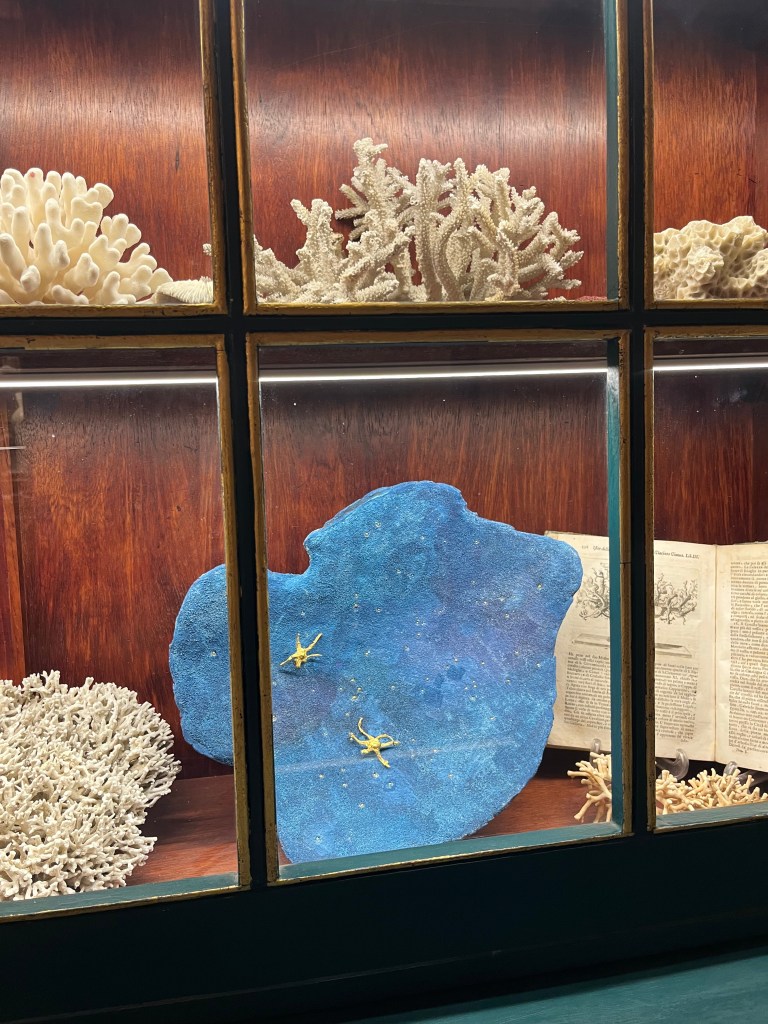
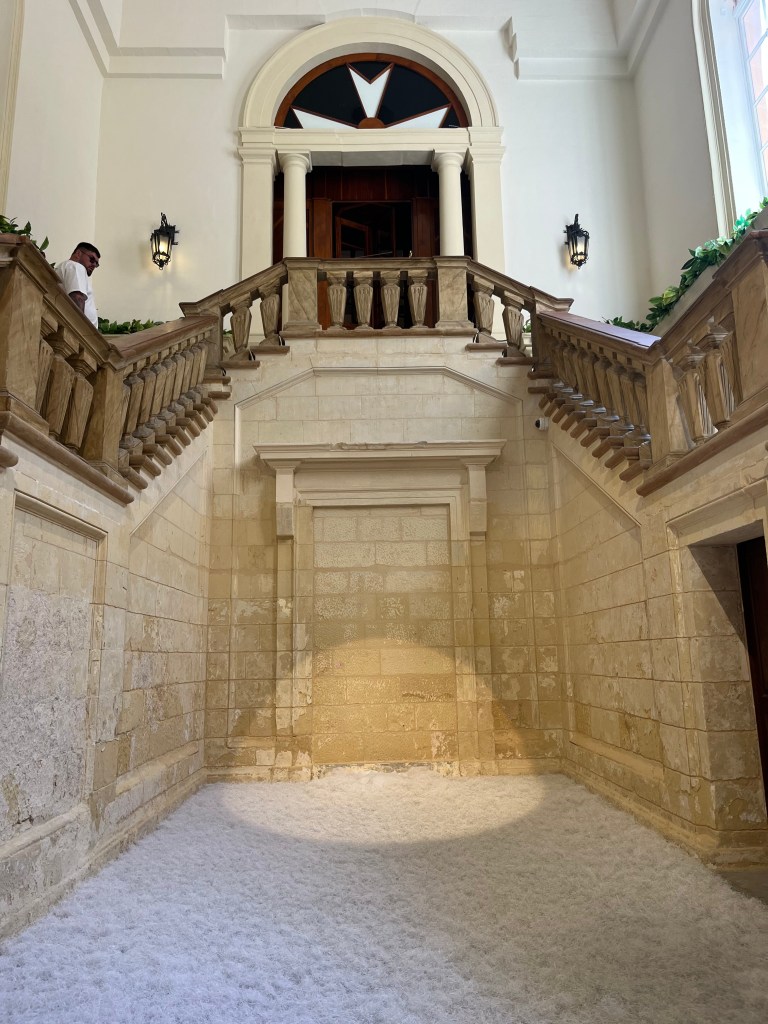
It was here that we finally got the hang of spotting Concetta Modica’s Nine Nights of Malta: the journey of a tomato sepal to become a Star which are scattered across all the biennale sites. Reenactments of constellations (or fragments) of the sky at various moments in Maltese history, they are often anecdotal, these moments potentially had a larger impact and altered places and perceptions. Here in a cabinet of curiosities surrounded by coral, the painted frescoes on terracotta with bronze casing and 24-carat gold leaf recalled 5 July 1565 during the Great Siege of Malta, when a love letter and a ring were rolled up inside the barrel of a musket.
Fort St Elmo is the site of the National War Museum and played a key role in all the many bombardments and attacks on the island throughout its history. Tom and the girls particularly enjoyed a VR experience manning an anti-aircraft gun, for the biennale the site presented several country pavilions, Louis-Paul Caron’s Incendies in the French Pavilion a terrifying combination of a possible future should the dual threats of climate change and AI get out of control, Sona Hovhannisyan’s Armenian pavilion a mediative reflection on identity.
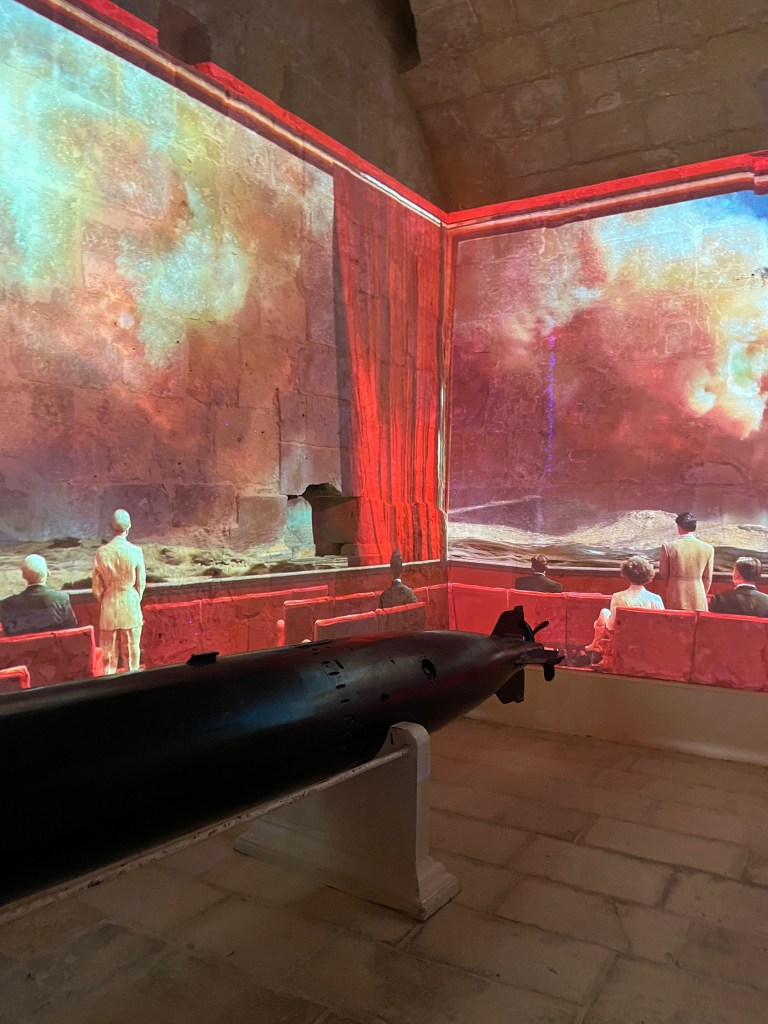
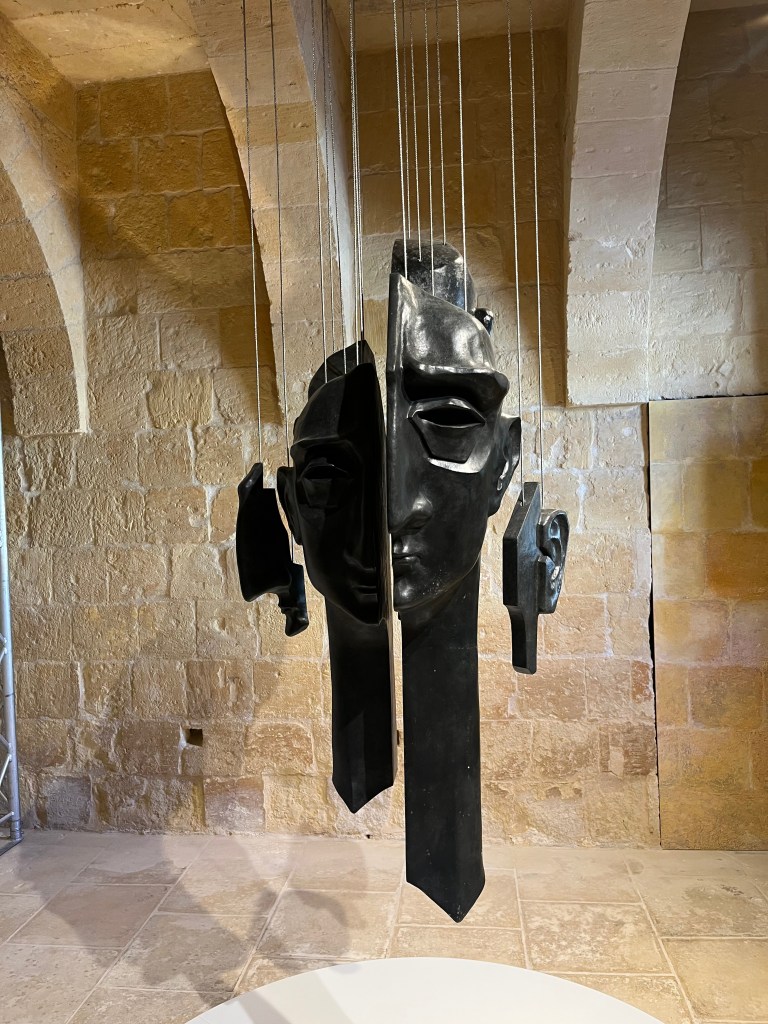
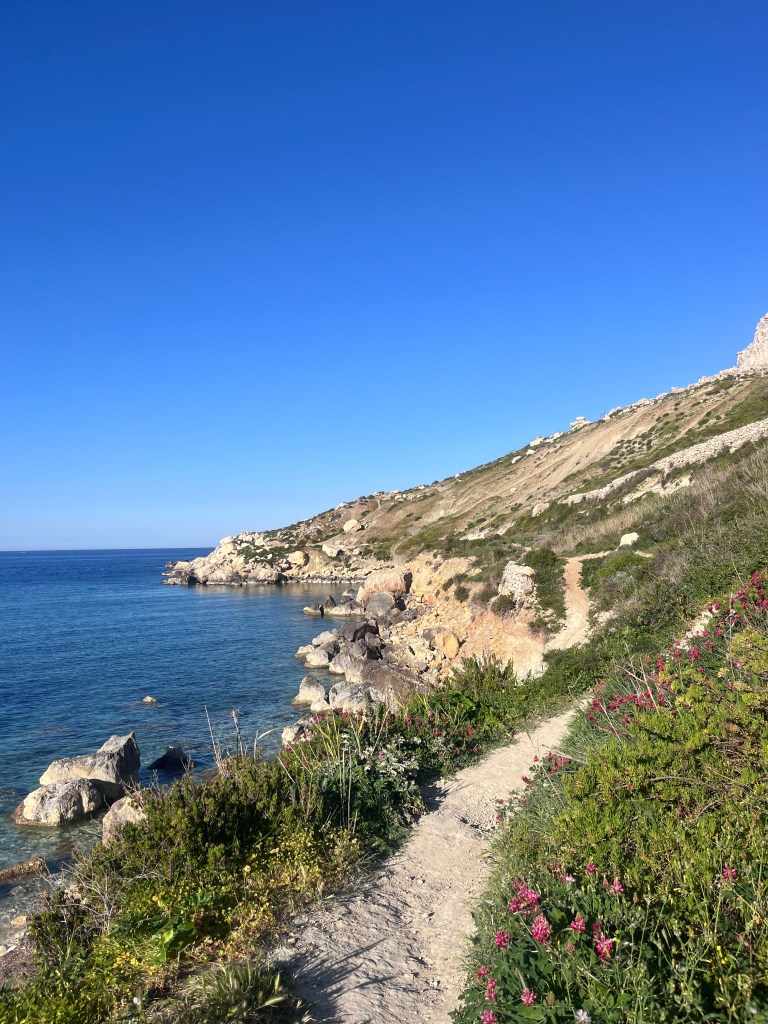
All in all, Malta was an ideal short trip for us, where we just about got our quota system spot on (with a few compromises!) despite the biennale being slightly disappointing, we prioritised spending time outside in the beautiful scenery, and returned to London energised to get on with everyday life.


Malta really sounds like the perfect balance of relaxation and exploration. The Biennale and Gozo especially sounded fascinating!
LikeLike
Thanks Laura,Nice to see you are keeping the blog going.LovePeterSent from my Galaxy
LikeLike