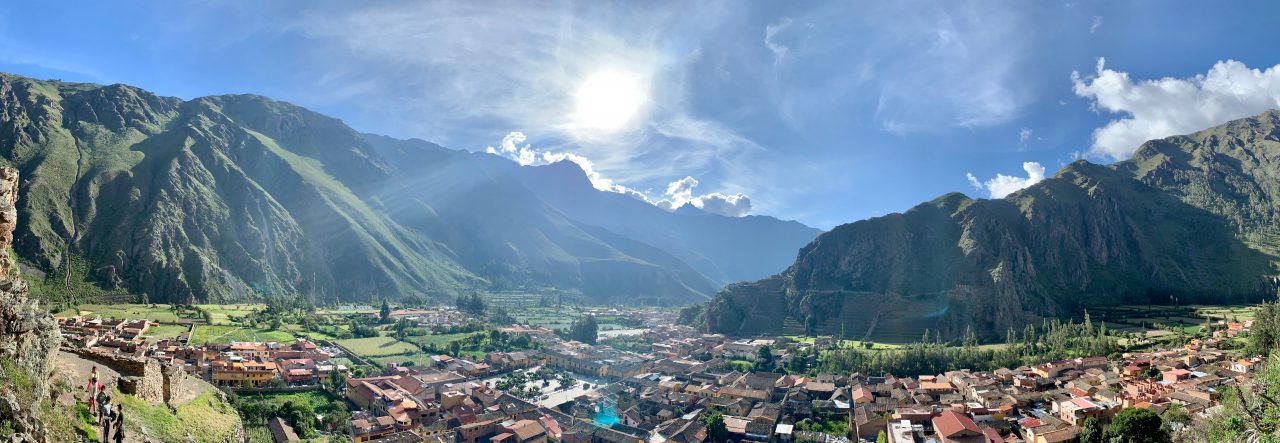

You can’t go to Japan and not see Kyoto. It runs at a gentler pace to the rest of the country, entrenched in traditional Japanese culture, its hundreds of temples and shrines sit in beautiful landscapes, seemingly at one with nature. Bearing this in mind, Kyoto’s train station takes you by surprise: a striking steel-and-glass structure, almost in-your-face modern. It’s the only building we saw like it in the city.
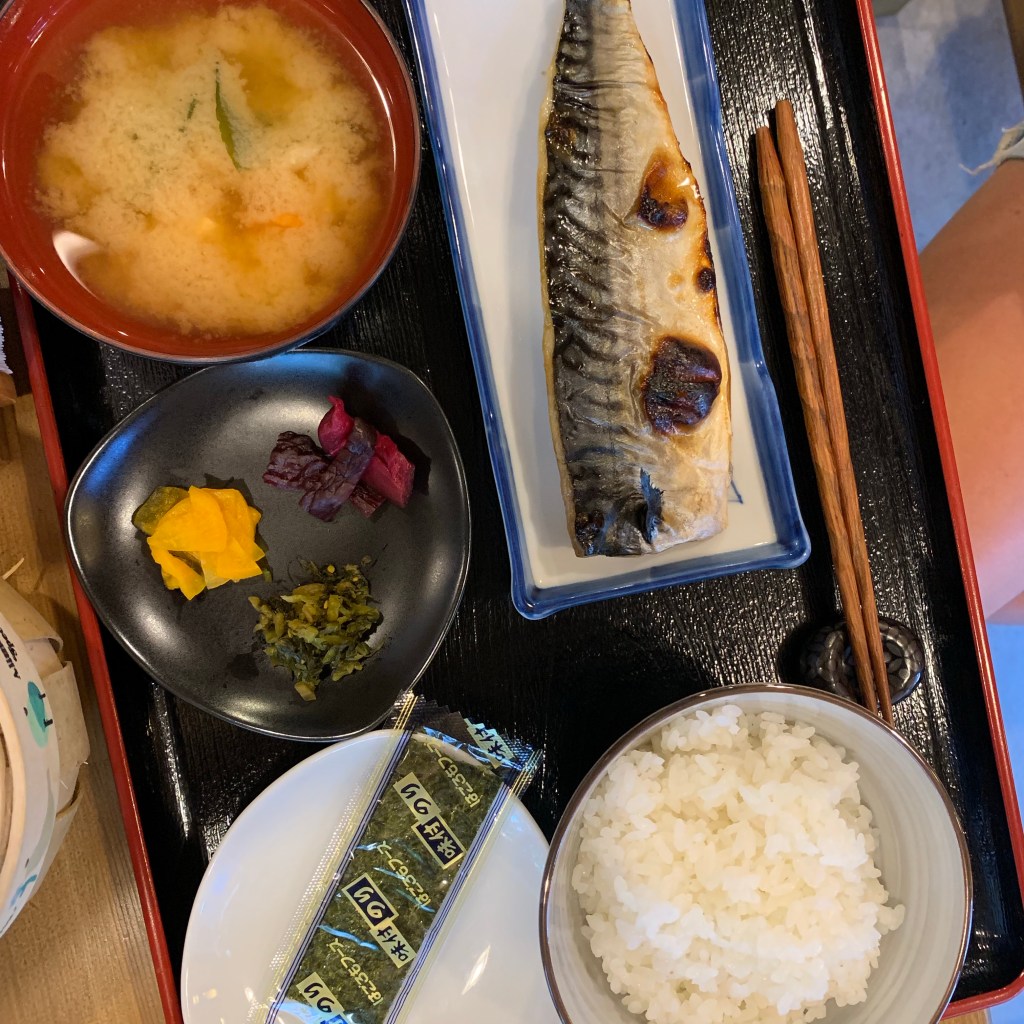
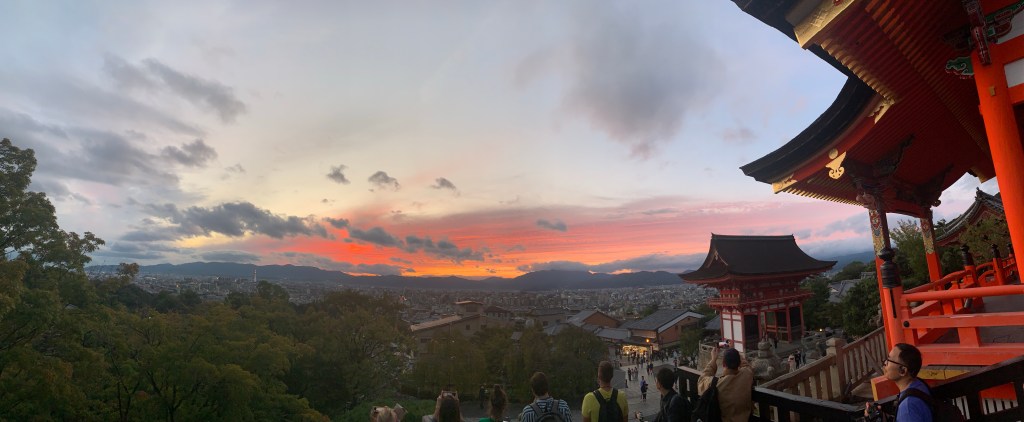
After checking into our fantastic accommodation, Guesthouse Soi (the only negative was the steep climb from the bus stop. Breakfasts were great, both Japanese and Western style and they had a good kids play area) we decided to take a walk down Chawanzaka (teapot lane) up to Kiyomizu-dera Buddhist temple to watch the sunset. It was absolutely breath-taking.
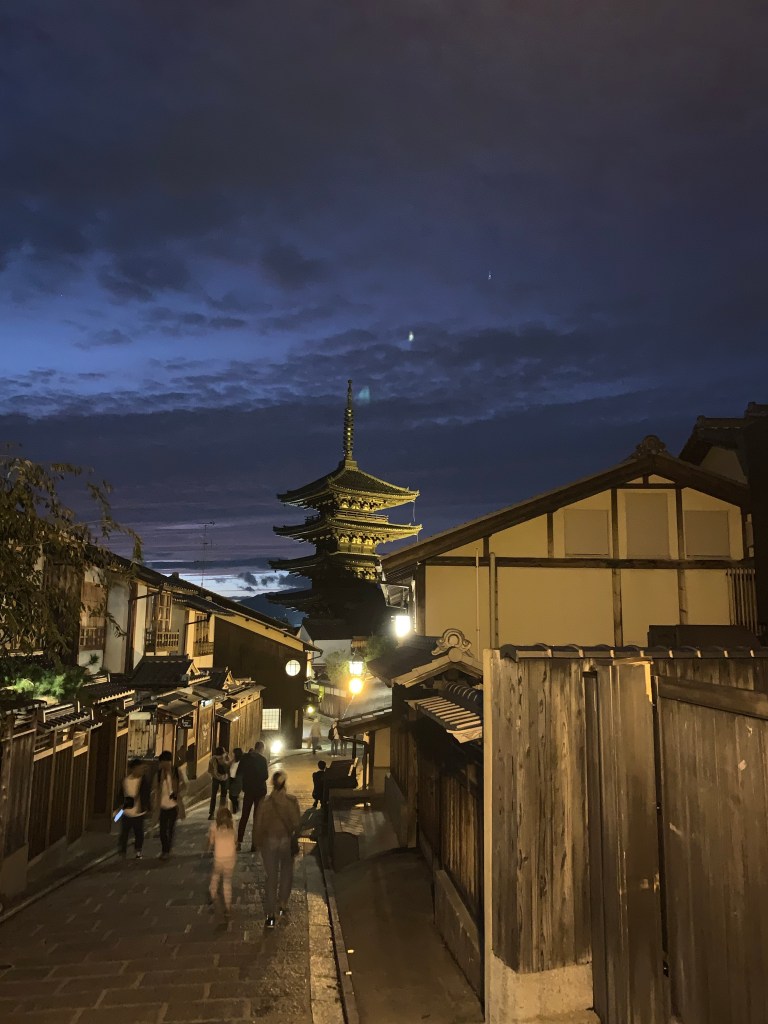
As darkness descended, we continued our walk through the atmospheric Ninen-zaka and Sannen-zaka area, translated as two- and three-year hills. We sampled every sort of Japanese nut and sweet offered as samples in the traditional shops there, passed by Kennin-ji, the oldest zen temple in Kyoto with dragons on the roof before arriving in the lively Gion district. Failing to find any dinner there we walked homeward, stopping at the quirky Bistro & Beer 3032 for a first try of a Katsu curry.
Day two started at Kawai Kanjiro’s House. Kanjiro was a ceramicist (1890-1966) and contemporary of Bernard Leach, the Englishman regularly visited Japan and produced work with Kanjiro at the kiln which is viewable today in the garden of the house. The girls found it hilarious putting on little shoes to visit the spaces, a little perilous on shiny wooden stairs and stony pathways. The entrance fee was a little steep.
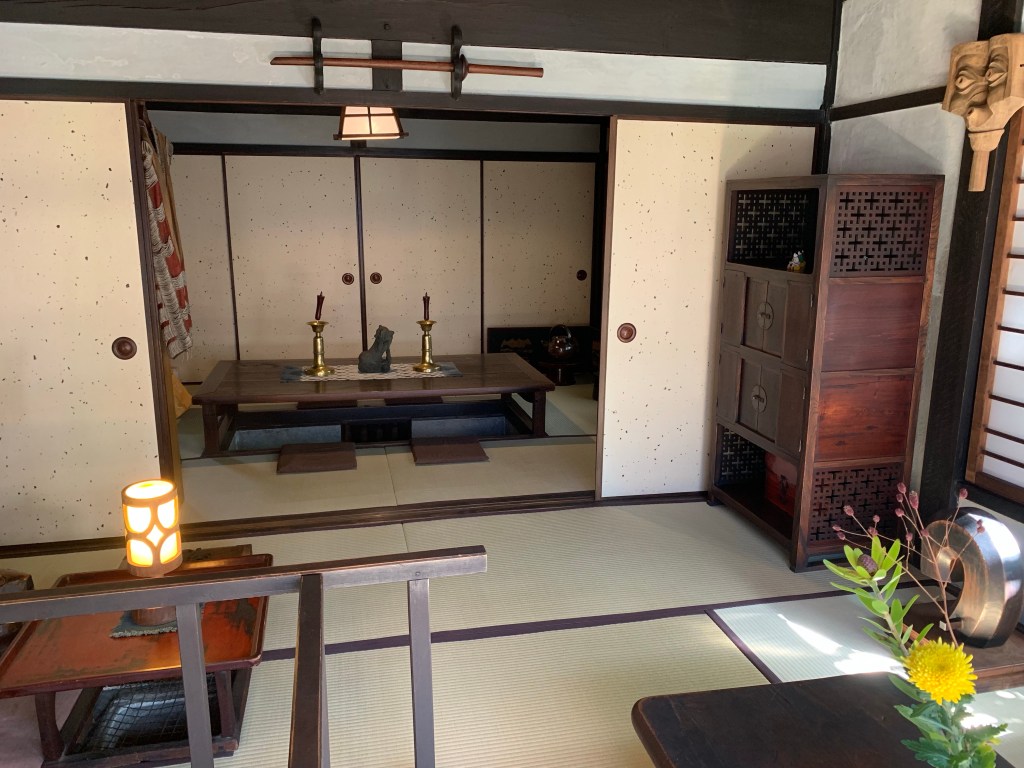
Then on to Sanjusangen-do Buddhist temple in Southern Higashiyama, a short walk from our guesthouse. The name refers to the 33 bays which display 1001 wooden statues of Kannon (god of mercy) in an incredibly long wooden room, with a central main statue with 1000 arms. There is a famous archery competition which takes place there. (No photo as no photography was allowed inside!)
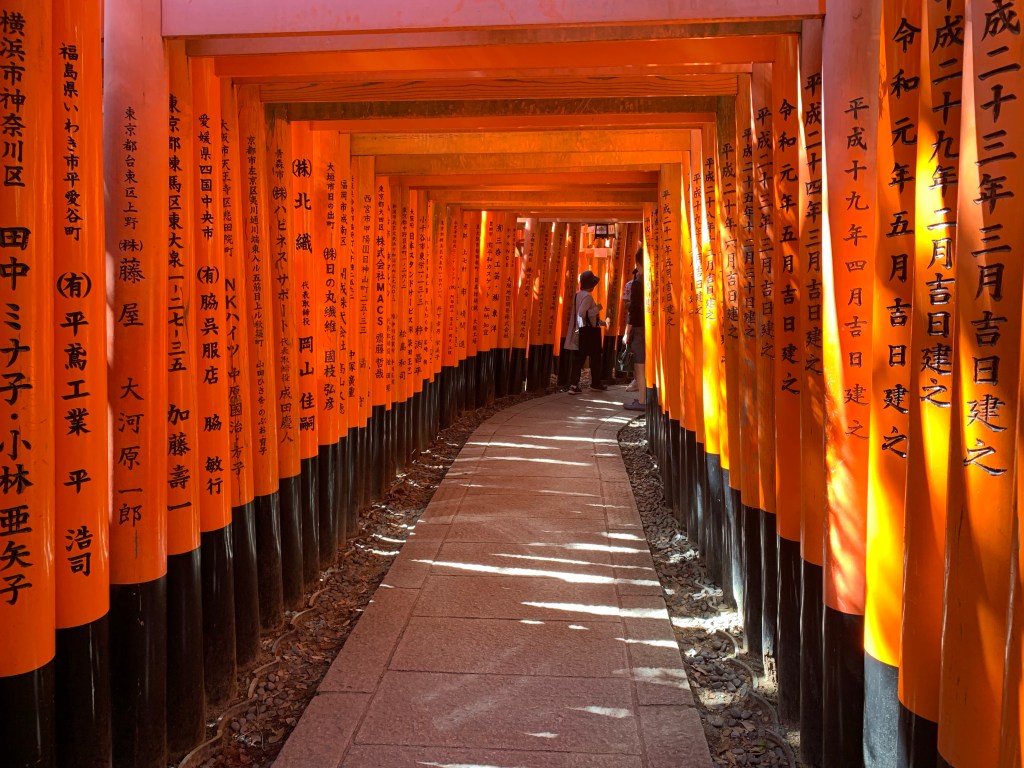
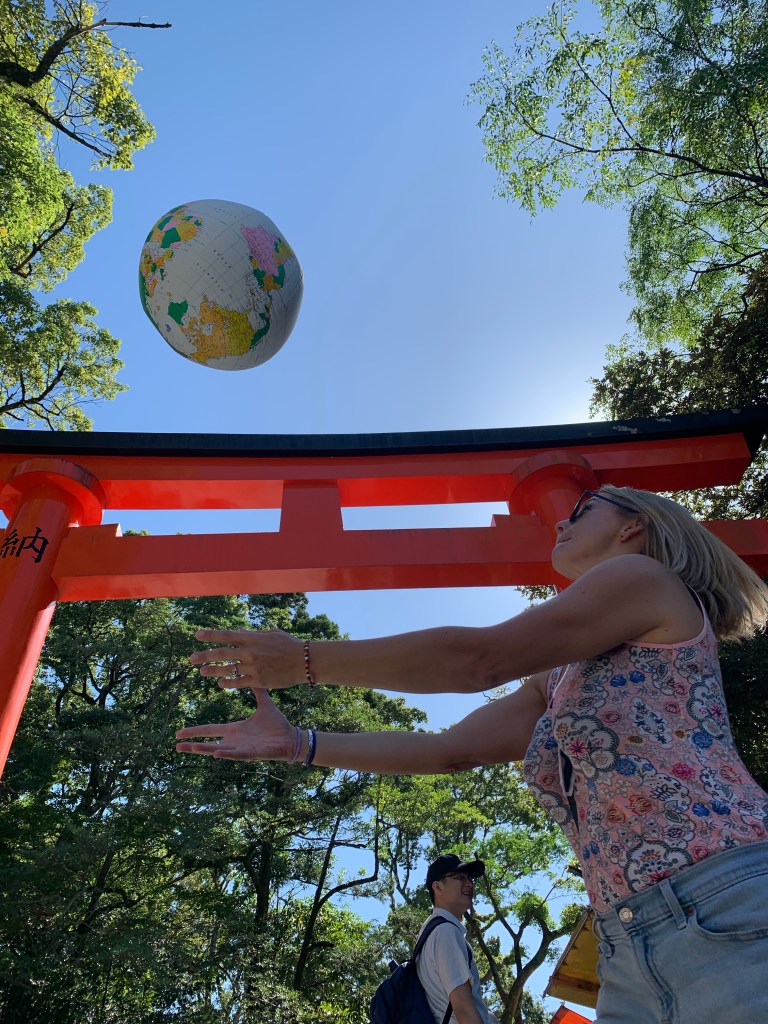
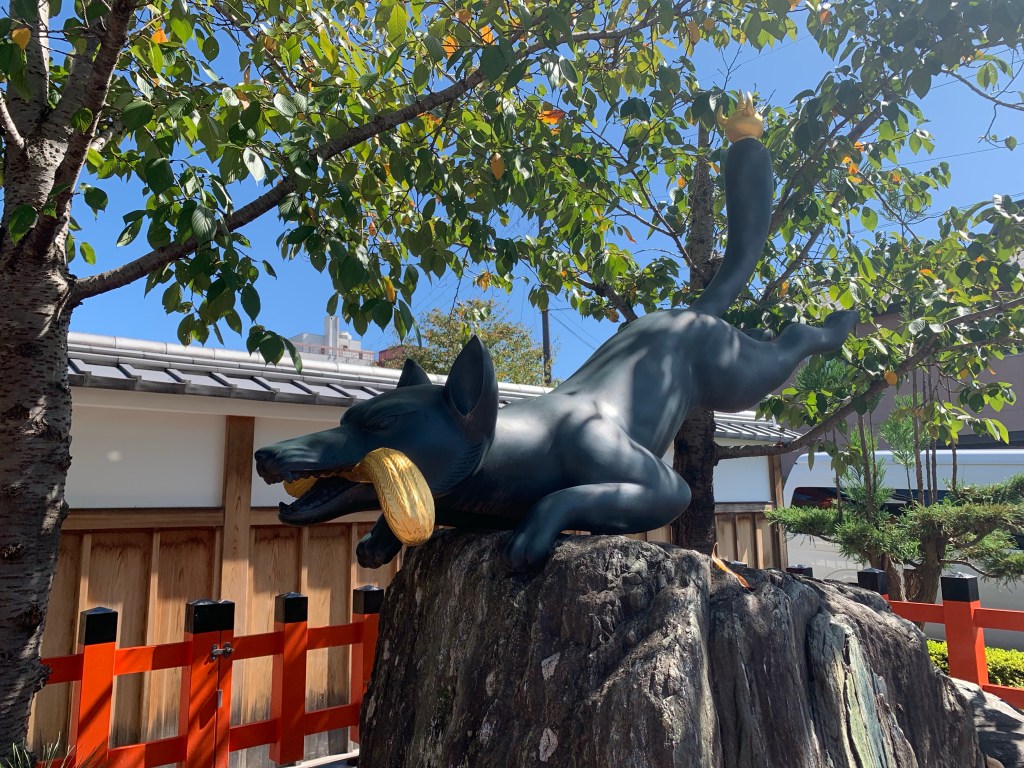
We then jumped on a train to Fushimi Inari-Taisha Shinto shrine which was great to see, the seemingly endless red torii gates winding their way up the hillside. The girls enjoyed finding stone foxes with a key in their mouth, traditionally a messenger to Inari, the god of agriculture. We had fun trying to throw our blow-up globe over the torii, thank you Gaga!

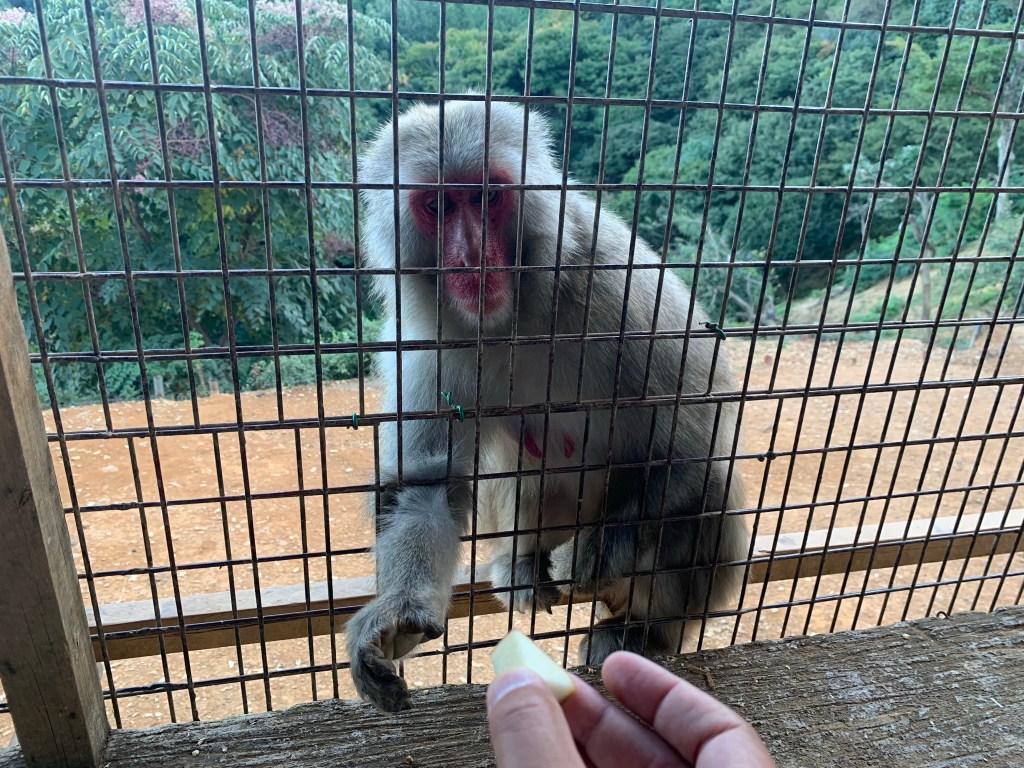
We really enjoyed getting a little out of the main city in Arashiyama, having lunch close to the Togetsu-kyo bridge across the river. Visiting the Iwatayama Monkey park was the perfect antidote to temple fatigue, it was quite a steep climb to the top of the hill, but the views and playful monkeys made it worth it. We were amused by the set-up, that the human visitors are in a cage whilst the monkeys roam free outside, coming to the windows to be hand-fed apples.
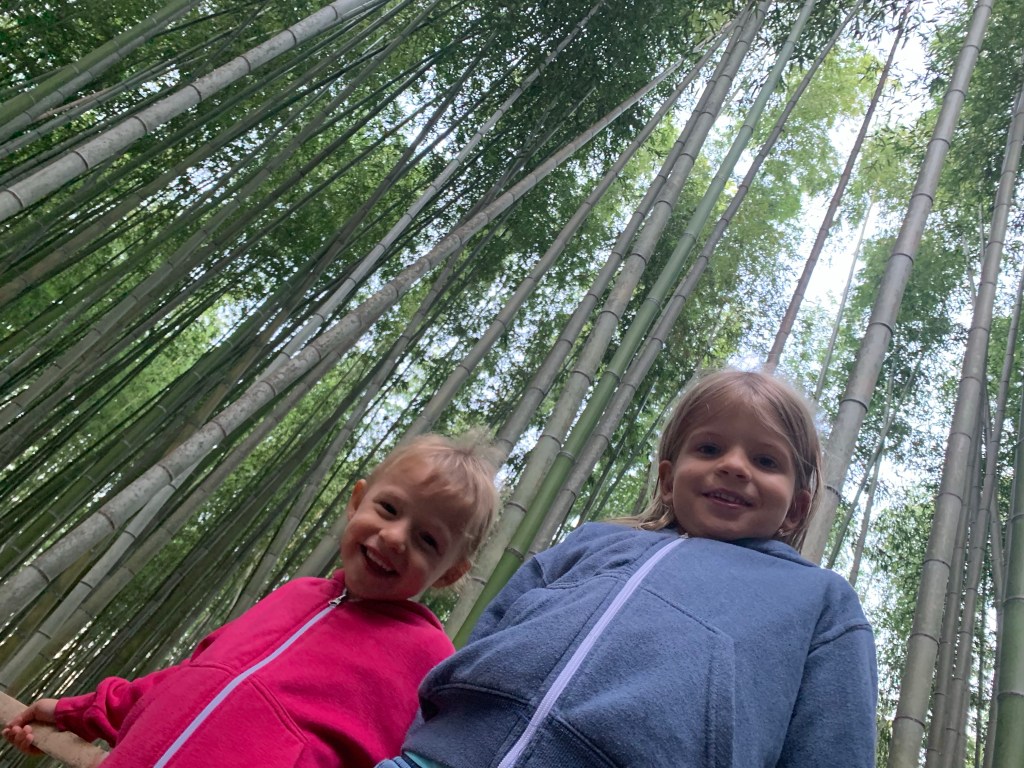
The Bamboo Grove wasn’t terribly exciting for us – I think we had been wowed by bamboo already in other parts of Asia, and we were a little mean with ourselves and only enjoyed an ice cream outside Tenryu-ji temple, not going in to see the gardens.
Due to limited time, we had to skip several major highlights such as Kinkaku-ji the Golden Pavilion and Ryoan-ji’s zen garden (both of which I have strong memories of from my previous visit) but they were the opposite site of the city and we had seen a lot. The Path of Philosophy (Tetsugaku-no-Michi) tree-lined canal was a perfect running route, taking us past more temples, the monks carefully raking the gardens in the early morning sun.


That globe certainly earned its place in your luggage!
LikeLike