You can’t go to Japan and not see Kyoto. It runs at a gentler pace to the rest of the country, entrenched in traditional Japanese culture, its hundreds of temples and shrines sit in beautiful landscapes, seemingly at one with nature. Bearing this in mind, Kyoto’s train station takes you by surprise: a striking steel-and-glass structure, almost in-your-face modern. It’s the only building we saw like it in the city.
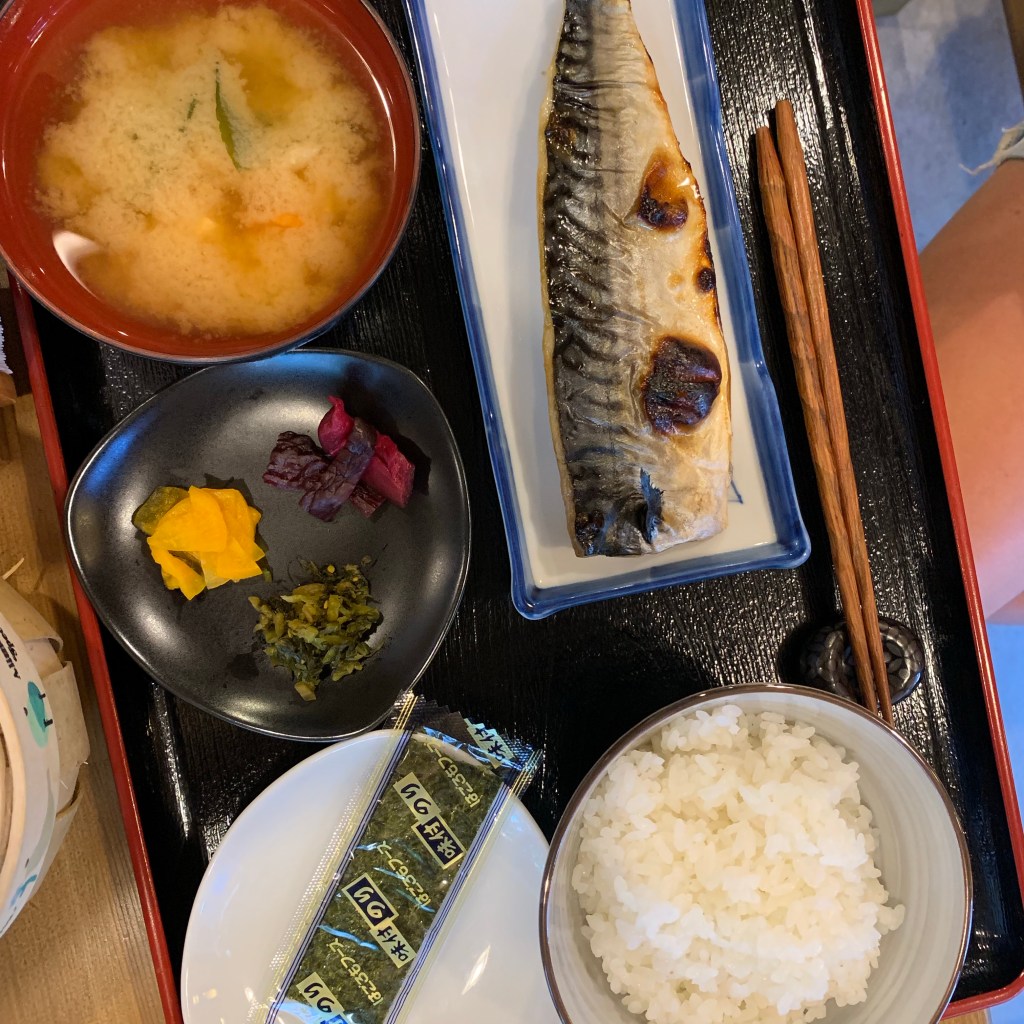
Gluten-free friendly Japanese breakfast with mackerel, Guesthouse Soi, Kyoto.
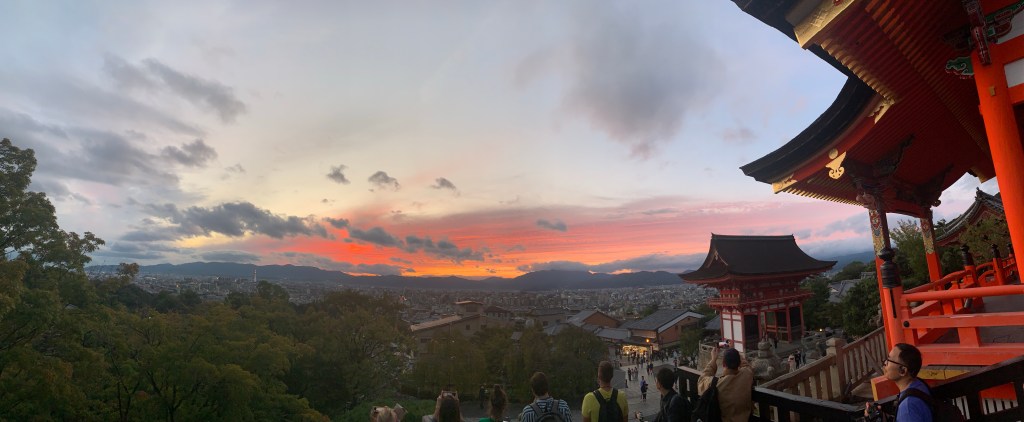
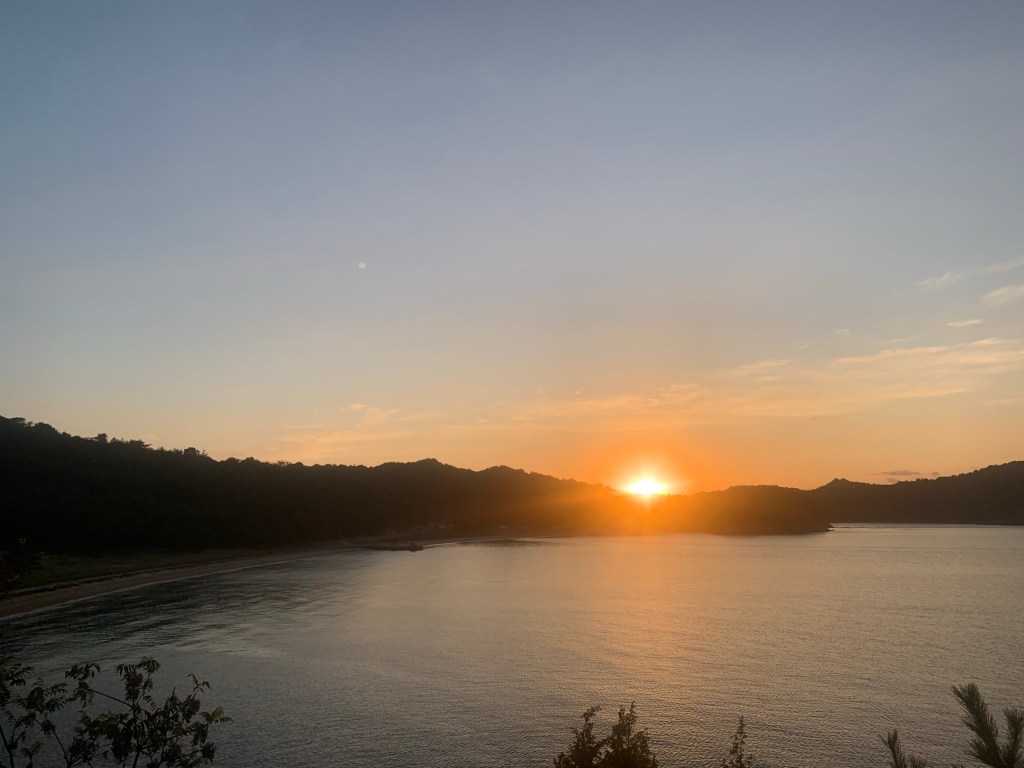
After checking into our fantastic accommodation, Guesthouse Soi (the only negative was the steep climb from the bus stop. Breakfasts were great, both Japanese and Western style and they had a good kids play area) we decided to take a walk down Chawanzaka (teapot lane) up to Kiyomizu-dera Buddhist temple to watch the sunset. It was absolutely breath-taking.
Sunset from Kiyomizu-dera temple, Kyoto, 8 October 2019.
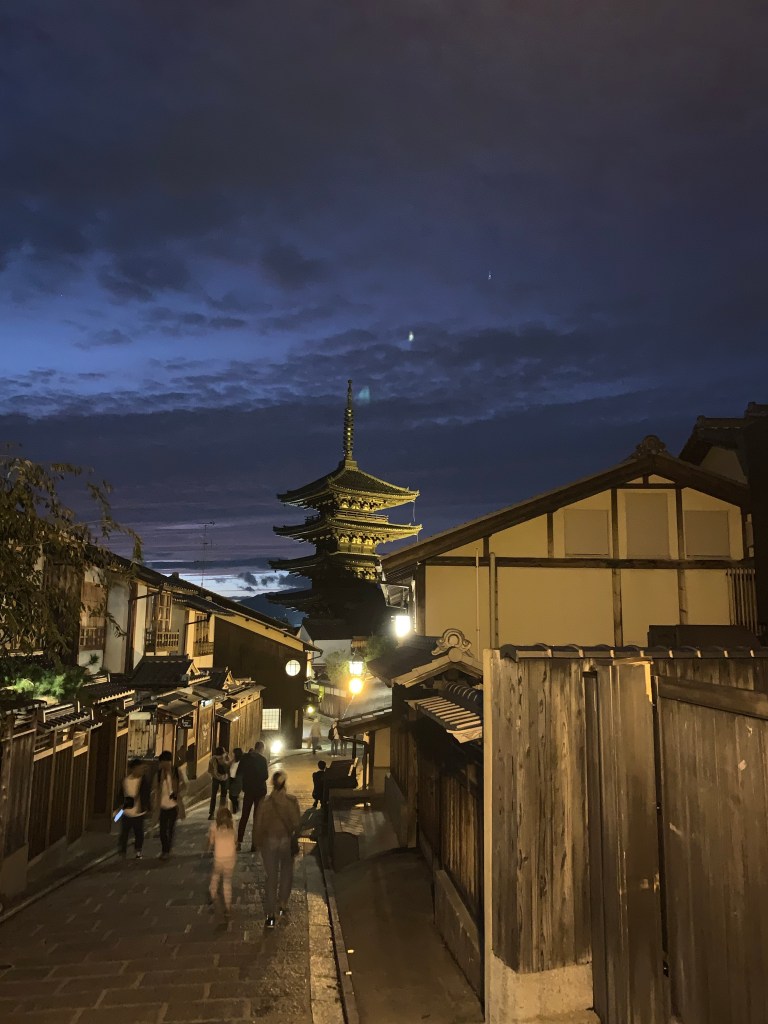
As darkness descended, we continued our walk through the atmospheric Ninen-zaka and Sannen-zaka area, translated as two- and three-year hills. We sampled every sort of Japanese nut and sweet offered as samples in the traditional shops there, passed by Kennin-ji, the oldest zen temple in Kyoto with dragons on the roof before arriving in the lively Gion district. Failing to find any dinner there we walked homeward, stopping at the quirky Bistro & Beer 3032 for a first try of a Katsu curry.
Day two started at Kawai Kanjiro’s House. Kanjiro was a ceramicist (1890-1966) and contemporary of Bernard Leach, the Englishman regularly visited Japan and produced work with Kanjiro at the kiln which is viewable today in the garden of the house. The girls found it hilarious putting on little shoes to visit the spaces, a little perilous on shiny wooden stairs and stony pathways. The entrance fee was a little steep.
Kawai Kanjiro’s House, Higashiyama, Kyoto.
Then on to Sanjusangen-do Buddhist temple in Southern Higashiyama, a short walk from our guesthouse. The name refers to the 33 bays which display 1001 wooden statues of Kannon (god of mercy) in an incredibly long wooden room, with a central main statue with 1000 arms. There is a famous archery competition which takes place there. (No photo as no photography was allowed inside!)
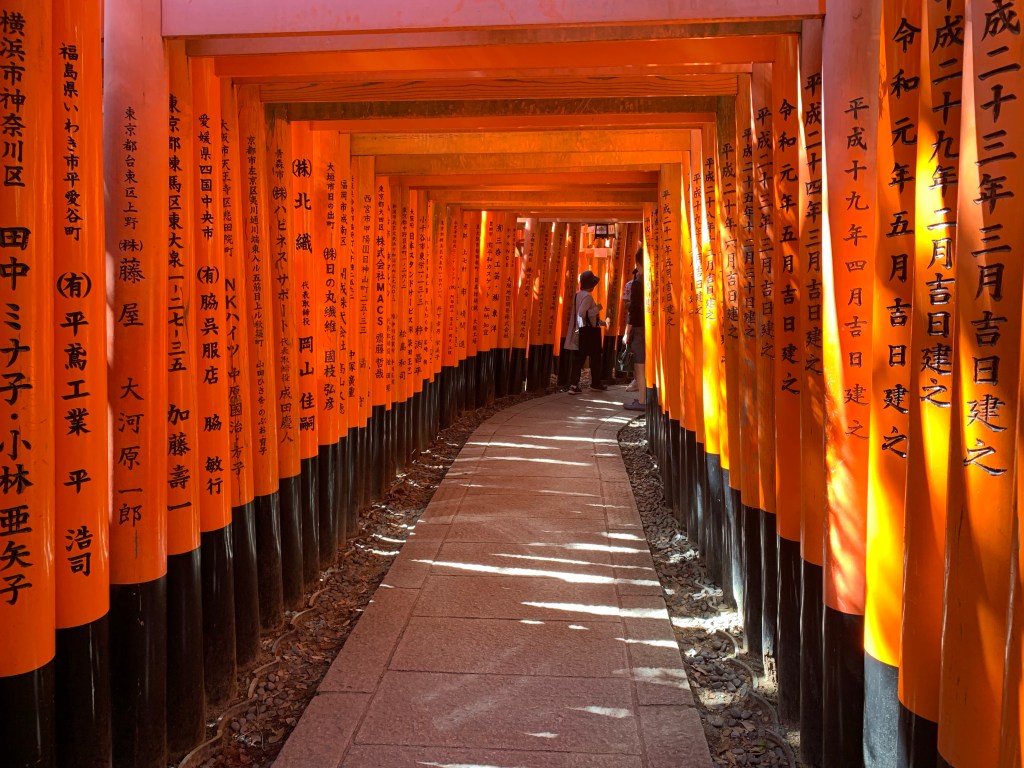
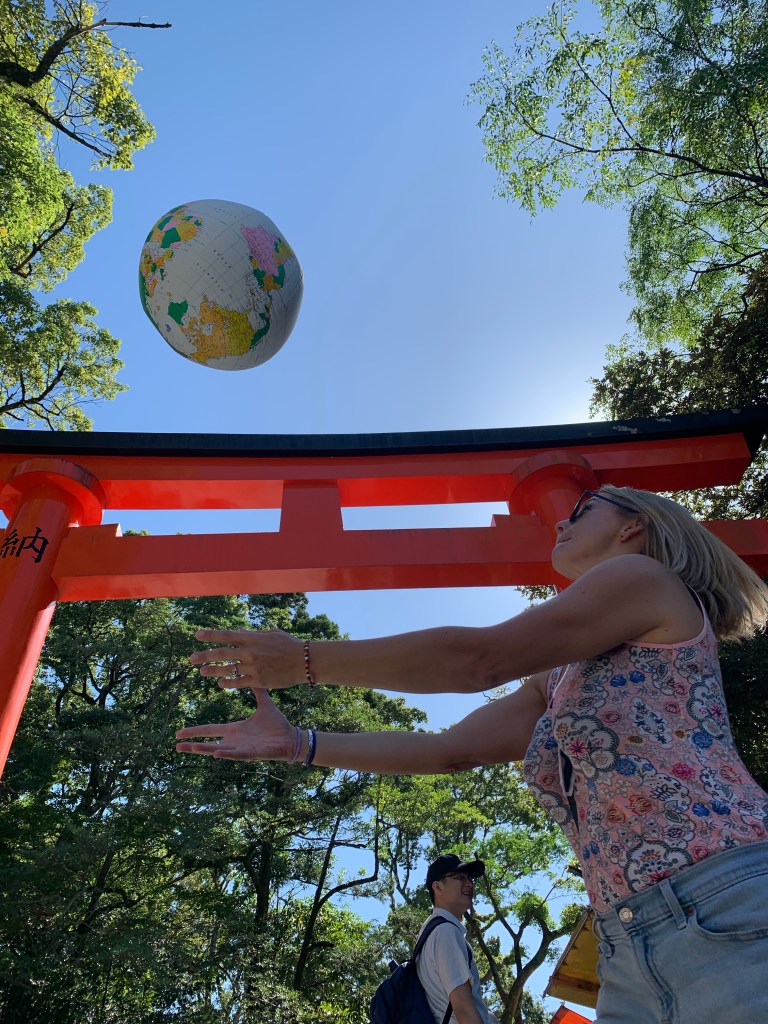
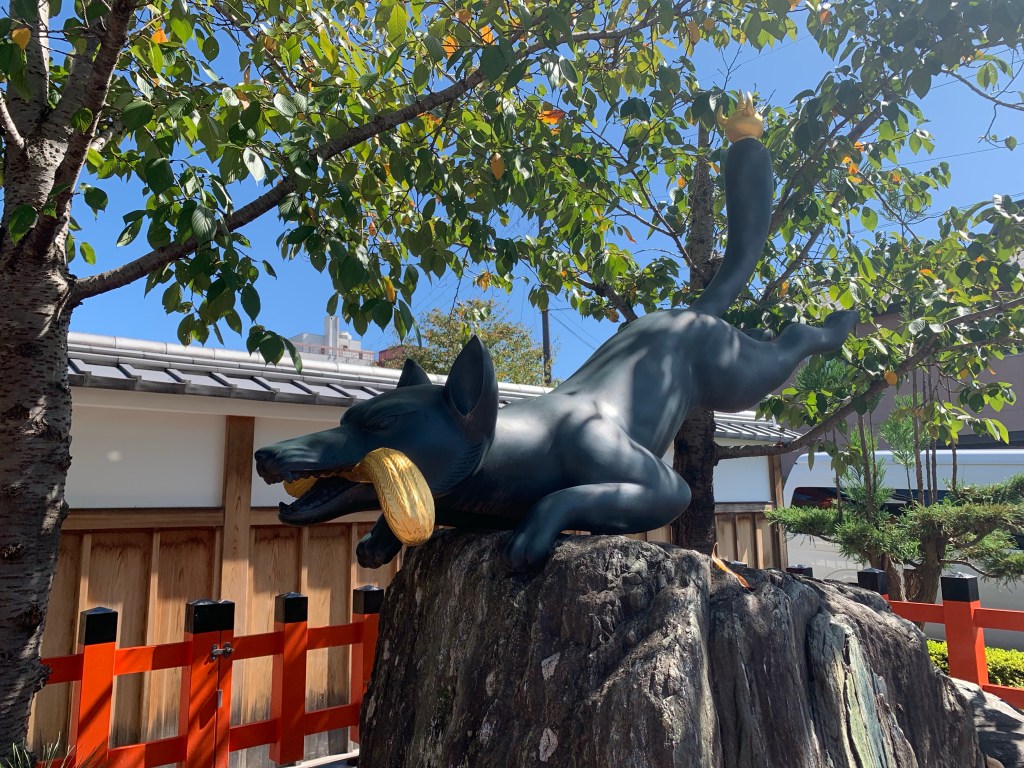
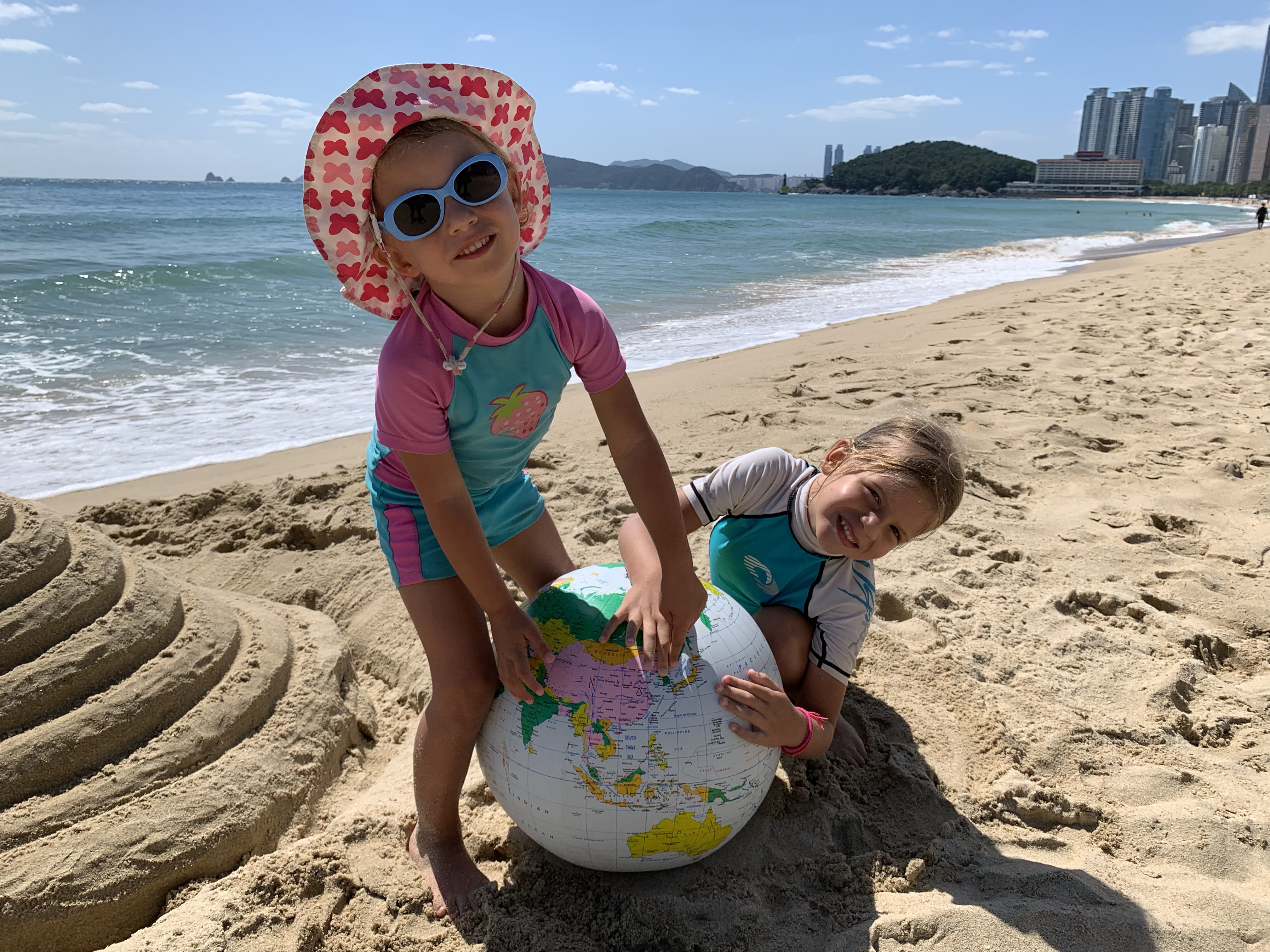
We then jumped on a train to Fushimi Inari-Taisha Shinto shrine which was great to see, the seemingly endless red torii gates winding their way up the hillside. The girls enjoyed finding stone foxes with a key in their mouth, traditionally a messenger to Inari, the god of agriculture. We had fun trying to throw our blow-up globe over the torii, thank you Gaga!
Fushimi Inari-Taisha Shinto shrine, Kyoto. She’s got the whole world, in her hands…Nearly there!A playful stone fox, Fushimi Inari-Taisha Shinto shrine, Kyoto.
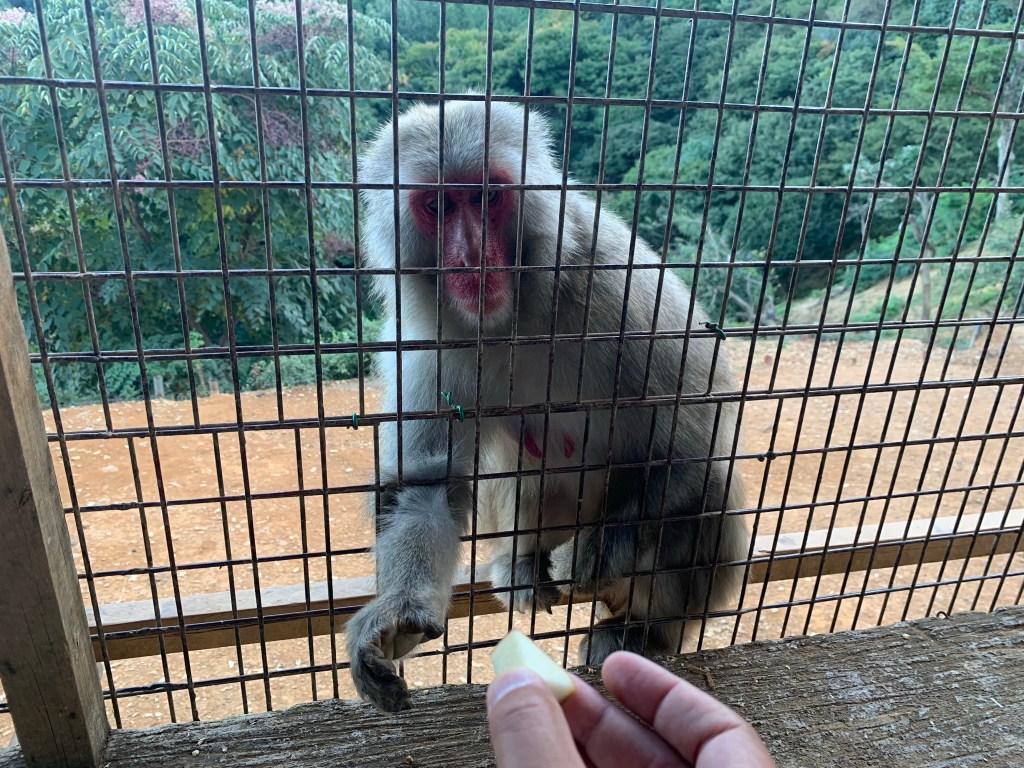
We really enjoyed getting a little out of the main city in Arashiyama, having lunch close to the Togetsu-kyo bridge across the river. Visiting the Iwatayama Monkey park was the perfect antidote to temple fatigue, it was quite a steep climb to the top of the hill, but the views and playful monkeys made it worth it. We were amused by the set-up, that the human visitors are in a cage whilst the monkeys roam free outside, coming to the windows to be hand-fed apples.
Iwatayama Monkey park, Arashiyama, Kyoto.
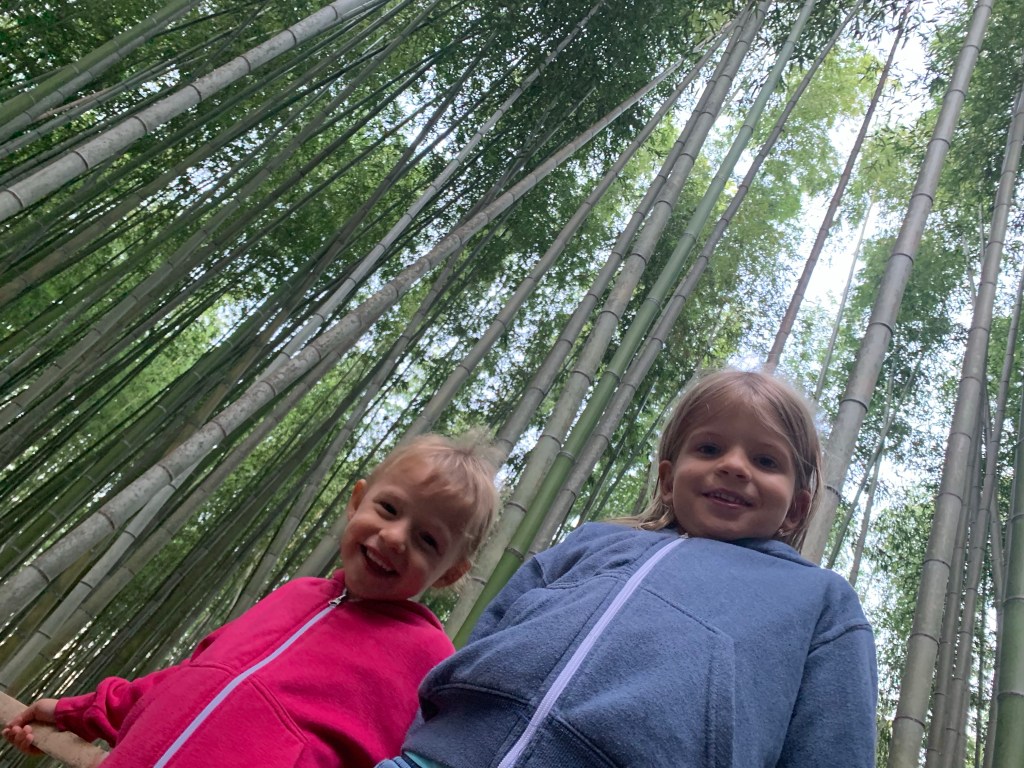
The Bamboo Grove wasn’t terribly exciting for us – I think we had been wowed by bamboo already in other parts of Asia, and we were a little mean with ourselves and only enjoyed an ice cream outside Tenryu-ji temple, not going in to see the gardens.
Bamboo Grove, Arashiyama, Kyoto.
Due to limited time, we had to skip several major highlights such as Kinkaku-ji the Golden Pavilion and Ryoan-ji’s zen garden (both of which I have strong memories of from my previous visit) but they were the opposite site of the city and we had seen a lot. The Path of Philosophy (Tetsugaku-no-Michi) tree-lined canal was a perfect running route, taking us past more temples, the monks carefully raking the gardens in the early morning sun.
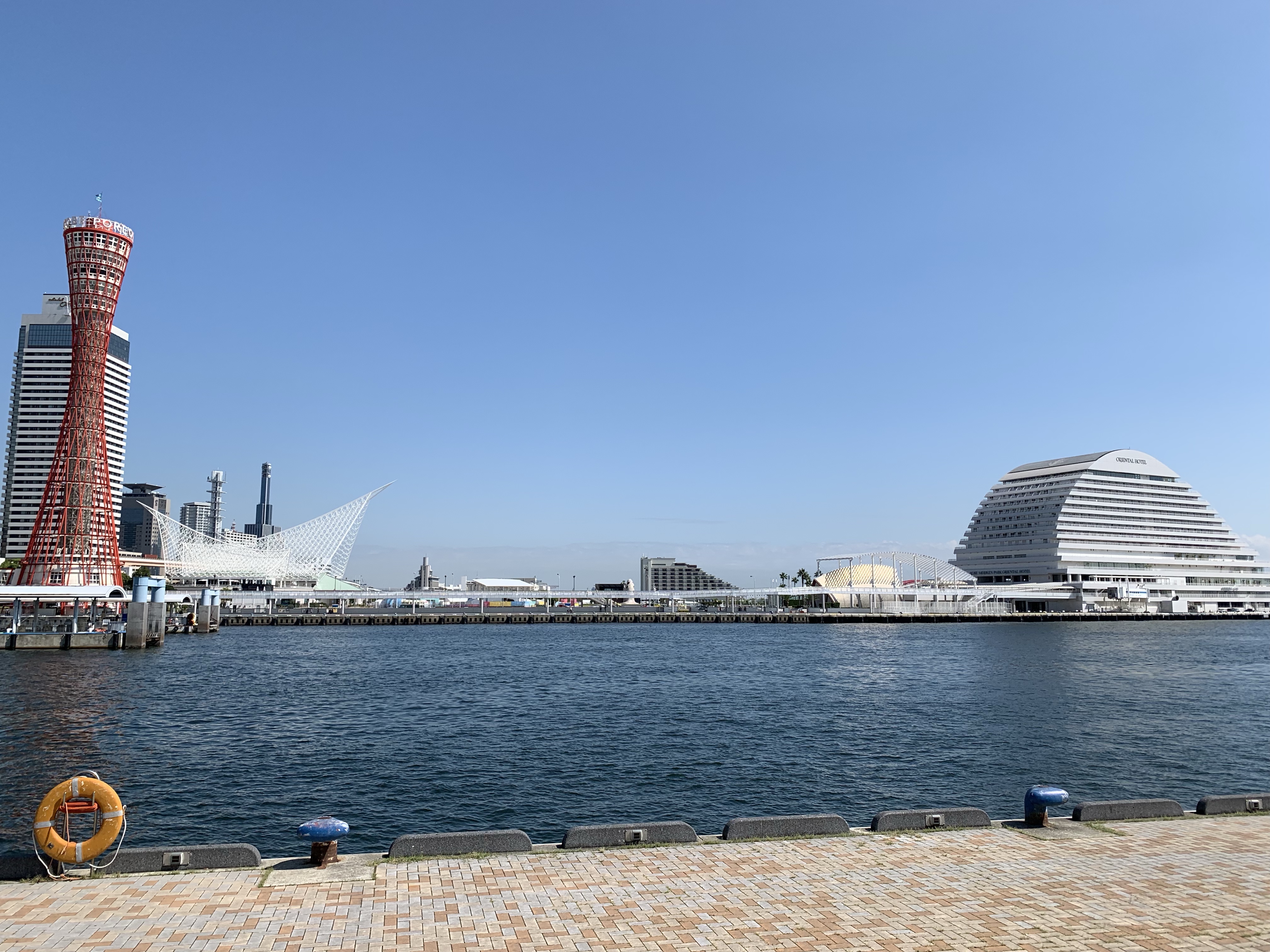
We only gave Kobe in the Hyogo prefecture one night but made the most of it by arriving before lunch and leaving the next day in the late afternoon and certainly got a good impression of the port city. Our hotel was the vast Kobe Meriken Park Oriental, perched like a boat looking across to Port Island, our balcony gave great views to the mountains and out to sea and they had a convenient regular shuttle bus to and from the central station.
Port view, from left to right: Kobe Port Tower, Meriken Park, our hotel the Kobe Meriken Park Oriental.
Close by was the memorial park, dedicated to the memory of the 6,000 killed, 40,000 plus casualties and nearly 300,000 buildings destroyed when the Great Hanshin Earthquake hit in January 1995. There were still pavements uprooted here and there but in general the city has had a remarkable recovery.
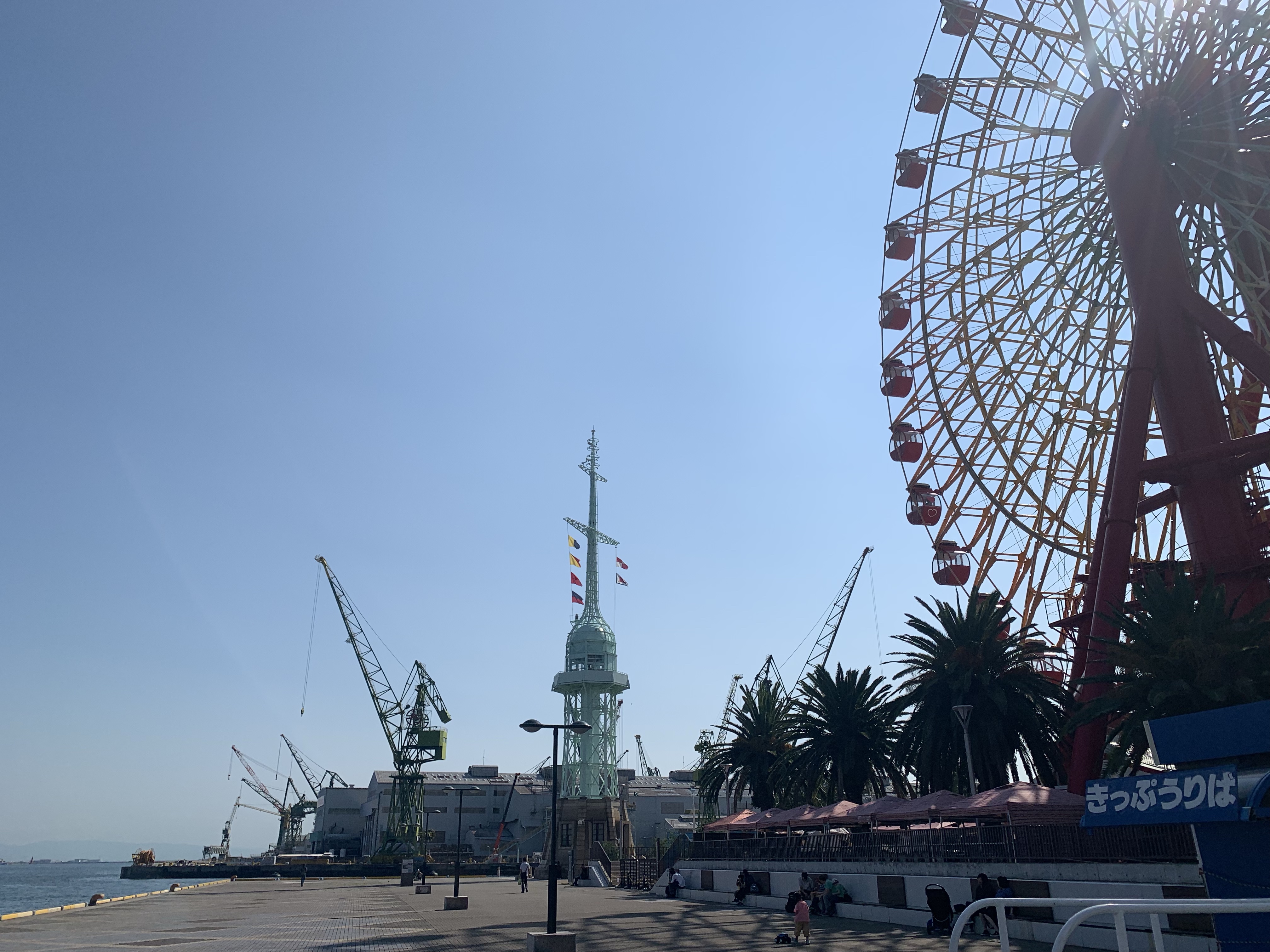
Takahama Quay, Former Kobe Port Signal Station, Mosaic Big Ferris Wheel, Kobe.
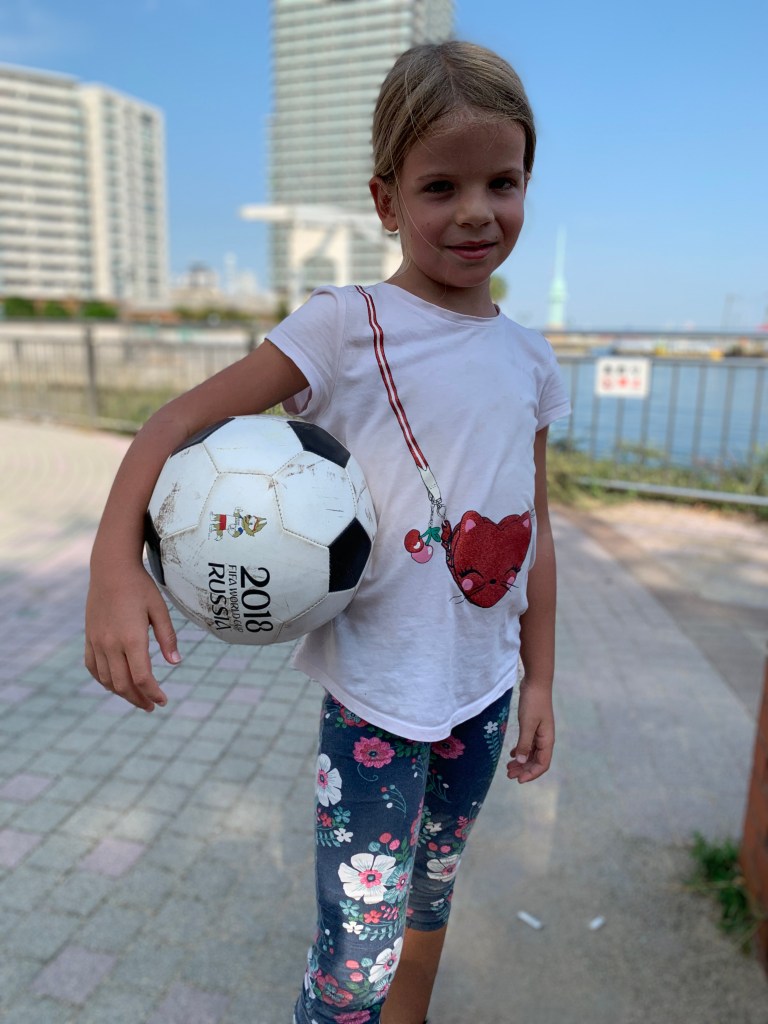
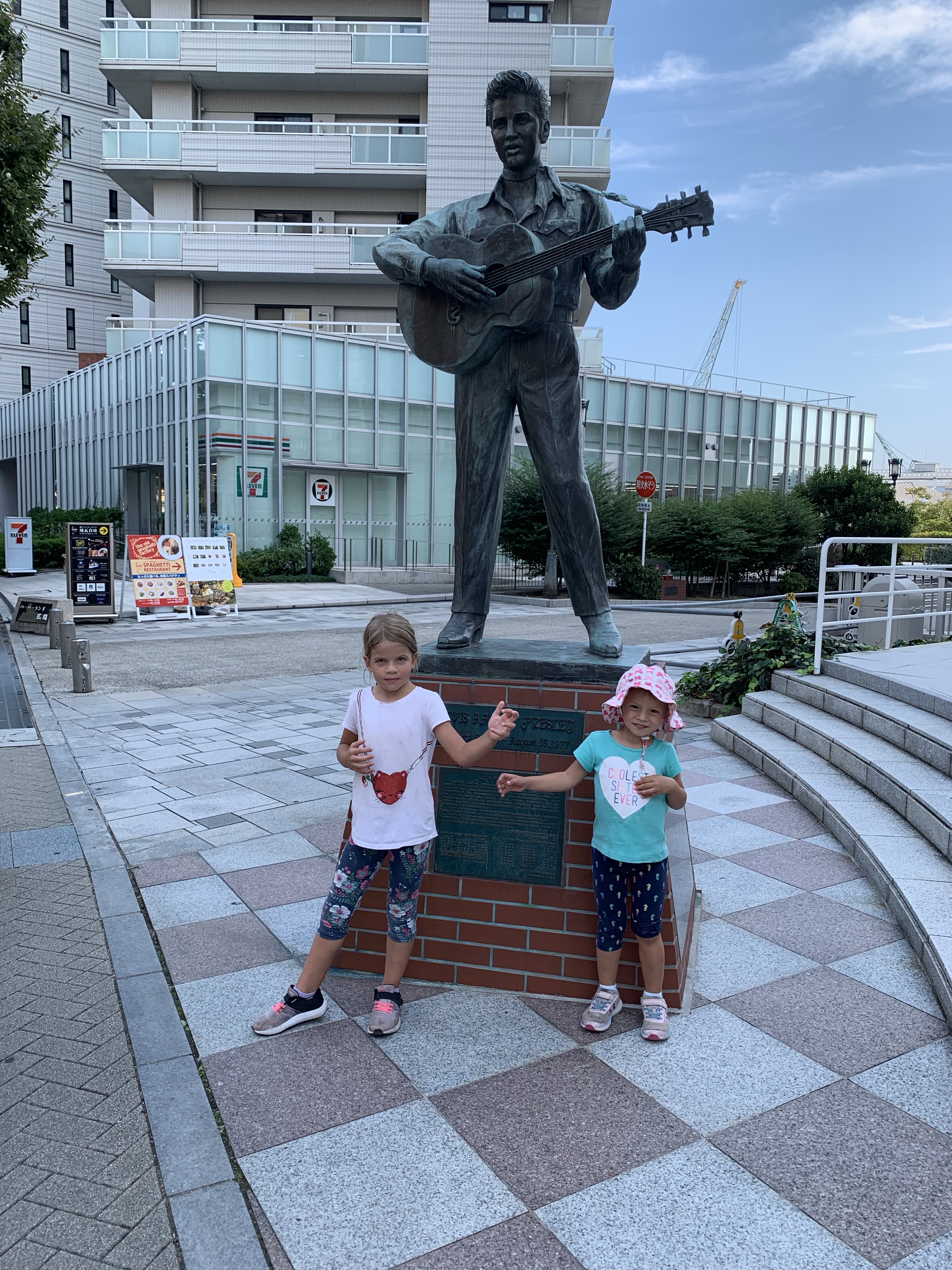
We had a pleasant afternoon in the sun walking around the Meriken Park complex, finding a football in a park and singing along to the Elvis tunes playing by his statue.
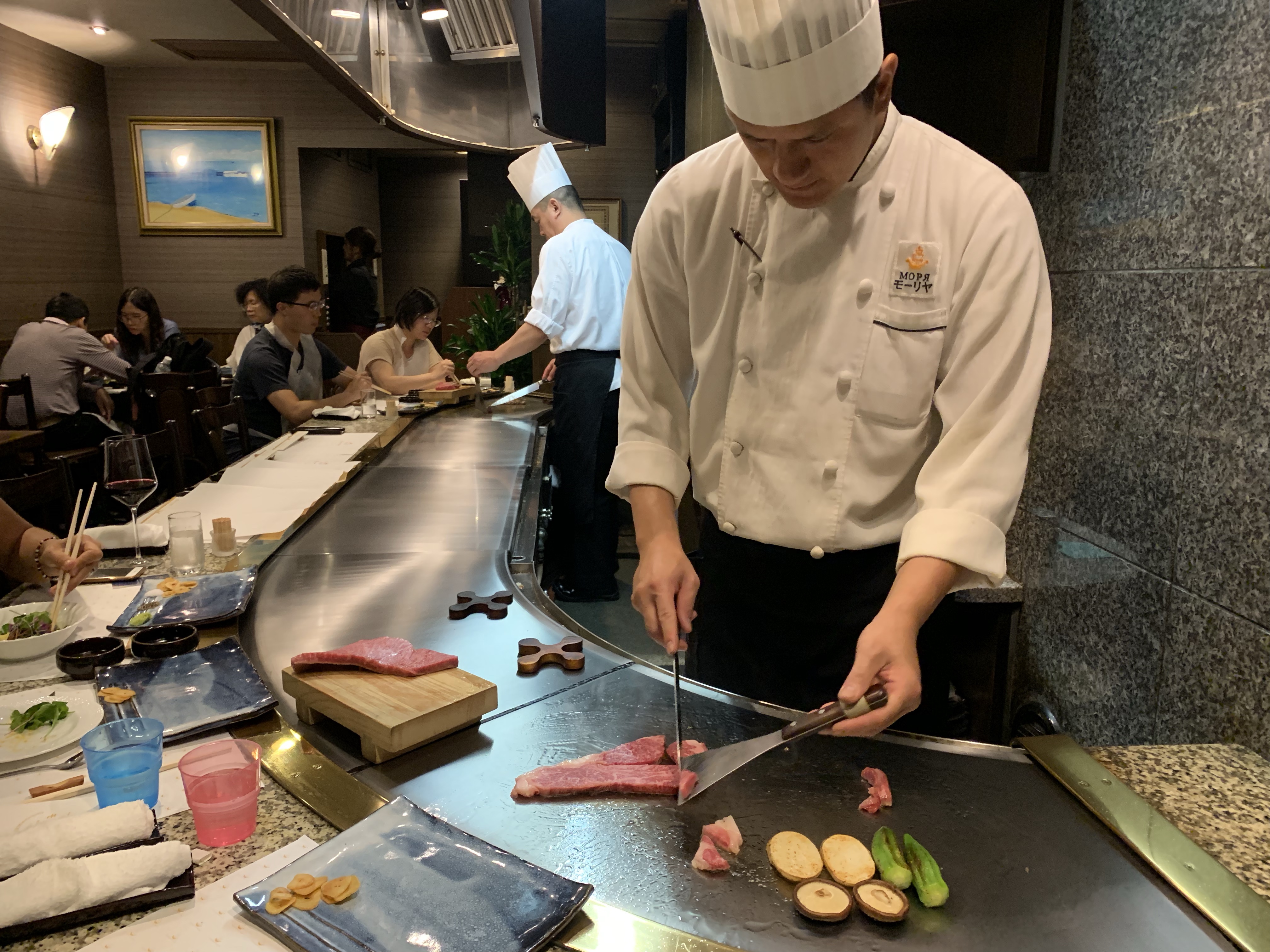
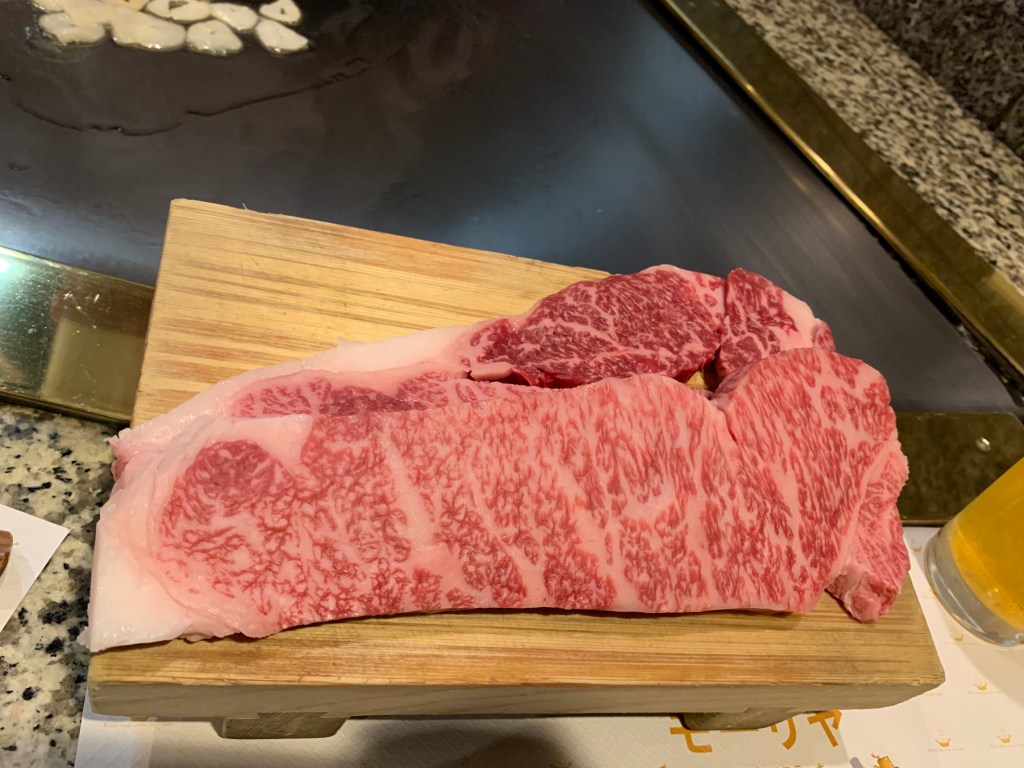
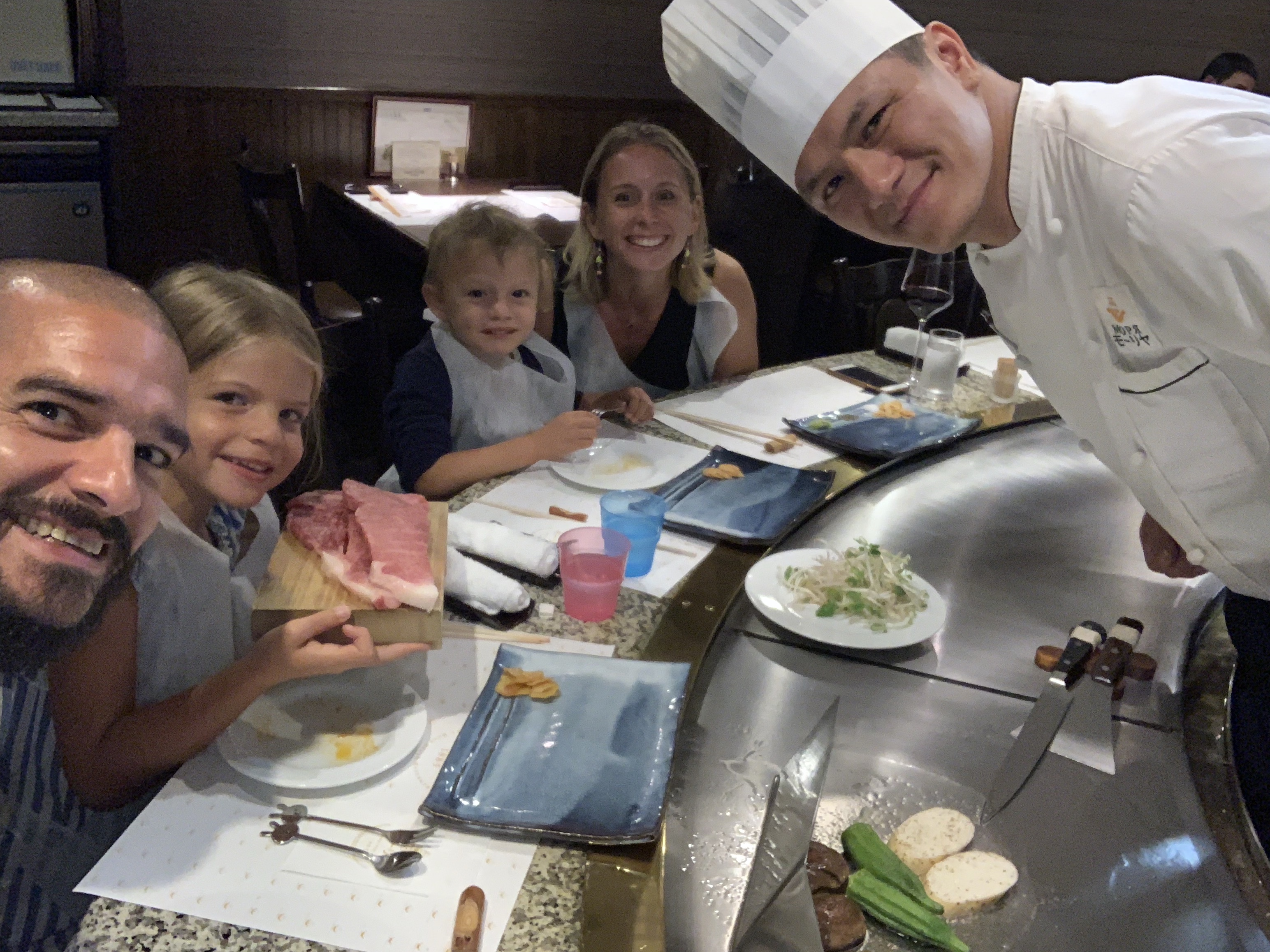
Dinner was all about beef: Kobe is synonymous with the best beef in the world by those in the know. Famed for its delicate marbling and sweetness, its actually just one of many types of wagyu. Taking advice from the hotel concierge, we went to the restaurant Mouriya to sample it, sitting right in front of our personal chef and his tapanaki grill, he carefully and precisely prepared our dishes.
Watching our beef being prepared, Mouriya steakhouse, Sannomiya, Kobe.
We opted for two grades of beef to compare, of course MoJo preferred the pricier one! It was one of the most expensive meal of our lives to date. Was it worth it? Jury is still out but it was certainly a memorable experience.
It’s all about the marbling. Blowing the budget. Going to be hungry. If only this was a meal MoJo didn’t like…fat chance!
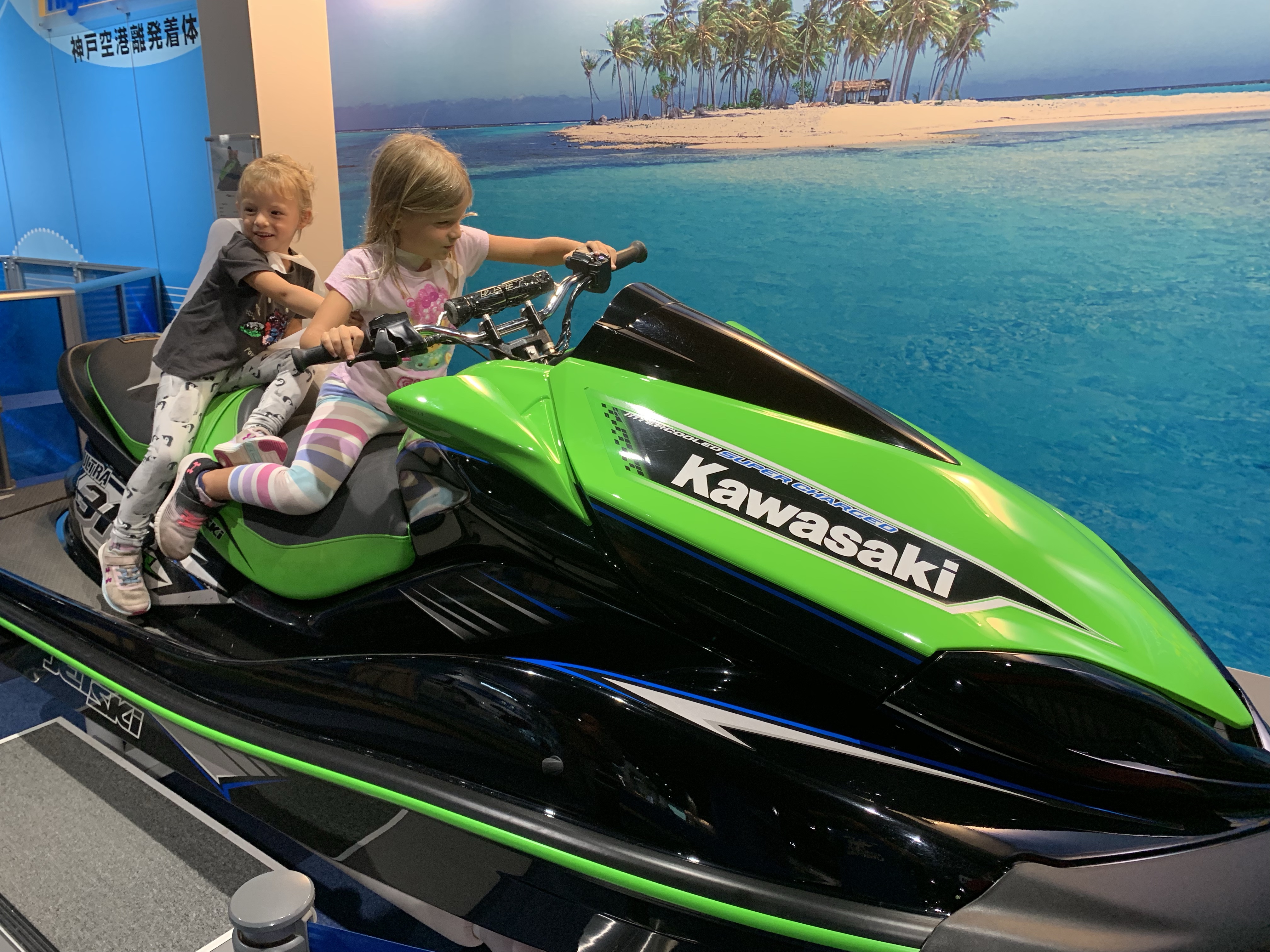
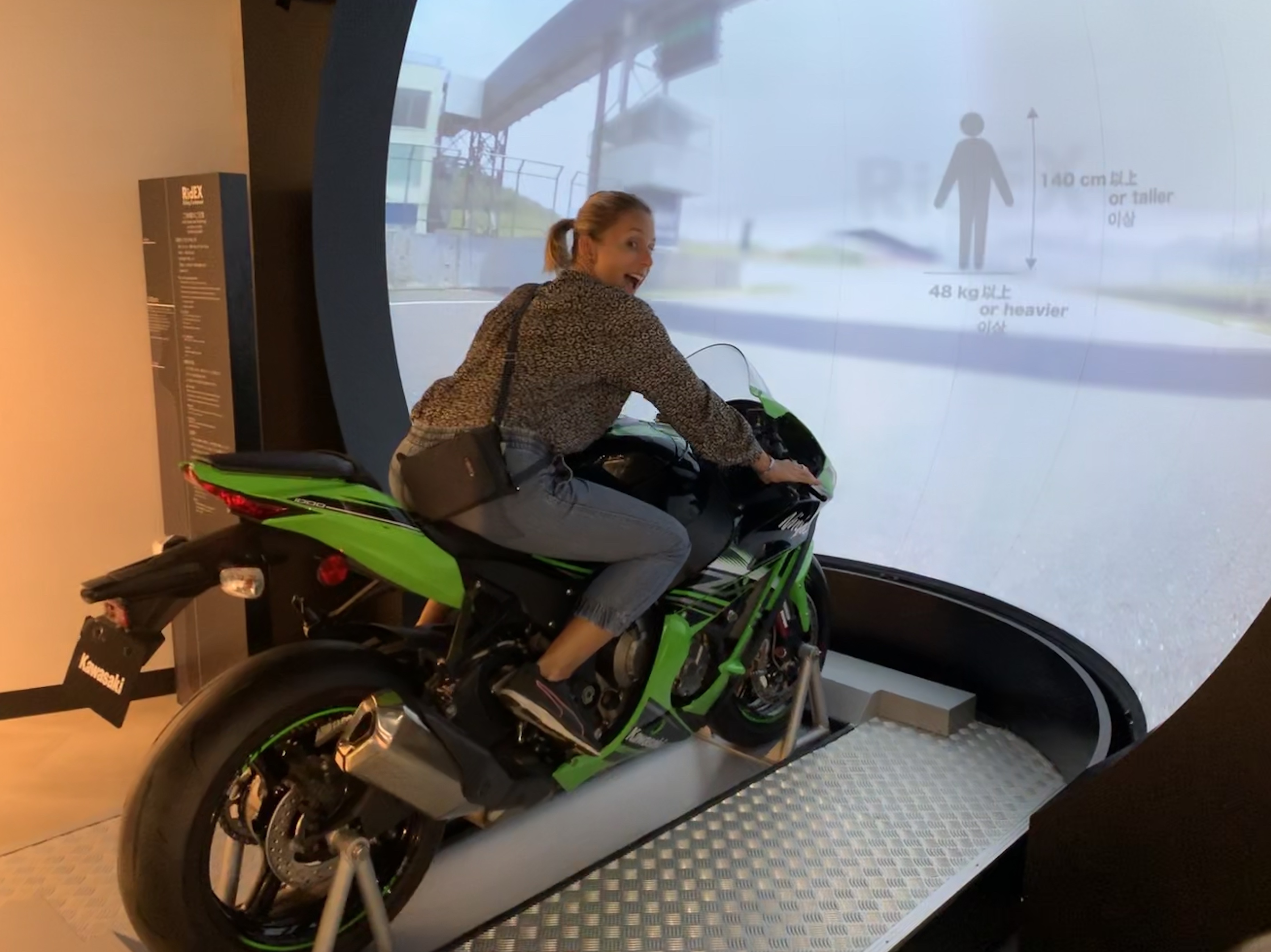
We spent the next morning having a fun look around the Kobe Maritime and Kawasaki Good Times World Museum which share a site on the harbour.
Keeping dry aboard a jet ski, Kawasaki Good Times World Museum, Meriken Park, Kobe. Cool rider?!
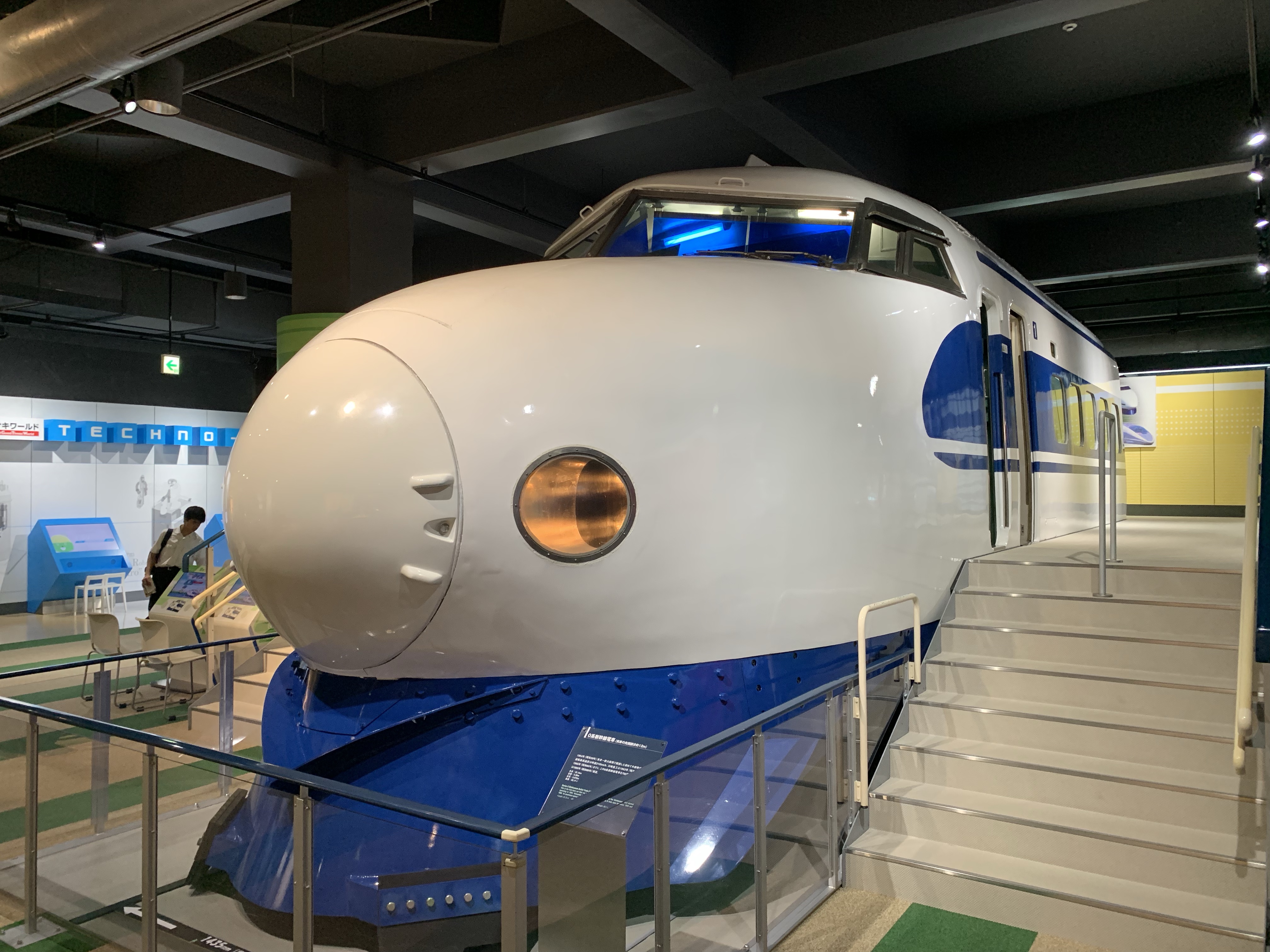
The two sections are quite different, the first a traditional collection of model ships and displays of maritime history, the second offering hands-on experiences with modern technology from Kawasaki. We were surprised at the variety of machines the company has produced over the years, from its signature motorbikes and jetskis to the first Shinkansen, helicoptors and robots. We probably spent the most time playing with an enormous train track!
Model of a Shinkansen, Kawasaki Good Times World Museum, Kobe.
We ended our time in Kobe having a nice simple lunch at Haji kitchen before getting back on the train to our next Kansai stop, Kyoto.
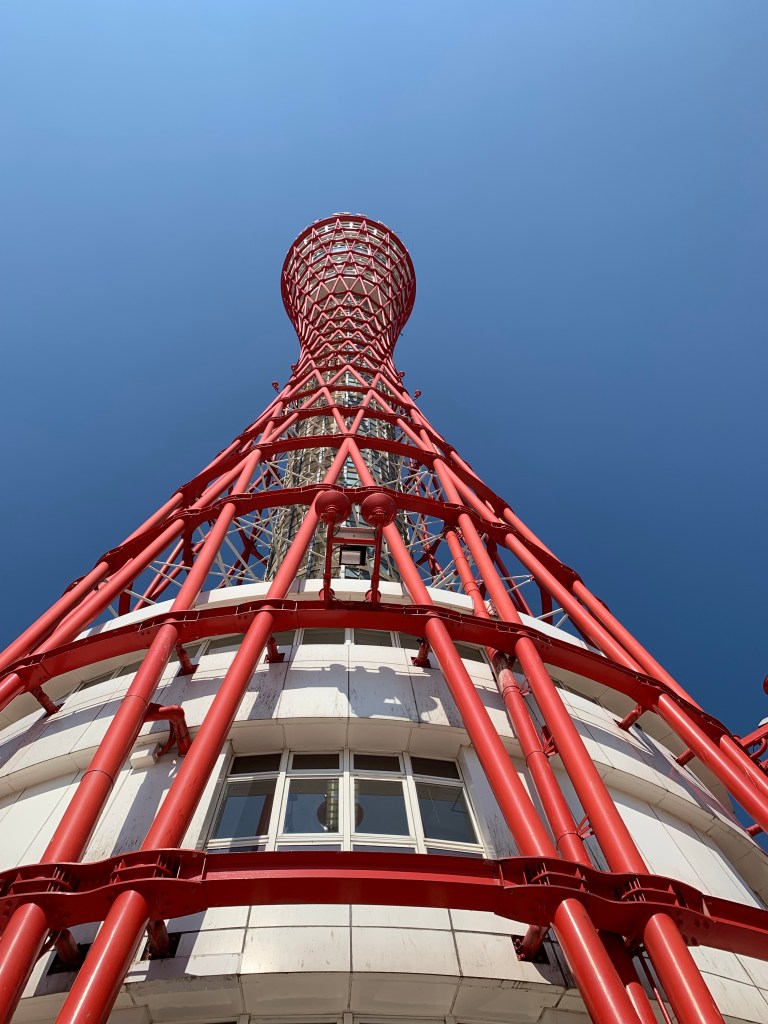
Kobe Harbor Kitchen Haji, Kobe. The pretty iconic Kobe Port Tower, built in 1963.
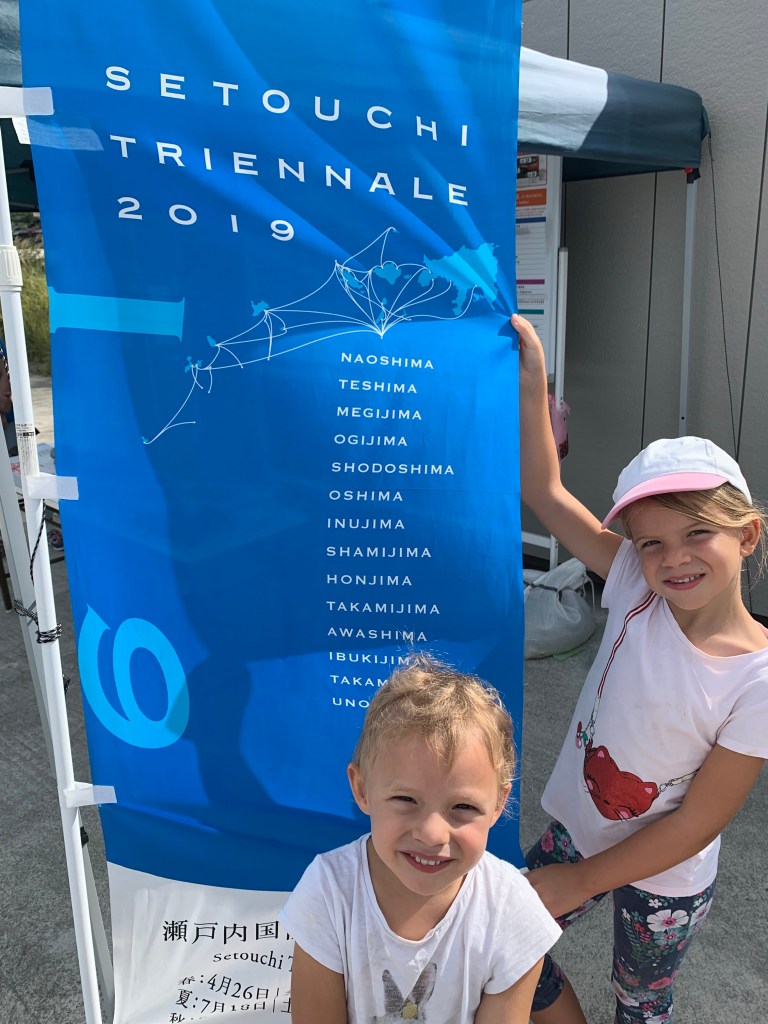
I know you won’t believe me, but I hadn’t checked the dates of the 4th Setouchi Triennale before we booked our flights in and out of Japan. It was pure luck we were there during the 5-week autumn session of the highly regarded contemporary art event, with art installations spread across 12-islands and two port cities in the Seto Inland Sea.
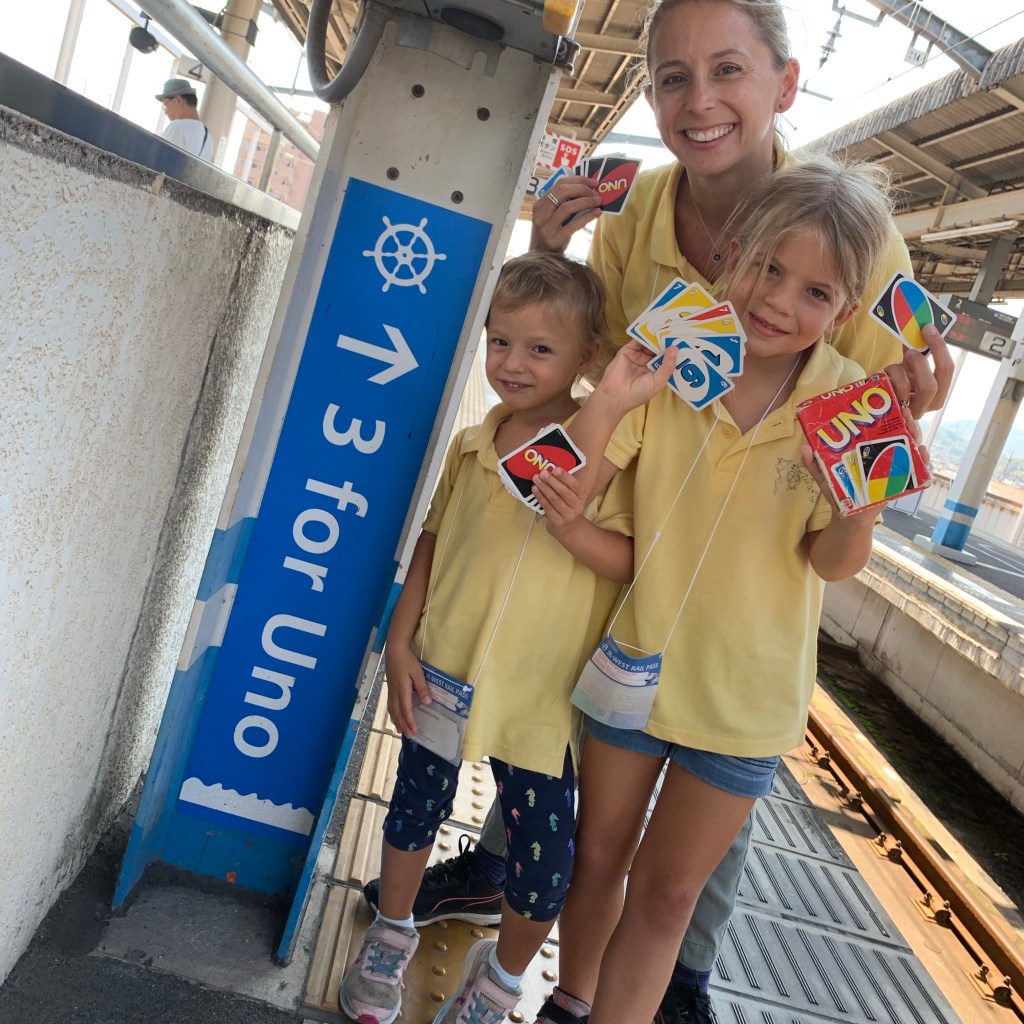
We were unlucky with our train connections on route so it took us far longer than it should have done. We found it rather hilarious to play a game of Uno at Chayamachi station waiting for a train to Uno….
Anyone for a game of Uno, erm on route to Uno?!
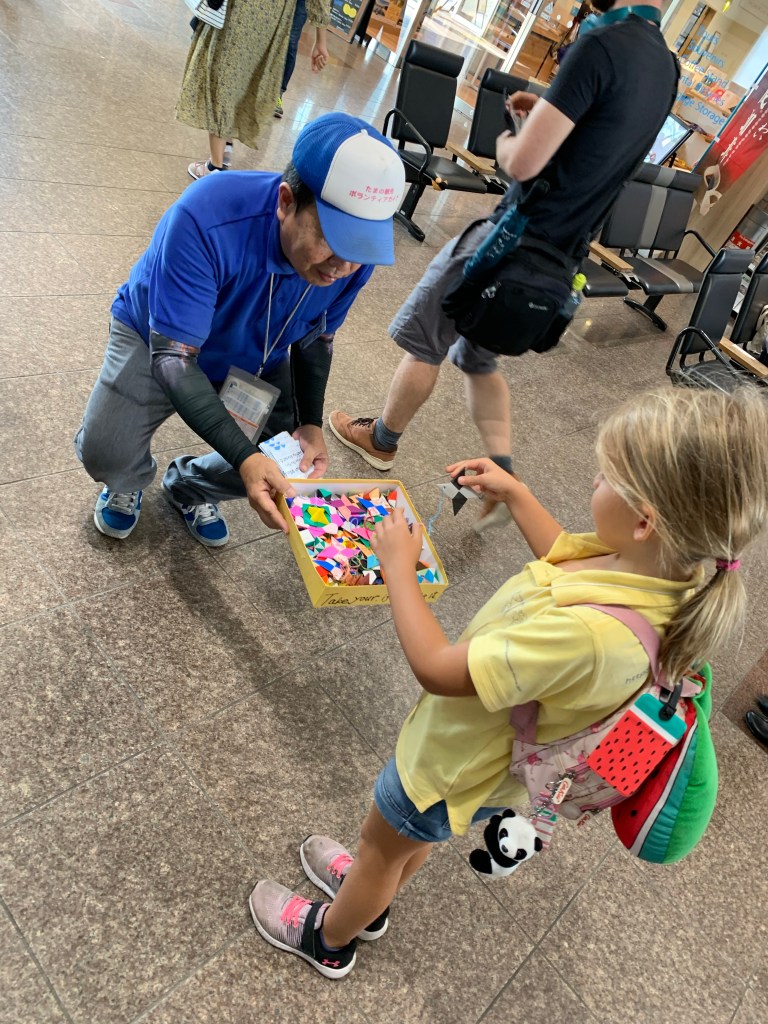
The art started as soon as we arrived at Uno train station, the building itself covered in black stripes by artist Esther Stocker and guides handing out special origami (to be stuck into the girls diaries).
Free origami at Uno train station, 5 October 2019.
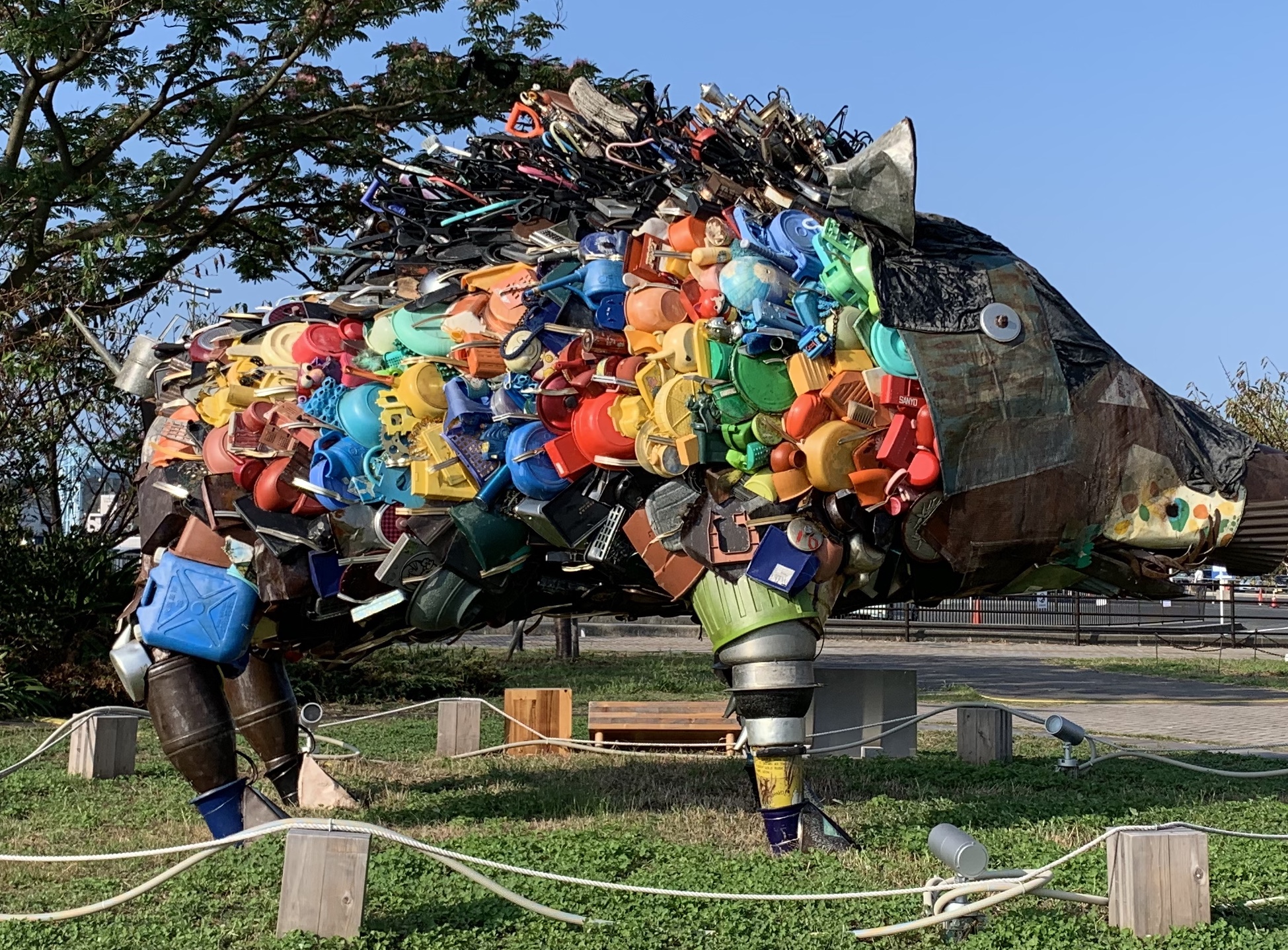
On the harbour, Chinu, the black sea bream made of recycled plastic bottles had been transformed into a pig (for the Chinese year of the pig we suppose).
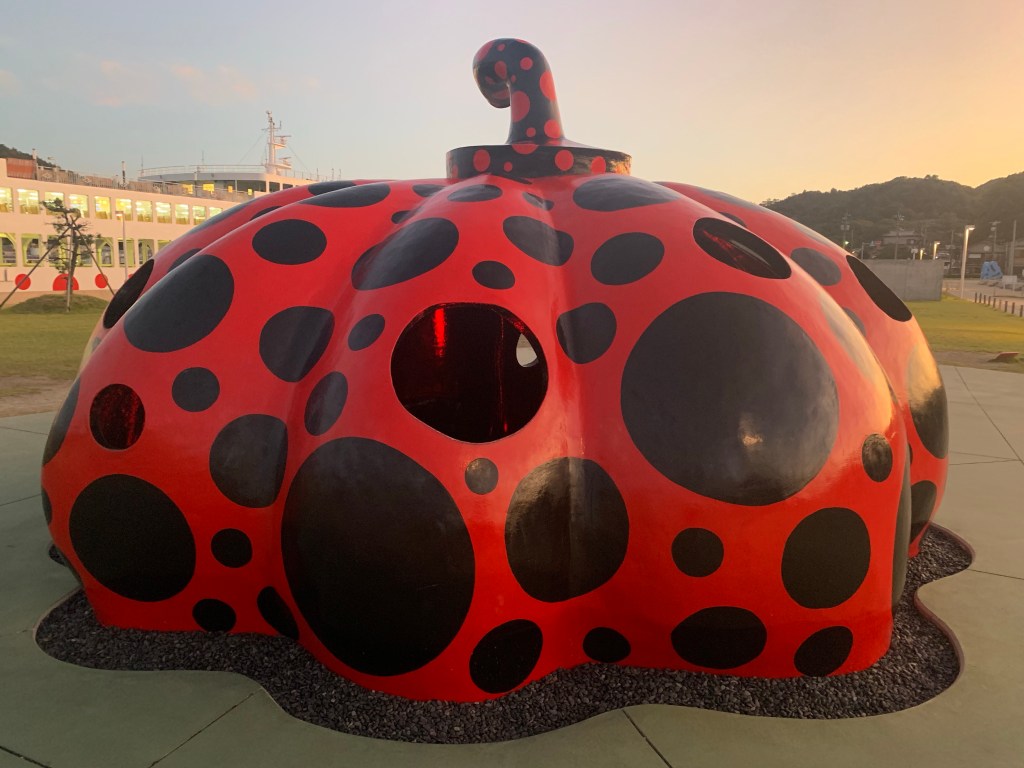
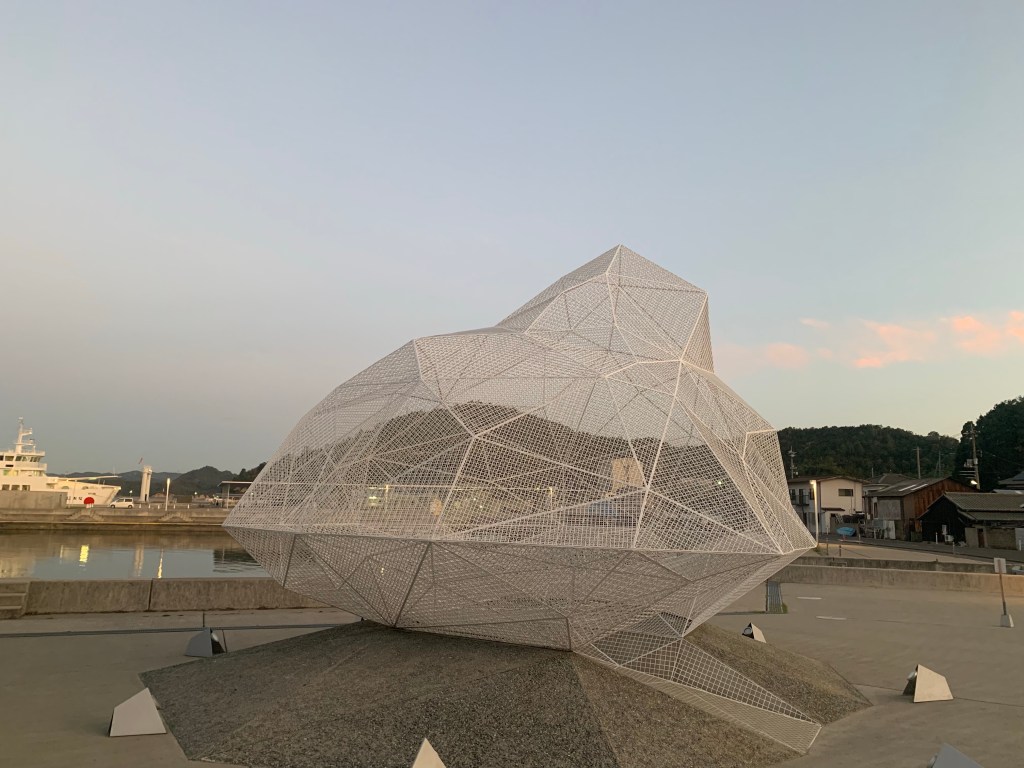
There was only one option of a boat to Naoshima, which dropped us at Miyanoura port, a bus ride to where we were staying and site of Kusama’s Red Pumpkin and the Naoshima pavilion designed by Sou Fujimoto.
Red Pumpkin, Yayoi Kusama, Miyanoura port, Naoshima.Naoshima Pavilion by Sou Fujimoto was part of the 2016 Setouchi Triennial.
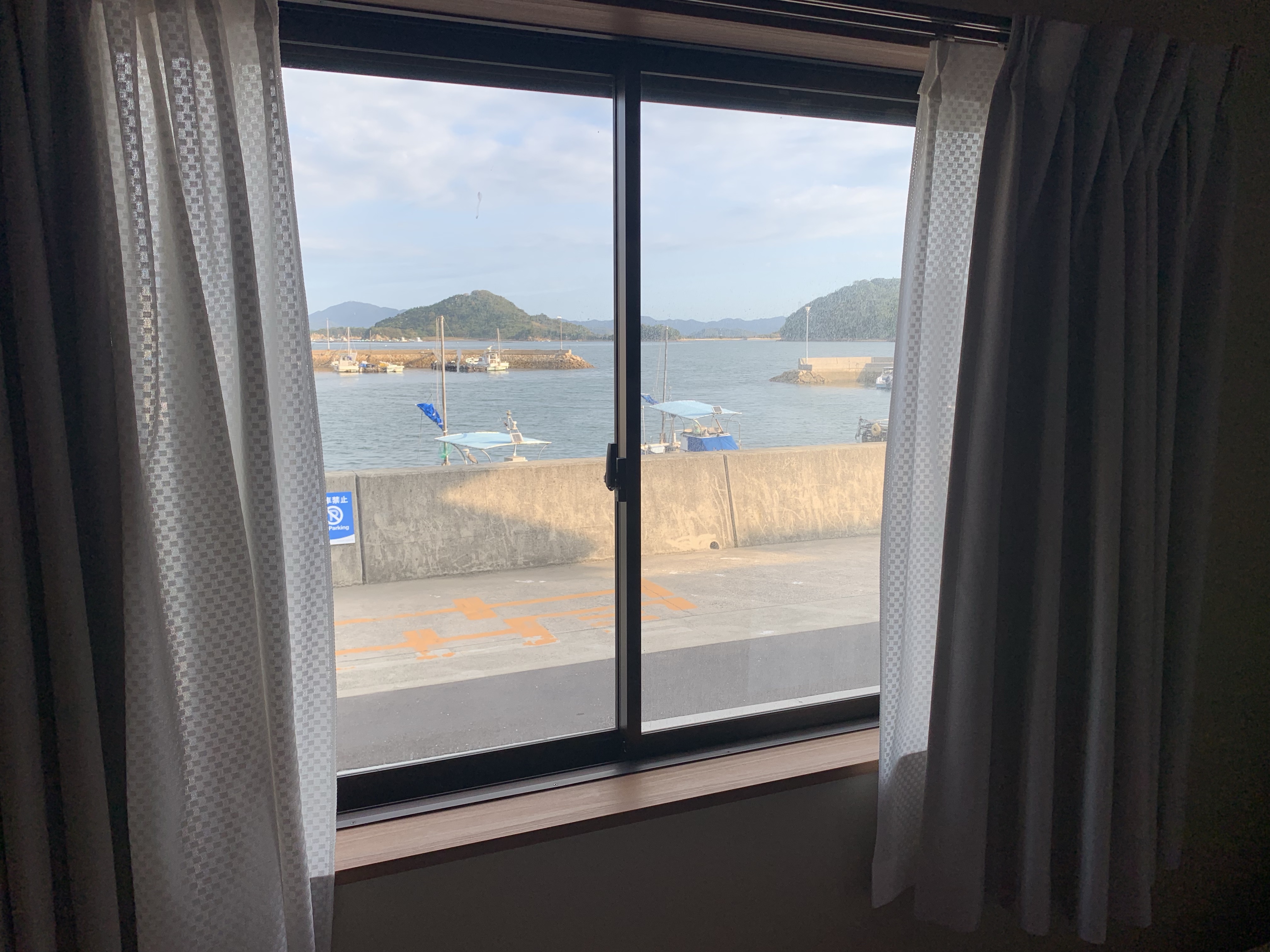
We were lucky with our accommodation on Naoshima, we were not sure what to expect as we basically booked the last available room on the island, but it was large and set right on Honmura harbour.
View from Guest House Oomiyake, Naoshima. Poert Terminal designed by Kazuyo Sejima and Ryue Nishizawa (SANAA).
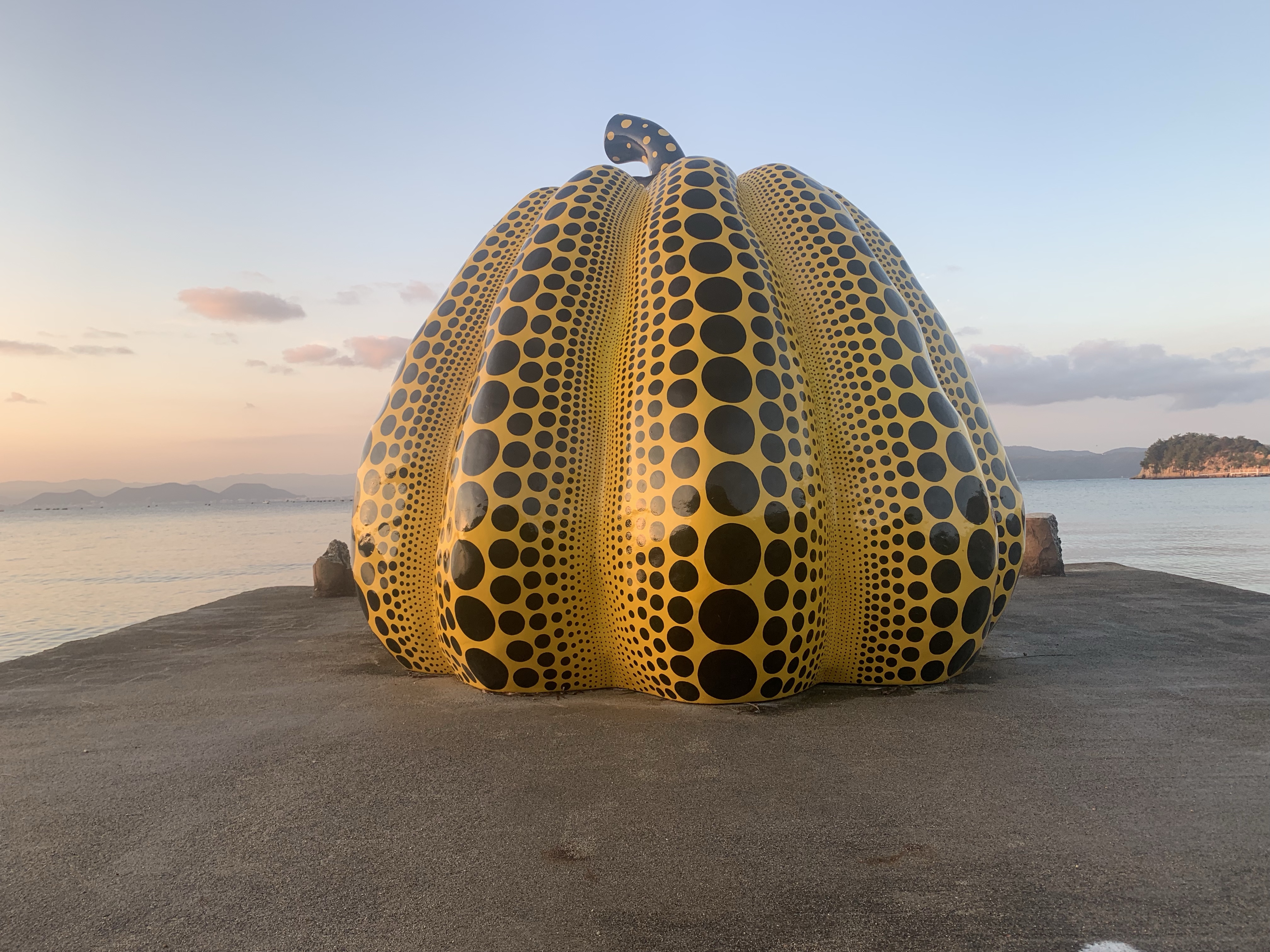
Naoshima is home to the Benesse Art Site, a project collecting contemporary art which began in the 1990s. The Red and Yellow Pumpkins by Yayoi Kusama have become symbols of the island, which has a circumference of 16 km (I know this as we ran round it) and a population of mostly fisherman.
Yellow Pumpkin, Yayoi Kusama, Naoshima (installed in 1994, it was washed away by a typhoon on 9 August 2021).
We started our first afternoon at the Ando Museum, an old wooden house that has been transformed by the world-famous architect Tadao Ando by an addition of a concrete shell at its centre, the angles creating rich shadows and unusual perspectives. Ando has been instrumental in designing major spaces across the island. The museum is the first of a series of traditional houses that had been turned into creative installations by artists called The Art House Project.
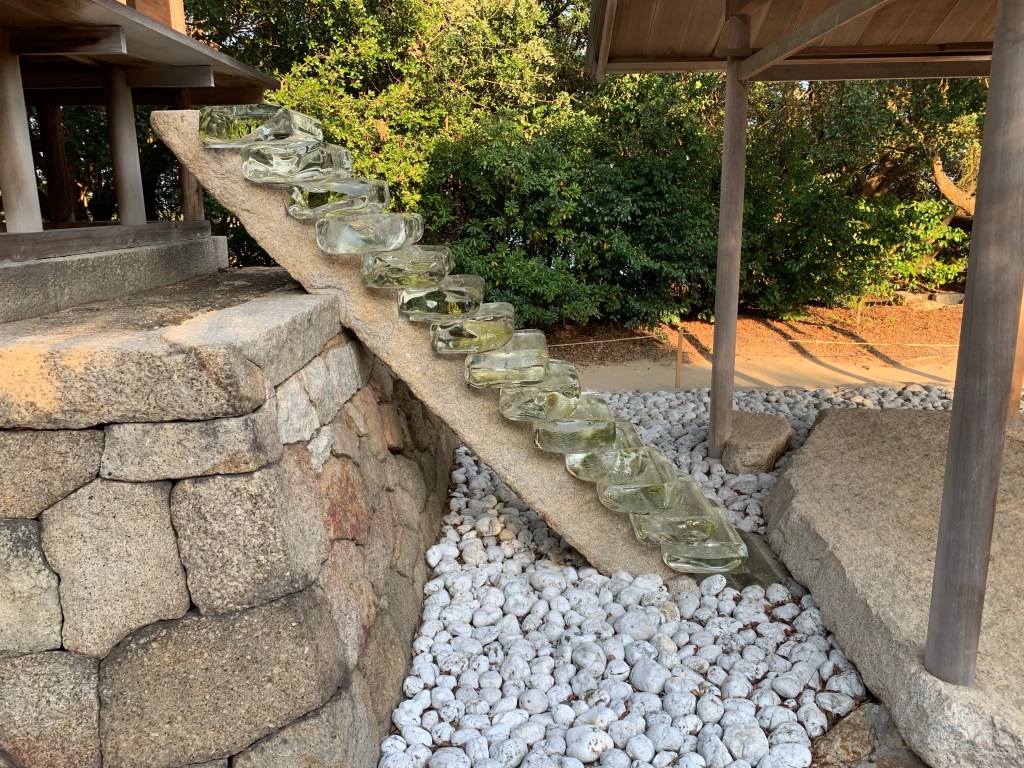
Go-o Shrine, Sugimoto Hiroshi, The Art House Project, Naoshima.
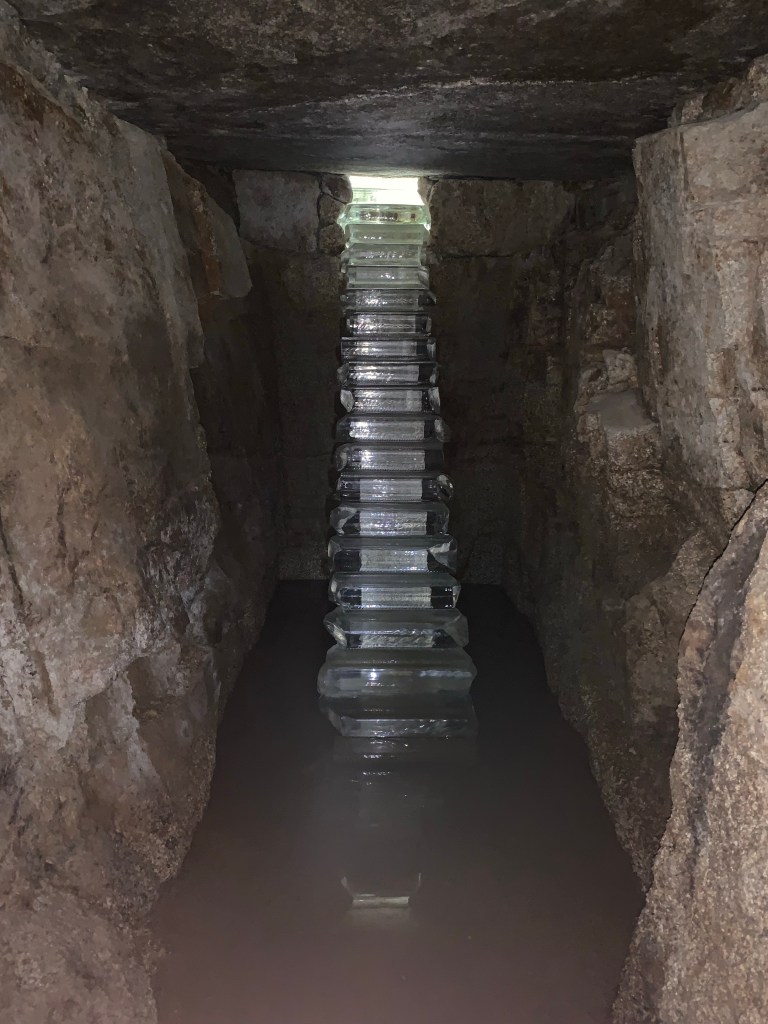
Unfortunately we couldn’t go into James Turrell’s Minamidera as it was fully booked, but we did enjoy Sugimoto Hiroshi’s Go-o Shrine where an underground stone chamber and glass staircase had been added to an existing shrine in the middle of the forest with glimpses of the sea visible through the trees.
Go-o Shrine, Sugimoto Hiroshi.
We also saw Shinro Ohtake’s ‘Haisha’ (scrap metal, collage and large-scale paintings and sculptures), Tatsuo Miyajima’s ‘Kadoya’ (125 digital LED counters, the pace set by a resident of the island, displayed on water) and Yoshihiro Suda’s ‘Gokaisho’ (ceramic flowers laid on tatami mats).
We raced to catch a bus round to the Benesse House Museum, for beautiful sunset views by Kusama’s yellow pumpkin and from inside the stunning galleries.
Sunset view from the Benesse House Museum, Naoshima.
Set on a hilltop, the museum has artworks inside and outside, highlights were Hiroshi Sugimoto’s ‘Time exposed’ photographs which perfectly framed the sunset and paintings by Robert Rauschenberg, Sam Francis, Jean Michael Basquiat and Cy Twombly.
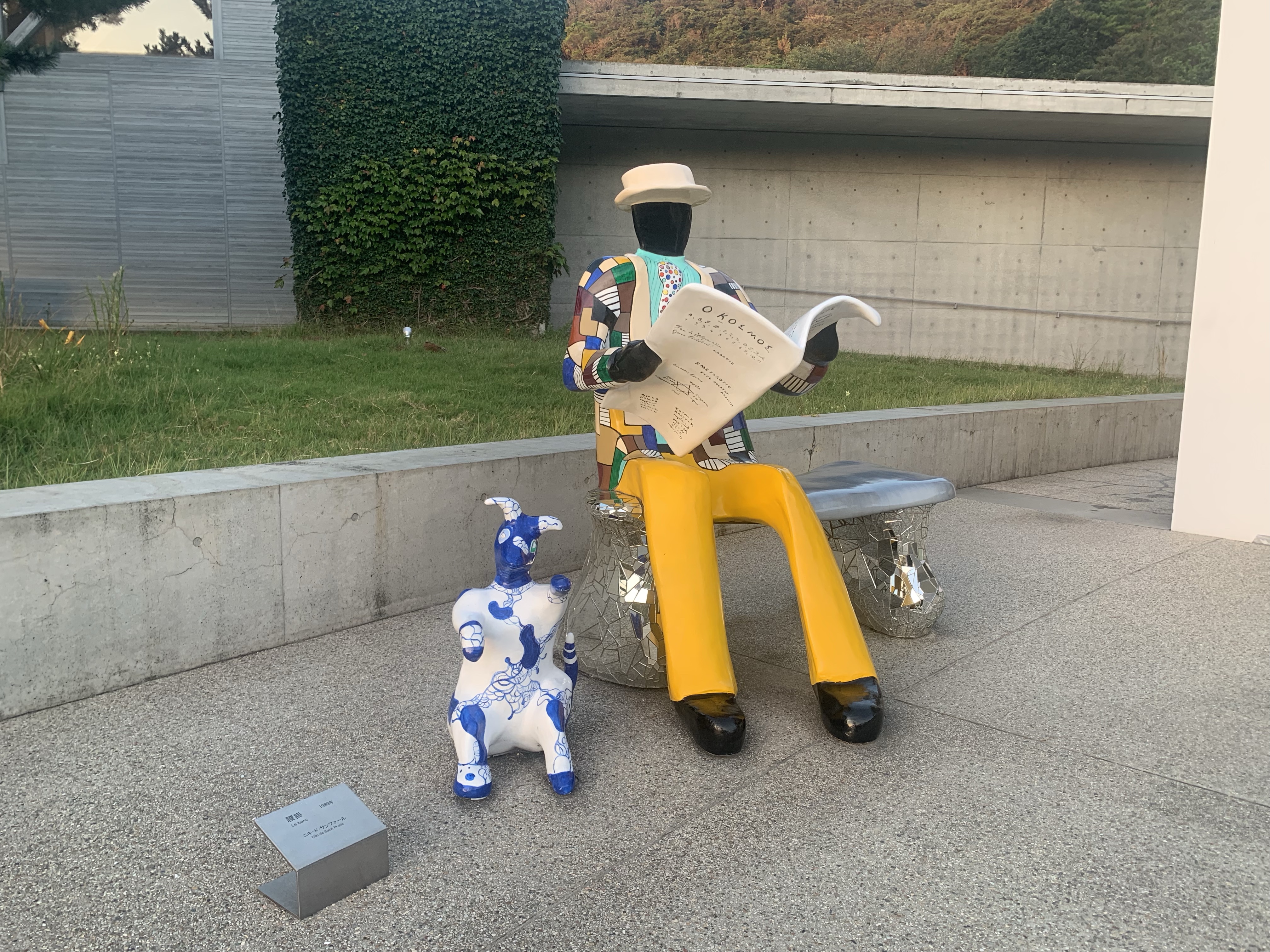
It was also a treat to see works by Jannis Kounellis and Bruce Nauman (100 Live and Die). Cai Guo-Qiang’s ‘Cultural Melting Bath’ project of a group of Chinese Taihu stones which tune energy, Kazuo Katase’s ‘Cup of Tea’ and Niki de Saint Phalle’s colourful ceramic animals were the best of the outside pieces.
Le Banc, Niki de Saint Phalle, 1989, Benesse House Museum.
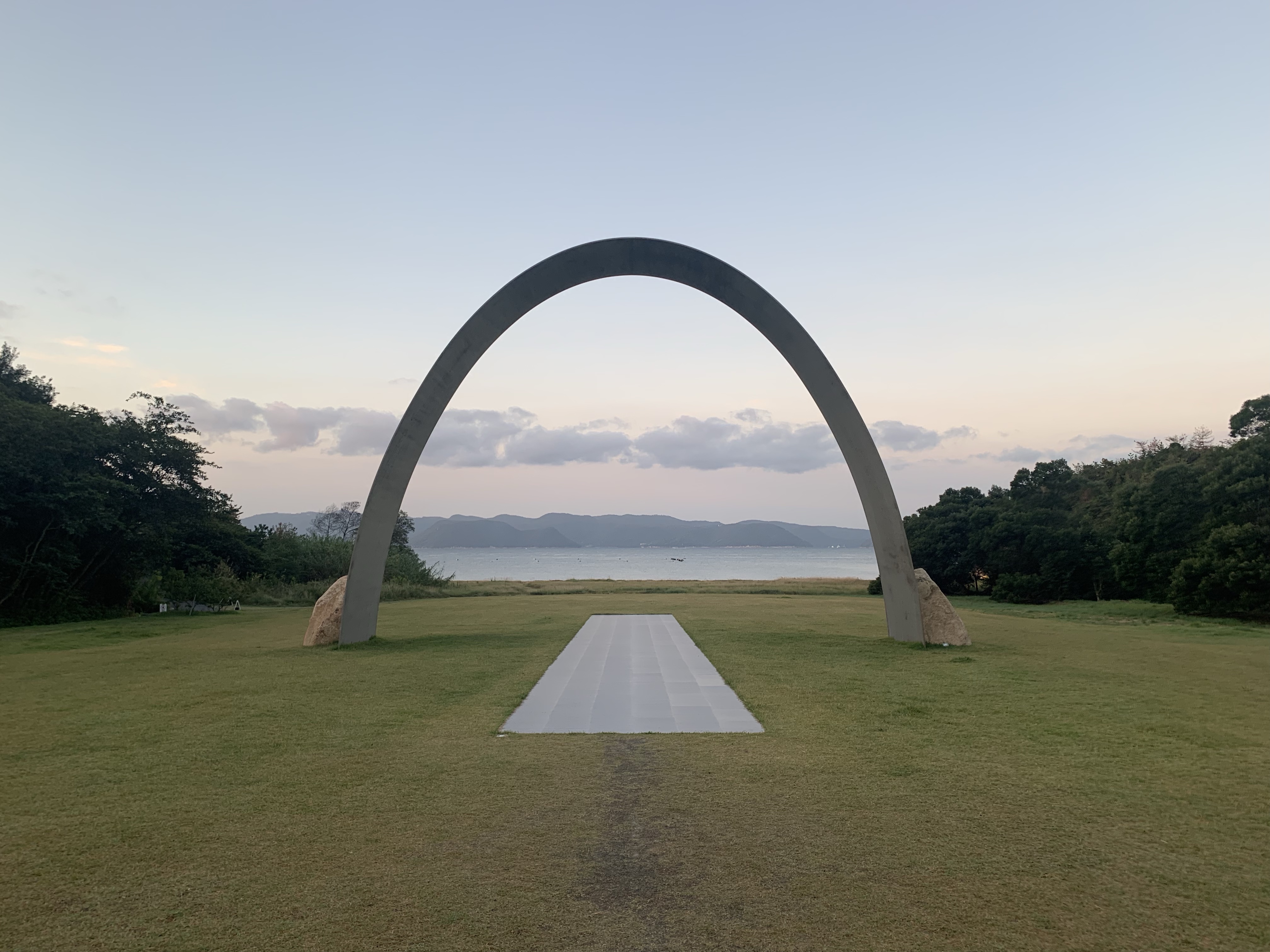
Sadly we hadn’t been organised enough to book tickets for the Chichu Museum and only had time to see the exterior sculptures of the Lee Ufan Museum.
Porte vers l’infini, Lee Ufan, 2019, Lee Ufan Museum, Naoshima.
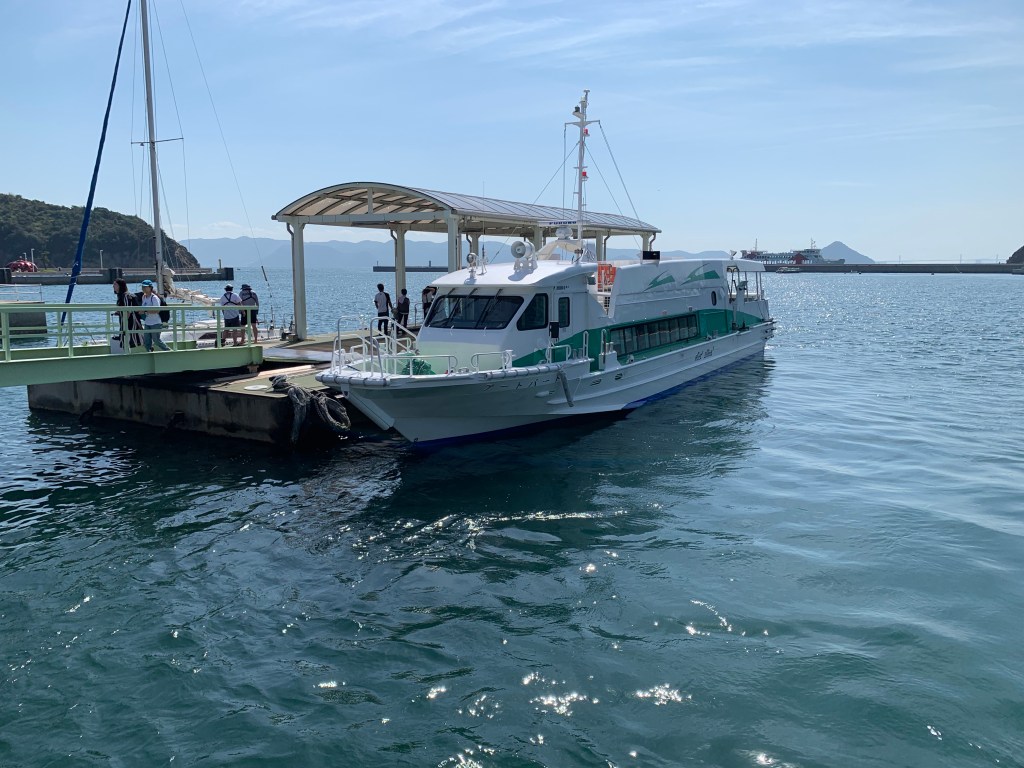
The next day we took the first boat to Teshima island, which in addition to numerous art sites has rolling rice fields and lemon and orange trees growing.
High Speed Inter-island boat, Seto Inland Sea.
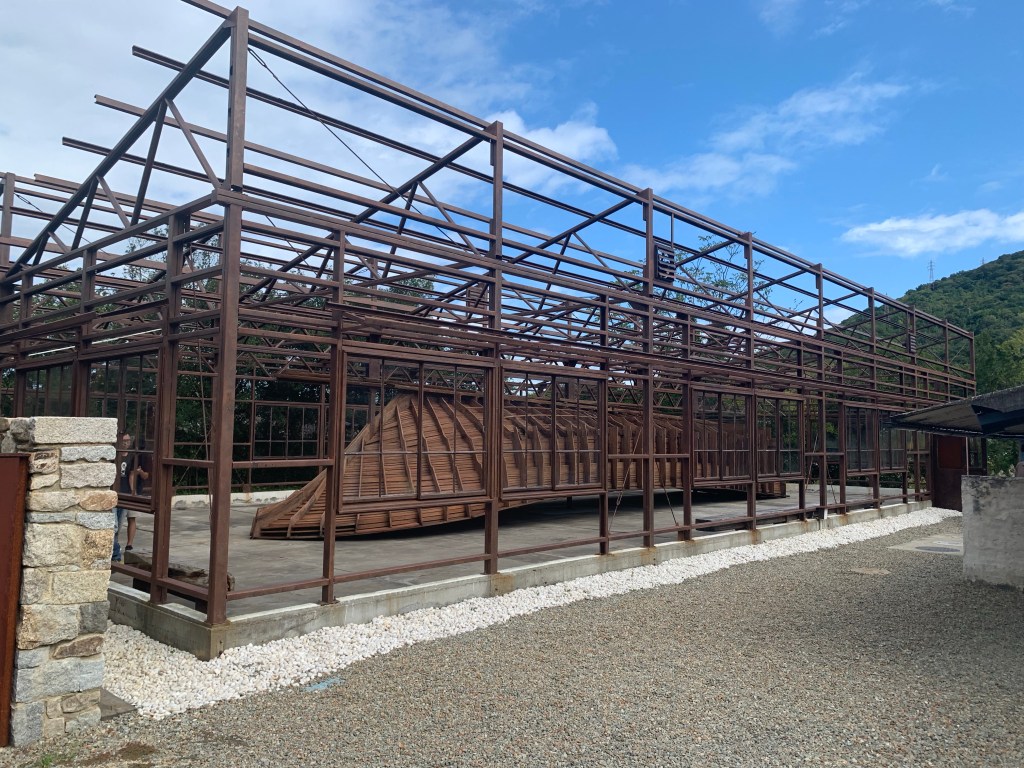
First stop after arriving at Ieura Port was to an abandoned Needle Factory where Shinro Ohtake had chosen to display ‘Bulkhead’, a 17-metre long neglected fishing boat he sourced in Uwajima and brought across to Teshima by barge.
Bulkhead, Shinro Ohtake, Needle Factory, Teshima.
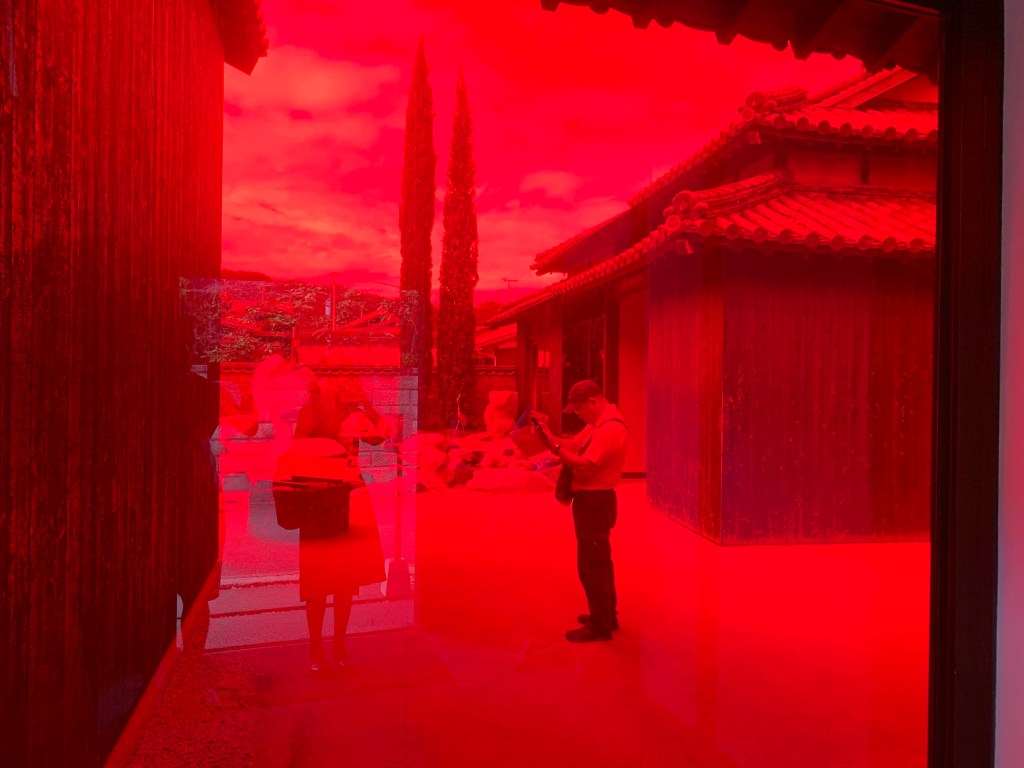
Next was Teshima Yokoo House, another intervention of an old wooden building and possibly the most interesting, with a colourful rock garden, mesmeric tower filled with photocopied pictures of waterfalls from across the world and a mirrored toilet.
Teshima Yokoo House, Teshima.
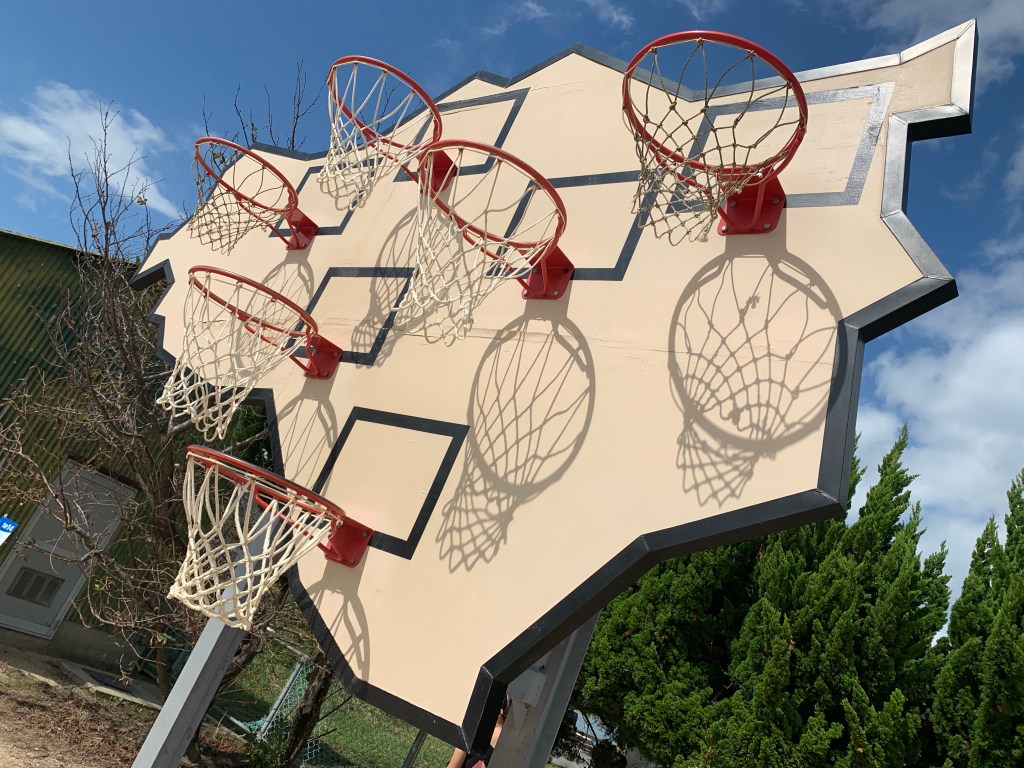
We then walked quite far to reach Anri Sala’s eloquent intervention at the Teshima Seawall house including video and timed kinetic sculptures, then onto Llobet & Pons ‘No one wins’ – a fun, interactive installation with basketball nets and Christian Boltanski’s ‘Les Archives du Coeur’ – a heartbeat archive you can listen and add to.
No one wins – Multibasket, Llobet & Pons, installed in 2013, Teshima.
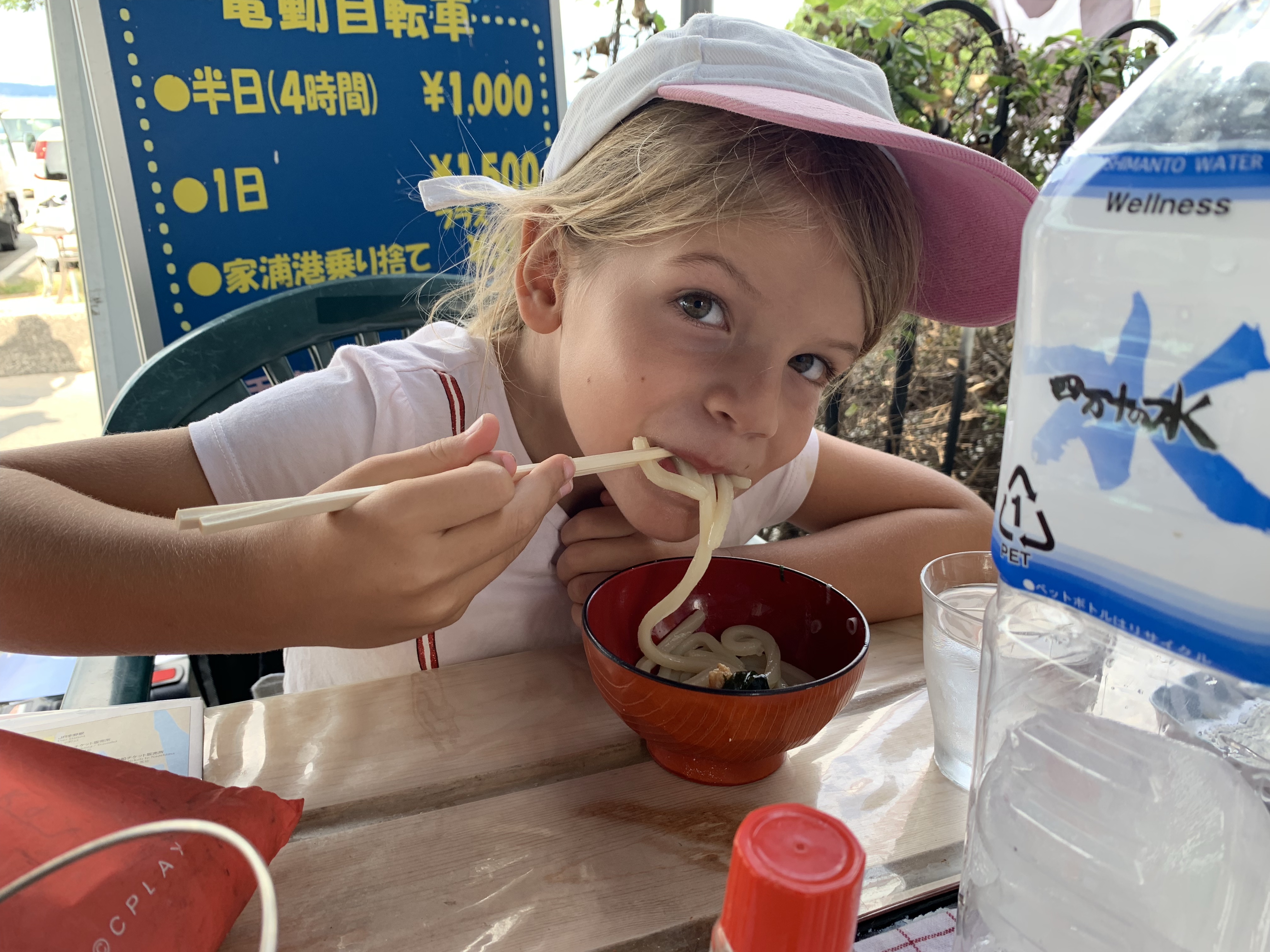
While Tom and the girls stopped for an Udon noodle lunch I raced back to see Pipilotti Rist’s ‘Your First Colour (Solution In My Head-Solution in my Stomach’ (ironic considering I was skipping lunch for art) and Janet Cardiff & George Bures Miller’s collaborative sound piece ‘Storm House’.
Udon soup at Nomura, Takoyaki restaurant, near Karatoko port, Teshima.
Ryo Abe’s Shima Kitchen was the place to eat on Teshima but it was fully booked, I had to make do with an onigiri bought in Circle-K at Tonosho Port on Shodoshima which didn’t have any decent projects.
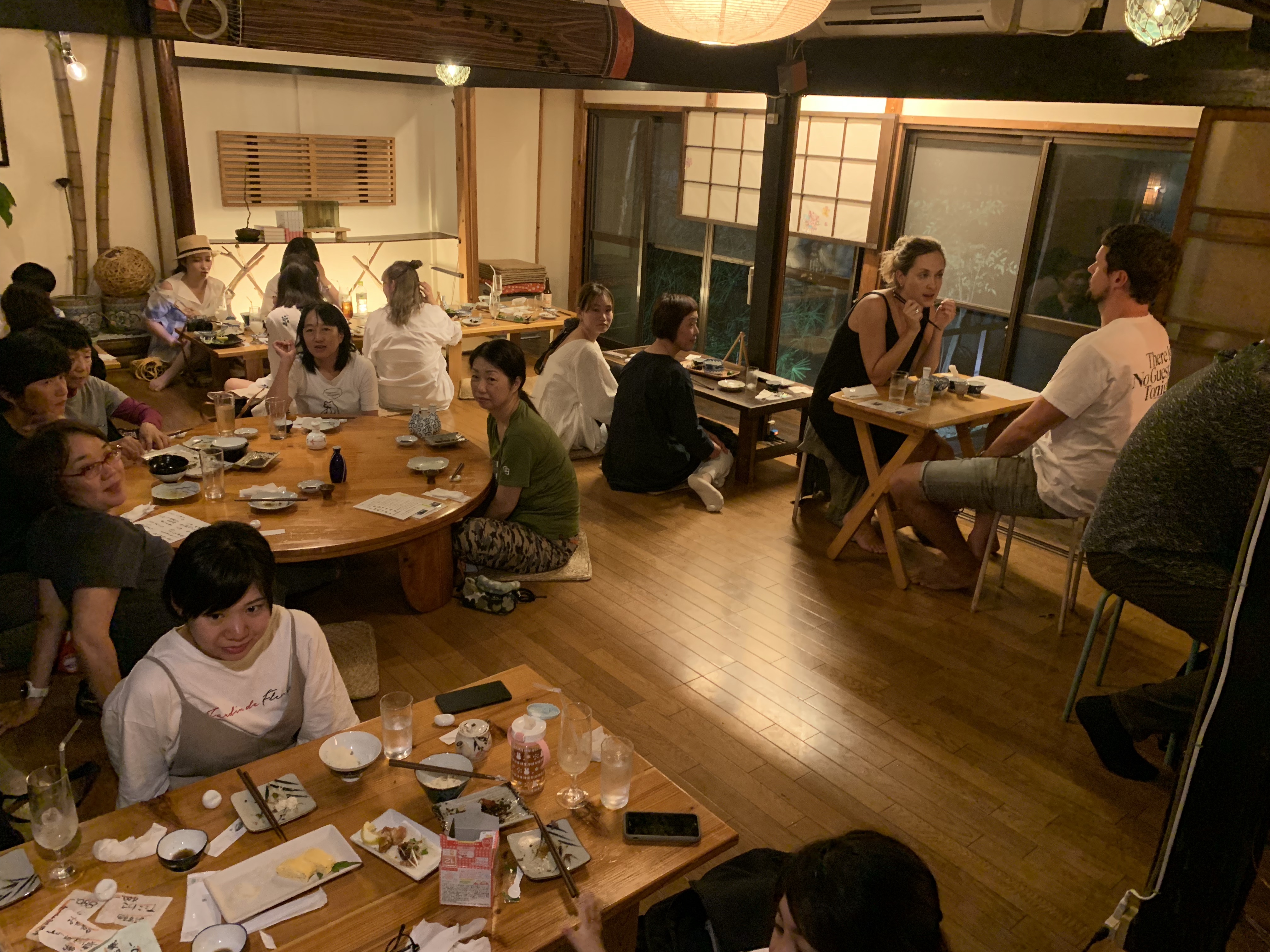
We ate very well on Naoshima, most places geared up to the Triennale crowds with teishoku (set-menus) the best option. You had to get in early to get a table. We had lunch the first day at Apron café and dinners at Naoshima Gohan Ebisukamo and Kaisen Cusine Yayoda.
Dining at Ebisukamo, Japanese restaurant, Naoshima.
It was completely impossible to get more than a general impression in the three days we had. You would need three weeks to get around everything given the distances and boat times.
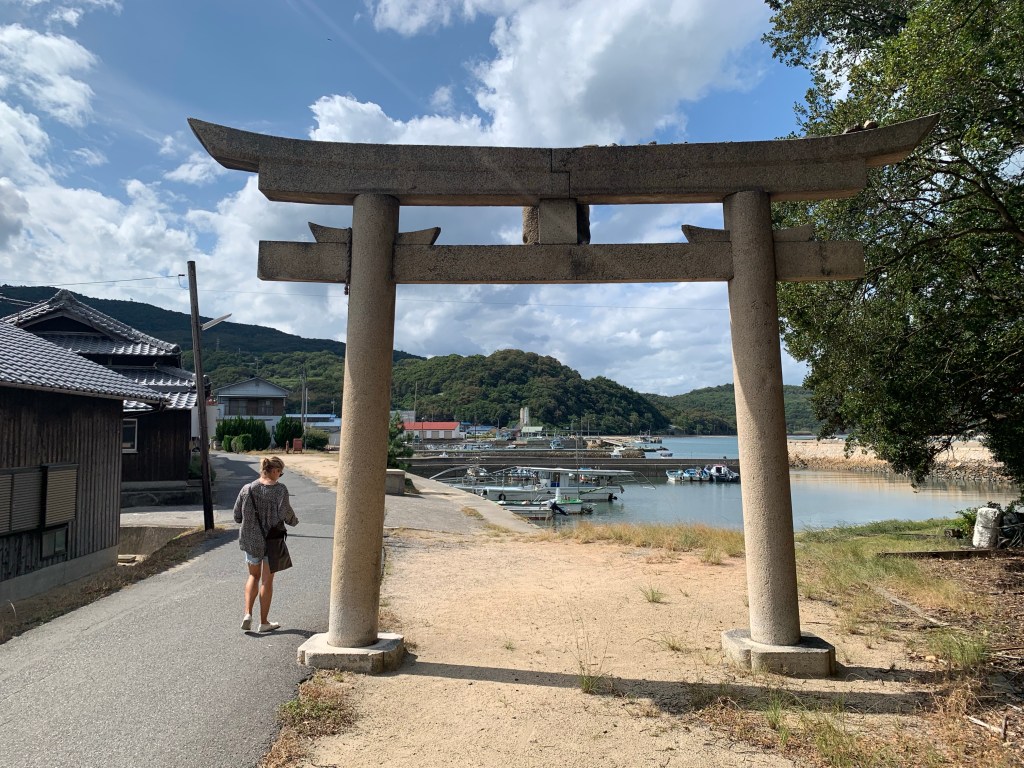
On the art hunt, walking past a torii (traditional Japanese gate) close to the harbour, Teshima.
We managed to get to three islands but the third (Shodoshima) was a mistake, as we didn’t have time to travel to the places on the island where the art was and still make the last ferry back to Naoshima. Visiting the area out of the Triennale period could perhaps be preferable, as there is plenty to see that is on permanent display.
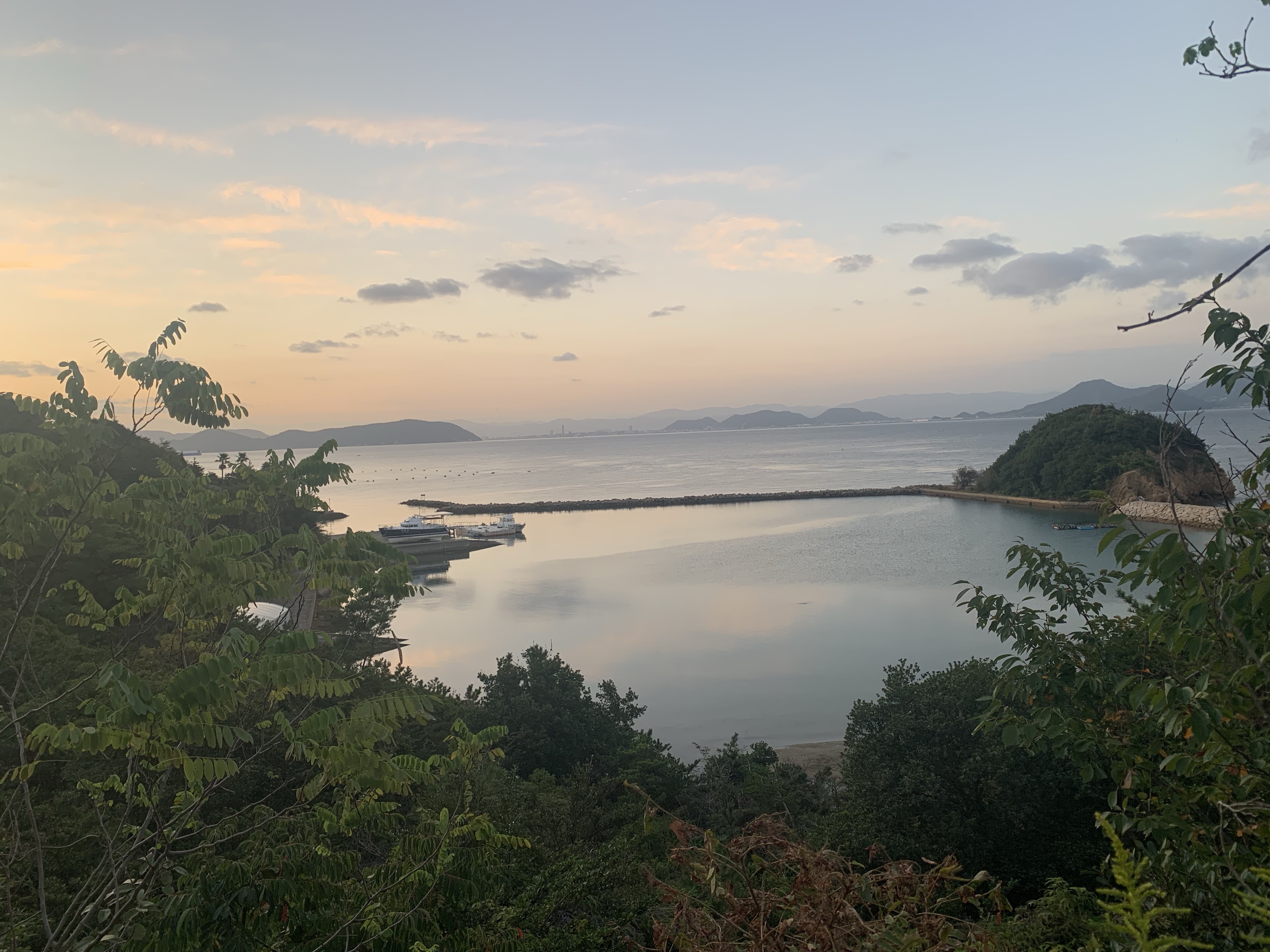
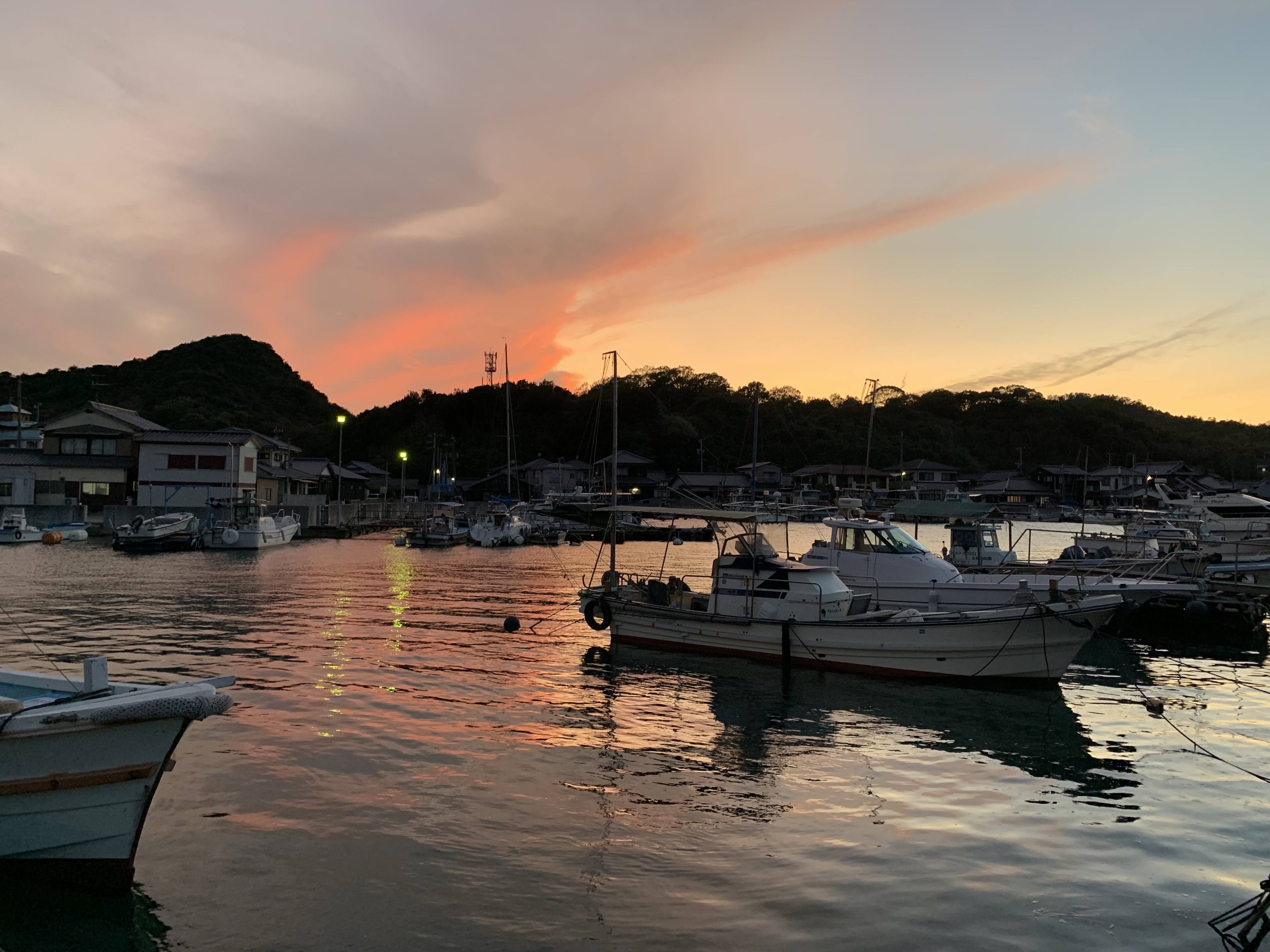
Sunset, Naoshima.
It is a perfect destination for art lovers or indeed anyone who shares our key requirements for a destination: interesting art, good food, beautiful nature and the odd place to play.
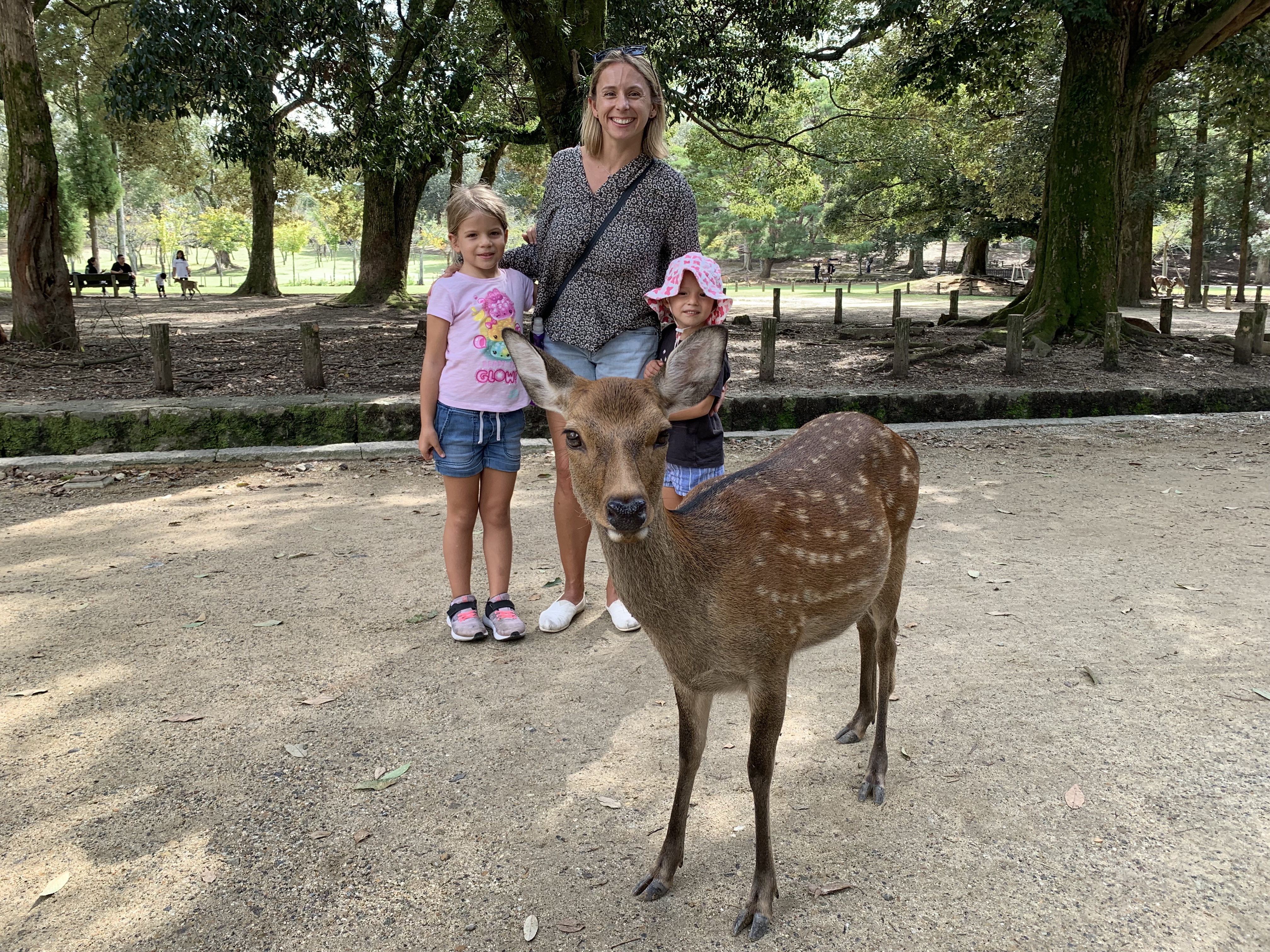
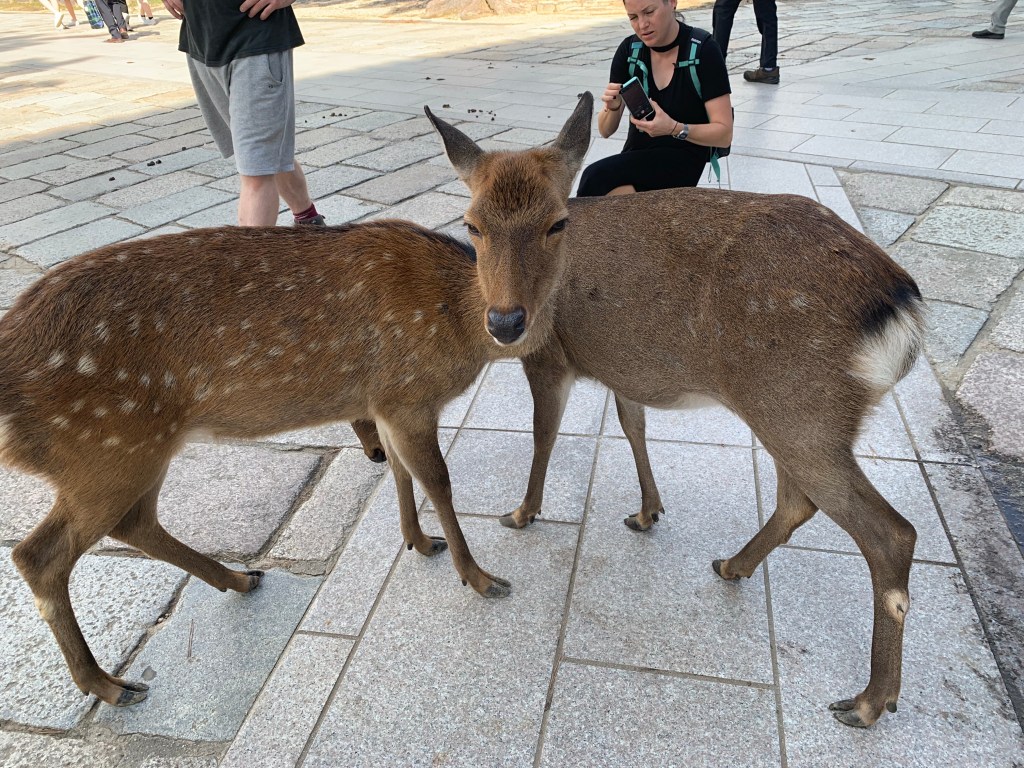
We visited Nara for a day trip from Osaka, an easy hour’s trip by train. It was a great day in Japan’s first permanent capital, enjoying the easy tourist trail down the main street and being bumped into by cheeky deer in the park!
Meeting deer in Nara Park. 2-eyed, 8 legged deer?! No idea!
There are around 1200 tame deer in Nara-koen and you feel like you see nearly all of them (Tom even managed to get a photo of the rare Siamese deer!) Most visitors buy shika-sembei, biscuits to feed them, we avoided the shika-no-fun (deer poo) chocolate souvenirs.
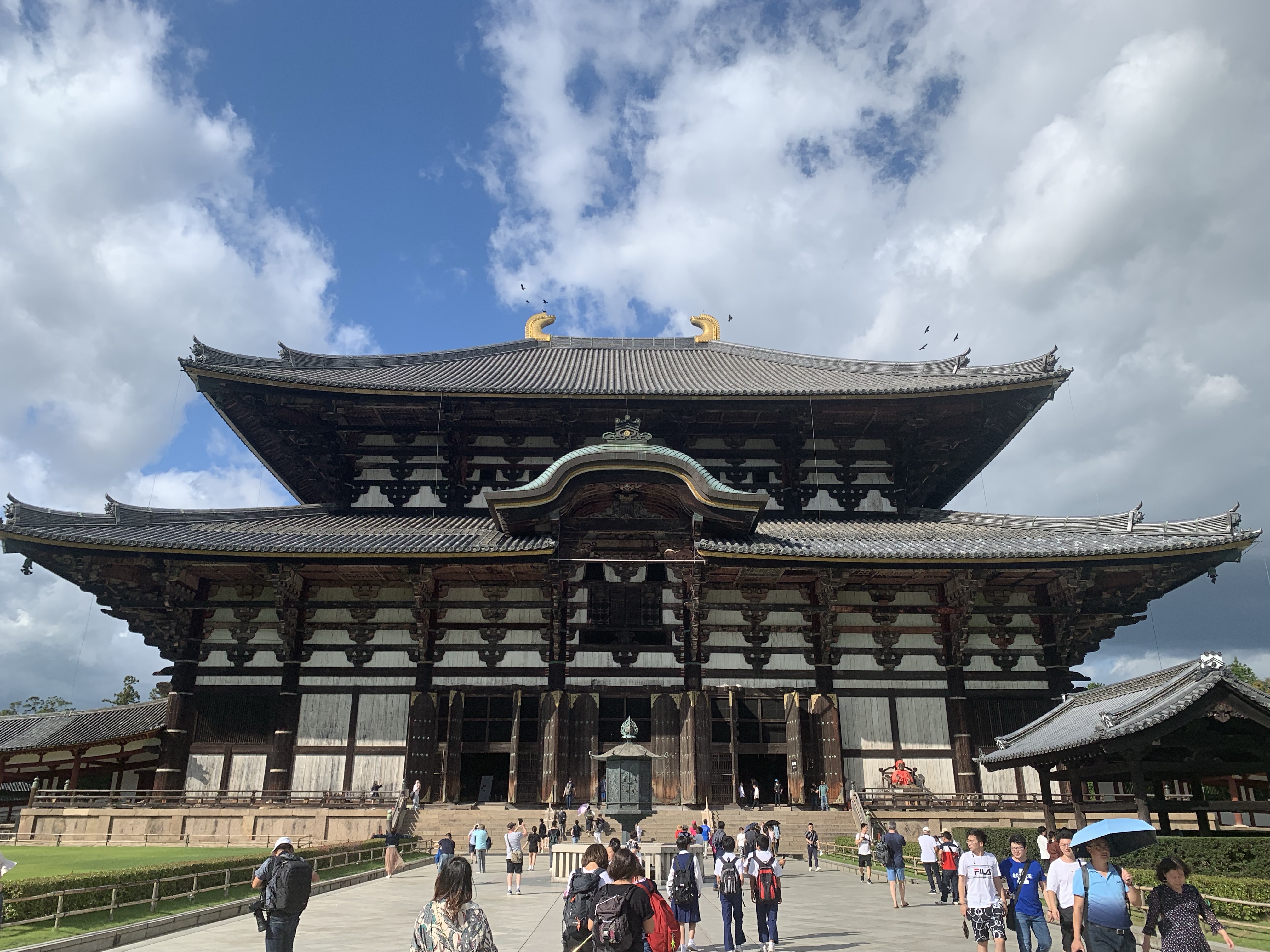
Todai-ji Temple, Nara.
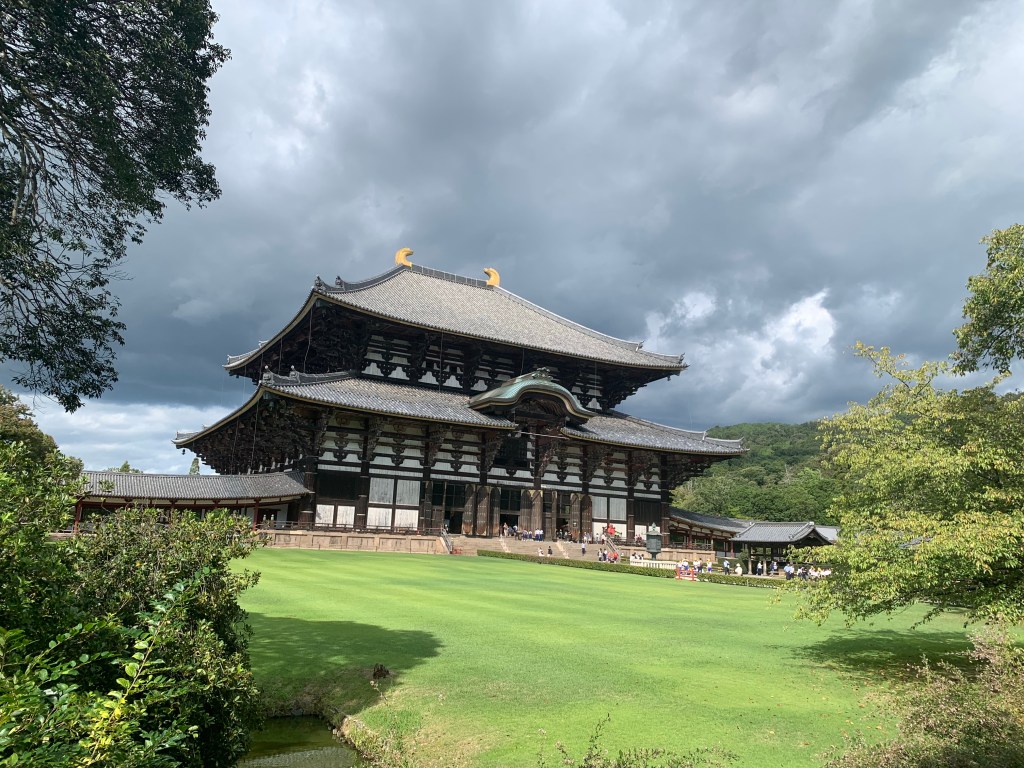
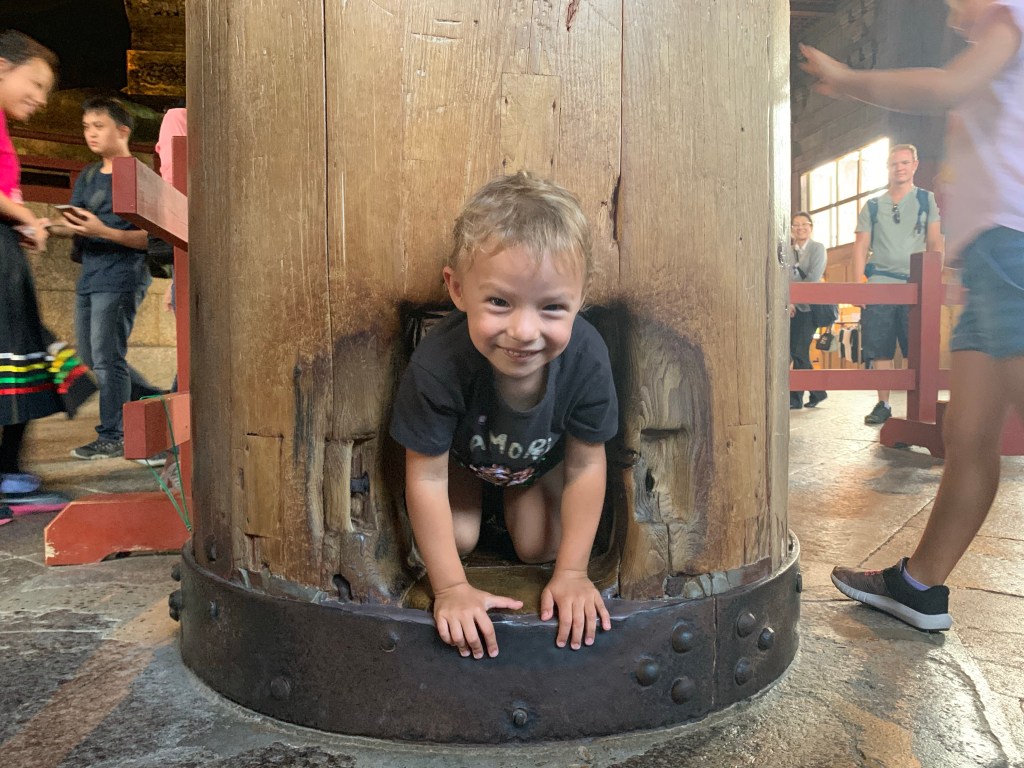
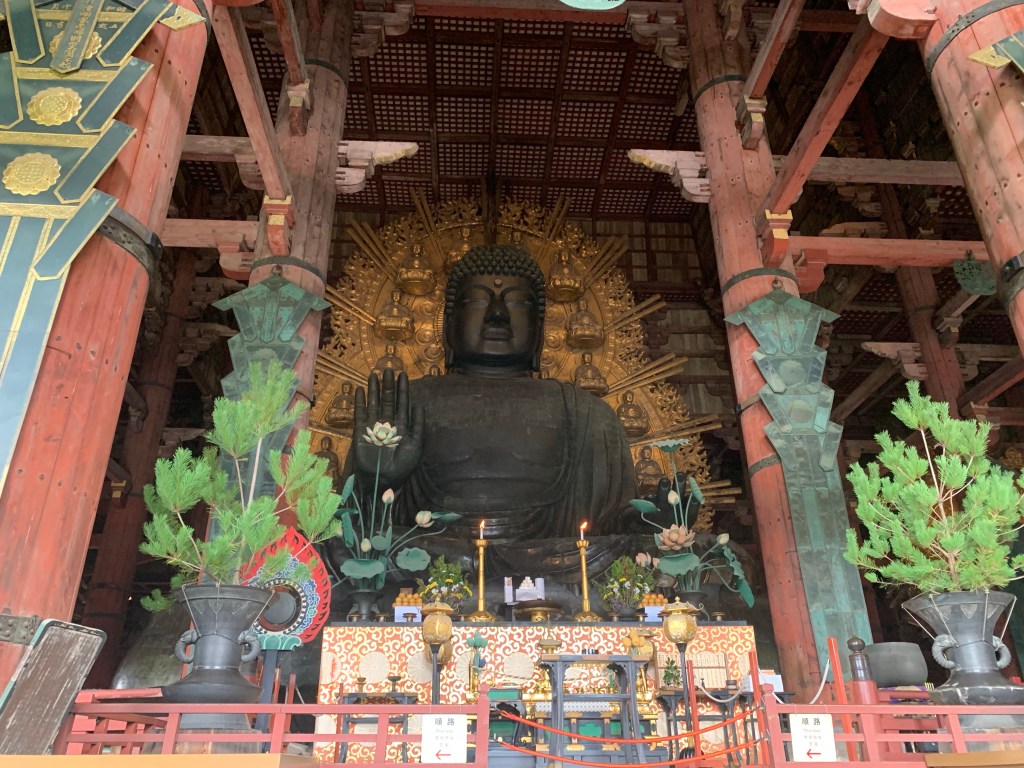
Visiting Todai-ji temple was a highlight. It is the largest wooden structure in the world, the present building the third one built in the same location after previous ones were burnt in fires. The girls enjoyed squeezing their way through a hole in a wooden column to ensure enlightenment (no chance for grownups to fit, I did try!) which is exactly the same size as the Daibutsu’s (bronze Great Buddha), nostrils.
Emerging from a space the size of a Buddha’s nostril, Todai-ji Temple, Nara. Big Buddha (Daibutsu), Todai-ji Temple, Nara.
We had lunch on the main strip near the train station (pleasant, but the first time of many where I was only offered a bowl of white rice as a gluten free option). When temple and shrine fatigue kicked in we found a rooftop café for an afternoon snack in quiet Naramachi before wandering through the covered market and back to the train station.
It probably deserved a night’s stay, but given its easy proximity to Osaka it made sense as a day trip.
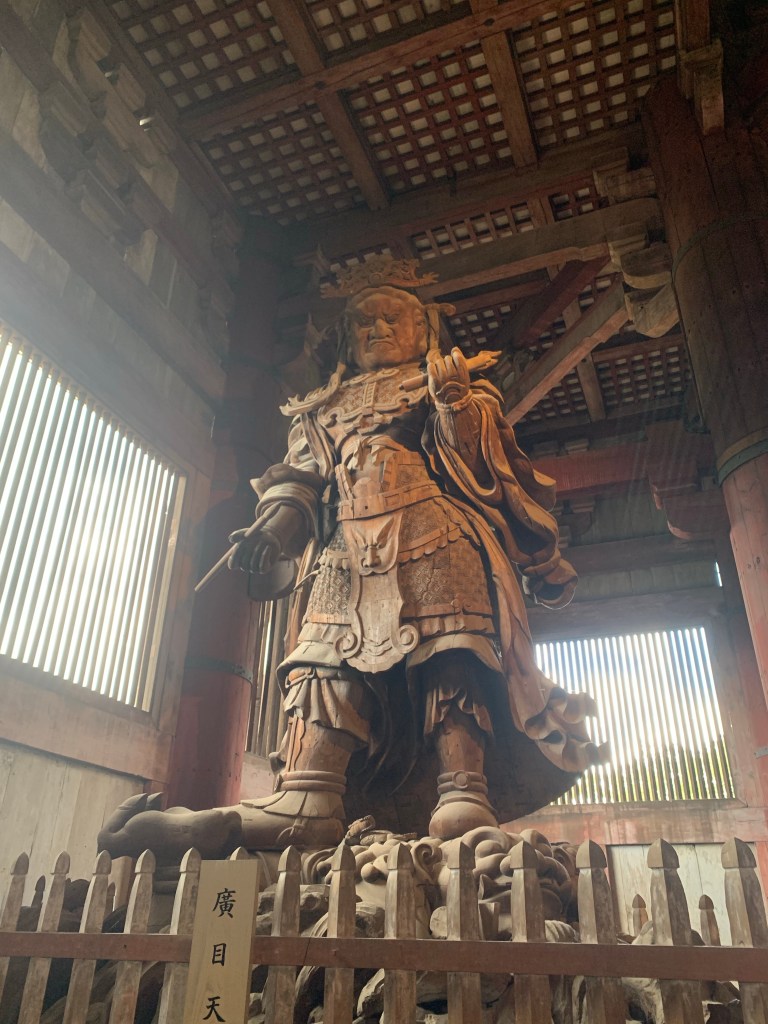
Wooden statue of Koumokuten, Guardian of the four corners, Todai-ji Temple, Nara.
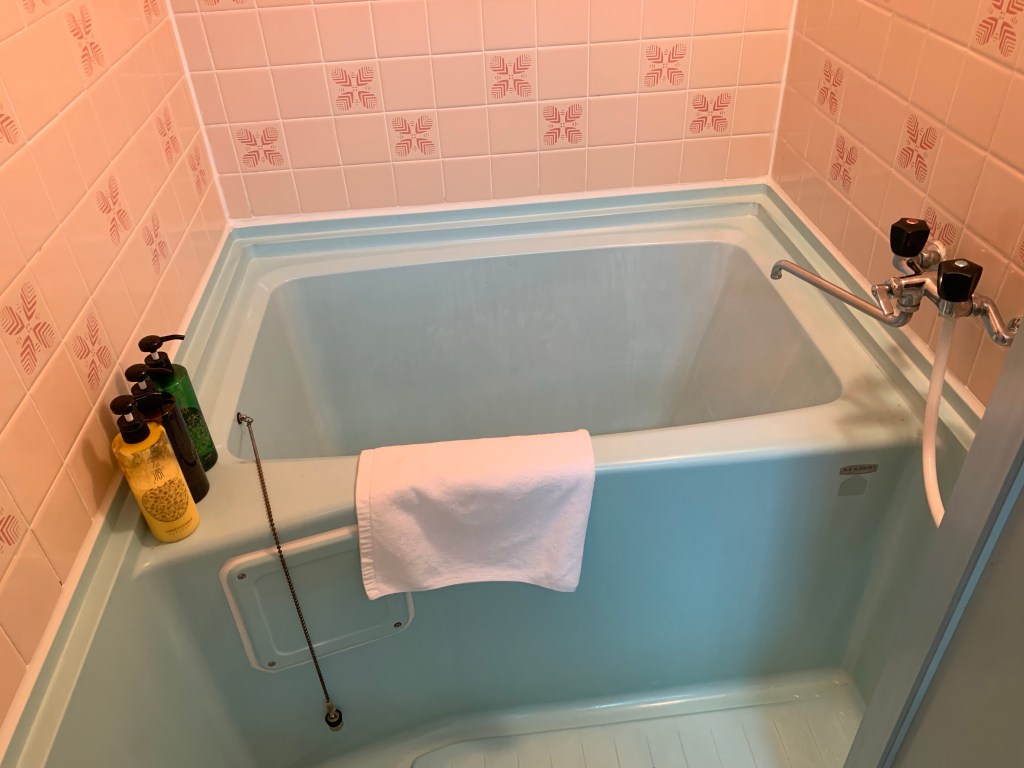
We stayed in a great Airbnb in Osaka, surprisingly spacious for Japan with two bedrooms (the girls on tatami mats for the first time) a kitchen and even a small bath!
Bath in our apartment in Nipponbashi, Osaka, 2-4 October 2019.
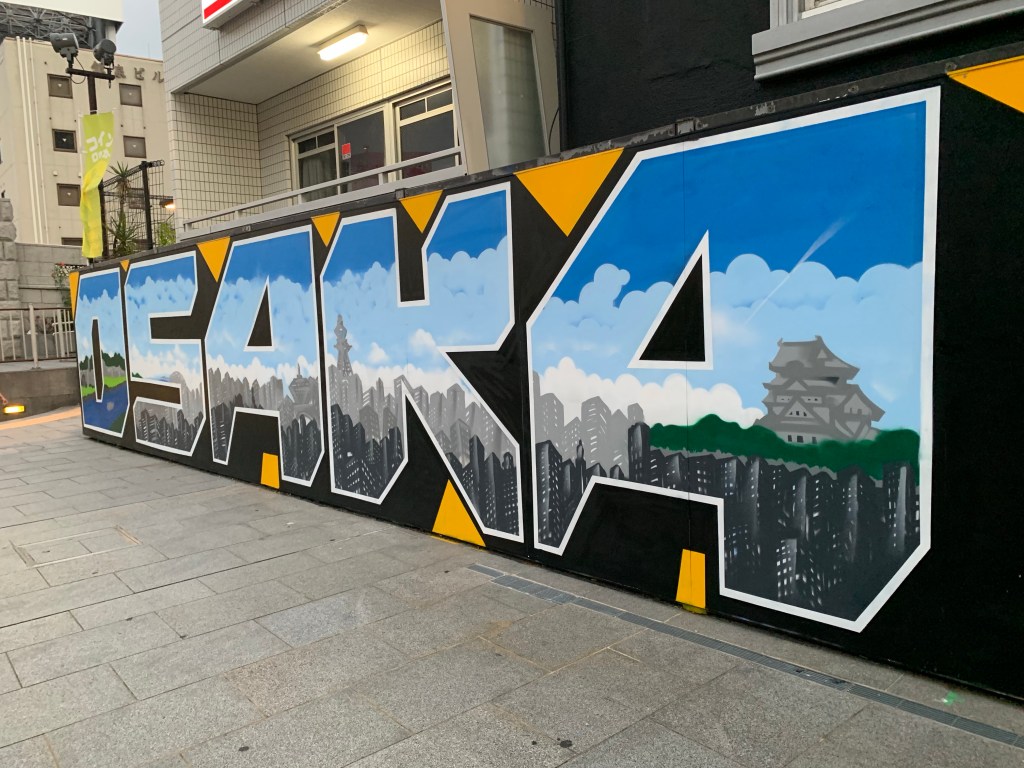
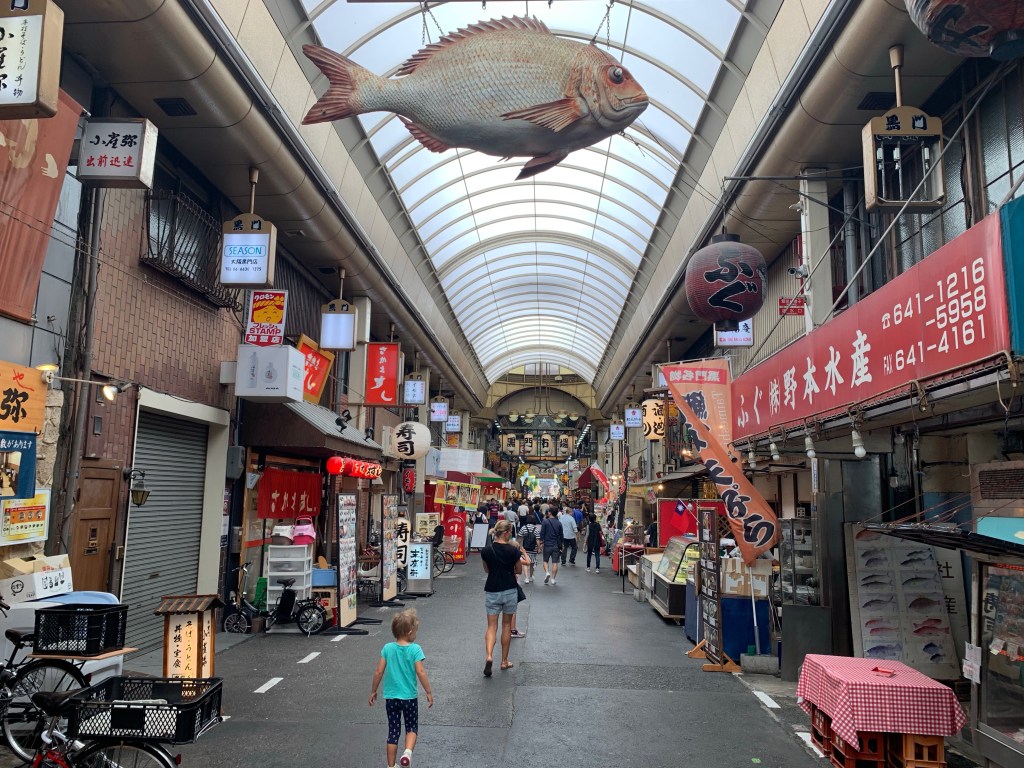
We were in a superb location, in Nipponbashi. It was a fun underground scooter ride from Namba metro station, round the corner from the Kuromon market (great oniguri burgers), across the road from the National Bunraku Theatre (sadly there was not a performance on the days we were there) and walking distance to Dotonbori.
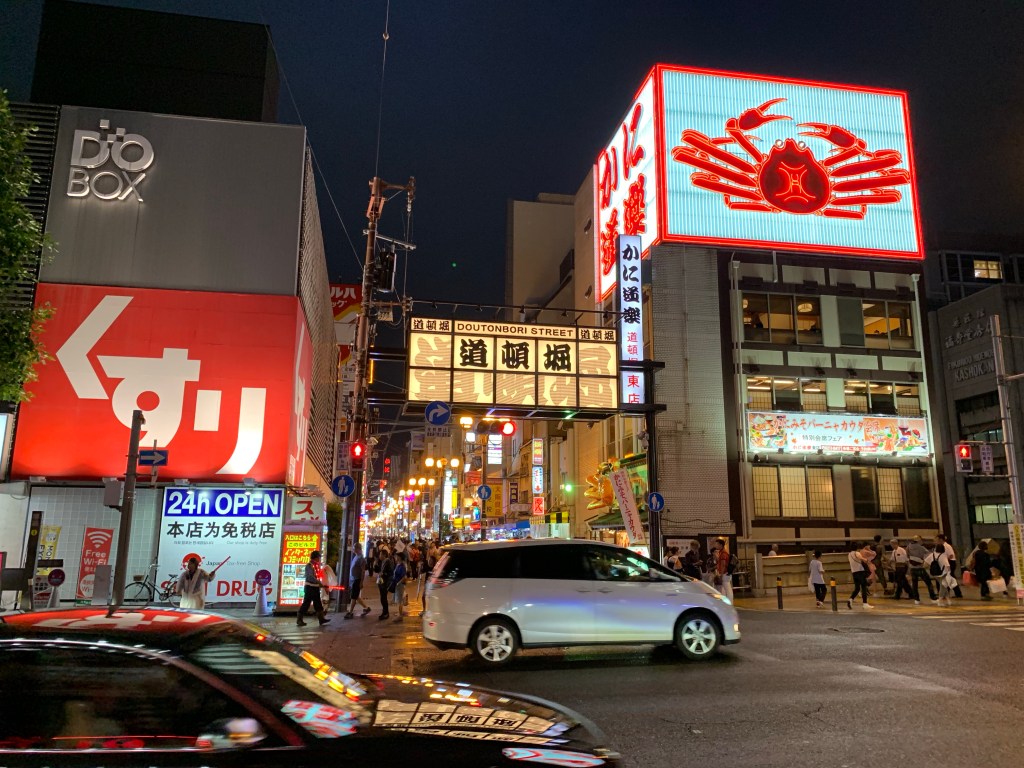
The dazzling lights of Doutonbori Street, Minami area, Osaka.
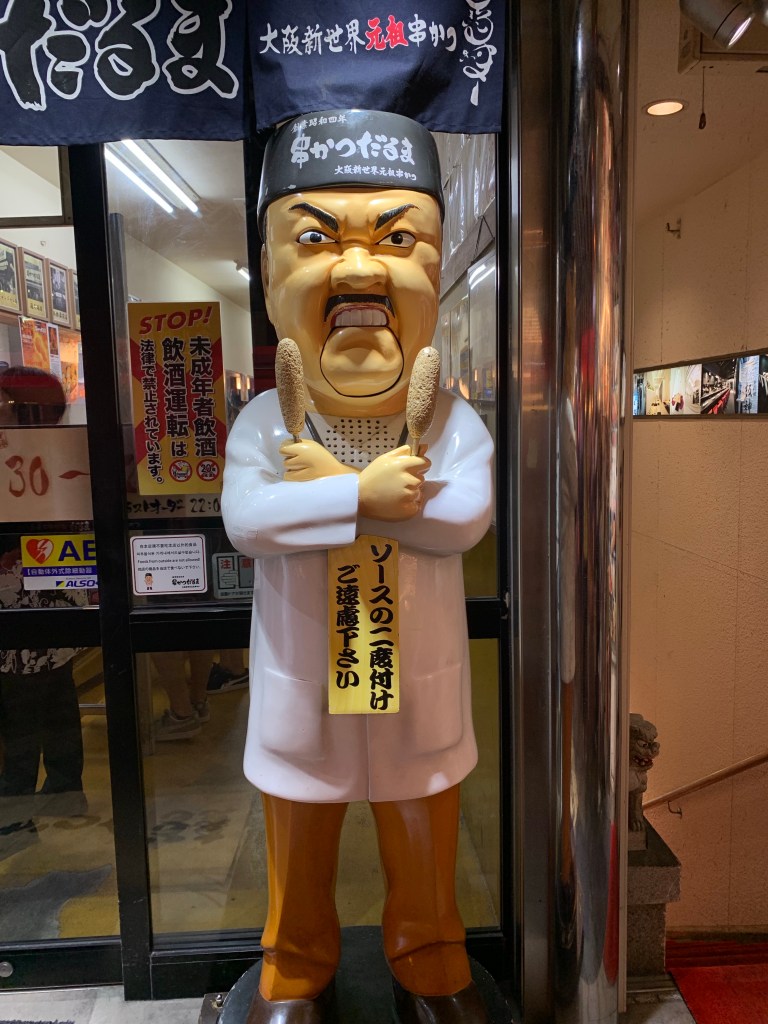
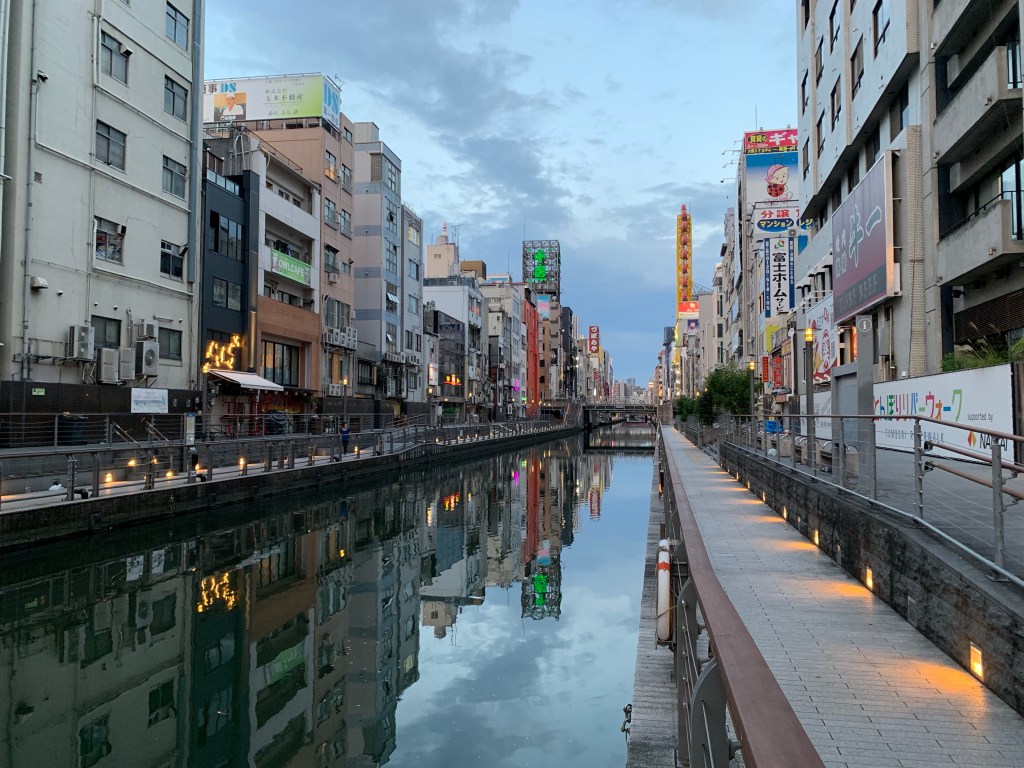
That was where we headed our first night, hunting out the giant crab (Kani Douraku), octopus, the Glico running man, dragon, cow and other lit up models outside the restaurants bordering the canal. We were a bit freaked out by the images of Kuidaore Taro (a clown) and some scary chefs.
Encouraging foot traffic? One of many models outside restaurants along Doutonbori Street, Osaka.
Girls loved checking out the plastic food displays showing what you could get at each place and amazed that there would be a different restaurant on each floor of often a 12-storey building.
Dotonbori canal, Minami, Osaka.
We had an ok dinner with our first sampling of sushi, sashimi and noodles. The next night we picked a place which specialised in tuna.
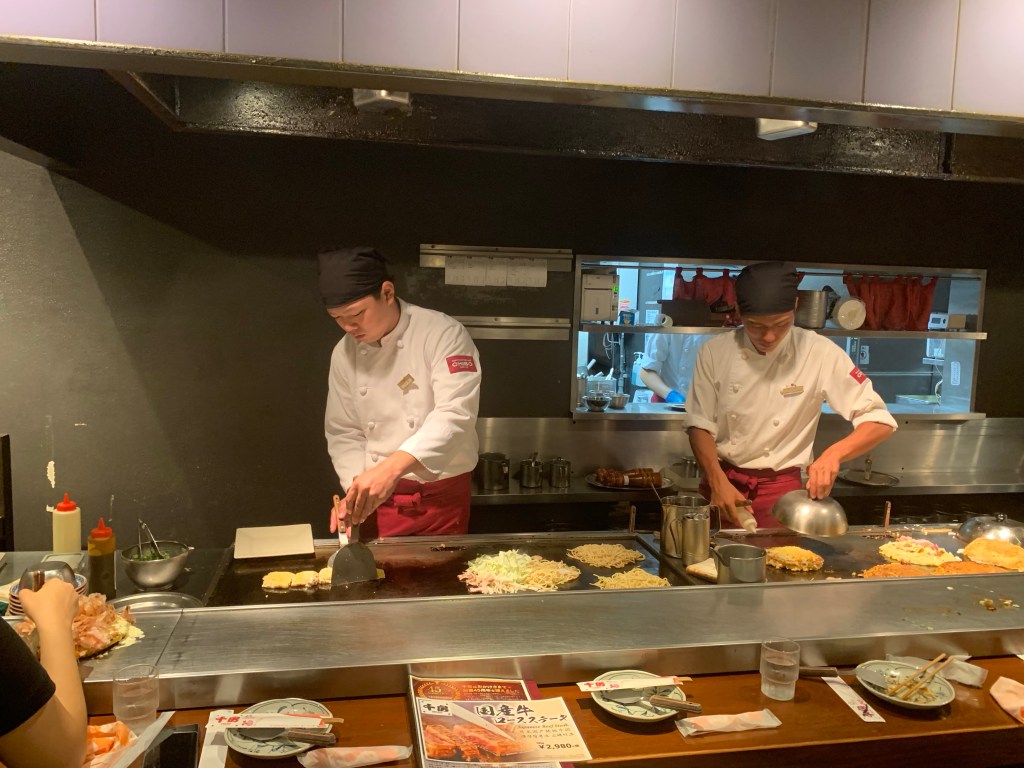
Chefs working at Chibo restaurant, Doutonburi Street, Osaka.
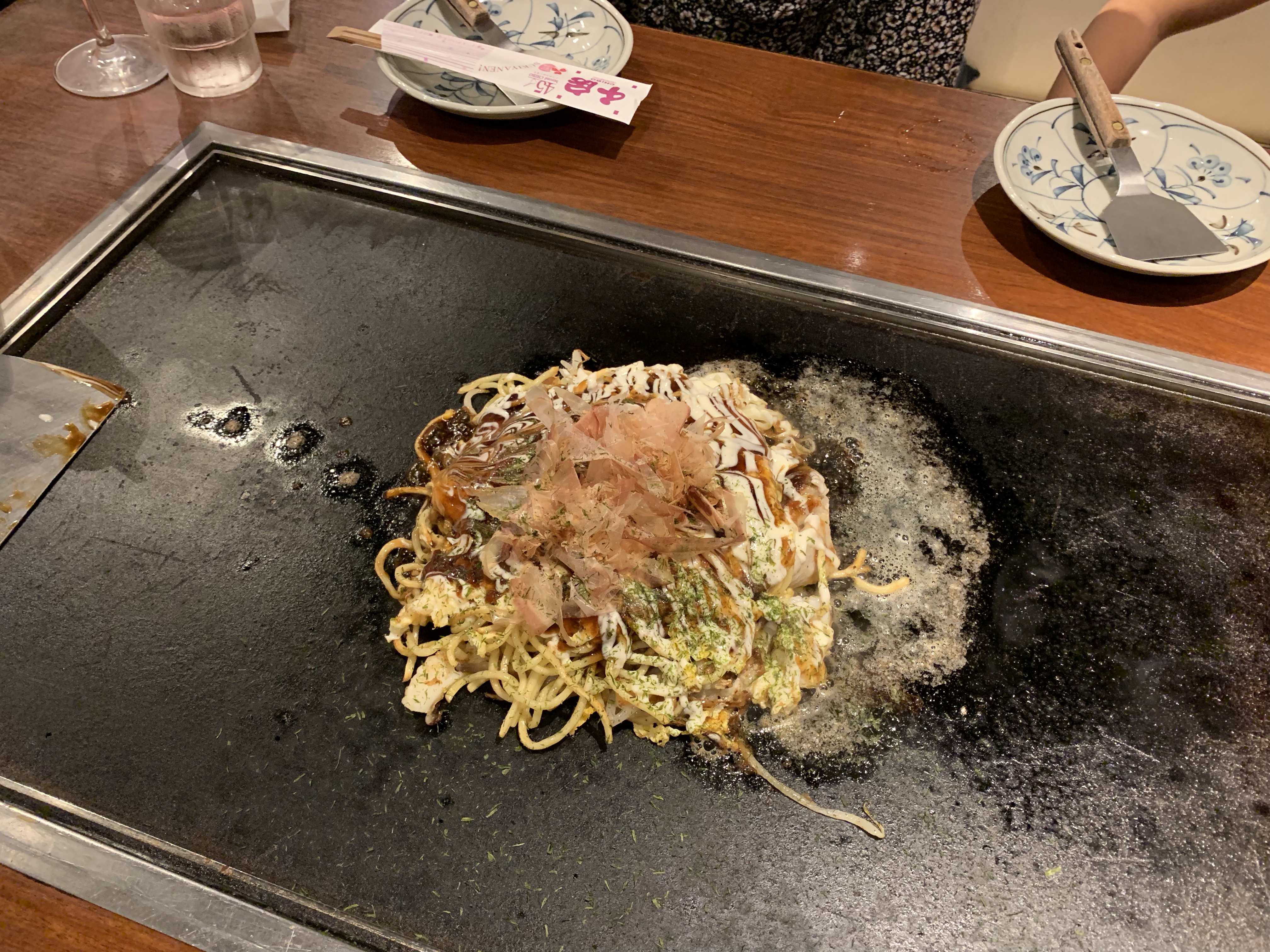
We returned to the strip on our last night to eat at Chibo, having a great meal of okonomiyaki (thick savoury pancakes) made right in front of us – they even had a gluten free option. Other regional specialities on offer in Osaka were the Tako-yaki (octopus dumplings), Yakitori and Molly’s favourite: Kaiten-sushi (conveyor belt).
Okonomiyaki cooked at our table, Chibo, Dotonburi Street, Osaka.
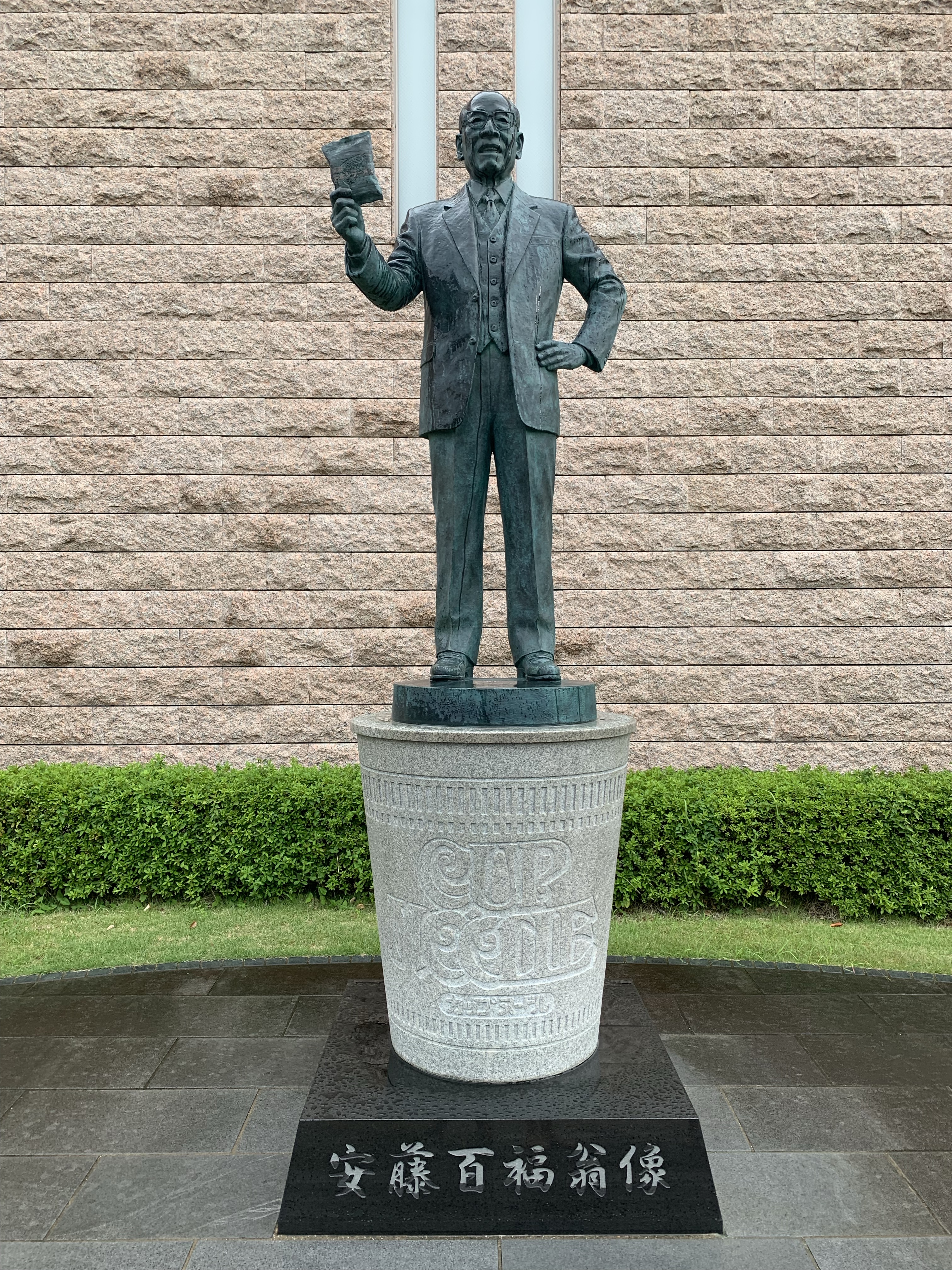
It felt like a real pilgrimage trekking out to the Momofuku Ando Instant Ramen Museum in Ikeda. For a start it somehow took us 3 hours to get there including about 4 train changes and a lot of walking. When we finally arrived, it was packed with school groups and all the explanations were in Japanese. We downloaded an audio guide which wasn’t really worth it in the end but Tom loved finding out more about his favourite food!
Momofuku Ando, the founder of instant ramen, CUPNOODLES MUSEUM, Ikeda, Osaka.
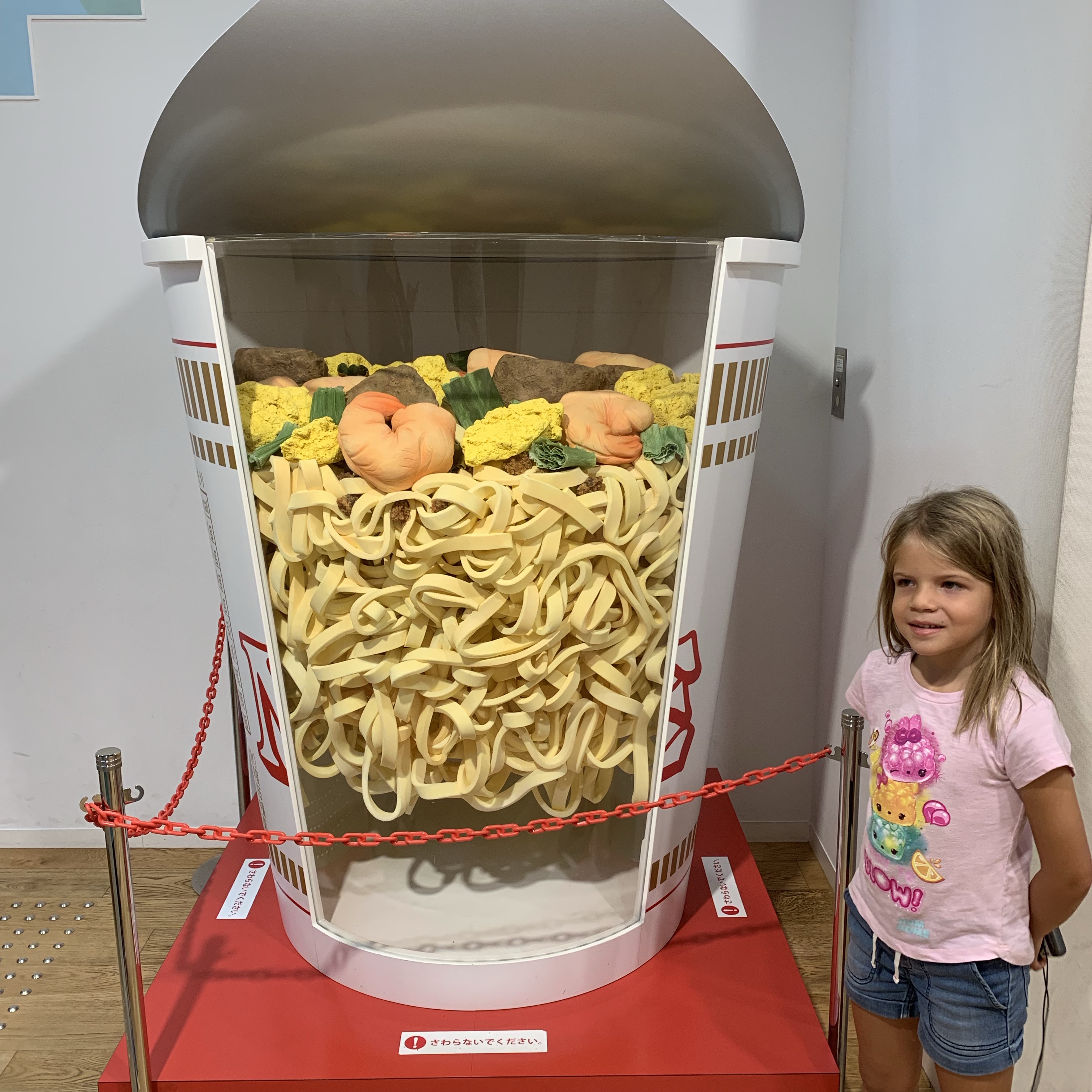
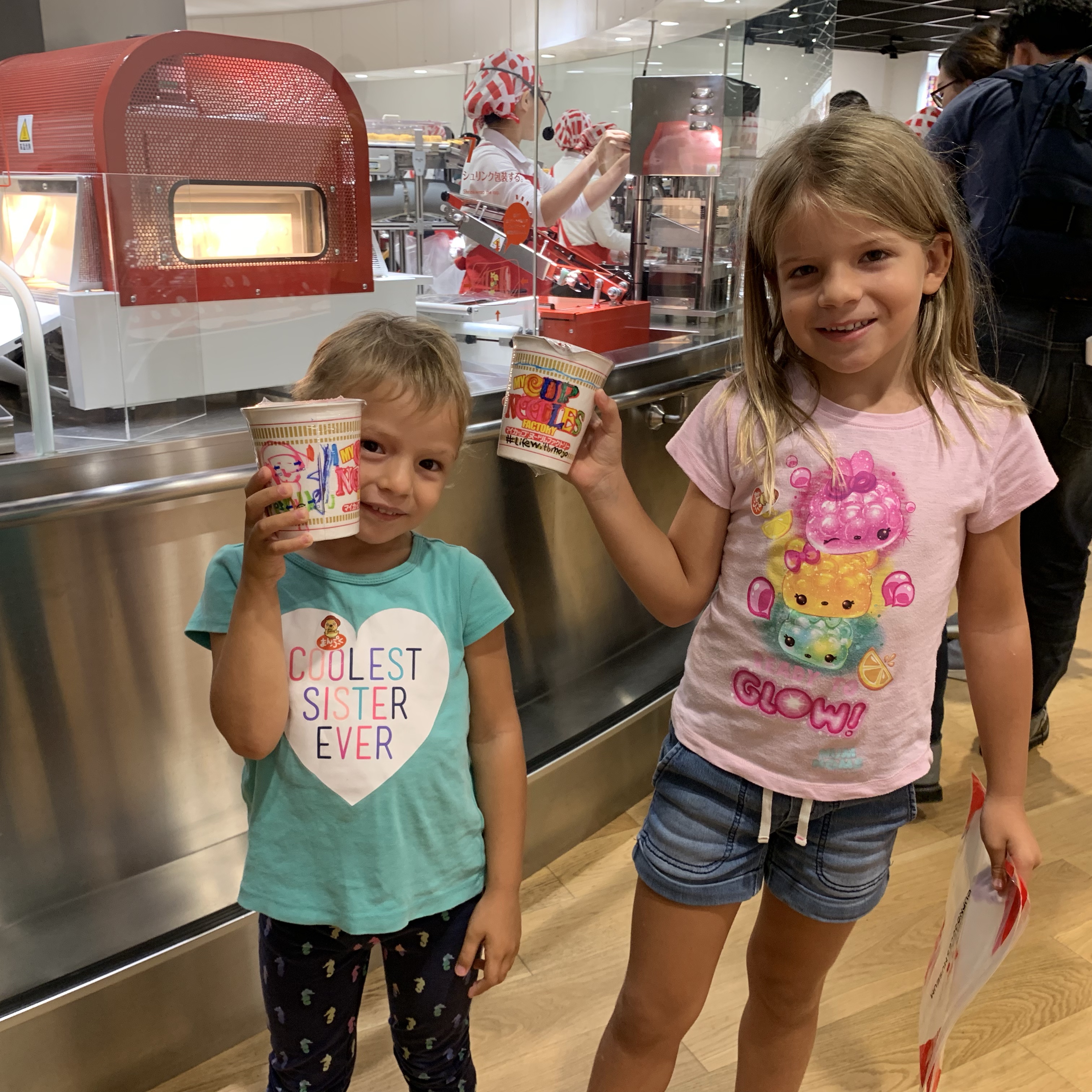
The girls enjoyed designing their own cup and choosing what ingredients to put inside (those pot noodles were with us for a good three more countries, eventually eaten for dinner in Melbourne I think!!) It was a fascinating lesson in successful entrepreneurship if nothing else, illustrating the journey from his initial creation in 1958 to world-domination.
More than life-size models, CUPNOODLES MUSEUM, Ikeda, Osaka. MoJo showing off their creations, CUPNOODLE MUSEUM, Ikeda, Osaka.
We enjoyed catching a glimpse of the Umeda Sky Building and Osaka Castle from the train and on runs but didn’t visit them. In general we were quite surprised at how untouristy Osaka was and had an agreeable first few days in Japan there.
We came to Japan with quite some expectations. For Molly and Joanna it was where we were going to see their first ‘friend’ on the trip: Minji who had been in Molly’s class at school in Dubai. For Tom it was probably the country he was most looking forward to, especially the food. For me it was a return after spending a month in two consecutive uni summers there with memories of delicious food, perfectly manicured zen gardens, pristine temple complexes and bright city lights. Is it bad to say it fell short of our expectations?
Highlights were the unexpected, new experiences: staying with friends, visiting the art islands of Setouchi and discovering alternative parts of the cities through our runs, Kyoto is up there in top 5 runs of the tour so far.
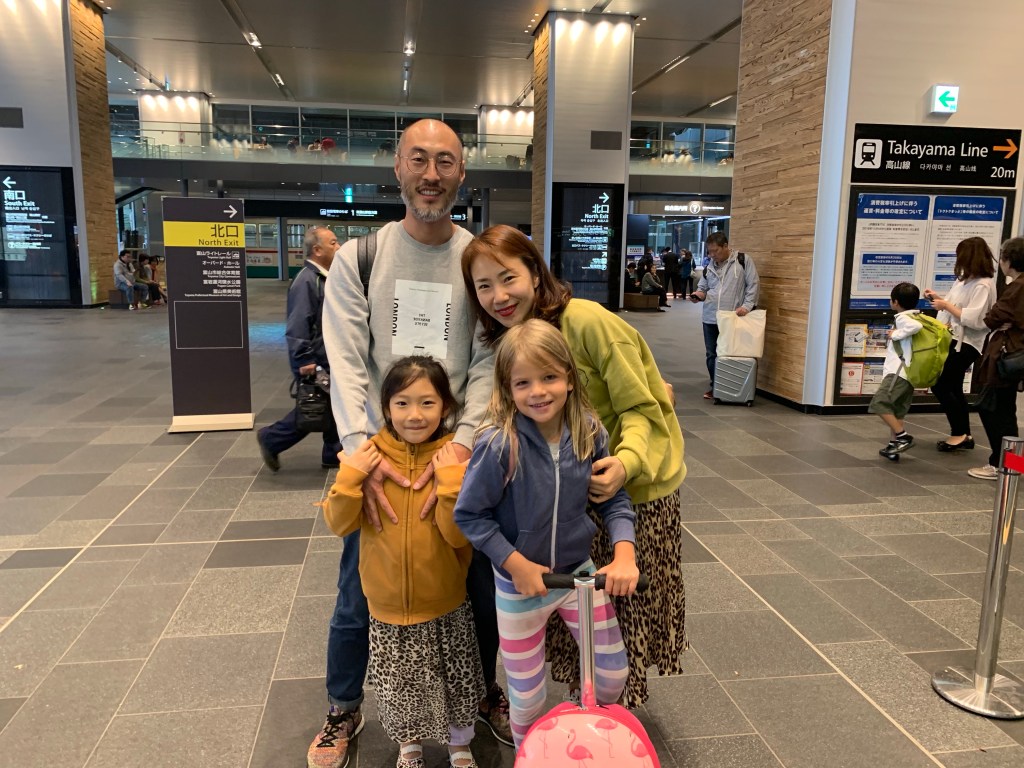
Molly with Minji, Sooh and Yongshik, Toyama train station, Honshu.
For me the food was a serious disappointment: without a doubt the hardest place to be a celiac. There was little adaption – the best I would get would be a dry piece of meat or fish and white rice. So much white rice and just not enough salad or vegetables. It was frustrating as I love Japanese food and it’s easy to make it work, by using Tamari instead of soy sauce there’s really very little problem. We even came across a sign on the door of (admittedly an udon specialist restaurant) that those on a wheat free diet couldn’t be accommodated. Ouch.
A foodie highlight for Tom: an early morning visit to Toyosu seafood market, Koto City, Tokyo.
Travel wasn’t straight forward either. We flew from Seoul to Osaka, an easy flight, the journey only made lengthier by the protracted process of swapping our Japan Rail pass vouchers for tickets on arrival at Kansai International Airport. It had taken a lot of time researching the various options for rail travel in Japan, despite me having been before. There are just so many different options, all of them expensive! Because we were going to slightly unusual places, down to Okayama to get the boat to Naoshima and up to Toyama before going to Tokyo, it worked out best to get two separate passes, a JR West rail pass for 5 days, followed by a Hokuriku Arch Pass for 7 days, with our final two days in Tokyo without a pass (which was in itself annoying as we were staying on the Yamanote line where our passes would have been valid).
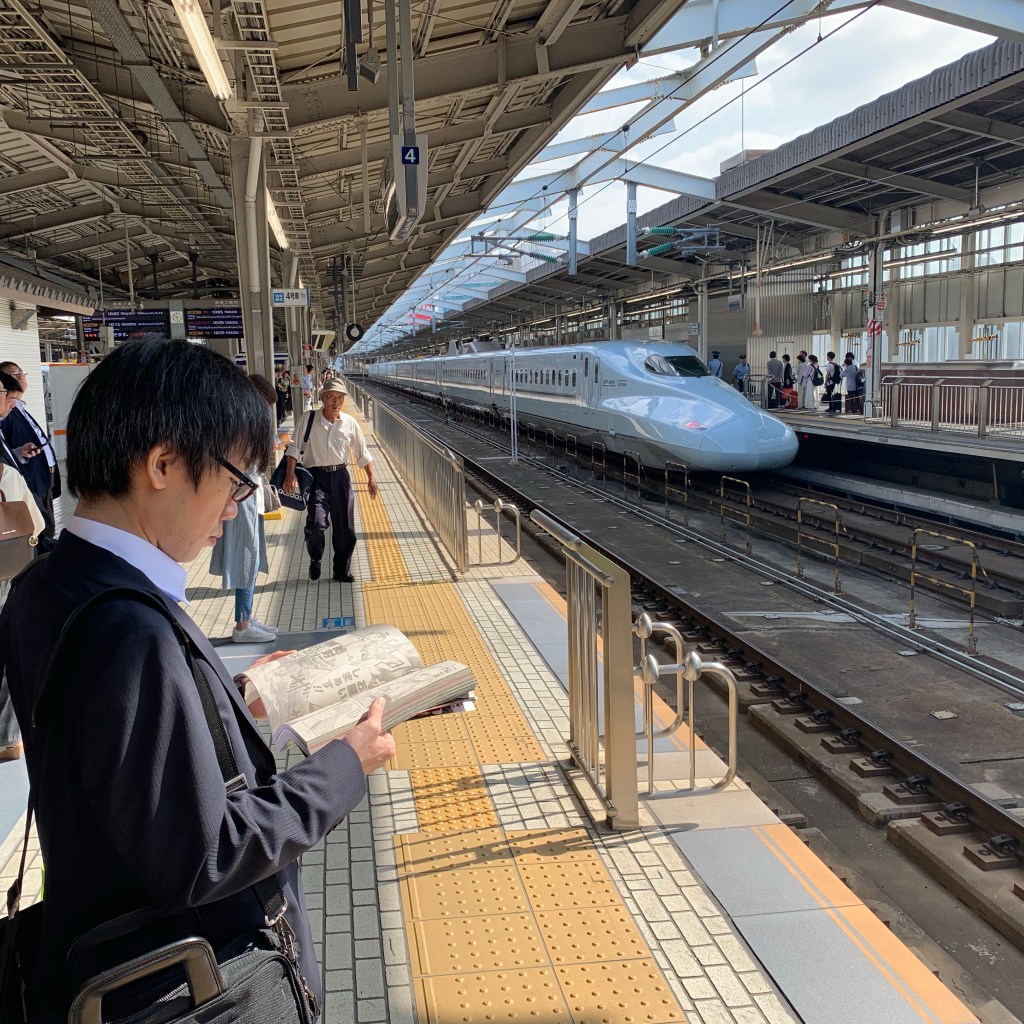
Train platform, Osaka.
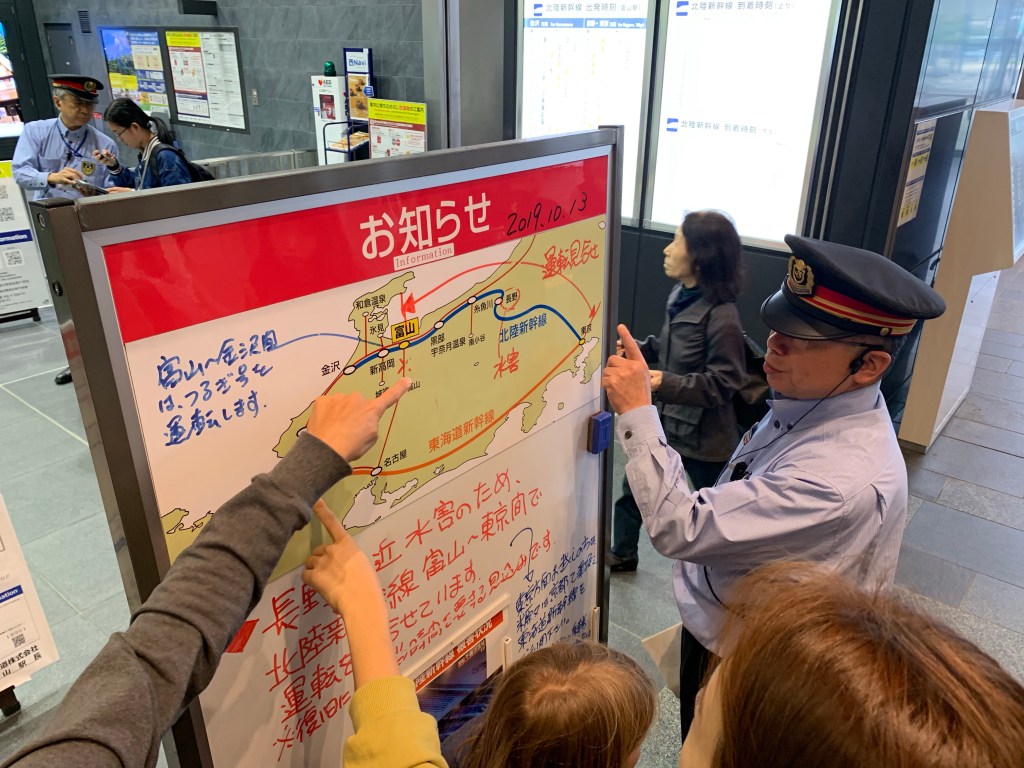
Despite best laid plans we did make two mistakes: the first our fault, taking a Shinkansen in a section that wasn’t covered so having to pay the difference, the other not our fault as we had to go the long way round to Tokyo due to typhoon flooding, we got away with that one. On reflection we didn’t save much money in buying the passes, although it was useful not having to buy a ticket every time we reached a station. I think we had been spoilt by the trains in China too, as of course they were brilliant in Japan but not that much faster or smoother than we had experienced just a few weeks earlier.
Trying to work out a route from Toyama to Tokyo in the aftermath of Typhoon Hagibis, 13 October 2019.
It was crazy that we completely missed seeing any rugby whilst in Japan during the world cup or any friends who were in Japan to watch games. In Kobe the fan zone was right by our hotel, but we weren’t there during a match. We were planning on making it to the fan zone in Tokyo to watch Japan v Scotland but were still on a train (heading through Yokohama as the match was going on). Rugby watching was going to be high on the agenda in Bali!!
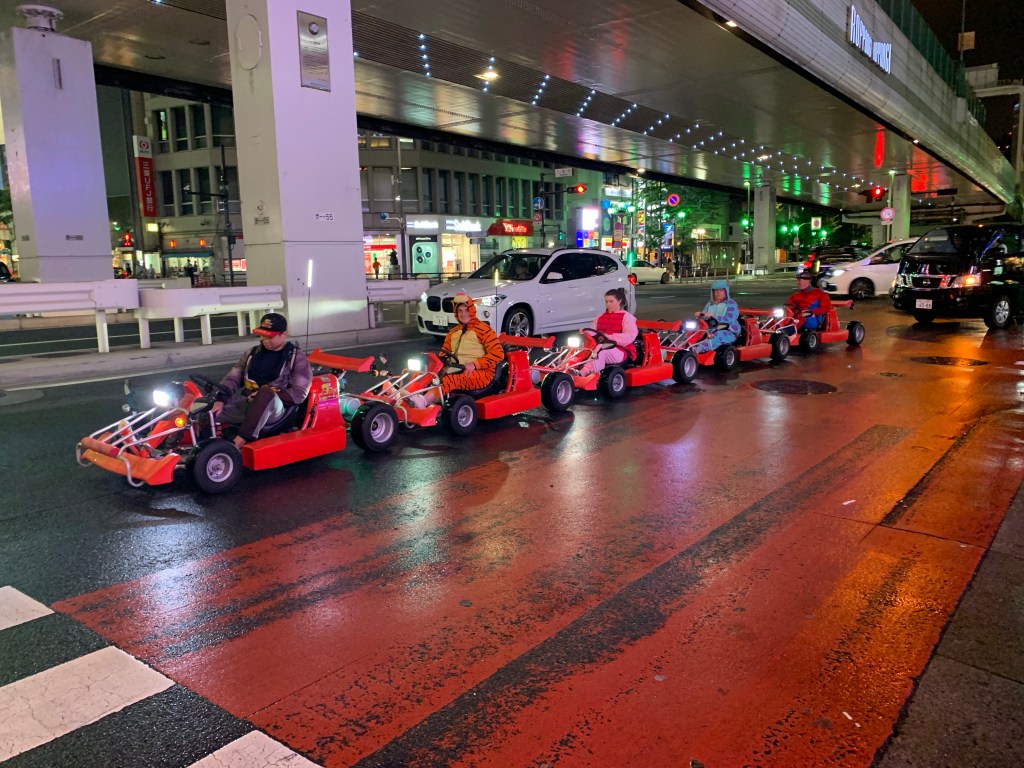
Mario go-kart tour in fancy dress, only in Tokyo.
It was a shame too that we missed the autumn leaves by a week or two, they seemed to be on the brink of changing as we were leaving. You realise how beautiful it would be – so a return visit a few weeks later or during spring cherry blossom is a must, but perhaps with my own bottle of Tamari and plans to self cater.
We like to vary the types of places we stay, so after our modern loft apartment in Busan and hotel in Jeju it was time for something different in the Korean capital – Yian House, a traditional hanok. Virtually impossible to find due to a complicated numbering system (we had neighbours and local shop owners all trying to help us!), when we eventually did it was novel to be in a traditional home. Greeted first by a rocky courtyard garden, then sliding doors which led to a series of low-ceilinged rooms. We did miss having tables and chairs at a height we are used to and unfortunately, a host of mosquitoes also liked the place, so each night was a battleground and we were inevitably always defeated! Also Tom could only stand upright in one room but apart from all these niggles, we did like the place.
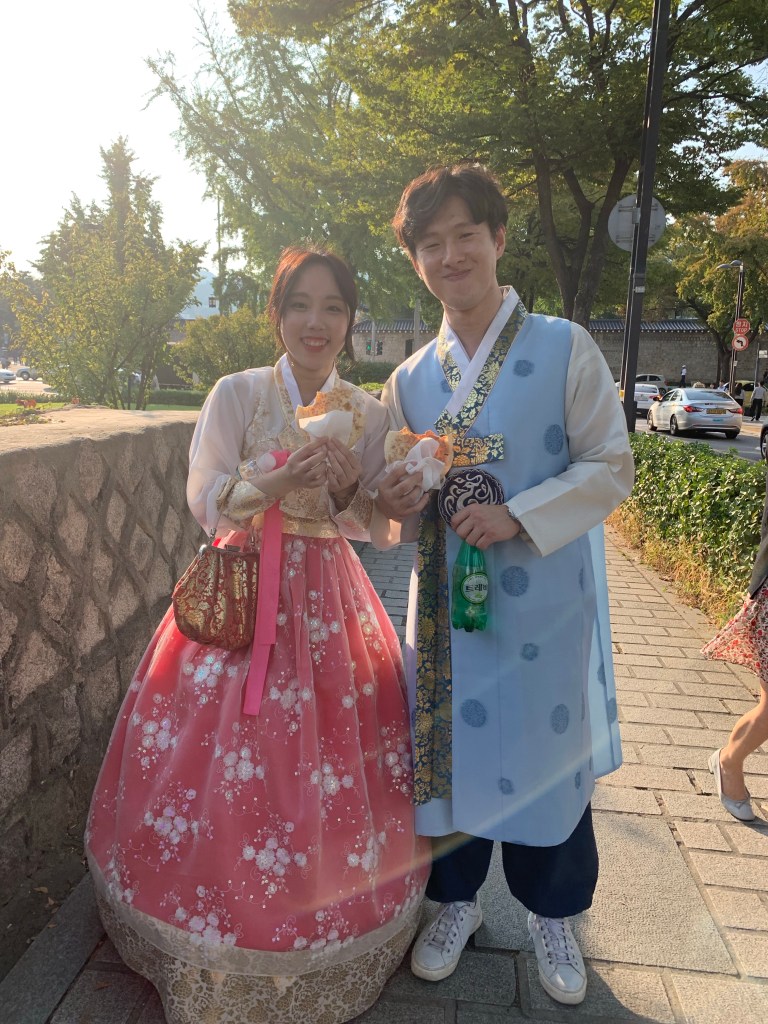
It was in a great location close to Gyeongbokgung Palace, we could walk everywhere. Because we were staying in such a lovely neighbourhood, we didn’t visit the spots on most tourist itineraries such as Bukchon Hanok Village or hire traditional clothes to walk around in as so many people seemed to do.
A young couple in traditional clothes, outside Gyeongbokgung Palace, Seoul.
Nor did we visit Gangnam to see the shrine to Psy, although we did catch (and quite enjoyed!) some K-pop.
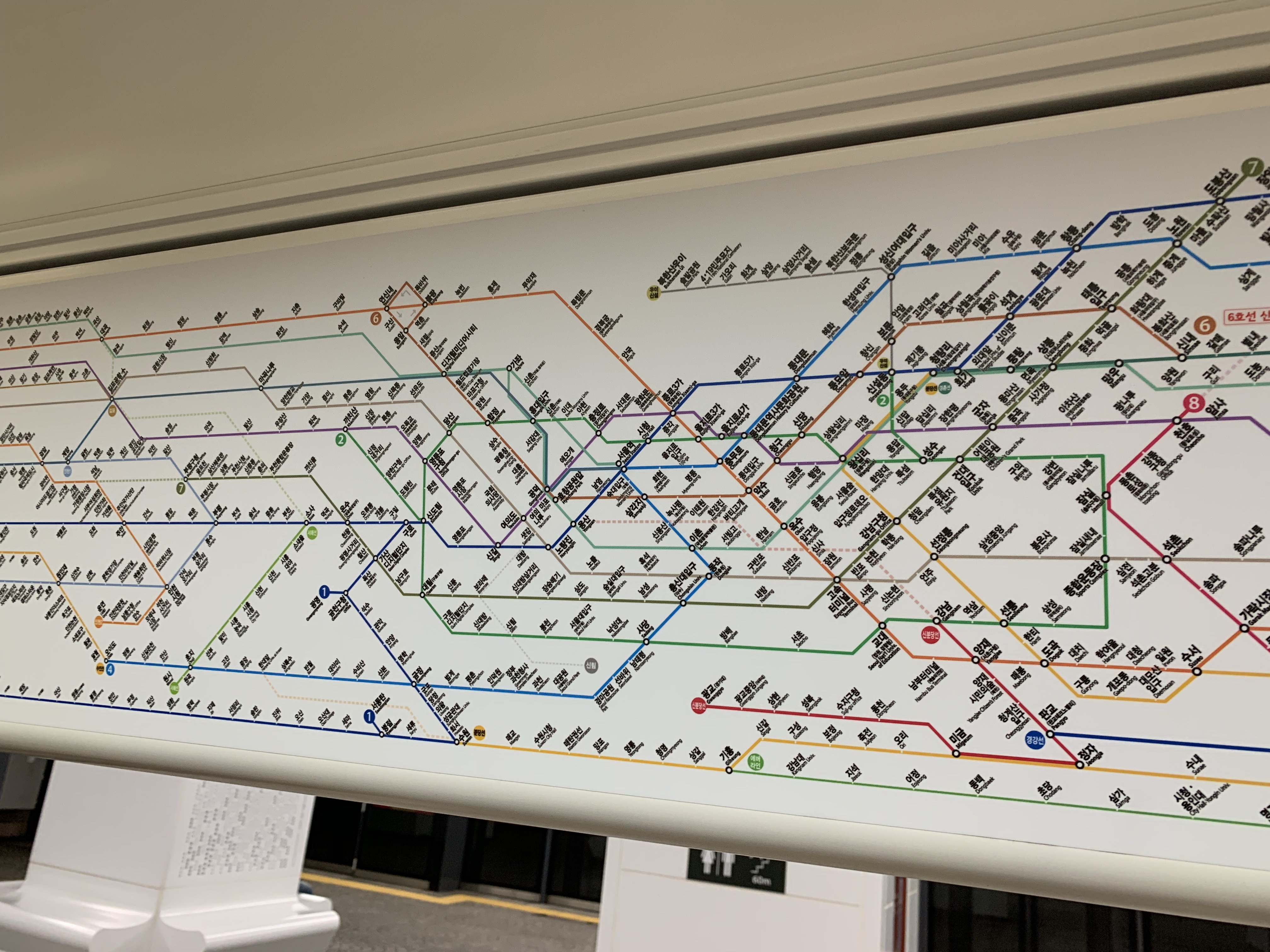
If we turned one way, we had a street with art galleries and trendy restaurants, the other with more practical shops, cheaper food options and transport links, where a bus to the airport was easy to catch both ways. The metro was pretty hard to navigate, with over 400 stations!
Seoul metro map.
We weren’t far from the fun-sounding Tonkin market where you get a shopping basket and walk round traditional stalls like you would a supermarket (sadly closed the day we tried to go).
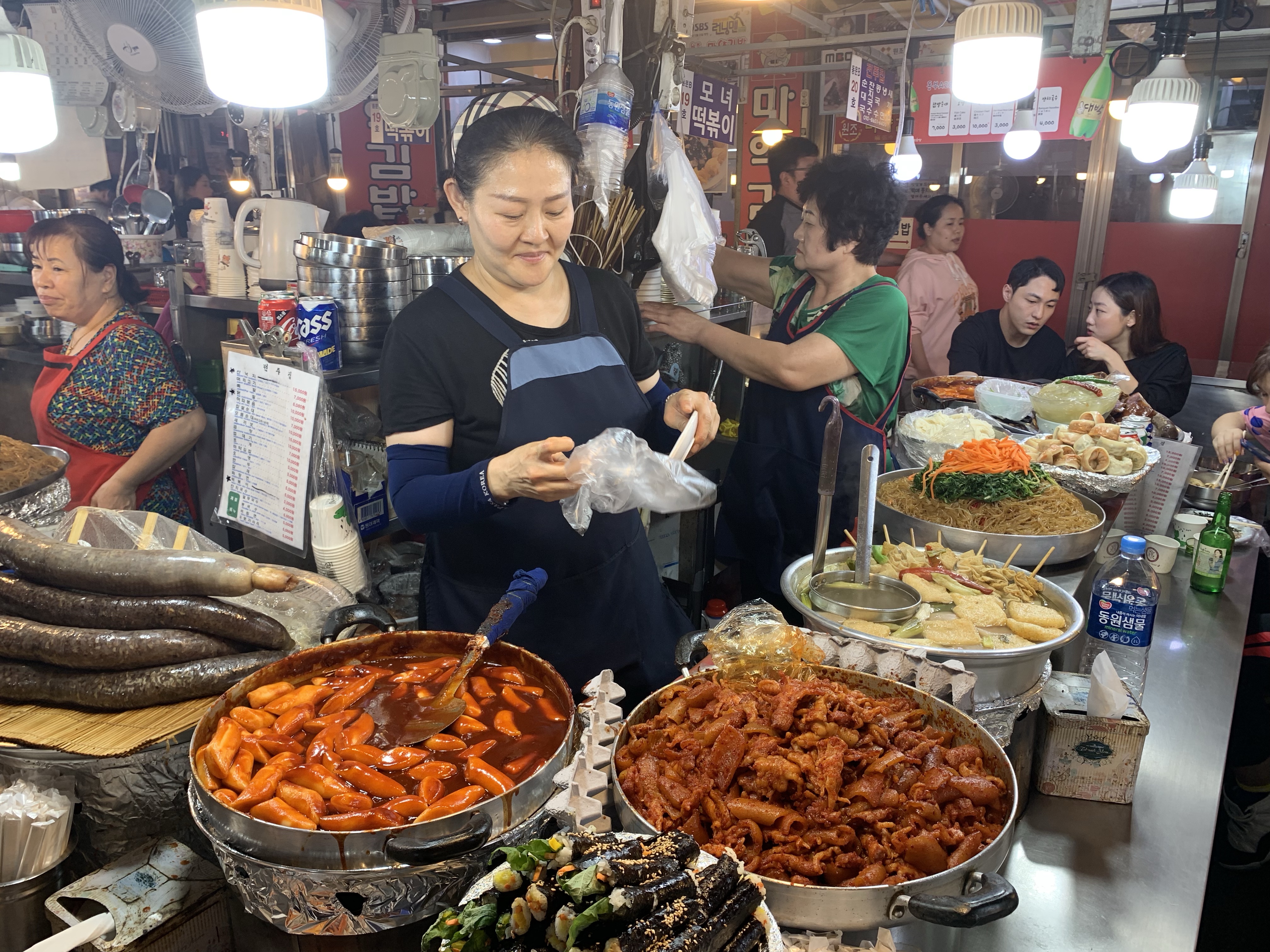
An evening trip to Gwangjang Market was worth the walk, the gimbap (basically uncut maki sushi rolls with seaweed on the outside) and bindatteok (crispy fried pancakes made of mung beans and veggies) far better than the chicken foot that I wish we hadn’t tried! We also enjoyed the topokki, (rice fingers in a tangy spicy sauce).
Topokki and other Korean specialities, Gwangjang market, Jongno-gu, Seoul.
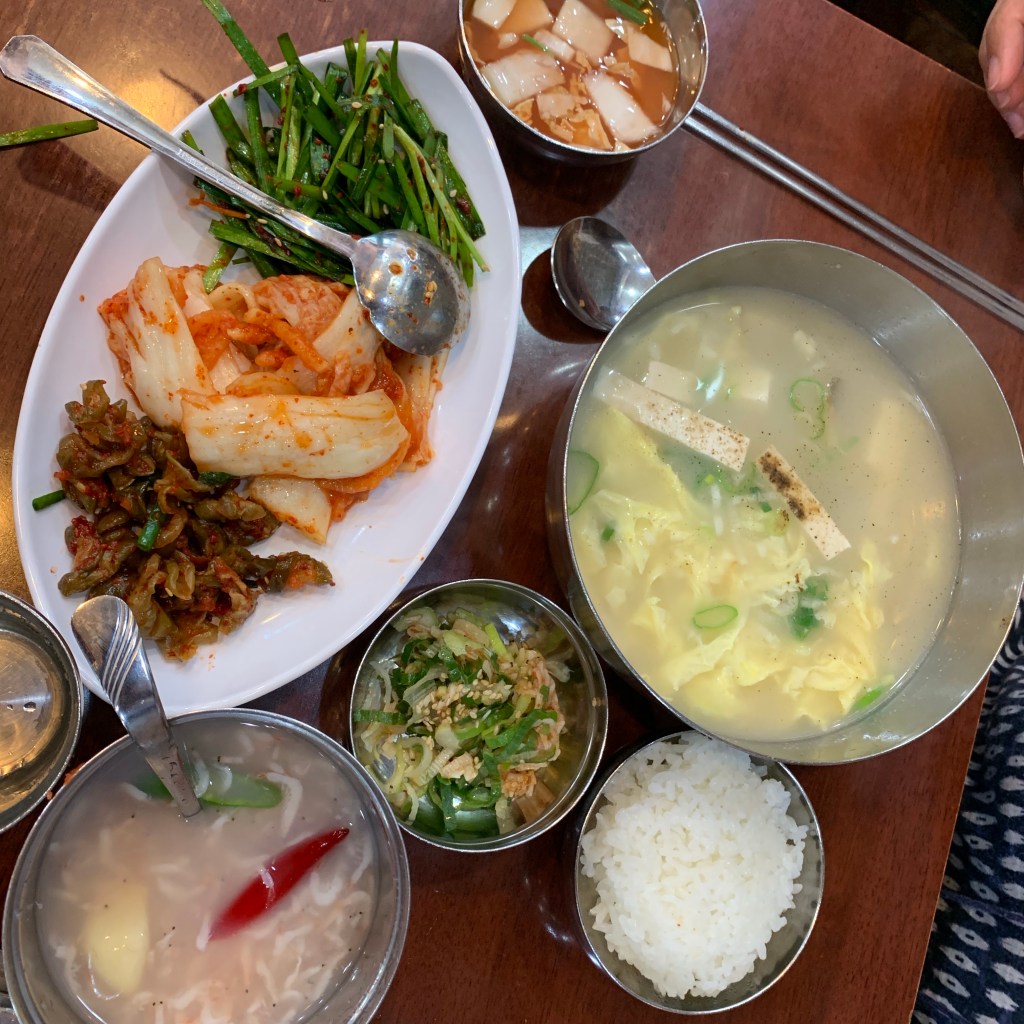
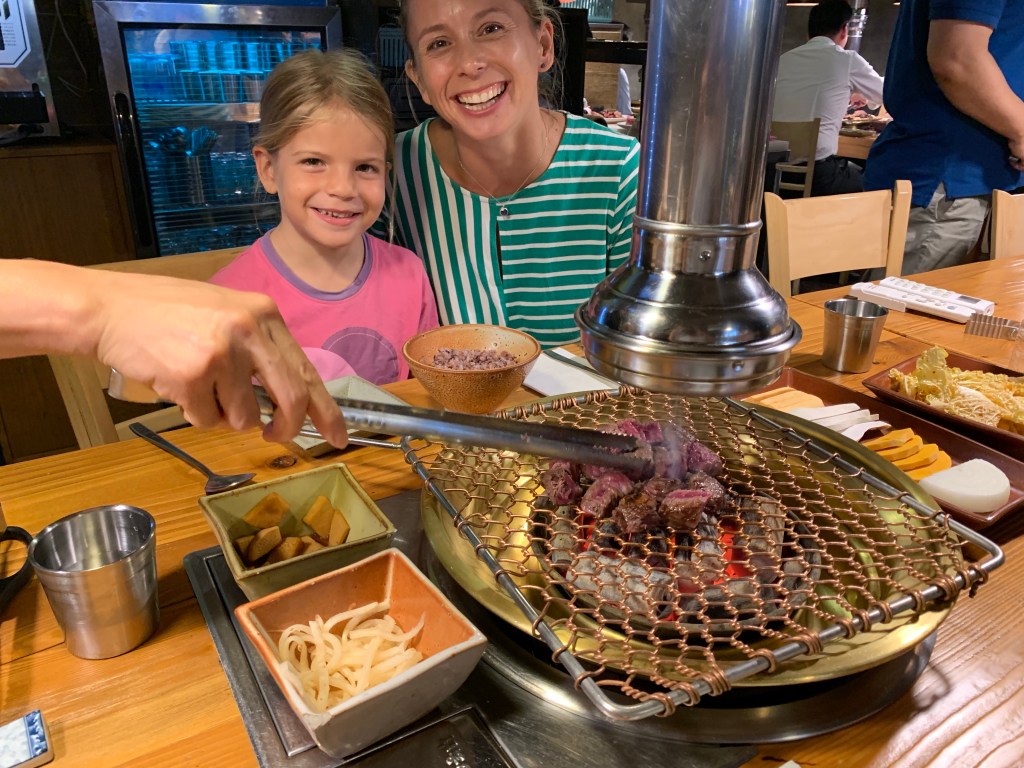
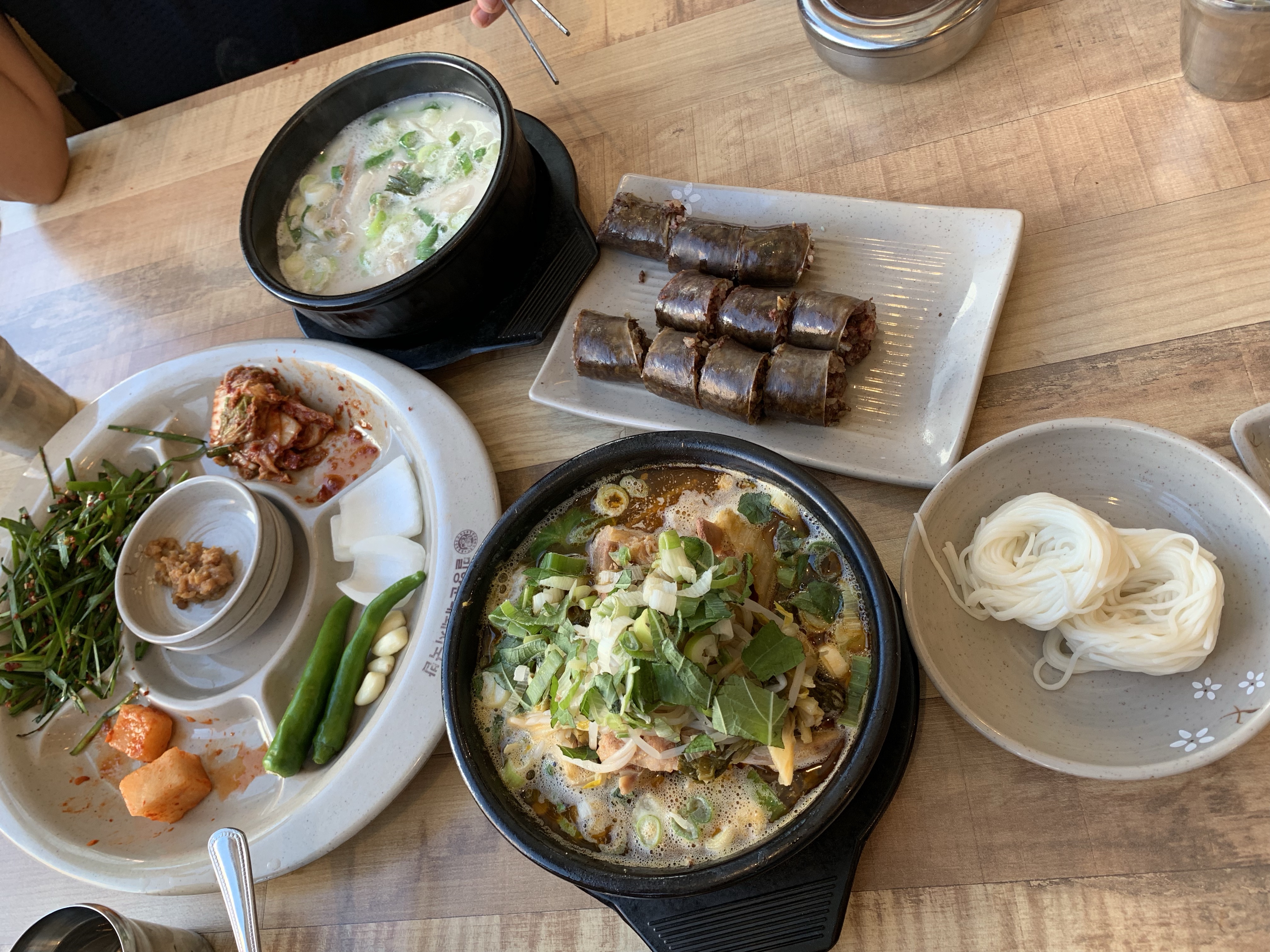
Other foodie highlights were a lunch of beef belogi, a lunch at Bugeokukjib in Mugyodong which has been serving the same dish of mackerel and tofu soup since 1968 and an expensive final night dinner of Korean barbecue.
Bugeo-guk (dried pollack soup) and accompaniments, Bugeokukjib, Mugyodong, Seoul. Korean BBQ at Sopoong Sogogigui restaurant, Changseong-dong, Jongno-gu, Seoul.
We found lovely little places to eat in Itewon (a bar called A Flat which had a stage and musical performers downstairs, we sat on the roof terrace so only discovered it later) and in Insa-dong (an outdoor teahouse with a water wheel that fascinated Joanna).
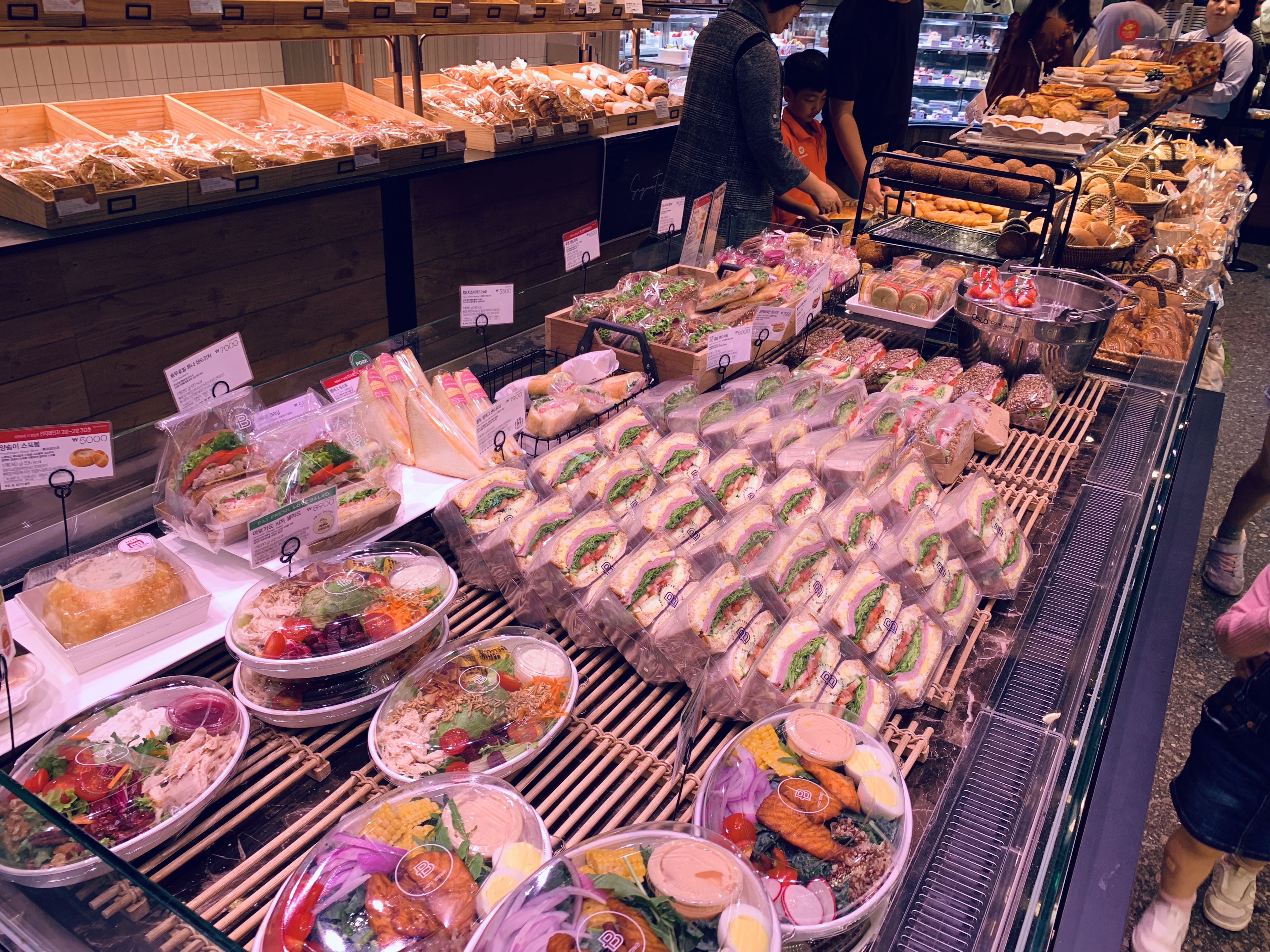
We had good food at Analog kitchen for dinner one night as well and an explore of the warren of underground restaurants under the business district. Probably our one non-Korean meal was a snack at Paris Baguette, a chain we had first visited in Hanoi and one we are surprised hasn’t caught on more widely across the globe given its many treats (sadly not celiac friendly apart from some salads).
Paris Baguette, Seoul.
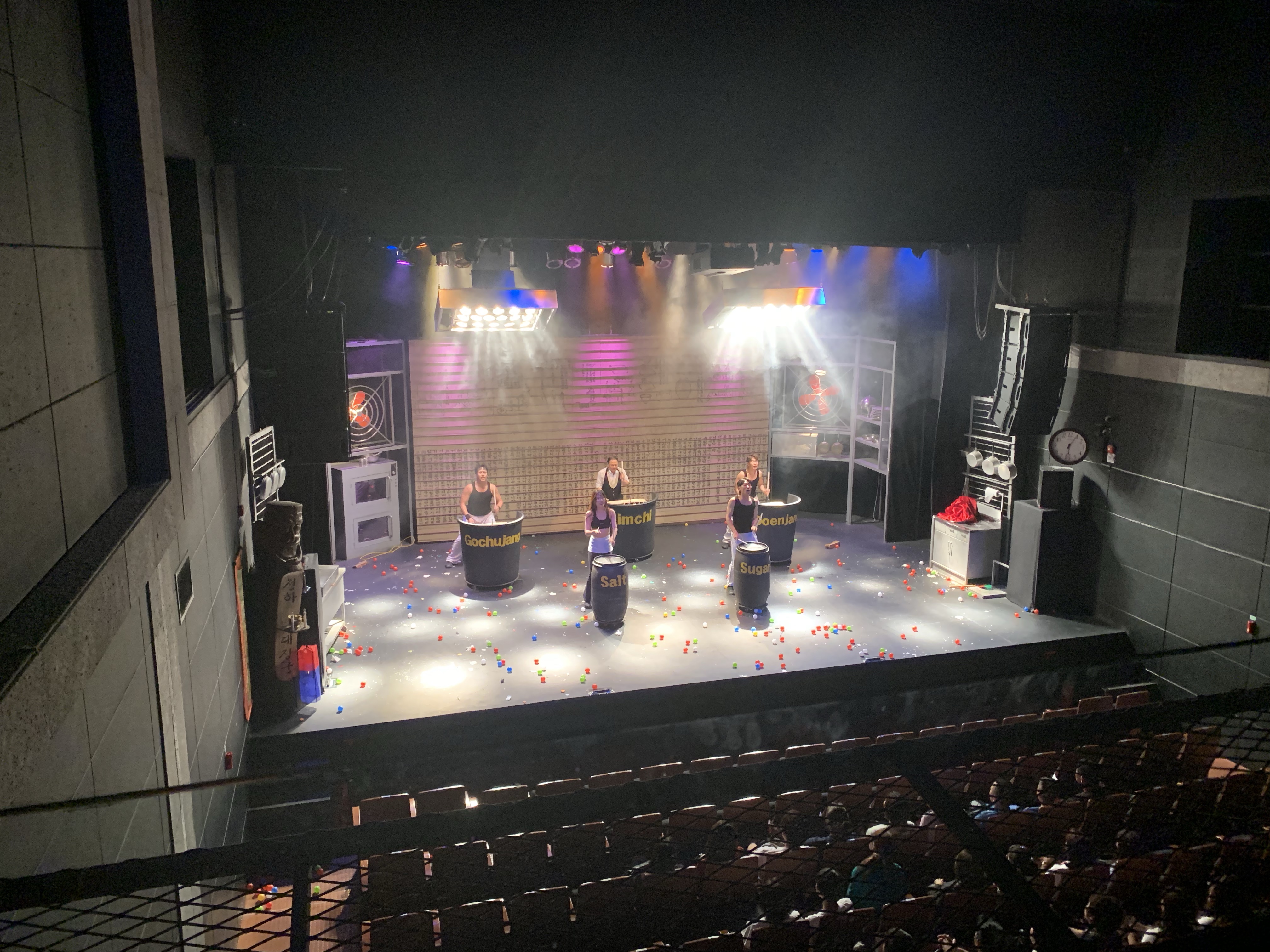
All this talk of food made us excited for a performance of the world famous Nanta! Where actors become chefs, entertaining purely through sounds and actions. A rhythmic show sounding out beats using kitchen equipment, with the token trainee chef the butt of most of the jokes. It was a great light hearted Sunday afternoon treat, mojo loved every minute!
Myeongdong NANTA Theatre, Jung-gu, Seoul.
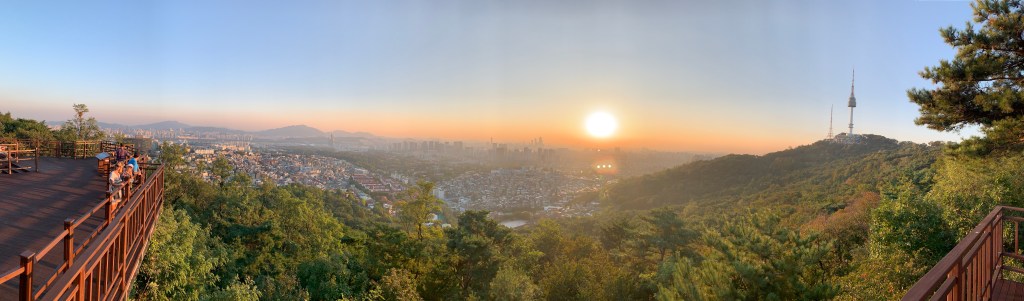
Afterwards we queued for a while to go up the cable car to Namsan Park, one of Seoul’s four guardian mountains, home to the iconic N Seoul Tower.
Sunset view, Namsan Park, Jung-gu, Seoul.
It was worth it though, for the fun street performers at the top and a beautiful walk down watching the sunset.
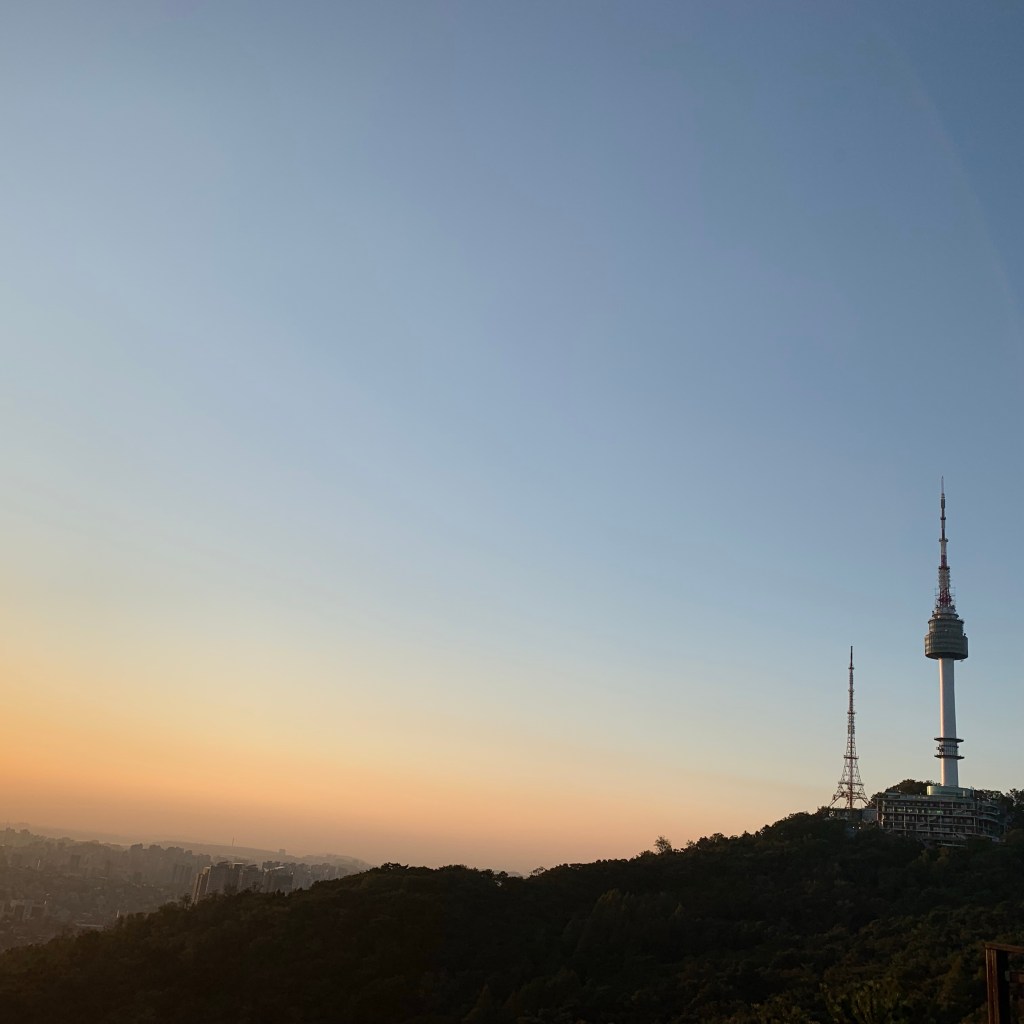
N Seoul Tower at dusk.
Seoul’s city wall is a dream of a run, or series of runs – given its tremendous ups and downs for 28.6km across four mountains that protect the city.
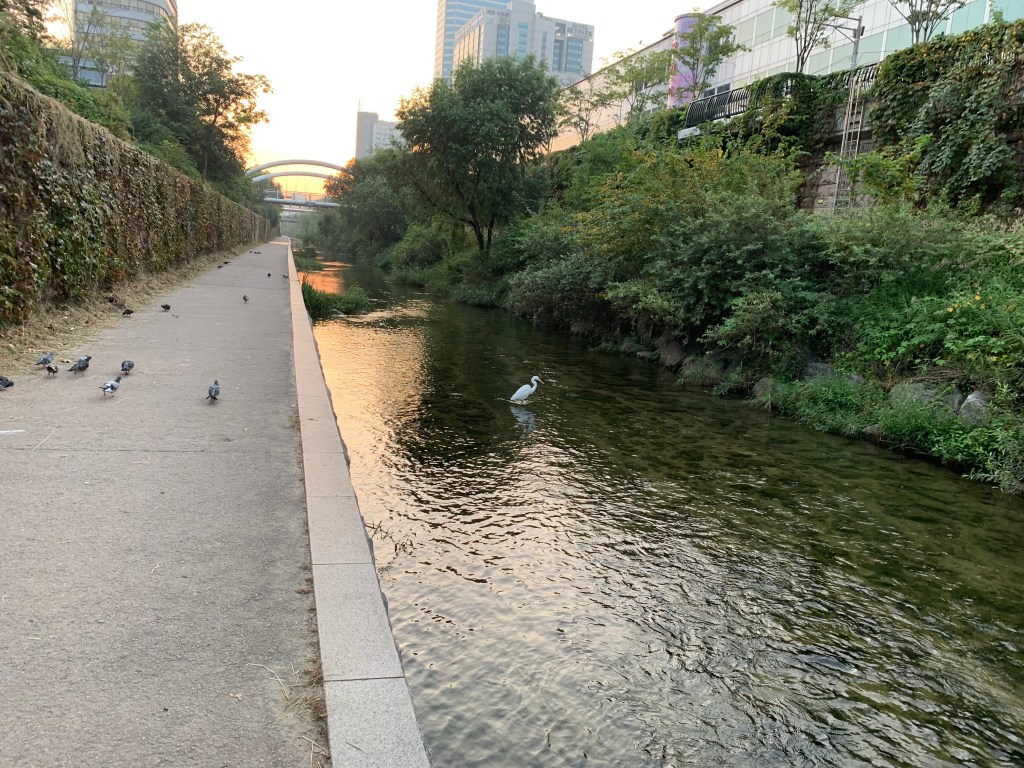
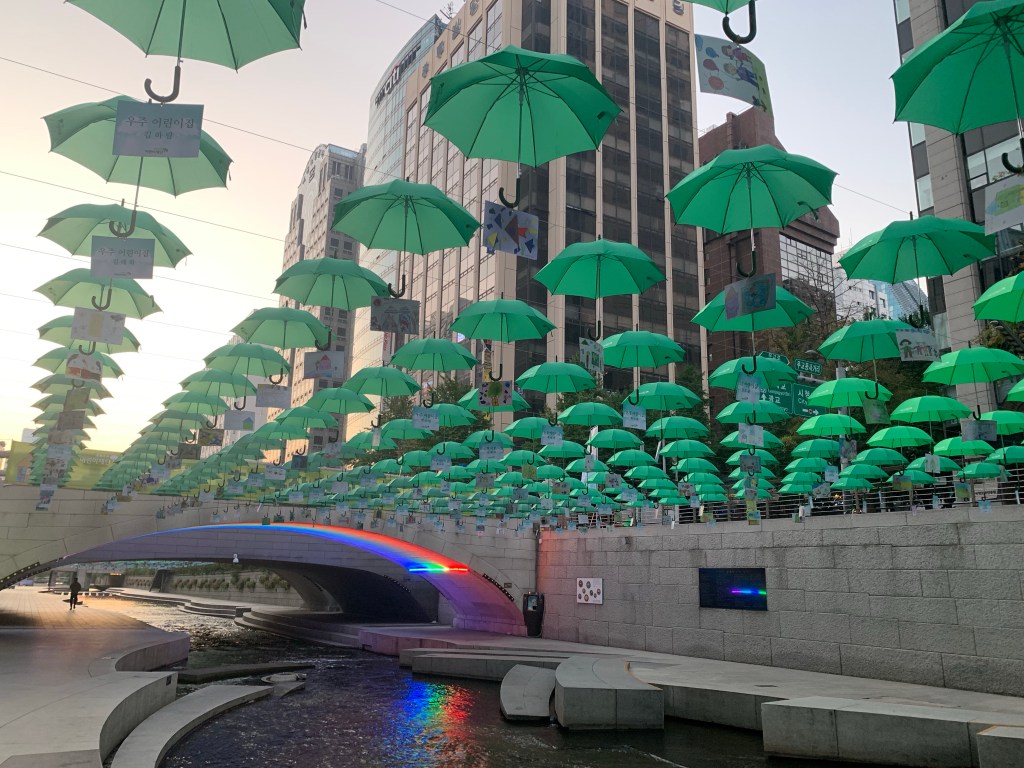
Cheonggyecheon canal, Seoul.
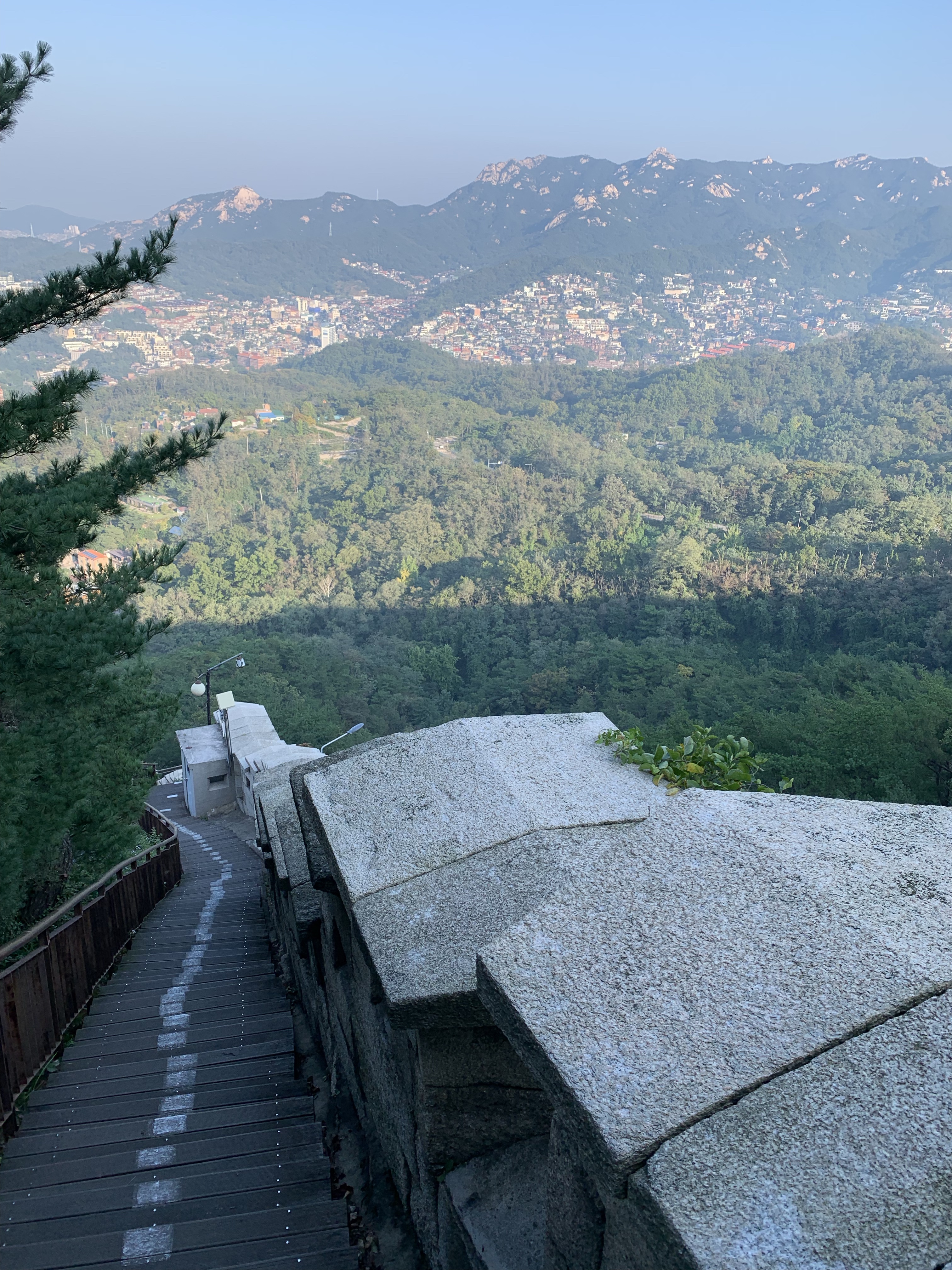
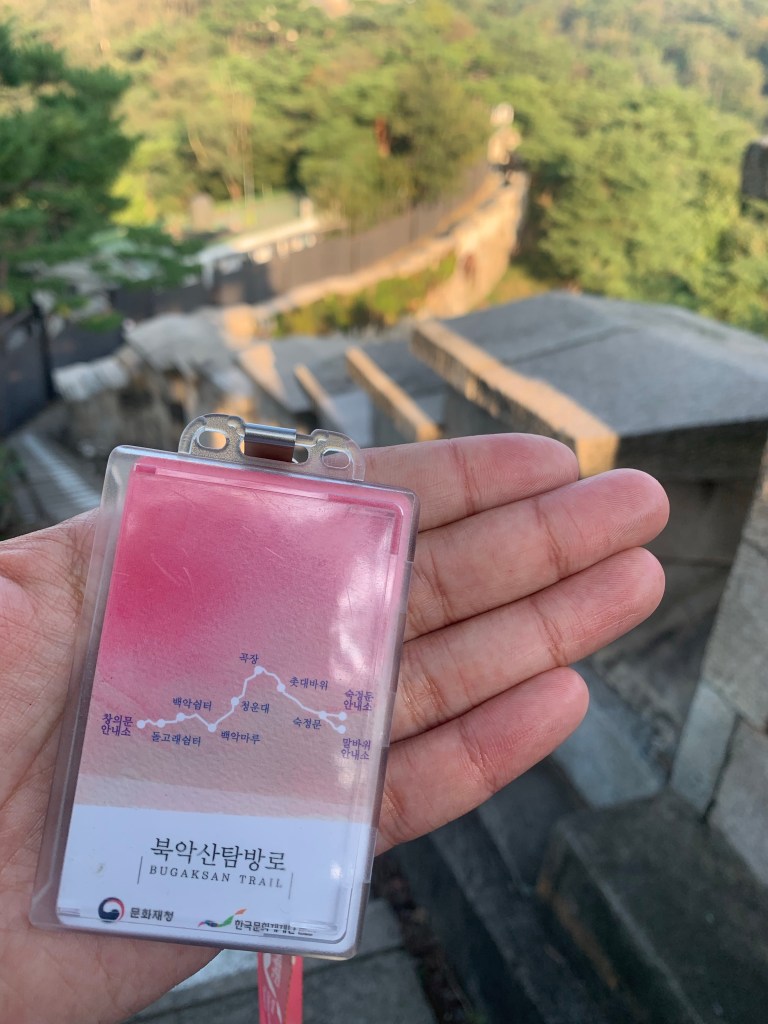
We did a few, enjoying running along Cheonggyecheon stream then joining the city wall at Hanyangdoseong, following it up to the mural village at Ihwa-dong. We also made it round the Bugaksan trail, 342m high.
Bugaksan trail, Seoul city wall.
I did manage to get my art fix in too – KIAF Art Seoul was on while we were in town and galleries had strong shows up. A favourite was Liza Lou ‘The river and the raft’ at Lehmann Maupin, showcasing stunning installations with glass beads. Zaha Hadid’s incredible complex the Dongdaemun Design Plaza was hosting Collective City, the Seoul Biennale of Architecture and Urbanism as well. It was a busy time in the city!
Lazy Clouds, Soungui Kim, MMCA Seoul.
I enjoyed visiting Aario Museum in Space (no under 12s allowed so I did it solo!), an early 1970s building, formerly home to Korean businessman and contemporary art collector Kam Chang-il. Lots of work by YBAs such as Damian Hirst, Tracey Emin and Sarah Lucas, but also representative of conceptual art movements across Asia, from India to the Philippines. His taste was provocative works, more focused on the human form than politics and also in unusual use of materials, remodelling and appropriating objects such as Marc Quinn’s ‘self’ (a cast of the artist’s head filled with his own blood). I was a bit surprised to find a cut out from a Korean magazine with my photo in it, giving a talk about Art Dubai!
We spent an afternoon at the Museum of Modern Art (MMCA Seoul) visiting two excellent, contrasting exhibitions: ‘Soungui Kim: Lazy Clouds’ and ‘The Square: Art and Society in Korea 1900-2019’. The first was a celebration of the way the artist had lived her life – always experimenting, travelling, thinking outside the box but never fully separated from her Korean heritage.
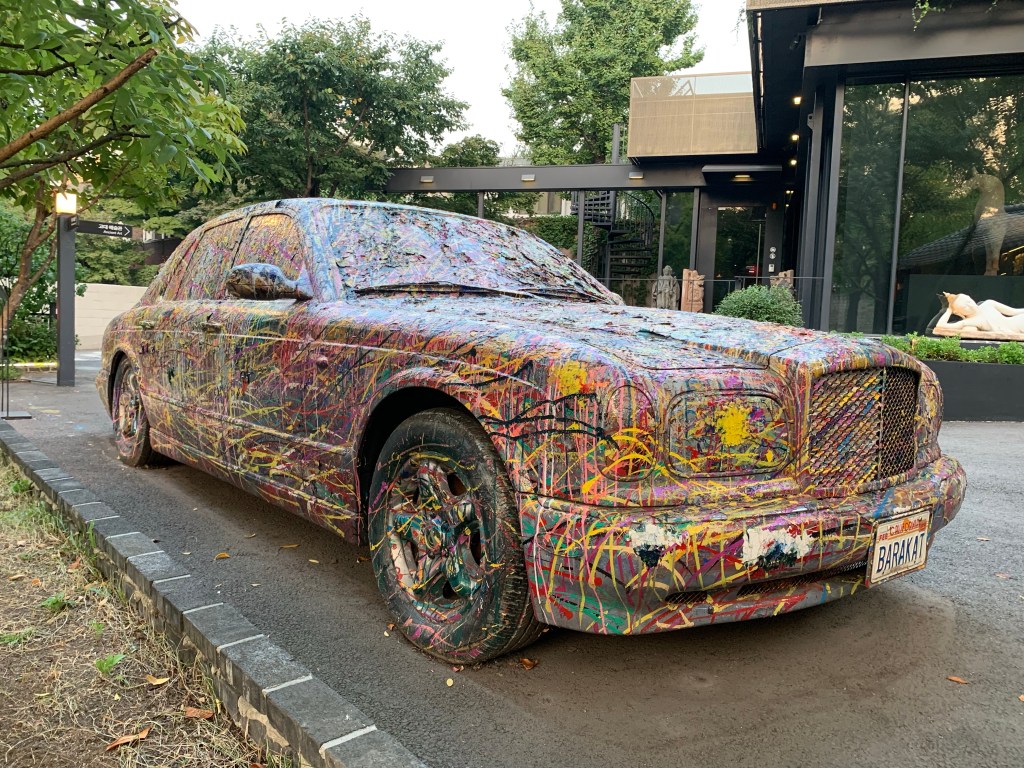
Outside Barakat Gallery, Seoul
The second was a group exhibition to commemorate the 50th anniversary of the museum, which has three branches, the main one we visited is located in the former Defense Security Command compound. In concept it explored the public square – a space vital for public life, where individuals can gather, voice their opinions and become a community.
Gwanghwamun Square, Seoul.
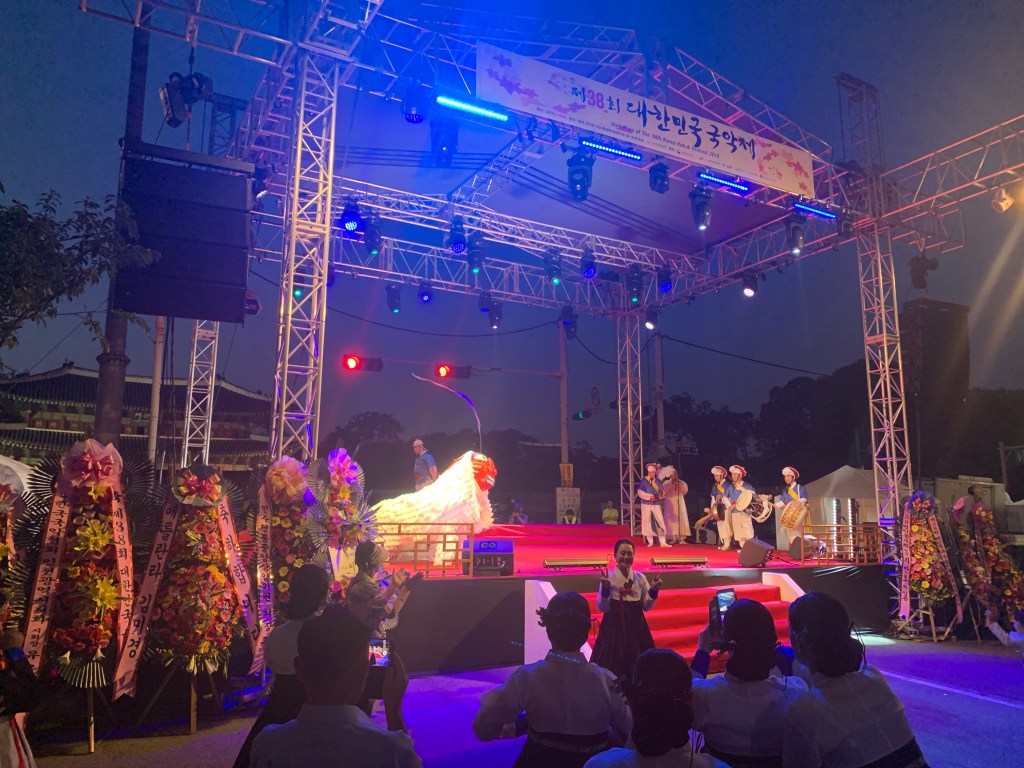
We were struck by how active the public squares in Seoul were, for music performances and festivals, but we did also come across several marches and demonstrations. Politics is never far from people’s lives.
Street performance we came across near the Changgyeonggung Palace, Seoul.
Perhaps this was why we decided to take a tour of the Demilitarised Zone (DMZ) and get as close as we could to North Korea. It was certainly a different experience for us all. It is of course still very much a reality, not just a part of history. It was helpful that we had an informed and yet quite light-hearted tour guide, Jung. She took us on quite a fast-paced tour, we didn’t have much time to stop in each place, but all in all it was long enough.
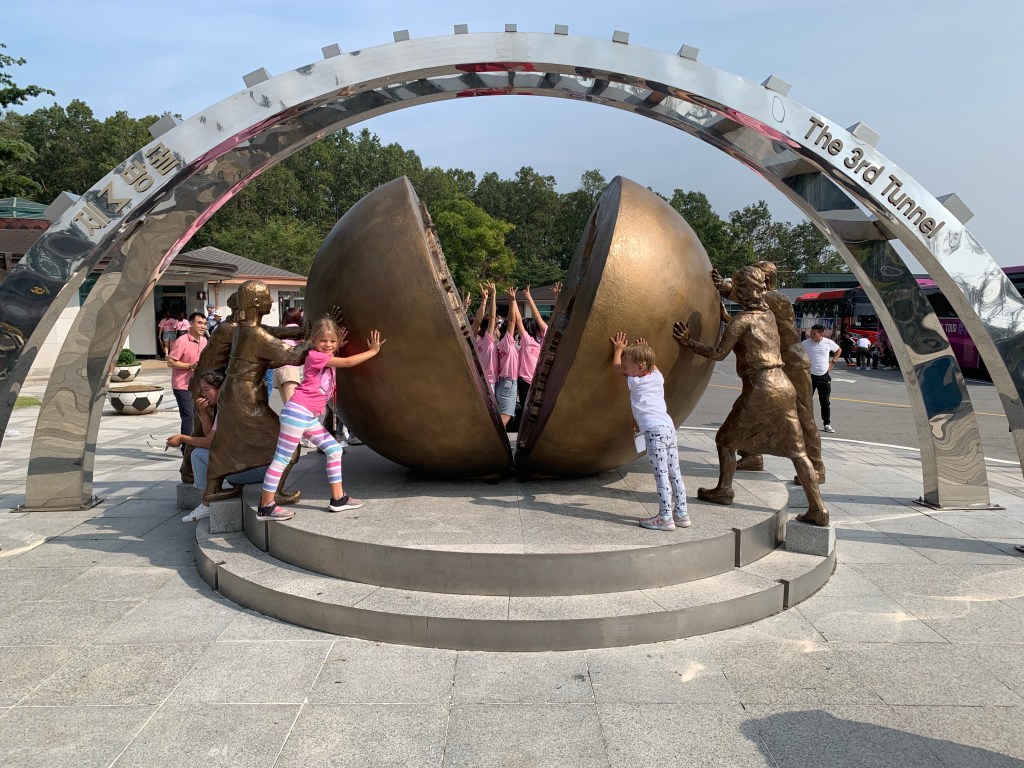
This One Earth, sculpture in Imjingak Pyeonghoa-Nuri Park, Gyeonggi-do.
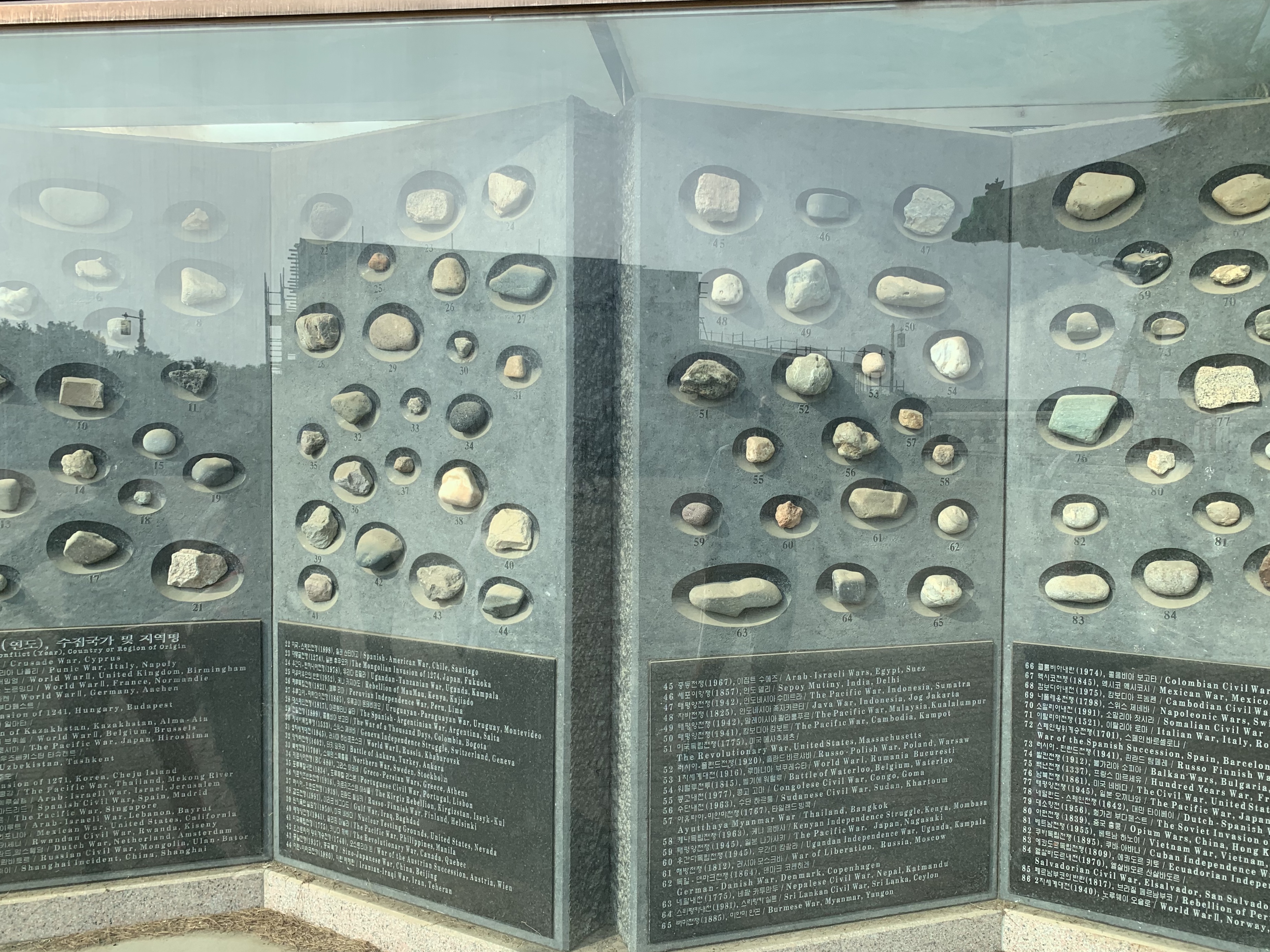
We started at Imjingak Park, a spot which receives five million visitors a year, as it is a place South Koreans can go to feel close to any relatives and friends in North Korea. It is intended as a place of hope for reconciliation in the future but holds a lot of reminders of the troubled past, such as a steam train which had been derailed in the Korean war. There is also a bell tower, the bridge of freedom, memorials and a rather eloquent stones of peace wall which brought together stones from walls across the world.
Stone wall, Imjingak Pyeonghoa-Nuri Park, Gyeonggi-do.
Then followed a steep drive past landmines to the Dora observatory, where you can see through binoculars the so-called propaganda village in North Korea where the lights go on and off at the same time each day and the North Korean flag – the largest and heaviest in the world.
Dora Observatory, Paju-si, Gyeonggi-do.
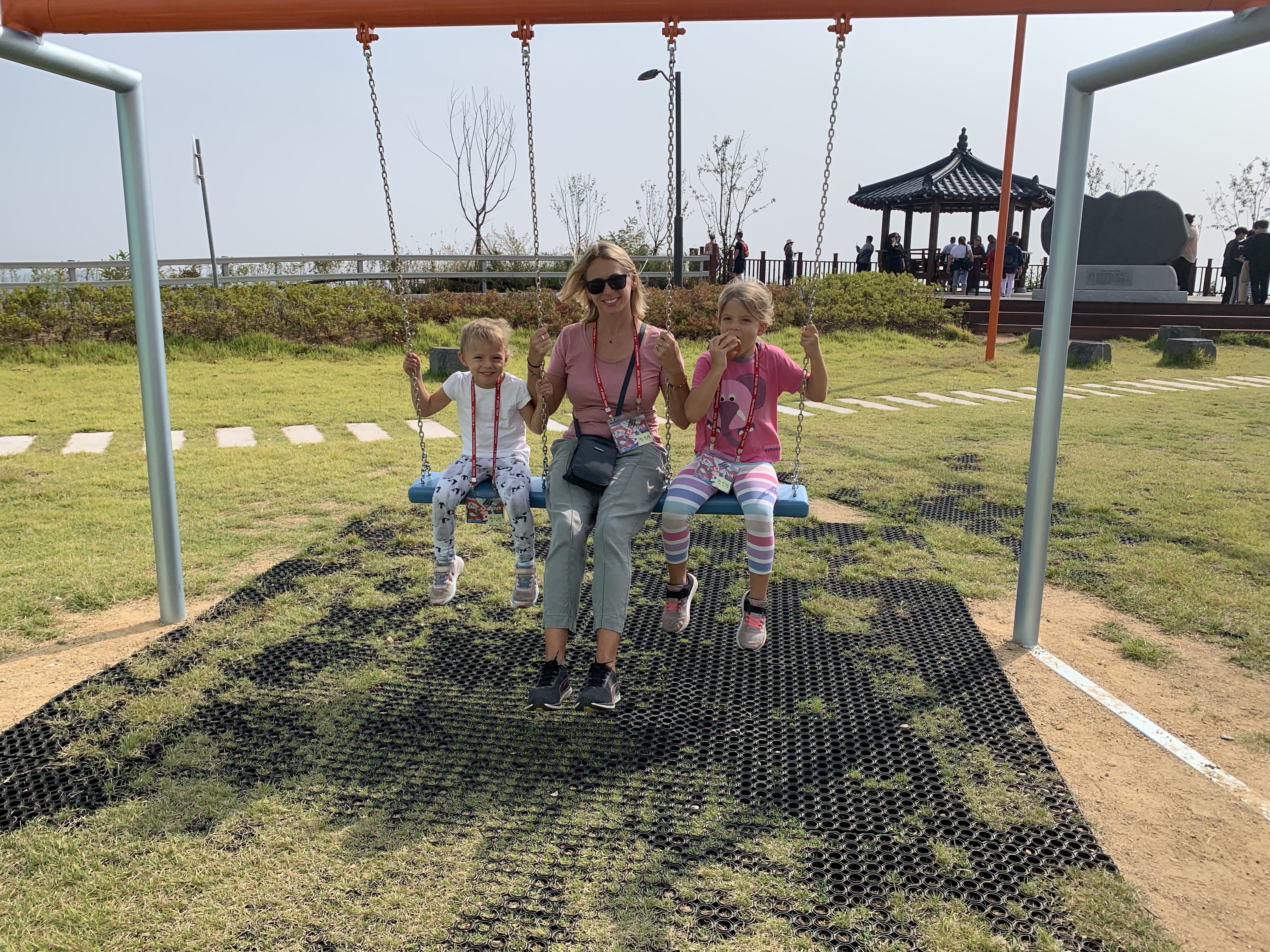
It was nice to see (and have a swing on) Superflex 1,2,3swing! from a turbine hall commission at Tate Modern (sponsored by Hyundai).
1,2,3swing!, Superflex, outside Dora Observatory, Paju-si, Gyeonggi-do.
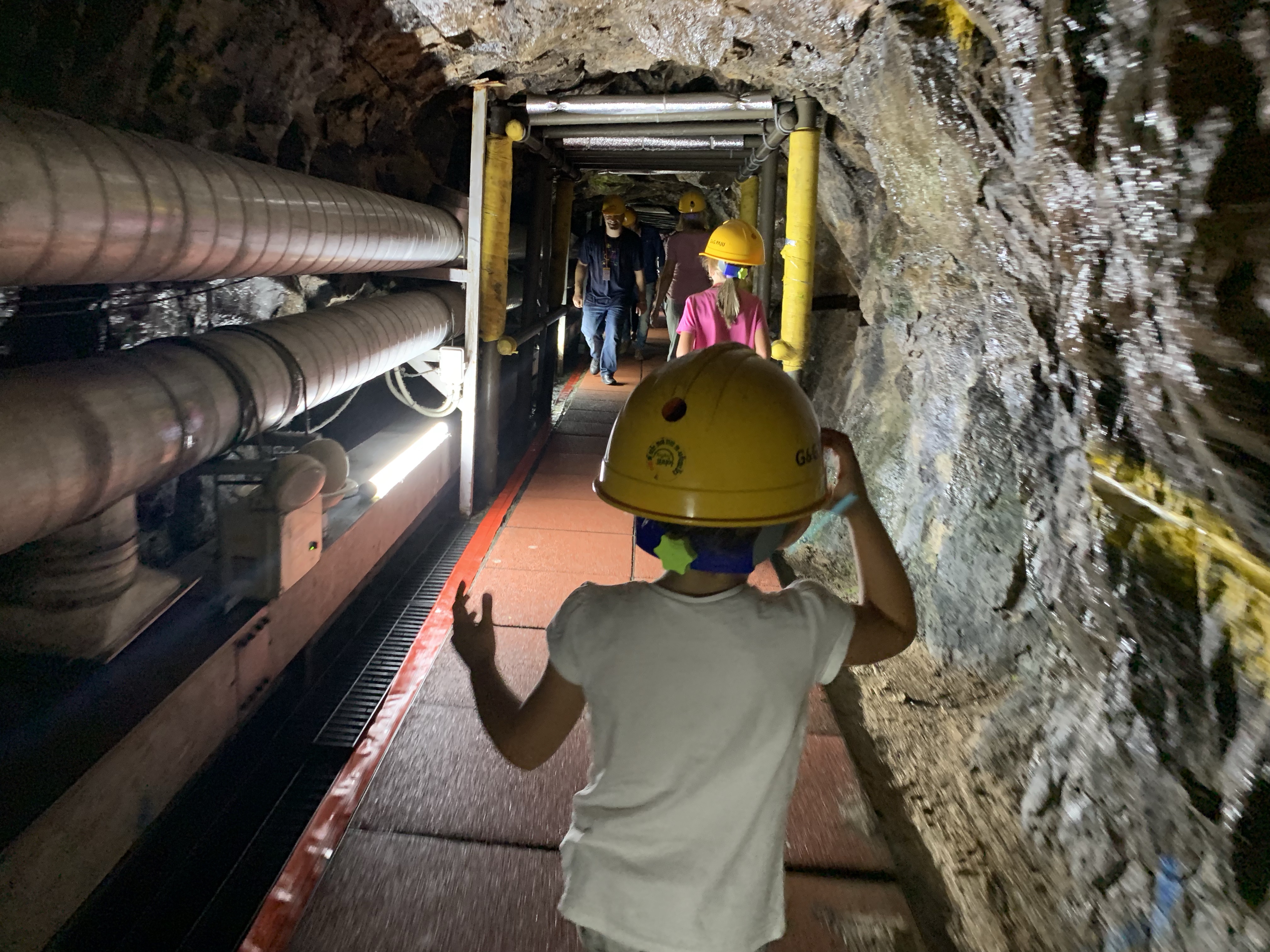
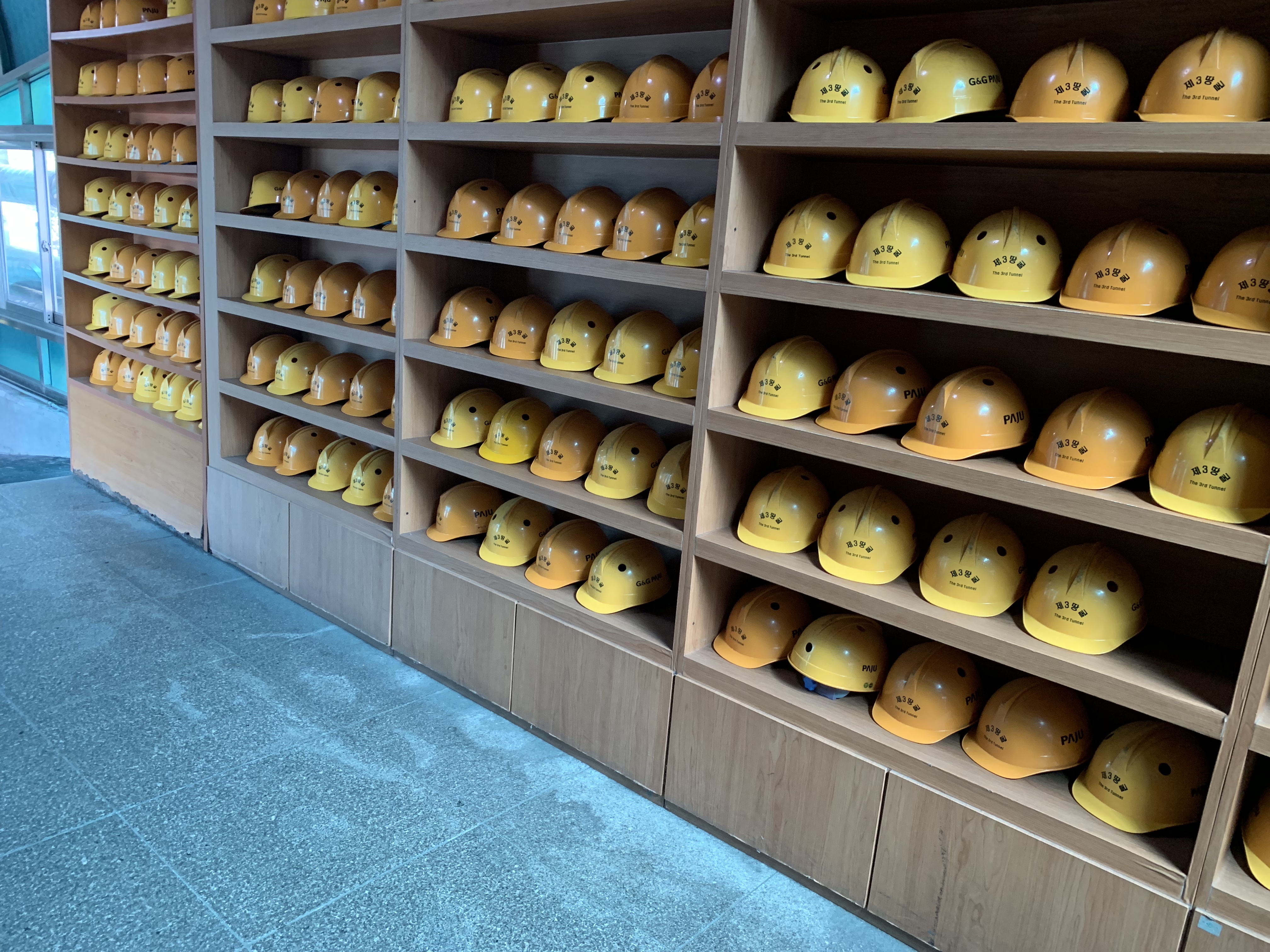
We walked into the Third infiltration tunnel, discovered in 1978 just 52km from Seoul, so large in scale an army of 30,000 fully armed North Korean soldiers could pass through within an hour. Scary.
The Third infiltration tunnel, DMZ.One size fits all?
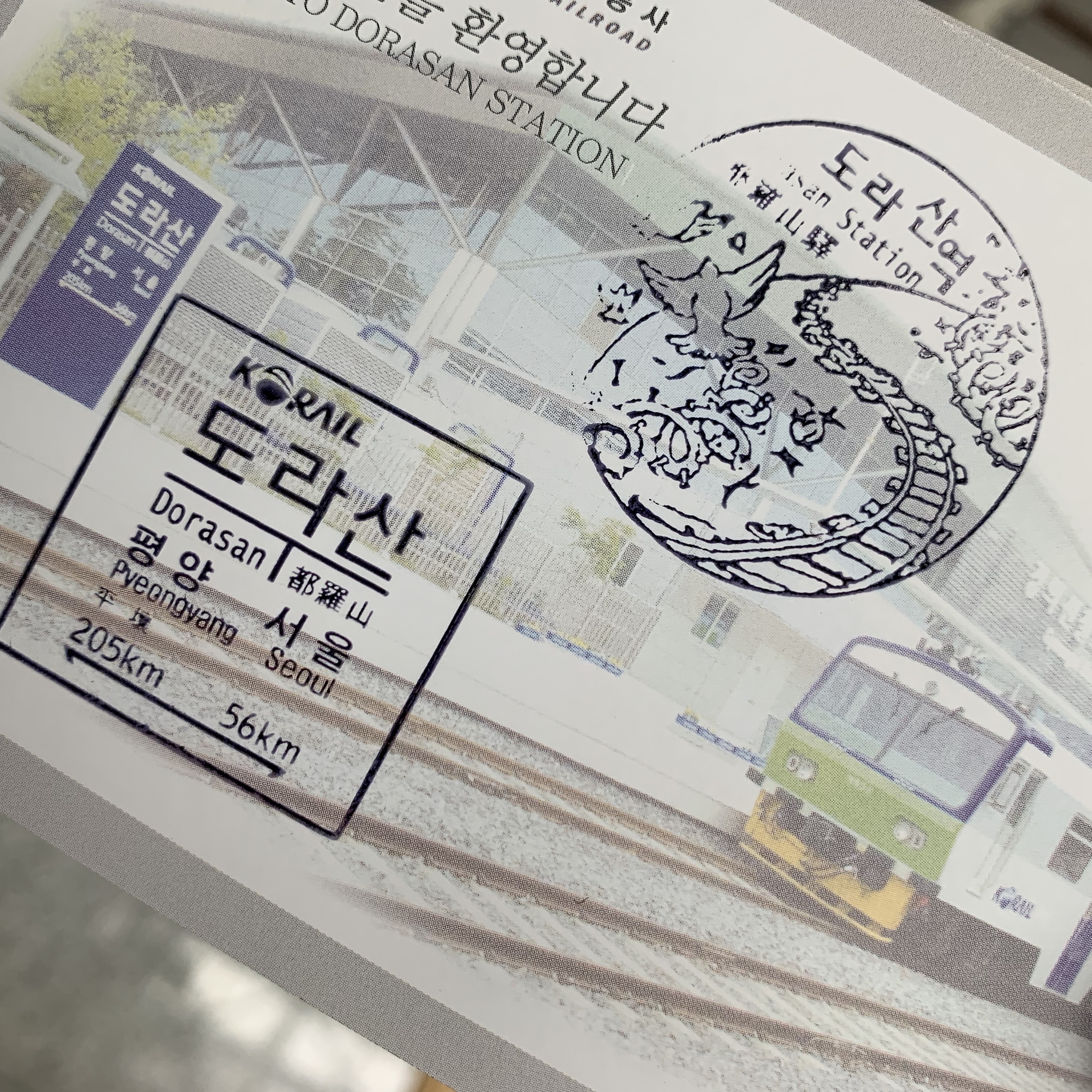
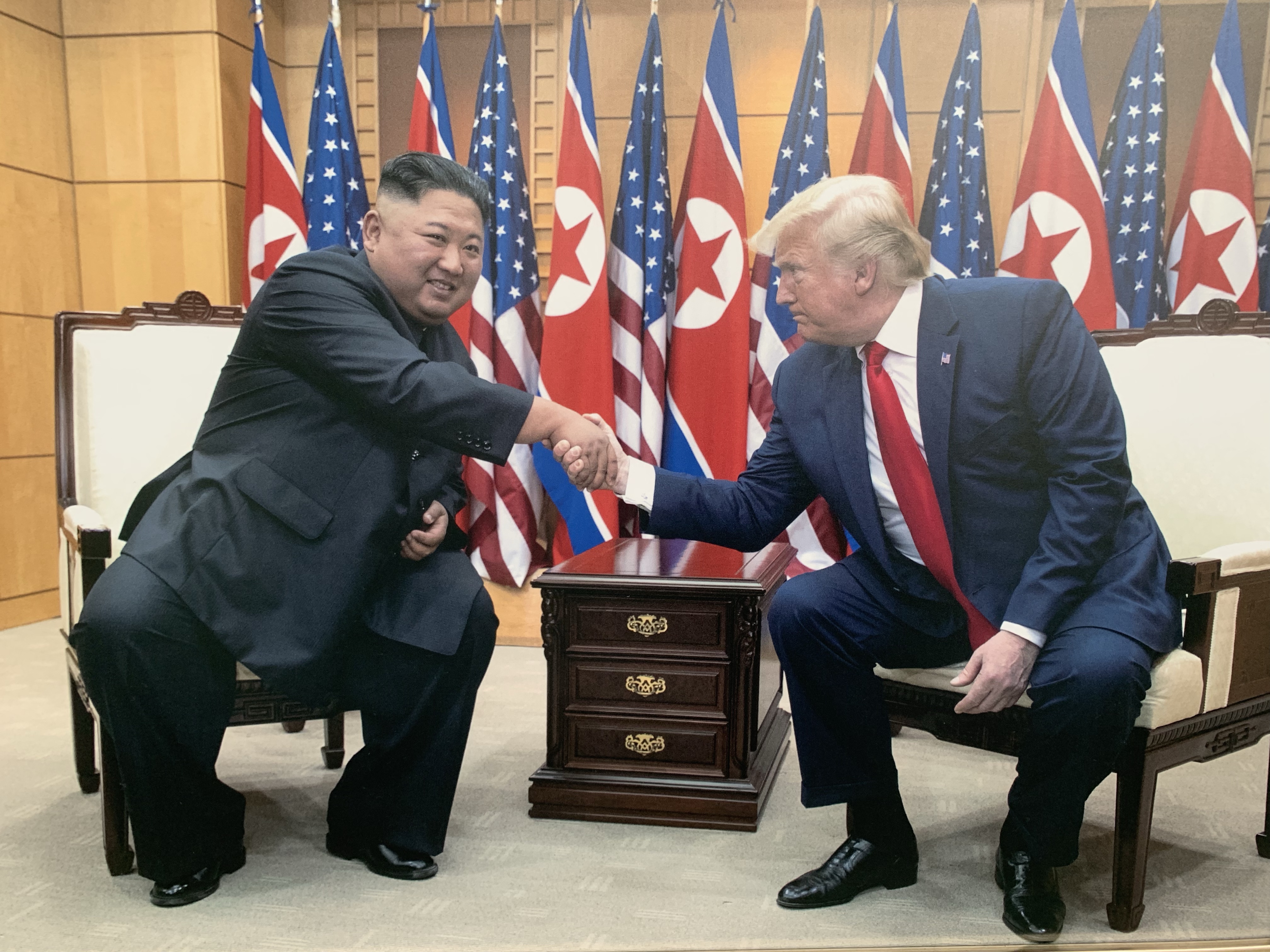
Final stop was Dorasan station, just 700 meters from the southern boundary line of the DMZ. It had several fascinating photographs of political leaders meeting there, and the possibility of a more connected future with a proposed trans-Korean railway.
Dorasan Station, DMZ. Kim Jong-un and Donald Trump, photograph on display in Dorasan Station, DMZ.
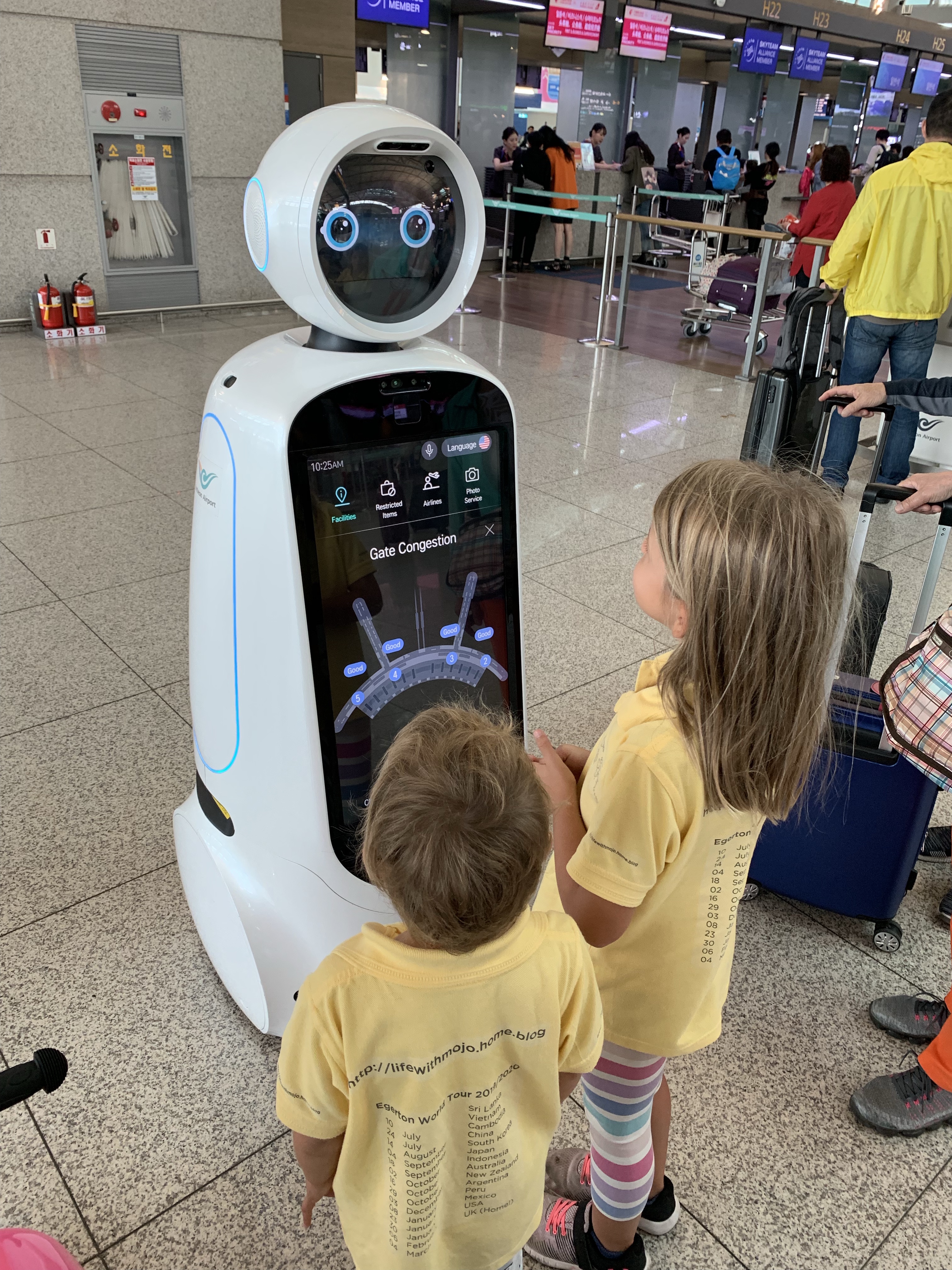
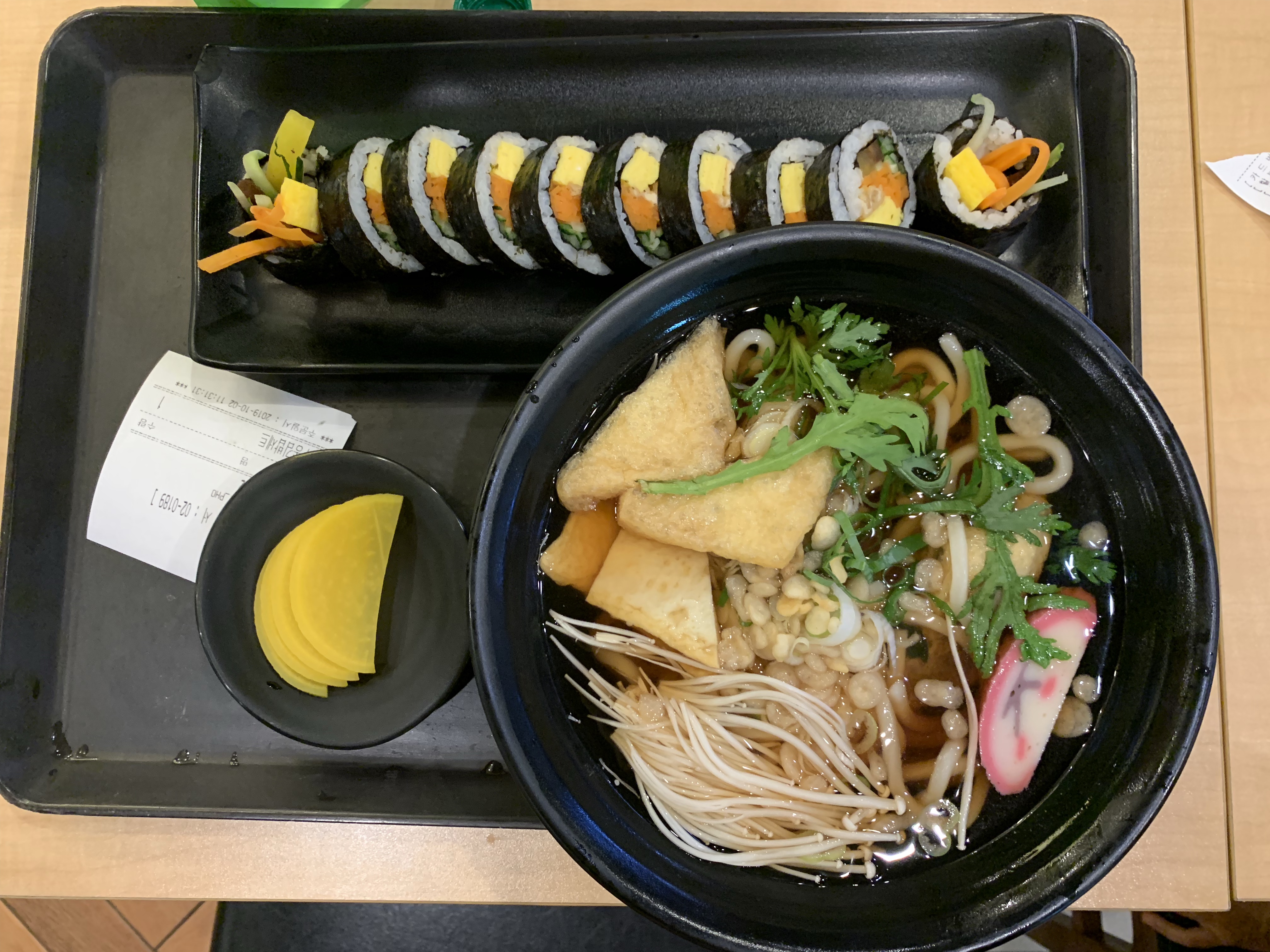
Seoul airport goes down as our favourite to date, with a live string quartet playing Disney and contemporary tunes and probably the best and more reasonably priced airport food we have ever had. The robot was pretty cool to meet as well.
Incheon International Airport, Seoul. Incheon International Airport, Seoul. Lunch at Incheon International Airport, Seoul, 2 October 2019.
We had certainly learnt a great deal about Korea in our two weeks there, our love of the food, the beautiful scenery, the incredibly friendly people, the efficiency of how things are organised but most importantly the element of surprise and down-right quirkiness!
I’m still slightly unsure what made us decide to go to Jeju, Korea’s largest island mostly made of porous volcanic rock. I had been pushing for some time in Gwangju, but as it wasn’t a Biennale year it didn’t seem essential, and some island time felt like a good idea as an antidote to our many city explorations.
Despite the grey skies, Typoon Tapah had passed just hours before our flight from Busan to Jeju.
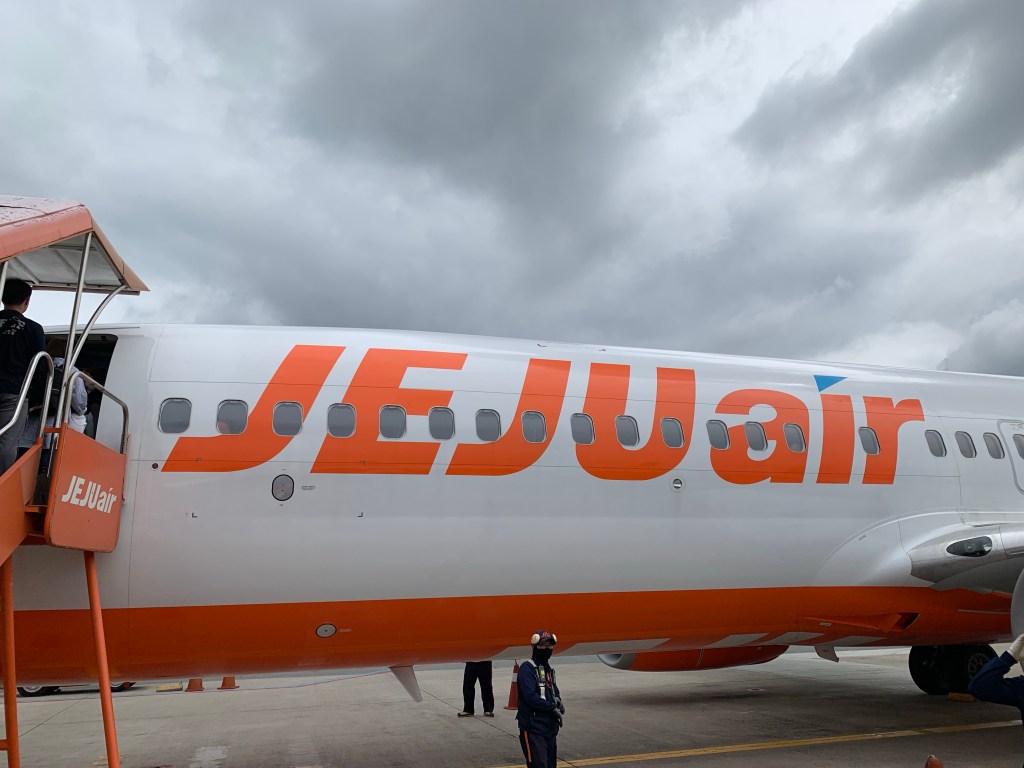
We were incredibly lucky with our flights from Busan – all had been cancelled the day before due to the typhoon, ours was only an hour delayed and we soon filled the time by getting free manicures at the airport (yes including Tom!) As we landed typhoons were long forgotten as the weather was beautiful and we even caught a glimpse of the famed dragon rock (Yongduam Rock) from the plane.
We hadn’t made the best choice of where to stay really – right in the middle of tourist town (Jungmun Resort) at the Suites hotel, a cheaper option surrounded by luxury hotels and kitschy museums and a good hour or so on a bus away from Jeju-si, the capital so we didn’t get a chance to visit anything there. The hotel was nice, with a little kids area and restaurant but the swimming pool didn’t even have any water in it! Our first night we took a walk round to Jungmun Saekdal beach, which was lovely and we revisited another day, there was even a yoga class happening on the sand!
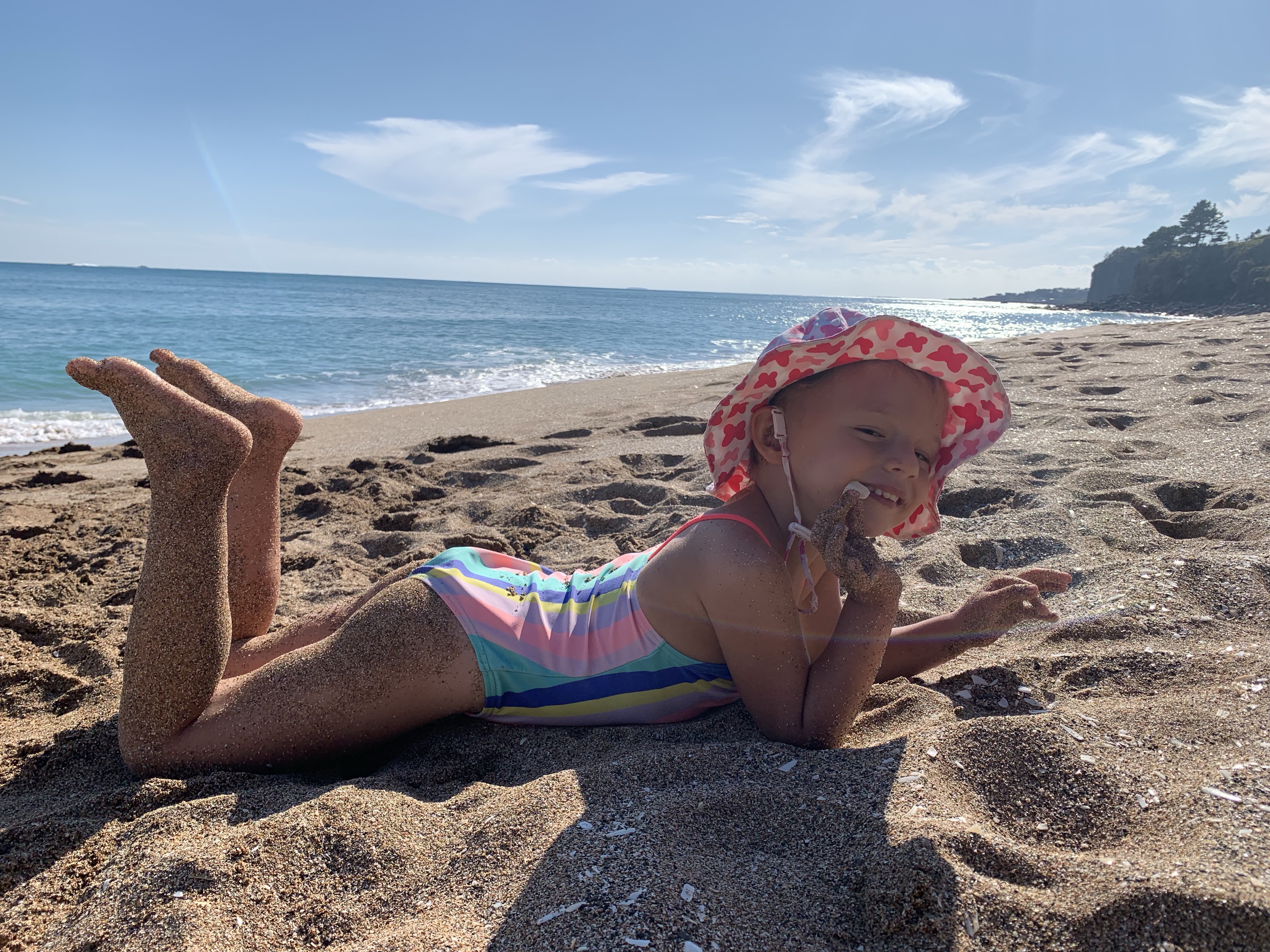
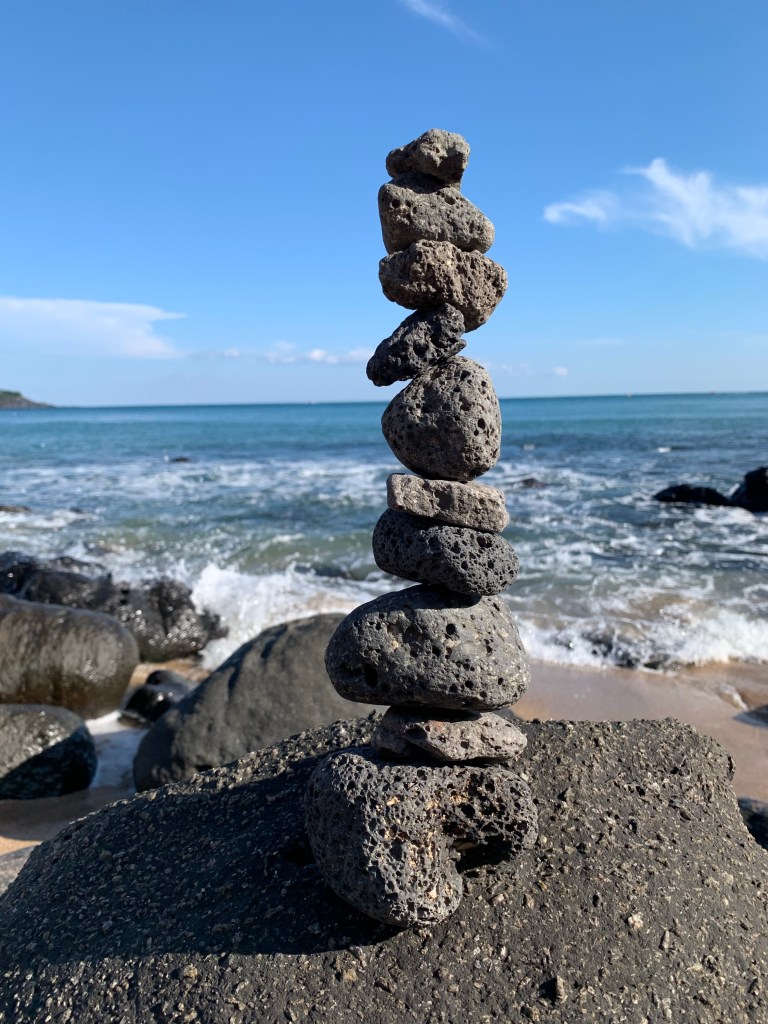
Jungmun Saekdal Beach, Jeju-do.The volcanic stone worked well for Tom’s beach sculptures.
Unfortunately eating options here were a choice between a nightclub with pole dancing and disco balls and raw abalone from a bucket caught and served straight up by haenyeo, female divers. We went for the nightclub of course!
A better option for us were the halla-bong tangerines bought from a street stall. For breakfast we routinely had these and bought yoghurts and honey pancakes from the supermarket and ate in our outside area by our room.
Breakfast on our terrace, Suites Hotel, Jeju.
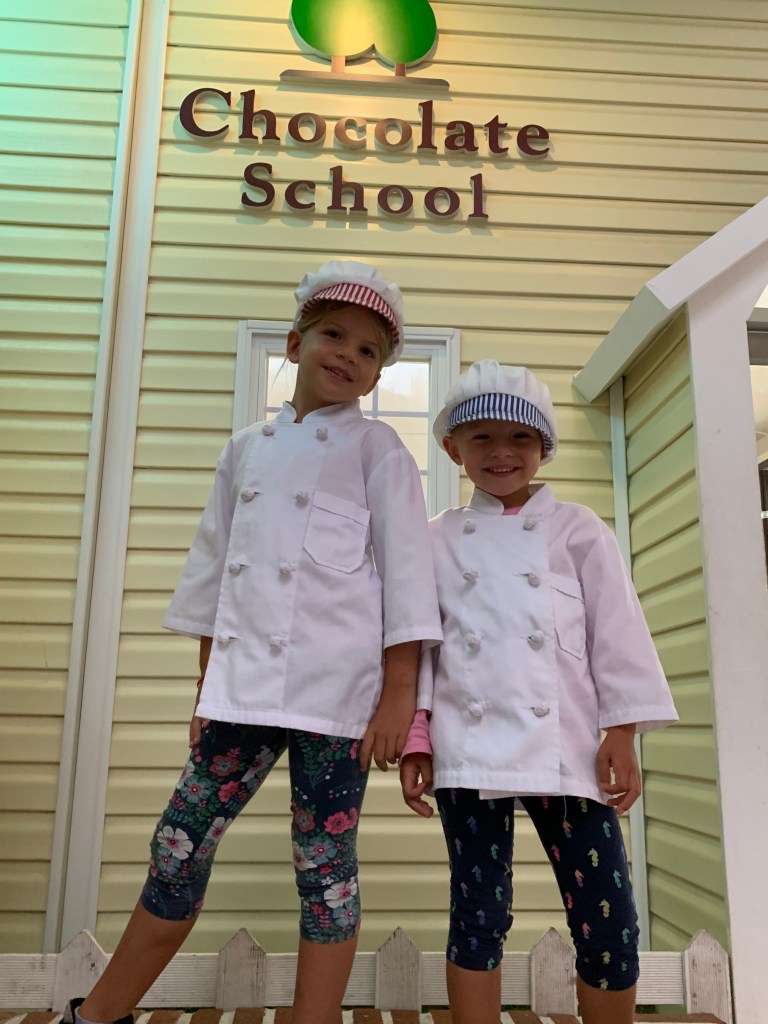
We made the most of our location, enjoying a rainy day class at the Chocolate School and learning about the cuisine in nearby restaurants as well as our usual clifftop morning runs.
Cooking lesson at Chocolate Land, Jungmun Tourist Complex, Jeju.
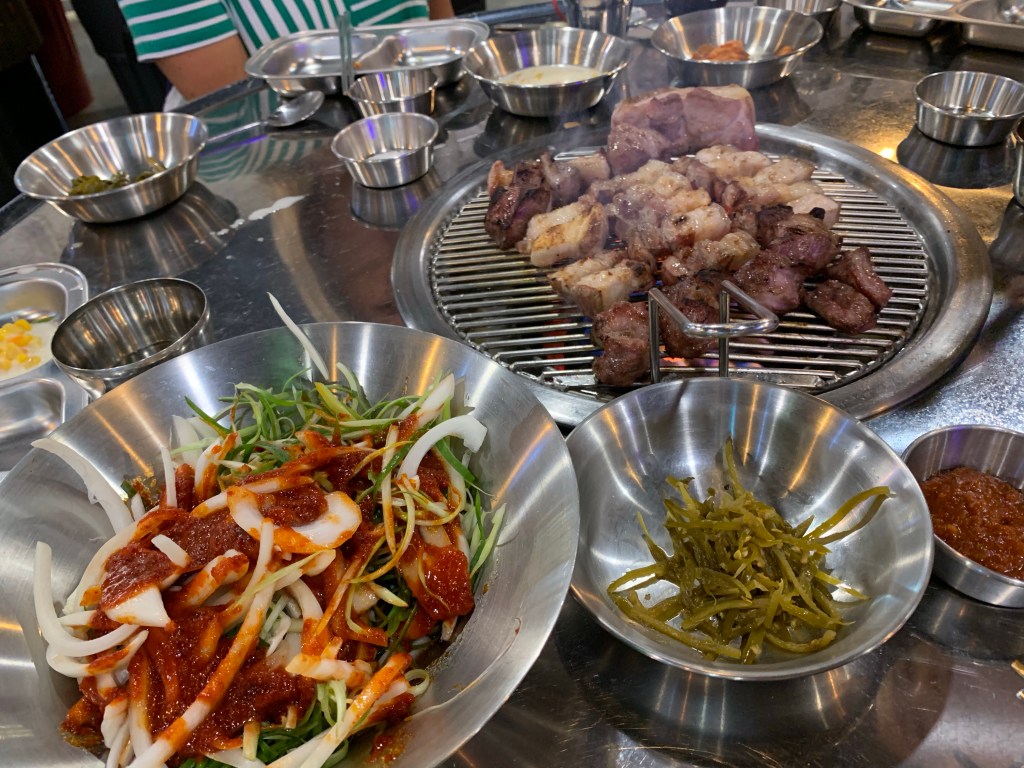
The best of the restaurants were Gogi Stop where we had our first real Korean barbecue with heukdwaeji – pork from the local black-skinned pig. Large chucks of fatty pork appeared ready for the bbq in the centre of the table with the usual Korean pickles and kimchi. Tom preferred to take over the cooking as usual!
Heukdwaeji and accompaniments, Gogi Stop, Seogwipo, Jeju.
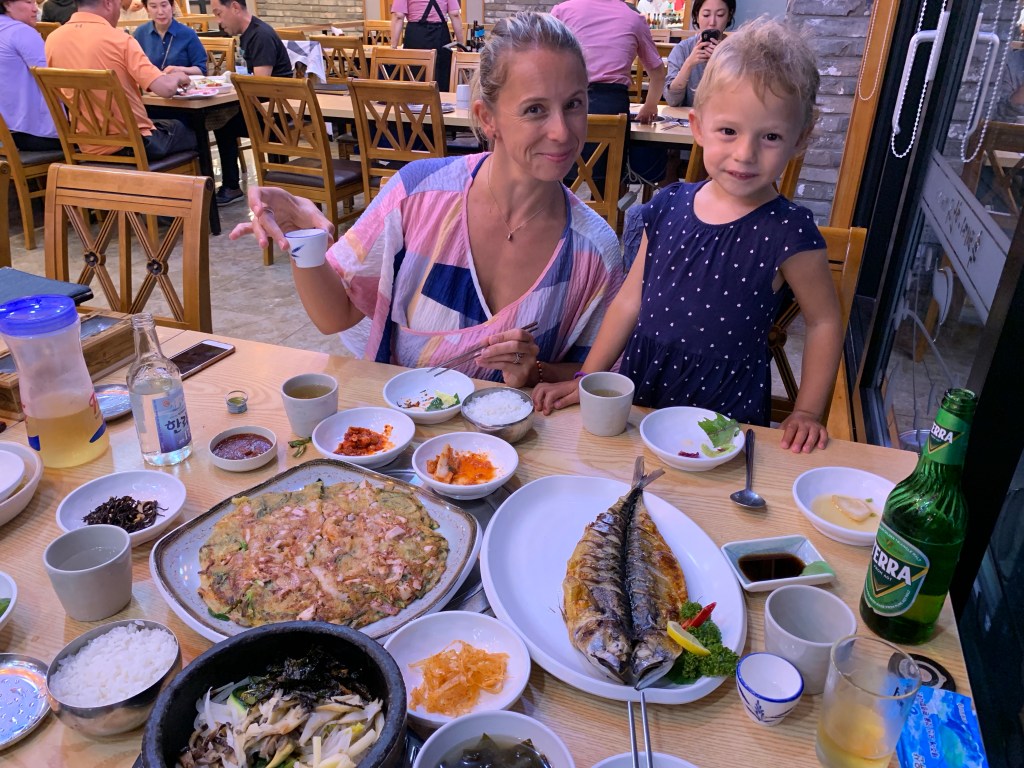
A local restaurant around the corner from the hotel was Sinwoosungtown which was a large open-plan restaurant where we tried out soju, the local vodka, bindaettok – crispy pancakes of crushed mung beans and the local smoked and grilled mackerel.
Bindaettok, mackerel, soju and beer, Sinwoosungtown, Jungmun Tourist Complex, Jeju.
Lastly Soul Kitchen was were we went when we needed some more European style food and the steak salad went down so well we ordered a second helping!
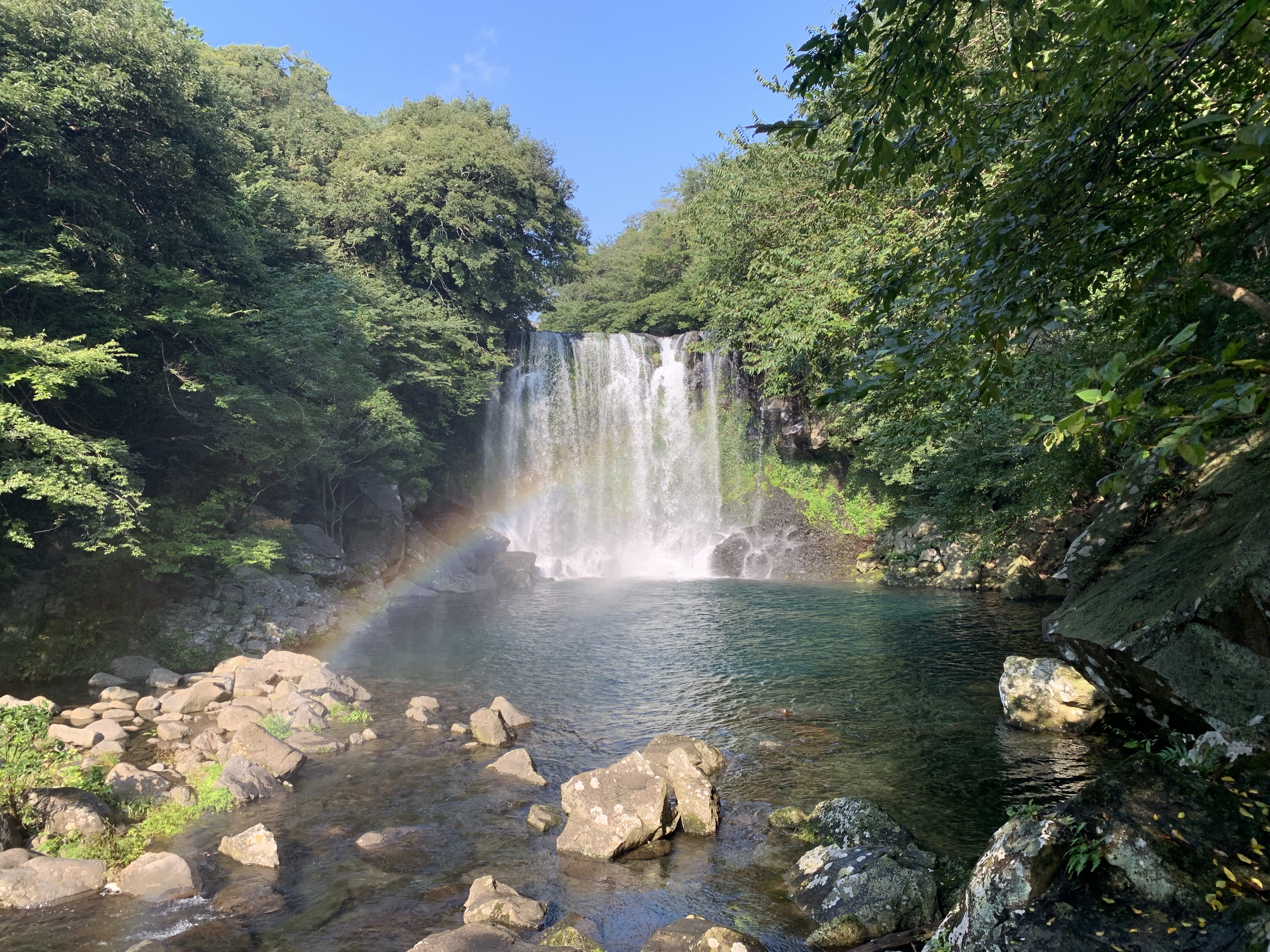
A perfect local outing was a visit to the Cheonjeyeon Falls and Seonimagyo bridge, where we got to see three waterfalls, one with a rainbow.
Cheonjeyeon Falls, Seogwipo, Jeju.
There were quite a few steps but we were rewarded by having a go at throwing money into the fountain of five blessings: longevity (a tortoise, my choice), wealth (a boar, Toms), honour (a dragon, Joanna’s), sons (a carp) and love (a mandarin duck, Molly’s).
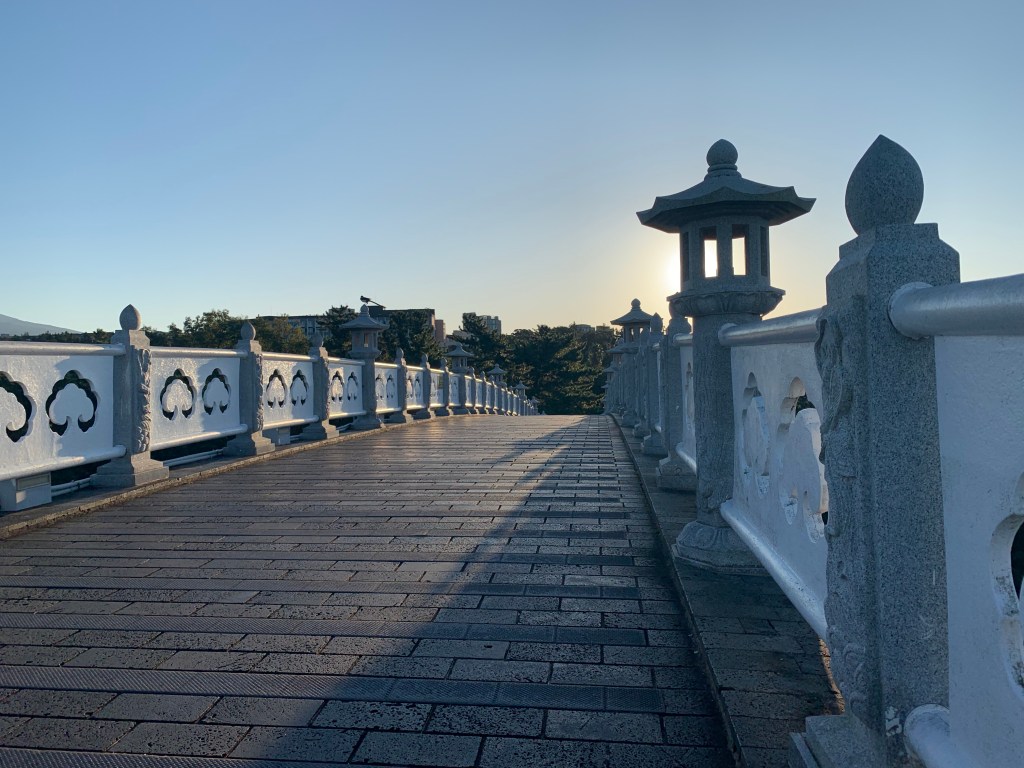
Seonimgyo Bridge, Cheonjiyeon Falls, Seowipo, Jeju.
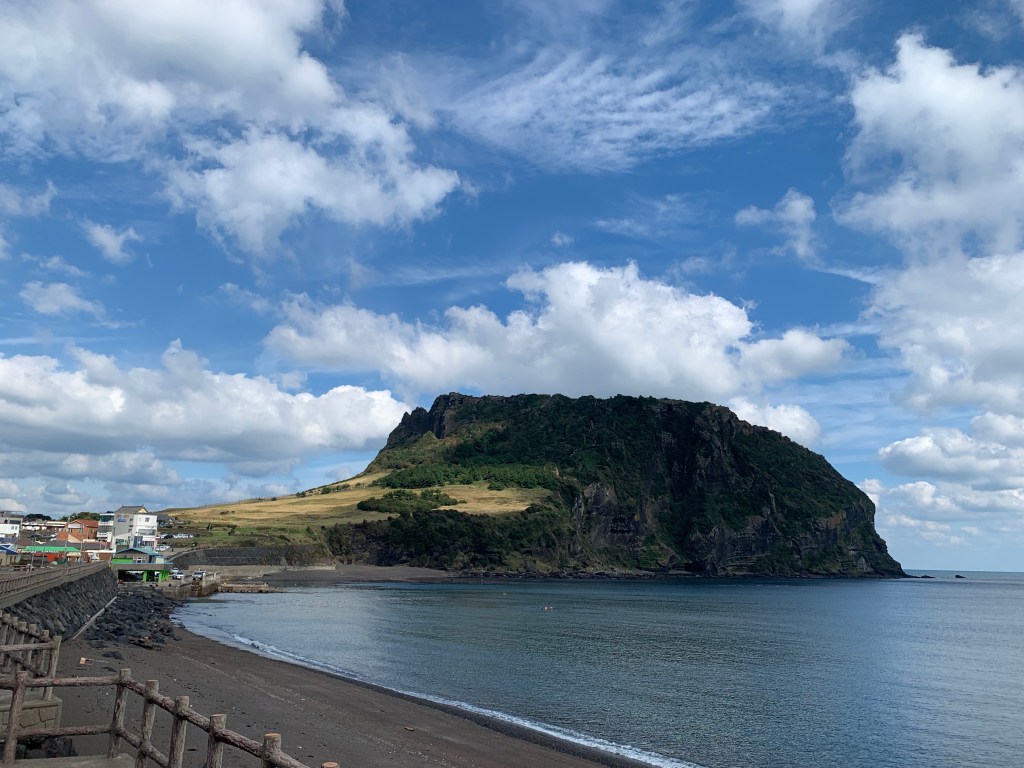
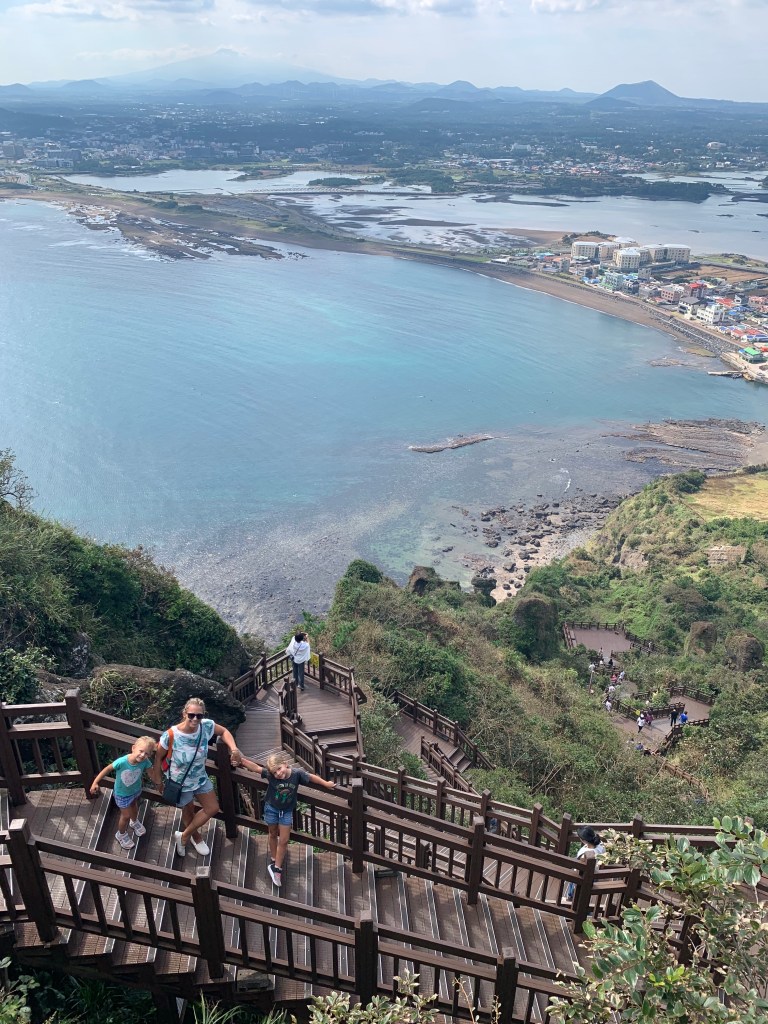
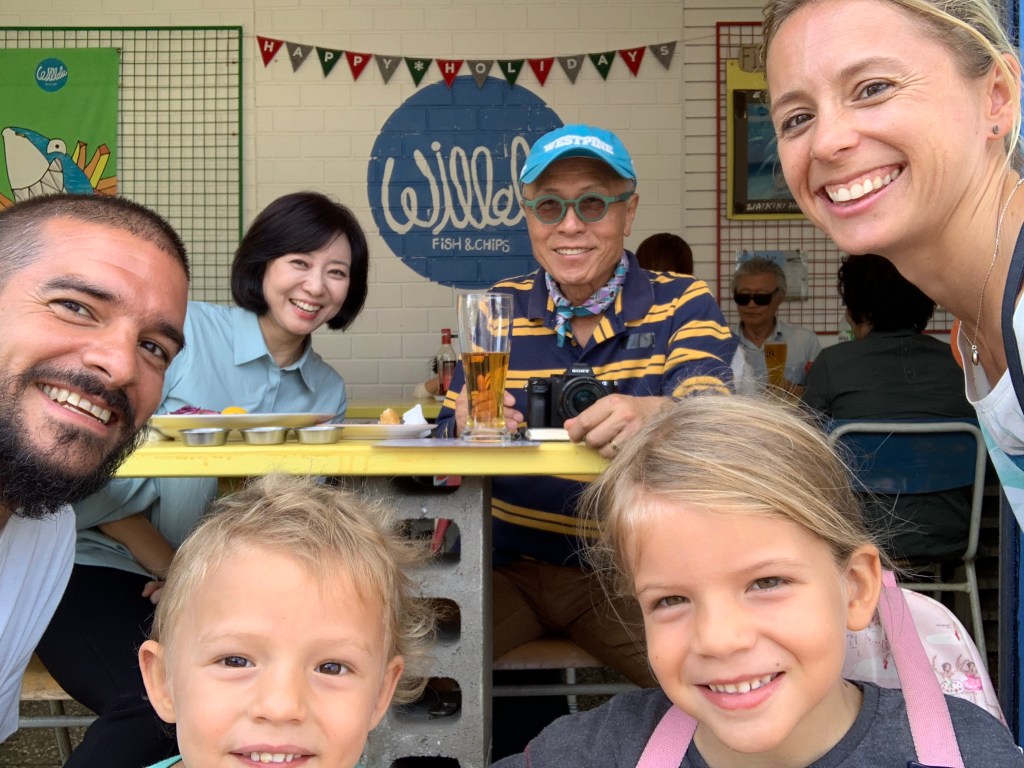
Our best day out was when we took a bus to the Seopji-koji Peninsula. At one point swapping buses at brake neck speed, we arrived at Seongsan-ri bus stop around 12 noon. We were immediately greeted by Wily Jung the owner of Willala fish and chips, a small establishment across the road. They were filming a documentary and invited us to have a free lunch if we could take part. We asked if it could wait for half an hour or so whilst we climbed the volcano – they said fine. So up Seonhsan Ilchul-bong (a Unesco World Heritage Site) we went. 182 metres high and shaped like a giant punchbowl, it’s quite a sight when you climb all the steps and get to peek inside.
Seonhsan Ilchul-bong, Seogwipo, Jeju. The view while climbing Seongsan Sunrise Peak, Jeju.
We got back to the fish and chip shop a little late and out of breath, but were warmly invited to take a seat, we were intrigued by cameras throughout the restaurant and the couple clearly on show in front of us. We wolfed down the delicious john dory and shark we were given. The owner had spent time learning the art of fish and chips in the UK, and we were fascinated to learn that the host of the programme was a well-known manhwa or comic book artist Huh Young Man.
With Huh Young Man and actress, Willala Fish & Chips, Seopji-koji, Jeju.
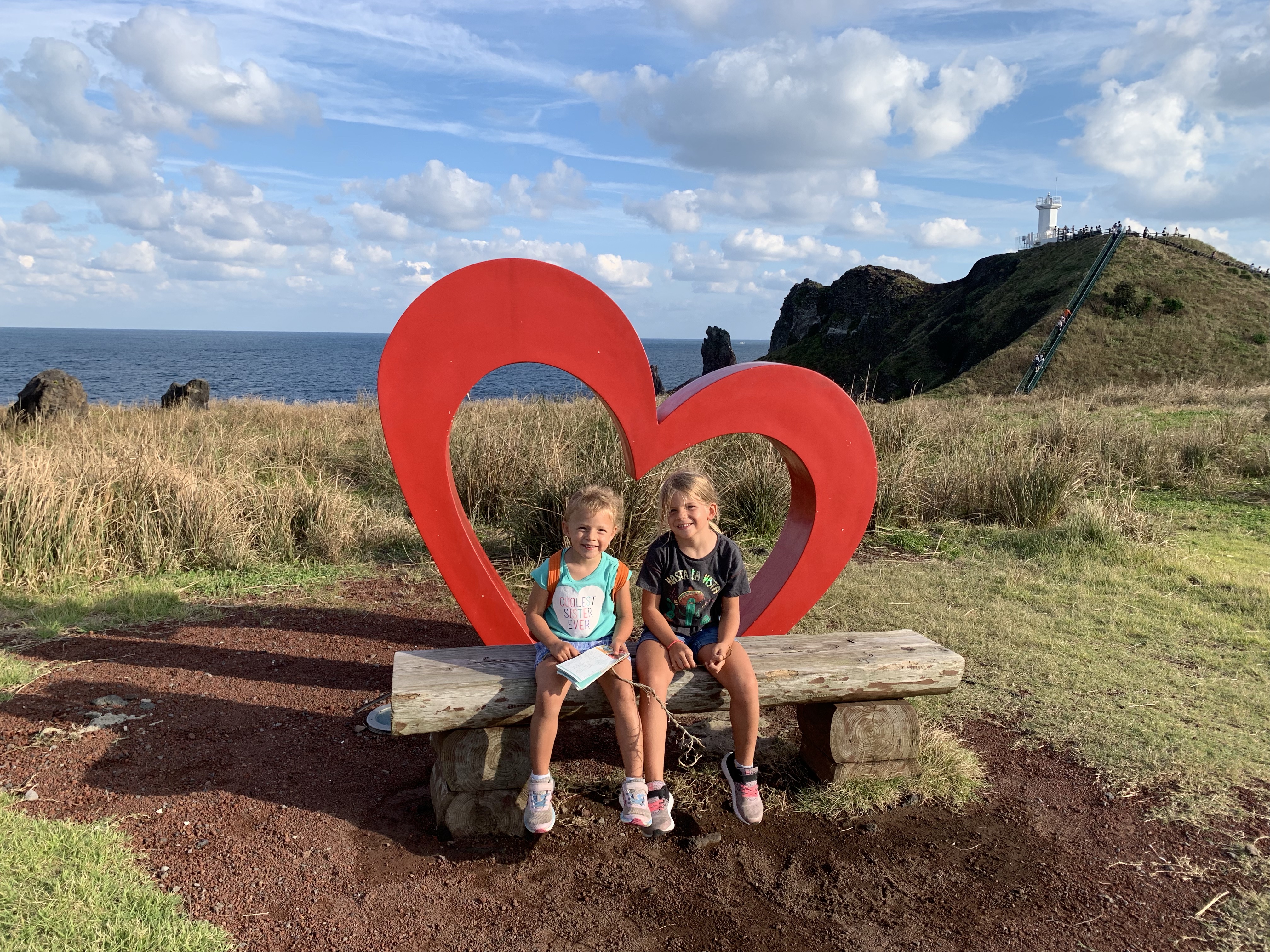
We went on to Phoenix Island where most people take either a horse and carriage ride or self-drive a moped around, but we walked. Girls were a little despondent until we found a fun maze to run around in! Tom took the girls off for more of an explore to see a lighthouse whilst I visited the serene Yumin Art Museum designed by Tadao Ando – a beautiful space aimed at meditation, for me a treat to catch up with some Art Nouveau ceramics.
MoJo exploring Phoenix Island, Jeju.
We met up for a pricey tea and cake at the restaurant Mint in Ando’s other building on the island, Glass House. Below us, Ilchul-bong beach and some horses beckoned. We ended our day with dinner in Seogwipo.
Jeju was strange and enjoyable, we were glad to have been able to spend time there and for all the natural beauty and quirky times we had.
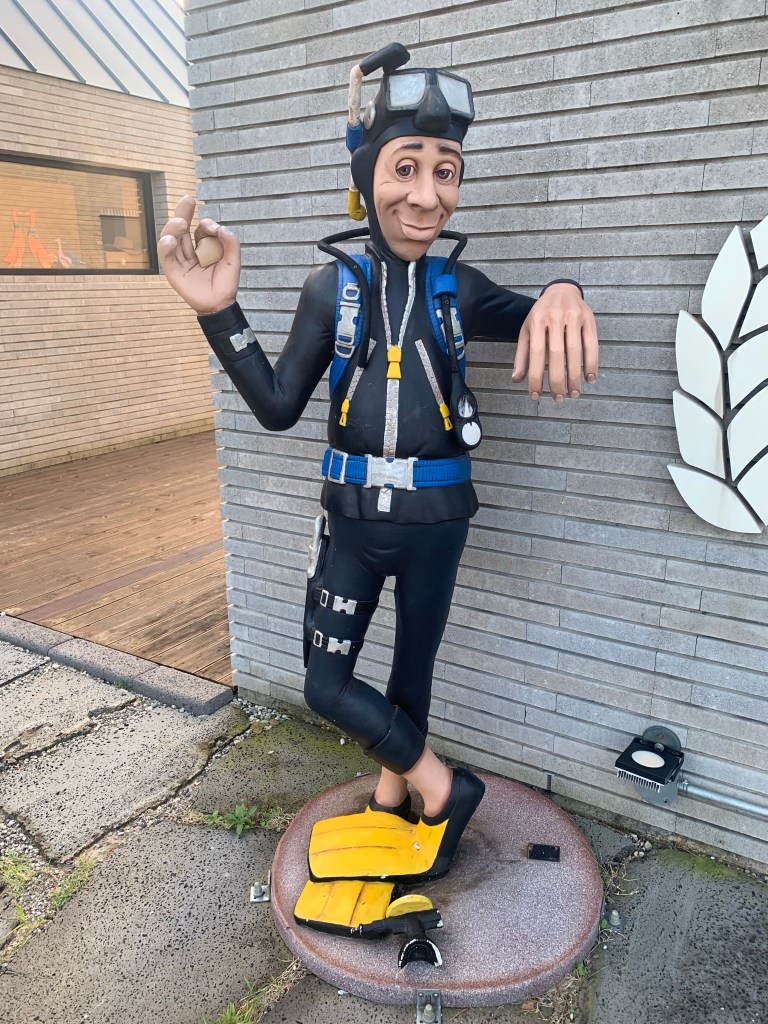
MoJo posing with one of the many Dol hareubang sculptures made of volcanic rock which are the symbols of Jeju Island. Diving traditions of Jeju.
The first time we heard people talking about typhoons was in Shanghai. We were finishing up dinner at Canton Disco and the manager was asking where we were off to next, warning us a typhoon was imminent. True enough, the next morning we sat on the tarmac at Shanghai airport for nearly an hour as rain and wind lashed against the window before eventually taking off for Yichang. I think we had underestimated the power of south Asian storms when deciding to travel there in September/October: we were under almost constant threat of attack for the next six weeks!
After such a full-on experience in China, we were looking forward to some ‘down time’ in Korea. For our two weeks we had decided to only travel to three places, Busan, Jeju Island and Seoul. This gave us five days in each, allowing us to really get to know the local areas. Having always got on with any Koreans we have met elsewhere in the world, we were looking forward to experiencing South Korea.
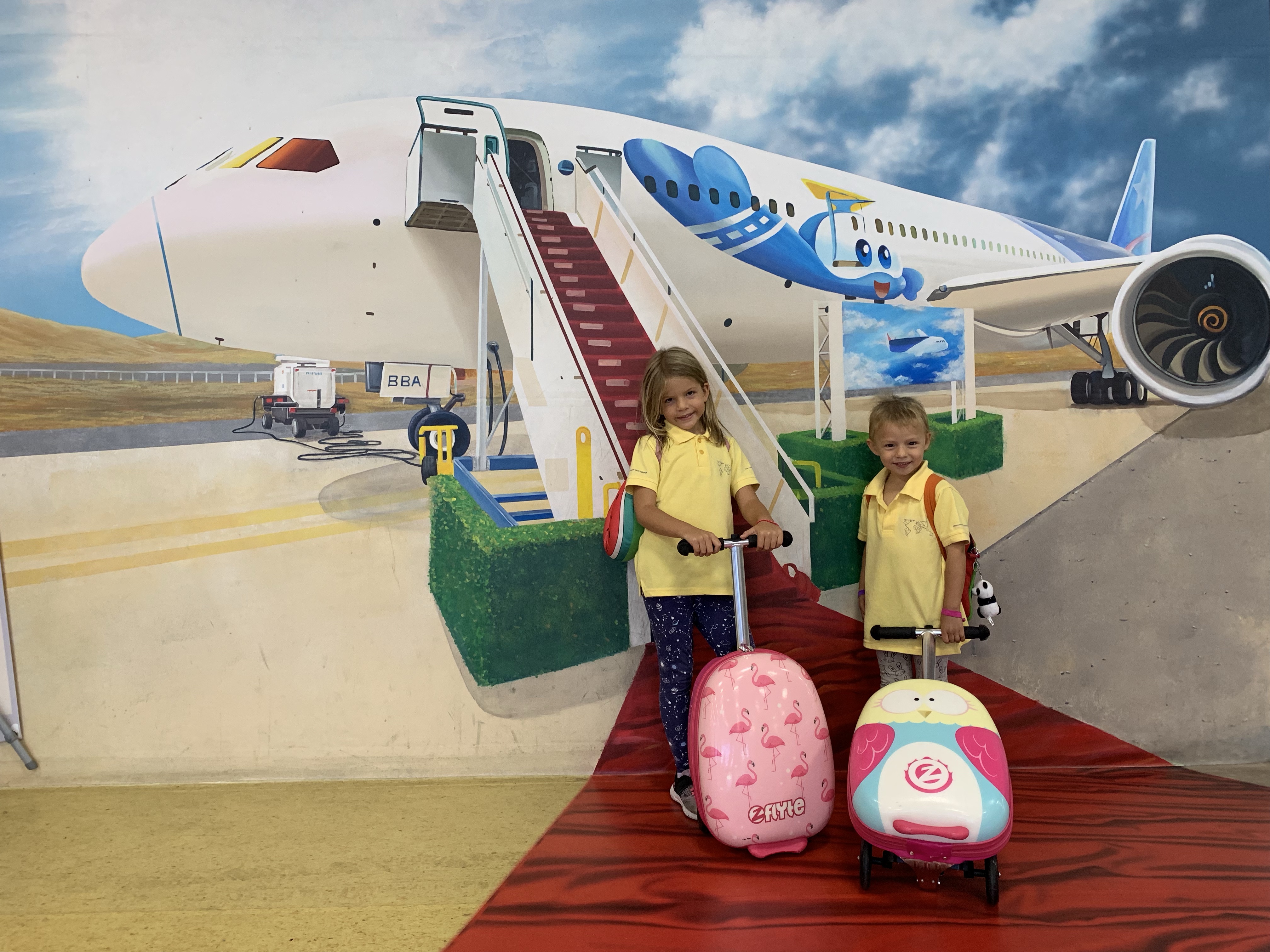
MoJo looking the part with their scooter trunkis, Busan airport.
As we touched down in Busan, typhoons were a million miles from our minds. The city looked stunning from above, the scenery very dramatic, it helped that it was beautifully sunny. After smugly finding our way very easily on public transport from the airport to our cute Airbnb apartment ‘Frank’s Loft’ (via light rail and hundreds of stops on the metro – what a good idea to number the stations and have lovely volunteers to help you buy your tickets) we decided we deserved some beach time.
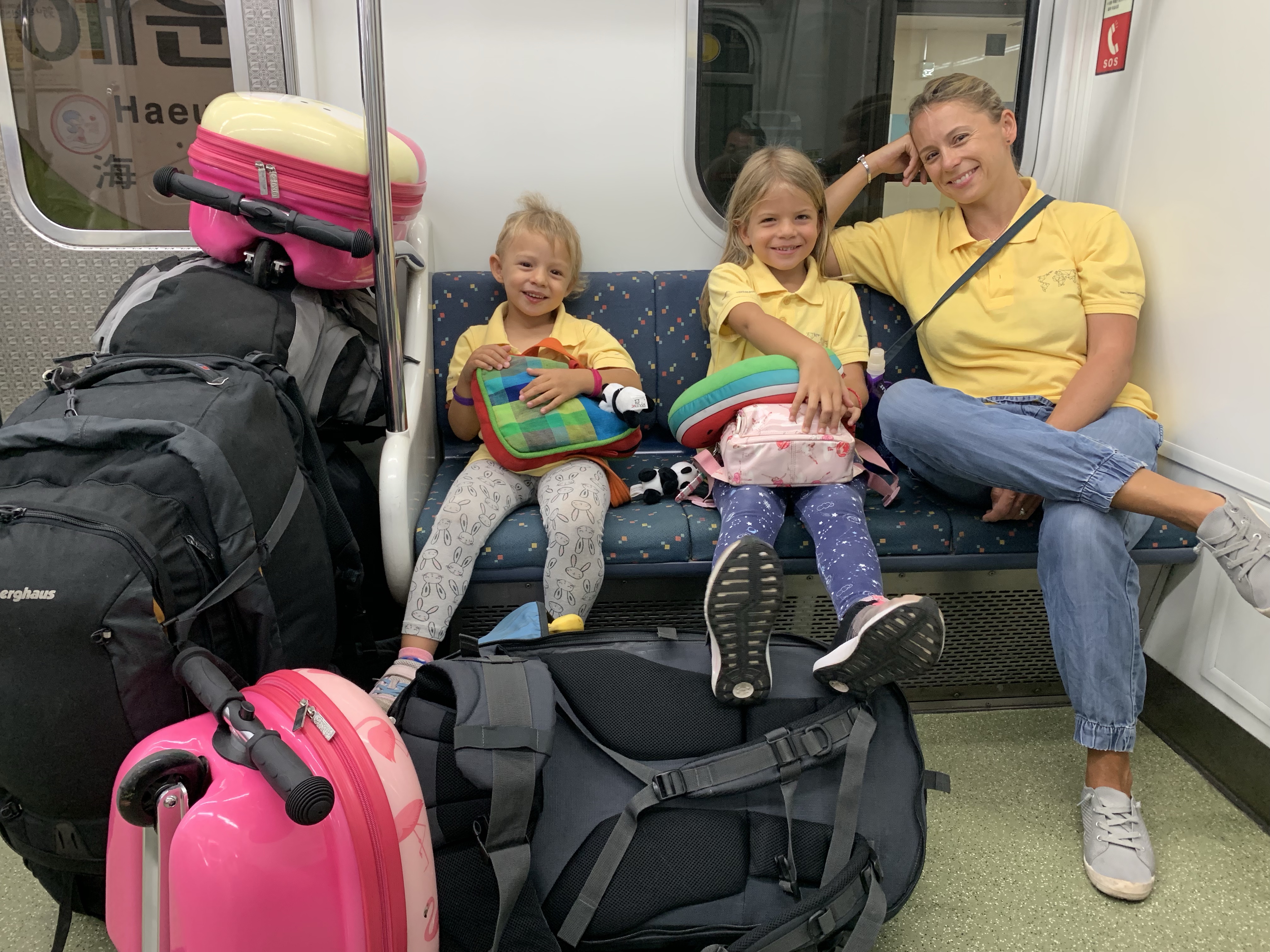
Enjoying the efficiency of Busan’s metro, 18 September 2019.
We couldn’t resist a late lunch at the Spanish club, enjoying paella and Cava! One fun stop along the beach was to the hot springs that you could dip your feet and legs into, my were they hot!
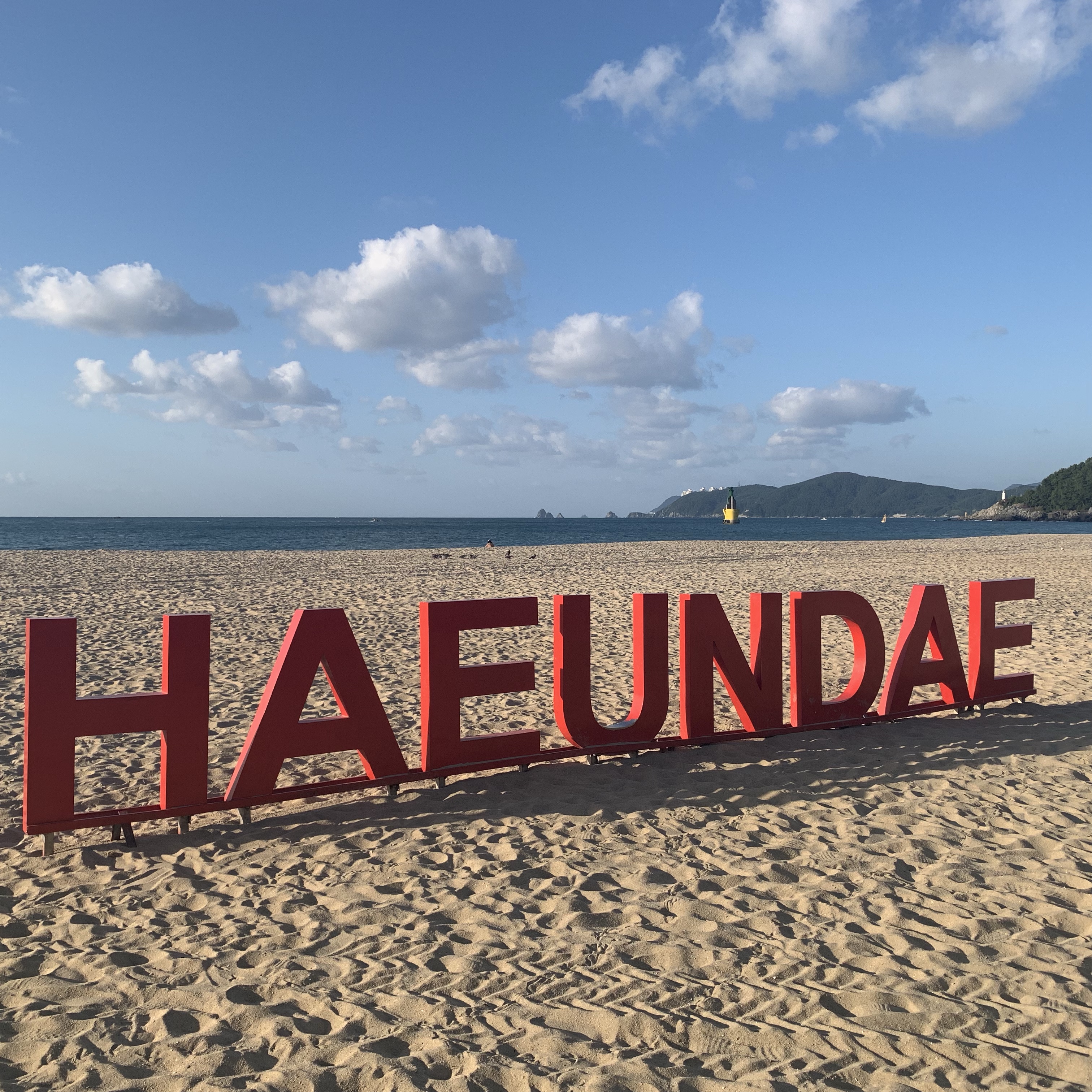
A deserted Haeundae Beach, Busan.
We were staying in Haeundae, arguably the country’s most famous beach. Having seen pictures where the sand is hardly visible due to the volume of visitors, we were pleasantly surprised to find it almost deserted, a sign that we were there in the off season…. We enjoyed walking around Dongbaek Park where we found a statue of a mermaid in the sea and one made of plastic bottles on the shore. There was a fun slide at the corner of the beach too.
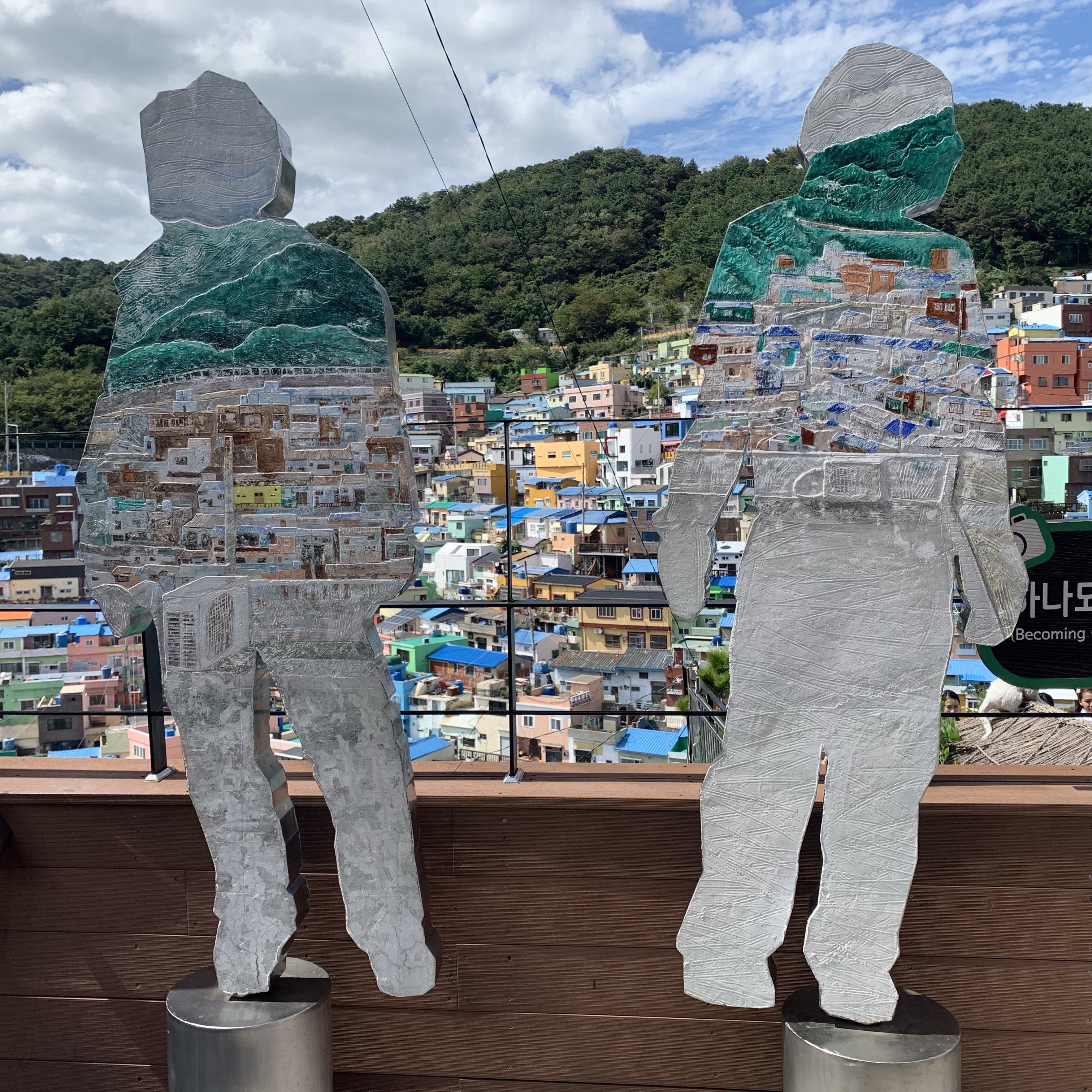
Gamcheon Culture Village was a brilliant find for us. A mountainside slum originally home to refuges after the Korean War, it is accessible by a local bus up a windy road.
Art installation at Gamcheon Culture Village, Busan.
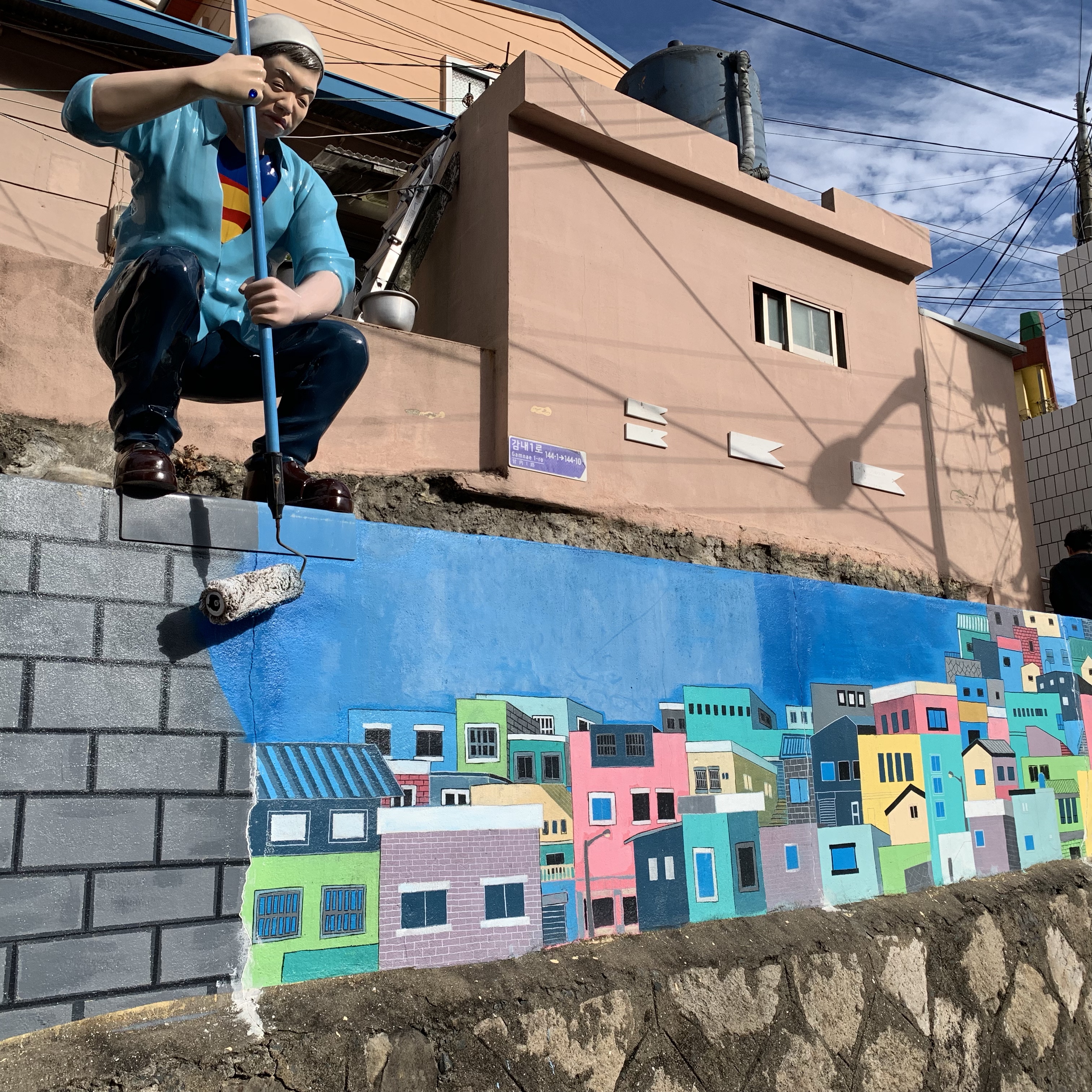
The area was given a makeover in 2009 when students decided to turn their creative juices to making colourful installations and quirky sculptures across the village. Architects were also commissioned to transform several of the rundown spaces.
Gamcheon Culture Village, Busan.
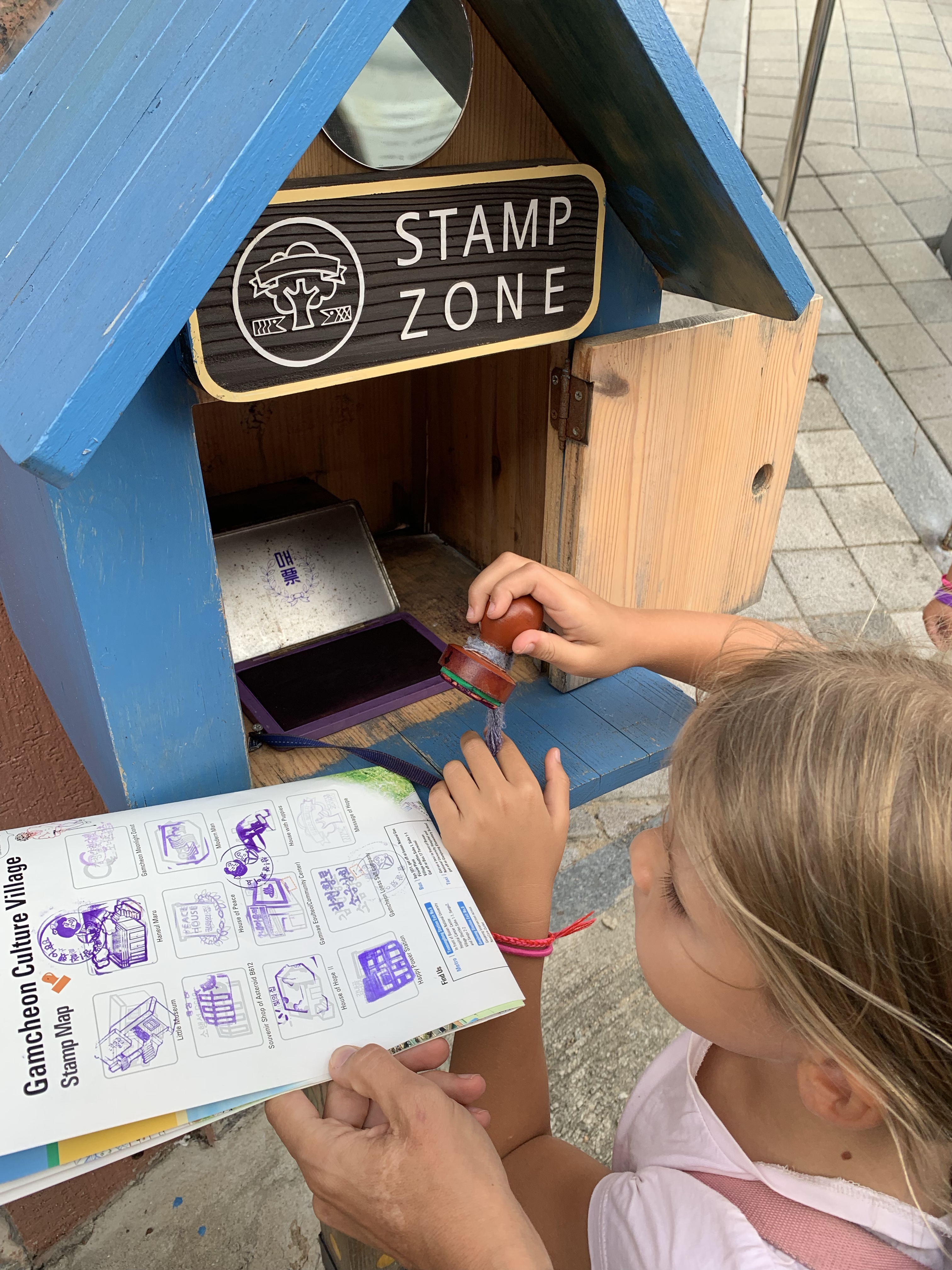
You can buy a fun map which gives you a few routes for a scavenger hunt up and down the hillside spotting different things and collecting stamps.
Filling up our stamp map, Gamcheon Culture Village, Busan.
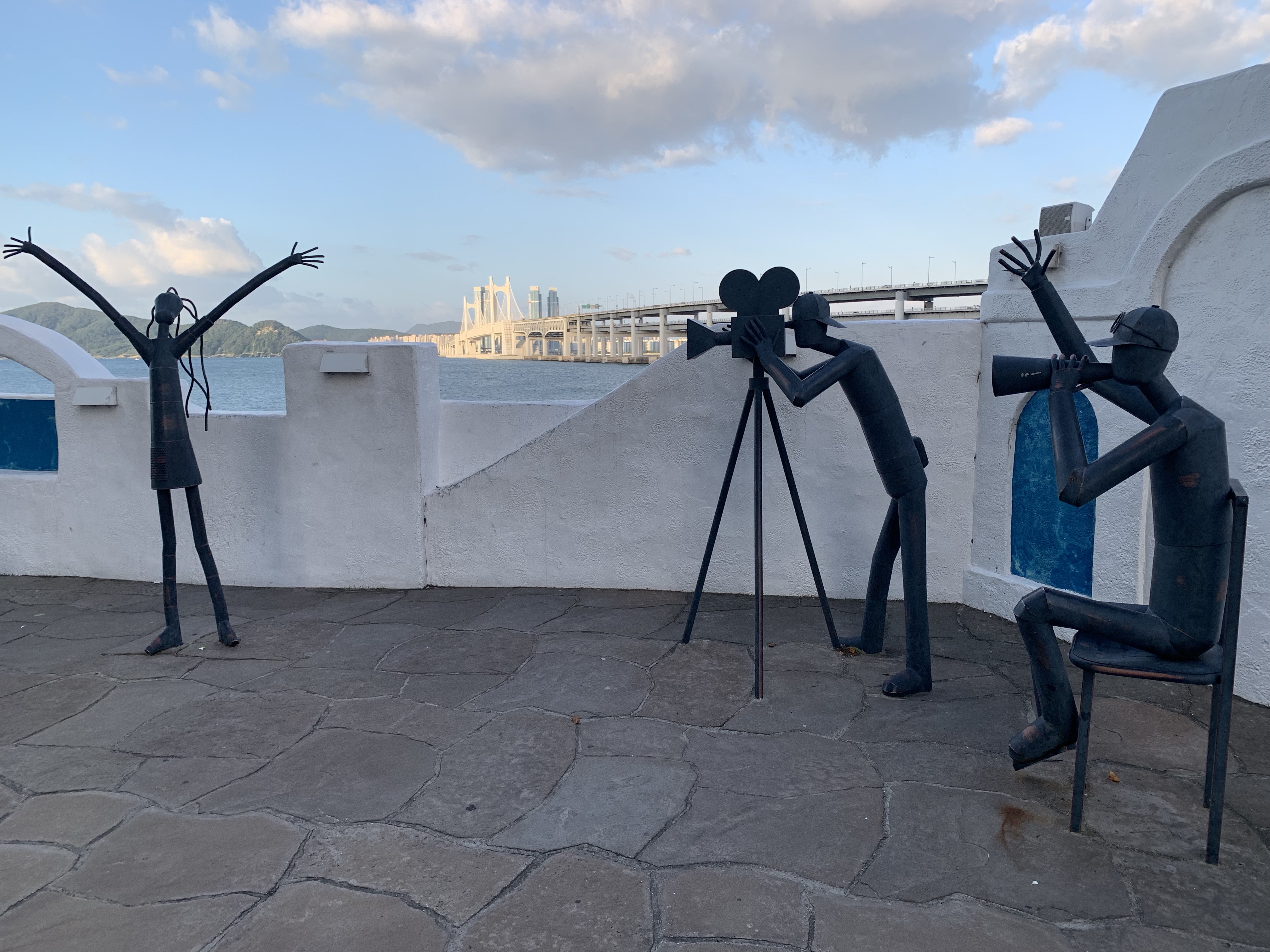
Other cultural spots worth a look were the Busan Museum of Art with an outdoor sculpture park and botanic garden project, and Soul Art Space. Busan’s film festival is one of the most important in Asia, you can get a taste of the action by checking out ‘movie street’ by the coast.
Haeundae cinema street, Busan.
There were also some nice examples of public art paintings on the former rail route now turned into a park with sleepers still visible marking the old tracks.
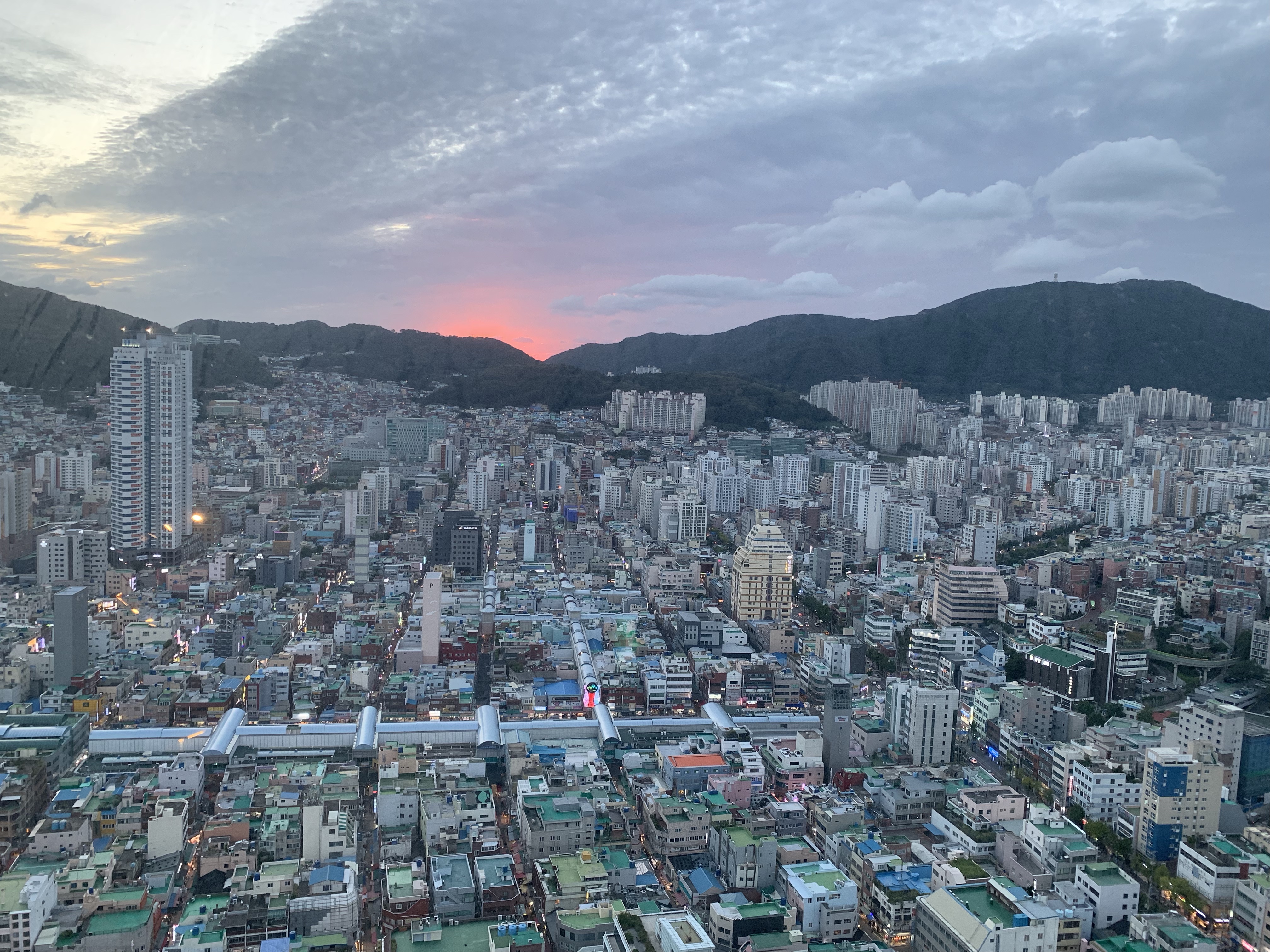
We picked a clear evening to go up Busan Tower at sunset, which from its summit in Yongdusan Park gives fantastic views of the undulating bays and mountains that make up the city as well as the many colourful containers at the port.
Sunset view from Busan Tower, Yongdusan Park, Jung-gu, Busan.
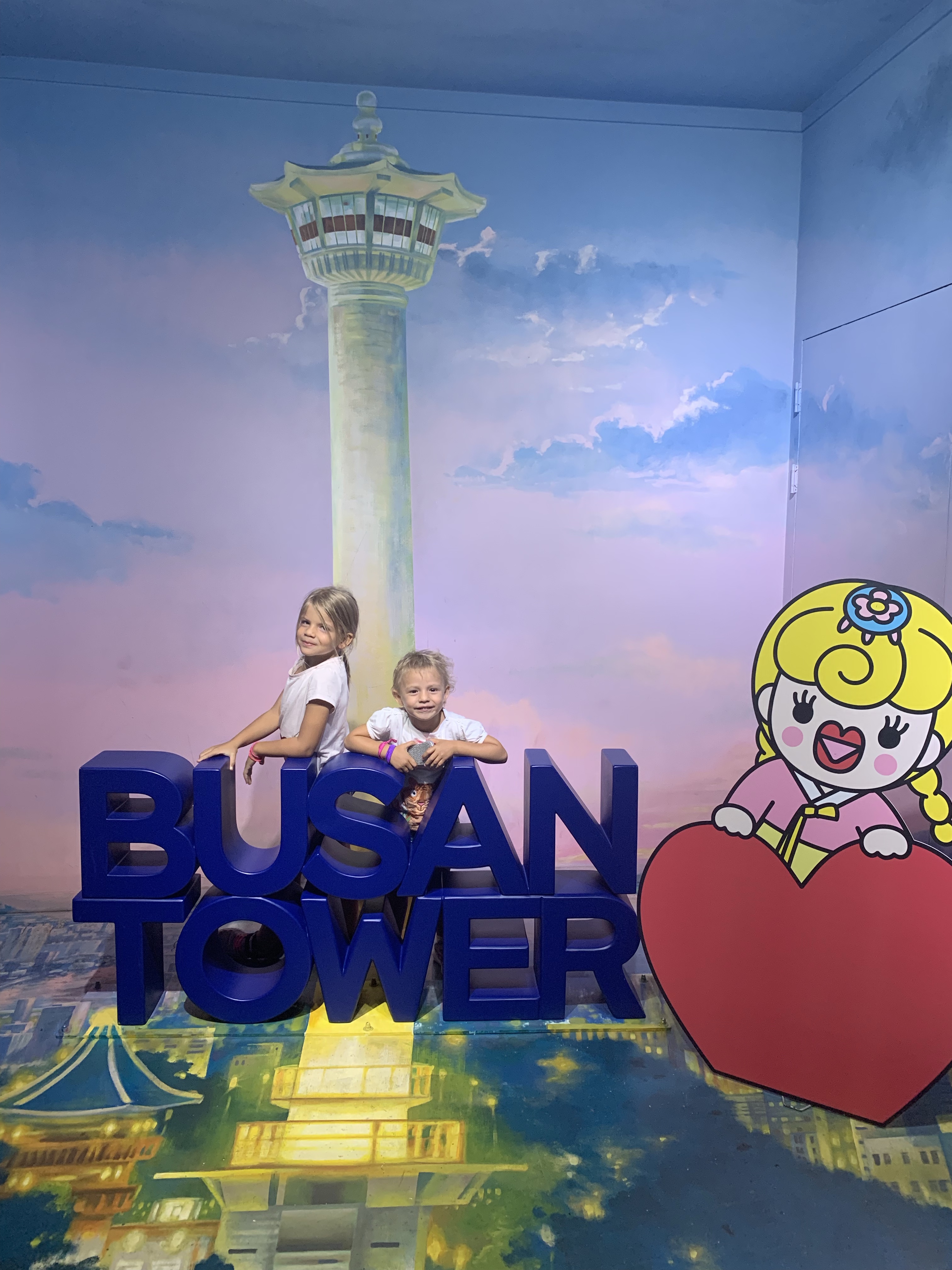
It was a fun journey up via escalators and a lift, with an interactive gallery downstairs with UV lights and 3D models. We also had a laugh in an Oli Oli type play area in the rain, which had VR rides on horses.
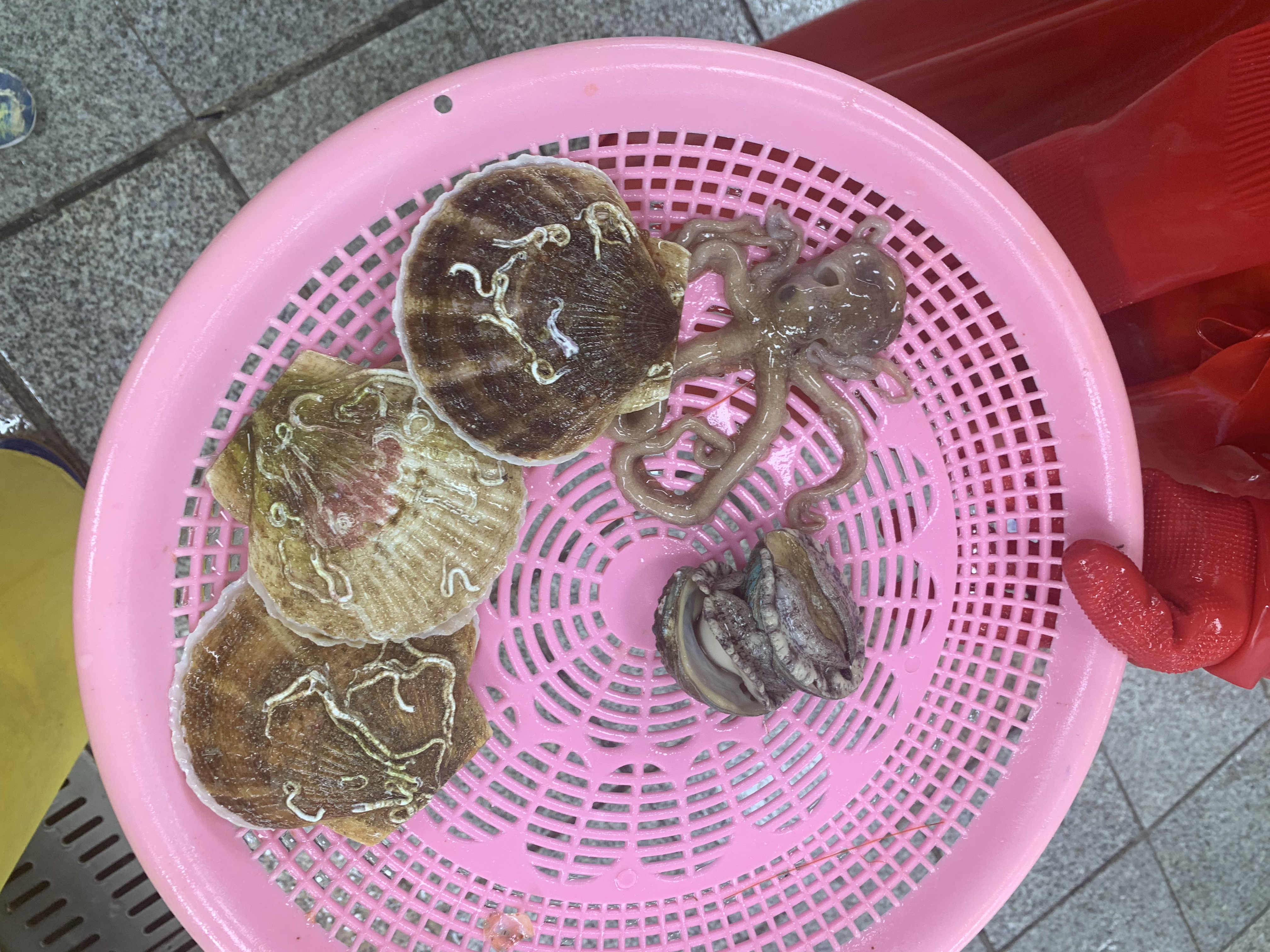
A highlight was dinner at the Jagalchi fish market. You start on the ground floor, looking at the tanks and picking what you want to eat.
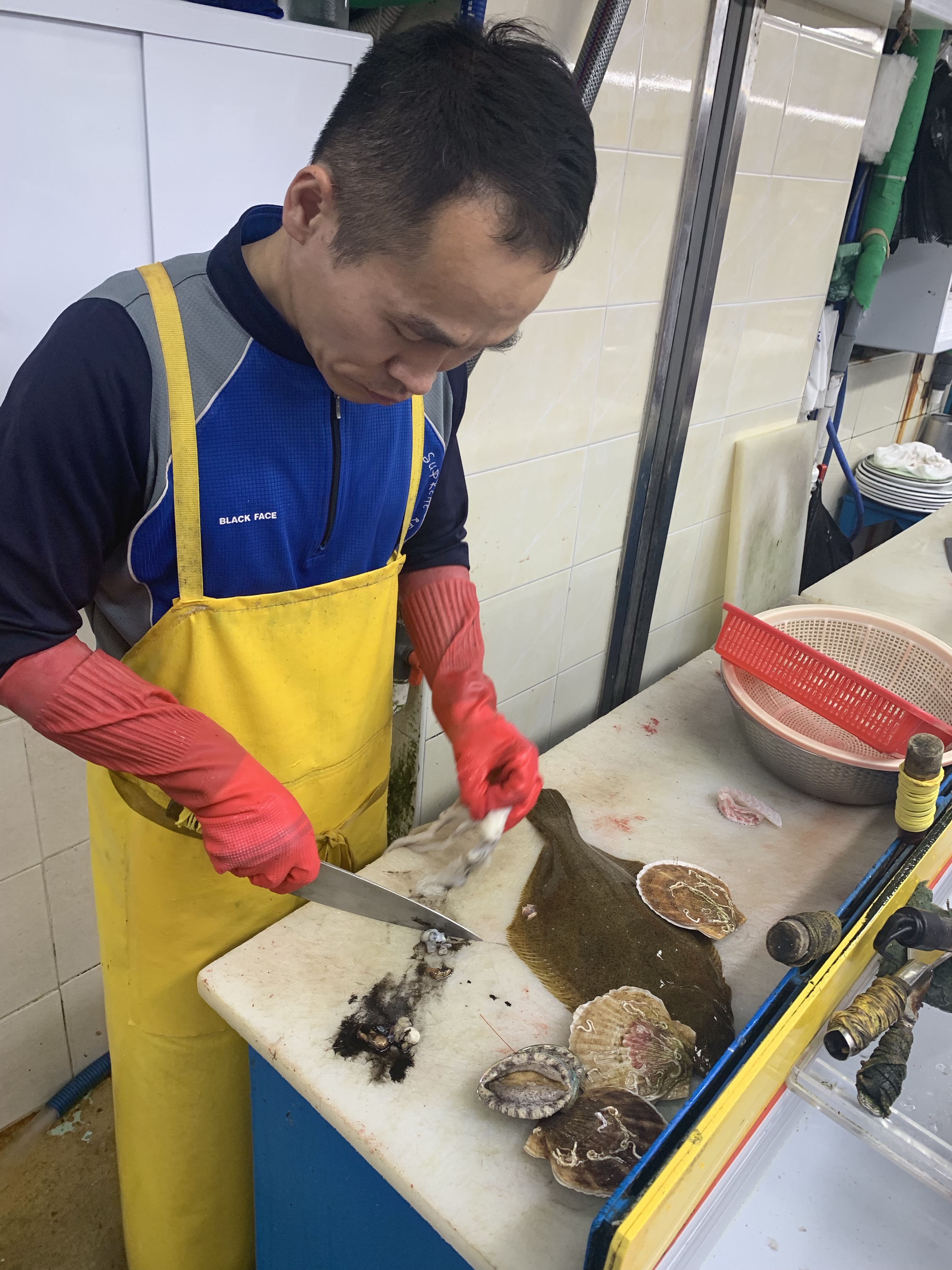
Our catch at the Jagalchi fish market, Jung-gu, Busan.Preparing san-nakji, Jagalchi fish market, Jung-gu, Busan.
Once you have chosen you watch your selection being chopped up and then take the escalator up to a 2nd floor seating area (on the floor, no space for Tom’s legs!) and wait for it to be served. You don’t have to wait long if you have ordered raw baby octopus (san-nakji).
Suckers in the throat…down it goes!
I think Molly and I enjoyed this the most – it was only later I read of horror stories of the suckers getting stuck in your throat, and also of the questionable ethics…oops. It was rather delicious. We tried abalone for the first time which I grew to enjoy: the scallops and flounder fish were probably the tastiest dishes.
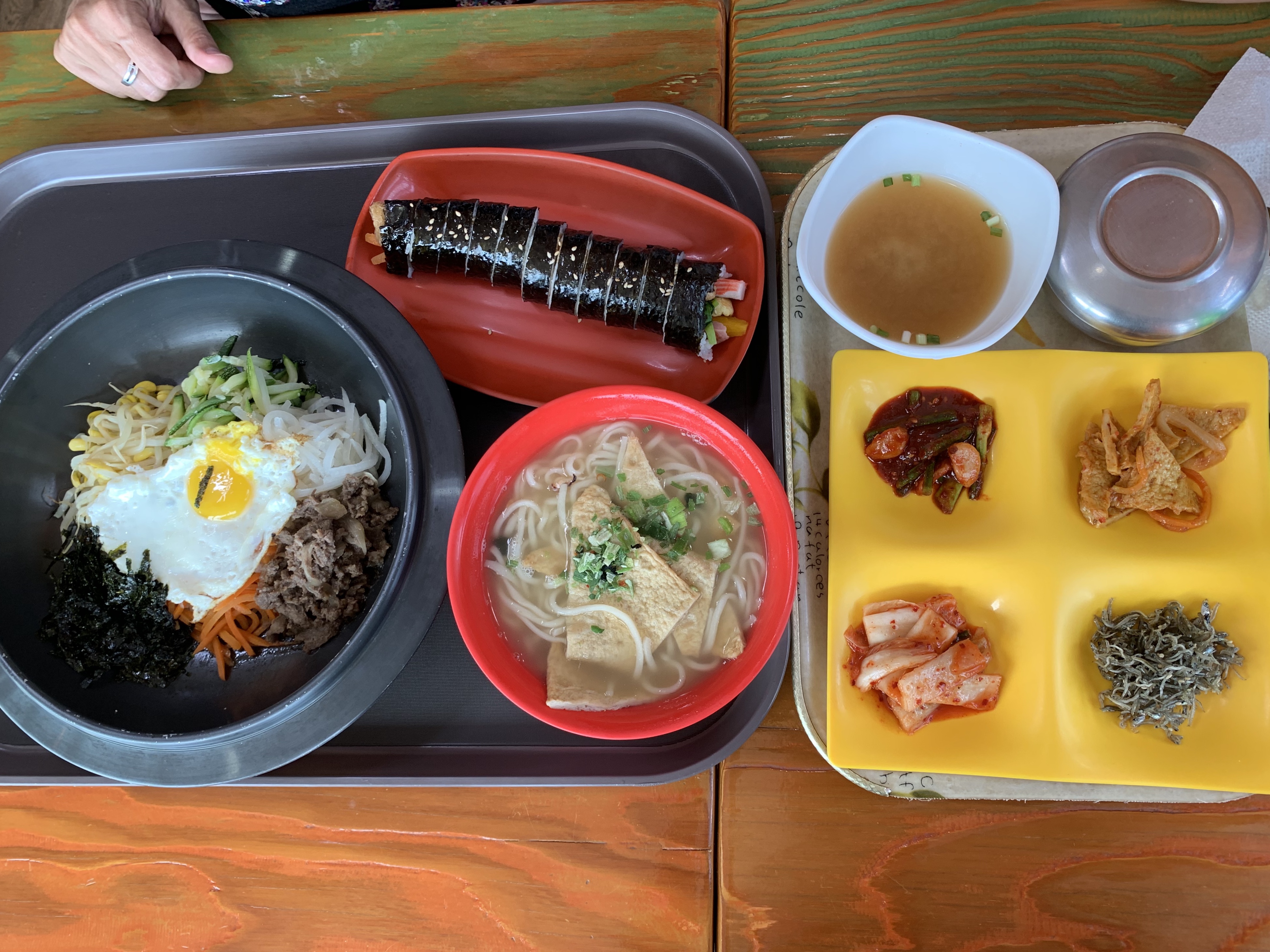
We had our first tastes of Korean cuisine in the backstreets of Haeundae, such as bibimbap (a mix of vegetables, meat, fish or egg with rice served in a stone hotpot) and Haejangguk (which translates as hangover soup – containing a mix of soybean paste, vegetables, meat bones and spices). I was definitely finding the cuisine more celiac friendly than China.
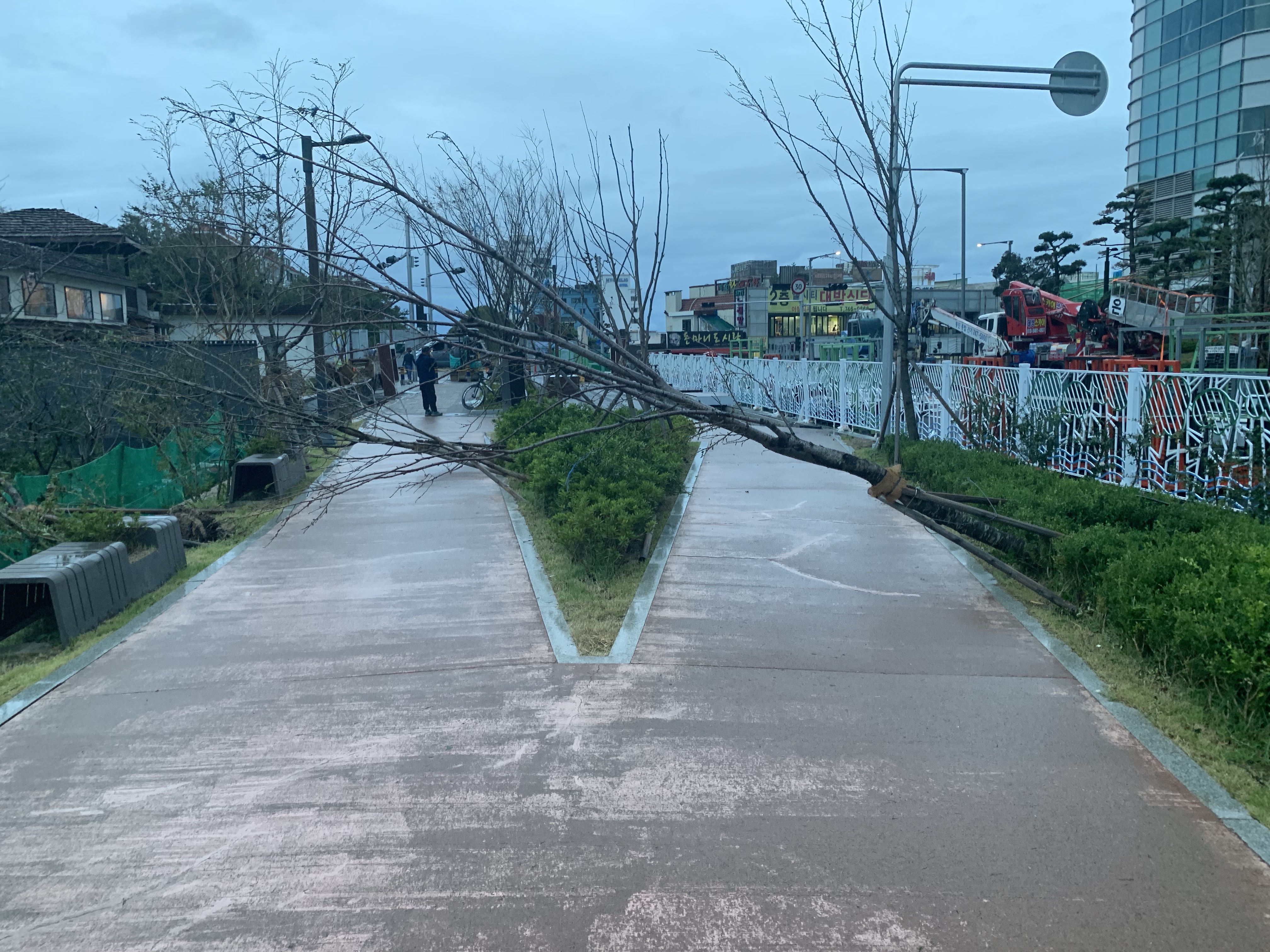
It was fortunate we had fitted a lot into our first few days in Busan, as for our last 48 hours we were house bound due to vicious Typhoon Tapah! The apartment was definitely shaking. We were fine, taking the opportunity to eat pesto pasta and watch Matilda till it passed. It did mean we missed out on seeing more of the countryside around Busan, but at least we were safe and had enjoyed our first few days in Korea.
Aftermath of Typhoon Tapah, Busan, 23 September 2019.
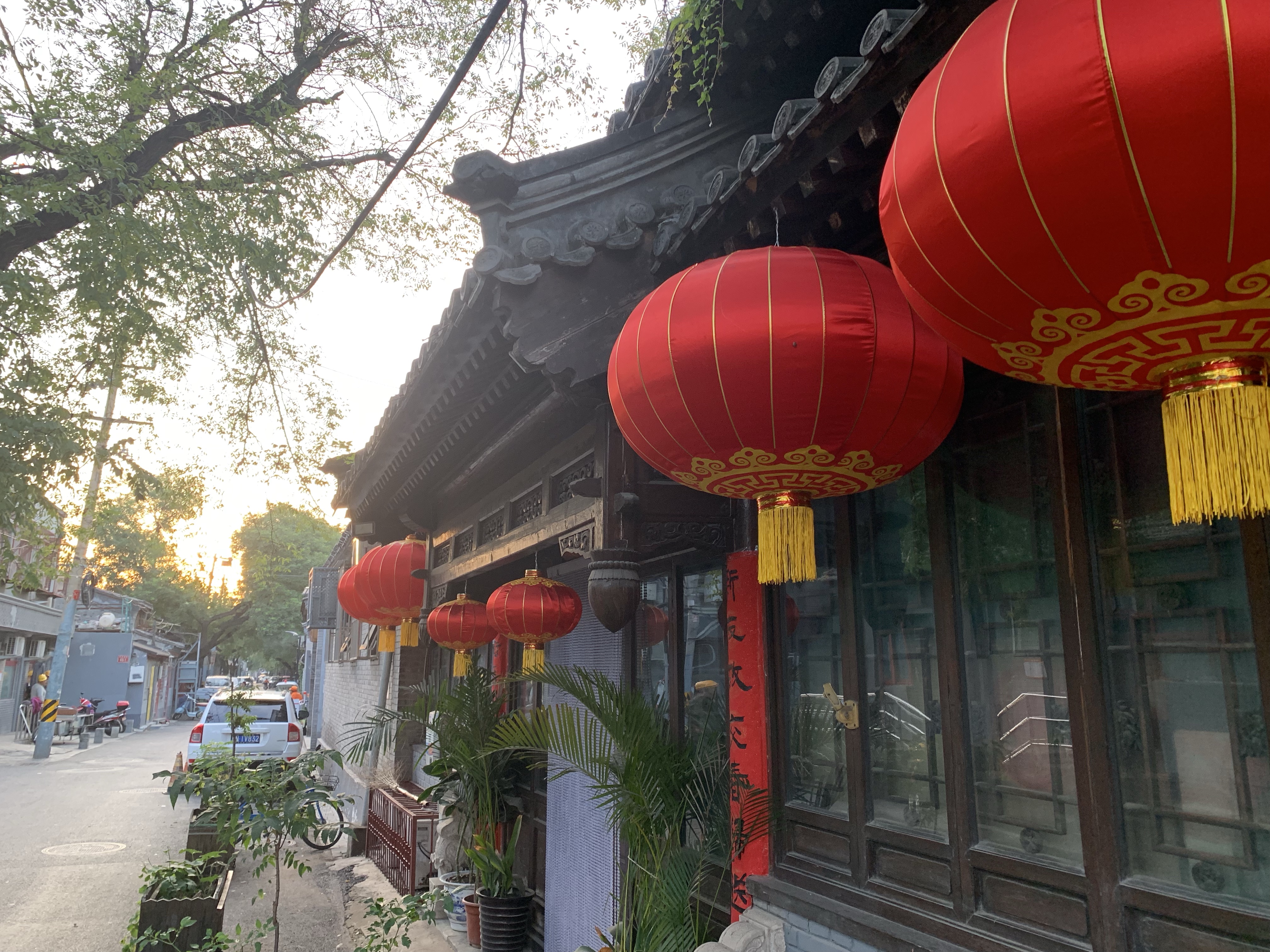
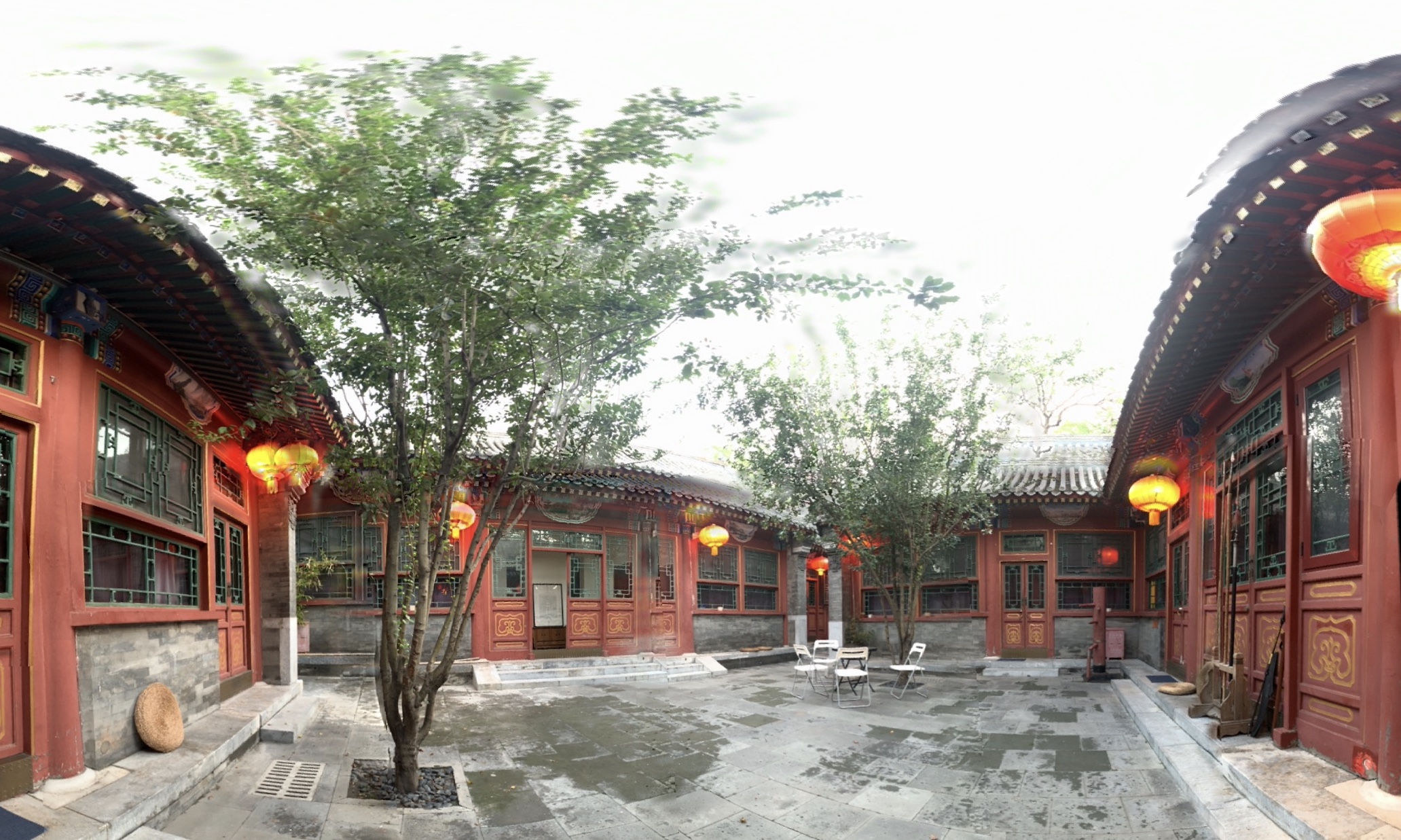
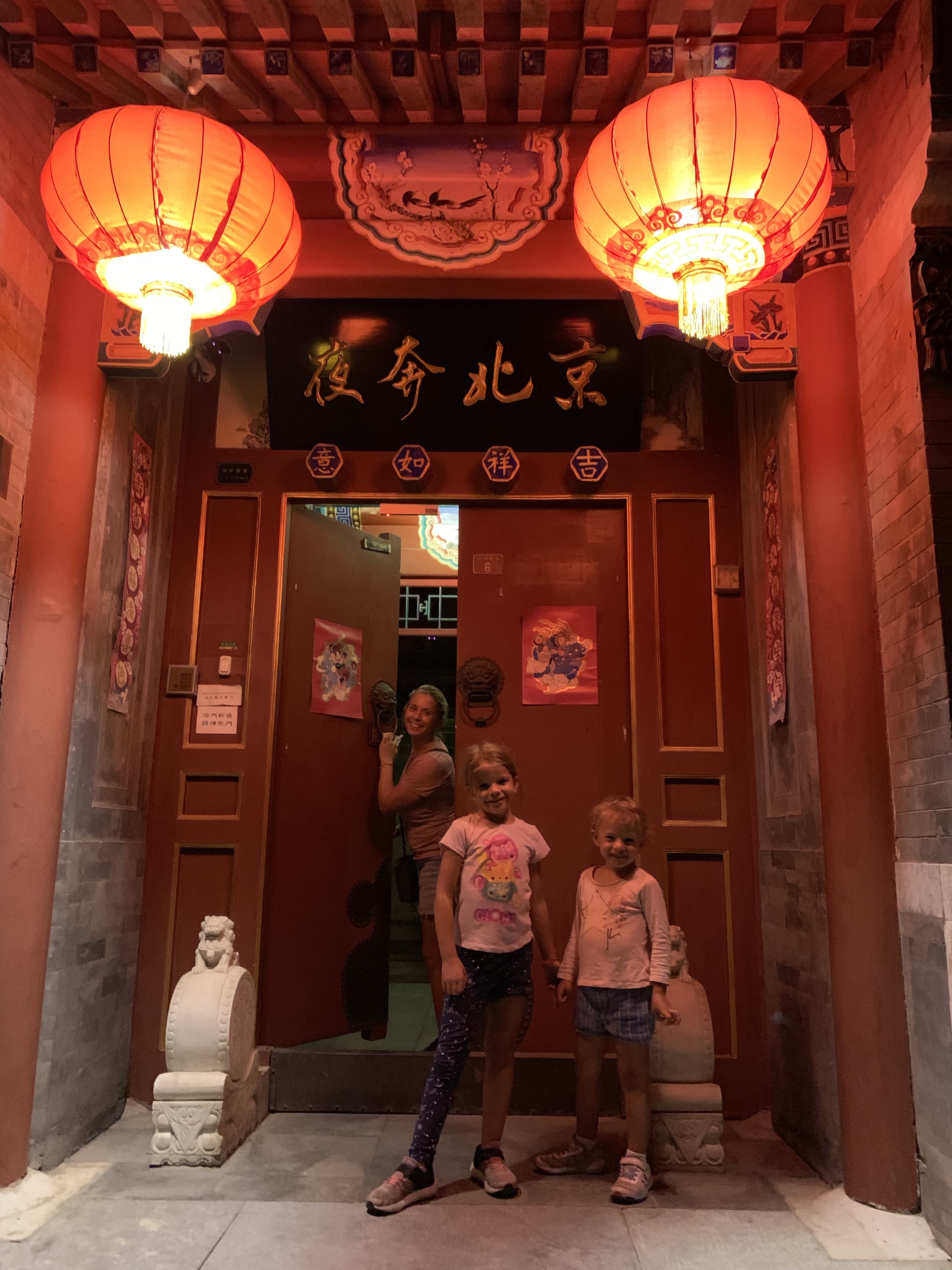
It’s been a running hilarity that we can never seem to get a car that close to anywhere we stay. In Beijing our driver went round the block countless times, eventually giving up. We were staying at the Fly by Knight Courtyard, located in a traditional hutong alleyway.
Fly by Knight Courtyard Hotel, Dongcheng District, Beijing.
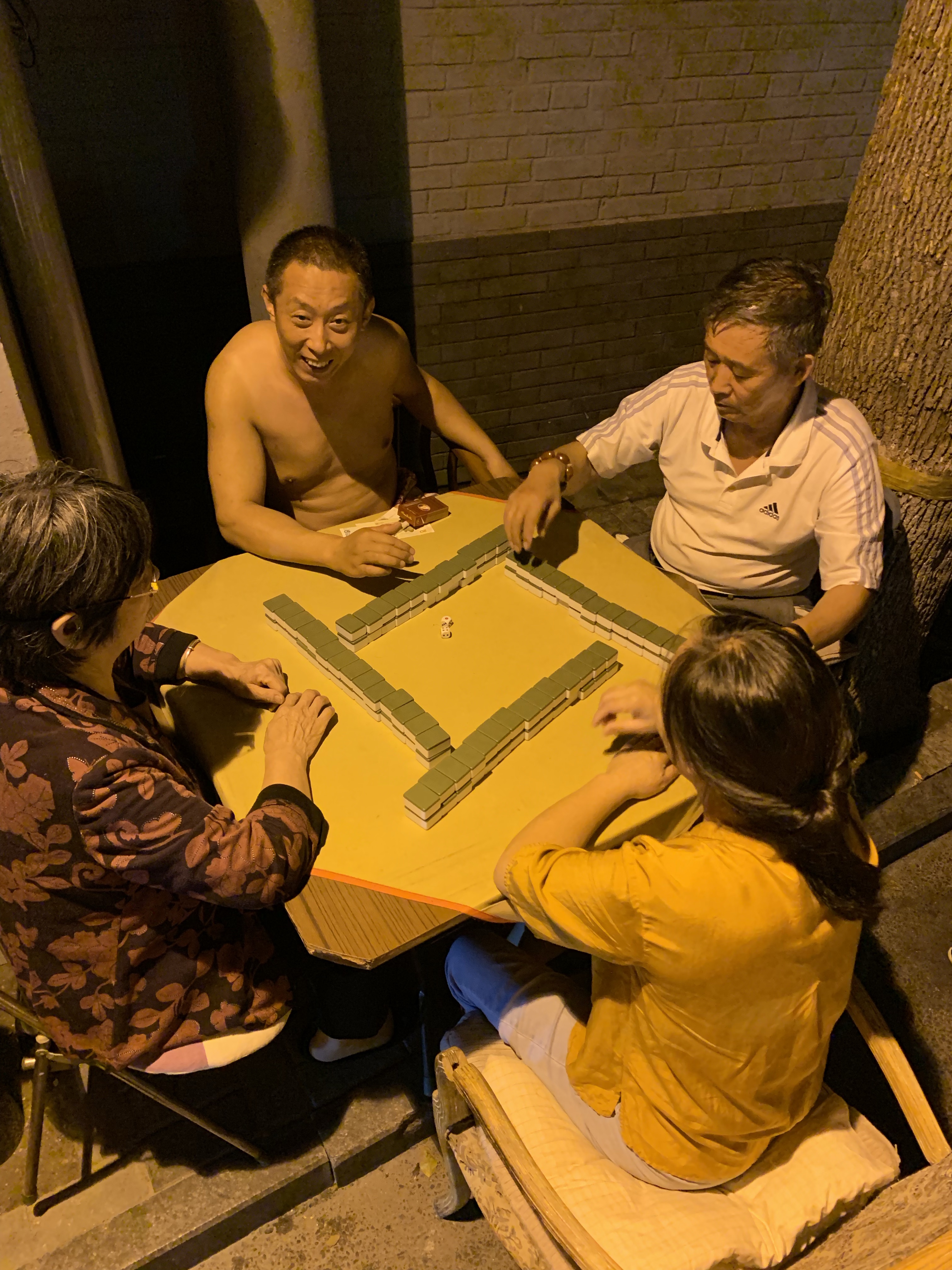
It was located in a rabbit warren of an area, we always had to double check which our entrance was. It was fun being diverted on the way home by older Chinese engaged in games like Mahjong on the street.
An evening game of Mahjong, Beijing.
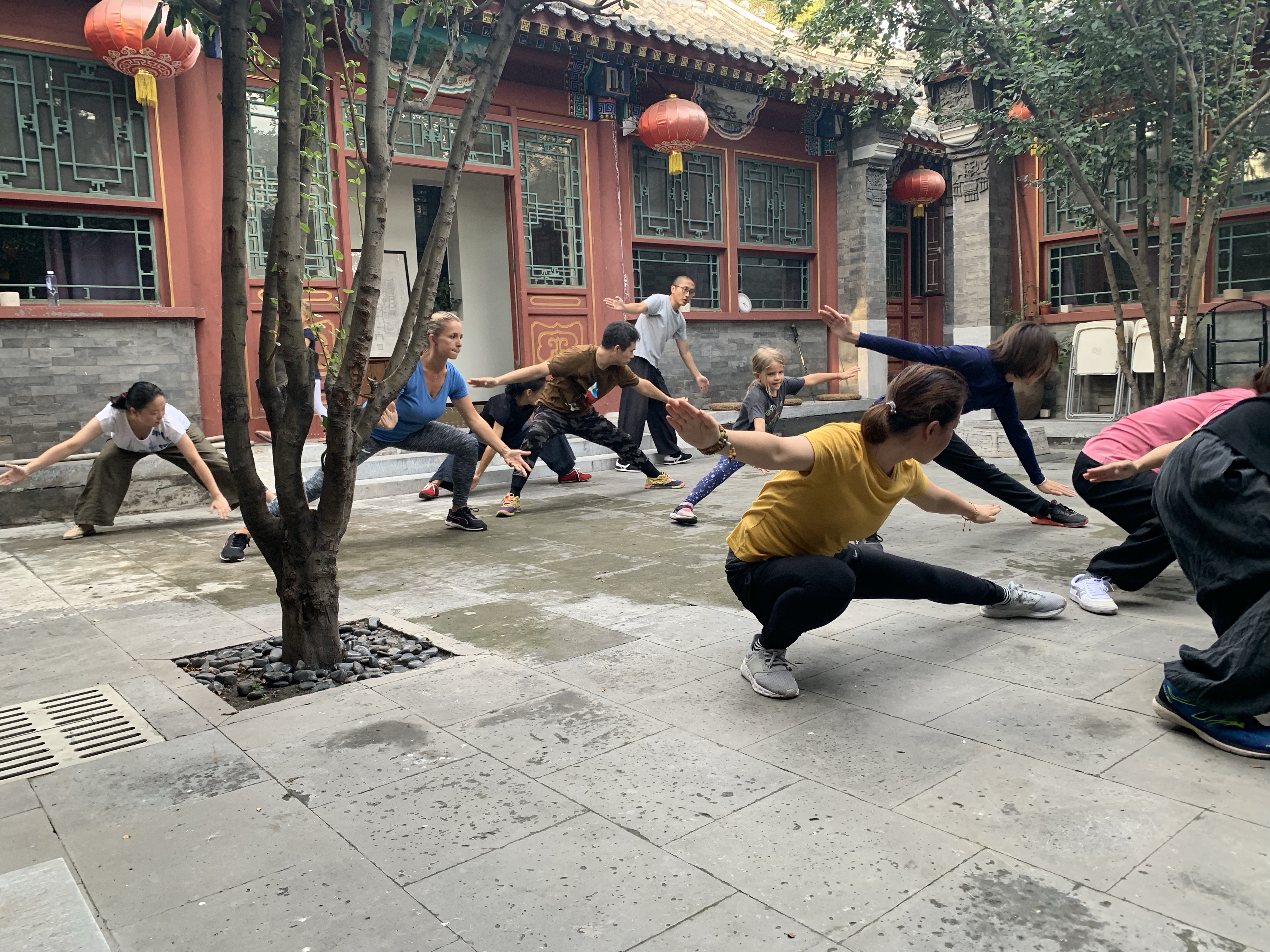
It was a wonderful place to stay with a delicious breakfast offered in the communal space with other friendly guests. A major highlight was joining their weekly Kung Fu class in the courtyard right outside our room, our legs ached the next day!
Kung-Fu class at the Fly by Knight Courtyard Hotel, Beijing.
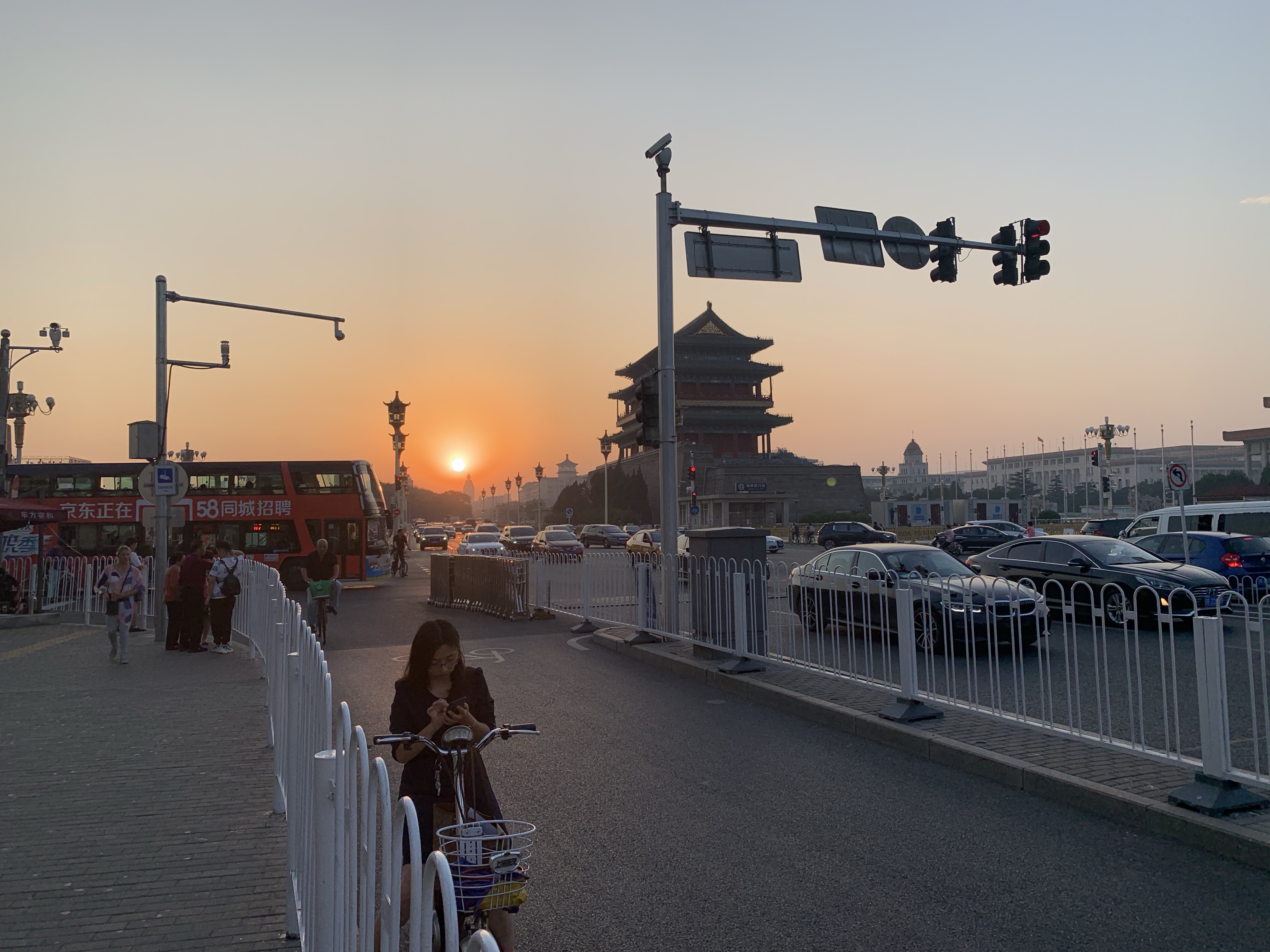
One problem across the city was that many roads were closed because of rehearsals for the 70th national anniversary taking place in two weeks’ time. Metros were disrupted as well and to walk around Tian’anmen Square was impossible. Getting around proved quite hard and we did have to do too much walking.
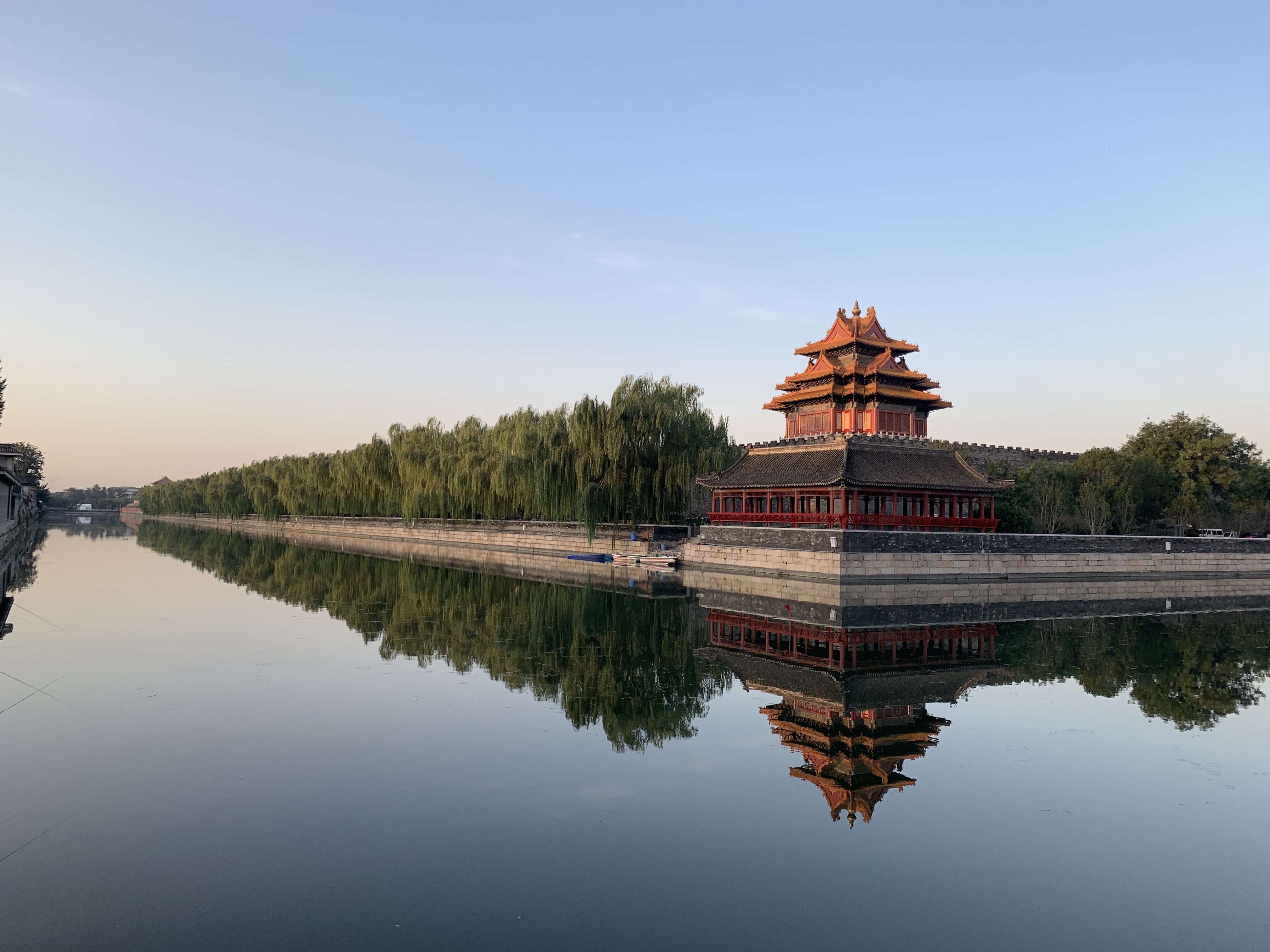
Moat of the Forbidden City, Beijing.
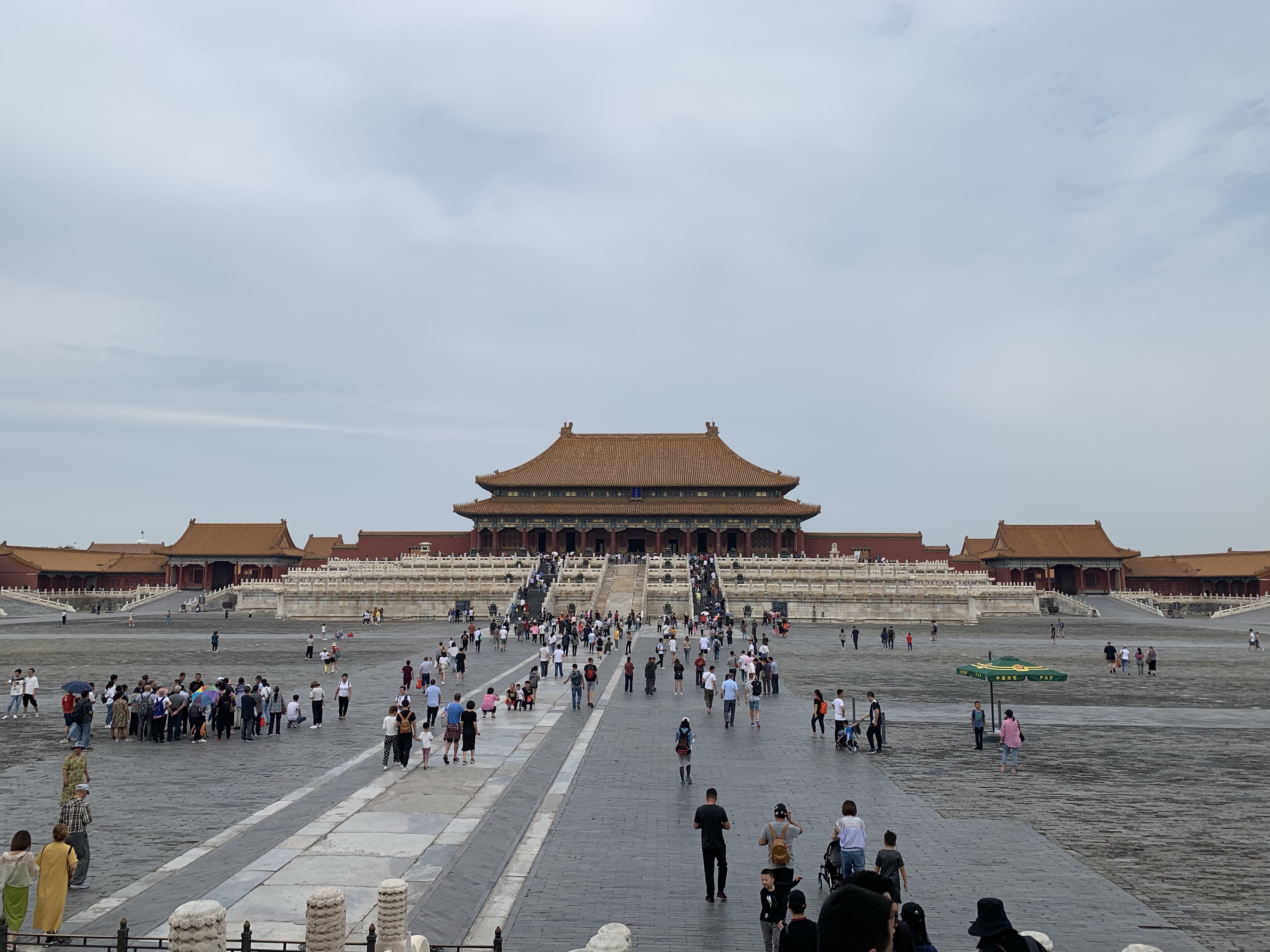
Our visit to the Forbidden City was not fun for any of us (despite being beautiful – Tom and I enjoyed runs around it’s moat). We did find the clock exhibition interesting, and learnt a little about sundials, drainage systems and that the number of beasts on a roof of a building is an indication of the importance of said building (9 is the maximum).
Inside the Forbidden City, Beijing.
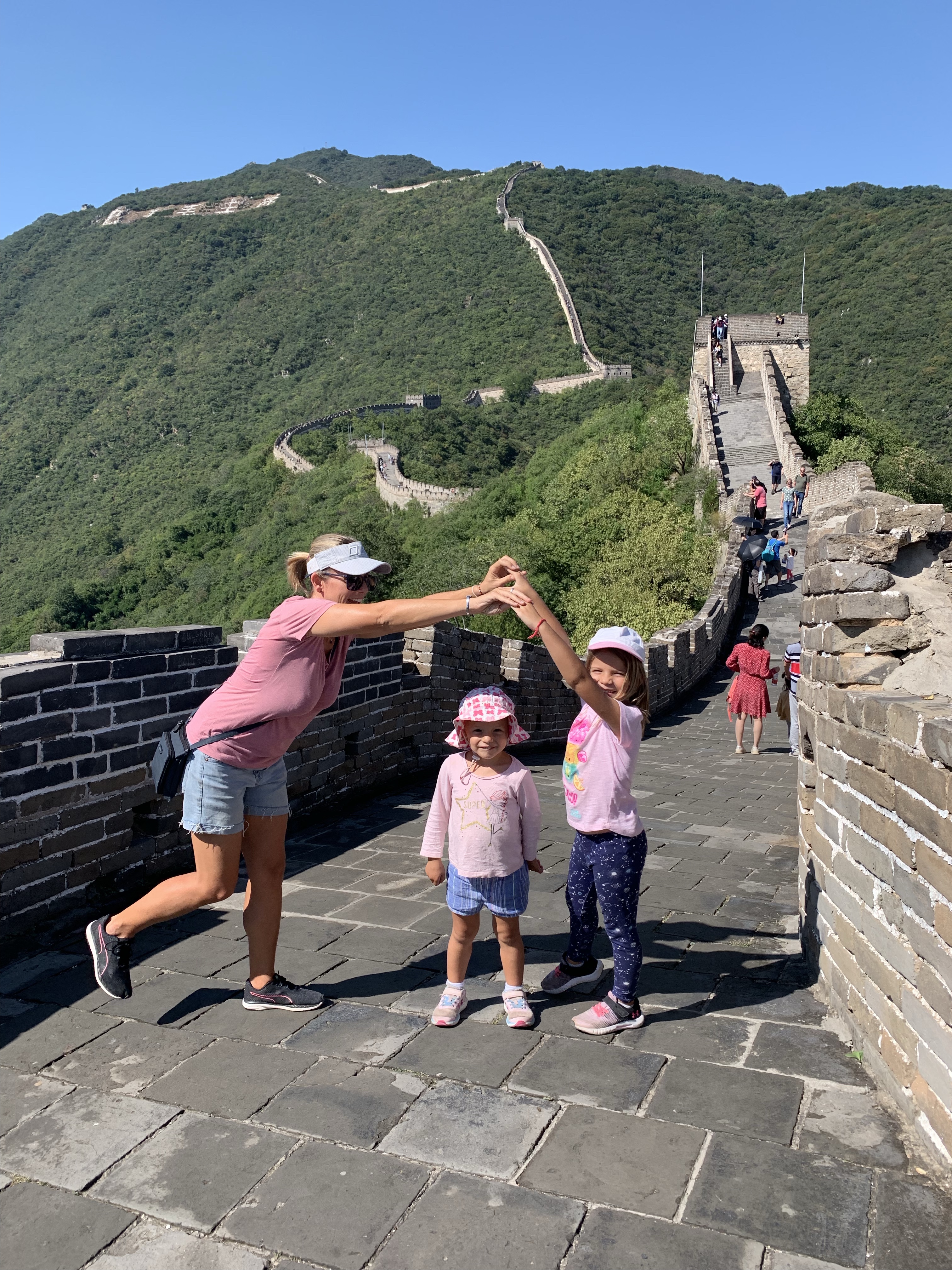
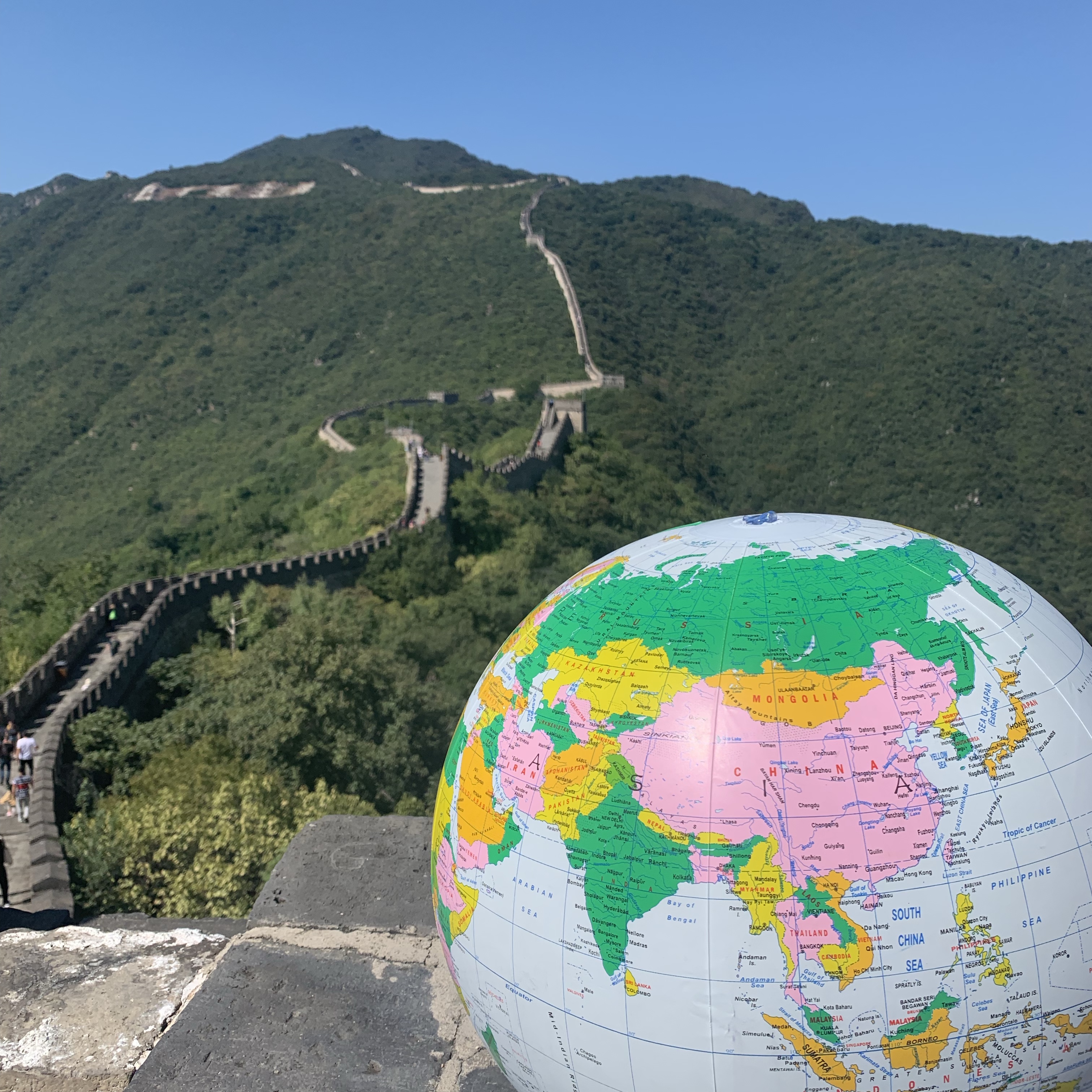
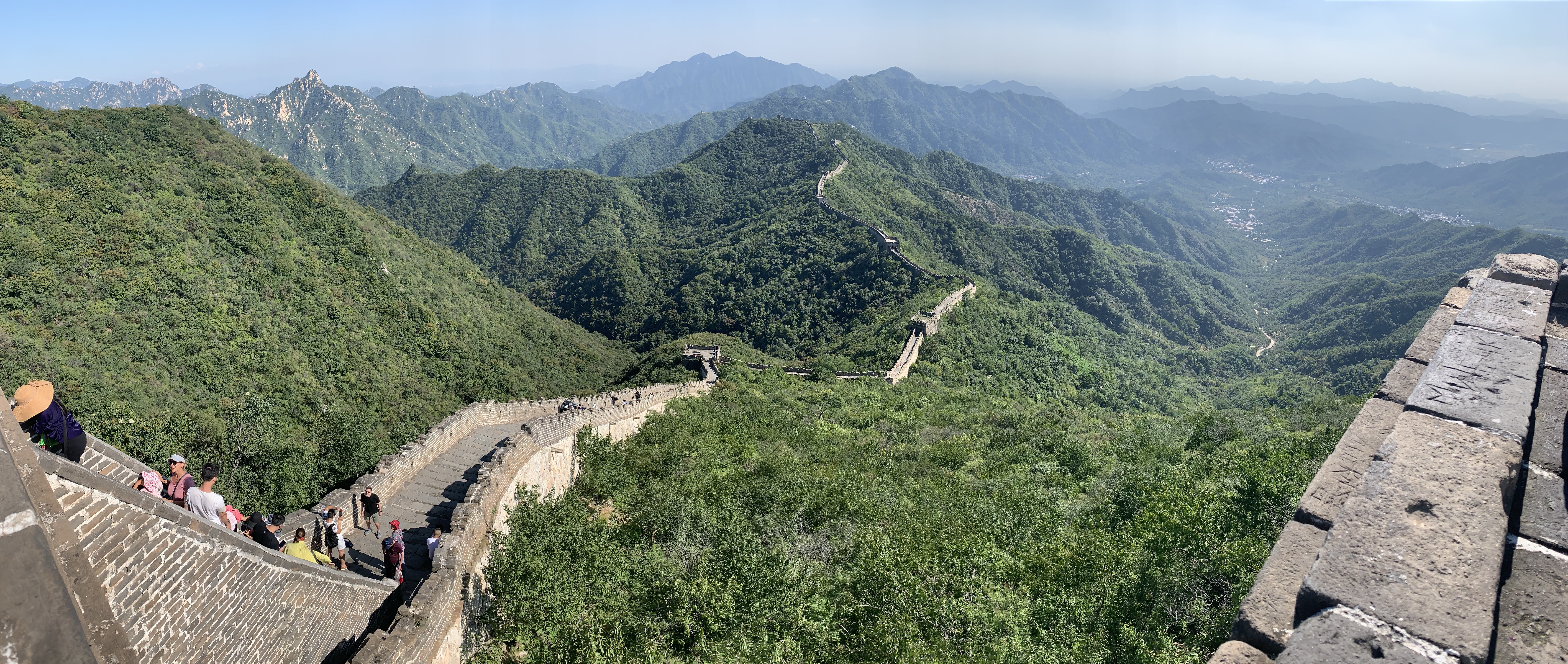
A much better experience was visiting the Great Wall itself. It really was breath-taking. Aided by a bright blue cloudless sky, the site of the stone wall undulating over the hills was a stunning sight.
We decided to book a tour that would take us to the Mutianyu section, which we had read was more child friendly and not too far from Beijing but still with good views. A 3-km stretch of wall, you reach it via a cable car or a chairlift and toboggan ride down – but the second option doesn’t get you up to the highest of the 26 watchtowers so we went up and down by cable car.
We did amazingly fast walking round it all, enjoying climbing the turrets and very steep stairs at one point – but were still told off by our tour guide for getting back to the bus twenty minutes late. Most of the other people on the tour hadn’t done the whole stretch as they didn’t think they would have had time.
Mutianyu section of the Great Wall of China, Huairou District, near Beijing, 15 September 2019.
Annoyingly we realised then that we had booked the wrong tour, as all we wanted to do was see the wall and our day tour included a visit to the Ming tombs, a jade factory and a teahouse which wasn’t really necessary.
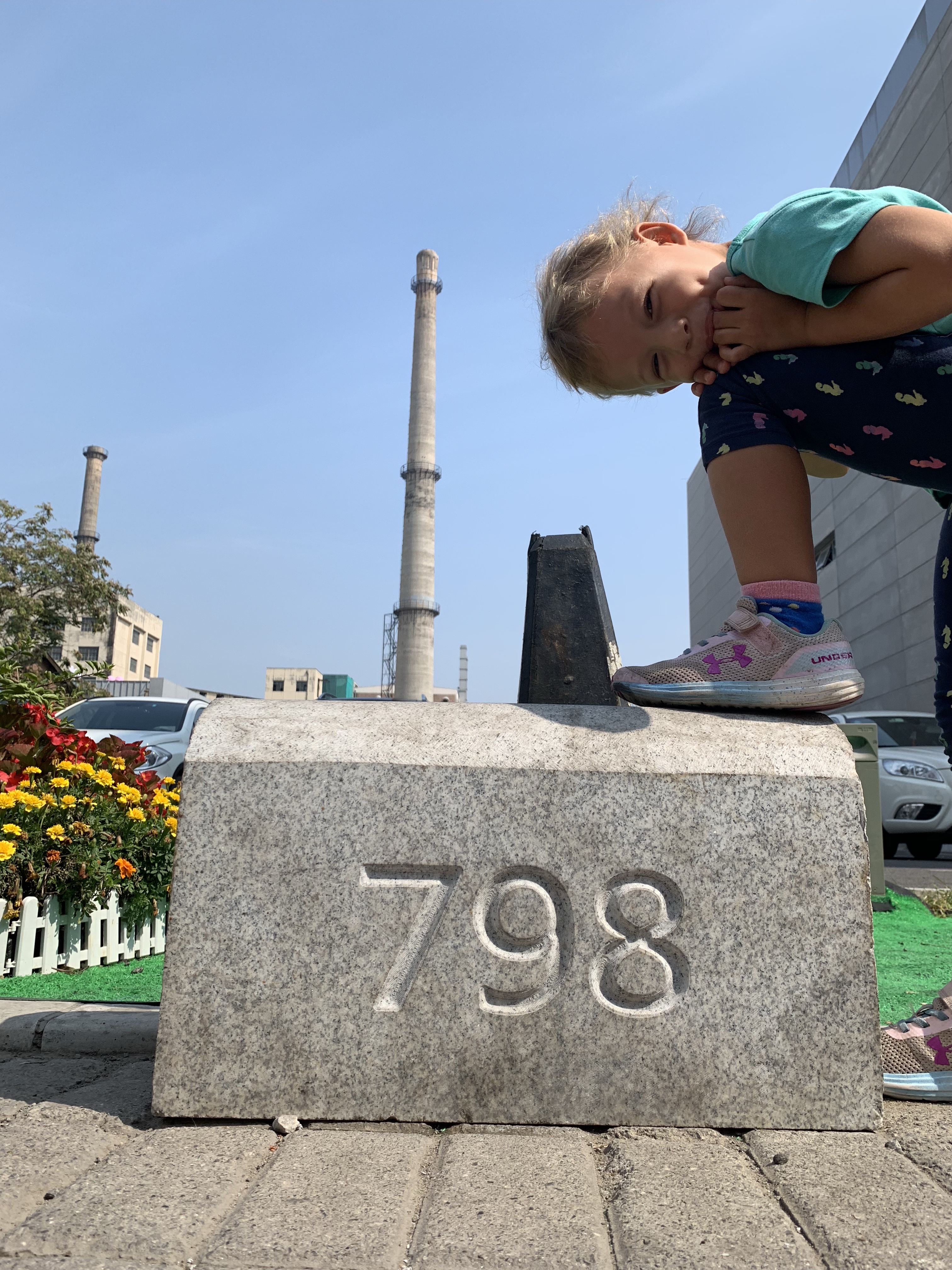
Arriving at 798 Art District, Chaoyang District, Beijing.
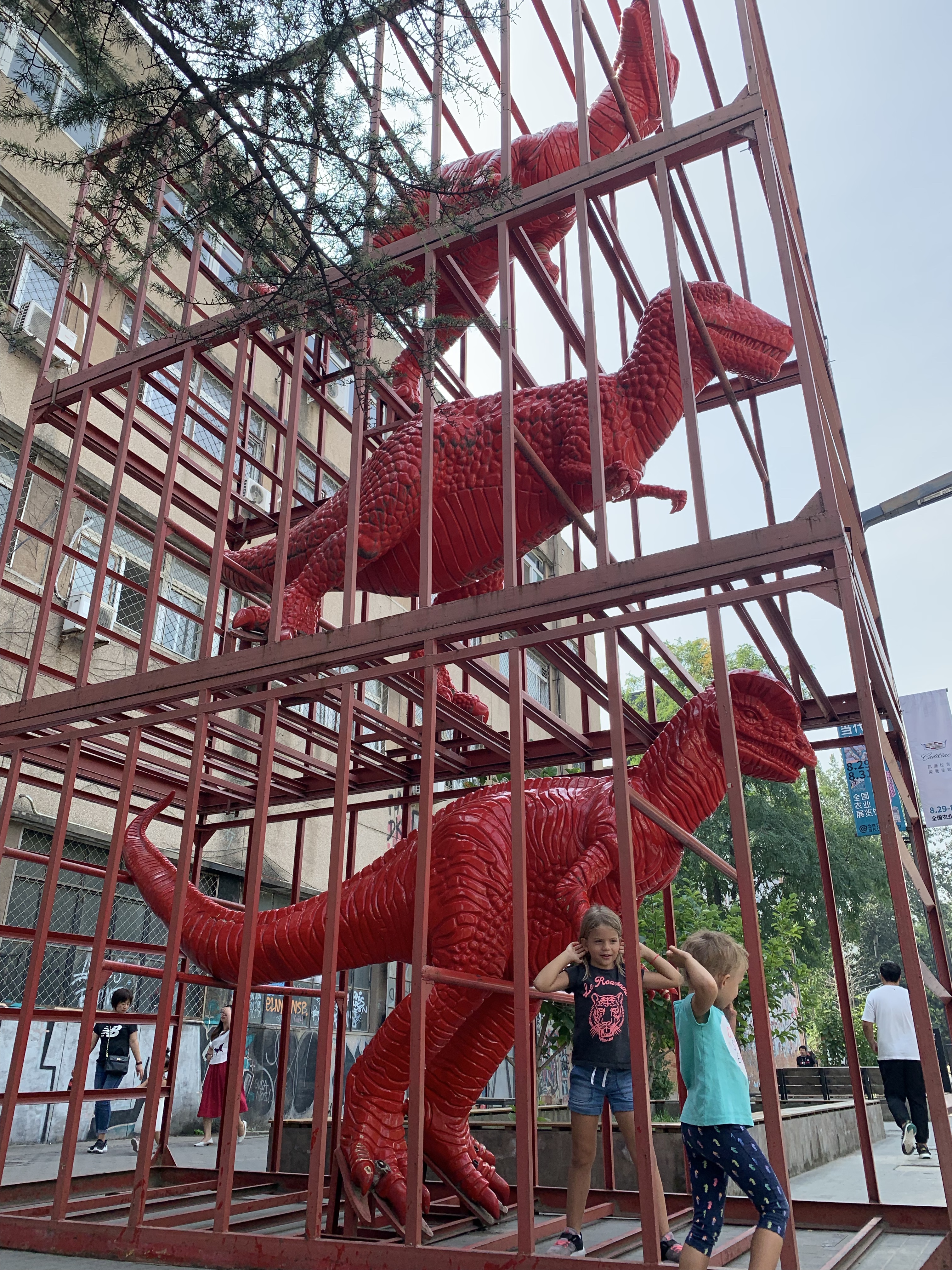
Thanks to Flounder Lee, an artist and professor I know from Dubai, we made a good stab at getting to grips with the Beijing contemporary art scene. We started off at 798 Art District, a Bauhaus-era industrial complex taken over by some of the leading galleries worldwide, interspersed with some quirky installations.
Public art outside Ullens Center for Contemporary Art (UCCA), 798 Art District, Beijing.
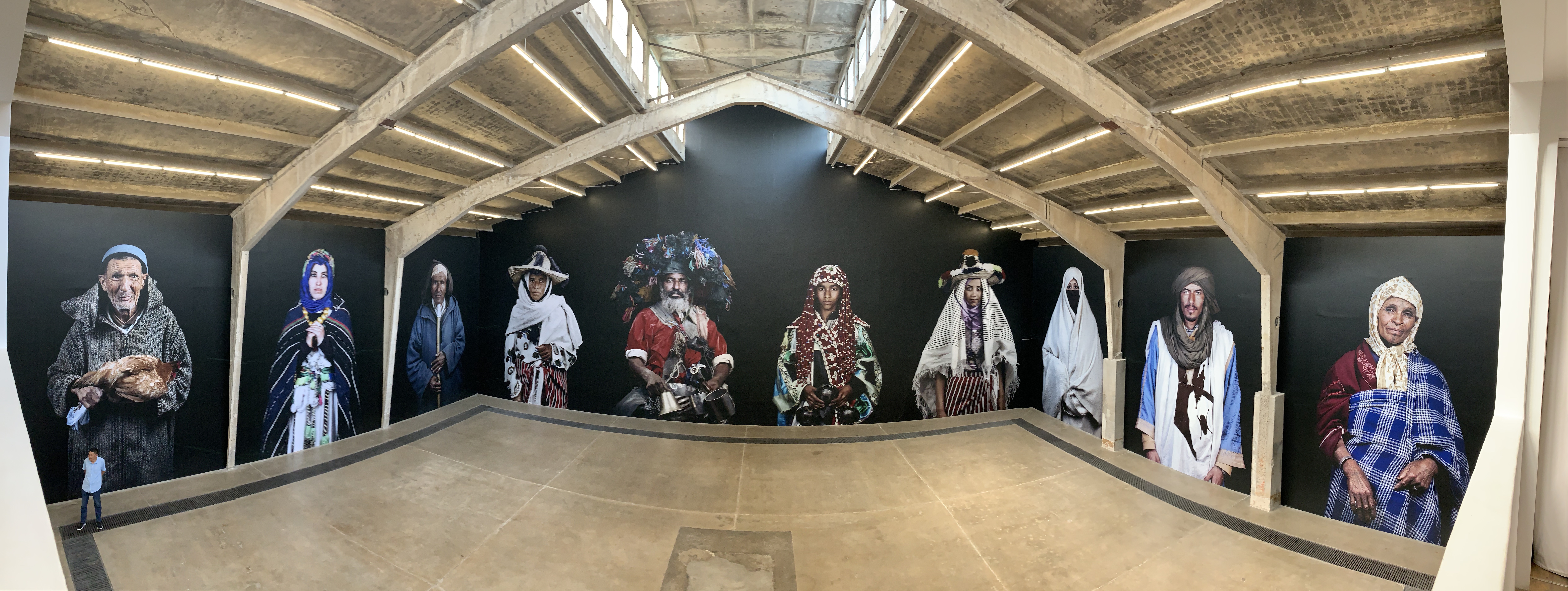
We started with an exhibition about AI at the Hyundai space and then went to Galleria Continua to see their exhibition of work by the late Leila Alaoui including a moving black and white video I hadn’t seen before and her iconic portraits printed on a massive scale.
Leila Alaoui, Galleria Continua, 798 Art District, Beijing.
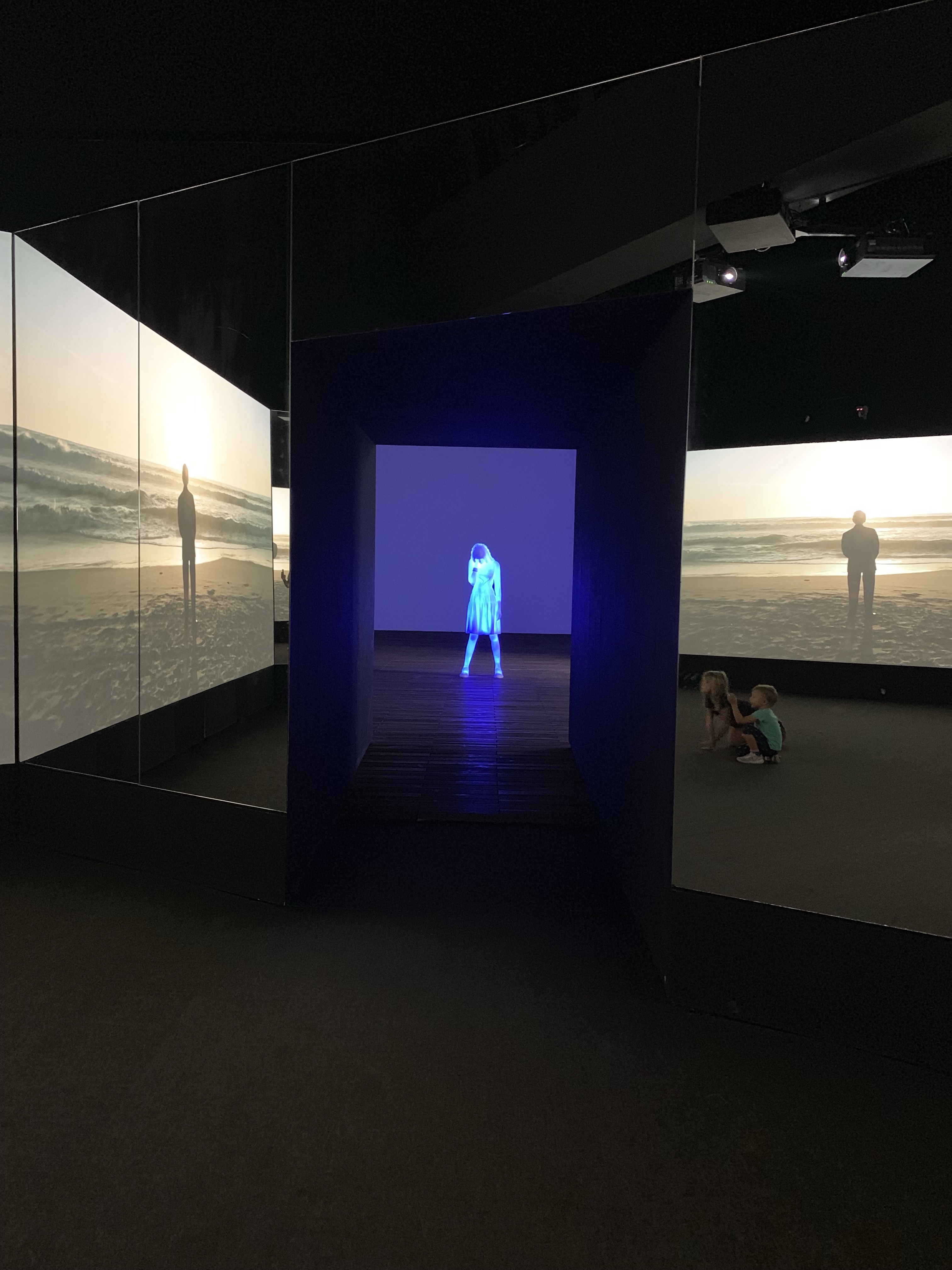
We spent time immersed in Doug Aiken’s exhibition at the Faurschou Foundation, familiar with his practice from Victoria Miro.
Doug Aiken, Faurschou Foundation, 798 Art District, Beijing.
We then went on to Caochangdi Art Village which is where Ai Wei Wei had his studio and other galleries have opened up. We enjoyed visiting White Space, Pekin Fine Arts and ShangART.
White Space, Caochangdi Art Village. White Space, Caochangdi Art Village.
The funniest gallery experience we had was finding Arrow Gallery close to the Lama temple: it was literally a tiny shopfront with a screen inside showing an artist’s animation. We’d walked straight past it.
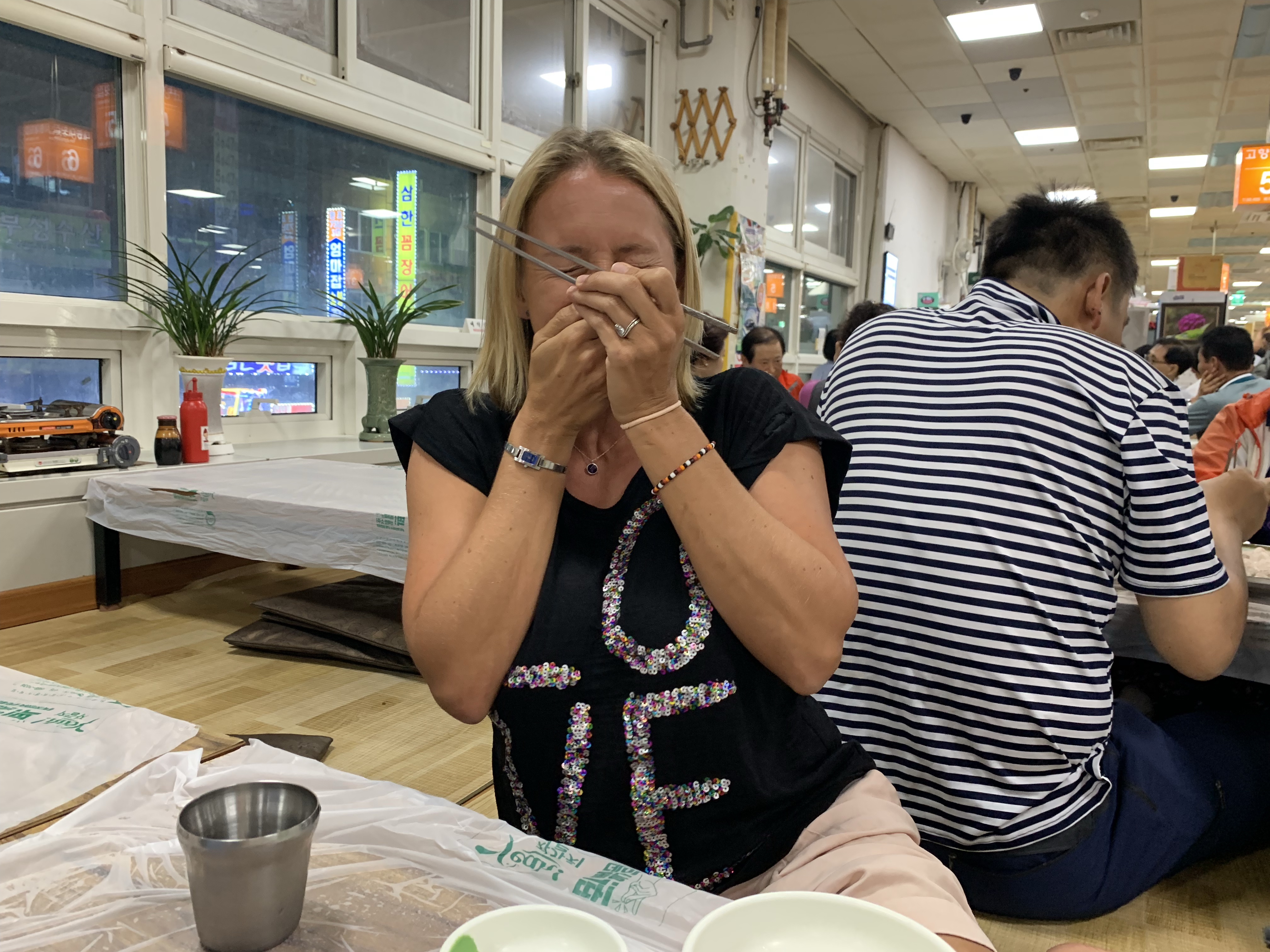
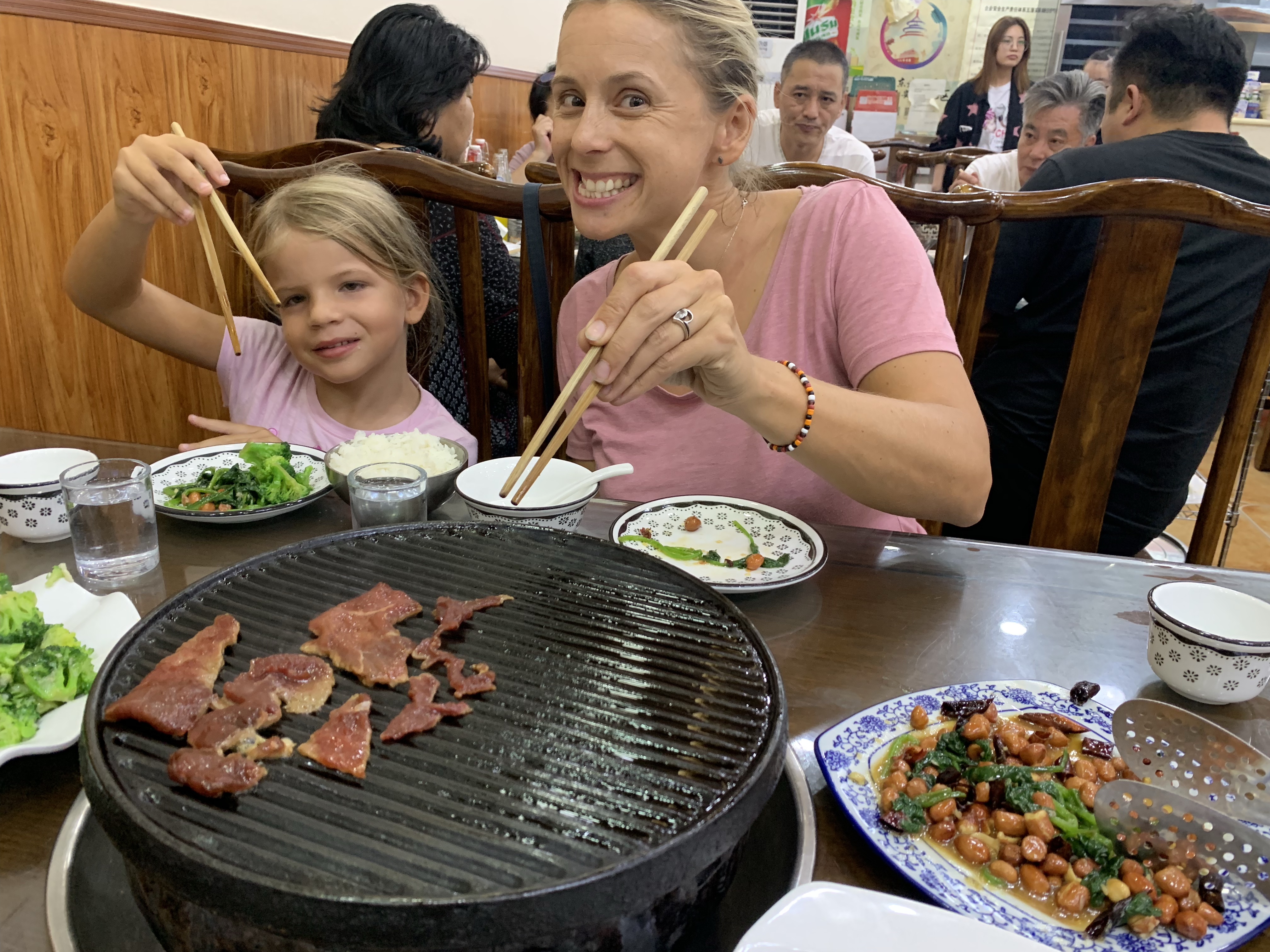
We ate pretty well in Beijing, finding some good local restaurants close to where we were staying and mastering our chopstick skills even further!
Mastering chopsticks and failing to avoid soy sauce.
For our first night we went on a hunt for Peking duck and it was delicious. Other notable meals we had were of food from the Yunnan province, where subtle flavours reign, at Lost Heaven (we had missed visiting the original in Shanghai) and Little Yunnan.
Entrance to Fly by Knight Courtyard Hotel, Beijing.
Our two weeks in China were pretty busy but gave us great insight into this enormous, fascinating country.












 Life with MoJo