Getting high in Cusco, Machu Picchu and Ollantaytambo

It’s hard to describe how altitude sickness makes you feel. A bit dizzy, a bit sick, very out of breath and a bit sleepy. I didn’t think we would suffer from it too badly – the girls thankfully didn’t seem to at all, I think it affected Tom the most. Sporadically chewing on some coco leaves seemed to sort us out.

Coco leaves provided by Abu Lodge, Lariscalle, Ollantaytambo.

Our time in the sacred valley was the one point on Egerton World Tour where we failed to run everywhere that we slept. We had been doing well keeping that challenge up but just didn’t have the energy to do it here. I was personally also nervous about being chased by dogs which seemed to be everywhere. We flew from coastal Lima to Cusco, the landing rather bumpy but scenic, through mountains.
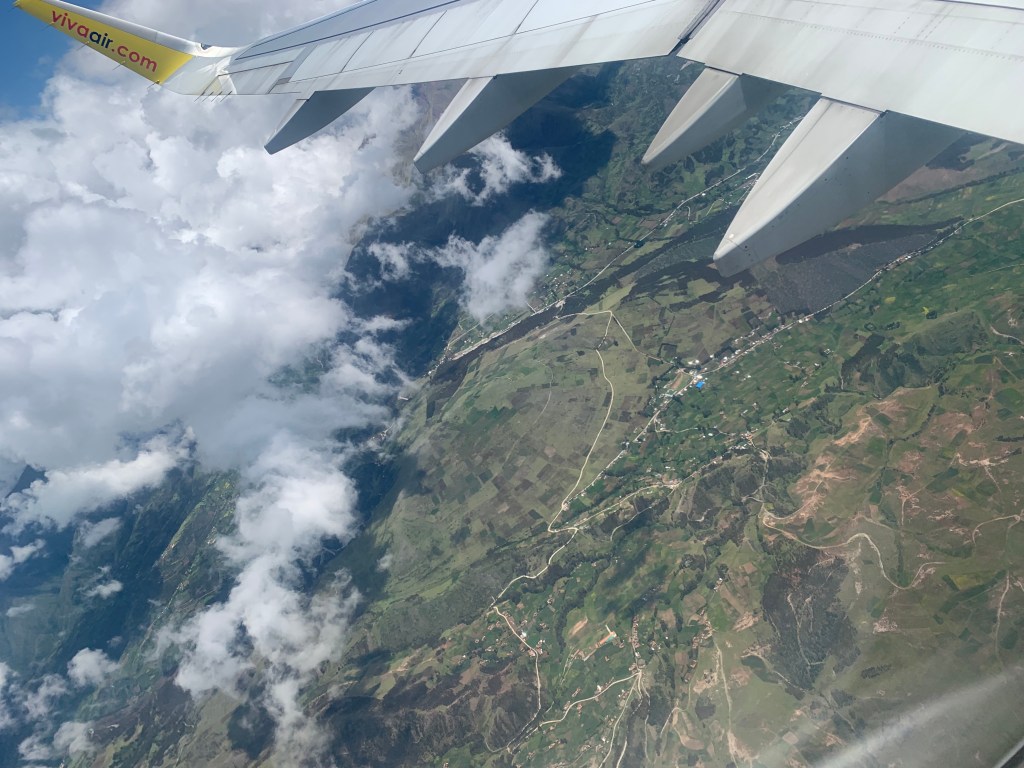
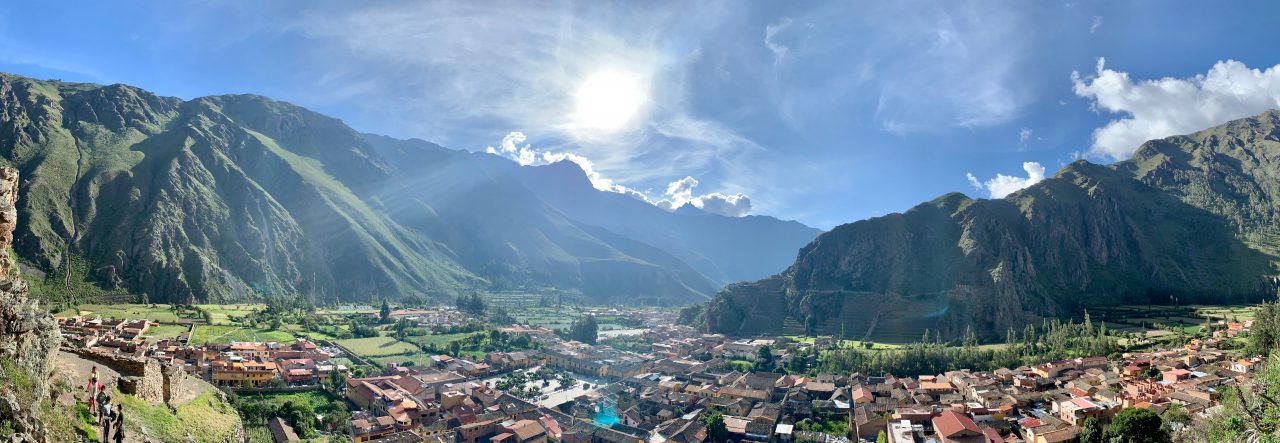
First view of the Sacred Valley, landing in Alejandro Velasco Astete Cusco International Airport, Cusco, 26 January 2020.

We felt the altitude immediately; the city is 3,400 metres high. We were not going to stay in Cusco right away, but instead travel to the town of Ollantaytambo for two nights. It has a slightly lower altitude of 2,792 metres and is located 72 km to the northwest of Cusco in the Sacred Valley, on the Inca Trail. Our decision to stay there for two nights was due to two major factors: to acclimatise and also for ease of taking a day trip to Machu Picchu. To stay in Aguas Calientes (the base for Machu Picchu) is expensive.

During the rainy season trains do not travel from Cusco to Aguas Calientes, the track prone to flooding, so they only start at Ollantaytambo. To stay there meant we avoided a bus journey and were halfway. It was a good decision: we hadn’t expected much out of Ollantaytambo as a destination in its own right, but really loved our time there.
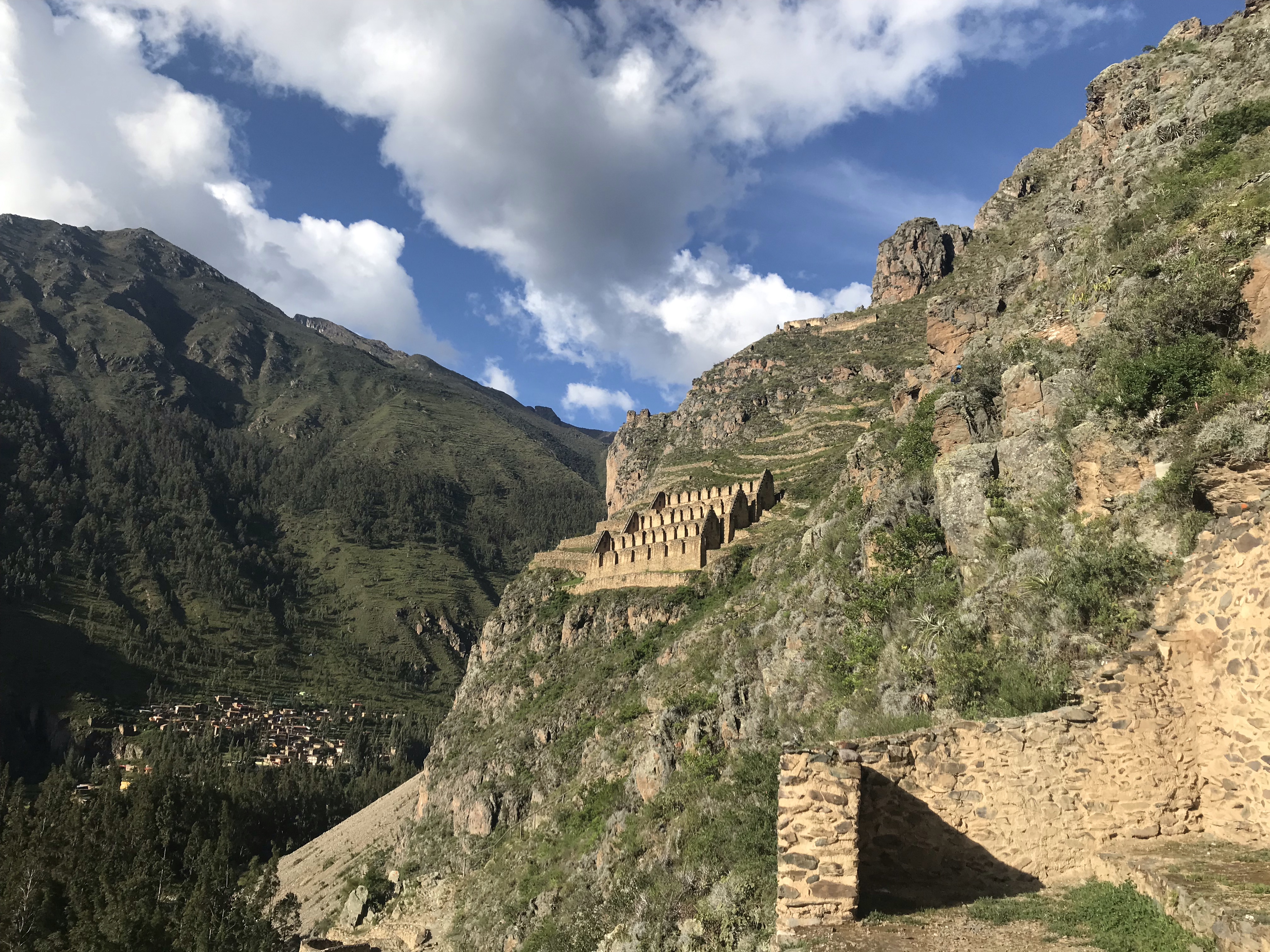
Exploring Despotes de Pinkuylliuna, archaeological site, Ollantaytambo.

We made our journey from Cusco airport to Ollantaytambo via Uber, although our Brazilian driver Juan convinced us to cancel the booking and pay him cash – I’m sure we lost out in the long run, but he was friendly enough and played lively local music. After dramatic views climbing out of Cusco, we all had a sleep. He took us a long route via Chinchero where a market was in full-swing, and close to the sites of Maras (known for its salt mines) and Urubamba.
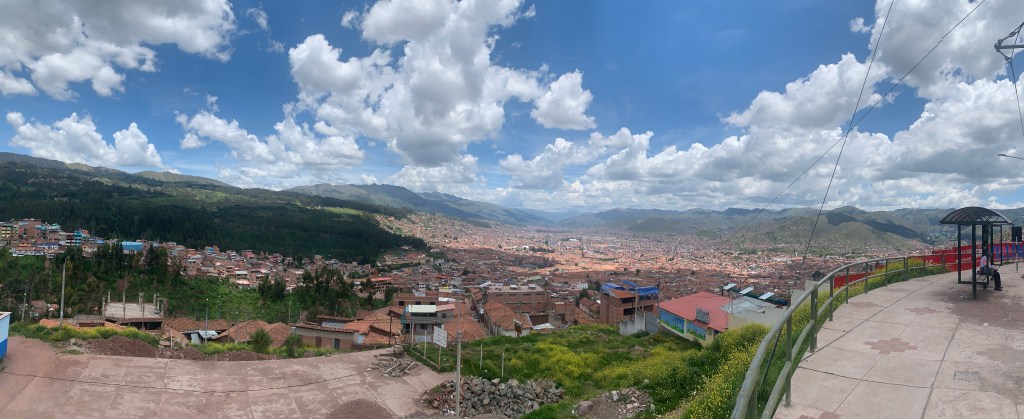
Climbing above the city of Cusco, Sacred Valley.

When we eventually arrived in Ollantaytambo’s quaint cobbled town square it was starting to rain so to build up our strength for a walk up a pedestrian-only lane to our accommodation, we had a quick lunch on a balcony overlooking the square, which included a delicious quinoa salad and our new favourite beverage Chicha Morada (have I mentioned how much we love Peruvian cuisine?!)
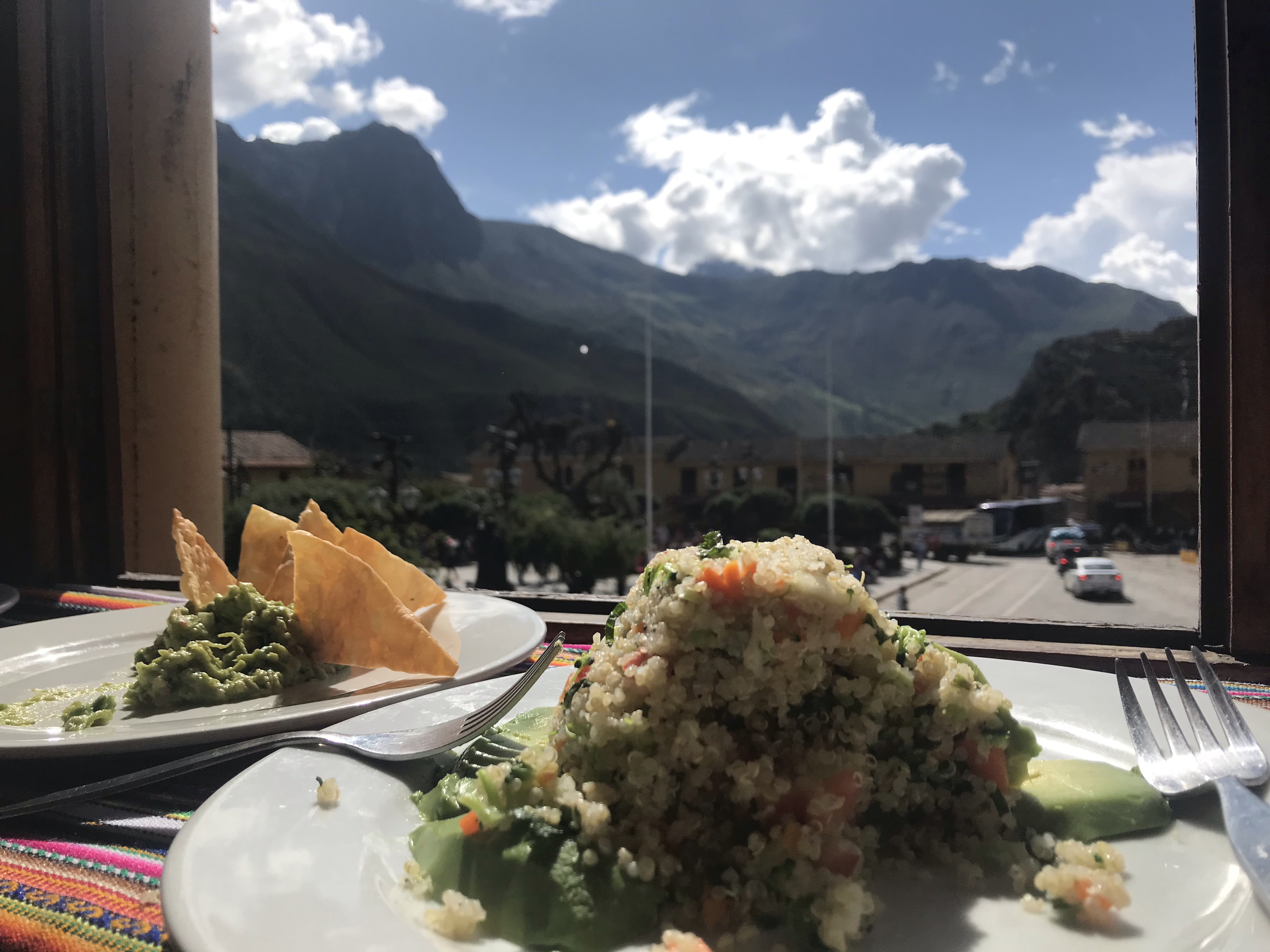
View from La Merienda restaurant over plates of nachos and quinoa, Plaza de Armas de Ollantaytambo.

We end up having a meal in outlets on each side of the square during our time in Ollantaytambo. It was the heart of the community with ladies in traditional dress always sitting in its central plaza.
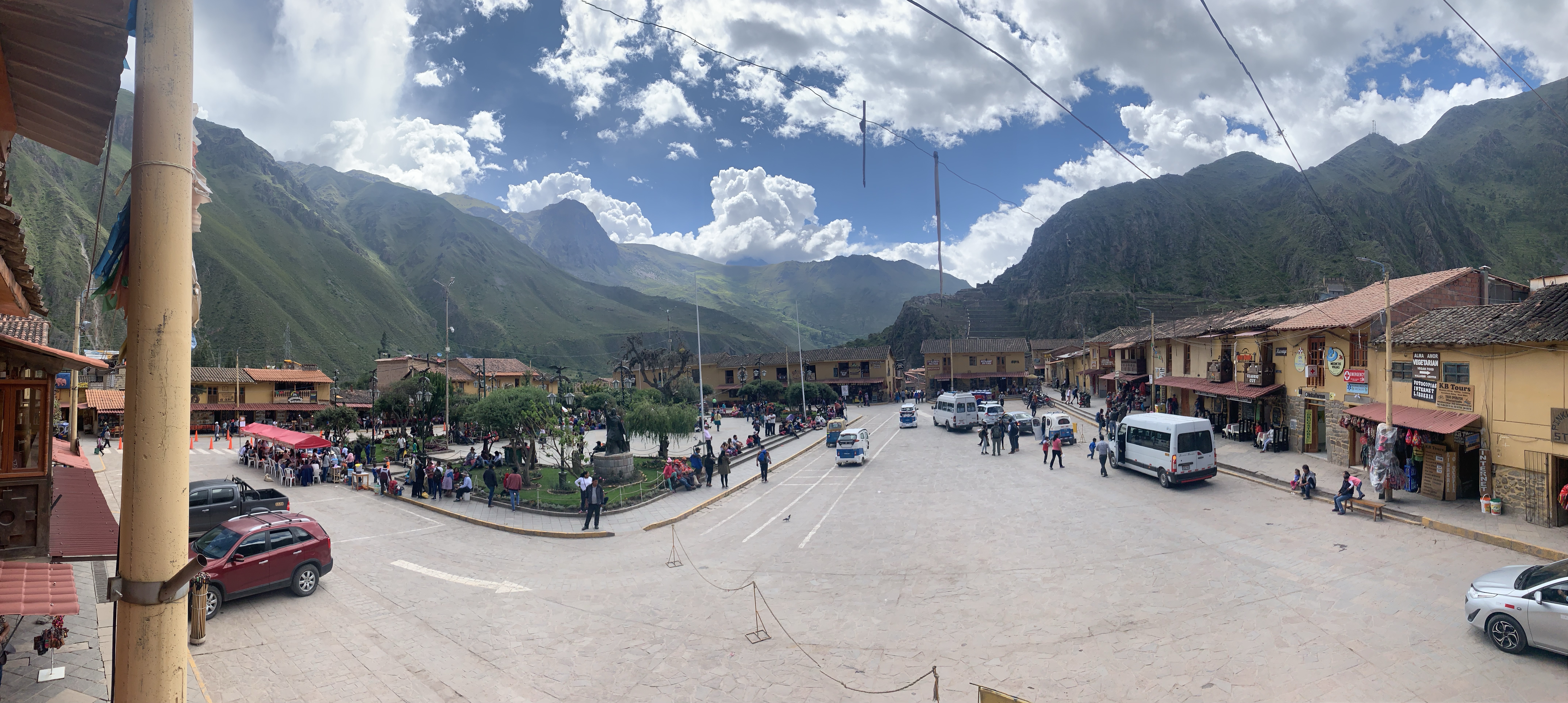
Plaza de Armas de Ollantaytambo.

We were staying in the lovely Apu Lodge in a quiet spot right under the steeped terrace valley. We were the only guests, being there off season.
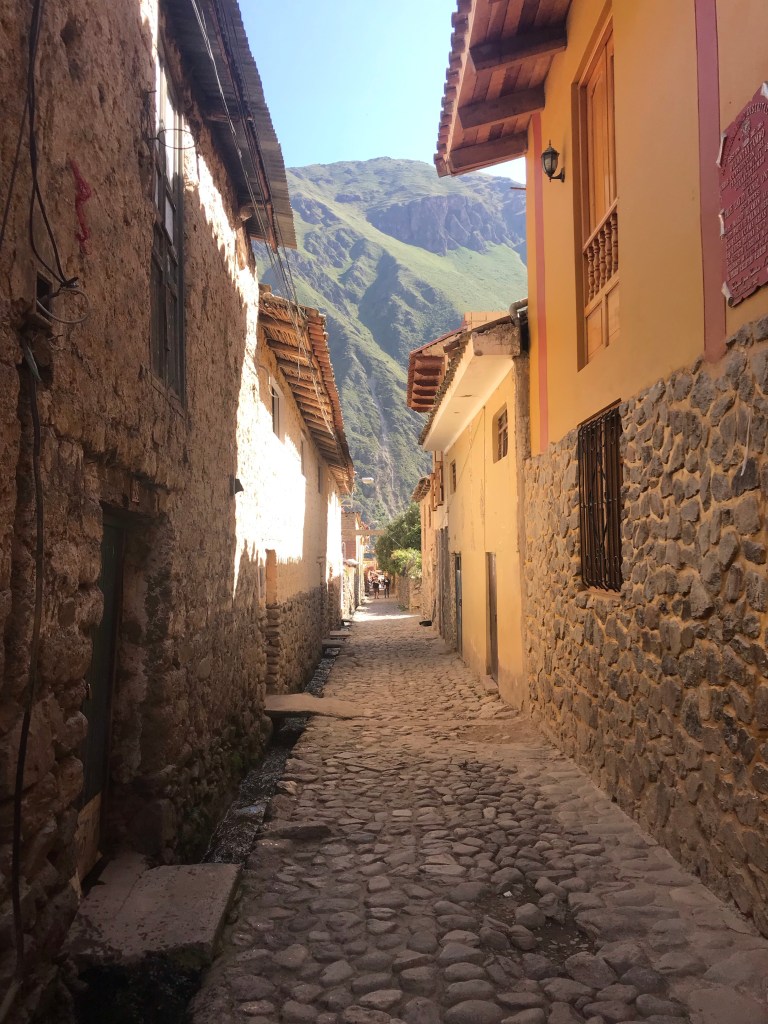
Cobbled streets of Ollantaytambo.

We appreciated the hammocks in the garden and the hospitality of Americans Kieran and Rebekah who were working there. On our departure, Kieran rode down to the square over the cobbles with our luggage in a trailer on the back of a bike. Tom enjoyed taking it for a spin too.
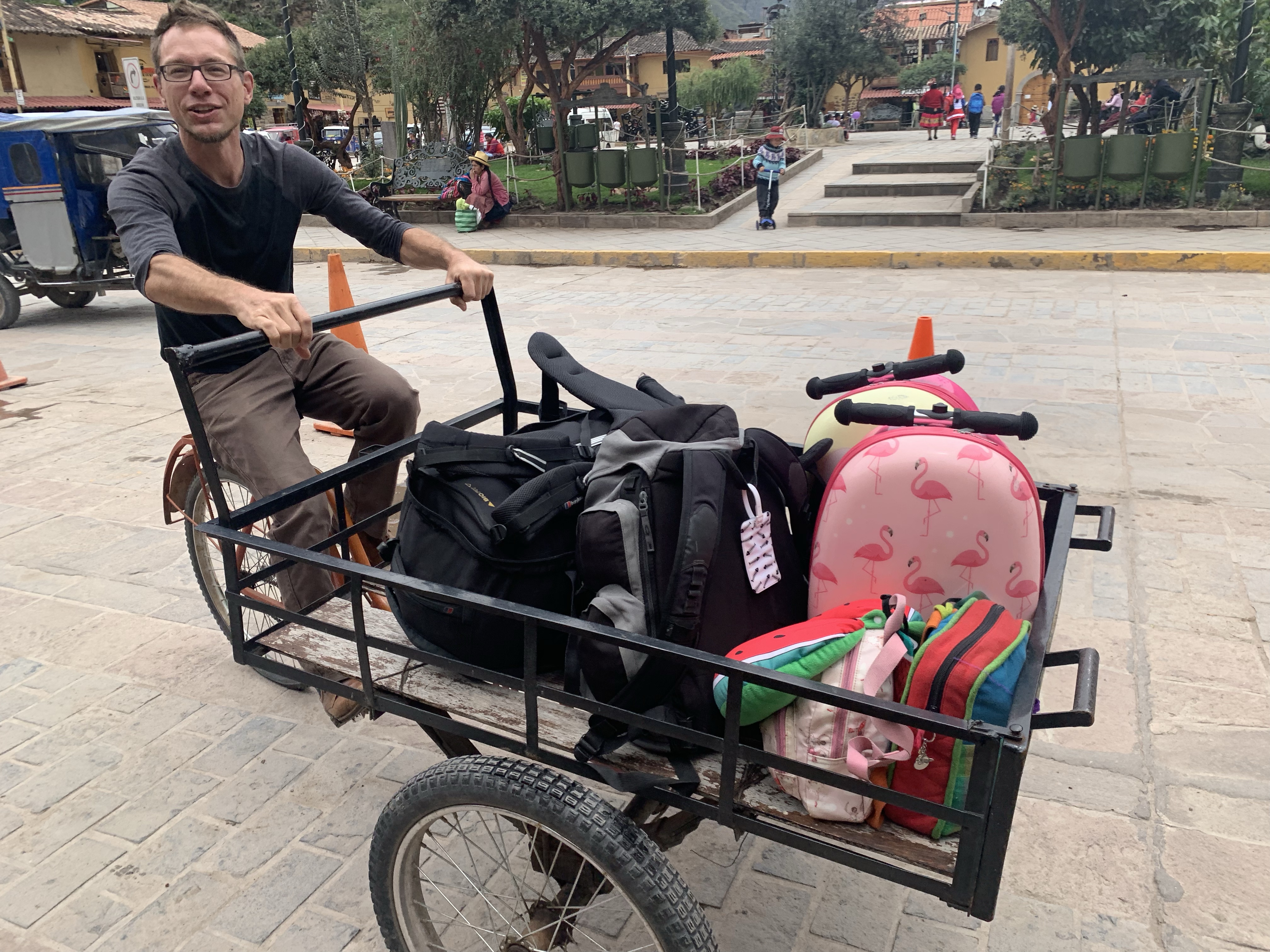
Kieran bringing us our luggage, Plaza de Armas de Ollantaytambo.

Much of the buildings in the town date from the late 15th century, some are the oldest continuously occupied dwellings in South America. Despite the cobbles, it was a very walkable place.
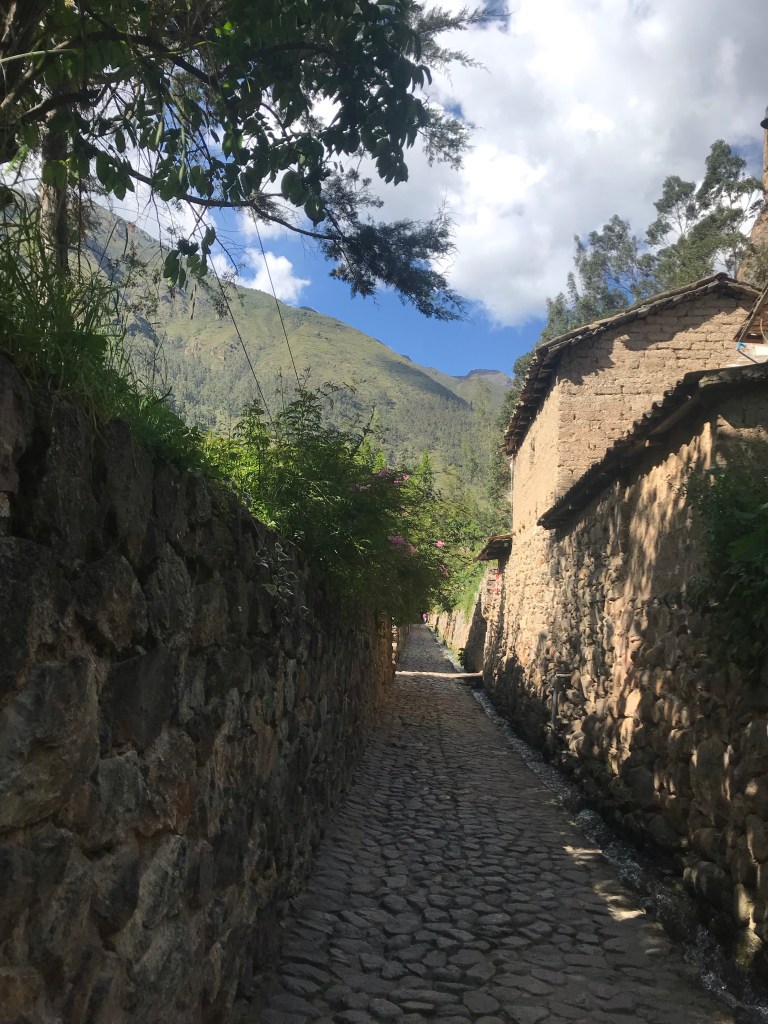
Just a few minutes from Apu Lodge were the Pinkuyluna ruins, which we just had time to explore on our first afternoon before they closed at 4.30pm.
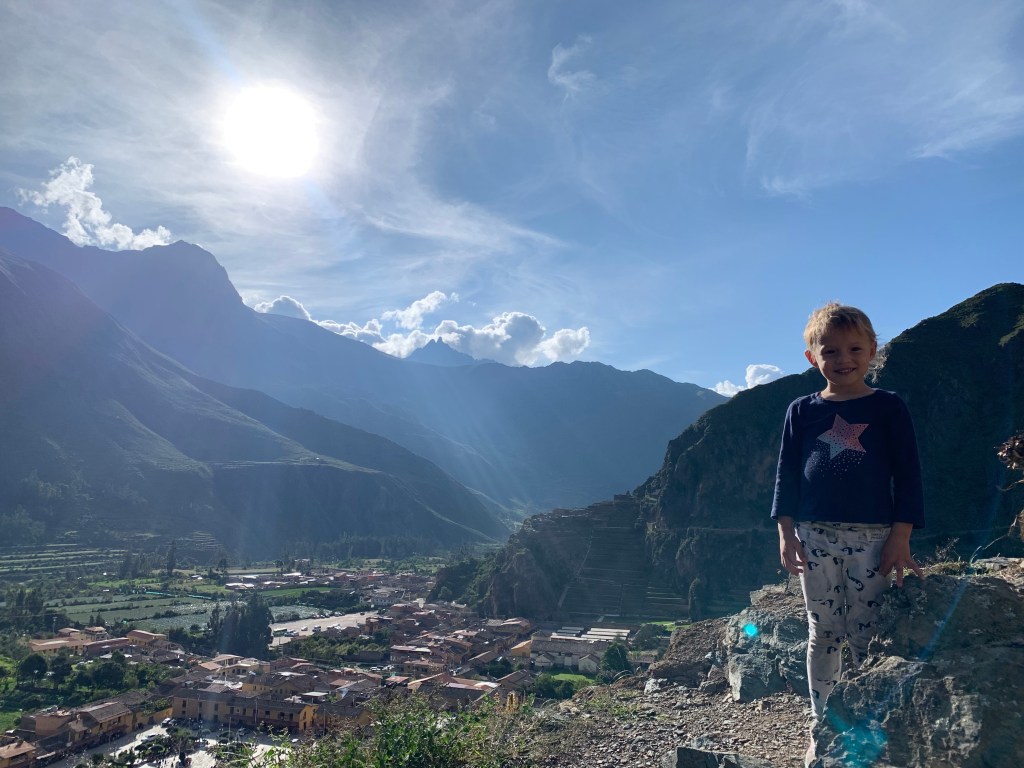
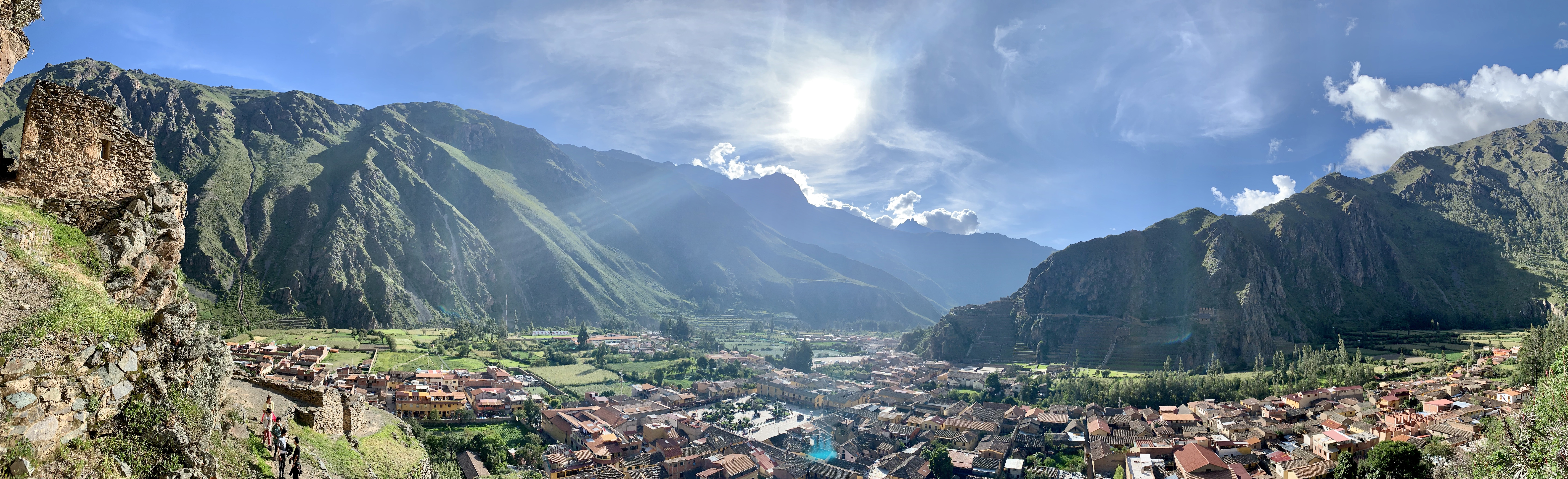
Sunny views from Despotes de Pinkuylliuna, archaeological site, Ollantaytambo.

It was a bit of a scary walk along steep precipices, with great views and ruins to explore. It was hot though, and we were soon out of breath.
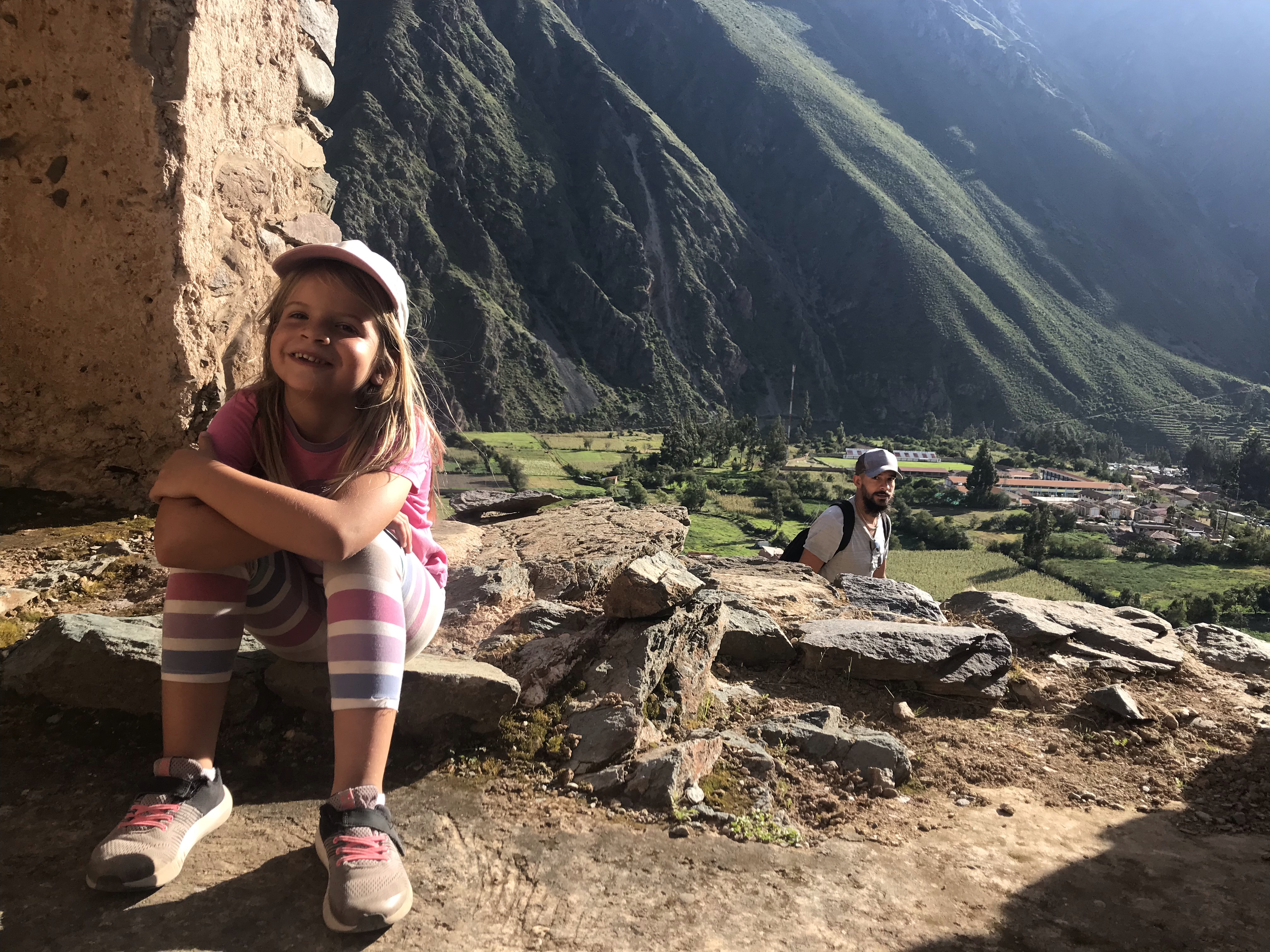
Taking a breather, Pinkuylliuna archaeological site, Ollantaytambo.

When it closed, we walked across to the part of town alongside the river lined with market vendors, choosing to have sunset drinks on the roof terrace of Inka’s Tower, with its ceiling decorated by flags. We found some gluten-free pizza at El Trigoto on the square that night, but our best dinner was at Chuncho on the opposite side.
This was a restaurant and bar of a totally different ilk. Chuncho can be translated as ‘native’ or ‘wild’ from the local Quechua language. It had cottoned onto the Peruvian food revolution, even perhaps slightly responsible for it, its unique dishes based on flavours, ingredients and traditions of the Sacred Valley.
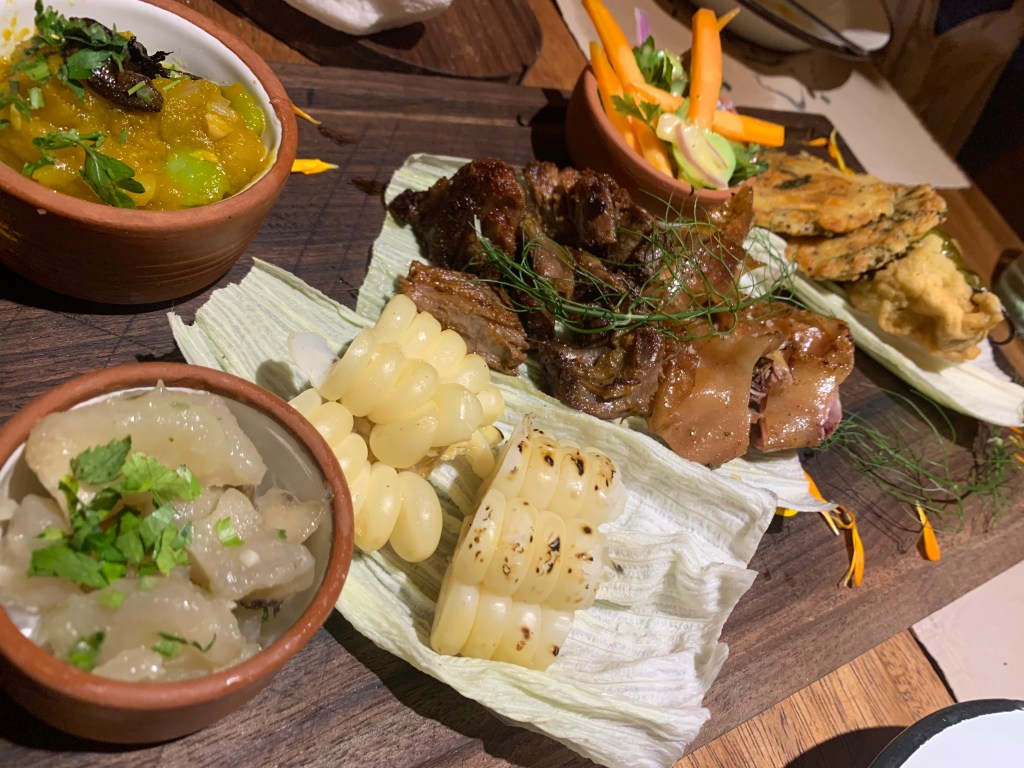
Delicious range of Peruvian cuisine, Chuncho, Chaupi Calle, Ollantaytambo.

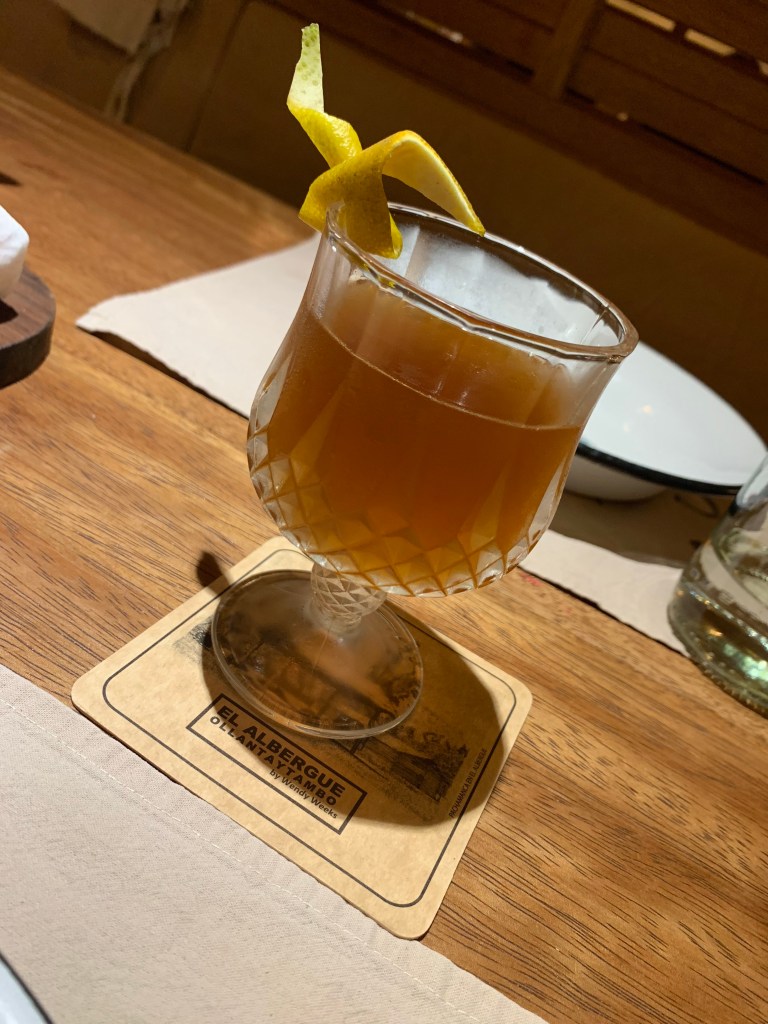
Entertained by a blind musician playing a traditional harp, we took the set menu which included our first taste of guinea pig washed down appropriately by a delicious cocktail called a Matacuy Sour (which translates as ‘kill the cui’ or guinea pig made from the local spirit, cañazo).
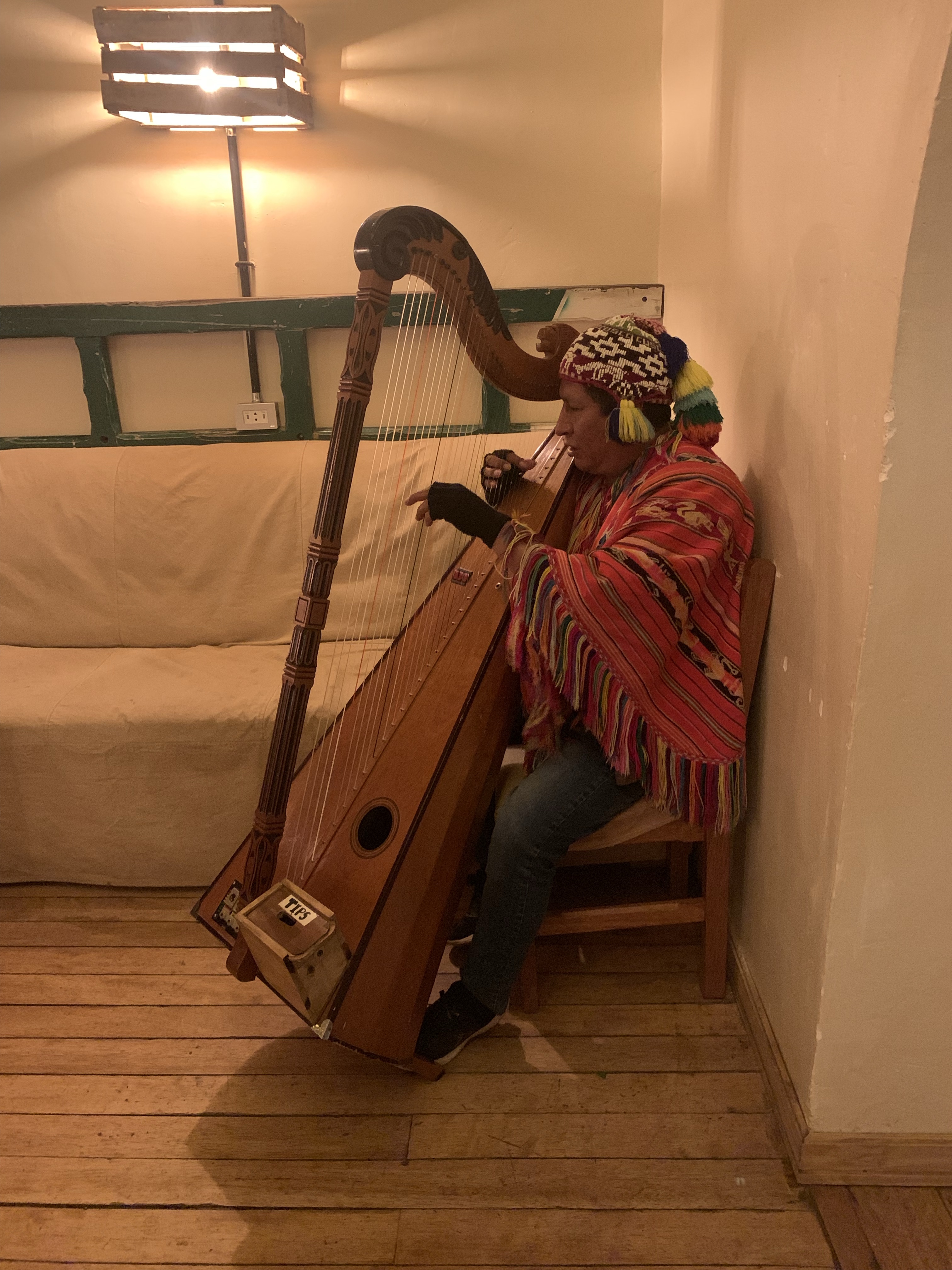
Local harpist, Chuncho restaurant, Ollanyattambo.
Matacuy Sour, Chuncho.

We met a jovial fellow named José who entertained us with wooden puzzles (convincing us to buy one and some local salt) and told us the restaurant was part of the same operation as the hotel El Alberque by the train station.

The organic Inca farm there provides 75% of the produce used in the restaurant. Located literally on the train platform, the hotel first opened in the 1920s and has maintained its authenticity. In 1990 it was bought by an American artist Wendy Weeks and her husband – one of their sons runs it now, their other son is the artist Ismael Randall-Weeks, whose work we had admired in Lima.

The next morning, we took a stroll to check out the hotel and farm, amazed to find an array of animals – alpacas, sheep, rabbits, ducks – grazing alongside the thriving crops.
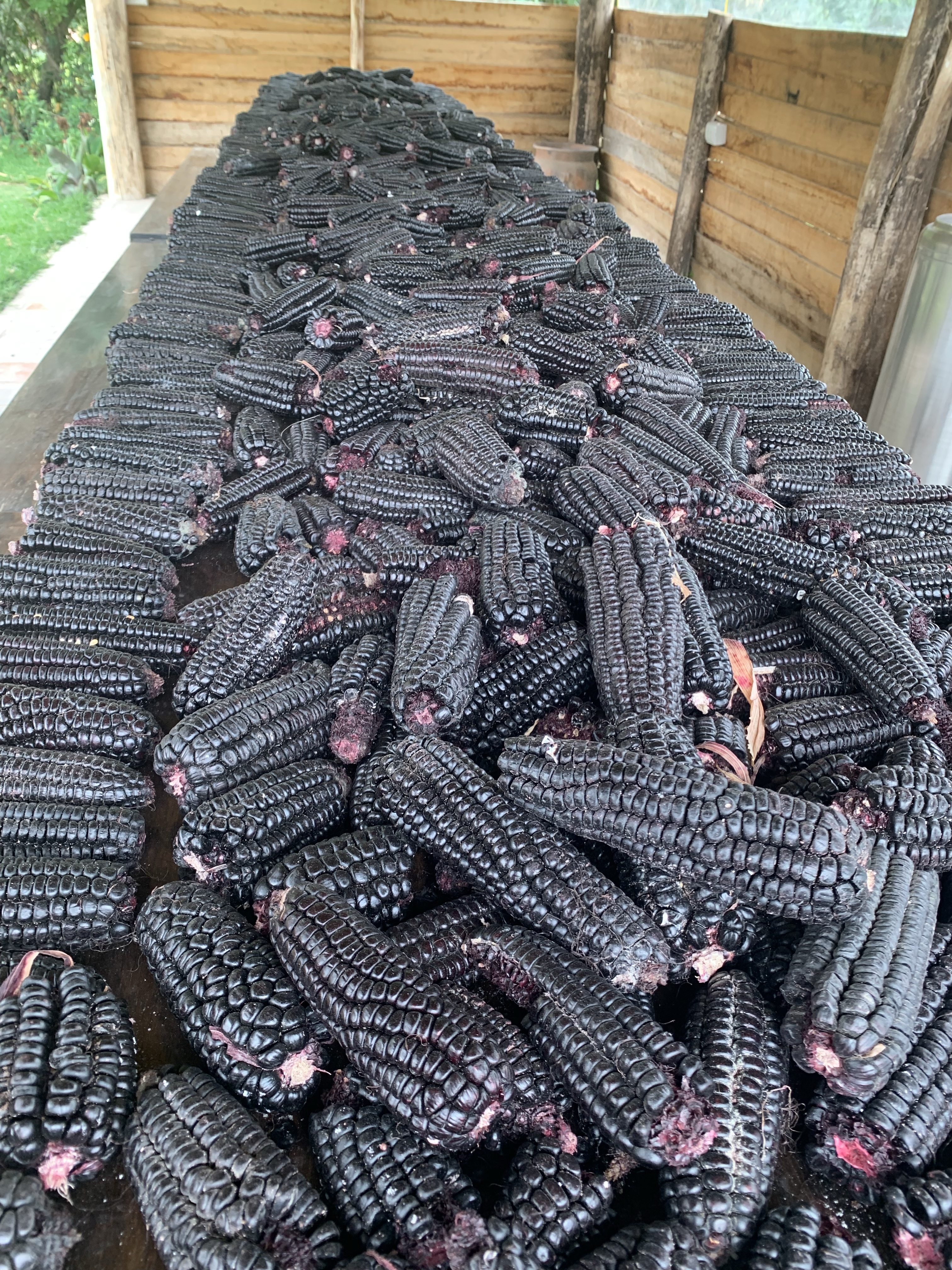
Crop of maize morado, El Albergue Farm, Callejon Sta Rosa, Ollantaytambo.

The Kuska school on site was like a mini version of the Green school we had visited in Bali, the curriculum with a strong environmental and social focus, but the children were on holiday, so it was deserted.

We found a micro distillery where cañazo was distilled in copper and a coffee roastery.
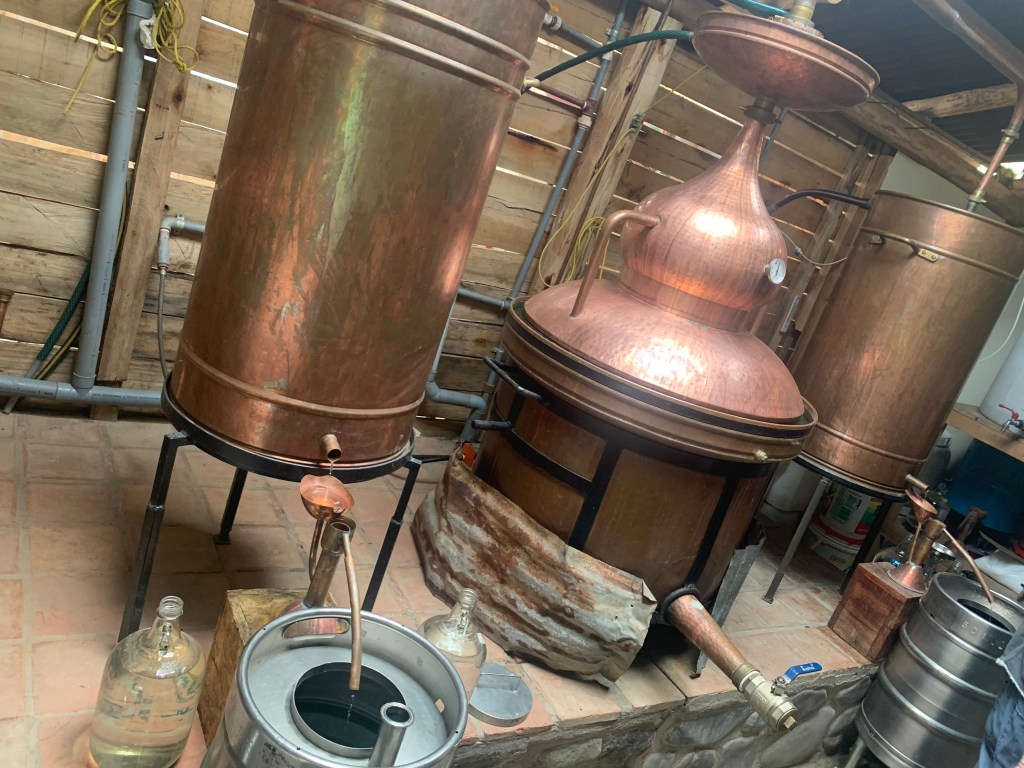
The Andean Distillery, copper alembic still, El Albergue Farm, Ollantaytambo.

You can partake in a pachamanca meal here – a traditional outdoor dinner cooked on stones in an earth oven, but unfortunately, we didn’t have time. Instead we took a quick walk along the river and train tracks to the Inka drawbridge where we saw some horses and houses on the other side of the river.

On our departure our driver pointed out the Skylodge Adventure Suites, aluminium and polycarbonate pods that terrifyingly cling to the granite hillside. A place to stay next time…

The day we went to Machu Pichu
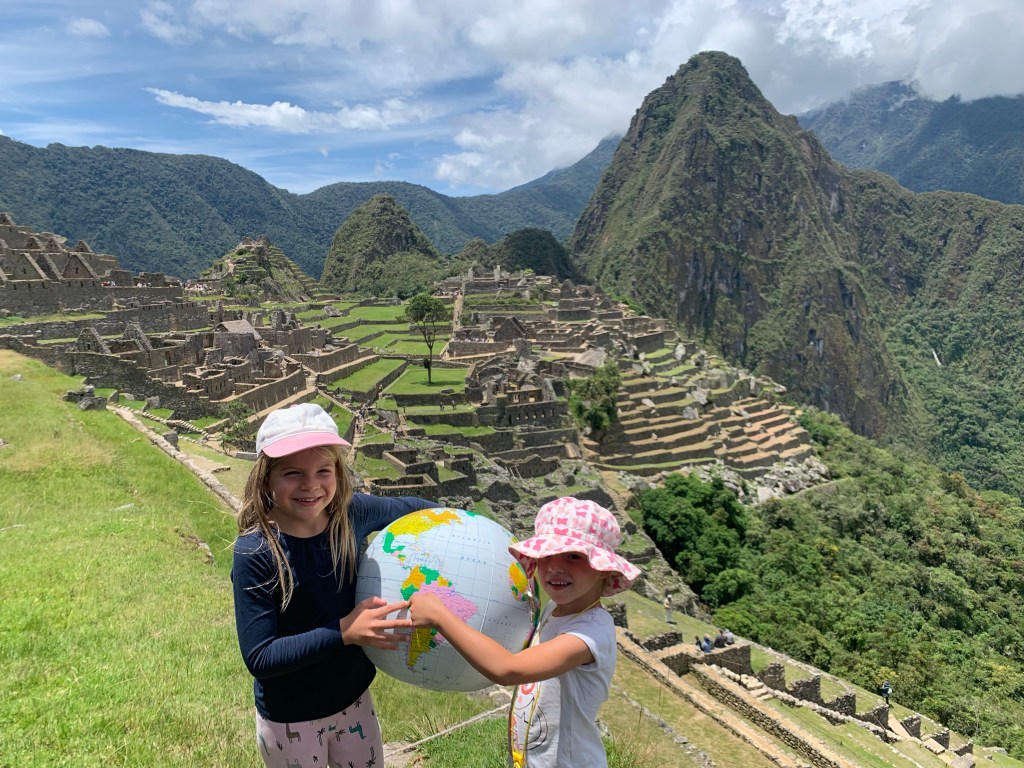
Mojo pointing out where we are, Machu Picchu National park.

We had booked our train and entry tickets a few weeks in advance, so we had to keep to schedule. It was a risk, as at this time of year, during the rainy season, it was quite likely that it would not just be raining while we were there, but that visibility would be so bad we wouldn’t see the famous site at all. We were lucky: it was a sunny day and the timings worked out perfectly. After a nourishing breakfast at Apu Lodge, we walked to the train station to catch the 9.15am Peru Rail 360° train.
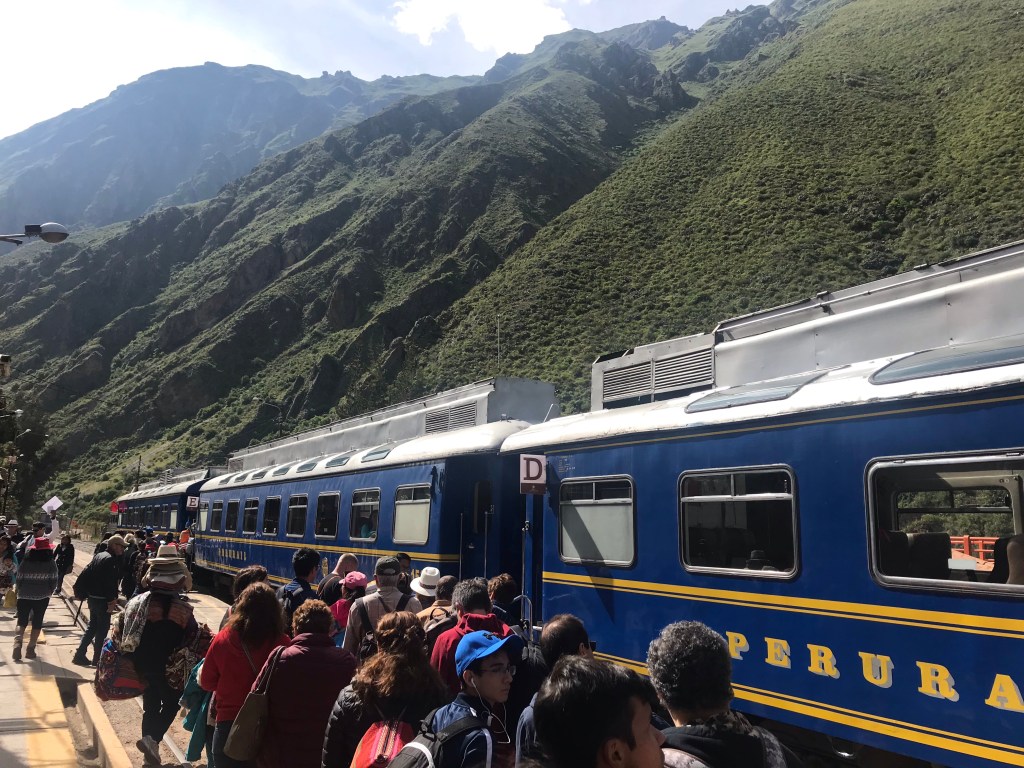
Boarding Peru Rail 360° at Ollantaytambo Train station headed to Aguas Calientes, 27 January 2019.

The train carriages were designed to make the most of the riverside and mountain views with floor to ceiling windows.
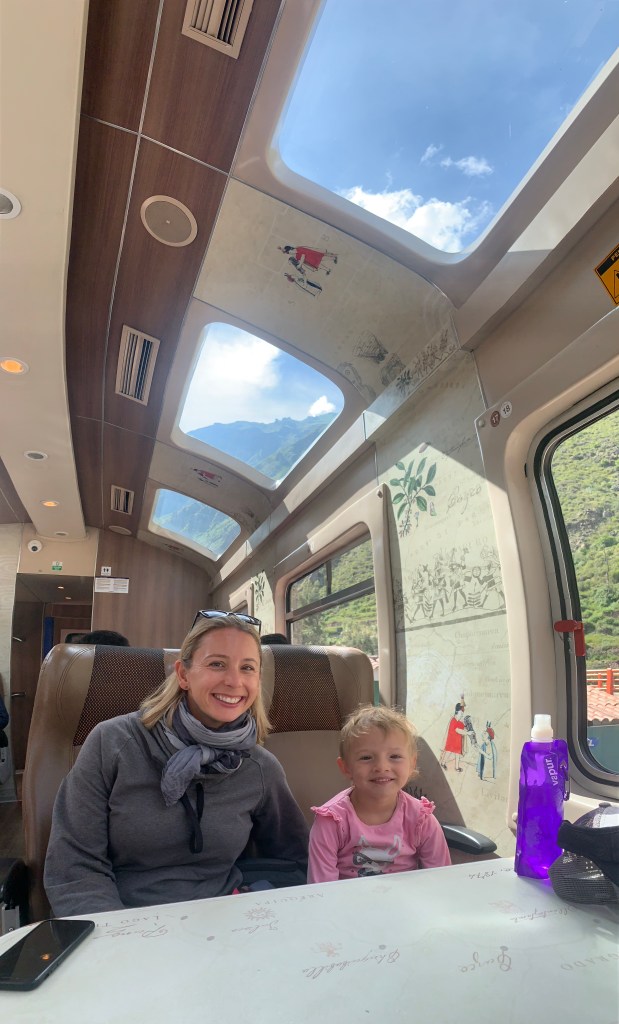
Luxury train travel, Peru Rail 360°, along the banks of the Urubamba River, on our way to Machu Picchu.

The hour-and-a-half journey flew by. Aguas Calientes is rather isolated with no cars, a bit of a tourist trap.
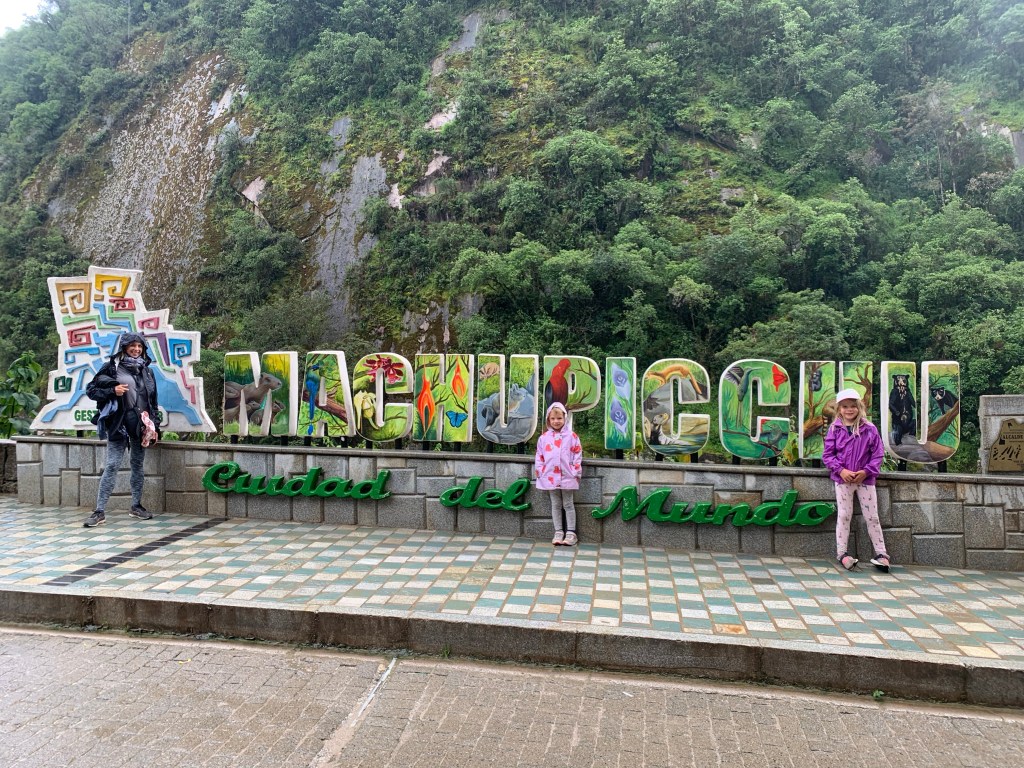
Agua Calientes in the rain, Peru.

Your time in Machu Picchu itself is limited to four hours and you are forbidden from eating there or indeed going to the loo. Our session didn’t start until 12 so we had time to have an early lunch at Mesa 7 restaurant overlooking the river (another mouth-watering quinoa salad for me), buy bus tickets and use the facilities. It takes twenty minutes to traverse the steep, zigzagged road, with incredible views of the valley.

We had read a lot about tour guides at the entrance gates and had received conflicting advice on whether to enlist their services. We decided to go at it alone and going by the eavesdropping we did of other guides; we had made the right decision. Once in we followed the guidebook’s suggestion and first walked up to the guard house for an initial breath-taking view of the citadel sitting against the distinctive mountain peak (Machu Picchu can be translated as old mountain) with only us and a few llamas for company.
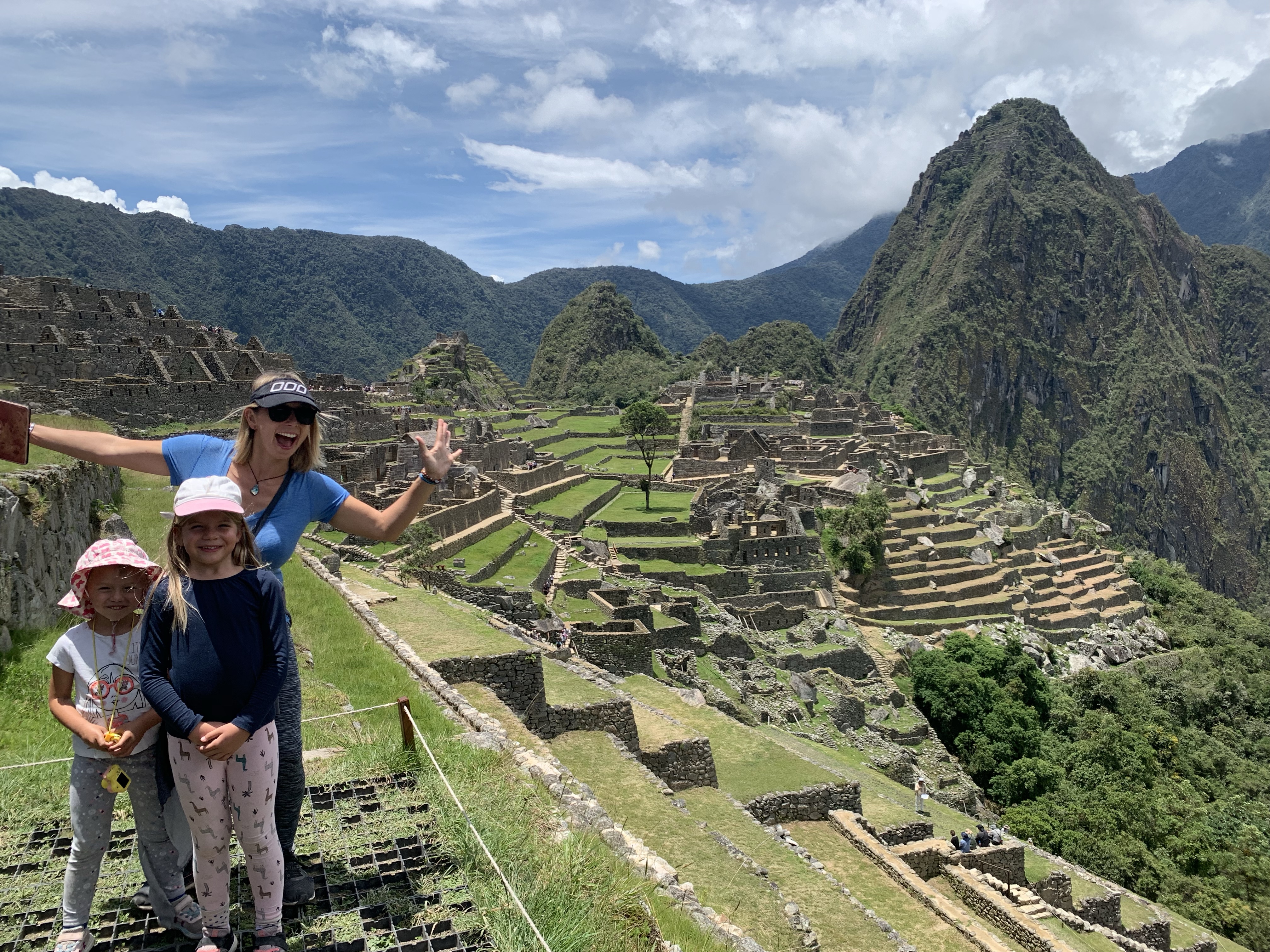
View across the old city to Machu Picchu.

We just had to blow up our globe beachball for a picture or two but were told off by a cross guard: ‘no ball games!’
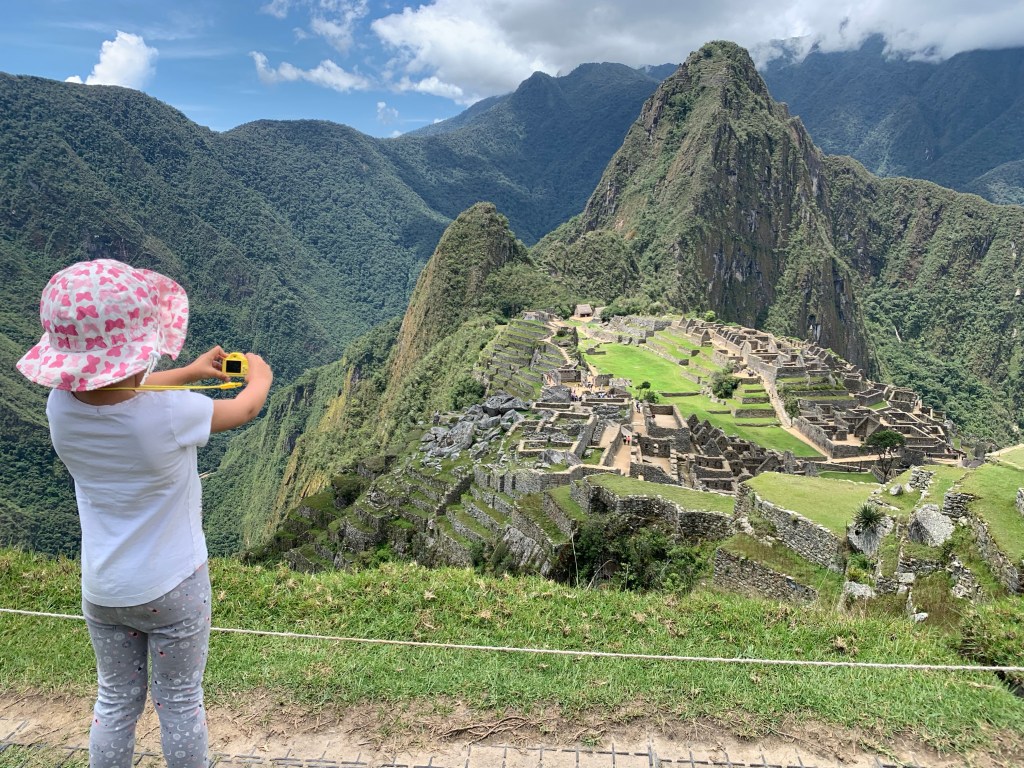
Selfie time? Admiring Machu Picchu.

There were guards everywhere we turned – although we were amused to find one couple having a full-blown picnic on a hillside with their guide.
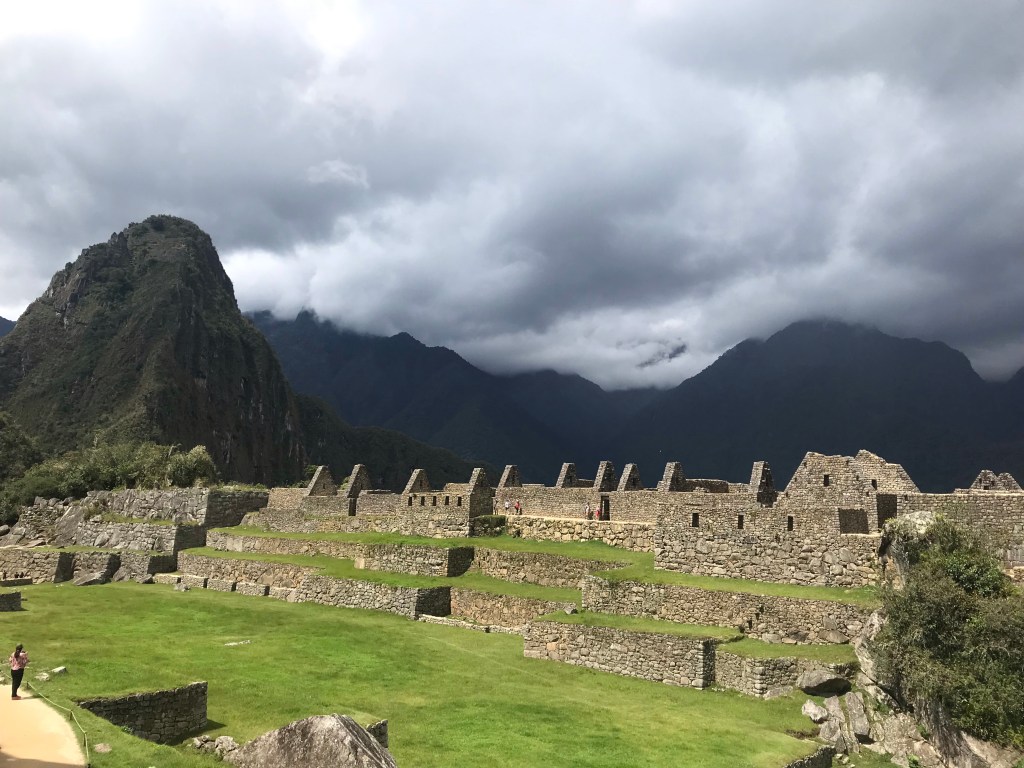
Temple of the Three Windows, Quarry Group, Machu Picchu National park.

The route took us across to the sacred plaza, just about making out the remains of the temple of the three windows, temple of the sun and the condor.
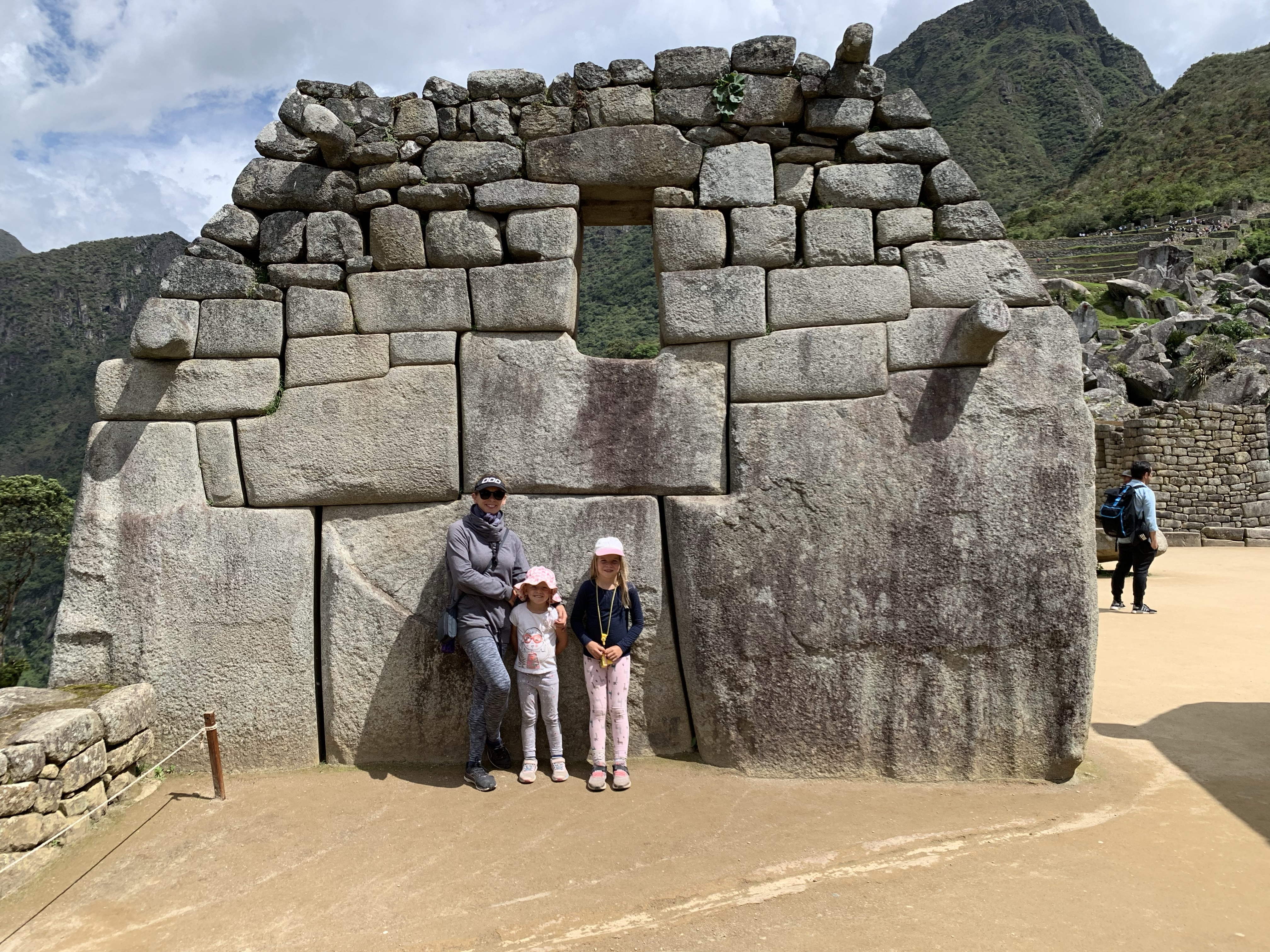
Temple of the Sun, Machu Picchu National park.

When we reached the water mirrors it was 3.30pm and we noticed rain spots dropping into the bowls, it was finally starting to rain.
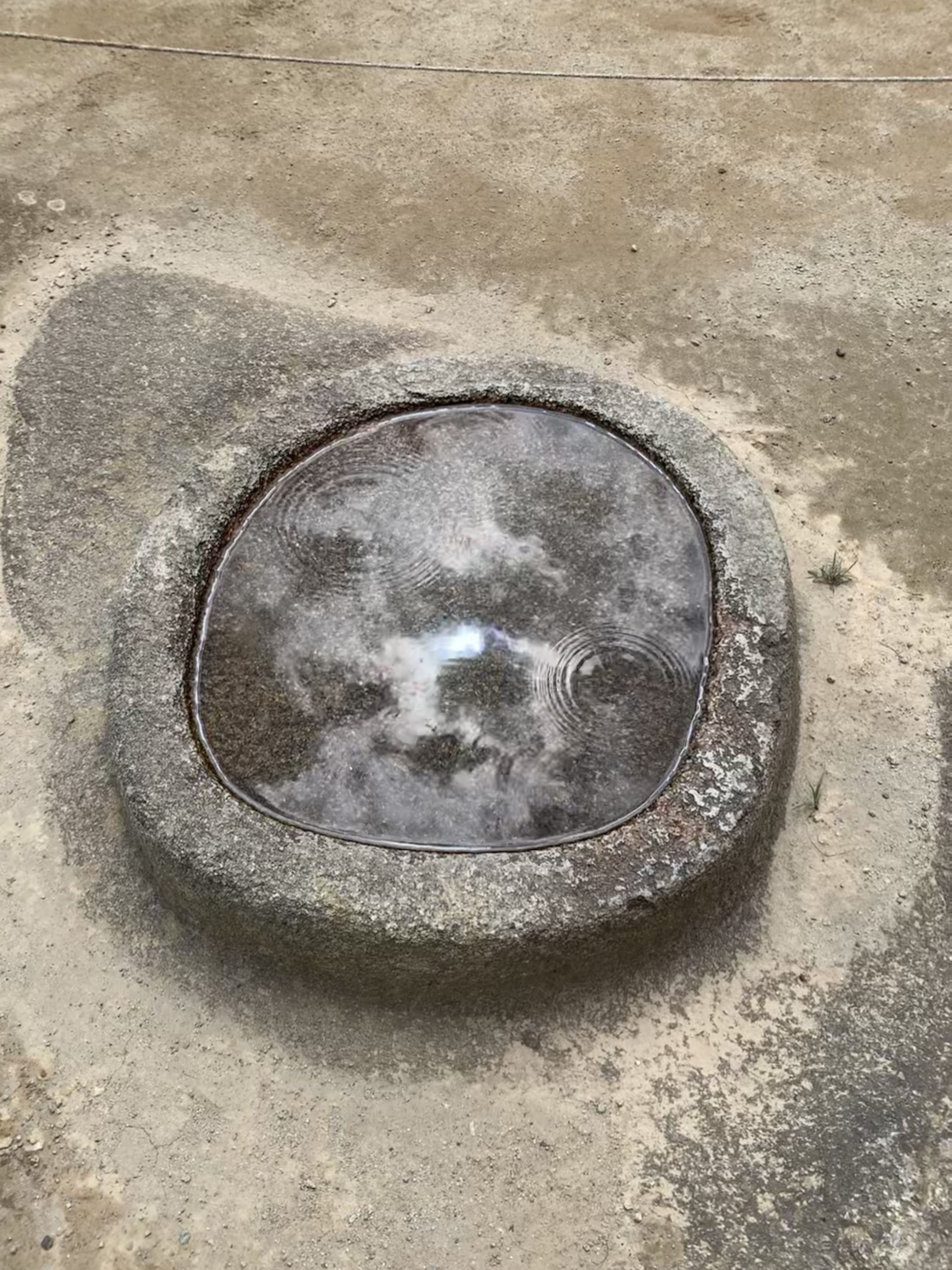
Machu Picchu Water Mirrors, astronomy mirrors created in 1912 by Hiram Bigham.

We were so lucky the weather had been good all the time we needed it to be despite it being the middle of the rainy season. We had seen enough so we took a bus down and had a drink next to the train tracks in Aguas Calientes before taking the 4.30pm train back to Ollantaytambo.
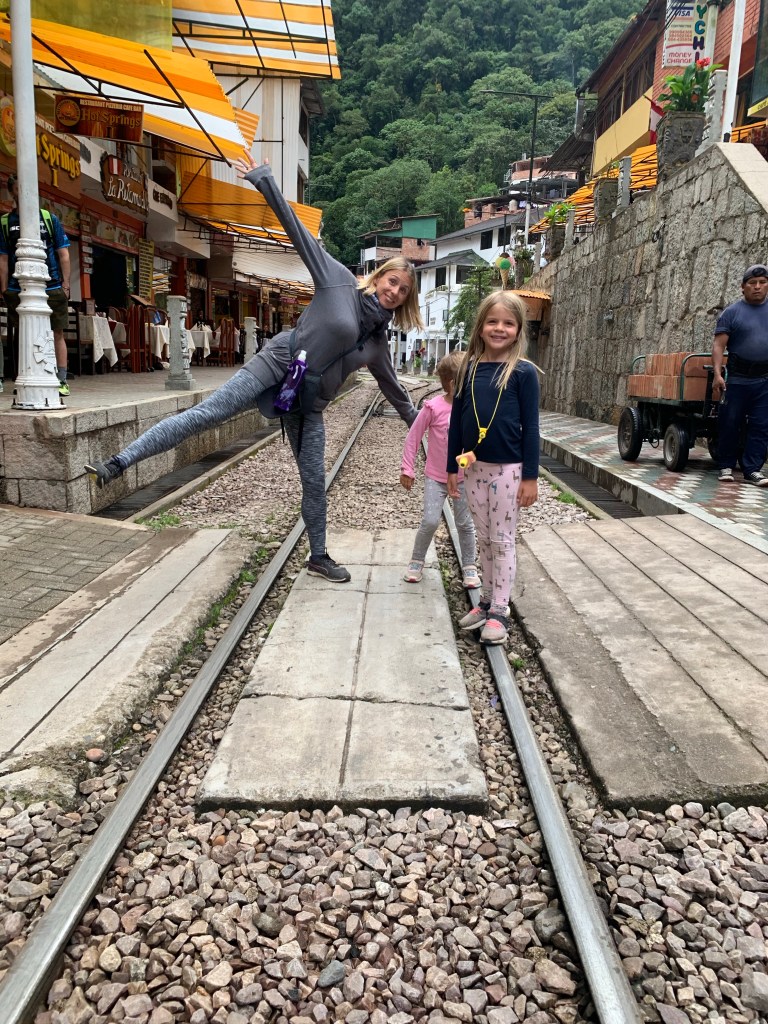
Crossing the railway tracks, Aguas Calientes.

A day that would stay in our memories for years to come.
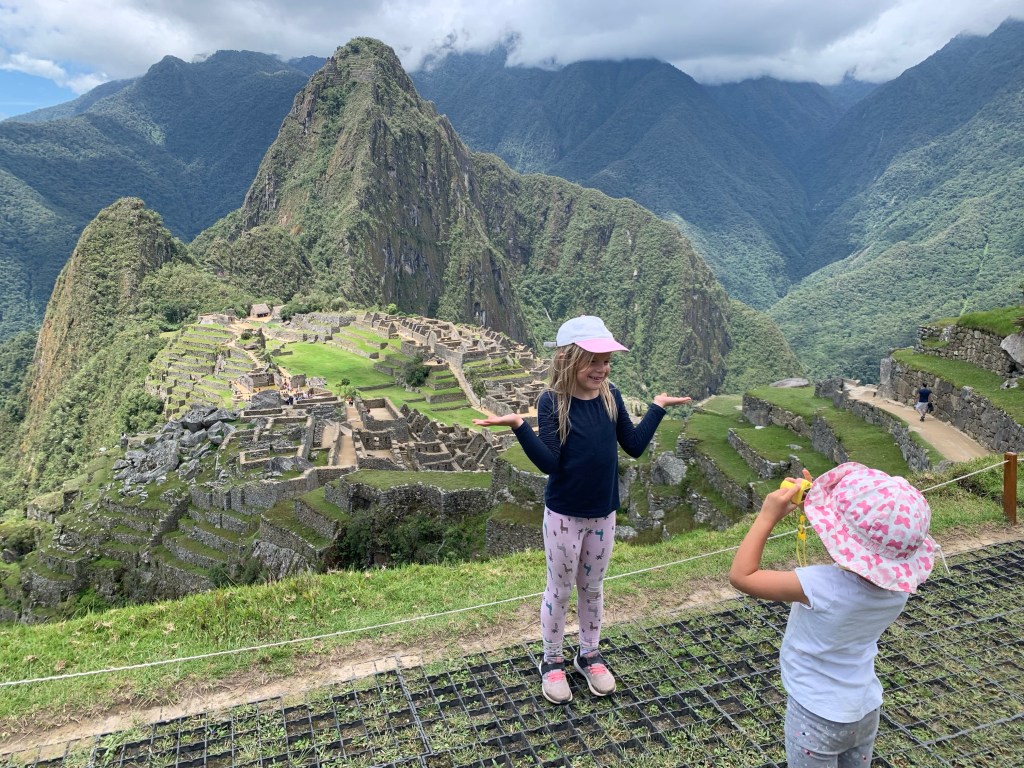
Learning the art of photography at UNESCO sites, MoJo at Machu Picchu.

Cusco: The navel of the world

Cusco has been known as the navel of the world since ancient times and is roughly the same size today as it was in the fifteenth century during the height of the Inca Empire. The layout of the city is striking, we got a brilliant view of it from ‘Limbus’, a bar in the San Blas area.
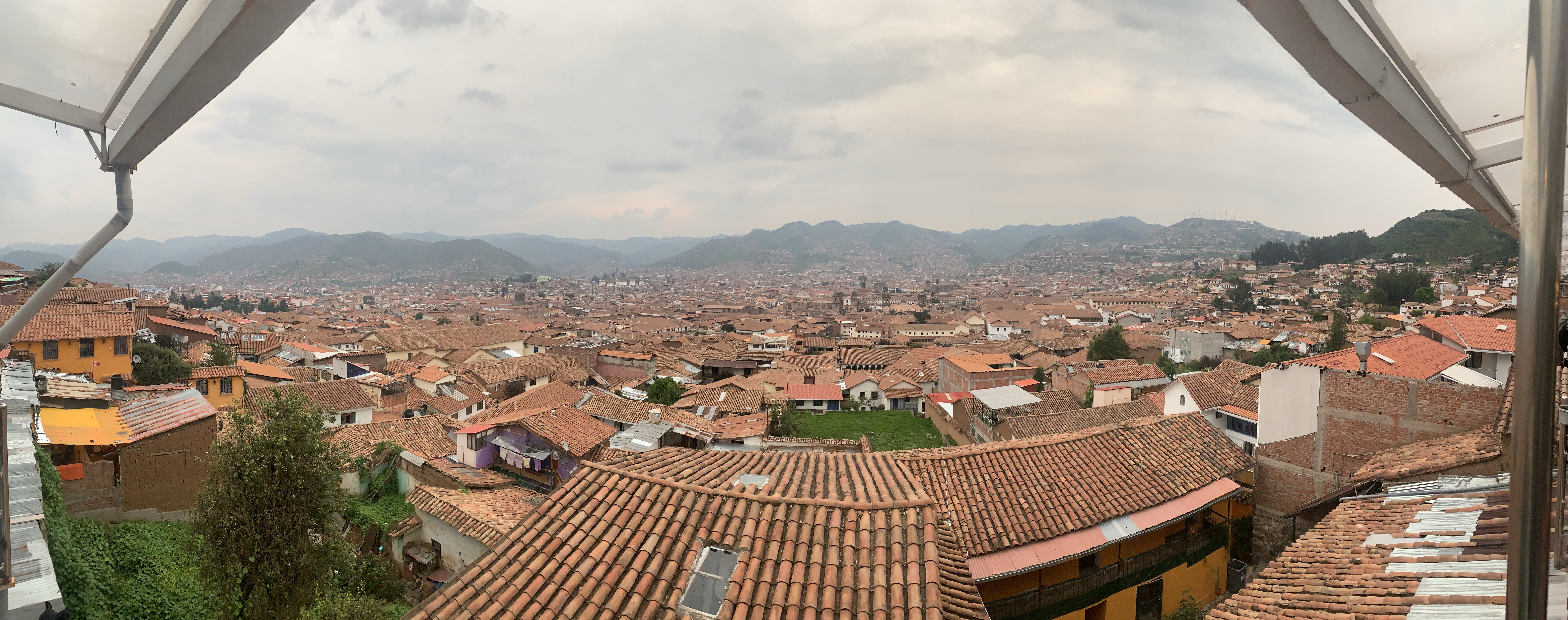
View from Limbus Restobar, San Blas, Cusco.

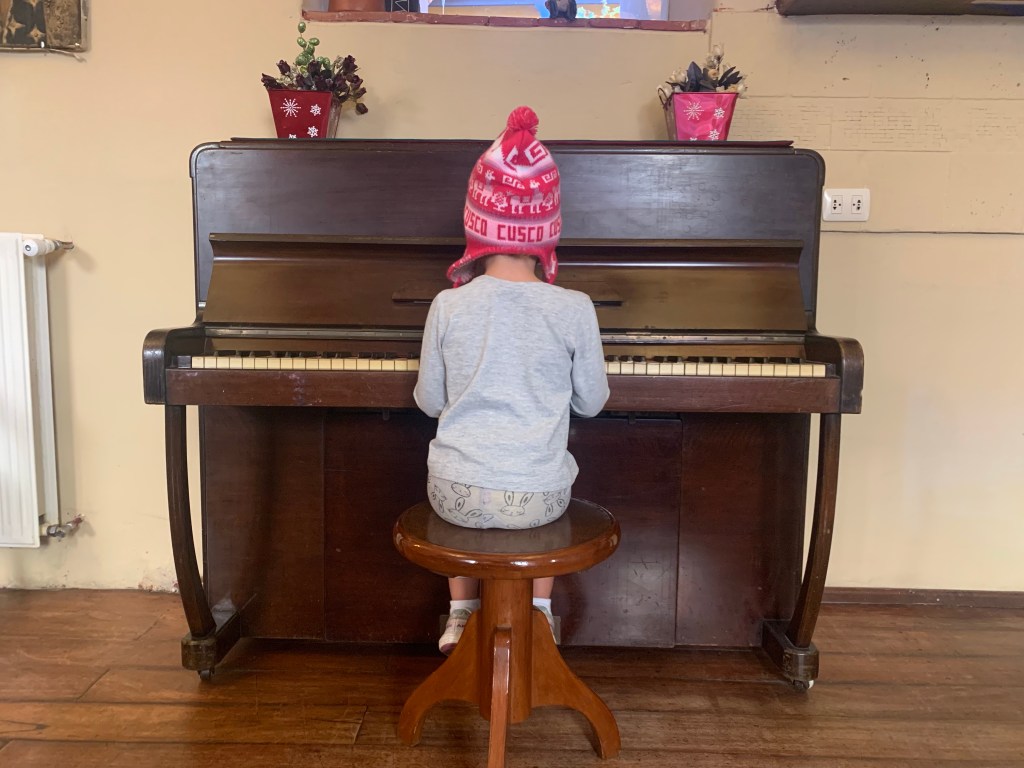
We were staying very centrally in the lovely Tambo del Arriero Boutique Hotel, which had three internal courtyards. Our room had three double beds and a bath and there was an old sewing machine, piano and gramophone on display in the foyer.
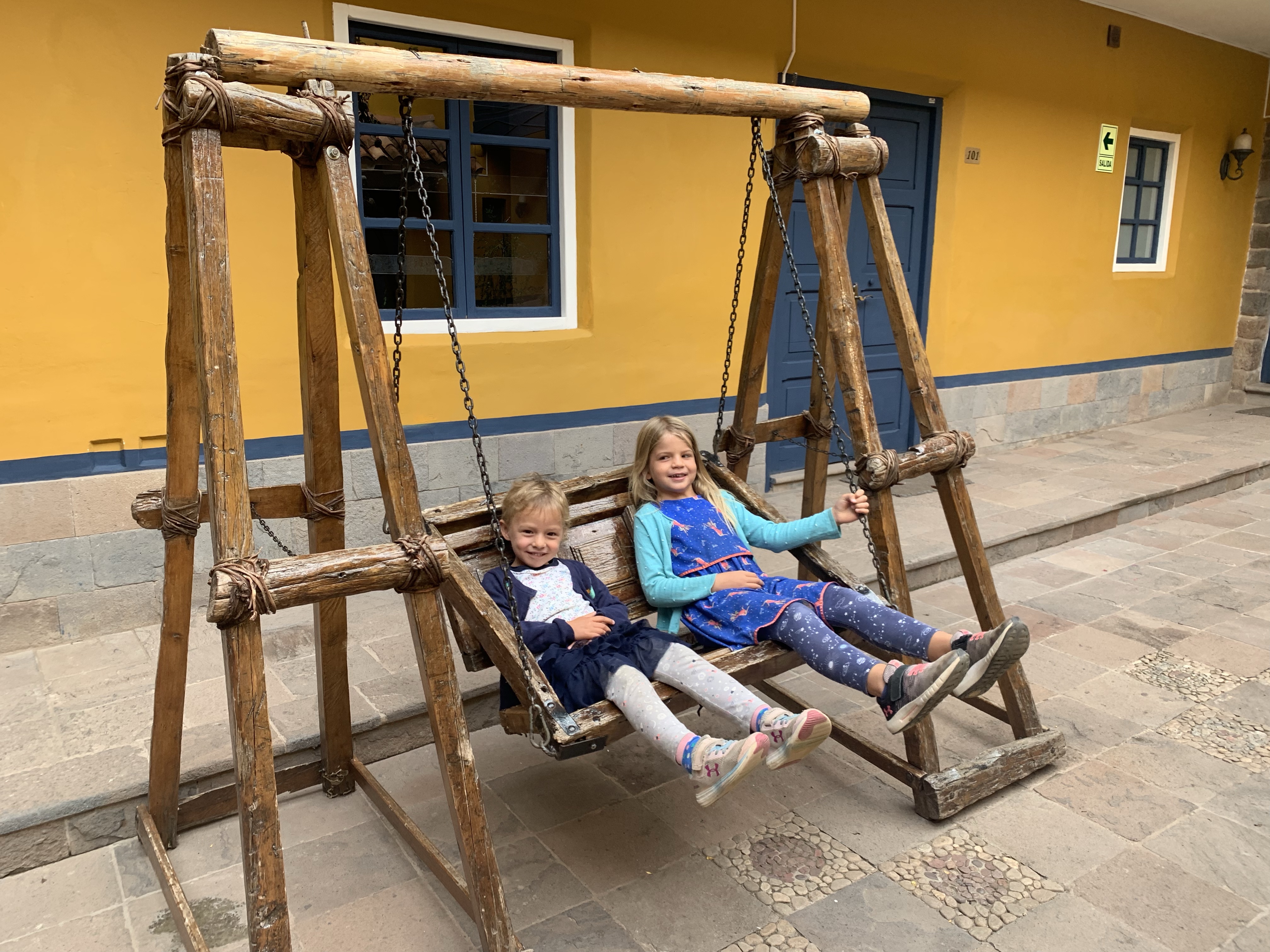
Having a swing, interior courtyard, Tambo del Arriero Boutique Hotel, Centro Historico, Cusco.
Knocking out a tune in a new hat, Tambo del Arriero Boutique Hotel, Cusco.

We went for a walk, first through Plaza Regocijo and onto Plaza de Armas, the centre of the city which is home to its cathedral. We found the twelve-angled stone on Calle Hatunrumiyoc, an example of the brilliance of Inca craftsmanship.
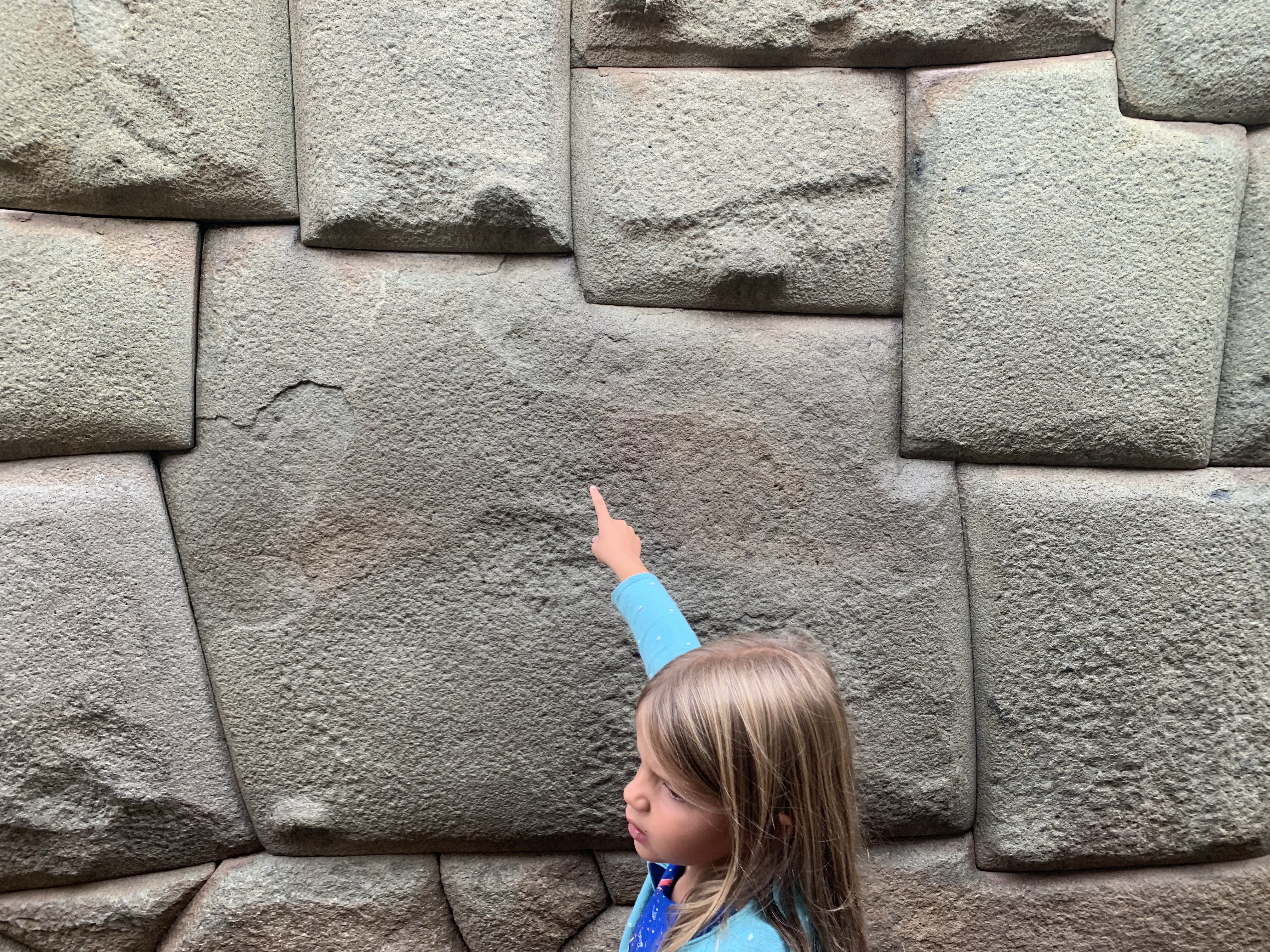
Molly pointing out the twelve-angled stone, Calle Hatunrumiyoc, Cusco.

We were freaked out by the Museo de la Coca which had quite graphic information about addiction and were happier playing in the square in San Blas and looking in the many local art galleries.

We had an excellent dinner at Marcelo Batata – sampling Lomo Saldito and Alpaca steak.
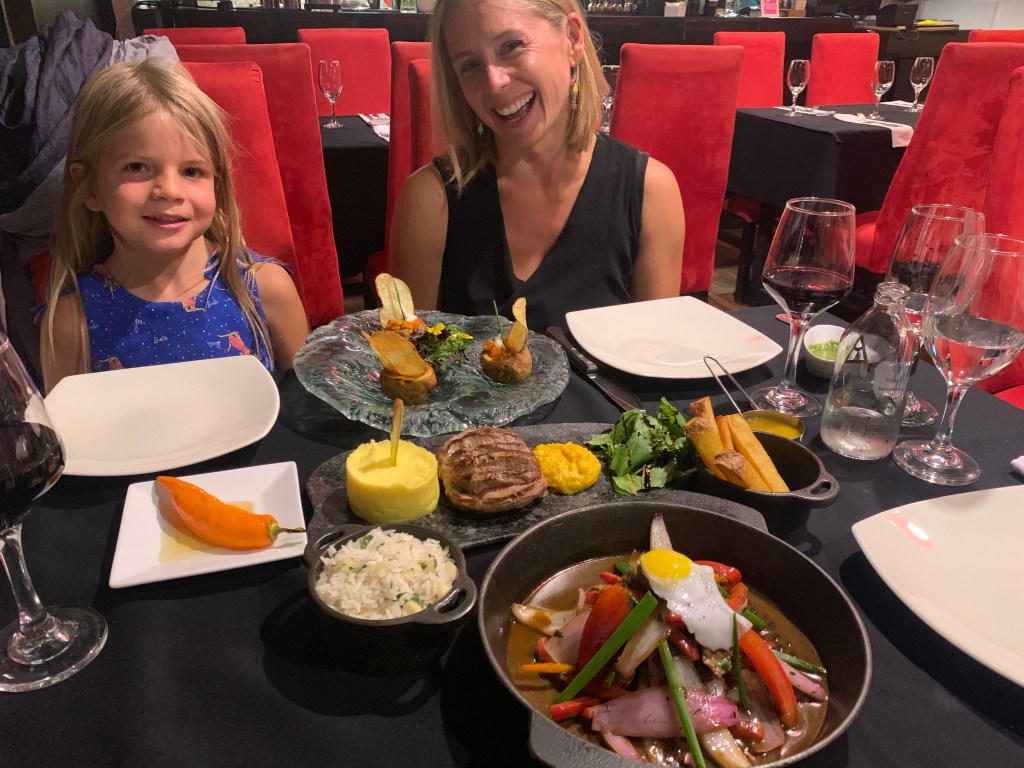
Dinner at Marcelo Batata Restaurante, Calle Palacio, Cusco.

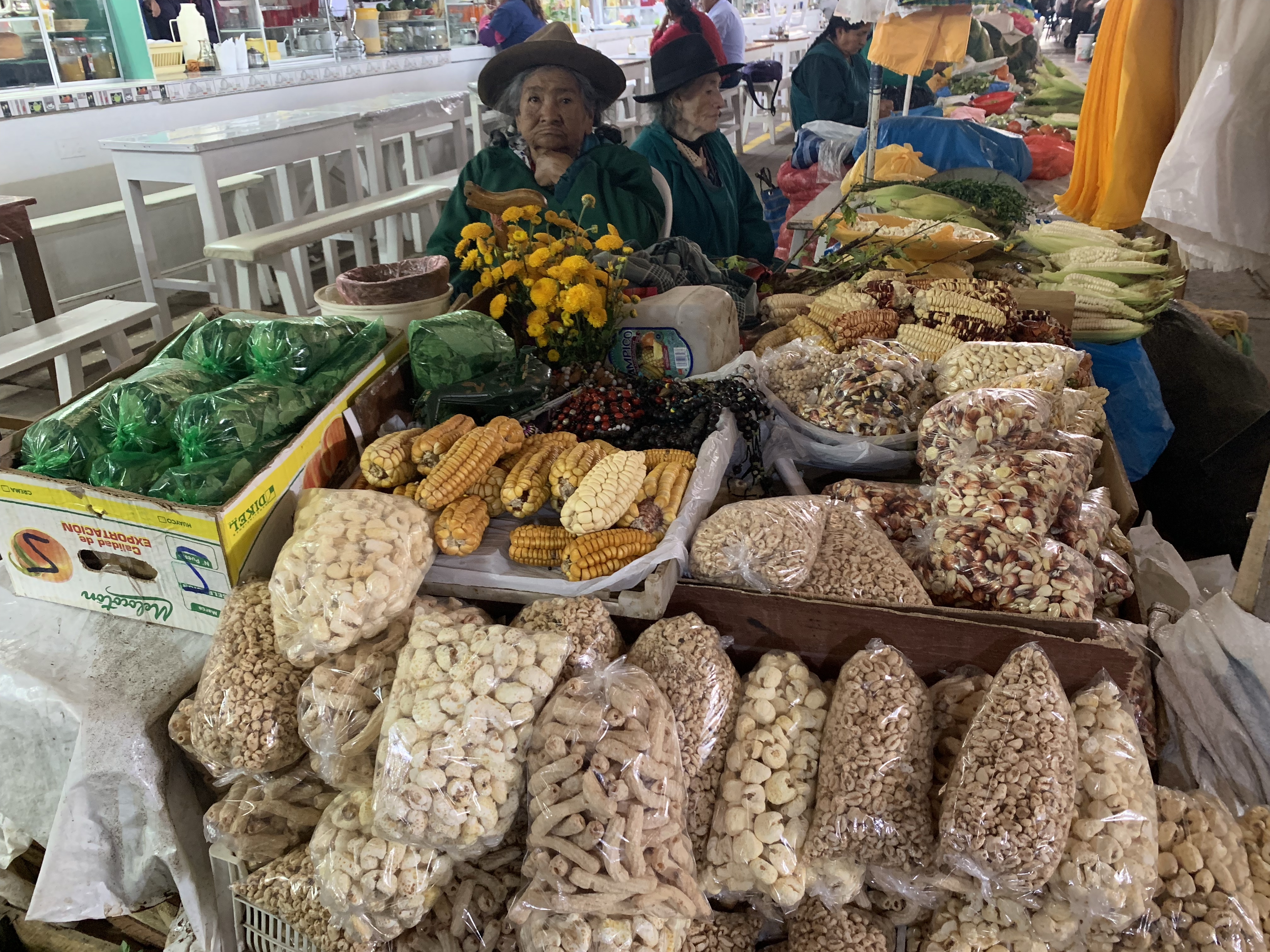
The next day was our last in Peru. We walked down to Mercado de San Pedro, where we bought the girls local style hats and had a look around the food stalls.
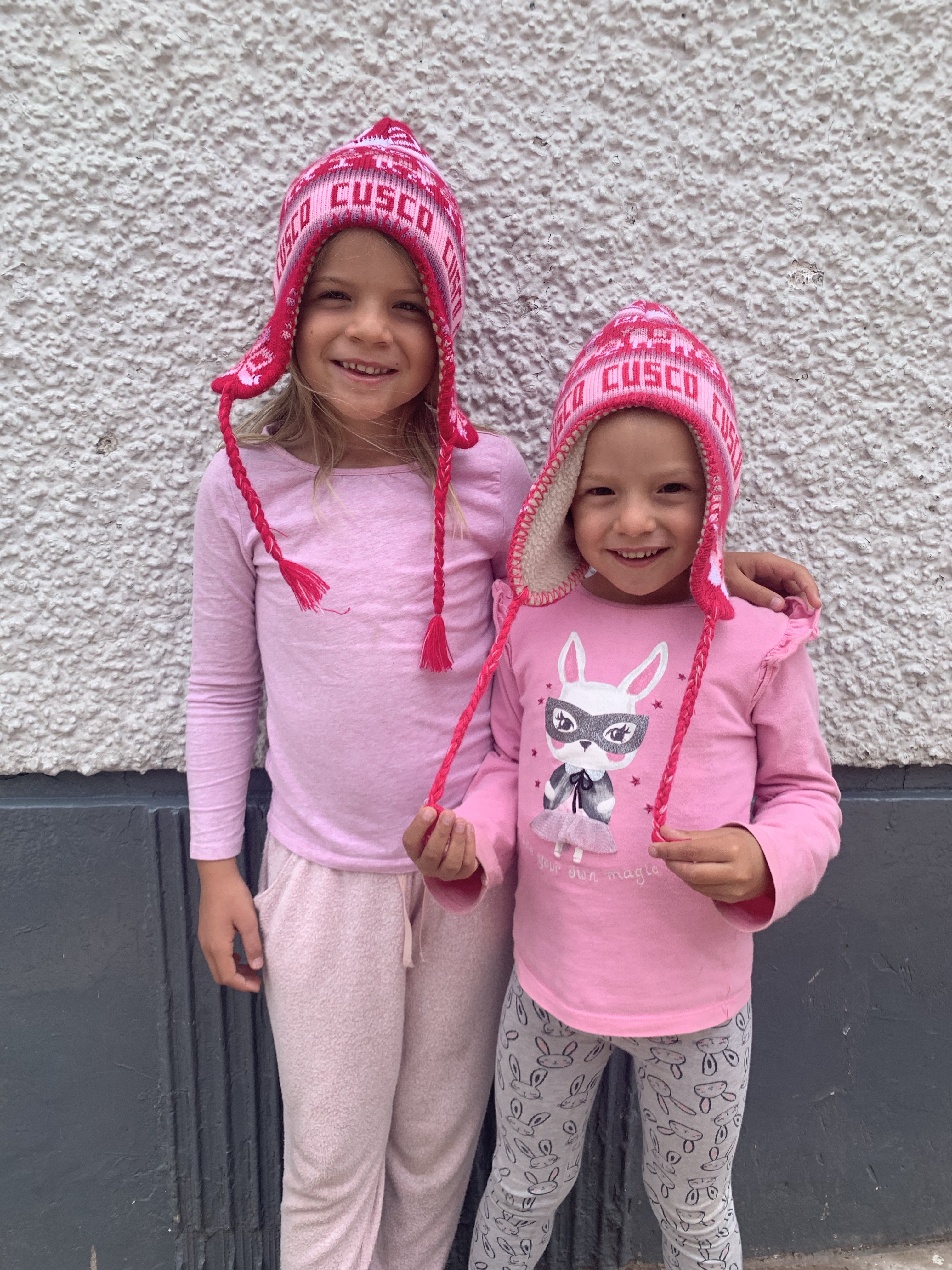
MoJo pleased with their purchases at Mercado Central de San Pedro, Cusco.
Tempting stalls at Mercado Central de San Pedro, Cusco.

We went onto the Museo Quijote located on the first floor of a bank which was very weird – bone sculptures and second-rate paintings. Avenue Sol is the main thoroughfare of the old town, we went down it to find the post office and stepped into the weaving centre to learn more about the craft.
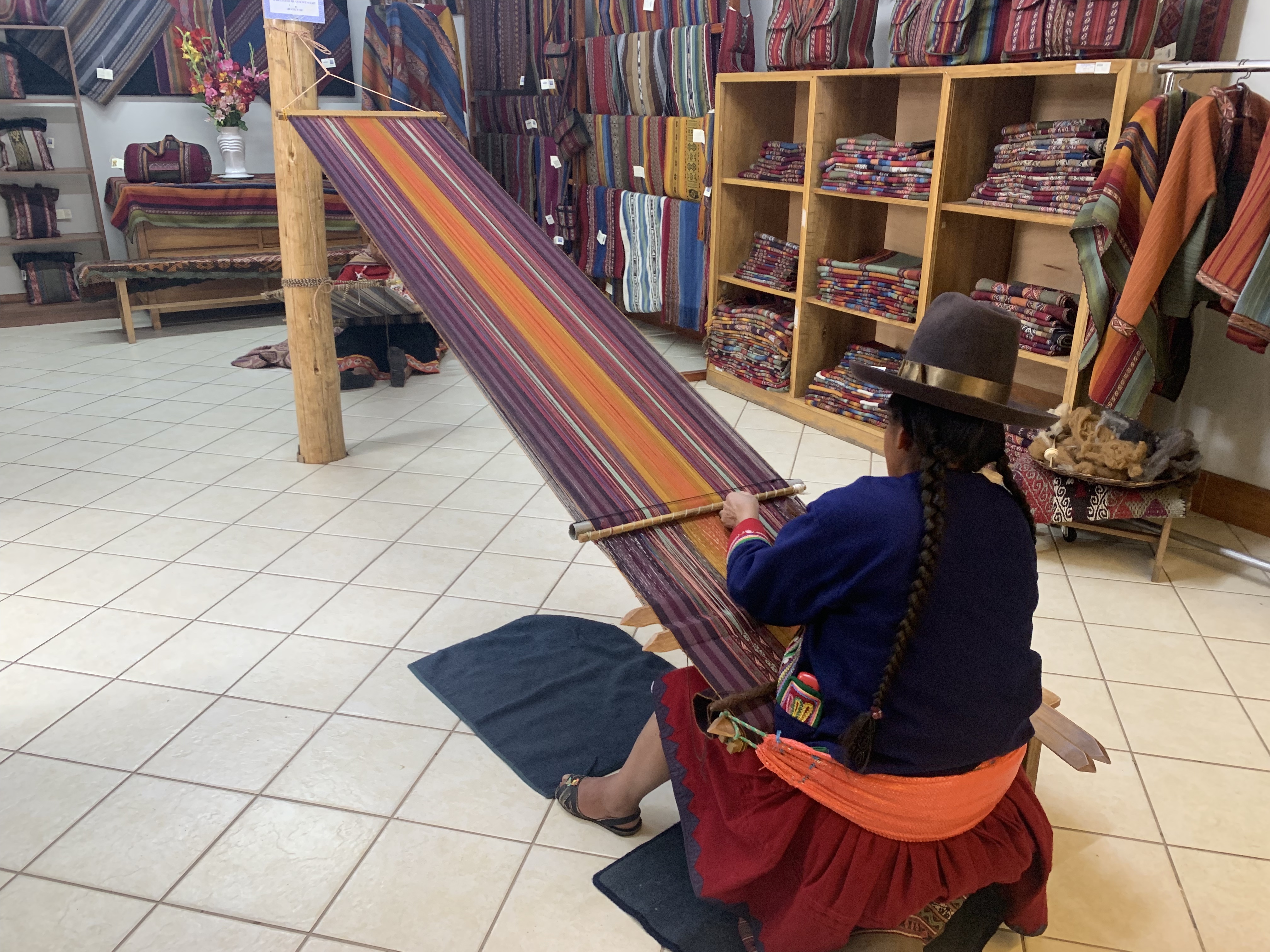
Traditional Textile Center of Cusco, Avenue El Sol, Cusco.

We had a good lunch at PerUK (finding our first reference to the famous Peruvian, Paddington Bear) and then went to the Machu Picchu Museum to learn more about it. We decided against going into the Pisco Museum which didn’t seem that child friendly. The city seemed to have rather a lot of museums but the subject matter was often not all that clear, we didn’t even go inside this one!
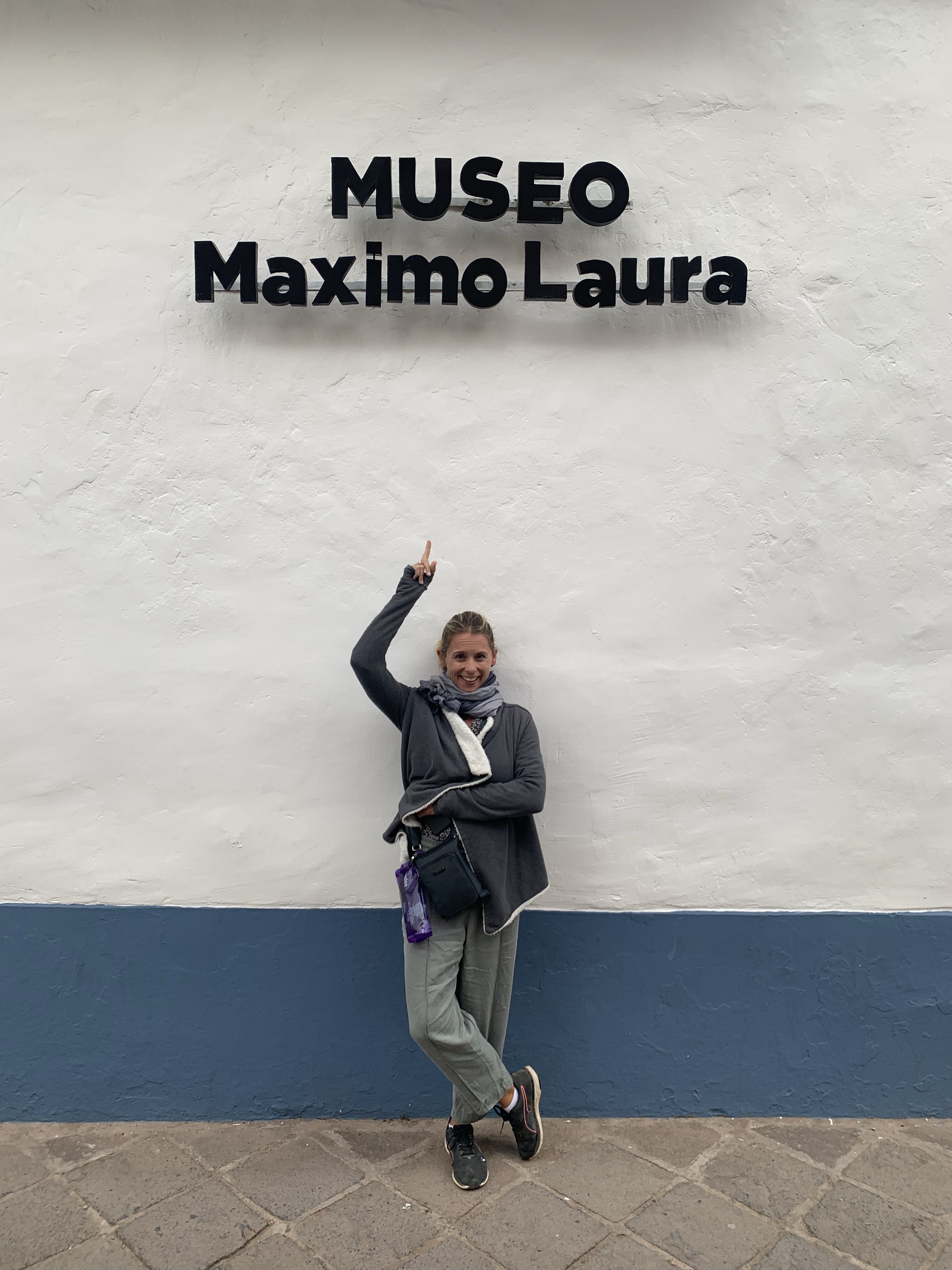
One museum too many? Cusco, Peru.

Our final night in Peru was spent at the Holiday Inn at Lima airport between flights – a strangely international place to be although we did make the most of room service and a lavish buffet breakfast. It was the end of a truly unique week in an incredible country.
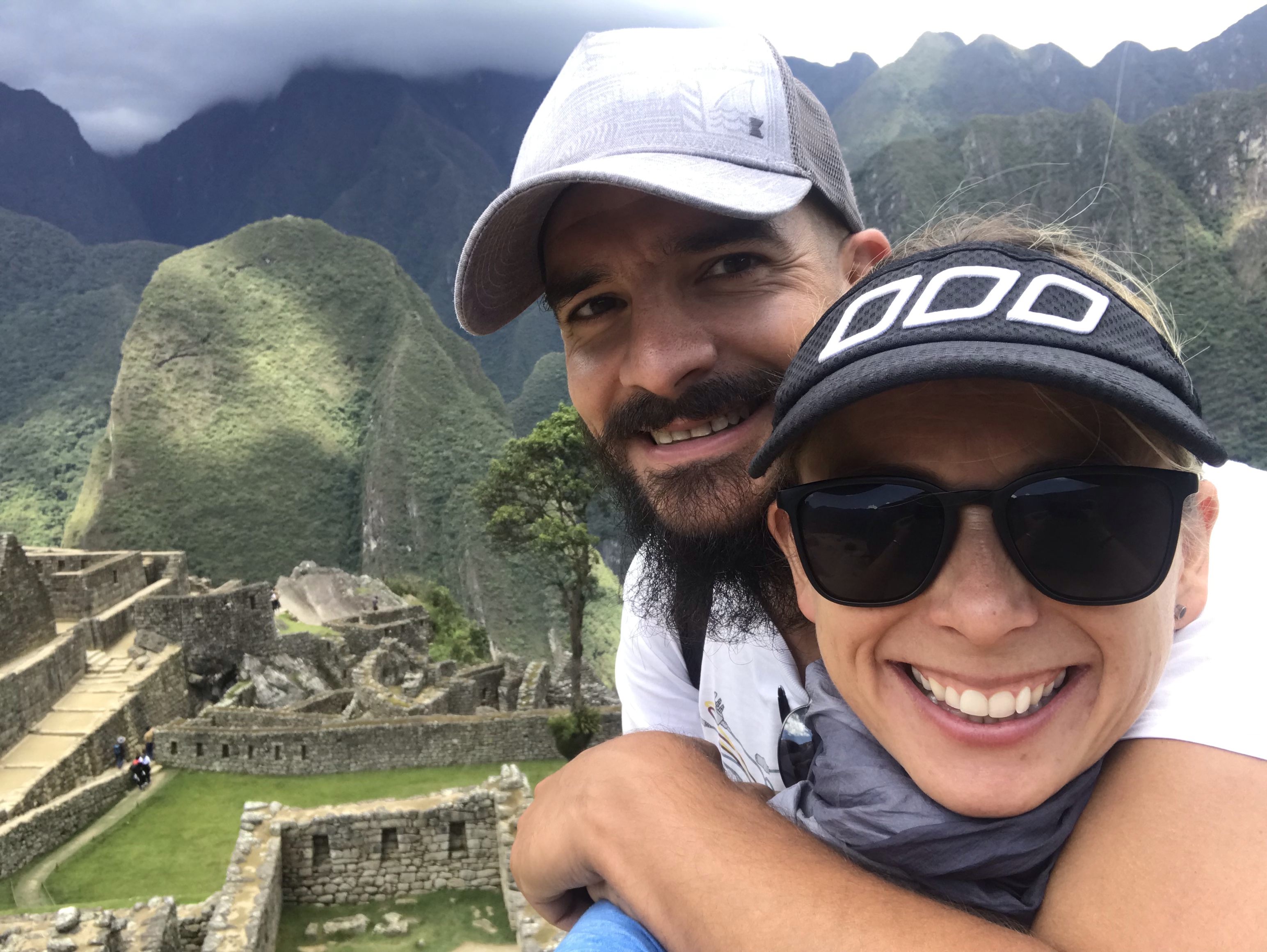
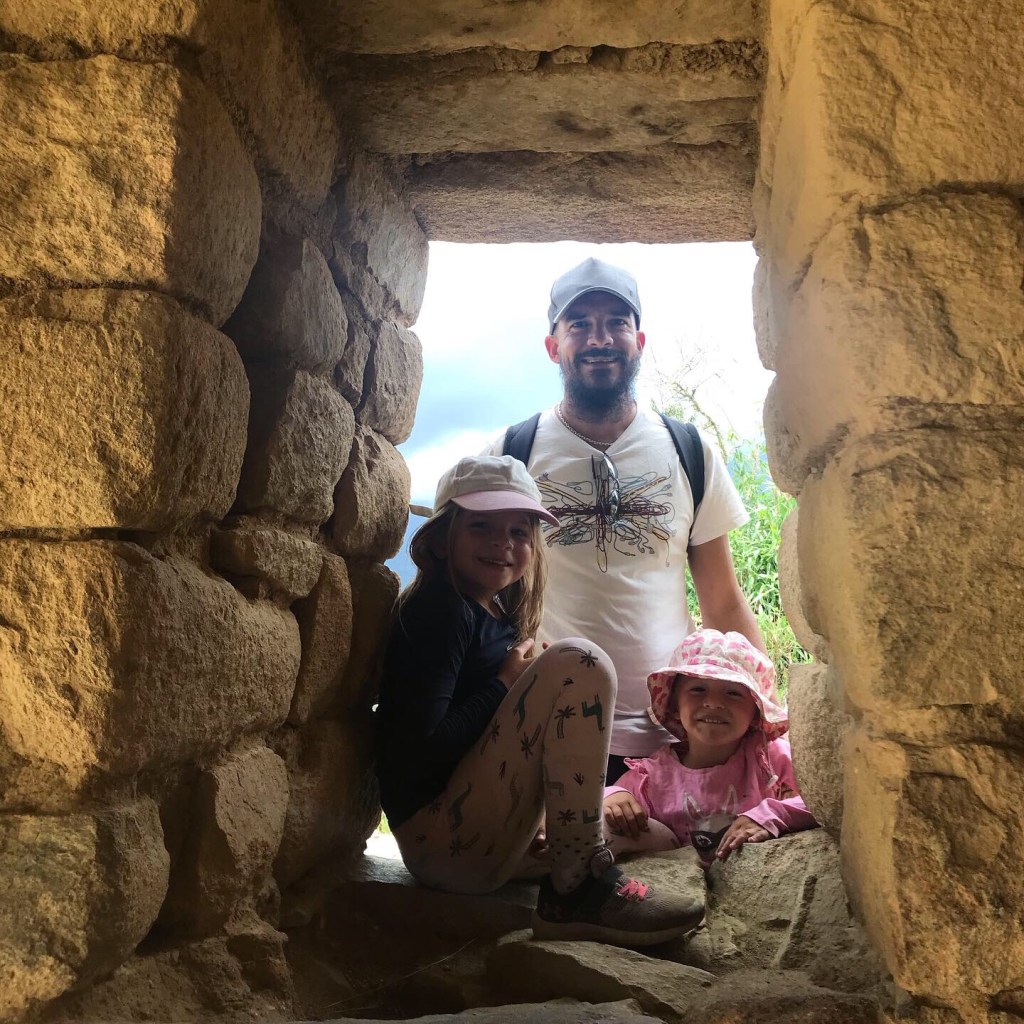
Machu Picchu smiles.
Inca archways, Machu Picchu.

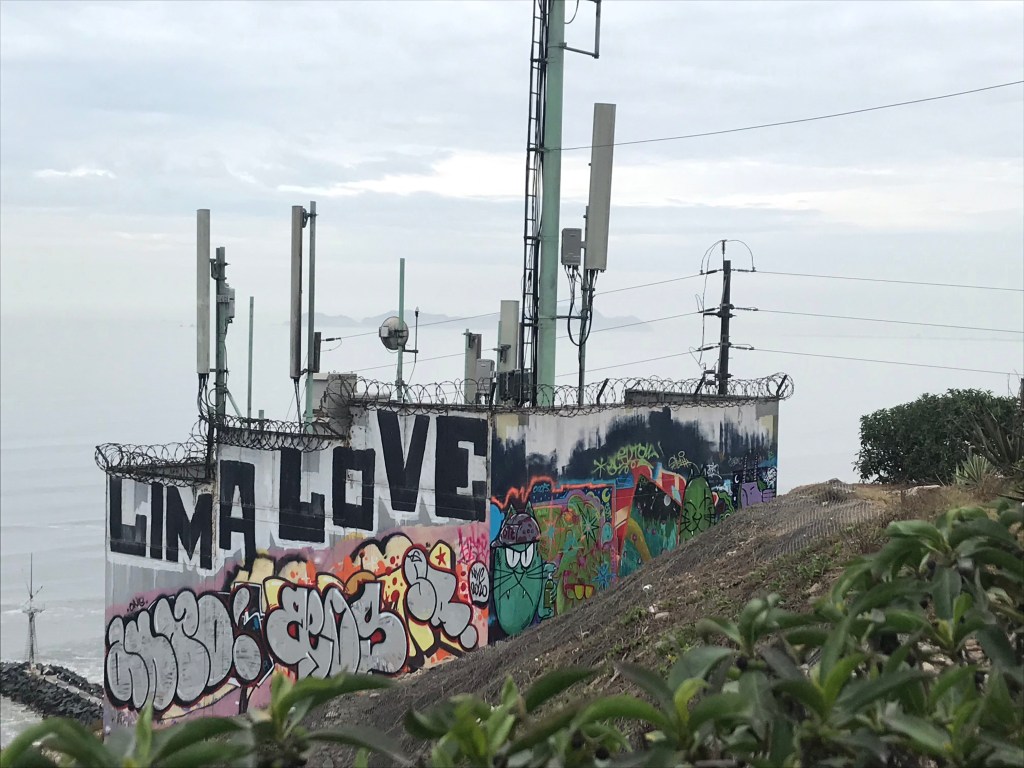
Lima love

Reported to be the gastronomical capital of the Americas and also known as the garden city due to its many green spaces, Lima was always an essential stop on our world tour. Getting there from Argentina proved problematic: we are still in a dispute with the airline LATAM regarding our single flight from Mendoza. I won’t use this as a place to rant but simply put, they owed us more money than we spent during our time in Peru (Toms persistence did get the bulk of it back eventually!)

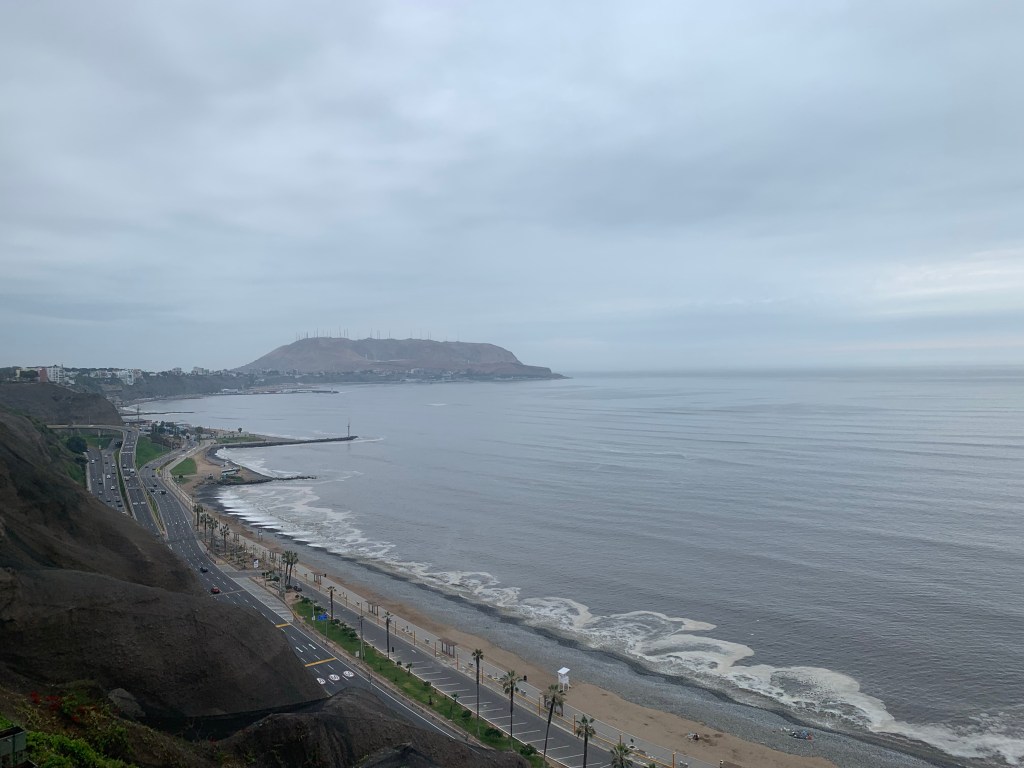
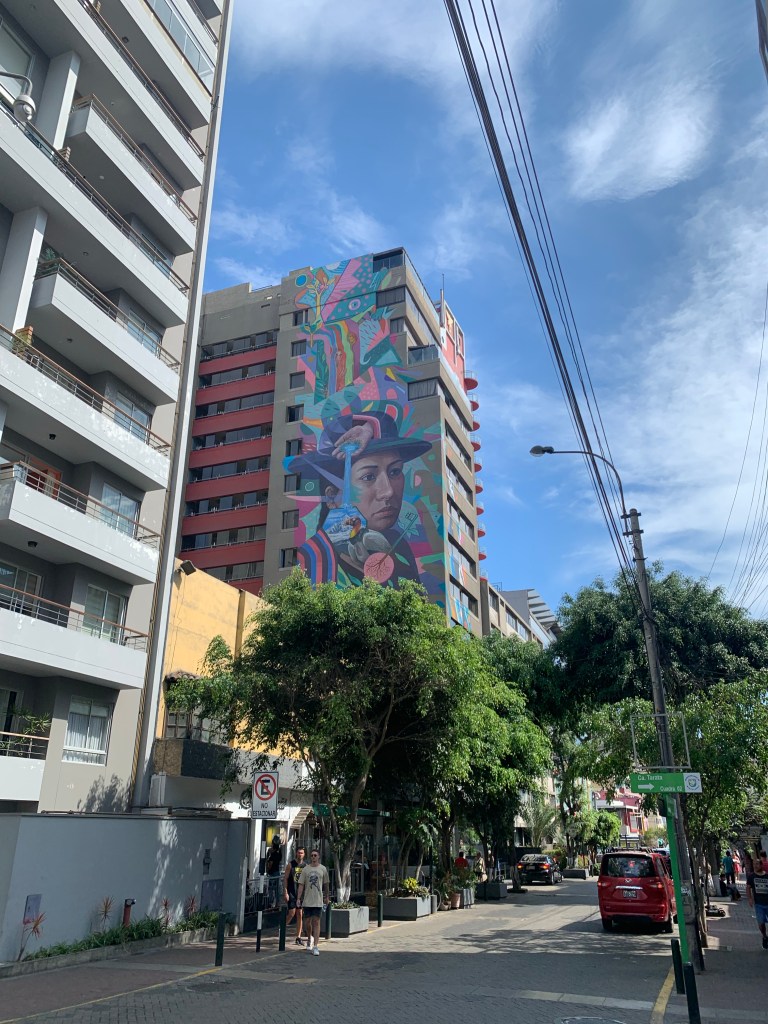
Pacific Ocean view from El Malecón, Miraflores, Lima.

Friends had advised we booked an Airbnb in the Miraflores area of town, it took us a while to find the right one but as soon as our host Ursula opened the door, we knew we had picked a gem. She was very helpful, spoke excellent English and there was a vast amount of information about the city to read in her apartment, which was stylish, spacious, clean and within a few minutes’ walk from the coast. Ubers were again the way to get around and were super efficient.

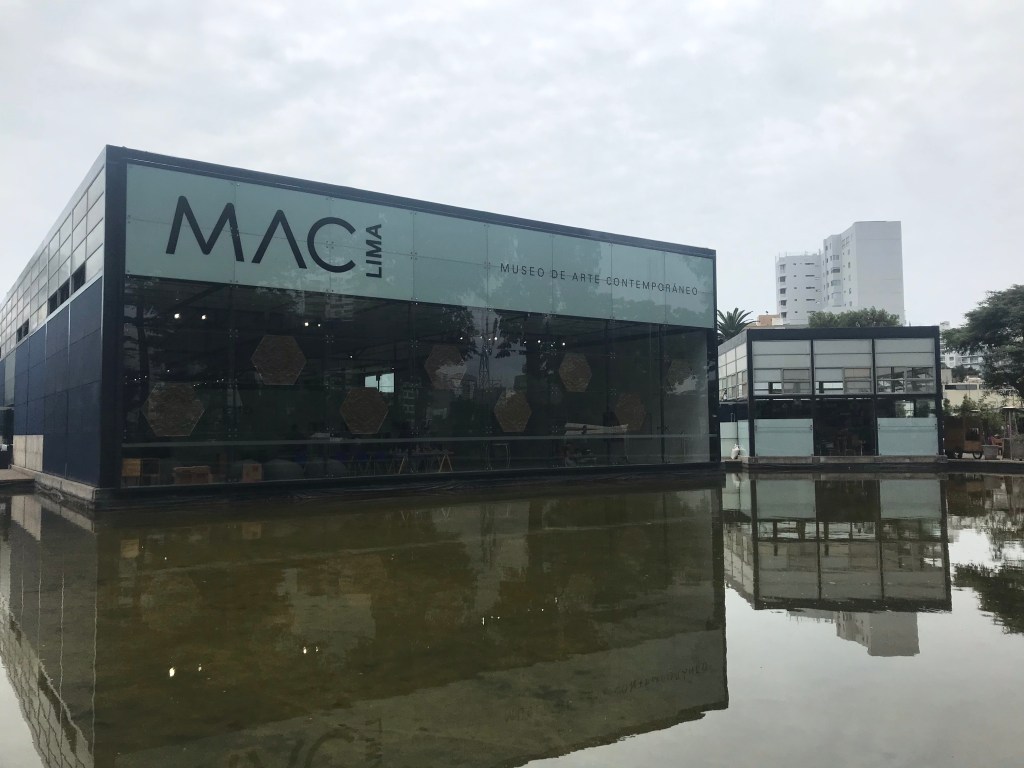
Arriving mid-morning, we headed straight to MAC Lima for lunch and a stroll around the museum of contemporary art.

Museo de Arte Contemporáneo (MAC), Barranco, Lima.

There are a couple of branches of the café La Bodega Verde, the one at the museum was mainly al fresco close to the park that circled the museum (with some sculptures to explore and climb) and had a lovely menu of salads and light bites. It also had some kids toys and was clearly the spot where expat mums and kids came on playdates.

The museum itself was a little thin on content, no permanent collection on display which surprised me, just three small temporary exhibitions. The first was just a few pieces by the artist Camila Rodrigo on the construction of landscape.

Espacio Reverso, Camila Rodrigo, exhibition at MAC Lima.

The second a larger showcase of the history of contact between Peru and Venezuela (tackling migration) where it was good to see a new work by Alessandro Balteo-Yazbeck (who shows with Green Art Gallery in Dubai) and some strong video and textile pieces.

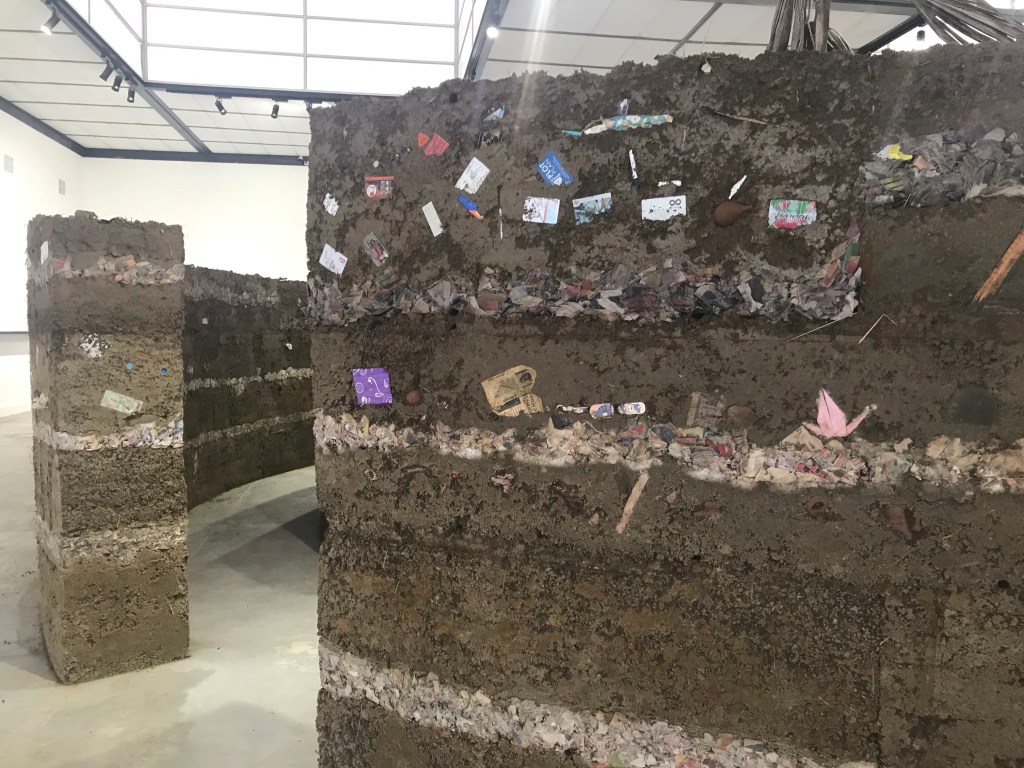
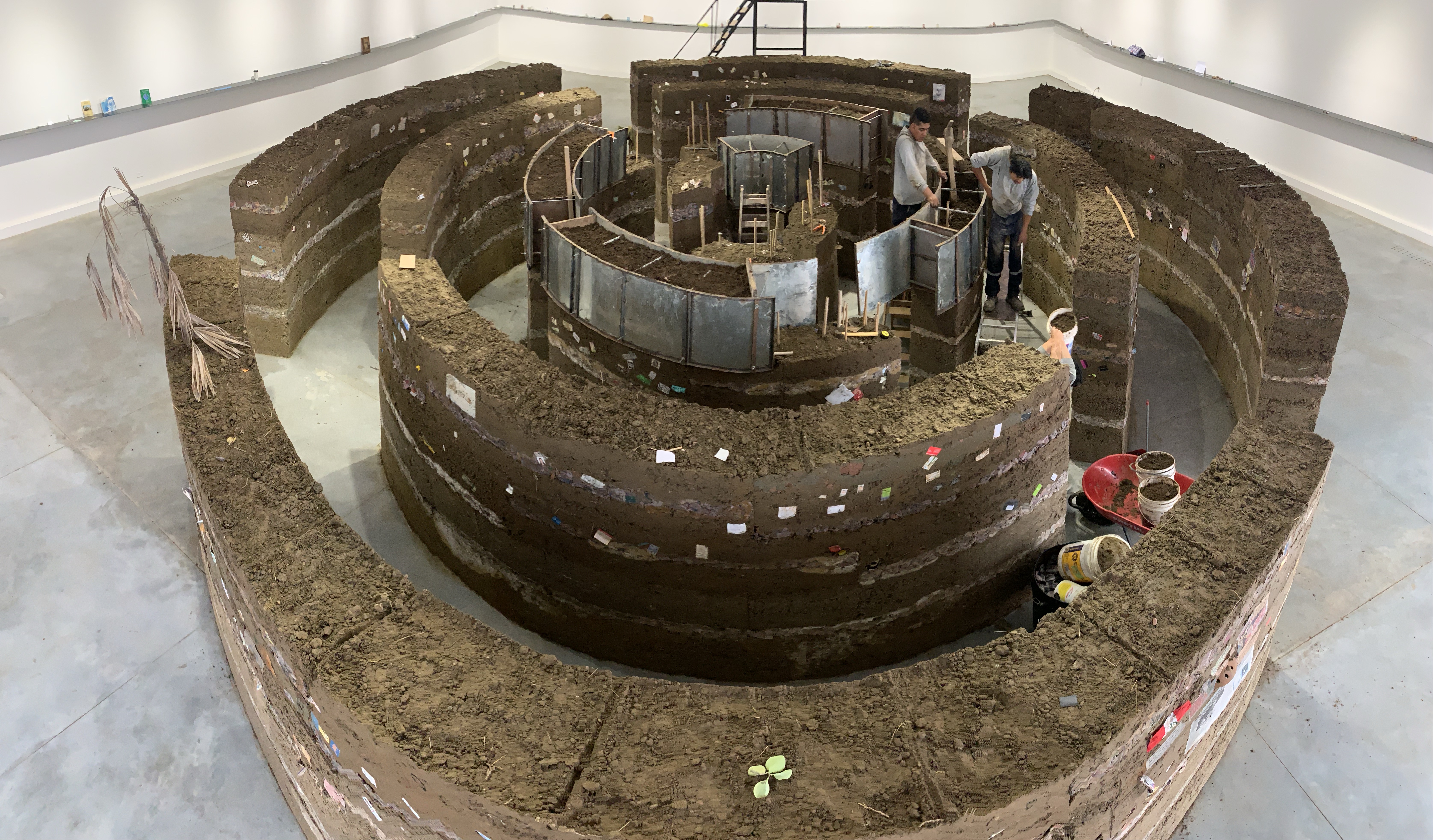
We spent the most amount of time in the third temporary exhibition Common Ground, an experimental space designed by Ximena Garrido-Lecca and Ishmael Randall-Weeks (who shows with Lawrie Shabibi, Dubai). They were inspired by the Dominican Friar Tommaso Campanella and his imagined utopia where the city’s walls were covered with all the knowledge of its time. Visitors could add an object to the exhibition, help to rip bits of newspaper used in the clay construction or climb up a flight of stairs and read an extract of the newspaper into a microphone.

Materia Común (Common Ground), Ximena Garrido-Lecca and Ishmael Randall Weeks, MAC Lima.

It’s the type of project which could never happen post COVID-19 and was fascinating in lots of ways. Sadly, all we had with us to leave was an entrance ticket to the museum and an Argentinian peso.

Materia Común (Common Ground), Ximena Garrido-Lecca and Ishmael Randall Weeks, MAC Lima.

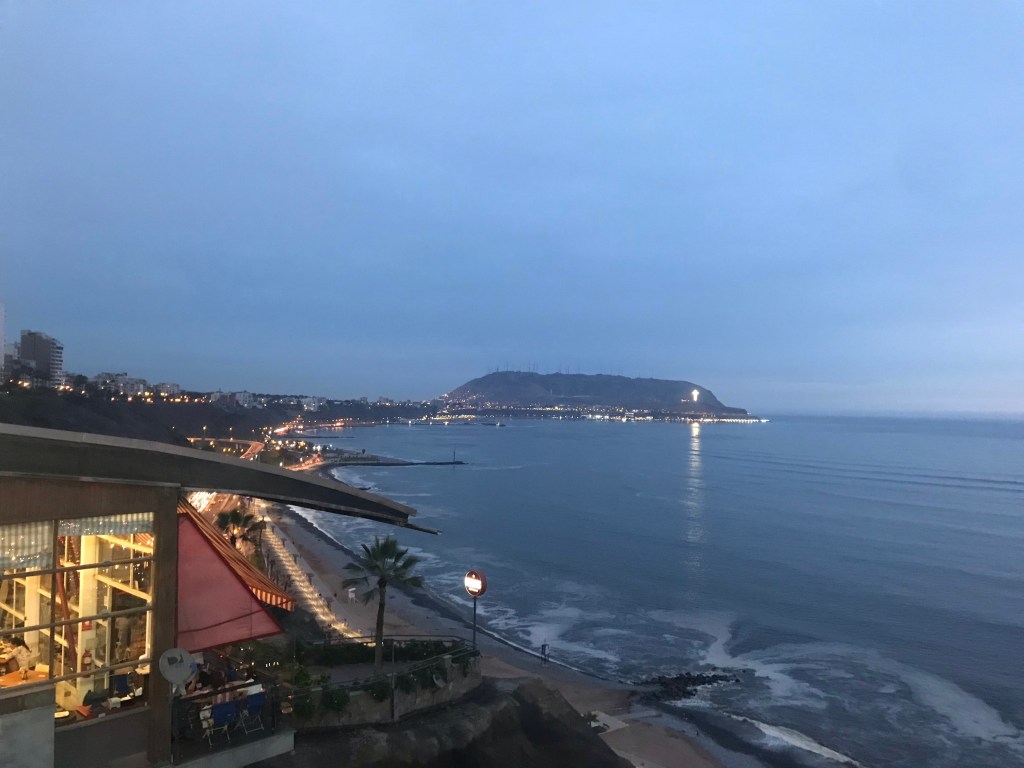
We set off to walk back in the direction of our apartment – knowing we wouldn’t make it all the way on foot. El Malecón is a six-mile stretch of coastline, with a series of parks along the cliffs with views of the Pacific Ocean churning below. We got as far as the Larcomar mall which had been recommended by Ursula and was spectacularly situated on the coast. We had a good buffet dinner at Mangos and enjoyed the sunset.

Coastal twilight view from Larcomar, Miraflores, Lima.

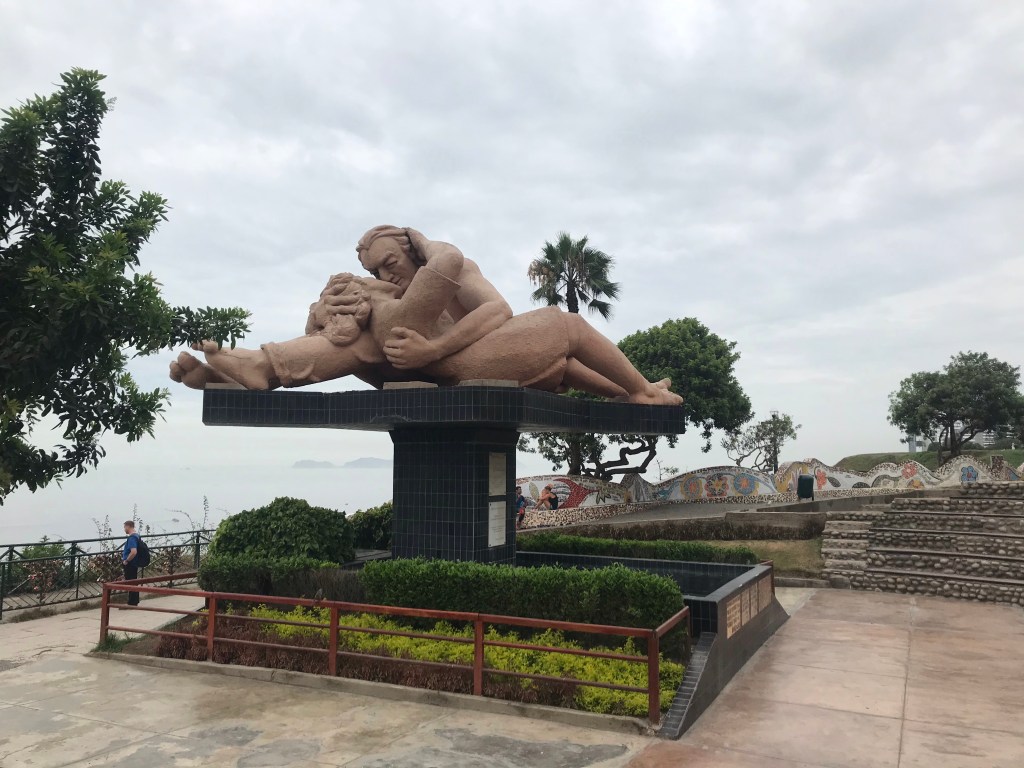
The following morning I got the measure of the coast a little more, setting off running the other way along el Malecón and then making my way down to the shoreline trying to avoid the traffic. It was more pleasant up high on the cliffs, idyllic really, especially through the Parque del Amor, a Gaudí style tiled viewpoint with Victor Delfín’s sculpture of a robust couple embracing.

El Beso (The Kiss), Victor Delfín, 1993, Park del Amor, Miraflores, Lima.

I was stunned by the number of people exercising: bootcamps, boxers, joggers even groups practicing Tai Chi. Its famed as a great spot for paragliding but I think it was a bit windy and murky that morning. Down on the beach there were plenty of surfers, with pelicans and other large birds dipping and diving around them.

Playa La Estrella, Miraflores, Lima.

It was a little smelly and I got stupidly distracted by a woman collecting rubbish and tripped over – this time a long way from the apartment so it was a bit of a hobble back.

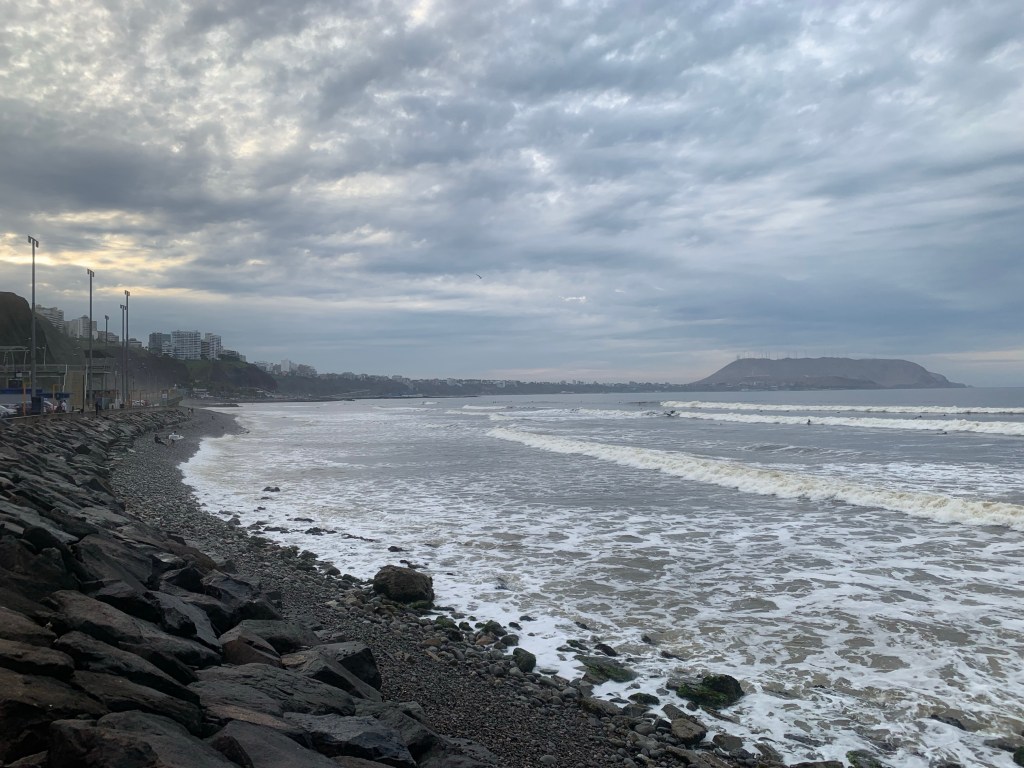
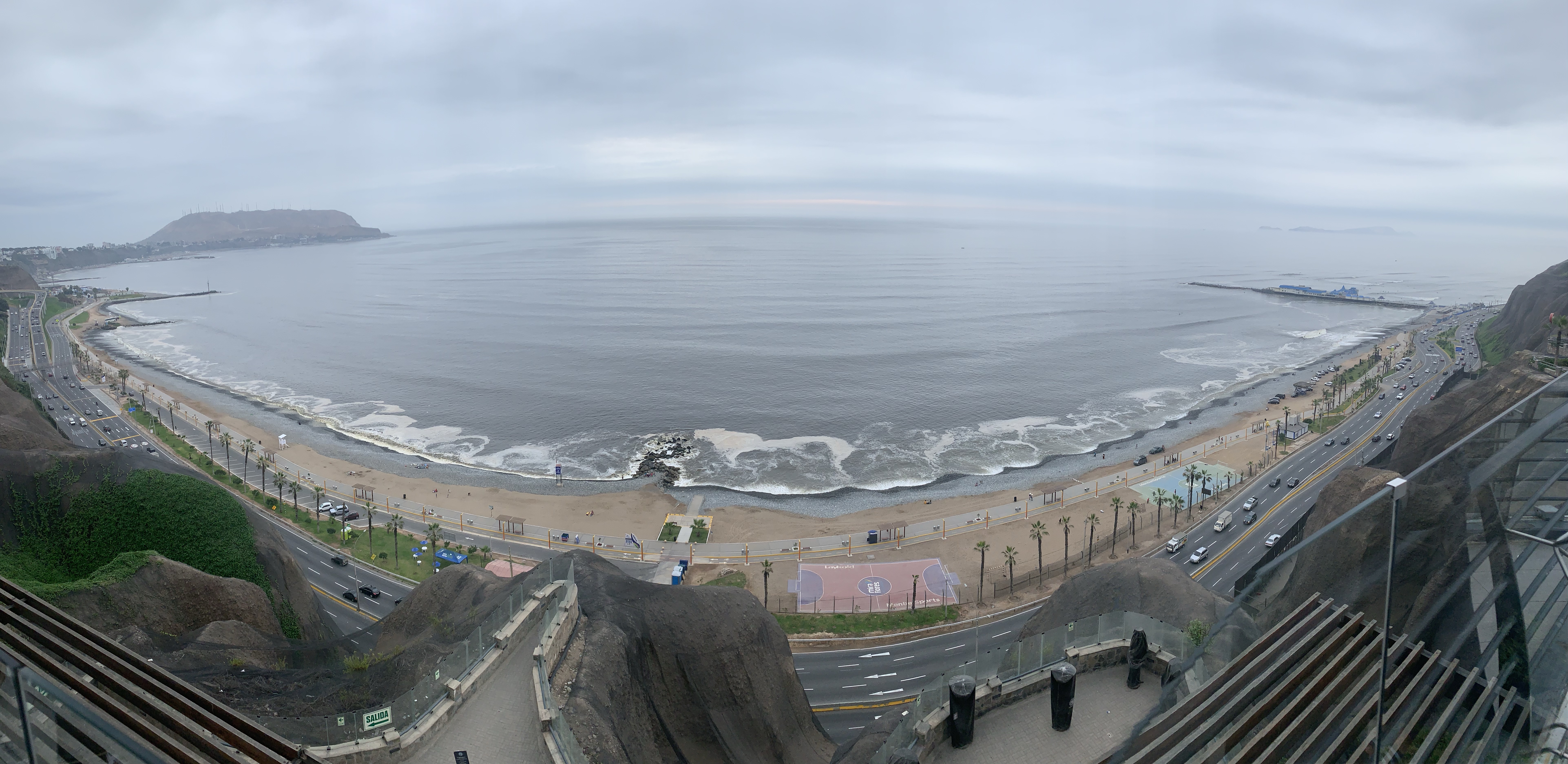
El Malecón view of the cliffs, beach and bay, Miraflores, Lima.

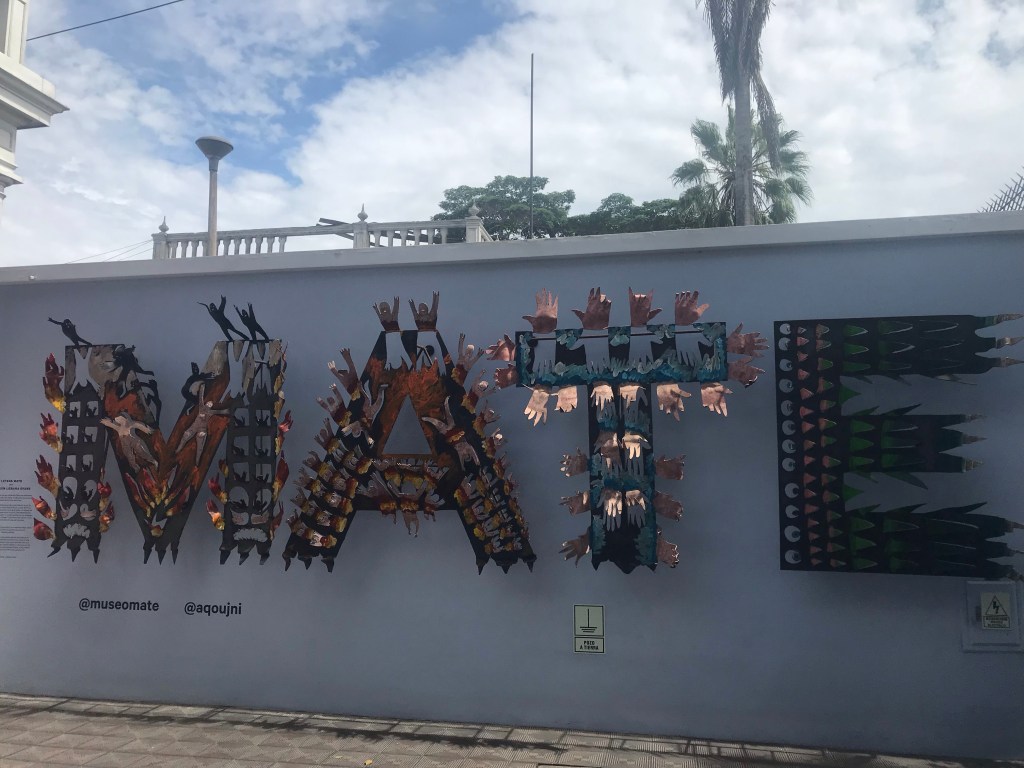
We tried a few more museums, with mixed results. MATE was a highlight, the museum in a beautiful villa, established by the photographer Mario Testino who is from Lima. Several rooms featured floor to ceiling blown-up reproductions of his photographs of models and glitterati such as Kate Moss and Mick Jagger. Upstairs there was a room dedicated to his infamous photoshoot with Princess Diana which was rather moving. Best were the spaces dedicated to younger Peruvian artists, not just photographers, there was some strong, experimental work on display.

Museo Mate, Mario Testino Museum, Barranco, Lima.

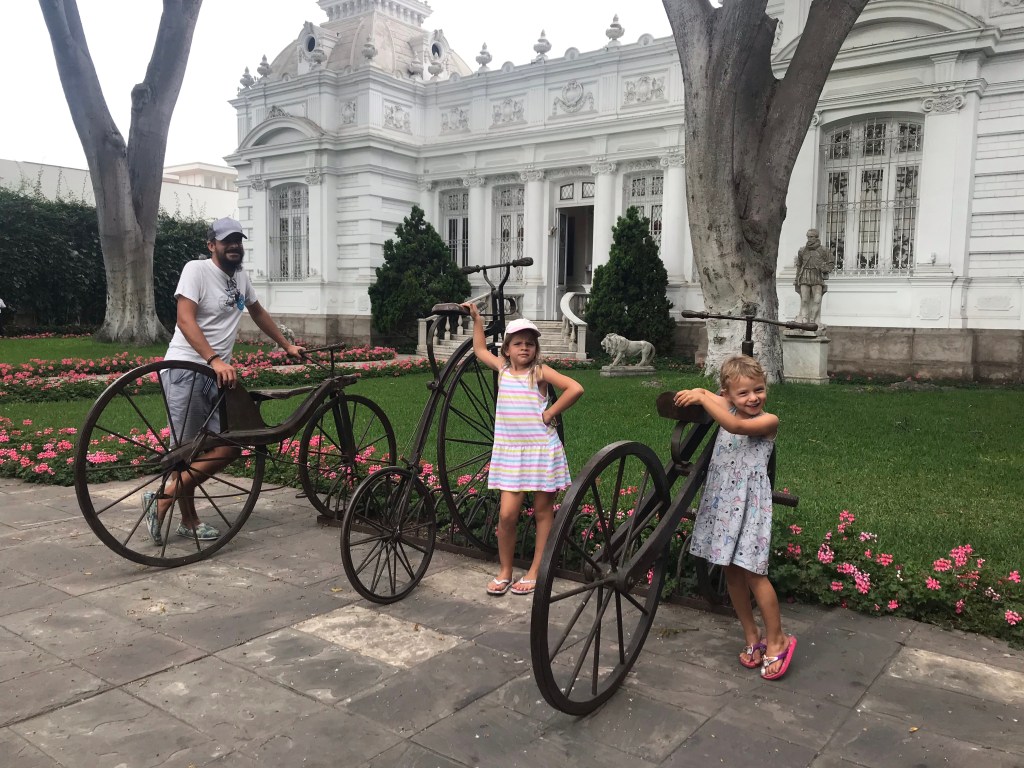
Included in the ticket price was the Museo Pedro de Osma in the villa next door, so we took a look – not hugely taken with the 17th century religious paintings and silverwork but it had a nice garden.

Catching a ride? Museo Pedro die Osma, Barranco, Lima.

We thought we would take a tram down the street but instead found ourselves in the free Museo de la Electricidad – quite a bizarre place but we had fun getting electrocuted!

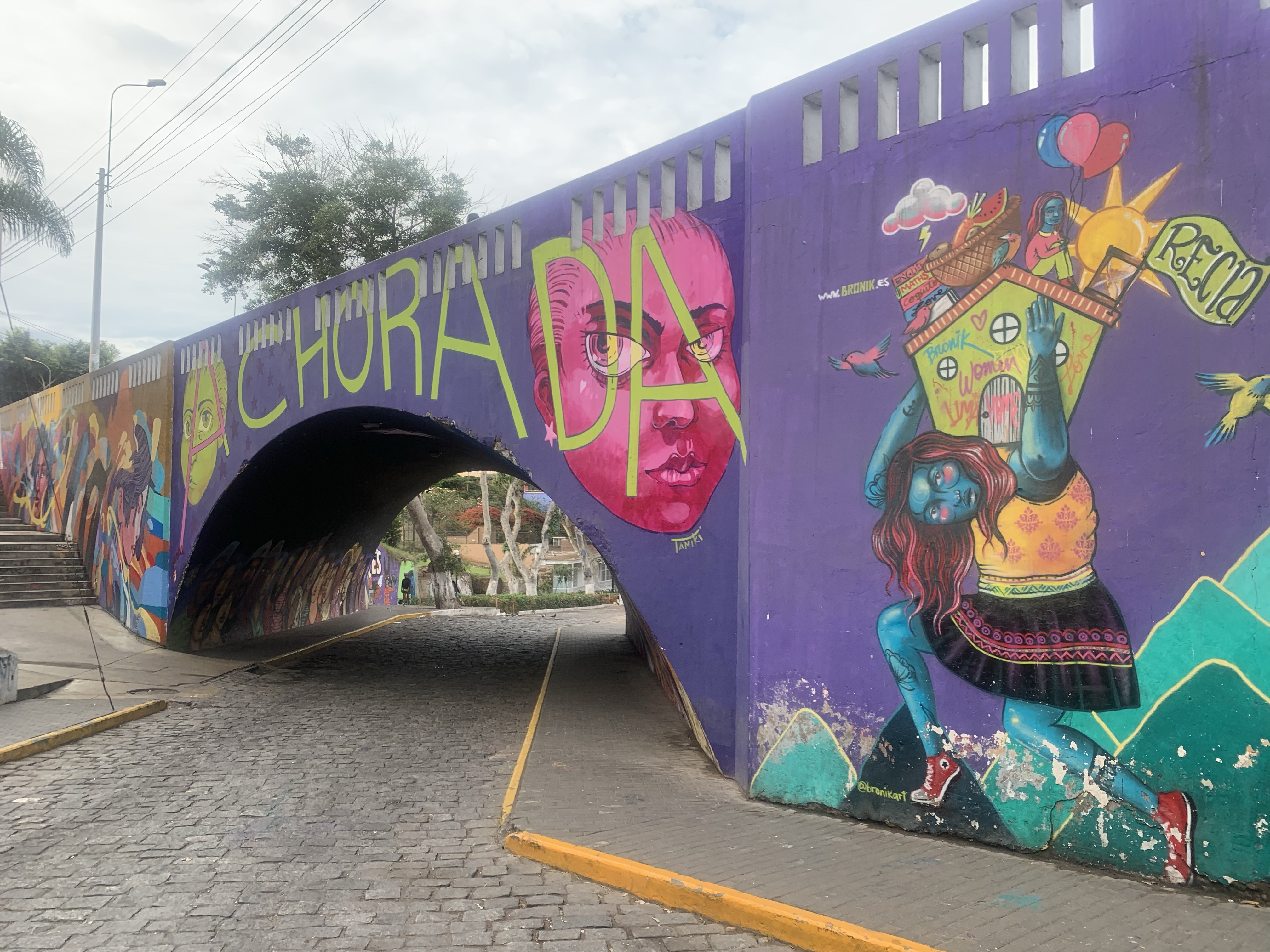
Graffiti covering the walls of the Bajada de los Baños, Barranco, Lima.

We warmed to the atmosphere around Barranco, walking over the Puente de los suspiros (only reading later that first-time visitors are supposed to hold their breath the whole way across and can then make a wish). The small wooden bridge built in 1876 is hardly a match to the Venetian bridge of sighs (or indeed the one I walked over daily at St John’s College Cambridge) but is so named as the area was a place where lovers often met, leading to a lovely ‘mirador’ or viewpoint, now bustling with cafés, bars and buskers.

There is plenty of good graffiti all along the Bajada de los Baños which winds its way down to the coast and would traditionally have been the main thoroughfare of fishermen.

Bridge over the Bajada de los Baños, Barranco, Lima.

How has it taken so long to get onto the serious subject of food and drink? We had been given quite some education in Peruvian cuisine due to the delicious menu at Toro Toro in Grosvenor House, but nothing prepared us for the variety and sheer wonder of what we found to devour in Lima.

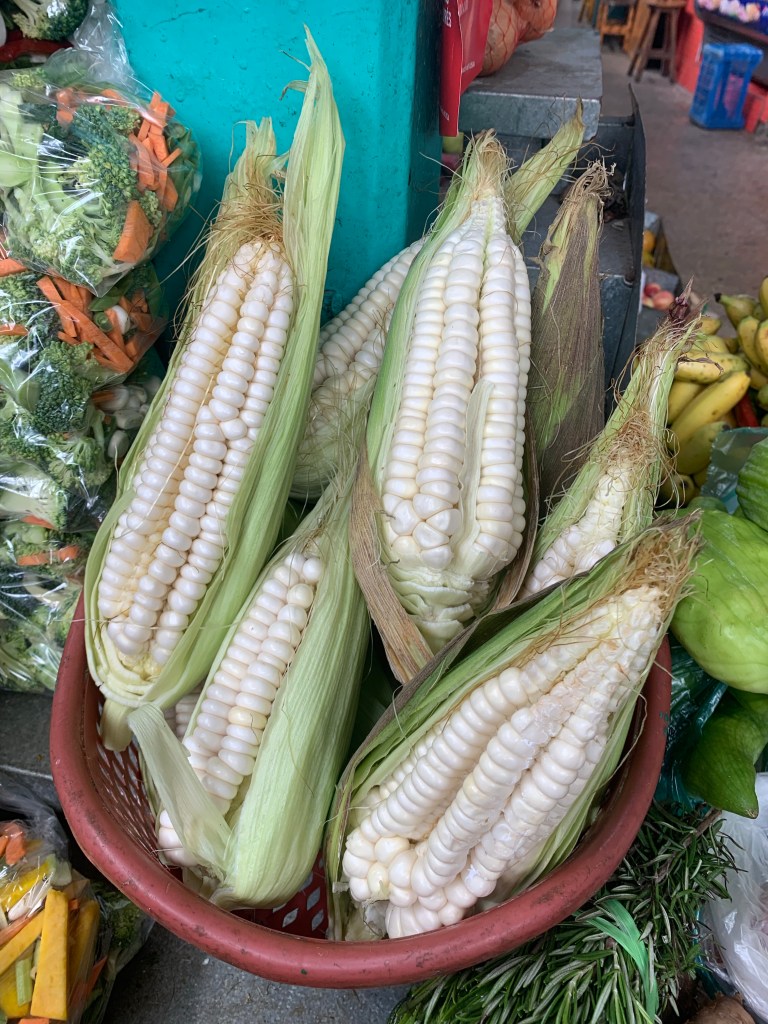
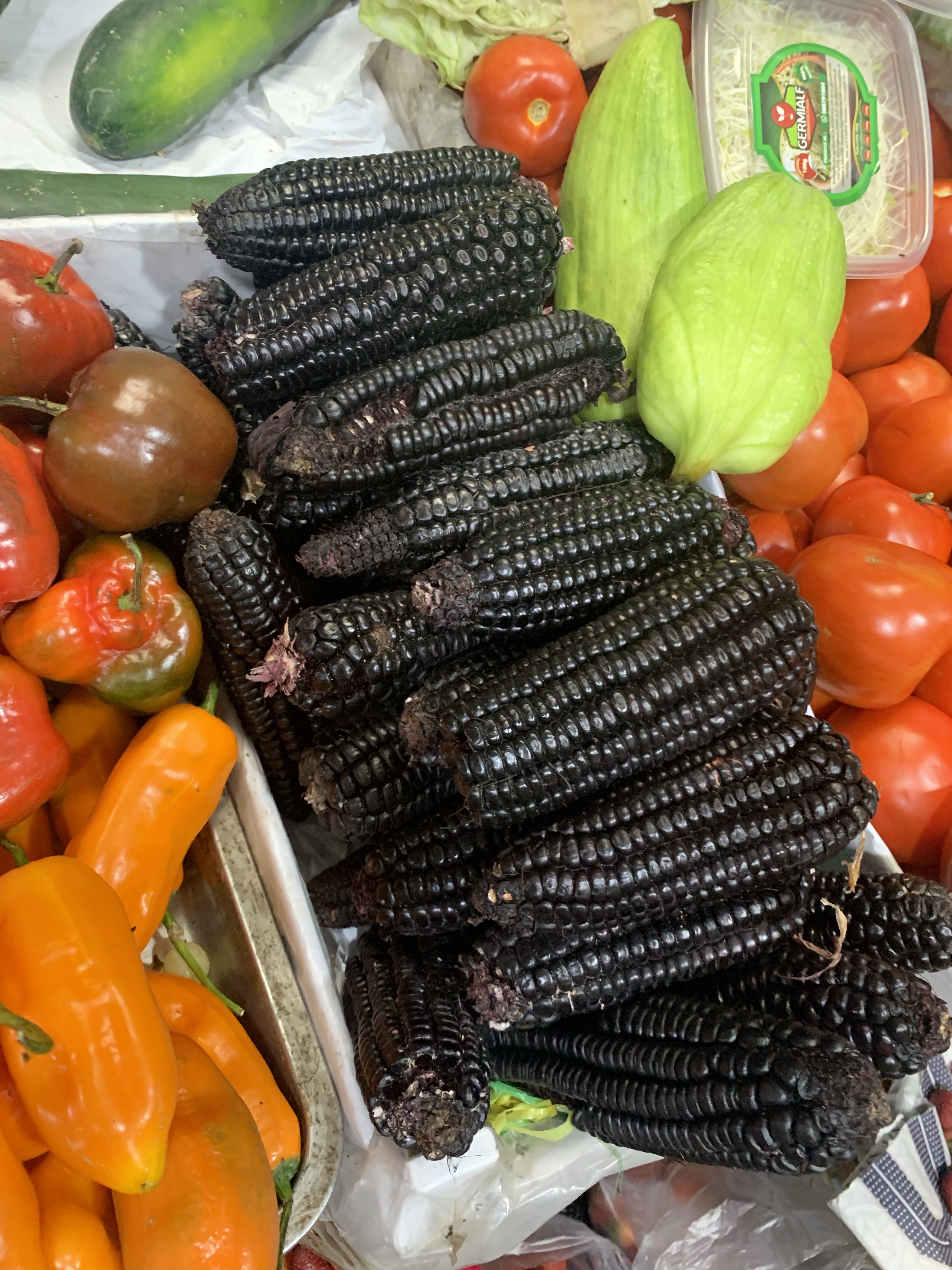
Choclo, Peruvian corn or Cuzco corn, a large-kernel variety of field corn from the Andes.
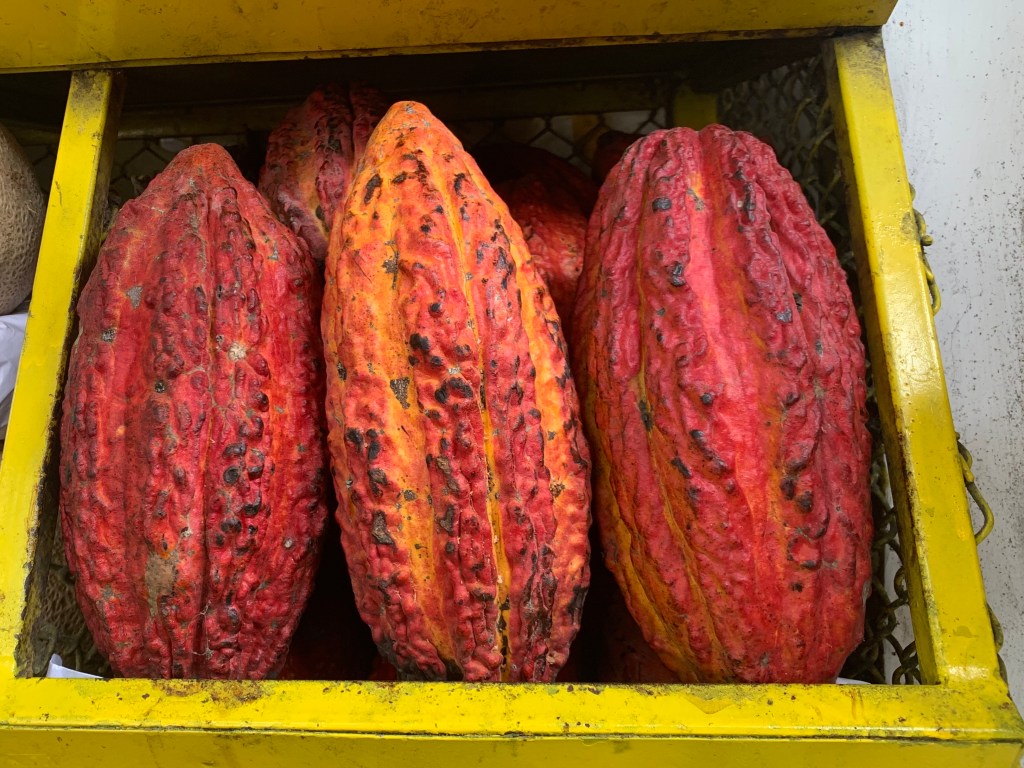
Raw cocoa beans (yes, chocolate!)

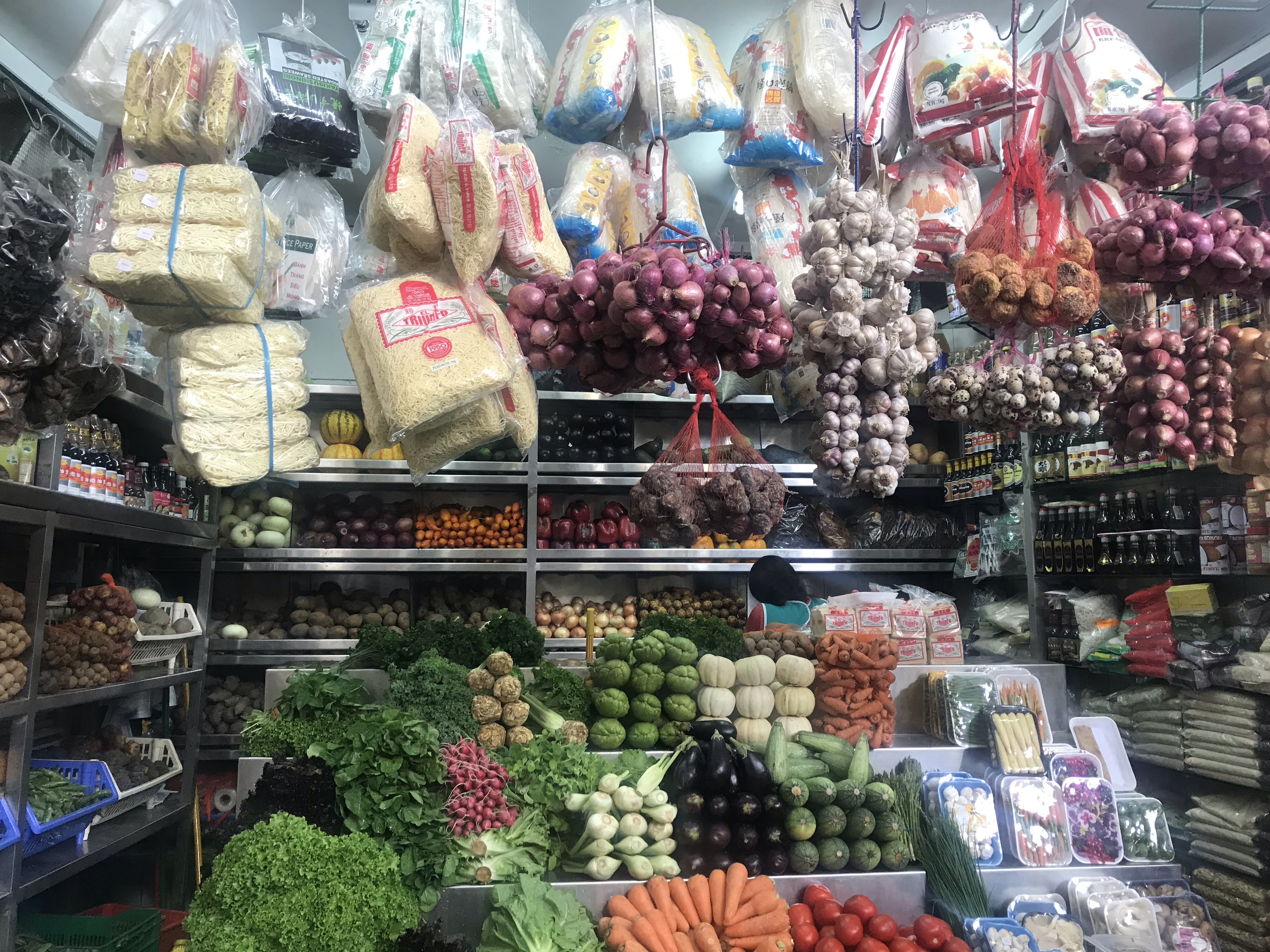
It always seems to make sense to start in a market to truly understand a city’s relationship with food, best of all one frequented by more locals that tourists. We found that at Mercado N° 1 de Surquillo – where we were stunned by the amount of fresh produce, fruit, vegetables of every description, fish and meat and dried goods too and of course corn, the national stable with many varieties.

Vegetable stall at Mercado N° 1 de Surquillo, Lima.

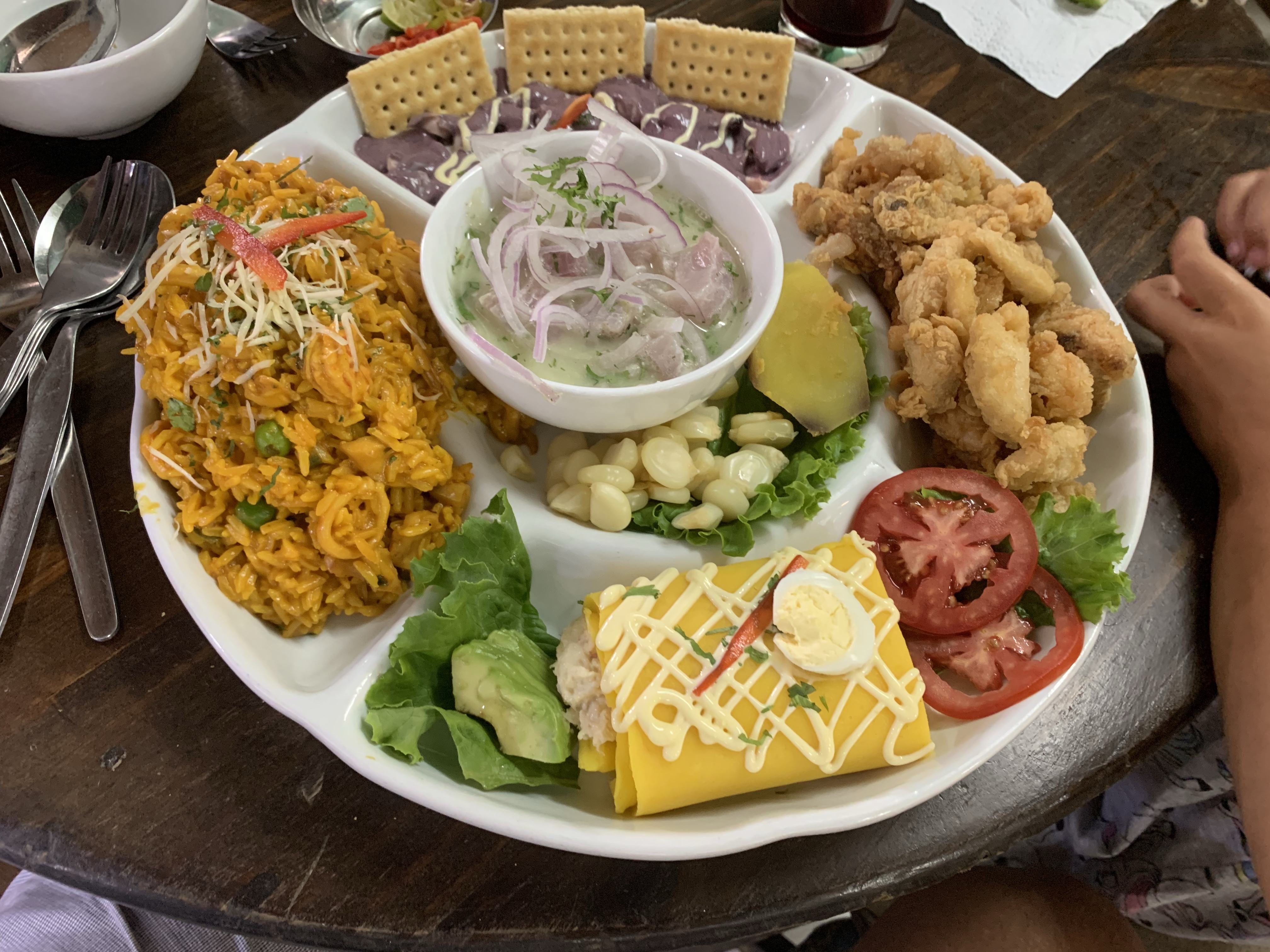
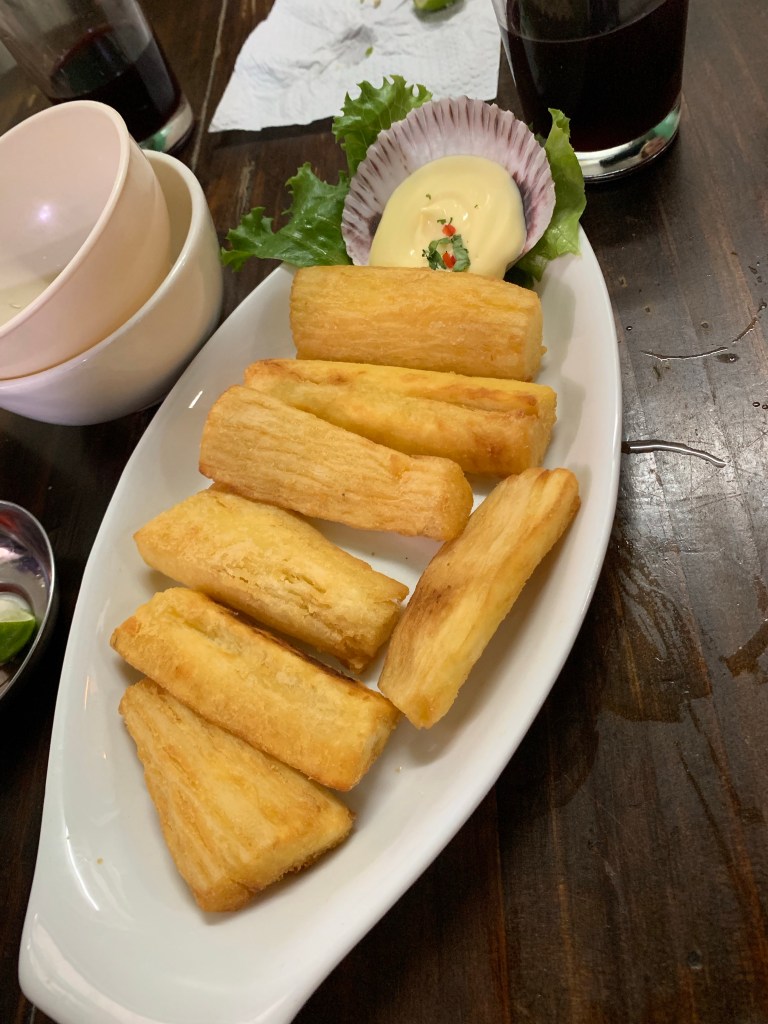
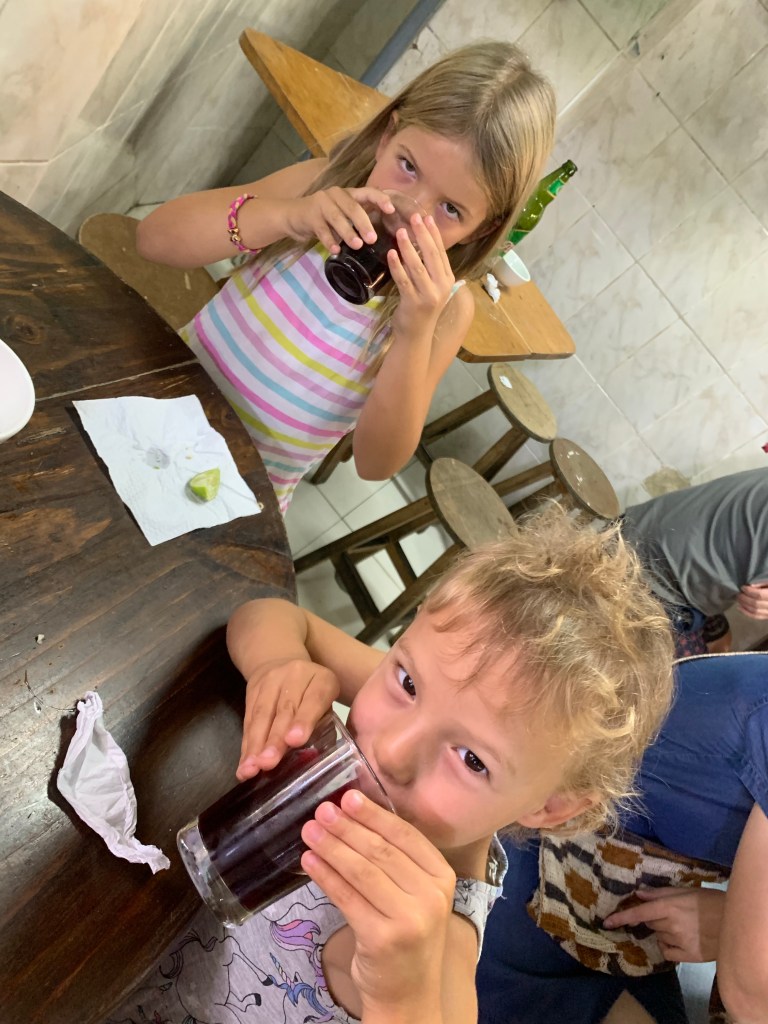
We had lunch at a place there which specialised in cerviche, portions vast and a fraction of the cost of restaurants. We couldn’t resist also ordering yuka fries and it was where we had our first jug of chicha morada, an incredibly moreish non-alcoholic drink made from purple corn.

Platter at Don Cevichero, Cercado de Lima.
Plate of yuka fries, Don Cevichero, Cercado de Lima.
Maiz Morado.

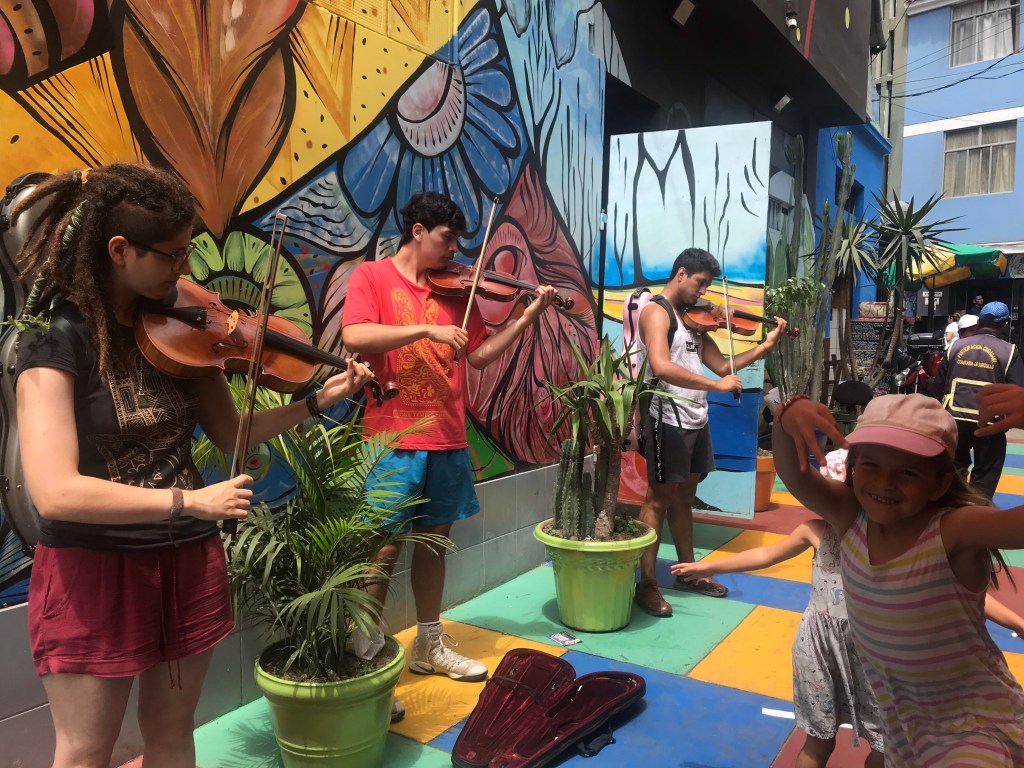
As our plates were being cleared, we were serenaded by a trio of talented violinists. We found them outside too and the girls had a dance.

Musicians outside Mercado N° 1 de Surquillo, Lima.

We walked on to the rather too touristy Inca Market to purchase a fridge magnet or two before heading down to Barranco.

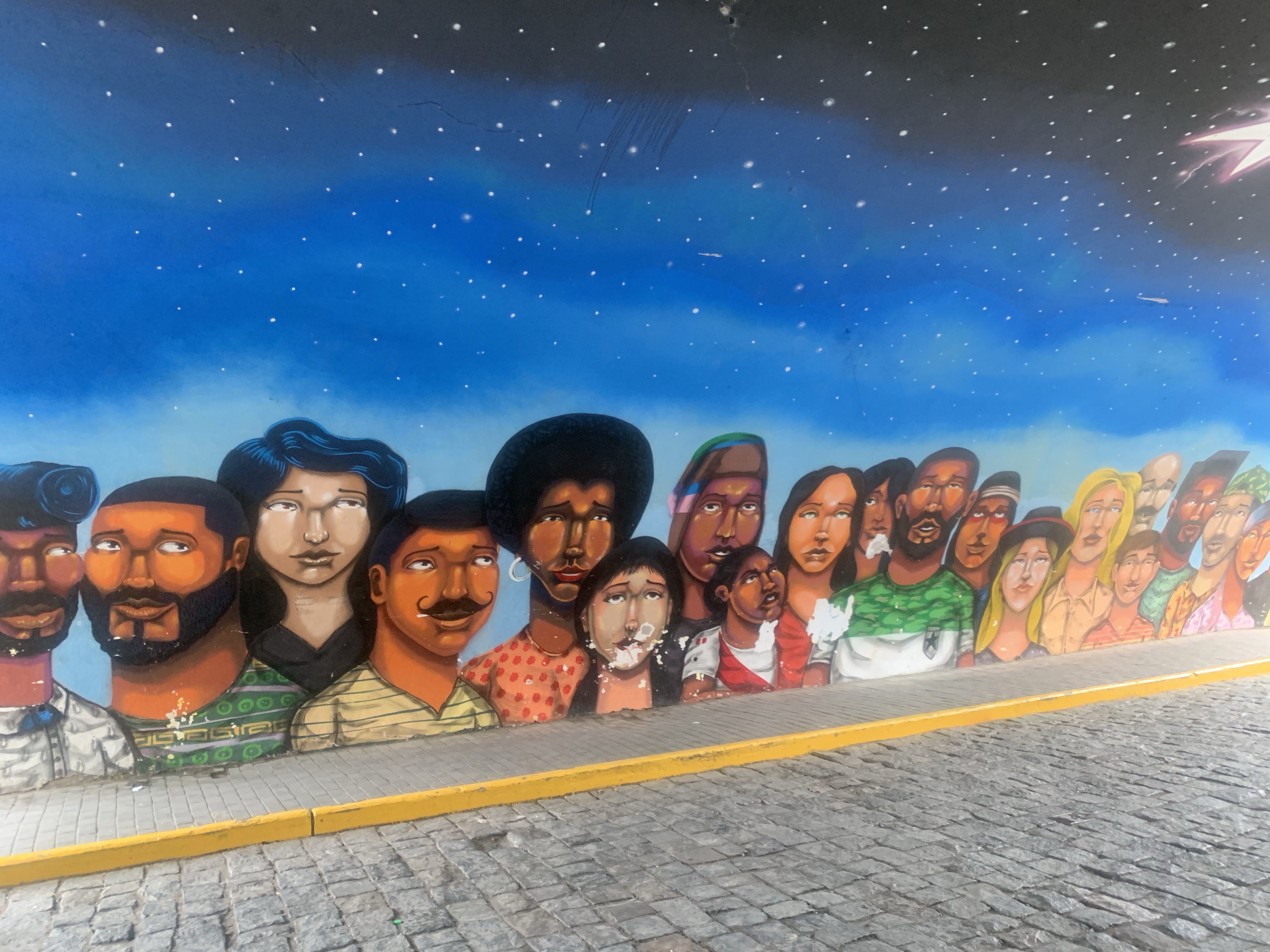
Grafitti was everywhere you turned in Barranco.

Head chef and friend Alfredo had given us a fantastic list of restaurants to try and get in to, we only managed two, but they were both so good and so different I think we did well. We had managed to book an early dinner slot at Isolina Taberna Peruana, not too early to try our first Pisco Sours of the trip which were divine.

Pisco Sour and menu, Isolina, Avenue San Martín, Barranco, Lima and left, trying Chica Morada, Peru’s traditional cold beverage.

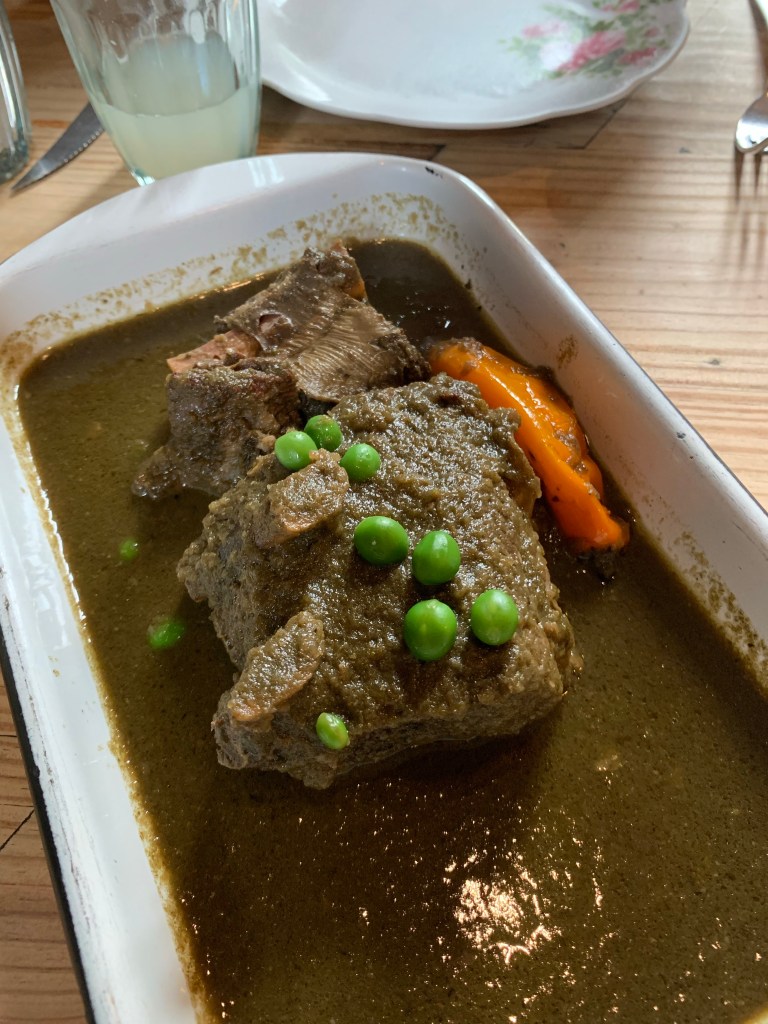
The menu was very hard to decipher, not only just in Spanish but with quite obscure cuts of meat and fish to identify. Alfredo helped us out via What’s app, and we ended up with vast dishes of delicious food, mainly meat stews. So good.

Dinner at Isolina, Avenue San Martín, Barranco, Lima.
Estofado de Osobuco, Isolina.

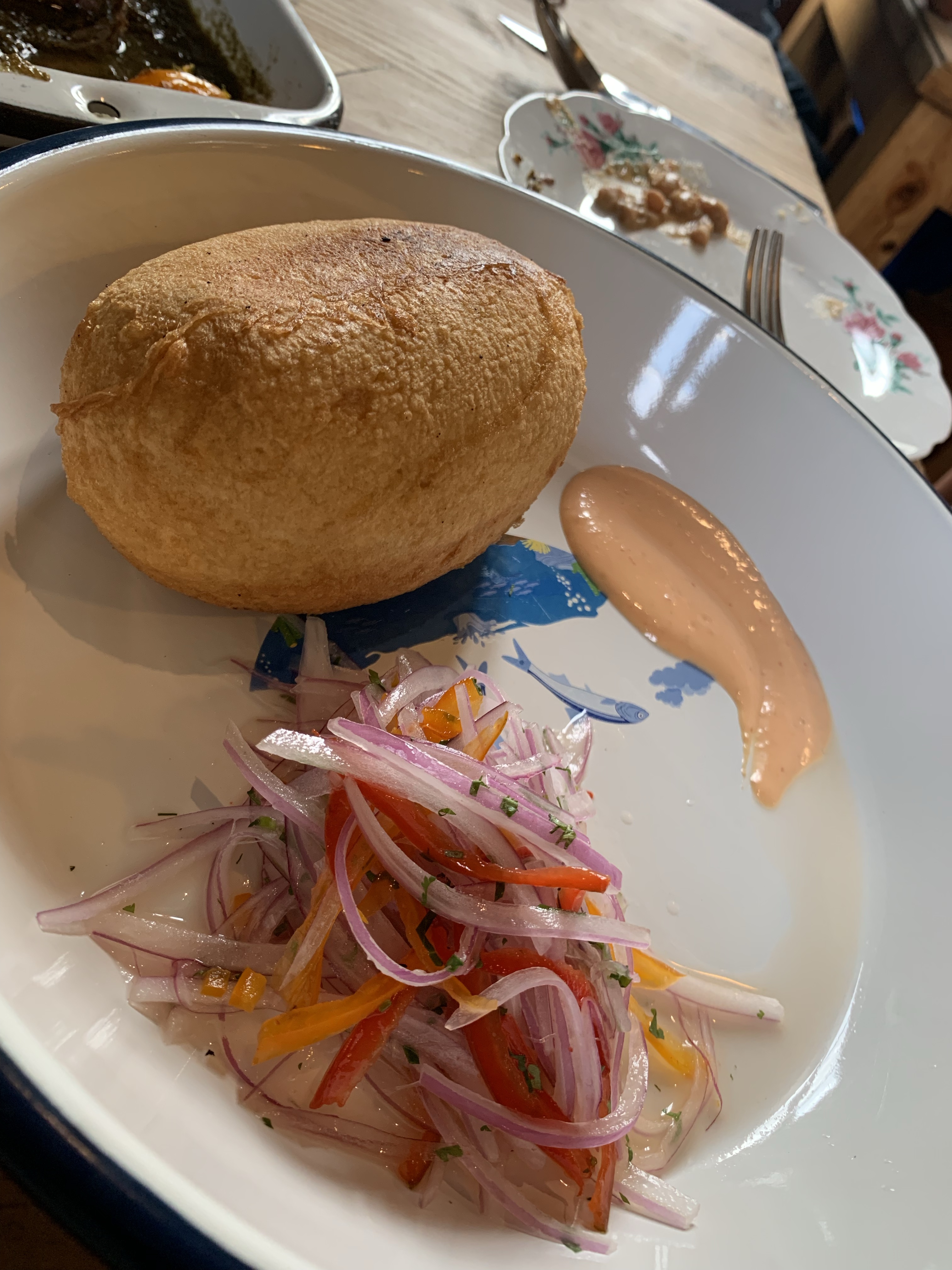
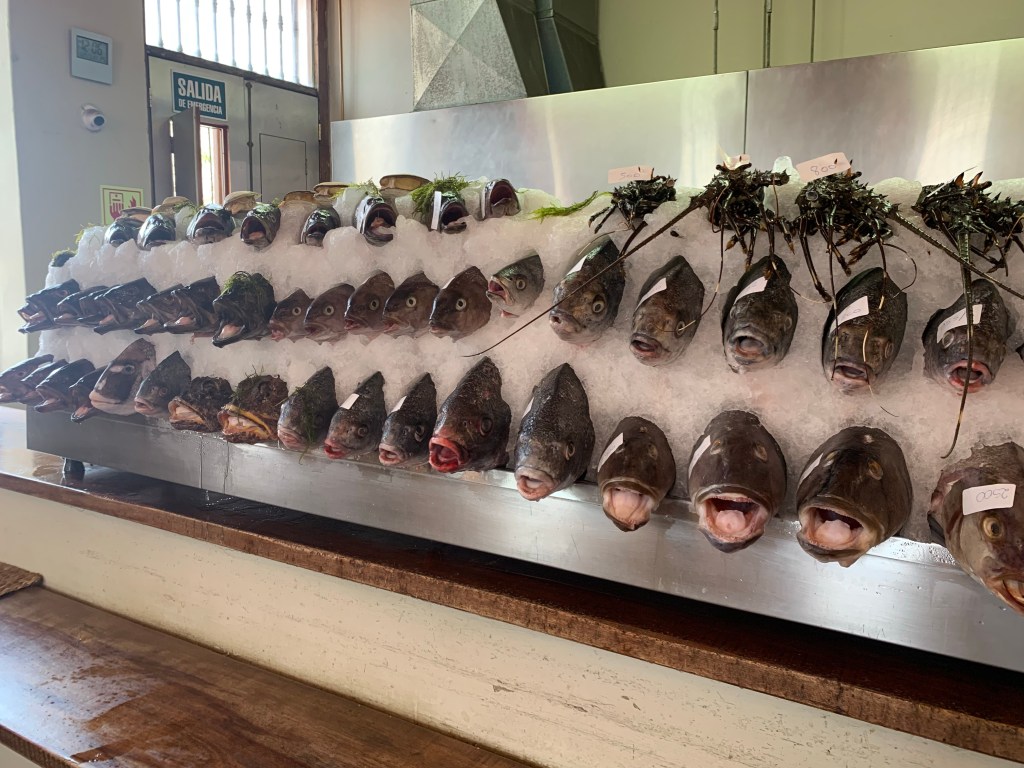
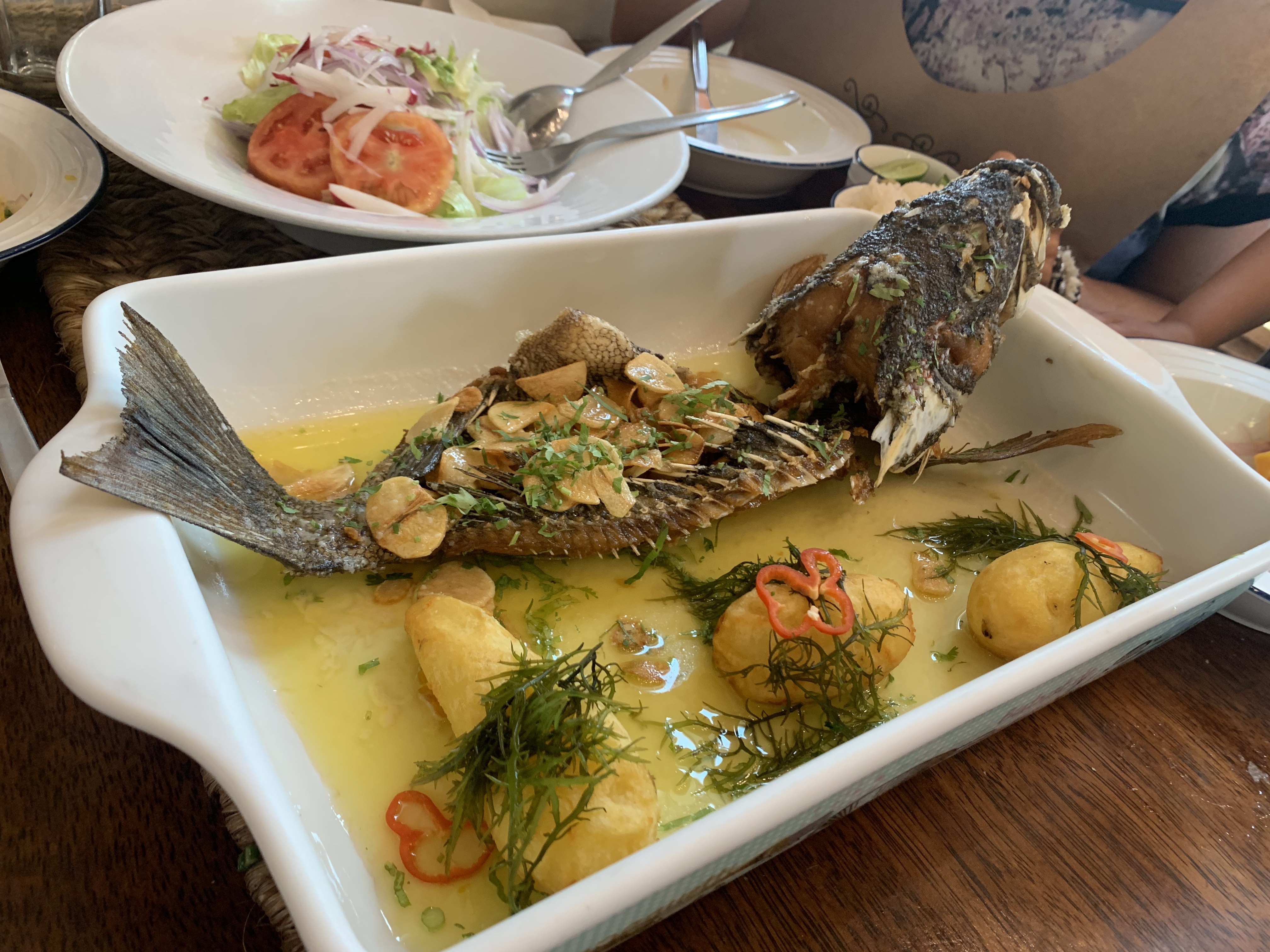
The second was La Picantería for lunch the next day. Its first come first serve, you can’t book, so we were there just as it opened its doors at 12 noon and managed to get a table. We only then realised it was dry that day because it was the day before the elections (what a good idea) so instead of piscos this time we all shared delicious juices. Again, we over-ordered: this time a whole fish on ice, picked from a blackboard, enjoying watching it being prepared in different ways and brought to the table with many different side dishes.

The menu at La Picantería, Francisco Moreno, Surquillo, Lima.
Half way through, lunch at La Picantería, Surquillo, Lima.
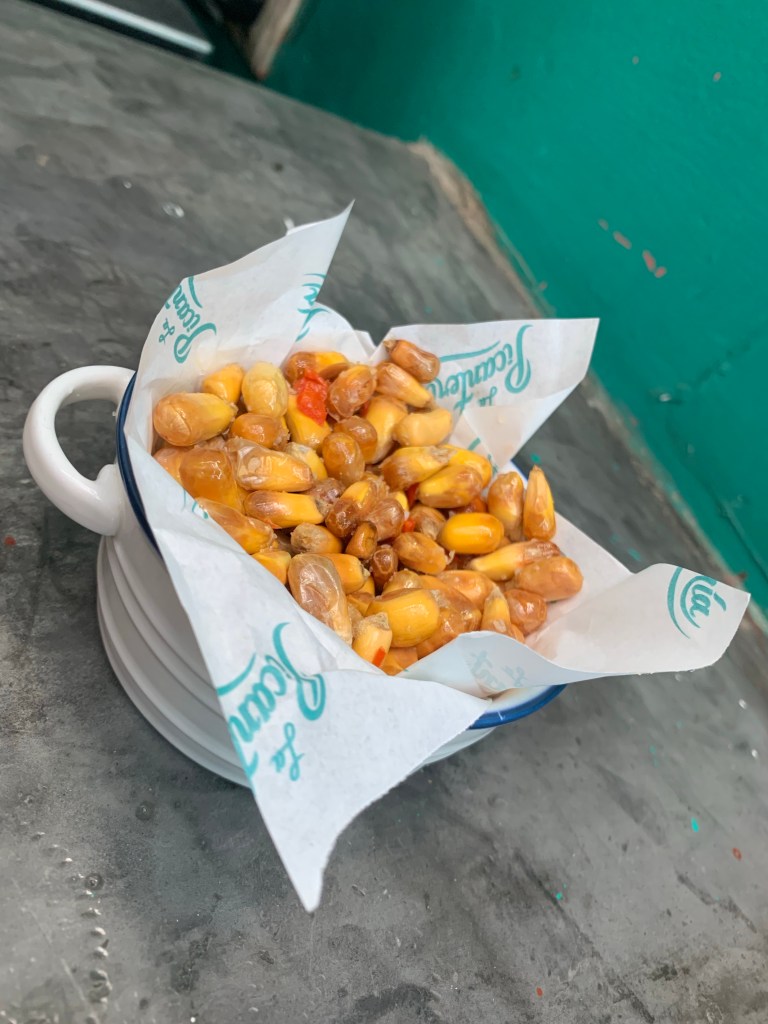
Canchita, Peruvian Popcorn.

We were stuffed and spent the rest of the afternoon exploring other corners of Miraflores, spending time on the swings in Parque Kennedy.

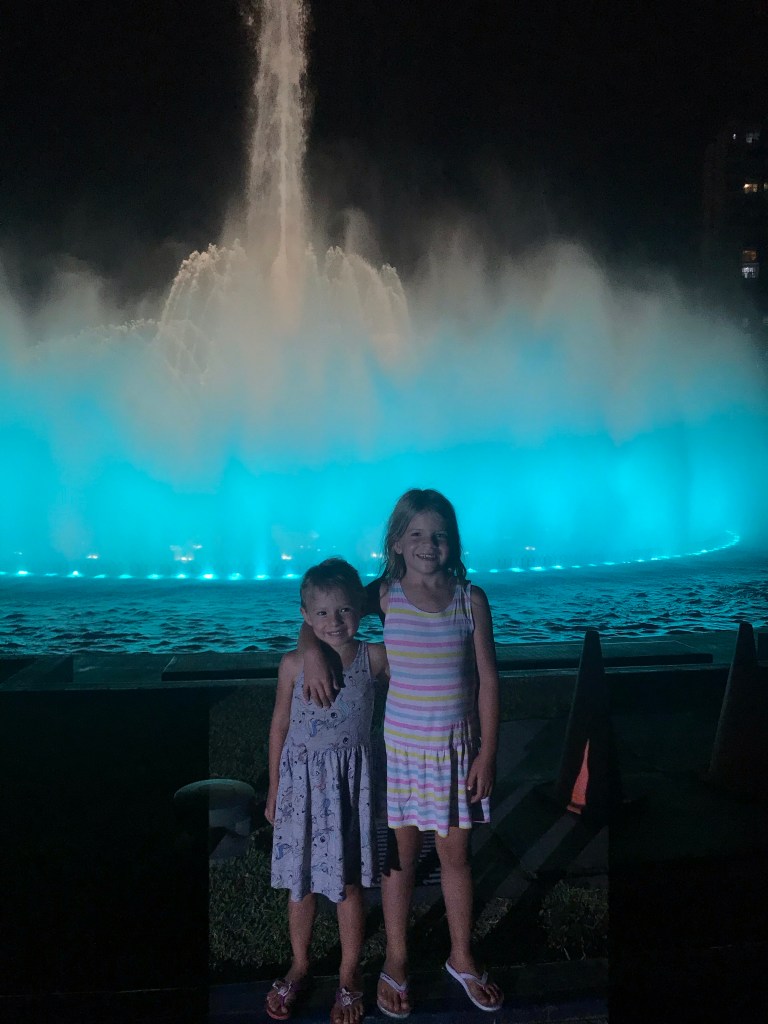
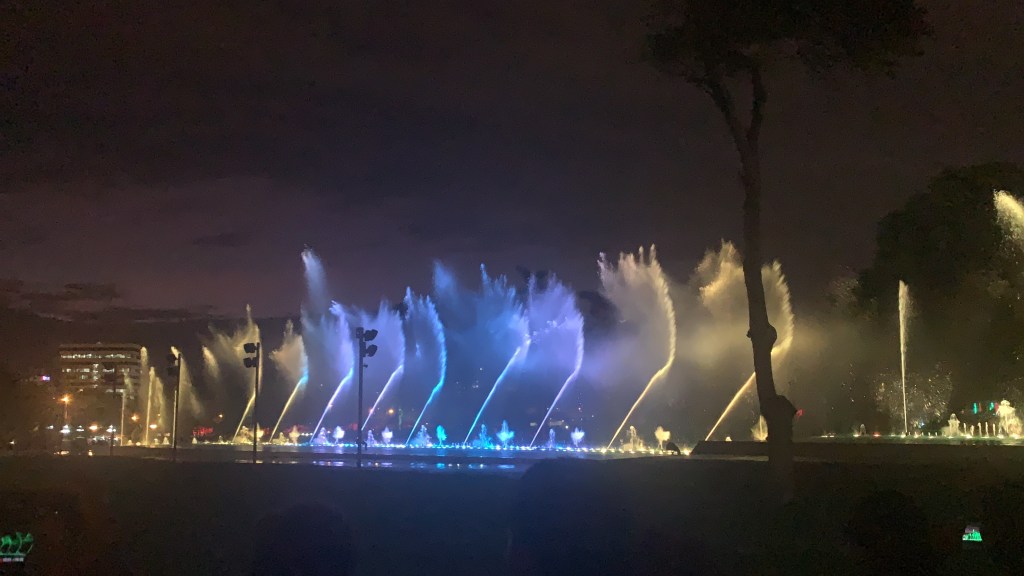
We ventured out of the Miraflores area only once, taking a taxi to Circuito Magico del Agua at Park of the Reserve to see a waterfall light show after sunset, again one of Ursula’s recommendations. It was a pretty impressive show (although we have been a bit spoilt by the fountains at Burj Khalifa) and the atmosphere was lively and local – the ice-creams nothing special but the whole experience was worth the journey.

Fuente Mágica, Parque de la Reserva, Parque de la Reserva, Avenue Petit Thours, Cercado de Lima.

That drive was the only time we noticed our driver locking the car doors as we drove through some rougher parts of the city. For the most part we had found Lima to be a modern, picturesque, vibrant and safe city and the perfect place to spend our first few days in Peru.

Living the Argentinian dream: exploring Córdoba, Jesús María and Mendoza

There were two more must-dos during our time in Argentina: getting up close and personal to their beautiful horses and learning how they make their red wines just so delicious.

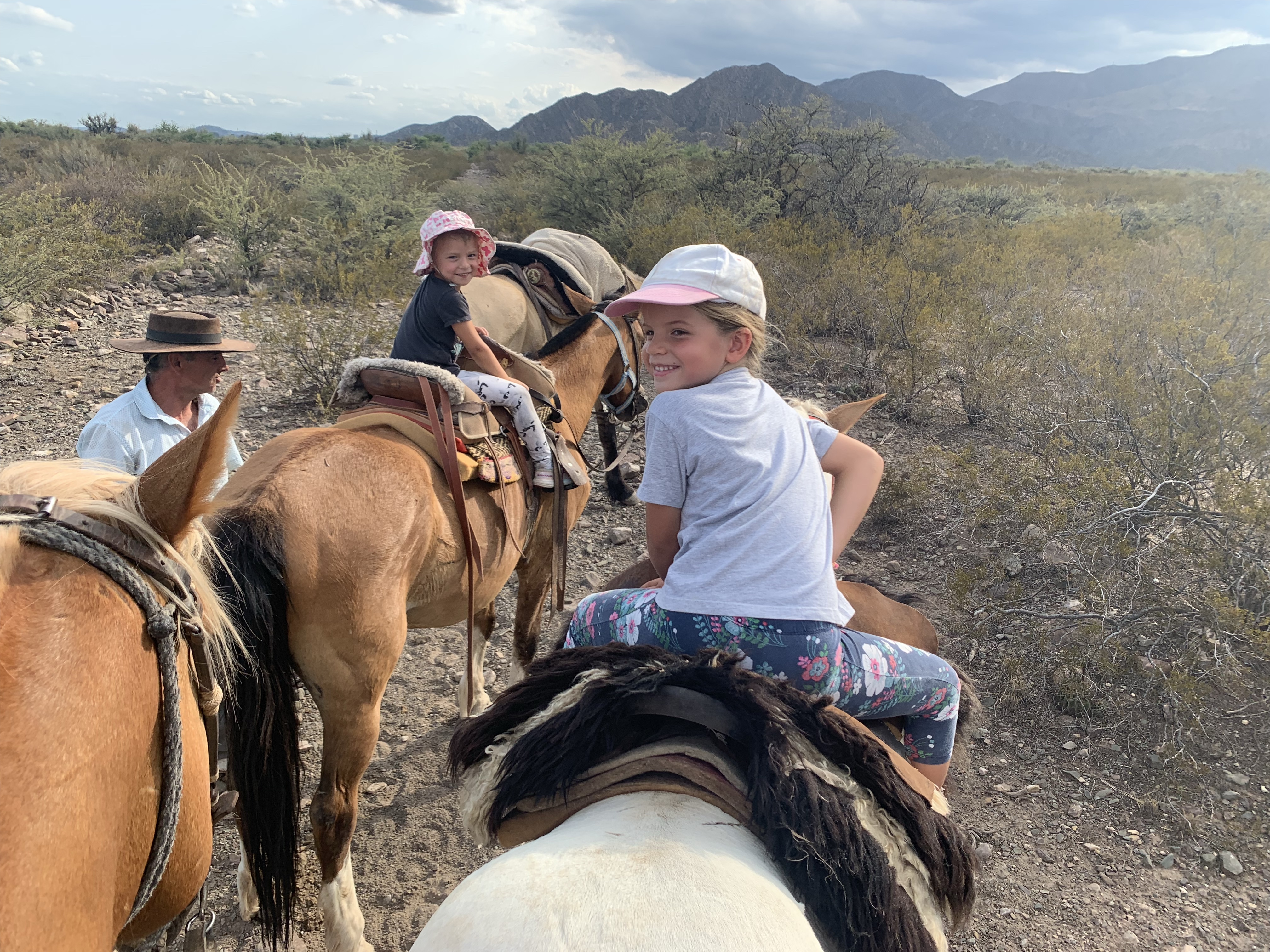
Getting comfortable in the saddle, ranch near Mendoza.
Sniffing out the best grapes, Bodega Norton, Perdriel, near Mendoza.

It meant a bit of time was needed up north, so we split our last 8 days between Córdoba and Mendoza.

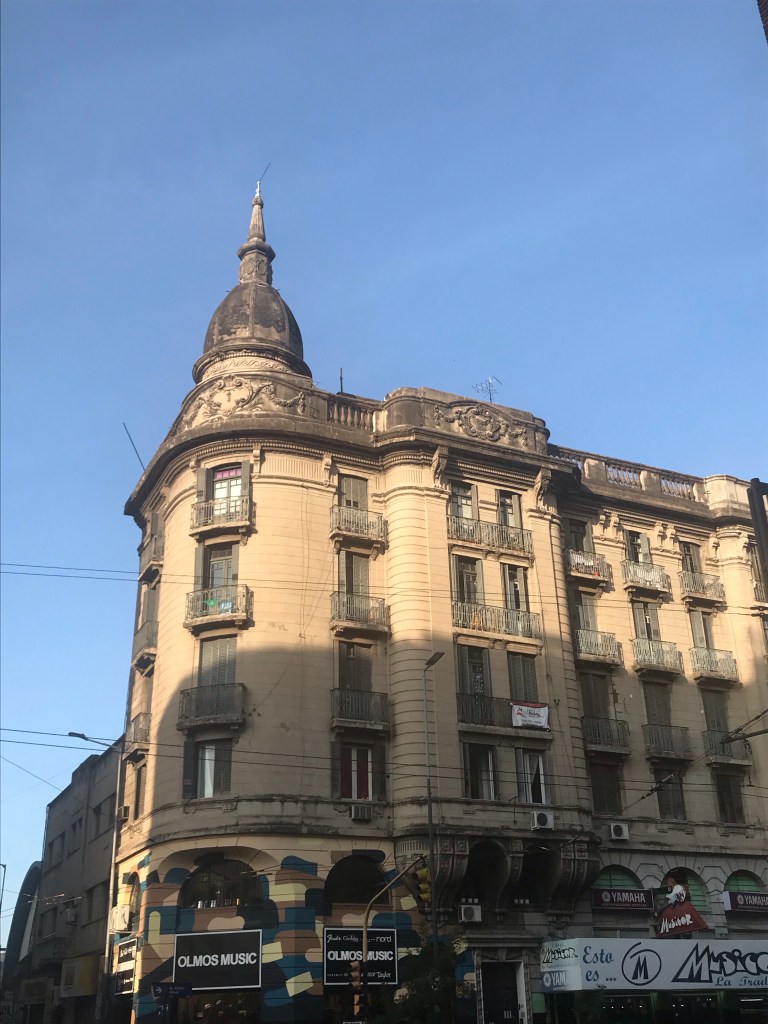
Claudia’s apartment sang out to us on the Air bnb website: bright colours, fun furnishings and even bunkbeds! It was located in the centre of Córdoba. We didn’t know much about the city (except that it wasn’t the Cordoba in Spain) before we arrived except that it is the second most populous in Argentina, home to the country’s oldest university and one of the first Spanish colonial capitals, so we expected to learn a bit of history during our time there.

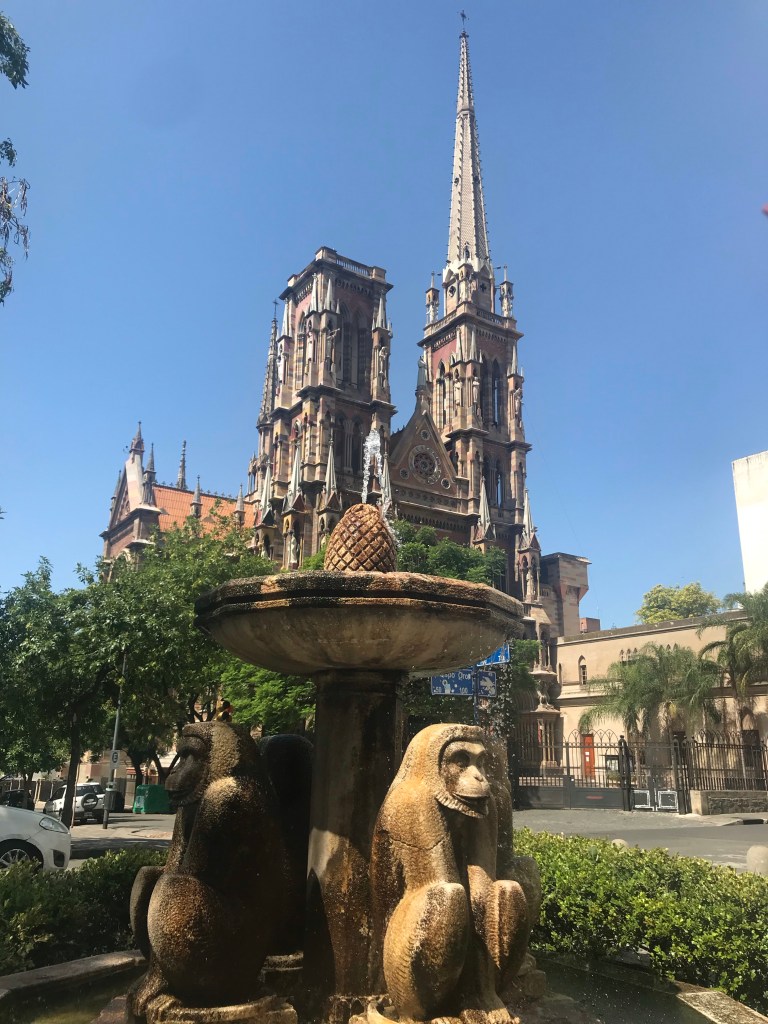
Monkey business near Iglesia del Sagrado Corazón de Jesús (Iglesia de los Capuchinos), Córdoba.

We hadn’t expected our first history lesson to include learning how to use a rather rickety lift which propelled us up to the seventh floor of a historic apartment block where we would be staying.

Our airbnb off Gral. Alvear, central Córdoba.

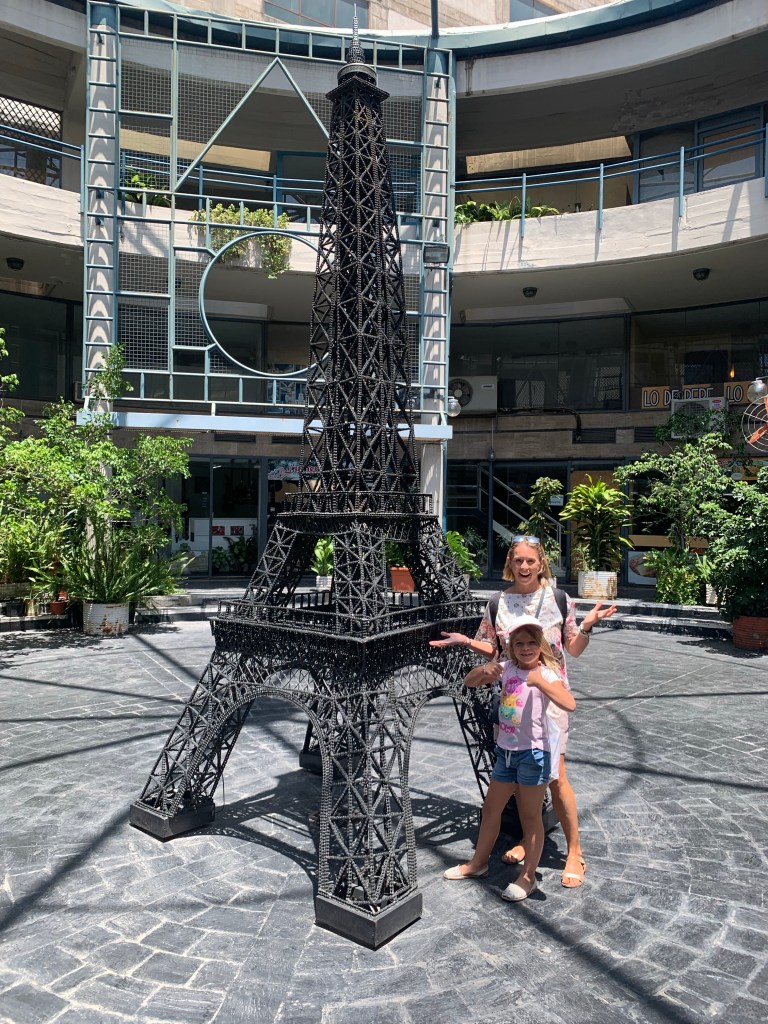
It was in a lively, bohemian area, full of students. We found a synagogue across the road to our apartment and several music shops nearby. We dropped our laundry off in a shopping arcade which had a model of the Eiffel Tower made out of bicycle chains.

Dropping off laundry at Lavanderia Lourdes, Galería Jardín, Córdoba.

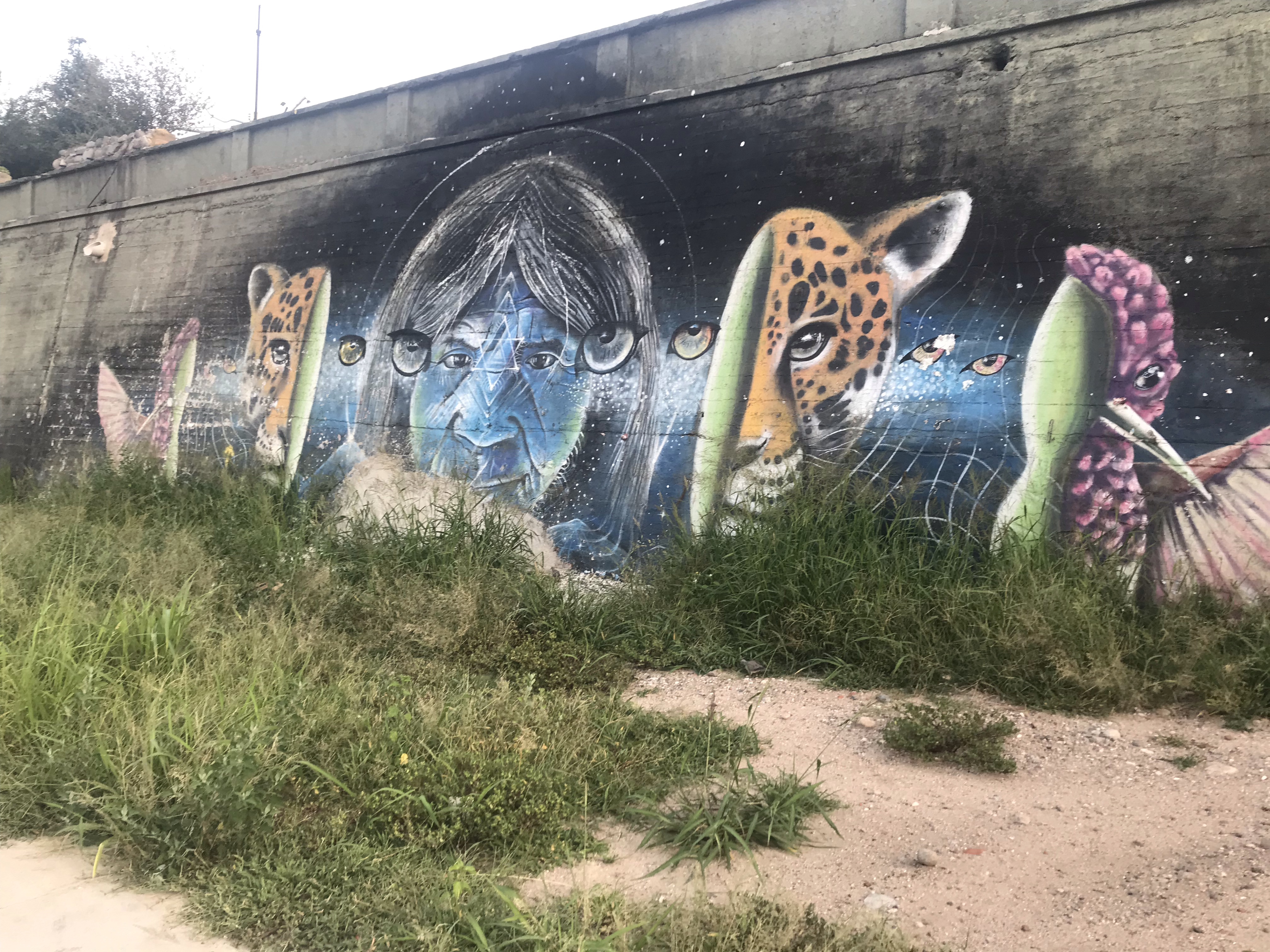
On a run I took one morning along the river (Rio Suquía), revellers were still out from the night before! It definitely had an edgy feel in parts, with interesting graffiti under the bridges and police cars poised to act on the roads above during the early hours.

Running around Córdoba, 19 January 2020.

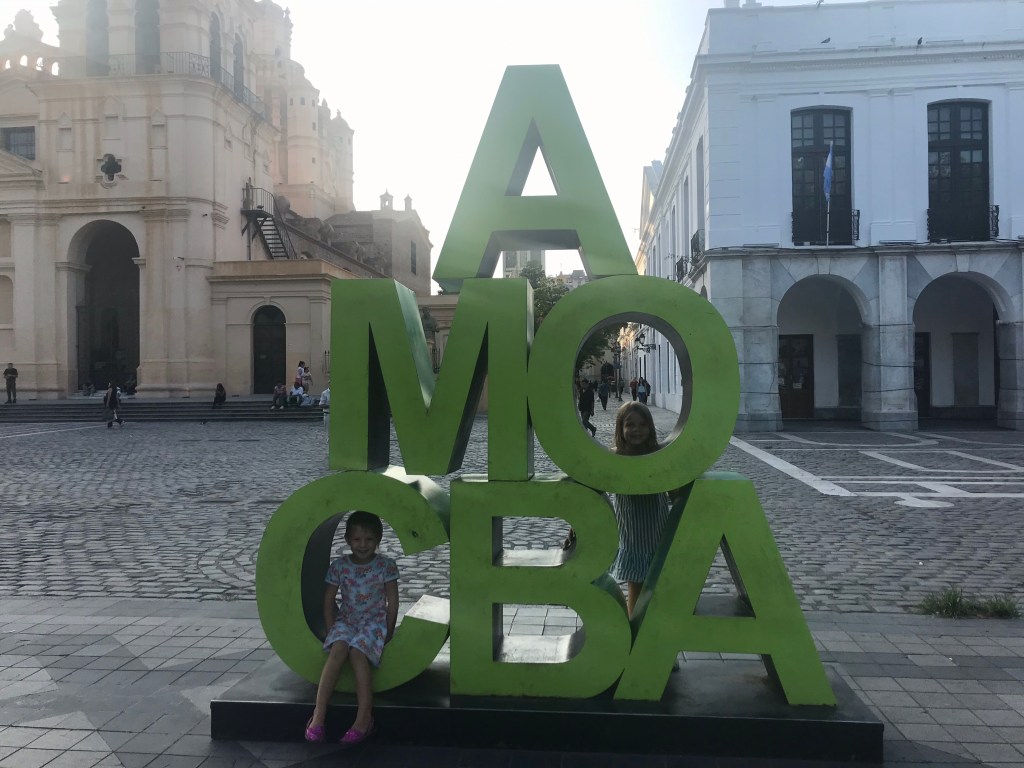
A few blocks away we found Plaza San Martin, the city’s historic main square.

Plaza San Martin, Córdoba.

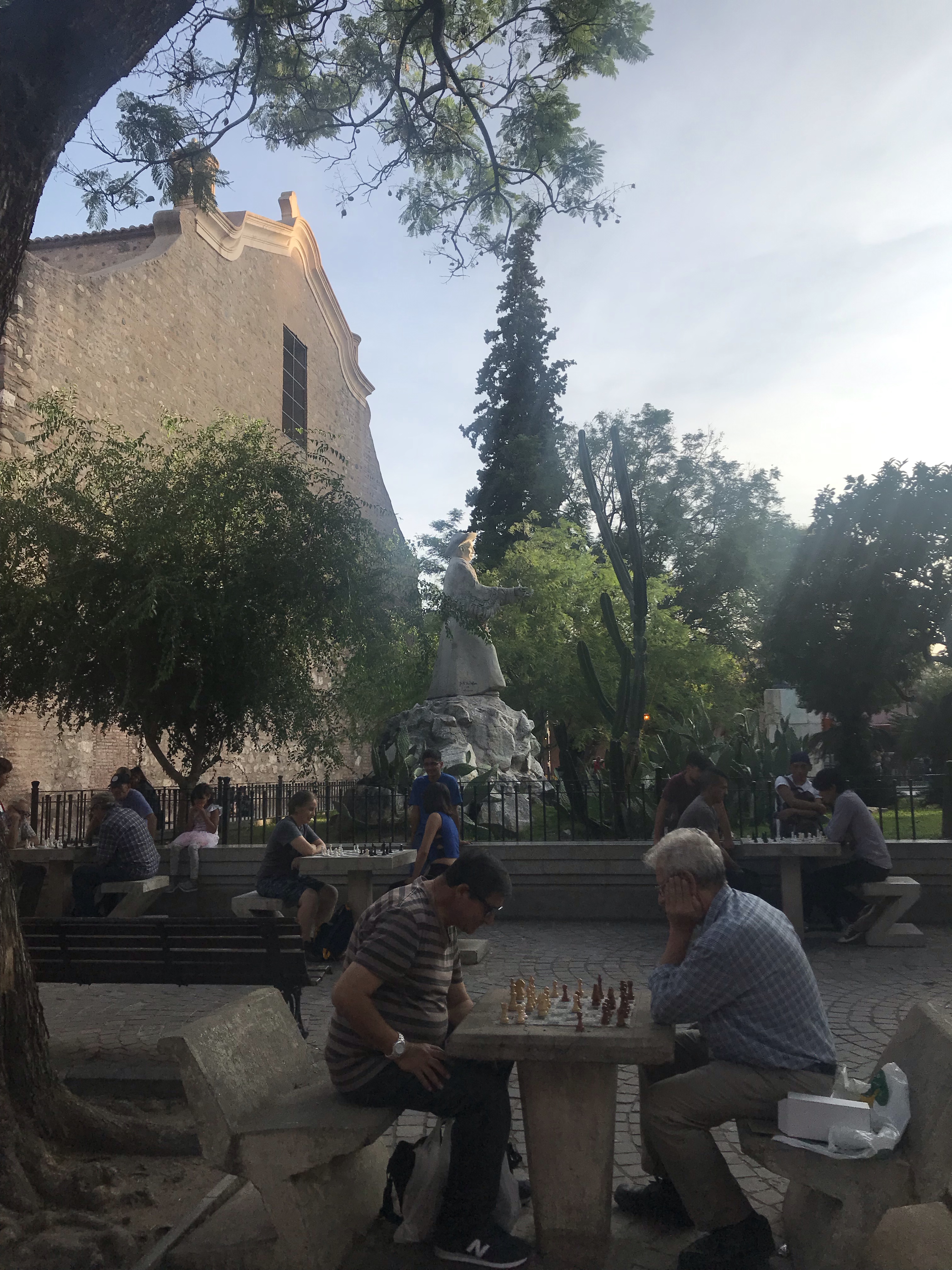
During a stroll on our first night we came across older couples playing chess round the back of the cathedral, another evening the same space was occupied by younger people all engrossed with their personal devices.

Games of chess, behind Catedral de Córdoba, Nuestra Señora de la Asuncion, Córdoba.

The volume of ‘normal’ shops close to the city centre was quite astounding – streets and streets, mainly pedestrianised, with outlets selling cheap clothes and toys stretched for miles. We walked up to Mercado Norte for Saturday lunch, finding a working market and had a very pleasant fishy lunch at La Cocina de Fazzio, with great music and atmosphere.

We had made the mistake of thinking the shops and banks would be open all day, but after finding Joanna some flip-flops sadly everything was shut by 2pm, so we were short of cash and Molly had to wait till Mendoza to find some much-needed new footwear.

Timings generally threw us – after being in New Zealand and Australia where the majority ate dinner at 6 or 7 and were in bed by 10, most restaurants here only opened for dinner at 9. We were the second table in to Alcorta, the only place we could find open at 8.30. We had a mixed meal of meats – service gradually improving throughout the evening so by the time we finished we were asked if we wanted to go and look in the kitchen.

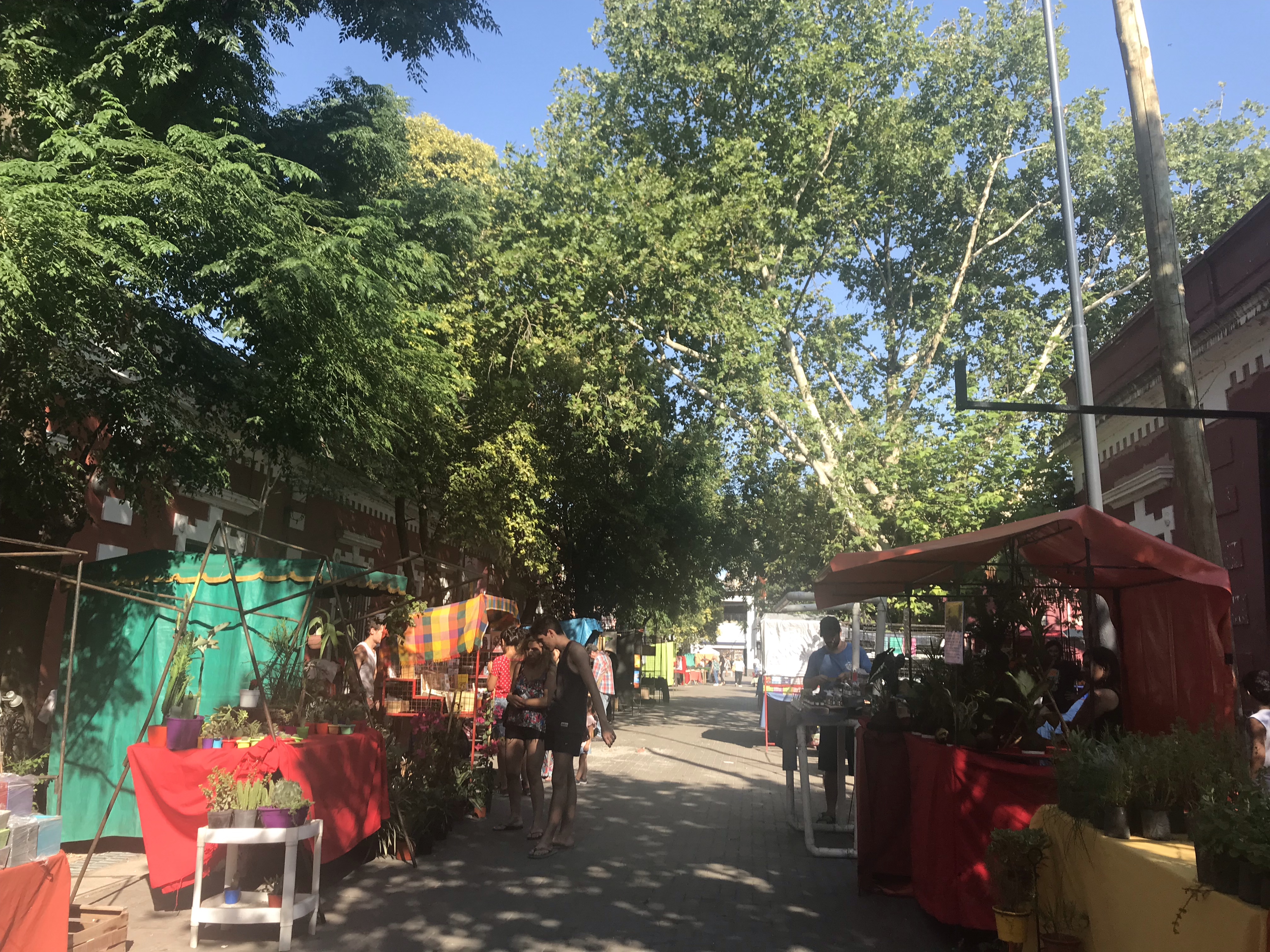
Market stalls near La Cañada de Córdoba.

Another, hotter day we tried to visit art museums around Plaza España which also only opened at 9pm, too late for us, so we had to make do with a wander through the arts centre Paseo Del Buen Pastor and a look at its outdoor sculptures followed by a necessary ice-cream stop.

Market stalls around the hippie area La Cañada de Córdoba were only being set up during our early evening stroll, so we had a sweaty drink on a rooftop in the Güemes district and got a cab to Alfonsina for dinner.

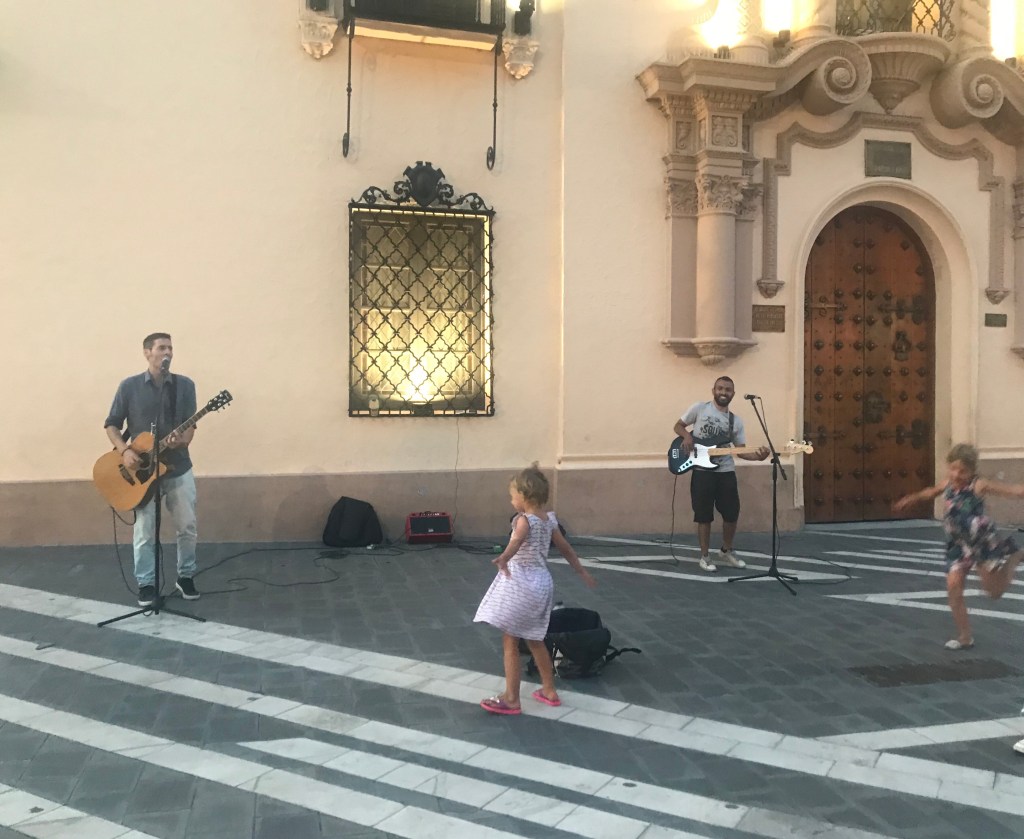
We ate an odd tapas style dinner in an old house, an artist showing us his etchings. The walk back to our apartment was livelier, the girls enjoying dancing by buskers playing Beatles covers outside the Capuchin church.

Dancing to buskers near Basílica de Santo Domingo, Córdoba.

A chef friend from Dubai had told us about a crazy festival ‘Doma y folklore’ that happens once a year 50km outside Córdoba in a place called Jesús María.

It just so happened that we were there during the 10 days of the festival, so decided to take the hour-and-a-half bus ride there for a day. As we walked through the peaceful parks and streets after alighting the bus, we were surprised to see lots of people sleeping in shady spots during the day. We would later understand why!

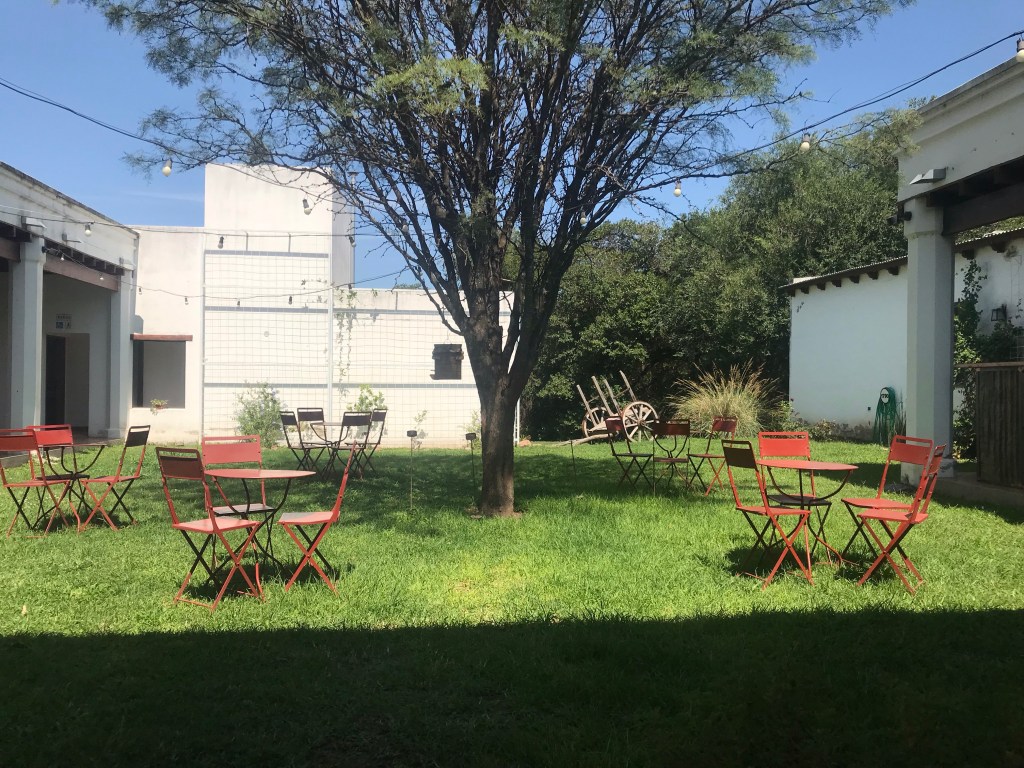
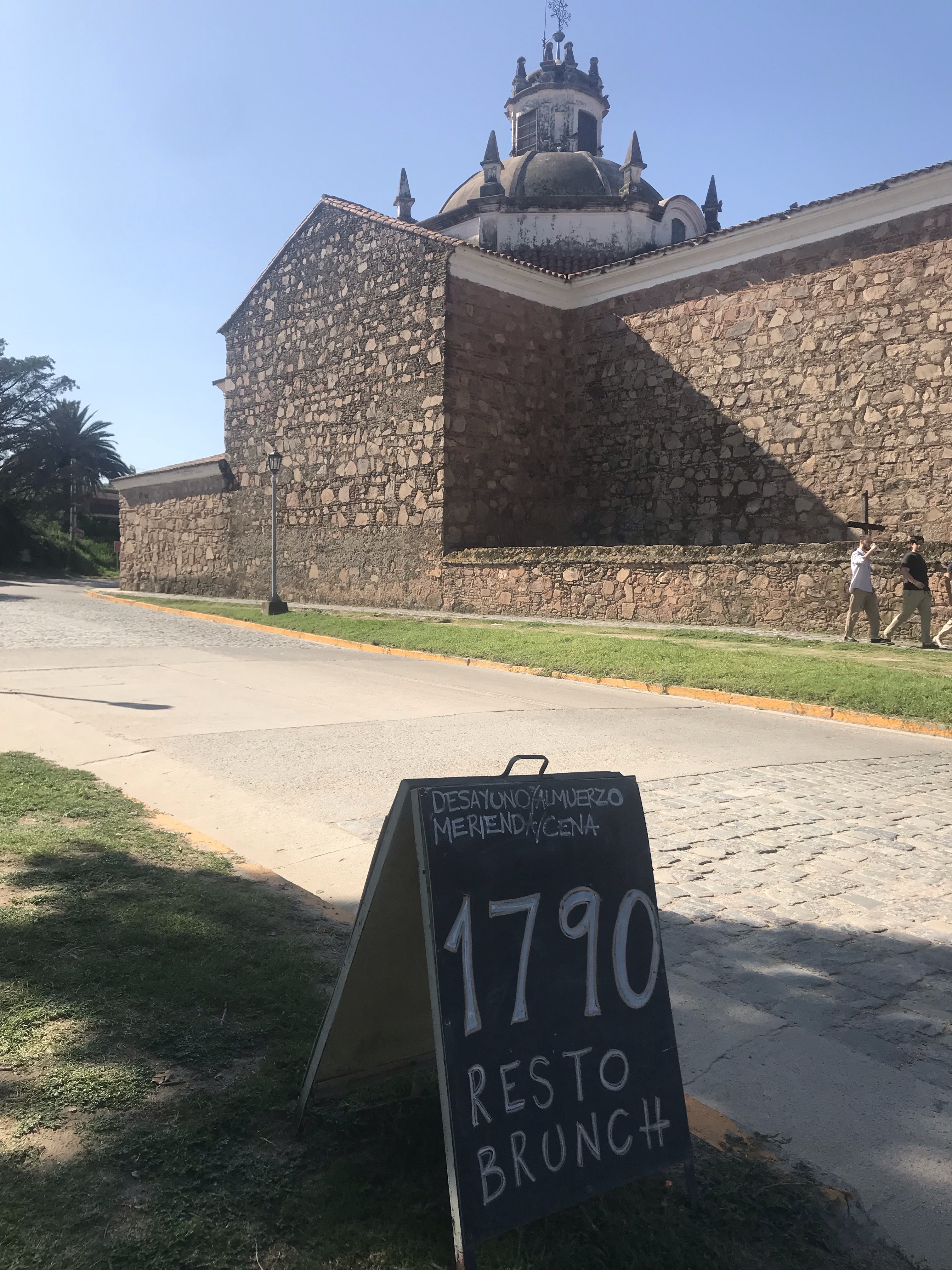
We had possibly one of the best lunches of Egerton world tour (until Joanna smashed the glass water jug) in the serene courtyard of the 1790 café – think a latino Lime Tree.

1790 Resto Brunch courtyard, Pedro de Oñate, Jesus María, near Córdoba.
Time for a rest and time for lunch.
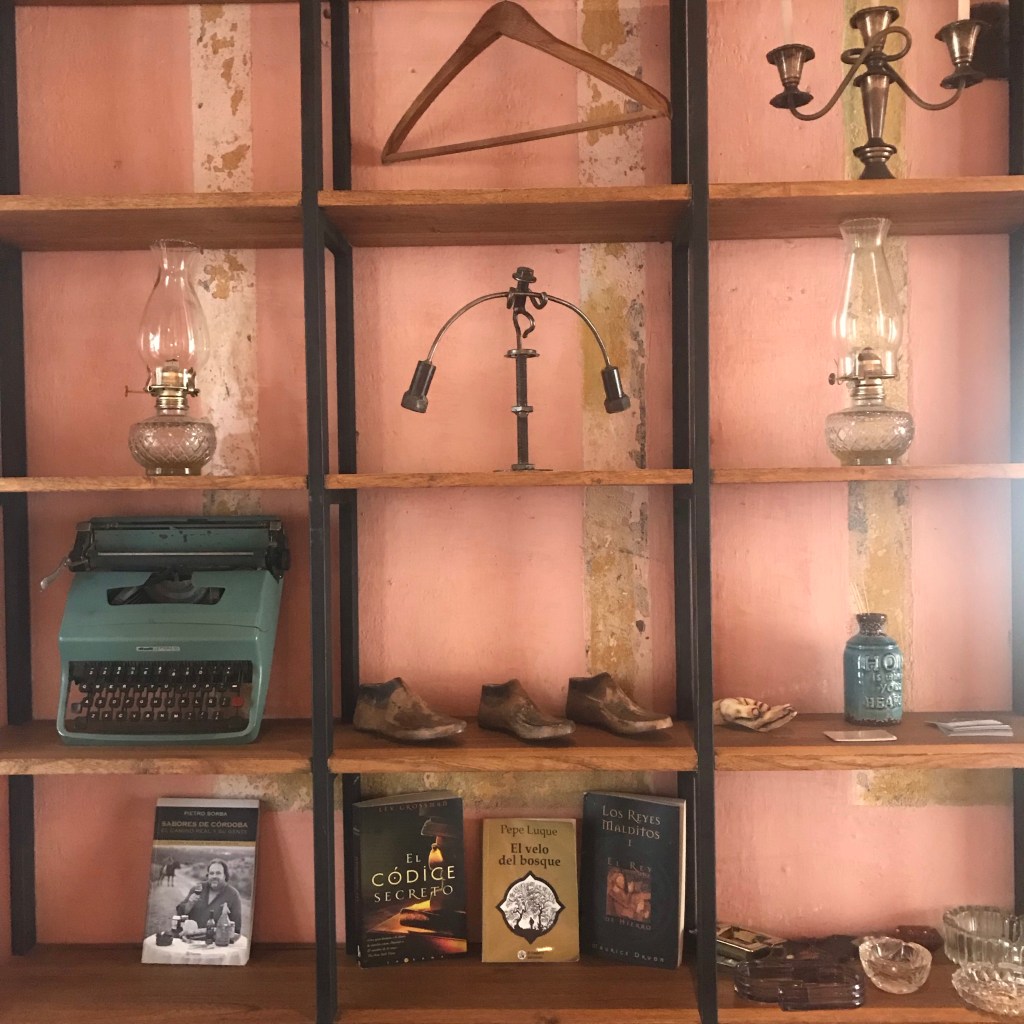
Decorative features, 1790 Resto Brunch, Jesus María.

Afterwards we visited the Museo Jesuítico Nacional, granted UNESCO world heritage status in 2000. We used it as an excuse to look round a former monastery in a pretty garden, with slightly eerie devotional paintings, old coins and archaeological bits and pieces.

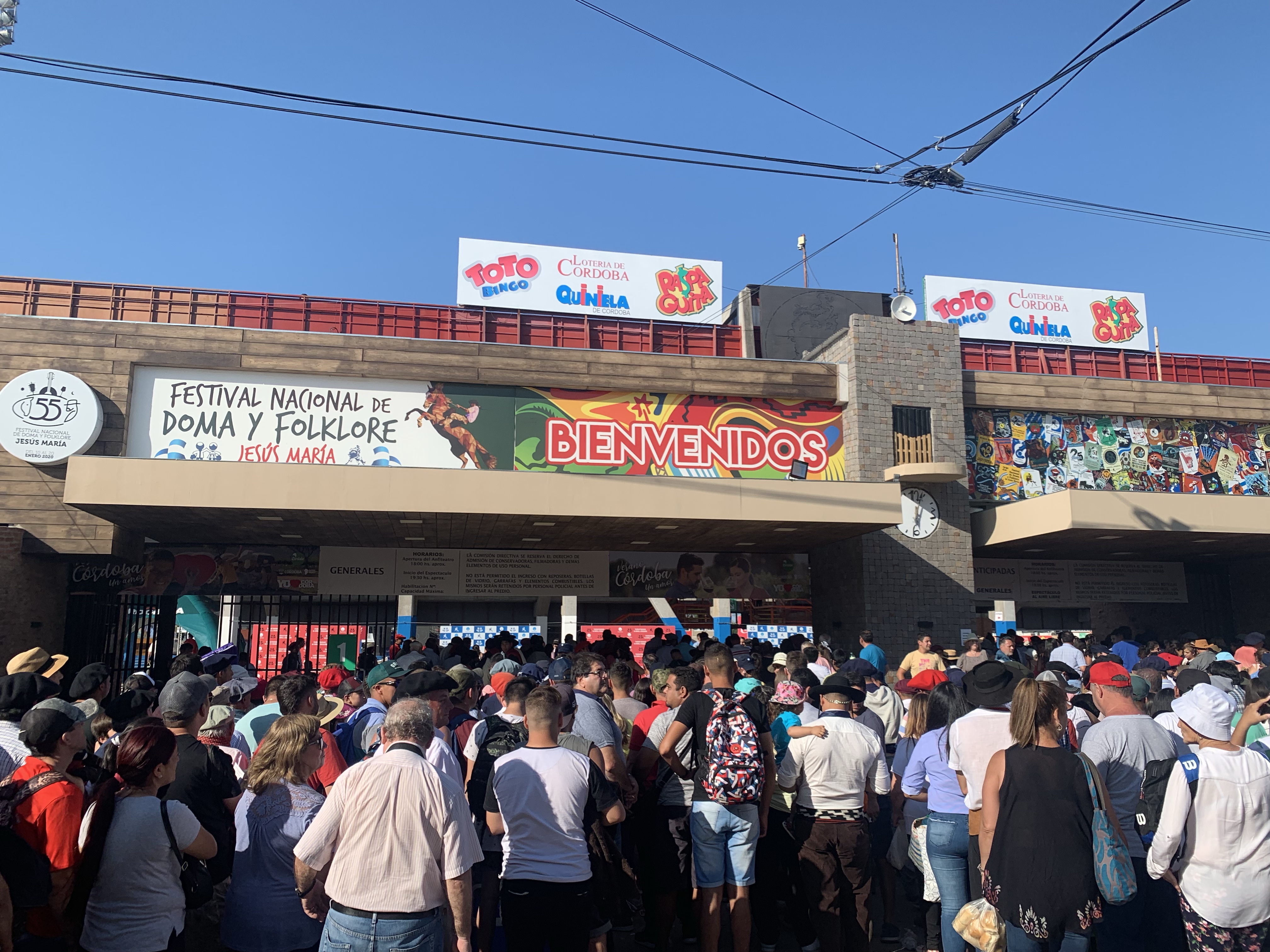
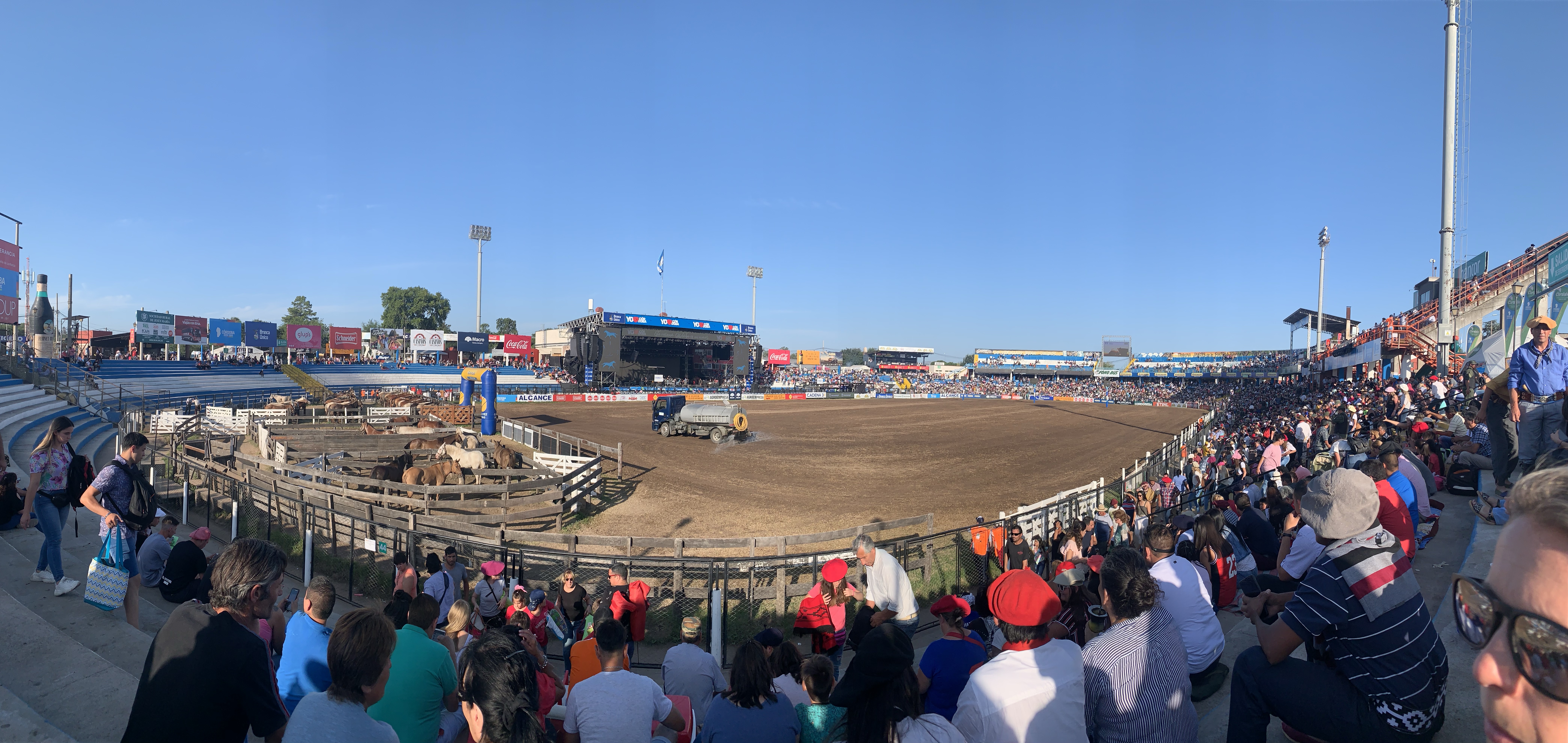
The Festival Nacional De Doma Y Folklore Jesús María ran from 9-20 January 2020 and we were there on its middle weekend.

Doors to the Anfiteatro José Hernández opened at 6pm so we joined the queues.

Queuing to enter the Anfiteatro José Hernández, Jesús María, 17 January 2020.

We were a bit concerned that all the family groups were dressed up and clutching vast cool boxes overflowing with food and beverages and rugs and cushions, so Tom rushed off to buy tickets and some supplies while we tried to find a spot to sit, nearly losing each other in the process! One end of the arena was in the baking setting sun, so we opted for seats in the shade nearer the horses pens.

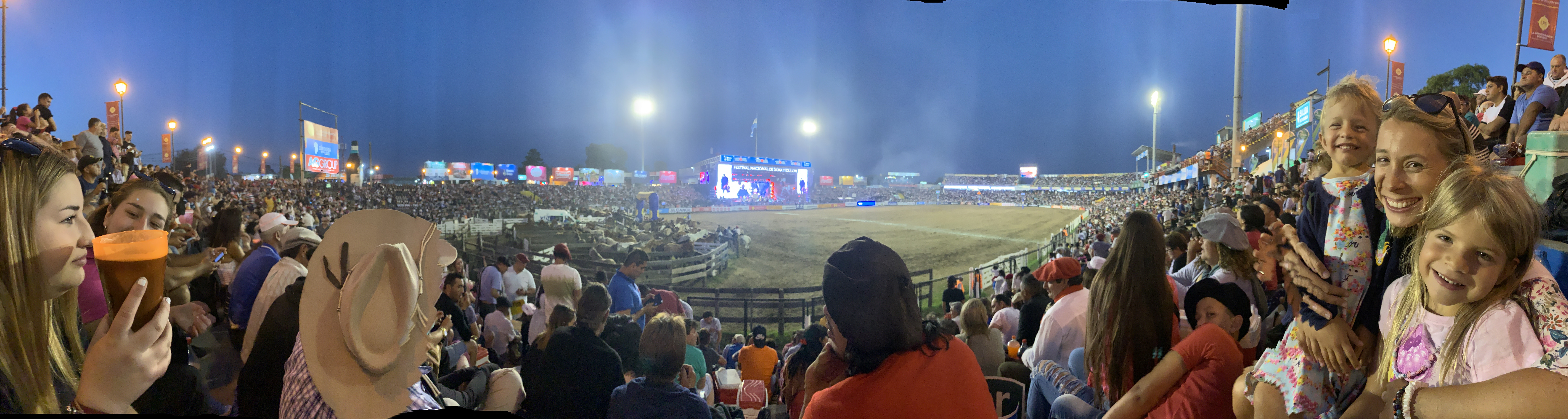
The Festival Nacional De Doma Y Folklore, Anfiteatro José Hernández,Jesús María.

The action took place in the centre of the stadium, with a stage facing us on the other side. It didn’t take long for the live music and action to begin. A wild horse was tied to one of three posts in the arena, a gaucho took a seat on its back (some rounds had saddles to hold on to, others didn’t). The horse was then released and the gaucho would try to stay on for 10 to 20 seconds, until a gong sounded.

Watching the action unfold, Anfiteatro José Hernández, Jesús María.

It was truly terrifying – riders were frequently thrown dramatically to the ground from their bucking steeds. At the end of each round two gauchos on horseback would pounce, rescuing the rider from the wild horse.

At the same time, the horse was skilfully directed back by other gauchos to the pens. And repeat. And repeat. Endlessly. In all there were 20 or so horses running around at all times, some with riders and some without. Everything appeared to be just under control, despite happening at a frantic pace.

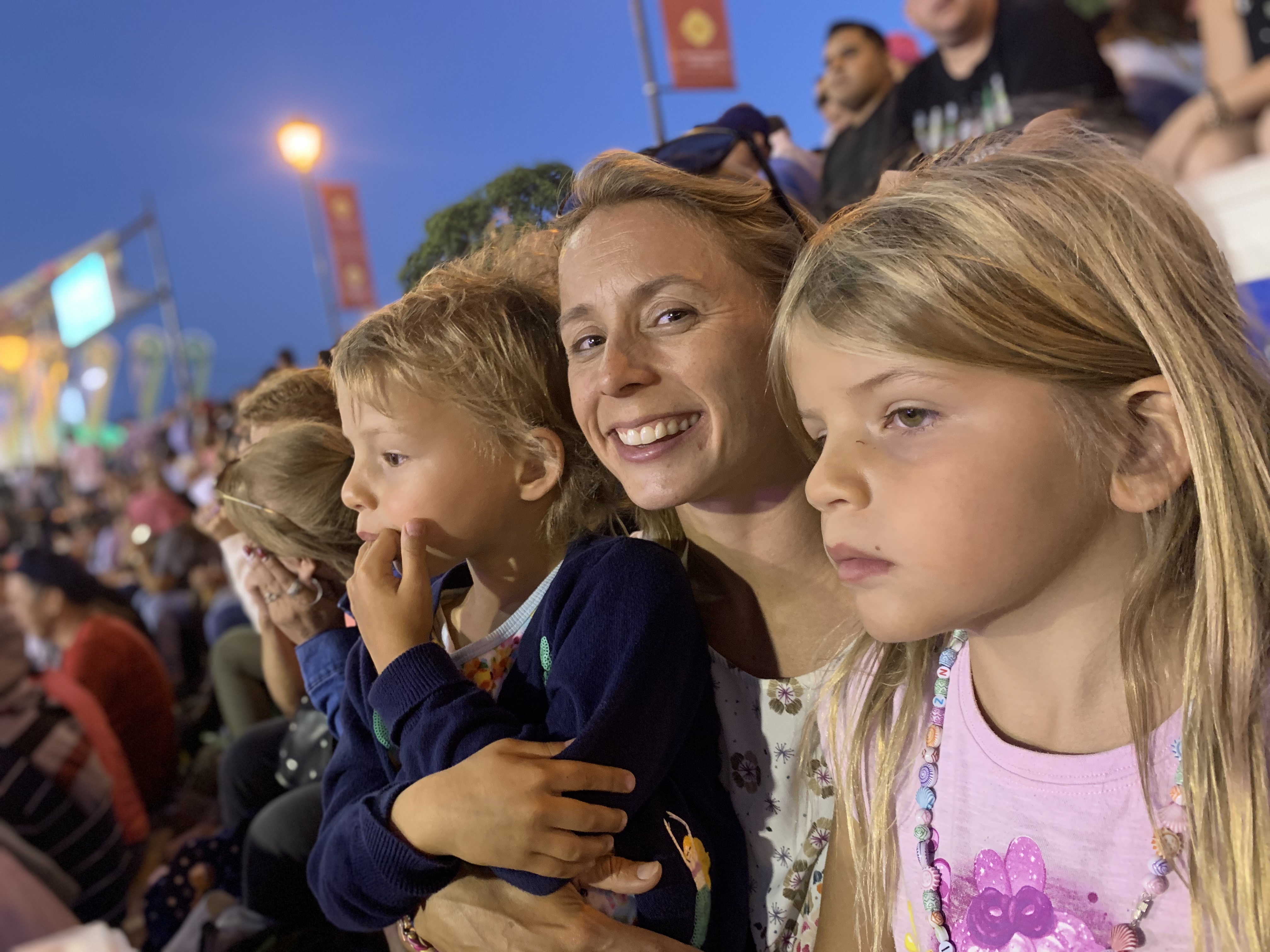
Soaking up the atmosphere, The Festival Nacional De Doma Y Folklore, Jesús María.

Two ambulances waited until they were needed – which they often were, stopping the action to come into the stadium and take the afflicted men away to be treated. Our Spanish was unfortunately not good enough to understand much of the commentary or to satisfactorily communicate with the groups sitting around us apart from friendly smiles and offers of sharing food and drinks (there was one awful moment when my full glass of Fernet and Coke spilt on the family sitting in front of us, a stickier mess you can’t imagine…)

Pre spillage, sipping a local tibble, Fernet and Coke.

We didn’t come across a single other foreigner or tourist, we felt privileged to witness such a truly Argentine event, the crowds swelling as the evening progressed but from what we witnessed, always content and happy, of all ages. There must have been tens of thousands there.

Getting dark, Anfiteatro José Hernández, Jesús María.

The music and gauchos showed no signs of stopping. Around 11pm we felt we really must go – but people were still just arriving. It was clearly going to go on until the early hours, hence the extended alfresco siestas we had witnessed earlier. But for us it was at least half an hour walk to the bus stop and over an hour’s bus ride back to Córdoba – MoJo had the latest night out of their lives!

Walking back to the bus stop, Jesús María.

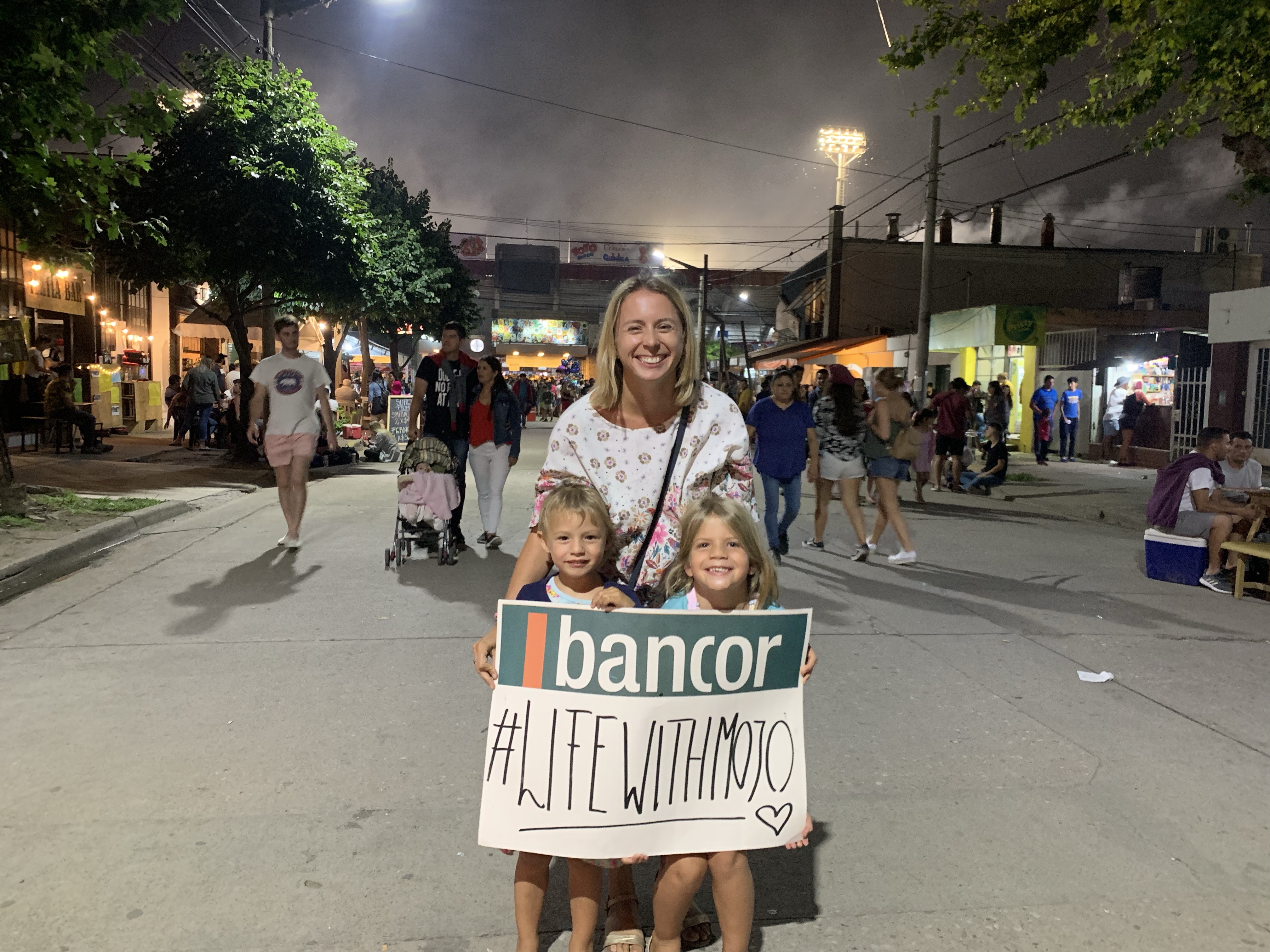
We revived ourselves with some pork lomo from one of the many street stalls set up on the roads surrounding the stadium, locals clearly set up outlets in their front gardens during the festival. Jesús María had been a real find, providing a truly memorable day and night on the Egerton World Tour.

Our final stop in Argentina is a place we know well from bottles of red wine – Mendoza. We certainly ate and drank very well there. We were staying a short walk from the main squares, the roads wide, built after the 1861 earthquake.

Bank Hipotecario, Garibaldi, Mendoza.

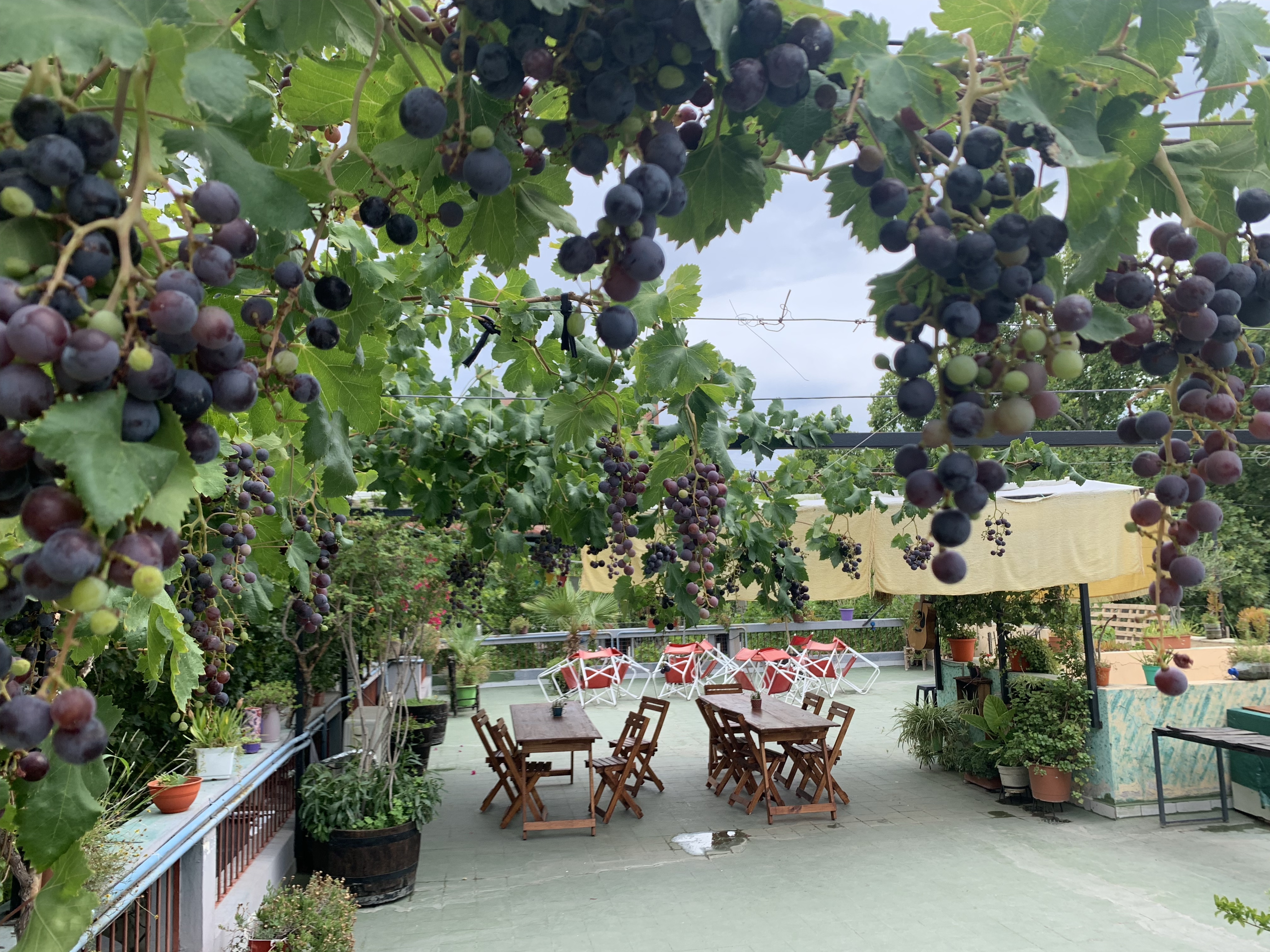
I was presented with my gluten-free breakfast on a silver tray at Hostel Confluencia where we had chosen to stay, a centrally located hostel with a great rooftop terrace.

Roof terrace, Hostal Confluencia, Avenue España, Mendoza.

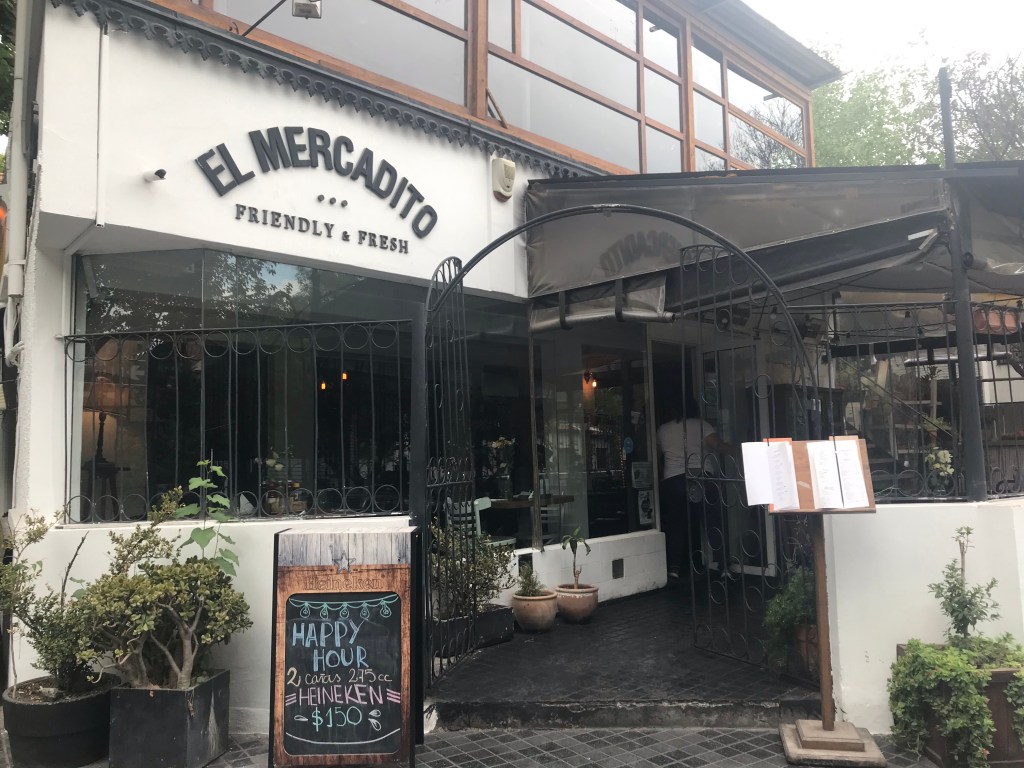
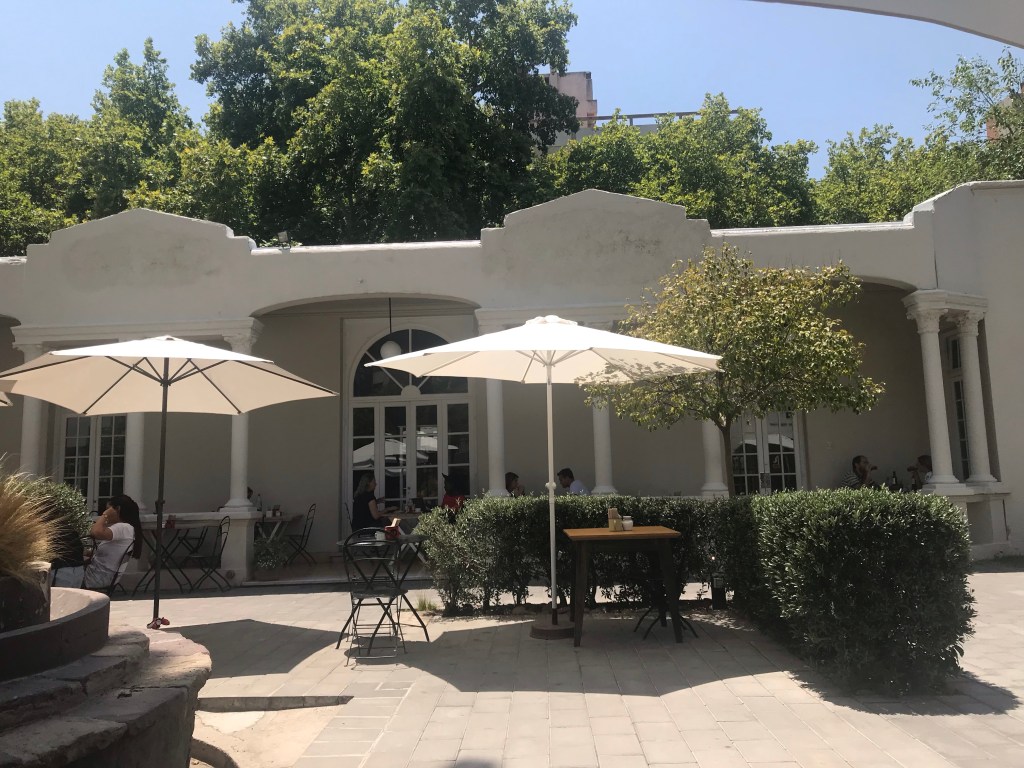
On our first night we trekked across town to Avenue Arístides Villanveva which promised several great eateries, picking El Palenque with a wine cellar on view downstairs. El Mercadito further up the avenue was where we had our final dinner, a lovely shabby-chic-style outside courtyard and fresh produce.

El Mercadito, Av. Arístides Villanueva, Mendoza.

Another good dinner choice was Anna Bistro closer to the train station, where the puddings were especially good: a chocolate volcano and crème brûlée.

We had a traditional Italian lunch near our hostel one day at La Barca and enjoyed a walk through a government supported contemporary art space afterwards. Another lunch at Bröd café found us in a pleasant, albeit sweaty, courtyard.

Bröd Ciudad courtyard, Chile, Mendoza.

Siestas were essential as the heat in the middle of the day were intense and again, dinner started late.

No time for siesta, 1790 Resto Brunch, Jesús María.

We knew we needed to book two trips, a visit to a vineyard and a gaucho tour, but needed to find options that were suitable for MoJo. We did well.

First up was the gaucho experience, which we booked through an agency in town. We were a little nervous when our run-down minibus had finally stopped driving in circles collecting more and more people from hotels and was heading pretty fast down a very bumpy track. But we had nothing to worry about. The ‘ranch’ was great – the gauchos lived there with their families, there was a swimming pool, swing and kids toys as well as a host of animals, pigs, rabbits and enormous chickens, as well as the horses themselves.

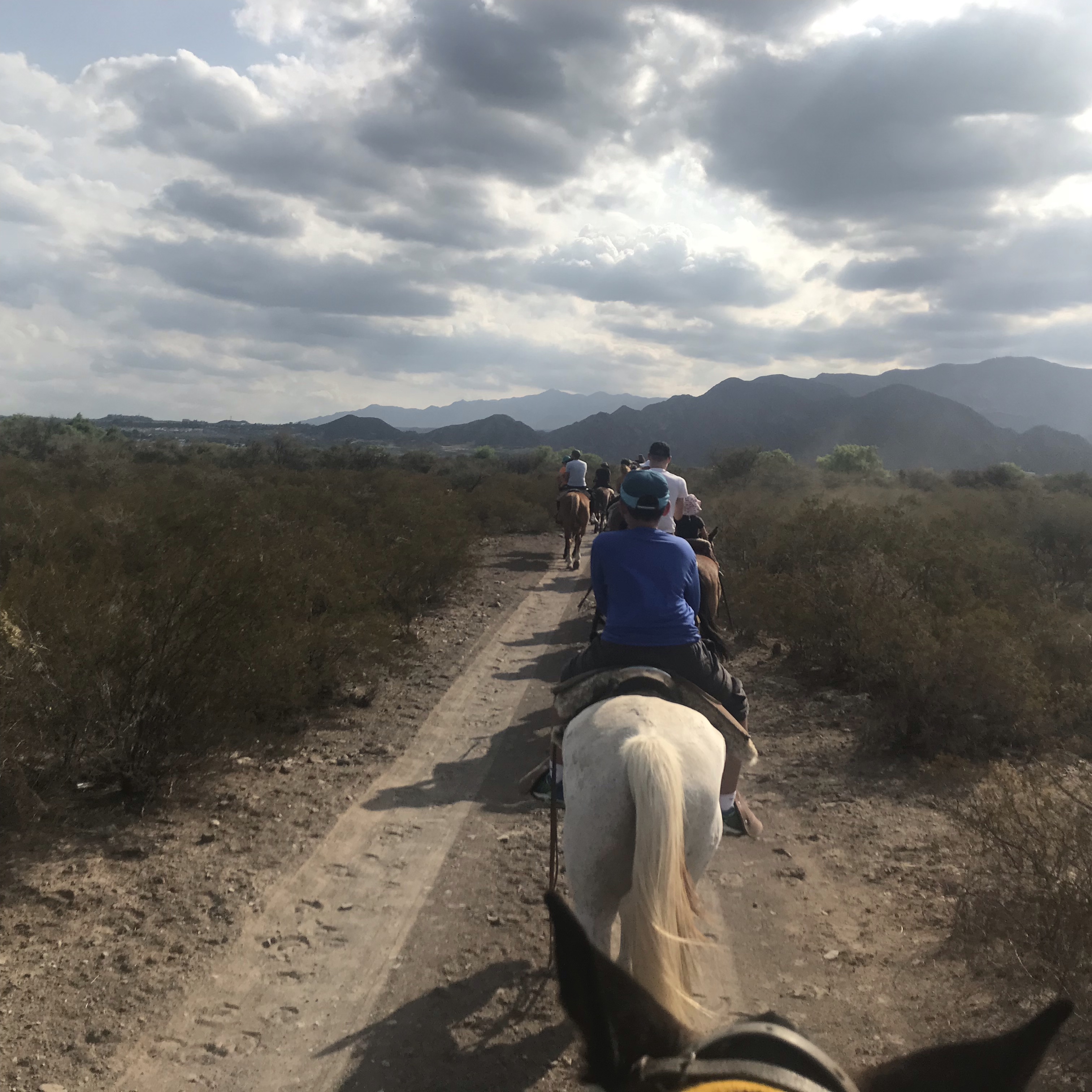
The trek itself was truly memorable, riding through the countryside with such a dramatic skyline surrounding us. Joanna rode right up at the front of the group, her reins tacked onto the leading gaucho for safety. We discovered with amusement that Molly’s horse was called Mollina!

Ready to go for a trek, near Mendoza.

Tom (who isn’t famed for his love of horse riding it must be said) was on a strapping brown stallion, my horse, Miguel was older and slower….so I couldn’t help but bring up the rear most of the time.

Trekking through the countryside surrounding Mendoza.

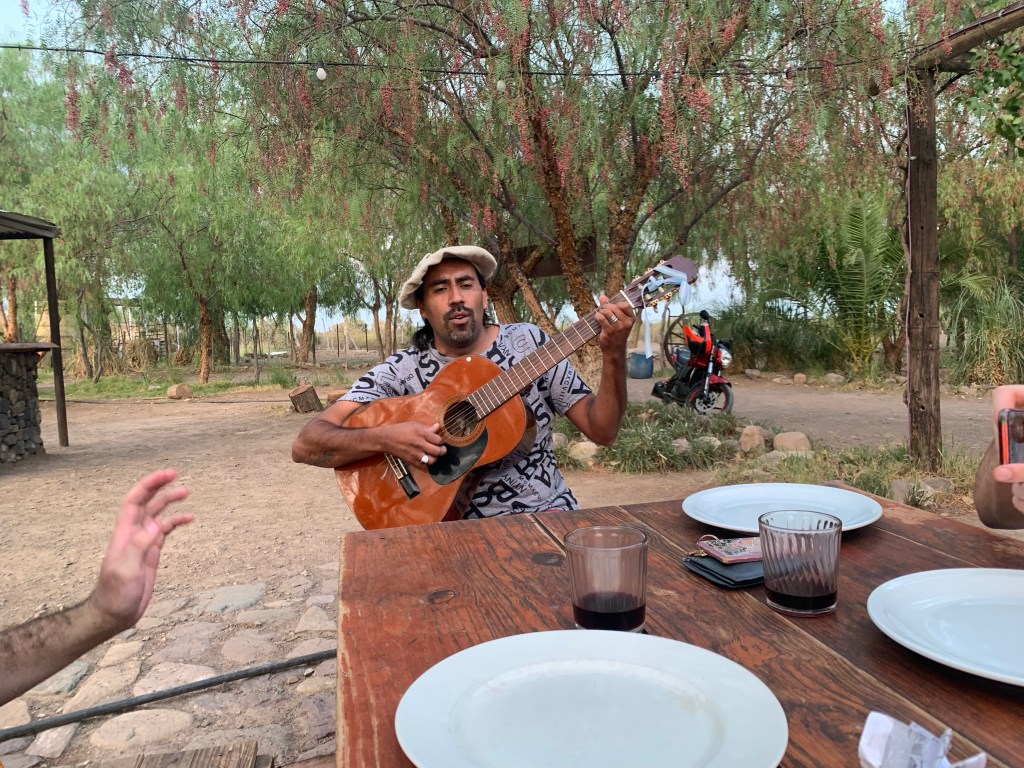
Once back at the ranch we had swims and started on the free-flowing red wine chatting to our fellow tourists who ranged from British gap year students to a Brazilian family and other fellow European travellers. We were served a mouth-wateringly authentic Asado BBQ and were entertained by a guitar player until it grew dark and it was time to get back on the minibus.

Dinner and entertainment back at the ranch, near Mendoza.

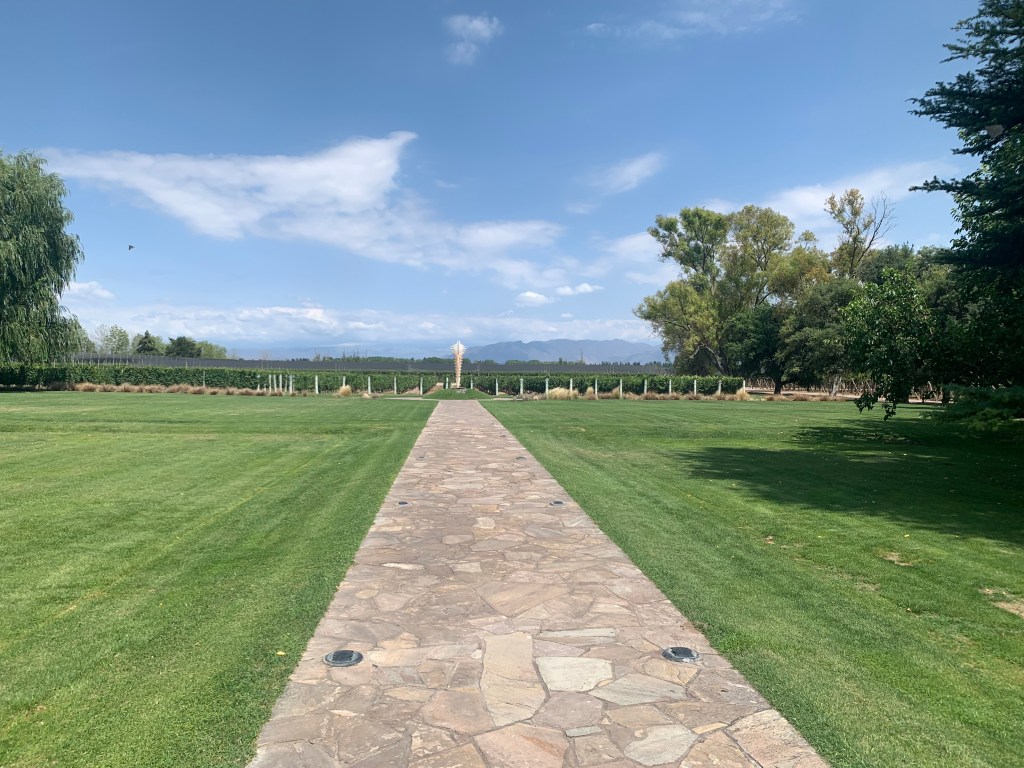
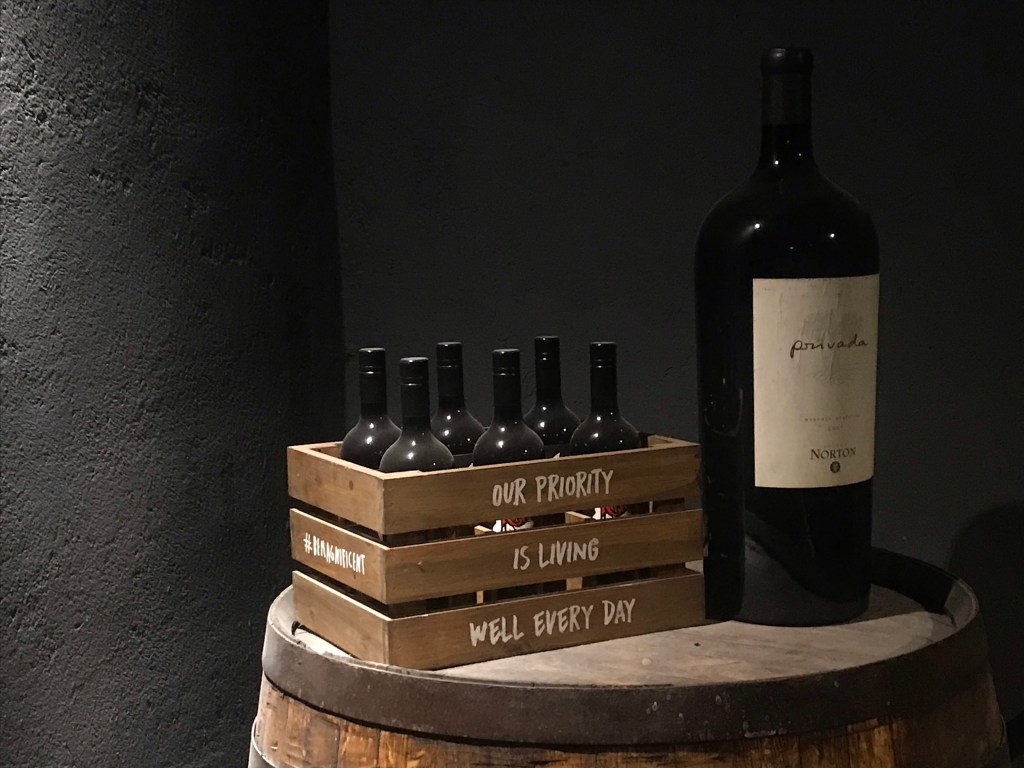
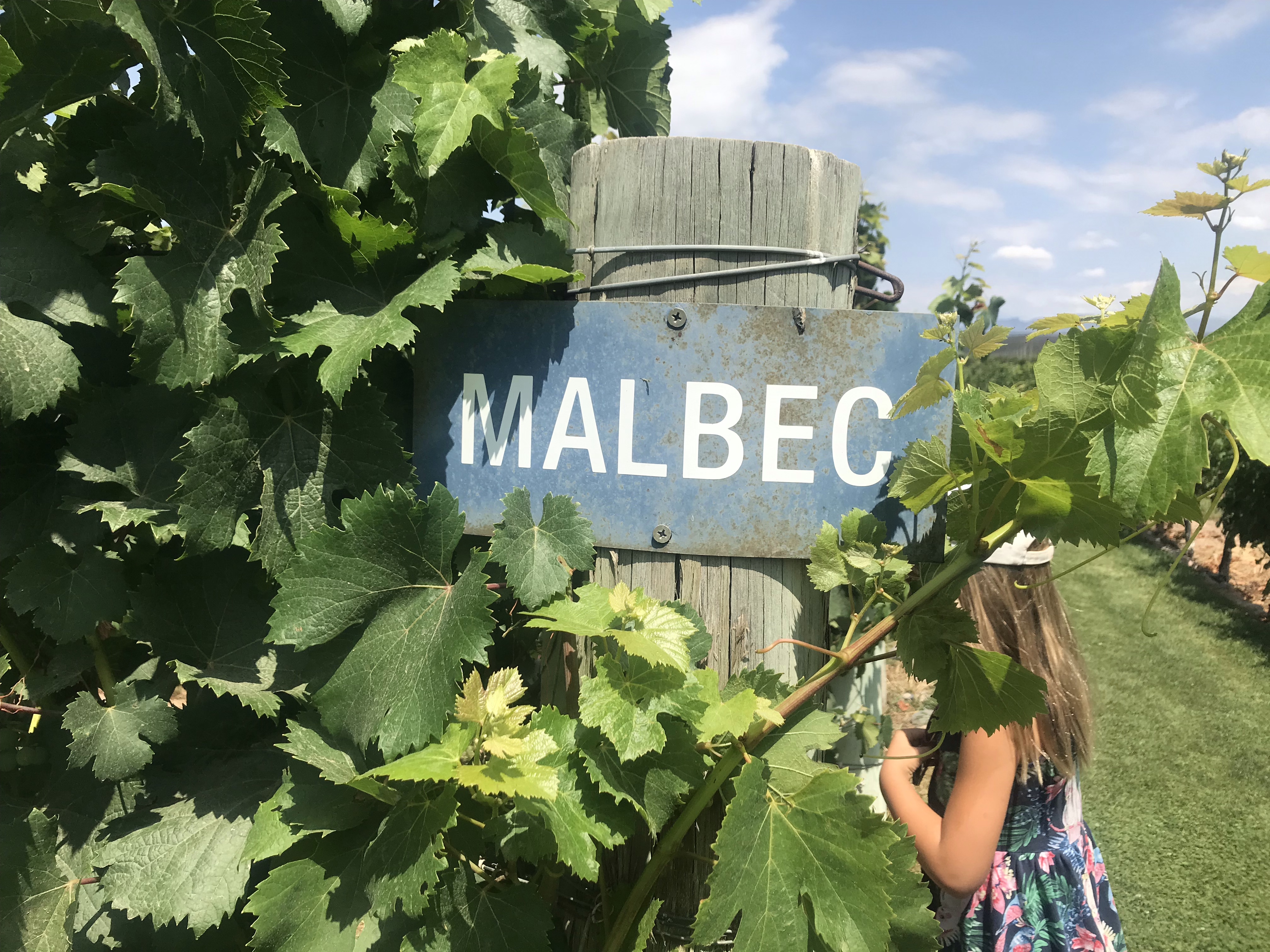
Rather than doing a classic wine tasting tour of numerous vineyards, which would have been tricky without our own transportation, we decided to just visit Bogegas Norton for a wine tour and to take what sounded tailor made for us: a Junior winemaker class. Founded in 1895 (not coincidentally the year the Buenos Aires to Mendoza railway opened) by an English engineer who imported French vines, the company was sold to Swarovski in 1989.

The impressive grounds of Bogegas Norton, Perdriel, near Mendoza.

Today Norton makes 25 million litres of wine a year, 70% red wine. Black Sheep was our top pick, only 5,000 bottles of it have been made. We enjoyed some sparking as well.

The vineyard we visited in the Luján de Cuyo district (they have five in the region) was 1,200 hectares. Sections of the buildings date from 1919, others from the 1960s, with high ceilings made of oak so you felt you were actually in a barrel yourself.

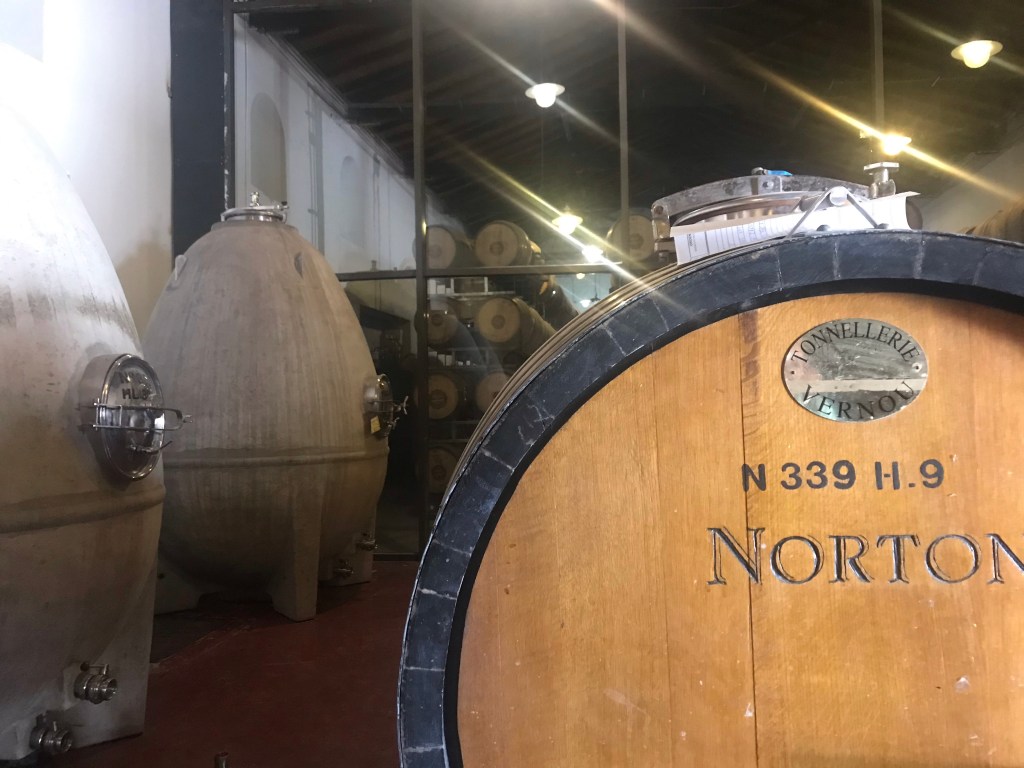
It was interesting to learn about one way of aging wine, in an amphora clay barrel in the shape of a giant egg, which our tour guide Julietta assured us was going to grow as a technique in the future.

Clay and wooden barrels, Bodegas Norton.

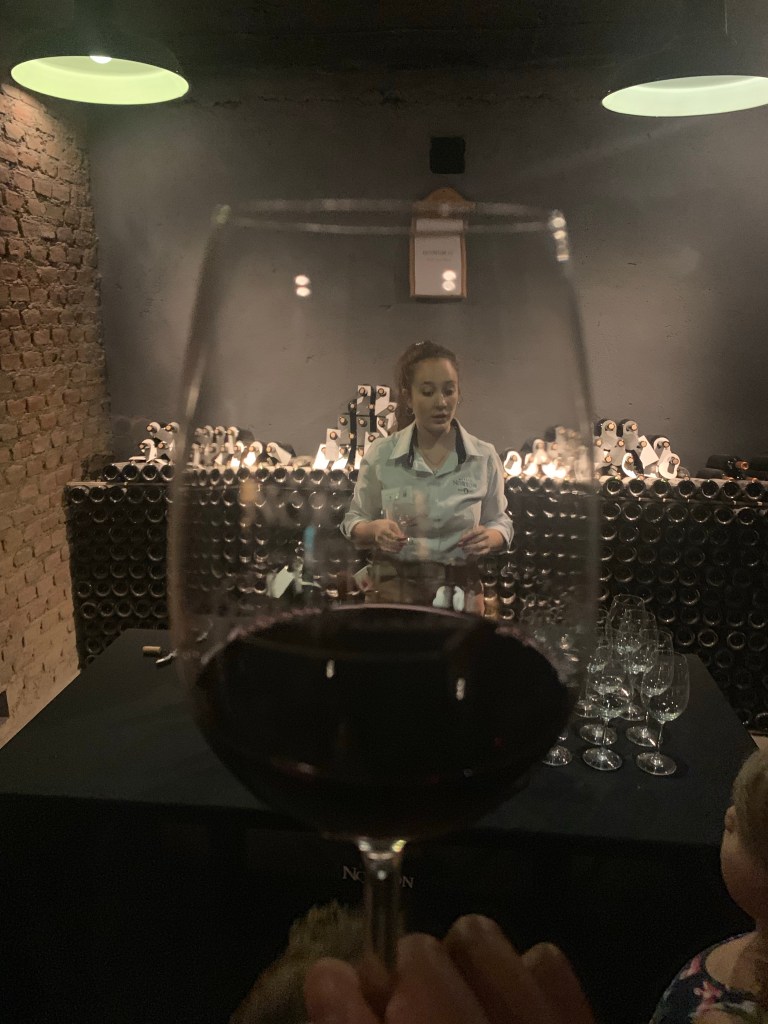
She was new to the company but very well informed, and not shy of generous pours on our tasting stops!

Our guide Julietta, Bodegas Norton.

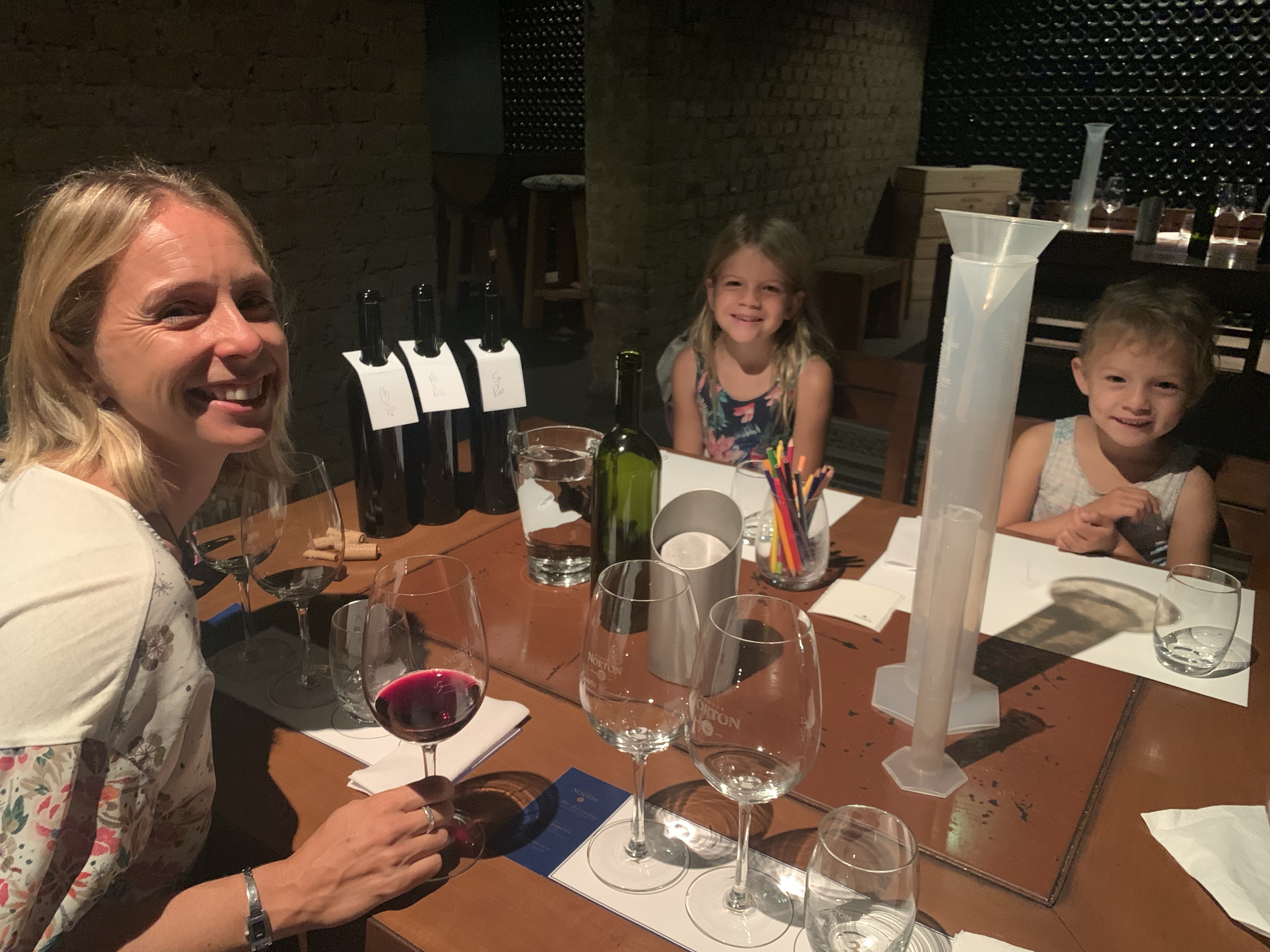
She also left the four of us alone for quite some time in a magical cellar to create our perfect blend of wine.

Junior Winemaker class, cellars of Bodegas Norton.

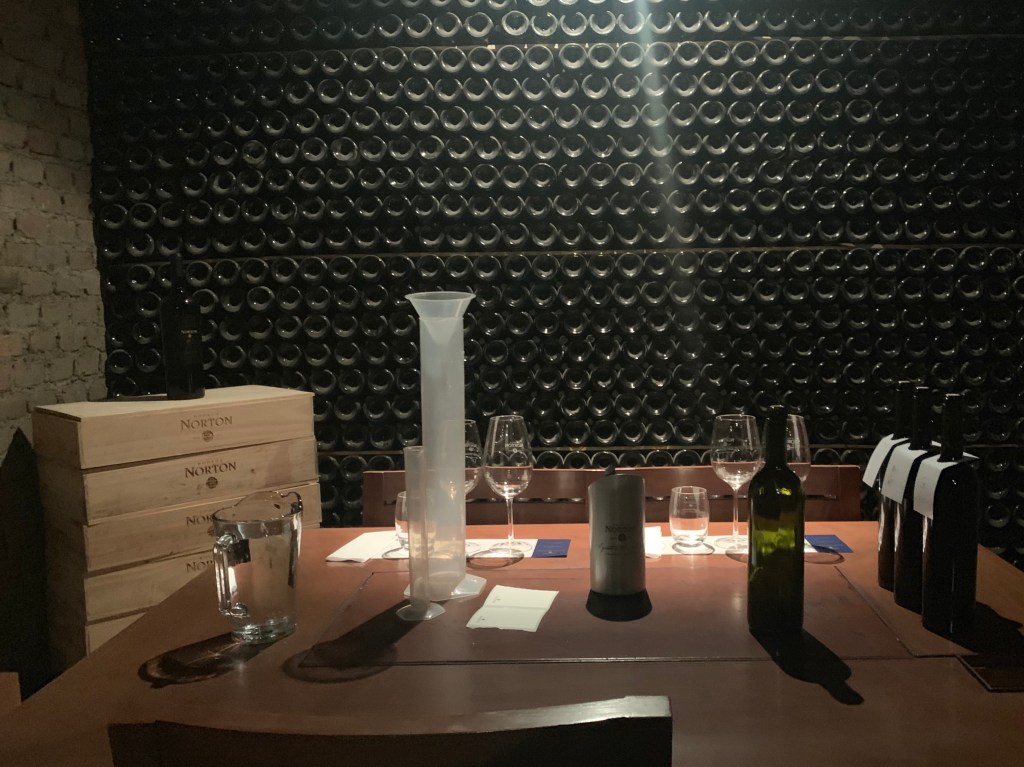
Classical music and dim lighting apparently aided the aging process. We were given full bottles of Malbec, Syrah and Cabernet Sauvignon and a series of measuring flasks to experiment with, making different ratios and combinations until we got it right.

Junior Winemaker class, cellars of Bodegas Norton.

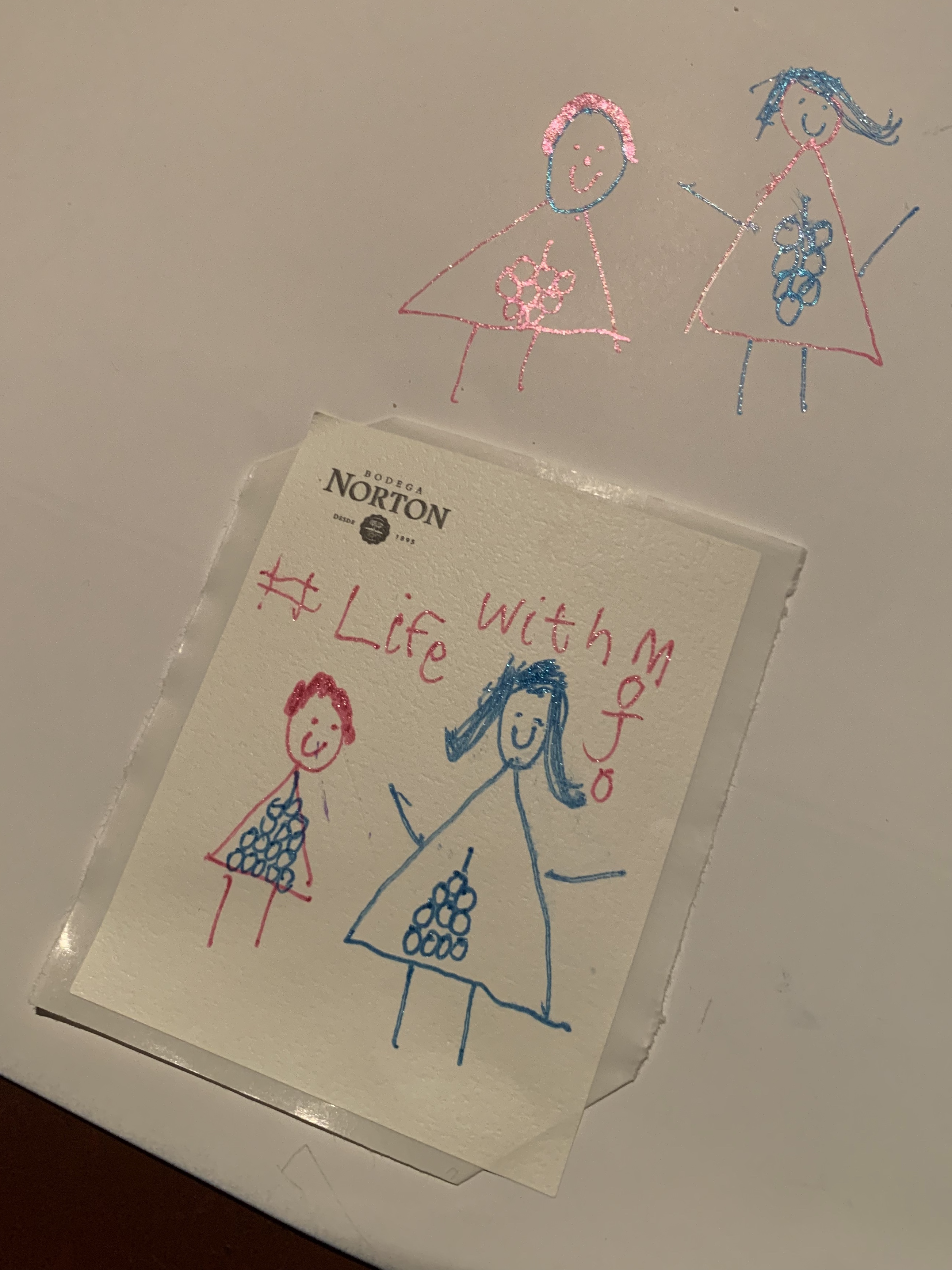
It was MoJo’s job to design the label. What a excellent afternoon. We all needed a siesta in the Uber ride back into town!

Argentina had given us so much: cities full of passion and beauty matched by stunning natural wonders and more red wine and steak than we needed in a lifetime.

Bodegas Norton, Mendoza, on our wavelength.

Picture Perfect Patagonia

The contrast between the bustling Buenos Aires we had just left and the expansive plains of Patagonia were evident as soon as the plane came into land.

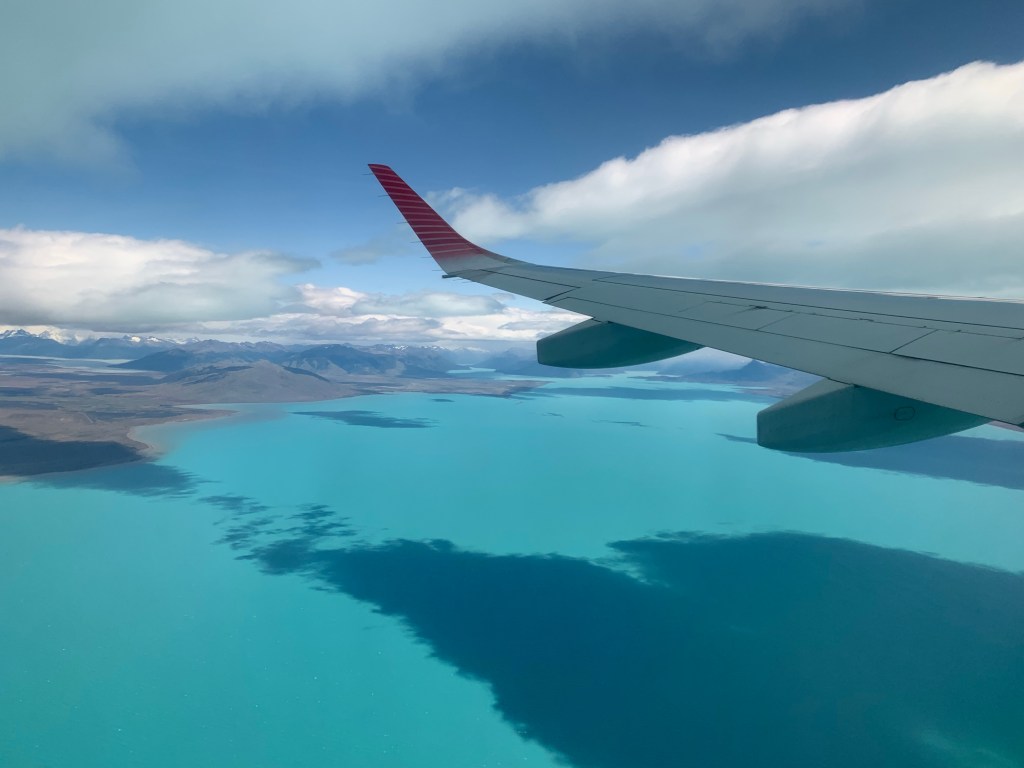
We enjoyed stunning views of the landscape surrounding Lago Argentino, the biggest freshwater lake in Argentina, conscious that we would be spending time in a very special natural environment.

It had been difficult to choose where to go ‘down south’. After being miserably cold during an afternoon in Ski Dubai last July, we had realised a trip to Antarctica with the girls the ages they were would not be a good idea, despite the temptation of ticking off another continent. It would also have taken us well over our budget. To go down to Tierra del Fuego and its capital Ushuaia (the usual gateway to Antarctica) was therefore not really necessary, especially as we had few warm clothes with us! So, we decided to spend our time a little further north in the Santa Cruz Province, engaging with glaciers. Who knows how long they will be there to visit?

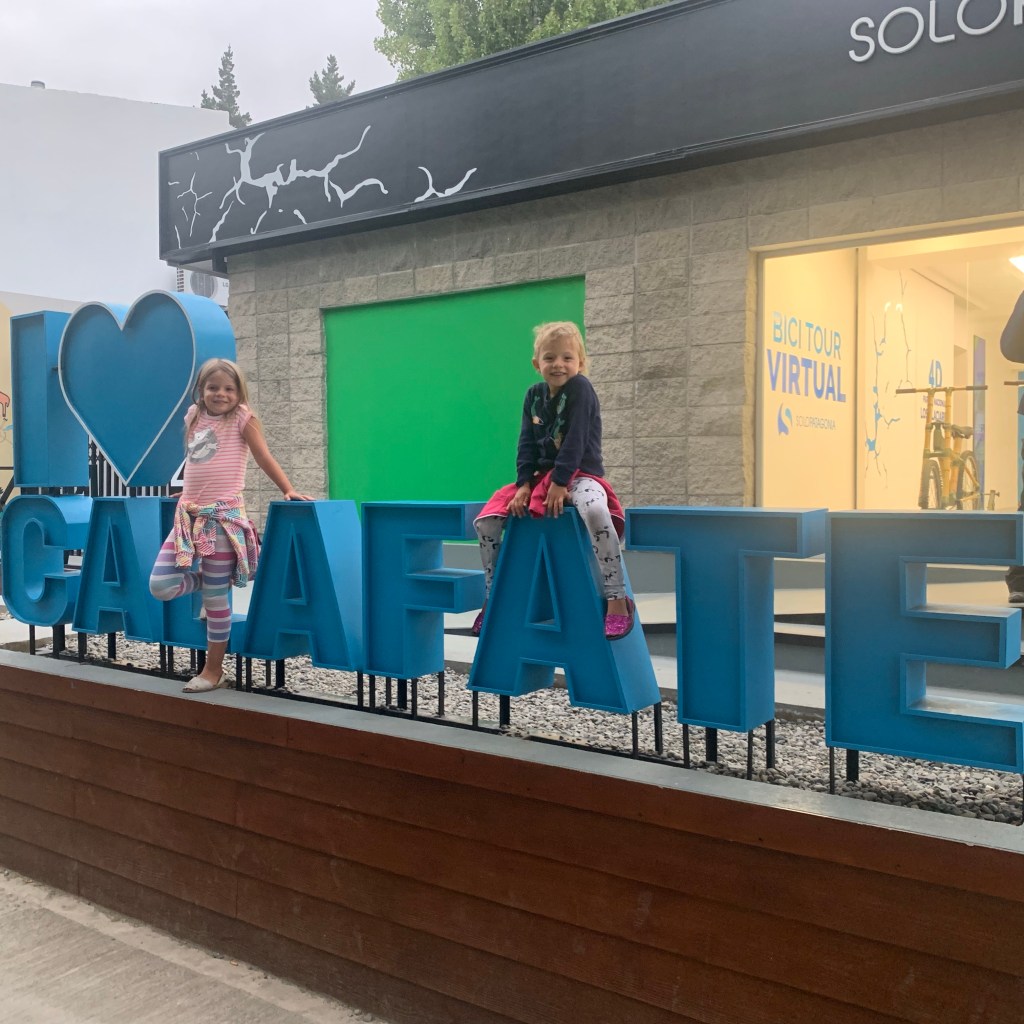
We based ourselves in El Calafate, a quaint town on the lake’s southern bank. Upon arrival we were immediately struck by the ‘middle of nowhere’, barren feel to the place, but also that it was quite the tourist spot.

Exploring El Calafate, Santa Cruz, Argentina.

The name ‘calafate’ refers to a little bush with yellow flowers and dark blue berries which we saw plenty of in the wild. We sampled the berries with ice cream and delicious dulce de leche at Buenos Croces restaurant in the centre of town.

We foolishly tried to order an uber on arrival at the provincial airport, soon realising that wasn’t the way to get around and signing up for a return journey on a minibus with a trailer for luggage. Our accommodation was the first stop, with the friendly name ‘Amigo del Mondo’. With dramatic hillside views, it was well located, we could walk 15 minutes downhill to the main drag.

View from Hotel Amigo del Mondo, El Calafate.

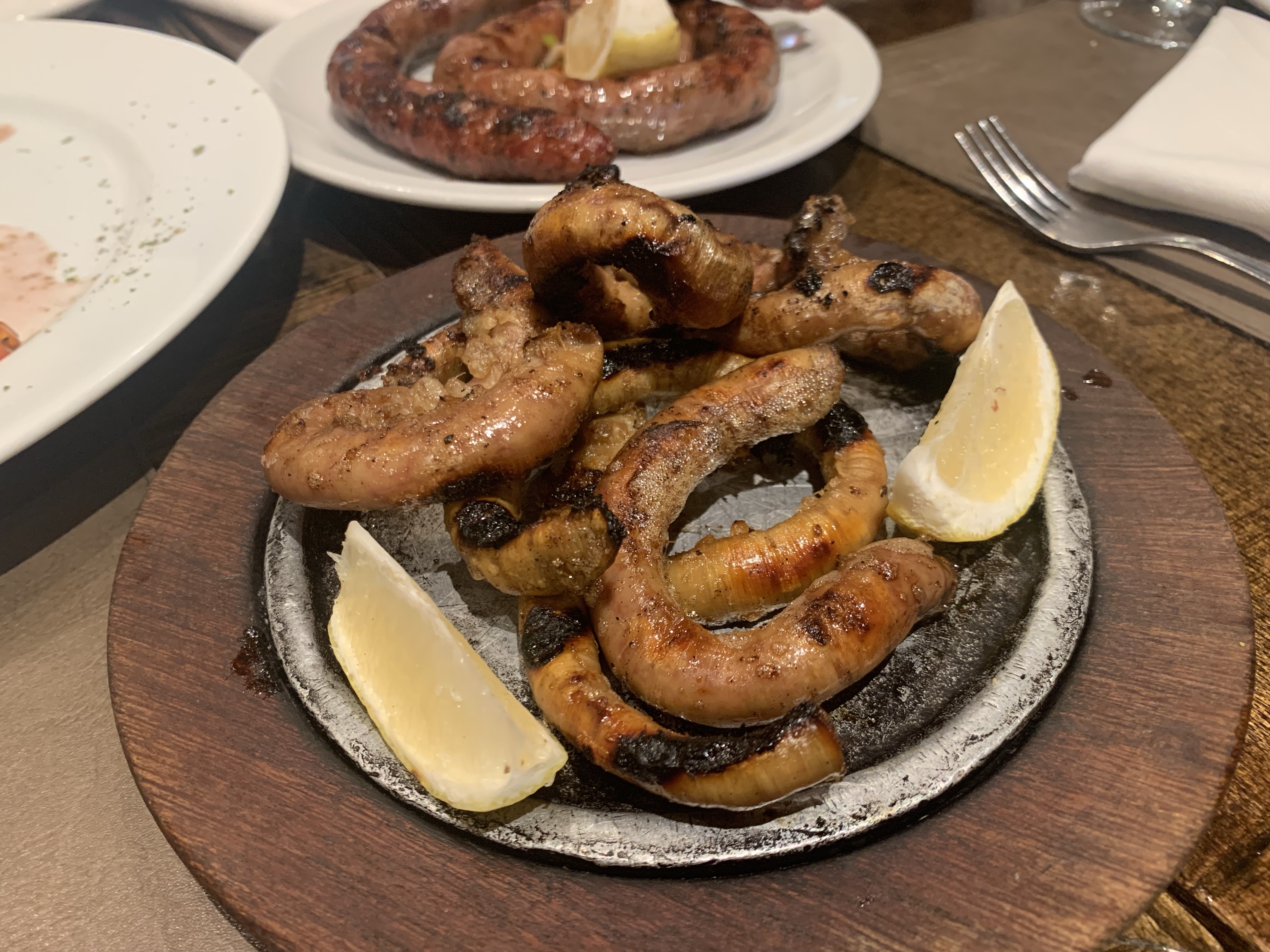
We did that on our arrival, after a quick stop in a playground (with enormous dogs!) we choose to have dinner at Casimiro Parrilla. It was a traditional grill restaurant where we ate steak and intestines (a local traditional dish, served up like sausages) with red wine whilst watching live tango entertainment.

Crispy intestines, Casimiro Bigua Parrilla & Asador Steakhouse, Avenue del Libertador, El Calafate.

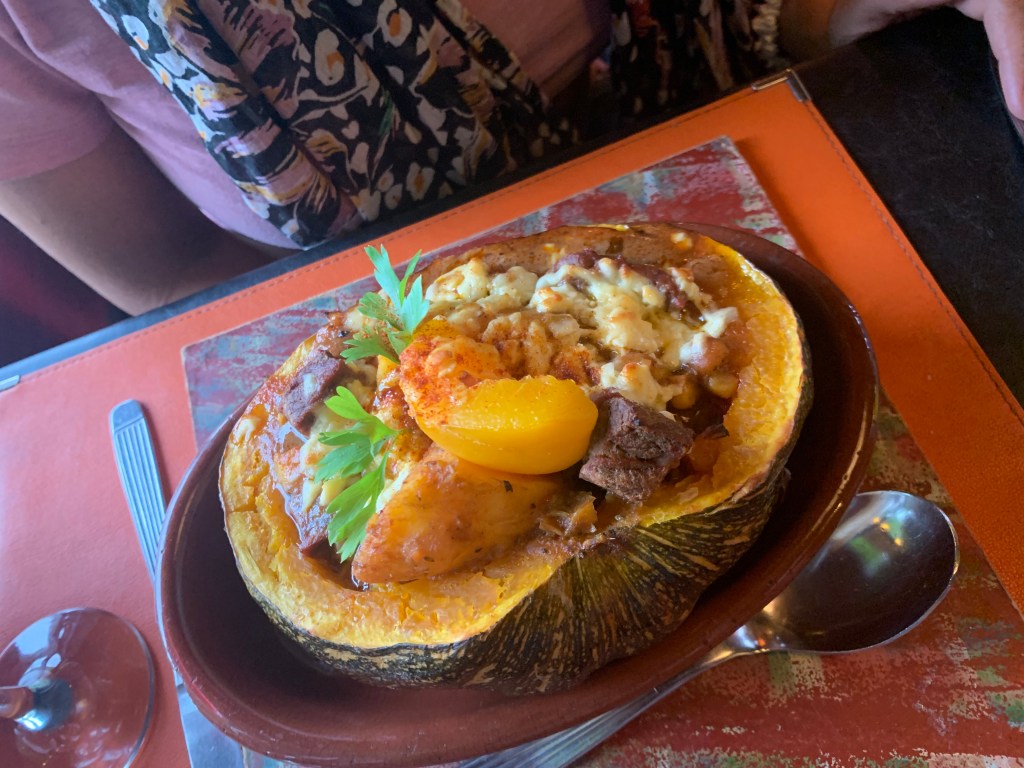
We had our best meal at Pura Vida, a walk out the other end of town, which served incredible pies and stews which felt just right for the climate.

Happy tummies at Pura Vida, Avenue del Liberador, El Calafate.
Stuffed squash, Pura Vida, El Calafate.

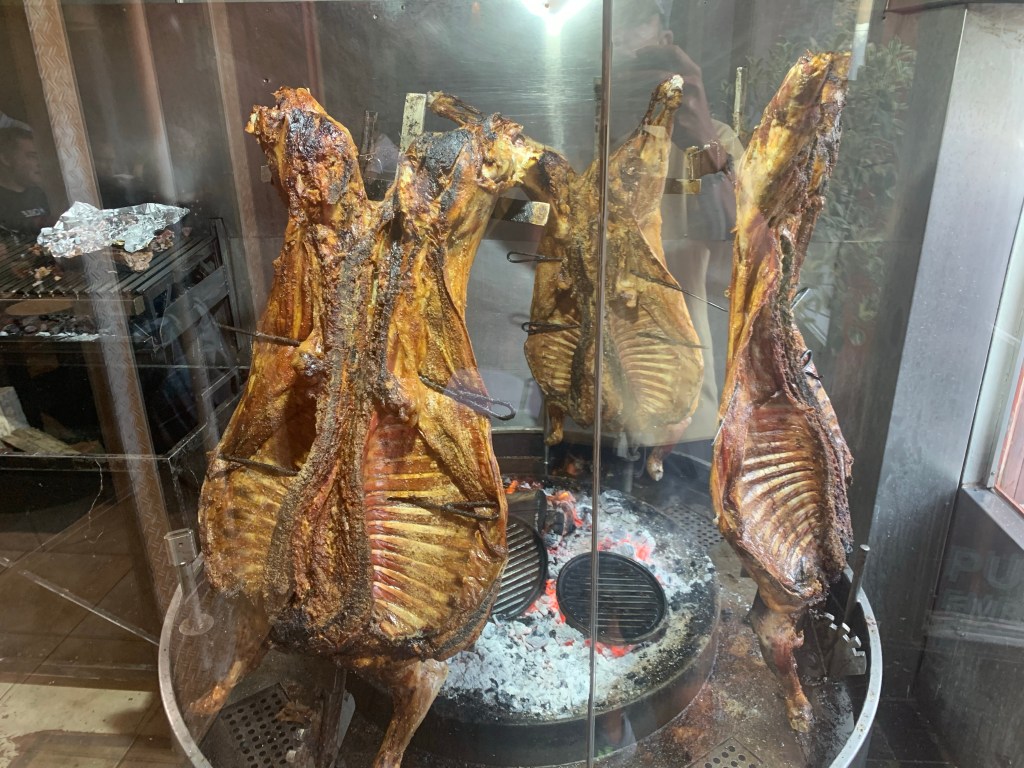
Close to our hotel there was amazingly a quirky gluten free café serving sandwiches, salads and sweet treats perfect for a snacky lunch. Other local specialities we enjoyed included trout caught in the lake, sweetbreads, lamb on a spit, Patagonia beer and hot chocolate.

Sweetbreads served up at Restaurante Buenos Cruces, Tomas Espora, El Calafate.
Grill outside Casimiro Bigua Parrilla & Asador Steakhouse, El Calafate.

One evening we strolled through the Paseo de Artesanos purchasing magnets and a new hoodie for Molly, the rest of us surviving the cold temperatures by layering up all the clothes we had. Everyone we saw on the streets were decked out in winter coats, gloves, hats and scarves – we assumed they must be doing some serious hiking because in the sunshine it was fairly warm!

Climbing up the Mirador de la Ciudad, El Calafate.

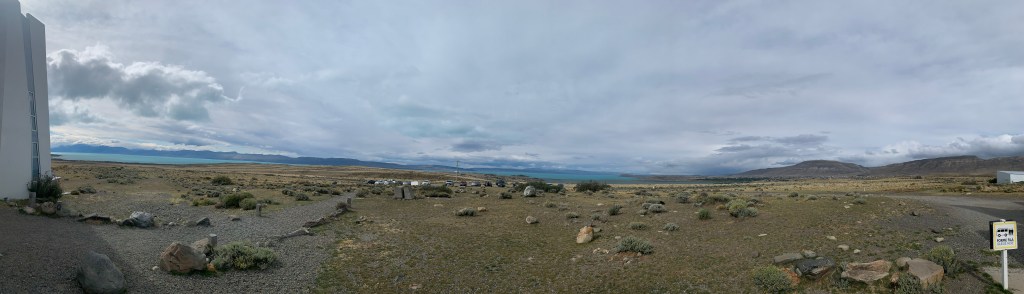
Before seeing them in the flesh, we decided to swot up on glaciers by spending an afternoon at the Glaciarium museum, bizarrely built in the middle of nowhere, a half-an-hour coach ride out of town.

Arriving at Glaciarium Patagonian Ice Museum, near El Calafate.

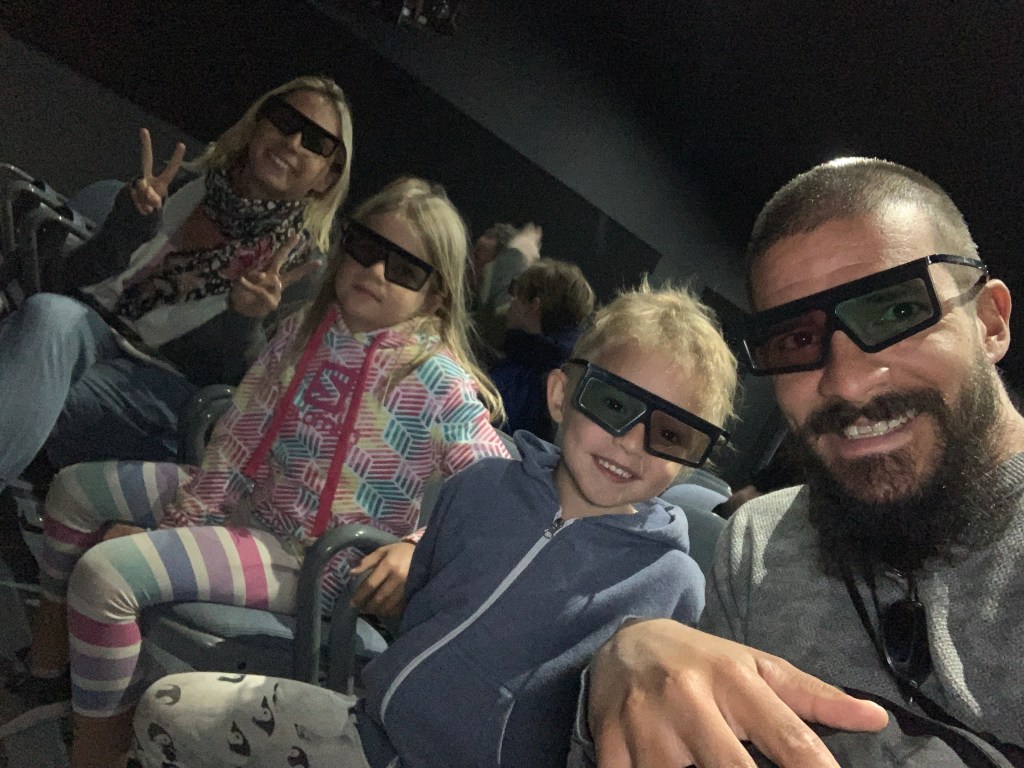
We found informative and interactive displays, with presentations where you wore 3D glasses and learnt all about snowflakes, icebergs and the explorers who first trekked across Patagonia.

Glaciarium Patagonian Ice Museum, near El Calafate.

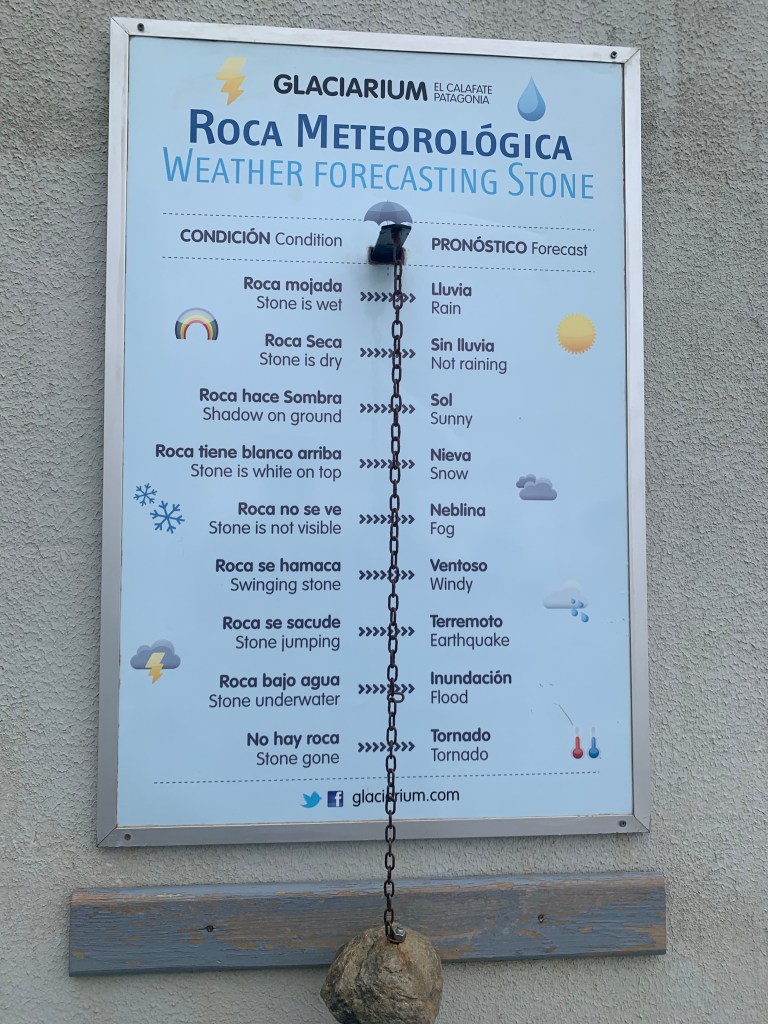
We found the local weather guide quite amusing but not very useful!

Not terribly helpful scientific instrument outside the Glaciarium.

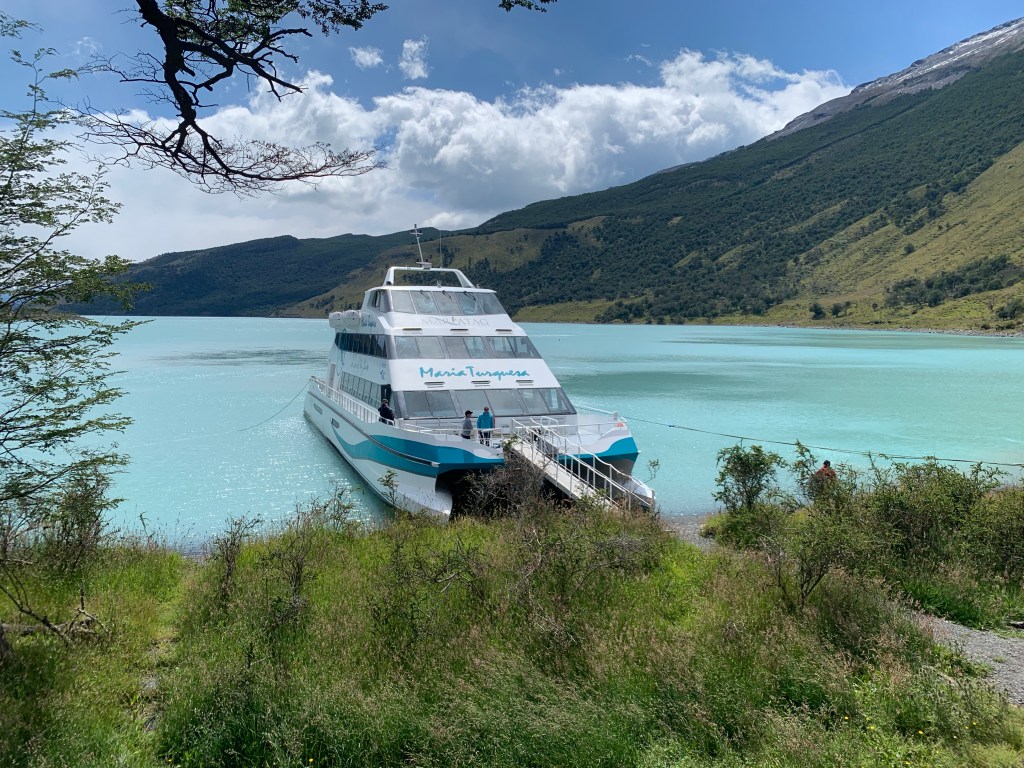
After research and popping into a few tourist agencies, we decided to go all out and book a full day gourmet tour of the Parque Nacional Los Glaciares aboard the MarPatag boat. This would take us to all the major glaciers in the area. We picked a day that was as clear as crystal but very windy.

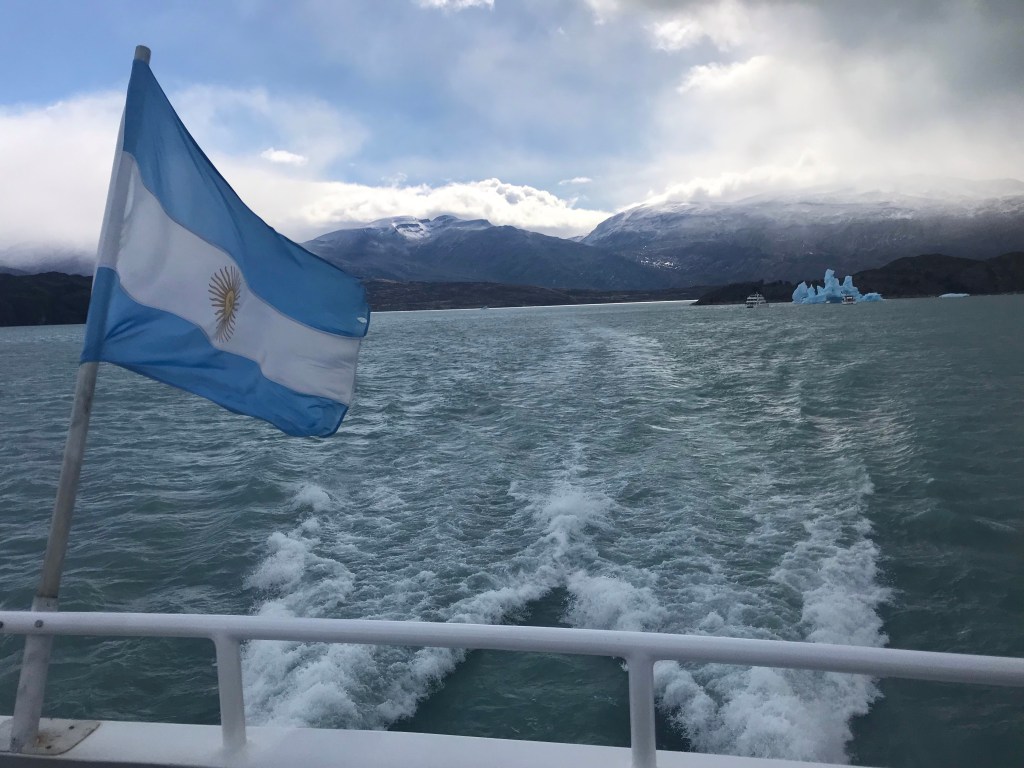
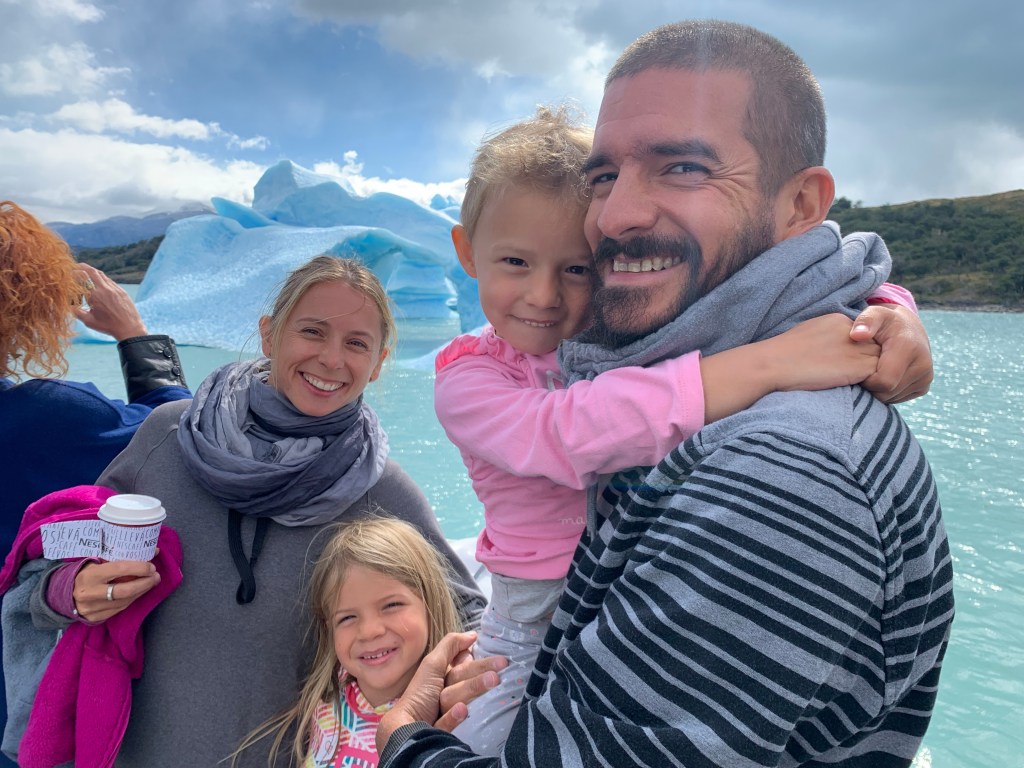
Glacier spotting aboard MarPatag boat, Parque Nacional Los Glaciares.

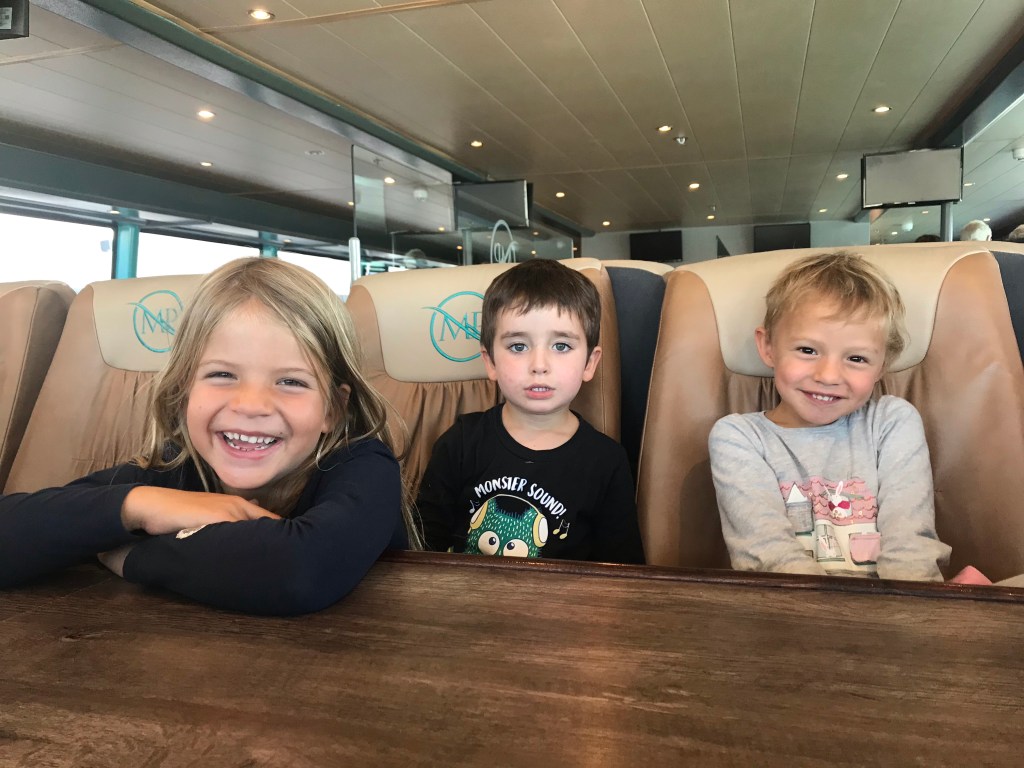
Conditions on the water thankfully remained calm for most of the day. The boat had three floors and two decks; we were allocated four spots next to a couple from Buenos Aires traveling with their four-year-old son Felix. The girls and Felix became firm friends, finding a kid’s area to play in downstairs. We discovered the next morning we were staying at the same hotel and happily gave Felix the hoodie Joanna had grown out of and some spare activity books for him to practice his English, in return he gave us some Spanish games.

MoJo with Felix aboard MarPatag cruise through Parque Nacional Los Glaciares.

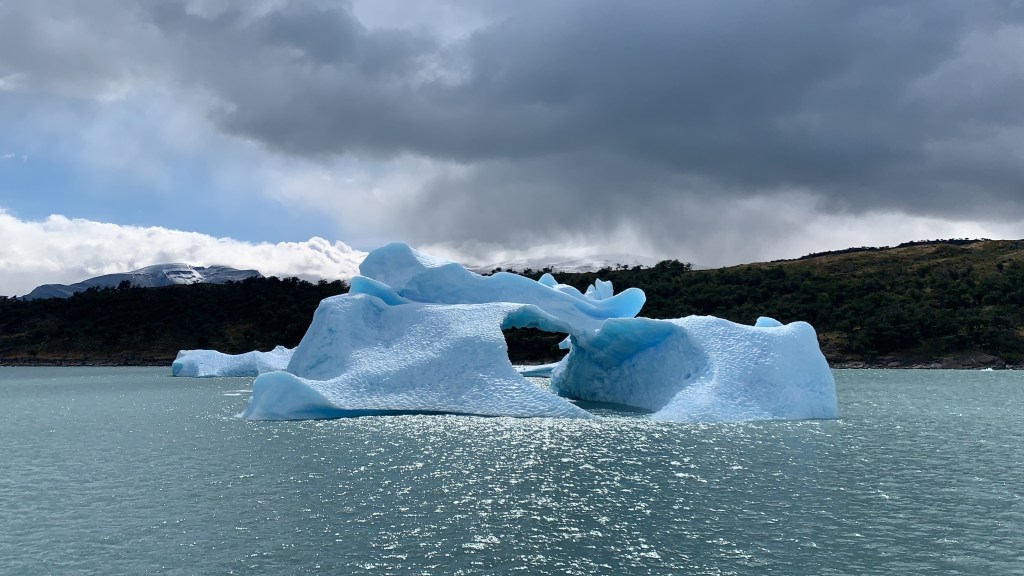
The excursion began in Punta Bandera, crossing peaceful Escuadra Bay and the Muralla de Condoreras (wall of colours) where we spotted our first icebergs above the water (basically free-floating blocks of ice).

Parque Nacional Los Glaciares.
On deck, MarPatag boat, Parque Nacional Los Glaciares.

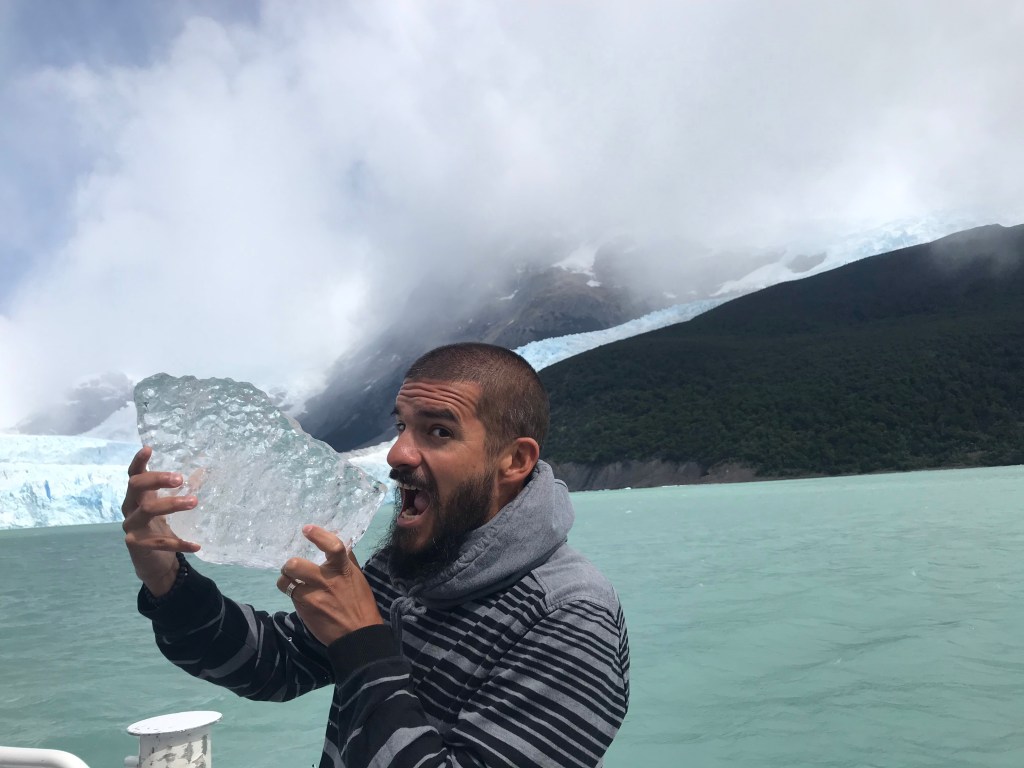
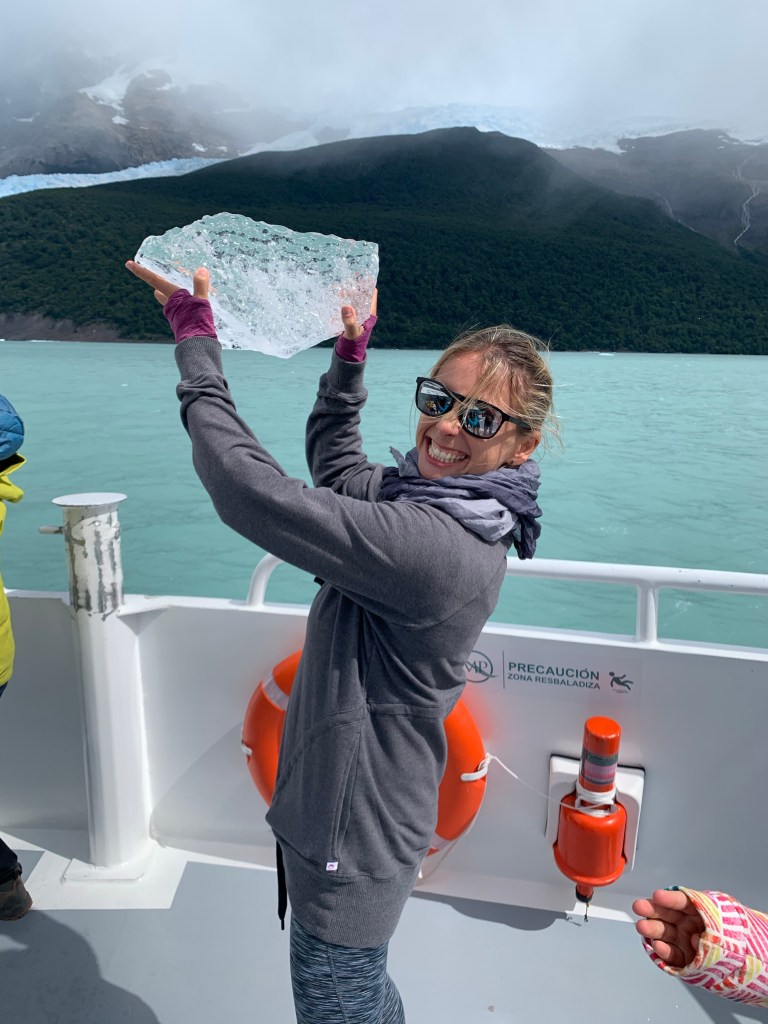
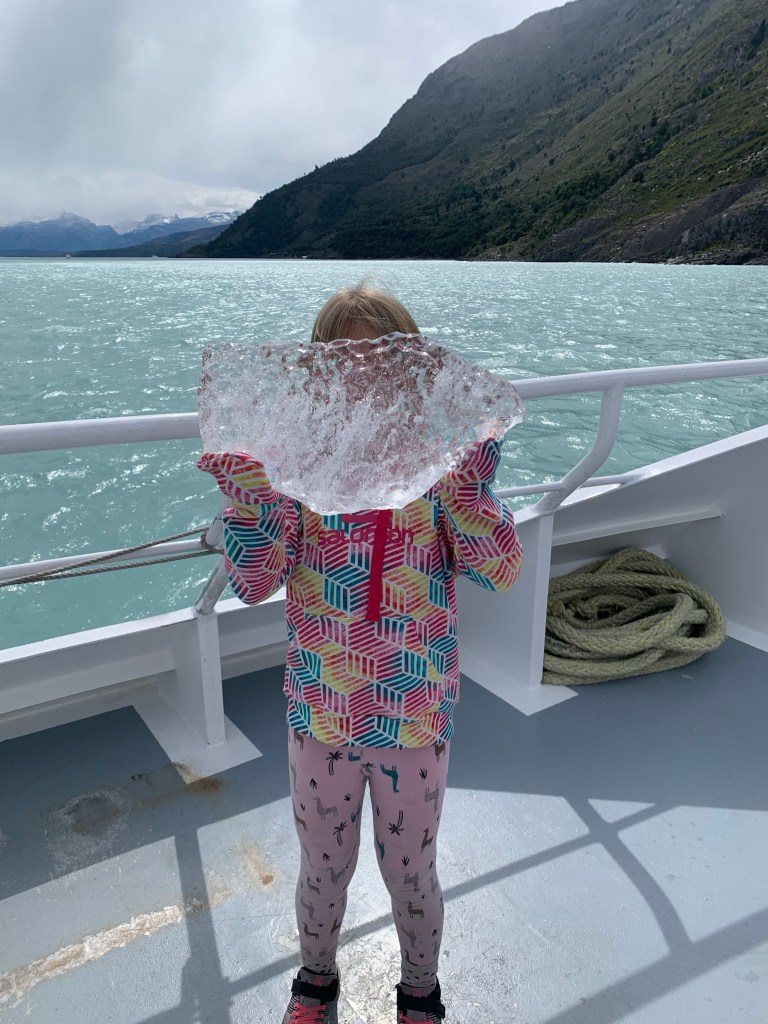
The crew pulled up some smaller bergs which were then broken up for afternoon drinks and we could have a go at holding as a photo opportunity.

Ice breaking: Parque Nacional Los Glaciares.

The first two glaciers we saw, Seco and Heim are the type known as ‘hanging’ – so they appeared as if the flow of water had been frozen before running into Lago Argentina.

Ice power: Parque Nacional Los Glaciares.

We then travelled south to the Canal Spegazzini to view the Spegazzini glacier, which rises over 100 meters above the level of the lake and is quite spectacular, like a minty-blue cathedral.

Thankfully covered in ice: Parque Nacional Los Glaciares.

We left the boat only once, to walk around Puesto Las Vacas (place of the cows) with our guide Marino, who helped us identify various flora and fauna and peek in the broken windows of an old settler’s cattle station.

Leaving the boat for a walk around Puesto Las Vacas, Parque Nacional Los Glaciare.

Next it was time to stop by the entrance to the Upsala canal to admire the Upscala and Bertracchi glaciers from a safe distance due to previous tsumani waves caused by falling ice, before enjoying our lunch on board.

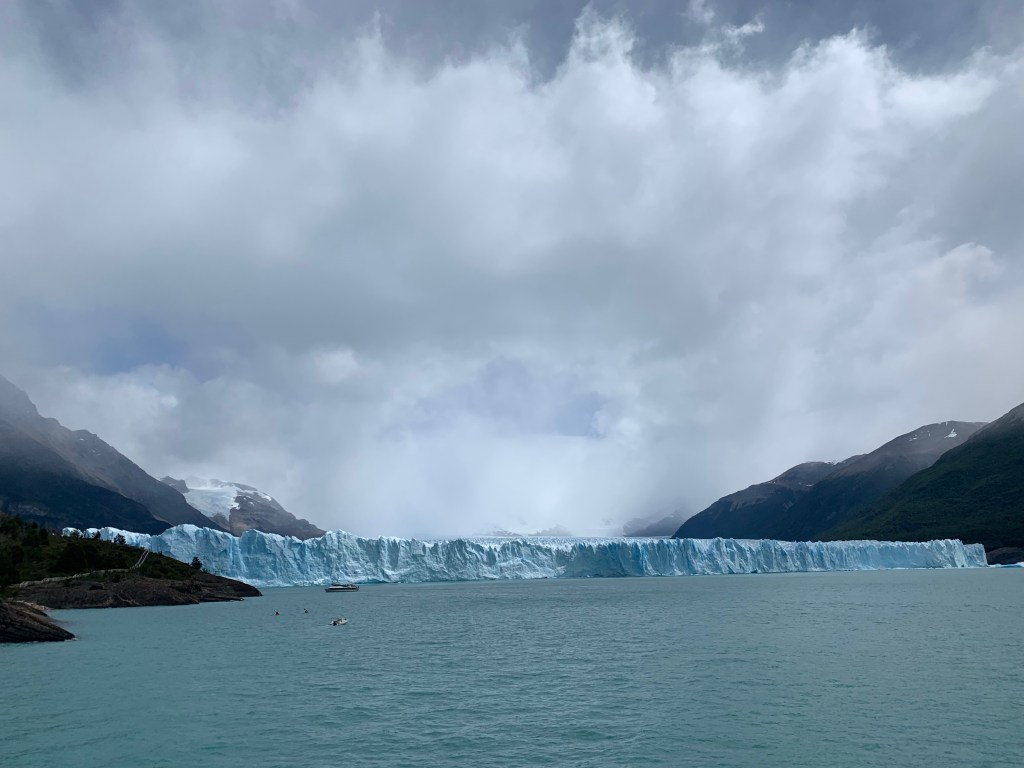
The grand finale of the excursion was traveling along Canal de los Tempanos to the north face of Pietro Moreno glacier, a truly marvellous sight.

Perito Moreno Glacier, Parque Nacional Los Glaciare.

Incredibly, apparently it is one of the few glaciers in the world that rather than retreating in the face of global warming, manages to maintain a state of equilibrium by continuing to accrue mass at a similar rate to what it loses. This seemed hard to believe as we watched mesmerised as giant sections of ice from the glacier came crashing down into the water below every few minutes.

Perito Moreno Glacier, Parque Nacional Los Glaciare.

We had the option of disembarking here and making our own way back to El Calafate, there were many trekking routes from here but we decided it would be best to be taken back to La Soledad port (have a snooze on the bus) and get dropped off in town for a final dinner and stroll, enjoying the late light in the evenings.

Worn out by all the sights, Parque Nacional Los Glaciare.

The sun rose early too, we made the most of it by taking runs along the lake, my fear of dogs somewhat calmed by being befriended by a sheepdog who ran with me for quite a few kilometres! There were beautiful horses grazing by the lake as well, but more on Argentinian horses in our next chapter.

Running through the pastures alongside Lago Argentino, El Calafate.

We are so thankful we spent time in Patagonia, a truly unique part of the world.

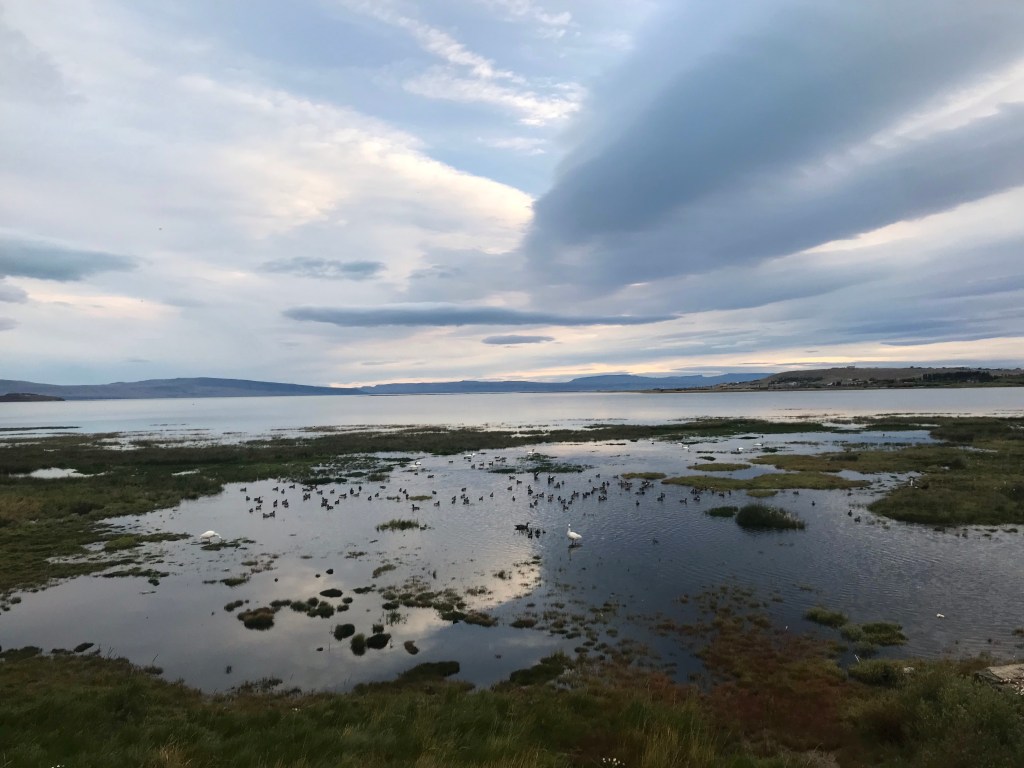
Lago Argentino, El Calafate.

Latino time! First stop Buenos Aires

It seemed entirely logical to us to continue our eastwards journey around the world from Auckland. Given that we were already so far south, our next stop was South America. We had been lucky so far in avoiding jetlag – travelling for six months to nine countries in as many time zones, we had hardly been affected at all. That was about to change.

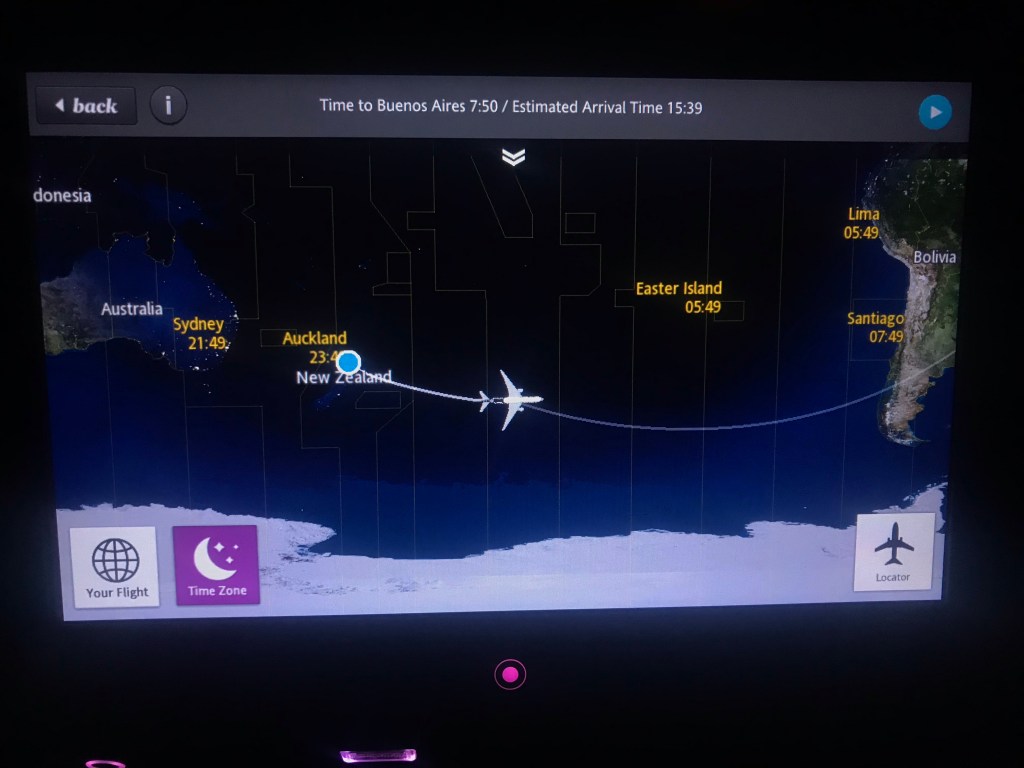
It wasn’t so much the length of the flight from Auckland to Buenos Aires (just shy of 13 hours on a rather comfortable Air New Zealand plane) but that we saved a whopping 15 hours. We landed four hours earlier than when we took off, on the same day, because you fly over the international date line. So Wednesday 8 January will, for all four of us, probably be the longest day of our lives. The girls found it hilarious that we had at least two lunches and three dinners on the same day!

Flight map, Air New Zealand flight NZ30, Auckland to Buenos Aires.

We were in for a shock regarding flight prices too: Asia had been so cheap in comparison. Our initial plan was to go to Chile, Argentina, Peru and Columbia – we even toyed with exploring the salt flats of Bolivia – but when we saw how expensive it was to fly from one country to another we decided to go to four places in Argentina over two weeks and then Peru and leave the other countries for another time…whenever that will be.

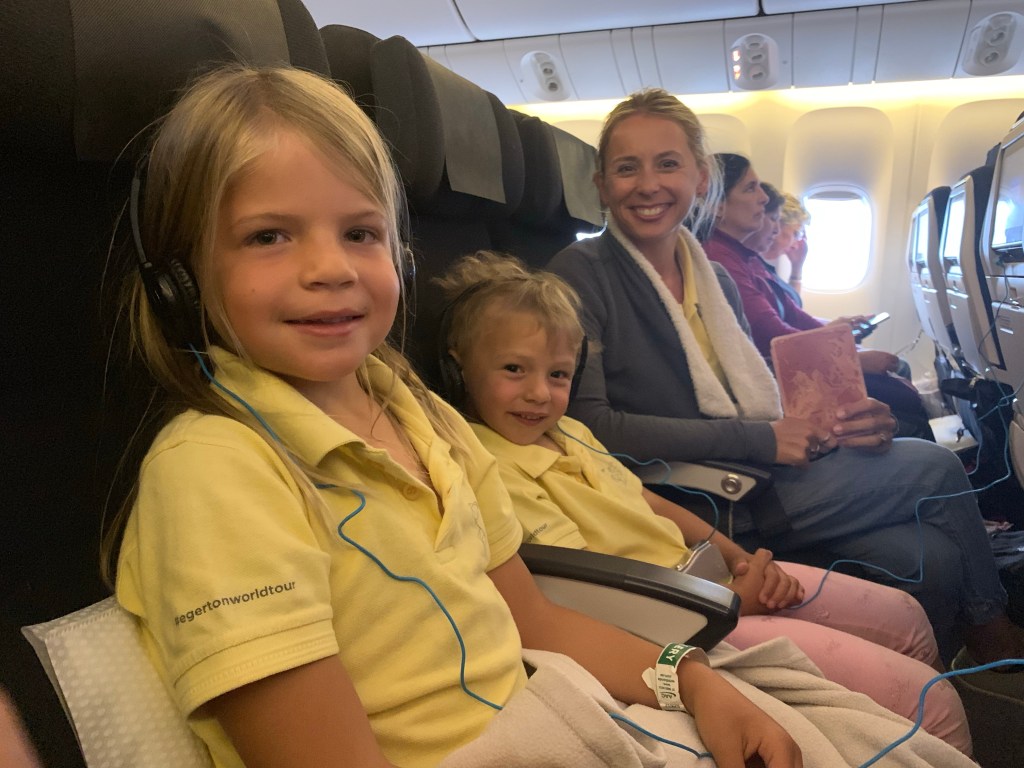
Back on a plane again, Egerton World Tour, January 2020.

On the plane I was suddenly struck by the fact that I had never spent a whole month in a Spanish speaking country before. This was precisely what we were about to do (longer if you agree that Spanish is spoken pretty widely in parts of California). The girls had been collecting a few phrases from different countries at the back of their diary, so we began with the basics. We didn’t make enormous progress, I basically just get by anywhere speaking some Italian. There was one awkward moment where a waiter asked me to try speaking in Spanish when I thought I was…

Buenos Aires is of course a major international city – the Paris of the South, and the buzzy, cosmopolitan atmosphere hit us straight away. We had four nights there, staying in a lovely bed and breakfast in Palermo Viejo, our room a duplex off a courtyard. Upon arrival we had a lengthy, slightly confusing conversation with the owner who was off away for the rest of our stay. Money was the main issue discussed – getting hold of the cash he wanted us to pay for our stay with was quite problematic, but we managed to get away with a rather good deal due to a slightly shady currency exchange place who give you more pesos for US dollars. The trick is to come to Argentina with as many US dollars you feel safe traveling with.

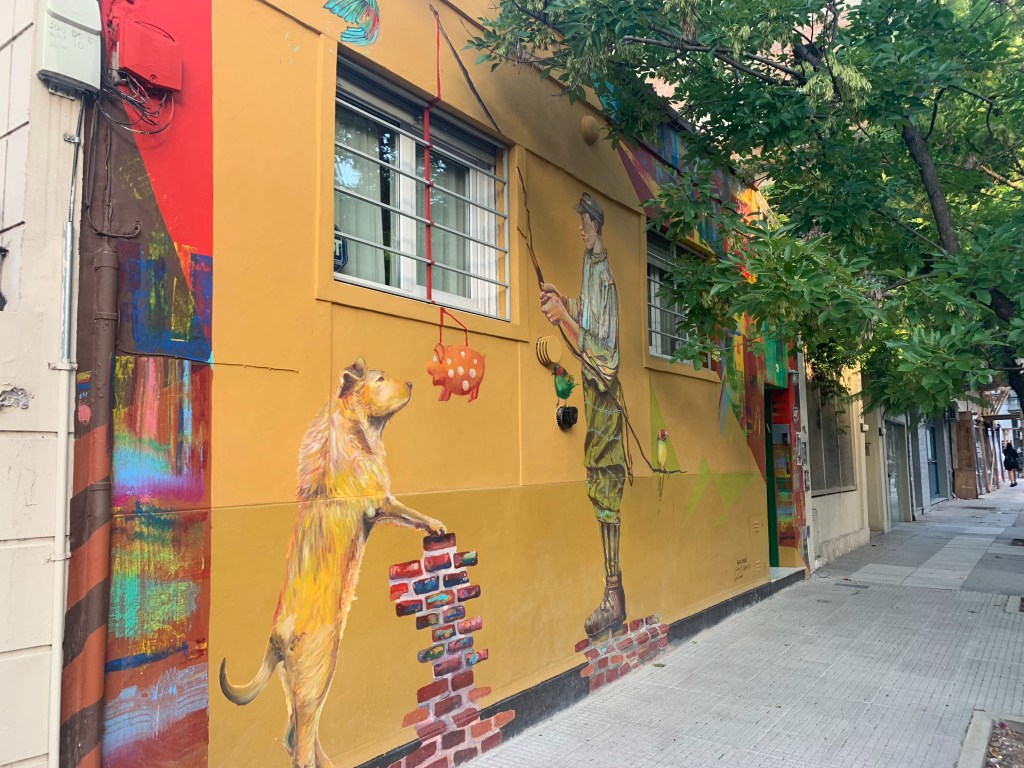
Street art outside Palermo Viejo Bed and Breakfast, Palermo Soho, Buenos Aires.

We were looked after well in the b&b by Marta, who enjoyed teaching Molly marble solitaire. We managed to convince her to waive the 10am finish time for breakfast by an hour, but still only made it to breakfast two of the four mornings we were there due to our jetlag. Once I lay awake all night until 5.30am, when I decided to go for a run around the city, sleeping for a couple of hours when I got back. Unwittingly I had slipped into the way of the porteños (residents of Buenos Aires) who are notorious insomniacs and night owls.

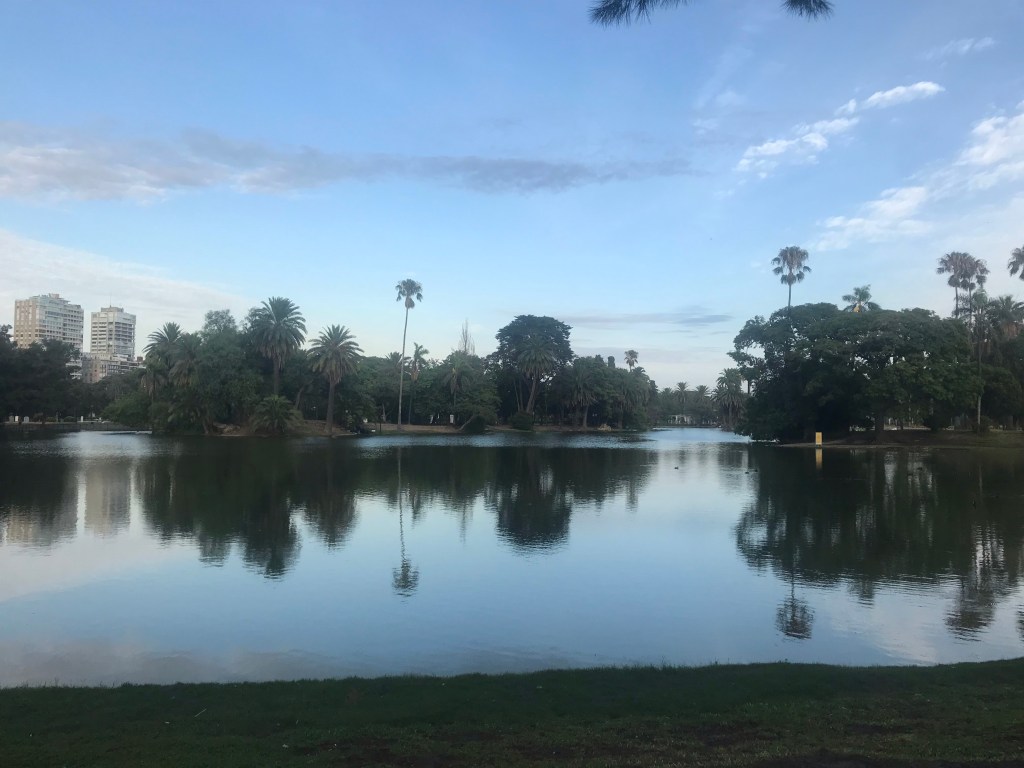
Sunrise run through Paseo El Rosedal Garden, Palermo, Buenos Aires.

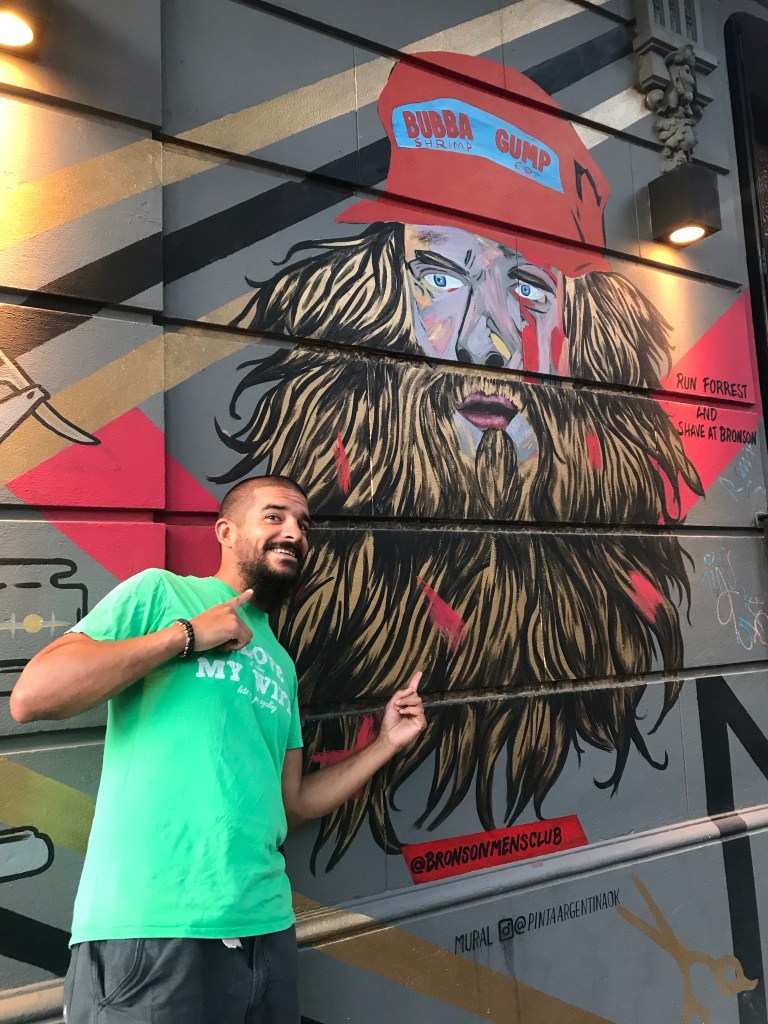
The local neighbourhood, Palermo Soho, consists of a series of elegant, tree-lined streets with plenty of interesting boutique shops and cafes and inventive graffiti on most surfaces.

Street art, @pintaargentinaok, outside Bronson Mens Club, Palermo Soho, Buenos Aires.

Being the largest neighbourhood in the city, it was quite a walk down these avenues to reach Plazoleta Julio Cortazar, where we found a playground and plenty of lively dinner spots. Clara became our favourite, eating on the second floor terrace our first night and returning for a brunch on our final morning. The drink Limonata was a hit with us all – cold and refreshing real lemonade, a good alternative to all the delicious (cheap!) red wine.

Dinner at Clara Deli & Drinks, Calle Serrano, Plaza Cortazar, Palermo Soho, Buenos Aires. (sadly now closed).

There was a larger play area in nearby Plaza Imigrantes des Armenia, but we had to stick to parts in the shade as the sun was very strong.

One afternoon we walked down to the Botanical Gardens and Ecopark for an ice cream and coffee, enjoying seeing capybaras and peacocks strolling about. We never actually made it onto the public transport system, using our feet and cheap uber’s to traverse the city.

Capybara in Ecoparque BA, Palermo, Buenos Aires.

Despite feeling a long way from home, we had quite a few friends to meet up with in Buenos Aires during our few days there. First off were Craig and Wei, running buddies from Dubai who were also taking some months out and traveling the world before settling back in Scotland. We thought we might just miss them, but their flight plans changed so we overlapped for a day and were able to meet for lunch and dinner. It was great to catch up and hear what they had been up to (dodging erupting volcanoes on ultra marathons, hanging out with penguins in Antartica, that kind of thing).

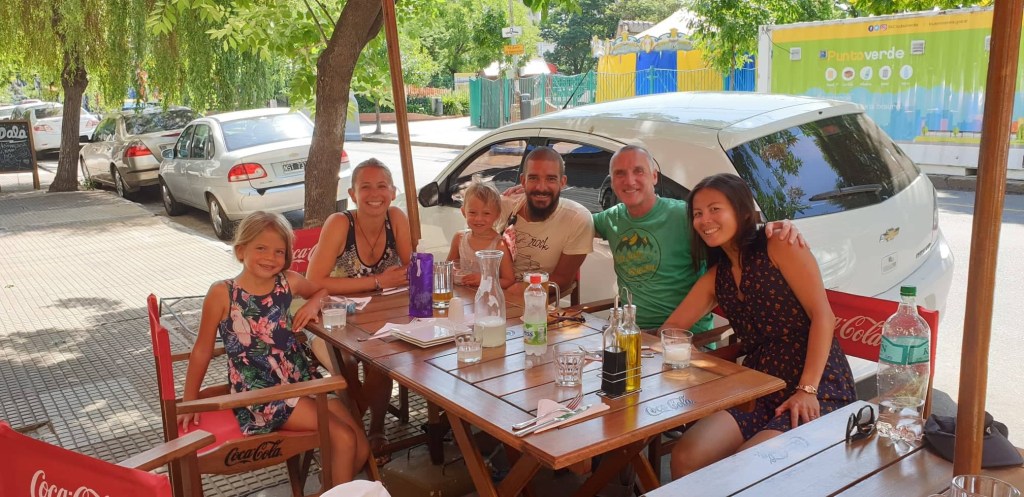
Lunch with Craig and Wei, Costa Rica, close to Plaza Imigrantes des Armenia, Palermo, Buenos Aires.

One of Tom’s oldest friends and a best man at our wedding, David (Goz to us), had taken a sabbatical from his teaching post in London to travel round South America with his girlfriend Louisa. Again, we thought we might miss them as they had spent New Year in Buenos Aires. However, as luck would have it, they arrived back in the city from Uruguay to meet Louisa’s brother Nick just as we arrived.

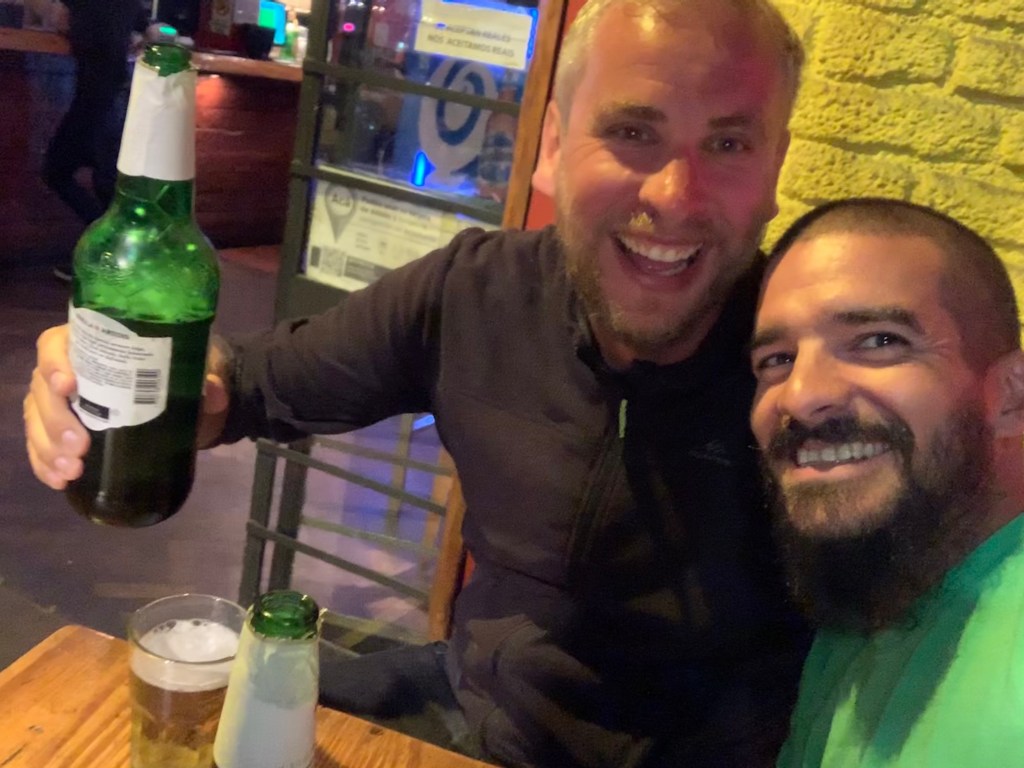
Goz and Tom comparing beard growth over a few beers, Buenos Aires, 9 January 2020.

I also had a host of friends in the city from my days working at the Peggy Guggenheim in Venice, so catch ups with them were arranged too. Connections were everywhere, we ate a delicious steak dinner with Craig, Wei and Gos at Cabernet, a restaurant owned by the father of one ex-guggie friend, Irina.

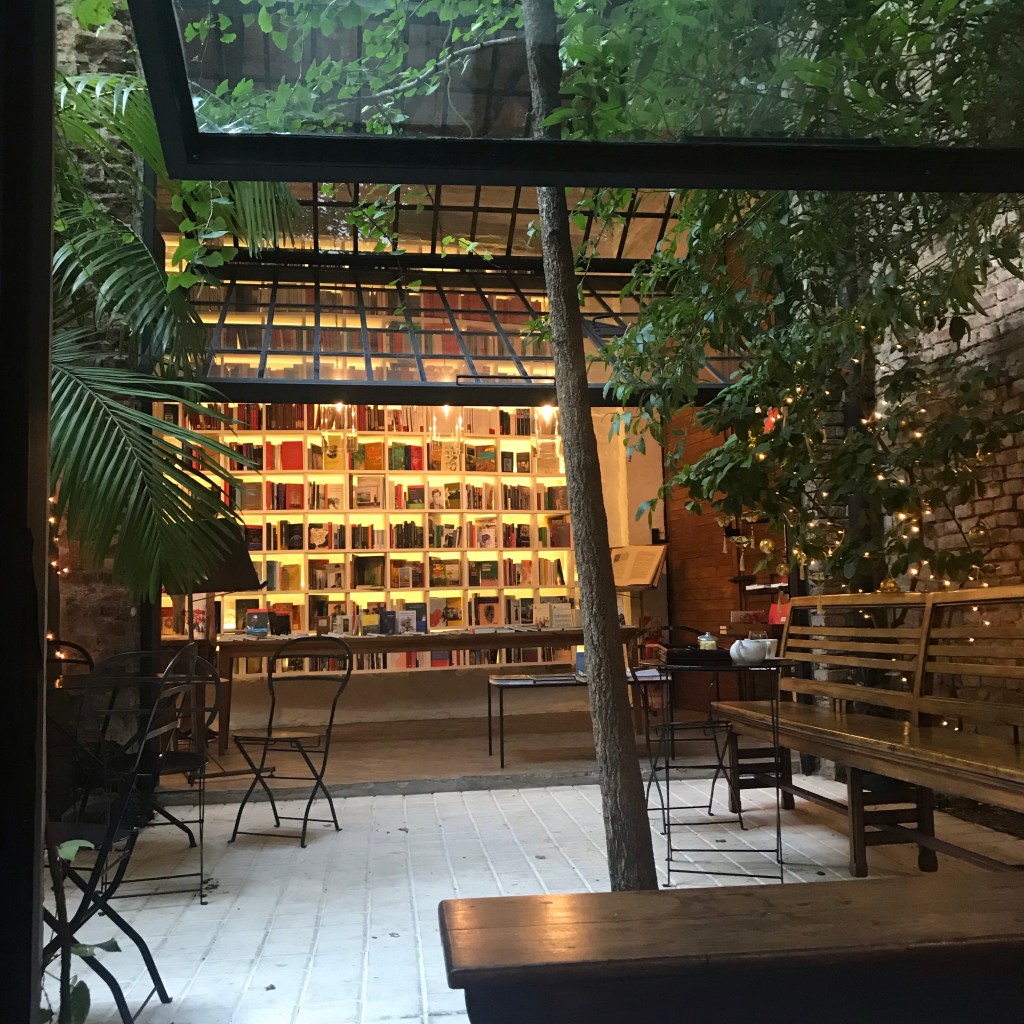
Irina is an artist from BA – walking down the street with her was wonderful as she knew every other person! We met for a coffee in a gorgeous private bookshop, Falena. It was lucky to catch her as well, as she was leaving the city the following week for an artist residency in Lyon.

Falena, Charlone, Barrio Colegiales, Buenos Aires.

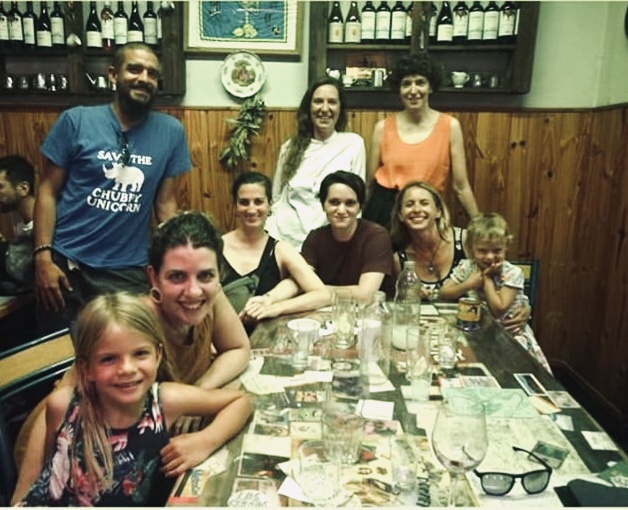
Another ex-guggie Dani works in the art department at Universidad Torcuato Di Tella where Irina was planning an exhibition. A third, Lucia, an artist who lives in London, and is from Montevideo, happened to be in town so we managed a group dinner all together.

Dinner at Donnet, Jorge Newbery, EGG, Buenos Aires, with Irina, Dani, Lucia and partners.

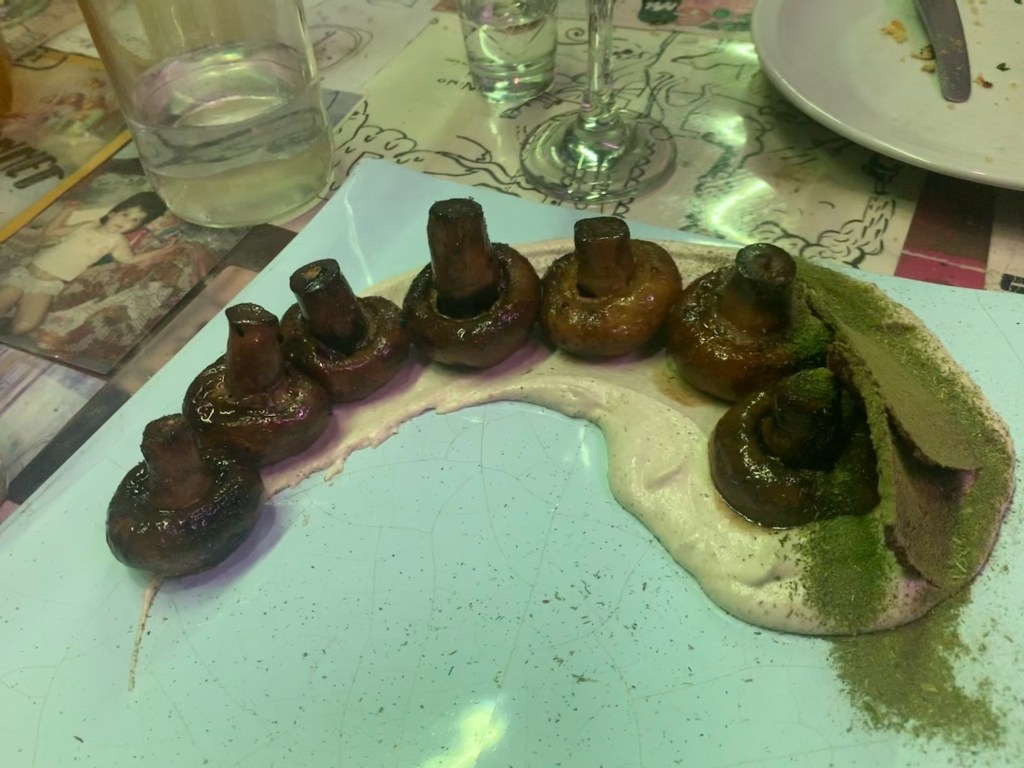
Molly and Joanna were not overly impressed (Tom pleasantly surprised) with the vegan offerings with a mushroom theme that week at Donnet but considering how much steak we were going to eat during the next two weeks it was probably good for us!

Mushroom dish at Donnet, vegan restaurant.

I stayed out and went to a fun party in an artist studio – sampling the local fernet con coca and happily getting a handle on the artsy vibe of the city.

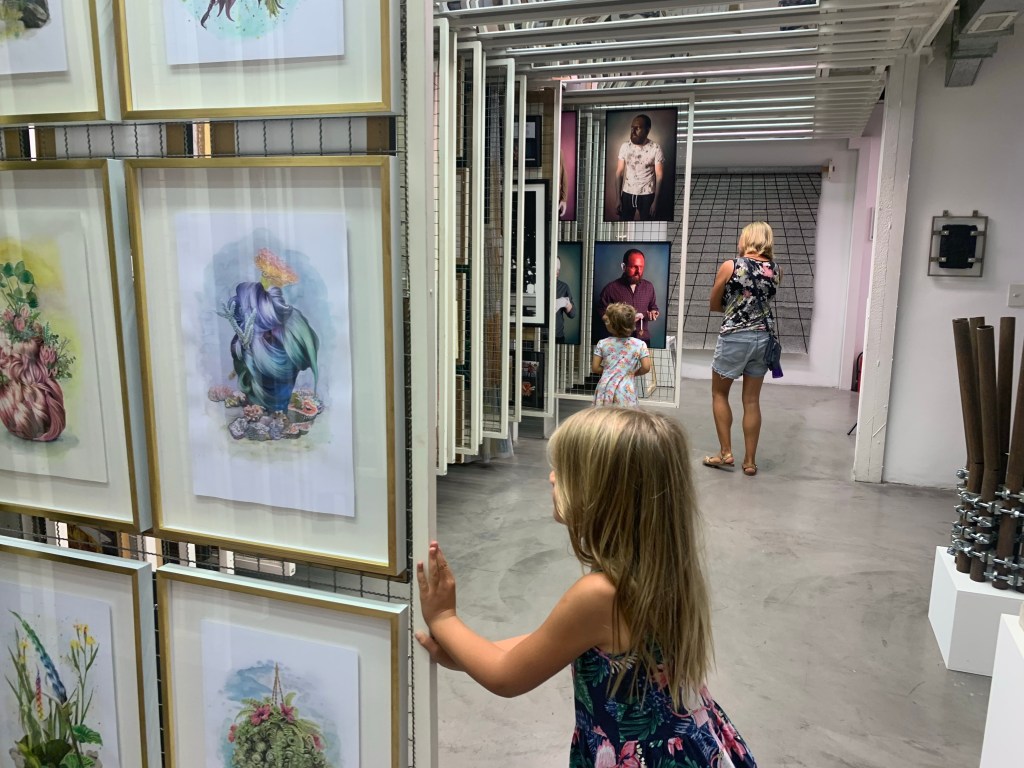
There were so many art spaces to visit, I had to force myself to be selective. A trip to Ruth Benzacar Galeria de Arte was fun, reconnecting with a gallery who had participated in Art Dubai. Artist Ernesto Ballesteros was up a ladder creating intricate pencil drawings directly onto the gallery wall as part of his upcoming solo exhibition. We were also given the chance to have a sneak peak at gallery stock artworks in racks.

Ruth Benzacar, Juan Ramirez de Velasco, Villa Crespo, Buenos Aires.

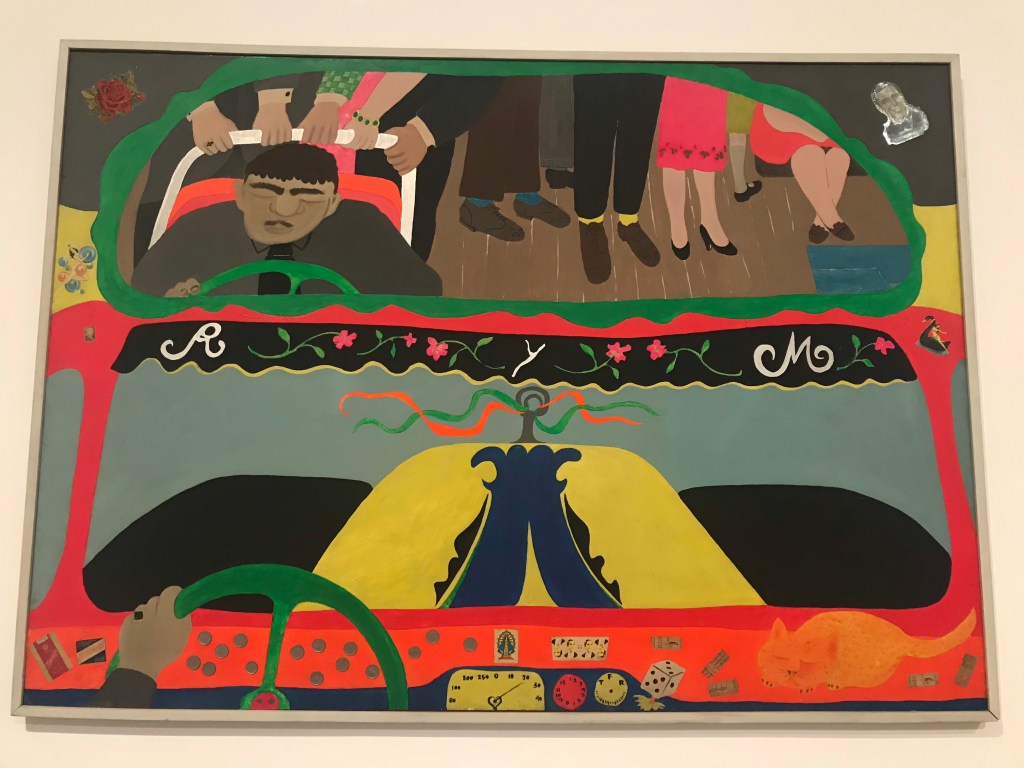
I grew dizzy working out the differences between MALBA (Museo de Arte Latinoamericano de Buenos Aires), MACBA (Museum of Contemporary Art), MAMBA (Modern Art), PROA and others – managing to get a look in most of them.

Enjoying interpretations of truck art, MACBA, Buenos Aires.

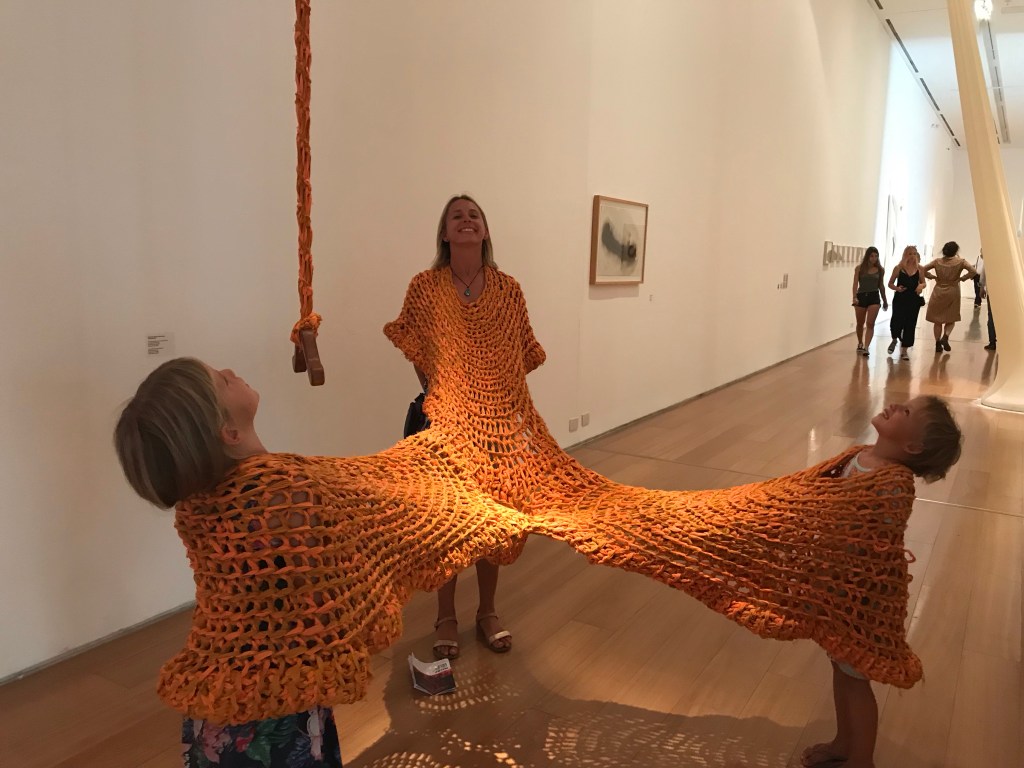
Ernesto Neto is a Brazilian artist whose large-scale installations I was familiar with from biennials in Sharjah and Venice, so a visit to his solo exhibition at MALBA was essential. We loved climbing in and out of his works, feeling the weight of materials on our shoulders and lightness under our feet.

Relaxing into Soplo, Ernesto Neto, MALBA, Buenos Aires.

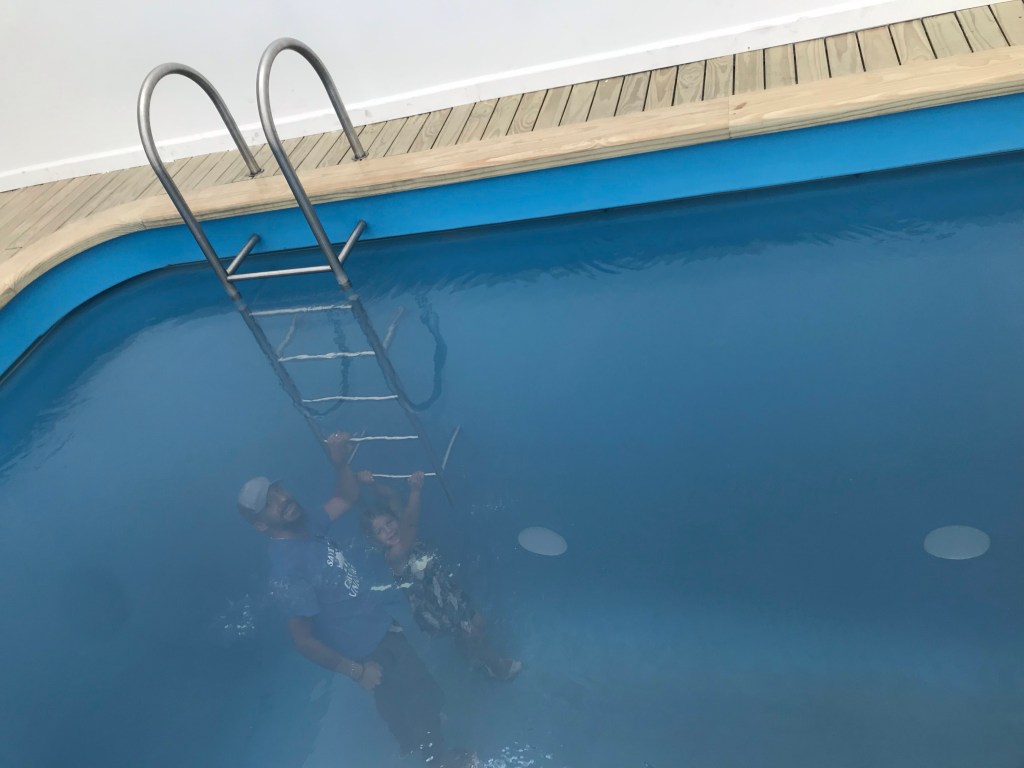
There was also a fun installation of a swimming pool by Leandro Erlich that you could get in to without getting wet.

The Swimming Pool, Leandro Erlich, 2004, MALBA, Buenos Aires.

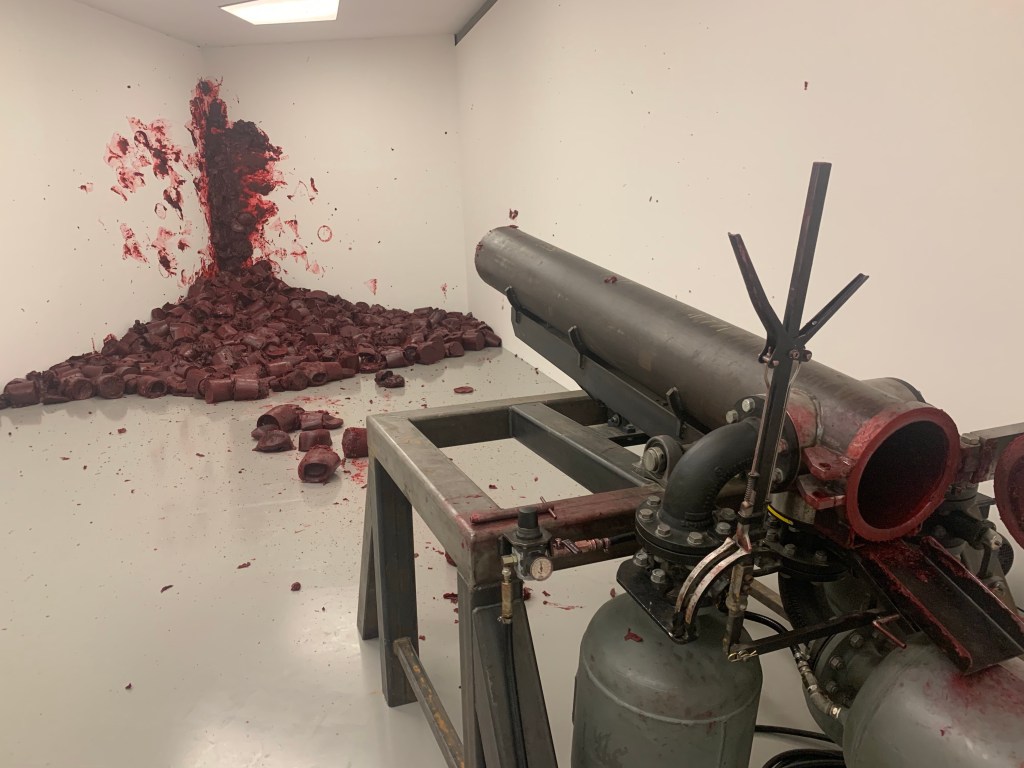
Fundacion Proa was taken over by the solo exhibition ‘Surge’ by Anish Kapoor, the spaces perfect for the selection of 9 iconic works playing with his signature materials of wax, paint and mirrors. The quite shocking ‘Shooting into a Corner’ made an impact, I had seen it and others before at London’s Royal Academy.

Shooting into a Corner, Anish Kapoor, Fundacion Proa, Buenos Aires.

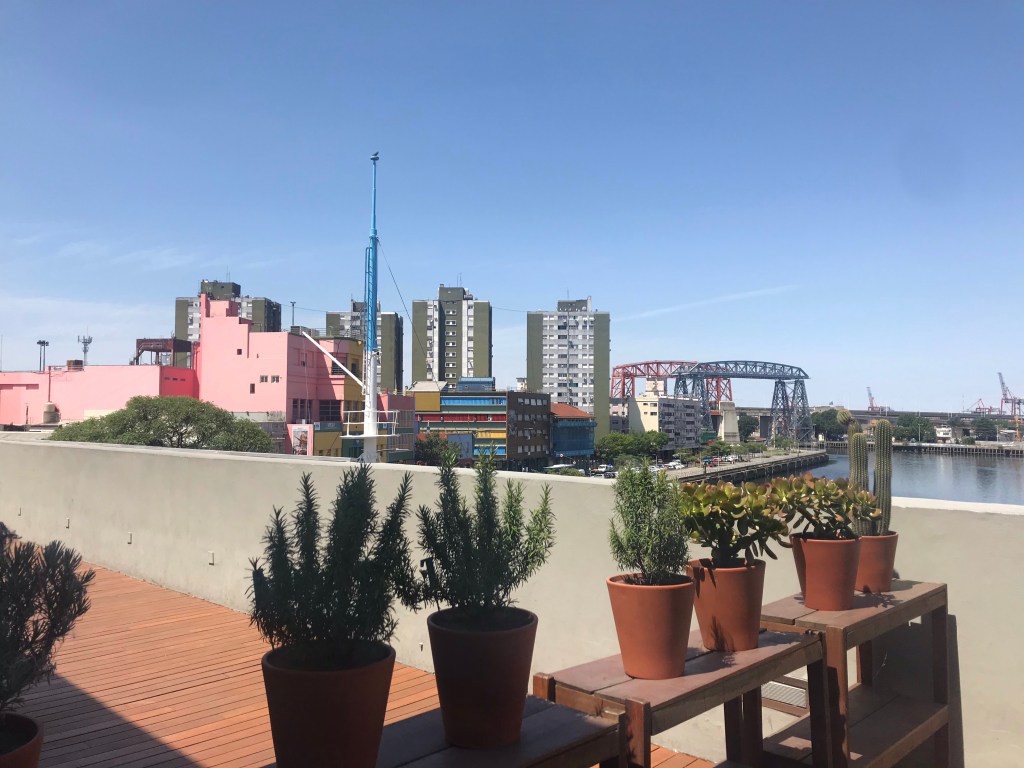
There was an interesting children’s activity box that kept the girls going before we broke for lunch at the museum’s colourful rooftop café.

Views from the rooftop, Fundacion Proa, Avenue Don Pedro de Mendoza, La Boca, Buenos Aires.

MAMBA and MACBA were mercifully next door to one another so we tackled them together, Ivan Navarro taking over MACBA and we were particularly drawn to the works of Andres Alzicovich, Sergio De Loof and Ad Minoliti in sprawling MAMBA.

Bifocal, Ivan Navarro, MACBA, San Telmo, Buenos Aires.

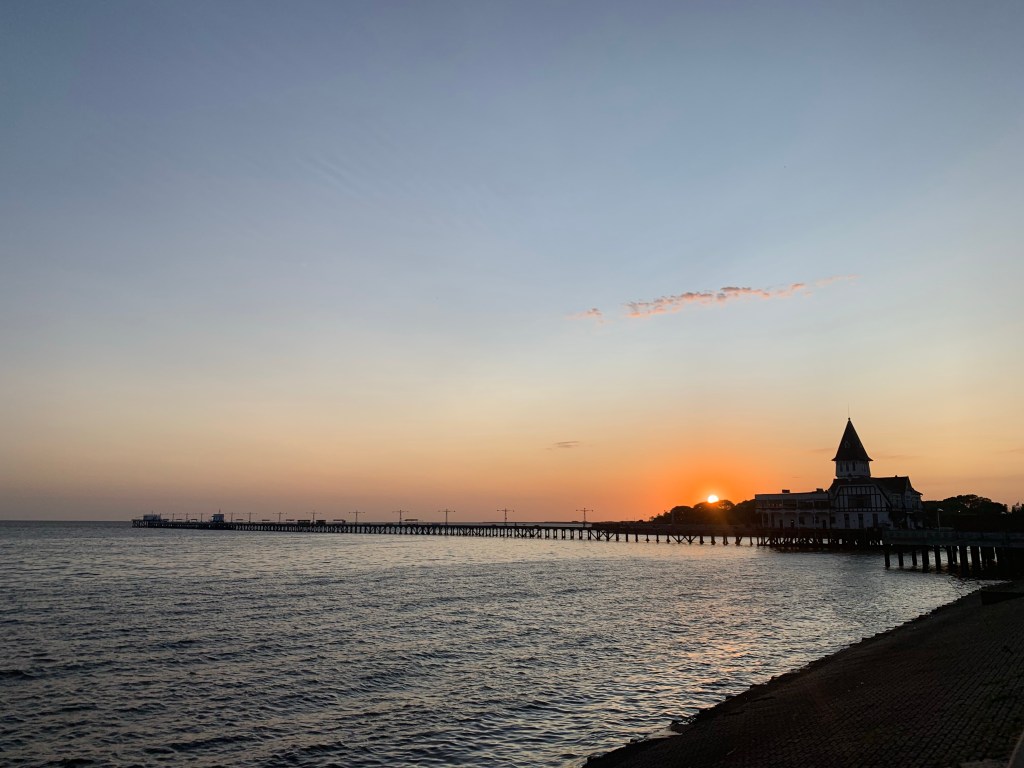
Runs had taken us round Plaza Vicente Lopez, the Recoleta cemetery and close to the coast of this vast metropolis.

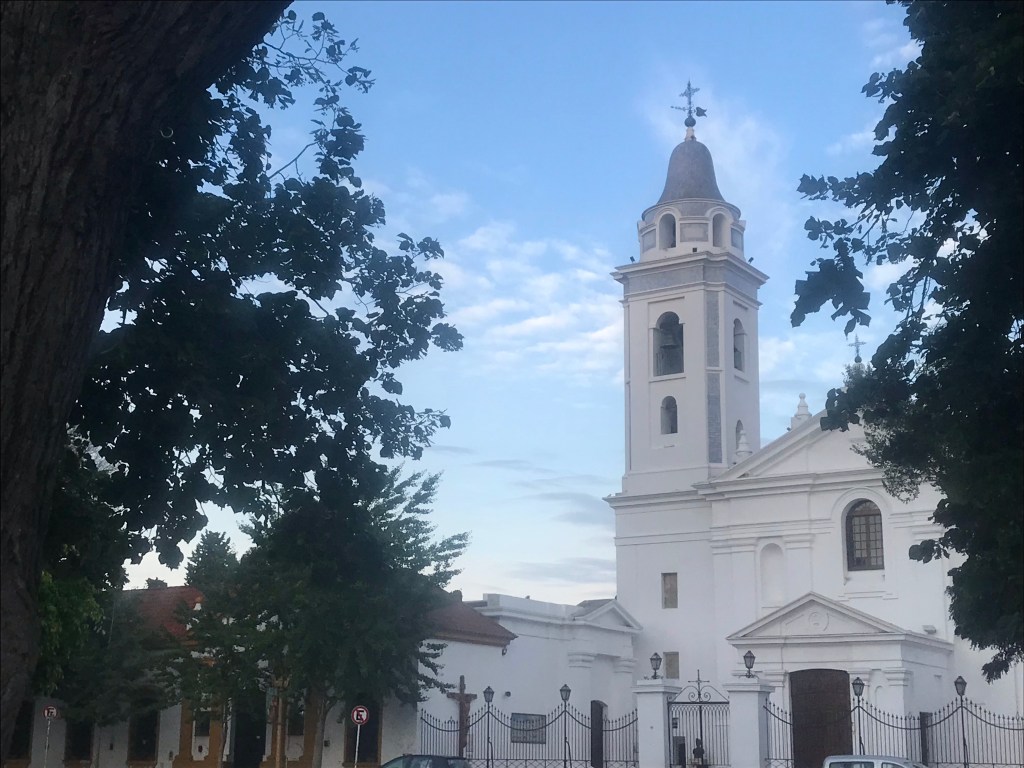
Basilica Nuestra Señora del Pilar, Junin, Buenos Aires.
Rio de LA Plata, Buenos Aires.

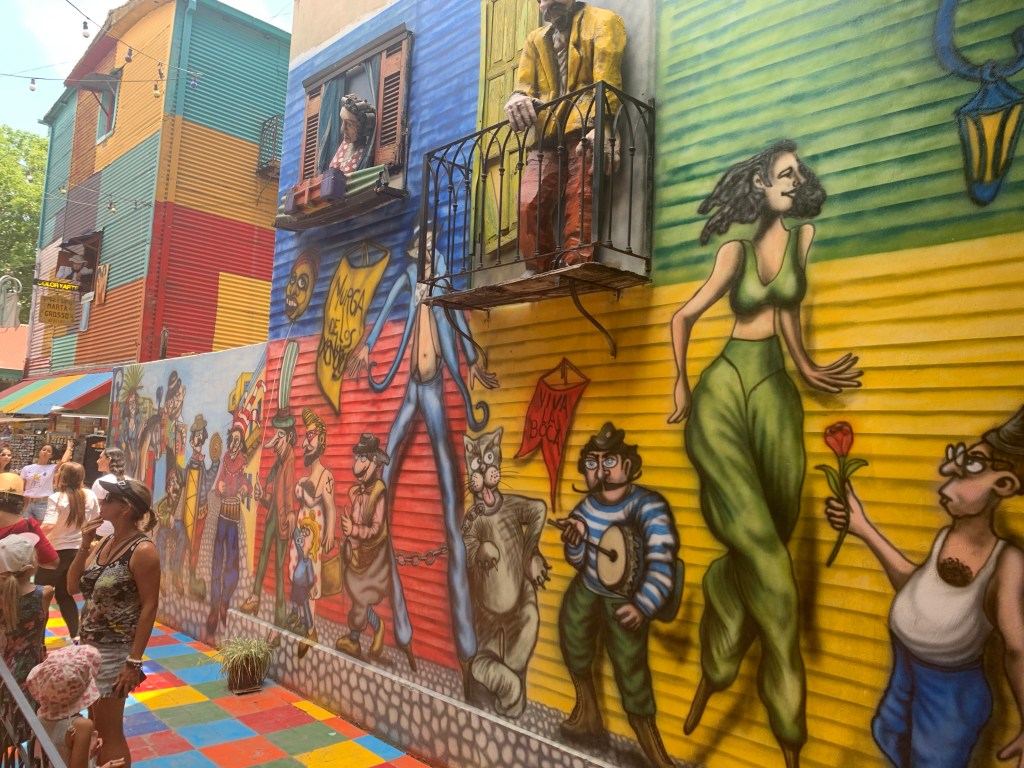
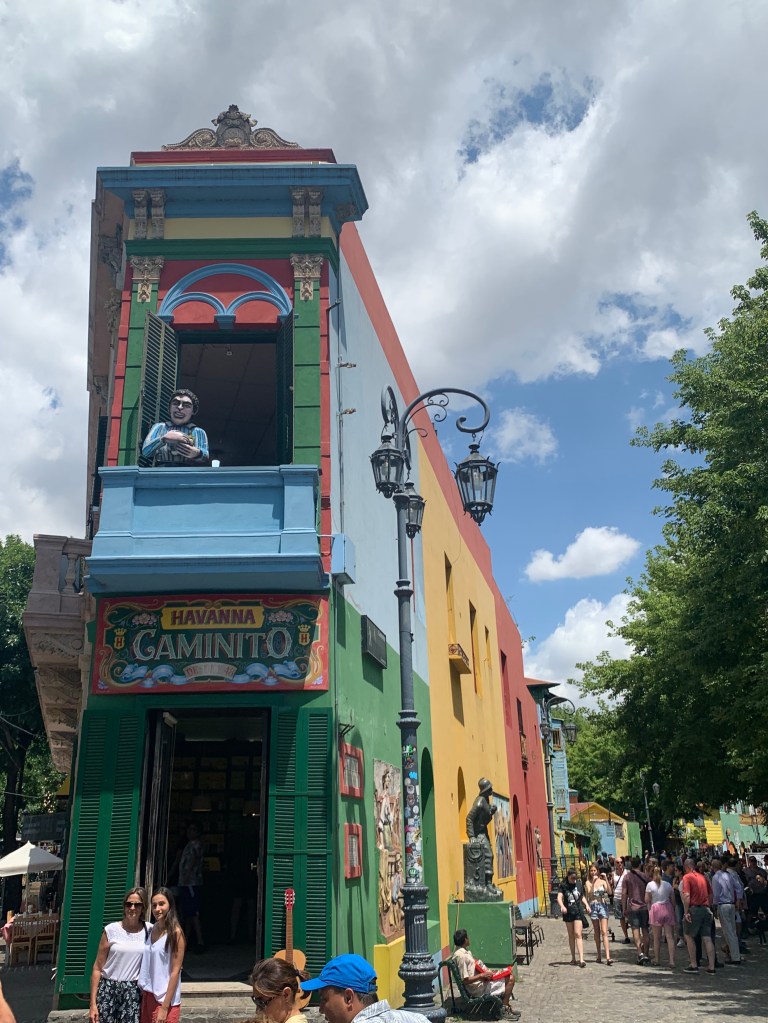
We had to spend a few hours in tourist trap La Boca, the coloured houses on El Caminito selling diverting street art and all kinds of knick-knacks accompanied by live music and tango dancers.

Caminito alley, La Boca, Buenos Aires.

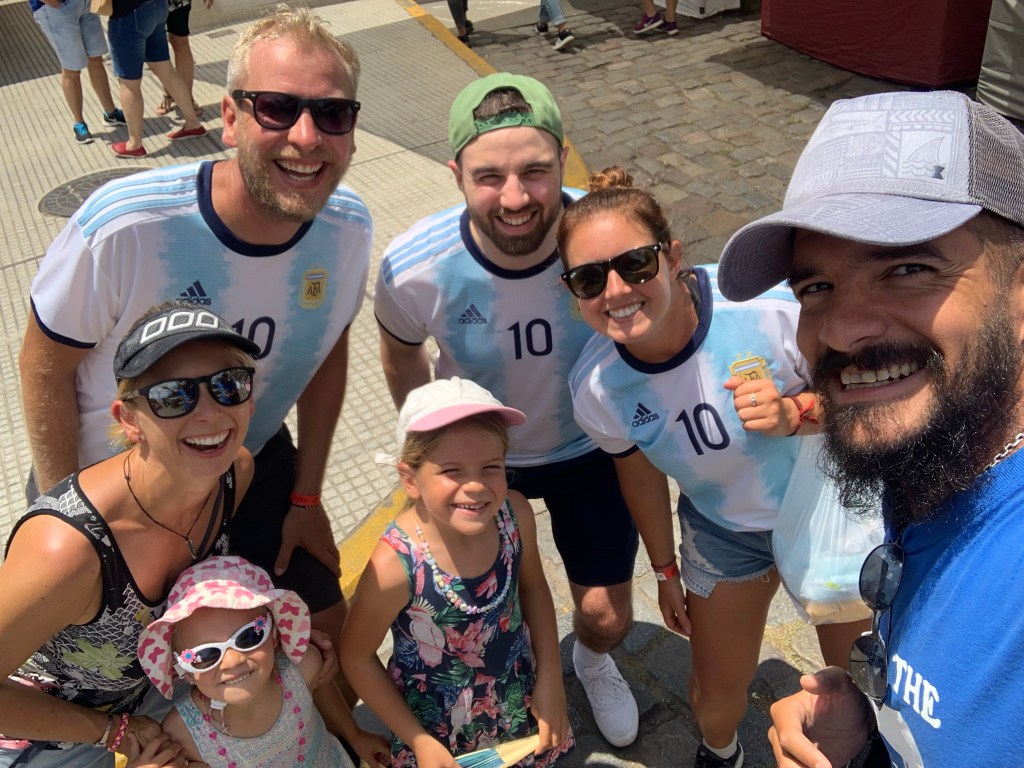
It is home to the football team Boca Juniors. When we eventually found friends Gos, Louisa and Nick there, they were decked out in the sky-blue and white Argentina national team jerseys.

With Goz, Nick and Louisa, La Boca, Buenos Aires.

Our best times were spent in San Telmo, the oldest and most atmospheric barrio (neighbourhood). The markets were wonderful to explore and sample empanada’s, alfajora’s and ice cream.

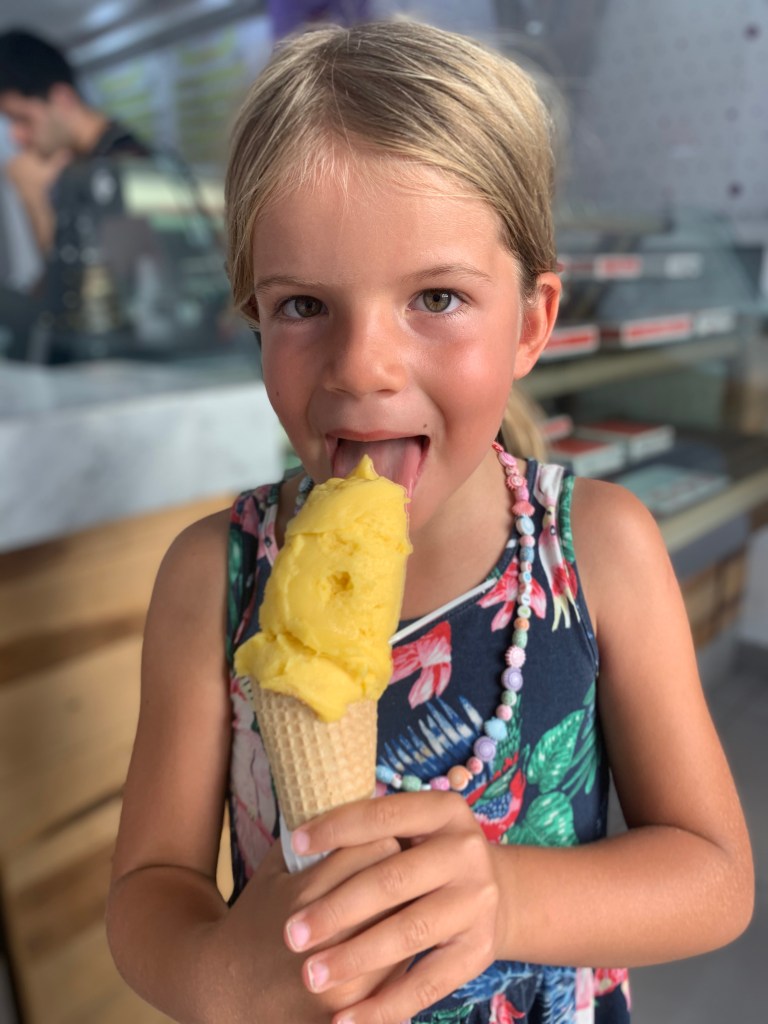
Thirst quenching mango sorbet, San Telmo, Buenos Aires.

The squares just calling out for us to stop and absorb the atmosphere.

Admiring Argentinian Tango, Plaza Dorrego, San Telmo, Buenos Aires.

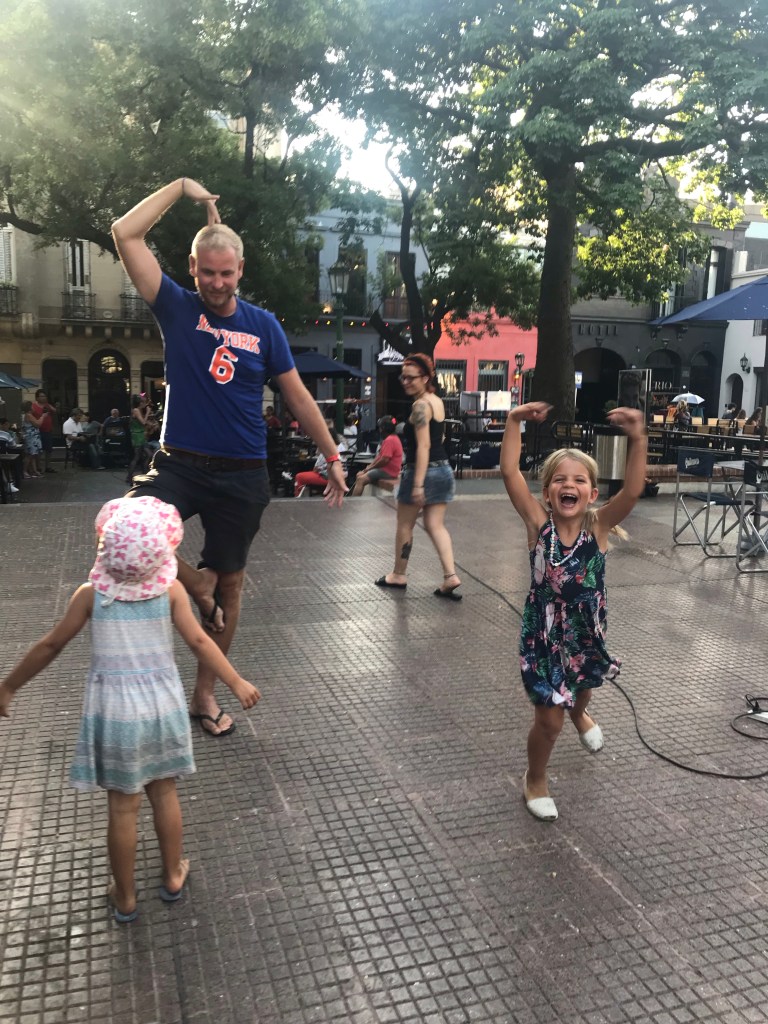
We did just that in Plaza Dorrego, Gos and the girls entertaining the crowd with their individual take on tango dancing (shamefully the closest any of us got to having a go).

Learning from the pros, Plaza Dorrego, Buenos Aires.
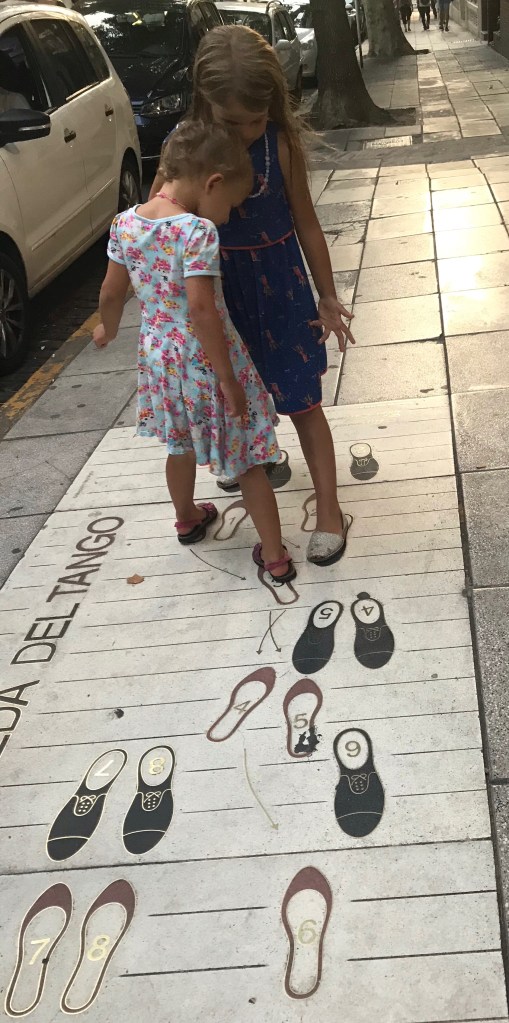
MoJo learning the steps outside a tango school, Buenos Aires.

Of course, there were things we didn’t do, such as visit the Museo Evita or try a maté tea, but as our first stop in South America, Buenos Aires was pretty fantastic.

La Boca colours, Buenos Aires.

Auckland and Northland: The start of 2020

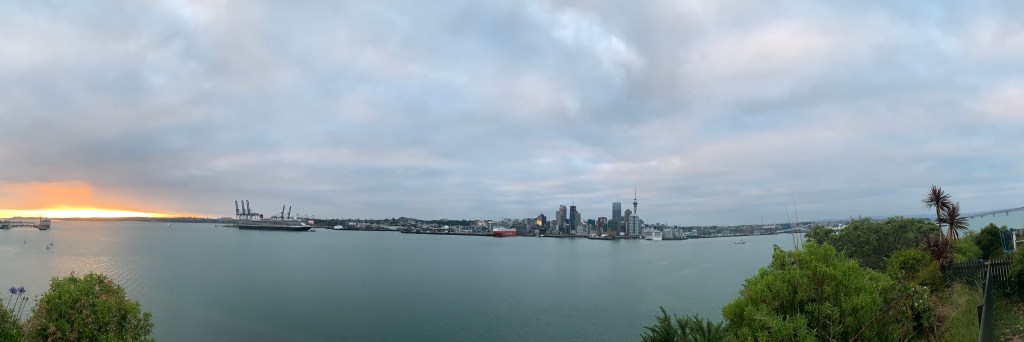
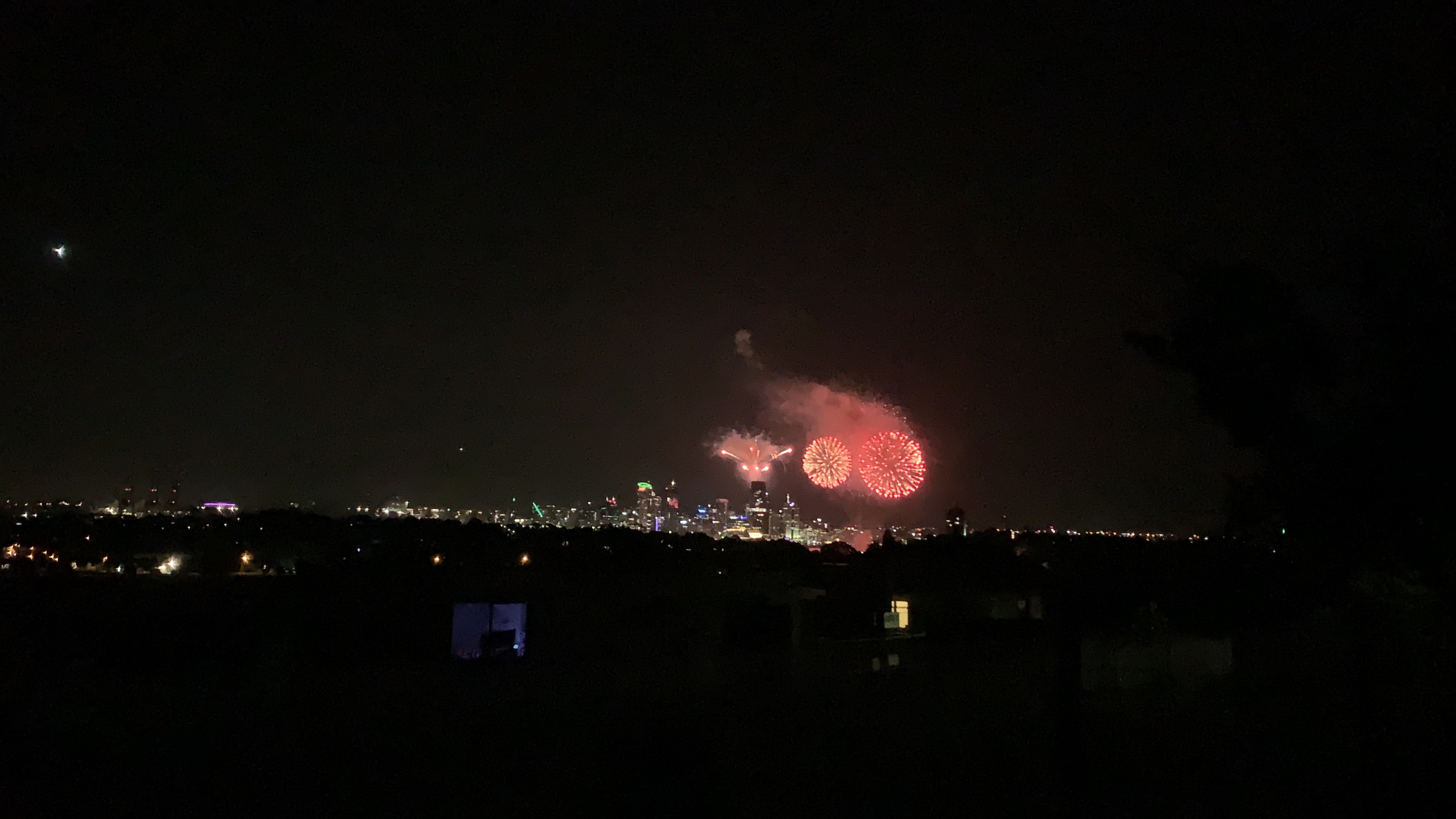
We were pretty excited to be in Auckland for New Year’s Eve. Each year the fireworks there are the first to be shown on TV across the world, as New Zealand gets to celebrate midnight before everyone else. We decided that Devonport on its north-eastern shore would be a good bet, with views across the CBD (Central Business District), to the Sky Tower (which is the Southern Hemisphere’s tallest structure) as well as close proximity to the iconic Harbour Bridge which promised a light display.

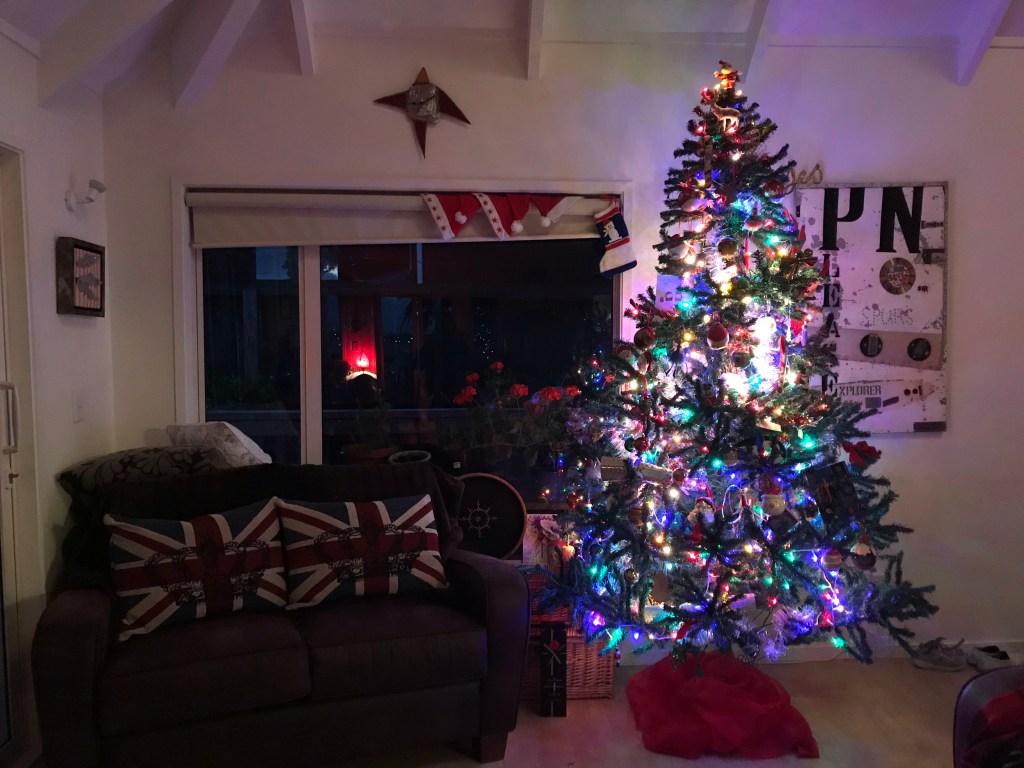
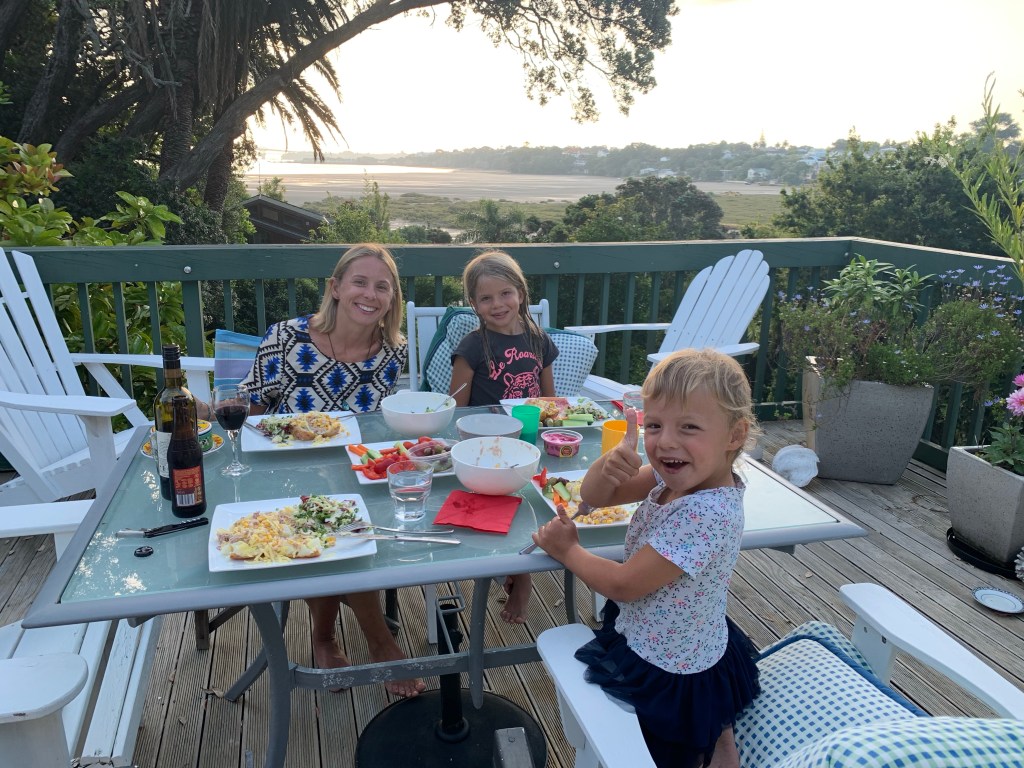
After quite some time with friends we were happy to bring the New Year in on our own, picking an Air bnb so we could have a home-cooked meal and a fun evening of games. We were very fortunate to have chosen to stay at Jane and Paul’s home. It had a Christmas tree with gifts for Molly and Joanna under it, a delicious breakfast laid out each morning, lots of toys to play with and an enormous balcony overlooking the estuary.

Home sweet home: our Air bnb in Devonport, Auckland for New Year’s Eve.
Terrace dinner, 31 December 2019, Belmont, Devonport, Auckland.

We decided to walk a little further up the road for a better view of the fireworks (waking the children up for a hot chocolate!).

Auckland Fireworks, 1 January 2020.

Our first night we drove down to the wharf, a lovely high street with numerous restaurants, we ate at Manuka and weren’t disappointed.

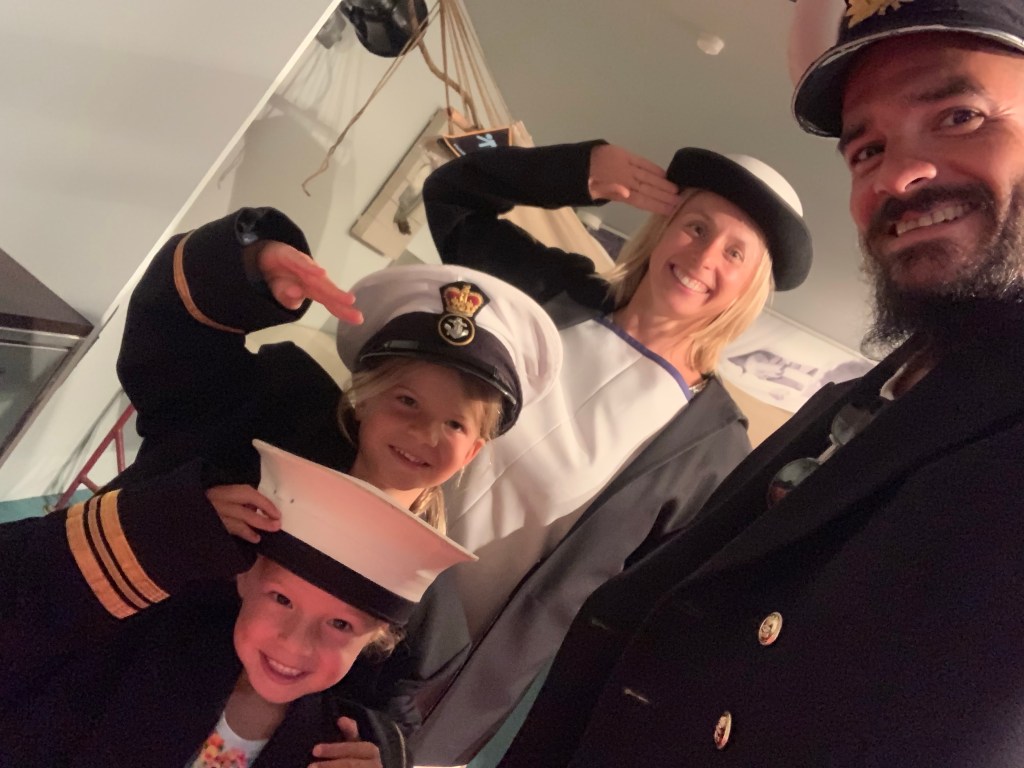
The next day we explored more of Devonport, enjoying a tour of the Torpedo Bay Navy Museum by Steve where we learnt a lot about New Zealand’s pivotal role in naval history. We also enjoyed trying on some uniforms!

Torpedo Bay Navy Museum, King Edward Parade, Devonport, Auckland.
Naval inspired playground, outside the Torpedo Bay Navy Museum, Devonport.

After time in the playground we spent the afternoon on the beach, where we all had a swim. Runs were fairly brutal up Mount Victoria and round the gun emplacements on North Point, but with very rewarding views.

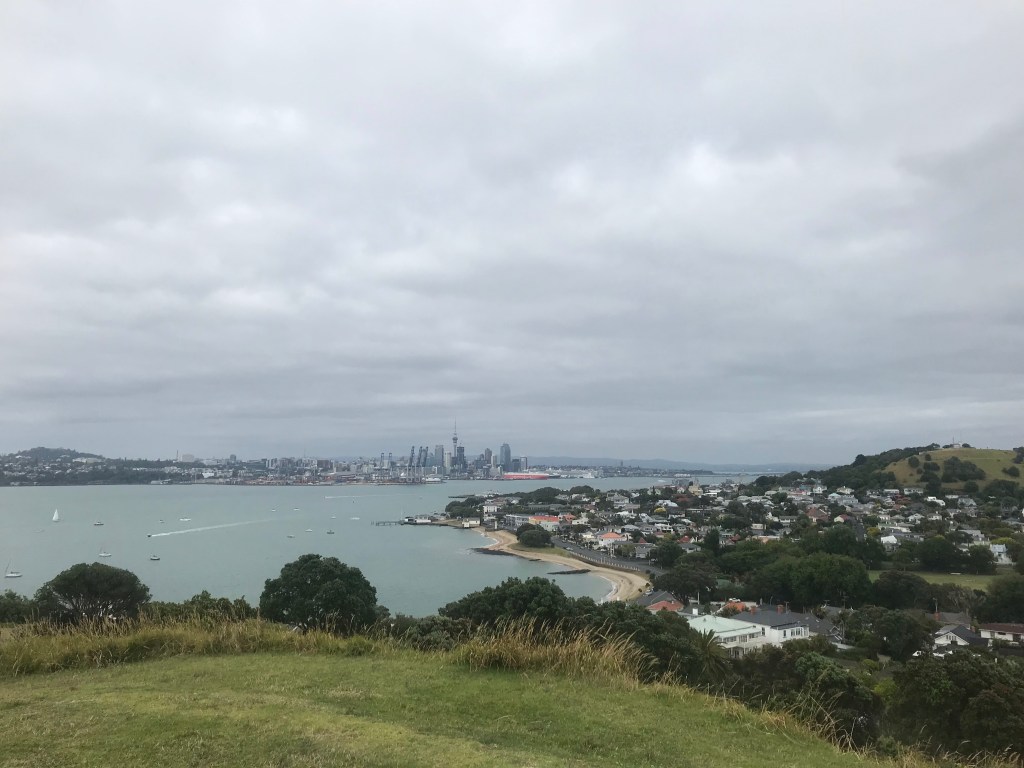
View from the summit of Takarunga / Mount Victoria, Kerr Street, Devonport.

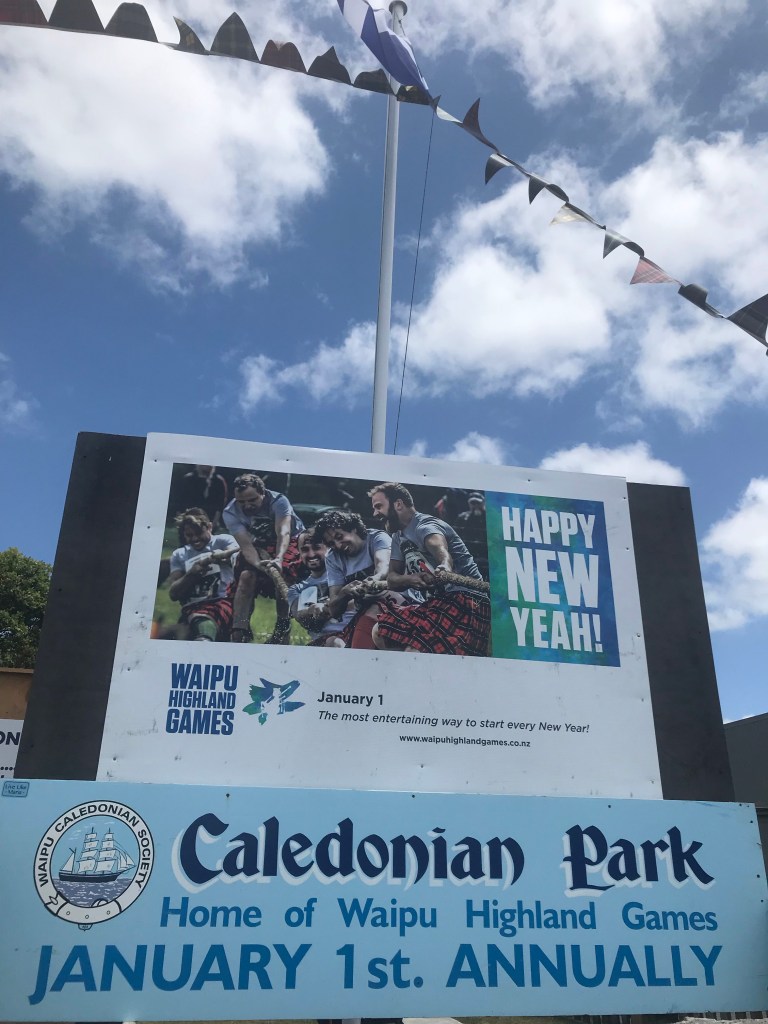
We were slowed down by the New Year’s Day traffic driving north up the coast, but happily made a stop at Waipu to attend their annual Highland Games which I had read about in the guidebook (just in time!) The original founders of the small town were from Scotland, but only about 10% of the current population claim Scottish ancestry. Regardless, the games have taken place annually in Caledonian Park since 1871.
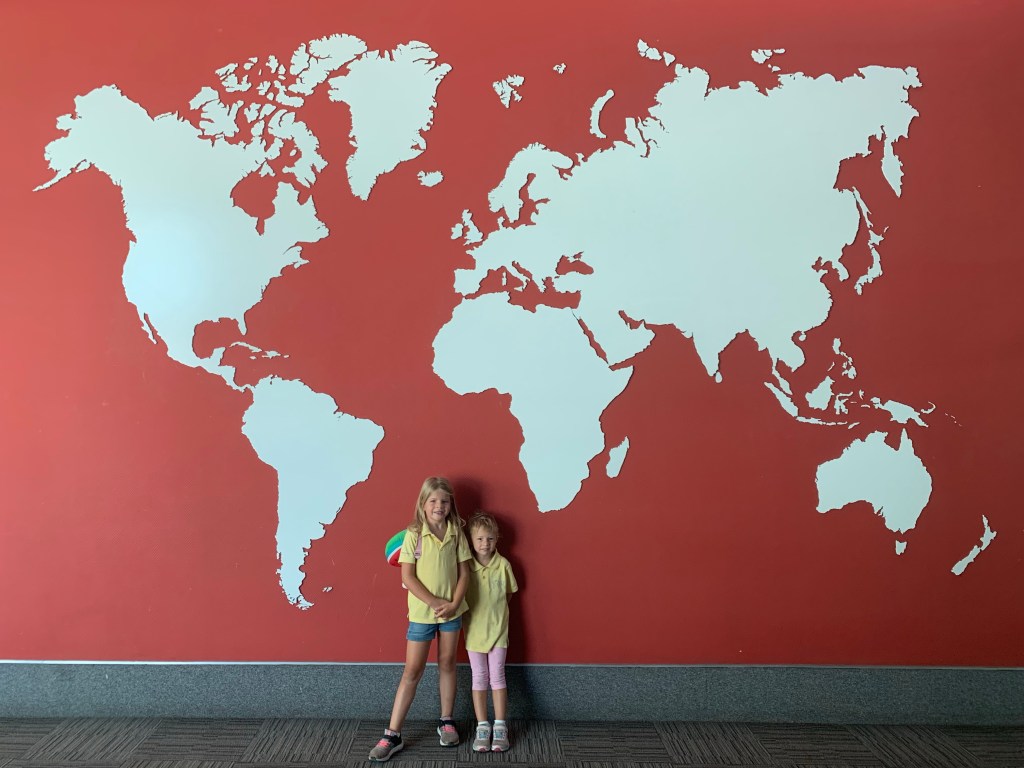
Caledonian Park, Waipu, 1 January 2020.

What an unusual treat it was! Bagpipes, kilts and haggis were everywhere, with competitions in ceilidh dancing, farmer’s walk, caber toss and hammer throws and some fairground rides for the kids.

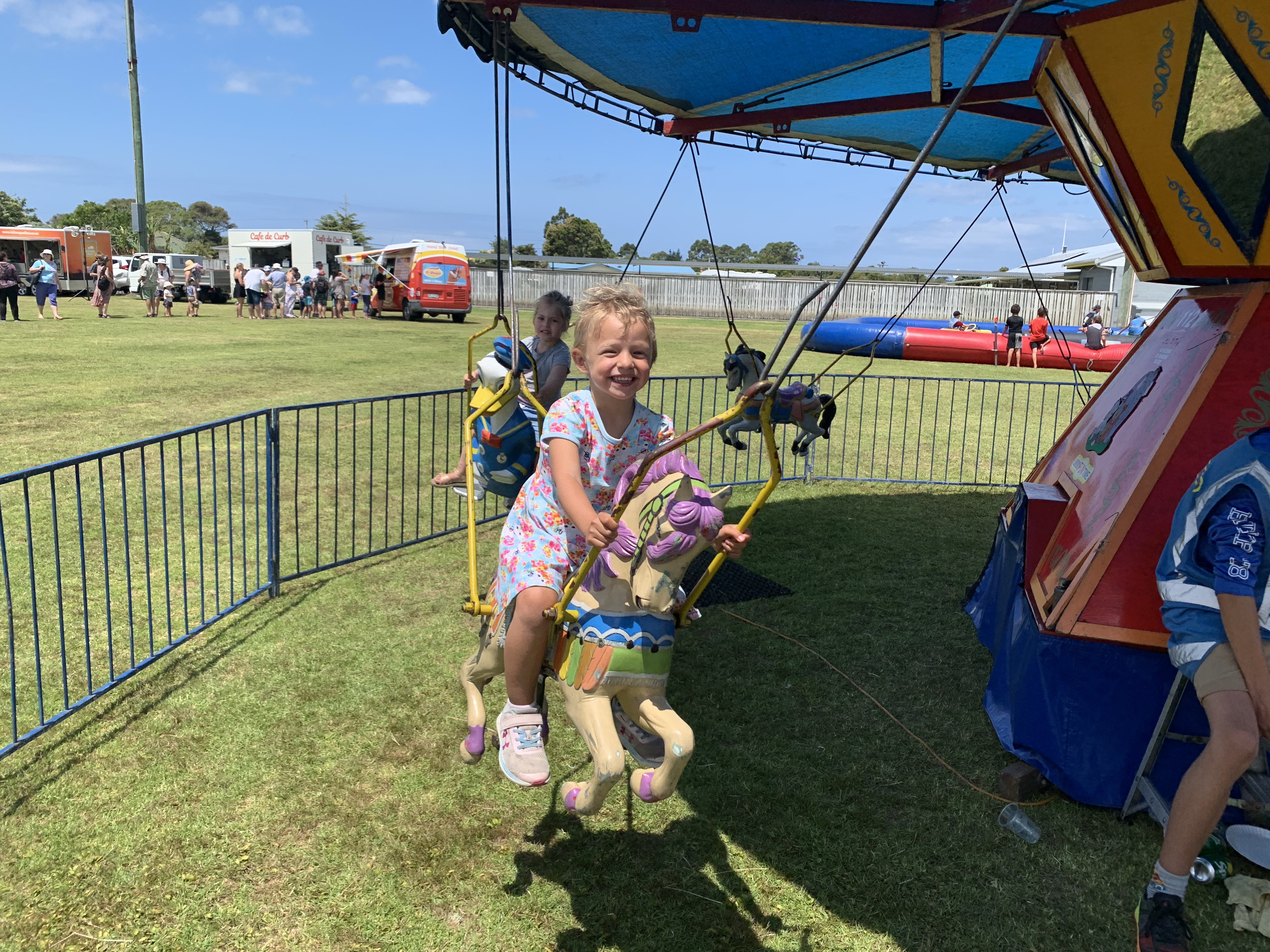
Fairground rides at the Waipu Highland Games, Waipu, North Island.

We had decided to stay in a motel on the poor man’s side of the Bay of Islands – in Paihia. From there it was easy to catch a ferry across to Russell, the more picturesque destination. We did exactly that one evening, enjoying dinner at the Duke of Marlborough Hotel which holds New Zealand’s oldest pub licence and serves a rather good slow-cooked lamb with dazzling sunset views.

Duke of Marlborough Hotel terrace, The Strand, Russell, Bay of Islands.

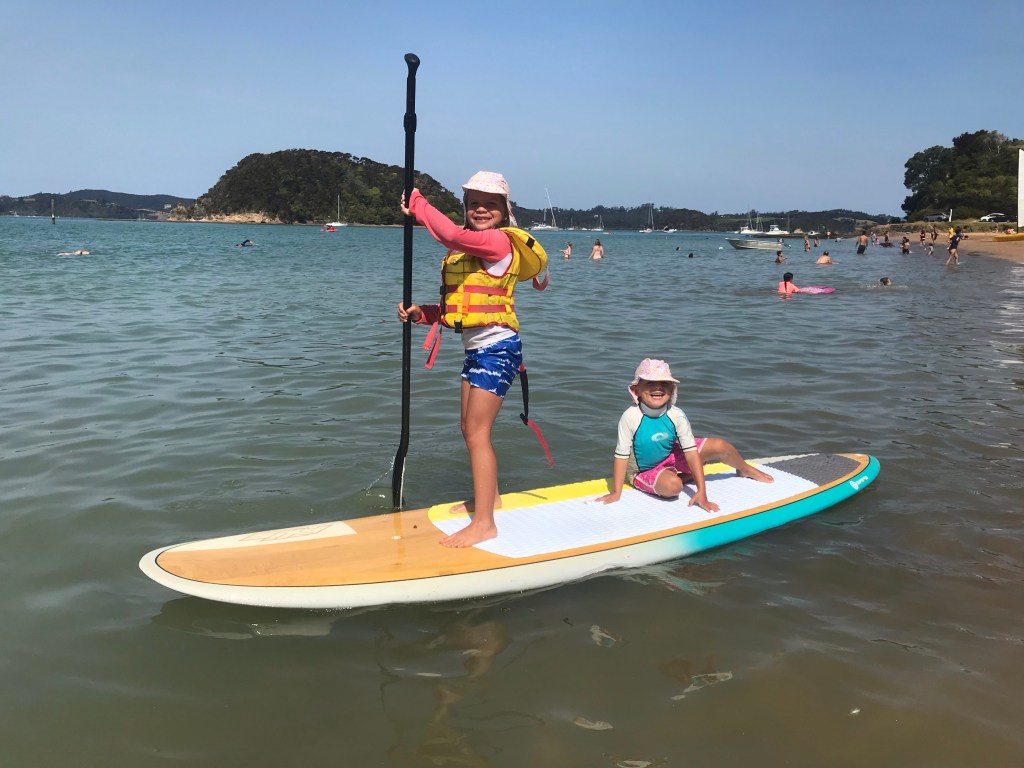
Paihia is a quaint seaside resort, the beach lovely with several of the 150 undeveloped islands within sight. One seemed closer from the shore than it was – I took Molly on a circular trip around it on a paddleboard which was pretty hard going given the tides, but we made it (although my sunglasses didn’t…)

Enjoying standup paddle-boarding, Paihia Beach.

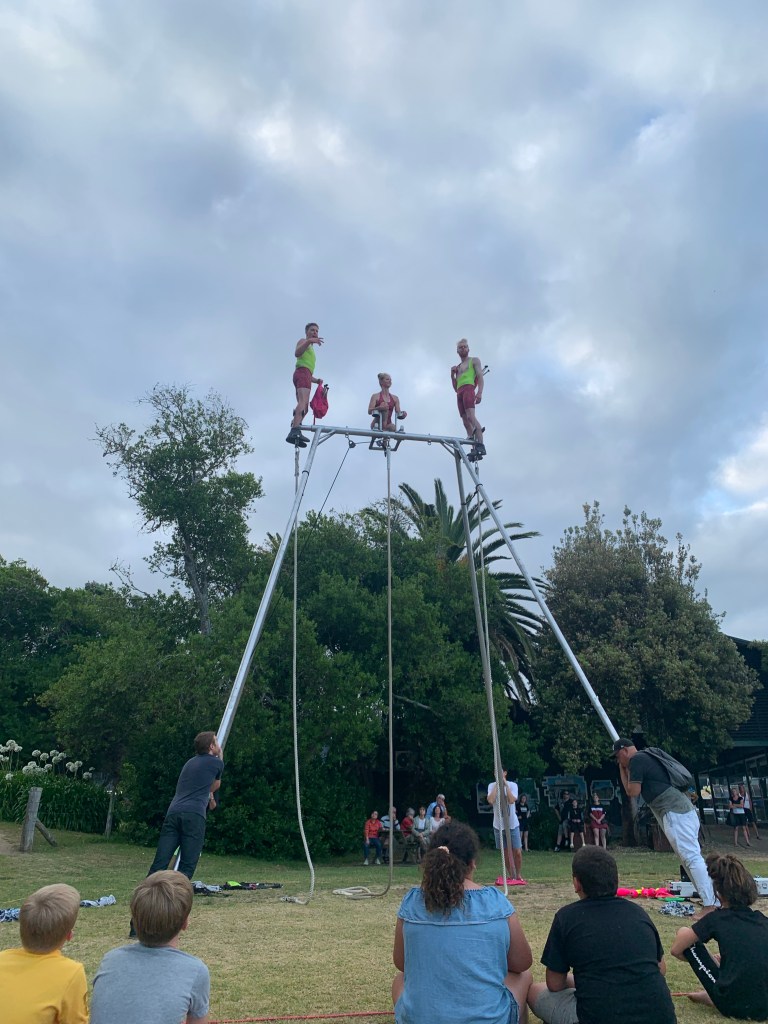
For the second time we lucked out on quirky entertainment: the circus was in town! Zane, Degge and Imogen are a trio of traveling street performers from Wellington who had set up for a few days. We really enjoyed their show – some of us even getting involved!

Mid-show, Zane, Degge and Imogen, Paihaia Village Green, Paihia.

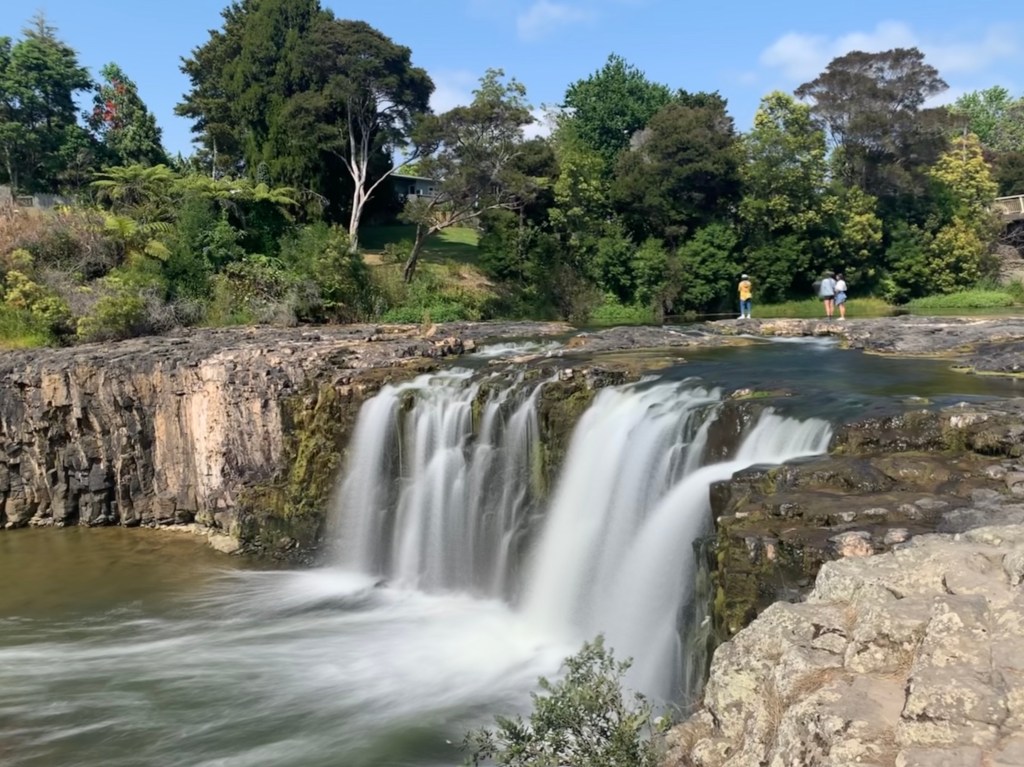
This part of the country is where the first settlers arrived and in 1840 where the much-contested Treaty of Waitangi was signed by 43 Māori tribes, granting the British sovereignty. We enjoyed walking to Haruru falls which had a rope to swing on and then visited the picturesque Kerikeri river basin, parking by Rewa’s Village.

Haruru Falls, Waitangi.

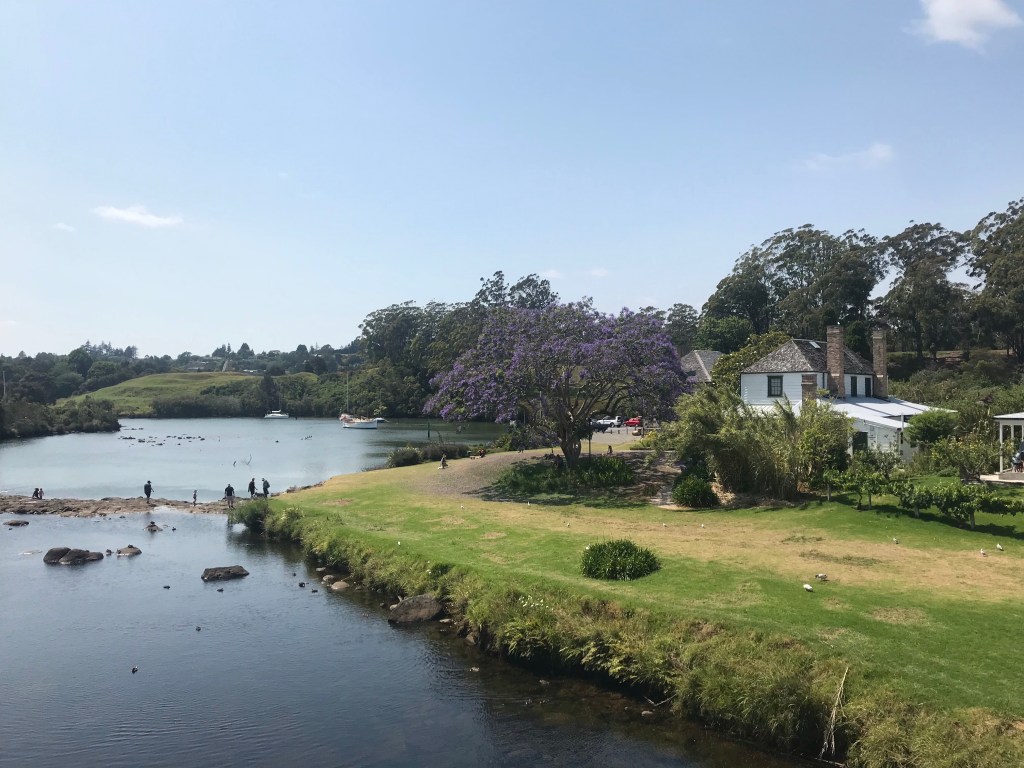
We walked over the bridge to pretty Kemp House, dating from 1822, it is the oldest building in New Zealand. Next door we found the Stone Store (dating from 1836 it is New Zealand’s oldest stone building) with an interesting gift shop.

View of Kemp House and the Kerikeri Basin, Kerikeri.

After climbing up the Rangikapiti Pa viewpoint for a picnic lunch overlooking cable bay and coopers beach, next on the agenda was learning about Gumdigger’s and admiring ancient Kauri trees.

Rangikapiti Pa Historic Reserve, overlooking Doubtless Bay, Karikari Peninsula.

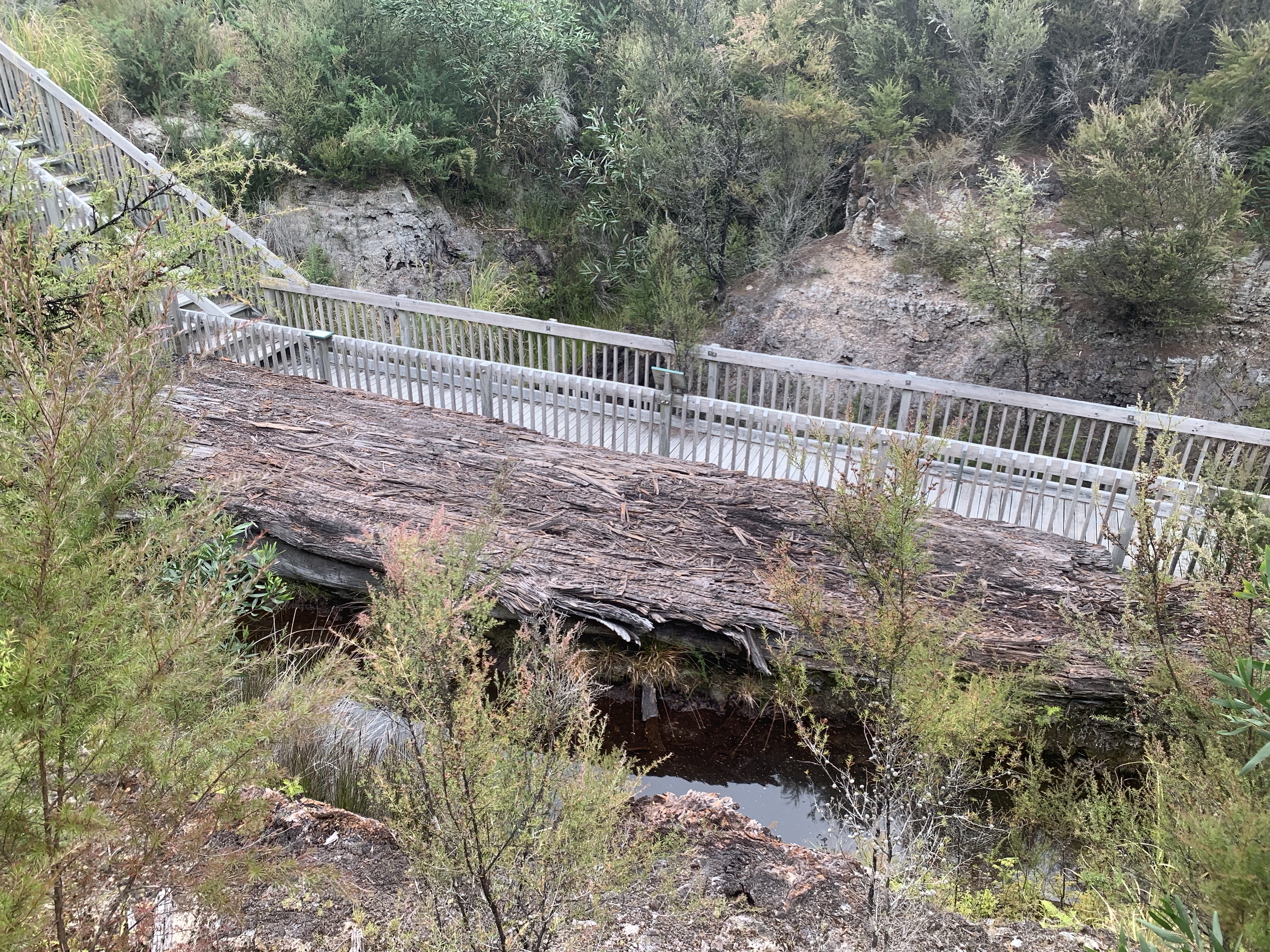
We stopped off at Kauri Unearthed to see an impressive wooden staircase and went on to visit Gumdiggers Park, a rare spot where Kauri trees have been preserved in perfect condition for tens of thousands of years in a peat swamp.

Preserved Kauri tree, Gumdiggers Park, Waiharara, North Island.

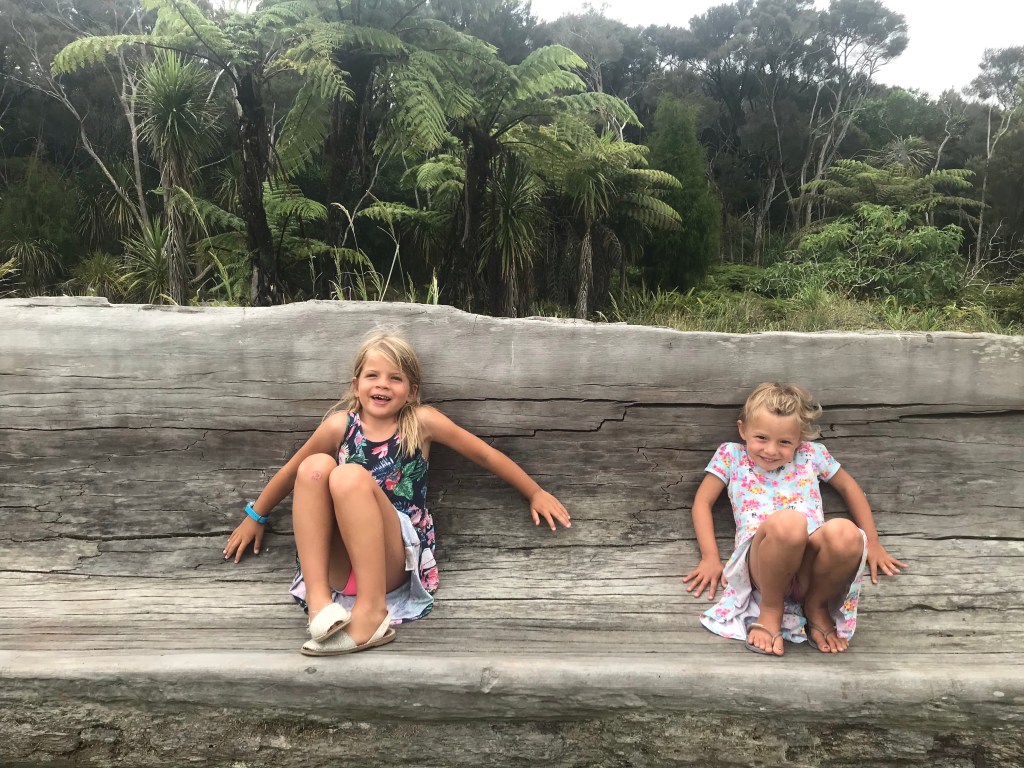
We learnt about the practice of extracting gum from the sap of the trees to become amber, big business from the 1860s – 1920s and about manuka honey and tea tree oil.

Taking a break, Gumdiggers Park, Waiharara.

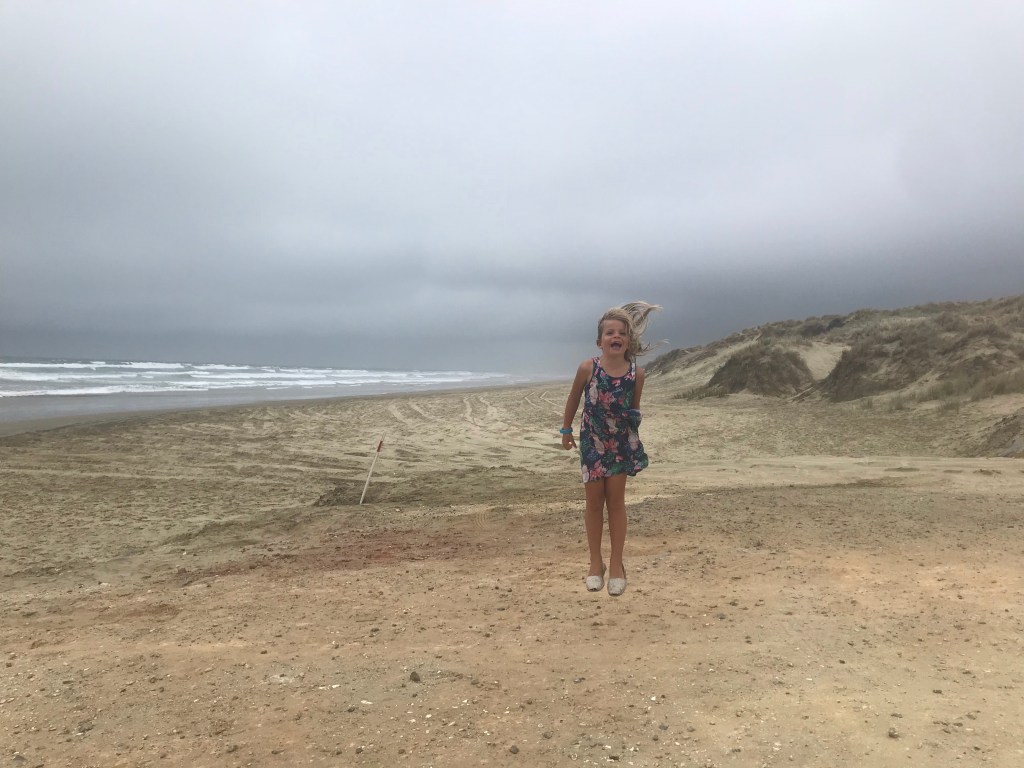
The landscape was getting wilder as we hit the west coast road, visiting 90-mile beach from the Waipapakauri ramp as it began to rain.

Ninety Mile beach, Northland.

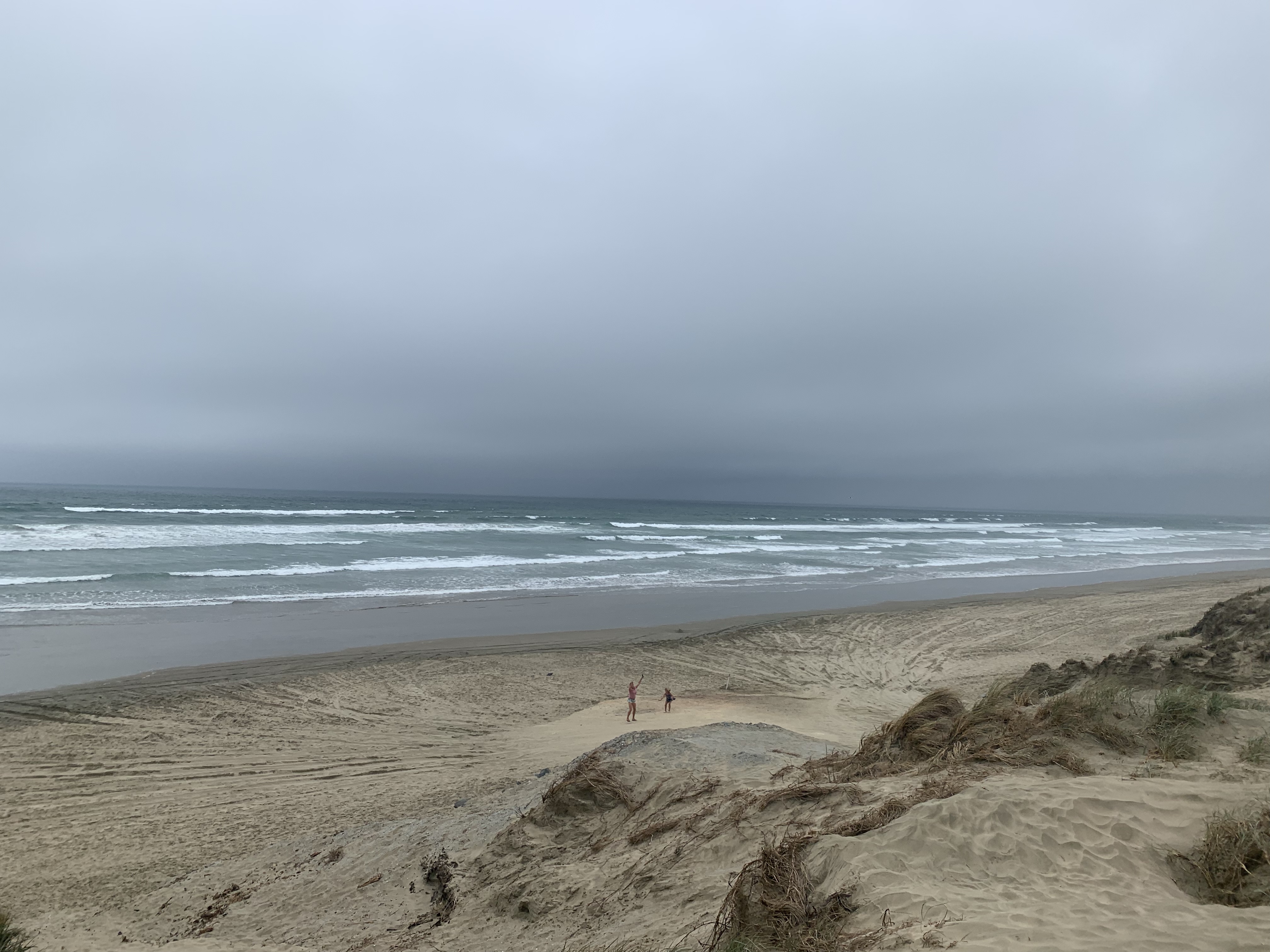
We decided not to drive the whole way up to barren Cape Regina, instead chose to stay at Ahipara, at the start of the 90-mile beach.

Ninety Mile beach, Northland.

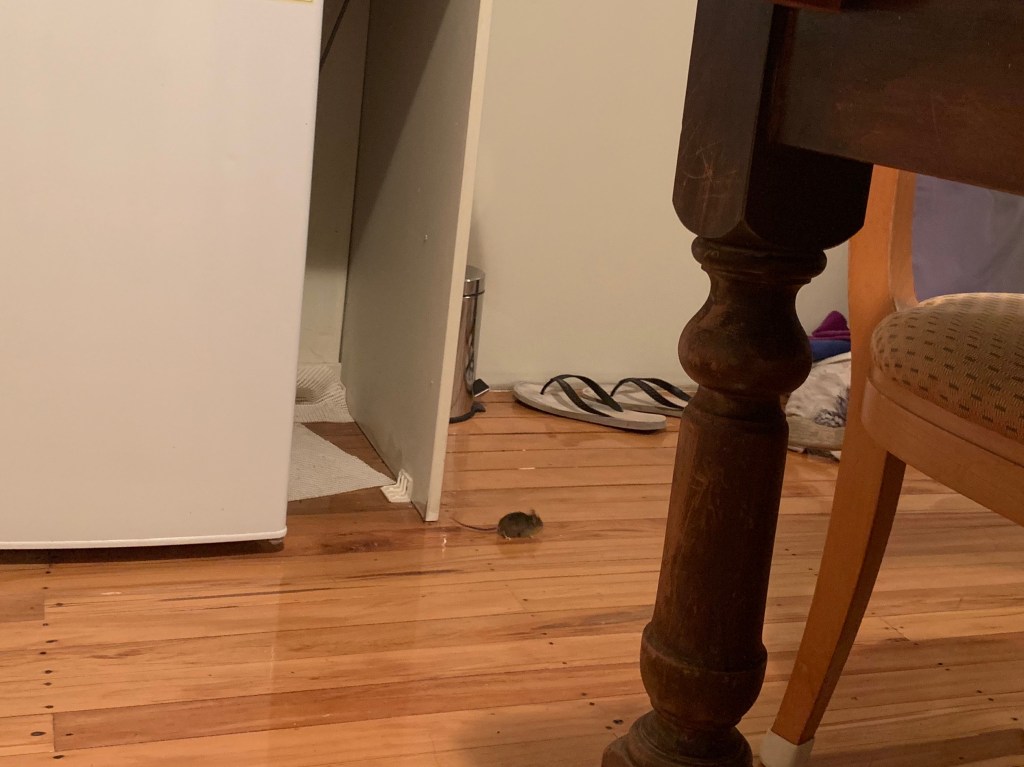
We again stayed in an Air bnb, this time quite a random, standalone house. We were not alone: our first night we were visited several times by a little friend….

Unwanted visitor, Air bnb, Ahipara, Northland, 3 January 2020.

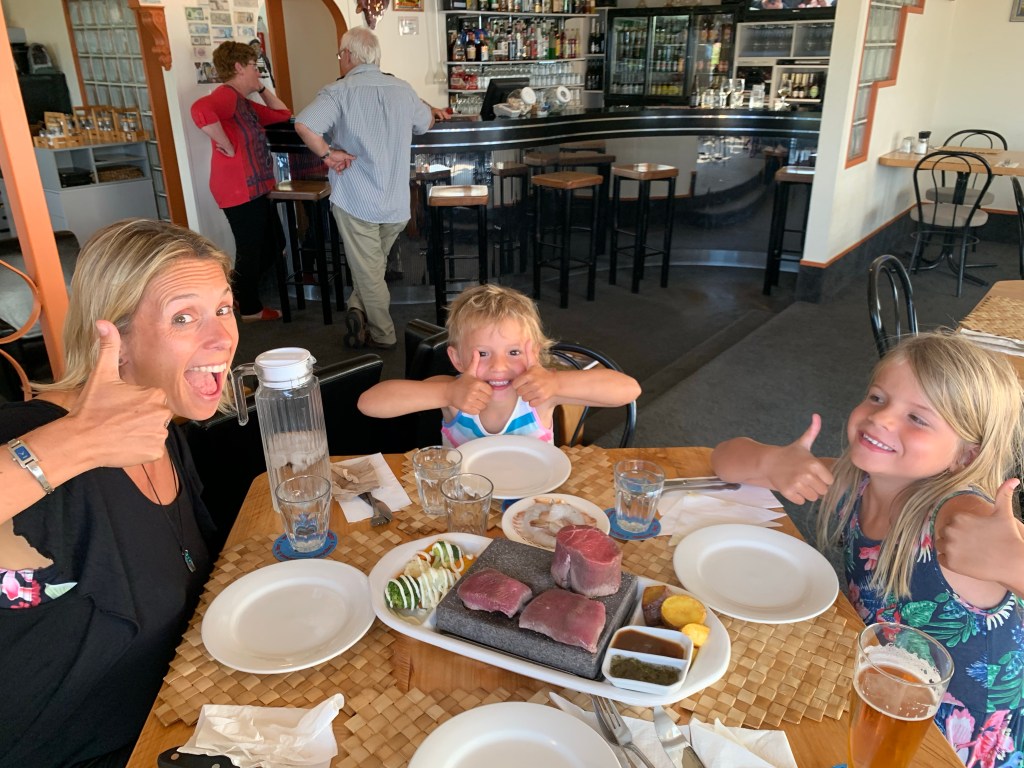
There was only one place in town to eat, Bay View at the Ahipara Motel, fully booked our first night, so we had to make do with a homemade stew made from tins purchased at a small corner shop. We made it back to Bay View for meat and mussels cooked on a stonegrill at our table on our second evening.

Dinner at Ahipara Bay Motel, Reef View Road, Ahipara.

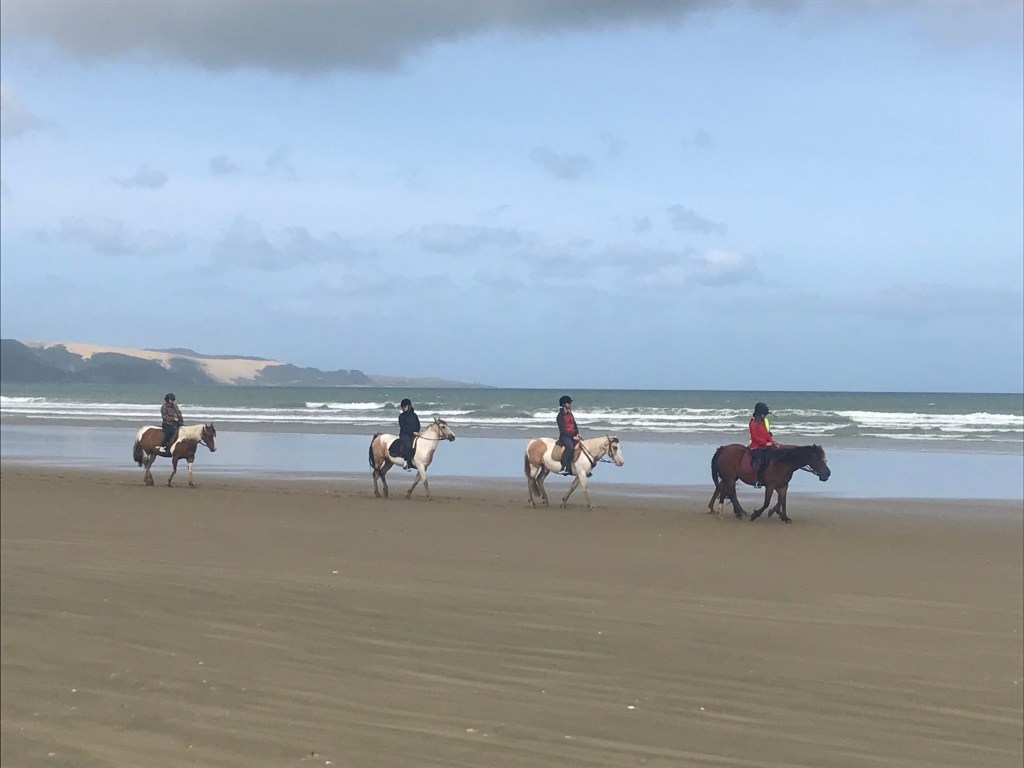
90-mile beach was truly terrifying and vast, on runs we got carried further in one direction than we might have wanted with nothing more than sand dunes and the odd four-wheel drive or horse to keep us company.

Having a ride down Ninety Mile Beach, Northland.

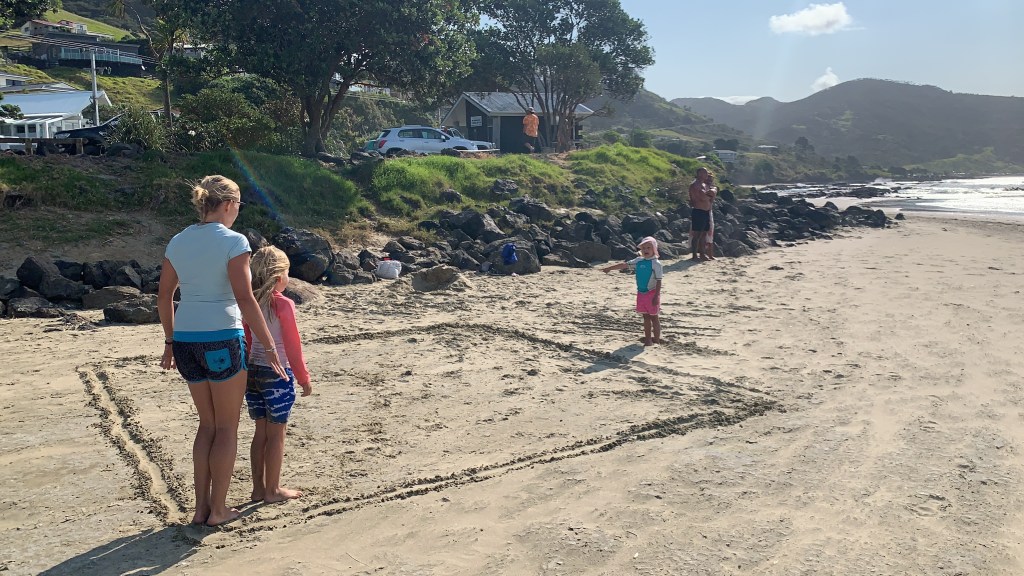
Shipwreck Bay was marginally less windy, so we managed some beach games, Tom and Molly had a quick swim and we watched some fishermen casting their line by remote controlled boat.

Colour corners on Shipwreck Bay, Te Kohanga, Ahipara.

The contrast from the protected Bay of Islands on the east coast was striking.

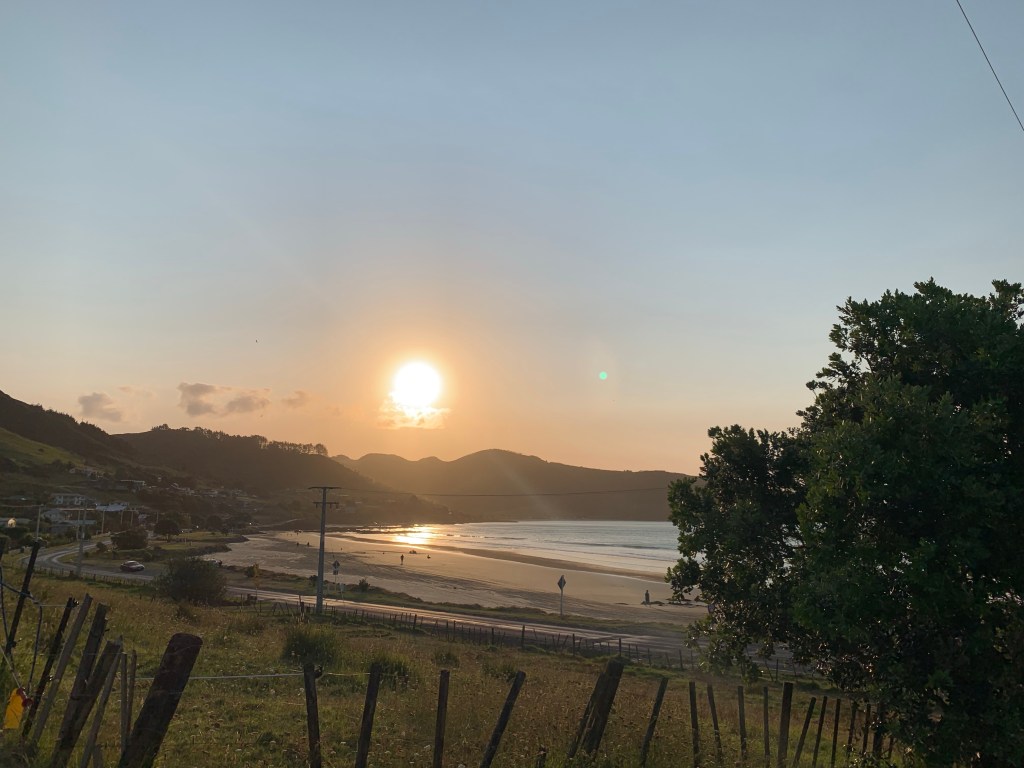
Sunset over Shipwreck Bay, Te Kohanga, Ahipara.

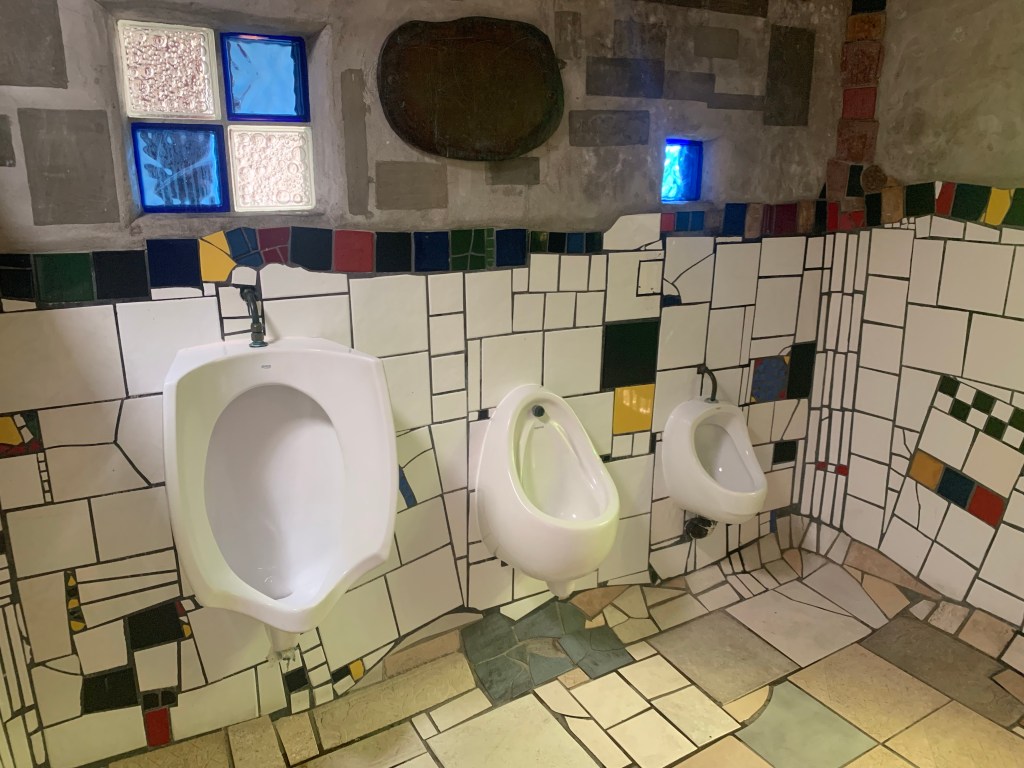
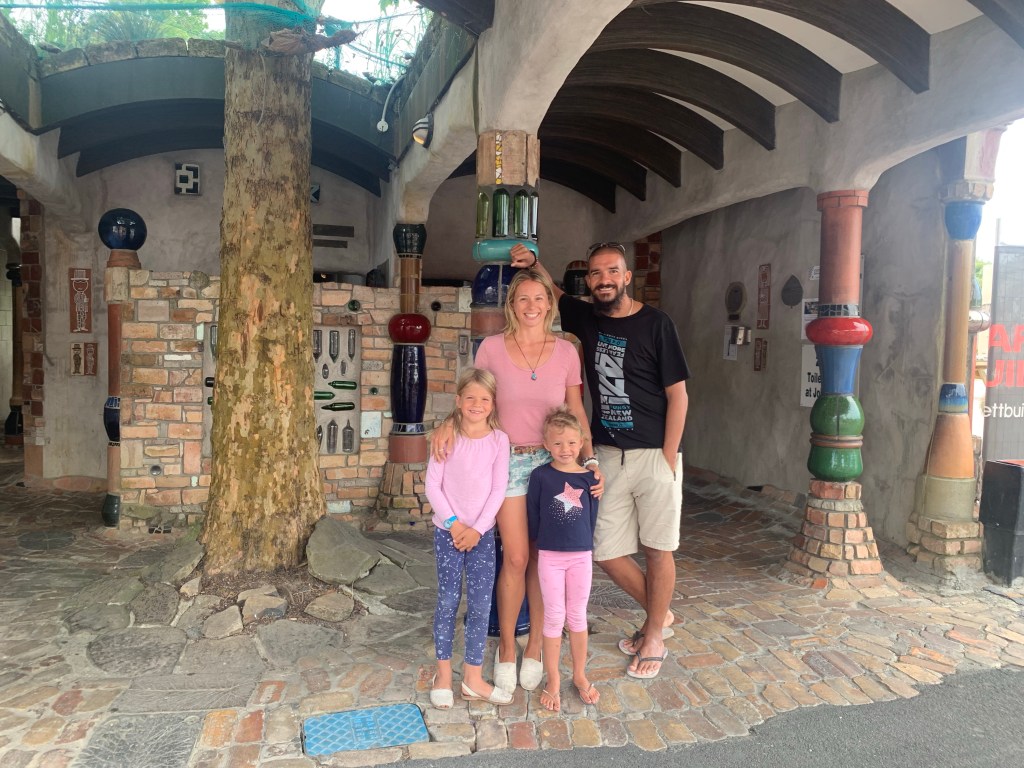
Another quirky tourist spot in the area are the public toilets on Gillies Street in Kawakawa, designed by the eccentric Austrian-born artist and architect Friedensreich Hundertwasser. Brightly coloured ceramics, mosaics and glass bottles decorate the interior and bring a surprising celebratory feel to the most practical of small buildings.

Hundertwasser Public Toilets, 60 Gillies Street, Kawakawa.

A related new museum is being built in Whangarei: the Hundertwasser Art Centre with Wairu Maori Art Gallery, due to open in 2021.

Outside the Hundertwasser Public Toilets, 60 Gillies Street, Kawakawa.

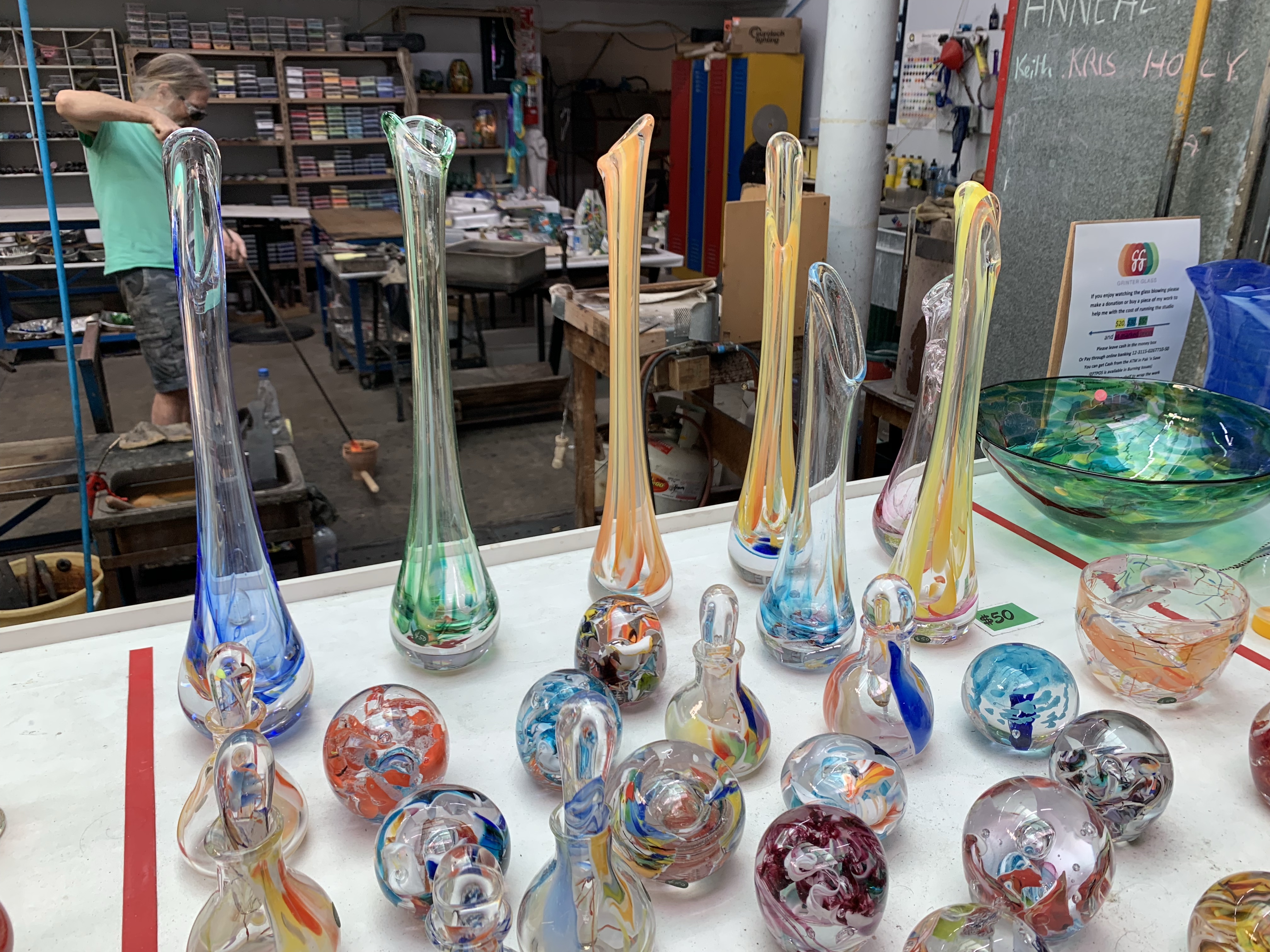
We enjoyed visiting the artsy riverside marina here, spending time in the Whangarei Art Museum, following the outside sculpture trail and watching a glassblower at work.

Glassblowing, Whangarei Marina, Whangarei.

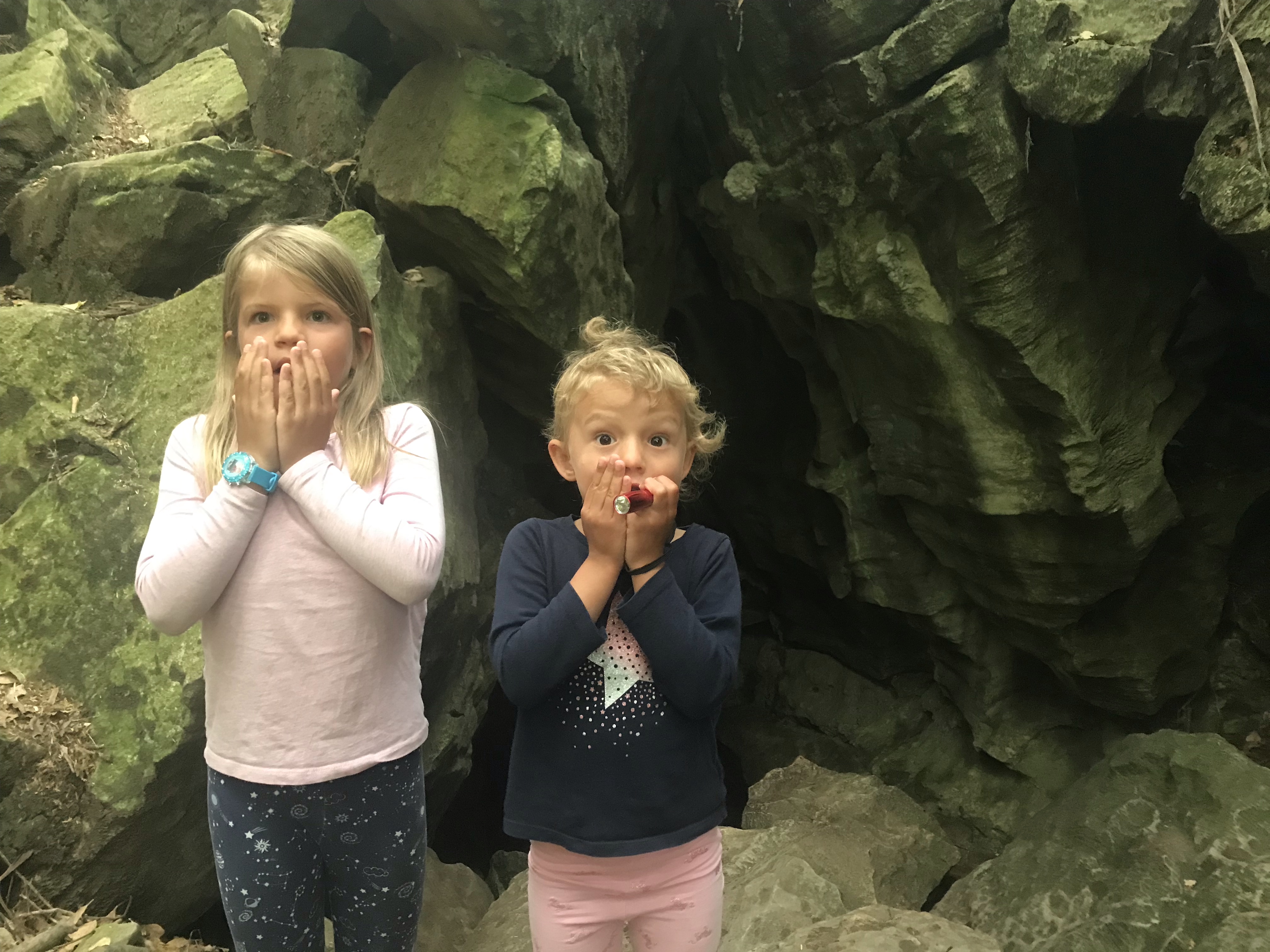
Despite stopping for a picnic lunch at the entrance to the Kawiti Caves, we chose to explore the nearby Abbey caves instead. These are an undeveloped network of three caverns full of glowworms and limestone foundations, we had quite an adventure climbing into these, I bumped my head and Joanna got rather wet, but it was a magical experience.

Entering the Abbey Caves, Whangarei.

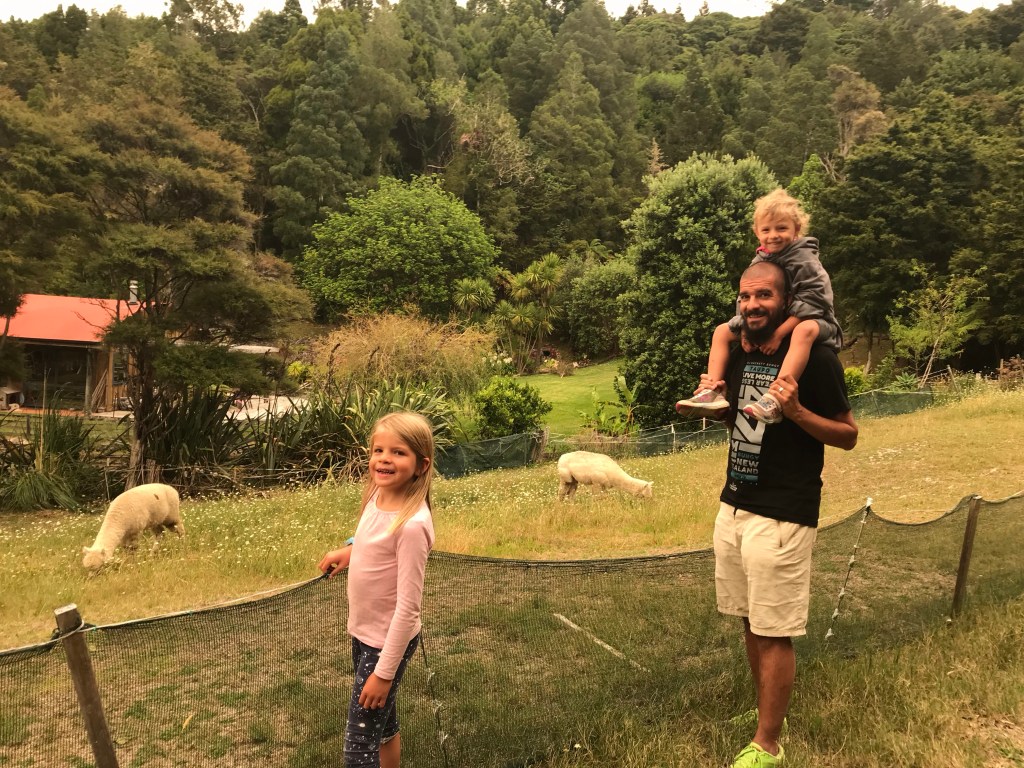
We were surprised to see llamas in the surrounding fields!

Yellow light and llamas as we emerge relatively unscathed from the Abbey Caves, Whangarei.

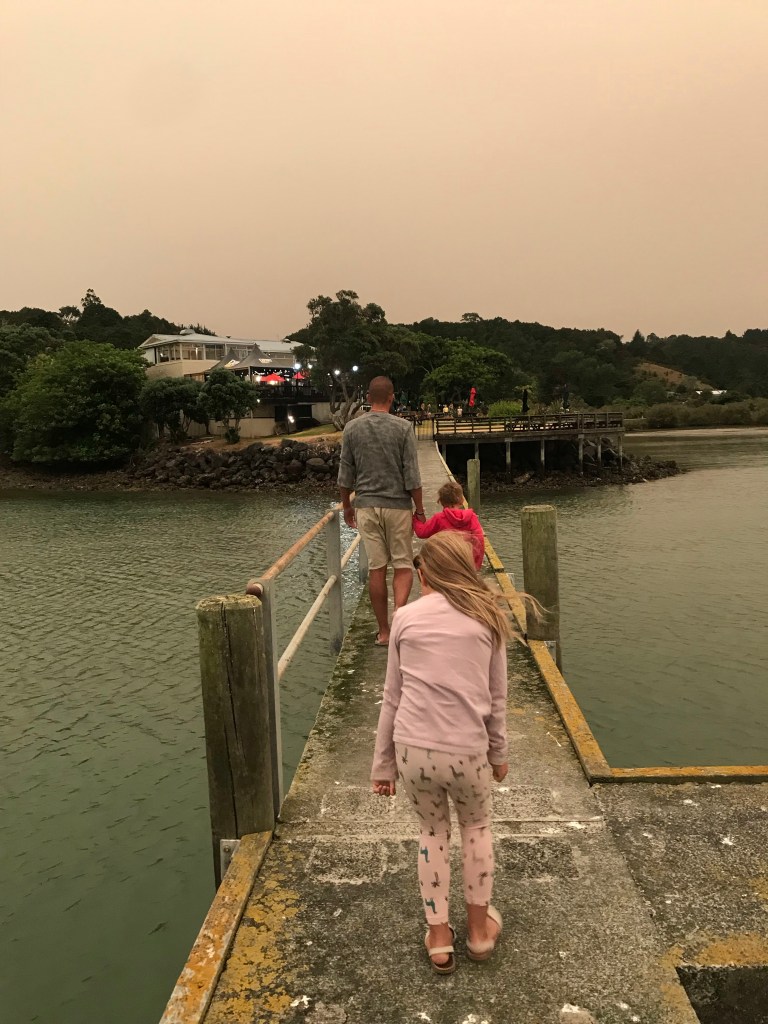
For our final two nights in Northland we stayed in a dream of an Air bnb, with Janet and Derek at Tamaterau along from Whangarei Heads. They had moved into the coastal property recently: our rooms were incredibly spacious and clean with stunning views. Derek played the piano for the girls and Tom cooked us all a bbq. We also had a delicious meal at nearby Parua Bay Tavern, the only disturbing element the strange yellow skies, coming from the Australian bushfires.

Walking off dinner, Parua Bay Tavern, Whangarei Heads Road, Parua Bay, Northland.

After a quick look at the 25m drop of Whangarei Falls we made our way back to Auckland to return the hire car.

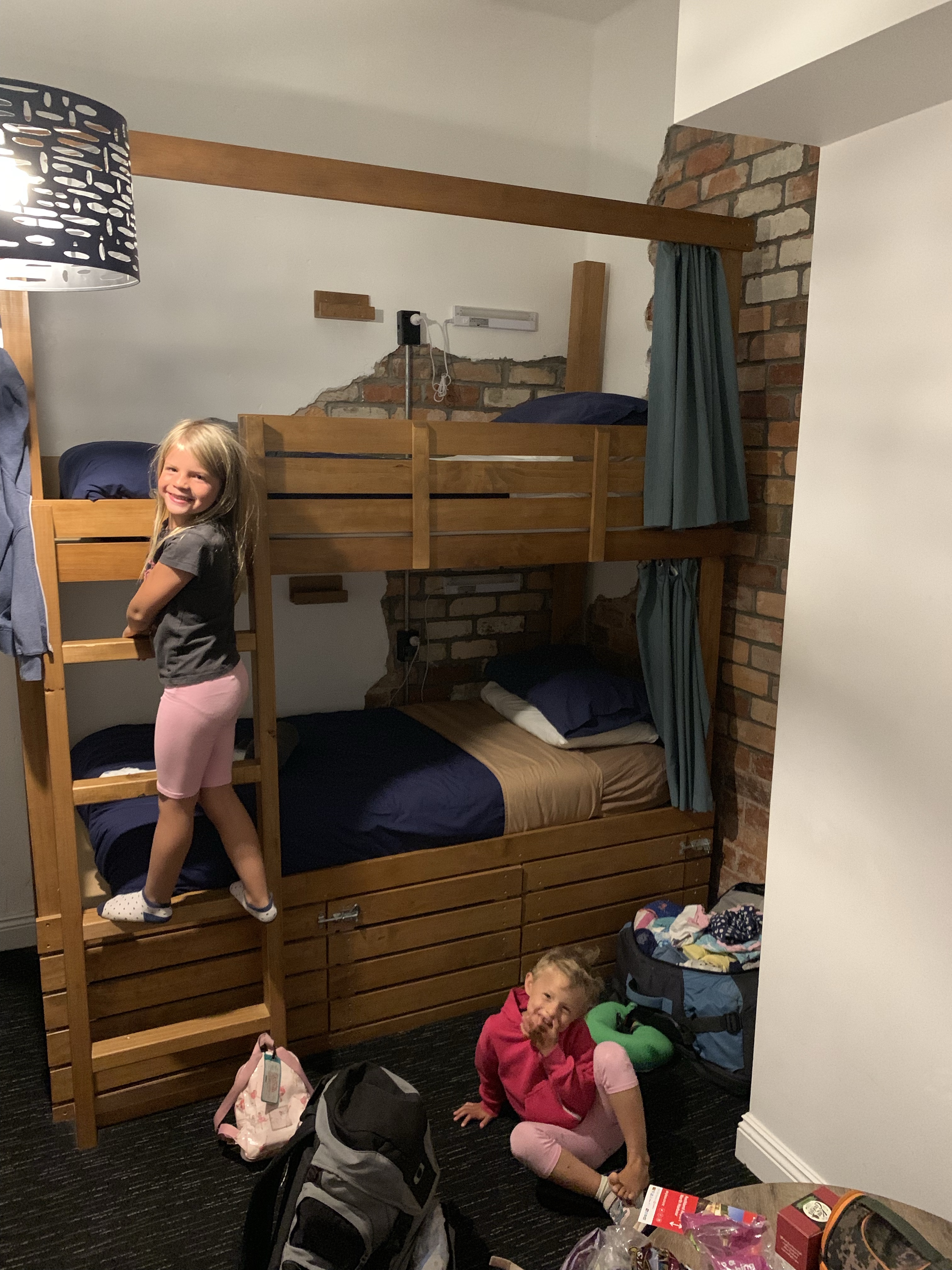
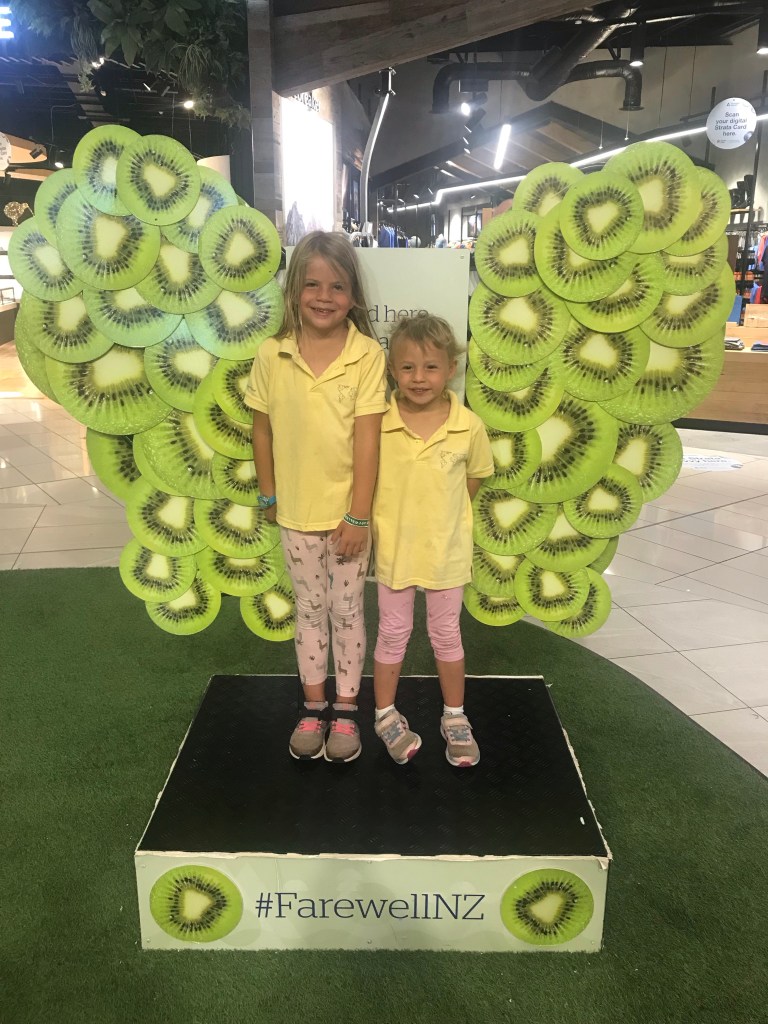
We had one night left in New Zealand, staying at the Haka Lodge (getting into trouble as its policy is no under-18s but they made an exception for us!!) and then having the longest day we would ever have in our lives as we fly to Argentina.

Bunkbeds intended for backpackers rather than kids, Haha Lodge, Karangahape Road, Auckland.

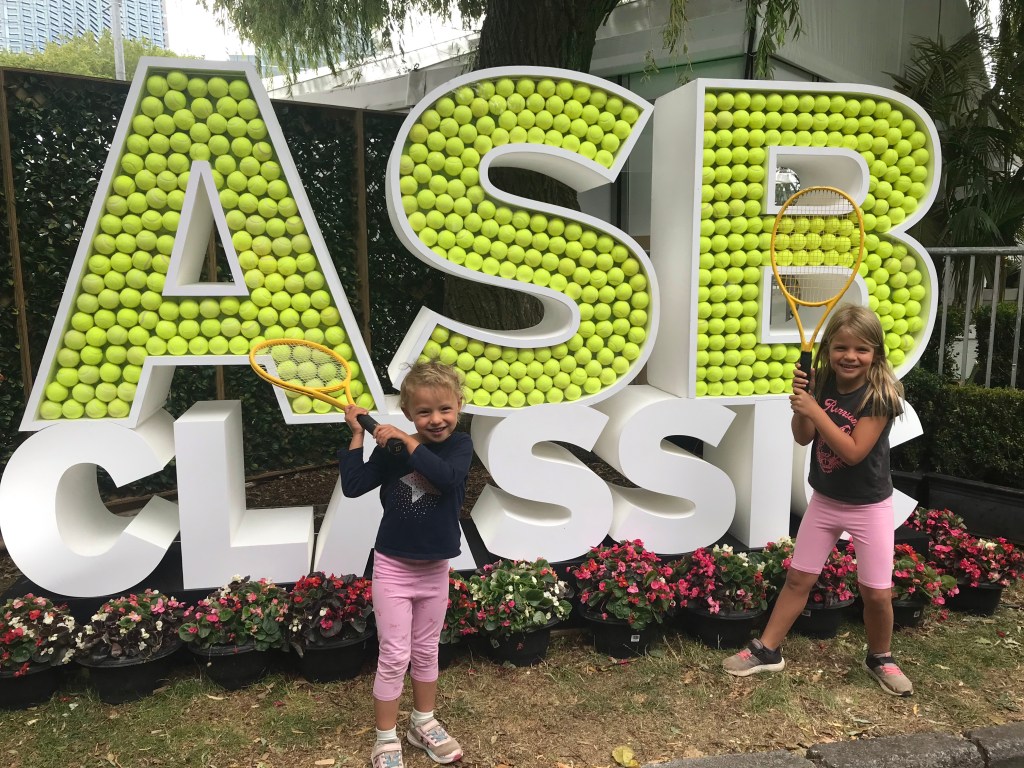
By luck we saw that the Auckland Tennis Open was taking place that week and that ground tickets were cheap and still available.

Mojo at the Auckland Tennis Open, ASB Tennis Arena, Parnell, Auckland.

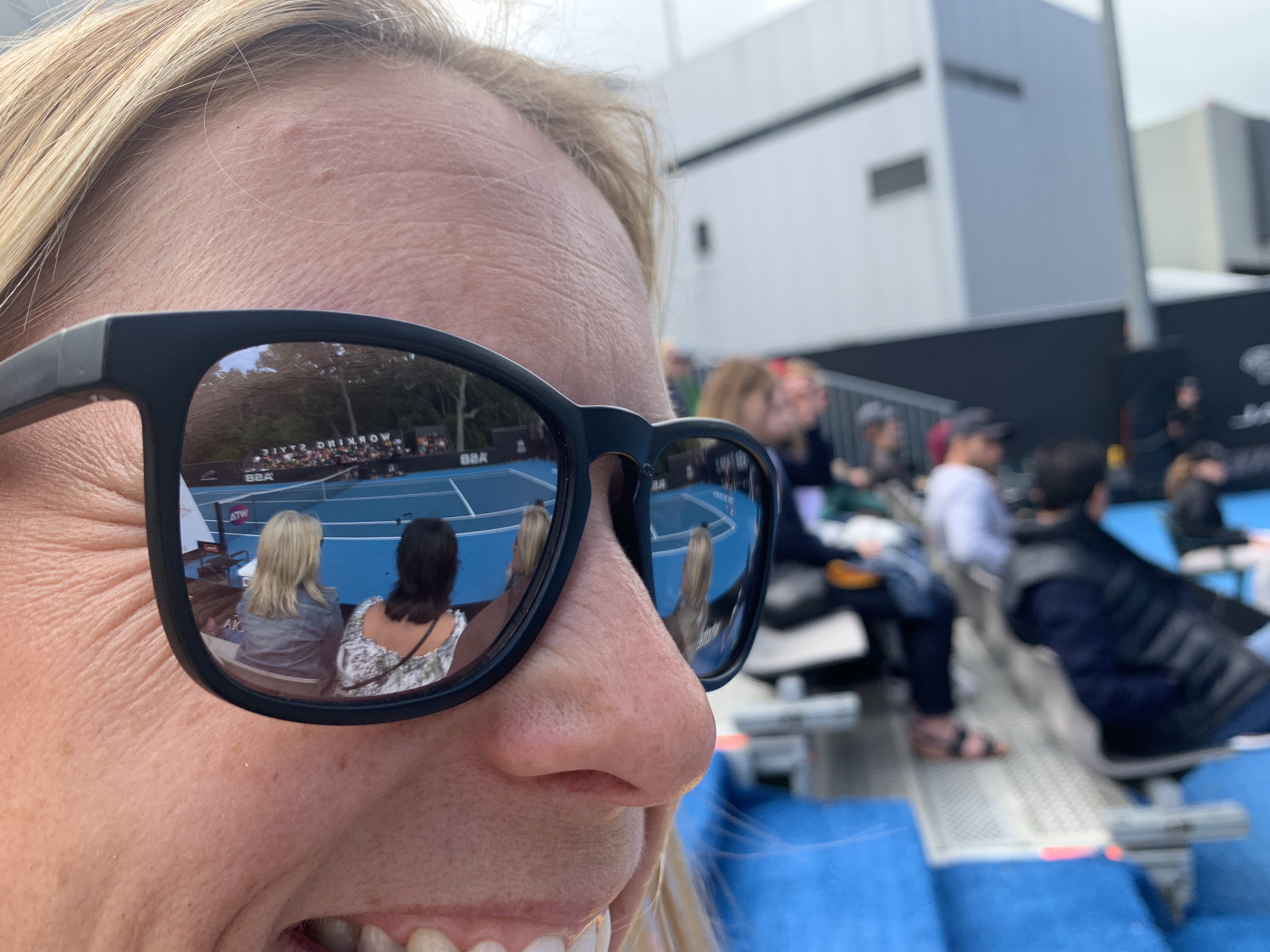
We had a brilliant six-hours watching ladies matches, sadly not seeing Serena Williams in person but having a photo with Lauren Davis after she won her match.

Game, set and match: Watching women’s singles, ASB Tennis Arena, Auckland, 7 January 2020.
With Lauren Davis, ASB Tennis Arena, Auckland.

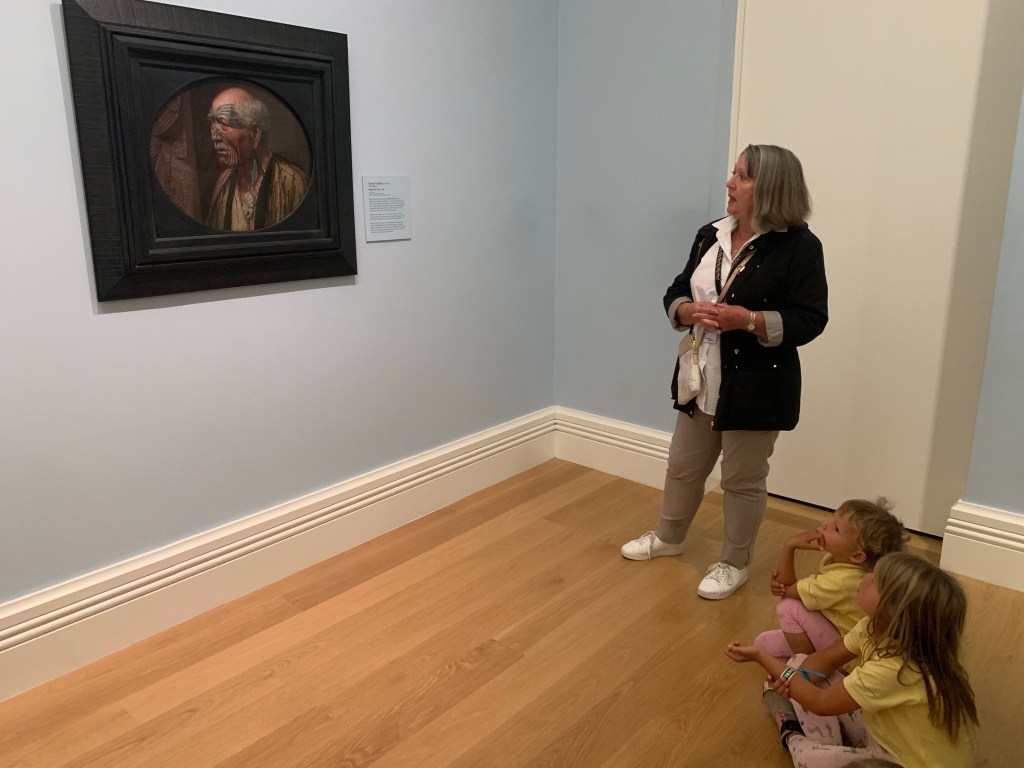
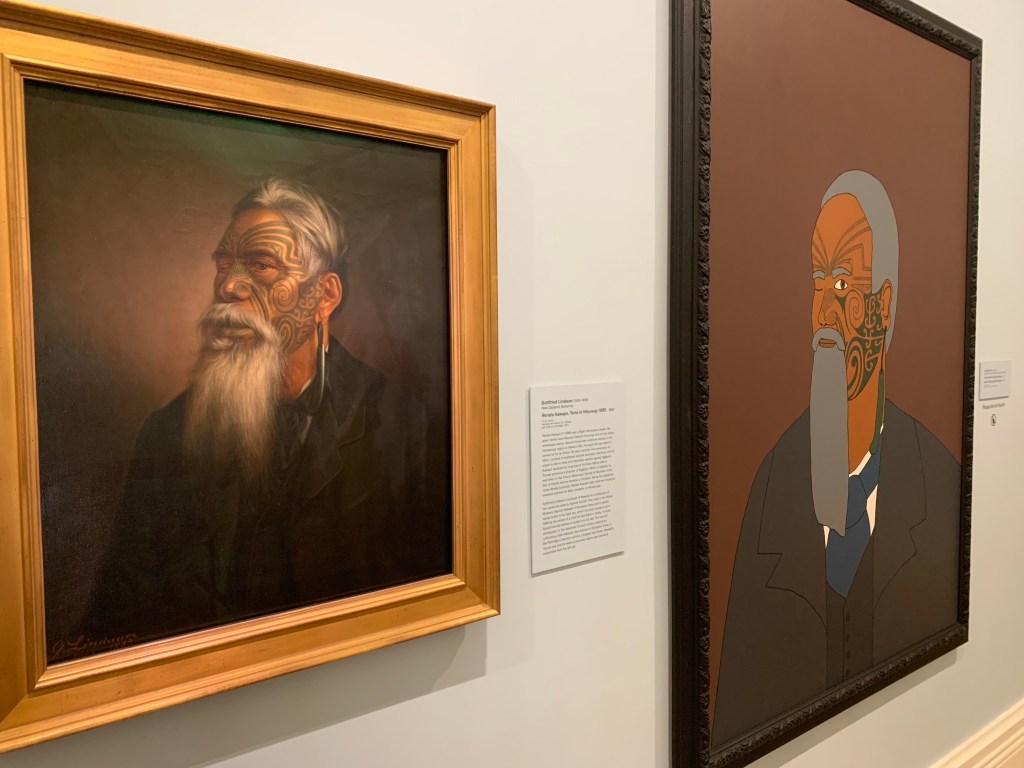
We enjoyed a guided tour of the Auckland Art Gallery from Alexia, learning about New Zealand artists from Charles Goldie to Colin McCahon.

Alexia discussing the painting Patara Te Tuhi by Charles F. Goldie, Auckland Art Gallery.
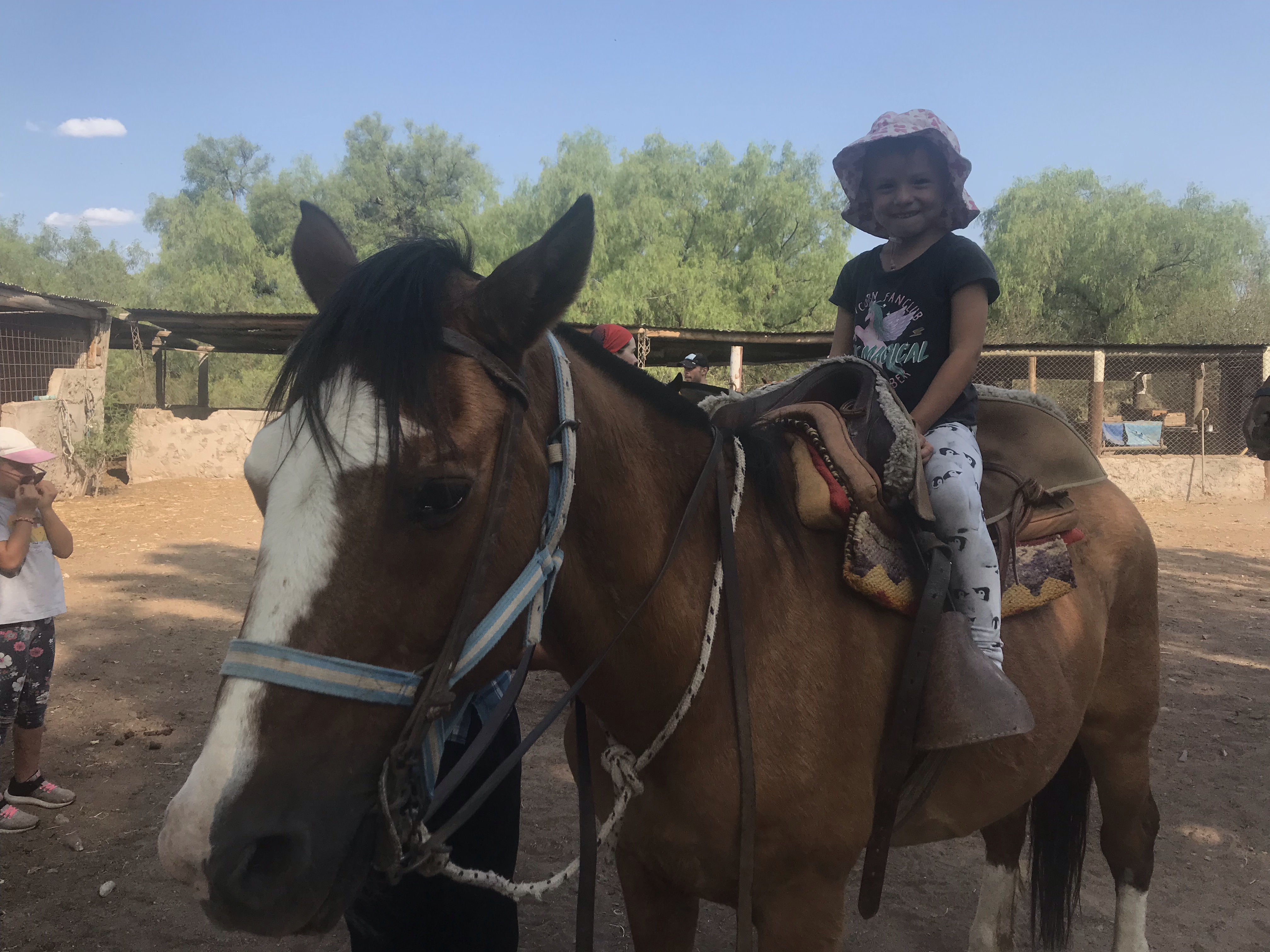
Comparing traditional and modern traditional Maori portraits, Auckland Art Gallery.
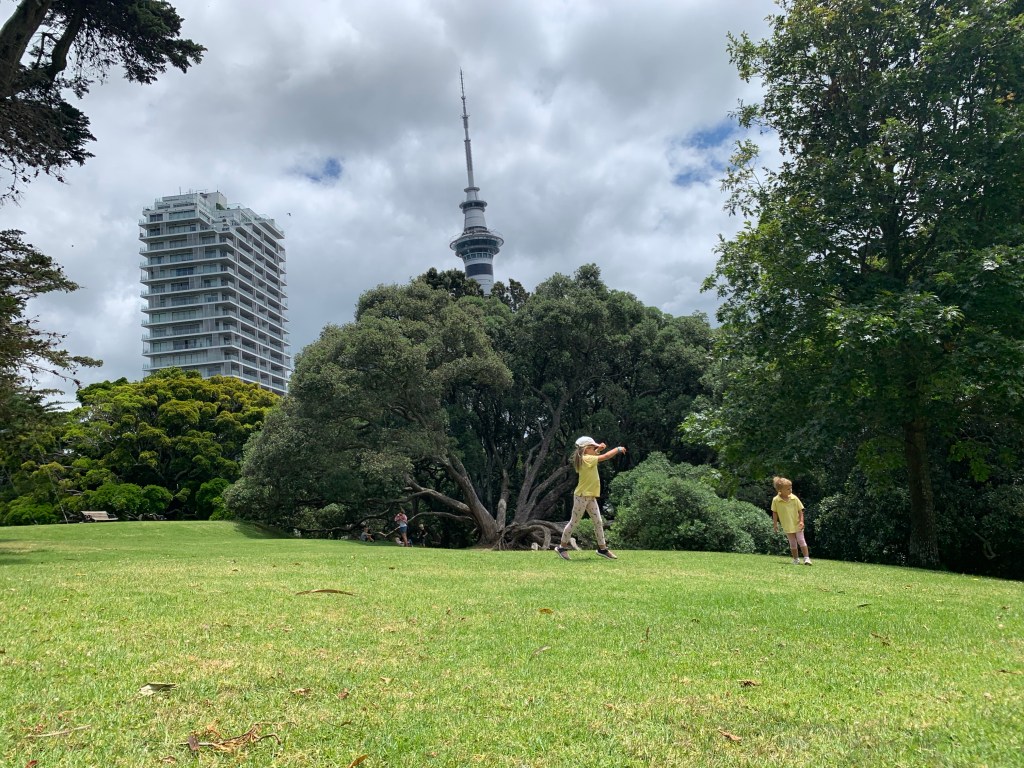
Lunch was a picnic in pretty Albert Park followed by a long walk through town to Viaduct Harbour, Wynard Quarter, winding up at the playground in Silo Park.
Albert Park with Sky Tower behind, Auckland Central Business District.

Back on K-Road, we completed our New Zealand adventures with an early dinner at Calamity Janes before taking an uber to the airport.

Auckland Airport, 8 January 2020.

Our five fantastic weeks in New Zealand were over.

Lakes and lava: the last week of 2019

The centre of the north island of New Zealand is bubbling with activity. On Boxing Day, we headed to Lake Taupo, the country’s largest lake, about the size of Singapore. On arrival we were surprised to see people swimming – it felt too cold but then we realised the lake sits in a volcano that began erupting 300,000 years ago and its waters are a warm 20-degrees Celsius, even warmer in thermal hot spots. It was in AD 180 the area witnessed the largest and most violent eruption in recorded history – ash covering the whole of New Zealand and unusual skies reported in Roman and Chinese historical texts.

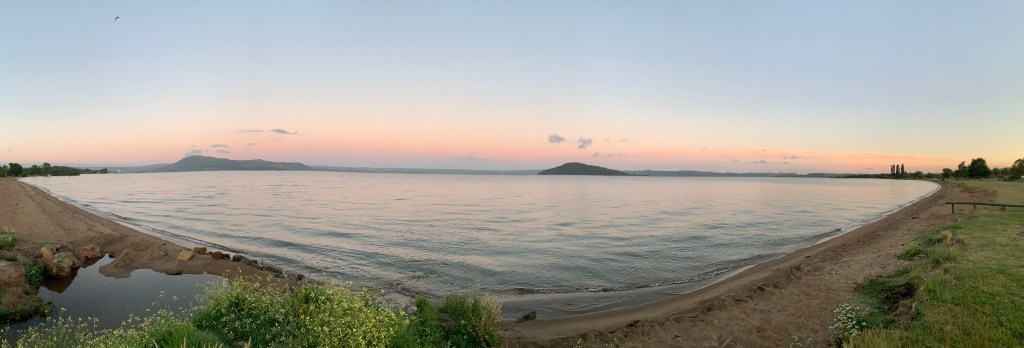
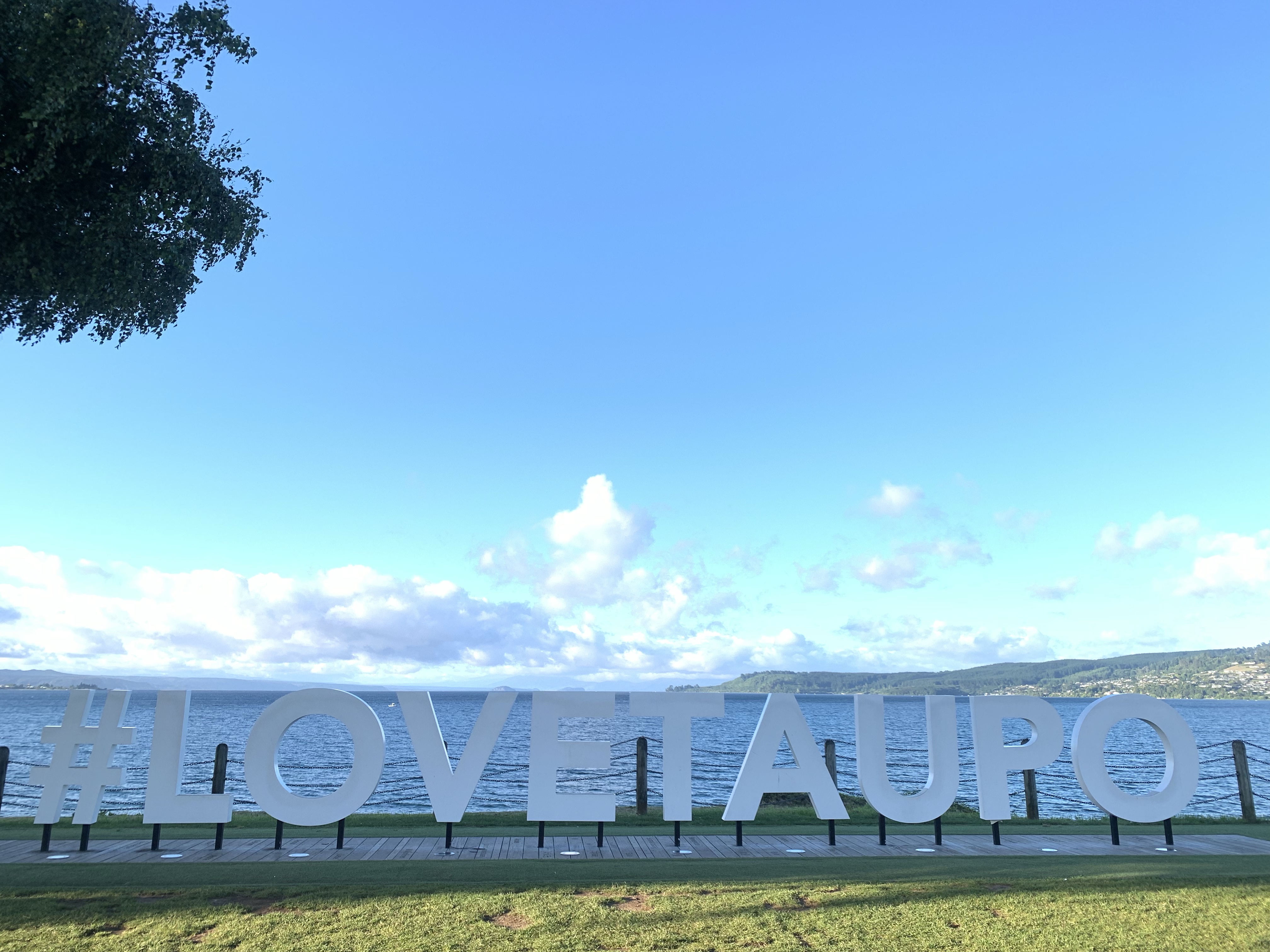
Taupo, at the centre of New Zealand’s North Island.

The town of Taupo is lovely, extending from the lakefront towards the Waikato River (New Zealand’s longest). We enjoyed walking around the Saturday Farmer’s Market and watching people attempting to make a ‘hole in one’ – by hitting a golf ball onto a pontoon far out on the lake (divers daily went out to find balls from failed attempts) with big winnings for those who succeeded.

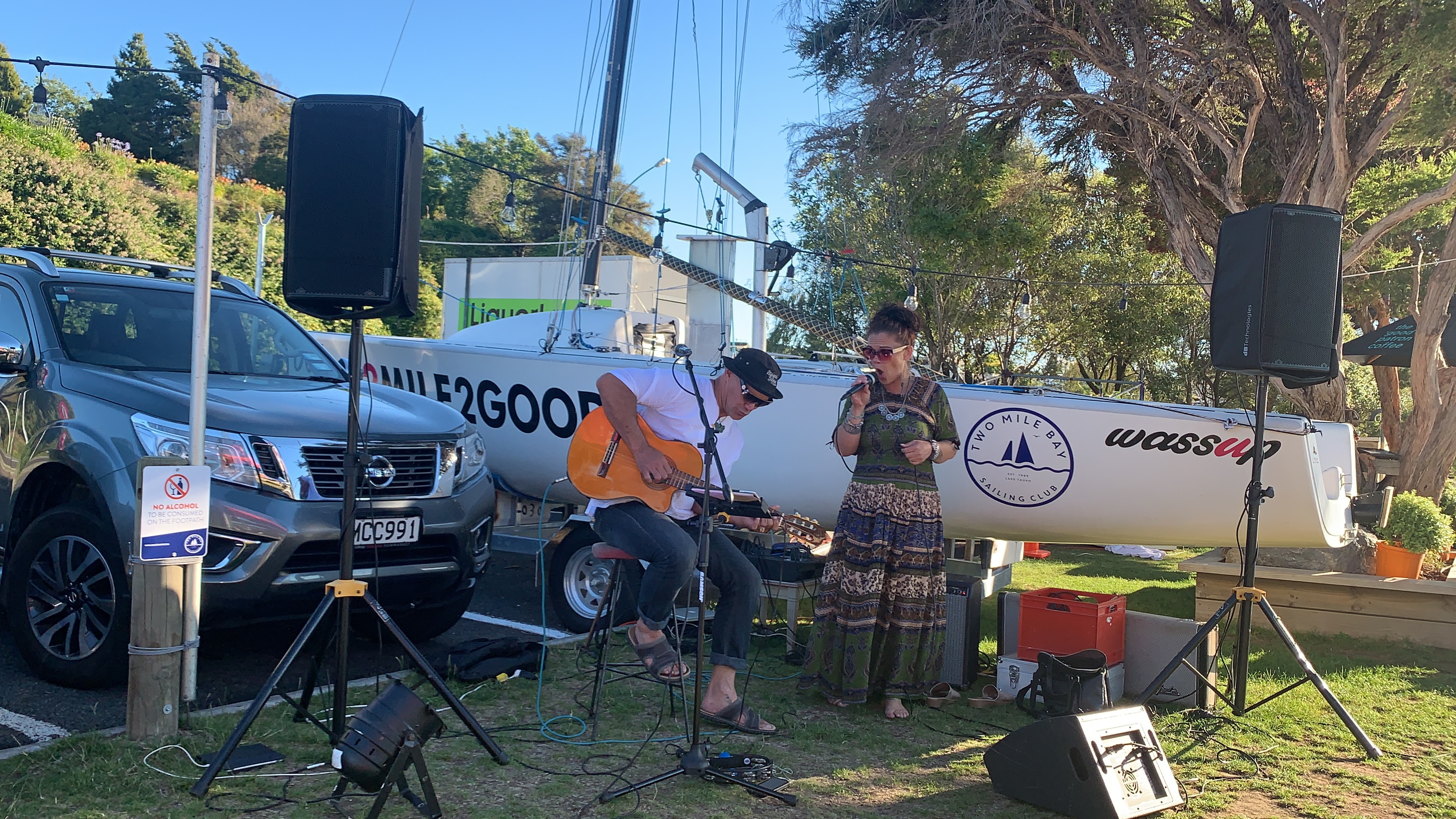
On our first night we found an excellent Indian for a curry (Indian Affair) and the second a fabulous spot on the water which we had both run past that morning, the Two Mile Bay Sailing Club. The party atmosphere and live music made up for the long wait for wood-fire pizzas!

Two Mile Bay Sailing Club, Lake Terrace, Taupo.
Musical entertainment, Two Mile Bay Sailing Club, Taupo.

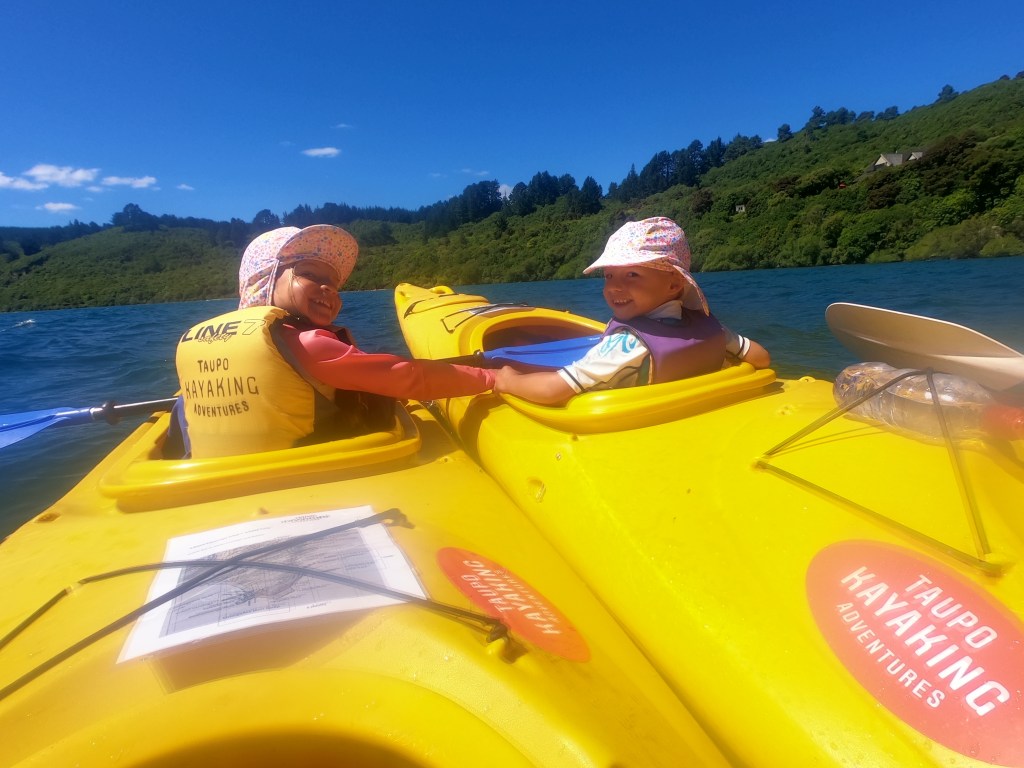
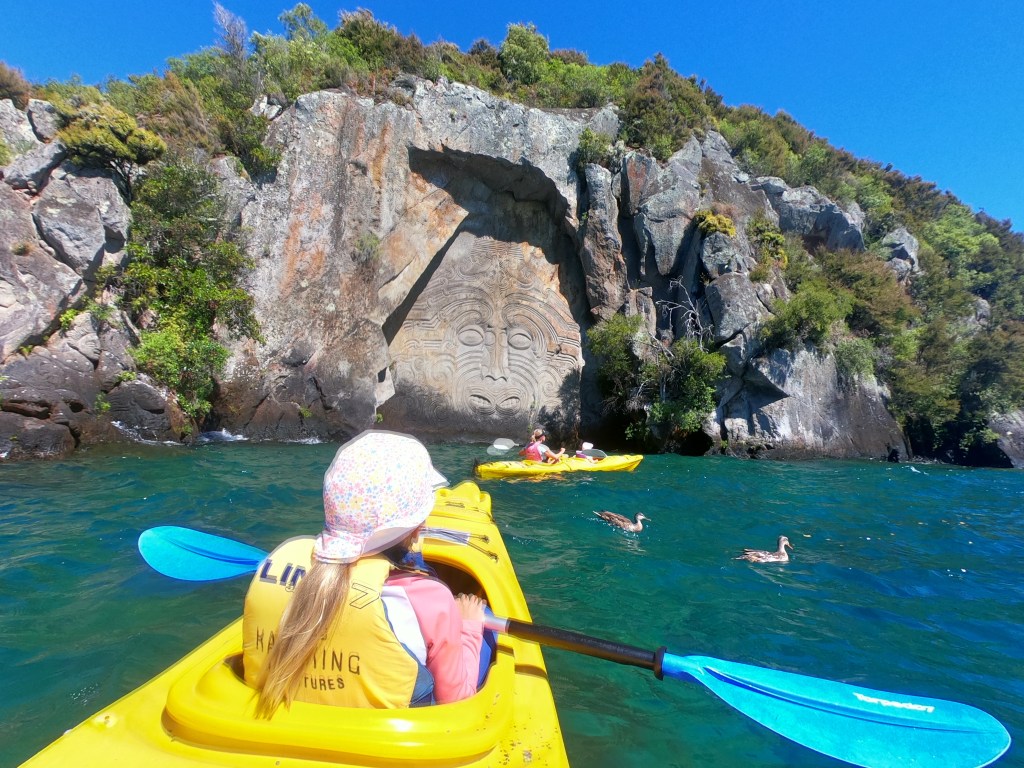
The best way to explore the lake is by kayak, we decided to drive to Acacia Bay to hire two double kayaks and make our way to the famous Māori rock carvings at Mine Bay. It was a stunning day.

Double kayaks, out in Tapuaeharuru Bay, Taupo.
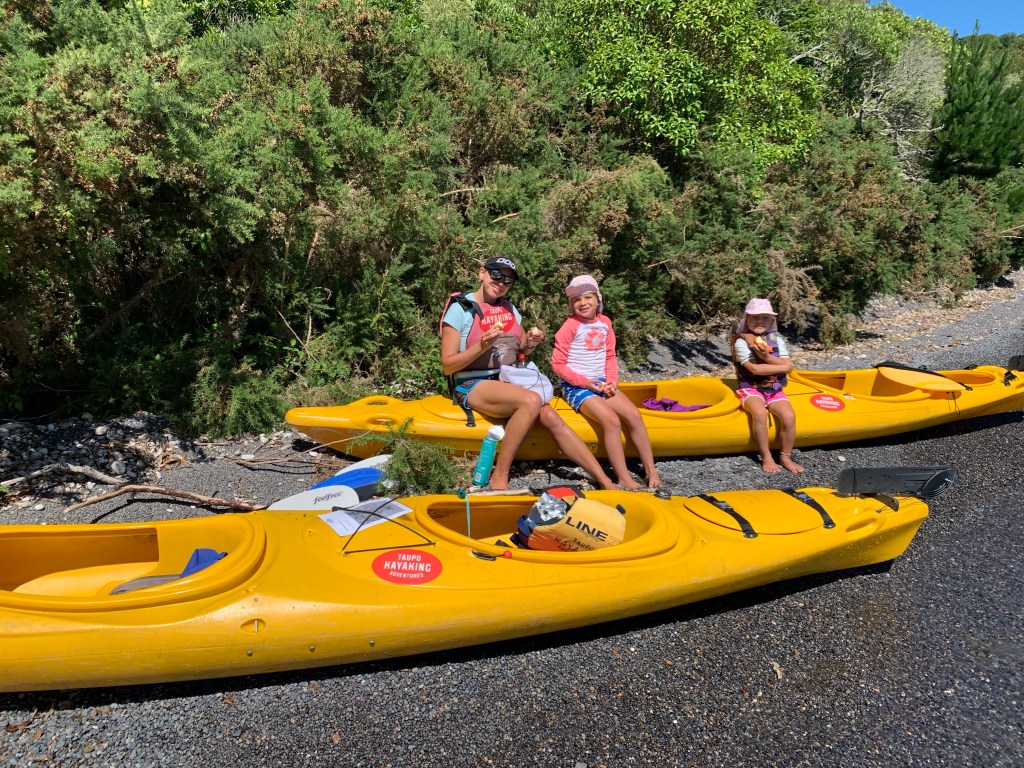
Taking a break in Okuta Bay, Lake Taupo.
Snack time, Lake Taupo.

It was a rewarding four hours, the 10m-high carvings etched in the 1970s onto the rock face are impressive depictions of Ngātori-i-rangi, the visionary Māori navigator.  

Mine Bay Māori Rock Carvings, Lake Taupo.

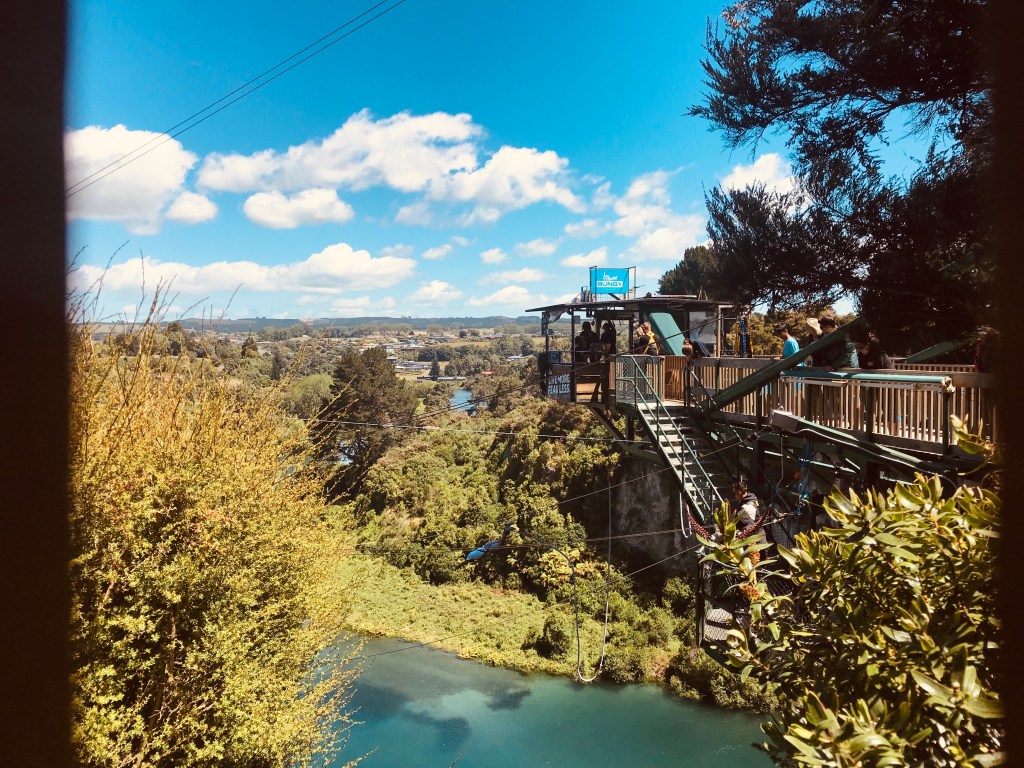
Taupo is an adrenaline junkies dream – so it was the ideal place for Tom to do a bungee jump. AJ Hackett’s offers a thrilling 47m plunge over the Waikato River, Tom opting for the half-body emersion getting a lot wetter than he anticipated and loving the experience.

Mid-fall over the Waikato River, AJ Hackett Taupo Bung & Swing, Spa Road, Taupo.

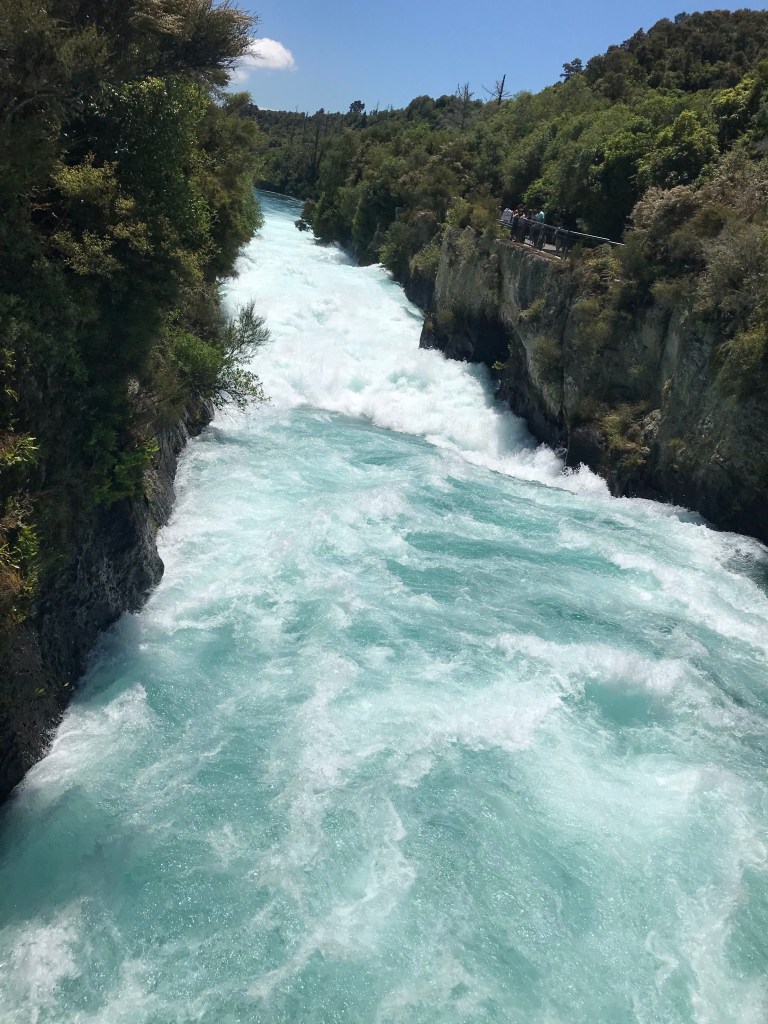
We had a lunch stop at the surging Huka Falls, where every second 220,000 litres of water plunge 11m over the falls. An Olympic swimming pool is filled every 12 seconds. It really is an incredible volume of water, its hydro-electric station providing 10% of New Zealand’s power.

The very clear water of the falls absorbs all the colours of the rainbow, except the striking blue colour. Pumice grains suspended in the water also scatter the light towards the green-blue end of the rainbow. Air bubbles in the rushing water make it look whiter.

Water flowing downstream from the Huka Falls, Waikato River, Wairakei, Taupo.

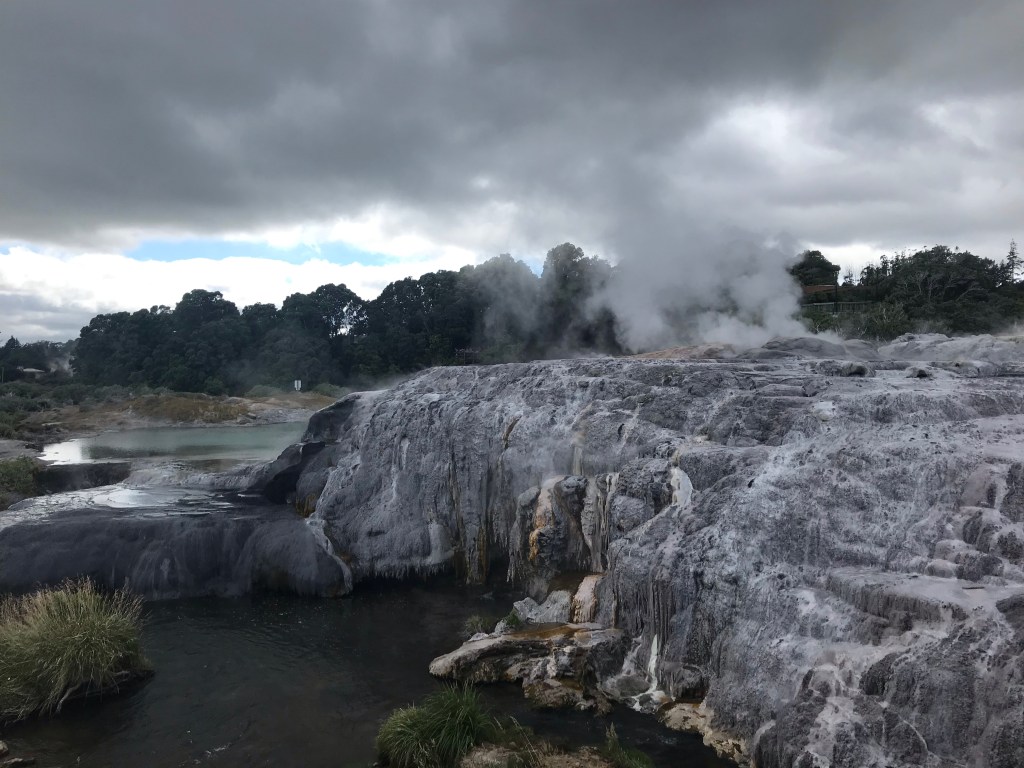
We first experienced the sulphur fuelled wiff of Rotorua during a lunch stop at Wai-O-Tapu Thermal Wonderland, home to the Champagne Pool, Devil’s Bath and Lady Knox Geyser.

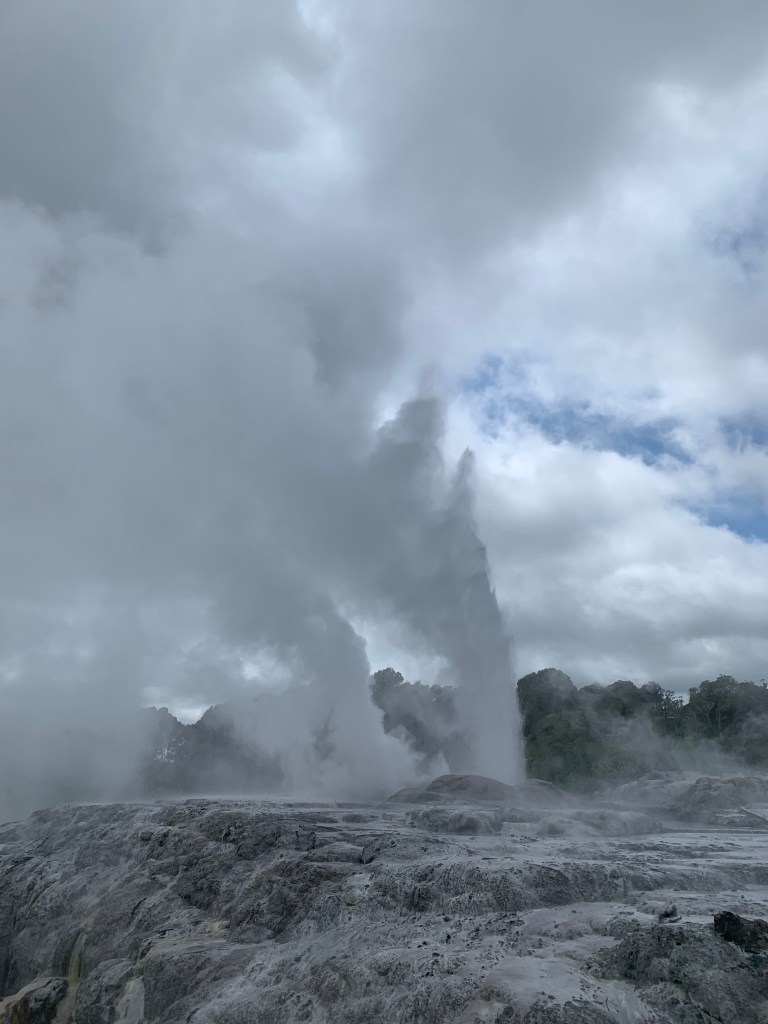
We decided to explore more at Te Puia, site of several geothermal wonders such as Põhutu (Big Splash), the biggest geyser in the Southern Hemisphere which erupts once or twice an hour with hot water spurting up to thirty metres into the air.

Põhutu Geyser, Te Puia, Rotorua.

Close by is another geyser called the Prince of Wales’ Feathers, several pools of boiling, bubbling mud named after Koko, a famous chief of the original fortified settlement. Pools of boiling water are still used for cooking. These wonders are all part of the Te Whakaremarewa thermal zone.

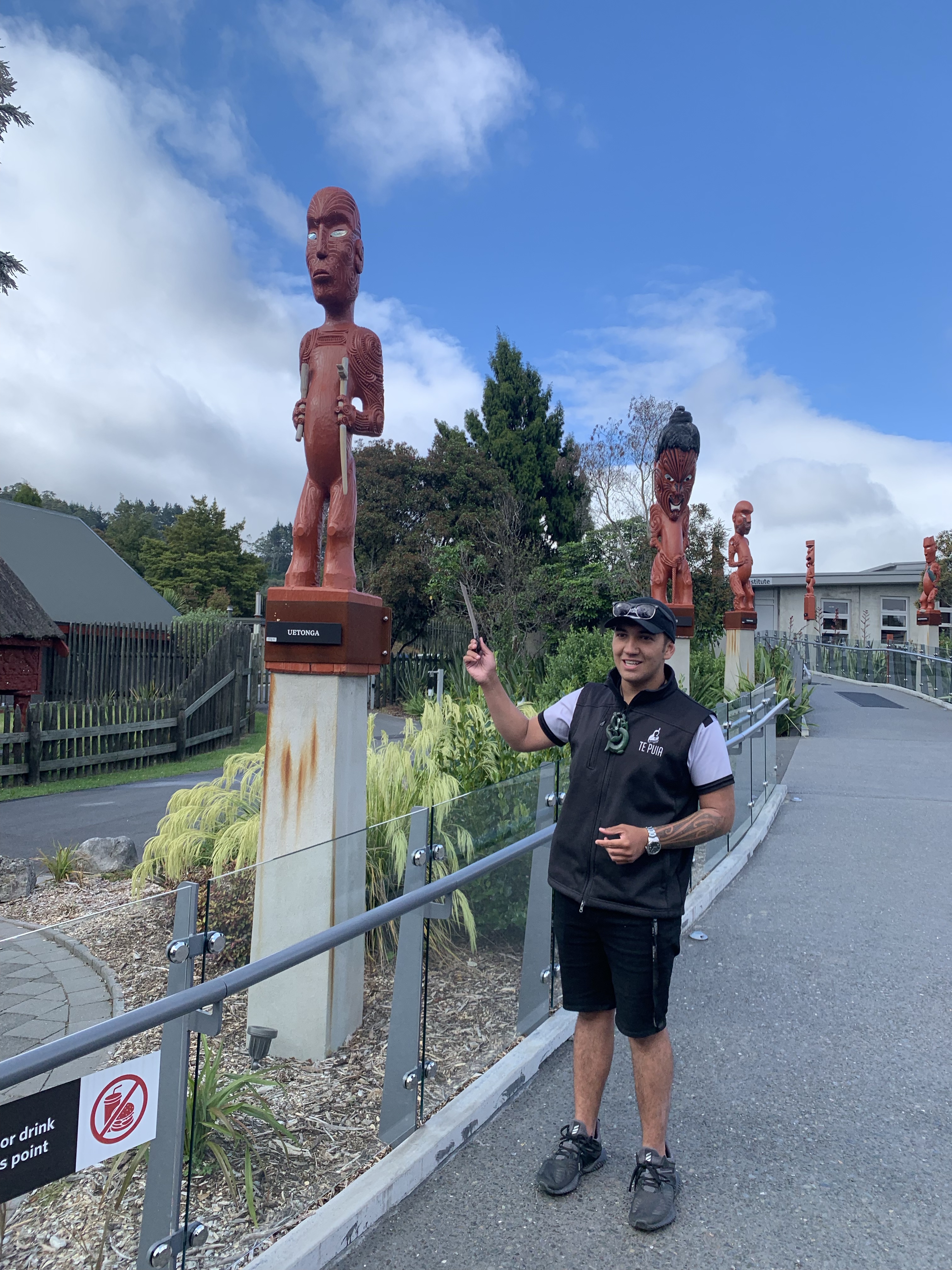
The entrance to Te Puia was marked by 12 carvings based on a spiritual guardian of Rotorua’s Te Arawa tribe, Heketanga-a-Rangi.

Liam explaining the significance of Tomokanga Matua, Te Heketanga a Rangi, Te Puia, Rotorua.

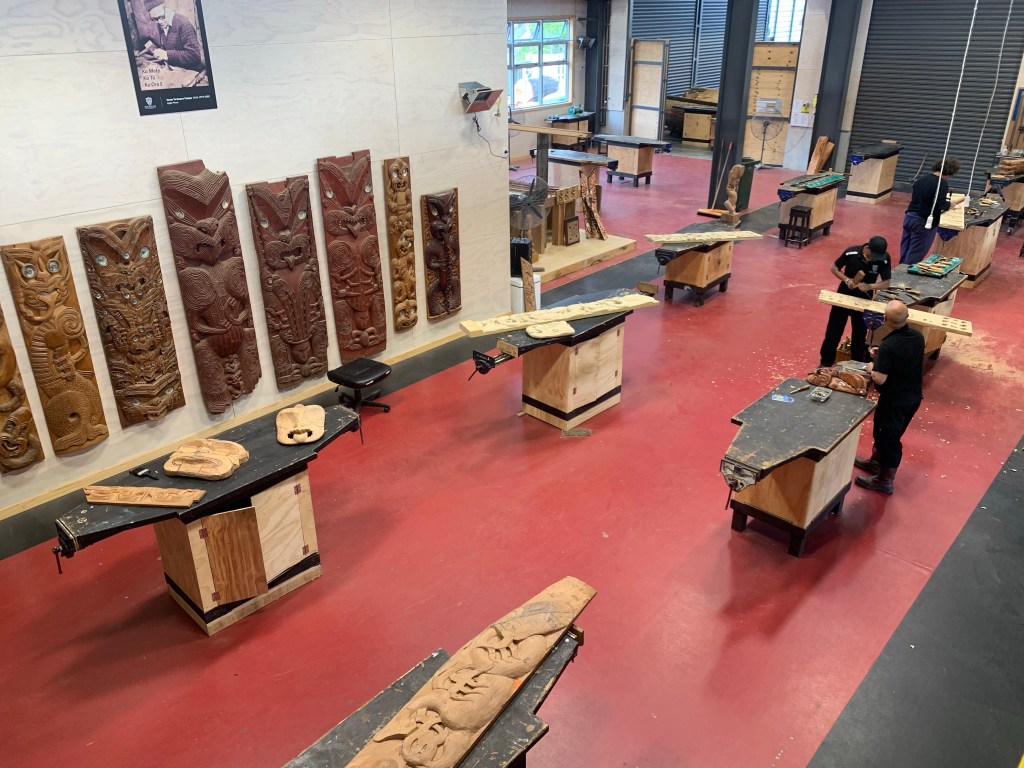
We had an excellent guided tour of the whole complex by Liam including the National Arts and Crafts Institute established in the 1920s where we witnessed students carving whale bone, jade and wood.

Wood carving demonstration, Te Puia, Rotorua.

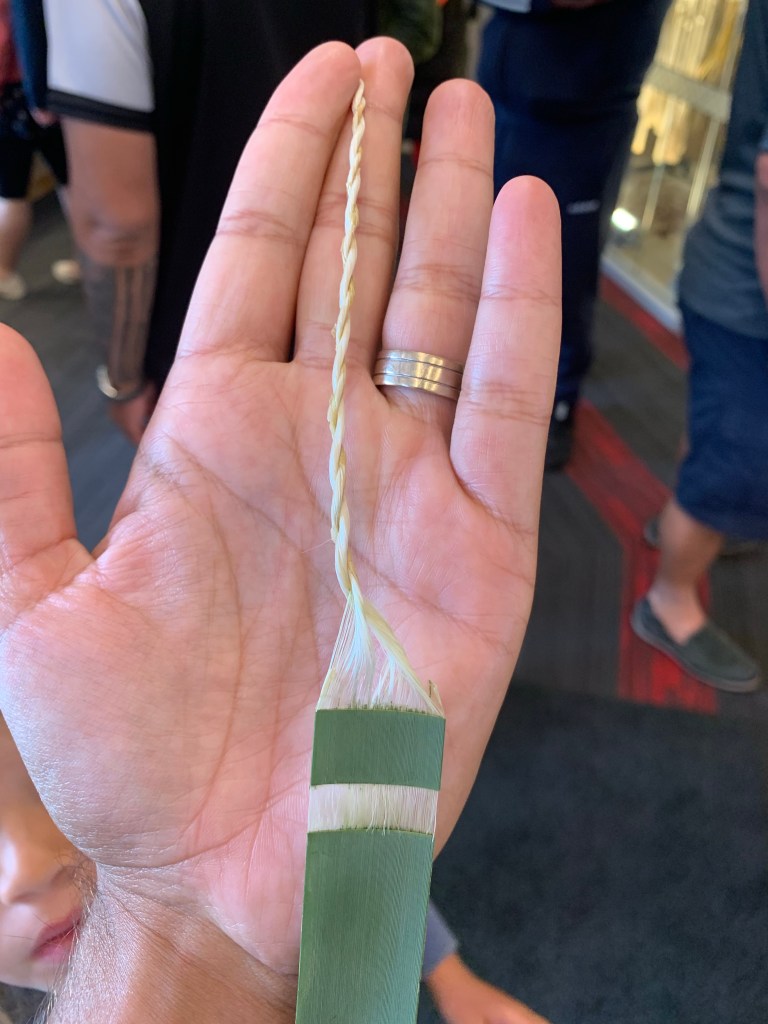
We also watched ladies weave textiles and make natural rope from a palm frond.

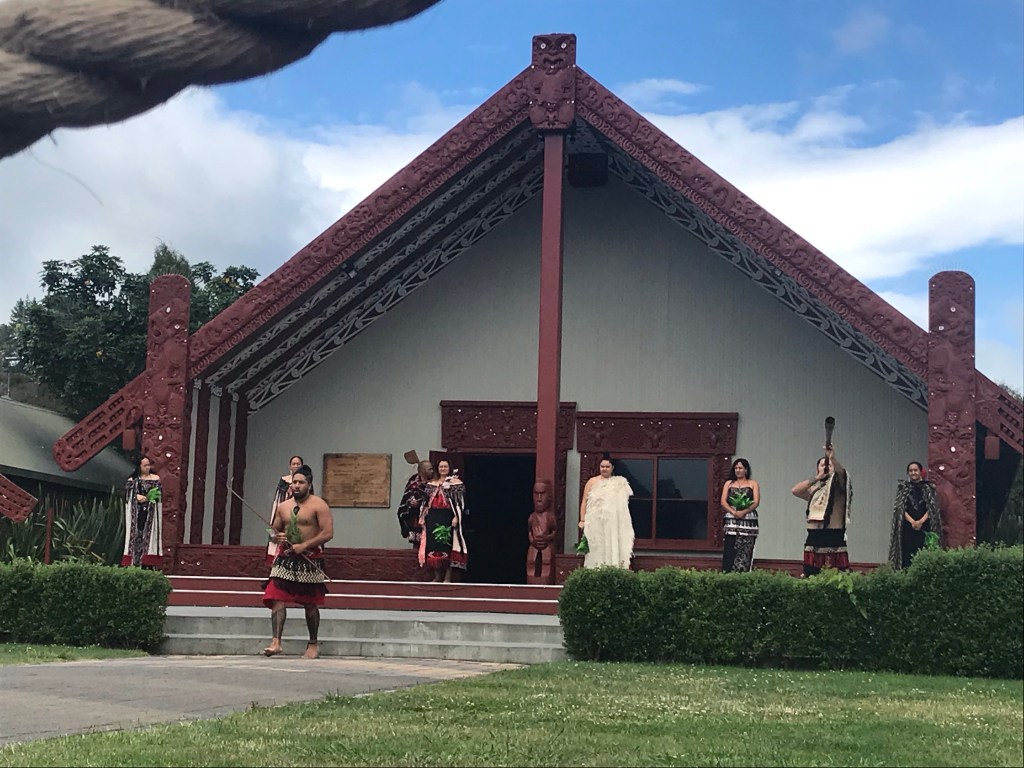
We had also signed up to attend a cultural performance at the traditional wharenui (meeting house).

Pōwhiri (traditional greeting), Wharenui (communal house), Te Puia, Rotorua.

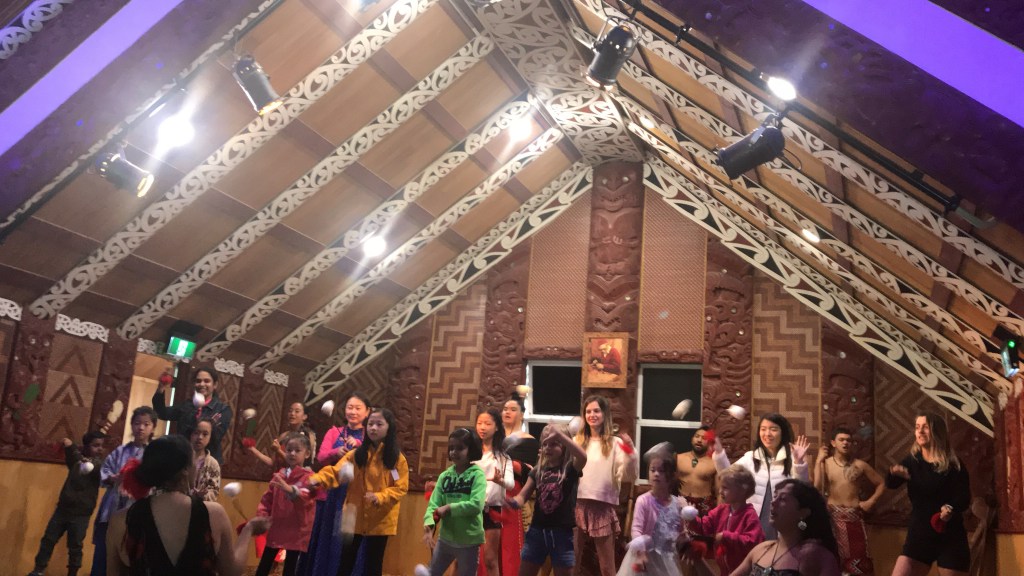
The girls were invited up to the stage as part of the kapa haka concert, dancing with pia balls.

Learning how to dance with poi balls, Wharenui, Te Puia, New Zealand. ‘Poi’ is performance art.

Tom was a little embarrassed to be invited to the stage to join in the grand finale: the haka dance.

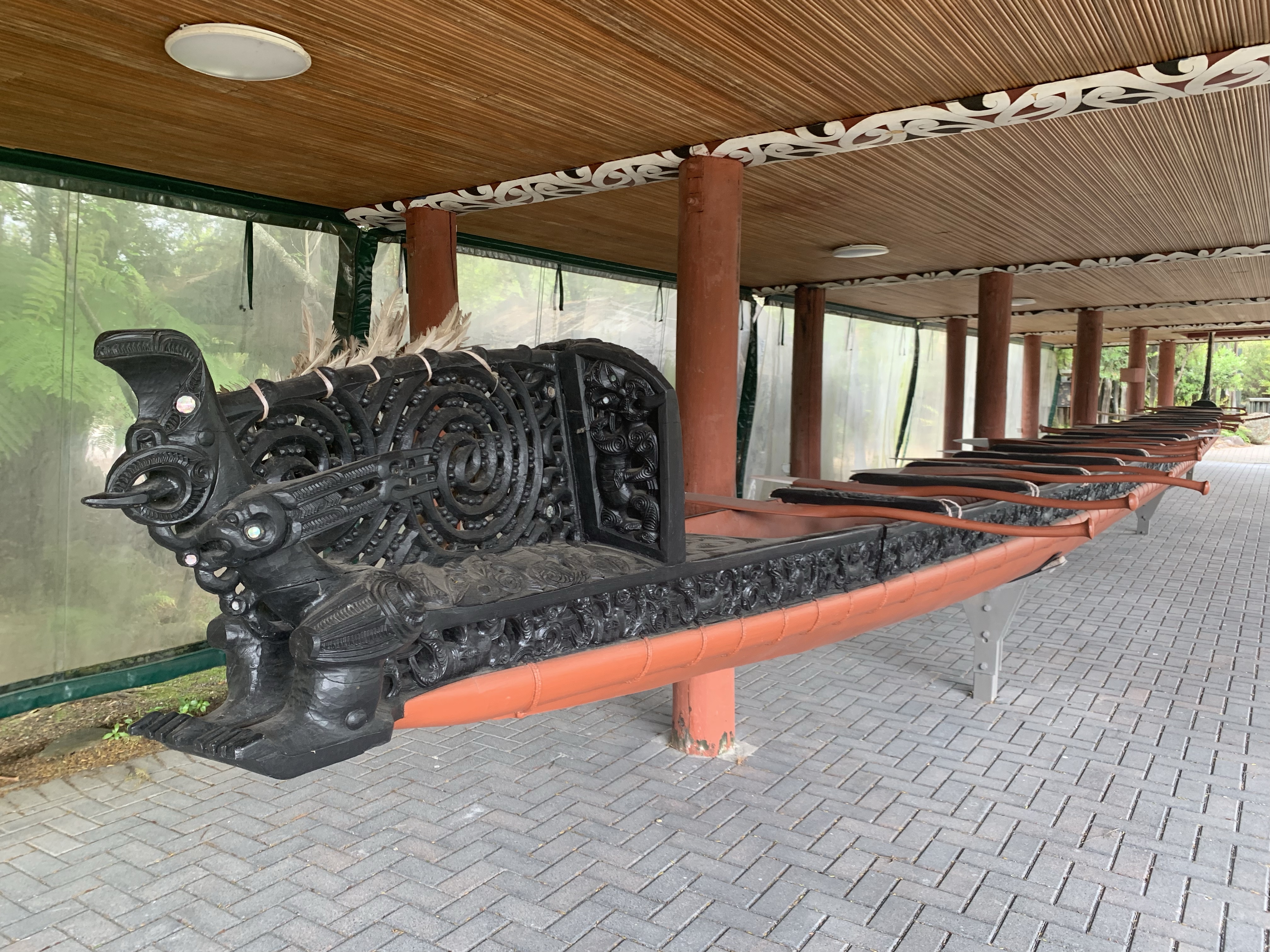
The kiwi house at Te Puia was rewarding with two resident kiwis. It was also interesting to see the recreated Pikirangi village with a long canoe and bronze store room on high stilts.

Te Arawai war Canoe, Te Puia, built in 1980, 60-feet long, made from a log of a Totara tree.
The Whatarangi, Maori’s elevated storehouse, Te Puia.

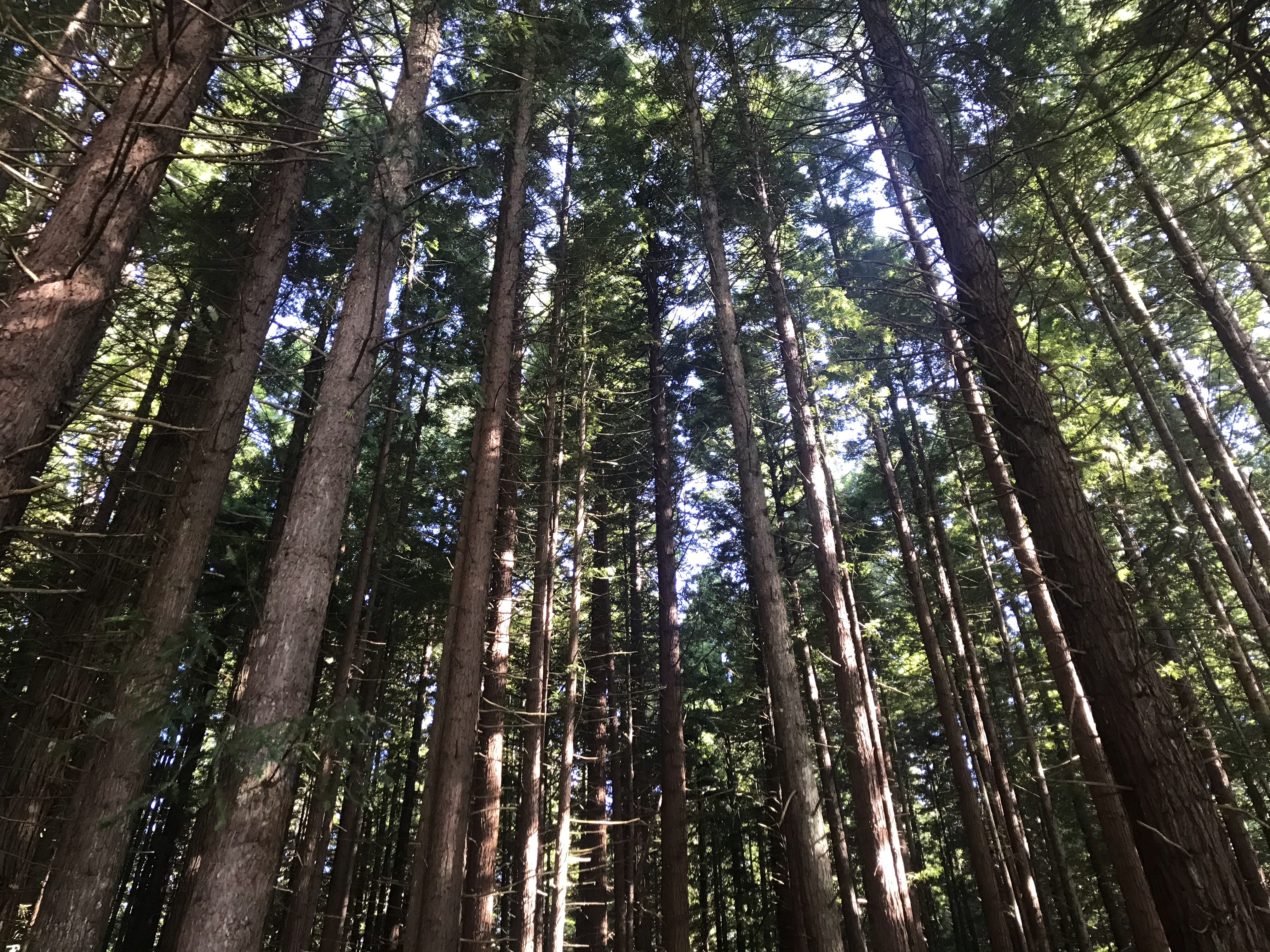
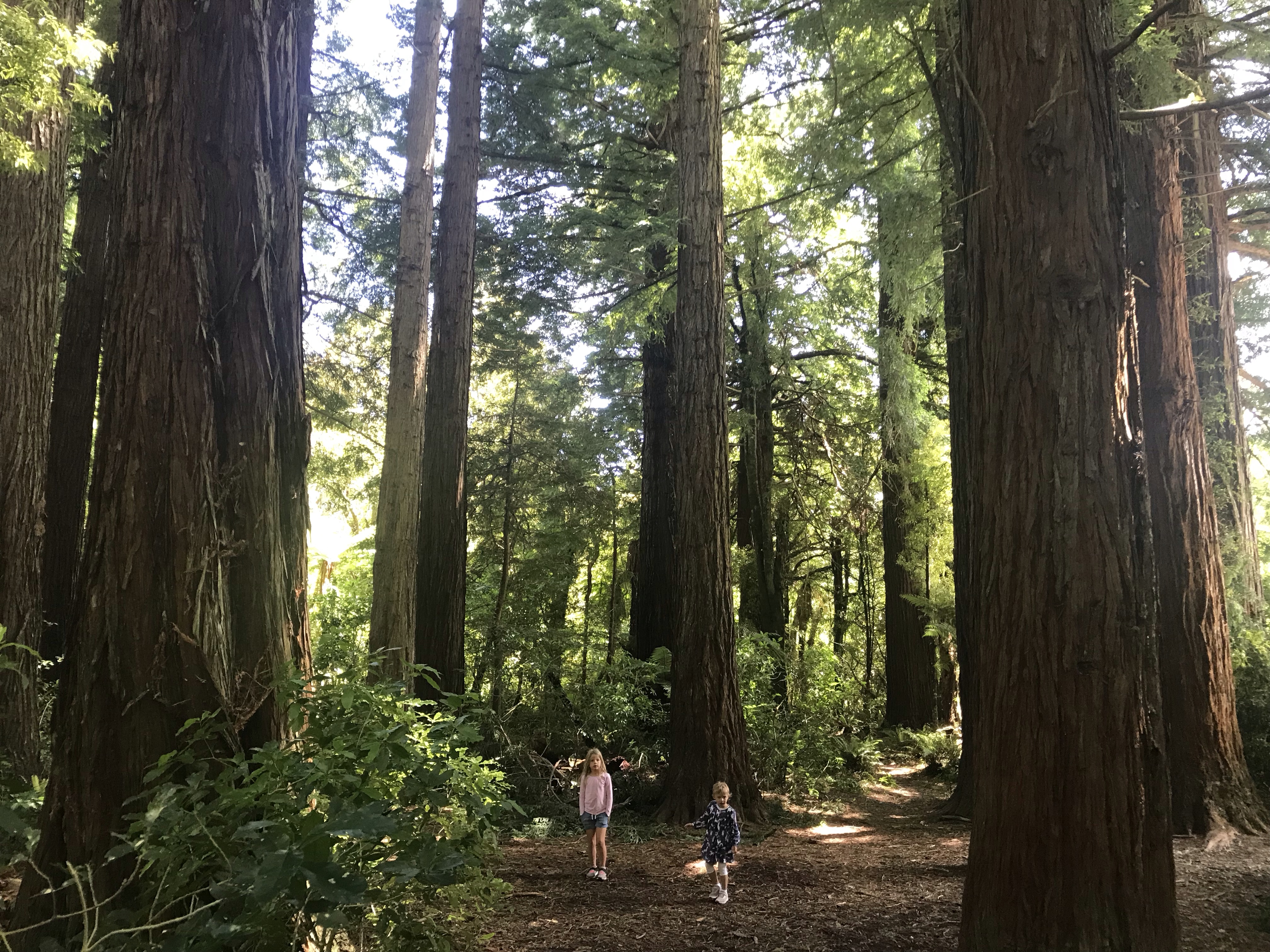
As well as the 18 lakes in the area (Lake Rotorua is the largest) there is also incredible nature to be found in the Redwoods forest. From 1899 170 tree species were planted, with the mighty Californian Redwoods stealing the show at heights of up to 72 meters. I had a wonderful run up and down the tracks here.  

Redwoods Whakarewarewa Forest, Long Mile Road, Rotorua.

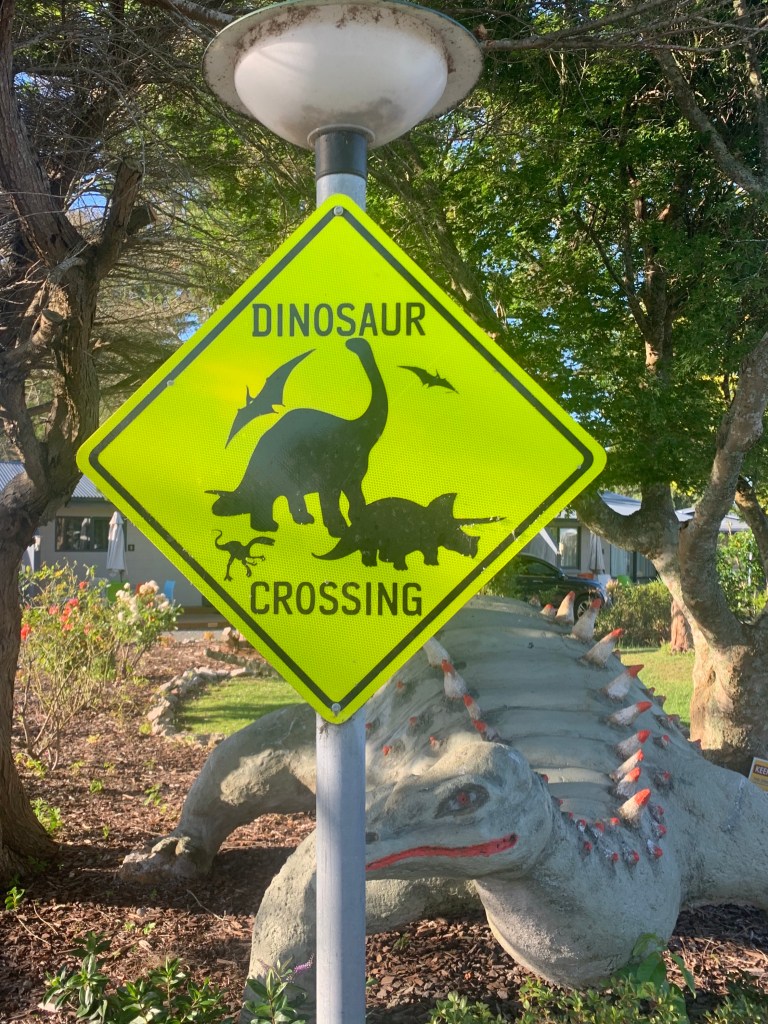
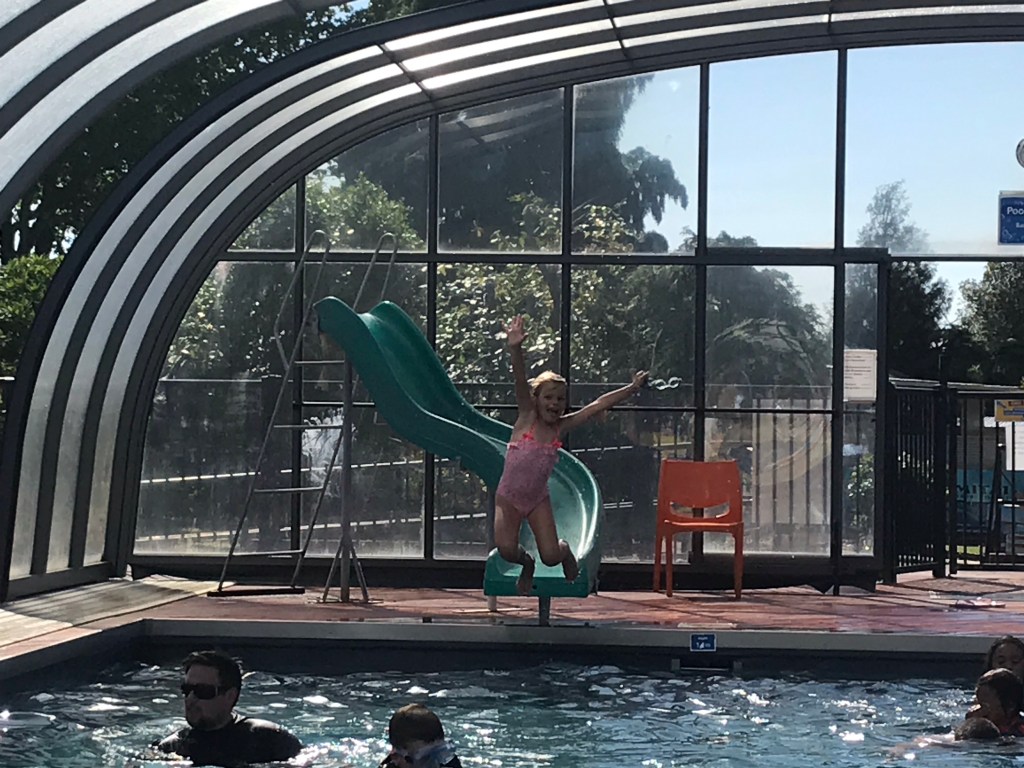
We had struggled to find places to stay as it was peak holiday season. In Taupo we booked into a slightly odd motel which was at least right on the lake. In Rotorua we fared better, staying at the fun All Seasons Holiday Park 8km out of the town. The girls enjoyed a dinosaur trail exploring the life-size models across the campsite and there was also a heated swimming pool and lots of playgrounds (including a bouncy castle where Molly lost yet another single flip flop…)

All Seasons Holiday Park, Rotorua.

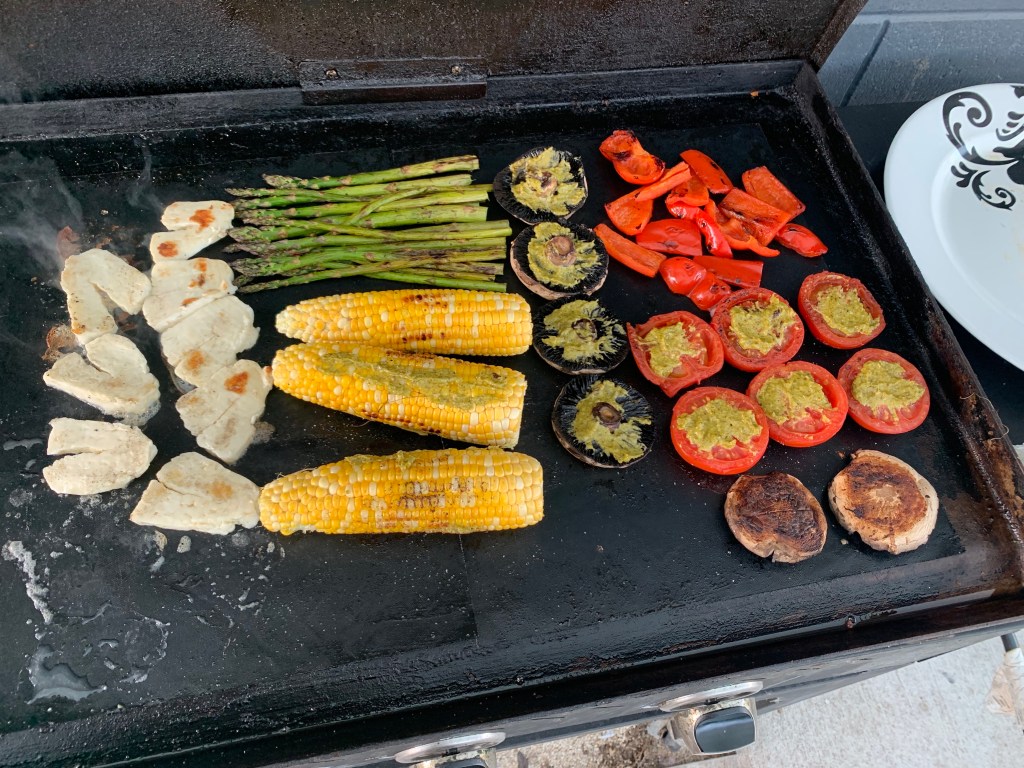
Tom cooked a memorable all-veggie bbq rounded off with some gluten-free Christmas pudding!

Putting our fellow campers to shame, veggie bbq (followed by Christmas pudding!)

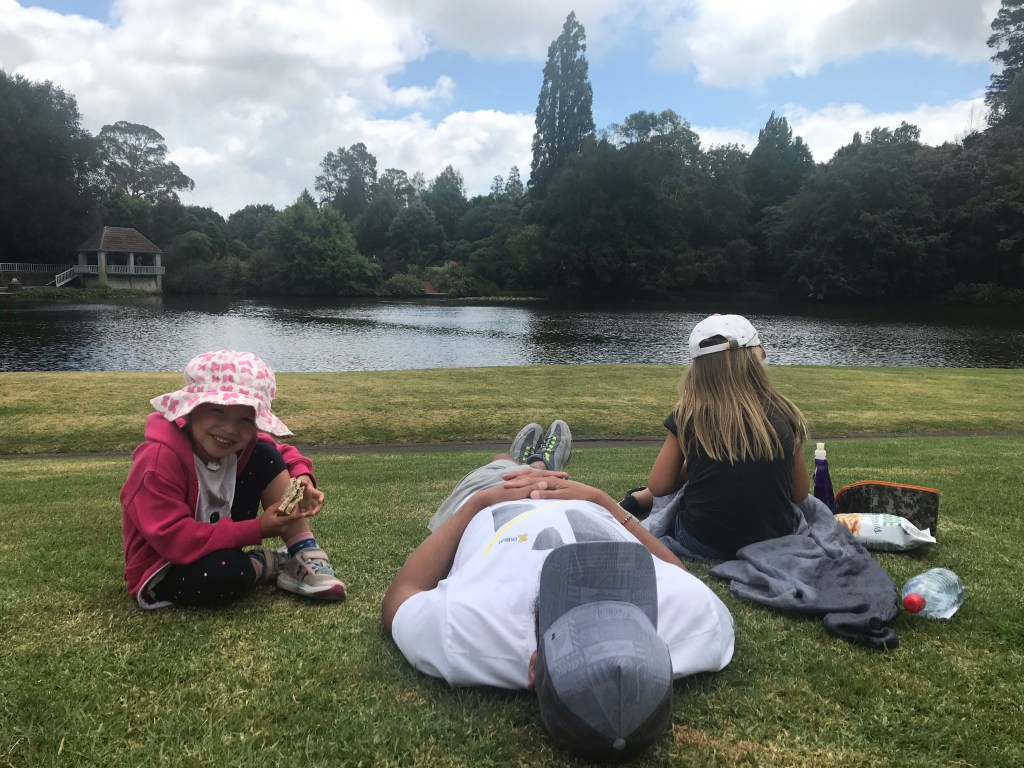
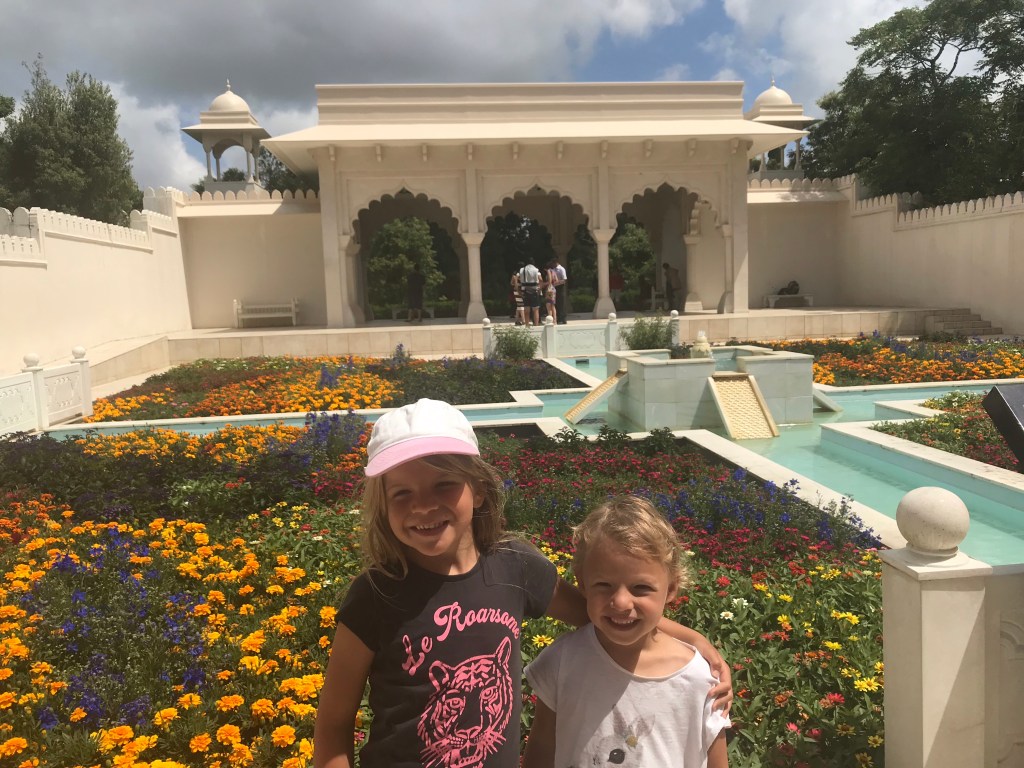
Driving north we stopped for lunch at Hamilton, enjoying a picnic beside Turtle lake. Tom had a snooze while us girls managed a horticultural world tour, exploring Chinese, Japanese, English, American, Italian and Indian gardens.

On the shores of Turtle Lake, Hamilton Gardens, Hamilton, Waikato.
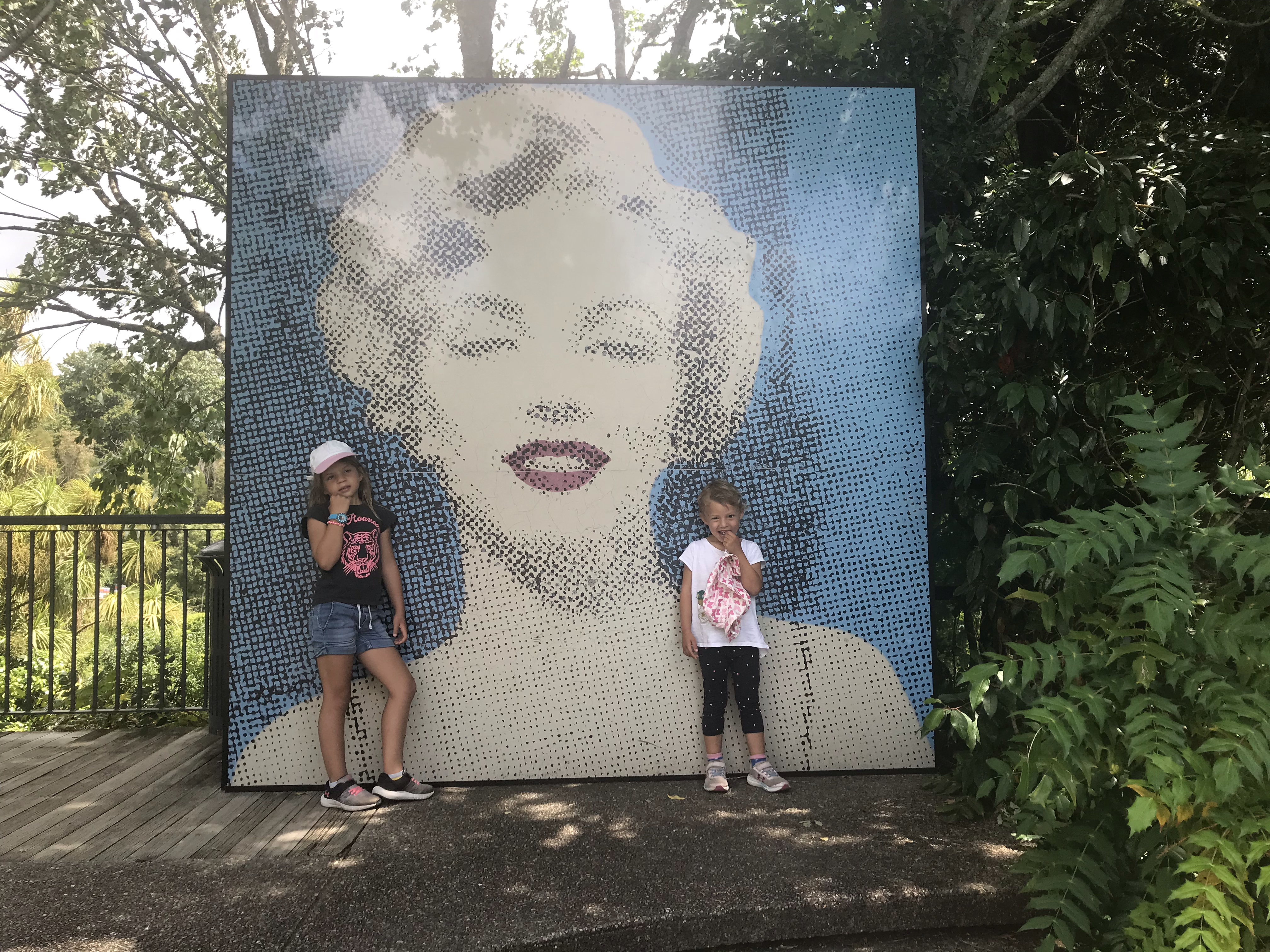
Modernist Garden, Hamilton Gardens.
Indian Char Bagh Garden, Hamilton Gardens.

From there it was only another hour or so to Auckland – it was time for us to find a place to celebrate New Year’s Eve.

Christmas week around the mount

It sounded a good idea to spend Christmas in the Bay of Plenty – MoJo certainly wanted to have plenty of presents and plenty of fun!

It was the part of New Zealand where we knew the most people. We had planned a few months earlier to spend Christmas with the Tickelpenny family. Shane, Corina, Boston and Nixon are friends from Dubai, who were traveling back home to New Zealand for the holidays.

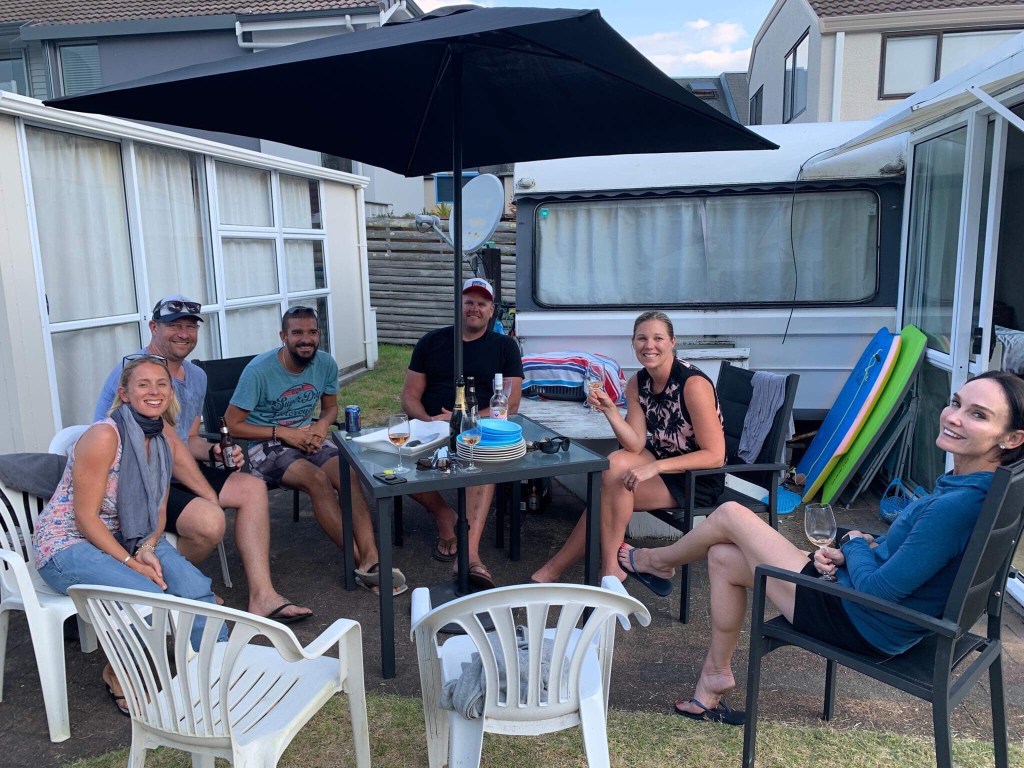
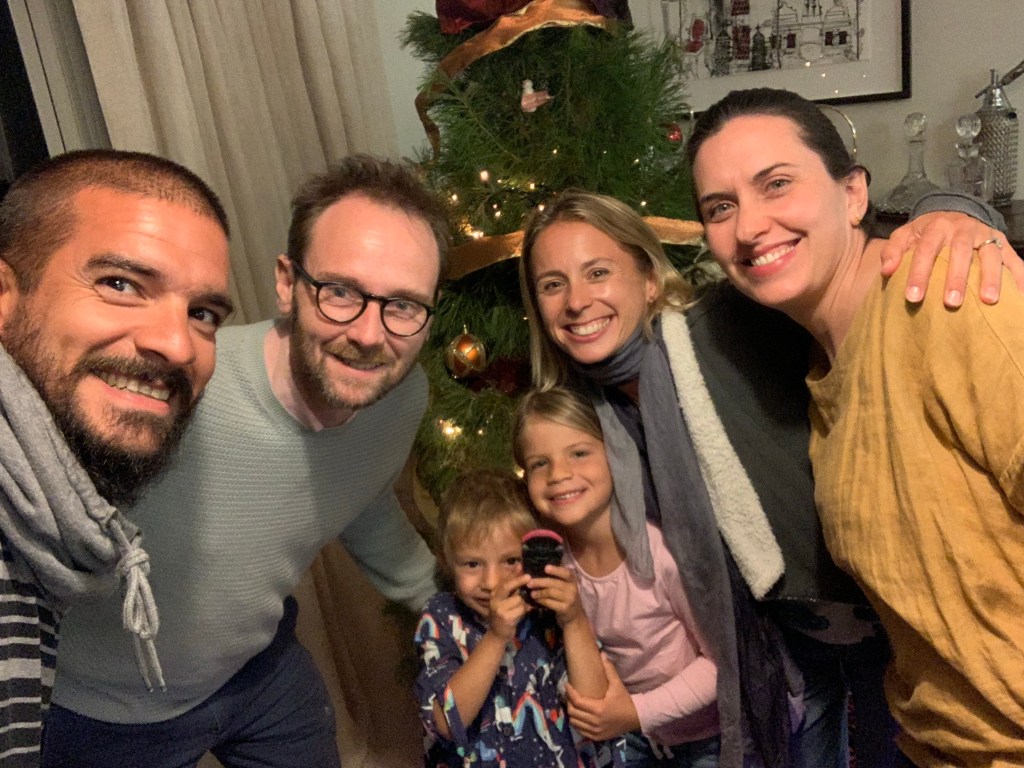
Reunited: with Shane, Corina and Nixon, Beaumont Apartments, Mount Maunganui, Bay of Plenty.

We were unsure exactly where they were going to be, Shane grew up in Hamilton and Corina in Te Aroha – in the end it was decided we would meet at the holiday resort of Mount Maunganui, where Shane’s sister and parents have fixed caravan holiday homes.

Christmas Eve dinner with the Tickelpenny family, Mount Maunganui.

We took two apartments in the spacious Beaumont complex, ours with a balcony on the first floor, Shane and Corina downstairs with a large garden and easy access to the swimming pool. We spent most time downstairs! As soon as we arrived the girls had a swim whilst the grown-ups cracked open some fizz and had a catch up. It was great to also see Michele who we had stayed with in Sanur, Bali who was back to visit her family down the coast in Whakatane (pronounced with an F which confused us for a while!!) and had driven up to see us – the only friend we saw in two different countries on our travels!

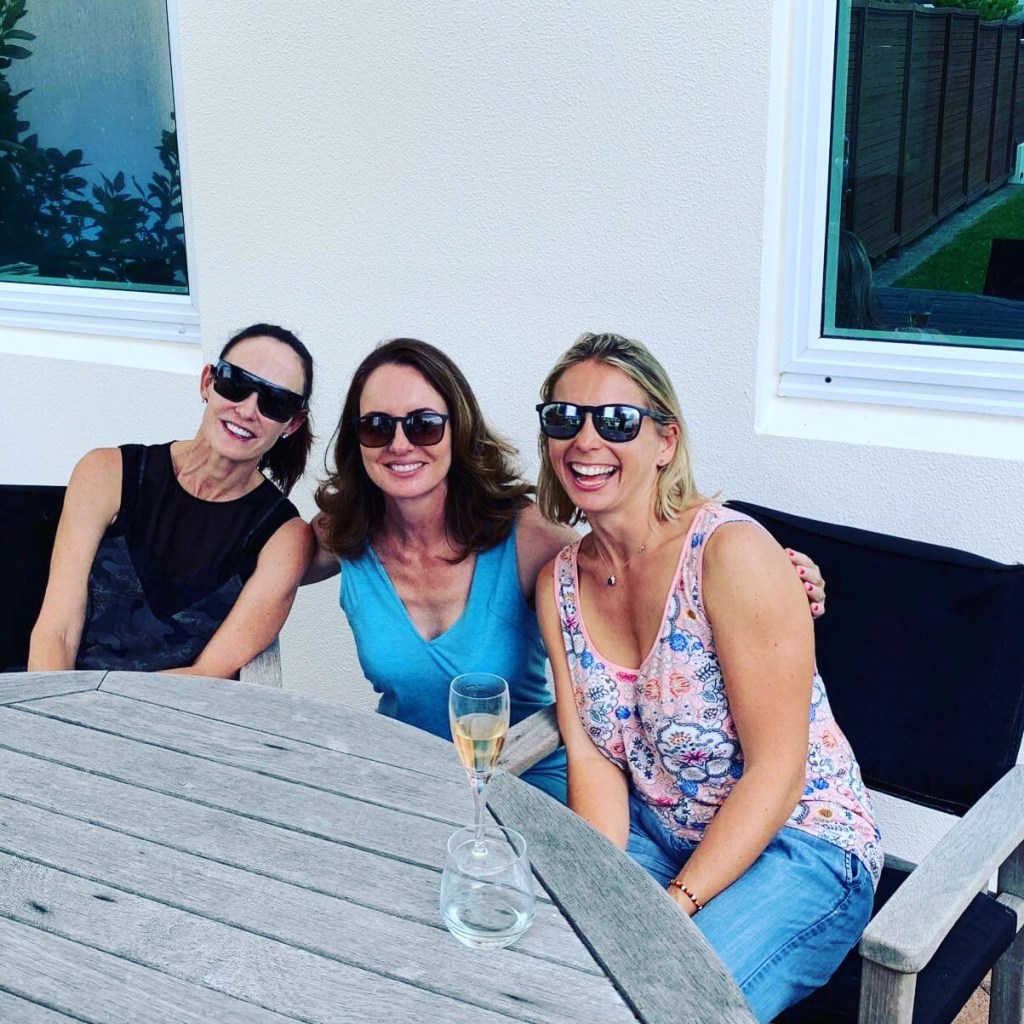
With Corina and Michele, Beaumont apartments, Mount Maunganui.

Shane’s parents Dennis and Pam hosted us all for Christmas Eve dinner, for a delicious meal of ham and pavlova.

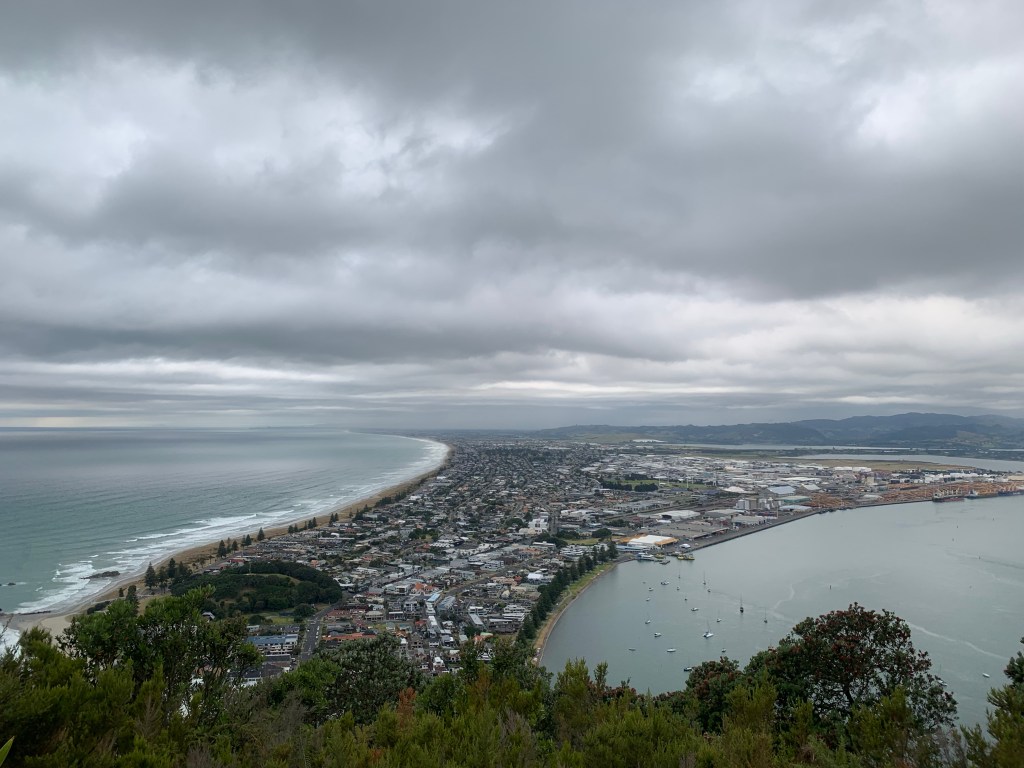
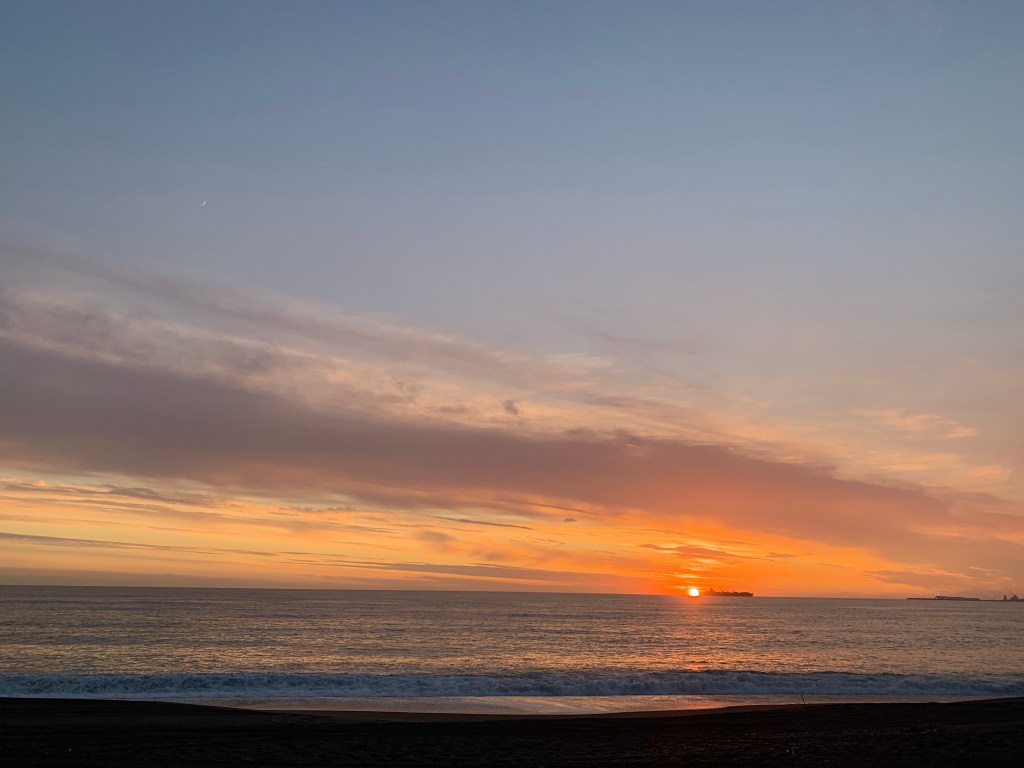
Christmas morning started earliest for me, waking before sunrise to run up to the summit of Mount Maunganui, an extinct volcano cone. The mount dominates the skyline of the peninsula, ‘maunganui’ translates as ‘big mountain’ – although at 232-m high it isn’t all that big. Its Māori name is ‘mauao’, meaning ‘caught by the dawn’ – so I was there at the right time.

Christmas morning, at the summit of Mauao, Mount Maunganui.

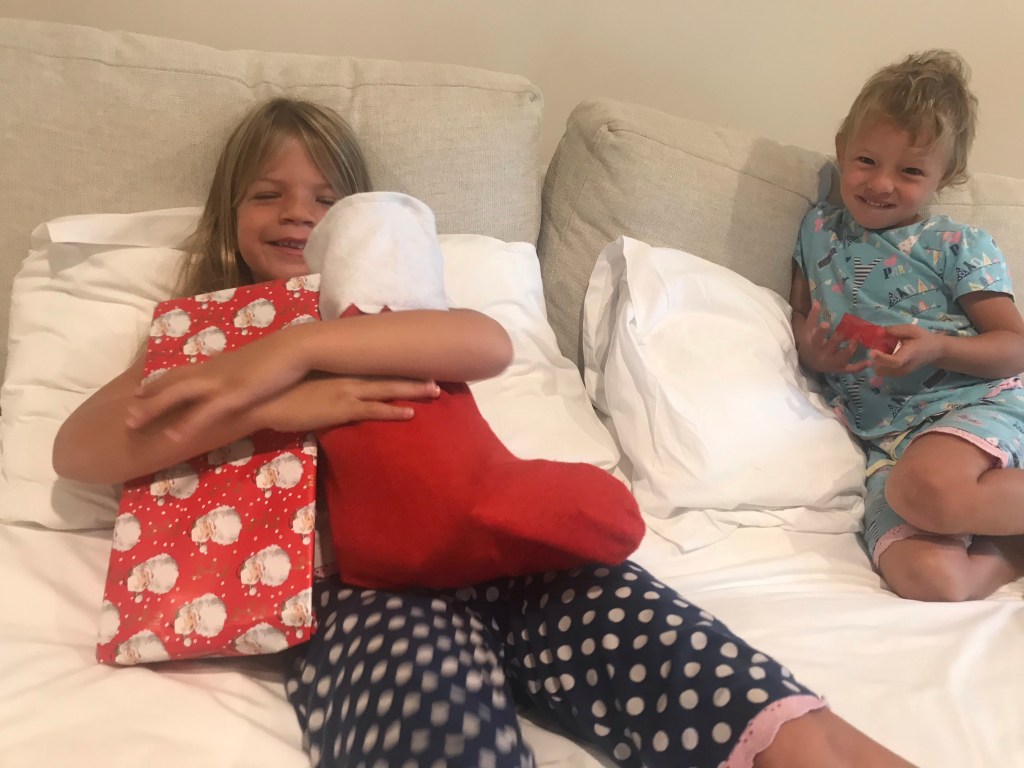
The girls were just waking when I got back, incredibly Father Christmas had found us!

MoJo with stockings, Mount Maunganui, 25 December 2019.

While Tom went for his run we skyped with Gaga and when he was back opened up our presents (favourites were probably Elsa and Anna dolls and a copy of the Hobbit). We had breakfast downstairs all together and then headed out for a walk. There are a few trails around and up the mount, of varying degrees of steepness so with littler legs we decided to walk around it rather than up to the top, all traveling at different speeds.

Christmas Day walk around Mount Mauao, Mount Maunganui.

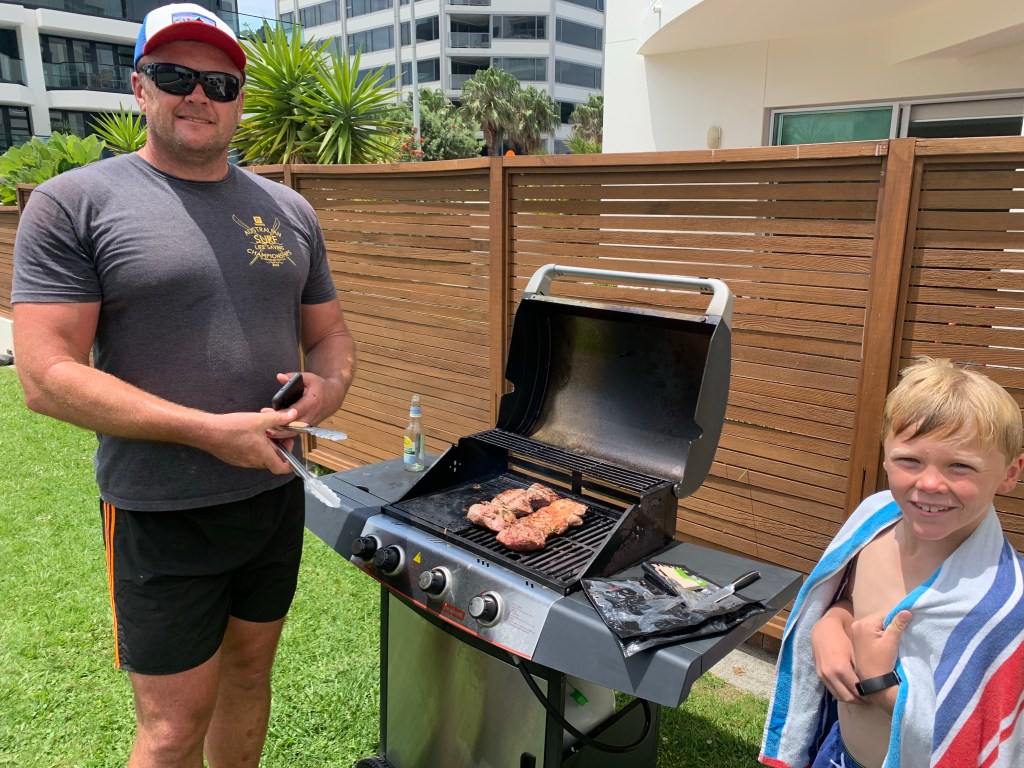
Lunch was turkey and all the trimmings, as well as New Zealand lamb done on a barbie of course!

Christmas the Kiwi way, Mount Maunganui.
Christmas lunch picnic with friends, Mount Maunganui.

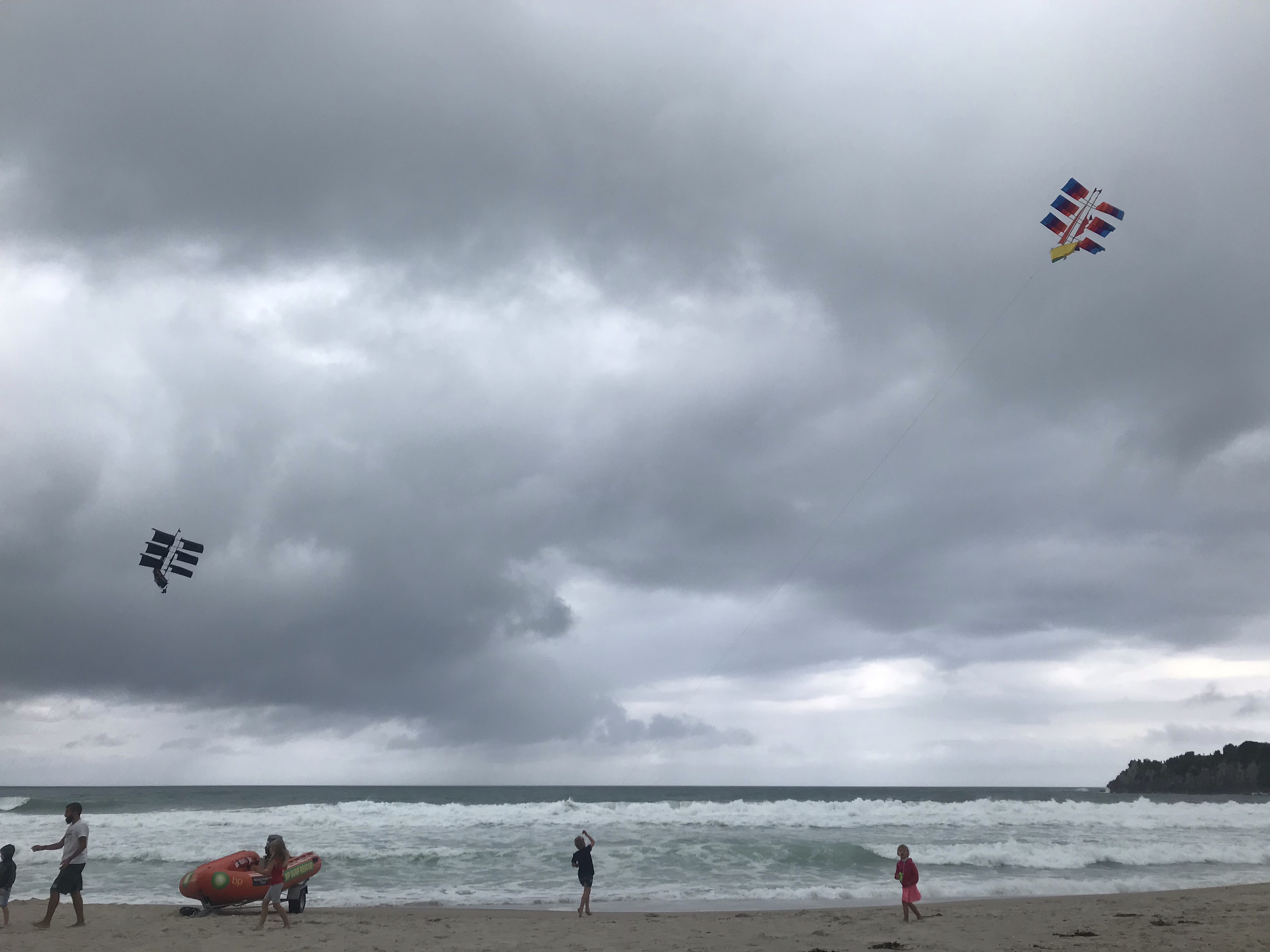
Our gifts to Boston and Nixon were kites in the shape of pirate ships purchased in Bali. After lunch we noticed that the wind had picked up, so we headed to the beach to try them out. We had been traveling with a brilliant pop-up kite from Gaga and had bought a rainbow sailing ship kite for the girls, so they came out too. We had underestimated the weather – after twenty minutes the rain was lashing down!

Kite flying on Maunganui beach, Mount Maunganui.

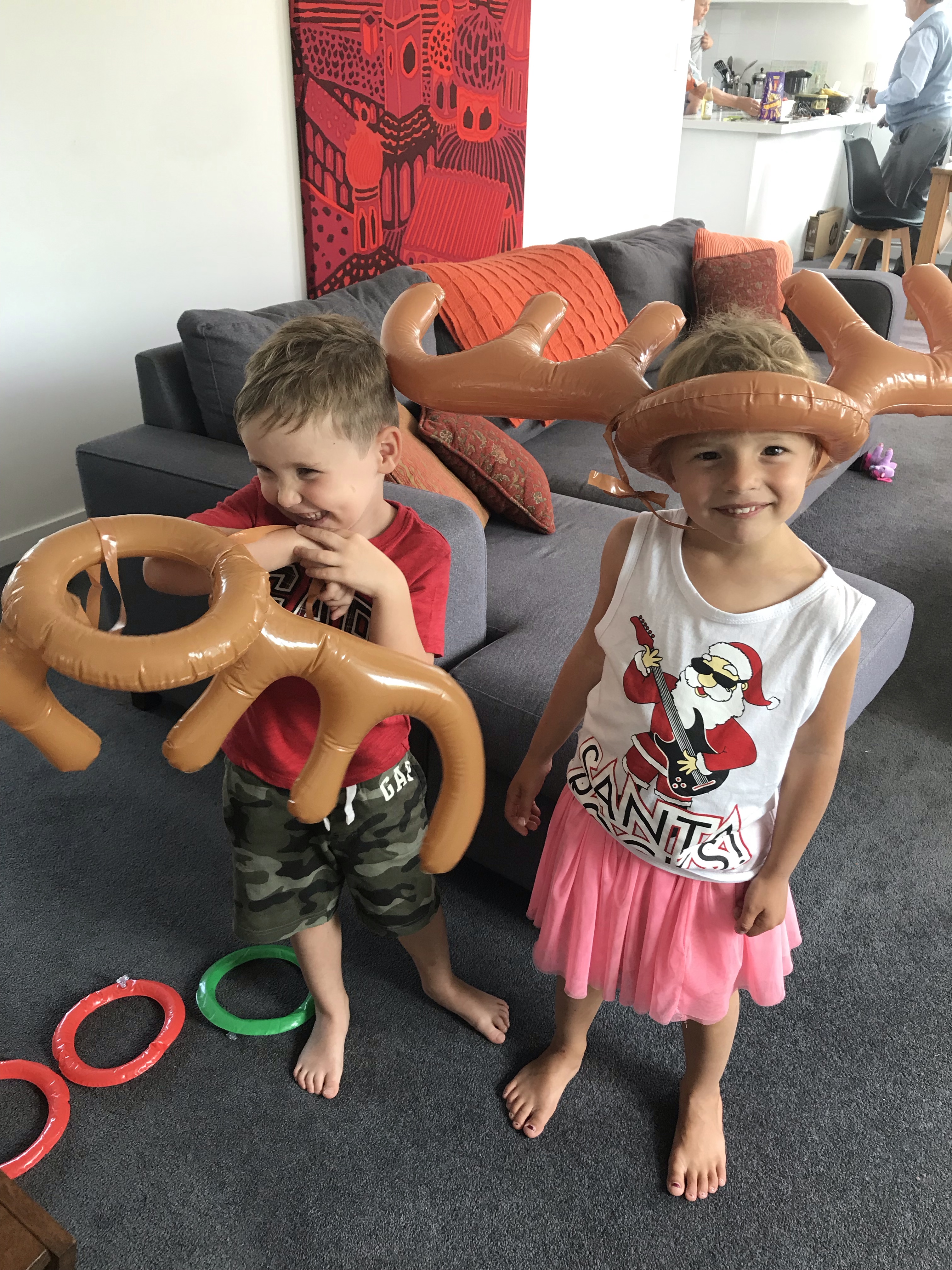
We raced back and it was time to play Secret Santa – us going home with some lotto tickets (fail), a scarf, Kiwi calendar and a puzzle of the world. Tom had tried to tempt the group with mince pies all day to no avail – he was more successful with the After Eight game, played with much hilarity by all generations!

After Eight game shenanigans, Christmas Day, Mount Maunganui.

Shane, Corina, Tom and I played another Secret Santa game late into the night – a perfect match – great fun. Kids had loved some festive dress up during the day.

When its hot on Christmas: wardrobe malfunctions?!

Boxing Day morning was a bit of a shock, we had to check out by 10. We had however had a call from other Dubai friends of ours, so immediately drove to meet them. Kelvin, Katrina and their two boys Dylan and Ashton moved back to Tauranga a couple of years ago. Kelvin has a motor boat so picked us up next to the mount and whizzed us across Pilot Bay to a beach on Matakana Island where the rest of their family were spending a few hours.

Cookie ride from Matakana Island, Tauranga.

Molly loving going out on a fast donut (they called it a ‘cookie’) ride off the back of the boat. Tom had a swim, the rest of us a bit chicken as the water was cold….

Clear waters, Tauranga bay, North Island, New Zealand.

We went back to Katrina’s mum’s house in Tauranga for lunch, a beautiful property known as a pole house, spread over several floors with harbour views, a pool and a lift! We travelled back there the following Saturday for a joint 40th and 70th party for Katrina and her mum, Dallas.

With Katrina, Aston and Kelvin, Tauranga with Mount Maunganui in the background.

On the way to the party we drove down to Whakatane to catch up with our first dragon boat captain Ben Hughes and his wife Elena and daughter Natalie.

With Ben, Natalie and Elena, Whakatane, Bay of Plenty.

They had been living in California for a few years but had just moved back to New Zealand, Ben works for Zespri Kiwi fruit. It was wonderful to see them and meet Ben’s parents. Natalie and Molly were born a few days apart and played together as babies, so it was lovely for them to meet again.

Fun and games with Natalie, Whakatane.

It rounded off a memorable festive week, full of friends, games and discovering a beautiful part of the world.

Art Deco capital: Napier

It was time to hit the road again. For our final two weeks in New Zealand we had decided to hire a car. Tom started off 22 December 2019 with his now routine run to collect the car, we pack up and check out. We are amazed at how quickly we leave Wellington and are soon on quiet roads winding through the countryside. As the scenery grows more and more dramatic, we make a stop at Remutaka Hill, a lookout point.

Remutaka Crossing memorial, Remutaka Hill, Upper Hutt, North Island.

We decide to break up the drive to Napier by stopping at Pūkaha (translated as ‘windy mountain’), National Wildlife Centre, the Mount Bruce bird sanctuary for lunch and an explore.

MoJo dwarfed by the tree canopy, Pūkaha National Wildlife Centre, Mount Bruce.

We visited a series of aviaries set in a rainforest reserve, spotting the indigenous birds Kaka (bush parrot), Tui, Weta, Pukeko, Kokako, Whio, Pateke, Shore Plover – trying to identify the bird sounds we have been hearing each day. A highlight for Tom was putting on some waders and entering the water to feed longfin eels. Luckily he didn’t have to feed them the enormous rat, only mice and leftovers!

Longfin eels feeding time, Pūkaha National Wildlife Centre, Mount Bruce.
A good look!

We were a little disappointed that the only Kiwi on view was white and quite hard to spot in its indoor enclosure. We are still unsure if the white blob was really what we were meant to be looking at!

Kiwi spotting, Pūkaha National Wildlife Centre, Mount Bruce.

Much of the city of Napier was destroyed by a major earthquake in 1931, after which its central streets were rebuilt in the 1930s signature Art Deco style. They have been well maintained, the buildings a delight. We had chosen to stay in Napier rather than neighbouring Hawkes Bay, which is a famed wine region but would have been a longer drive.

We were lucky enough to get a great view of the low rise Art Deco style buildings from a roof terrace our first evening, hosted by our friends Katy and Bob who were staying in an Air bnb apartment with their two children, Wilfred and Isla. We know them from Dubai – but they now live in Brazil – due to the wonders of social media we had worked out we were both in New Zealand over the Christmas holidays but were travelling in different directions, this was the only place we would overlap! It was great having a catch up over BBQ sausages and wine. They even had a Christmas tree!

With Bob and Katie, Napier, 22 December, 2019.

We were staying far out of the city centre on the coast, at the Kiwi Holiday Park in Bay View, our cabin was basic but had sea views and triple bunk beds but no one ventured to the very top!

The next morning Tom and I both managed half marathon runs around the nearby airfield and through a bird sanctuary.
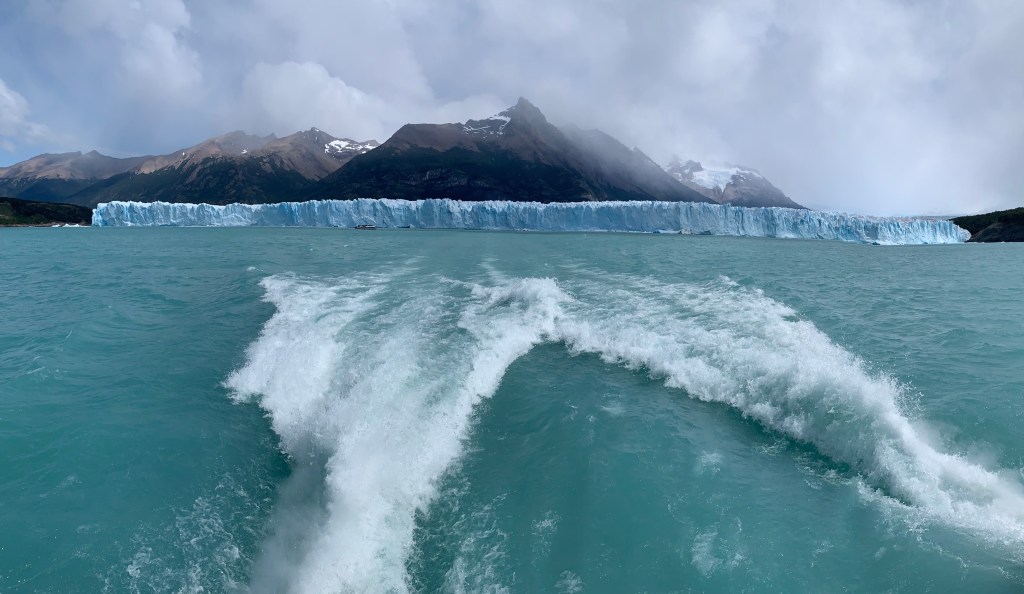
Westshore Beach Reserve, behind Hawkes Bay Airport, Napier and right, MoJo happy to find a Nutcracker, Tennyson Street, Napier.
Westshore Wildlife Reserve, near Napier.

For lunch we drove to perfume point playground, grabbing some takeaway from Miss Browns. The afternoon was spent secret Santa shopping in town and visiting Napier Museum. Waking up the next morning, it was already Christmas Eve!

Windy Welly!

Nothing had prepared us for the crazy wind when we landed in Wellington! Before we stepped outside the airport, we were greeted by incredible giant installations from Peter Jackson’s Wētā Workshop.

Wētā Workshop sculptures, Wellington Airport, greeting us on arrival, 19 December 2019.

It wasn’t far from the airport to our hotel, the Rydges Plaza. We took a green taxi, the drive taking us along the harbour front, so we were immediately able to admire the dramatic coastline and several kinetic and light sculptures on the shore. The wind was so extreme that we didn’t even venture outside our hotel for dinner on our first night. Luckily there was a great steak restaurant in our hotel (Portlander) from which we could see people struggling to move along the pavement in a straight line!

The next morning was slightly calmer, so we took a walk along the waterfront promenade and truly began to appreciate the understated capital of New Zealand.

Solace in the Wind (the Naked Man), Max Patte (who worked for Wētā studios), 2008, Wellington.

The many restored warehouses had all sorts of things happening inside, from rock climbing to microbreweries. We enjoyed some pop up arts and crafts stalls and spotting some urban knitting projects!

Lambton Harbour, Wellington Waterfront Walk.

The girls had fun at Frank Kitts Park with its helter-skelter. We were amused to have lunch at one of many Mojo cafes in the city.
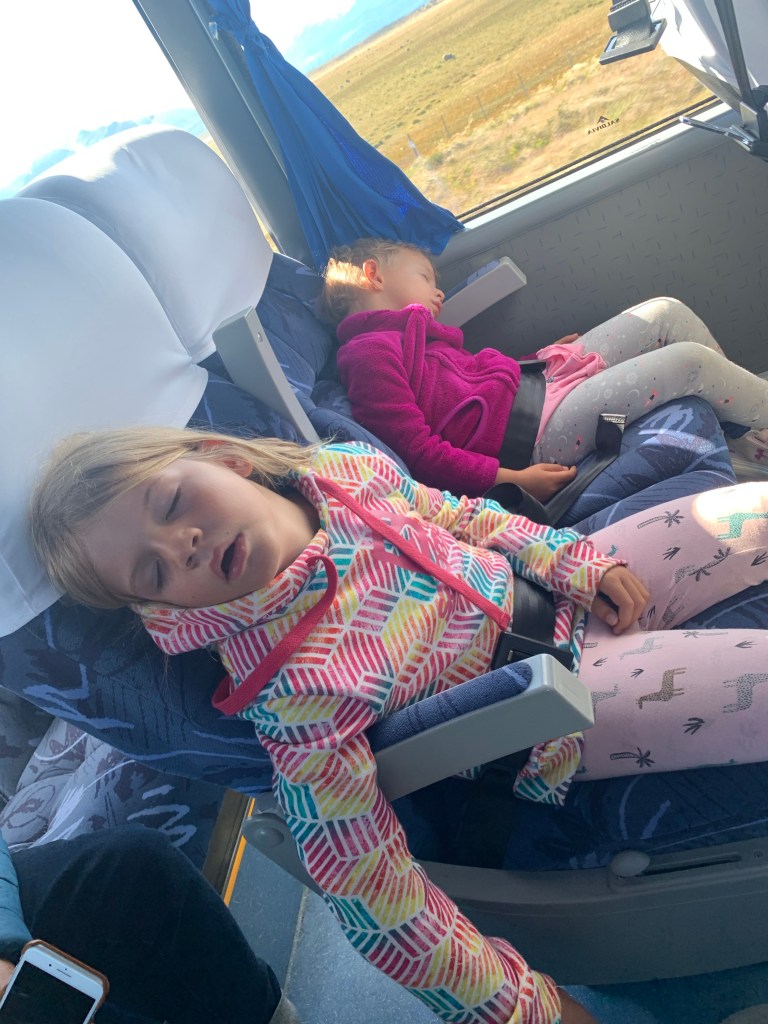
The whole afternoon was spent at the Museum of New Zealand, Te Papa Tongarewa (translates as ‘container of treasures’) – a vast museum spread across a five-storey building. The first floor focused on the land, with details about animals, volcanoes and an earthquake re-enactment room.
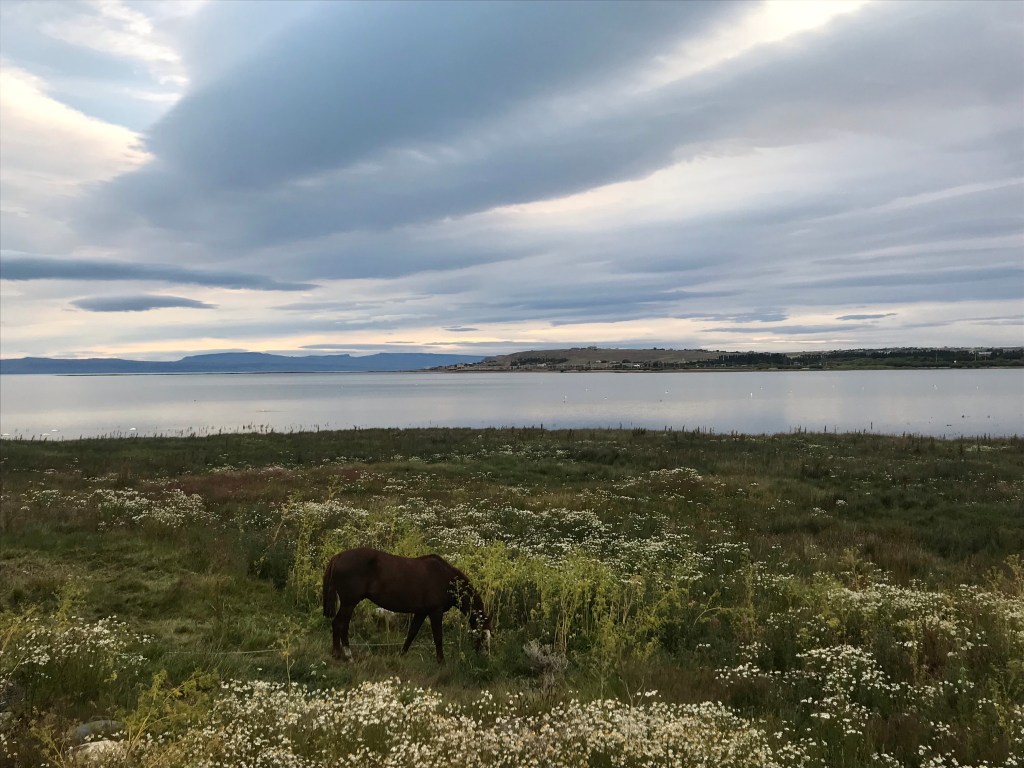
Next was a rather harrowing exhibition ‘Gallipoli: The scale of our war’, developed with Wētā Workshop, with larger-than-life replicas of eight New Zealanders who were involved in the conflict, including soldiers and nurses.

Wētā Workshop installation as part of ‘Gallipoli: The scale of our war’, Museum of New Zealand, Te Papa Tongarewa, Wellington.

The top floor of the museum had a focus on contemporary art, with wonderful works by Tiffany Singh, Reuben Paterson and Len Lye.

Finale” Bouquet, Nike Savvas, 2019, Museum of New Zealand, Te Papa Tongarewa, Wellington.
Top16, Janet Lilo, 2018, Museum of New Zealand, Te Papa Tongarewa, Wellington.

As we left, we realised the rain had started – so we raced to Cuba Street for a Japanese meal. As we walked back to our hotel we noticed that everywhere was very busy – it was the last Friday evening before Christmas so lots of people were out celebrating. We make do with a hot chocolate and bath before bed.

I started 21 December with a strenuous morning run up to the stunning Mount Victoria lookout (Tom had made it out the day before).

Mount Victoria Lookout, Hataitai, Wellington.

Later that morning we had a lovely meet up with friends Alexi, Kayvan, Papili and Cyrus, a family we know from Dubai at the Rose café at the Botanic Gardens, feeding ducks and having a dance.

With Alexi, Kayvan, Papile and Ctus (in the background), Botanic Gardens, Wellington.

We had walked up the hill so decided to take the famous cable car down to Lambton Quay, first having a look around the cable car museum where the girls had fun trying on clothes (it opened in 1902), having a look at two of the original cars and understanding the way it works.

Cable Car Museum, Kelburn, Wellington.

After a delicious lunch with a view at Kelburn and an explore of a slightly bizarre perfume exhibit, we made our way down, the girls enjoying the lights.

Wellington Cable Car, Kelburn to Lambton Quay, Wellington Central.

After an afternoon shopping for Christmas presents, we enjoyed some warmer weather with a sundowner at a microbrewery and a final burger dinner at Foxglove on the quay. We realised the date was 21 December, the longest day of the year in the Southern Hemisphere!