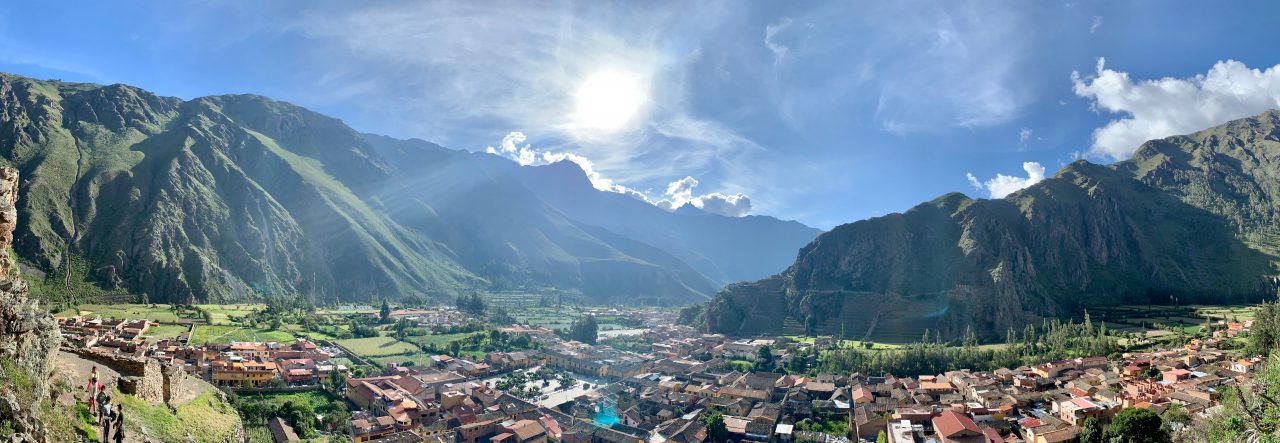
It’s hard to describe how altitude sickness makes you feel. A bit dizzy, a bit sick, very out of breath and a bit sleepy. I didn’t think we would suffer from it too badly – the girls thankfully didn’t seem to at all, I think it affected Tom the most. Sporadically chewing on some coco leaves seemed to sort us out.

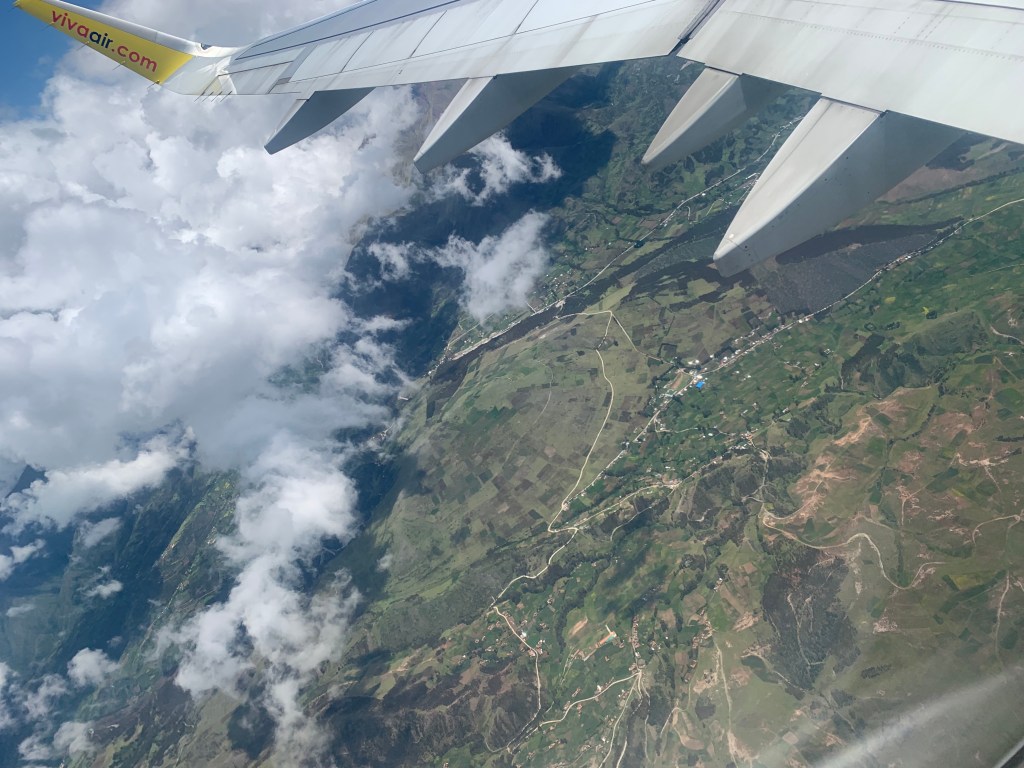
Our time in the sacred valley was the one point on Egerton World Tour where we failed to run everywhere that we slept. We had been doing well keeping that challenge up but just didn’t have the energy to do it here. I was personally also nervous about being chased by dogs which seemed to be everywhere. We flew from coastal Lima to Cusco, the landing rather bumpy but scenic, through mountains.
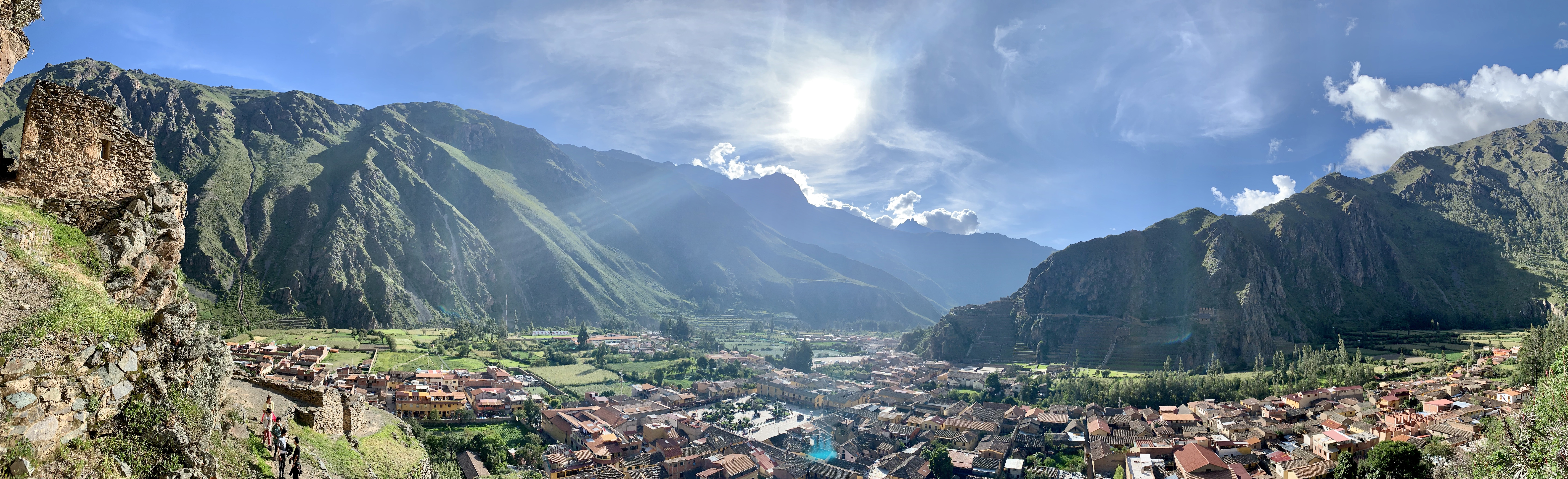
We felt the altitude immediately; the city is 3,400 metres high. We were not going to stay in Cusco right away, but instead travel to the town of Ollantaytambo for two nights. It has a slightly lower altitude of 2,792 metres and is located 72 km to the northwest of Cusco in the Sacred Valley, on the Inca Trail. Our decision to stay there for two nights was due to two major factors: to acclimatise and also for ease of taking a day trip to Machu Picchu. To stay in Aguas Calientes (the base for Machu Picchu) is expensive.
During the rainy season trains do not travel from Cusco to Aguas Calientes, the track prone to flooding, so they only start at Ollantaytambo. To stay there meant we avoided a bus journey and were halfway. It was a good decision: we hadn’t expected much out of Ollantaytambo as a destination in its own right, but really loved our time there.
We made our journey from Cusco airport to Ollantaytambo via Uber, although our Brazilian driver Juan convinced us to cancel the booking and pay him cash – I’m sure we lost out in the long run, but he was friendly enough and played lively local music. After dramatic views climbing out of Cusco, we all had a sleep. He took us a long route via Chinchero where a market was in full-swing, and close to the sites of Maras (known for its salt mines) and Urubamba.
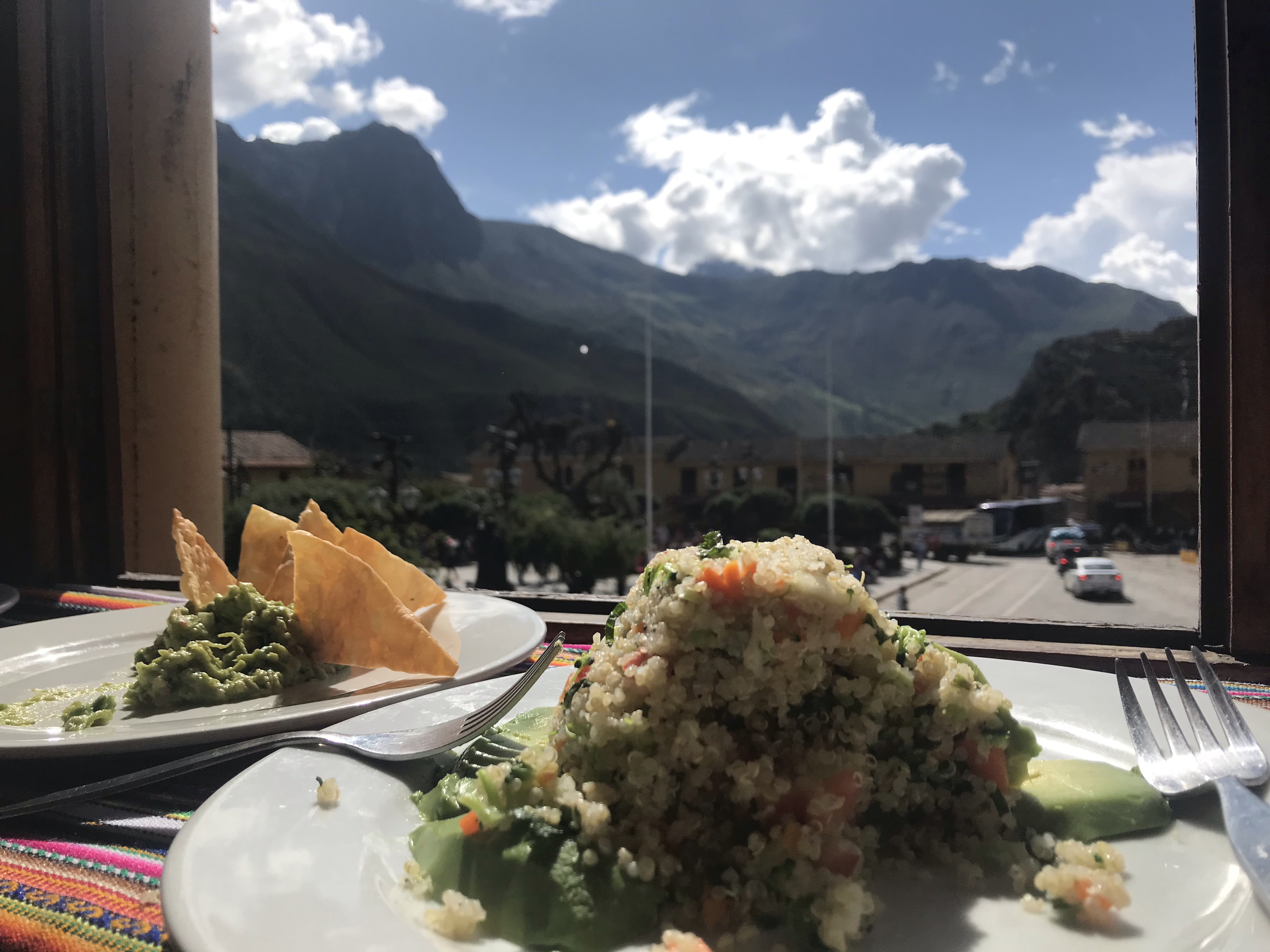
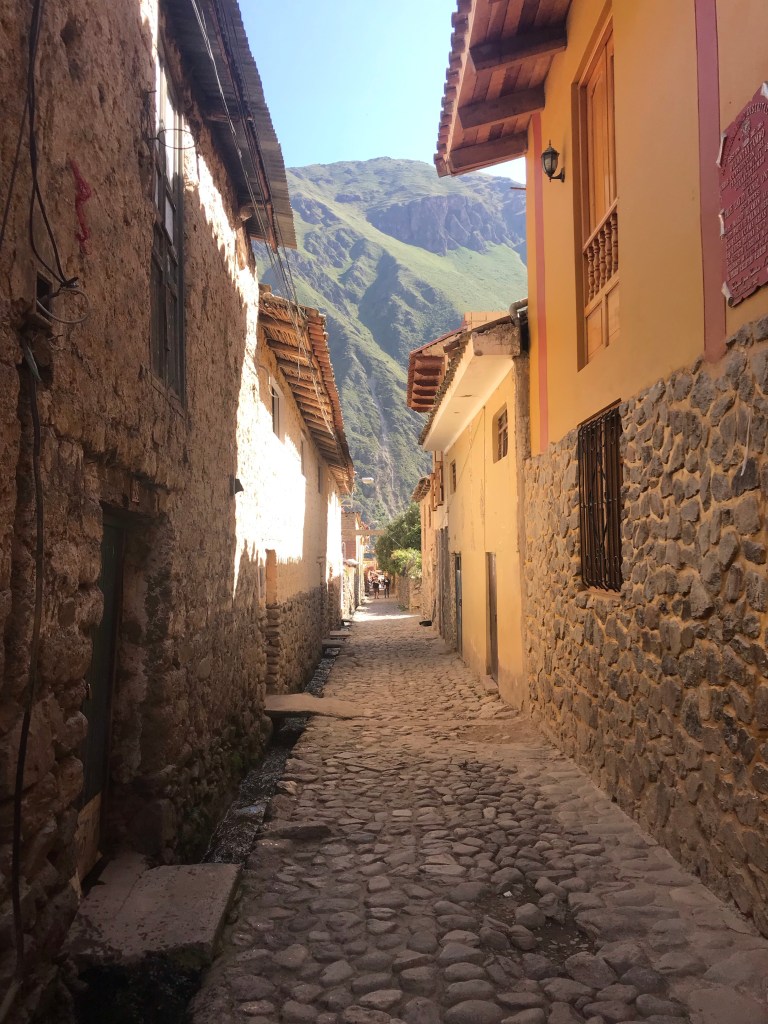
When we eventually arrived in Ollantaytambo’s quaint cobbled town square it was starting to rain so to build up our strength for a walk up a pedestrian-only lane to our accommodation, we had a quick lunch on a balcony overlooking the square, which included a delicious quinoa salad and our new favourite beverage Chicha Morada (have I mentioned how much we love Peruvian cuisine?!)
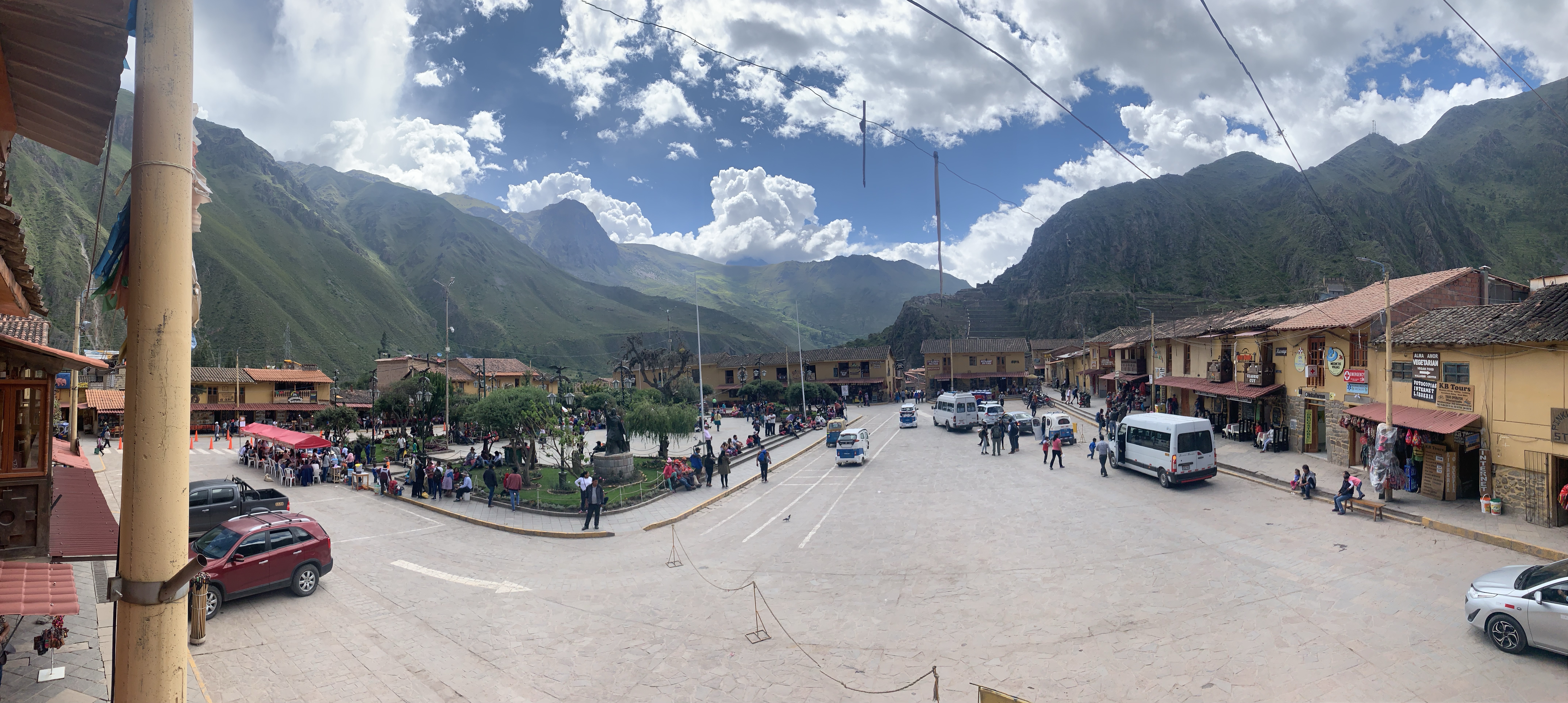
We end up having a meal in outlets on each side of the square during our time in Ollantaytambo. It was the heart of the community with ladies in traditional dress always sitting in its central plaza.
We were staying in the lovely Apu Lodge in a quiet spot right under the steeped terrace valley. We were the only guests, being there off season.
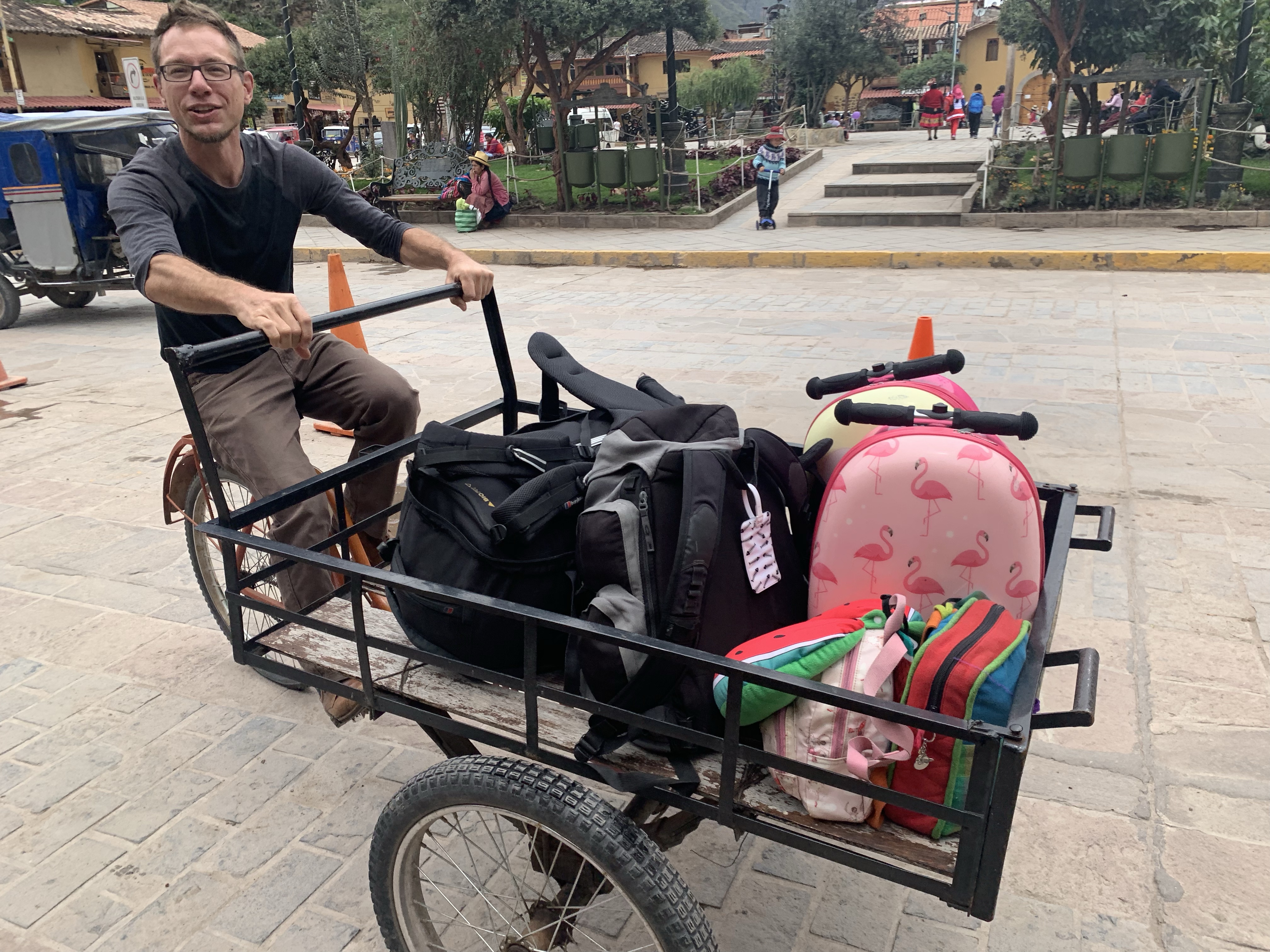
We appreciated the hammocks in the garden and the hospitality of Americans Kieran and Rebekah who were working there. On our departure, Kieran rode down to the square over the cobbles with our luggage in a trailer on the back of a bike. Tom enjoyed taking it for a spin too.
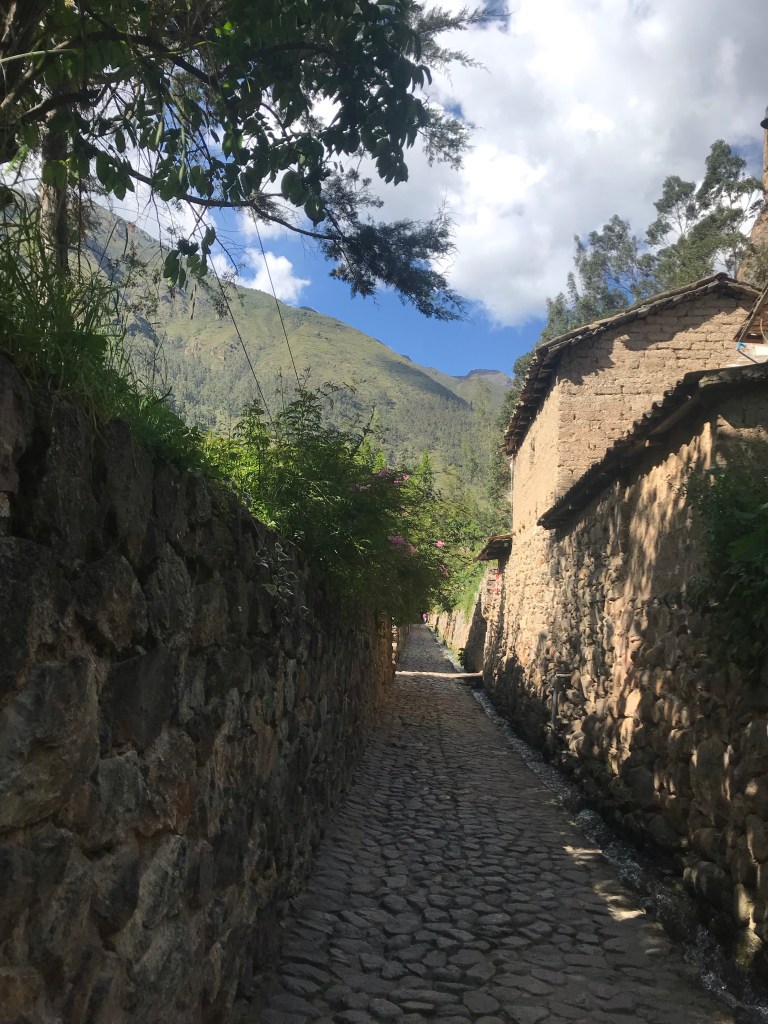
Much of the buildings in the town date from the late 15th century, some are the oldest continuously occupied dwellings in South America. Despite the cobbles, it was a very walkable place.
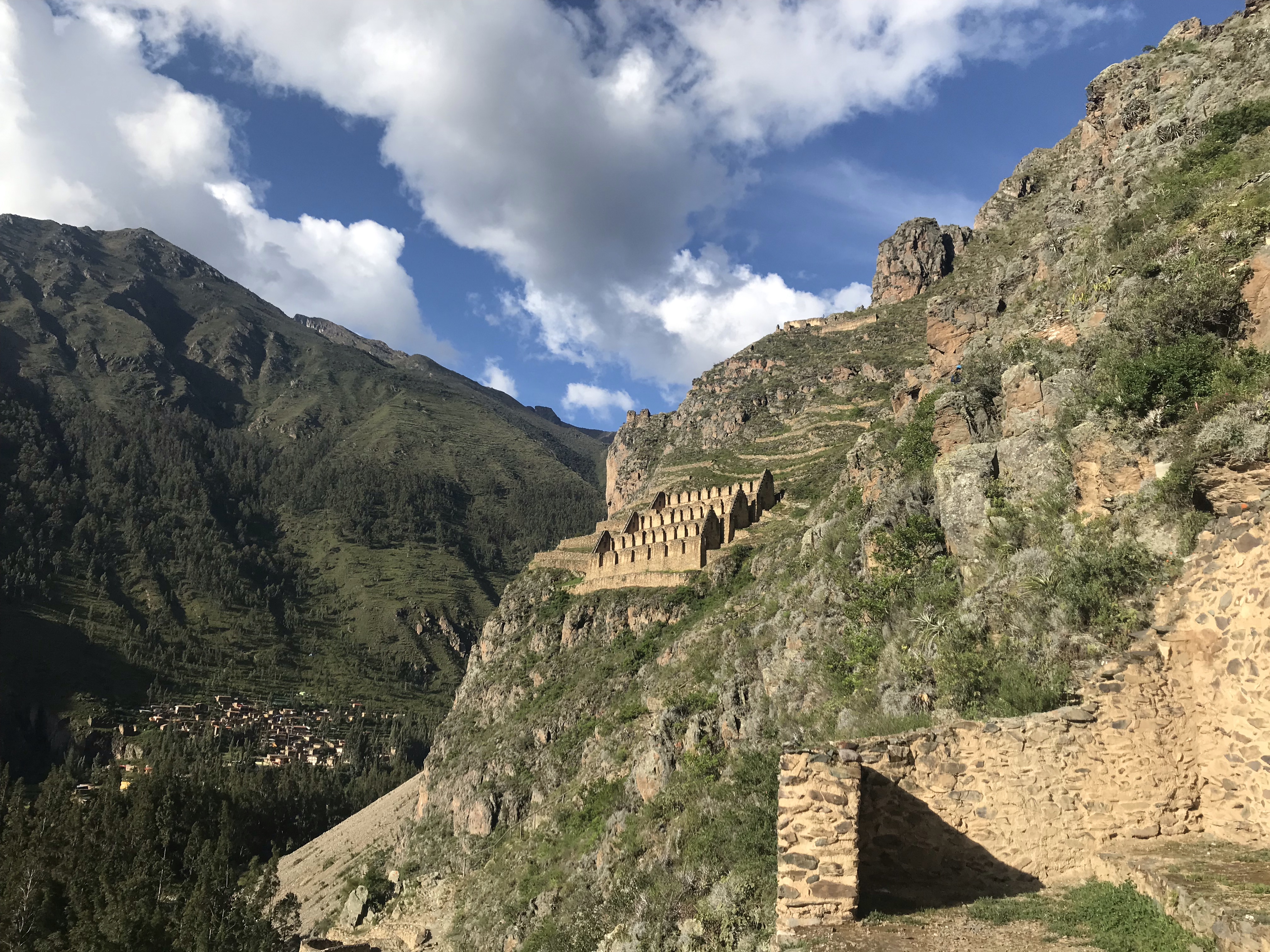
Just a few minutes from Apu Lodge were the Pinkuyluna ruins, which we just had time to explore on our first afternoon before they closed at 4.30pm.
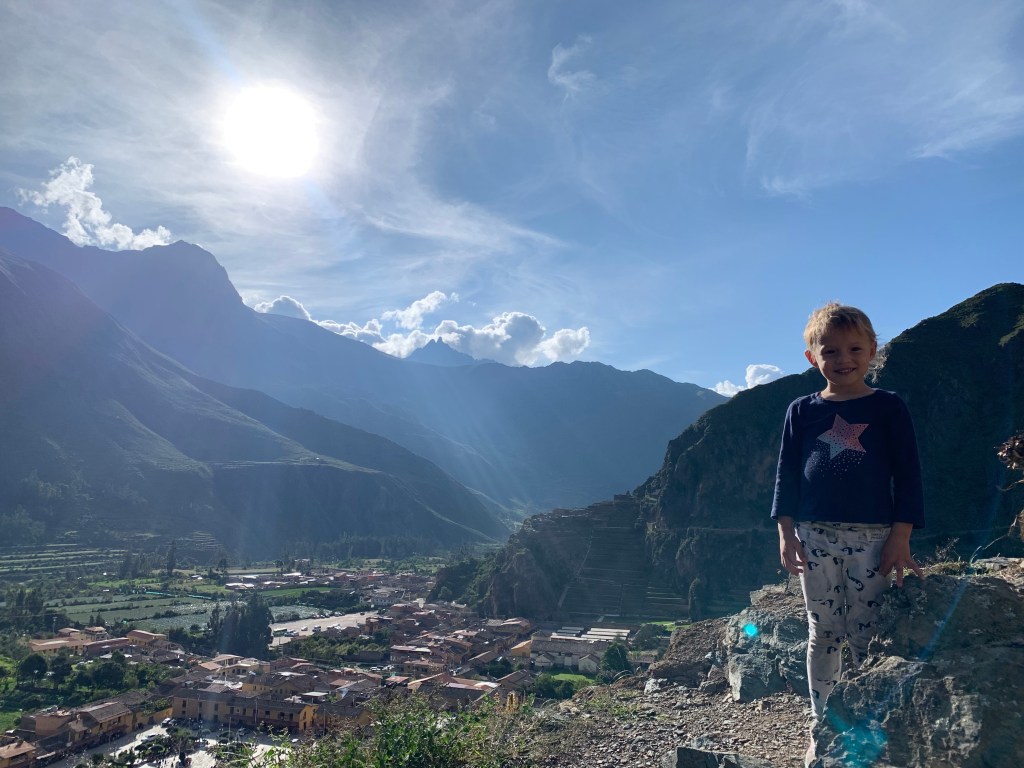
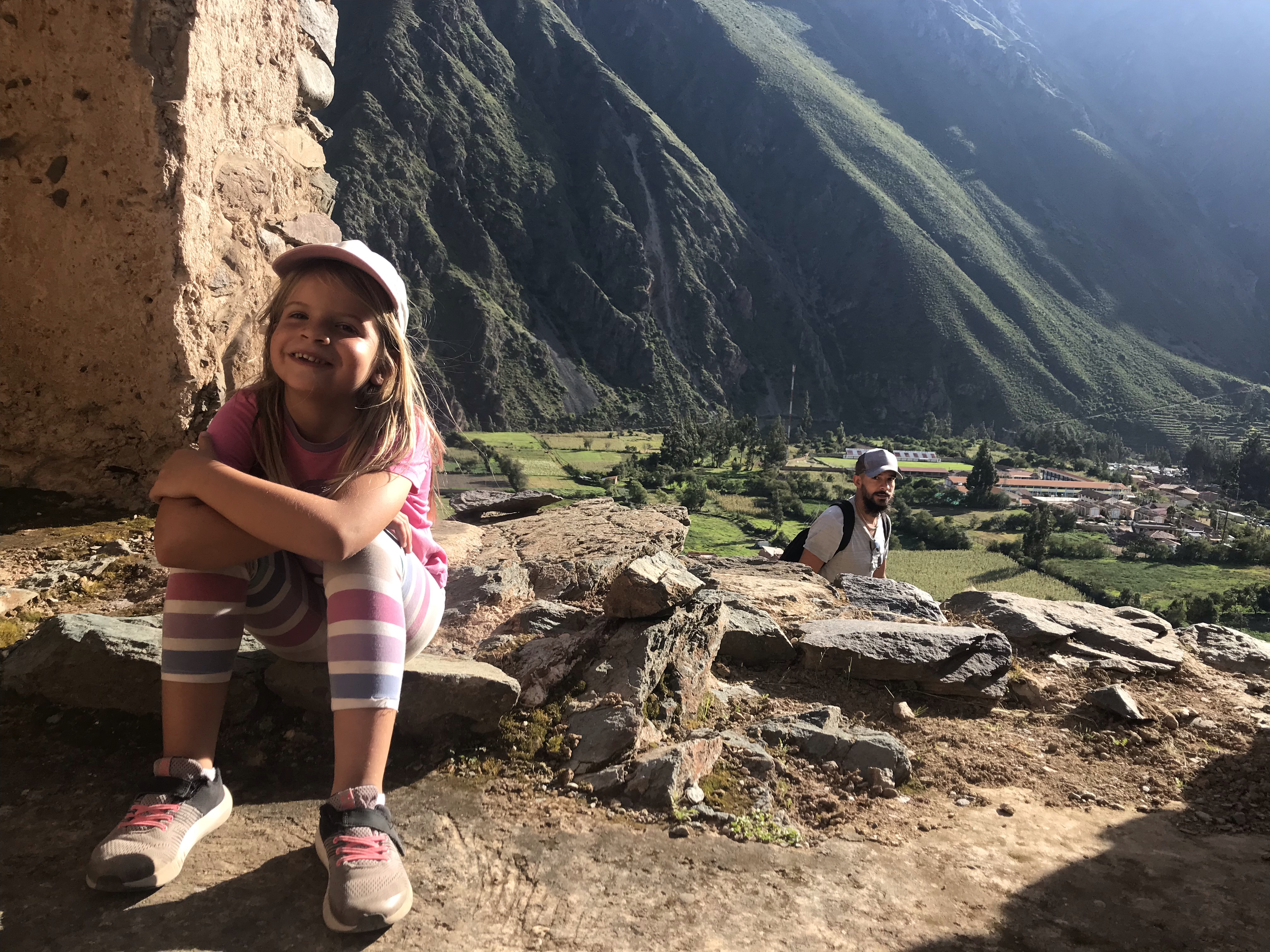
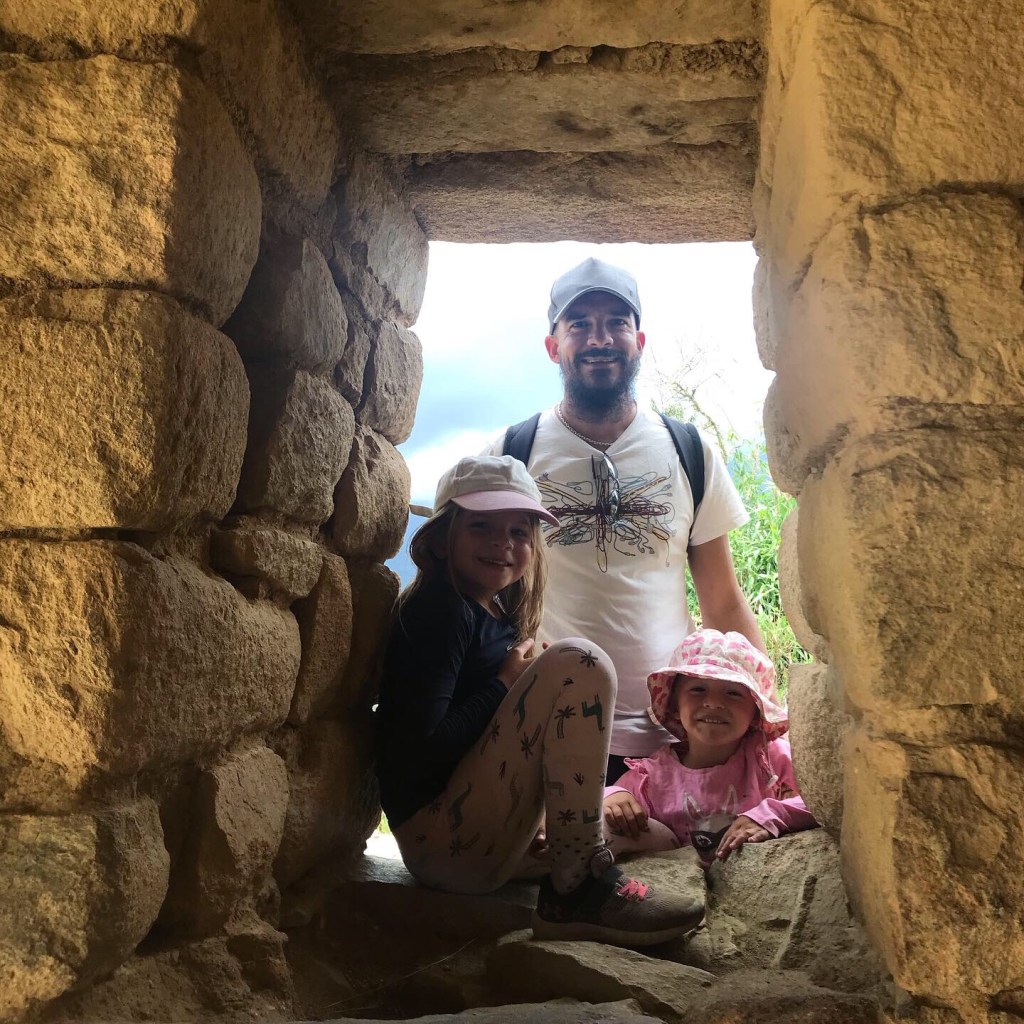
It was a bit of a scary walk along steep precipices, with great views and ruins to explore. It was hot though, and we were soon out of breath.
When it closed, we walked across to the part of town alongside the river lined with market vendors, choosing to have sunset drinks on the roof terrace of Inka’s Tower, with its ceiling decorated by flags. We found some gluten-free pizza at El Trigoto on the square that night, but our best dinner was at Chuncho on the opposite side.
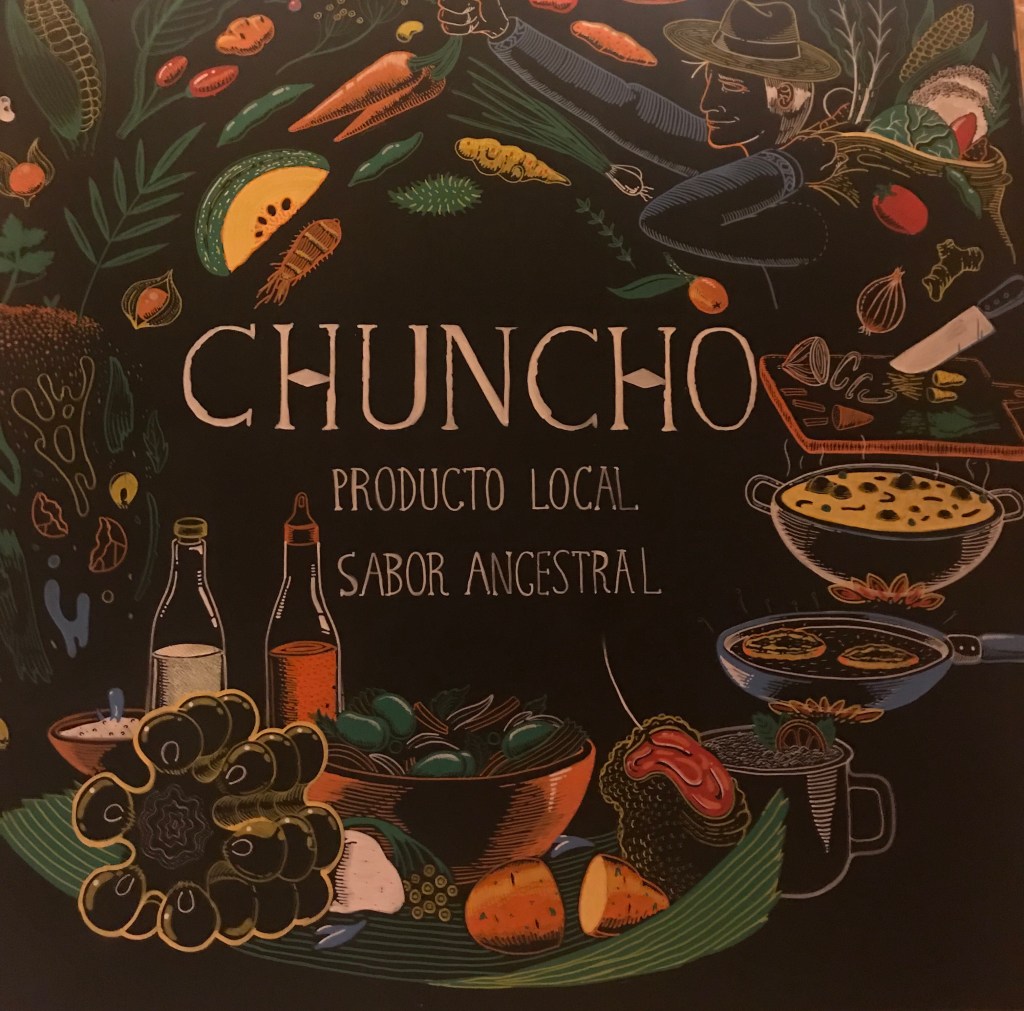
This was a restaurant and bar of a totally different ilk. Chuncho can be translated as ‘native’ or ‘wild’ from the local Quechua language. It had cottoned onto the Peruvian food revolution, even perhaps slightly responsible for it, its unique dishes based on flavours, ingredients and traditions of the Sacred Valley.
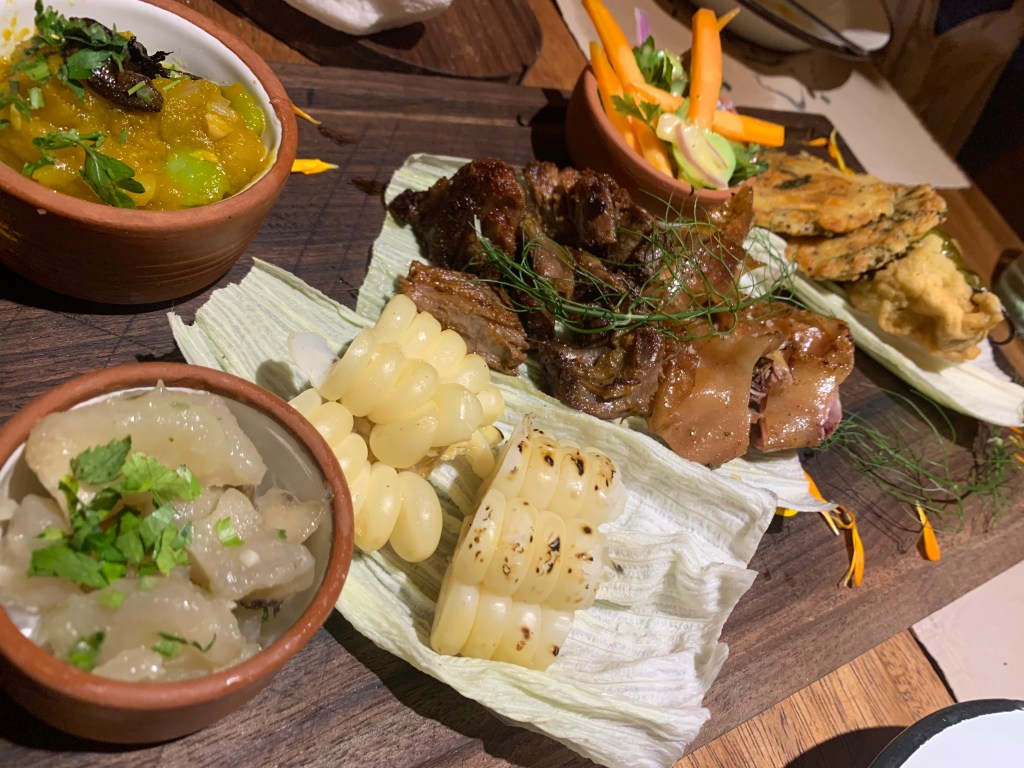
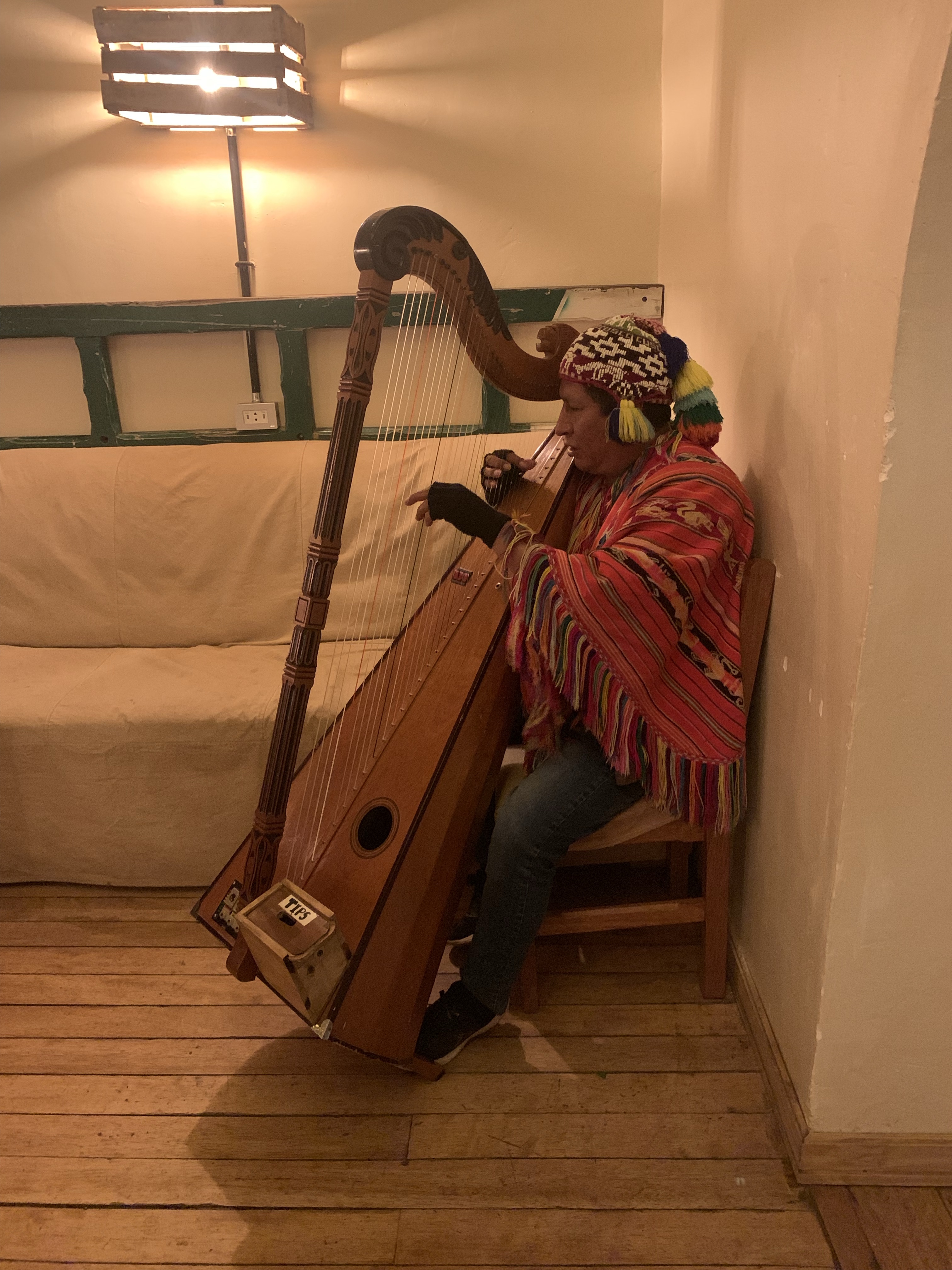
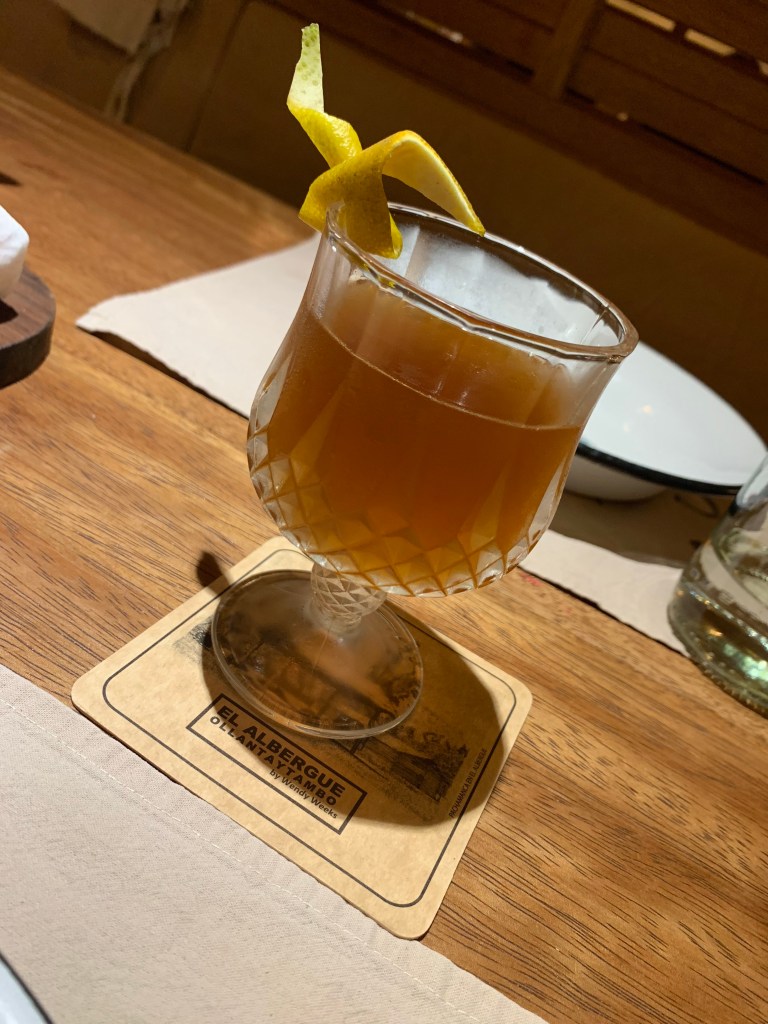
Entertained by a blind musician playing a traditional harp, we took the set menu which included our first taste of guinea pig washed down appropriately by a delicious cocktail called a Matacuy Sour (which translates as ‘kill the cui’ or guinea pig made from the local spirit, cañazo).
We met a jovial fellow named José who entertained us with wooden puzzles (convincing us to buy one and some local salt) and told us the restaurant was part of the same operation as the hotel El Alberque by the train station.
The organic Inca farm there provides 75% of the produce used in the restaurant. Located literally on the train platform, the hotel first opened in the 1920s and has maintained its authenticity. In 1990 it was bought by an American artist Wendy Weeks and her husband – one of their sons runs it now, their other son is the artist Ismael Randall-Weeks, whose work we had admired in Lima.
The next morning, we took a stroll to check out the hotel and farm, amazed to find an array of animals – alpacas, sheep, rabbits, ducks – grazing alongside the thriving crops.
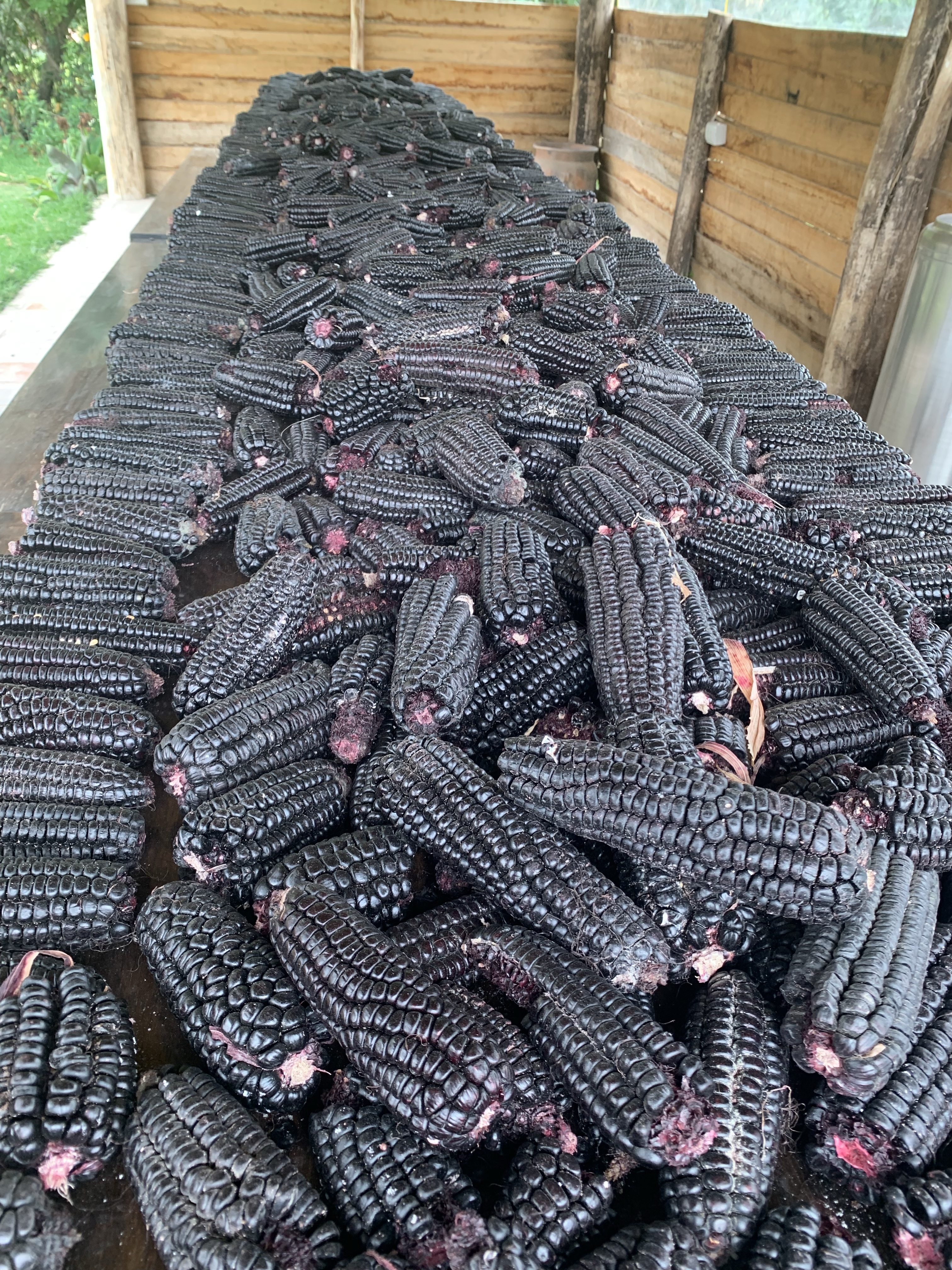
The Kuska school on site was like a mini version of the Green school we had visited in Bali, the curriculum with a strong environmental and social focus, but the children were on holiday, so it was deserted.
We found a micro distillery where cañazo was distilled in copper and a coffee roastery.
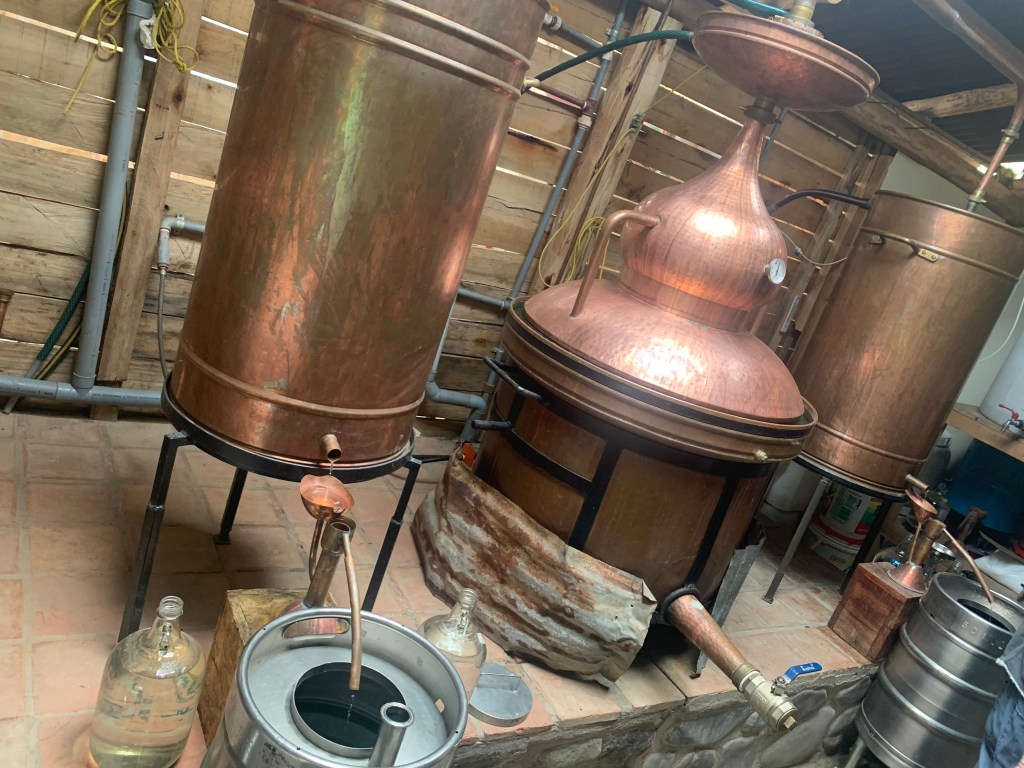
You can partake in a pachamanca meal here – a traditional outdoor dinner cooked on stones in an earth oven, but unfortunately, we didn’t have time. Instead we took a quick walk along the river and train tracks to the Inka drawbridge where we saw some horses and houses on the other side of the river.
On our departure our driver pointed out the Skylodge Adventure Suites, aluminium and polycarbonate pods that terrifyingly cling to the granite hillside. A place to stay next time…
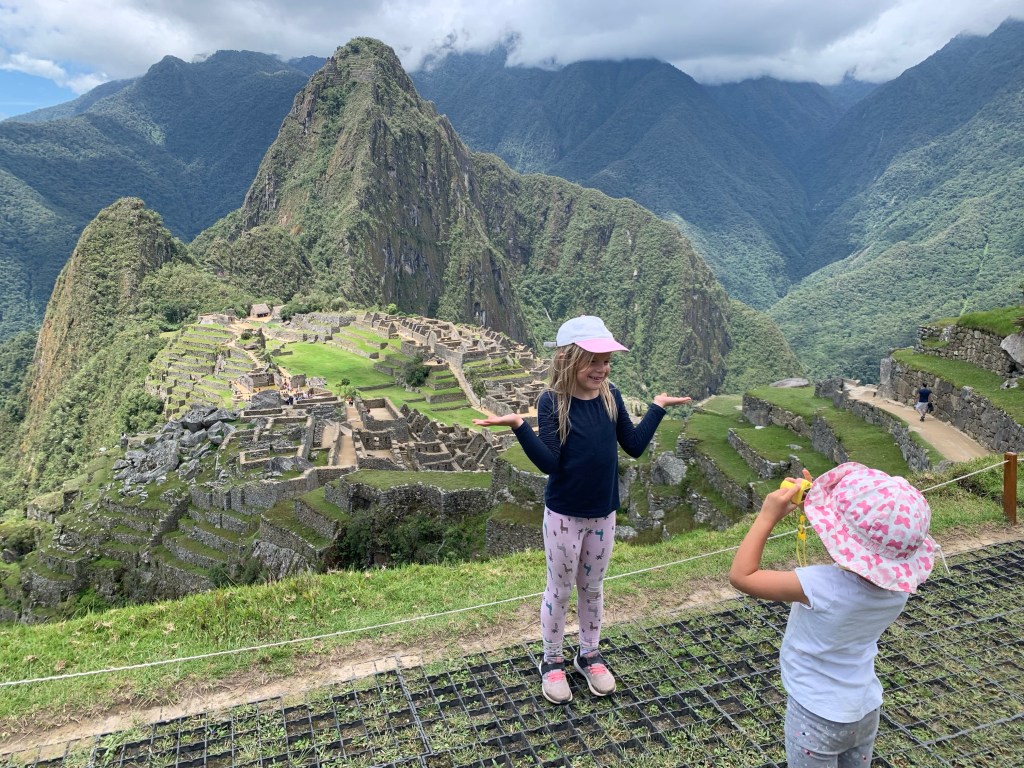
The day we went to Machu Pichu
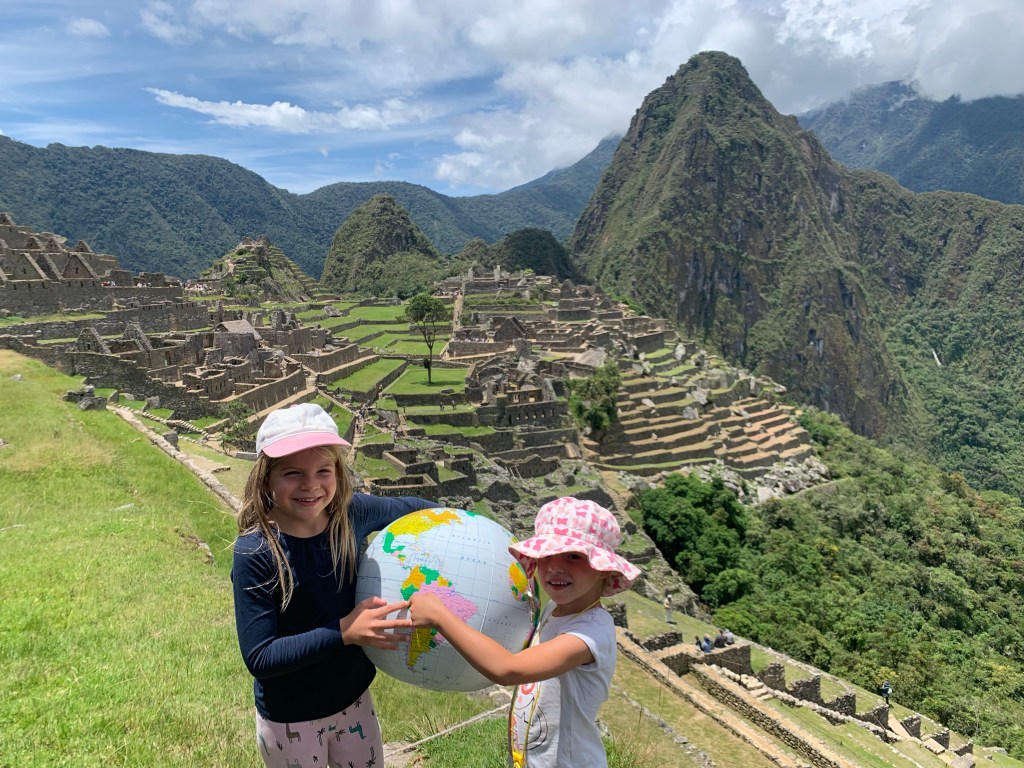
We had booked our train and entry tickets a few weeks in advance, so we had to keep to schedule. It was a risk, as at this time of year, during the rainy season, it was quite likely that it would not just be raining while we were there, but that visibility would be so bad we wouldn’t see the famous site at all. We were lucky: it was a sunny day and the timings worked out perfectly. After a nourishing breakfast at Apu Lodge, we walked to the train station to catch the 9.15am Peru Rail 360° train.
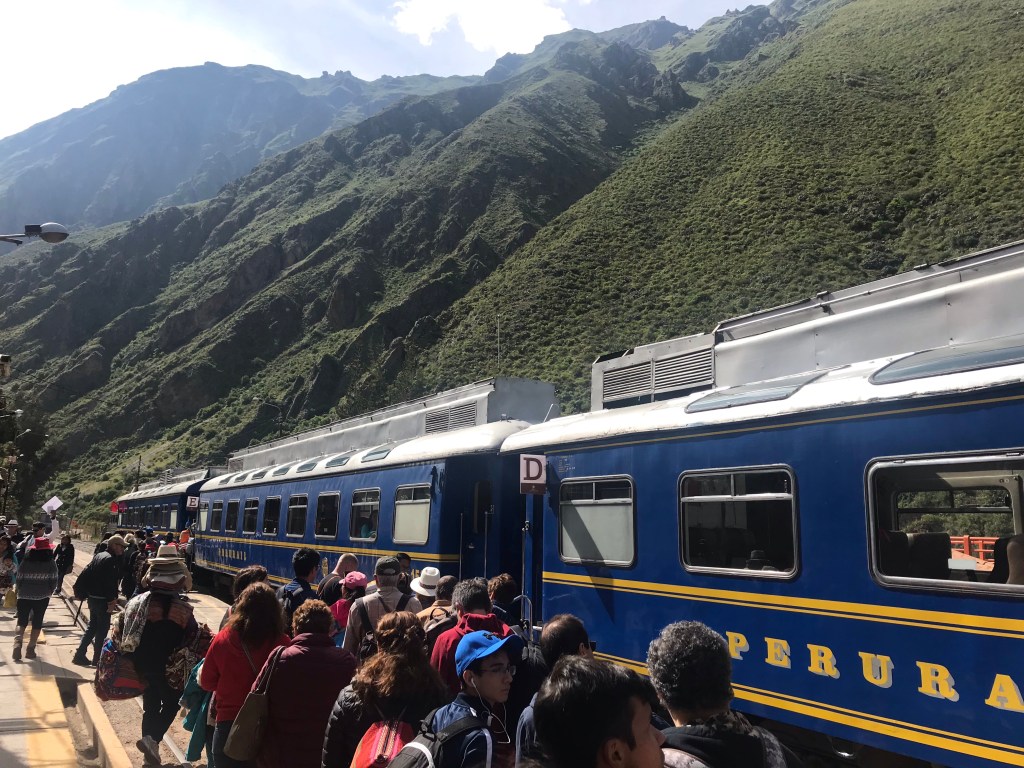
The train carriages were designed to make the most of the riverside and mountain views with floor to ceiling windows.
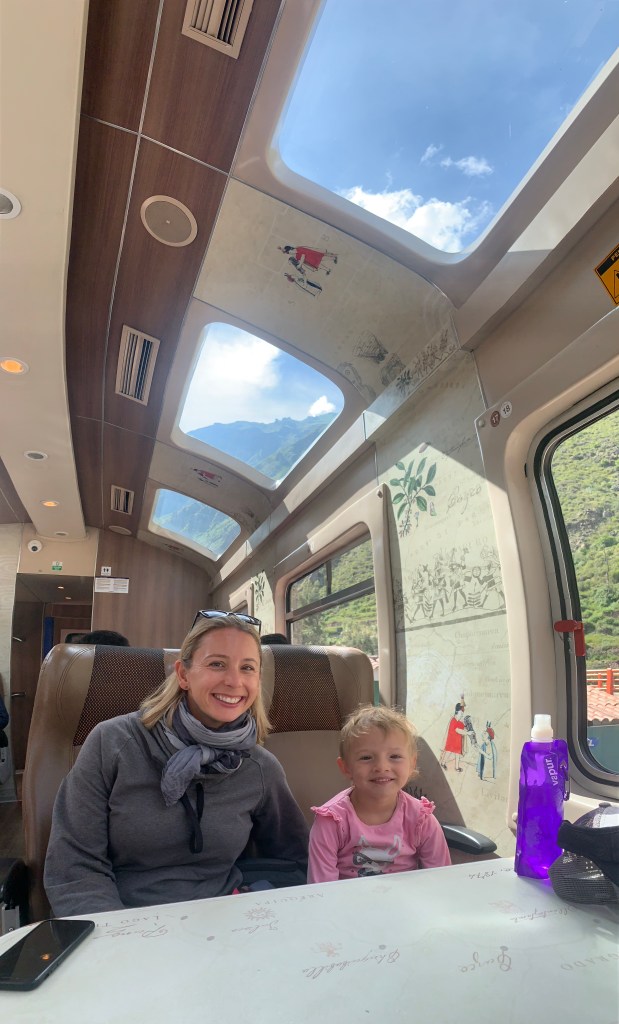
The hour-and-a-half journey flew by. Aguas Calientes is rather isolated with no cars, a bit of a tourist trap.
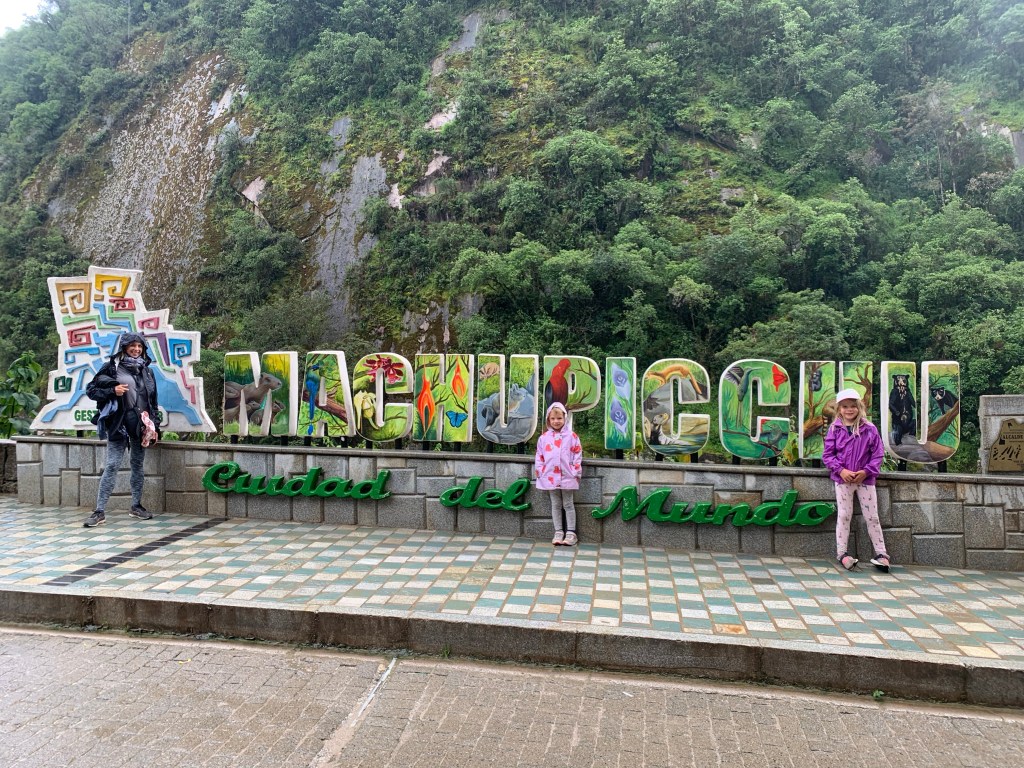
Your time in Machu Picchu itself is limited to four hours and you are forbidden from eating there or indeed going to the loo. Our session didn’t start until 12 so we had time to have an early lunch at Mesa 7 restaurant overlooking the river (another mouth-watering quinoa salad for me), buy bus tickets and use the facilities. It takes twenty minutes to traverse the steep, zigzagged road, with incredible views of the valley.
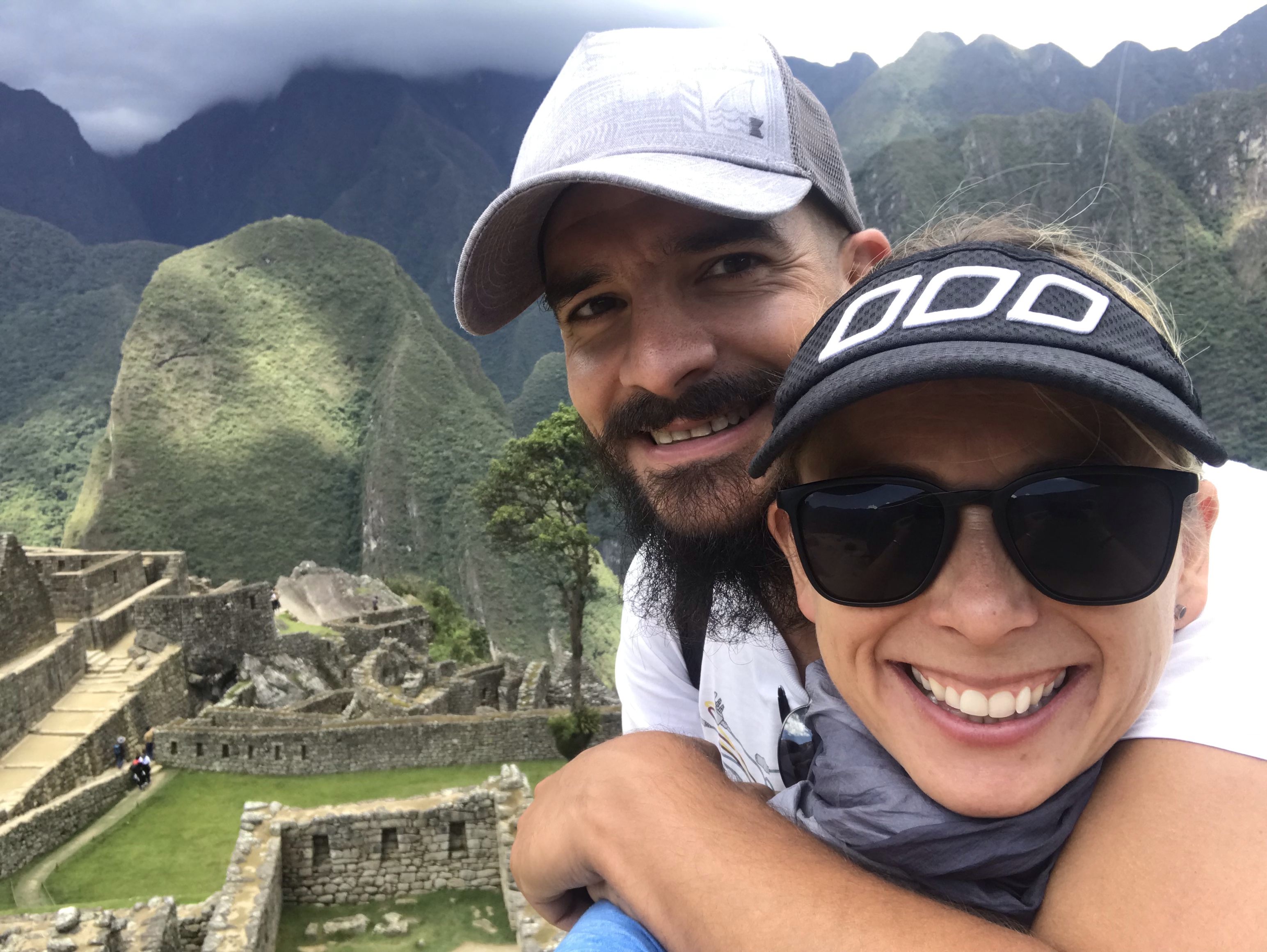
We had read a lot about tour guides at the entrance gates and had received conflicting advice on whether to enlist their services. We decided to go at it alone and going by the eavesdropping we did of other guides; we had made the right decision. Once in we followed the guidebook’s suggestion and first walked up to the guard house for an initial breath-taking view of the citadel sitting against the distinctive mountain peak (Machu Picchu can be translated as old mountain) with only us and a few llamas for company.
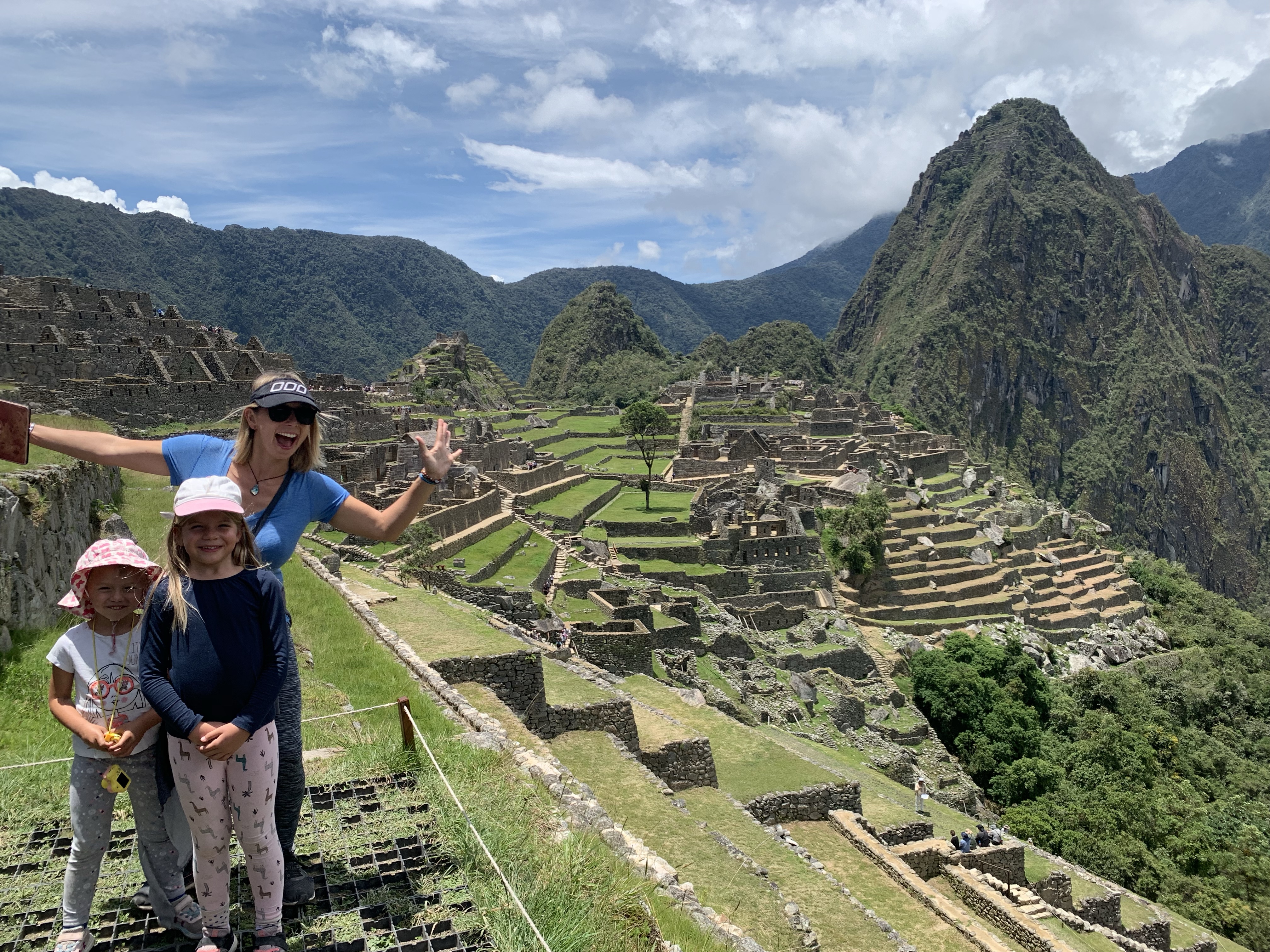
We just had to blow up our globe beachball for a picture or two but were told off by a cross guard: ‘no ball games!’
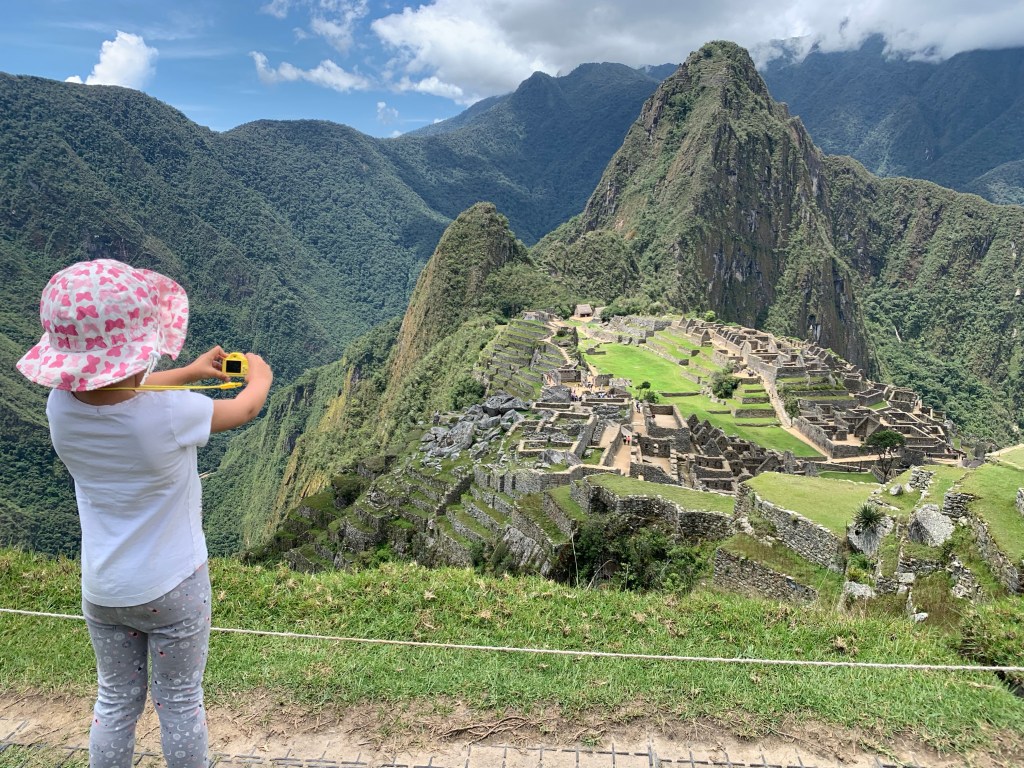
There were guards everywhere we turned – although we were amused to find one couple having a full-blown picnic on a hillside with their guide.
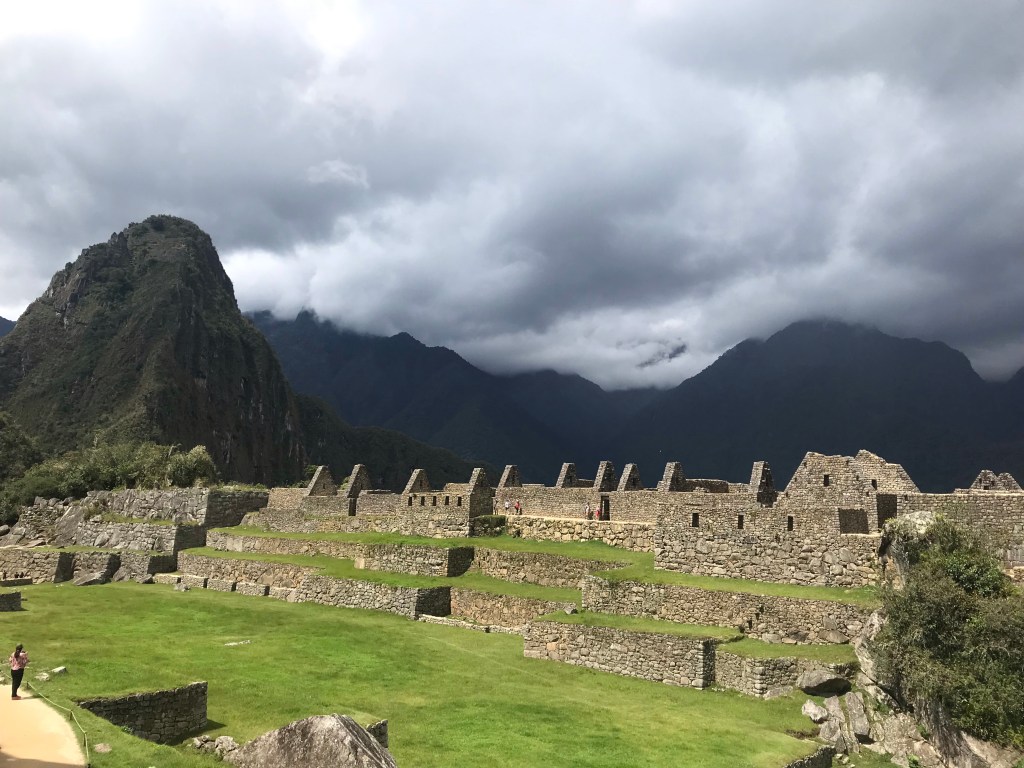
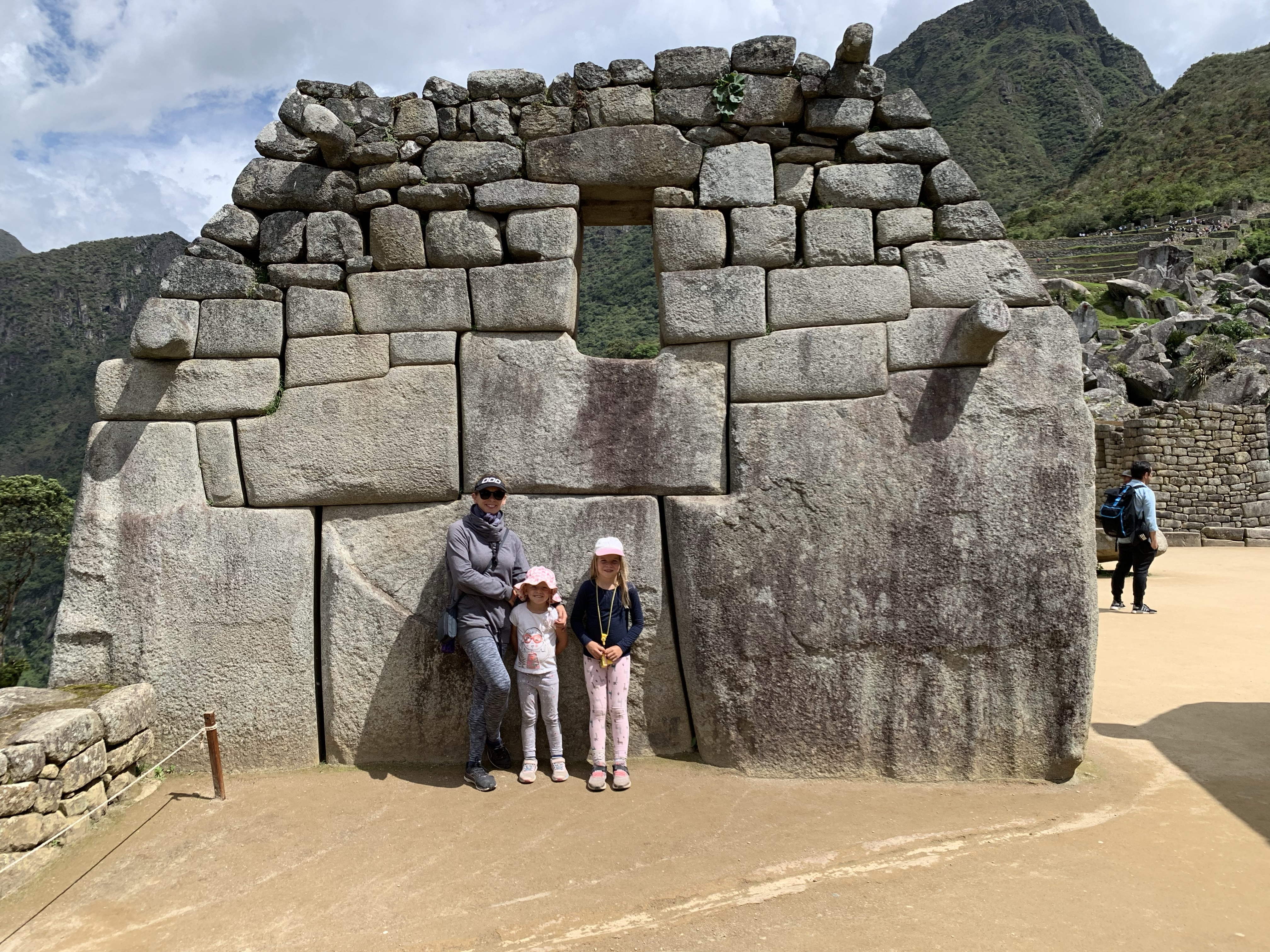
The route took us across to the sacred plaza, just about making out the remains of the temple of the three windows, temple of the sun and the condor.
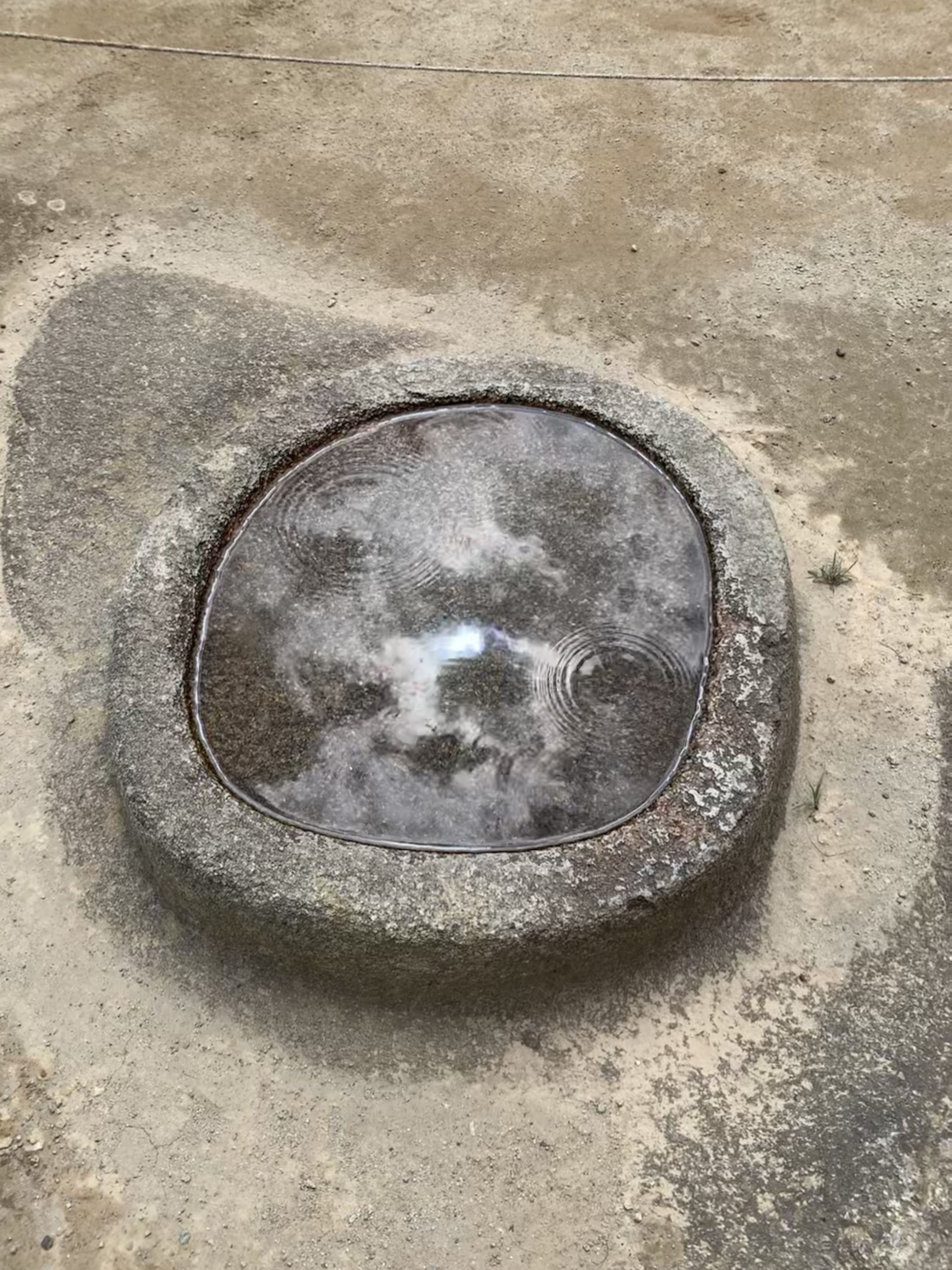
When we reached the water mirrors it was 3.30pm and we noticed rain spots dropping into the bowls, it was finally starting to rain.
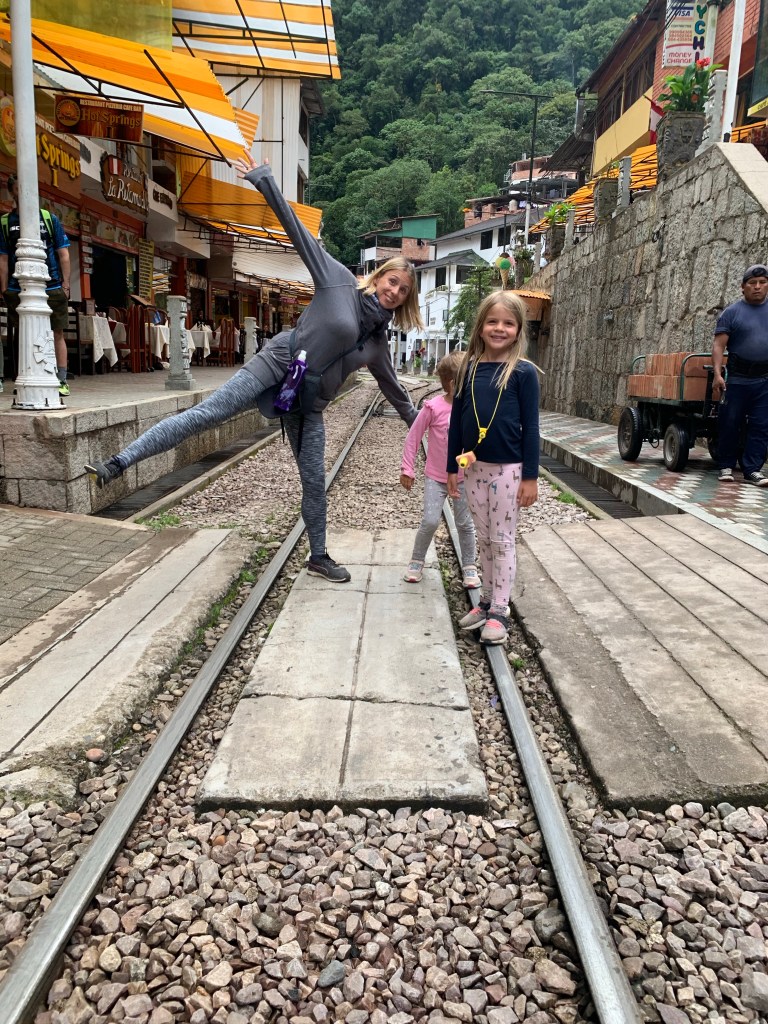
We were so lucky the weather had been good all the time we needed it to be despite it being the middle of the rainy season. We had seen enough so we took a bus down and had a drink next to the train tracks in Aguas Calientes before taking the 4.30pm train back to Ollantaytambo.
A day that would stay in our memories for years to come.
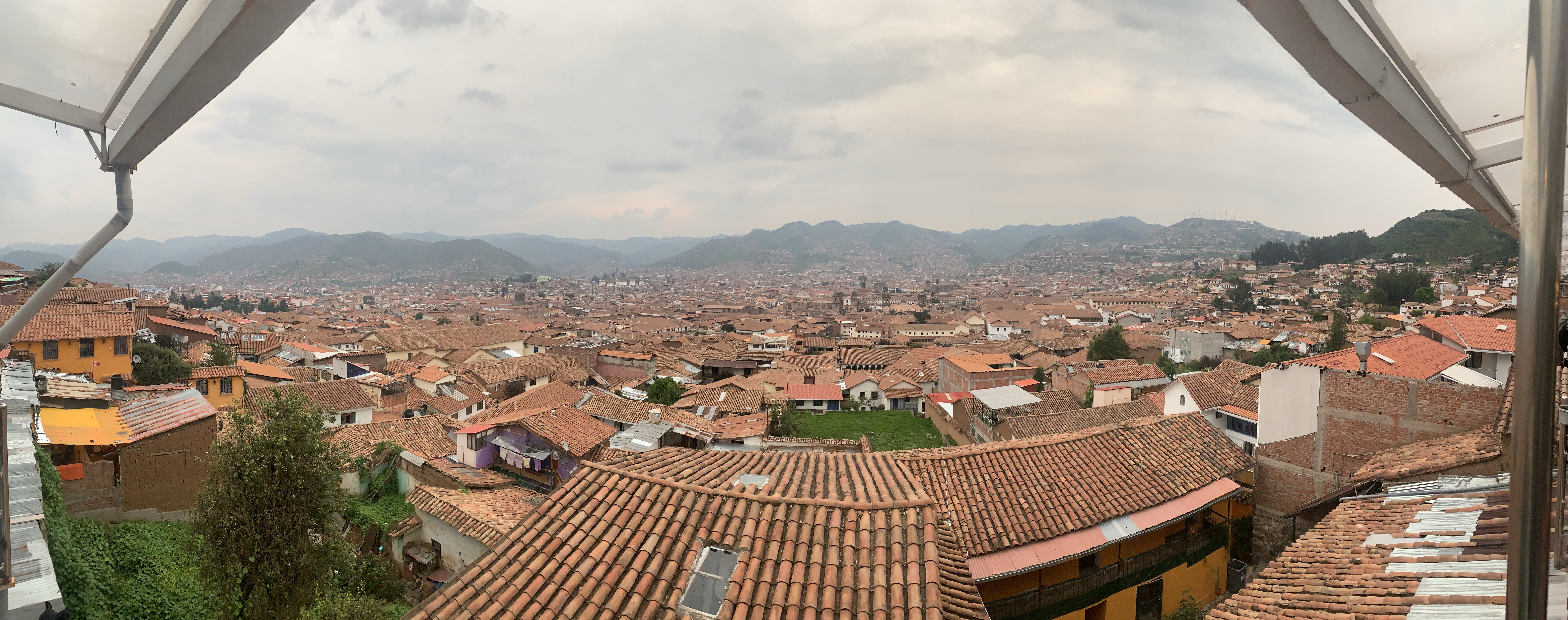
Cusco: The navel of the world
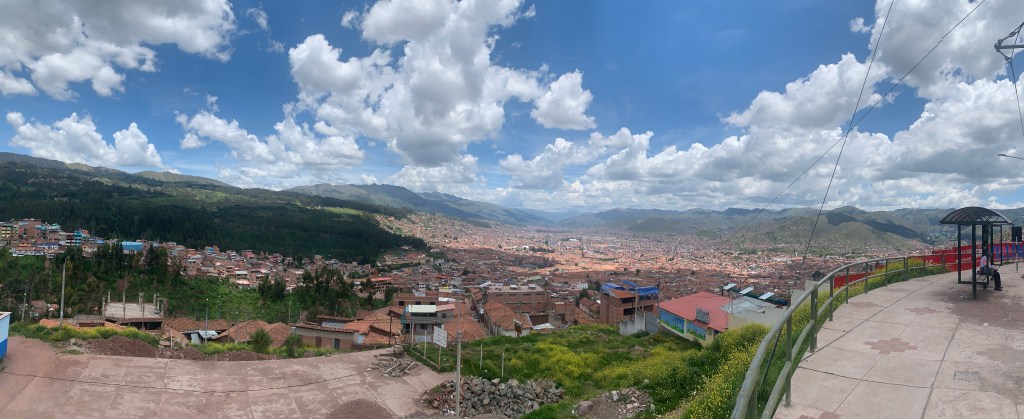
Cusco has been known as the navel of the world since ancient times and is roughly the same size today as it was in the fifteenth century during the height of the Inca Empire. The layout of the city is striking, we got a brilliant view of it from ‘Limbus’, a bar in the San Blas area.
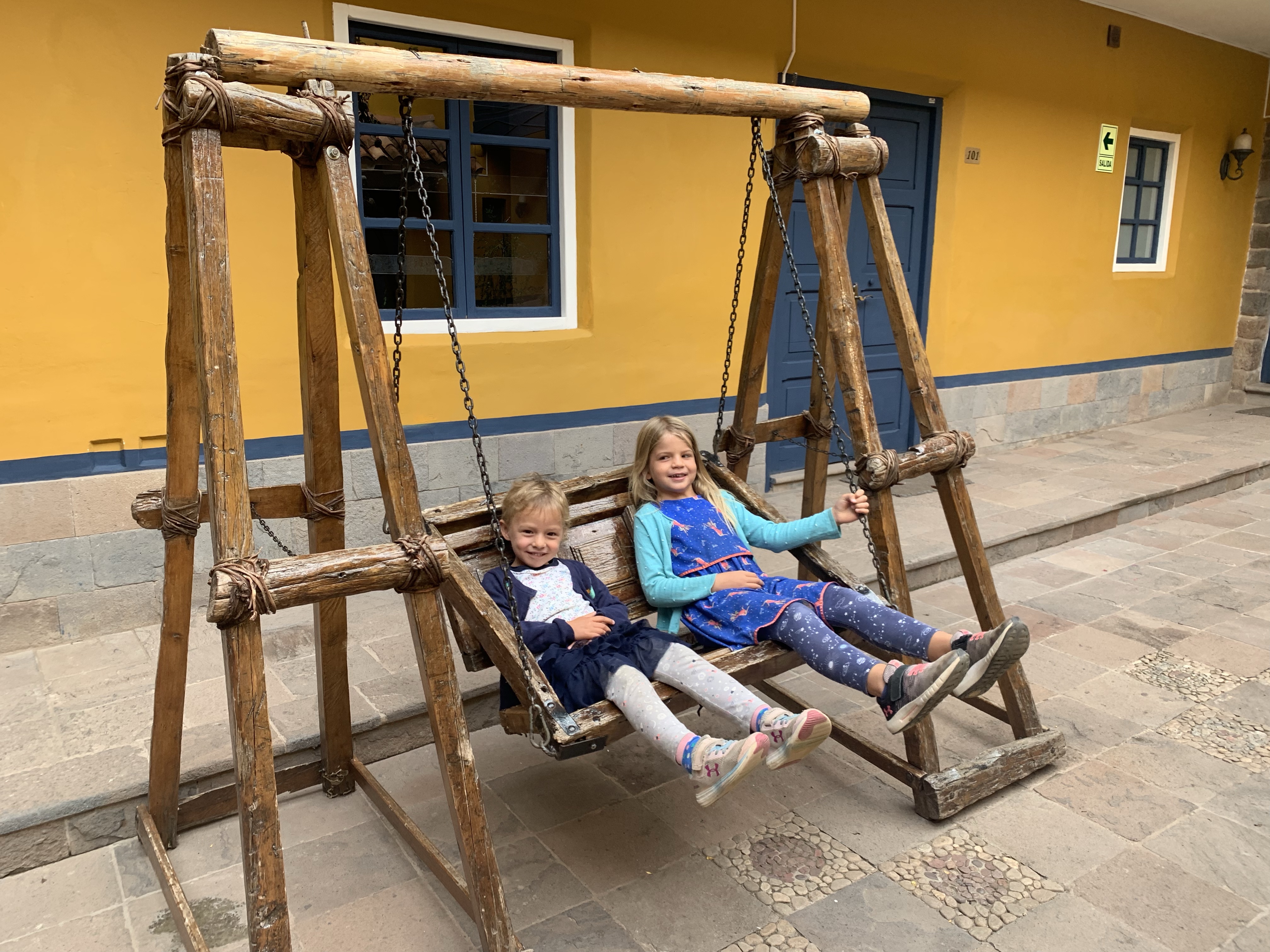
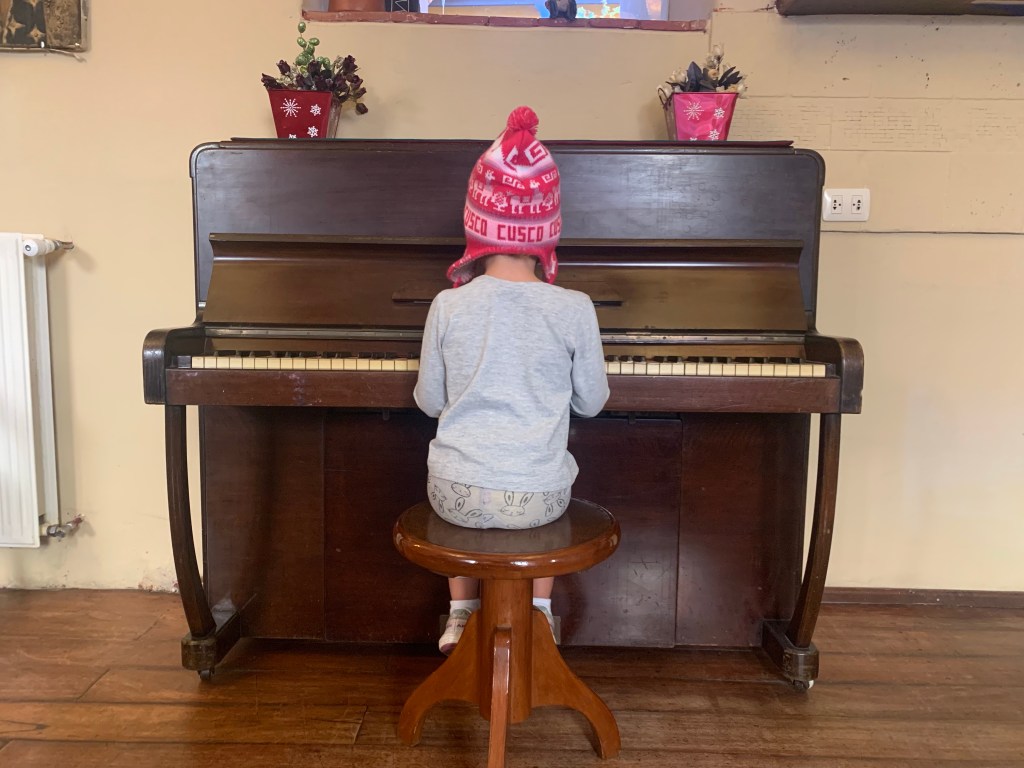
We were staying very centrally in the lovely Tambo del Arriero Boutique Hotel, which had three internal courtyards. Our room had three double beds and a bath and there was an old sewing machine, piano and gramophone on display in the foyer.
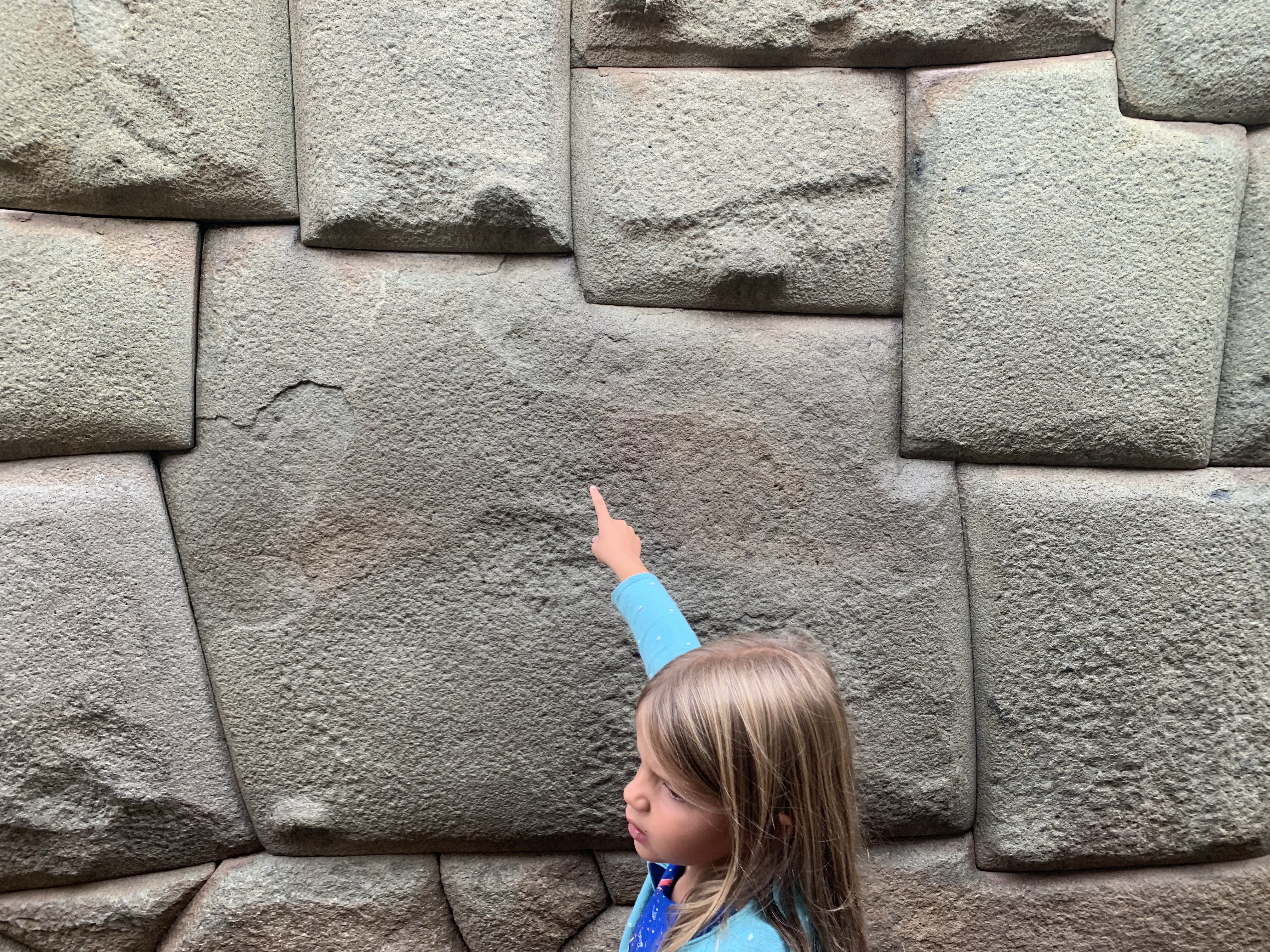
We went for a walk, first through Plaza Regocijo and onto Plaza de Armas, the centre of the city which is home to its cathedral. We found the twelve-angled stone on Calle Hatunrumiyoc, an example of the brilliance of Inca craftsmanship.
We were freaked out by the Museo de la Coca which had quite graphic information about addiction and were happier playing in the square in San Blas and looking in the many local art galleries.
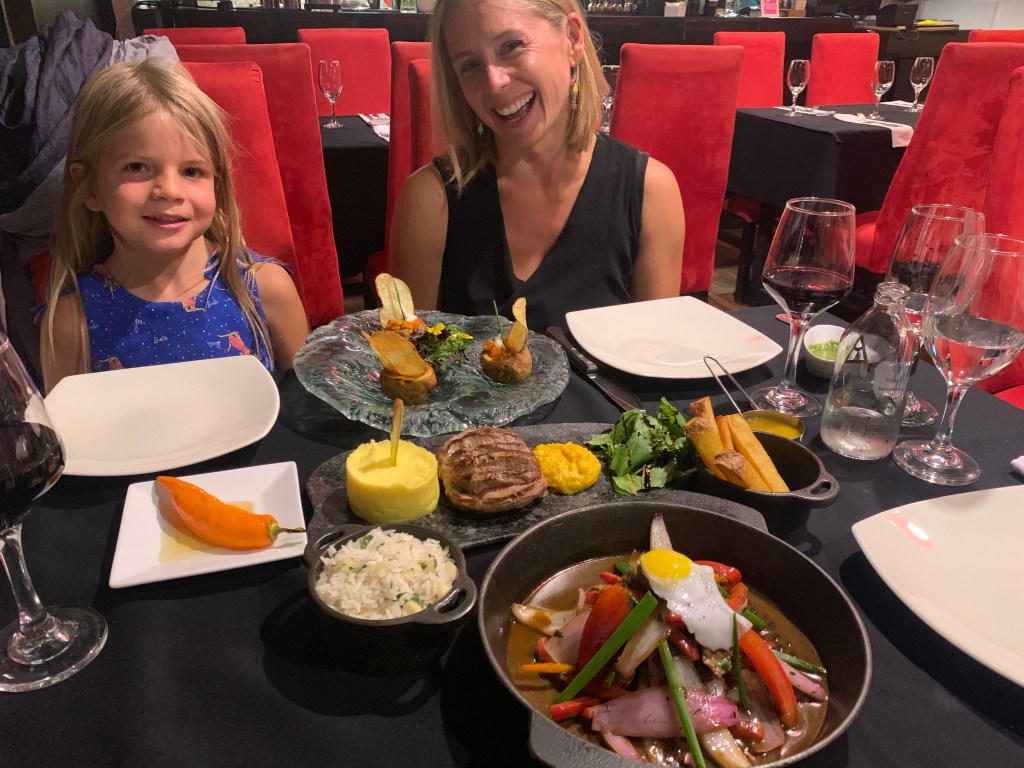
We had an excellent dinner at Marcelo Batata – sampling Lomo Saldito and Alpaca steak.
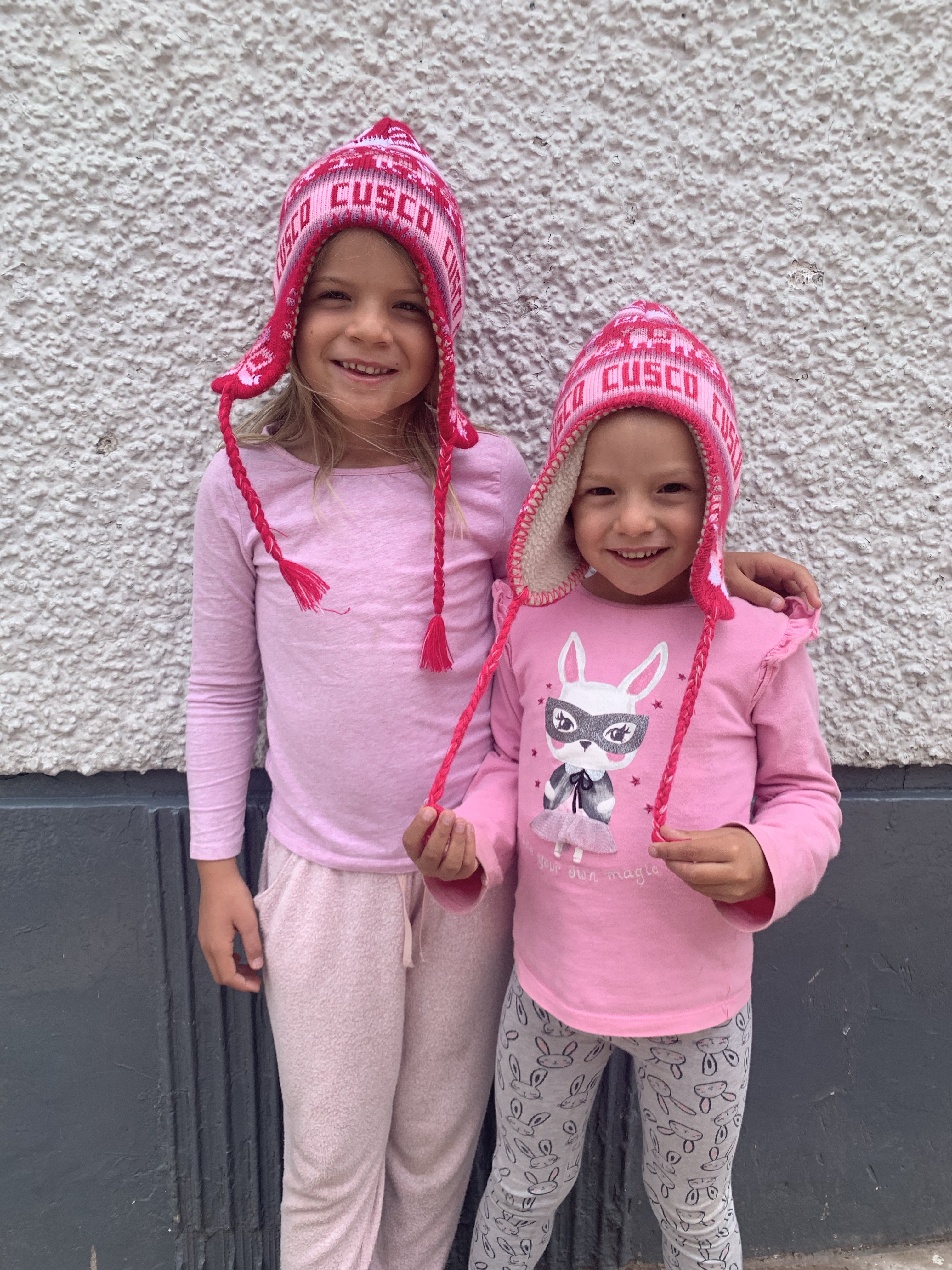
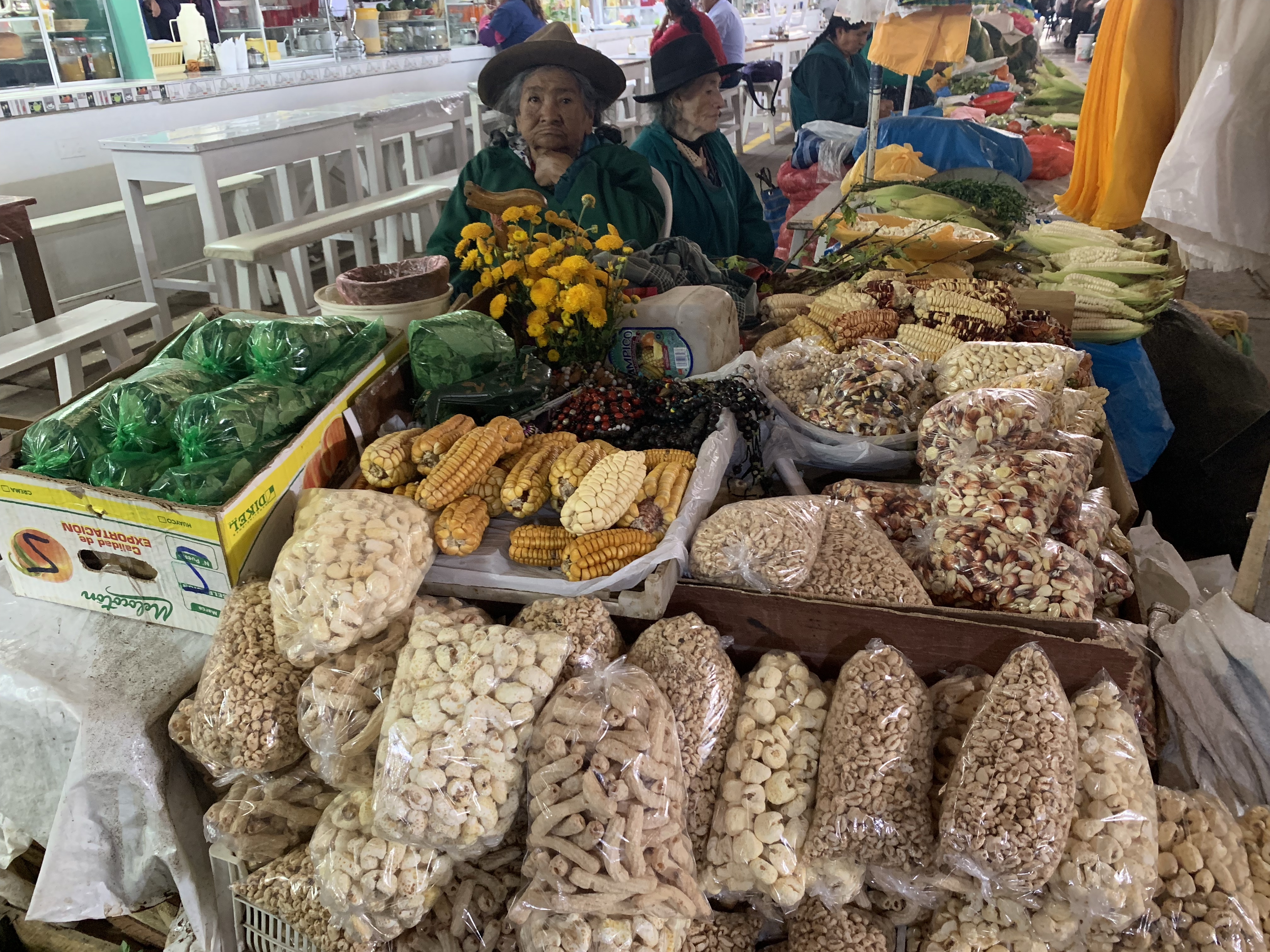
The next day was our last in Peru. We walked down to Mercado de San Pedro, where we bought the girls local style hats and had a look around the food stalls.
We went onto the Museo Quijote located on the first floor of a bank which was very weird – bone sculptures and second-rate paintings. Avenue Sol is the main thoroughfare of the old town, we went down it to find the post office and stepped into the weaving centre to learn more about the craft.
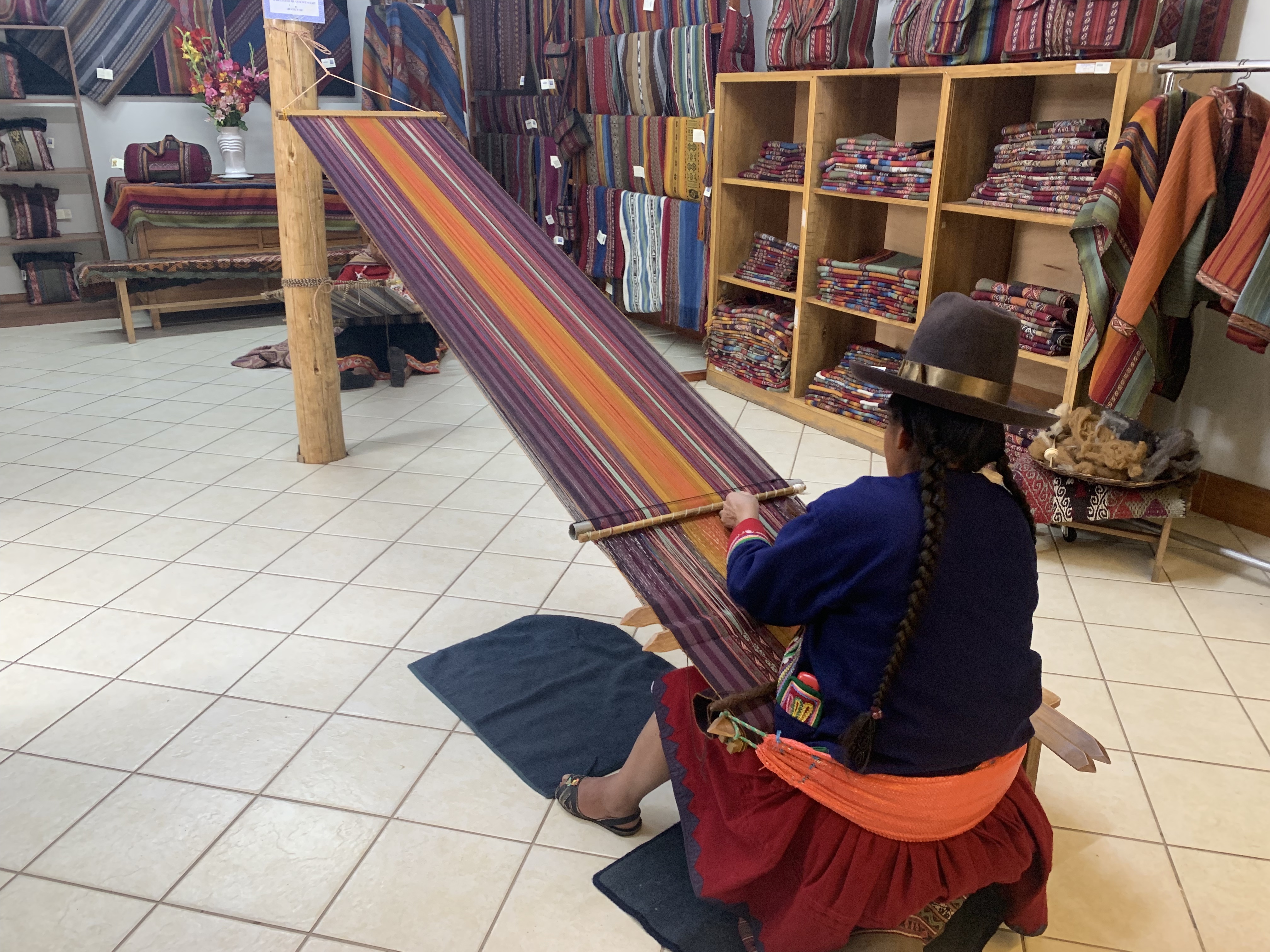
We had a good lunch at PerUK (finding our first reference to the famous Peruvian, Paddington Bear) and then went to the Machu Picchu Museum to learn more about it. We decided against going into the Pisco Museum which didn’t seem that child friendly. The city seemed to have rather a lot of museums but the subject matter was often not all that clear, we didn’t even go inside this one!
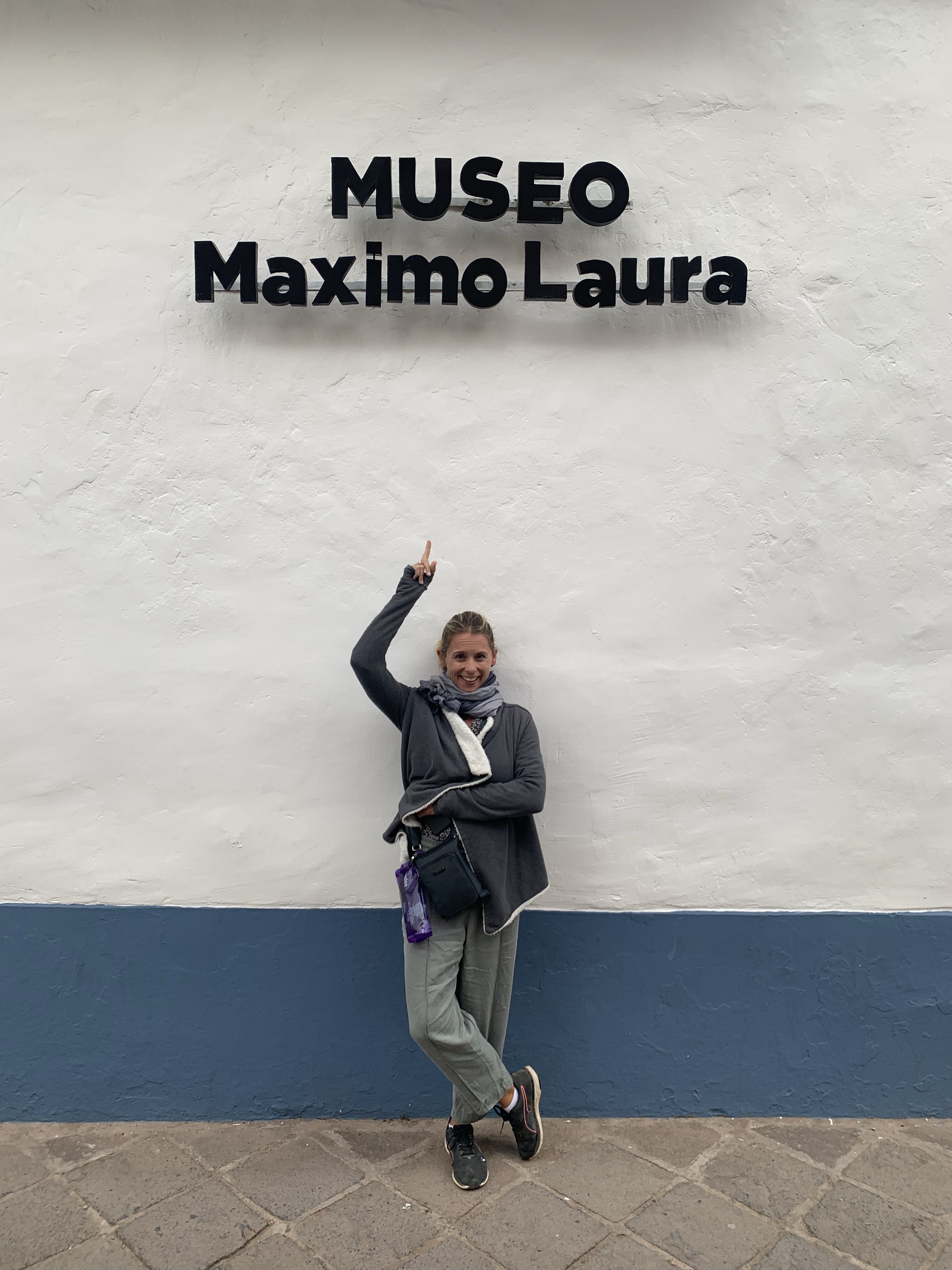
Our final night in Peru was spent at the Holiday Inn at Lima airport between flights – a strangely international place to be although we did make the most of room service and a lavish buffet breakfast. It was the end of a truly unique week in an incredible country.
 Life with MoJo