Getting to Christchurch from Melbourne was more of a mission than we anticipated. Our Jetstar flights were changed, forcing us to have a stopover in Sydney. Not a long one mind you, indeed initially worryingly short, considering we had to collect our bags and take a bus to another terminal!
The mad dash was made all the more fun by a bunch of teenage school-kids embarking on a camping trip in New Zealand, many of them using their passports for the first time. In the end our second flight had been shifted a little later, probably because the airline realised the impossibility of making the connection as it was. And joy of joys it was with Qantas, so we had TVs and food to enjoy after so many flights on budget airlines. I could catch up on ‘Big Little Lies’ in anticipation of visiting California later in our trip…
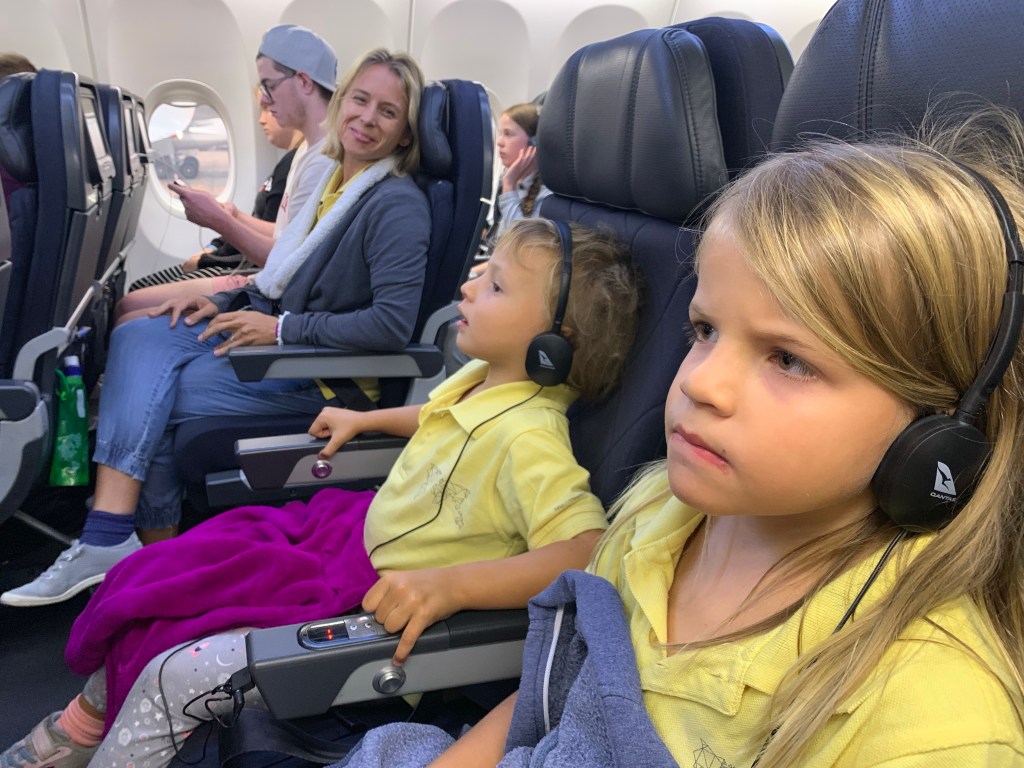
The entertainment system was a welcome distraction from the screams of terror and exhilaration in equal measures from the schoolkids as our plane bumped through some of the worst turbulence we had ever experienced.
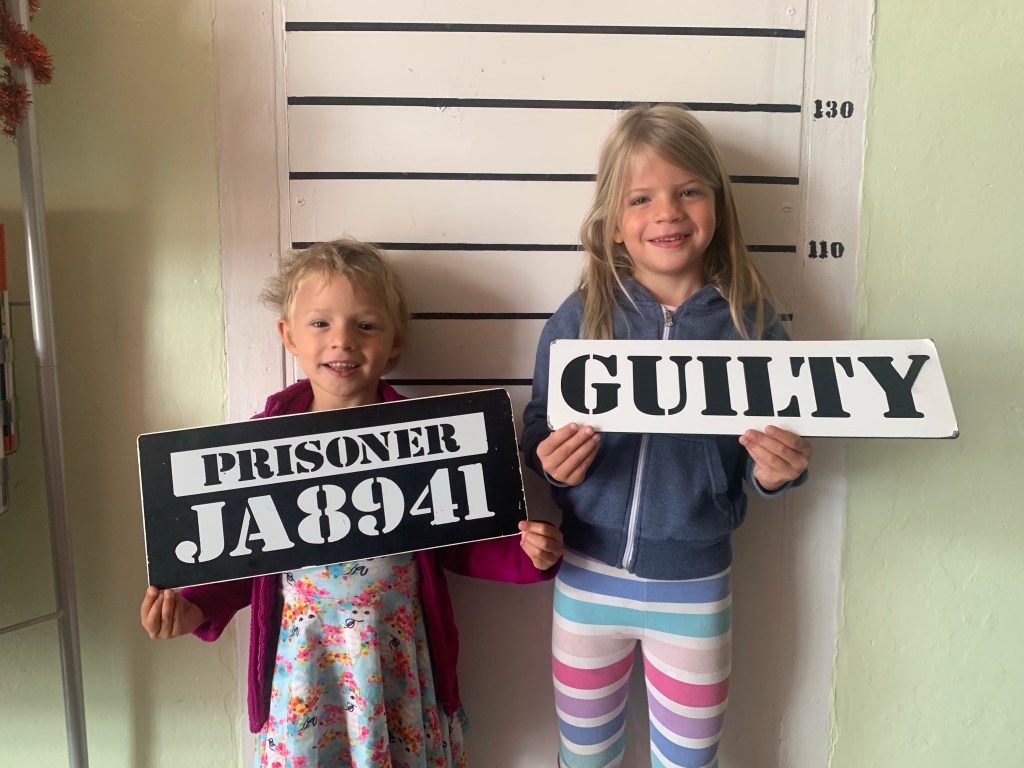
It wasn’t a surprise therefore that it was close to midnight by the time we arrived at where we were staying: a former jail turned into a hostel, Jailhouse Accommodation. Luckily we called ahead to warn them, but it still felt like we were breaking into jail!
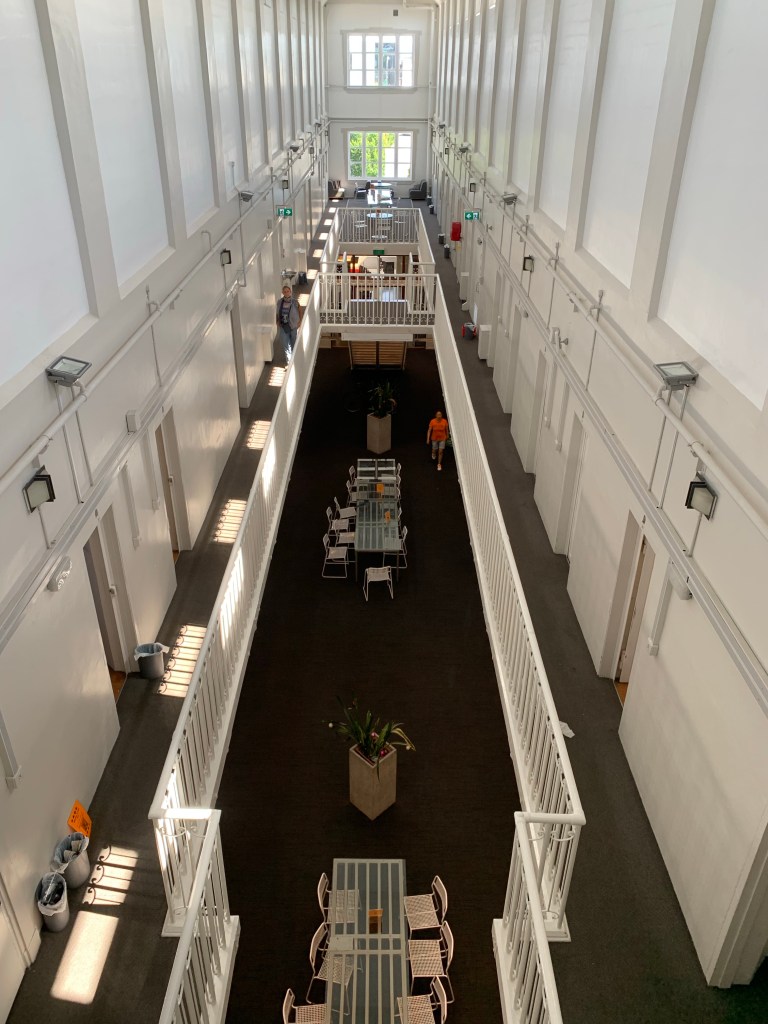
It was a quirky, fun place to stay. Victorian Gothic in style, the original features had been kept intact with rather grim stories of famous prisoners and some of their prized possessions on display. It operated from 1974-1999, starting out as a women’s jail. Located in the suburb of Addington, there was a convenient bus-stop across the road that took you into town.
We realised that lots of the buildings used in the city today had different functions before the 2011 earthquake. Our first morning we had a great brunch at Addington Coffee Co-op in a former mechanics workshop that had withstood the quakes. The brilliant gluten-free menu and variety of children’s books to read were echoed throughout restaurants in New Zealand.
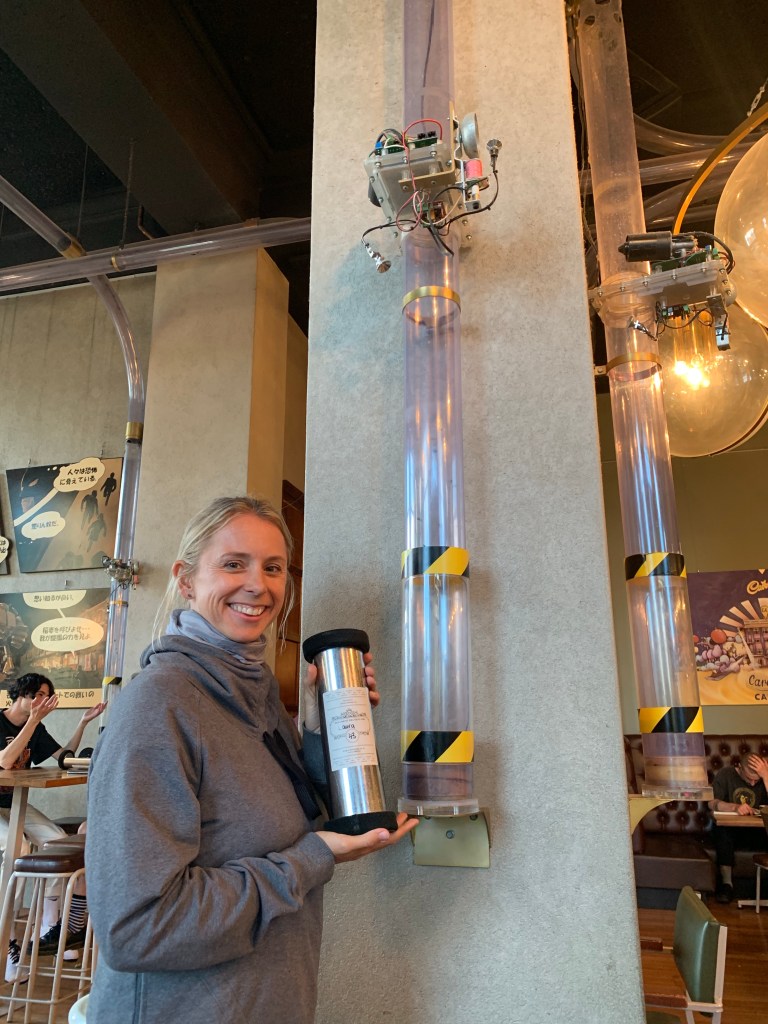
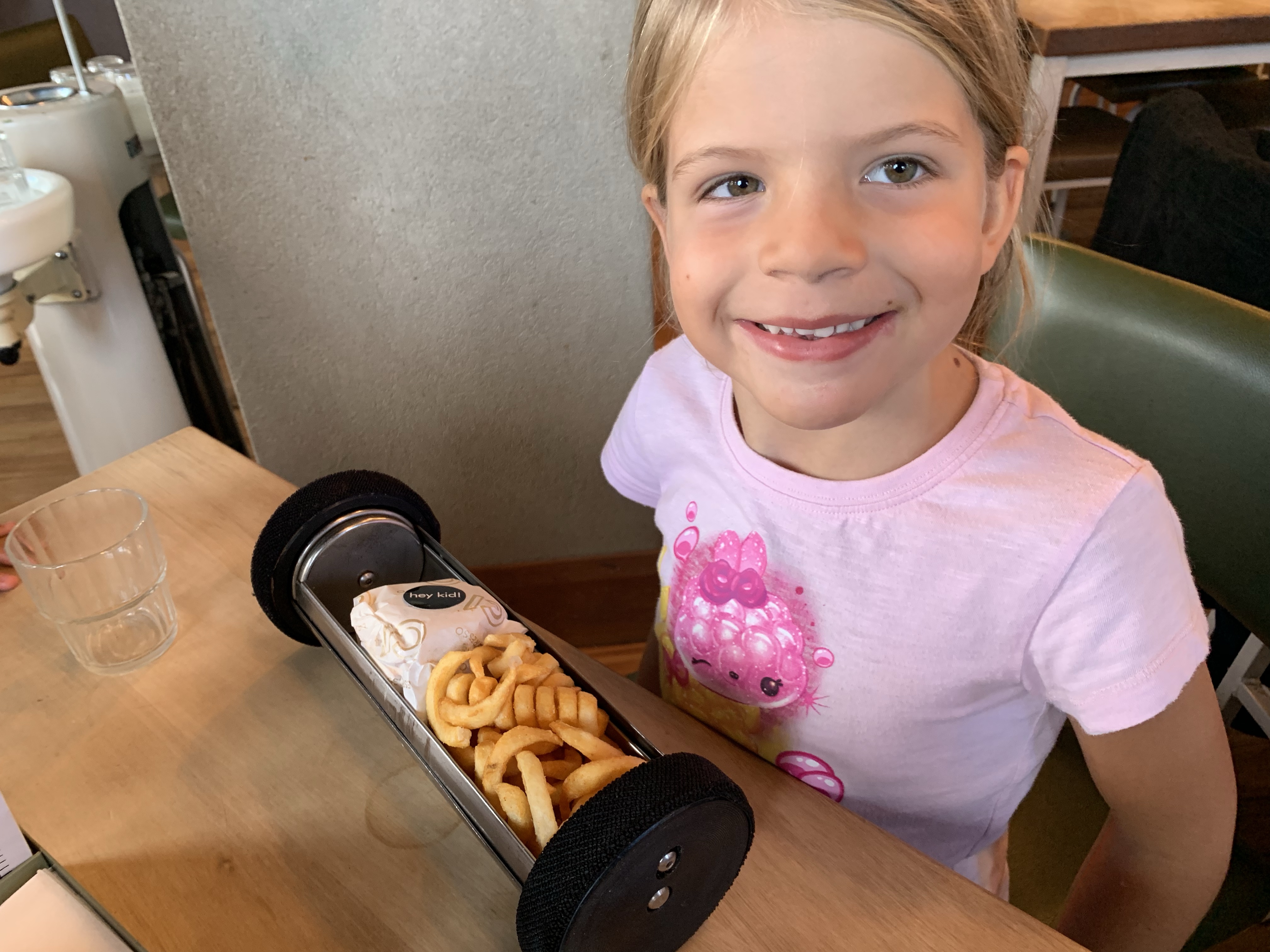
We dined that evening at C1 Espresso in the former High Street post office, choosing it mainly for the burgers which were delivered by pneumatic tube. It also had some fun retro video games to try out.
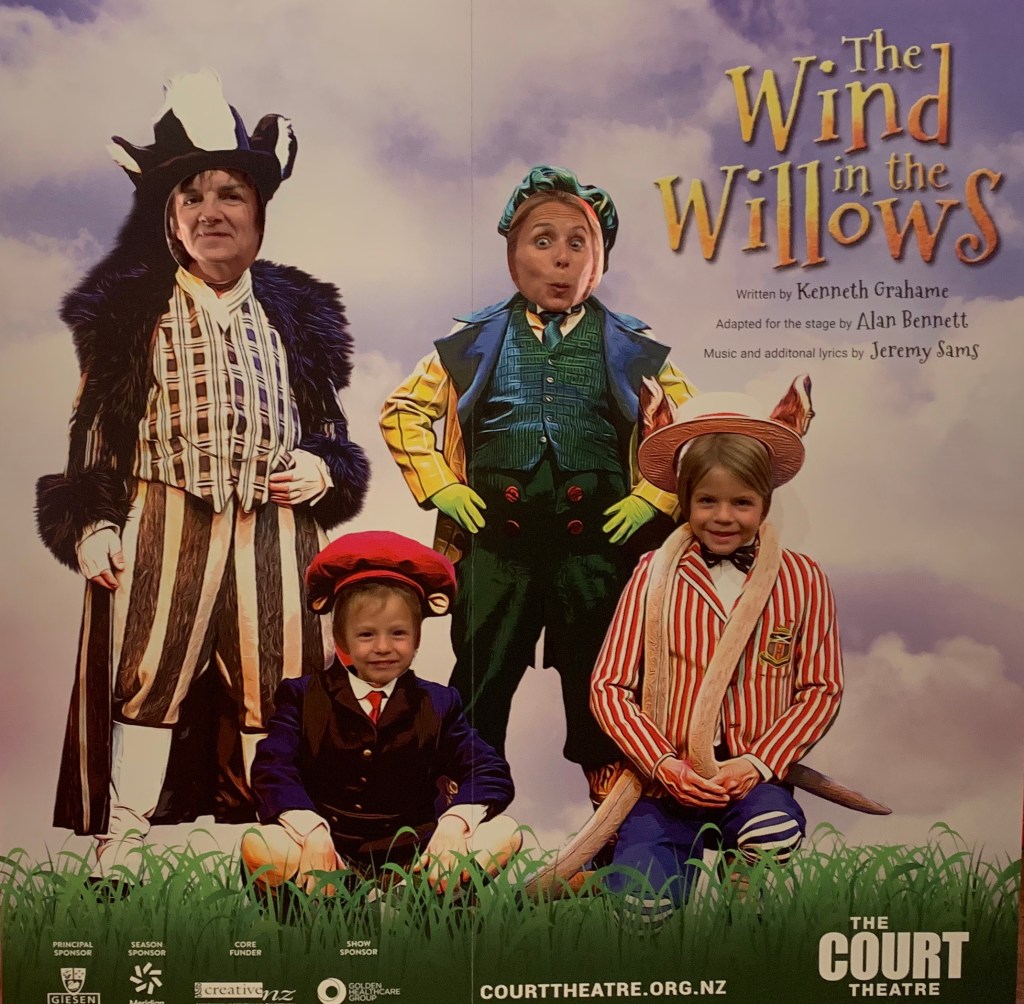
Our best evening was spent watching a fantastic performance of the Wind in the Willows at the Court Theatre which has relocated indefinitely to a warehouse space in Addington near the train tracks. By then Peter and Margaret had joined us, amused to also be staying in the jail!
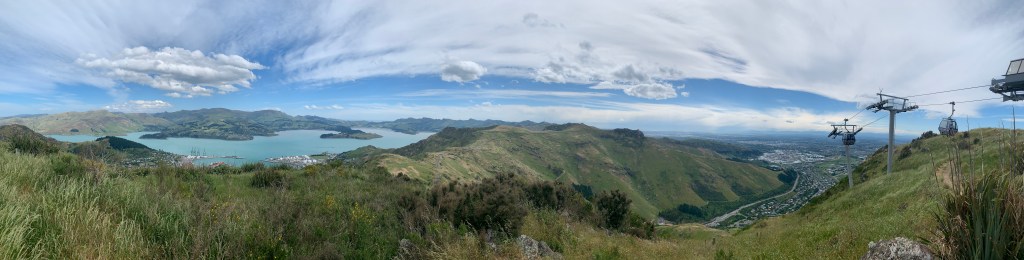
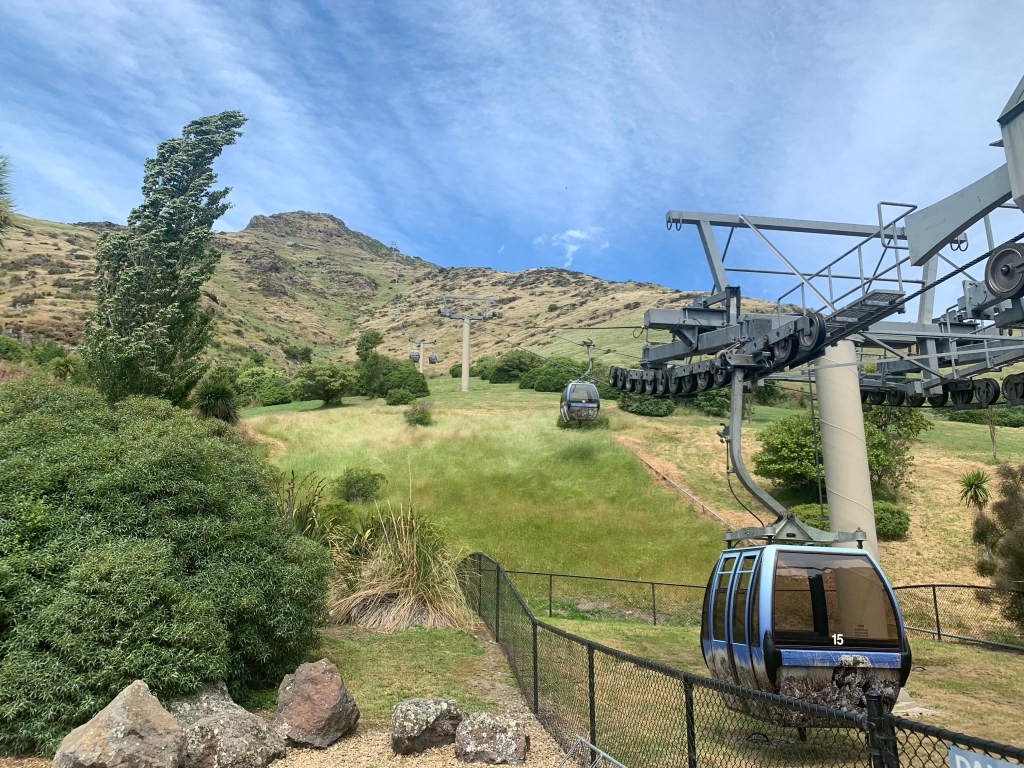
Making the most of the sunshine on our first day, we took a bus to Heathcote to go on the 945m-long Christchurch Gondola up Mount Cavendish to get a bird’s eye view of the Canterbury Plains and the Banks Peninsula.
When we arrived the cable car was closed due to windy conditions but after ten minutes or so it reopened. Created by two drowned volcanic craters, Banks Peninsula is truly a dramatic landscape. Taking a stroll along to the Cavendish bluff lookout was breathtaking, as was the view from the red rock café. A time tunnel ride told the story of the first settlers in New Zealand and had a model of the enormous Moa bird now extinct that used to roam free on the island.
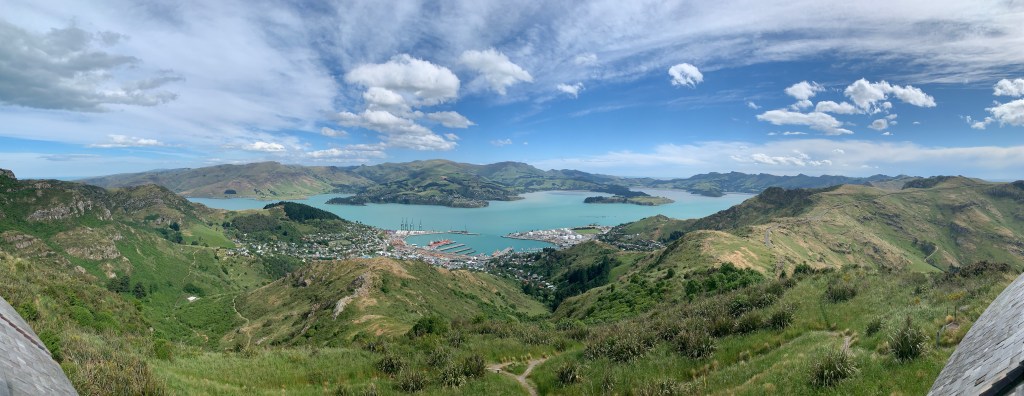
We spotted Diamond Harbour in Lyttelton where the water really sparkles. We chatted to an American scientist waiting for a boat to take him to Antarctica for research, bringing home the fact that despite the English country town feel of much of central Christchurch, especially around the river and Botanical Gardens, we really were the other side of the world to home.
Back down in the city, we walked down Manchester Street to the Margaret Mahy Family Playground (built after the 2011 quake), which gave Australia some hearty competition with innovative public play facilities which are fun for kids and adults alike.
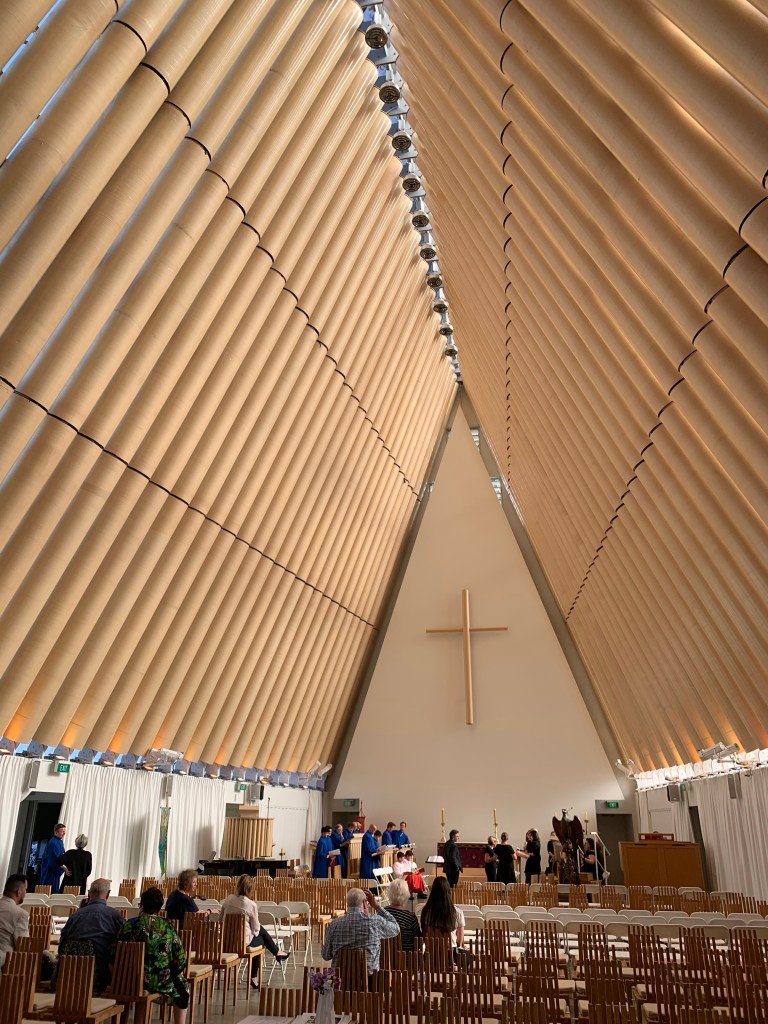
Next was the ‘Cardboard Cathedral’, the girls transfixed by choristers rehearsing for a Christmas concert. Known as the Transitional Cathedral, it was designed by the Japanese architect Shigeru Ban, constructed of 98 industrial-strength cardboard tubes and shipping containers. The effect is far more harmonious and satisfying than it sounds.
The next block on Cashel Street is a very moving space, Peter Majendie’s ‘185 empty chairs’, a memorial on the site of the Canterbury Television (CTV building) where 115 people were killed during the earthquake (including 71 foreign Asian students).
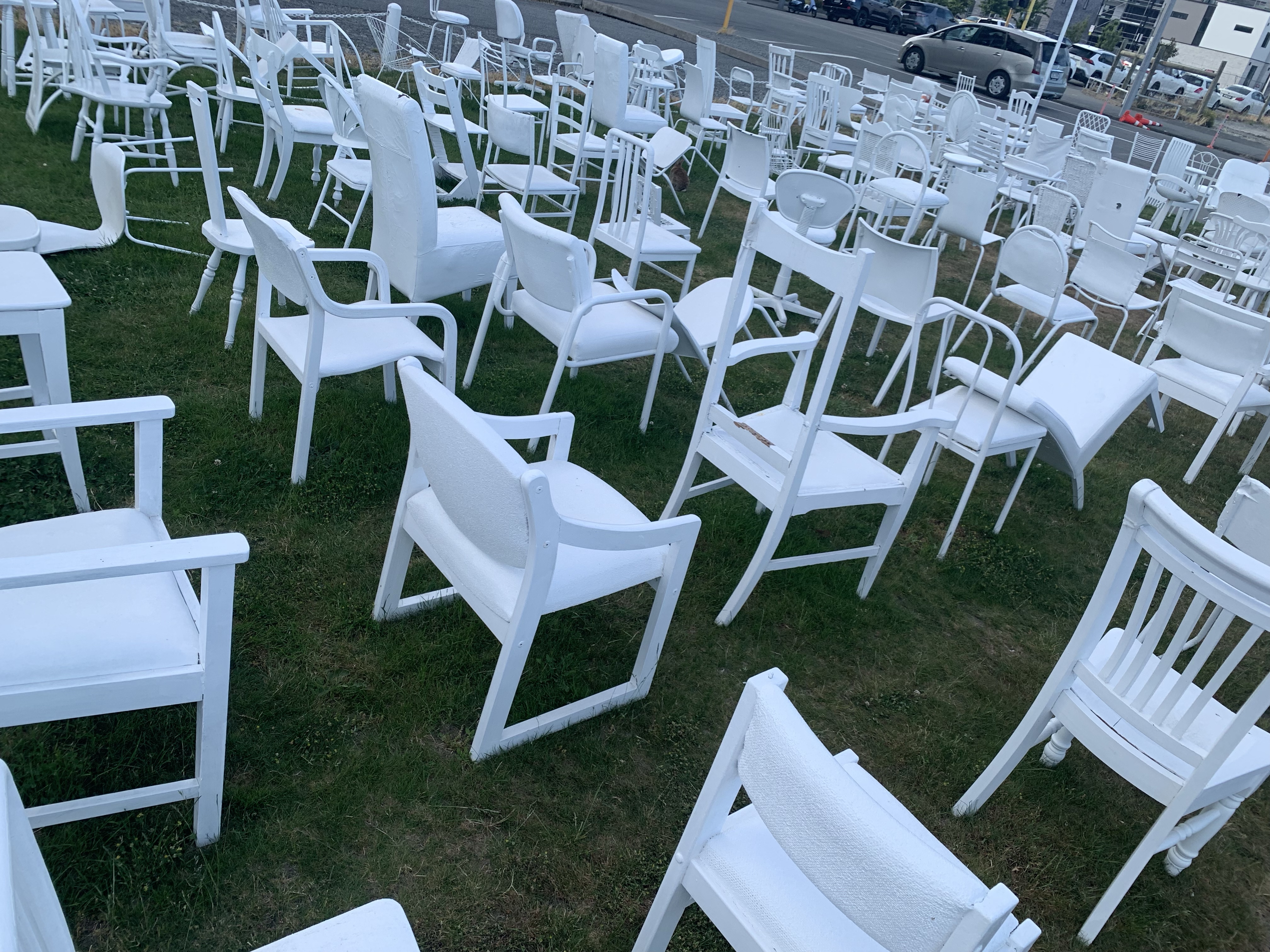
In total 185 people died and more than seven thousand were injured in the earthquake on 22 February 2011– but perhaps even more devastating was the total destruction of the city centre. Given the poor foundations of buildings prone to liquefaction, vast areas are still cordoned off. It does still feel eerily empty: street art and pop-ups in containers help to breathe life and colour into vacant spaces.
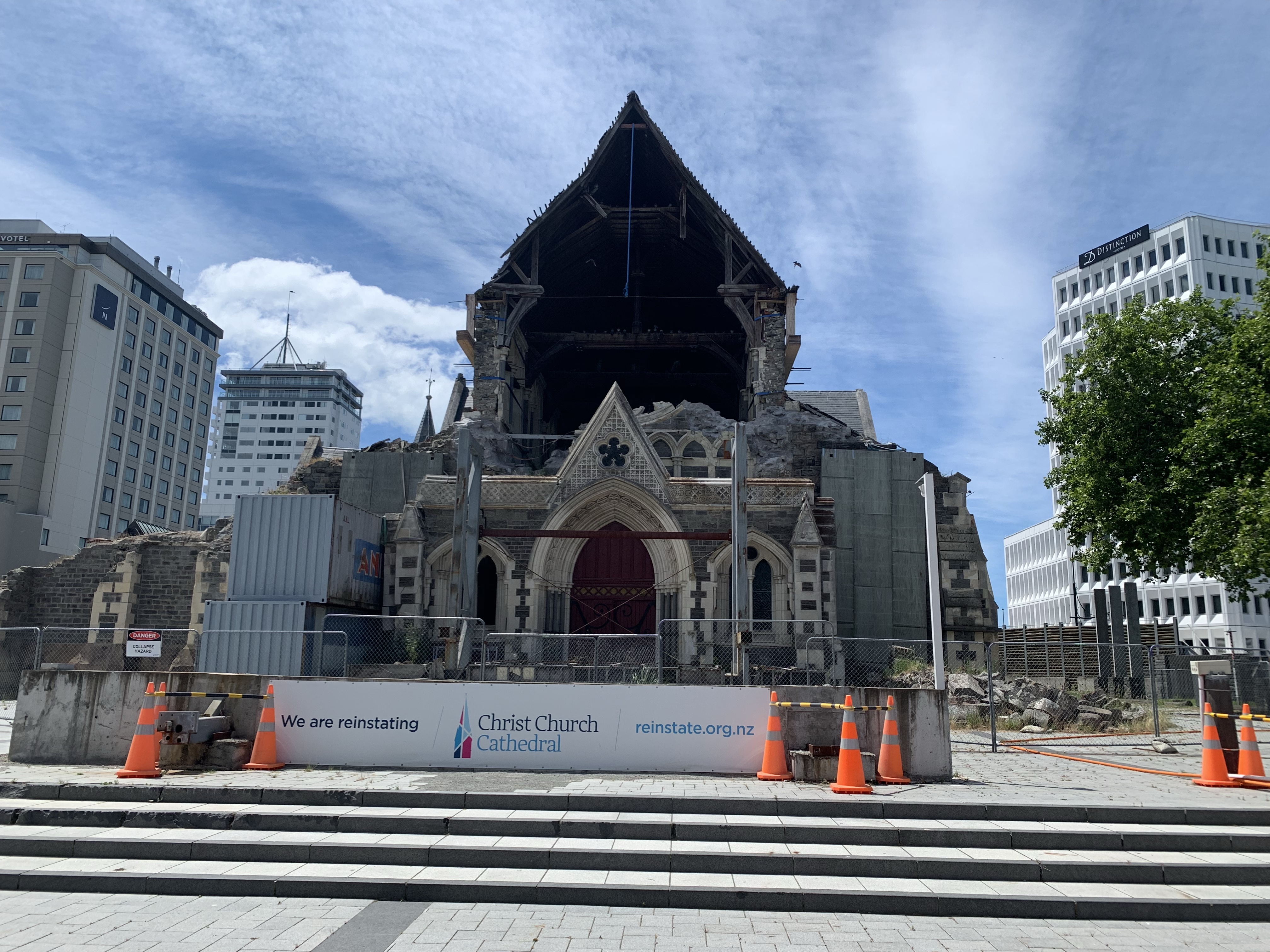
The Friday Street Food Market takes place in Cathedral Square across from the half-ruined original cathedral – this area has always been the heart of Christchurch and remains a focus today. We enjoyed some Asian food at the market.
Christchurch Art Gallery Te Puna O Waiwhetū survived the quake and was taken over by Civil Defence immediately afterwards, with artworks going into storage. It has an active programme of exhibitions and is excellently laid out.
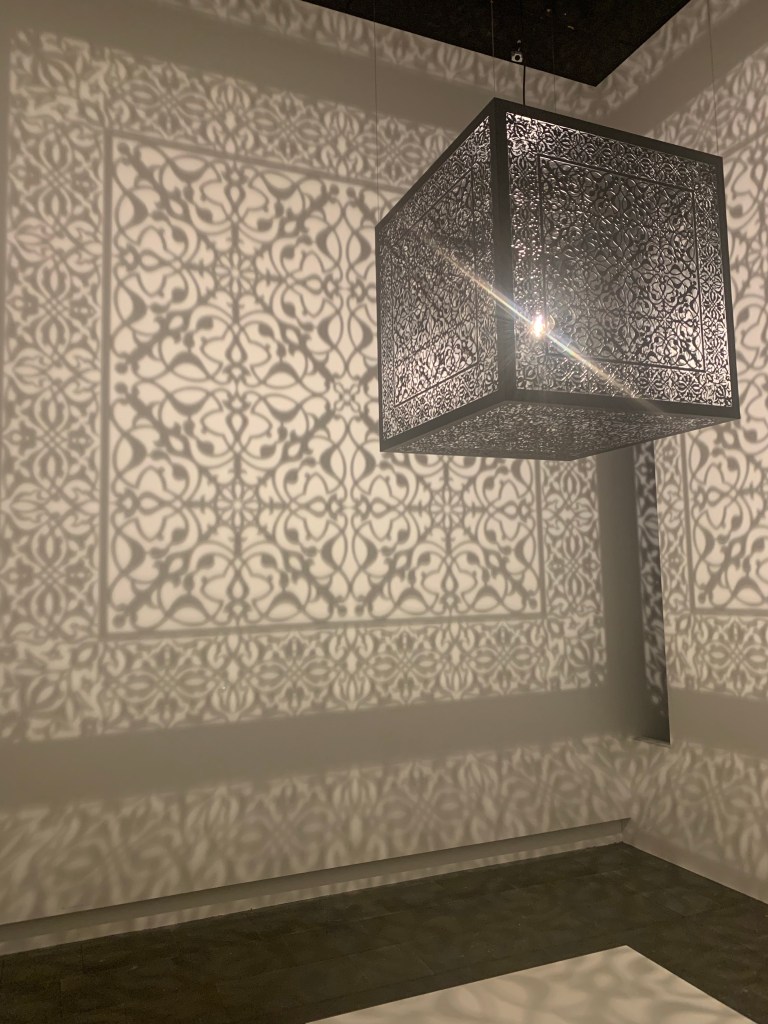
We had a great tour by Bridget, I enjoyed learning about some artists I hadn’t heard of before. Brent Harris’s prints of swamplands, Bill Hammond‘s detailed depictions of birds and islands. Two exhibitions were especially fascinating – ‘Māori Moving Image: An open archive’ and ‘Wheriko – Brilliant!’ including Anila Quayyum Agha’s stunning Shimmering Mirage (2016).
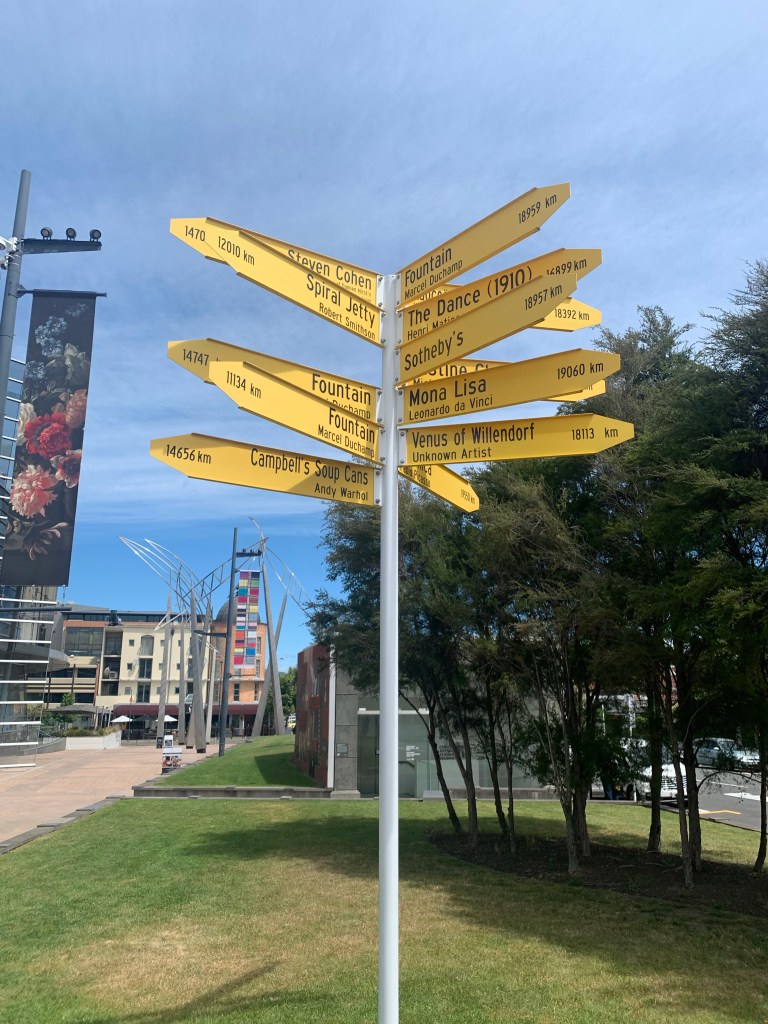
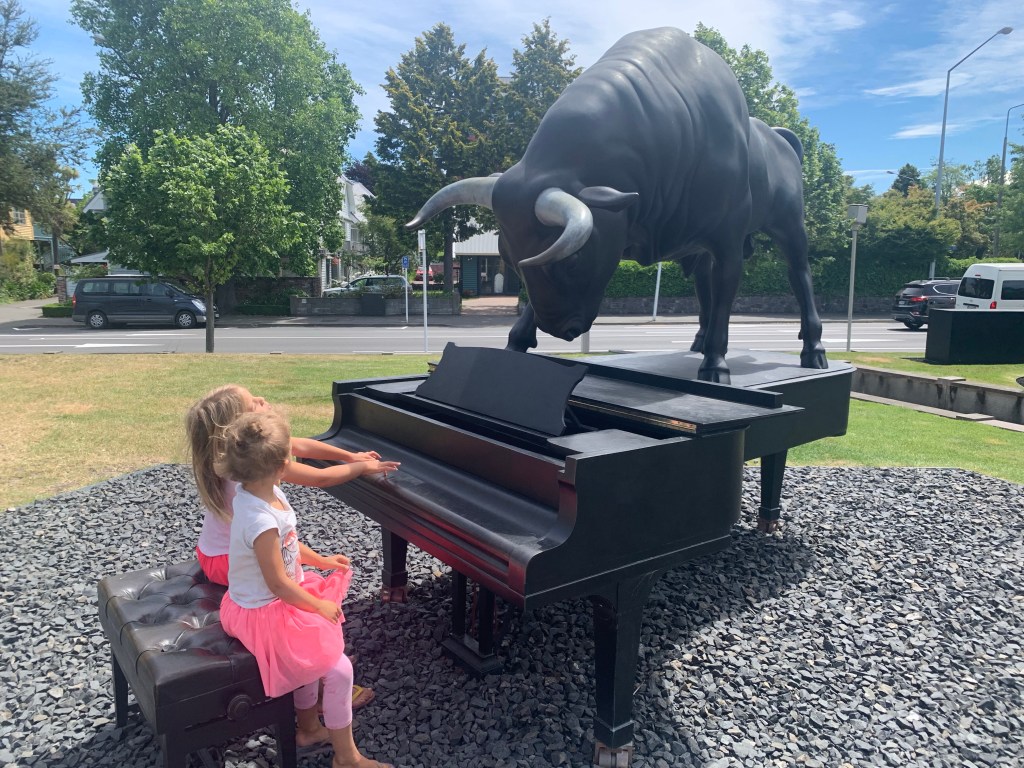
It was reassuring to see public art installations scattered across the city thanks to the SCAPE public art project, with new installations under the theme of ‘Rock, Paper, Scissors’.
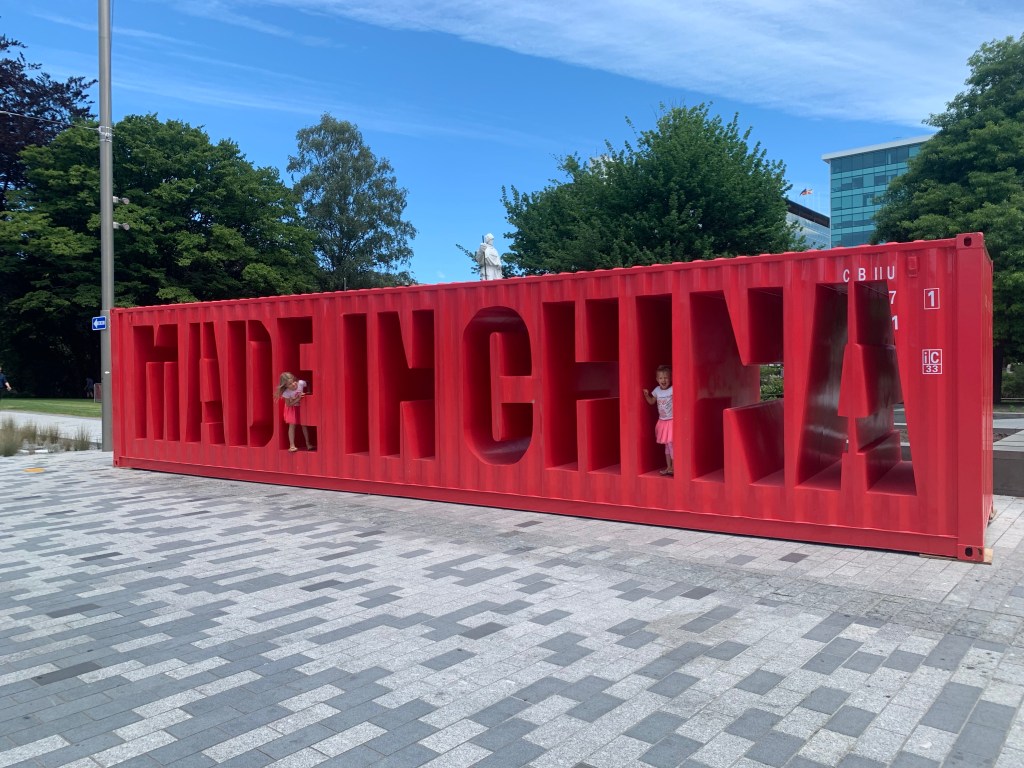
Older works by Anthony Gormley and others remain in situ. We spotted plenty of installations on a run around Hagley Park, which also took us past the mosque subject to terrorist shootings in March 2019.
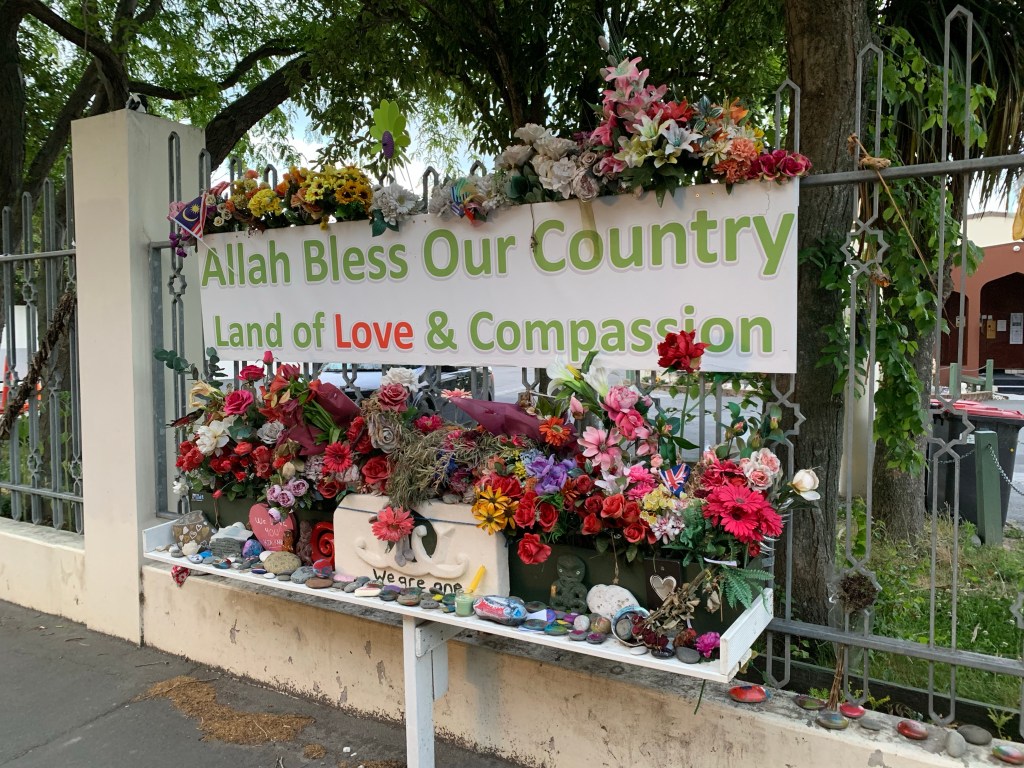
It feels so unfair that such a genteel, beautiful city such as Christchurch should have had such devastating incidents in its recent history, but it seems to be recovering well.
 Life with MoJo
Particularly enjoyed the photograph of the Jailhouse! Were there latrines in each cell?
LikeLike