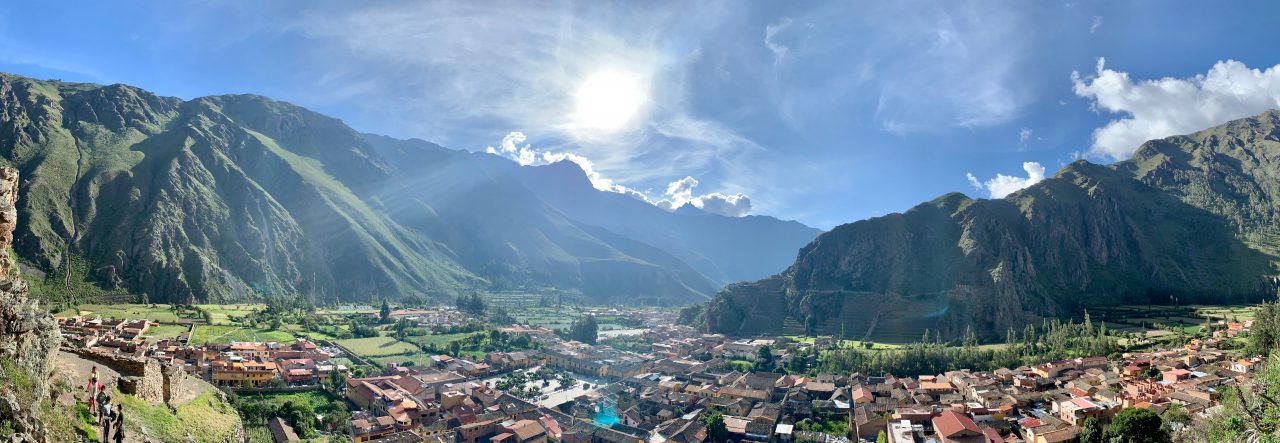
The temples of Angkor are one of mankind’s greatest architectural achievements. Only discovered by the west a few centuries ago, they were created by a fascinatingly advanced civilisation with lofty ambitions. To experience them in person is one of the wonders of the world, but how best to tackle a temple complex so vast (spread across 400 square km) and due to neglect and war are in various degrees of ruin, so that you need quite a vivid imagination to fully understand them?

Sunrise and sunset are optimal times to get the fully romantic and dramatic effect of the temple buildings in their surrounding environment. With a day pass you are allowed to visit after 5pm the day before your ticket is valid, so you are able to then return the next morning early for sunrise and stay the whole day through to the following sunset, stamina depending of course. Three- and five-day tickets are also available, but we opted for just a one-day.
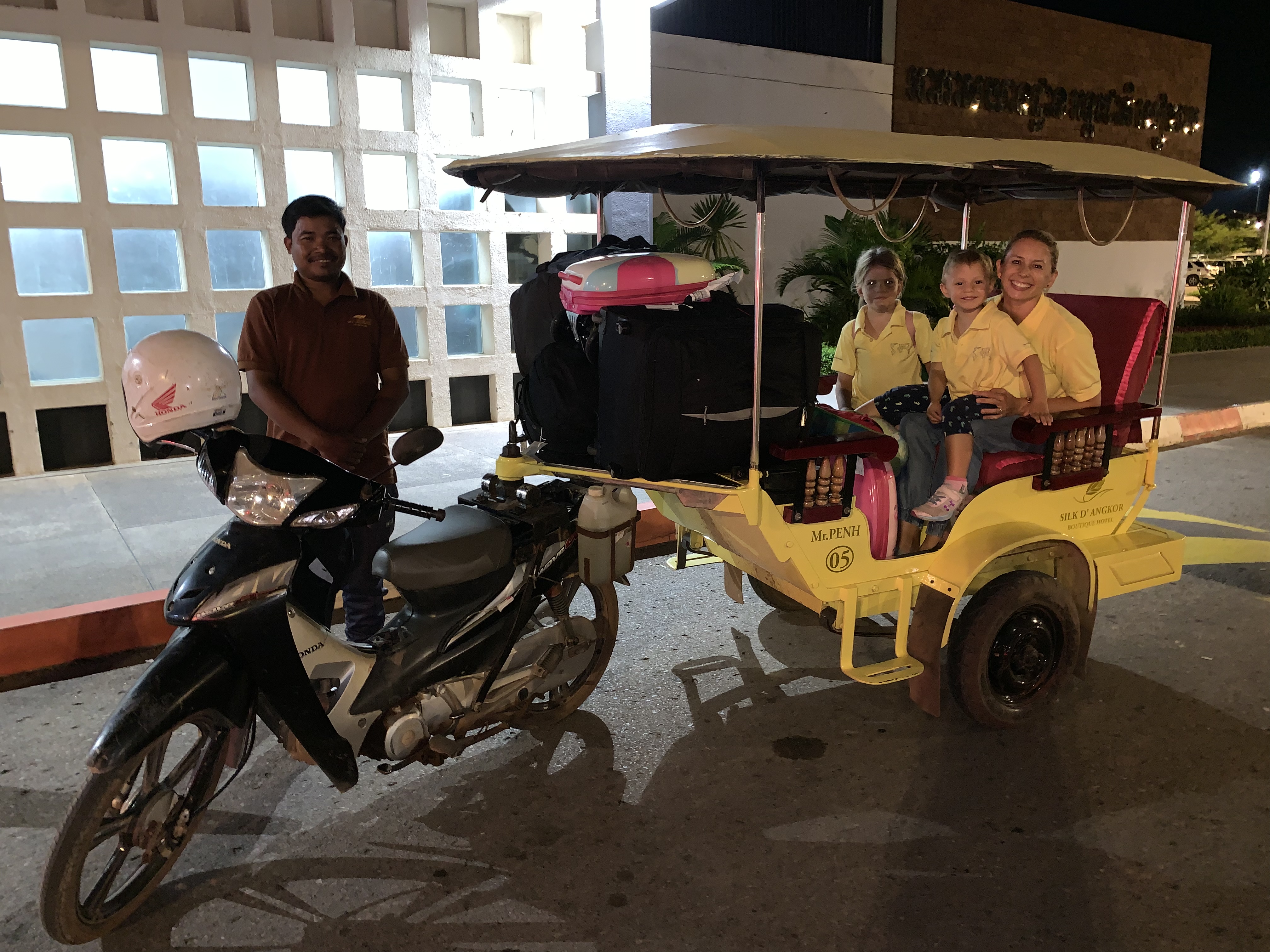
Our friendly moto tuk-tuk driver who had collected us from the airport was lined up to take us to the temples. He had surprised us as our airport pick up, as a moto-tuk-tuk is basically a scooter pulling a two-wheeled, one-axelled chariot – we were unsure how this would work with luggage and the kids – but it actually works well and ended up being our favoured mode of transport throughout Cambodia!
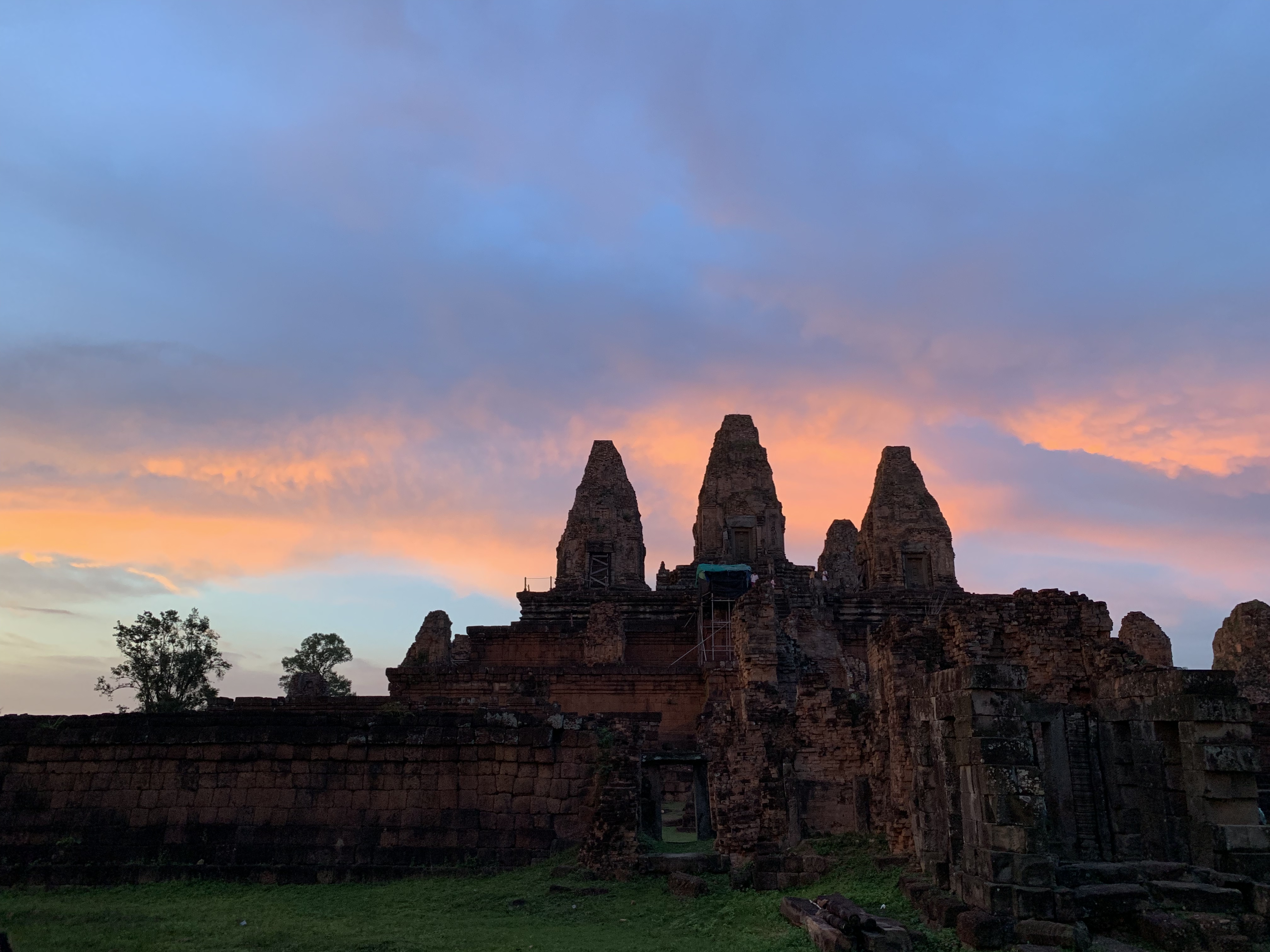
As we left the hotel at 4pm to buy our tickets, there was a torrential downpour and we were warned sunset would be unlikely to see – but being us, we risked it and by the time we had bought our tickets (you can’t buy them until 4.30pm) and arrived at Pre Rup temple, the sky was bright and the air fresh.
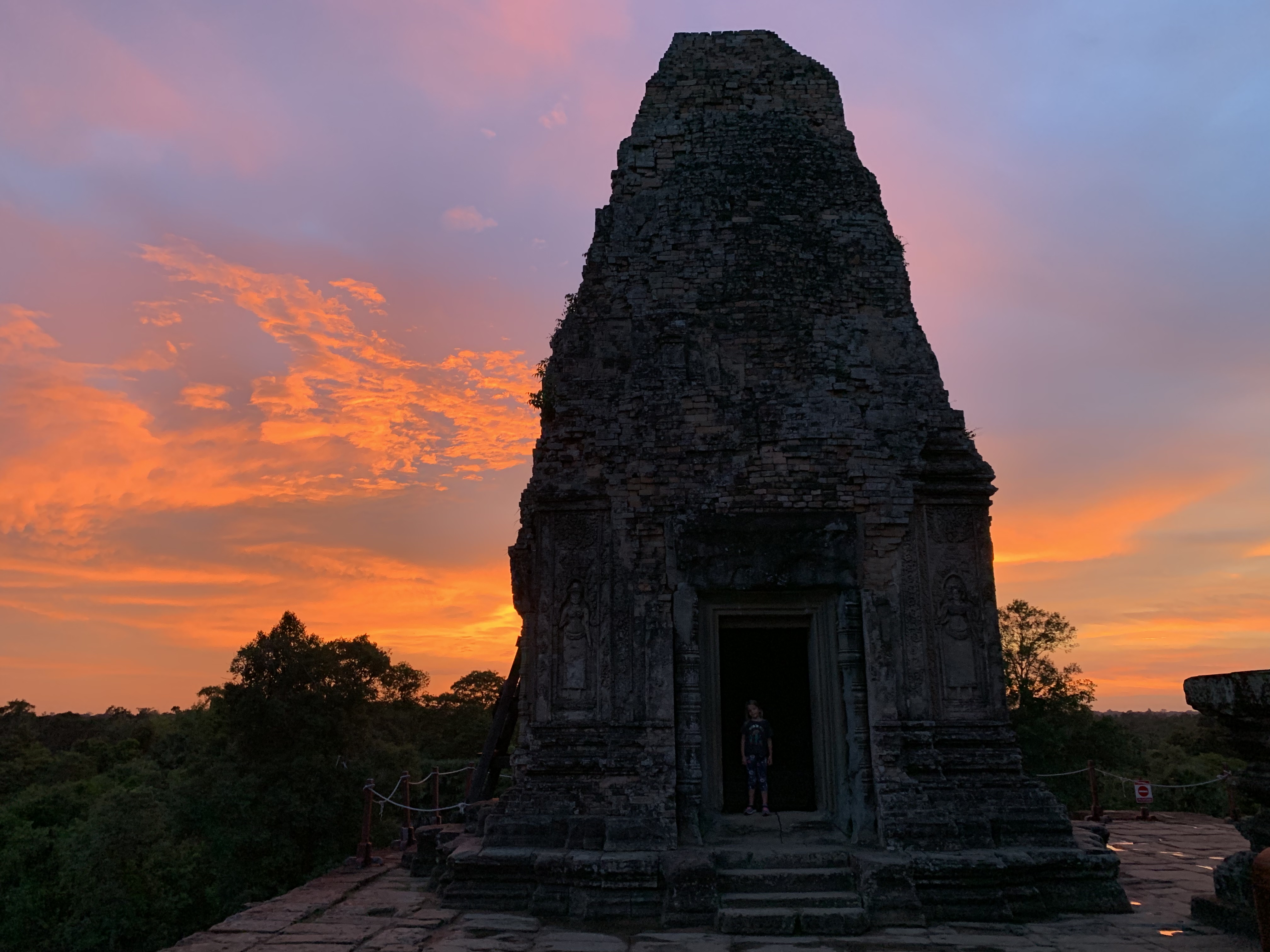
A highlight of the Grand Circuit tour, Pre Rup temple was consecrated to Shiva and completed around 962. It is a popular site for sunset, and it didn’t disappoint. (we had cleverly decided, as many do, that it was worth experiencing a smaller, lesser known temple first, before seeing the wondrous Angkor Wat). Quite destroyed, the outer enclosures of brick towers can be clambered over, formerly libraries and halls which are hard to picture – then large stone steps around a symmetrical pyramid allow you to rise to lofty heights to view the tree canopy.
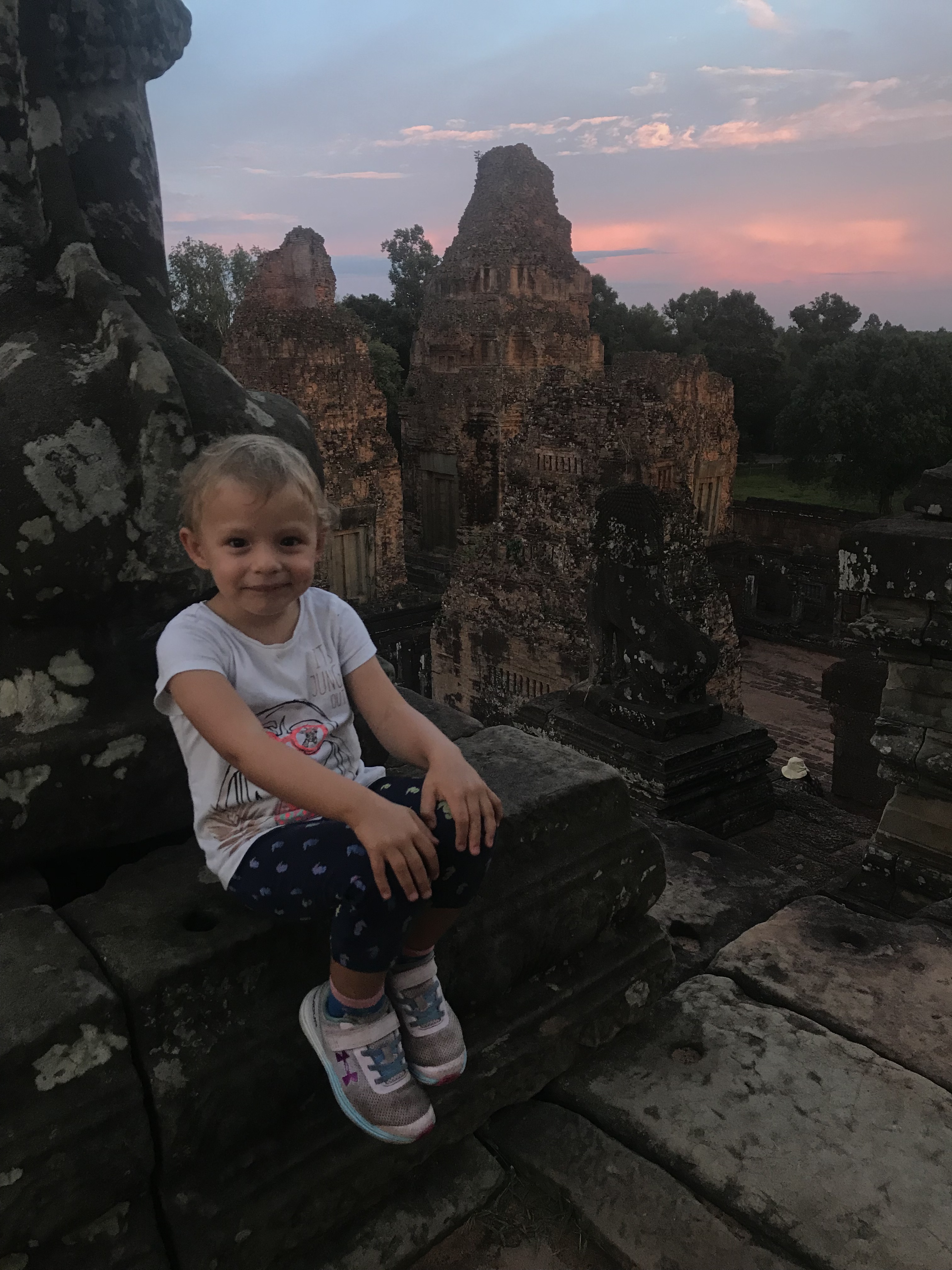
You need a head for heights to dangle your feet over the edge, which is what most do, we were in time to get a seat a little higher on a stone outcrop.
It is always worth waiting a little longer after the sun has slipped away – the true beauty and rainbow colours coming after the main glow has passed.
Rising early, we reached Angkor Wat grounds in the dark the next morning. Set within a 200 m-wide moat, you walk quite a way from the road, across the water. We found a good spot in the fourth enclosure, resting on the remains of a library building, as the silhouette of the famous five corncob towers at the temple’s heart were just becoming visible.
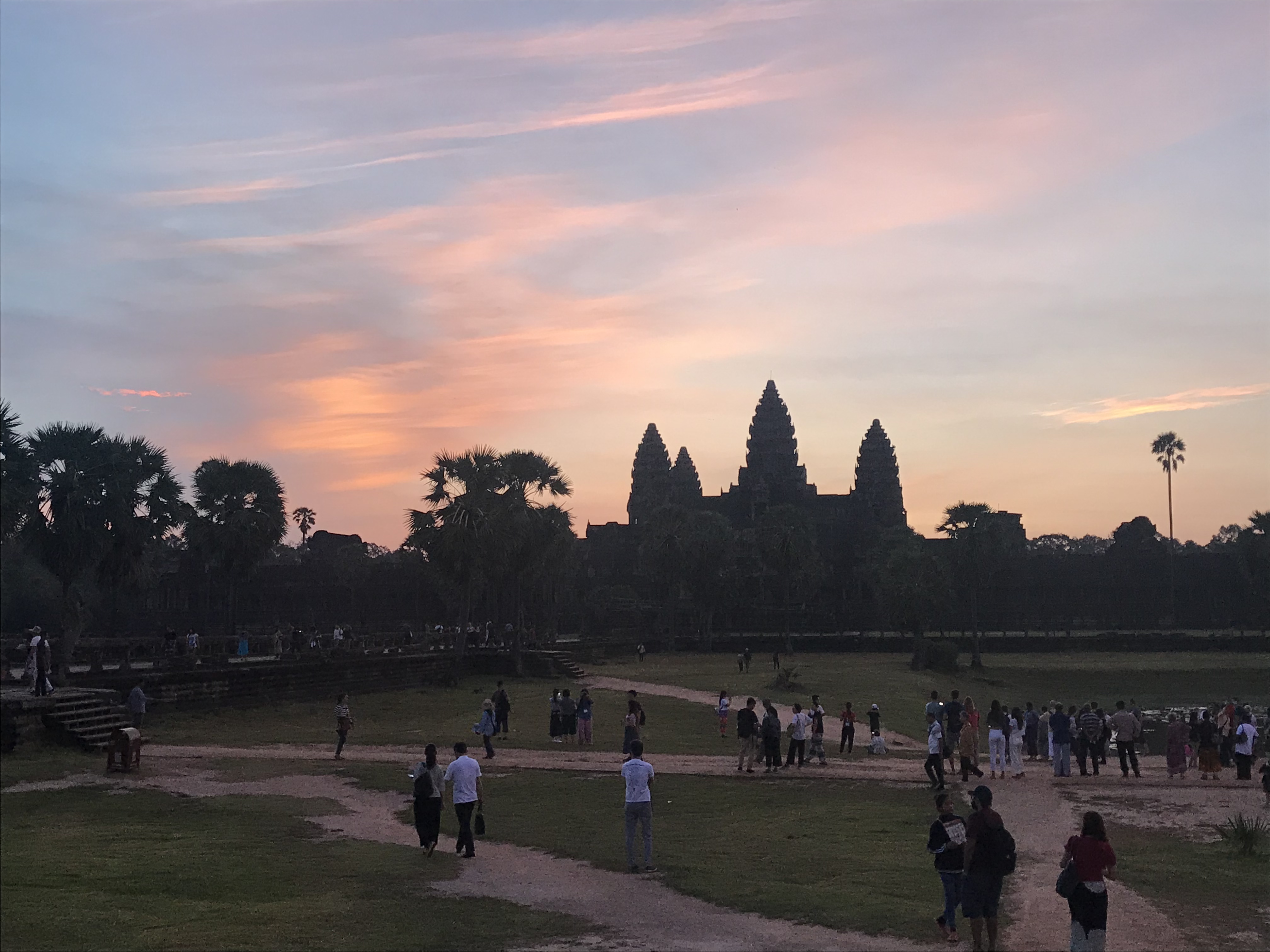
Once dawn appeared, we made our way along a raised causeway bordered by a crumbling naga (the multi-headed serpent) balustrade to enter the third enclosure. Here we learnt about apsaras, gopuras and scenes from the Ramayana, battles played out in relief along vast stretches of stone. Dedicated to Vishna, the complex was built under King Suryavarman II between 1113 and 1150, it is the pinnacle of the Angkor’s achievements. It was soon after this that the country transitioned to Buddhist beliefs from Hinduism, and the absolute power of these god-king rulers came into question (and their money ran out).
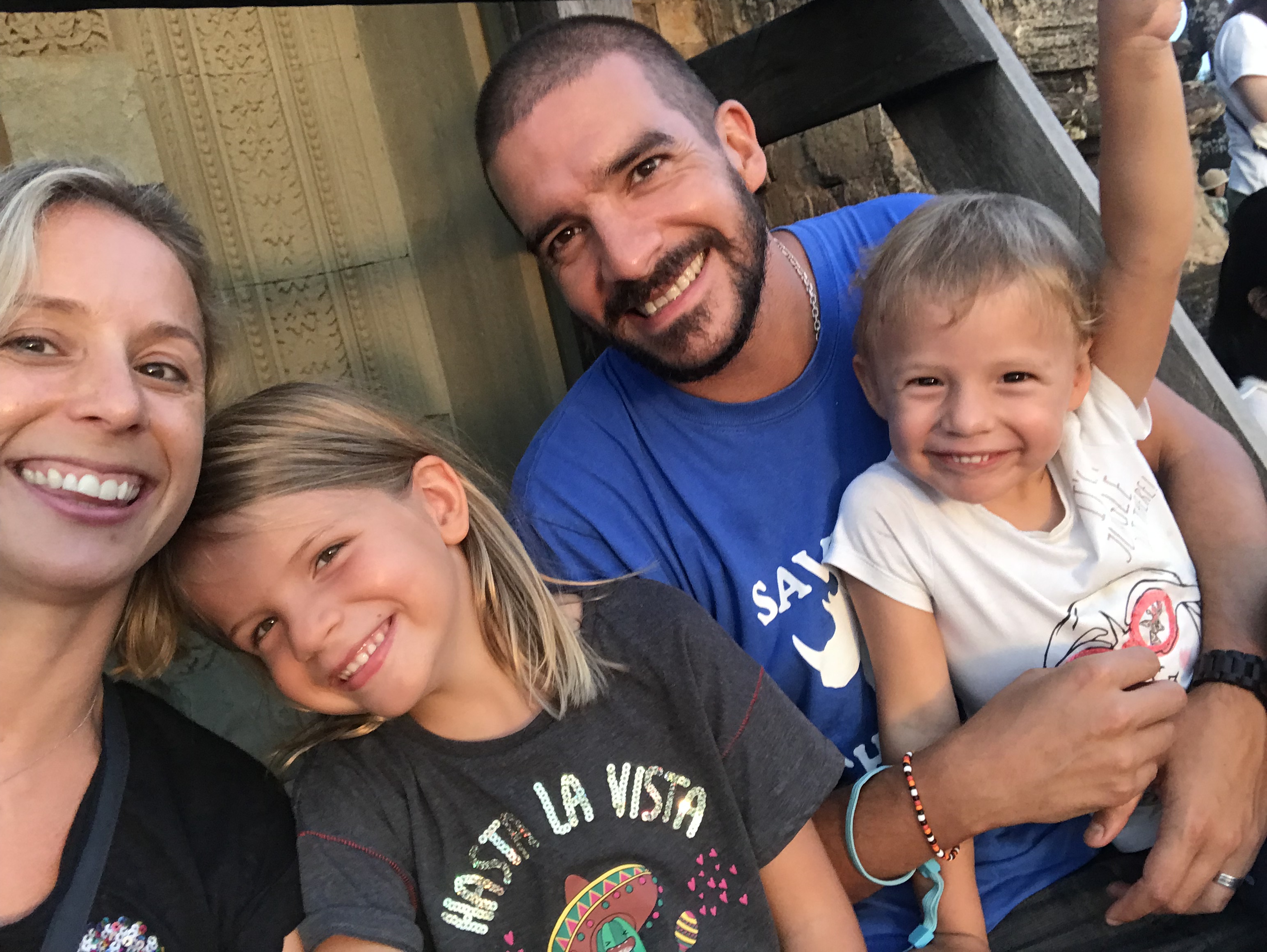
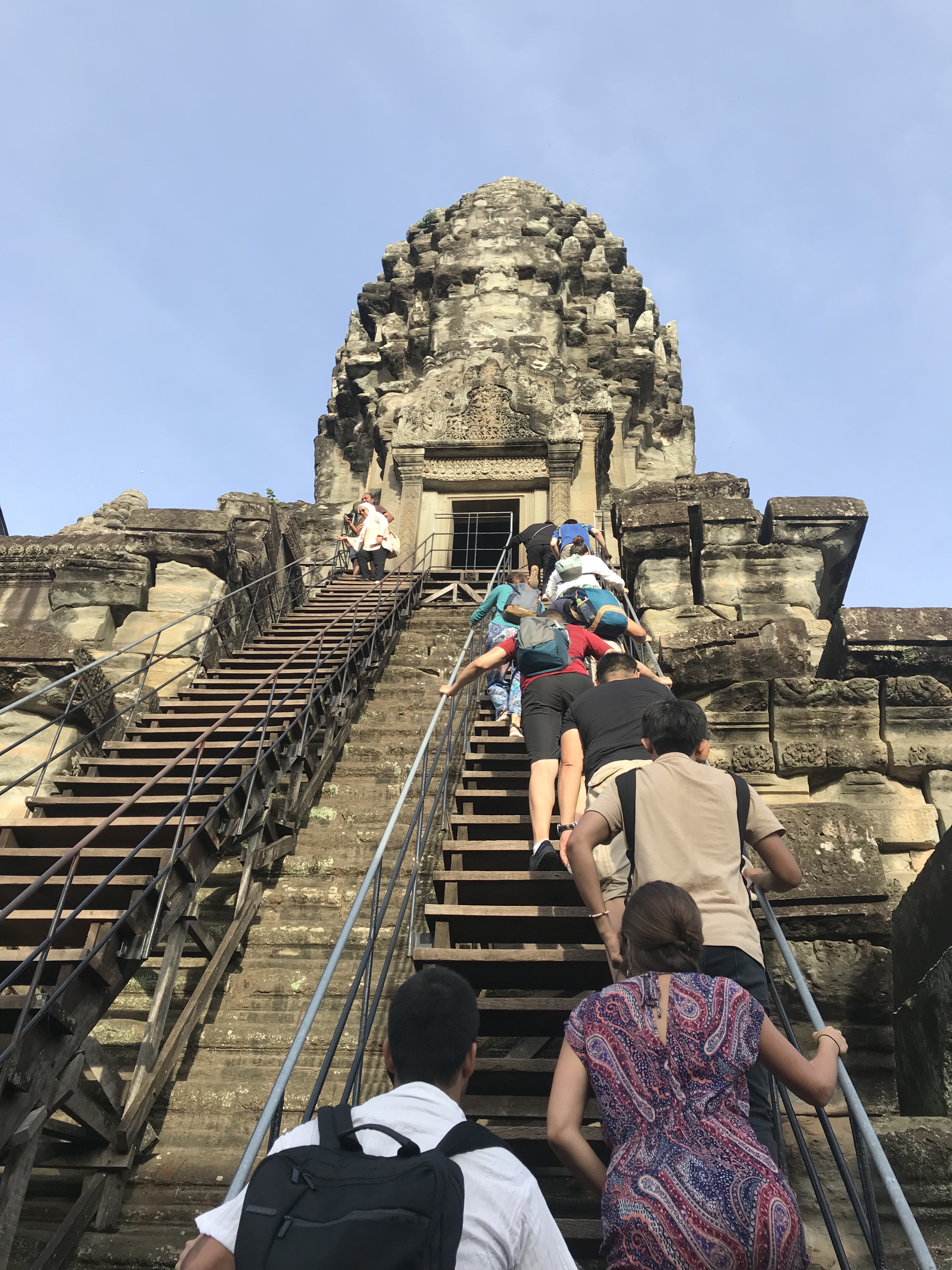
The architectural historian in me was fascinated by the achievements which almost match Chartres and St Denis – two gothic cathedrals in France built at a similar date. But in Angkor Wat, they never quite mastered the pointed arch, so the vaults are created by one stone leading to another so appear more blocky than lofty. No children were allowed to the third level of the pyramid today (in its early days it was only accessible to the high priest and king) – so I got the chance to climb the steep ladder staircase to the top alone to get an aerial view, while Tom took MoJo off to receive a blessing (and bracelet) from a Buddhist monk and be attacked by monkeys!
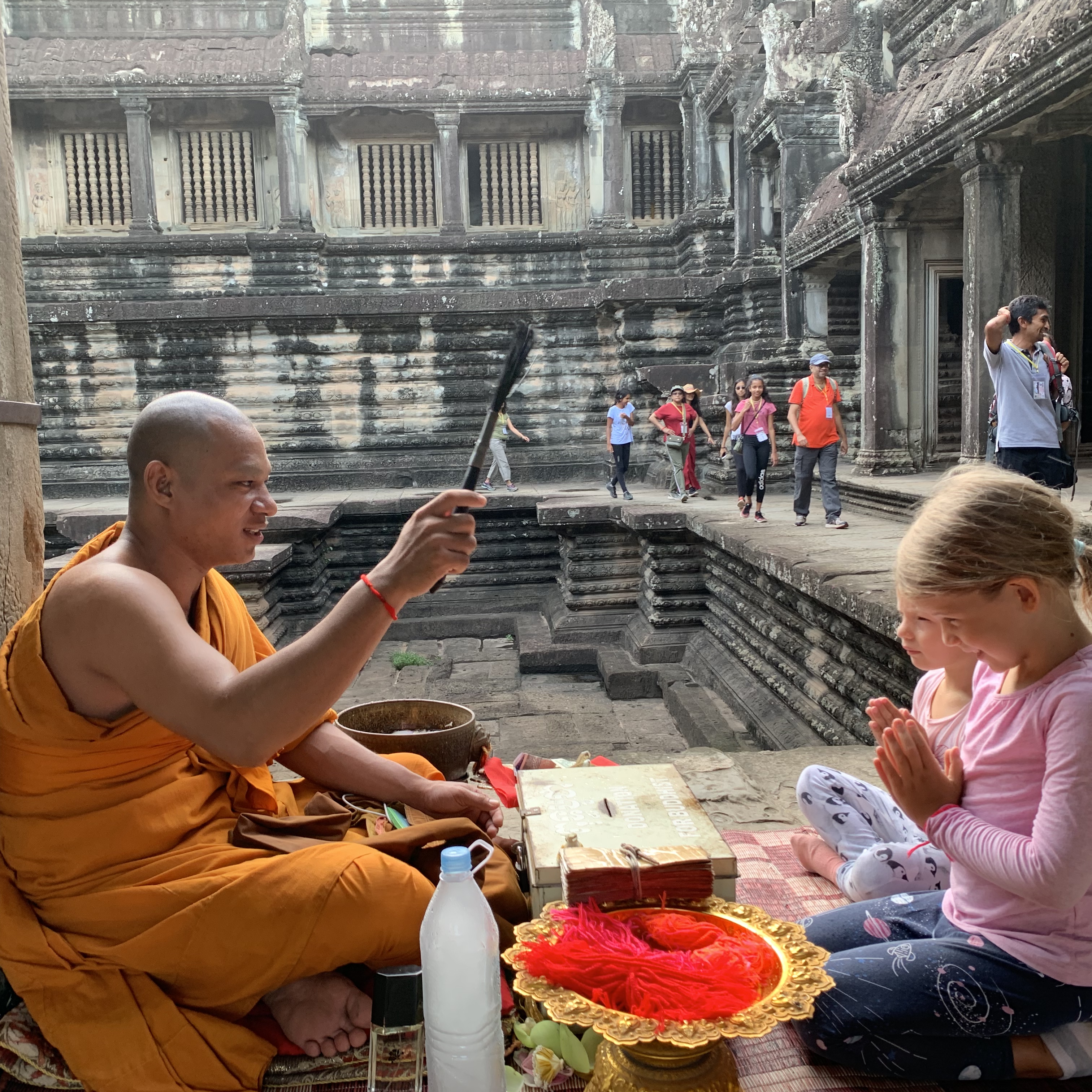
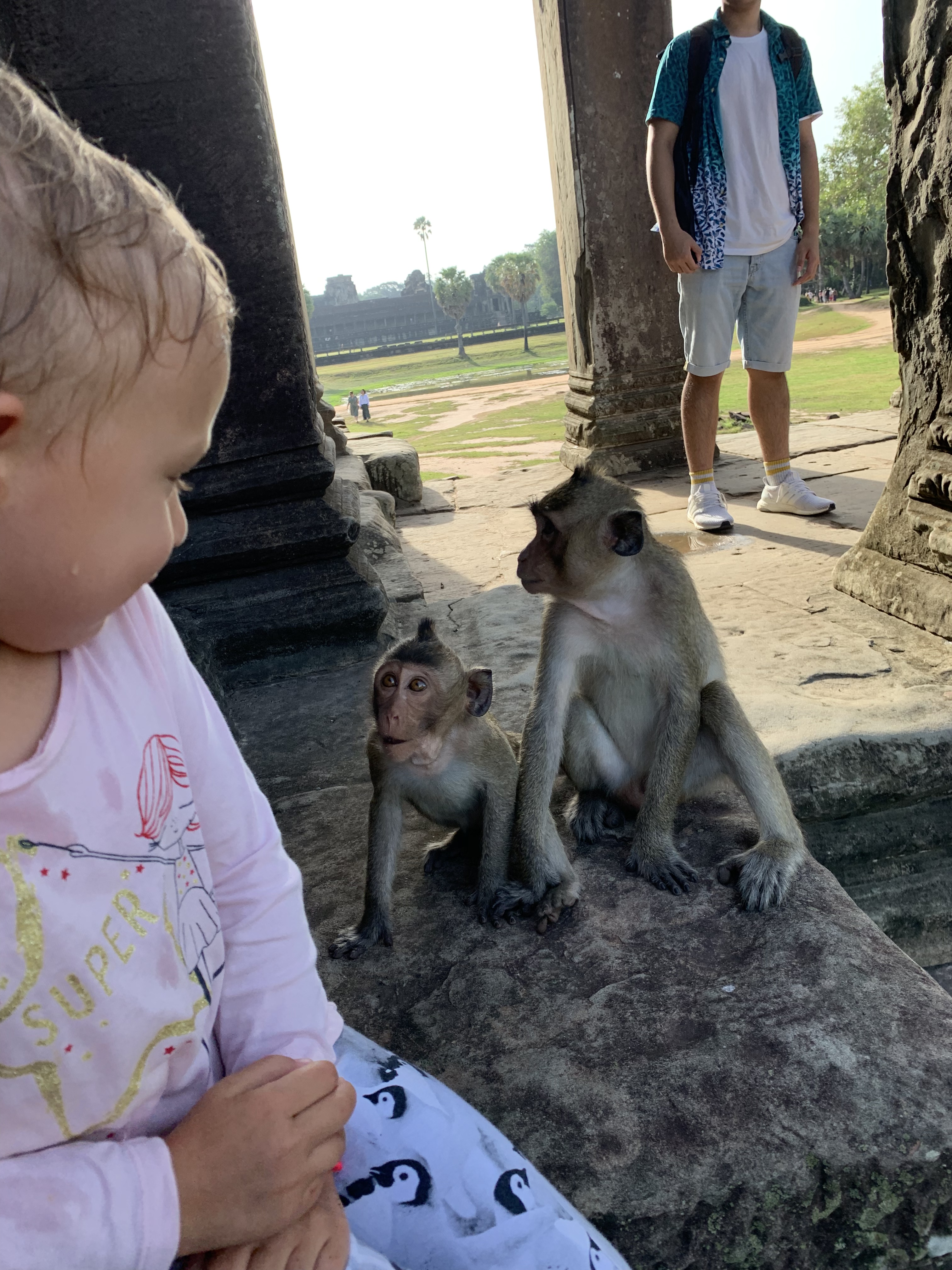
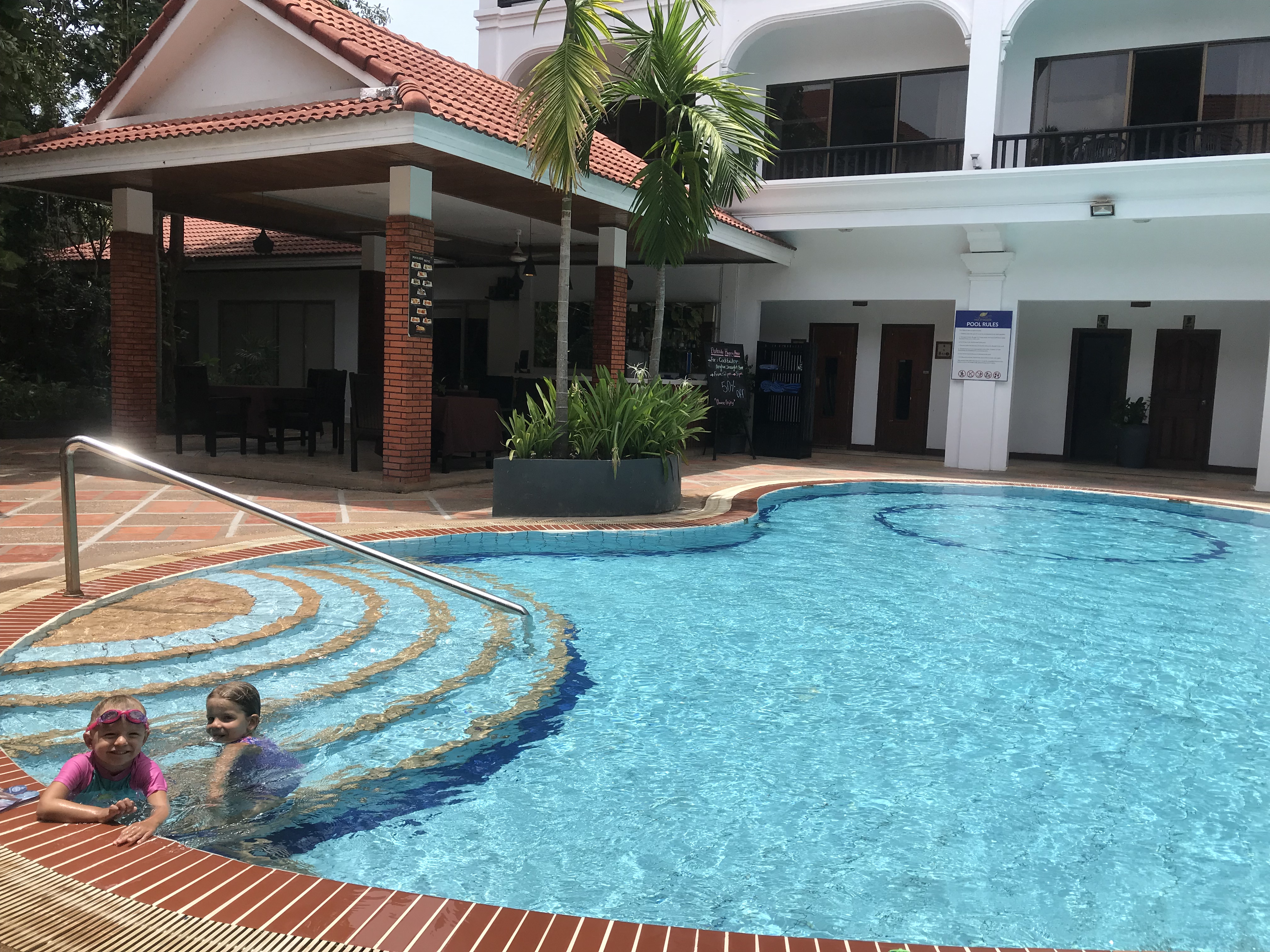
By 9am we were back at the hotel having breakfast – we had decided given the intense heat in the middle of the day to take a breather (i.e. swim in our hotel pool!!) and return to the temples in the afternoon to keep us going till sunset, this was a good decision.
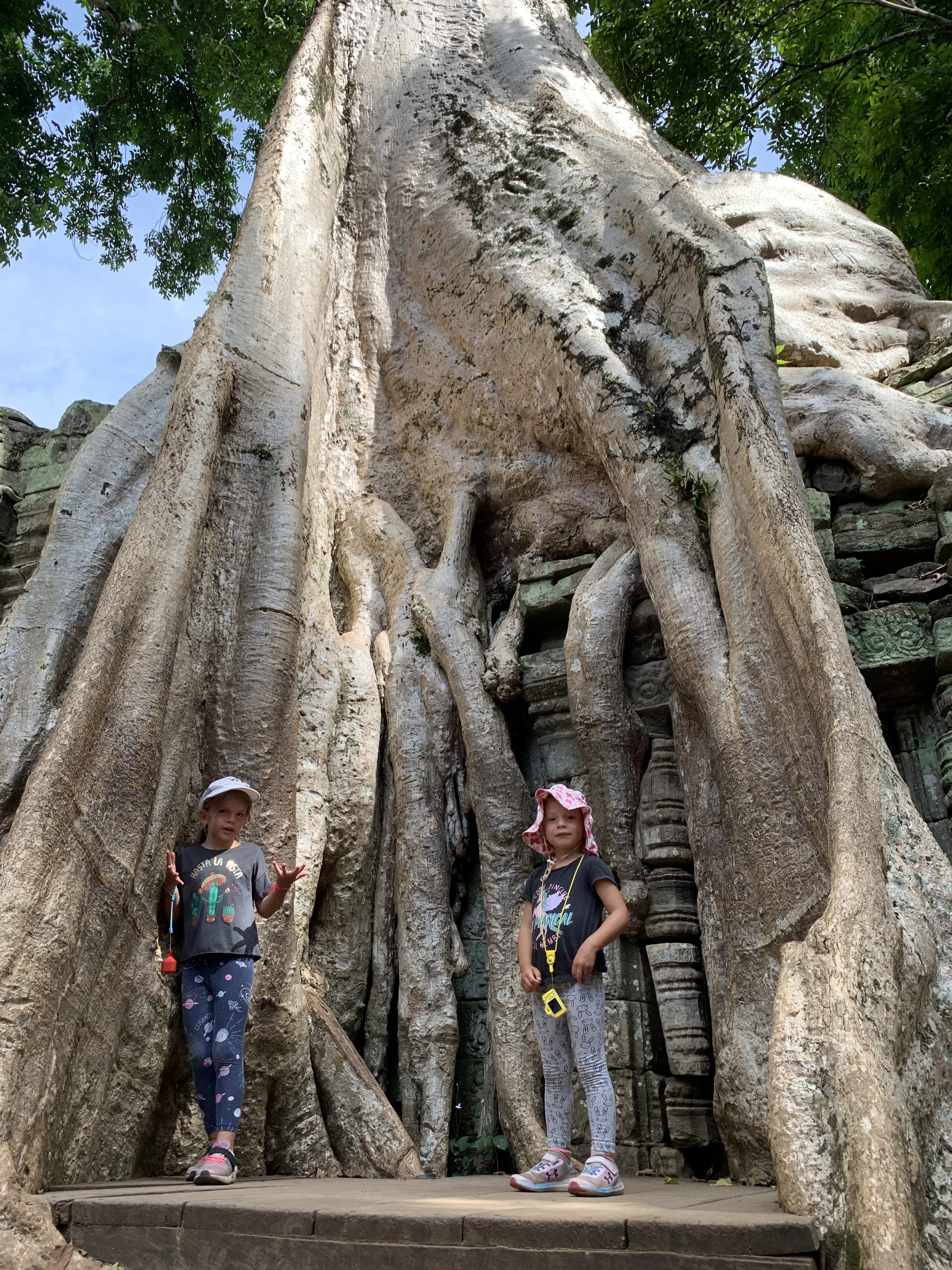
In the afternoon we started out at the magical Ta Prohm (a Buddhist monastery built around 1186). It is a place where you really start to question man’s place in the universe: yes we were able to create such magnificent buildings, but they outlive us all – even surviving some of the most brutal warfare imaginable – and yet over time these buildings are being taken over by an even stronger force, that of mother nature. It’s a push and pull between tree and stone here: it is still unclear over who the ultimate victor will be.
Used as a backdrop for Tomb Raider and Indiana Jones, these trees are rightly the most photographed in the world. They are in danger however, and it is here you see the most evidence of vital restoration work.
From here we entered the 3 square km walled city of Angkor Thom, the centrepiece of Angkor. Our first stop was the Bayon, the temple of a thousand faces. Its unusual structure builds up layer by layer, rising to a pinnacle like a mountain, the 37 towers carved with massive faces (the “Angkor smile”). Who this enigmatic, repeated depiction represents is something of a mystery – the Hindu deity Brahma? Or universal humanity? Or is it just a depiction of the ruler Jayavarman who forked out for the temple to be built in the first place?
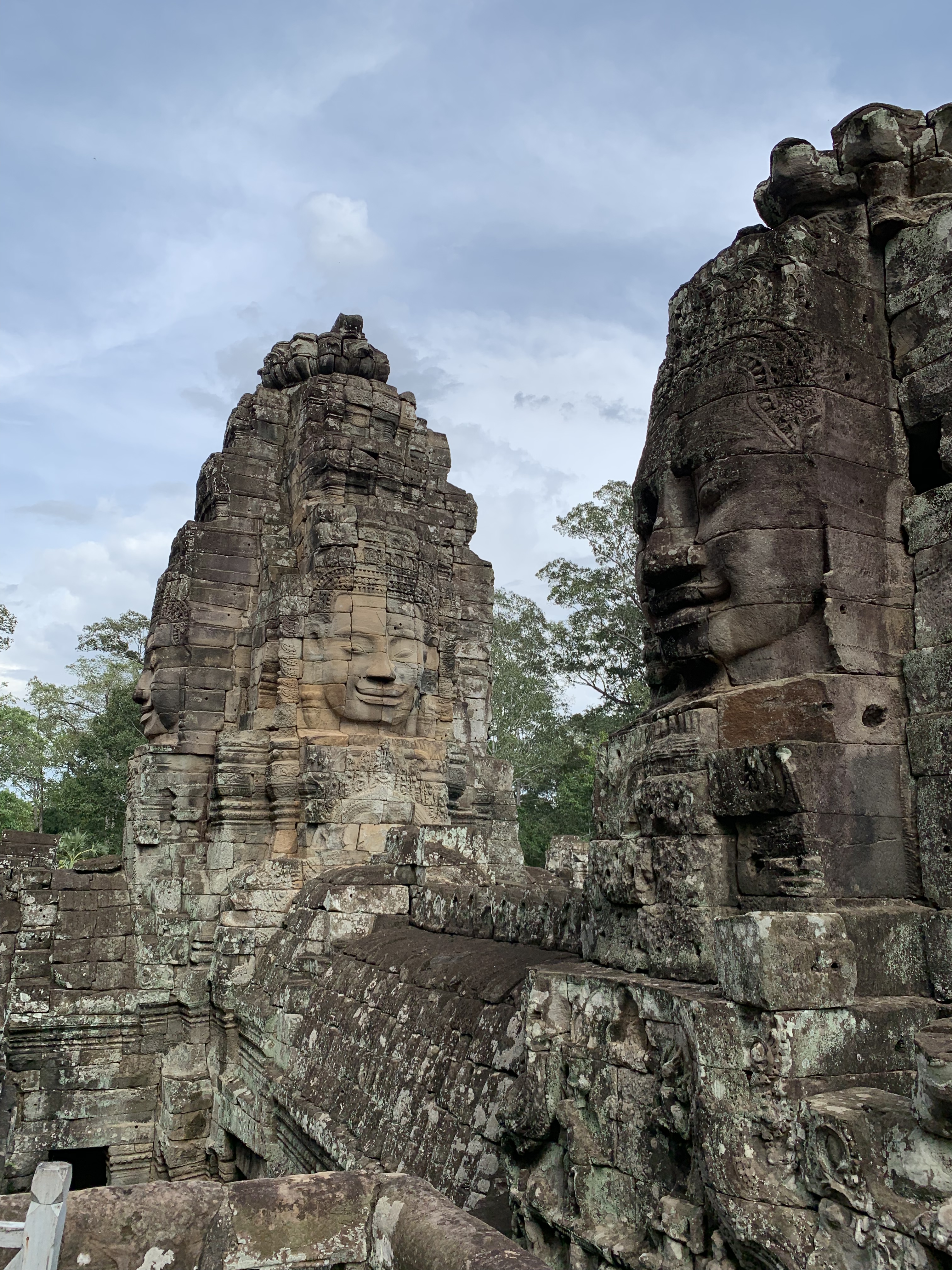
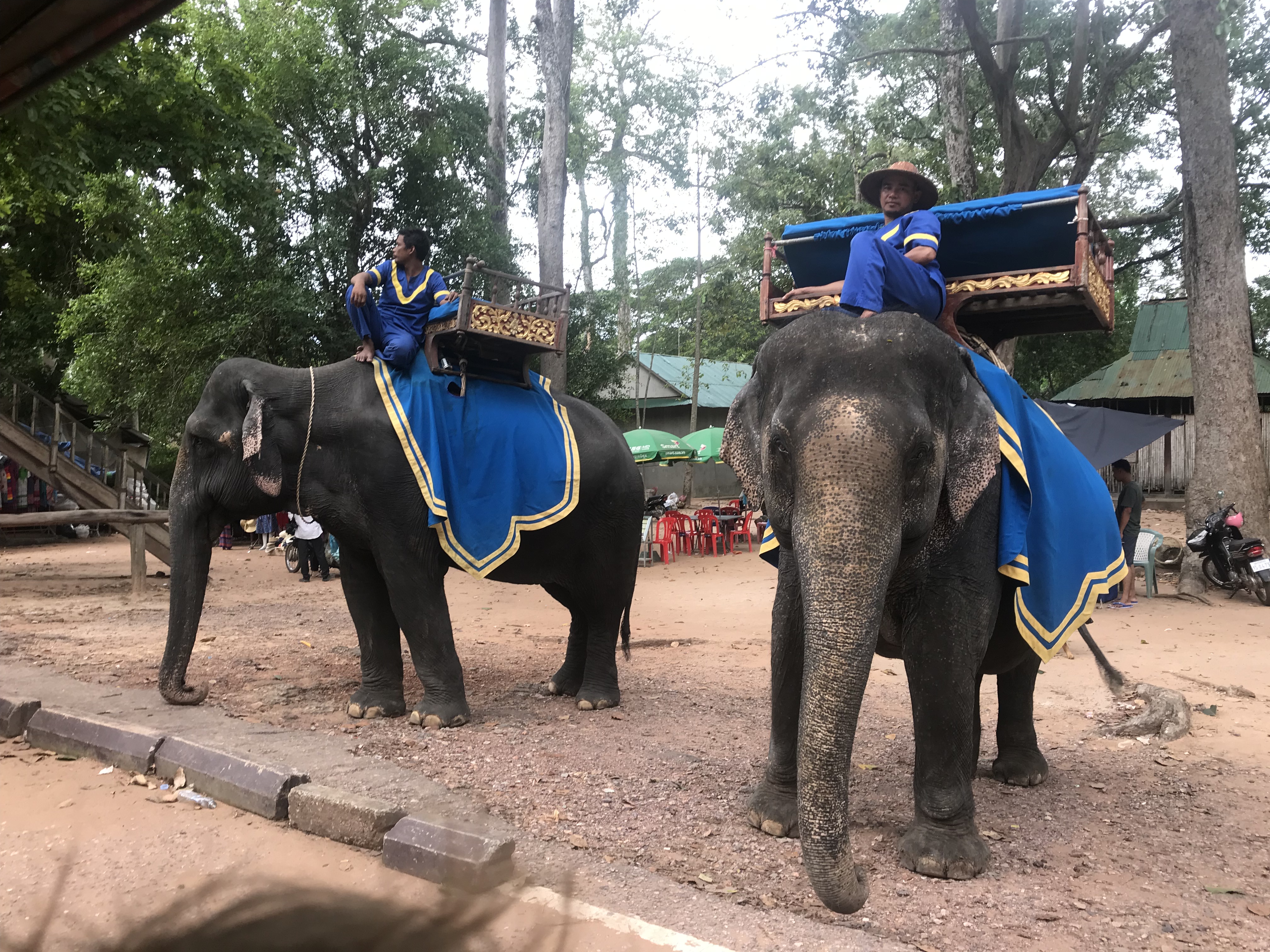
We missed out on getting a proper view of the Terrace of the Elephants because the wind was picking up and a large branch fell as we were walking towards it which scared Molly – rightly so! Fittingly, we then saw some real elephants. We had thought that tours on top of them had stopped a few years ago but perhaps not? The traditional mode of transport in the area, they are the reason why gateways to all the temple spaces are so large.
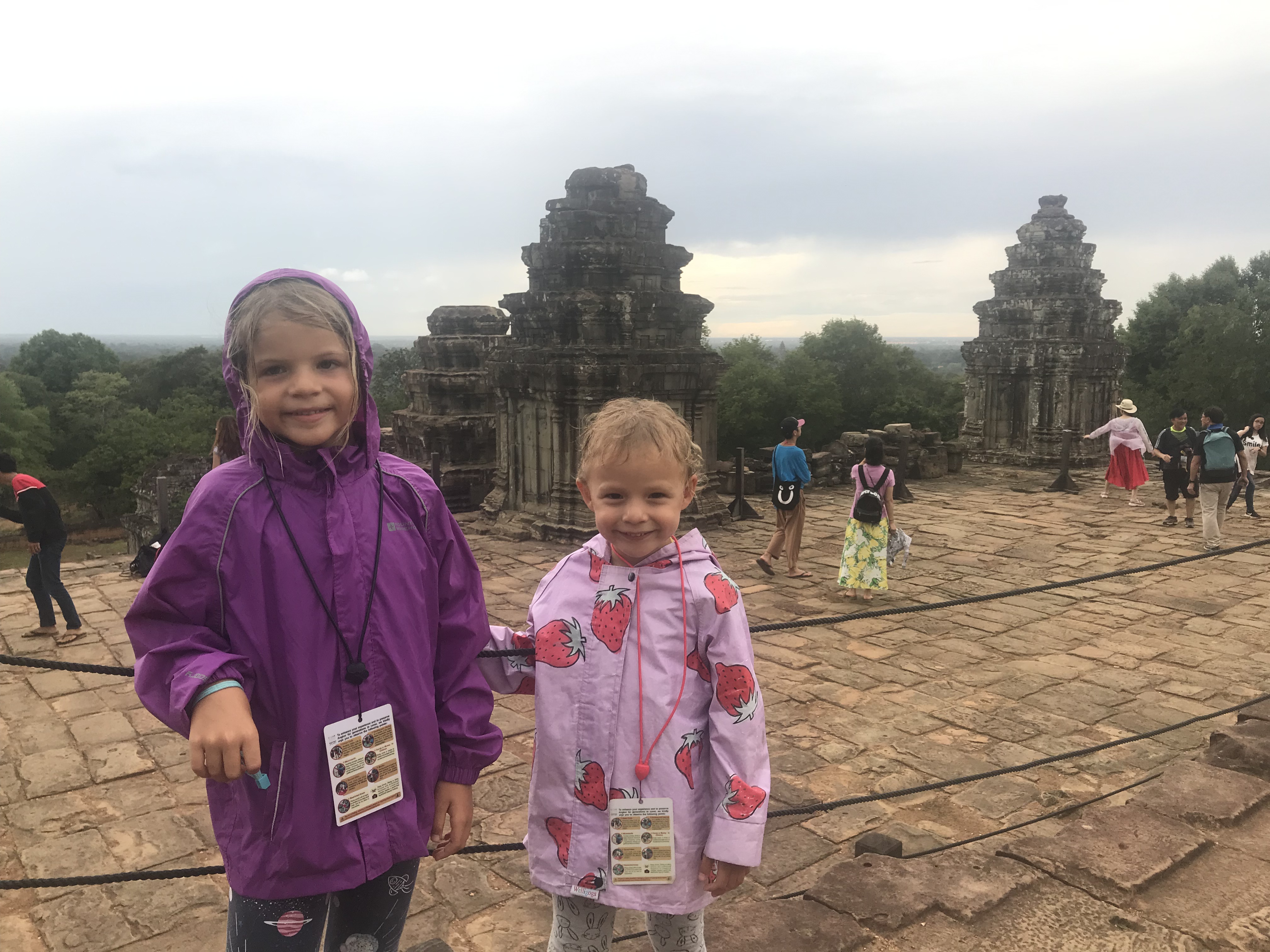
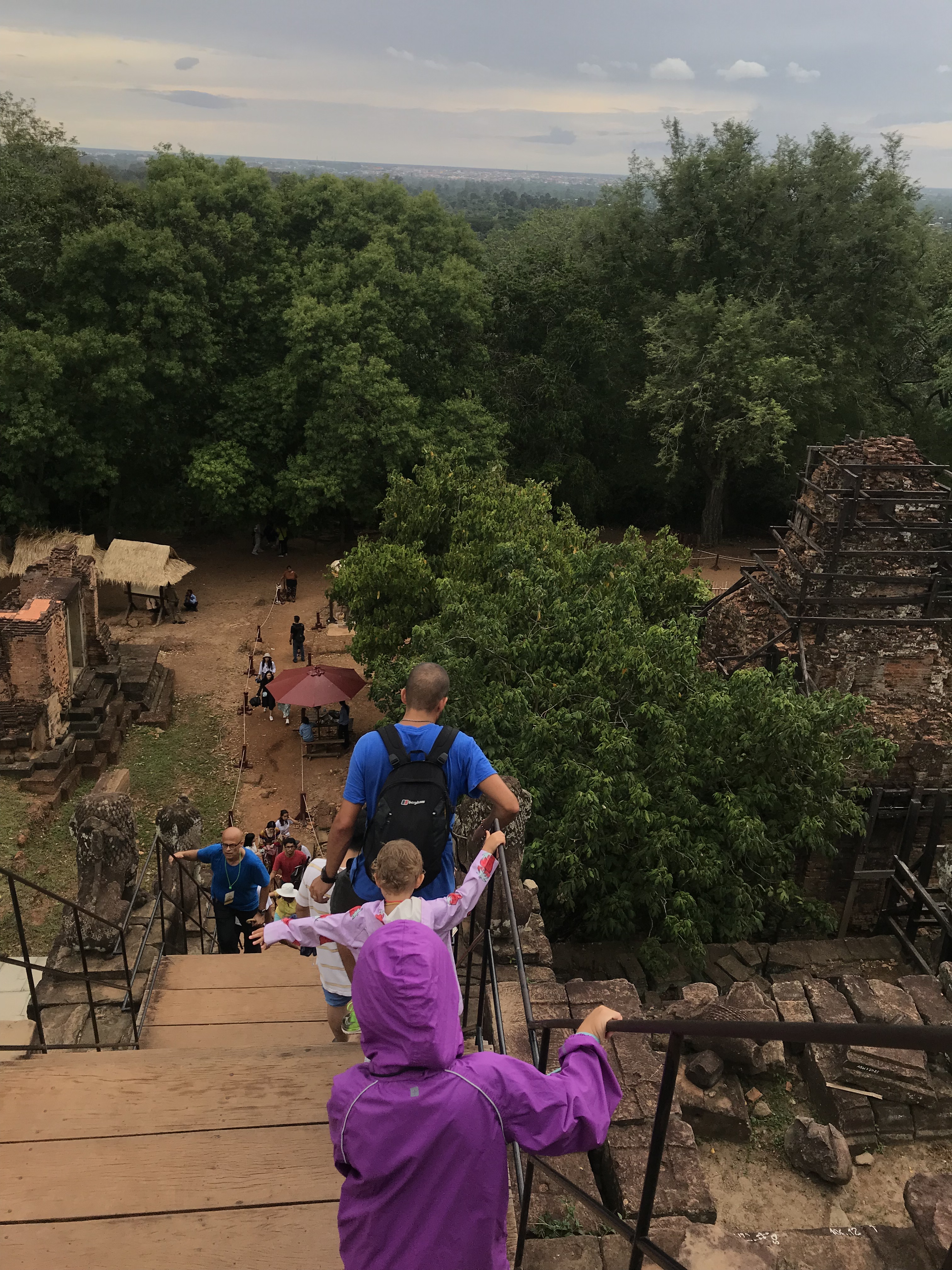
It was important to reach the entrance to Phnom Bakheng before 4pm as they limit the number of admissions for sunset to 300. Despite it being quite a gloomy evening, they were a quarter through their capacity by the time we started our ascent up the hill to the temple. Earlier in date than the others (889-910) not much survives, the reason for going are the views, which are spectacular. It took about an hour to get to the top, and it was a little drizzly, so we decided to start the climb down before seeing sunset!
Conclusion: yes you could see a lot more than we did, but for a taster and our ages, we got a lot out of our time at the temples and saw the major hits.
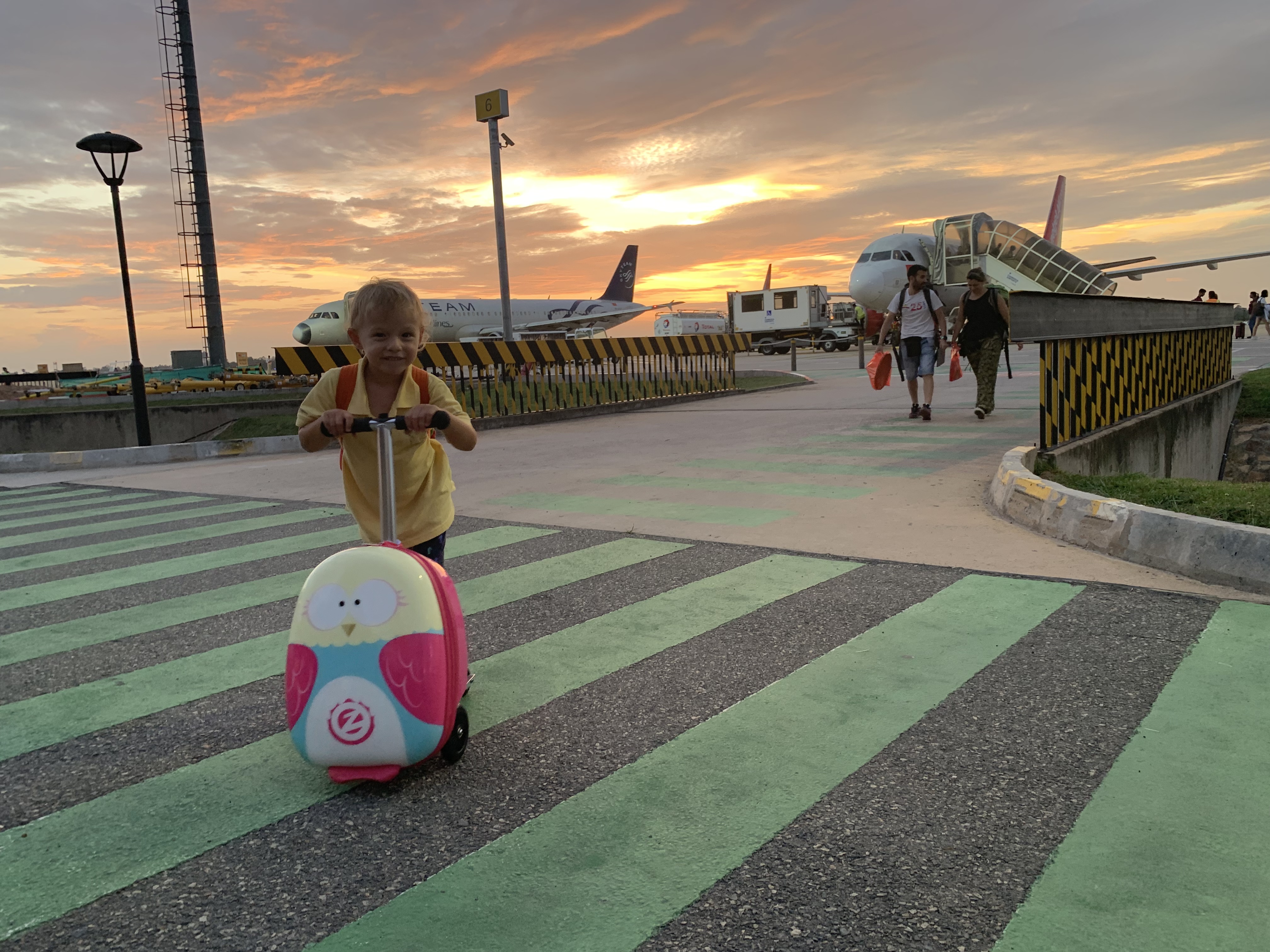
You are always going to warm to a city that you land in as a perfect sunset surrounds the tarmac. Siem Reap is quite an odd city, only really more than a backwater because of the millions of tourists a year who come to visit Angkor Wat. It isn’t a typical Cambodian city, but we liked it a lot.
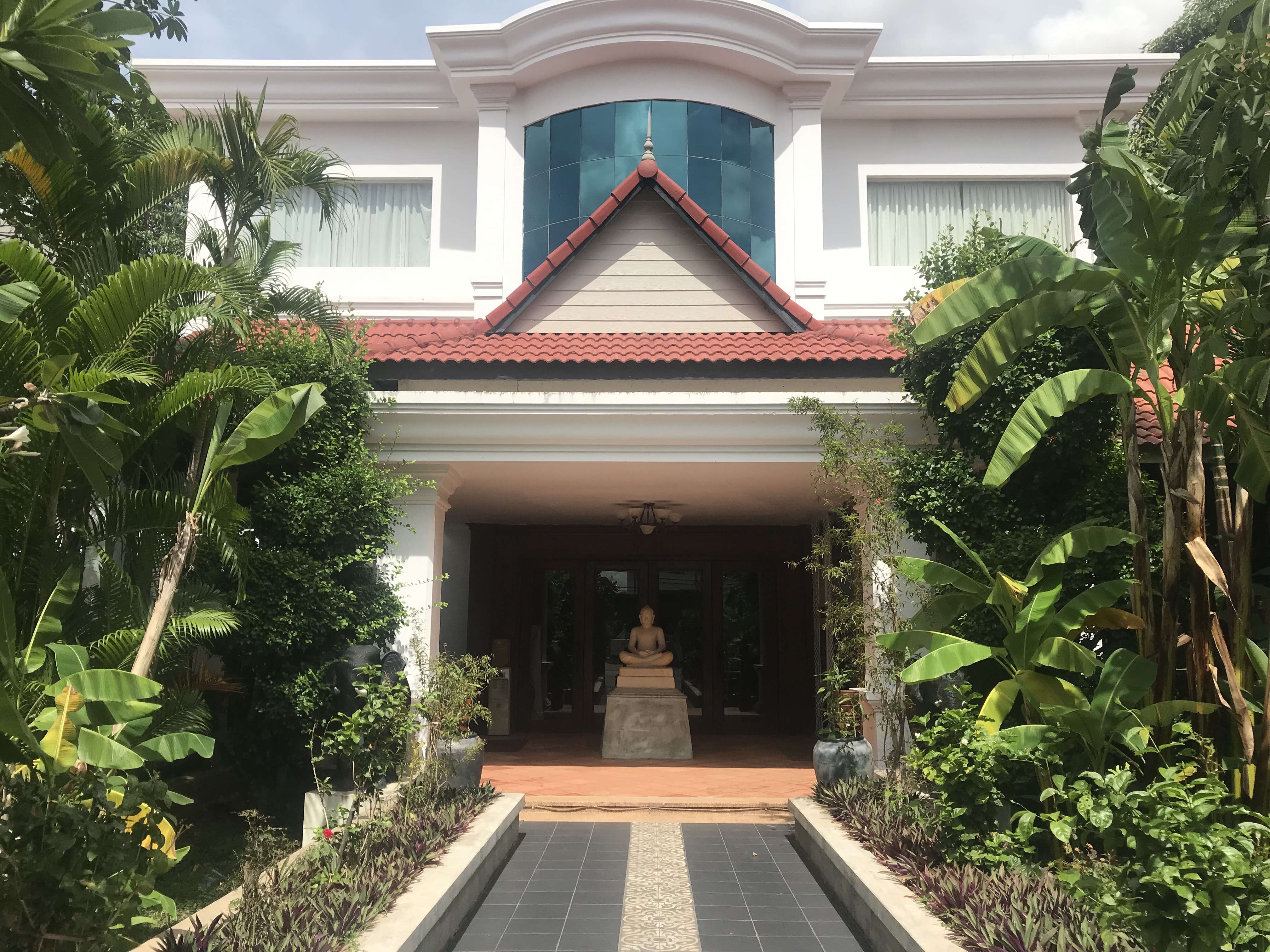
We stayed at the Silk D’Angkor Boutique Hotel which had a lovely pool and decent buffet breakfast.
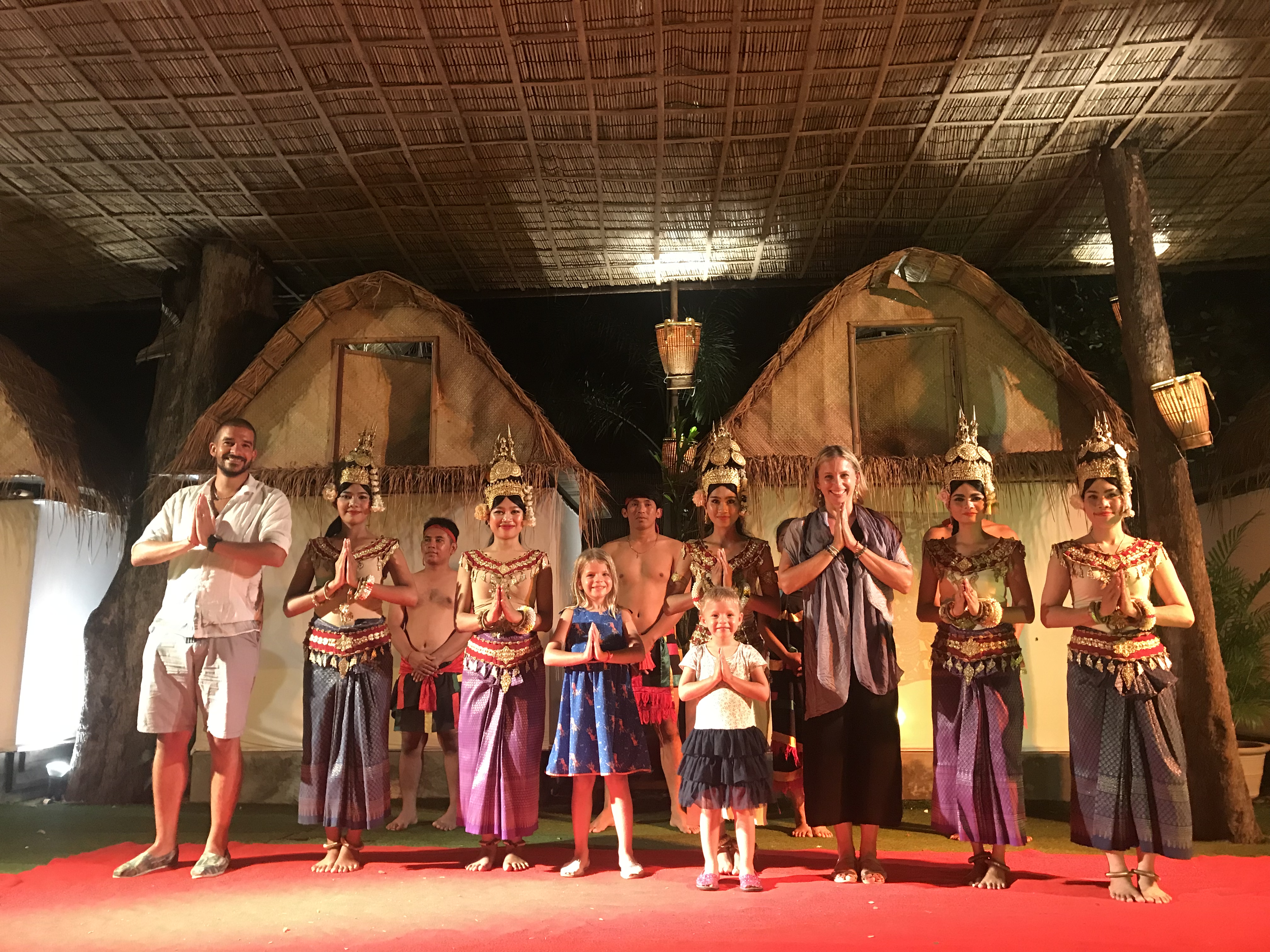
Part of the deal (we were on a 4 nights for the price of 3) was a free dinner and show – sadly the food there was pretty dreadful (bitter gourd is not a favourite of ours), the show is definitely not west end (caught the performers on their phones at one point!) but at least we got a moment on stage….
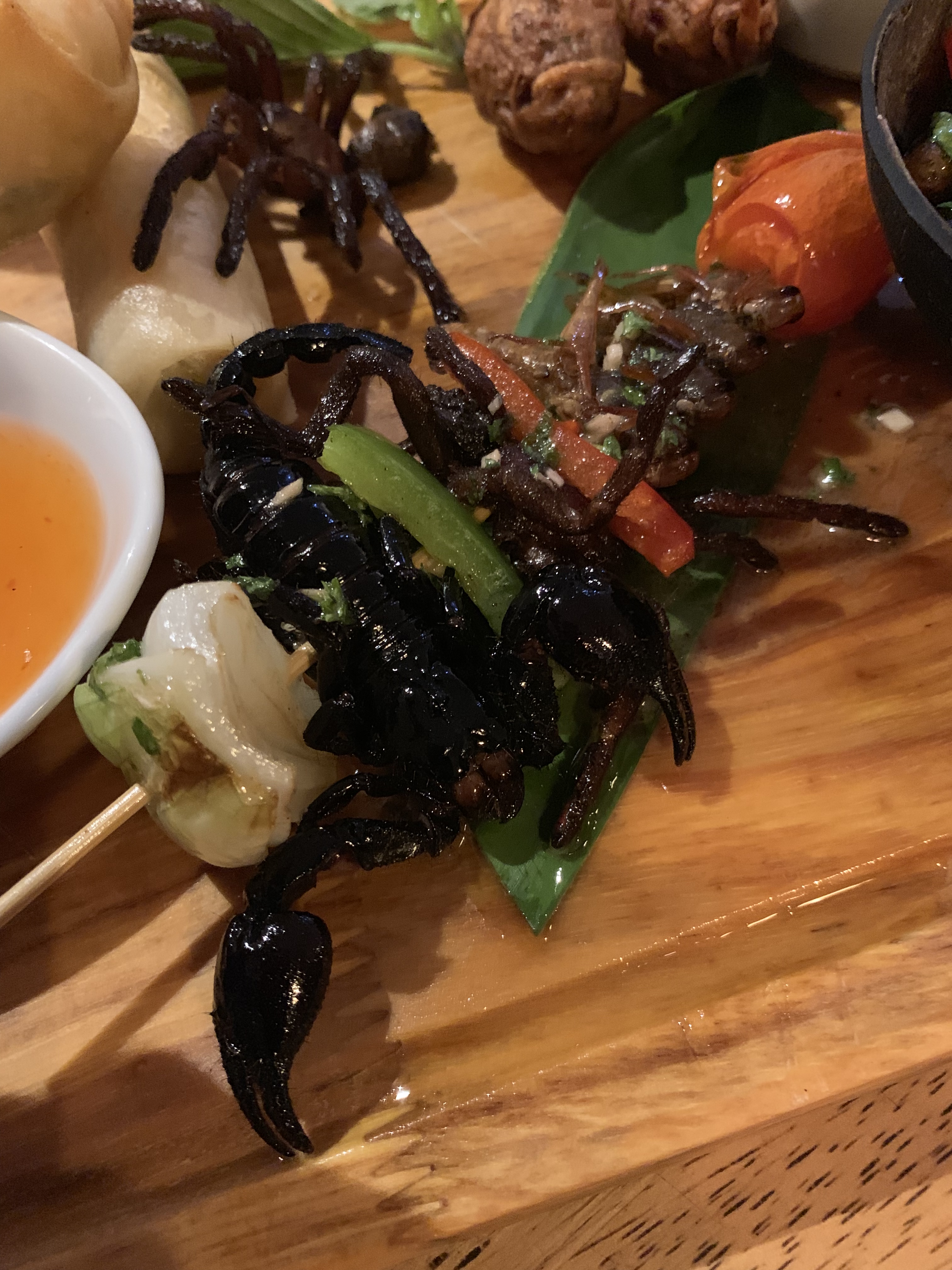
A short walk down the river into town (past the National Museum which we didn’t make it into) there was a pleasant enough temple. There are a lot of restaurants to choose from especially around Pub Street where the night life takes off. For our first lunch we ate at Khmer Kitchen in the centre of town, trying our first fish amok curry (we were to have many more) and for dinner decided to be brave and try out the Bug Café! Tarantula is not all its cracked up to be (ha ha) but silk worm and crickets are actually pretty good.
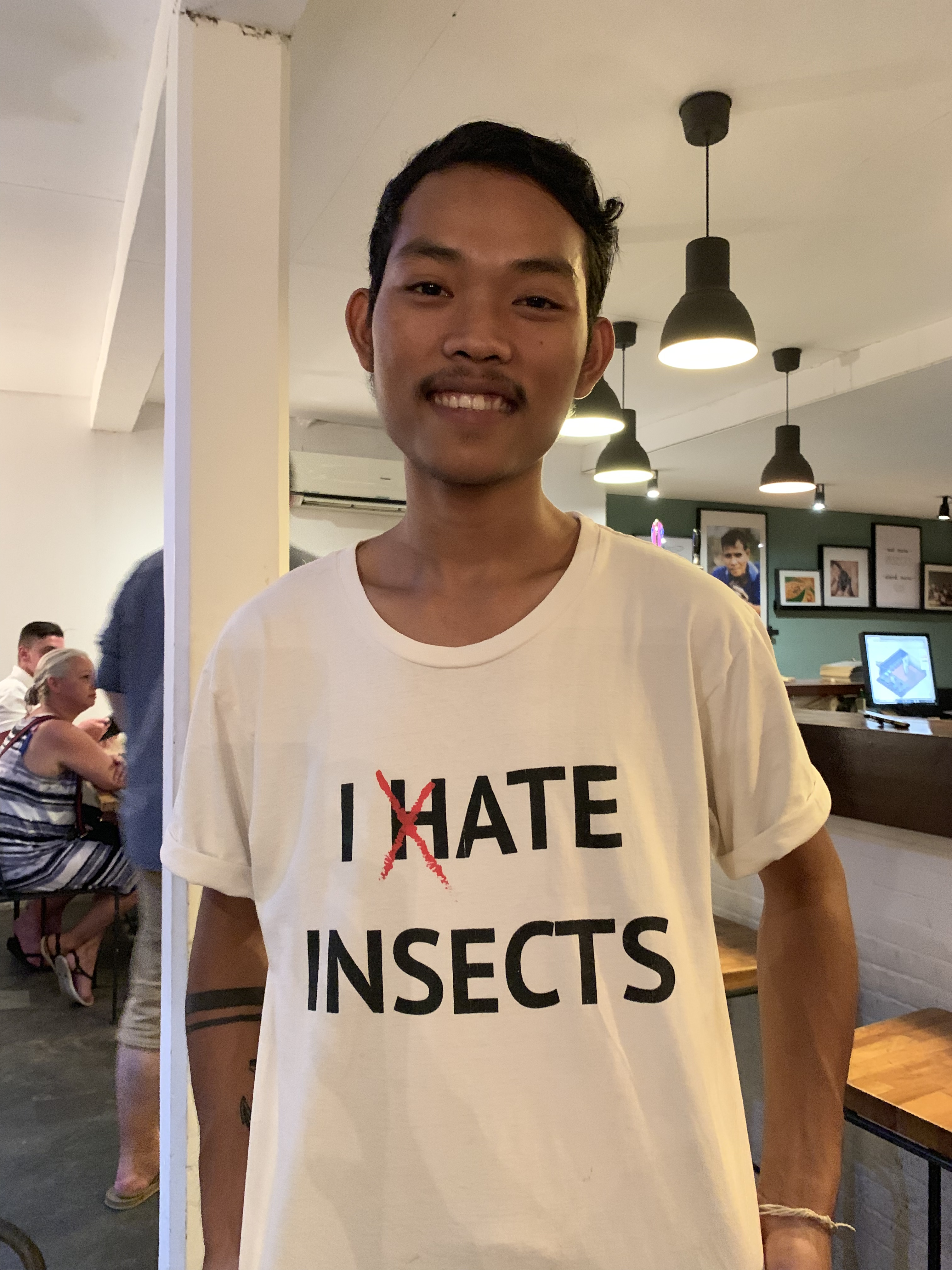
Our best time exploring was when we crossed the bridge over to the ‘south side’ – which has its own trendy printout map – and found a brilliant place Wild which made delicious spring rolls based on western-style dishes such as a Caesar salad or Caprese. There were quite a few art galleries over on the south side of town too, we enjoyed chatting to the owners of the first contemporary gallery in town, One Eleven Gallery which doubles up as a bar. We found yummy gelato later at Gelato Lab back near Pub Street and the Night market.
I was pleased to find a yoga class at the Peace Café, a short walk from our hotel. It was quite a tough Indian traditional class which was just me and the teacher (who used to live in Dubai!) but was good to have a stretch after ‘temple fatigue’!
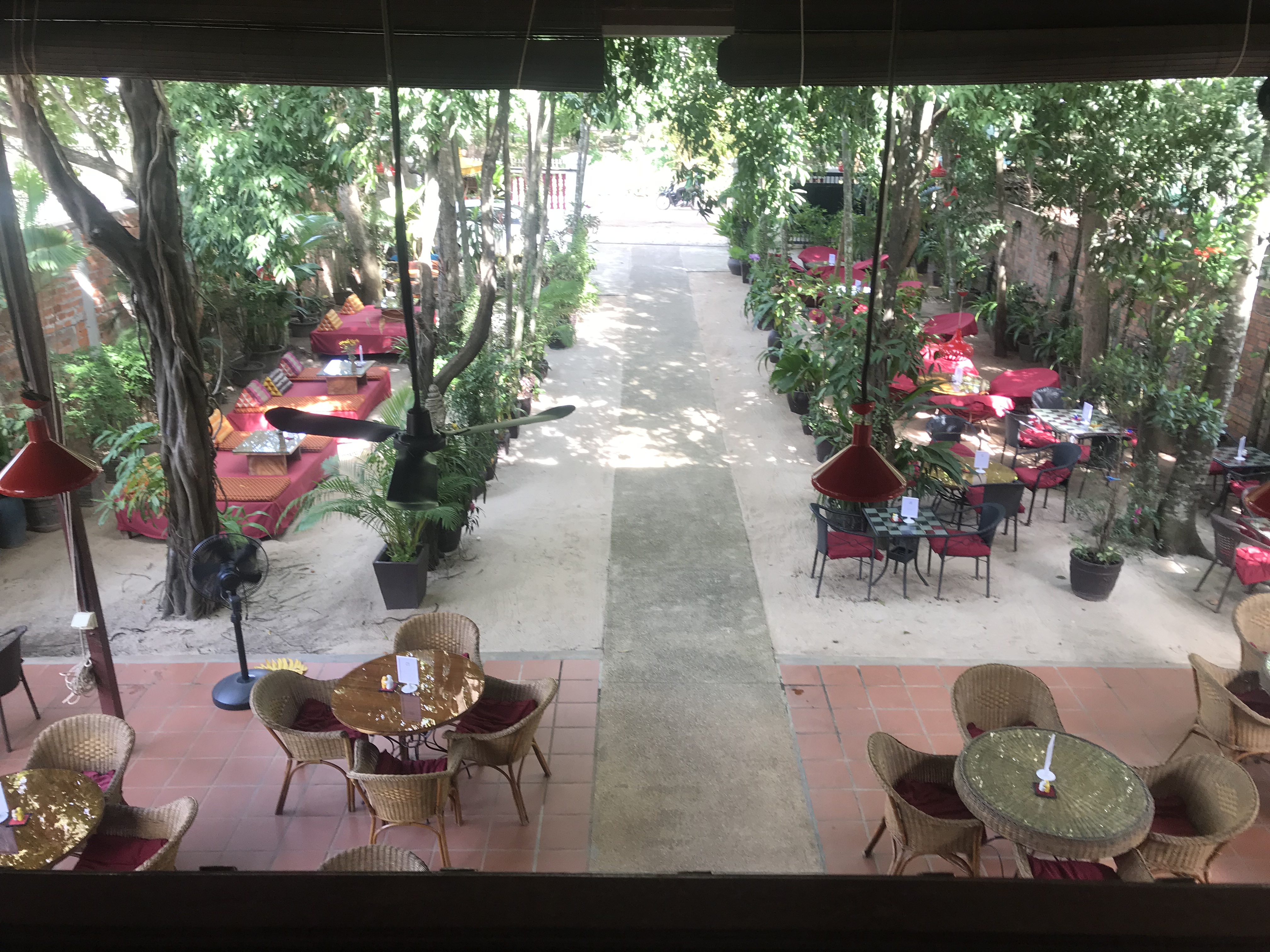
The slower pace of life in Siem Reap suited us, after landing from a hectic Hanoi. It was the perfect introduction to Cambodia.
 Life with MoJo
Brilliant = obviously a fascinating trip and excellent material for the Mojo when they hit the Comparative Religion classes later on . . . .xxxx
LikeLiked by 1 person